Errors
Introduction
Two types of error can be made by the book-keeper:
1. Errors which do not affect the trial balance totals
2. Errors which do affect the trial balance totals.
Tips
When correcting errors, ask three questions:
1. What entries have been made?
2. What entries should have been made?
3. What entries must be made to correct the error?
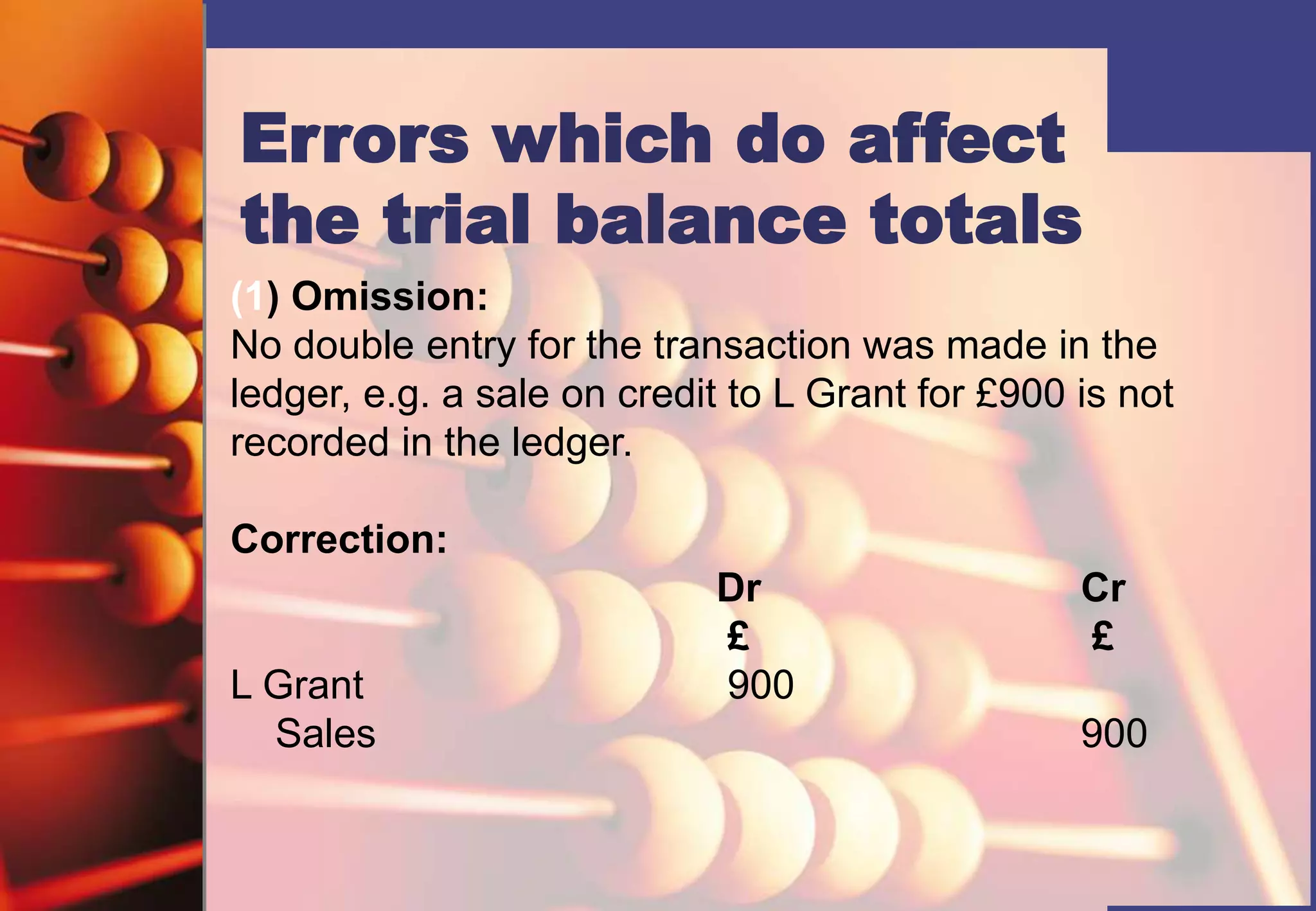
(1) Omission:
No double entry for the transaction was made in the
ledger, e.g. a sale on credit to L Grant for £900 is not
recorded in the ledger.
Correction:
Dr Cr
£ £
L Grant 900
Sales 900
Errors which do affect
the trial balance totals
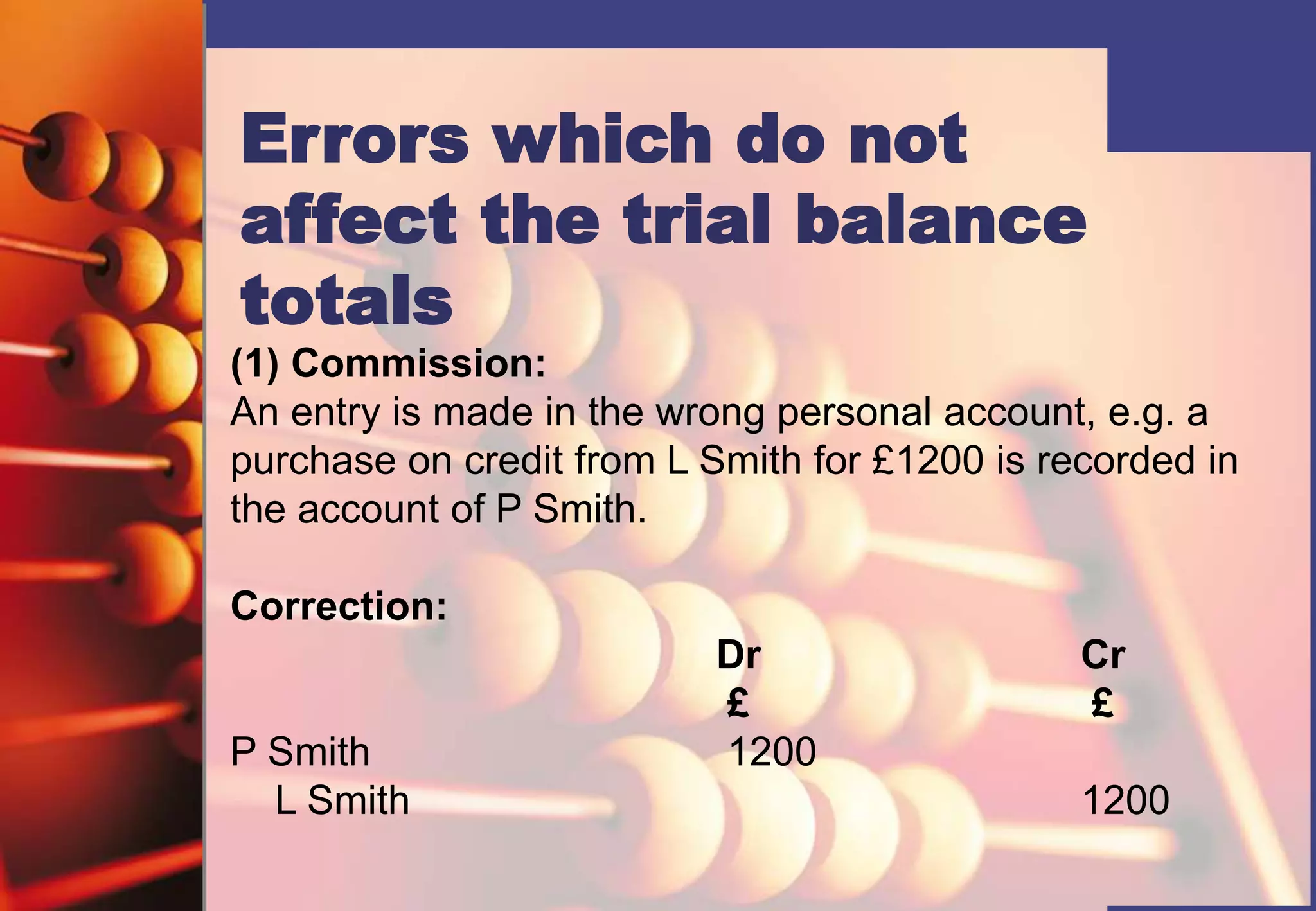
(1) Commission:
An entry is made in the wrong personal account, e.g. a
purchase on credit from L Smith for £1200 is recorded in
the account of P Smith.
Correction:
Dr Cr
£ £
P Smith 1200
L Smith 1200
Errors which do not
affect the trial balance
totals
(2) Principle:
A fundamental error when an entry is made in the wrong
account, e.g. the purchase of a motor van, £15,000, is
recorded as a debit to motor expenses.
Correction:
Dr Cr
£ £
Motor vans 15,000
Motor expenses 15,000
Errors which do not
affect the trial balance
totals
(3) Compensating:
Errors are made in the ledger which will cancel each
other out, e.g. a business has overcast both the
purchases and sales accounts by the amount of £500.
Correction:
Dr Cr
£ £
Sales account 500
Purchases account 500
Errors which do not
affect the trial balance
totals
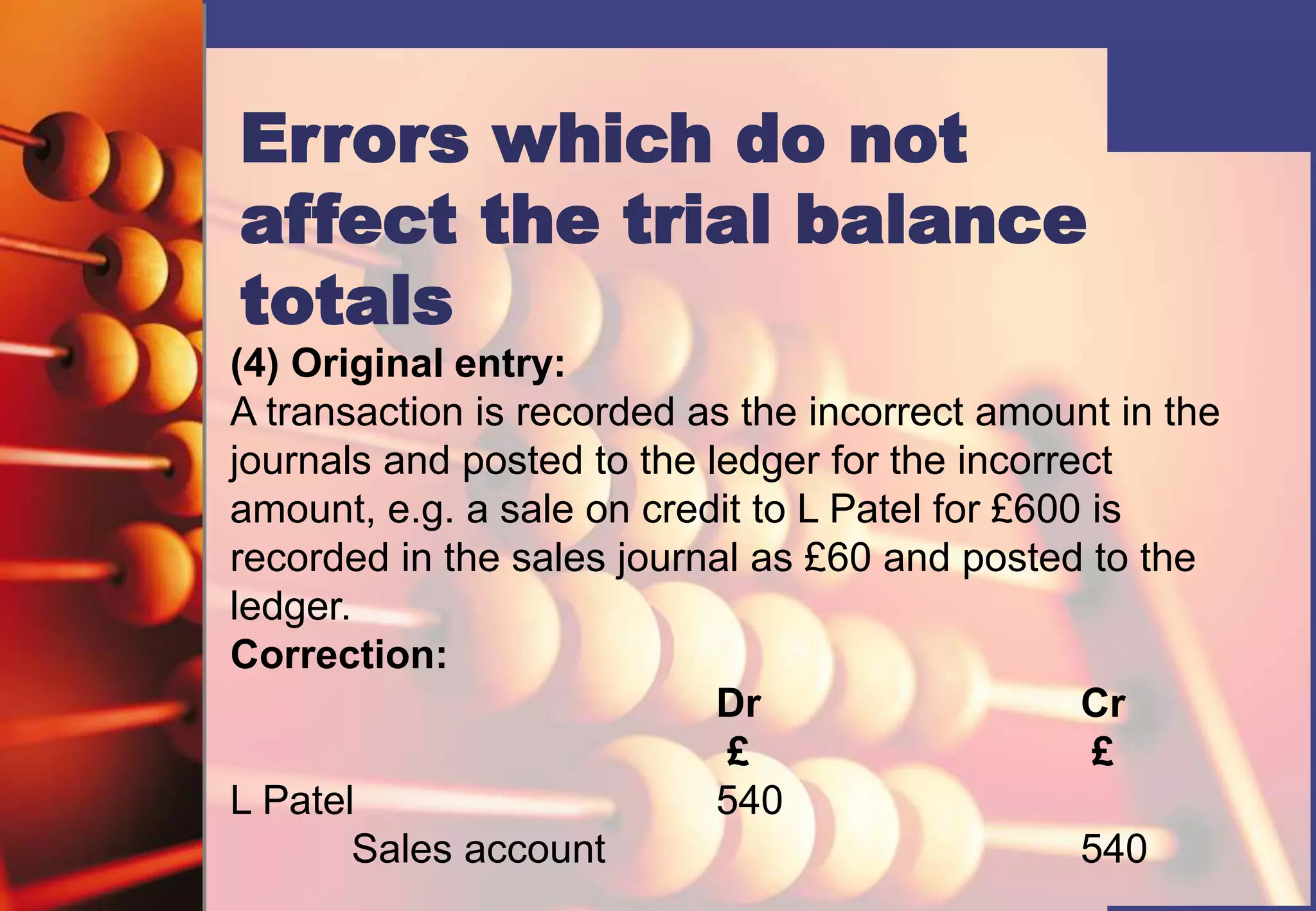
(4) Original entry:
A transaction is recorded as the incorrect amount in the
journals and posted to the ledger for the incorrect
amount, e.g. a sale on credit to L Patel for £600 is
recorded in the sales journal as £60 and posted to the
ledger.
Correction:
Dr Cr
£ £
L Patel 540
Sales account 540
Errors which do not
affect the trial balance
totals
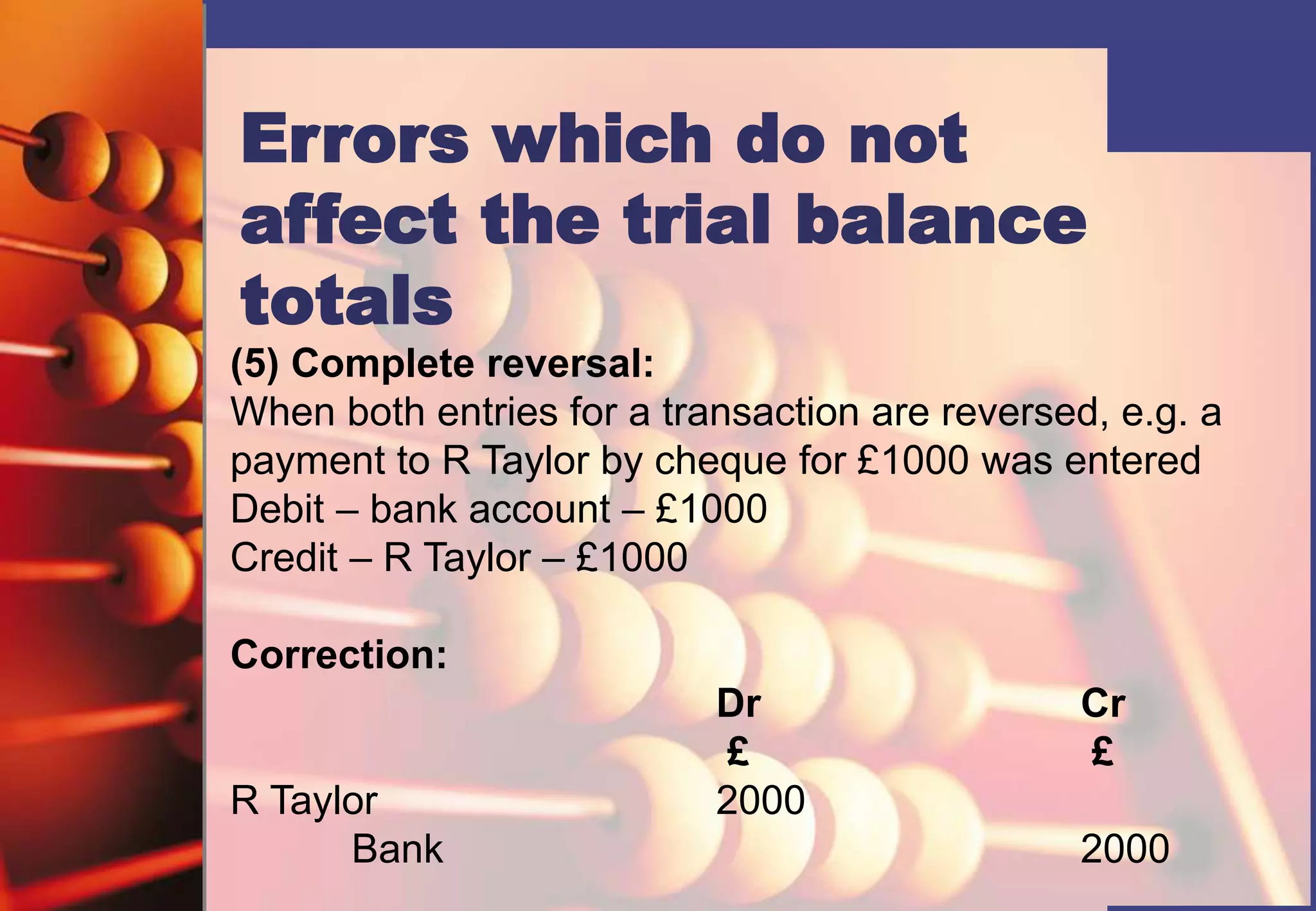
(5) Complete reversal:
When both entries for a transaction are reversed, e.g. a
payment to R Taylor by cheque for £1000 was entered
Debit – bank account – £1000
Credit – R Taylor – £1000
Correction:
Dr Cr
£ £
R Taylor 2000
Bank 2000
Errors which do not
affect the trial balance
totals
Errors which do affect
the trial balance totals
Errors can be made which will result in
one side of the trial balance being different
from the other side.
The accounting equation does not hold
true.
A suspense account will be required.
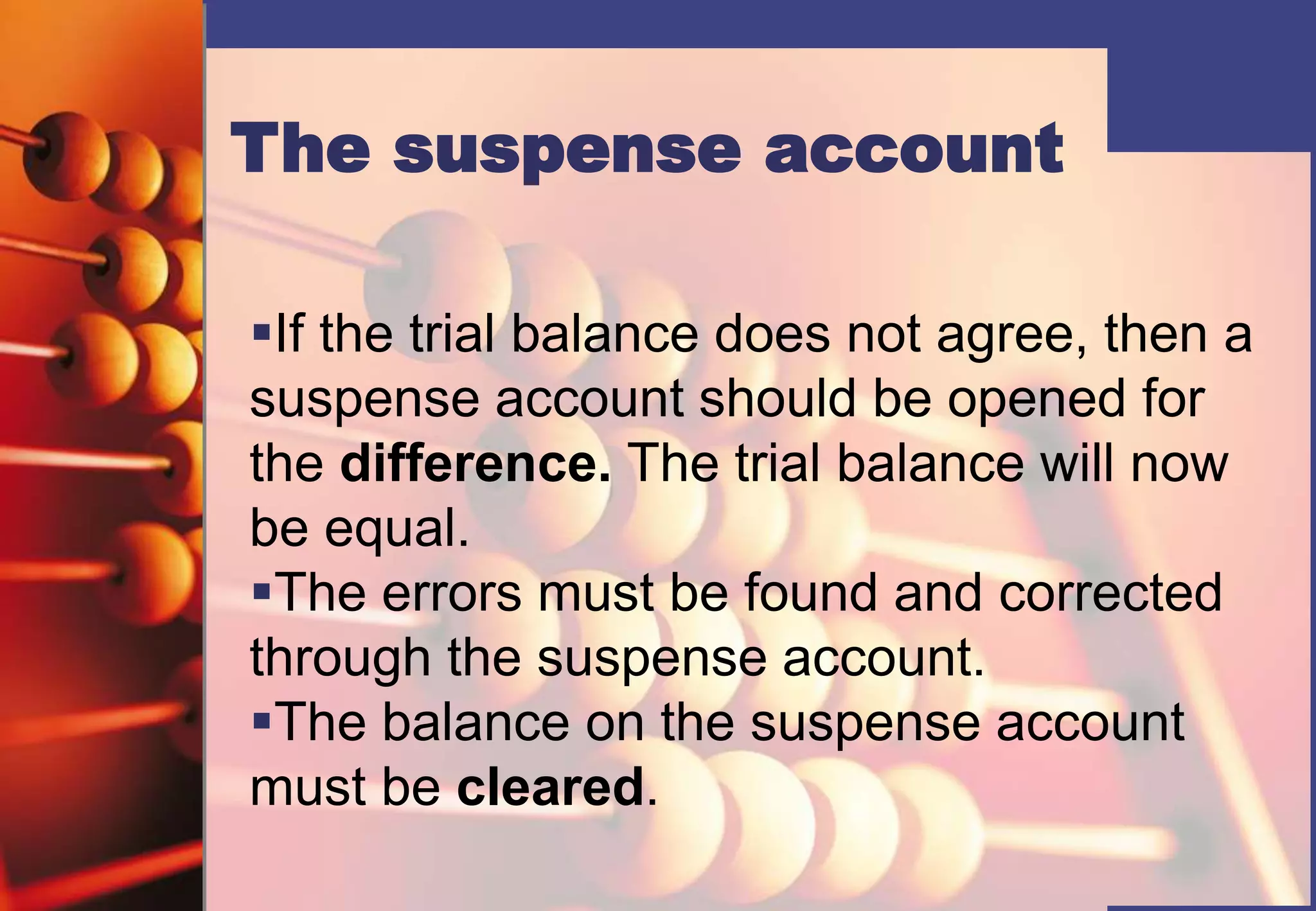
The suspense account
If the trial balance does not agree, then a
suspense account should be opened for
the difference. The trial balance will now
be equal.
The errors must be found and corrected
through the suspense account.
The balance on the suspense account
must be cleared.
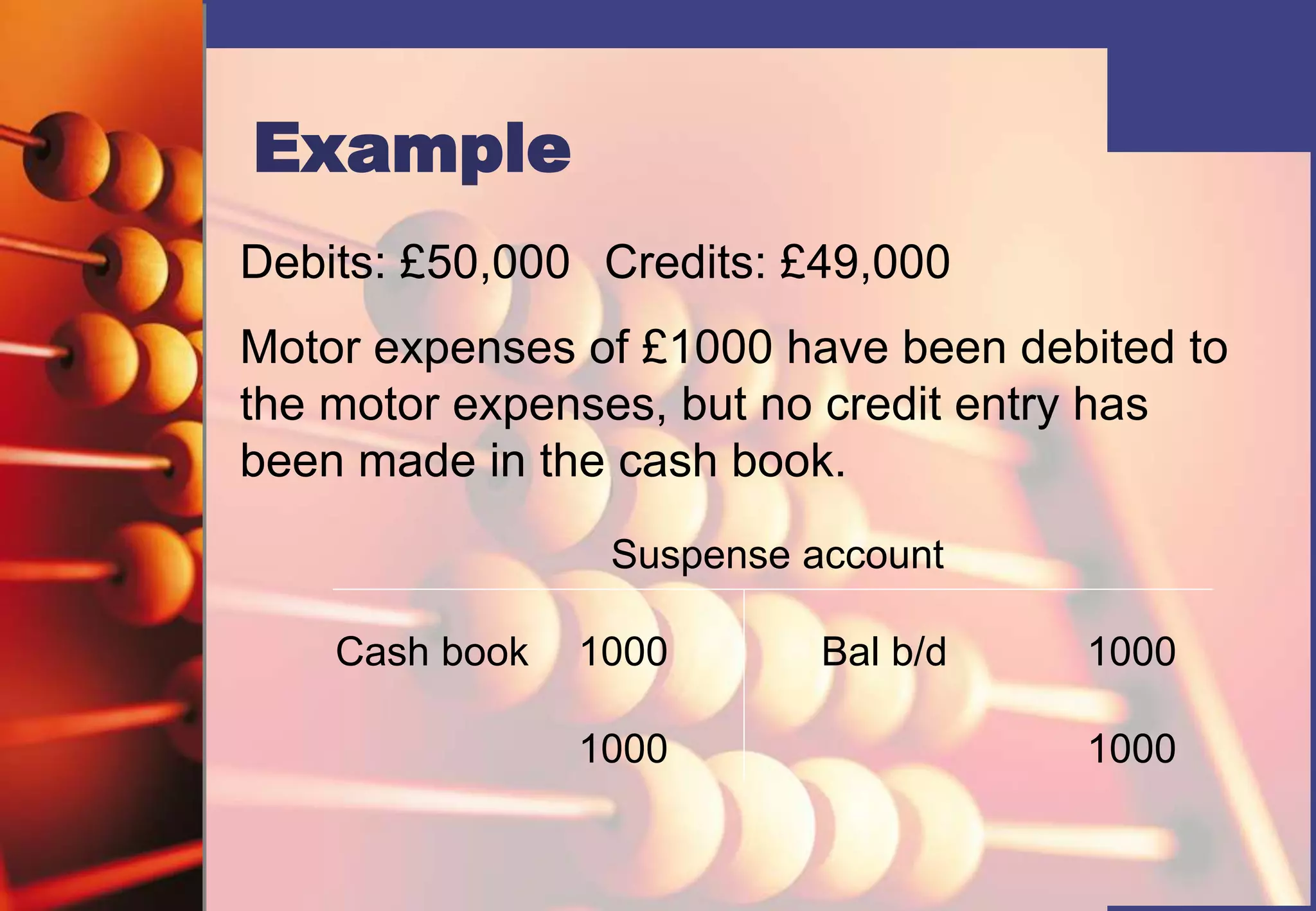
Example
Debits: £50,000 Credits: £49,000
Motor expenses of £1000 have been debited to
the motor expenses, but no credit entry has
been made in the cash book.
Suspense account
Cash book 1000 Bal b/d 1000
1000 1000
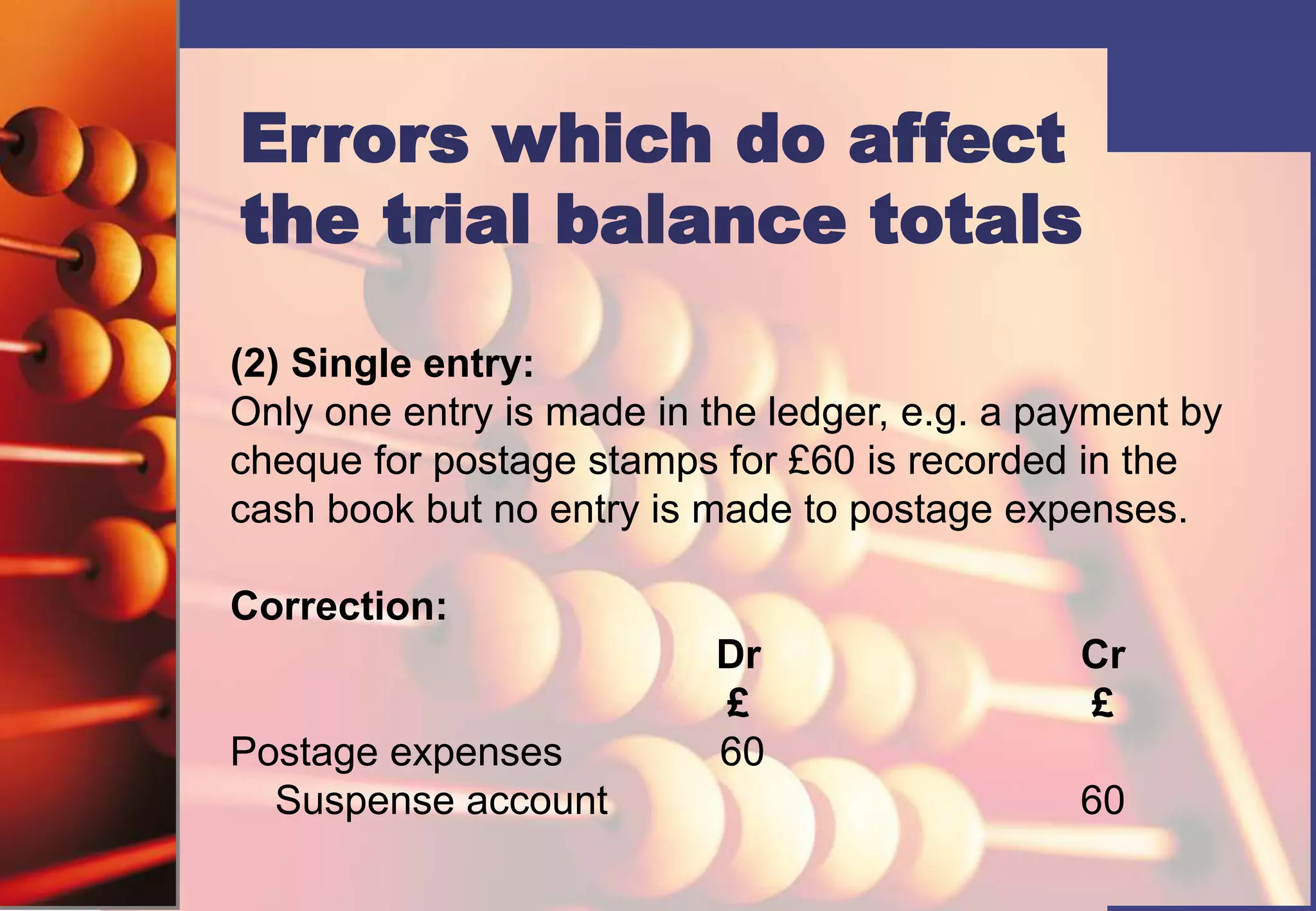
(2) Single entry:
Only one entry is made in the ledger, e.g. a payment by
cheque for postage stamps for £60 is recorded in the
cash book but no entry is made to postage expenses.
Correction:
Dr Cr
£ £
Postage expenses 60
Suspense account 60
Errors which do affect
the trial balance totals
Errors which do affect
the trial balance totals
(3) Overcasting and undercasting of accounts:
John Bridge
Bal b/d 500 Bank 2000
Sales 3000 Bal c/d 2500
3500 3500
Bal b/d 2500
cont’d
Continued
The account of John Bridge is over cast by £1000
because the balance brought down should be £1500, not
£2500. The debit side will be over cast by £1000 on the
trial balance.
A journal entry must be made to correct the error
Correction:
Dr Cr
£ £
Suspense account 1000
John Bridge 1000
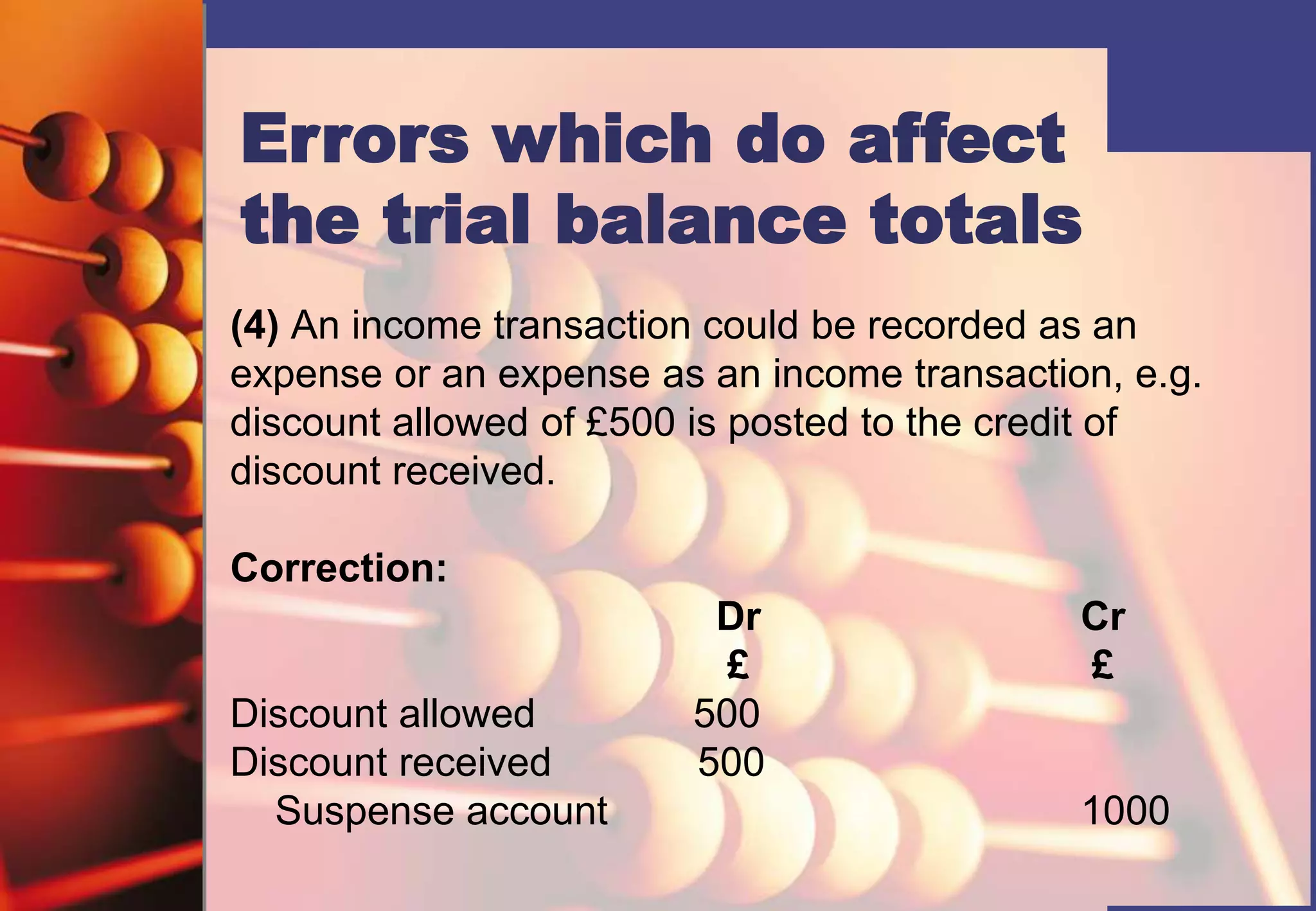
(4) An income transaction could be recorded as an
expense or an expense as an income transaction, e.g.
discount allowed of £500 is posted to the credit of
discount received.
Correction:
Dr Cr
£ £
Discount allowed 500
Discount received 500
Suspense account 1000
Errors which do affect
the trial balance totals

Accounting_Errors.ppt

  • 1.
  • 2.
    Introduction Two types oferror can be made by the book-keeper: 1. Errors which do not affect the trial balance totals 2. Errors which do affect the trial balance totals.
  • 3.
    Tips When correcting errors,ask three questions: 1. What entries have been made? 2. What entries should have been made? 3. What entries must be made to correct the error?
  • 4.
    (1) Omission: No doubleentry for the transaction was made in the ledger, e.g. a sale on credit to L Grant for £900 is not recorded in the ledger. Correction: Dr Cr £ £ L Grant 900 Sales 900 Errors which do affect the trial balance totals
  • 5.
    (1) Commission: An entryis made in the wrong personal account, e.g. a purchase on credit from L Smith for £1200 is recorded in the account of P Smith. Correction: Dr Cr £ £ P Smith 1200 L Smith 1200 Errors which do not affect the trial balance totals
  • 6.
    (2) Principle: A fundamentalerror when an entry is made in the wrong account, e.g. the purchase of a motor van, £15,000, is recorded as a debit to motor expenses. Correction: Dr Cr £ £ Motor vans 15,000 Motor expenses 15,000 Errors which do not affect the trial balance totals
  • 7.
    (3) Compensating: Errors aremade in the ledger which will cancel each other out, e.g. a business has overcast both the purchases and sales accounts by the amount of £500. Correction: Dr Cr £ £ Sales account 500 Purchases account 500 Errors which do not affect the trial balance totals
  • 8.
    (4) Original entry: Atransaction is recorded as the incorrect amount in the journals and posted to the ledger for the incorrect amount, e.g. a sale on credit to L Patel for £600 is recorded in the sales journal as £60 and posted to the ledger. Correction: Dr Cr £ £ L Patel 540 Sales account 540 Errors which do not affect the trial balance totals
  • 9.
    (5) Complete reversal: Whenboth entries for a transaction are reversed, e.g. a payment to R Taylor by cheque for £1000 was entered Debit – bank account – £1000 Credit – R Taylor – £1000 Correction: Dr Cr £ £ R Taylor 2000 Bank 2000 Errors which do not affect the trial balance totals
  • 10.
    Errors which doaffect the trial balance totals Errors can be made which will result in one side of the trial balance being different from the other side. The accounting equation does not hold true. A suspense account will be required.
  • 11.
    The suspense account Ifthe trial balance does not agree, then a suspense account should be opened for the difference. The trial balance will now be equal. The errors must be found and corrected through the suspense account. The balance on the suspense account must be cleared.
  • 12.
    Example Debits: £50,000 Credits:£49,000 Motor expenses of £1000 have been debited to the motor expenses, but no credit entry has been made in the cash book. Suspense account Cash book 1000 Bal b/d 1000 1000 1000
  • 13.
    (2) Single entry: Onlyone entry is made in the ledger, e.g. a payment by cheque for postage stamps for £60 is recorded in the cash book but no entry is made to postage expenses. Correction: Dr Cr £ £ Postage expenses 60 Suspense account 60 Errors which do affect the trial balance totals
  • 14.
    Errors which doaffect the trial balance totals (3) Overcasting and undercasting of accounts: John Bridge Bal b/d 500 Bank 2000 Sales 3000 Bal c/d 2500 3500 3500 Bal b/d 2500 cont’d
  • 15.
    Continued The account ofJohn Bridge is over cast by £1000 because the balance brought down should be £1500, not £2500. The debit side will be over cast by £1000 on the trial balance. A journal entry must be made to correct the error Correction: Dr Cr £ £ Suspense account 1000 John Bridge 1000
  • 16.
    (4) An incometransaction could be recorded as an expense or an expense as an income transaction, e.g. discount allowed of £500 is posted to the credit of discount received. Correction: Dr Cr £ £ Discount allowed 500 Discount received 500 Suspense account 1000 Errors which do affect the trial balance totals