Accounting Information Systems Controls Processes 3rd Edition Turner Test Bank
Accounting Information Systems Controls Processes 3rd Edition Turner Test Bank
Accounting Information Systems Controls Processes 3rd Edition Turner Test Bank
Accounting Information Systems Controls Processes 3rd Edition Turner Test Bank
Accounting Information Systems Controls Processes 3rd Edition Turner Test Bank
1.
Accounting Information SystemsControls
Processes 3rd Edition Turner Test Bank download
pdf
https://testbankdeal.com/product/accounting-information-systems-
controls-processes-3rd-edition-turner-test-bank/
Visit testbankdeal.com to explore and download the complete
collection of test banks or solution manuals!
2.
We believe theseproducts will be a great fit for you. Click
the link to download now, or visit testbankdeal.com
to discover even more!
Accounting Information Systems Controls Processes 3rd
Edition Turner Solutions Manual
https://testbankdeal.com/product/accounting-information-systems-
controls-processes-3rd-edition-turner-solutions-manual/
Accounting Information Systems The Processes Controls 2nd
Edition Turner Solutions Manual
https://testbankdeal.com/product/accounting-information-systems-the-
processes-controls-2nd-edition-turner-solutions-manual/
Accounting Information Systems The Processes and Controls
2nd Edition Turner Test Bank
https://testbankdeal.com/product/accounting-information-systems-the-
processes-and-controls-2nd-edition-turner-test-bank/
Intermediate Accounting 2014 FASB Update 15th Edition
Kieso Test Bank
https://testbankdeal.com/product/intermediate-accounting-2014-fasb-
update-15th-edition-kieso-test-bank/
3.
Introduction to MaternityPediatric Nursing 6th Edition
Leifer Solutions Manual
https://testbankdeal.com/product/introduction-to-maternity-pediatric-
nursing-6th-edition-leifer-solutions-manual/
International Economics Theory and Policy 10th Edition
Krugman Test Bank
https://testbankdeal.com/product/international-economics-theory-and-
policy-10th-edition-krugman-test-bank/
Biology Concepts and Investigations 3rd Edition Hoefnagels
Test Bank
https://testbankdeal.com/product/biology-concepts-and-
investigations-3rd-edition-hoefnagels-test-bank/
International Economics 13th Edition Carbaugh Test Bank
https://testbankdeal.com/product/international-economics-13th-edition-
carbaugh-test-bank/
Modern Marketing Research Concepts Methods and Cases 2nd
Edition Feinberg Test Bank
https://testbankdeal.com/product/modern-marketing-research-concepts-
methods-and-cases-2nd-edition-feinberg-test-bank/
4.
Child Psychology AContemporary View Point 7th Edition
Parke Test Bank
https://testbankdeal.com/product/child-psychology-a-contemporary-view-
point-7th-edition-parke-test-bank/
5.
Ch 7 Testbank – 3e Page 1 of 32
ACCOUNTING INFORMATION SYSTEMS/3e
TURNER / WEICKGENANNT/COPELAND
Test Bank: CHAPTER 7: Auditing Information Technology – Bases Processes
NOTE: All new or adjusted questions are in red. New questions are identified by the letter A as part of
the question number; adjusted questions are identified by the letter X as part of the question number.
End of Chapter Questions:
1. Which of the following types of audits is most likely to be conducted for the purpose of
identifying areas for cost savings?
A. Financial Statement Audits
B. Operational Audits
C. Regulatory Audits
D. Compliance Audits
2. Financial statement audits are required to be performed by:
A. Governmental Auditors
B. CPAs
C. Internal Auditors
D. IT Auditors
3. Which of the following is not considered a cause for information risk?
A. Management’s geographic location is far from the source of the information needed to
make effective decisions.
B. The information is collected and prepared by persons who use the information for very
different purposes.
C. The information relates to business activities that are not well understood by those who
collect and summarize the information for decision makers.
D. The information has been tested by internal auditors and a CPA firm.
4. Which of the following is not a part of general accepted auditing standards?
A. General Standards
B. Standards of Fieldwork
C. Standards of Information Systems
D. Standards of Reporting
5. Which of the following best describes what is meant by the term “generally accepted auditing
standards”?
A. Procedures used to gather evidence to support the accuracy of a client’s financial
statements.
B. Measures of the quality of an auditor’s conduct carrying out professional responsibilities.
C. Professional pronouncements issued by the Auditing Standards Board.
D. Rules acknowledged by the accounting profession because of their widespread application.
6.
Ch 7 Testbank – 3e Page 2 of 32
6. In an audit of financial statement in accordance with generally accepted auditing standards, an
auditor is required to:
A. Document the auditor’s understanding of the client company’s internal controls.
B. Search for weaknesses in the operation of the client company’s internal controls.
C. Perform tests of controls to evaluate the effectiveness of the client company’s internal
controls.
D. Determine whether controls are appropriately operating to prevent or detect material
misstatements.
7. Auditors should develop a written audit program so that:
A. All material transactions will be included in substantive testing.
B. Substantive testing performed prior to year end will be minimized.
C. The procedures will achieve specific audit objectives related to specific management
assertions.
D. Each account balance will be tested under either a substantive test or a test of controls.
8. Which of the following audit objectives relates to the management assertion of existence?
A. A transaction is recorded in the proper period.
B. A transaction actually occurred (i.e., it is real)
C. A transaction is properly presented in the financial statements.
D. A transaction is supported by detailed evidence.
9. Which of the following statements regarding an audit program is true?
A. An audit program should be standardized so that it may be used on any client engagement.
B. The audit program should be completed by the client company before the audit planning
stage begins.
C. An audit program should be developed by the internal auditor during the audit’s
completion/reporting phase.
D. An audit program establishes responsibility for each audit test by requiring the signature
or initials of the auditor who performed the test.
10. Risk assessment is a process designed to:
A. Identify possible circumstances and events that may affect the business.
B. Establish policies and procedures to carry out internal controls.
C. Identify and capture information in a timely manner.
D. Review the quality of internal controls throughout the year.
11. Which of the following audit procedures is most likely to be performed during the planning
phase of the audit?
A. Obtain an understanding of the client’s risk assessment process.
B. Identify specific internal control activities that are designed to prevent fraud.
C. Evaluate the reasonableness of the client’s accounting estimates.
D. Test the timely cutoff of cash payments and collections.
7.
Ch 7 Testbank – 3e Page 3 of 32
12. Which of the following is the most significant disadvantage of auditing around the computer
rather than through the computer?
A. The time involved in testing processing controls is significant.
B. The cost involved in testing processing controls is significant.
C. A portion of the audit trail is not tested.
D. The technical expertise required to test processing controls is extensive.
13. The primary objective of compliance testing in a financial statement audit is to determine
whether:
A. Procedures have been updated regularly.
B. Financial statement amounts are accurately stated.
C. Internal controls are functioning as designed.
D. Collusion is taking place.
14. Which of the following computer assisted auditing techniques processes actual client input data
(or a copy of the real data) on a controlled program under the auditor’s control to periodically
test controls in the client’s computer system?
A. Test data method
B. Embedded audit module
C. Integrated test facility
D. Parallel simulation
15. Which of the following computer assisted auditing techniques allows fictitious and real
transactions to be processed together without client personnel being aware of the testing
process?
A. Test data method
B. Embedded audit module
C. Integrated test facility
D. Parallel simulation
16. Which of the following is a general control to test for external access to a client’s computerized
systems?
A. Penetration tests
B. Hash totals
C. Field checks
D. Program tracing
17. Suppose that during the planning phase of an audit, the auditor determines that weaknesses
exist in the client’s computerized systems. These weaknesses make the client company
susceptible to the risk of an unauthorized break-in. Which type of audit procedures should be
emphasized in the remaining phases of this audit?
A. Tests of controls
B. Penetration tests
C. Substantive tests
D. Rounding errors tests
8.
Ch 7 Testbank – 3e Page 4 of 32
18. Generalized audit software can be used to:
A. Examine the consistency of data maintained on computer files.
B. Perform audit tests of multiple computer files concurrently.
C. Verify the processing logic of operating system software.
D. Process test data against master files that contain both real and fictitious data.
19. Independent auditors are generally actively involved in each of the following tasks except:
A. Preparation of a client’s financial statements and accompanying notes.
B. Advising client management as to the applicability of a new accounting standard.
C. Proposing adjustments to a client’s financial statements.
D. Advising client management about the presentation of the financial statements.
20. Which of the following is most likely to be an attribute unique to the financial statement audit
work of CPAs, compared with work performed by attorneys or practitioners of other business
professions?
A. Due professional care
B. Competence
C. Independence
D. A complex underlying body of professional knowledge
21. Which of the following terms in not associated with a financial statement auditor’s requirement
to maintain independence?
A. Objectivity
B. Neutrality
C. Professional Skepticism
D. Competence
TEST BANK - CHAPTER 7 - MULTIPLE CHOICE
1. Accounting services that improve the quality of information provided to the decision maker, an
audit being the most common type of this service, is called:
A. Compliance Services
B. Assurance Services
C. Substantive Services
D. Operational Services
2. A type of assurance services that involves accumulating and analyzing support for the
information provided by management is called an:
A. Audit
B. Investigation
C. Financial Statement Examination
D. Control Test
3. The main purpose of an audit is to assure users of the financial information about the:
A. Effectiveness of the internal controls of the company.
B. Selection of the proper GAAP when preparing financial statements.
C. Proper application of GAAS during the examination.
D. Accuracy and completeness of the information.
9.
Ch 7 Testbank – 3e Page 5 of 32
4. Which of the following is not one of the three primary types of audits?
A. Compliance Audits
B. Financial Statement Audits
C. IT Audits
D. Operational Audits
5. This type of audit is completed in order to determine whether a company has adhered to the
regulations and policies established by contractual agreements, governmental agencies, or some
other high authority.
A. Compliance Audit
B. Operational Audit
C. Information Audit
D. Financial Statement Audit
6. This type of audit is completed to assess the operating policies and procedures of a client for
efficiency and effectiveness.
A. Efficiency Audit
B. Effectiveness Audit
C. Compliance Audit
D. Operational Audit
7. This type of audit is completed to determine whether or not the client has prepared and
presented its financial statements fairly, in accordance with established financial accounting
criteria.
A. GAAP Audit
B. Financial Statement Audit
C. Compliance Audit
D. Fair Application Audit
8. Financial statement audits are performed by _________ who have extensive knowledge of
generally accepted accounting principles (GAAP) in the US and/or International Financial
Reporting Standards (IFRS).
A. Public Auditors
B. Governmental Auditors
C. Certified Public Accountants
D. Internal Auditors
9. This type of auditor is an employee of the company he / she audits.
A. IT Auditor
B. Government Auditor
C. Certified Public Accountant
D. Internal Auditor
10.
Ch 7 Testbank – 3e Page 6 of 32
10. This type of auditor specializes in the information systems assurance, control, and security.
They may work for CPA firms, government agencies, or with the internal audit group.
A. IT Auditor
B. Government Auditor
C. Certified Public Accountant
D. Internal Auditor
11. This type of auditor conducts audits of government agencies or income tax returns.
A. IT Auditor
B. Government Auditor
C. Certified Public Accountant
D. Internal Auditor
12. An important requirement of CPA firms is that they must be ________ with regard to the
company being audited. The requirement allows CPA firms to provide a completely unbiased
opinion on the information it audits.
A. Neutral
B. Well-informed
C. Materially invested
D. All of the above
13. This type of audit is performed by independent auditors who are objective and neutral with
respect to the company and the information being audited.
A. Compliance Audit
B. Operational Audit
C. Internal Audit
D. External Audit
14. Which of the following scenarios does NOT impair the independence of a CPA firm from its
client?
A. The lead audit partner is the sister-in-law of the client’s VP of Accounting
B. One of the auditors owns stock in a competitor of the client
C. One of the auditors is the golf partner of the client’s CEO
D. The lead audit partner owns stock in the client
15. The independence of a CPA could be impaired by:
A. Having no knowledge of the company or the company management
B. By owning stock of a similar company
C. Having the ability to influence the client’s decisions
D. Being married to a stockbroker
11.
Ch 7 Testbank – 3e Page 7 of 32
16. Decision makers are typically forced to rely on others for information. When the source of the
information is removed from the decision maker, the information stands a greater chance of
being misstated. A decision maker may become detached from the source of information due
to geography, organizational layers, or other factors. This describes which cause of information
risk?
A. The lack of CPA independence
B. The volume and complexity of underlying data
C. The motive of the preparer
D. The remoteness of information
17. The IT environment plays a key role in how auditors conduct their work in all but which of the
following areas:
A. Consideration of Risk
B. Consideration of Information Fairness
C. Design and Performance of Audit Tests
D. Audit Procedures Used
18. The chance that information used by decision makers may be inaccurate is referred to as:
A. Sample Risk
B. Data Risk
C. Audit Trail Risk
D. Information Risk
19. Which of the following is not one of the identified causes of information risk?
A. Audited information
B. Remote information
C. Complexity of data
D. Preparer motive
20. The main reasons that it is necessary to study information-based processing and the related
audit function include:
A. Information users often do not have the time or ability to verify information themselves.
B. It may be difficult for decision makers to verify information contained in a computerized
accounting system.
C. Both of the above.
D. Neither of the above.
21. The existence of IT-based business processes often result in details of transactions being
entered directly into the computer system, results in a lack of physical evidence to visibly view.
This situation is referred to as:
A. Physical Evidence Risk
B. Loss of Audit Trail Visibility
C. Transaction Summary Chart
D. Lack of Evidence View
12.
Ch 7 Testbank – 3e Page 8 of 32
22. The existence of IT-based business processes, that result in the details of the transactions being
entered directly into the computer system, increases the likelihood of the loss or alternation of
data due to all of the following, except:
A. System Failure
B. Database Destruction
C. Programmer Incompetence
D. Environmental Damage
23. The advantages of using IT-based accounting systems, where the details of transactions are
entered directly into the computer include:
A. Computer controls can compensate for the lack of manual controls
B. Loss of audit trail view
C. Increased internal controls risks
D. Fewer opportunities to authorize and review transactions
24. The ten standards that provide broad guidelines for an auditor’s professional responsibilities are
referred to as:
A. Generally accepted accounting standards
B. General accounting and auditing practices
C. Generally accepted auditing practices
D. Generally accepted auditing standards
25. The generally accepted auditing standards are divided into three groups. Which of the following
is not one of those groups?
A. General Standards
B. Basic Standards
C. Standards of Fieldwork
D. Standards of Reporting
26. GAAS, generally accepted auditing standards, provide a general framework for conducting
quality audits, but the specific standards - or detailed guidance - are provided by all of the
following groups, except:
A. Public Company Accounting Oversight Board
B. Auditing Standards Board
C. Certified Fraud Examiners
D. International Auditing and Assurance Standards Board
27. This organization, established by the Sarbanes-Oxley Act, was organized in 2003 for the purpose
of establishing auditing standards for public companies.
A. Auditing Standards Board
B. Public Company Accounting Oversight Board
C. International Audit Practices Committee
D. Information Systems Audit and Control Association
13.
Ch 7 Testbank – 3e Page 9 of 32
28. This organization is part of the AICPA and was the group responsible for issuing Statements on
Auditing Standards which were historically widely used in practice.
A. Auditing Standards Board
B. Public Company Accounting Oversight Board
C. International Audit Practices Committee
D. Information Systems Audit and Control Association
29. This organization was established by the IFAC to set International Standards on Auditing (ISAs)
that contribute to the uniform application of auditing practices on a worldwide basis.
A. International Systems Audit and Control Association
B. Auditing Standards Board
C. Public Company Accounting Oversight Board
D. International Auditing and Assurance Standards Board (IAASB)
30. This organization issues guidelines for conducting the IT audit. The standards issued address
practices related to control and security of the IT system.
A. Auditing Standards Board
B. Public Company Accounting Oversight Board
C. International Audit Practices Committee
D. Information Systems Audit and Control Association
31. The audit is to be performed by a person or persons having adequate technical training and
proficiency as an auditor. This is one of the generally accepted auditing standards that is part of
the:
A. General Standards
B. Operating Standards
C. Fieldwork Standards
D. Reporting Standards
32. Independence in mental attitude is to be maintained in all matters related to the audit
engagement. This is one of the generally accepted auditing standards that is part of the:
A. General Standards
B. Operating Standards
C. Fieldwork Standards
D. Reporting Standards
33. The general guidelines, known as the generally accepted auditing standards, which include the
concepts of adequate planning and supervision, internal control, and evidence relate to the:
A. General Standards
B. Operating Standards
C. Fieldwork Standards
D. Reporting Standards
14.
Ch 7 Testbank – 3e Page 10 of 32
34. The general guidelines, known as the generally accepted auditing standards, which include the
concepts of presentation in accordance with the established criteria, the consistent application
of established principles, adequate disclosure, and the expression of an opinion, relate to the:
A. General Standards
B. Operating Standards
C. Fieldwork Standards
D. Reporting Standards
35. The role of the auditors is to analyze the underlying facts to decide whether information
provided by management is fairly presented. Auditors design ____1_____ to analyze
information in order to determine whether ____2_____ is/are valid.
A. 1=audit objectives; 2=management’s assertions
B. 1=audit tests; 2=audit objectives
C. 1=audit tests; 2=audit evidence
D. 1=audit tests; 2=management’s assertions
36. Although there are a number of organizations that provide detailed guidance, it is still necessary
for auditors to rely on other direction regarding the types of audit tests to use and the manner
in which the conclusions are drawn. These sources of information include:
A. Industry Guidelines
B. PCAOB
C. ASB
D. ASACA
37. Claims regarding the condition of the business organization and in terms of its operations,
financial results, and compliance with laws and regulations, are referred to as:
A. Financial Statements
B. Management Assertions
C. External Audit
D. Presentation and Disclosure
38. Which management assertion determines that transactions and related asset accounts balances
are actually owned and that liability account balances represent actual obligations?
A. Valuation and Allocation
B. Existence
C. Rights and Obligations
D. Classification and Presentation
39. Audit tests developed for an audit client are documented in a(n):
A. Audit Program
B. Audit Objective
C. Management Assertion
D. General Objectives
15.
Ch 7 Testbank – 3e Page 11 of 32
40. The management assertion related to valuation of transactions and account balances would
include all of the following, except:
A. Accurate in terms of dollar amounts and quantities
B. Supported by detailed evidence
C. Real
D. Correctly summarized
41. There are four primary phases of the IT audit. Which of the following is not one of those phases?
A. Planning
B. Evidence Audit
C. Tests of Controls
D. Substantive Tests
42. The main difference between substantive testing and controls testing is:
A. Substantive testing verifies whether information is correct, whereas control tests
determine whether the information is managed under a system that promotes
correctness.
B. Substantive testing determines whether the information is managed under a system that
promotes correctness, whereas Control testing verifies whether information is correct.
C. Substantive testing goes further in depth into the internal controls of a company, whereas
controls testing just identifies which controls need further review.
D. Substantive testing identifies which controls need further review, whereas controls testing
goes further in depth into the internal controls of a company.
43. During substantive testing, if material misstatements have been found to exist, which of the
following actions should be taken next?
A. Proceed to the audit completion in the reporting phase
B. Re-evaluate the audit risk in the planning phase
C. Re-perform detailed tests of balances
D. Re-perform an internal controls systems analysis
44. The proof of the fairness of the financial information is:
A. Tests of Controls
B. Substantive Tests
C. Audit Completion
D. Audit Evidence
45. Techniques used for gathering evidence include all of the following, except:
A. Physical examination of assets or supporting documentation
B. Observing activities
C. Adequate planning and supervision
D. Analyzing financial relationships
16.
Ch 7 Testbank – 3e Page 12 of 32
46. During this phase of the audit, the auditor must gain a thorough understanding of the client’s
business and financial reporting systems. When completing this phase, the auditors review and
assess the risks and controls related to the business.
A. Tests of Controls
B. Substantive Tests
C. Audit Completion / Reporting
D. Audit Planning
47. During the planning phase of the audit, auditors estimate the monetary amounts that are large
enough to make a difference in decision making. This amount is referred to as:
A. Risk
B. Materiality
C. Substantive
D. Sampling
48. The likelihood that errors or fraud may occur is referred to as:
A. Risk
B. Materiality
C. Control Tests
D. Sampling
49. A large part of the work performed by an auditor in the audit planning process is the gathering
of evidence about the company’s internal controls. This can be completed in any of the
following ways, except:
A. Interviewing key members of the accounting and IT staff.
B. Observing policies and procedures
C. Review IT user manuals and systems
D. Preparing memos to summarize their findings
50. Auditing standards address the importance of understanding both the automated and manual
procedures that make up an organization’s internal controls and consider how misstatements
may occur, including all of the following, except:
A. How transactions are entered into the computer
B. How financial statement are printed from the computer
C. How nonstandard journal entries and adjusting entries are initiated, recorded, and
processed.
D. How standard journal entries are initiated, recorded, and processed.
51. IT auditors may need to be called in to:
A. Consider the effects of computer processing on the audit.
B. To assist in testing the automated processes.
C. Both of the above.
D. None of the above.
17.
Ch 7 Testbank – 3e Page 13 of 32
52. Many companies design their IT system so that all documents and reports can be retrieved from
the system in readable form. Auditors can then compare the documents used to input the data
into the system with reports generated from the system, without gaining any extensive
knowledge of the computer system and does not require the evaluation of computer controls.
This process is referred to as:
A. Auditing through the system
B. Auditing around the system
C. Computer assisted audit techniques
D. Auditing with the computer
53. The audit practice of “auditing around the computer” is also referred to as:
A. The white box approach
B. The black box approach
C. Computer-assisted audit techniques (CAATs)
D. The gray box approach
54. Which of the following is the most effective way of auditing the internal controls of an IT
system?
A. Auditing with the Computer
B. Auditing through the computer
C. Auditing around the computer
D. Auditing in the computer
55. This approach, referred to as the whitebox approach, requires auditors to evaluate IT controls
and processing so that they can determine whether the information generated from the system
is reliable.
A. Auditing through the system
B. Auditing around the system
C. Computer assisted audit techniques
D. Auditing with the computer
56. The IT auditing approach referred to as “Auditing through the system” is necessary under which
of the following conditions?
A. Supporting documents are available in both electronic and paper form.
B. The auditor does not require evaluation of computer controls.
C. The auditor wants to test computer controls as a basis for evaluating risk and reducing the
amount of substantive audit testing required.
D. The use of the IT system has a low impact on the conduct of the audit.
57. Audit procedures designed to evaluate both general controls and application controls are
referred to as:
A. Substantive Tests
B. Audit Planning
C. IT Auditing
D. Test of Controls
18.
Ch 7 Testbank – 3e Page 14 of 32
58. The automated controls that affect all computer applications are referred to as:
A. General Controls
B. Specific Controls
C. Input Controls
D. Application Controls
59. Which of the following describes a mathematical sum of data that is meaningless to the financial
statements but useful for controlling the data and detecting possible missing items?
A. Hash Total
B. Batch Total
C. Validation Check
D. Sequence Verification total
60. The two broad categories of general controls that relate to IT systems include which of the
following:
A. IT systems documentation
B. IT administration and the related operating systems development and maintenance
processes
C. Authenticity table
D. Computer security and virus protection
61. Related audit tests to review the existence and communication of company policies regarding
important aspects of IT administrative control include all of the following, except:
A. Personal accountability and segregation of incompatible responsibilities
B. Job description and clear lines of authority
C. Prevention of unauthorized access
D. IT systems documentation
62. Auditors may send text messages through a company’s system to find out whether encryption
of private information is occurring properly. In addition, special software programs are available
to help auditors identify weak points in a company’s security measures. These are examples of:
A. Penetration tests
B. Authenticity tests
C. Vulnerability assessments
D. Access log reviews
63. Controls meant to prevent the destruction of information as the result of unauthorized access to
the IT system are referred to as:
A. IT administration
B. System controls
C. Information administration
D. Security controls
19.
Ch 7 Testbank – 3e Page 15 of 32
64. In addition to testing system documentation, auditors should test the three main functions of
computer applications. Which of the following is not one of these functions?
A. Output
B. Input
C. Processing
D. Data Storage
65. All of the following are examples of security controls except for?
A. Biometric access controls
B. Swipe Key access controls
C. Online firewall protection controls
D. All of the Above are examples of security controls
66. Auditors should perform this type of test to determine the valid use of the company’s computer
system, according to the authority tables.
A. Authenticity tests
B. Penetration tests
C. Vulnerability assessments
D. IT systems documentation
67. These tests of the security controls involve various methods of entering the company’s system
to determine whether controls are working as intended.
A. Authenticity tests
B. Penetration tests
C. Vulnerability assessments
D. IT systems documentation
68. These tests of security controls analyze a company’s control environment for possible
weaknesses. Special software programs are available to help auditors identify weak points in
their company’s security measures.
A. Authenticity tests
B. Penetration tests
C. Vulnerability assessments
D. IT systems documentation
69. One of the most effective ways a client can protect its computer system is to place physical
controls in the computer center. Physical controls include all of the following, except:
A. Proper temperature control
B. Locks
C. Security guards
D. Cameras
70. One of the most effective ways a client can protect its computer system is to place
environmental controls in the computer center. Environmental controls include:
A. Card keys
B. Emergency power supply
C. Alarms
D. Security guards
criticism was declaredby one of its leading representatives in Germany to
have been on a wrong track for fifty years. In the words of Professor Blass:
—
Professor Harnack, in his most recent publication, even while stating that now the
tide has turned, and that theology, after having strayed in the darkness and led
others into darkness (see Matt. xv, 14 ) for about fifty years, has now got a better
insight into things, and has come to a truer appreciation of the real trustworthiness
of tradition, still puts Mark’s gospel between 65 and 70 A.D., Matthew’s between
70 and 75, but Luke’s much later, about 78–93.6
And Blass, who dates Luke 56 or 60, goes on:—
Has that confessedly untrustworthy guide of laymen, scientific theology, after so
many errors committed during fifty years, now of a sudden become a trustworthy
one? Or have we good reason to mistrust it as much, or even more than we had
before? In ordinary life no sane person would follow a guide who confessed to
having grossly misled him during the whole former part of the journey. Evidently
that guide was either utterly ignorant of the way, or he had some views and aims
of his own, of which the traveller was unaware, and he cannot be assumed now to
have acquired a full knowledge, or to have laid those views and aims wholly
aside.
Thus does one Gelehrter vom Fach estimate the pretensions of a whole
sanhedrim of another Fach. Blass is a philologist; and incidentally we have
seen how another philologist, Dalman, handles him in that capacity.
Elsewhere, after another fling at the theological scholars—with a salvo of
praise to Harnack for his Lukas der Arzt—and a comment on the fashion
in which every German critic swears by his master, he avows that “we
classical philologists ... have seen similar follies among ourselves in fair
number.”7 It is most true; and the philologists are as much divided as the
theologians.
Of course, it is not by philology that Blass has reached the standpoint from
which he can contemn the professional theologians. He is really on the
same ground as they, making the same primary assumptions of historicity:
the only difference is that while they, following the same historical
tradition, yet scruple to accept prophecies as having been actually made at
22.
1
2
the time assignedto them, and feel bound to date the prophecy after the
event, the consistent philologist recognizes no such obligation in the present
instance, and puts a rather adroit but very unscholarly argument on the
subject, with which we shall have to deal later. But for those to whom the
exact dating of the Gospels is a subsidiary problem, his argument has only a
subsidiary interest; and the fact that he unquestioningly agrees with his
flouted theological colleagues in accepting the historicity of Jesus gives no
importance to their consensus.
If, as he says, they are in the mass utterly untrustworthy guides on any
historical issue (an extravagance to which, as a layman, I do not subscribe),
their agreement can be of no value to him where he and they coincide. After
telling Harnack that men who have confessedly been astray for fifty years
have no right to expect to be listened to, he makes much of Harnack’s
support as to the historicity of the Acts—a course which will not impose
upon thoughtful readers. All the while, of course, Professor Blass is simply
applying a revised historical criticism to a single issue or set of issues, and
even if he chance to be right on these he has set up no new historical
method. No more than the others has he recognized the central historical
problem; and he must be well aware that that reversion to tradition
announced by Harnack, and at this point acquiesced in by him, cannot for a
moment be maintained as a general critical principle in regard to the New
Testament any more than in regard to the Old. All that he can claim is that
many theologians have confessedly blundered seriously on historical
problems. But that is quite enough to justify us in admonishing the mere
middlemen and the experts alike to change the tone of absurd assurance
with which they meet further innovations of historical theory.
I have wasted a good deal of time in reading and in confuting the Baconians, but only
in one or two of them have I met with any etymologies. Their doctrine had no such origin,
and in no way rests on etymologies. Not once have I seen in their books an appeal to anti-
theological bias, and hardly ever an emendation, though there are plenty of “forced
parallels.” Nor are etymologies primary elements in any form of the myth theory. Mr.
Sinclair seems to “unpack his mouth with words” in terms of a Shakespearean formula. ↑
Eng. trans. by Prof. D. M. Kay, 1902. ↑
23.
3
4
5
6
7
Wellhausen notably does—Einleitungin die drei ersten Evangelien, 1905, pp. 39–41.
Dr. R. H. Charles, who in his masterly introduction to the Assumption of Moses indicates so
many blunders of German scholars, may be reckoned quite able to criticize Dalman in his
turn. ↑
Cp. Schechter, Some Aspects of Rabbinic Theology, 1909, pp. 65–66. ↑
Rev. A. Wright, Some New Testament Problems, p. 212. ↑
Blass, Philology of the Gospels, 1898, p. 35. ↑
Die Entstehung und der Charakter unserer Evangelien, 1907, p. 9. ↑
CONSERVATIVE POSITIONS
It isonly just to confess that the conservatives are already learning to
employ some prudential expedients. Met by the challenge to their own
nakedly untenable positions, and offered a constructive hypothesis,
diversely elaborated from various quarters, they mostly evade the
discussion at nearly every point where the impossible tradition is concretely
confronted by a thinkable substitute, and spend themselves over the remoter
issues of universal mythology. Habitually misrepresenting every argument
from comparative mythology as an assertion of a historical sequence in the
compared data, they expatiate over questions of etymology, and are loud in
their outcry over a suggestion that a given historical sequence may be
surmised from data more or less obscure. But to the question how the
evangel could possibly have begun as the record represents, or how the
consummation could possibly have taken place as described, they either
attempt no answer whatever or offer answers which are worse than
evasions. One professional disputant, dealing with the proposition that such
a judicial and police procedure as the systematic search for witnesses
described in the Gospel story of the Trial could not take place by night,
“when an Eastern city is as a city of the dead,” did not scruple to say that
the thesis amounted to saying that in an Eastern city nothing could happen
by night. This controversialist is an instructor of youth, and claims to be an
instructed scholar. And his is the only answer that I have seen to the
challenge with which it professes to deal. Loisy agrees that the challenge
cannot be met.
To the hypothesis that there was a pre-Christian cult of a Jesus-God, the
traditionalist—above all, the Unitarian, who seems to feel the pinch here
most acutely—retorts with a volley of indignant contempt. He can see no
sign of any such cult. In the mind’s eye he can see, as a historic process,
twelve Apostles creating a Christian community by simply crying aloud that
the Kingdom of Heaven is at hand, excommunicating for the after life those
who will not listen, and all the while assiduously casting out devils. His
27.
records baldly tellhim that this happened; and “we believe in baptism
because we have seen it done.” But whereas, in the nature of the case, the
reconstruction of the real historic process must be by tentative inference
from a variety of data which for the most part the records as a matter of
course obscured, he makes loud play with the simple fact that the records
lack the required clear mention, and brands as “unsupported conjecture” the
theorem offered in place of the plain untruth with which he has so long been
satisfied.
In his own sifted and “primitive” records we have the narration of the
carrying of the Divine Man to a height (“pinnacle of the temple” only in the
supposed primitive Gospel) by Satan for purposes of temptation. For a
mythologist this myth easily falls into line as a variant of the series of Pan
and the young Zeus at the altar on the mountain top, Pan and Apollo
competing on the top of Mount Tmolus, Apollo and Marsyas, all deriving
from the Babylonian figures of the Goat-God (Capricorn) and the Sun-God
on the Mountain of the World, representing the starting of the sun on his
yearly course. That assignment explains at once the Pagan myths and the
Christian, which is thus shown to have borrowed from the myth material of
the Greco-Oriental world in an early documentary stage. Challenged to
evade that solution, he mentions only the Pan-Zeus story, says nothing of
the series of variants or of the Babylonian original, and replies that he is
unable to trace any real and fundamental connection between the stories. In the
Buddhist narrative [which had been cited as an analogue1] the “temptation” to
satisfy the cravings of hunger, the promptings of ambition, and the doubts as to
the overruling Providence of God, are all wanting. In the Roman story, too, Pan,
as representing in satyr-form the lower and animal propensities of man, is a very
different being to the Hebrew Satan; moreover, there is no tempting of Jupiter, as
there is of Jesus. Jupiter, likewise, is wholly a god; Jesus is a sorely bested Man,
although divine. There is, in short, not the least affinity between any of these
narratives beyond the general idea of trial.2
And this figures as a refutation. For our traditionalist, comparative
mythology does not and cannot exist; for him there can be no fundamental
connection between any two nominal myths unless they are absolutely
identical in all their details; and the goat-footed Pan and the goat-footed
28.
Satan (certainly descendedfrom the Goat-God Azazel) are merely “very
different beings,” though Satan for the later Jews and Jesuists actually
corresponded to Pan (who is not a mere satyr for the Greeks) not only in
being the spirit of concupiscence3 but in being “the God of this world,” as
the Gospel myth in effect shows him to be. And this exhibition of ignorance
of every principle of mythology passes for “scholarship,” and will be duly
so certificated by Sir William Robertson Nicoll, who undertakes to preside
in that department, as in politics, with about equal qualifications.
By way of constructive solution of the problem we have from the apologist
this:—
If a conjecture may be hazarded here, we should be inclined to say that the
Christian narrative largely presents, in picturesque and symbolic form, the
subjective experiences and doubts of Jesus—whether these were of internal origin
merely, or were suggested externally by some malignant spiritual being—as to His
capacities and power for the great work which He had undertaken.
The thoroughly orthodox, it would appear, must still be catered for, albeit
only by the concession of the possibility of “some” malignant spiritual
being, which seems a gratuitous slight to the canonical Satan, whose moral
dignity had immediately before been acclaimed. But, after expressly
insisting on the elements of “temptation” and “ambition” in the story, with
the apparent implication that the young Teacher may have had a passing
ambition to become a world conqueror, our exegete, in conclusion,
collapses to the position of the German exegetes who, the other day, were
still debating on the spiritual interpretation of what they could not perceive
to be a pure myth of art.
At this stage of enlightenment we hear allusions to “psychology,” though I
have not yet met with any explicit pretence that the traditionalist scholars
know anything about psychology that is not known to the rest of us. In any
case, the suggestion may be hazarded that the first researches they make
into psychology might usefully be directed to their own, which is a
distressing illustration of the survival of the intellectual methods of the
ancient apologists for the Vedas and for the mythology of the Greeks.
29.
A severe scrutinyof psychic processes is indeed highly necessary in this as
in so many other disputes in which the affections wrestle with the reason.
Such a process of analysis gives us the real causation of the testimony borne
by Mill, which is so widely typical. For non-religious as for religious minds
the conception they form of the Gospel Jesus is commonly a resultant of a
few dominant impressions, varying in each case but all cognate. Jesus is
figured first to the recipient spirit as a blessed babe in the arms of an
idealized mother, and last as dying on the cross, cruelly tortured for no
crime—the supreme example of the martyred philanthropist. In the interim
he figures as commanding his dull disciples to “Suffer little children to
come unto me,” and as “going about doing good,” all the while preaching
forgiveness and brotherly love. No knowledge of the impossibility of most
of the particularized cures will withhold even instructed men from soothing
their sensibilities by crediting the favourite figure with some vague “healing
power” and talking of the possibilities of “faith healing,” even as they
loosely accredit some elevating quality, some practical purport, to the
visionary evangel, so absolutely mythical that the Gospel writers can tell us
not a word of its matter.
Even Professor Schmiedel, expressly applying the tests of naturalism,
negates those tests at the outset by taking for granted the Teacher’s
possession of unquantified “psychic” healing powers, though the narratives
twenty times tell of cures which cannot possibly be described as cases of
faith-healing.4 If for the sane inquirer the absolute miracle stories are false,
and these stories are false, by what right does he allot evidential value to
wholesale allegations of multitudinous cures from the same sources? By the
sole right of his predilections. The measure which he metes to the thousand
prodigies in Livy is never meted to those of the Gospels. For him, these are
different things, being seen in another atmosphere.
In men concerned to be intellectually law-abiding, these dialectic
divagations are decently veiled; by others they are passionately flaunted. No
recollection of the anger of Plato at those who denied that the Sun and
Planets were divine and blessed beings can withhold certain professed
scholars from the same angry folly in a similar predicament. But even
where theological animus has been in a manner disciplined by the long
30.
1
professional battle overdocumentary problems, the sheer lack of logical
challenge on fundamental issues has left all the disputants alike, down till
the other day, taking for granted data to which they had no critical right.
Throughout the whole debate, even in the case of scholars who profess to
be loyal to induction, we find that there is a presupposition upon which
induction has no effect. Bernhard Weiss, quoting from Holtzmann the
profoundly subversive proposition that “Christianity has been ‘book-
learning’ from the beginning,” in reply “can only say, God be praised that it
is not so.” Yet the real effect of his own research is to show us much—to
show that there was no oral evangel, that the formula of “the kingdom of
heaven” is but a phrase to fill a blank. Even candid inquirers who see the
difficulty, like Samuel Davidson, leave it unsolved. Says Davidson:—
When we try to form a correct view of Jesus’s utterances regarding this Kingdom
of God, we find they have much vagueness and ambiguity. Their differences also
in the Synoptic Gospels and the fourth are so apparent that the latter must be left
out of account in any attempt to get a proper sketch of Jesus’s hopes. His apostles
and other early reporters misunderstood some of His sayings, making them
crasser. Oral tradition marred their original form. This is specially the case with
respect to the enthusiastic hopes about the kingdom He looked for. But as the
ideal did not become actual we must rest in the great fact that the Christianity He
introduced was the nucleus of a perfect system adapted to universal humanity.5
“We must” do no such thing. We “must” draw a licit inference. The alleged
great fact is morally a chimera, and historically a hallucination. To admit
that all the evidence collapses, and then to posit the visionary gospel with a
“must,” is to abandon critical principle. The “must” is simply the eternal
presupposition. And the choice of the sincere student “must” be between
that negation of science and a fresh scientific search, from which the
presupposition, as such, is excluded. If it can reappear as a licit conclusion,
so be it. But it has never yet so arisen.
With the customary bad faith of the orthodox apologist, Dr. Thorburn represents as a
sudden change of thesis the proposition that “the Christian narrative is merely an ethical
adaptation of the Greek story,” because that proposition follows on the remark that the
Christian myth “might fairly be regarded” [as it actually has been] “as a later
31.
2
3
4
5
sophistication” of theBuddhist myth. On this “might” there had actually followed, in the
text quoted, the statement: “There are fairly decisive reasons, however, for concluding that
the Christian story was evolved on another line.” This sentence Dr. Thorburn conceals from
his readers. There had been no change of thesis whatever. ↑
Rev. Dr. T. J. Thorburn, Jesus the Christ: Historical or Mythical?, p. 231. ↑
Dr. Thorburn appears to be wholly unaware of this fact of Jewish theology. See Dr.
Schechter’s Some Aspects of Rabbinic Theology, 1909, ch. xv; Kalisch, Comm. on
Leviticus, ii, 304. ↑
The Nemesis of this uncritical method appears in its development at the hands of Dr.
Conybeare: “That Jesus was a successful exorcist we need not doubt, nor that he worked
innumerable faith cures” (Myth, Magic, and Morals, 2nd. ed., p. 142). Such a writer “need
not doubt” anything he wants to believe. In particular he “need not doubt” that the disciples
were “successful exorcists” also. ↑
Introd. to the N. T., 3rd. ed., i, 4. ↑
BLASS AND FLINDERSPETRIE
A very interesting attempt to bring the synoptic problem to a new critical
test has latterly been made by Dr. Flinders Petrie in his work, The Growth
of the Gospels as shown by Structural Criticism (1910). His starting
point is the likelihood that logia, analogous to the non-canonical fragments
discovered in recent years, were the original material from which the
Gospels were built up. The hypothesis is prima facie quite legitimate, there
being nothing to repel it. As he contends, there is now evidence that writing
was in much more common use in some periods of antiquity than scholars
had formerly supposed; and scraps of writing by non-scholarly persons, he
argues, may have been widely current in the environment with which we
are concerned. All the while he is founding on data from the Egypt of the
third century for a Palestinian environment of the first; and he is obliged to
stress the point that Matthew the tax-gatherer was a “professional scribe,”
while his argument runs that Matthew used the detached jottings of other
people, not his own. But let us follow out his thesis:—
We cannot doubt [writes Dr. Petrie] that such was the course of growth when we
look at the logia. Those collections of brief sayings could hardly have come into
existence if full narratives and sufficient standards of information in the Gospels
were already circulating. They belong essentially to a preparatory age, when
records were in course of compilation. But, once written out, they naturally
survived side by side with the Gospels, which had only used a portion of their
material.1
It is not quite clear whether Dr. Petrie meant here to claim not only that the
so-called Logia Iesou published in 1897 and 1904 are anterior to and
independent of the Gospels (though found only in third-century MSS.), but
that they are on the same footing of credibility with the Gospels. This,
however, seems inevitably to follow from his position, though it appears to
suggest to him no difficulty about the general historicity of the Gospel
story, which he too takes for granted. Let us then note the problems raised.
35.
A main featureof Dr. Petrie’s inquiry is that, following Professor Blass, he
insists on making the predictions of the fall of Jerusalem part of the early
documentary matter collected in the “Nucleus” which for him is the
equivalent of Weiss’s Primitive Gospel. The argument of Blass2 is drawn
from the case of Savonarola, who in 1496 predicted that Rome would be
sacked, and that horses would be stabled in the churches, as actually
happened in the year 1527. If such a prophecy could be made and fulfilled
in one case, urges Blass, it might be in another; hence there can be no
rigorous application of the canon, Omne vaticinium post eventum, which
has been relied on by the modern school of critical theologians. Dr. Petrie
appears to have made no investigation of his own, being content to quote
and support Blass; and the point is well worth critical consideration.
Let us premise that scientific criticism, which has no concern with
Unitarian predilections, stands quite impartially towards the question of
Gospel dates. The modern tendency to carry down those dates, either for the
whole or for any parts of the Gospels, towards or into the second century, is
originally part of the general “liberal” inclination to put a Man in place of a
God, though some believers in the God acquiesce as to the lateness of the
act of writing. Those who have carried on the movement have always
presupposed the general historicity of the Teacher, and have been
concerned, however unconsciously, to find a historical solution which saved
that presupposition. The rational critic, making only the naturalist
presupposition, is committed to no set of documentary dates. And he is not
at all committed to the denial that an inductive historic prediction, as
distinguished from a supernaturalist prophecy, may be made and fulfilled.
Many have been. Much has been said of the “marvellous prescience” of
Burke in predicting that the anarchy of the French Revolution would end in
a tyranny. He was in fact merely inferring, as he well might, that what had
happened in the history of ancient Rome and in the history of England
would happen in France. By a similar historical method several French and
other writers in the eighteenth century reached the forecast of the revolt of
the American colonies from Britain without getting any credit for divine
inspiration. And so, perhaps, might Savonarola at the end of the fifteenth
century predict a sack of Rome, and a Jew in the first century a sack of
Jerusalem.
36.
But let ussee what Savonarola actually did. He was, so to speak, a
professional prophet, and while he predicted not only a sack of Rome but
his own death by violence, he also, by the admission of sympathetic
biographers, put forth many vaticinations of an entirely fantastic character.
Here again he might very well have a Jewish prototype. For us the first
question is, What did he actually predict in history, and how and why did he
predict it? In 1494 he seems to have predicted the French invasion which
took place in that year. Villari asserts that he did so in the sermons he
preached in Lent, but admits that “it is impossible to ascertain the precise
nature” of the sermons in question.3 Father Lucas goes further, and points
out that there is no trace in them of the alleged prophecy4 which Savonarola
in his Compendium Revelationum (1495) claims to have made but does not
date. Villari further admits that the sermons of that year are so badly
reported
as to have lost almost every characteristic of Savonarola’s style. Their reporter,
unable to keep pace with the preacher’s words, only jotted down rough and
fragmentary notes. These were afterwards translated into barbarous dog-Latin—
by way of giving them a more literary form—and published in Venice. For this
reason Quétif and some other writers entertained doubts of their authenticity.5
Villari nevertheless is satisfied of it on internal grounds, and we may accept
his estimate. The main allegation is that in 1494 Savonarola, who had for
years been preaching that national sin would elicit divine chastisement,
in those Lenten discourses, and also in some others, foretold the coming of a new
Cyrus, who would march through Italy in triumph, without encountering any
obstacles, and without breaking a single lance. We find numerous records of these
predictions, and the terrors excited by them, in the historians and biographers of
the period; and Fra Benedetto reports his master’s words in the following verses
[thus literally translated]:—
Soon shalt thou see each tyrant overthrown,
And all Italy shalt thou see vanquished,
To her shame, disgrace, and harm.
Thou, Rome, shalt soon be captured:
I see the blade of wrath come upon thee;
37.
The time isshort, each day flies past:
My Lord will renovate the Church,
And convert every barbarian people.
There will be but one fold and one shepherd.
But first Italy will have to mourn,
And so much of her blood will be shed
That her people shall everywhere be thinned.
Here there is obvious confusion, apart from the fact that the predicted
regeneration and unification of the church never took place. The invader is
to do no fighting, and yet so much blood will be shed that everywhere the
people of Italy will be thinned. Are we, then, to believe that the “Cyrus”
prediction was made at the same time? Is there not ground for suspicion that
it was interpolated post eventum, in the Latin report? The only alternative
solution seems to be that Villari or the Italian compiler has mixed
prophecies of different years. In his sermon of November 1, 1494,
Savonarola speaks of the French invasion as the “scourge” he had
predicted6—an odd way of speaking of one promised before as “the Lord’s
anointed,” even though the French host is said to be “led by the Lord.” In
any case his own claim to have predicted of “Cyrus” is unsupported by
evidence, and, even if accepted, does not involve a date earlier than 1493–
4.7
To predict the invasion of Italy by Charles VIII of France in Lent of 1494,
or even late in 1493, was easy enough.8 The invasion had been fully
prepared, and was expected, even as was the Armada in the England of
1588. Savonarola was very likely to have inside knowledge of the scheme,
and the Pope positively charged him with having helped to engineer it.
Florence in effect received Charles as a friend. There had been, further,
abundant discussion of the expedition both in France and Italy long before
it set out. Guicciardini tells that wise Frenchmen were very apprehensive
about it, and that Ferdinand of Naples reckoned that it must fail. Fail it
finally did. Savonarola might even predict that the invader would not be
resisted, for there was no force ready in Italy to repel that led by Charles,
with its great train of artillery. It is an extreme oversight of Villari’s to
38.
allege9 that inthe autumn, “unexpectedly as a thunderclap from a clear sky,
came the news that a flood of foreign soldiery was pouring down from the
Alps to the conquest of Italy.... All felt taken unawares.” This assertion is
completely exploded by the record of Guicciardini, and no historian will
now endorse it. Lodovico Sforza, Duke of Milan, had incited Charles to the
invasion; the preparations had been open and extensive; and they had been
abundantly discussed both in France and Italy.10 The statement that “the
Friar alone had foreseen the future” is absolute myth.
The fact remains that the invasion was not resisted, and that Rome was
“captured” in the sense of being entered by Charles, who did no military
damage and marched out again. But when Charles proceeded to withdraw
from Italy, having effected nothing, a battle was fought and won by him. It
was two years later that Savonarola, acting on his standing doctrine that sin
in high places must elicit divine vengeance, resumed his predictions of
disaster to Rome, whose Pope was his enemy. As it happened, 1496 was
again a year of expected invasions. Charles, now the ally of Florence, was
announced to be preparing for a second inroad, and the apprehensive Sforza
invited and furthered the intervention of the emperor Maximilian as he had
before invited Charles. Predictions were again to be expected; at Bologna at
least one was actually made; and the prophet, one Raffaele da Firenzuola,
was tortured and banished.11 Charles gave up his plan, but Maximilian
came, albeit with a small force, and was welcomed by the Pisans.
It was before the coming of Maximilian12 that Savonarola resumed his
prophecy of the coming scourge in a series of sermons, in one of which he
announces that Italy will be overwhelmed because she is full of sanguinary
deeds; that Rome will be besieged and trampled down; and that because her
churches have been full of harlots they will be made “stables for horses and
swine, the which will be less displeasing to God than seeing them made
haunts of prostitutes.... Then, O Italy, trouble after trouble shall befall thee;
troubles of war after famine, troubles of pestilence after war.” Again, in
another sermon: “There will not be enough men left to bury the dead; nor
means enough to dig graves.... The dead will be heaped in carts and on
horses; they will be piled up and burnt.... And the people shall be so thinned
39.
that few shallremain.”13 At the same time he repeatedly predicted his own
death by violence.
On the latter head he had abundant reason for his forecast. On the former it
is very certain that he was not thinking of something that was not to happen
for thirty years. Again and again he assured his hearers and his
correspondents that his predictions were to be fulfilled “in our time.”
Towards the end of 1496 he described himself as “The servant of Christ
Jesus, sent by him to the city of Florence to announce the great scourge
which is to come upon Italy, and especially upon Rome, and which is to
extend itself over all the world in our days and quickly.”14 In 1497, in a
letter to Lodovico Pittorio, chancellor to d’Este, after speaking of the Lord’s
prediction of the fall of Jerusalem, he writes: “Great tribulations are always
[i.e. in the Scriptures] predicted many years before they come. Yet I do not
say that the tribulations which I have foretold will be so long in coming;
nay, they will come soon; indeed I say that the tribulation has already
commenced.”15
Yet again, in 1498, he claims in a sermon that “a part has come to pass,”
noting that “in Rome one has lost a son”—a reference to the murder of the
Duke of Gandia, son of the Pope; and adding that “you have seen who has
died here, and I could tell you, an I would, who is in hell”—supposed to be
a reference to Bernardo del Nero.16 All this was in terms of Savonarola’s
theological and Biblical conception of things, the ruling political
philosophy of his age, as of many before. Wickedness and injustice, fraud
and oppression, were dominant in high places, and God must of necessity
punish, in the fashion in which he was constantly described as doing so in
the Sacred Books, from the Deluge downwards. In Savonarola’s view the
cup of Rome’s abominations was full, and punishment had been earned by
the men then living, in particular by Pope Alexander.
Within two years Savonarola had been put to death, after many tortures; and
Alexander died in 1503 (not by poison, as the tradition goes) without
having seen the predicted desolation. It was under the more respectable of
the two Medicean Popes that Rome was twice sacked in 1527 by the forces
of Charles V; and though there had been infinite slaughter and pestilence in
40.
1
2
3
4
5
6
7
8
9
10
11
12
13
Italy, the regenerationand reunion of Christendom predicted by Savonarola
did not follow. When no reform whatever had followed on the French
invasion he had explained that his prediction in that case was subject to
conditions. Yet he announced that his prophecy of the conversion of the
Turks was unconditional, declaring at the close of the Compendium
Revelationum that it would be fulfilled in fifteen years, and assuring his
hearers in 1495 that some of them would live to see the fulfilment.17
Work cited, p. 7. ↑
Put in the Neue Kirchliche Zeitschrift, 1896, p. 964 sq.; and Philology of the Gospels,
1898, pp. 41–43. Professor Blass has worked this argument diligently. See his Die
Entstehung und der Charakter unserer Evangelien, 1907, p. 24. ↑
Villari, Life of Savonarola, Eng. trans. 1-vol. ed. p. 185. ↑
Herbert Lucas, S.J., Fra Girolamo Savonarola, 2nd ed. 1906, p. 116. Father Lucas
does not deny that such a sermon might possibly have been preached late in 1493. Cp. p.
118. ↑
Life of Savonarola, as cited, p. 186. ↑
Villari, p. 214. ↑
See the investigation of Father Lucas, pp. 114–18. ↑
I had written this, and the confutation of Villari, before reading the work of Father
Lucas. ↑
As cited, p. 189. Father Lucas comments more mildly on the misstatement; but it is
really a grave departure from historical truth. ↑
Cp. Lucas, p. 117 note. ↑
Lucas, p. 129 note. ↑
This, again, he might well expect, as he avows that he had correspondents in Germany
who applauded his attitude towards the Papacy. Villari, pp. 439, 519, 609. But Maximilian
was invited by Sforza in the name of the Papal League, by way of forestalling Charles. Id.
p. 458. ↑
Villari, pp. 411–13. Cp. Perrens’s Jérome Savonarole, 1854, ii, 88 sq., 95 sq.; Lucas,
p. 201. ↑
THE SAVONAROLA FALLACY
Ourbusiness, of course, is not to expose the prophetic miscarriages of
Savonarola, but simply to make clear what manner of thing his prophesying
was.1 It was an instance of a kind of vaticination as old as Troy and
Jerusalem, which had gone on in Christendom for centuries. Long before
his day religious men had predicted wars, pestilences, famines, and the
conversion of the Turks.2 The wars and plagues and famines were very safe
prognostications: they came in every decade. And when we come to his
alleged prediction of the sack of Rome we realize immediately, not only
that the one detail of coincidence is wholly fortuitous, but that, like his
predecessors, he was simply predicting a return of common evils already
experienced a hundred times.3
The argument of Blass and others on this topic, confidently accepted and
endorsed by Dr. Petrie, works out as sheer mystification. They lay special
stress on the fact that in the sack of 1527 horses were stabled in the
churches. It is likely enough: the same thing has been done a thousand
times in the wars of Christendom. But the argument has been very
negligently conducted. In the first place, though he tells of infinitely worse
things, such as the wholesale violation of women, including nuns, the
historian Guicciardini does not give the detail about the horses. That occurs
in the document Il Sacco di Roma, ascribed latterly to his brother Luigi,
which was first printed in 1664. Still, let us assume that the printing was
faithful. If an interpolator had meant to vindicate Savonarola he would
presumably have noted that the prophet specified not only horses but pigs,
whereas the narrative says nothing of the latter. We are thus left with the
item of the stabling of horses in the churches.
Here we have to note that as regards the main event Savonarola is
predicting a thing that had repeatedly happened in Catholic times, and that
as regards the minor details he is speaking with his eye on Jewish history. It
was not the mere presence of horses and pigs in churches that he meant to
45.
stress, but thedefilement that they brought. In the case of the Jewish
Temple the “abomination of desolation” had been understood to include the
defiling of the altar with swine’s flesh.4 This, in all likelihood, was the
origin of Savonarola’s prediction as to the bringing of pigs into the
sanctuary at Rome, which, as we have seen, was not fulfilled.
But there was nothing new about a Catholic sack of Rome. The city had
been hideously sacked and in large part destroyed under Gregory VII
(1084) by Robert Guiscard, the Pope’s ally, after having been captured
without sacking by the German Emperor. It just missed being sacked by
Frederick II in 1239. In 1413 it was captured by Ladislaus of Naples, who
gave all Florentine property in the city to pillage. No question of heresy
arose in these episodes; nor did the forces of the Church itself blench at
either sack or sacrilege. Faenza was foully sacked in 1376 by Hawkwood,
called in for its defence by the bishop of Ostia; and in 1377 the same
condottiere massacred the population of Cesena under the express and
continuous orders of Robert, Cardinal of Geneva, the papal legate,
afterwards the “anti-pope” Clement VII. No more bestial massacre took
place in the pandemonium of the fourteenth century; and the sacking of the
churches and the violation of the nuns was on the scale of the bloodshed.5
In view of the endless atrocities of the wars of the Church and of
Christendom there is a certain ripe absurdity about the exegetical comments
on the subject of the sack of Rome in 1527. Says Blass:—
Especially remarkable is this, that he [Savonarola] extends the devastation to the
churches of Rome, which in any ordinary capture (!) by a Catholic army would
have been spared, but in this case were not at all respected, because a great part of
the conquering army consisted of German Lutherans, for whom the Roman
Catholic churches were rather objects of hatred and contempt than of veneration.
Now Lutheranism did not exist in 1496.6
And Dr. Petrie adds: “Such a detail seemed excessively unlikely before the
rise of Lutheranism; yet it came to pass.”7 It is interesting to realize the
notions held by scholars of such standing in regard to European history
after a century signalized by so much historic research; and to find that such
46.
an ignorant propositionas that just cited should for Dr. Petrie “explode the
dogma” that really fulfilled prophecies8 have been framed post eventum.
For centuries before Luther the desecration of churches was a regular
feature in every Christian war of any extent. It is arguable, perhaps, that in
the sack of Rome the German troops might have made a special display of
that mania for ordure as an instrument of war of which we have had such
circumstantial accounts from Belgium of late, and of which similar details
have been preserved in the domestic history of Paris since 1870.9 But the
stabling of horses in churches was a familiar act of warfare, often explicable
by the simple fact that the horses of an army could not otherwise be
accommodated. The clerical chroniclers mention such things when they can
tell a tale of the divine vengeance. Thus Spelman tells how “Richard,
Robert, and Anesgot, sons of William Sorenge, in the time of William Duke
of Normandy, wasting the country about Say, invaded the church of St.
Gervase, lodging their soldiers there, and making it a stable for their horses.
God deferred not the revenge.”10 In 1098 “the Earl of Shrewsbury made a
dog-kennel of the church of St. Fridank, laying his hounds in it for the
night-time; but in the morning he found them mad.”11 The putting of cattle
in churches was sometimes a necessity of defensive warfare. In 1358,
according to Jean de Venette, many unfortified villages in France made
citadels of their churches to defend themselves from brigands;12 and in such
cases the animals would be taken indoors. Fine churches, on the other hand,
were often burned in the wars of that period.13 And when the Turks invaded
Friuli in 1477 and 1478, burning and ravaging,14 they were likely enough to
have stabled their horses in churches. It was probably of the Turks that
Savonarola was thinking, predicting as he so constantly did their speedy
conversion to Christianity.
Lutheranism can have had very little to do with the matter: the brutality of
the German Landsknechts was notorious long before Luther was heard of.
But there was nothing specially German in the matter either. The Italian
condottieri in general were “full of contempt for all sacred things.”15 It is
instructive to note that Savonarola predicts nothing of the wholesale
violation of nuns and other women which was to take place at Rome as it
47.
had done ina hundred other sacks of cities: he must have known that these
things happened; but the thing that appealed to his imagination was the
theological pollution resulting from putting horses and pigs in churches. He
was not predicting: he was remembering. Long before his time, besides,
Church Councils had to pass edicts against the use of churches as barns in
time of peace.
It will be remembered that his main items are slaughters, famines, and
pestilences. There was famine and pestilence in Florence when he was
prophesying in 1496; there was more in 1497;16 and a terrible pestilence
had visited Venice during the Turkish invasions of 1477 and 1478. The
preacher’s description of a plague in a city is an account of what had
happened a dozen times in the history of Florence, before and after the
Plague which figures in the forefront of Boccaccio’s Decameron.
Preaching from the text of Amos, he arraigns Italy and Rome as Amos
arraigns Israel and Judah; and his menaces are the menaces of the Hebrew
prophet, immeasurable slaughters, famine, pestilence, and captivity, with
the old corollary of regeneration and restoration, in the case of Italy and the
Church as in the case of Israel. And his added detail of church desecration is
at once a Biblical idea and a familiar item from Christian history.
In the historic crusade against the Albigenses in 1209, when Béziers was
captured and every human being therein slain, seven thousand were, by the
famous order of the Papal Legate,17 put to the sword in the great church of
St. Mary Magdalene, to which they had fled for sanctuary; and the whole
city, with its churches, was burned to the ground. During the Hundred
Years’ War between England and France, says a social historian, a cleric—
in the rural districts of France the passage of the ravagers was traced by blackened
ruins, by desecrated churches, by devastated fields, by the mutilated bodies of
women and children.... Strange forms of disease which the chroniclers of those
times sum up in the names of “black death,” or plague, were born of hunger and
overleapt the highest barriers ... and ran riot within the overcrowded cities.18
In the wars of Burgundy and France in the fifteenth century Catholics
habitually plundered Catholic churches. At the siege of Saint-Denis in 1411
48.
“the Germans, theBretons, and the Gascons promised themselves the
pillage of the church and the treasures of the abbey.”19 Later “the English,
the Picards, and the Parisians ... entered the monastery ... pillaged the
apartments of the inmates, and carried away the cups, the utensils, all the
furniture.”20 At Soissons, in 1414,
the Germans, the Bretons, and the Gascons were as so many wild beasts. The
Comte d’Armagnac himself could not restrain them. After having pillaged the
houses they set upon the convents and the churches, where the women had taken
refuge. They could not escape the brutality of the men of war; the holy ornaments,
the reliquaries, all was seized without respect; the hostia, the bones of the martyr,
trodden under foot. Never had an army of Christians, commanded by such great
seignors and formed of so many noble chevaliers, committed such horrors within
the memory of man.21
The historian is quite mistaken; the same horrors had been many times
enacted, and even on a greater scale. At the sack of Constantinople by the
Christian crusaders in 1204,
the three Western bishops had strictly charged the crusaders to respect the
churches and the persons of the clergy, the monks, and the nuns. They were
talking to the winds. In the frantic excitement of victory all restraint was flung
aside, and the warriors of the cross abandoned themselves with ferocious greed to
their insatiable and filthy lewdness. With disgusting gestures and in shameless
attire an abandoned woman screamed out a drunken song from the patriarchal
chair in the church of Sancta Sophia.... Wretches blind with fury drained off
draughts of wine from the vessels of the altar; the table of oblation, famed for its
exquisite and costly workmanship, was shattered; the splendid pulpit with its
silver ornaments utterly defaced. Mules and horses were driven into the
churches22 to bear away the sacred treasures; if they fell they were lashed and
goaded till their blood streamed upon the pavement. While the savages were
employed upon these appropriate tasks, the more devout were busy in ransacking
the receptacles of holy relics and laying up a goodly store of wonder-working
bones or teeth to be carried away to the churches of the great cities on the Rhine,
the Loire, or the Seine.23
Savonarola was simply predicting for Rome, perhaps with his eye on the
Turks, such a fate as befell Constantinople at Christian hands, regarding
both as acts of divine vengeance, and expecting the capture of Rome to
49.
come soon. Hepointed to the French invasion—he well might—as showing
what was likely to happen.24 The practice of church desecration had never
ceased in Christendom for a single generation. In 1315 Edward Bruce, in
his raid in Ireland, is reported to have burned churches and abbeys with all
the people in them, and to have wrecked and defaced other churches, with
their tombs and monuments. During the centuries between the battle of
Bannockburn and the union of the English and Scottish crowns, churches,
cathedrals, or abbeys were plundered or burned on both sides in nearly
every great border raid. Frenchmen and Burgundians wrecked each other’s
churches. In his thirteenth chapter Philip de Commines tells “Of the
storming, taking, and plundering the city of Liège; together with the ruin
and destruction of the very churches.” The Duke of Burgundy set a
battalion of his guards to defend them, and killed one soldier of those who
tried to enter; but later the soldiers forced an entrance, and all were
completely plundered. “I myself,” says Commines, “was in none but the
great church, but I was told so, and saw the marks of it, for which a long
time after the Pope excommunicated all such as had any goods belonging to
the churches in that city unless they restored them; and the duke appointed
certain officers to go up and down his country to see the Pope’s sentence
put in execution.”25 As late as 1524, in the course of the campaign of Henry
VIII in France, two churches were held and defended as fortresses on the
French side, and captured by the invaders;26 and in 1487 Perugia “became a
beleaguered fortress under the absolute despotism of the Baglioni, who used
even the cathedrals as barracks.”27 Savonarola could not have missed
hearing of that.
If there was anything astonishing for Italians in the desecration of churches
at the sack of Rome, they must have had short memories. The conspiracy of
the Pazzi in 1478, in which Giuliano de’ Medici was slain during high mass
in the cathedral church of Florence, had been backed by the Pope; and the
sacrilege of the planned deed was reckoned so horrible that one of the first
appointed assassins, who blenched at it, had to be replaced by priests, who
had transcended such scruples.28 On the capture of Brescia by the French
under Gaston de Foix in 1512, “things sacred and profane, the goods, the
honour, and the life of the inhabitants were for seven days delivered up to
50.
1
2
3
4
5
6
7
8
9
10
11
the greed, thelust, and the cruelty of the soldier,” only the nuns being
spared.29 In 1526 the Milanese told the Constable Bourbon, the general of
their ally:—
Frederick Barbarossa anciently desolated this city; his vengeance spared neither
the inhabitants, nor the edifices, nor the walls; but that was nothing in comparison
with the evils we now suffer. The barbarism of an enemy is less insupportable
than the unjust cruelty of a friend ... our miseries have endured more than a
month; they increase every hour; and, like the damned, we suffer, without hope,
evils which before this time of calamity we believed to be beyond human
endurance.30
Guicciardini testifies that the Spaniards of the emperor’s forces had been
more cruel than the Germans,31 violating the women and reducing to rags
the men of their own allies.
Nor are we here concerned with the question of Savonarola’s “sincerity.” On that head
it may be noted that Perrens the Rationalist and Lucas the sympathetic and moderate
Catholic are very much at one. ↑
Lucas, p. 69 note. Compare the references of Lucas and those of Villari (p. 317) for
researches on the subject. ↑
Cp. Perrens, as cited, ii, 94. ↑
1 Mac. i, 47, 54, 59. ↑
Refs. in De Potter, L’Esprit de l’Église, 1821, iv, 95–98. ↑
Philology of the Gospels, p. 43. ↑
Growth of the Gospels, p. 45. ↑
Professed prophecies, that is, not political calculations. ↑
The systematic deposition of ordure in the drawers of commodes in 1870, in beds and
rooms and on piles of food in 1914, is a historical fact. As to the sack of Rome, Cantù’s
account is: “Delle bolle papali stabbiano i cavalli” (Istoria degli Italiani, ed. 1876, ix,
372). ↑
History of Sacrilege, 1698, p. 113. ↑
Id. p. 122. ↑
51.
12
13
14
15
16
17
18
19
20
21
22
23
24
25
26
27
28
29
30
31
Zeller, L’histoire deFrance racontée par les contemporains, vol. 21, p. 102. ↑
Id. vol. 22, p. 17. ↑
Sismondi-Toccagni, Storia delle repub. ital., 1852, iv, 123. ↑
Burckhardt, Renaissance in Italy, Eng. tr., ed. 1892, p. 23. ↑
Villari, pp. 463, 532, 554–55. ↑
“Slay all! God will know his own!” ↑
Rev. W. Denton, England in the Fifteenth Century, 1888, pp. 81–82. ↑
Barante, Histoire des ducs de Bourgogne, ed. 7ième, iii, 234. ↑
Id. ib. p. 248. ↑
Id. ib. p. 416. ↑
This detail, from Niketas, is also given by Gibbon, ch. lx, near end, and by Michaud,
Hist. des Croisades, iii (1817), 154–55. Mills omits it. Michaud, like Cantù, stresses the
point of ordure. So does Fleury, Hist. éccles., xvi, 149. ↑
Rev. Sir G. W. Cox, The Crusades, 8th ed. p. 157. ↑
Perrens, ii, 95. ↑
Memoirs of Philip de Commines, Bohn trans. i, 158. ↑
Hall’s Chronicle, Hen. VIII, ed. 1550, fol. 112. ↑
Burckhardt, Renaissance in Italy, Eng. tr. ed. 1892, p. 29. ↑
Perrens, Hist. de Florence, 1434–1531, i, 385. ↑
Guicciardini, lib. x, c. 4. ↑
Id. xvii, 3. ↑
Though in reporting the sack of Rome he makes the Germans behave the more
brutally as regards the cardinals. ↑
53.
Welcome to ourwebsite – the perfect destination for book lovers and
knowledge seekers. We believe that every book holds a new world,
offering opportunities for learning, discovery, and personal growth.
That’s why we are dedicated to bringing you a diverse collection of
books, ranging from classic literature and specialized publications to
self-development guides and children's books.
More than just a book-buying platform, we strive to be a bridge
connecting you with timeless cultural and intellectual values. With an
elegant, user-friendly interface and a smart search system, you can
quickly find the books that best suit your interests. Additionally,
our special promotions and home delivery services help you save time
and fully enjoy the joy of reading.
Join us on a journey of knowledge exploration, passion nurturing, and
personal growth every day!
testbankdeal.com




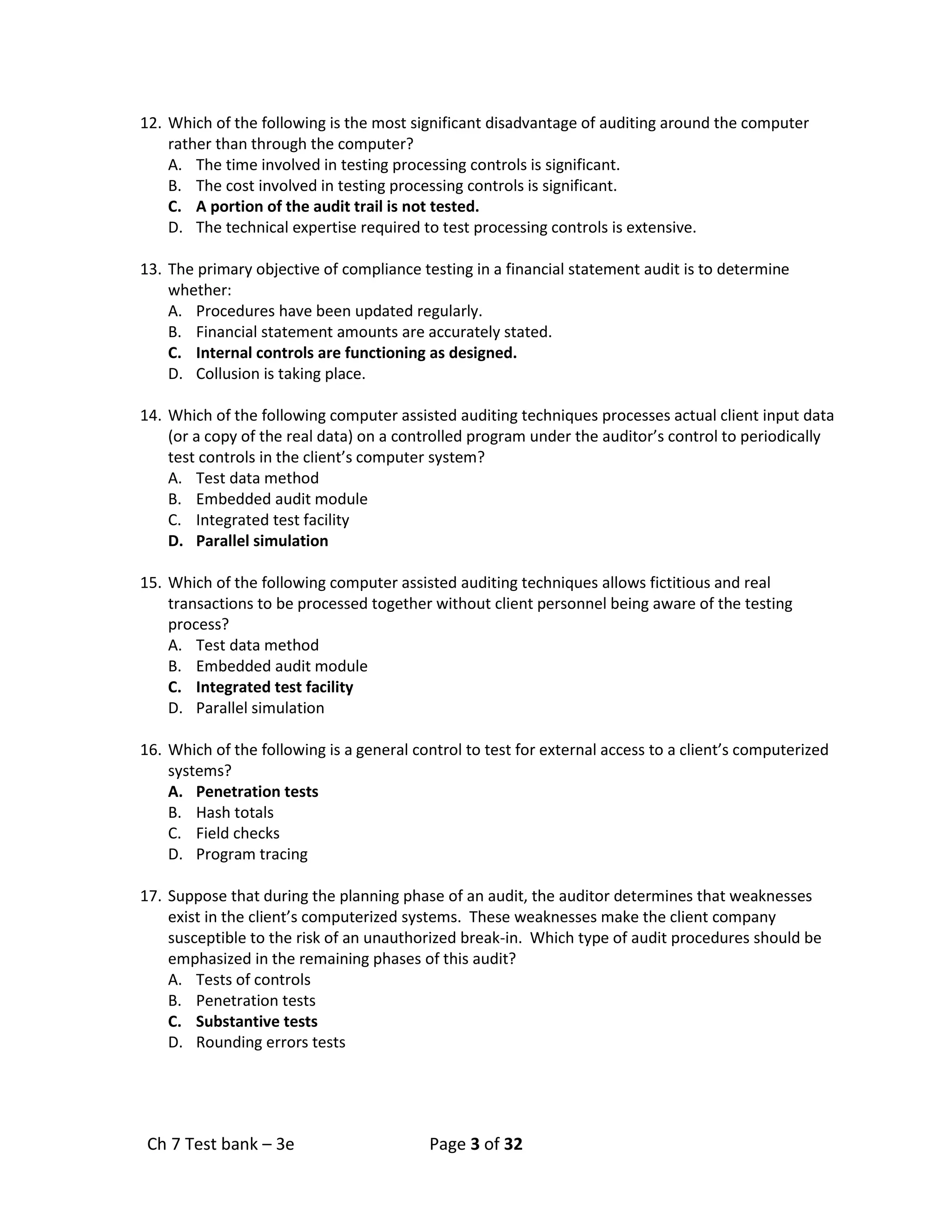
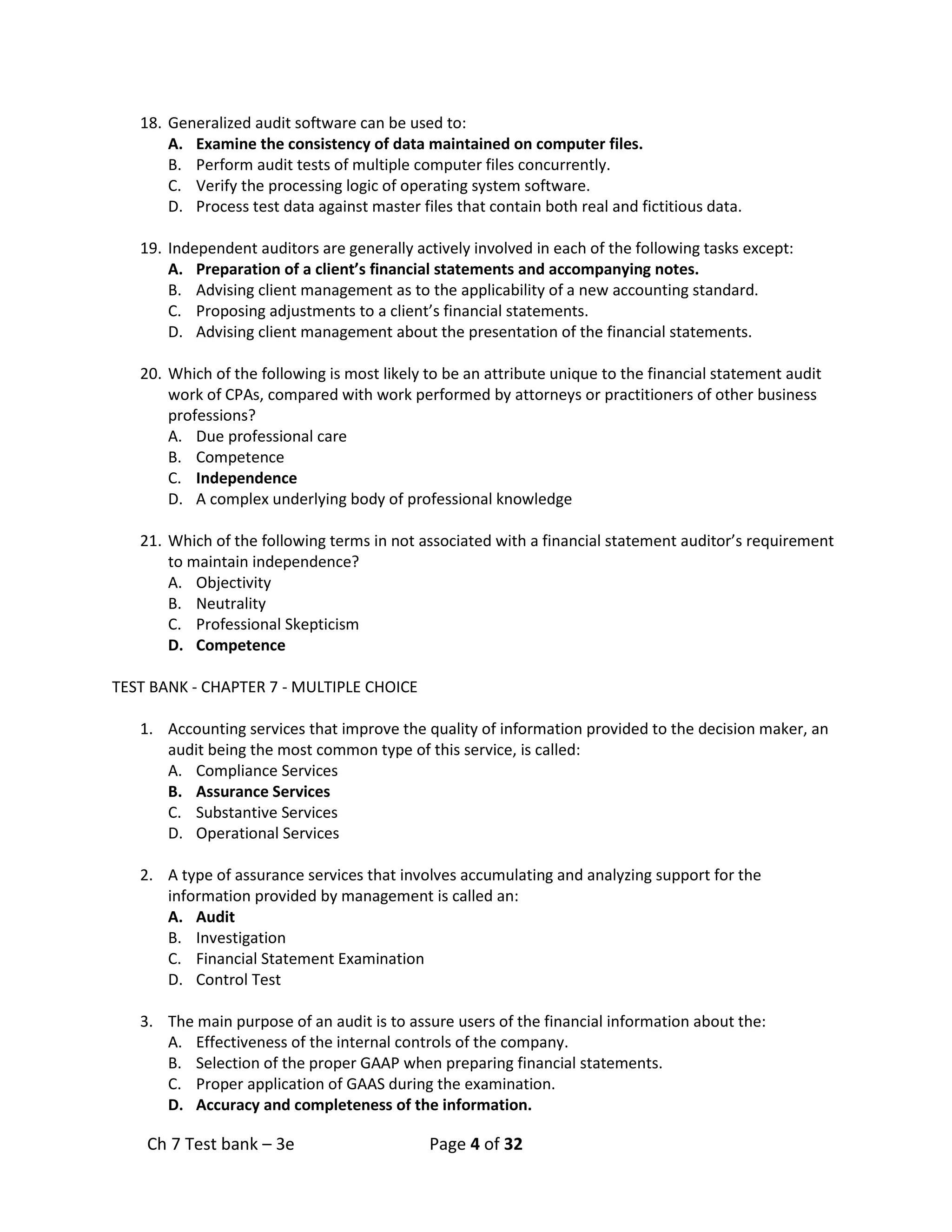
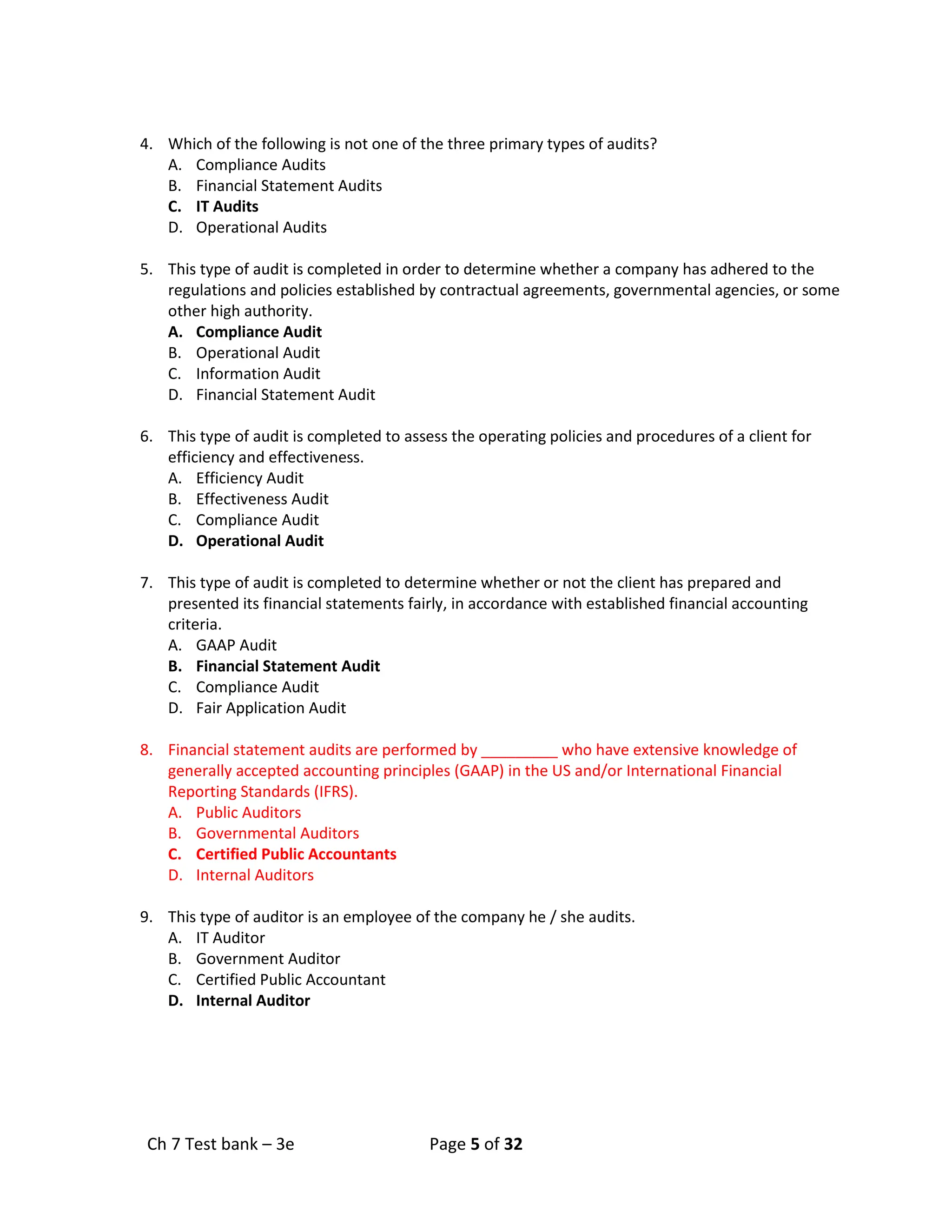
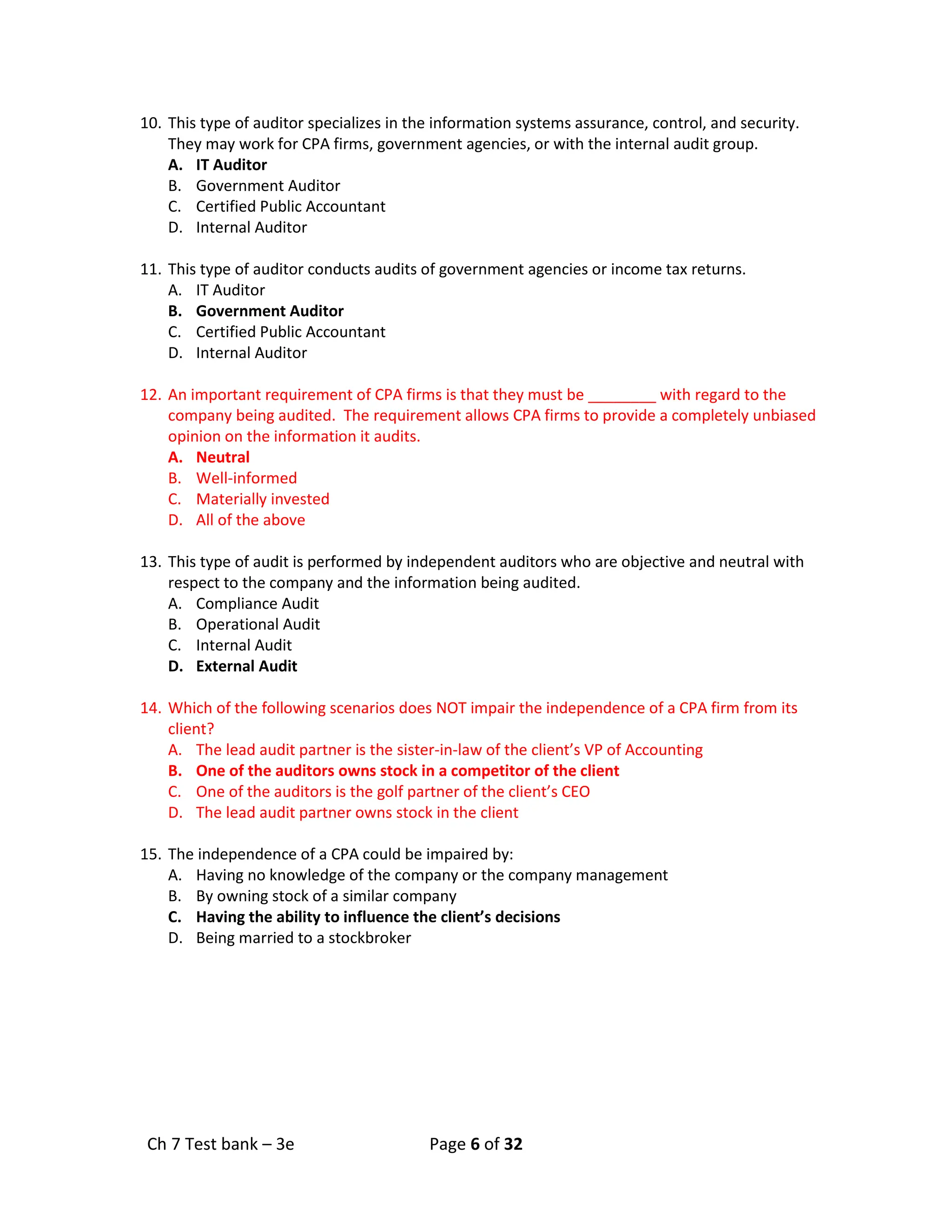
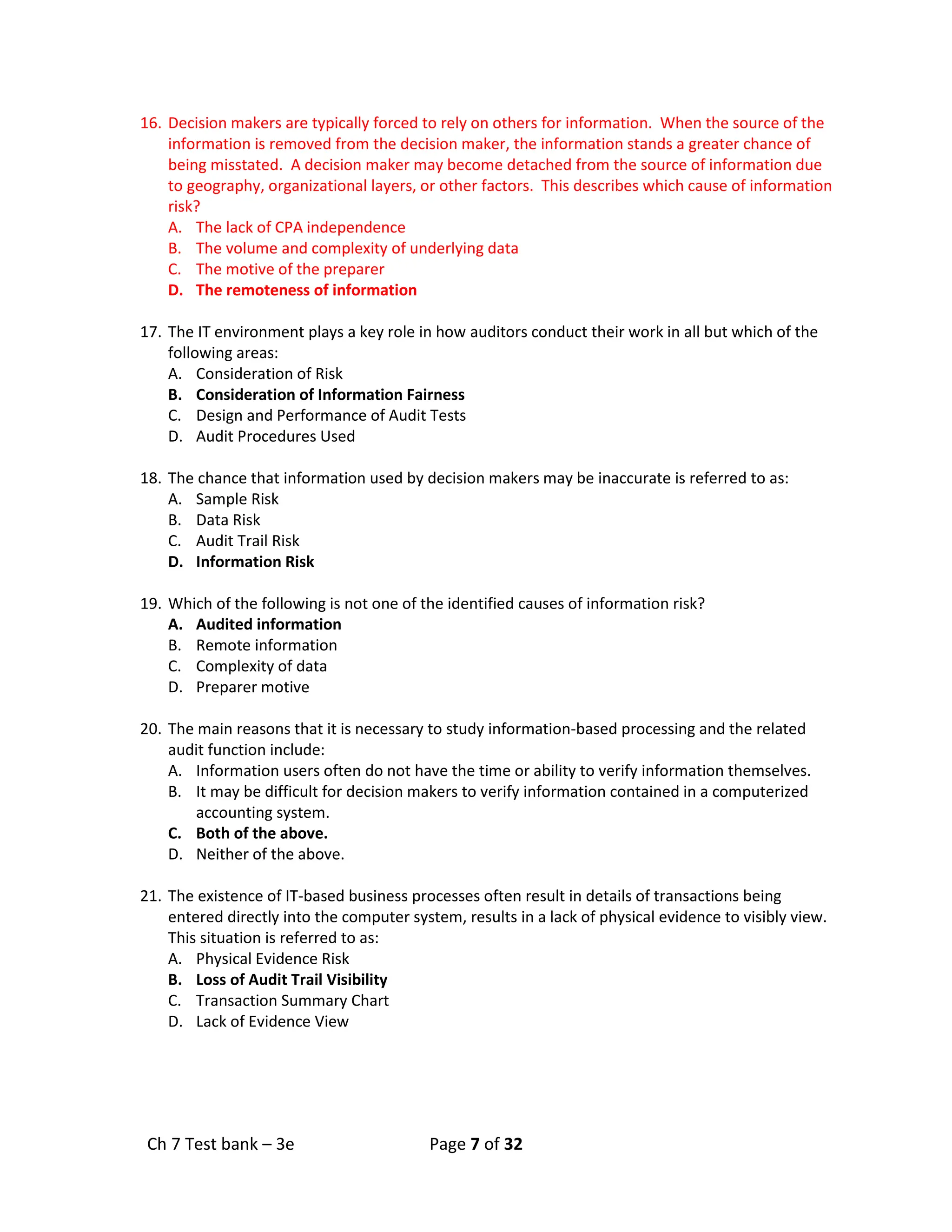
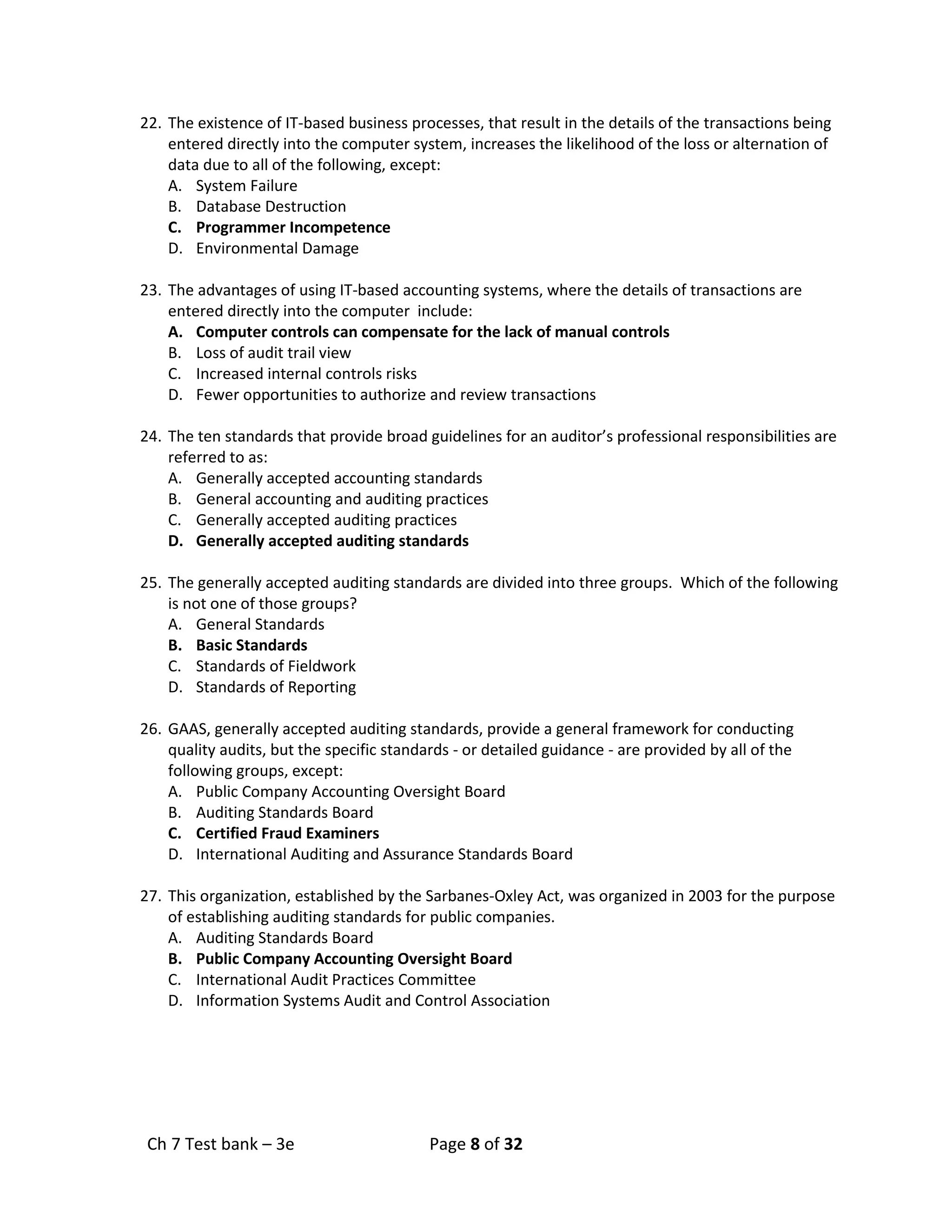
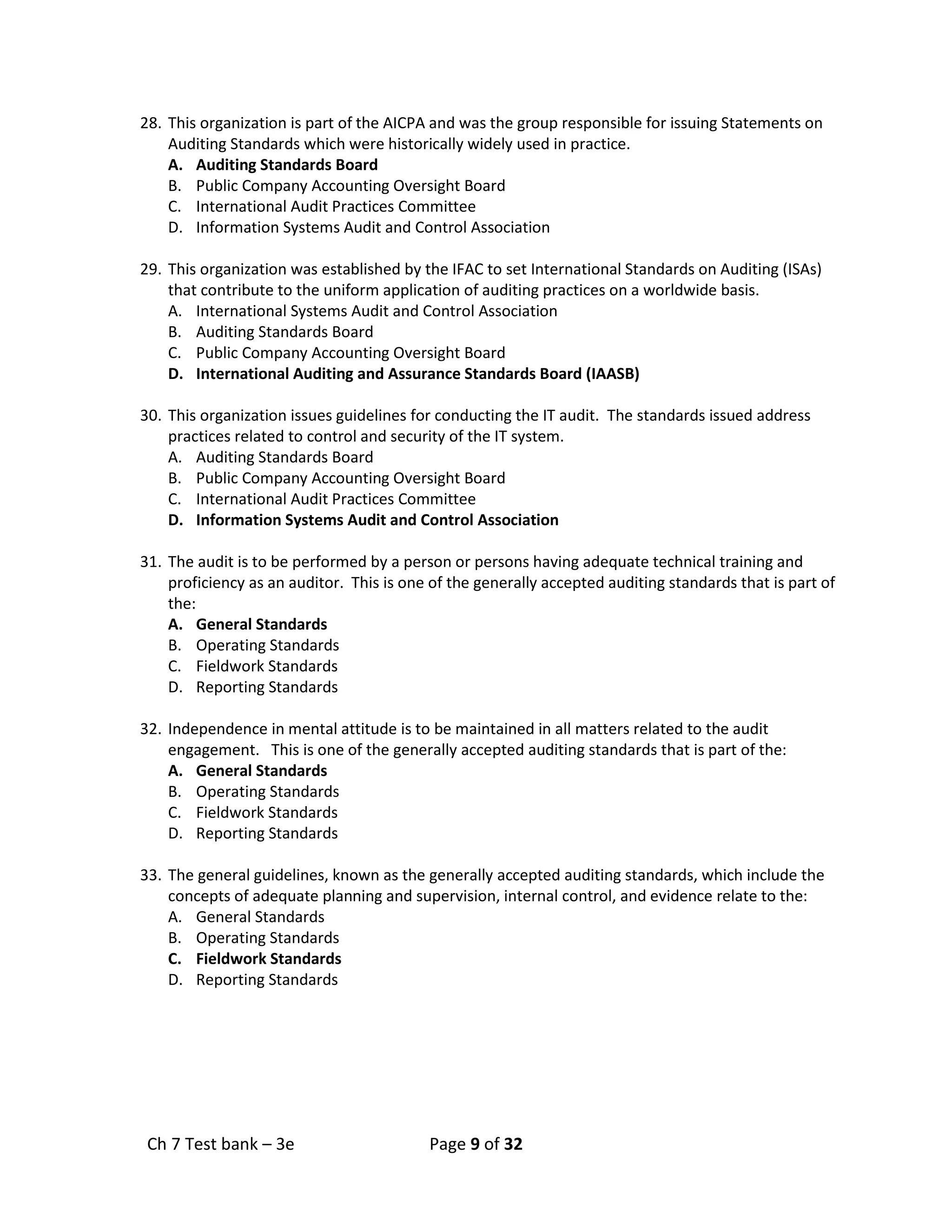
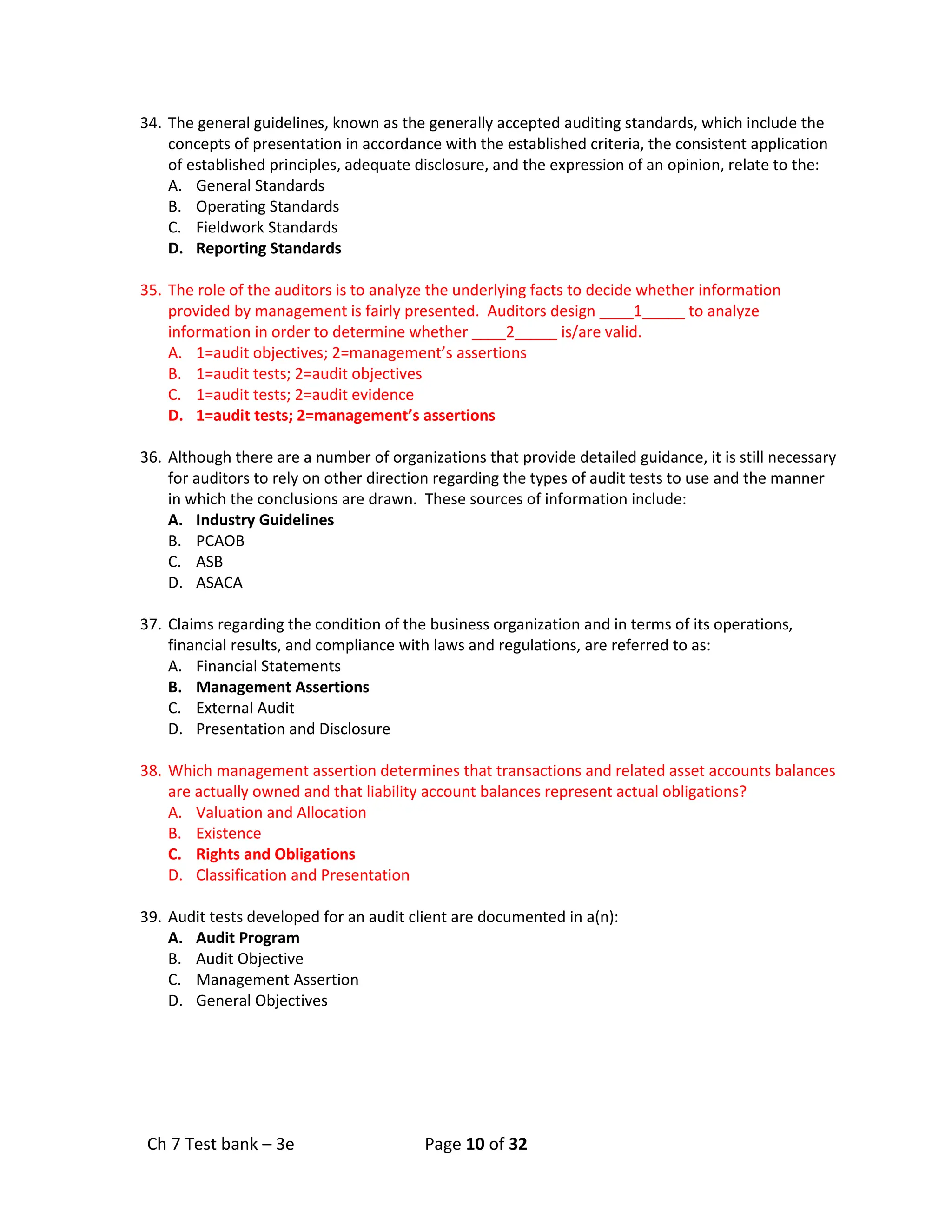
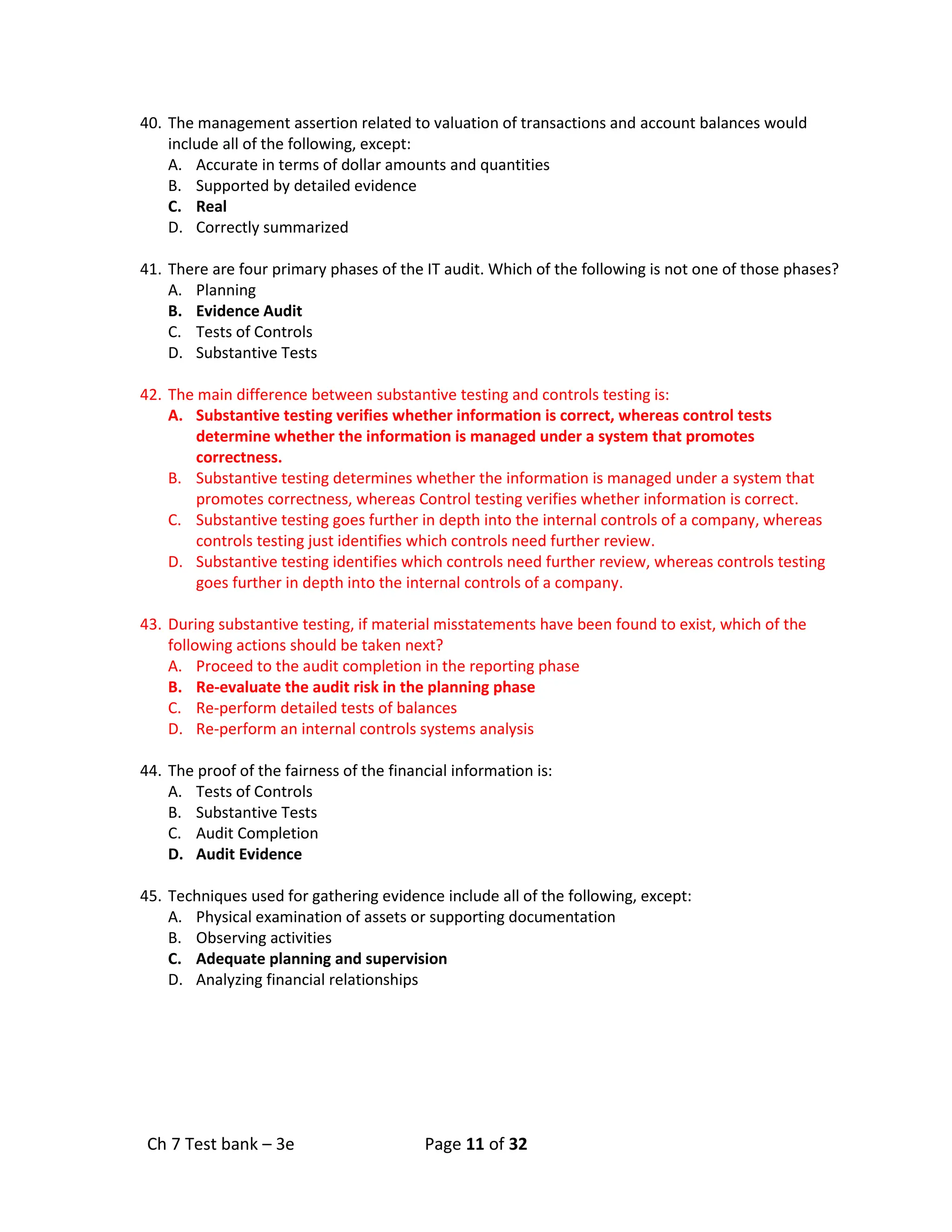
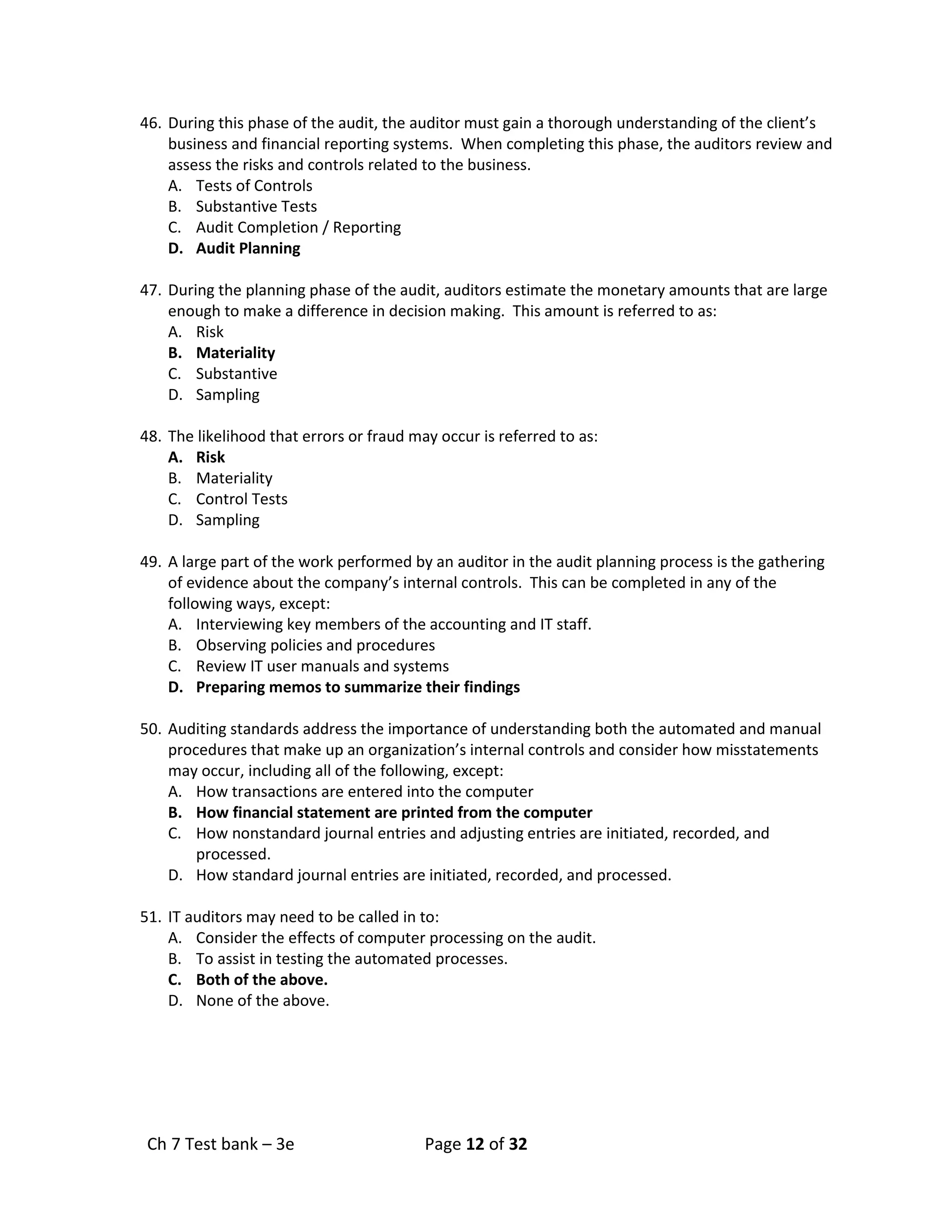
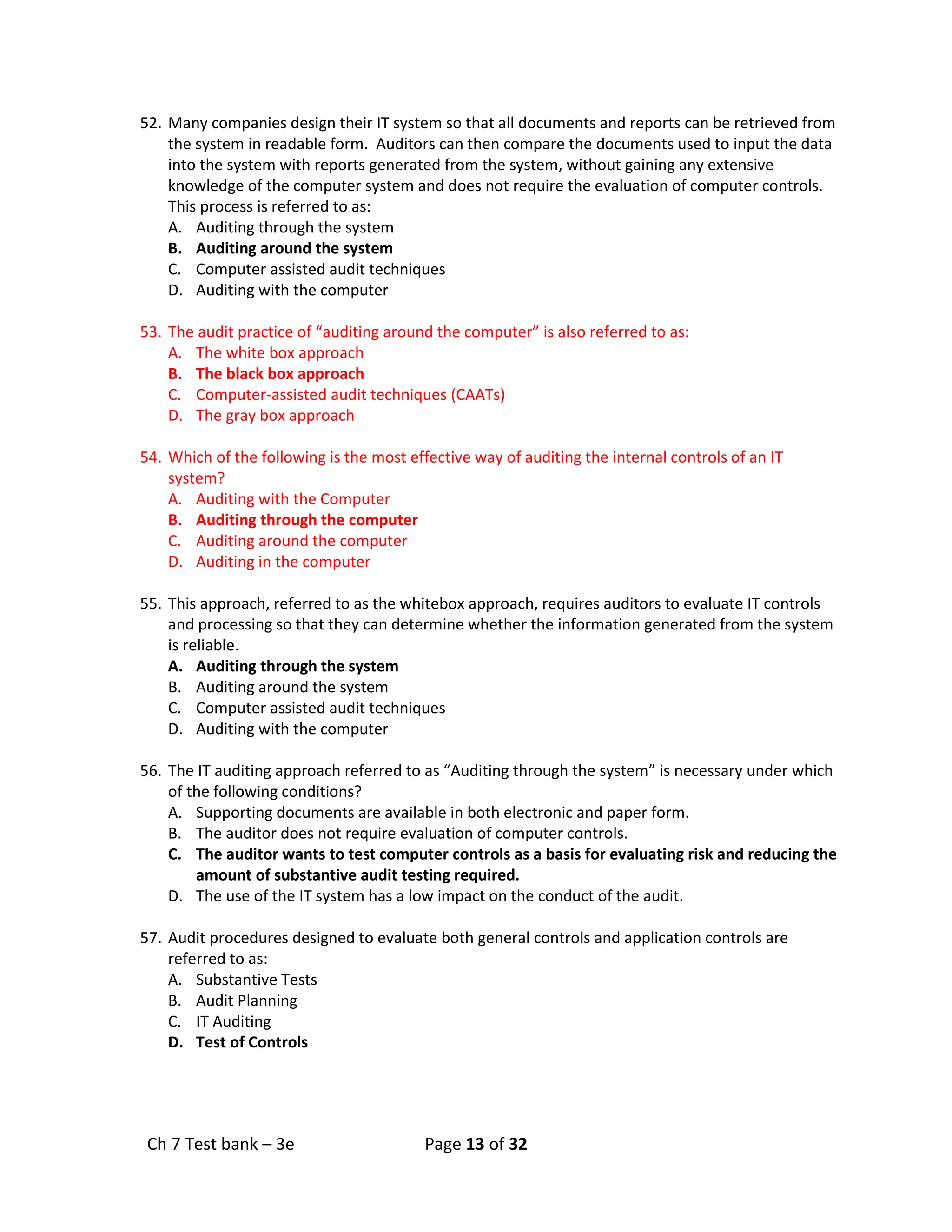
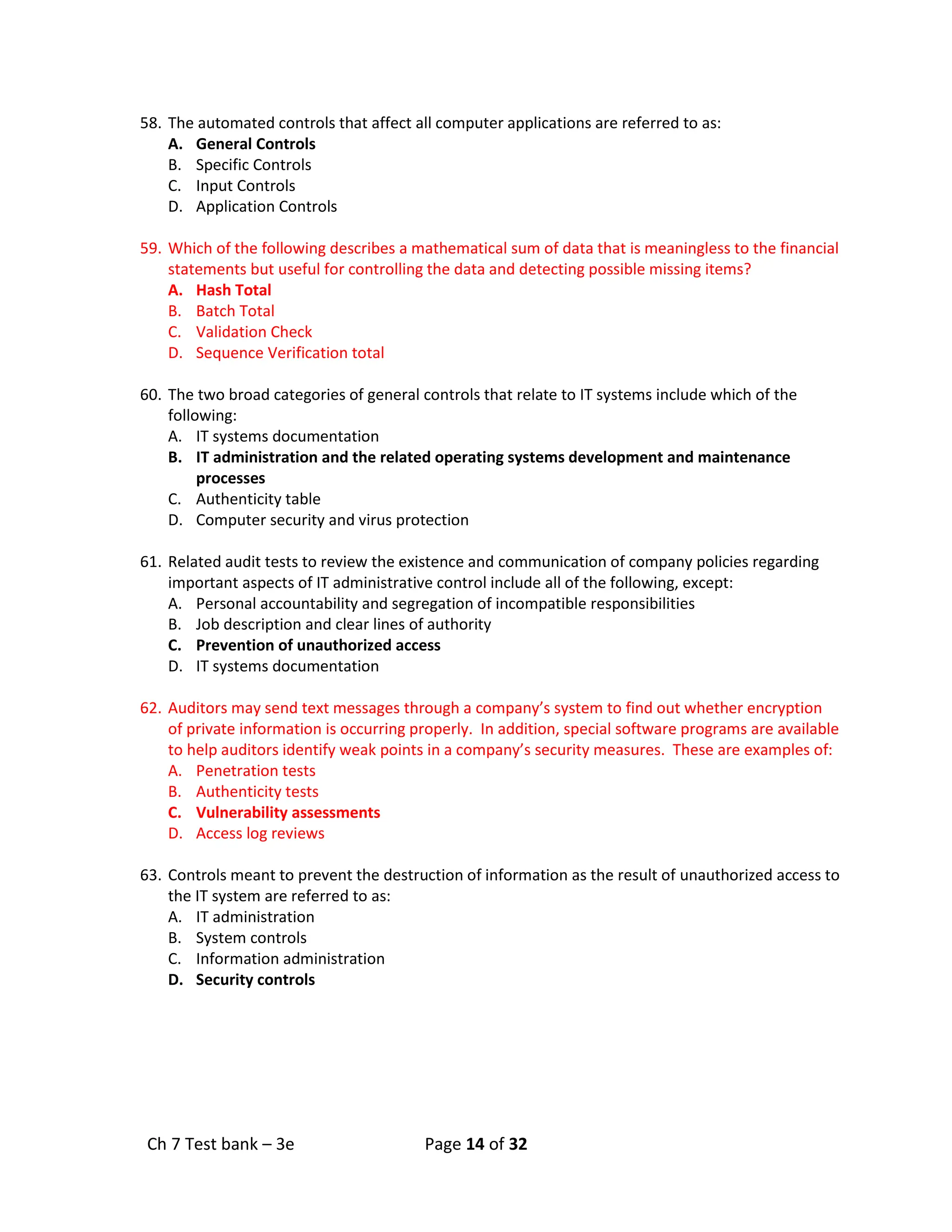
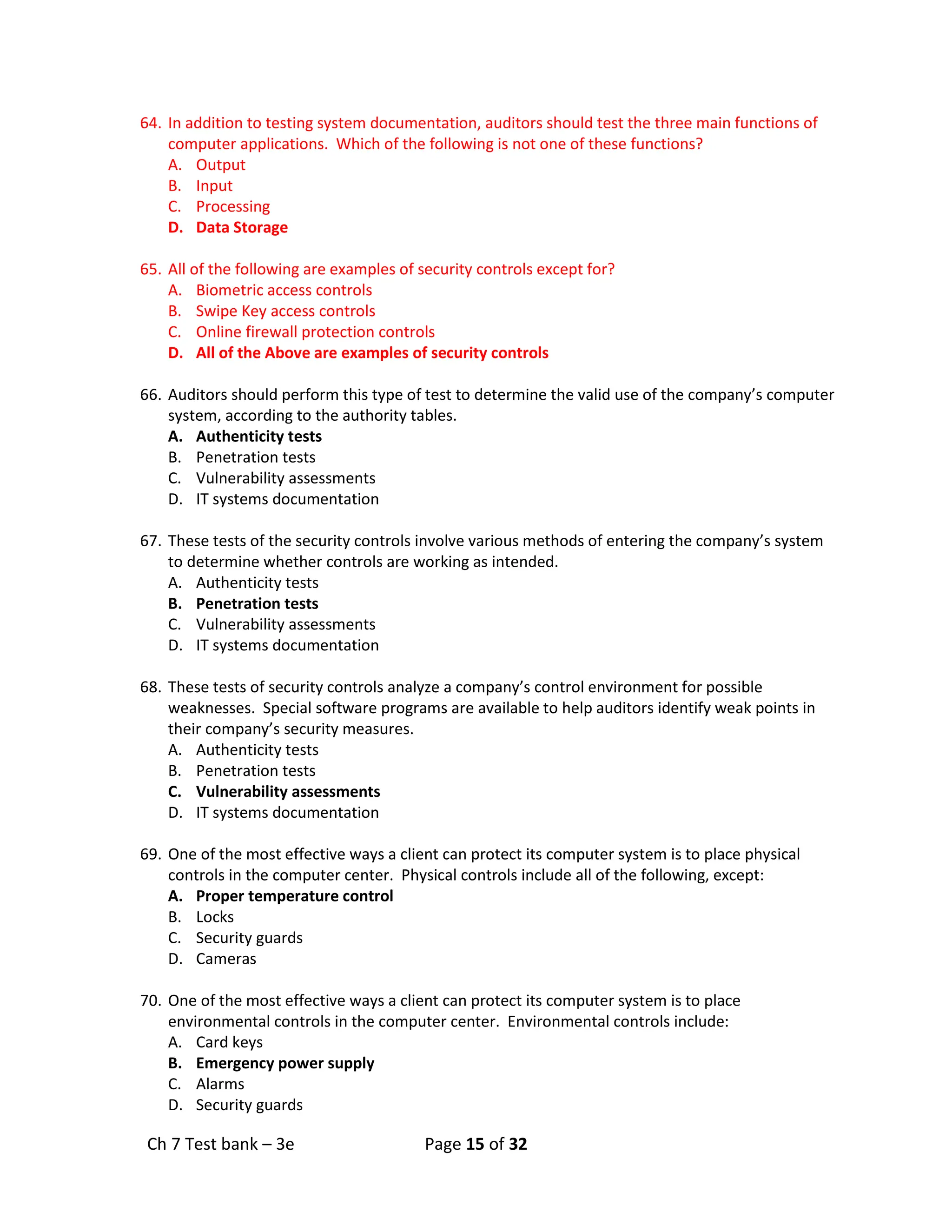

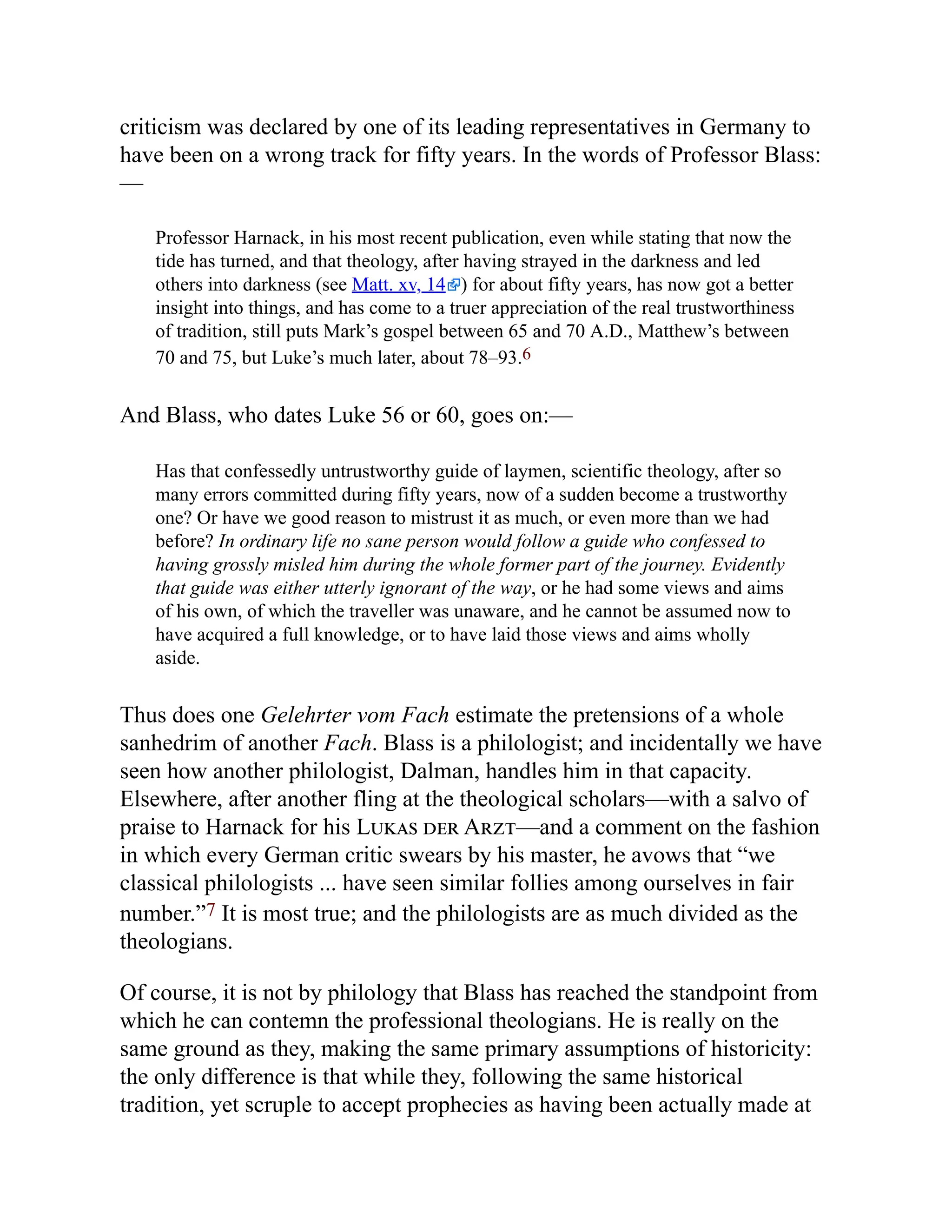
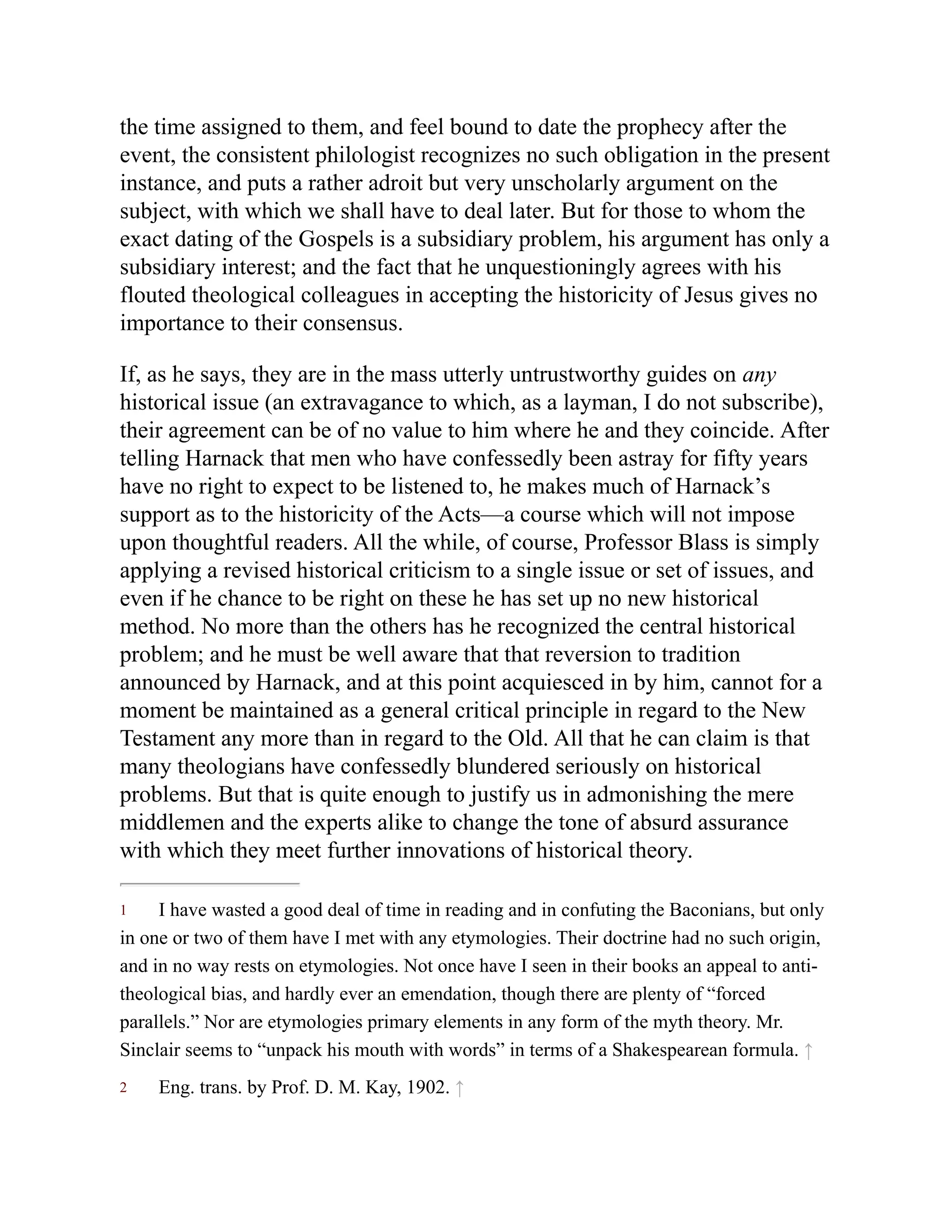
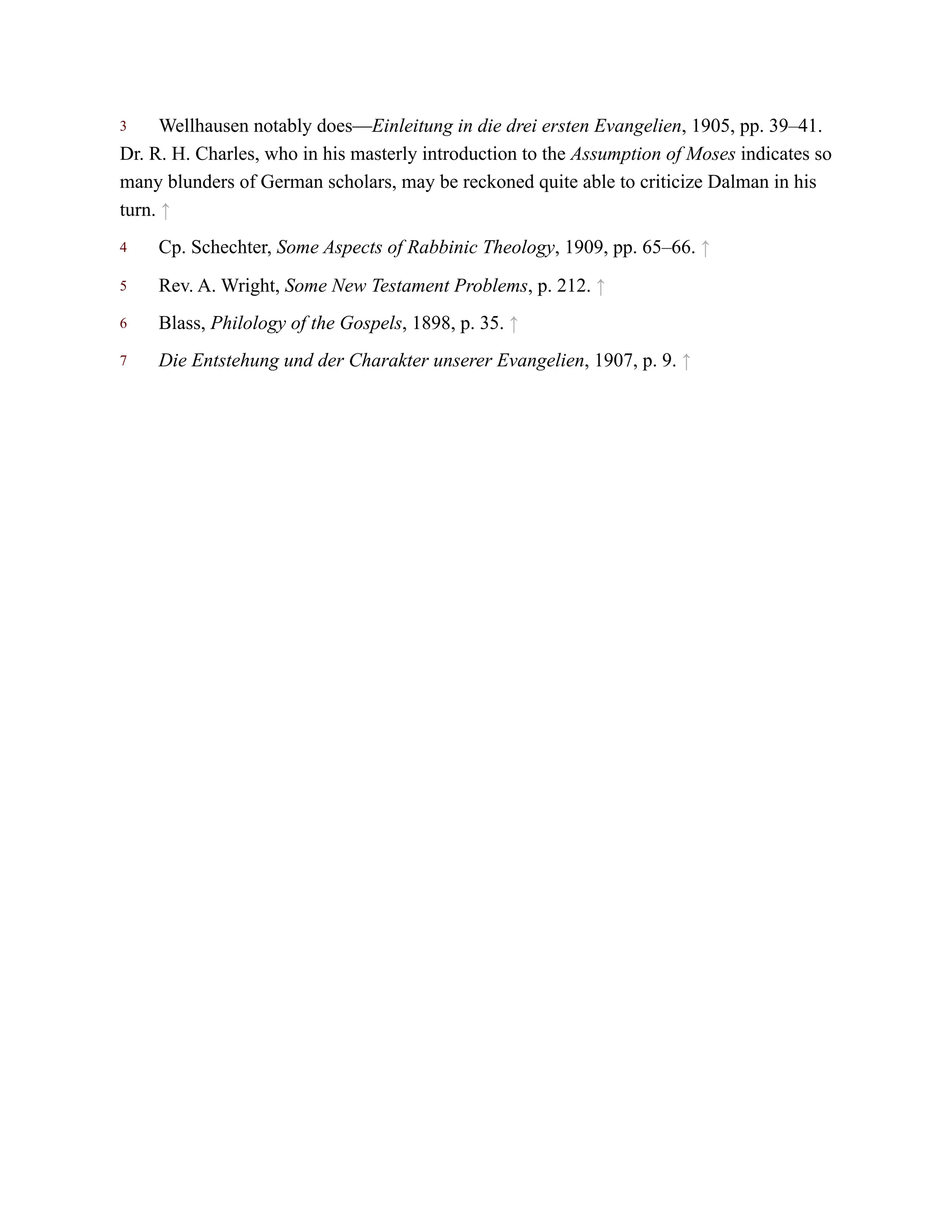


![records baldly tell him that this happened; and “we believe in baptism
because we have seen it done.” But whereas, in the nature of the case, the
reconstruction of the real historic process must be by tentative inference
from a variety of data which for the most part the records as a matter of
course obscured, he makes loud play with the simple fact that the records
lack the required clear mention, and brands as “unsupported conjecture” the
theorem offered in place of the plain untruth with which he has so long been
satisfied.
In his own sifted and “primitive” records we have the narration of the
carrying of the Divine Man to a height (“pinnacle of the temple” only in the
supposed primitive Gospel) by Satan for purposes of temptation. For a
mythologist this myth easily falls into line as a variant of the series of Pan
and the young Zeus at the altar on the mountain top, Pan and Apollo
competing on the top of Mount Tmolus, Apollo and Marsyas, all deriving
from the Babylonian figures of the Goat-God (Capricorn) and the Sun-God
on the Mountain of the World, representing the starting of the sun on his
yearly course. That assignment explains at once the Pagan myths and the
Christian, which is thus shown to have borrowed from the myth material of
the Greco-Oriental world in an early documentary stage. Challenged to
evade that solution, he mentions only the Pan-Zeus story, says nothing of
the series of variants or of the Babylonian original, and replies that he is
unable to trace any real and fundamental connection between the stories. In the
Buddhist narrative [which had been cited as an analogue1] the “temptation” to
satisfy the cravings of hunger, the promptings of ambition, and the doubts as to
the overruling Providence of God, are all wanting. In the Roman story, too, Pan,
as representing in satyr-form the lower and animal propensities of man, is a very
different being to the Hebrew Satan; moreover, there is no tempting of Jupiter, as
there is of Jesus. Jupiter, likewise, is wholly a god; Jesus is a sorely bested Man,
although divine. There is, in short, not the least affinity between any of these
narratives beyond the general idea of trial.2
And this figures as a refutation. For our traditionalist, comparative
mythology does not and cannot exist; for him there can be no fundamental
connection between any two nominal myths unless they are absolutely
identical in all their details; and the goat-footed Pan and the goat-footed](https://image.slidesharecdn.com/6836-250624174151-210e5631/75/Accounting-Information-Systems-Controls-Processes-3rd-Edition-Turner-Test-Bank-27-2048.jpg)
![1
professional battle over documentary problems, the sheer lack of logical
challenge on fundamental issues has left all the disputants alike, down till
the other day, taking for granted data to which they had no critical right.
Throughout the whole debate, even in the case of scholars who profess to
be loyal to induction, we find that there is a presupposition upon which
induction has no effect. Bernhard Weiss, quoting from Holtzmann the
profoundly subversive proposition that “Christianity has been ‘book-
learning’ from the beginning,” in reply “can only say, God be praised that it
is not so.” Yet the real effect of his own research is to show us much—to
show that there was no oral evangel, that the formula of “the kingdom of
heaven” is but a phrase to fill a blank. Even candid inquirers who see the
difficulty, like Samuel Davidson, leave it unsolved. Says Davidson:—
When we try to form a correct view of Jesus’s utterances regarding this Kingdom
of God, we find they have much vagueness and ambiguity. Their differences also
in the Synoptic Gospels and the fourth are so apparent that the latter must be left
out of account in any attempt to get a proper sketch of Jesus’s hopes. His apostles
and other early reporters misunderstood some of His sayings, making them
crasser. Oral tradition marred their original form. This is specially the case with
respect to the enthusiastic hopes about the kingdom He looked for. But as the
ideal did not become actual we must rest in the great fact that the Christianity He
introduced was the nucleus of a perfect system adapted to universal humanity.5
“We must” do no such thing. We “must” draw a licit inference. The alleged
great fact is morally a chimera, and historically a hallucination. To admit
that all the evidence collapses, and then to posit the visionary gospel with a
“must,” is to abandon critical principle. The “must” is simply the eternal
presupposition. And the choice of the sincere student “must” be between
that negation of science and a fresh scientific search, from which the
presupposition, as such, is excluded. If it can reappear as a licit conclusion,
so be it. But it has never yet so arisen.
With the customary bad faith of the orthodox apologist, Dr. Thorburn represents as a
sudden change of thesis the proposition that “the Christian narrative is merely an ethical
adaptation of the Greek story,” because that proposition follows on the remark that the
Christian myth “might fairly be regarded” [as it actually has been] “as a later](https://image.slidesharecdn.com/6836-250624174151-210e5631/75/Accounting-Information-Systems-Controls-Processes-3rd-Edition-Turner-Test-Bank-30-2048.jpg)


![BLASS AND FLINDERS PETRIE
A very interesting attempt to bring the synoptic problem to a new critical
test has latterly been made by Dr. Flinders Petrie in his work, The Growth
of the Gospels as shown by Structural Criticism (1910). His starting
point is the likelihood that logia, analogous to the non-canonical fragments
discovered in recent years, were the original material from which the
Gospels were built up. The hypothesis is prima facie quite legitimate, there
being nothing to repel it. As he contends, there is now evidence that writing
was in much more common use in some periods of antiquity than scholars
had formerly supposed; and scraps of writing by non-scholarly persons, he
argues, may have been widely current in the environment with which we
are concerned. All the while he is founding on data from the Egypt of the
third century for a Palestinian environment of the first; and he is obliged to
stress the point that Matthew the tax-gatherer was a “professional scribe,”
while his argument runs that Matthew used the detached jottings of other
people, not his own. But let us follow out his thesis:—
We cannot doubt [writes Dr. Petrie] that such was the course of growth when we
look at the logia. Those collections of brief sayings could hardly have come into
existence if full narratives and sufficient standards of information in the Gospels
were already circulating. They belong essentially to a preparatory age, when
records were in course of compilation. But, once written out, they naturally
survived side by side with the Gospels, which had only used a portion of their
material.1
It is not quite clear whether Dr. Petrie meant here to claim not only that the
so-called Logia Iesou published in 1897 and 1904 are anterior to and
independent of the Gospels (though found only in third-century MSS.), but
that they are on the same footing of credibility with the Gospels. This,
however, seems inevitably to follow from his position, though it appears to
suggest to him no difficulty about the general historicity of the Gospel
story, which he too takes for granted. Let us then note the problems raised.](https://image.slidesharecdn.com/6836-250624174151-210e5631/75/Accounting-Information-Systems-Controls-Processes-3rd-Edition-Turner-Test-Bank-34-2048.jpg)
![But let us see what Savonarola actually did. He was, so to speak, a
professional prophet, and while he predicted not only a sack of Rome but
his own death by violence, he also, by the admission of sympathetic
biographers, put forth many vaticinations of an entirely fantastic character.
Here again he might very well have a Jewish prototype. For us the first
question is, What did he actually predict in history, and how and why did he
predict it? In 1494 he seems to have predicted the French invasion which
took place in that year. Villari asserts that he did so in the sermons he
preached in Lent, but admits that “it is impossible to ascertain the precise
nature” of the sermons in question.3 Father Lucas goes further, and points
out that there is no trace in them of the alleged prophecy4 which Savonarola
in his Compendium Revelationum (1495) claims to have made but does not
date. Villari further admits that the sermons of that year are so badly
reported
as to have lost almost every characteristic of Savonarola’s style. Their reporter,
unable to keep pace with the preacher’s words, only jotted down rough and
fragmentary notes. These were afterwards translated into barbarous dog-Latin—
by way of giving them a more literary form—and published in Venice. For this
reason Quétif and some other writers entertained doubts of their authenticity.5
Villari nevertheless is satisfied of it on internal grounds, and we may accept
his estimate. The main allegation is that in 1494 Savonarola, who had for
years been preaching that national sin would elicit divine chastisement,
in those Lenten discourses, and also in some others, foretold the coming of a new
Cyrus, who would march through Italy in triumph, without encountering any
obstacles, and without breaking a single lance. We find numerous records of these
predictions, and the terrors excited by them, in the historians and biographers of
the period; and Fra Benedetto reports his master’s words in the following verses
[thus literally translated]:—
Soon shalt thou see each tyrant overthrown,
And all Italy shalt thou see vanquished,
To her shame, disgrace, and harm.
Thou, Rome, shalt soon be captured:
I see the blade of wrath come upon thee;](https://image.slidesharecdn.com/6836-250624174151-210e5631/75/Accounting-Information-Systems-Controls-Processes-3rd-Edition-Turner-Test-Bank-36-2048.jpg)
![that few shall remain.”13 At the same time he repeatedly predicted his own
death by violence.
On the latter head he had abundant reason for his forecast. On the former it
is very certain that he was not thinking of something that was not to happen
for thirty years. Again and again he assured his hearers and his
correspondents that his predictions were to be fulfilled “in our time.”
Towards the end of 1496 he described himself as “The servant of Christ
Jesus, sent by him to the city of Florence to announce the great scourge
which is to come upon Italy, and especially upon Rome, and which is to
extend itself over all the world in our days and quickly.”14 In 1497, in a
letter to Lodovico Pittorio, chancellor to d’Este, after speaking of the Lord’s
prediction of the fall of Jerusalem, he writes: “Great tribulations are always
[i.e. in the Scriptures] predicted many years before they come. Yet I do not
say that the tribulations which I have foretold will be so long in coming;
nay, they will come soon; indeed I say that the tribulation has already
commenced.”15
Yet again, in 1498, he claims in a sermon that “a part has come to pass,”
noting that “in Rome one has lost a son”—a reference to the murder of the
Duke of Gandia, son of the Pope; and adding that “you have seen who has
died here, and I could tell you, an I would, who is in hell”—supposed to be
a reference to Bernardo del Nero.16 All this was in terms of Savonarola’s
theological and Biblical conception of things, the ruling political
philosophy of his age, as of many before. Wickedness and injustice, fraud
and oppression, were dominant in high places, and God must of necessity
punish, in the fashion in which he was constantly described as doing so in
the Sacred Books, from the Deluge downwards. In Savonarola’s view the
cup of Rome’s abominations was full, and punishment had been earned by
the men then living, in particular by Pope Alexander.
Within two years Savonarola had been put to death, after many tortures; and
Alexander died in 1503 (not by poison, as the tradition goes) without
having seen the predicted desolation. It was under the more respectable of
the two Medicean Popes that Rome was twice sacked in 1527 by the forces
of Charles V; and though there had been infinite slaughter and pestilence in](https://image.slidesharecdn.com/6836-250624174151-210e5631/75/Accounting-Information-Systems-Controls-Processes-3rd-Edition-Turner-Test-Bank-39-2048.jpg)



![stress, but the defilement that they brought. In the case of the Jewish
Temple the “abomination of desolation” had been understood to include the
defiling of the altar with swine’s flesh.4 This, in all likelihood, was the
origin of Savonarola’s prediction as to the bringing of pigs into the
sanctuary at Rome, which, as we have seen, was not fulfilled.
But there was nothing new about a Catholic sack of Rome. The city had
been hideously sacked and in large part destroyed under Gregory VII
(1084) by Robert Guiscard, the Pope’s ally, after having been captured
without sacking by the German Emperor. It just missed being sacked by
Frederick II in 1239. In 1413 it was captured by Ladislaus of Naples, who
gave all Florentine property in the city to pillage. No question of heresy
arose in these episodes; nor did the forces of the Church itself blench at
either sack or sacrilege. Faenza was foully sacked in 1376 by Hawkwood,
called in for its defence by the bishop of Ostia; and in 1377 the same
condottiere massacred the population of Cesena under the express and
continuous orders of Robert, Cardinal of Geneva, the papal legate,
afterwards the “anti-pope” Clement VII. No more bestial massacre took
place in the pandemonium of the fourteenth century; and the sacking of the
churches and the violation of the nuns was on the scale of the bloodshed.5
In view of the endless atrocities of the wars of the Church and of
Christendom there is a certain ripe absurdity about the exegetical comments
on the subject of the sack of Rome in 1527. Says Blass:—
Especially remarkable is this, that he [Savonarola] extends the devastation to the
churches of Rome, which in any ordinary capture (!) by a Catholic army would
have been spared, but in this case were not at all respected, because a great part of
the conquering army consisted of German Lutherans, for whom the Roman
Catholic churches were rather objects of hatred and contempt than of veneration.
Now Lutheranism did not exist in 1496.6
And Dr. Petrie adds: “Such a detail seemed excessively unlikely before the
rise of Lutheranism; yet it came to pass.”7 It is interesting to realize the
notions held by scholars of such standing in regard to European history
after a century signalized by so much historic research; and to find that such](https://image.slidesharecdn.com/6836-250624174151-210e5631/75/Accounting-Information-Systems-Controls-Processes-3rd-Edition-Turner-Test-Bank-45-2048.jpg)