Accounting Information Systems Controls Processes 3rd Edition Turner Test Bank
Accounting Information Systems Controls Processes 3rd Edition Turner Test Bank
Accounting Information Systems Controls Processes 3rd Edition Turner Test Bank
Accounting Information Systems Controls Processes 3rd Edition Turner Test Bank
Accounting Information Systems Controls Processes 3rd Edition Turner Test Bank
1.
Visit https://testbankdeal.com todownload the full version and
browse more test banks or solution manuals
Accounting Information Systems Controls Processes
3rd Edition Turner Test Bank
_____ Press the link below to begin your download _____
https://testbankdeal.com/product/accounting-information-
systems-controls-processes-3rd-edition-turner-test-bank/
Access testbankdeal.com now to download high-quality
test banks or solution manuals
2.
We believe theseproducts will be a great fit for you. Click
the link to download now, or visit testbankdeal.com
to discover even more!
Accounting Information Systems Controls Processes 3rd
Edition Turner Solutions Manual
https://testbankdeal.com/product/accounting-information-systems-
controls-processes-3rd-edition-turner-solutions-manual/
Accounting Information Systems The Processes Controls 2nd
Edition Turner Solutions Manual
https://testbankdeal.com/product/accounting-information-systems-the-
processes-controls-2nd-edition-turner-solutions-manual/
Accounting Information Systems The Processes and Controls
2nd Edition Turner Test Bank
https://testbankdeal.com/product/accounting-information-systems-the-
processes-and-controls-2nd-edition-turner-test-bank/
Intermediate Accounting 2014 FASB Update 15th Edition
Kieso Test Bank
https://testbankdeal.com/product/intermediate-accounting-2014-fasb-
update-15th-edition-kieso-test-bank/
3.
Introduction to MaternityPediatric Nursing 6th Edition
Leifer Solutions Manual
https://testbankdeal.com/product/introduction-to-maternity-pediatric-
nursing-6th-edition-leifer-solutions-manual/
International Economics Theory and Policy 10th Edition
Krugman Test Bank
https://testbankdeal.com/product/international-economics-theory-and-
policy-10th-edition-krugman-test-bank/
Biology Concepts and Investigations 3rd Edition Hoefnagels
Test Bank
https://testbankdeal.com/product/biology-concepts-and-
investigations-3rd-edition-hoefnagels-test-bank/
International Economics 13th Edition Carbaugh Test Bank
https://testbankdeal.com/product/international-economics-13th-edition-
carbaugh-test-bank/
Modern Marketing Research Concepts Methods and Cases 2nd
Edition Feinberg Test Bank
https://testbankdeal.com/product/modern-marketing-research-concepts-
methods-and-cases-2nd-edition-feinberg-test-bank/
4.
Child Psychology AContemporary View Point 7th Edition
Parke Test Bank
https://testbankdeal.com/product/child-psychology-a-contemporary-view-
point-7th-edition-parke-test-bank/
5.
Ch 7 Testbank – 3e Page 1 of 32
ACCOUNTING INFORMATION SYSTEMS/3e
TURNER / WEICKGENANNT/COPELAND
Test Bank: CHAPTER 7: Auditing Information Technology – Bases Processes
NOTE: All new or adjusted questions are in red. New questions are identified by the letter A as part of
the question number; adjusted questions are identified by the letter X as part of the question number.
End of Chapter Questions:
1. Which of the following types of audits is most likely to be conducted for the purpose of
identifying areas for cost savings?
A. Financial Statement Audits
B. Operational Audits
C. Regulatory Audits
D. Compliance Audits
2. Financial statement audits are required to be performed by:
A. Governmental Auditors
B. CPAs
C. Internal Auditors
D. IT Auditors
3. Which of the following is not considered a cause for information risk?
A. Management’s geographic location is far from the source of the information needed to
make effective decisions.
B. The information is collected and prepared by persons who use the information for very
different purposes.
C. The information relates to business activities that are not well understood by those who
collect and summarize the information for decision makers.
D. The information has been tested by internal auditors and a CPA firm.
4. Which of the following is not a part of general accepted auditing standards?
A. General Standards
B. Standards of Fieldwork
C. Standards of Information Systems
D. Standards of Reporting
5. Which of the following best describes what is meant by the term “generally accepted auditing
standards”?
A. Procedures used to gather evidence to support the accuracy of a client’s financial
statements.
B. Measures of the quality of an auditor’s conduct carrying out professional responsibilities.
C. Professional pronouncements issued by the Auditing Standards Board.
D. Rules acknowledged by the accounting profession because of their widespread application.
6.
Ch 7 Testbank – 3e Page 2 of 32
6. In an audit of financial statement in accordance with generally accepted auditing standards, an
auditor is required to:
A. Document the auditor’s understanding of the client company’s internal controls.
B. Search for weaknesses in the operation of the client company’s internal controls.
C. Perform tests of controls to evaluate the effectiveness of the client company’s internal
controls.
D. Determine whether controls are appropriately operating to prevent or detect material
misstatements.
7. Auditors should develop a written audit program so that:
A. All material transactions will be included in substantive testing.
B. Substantive testing performed prior to year end will be minimized.
C. The procedures will achieve specific audit objectives related to specific management
assertions.
D. Each account balance will be tested under either a substantive test or a test of controls.
8. Which of the following audit objectives relates to the management assertion of existence?
A. A transaction is recorded in the proper period.
B. A transaction actually occurred (i.e., it is real)
C. A transaction is properly presented in the financial statements.
D. A transaction is supported by detailed evidence.
9. Which of the following statements regarding an audit program is true?
A. An audit program should be standardized so that it may be used on any client engagement.
B. The audit program should be completed by the client company before the audit planning
stage begins.
C. An audit program should be developed by the internal auditor during the audit’s
completion/reporting phase.
D. An audit program establishes responsibility for each audit test by requiring the signature
or initials of the auditor who performed the test.
10. Risk assessment is a process designed to:
A. Identify possible circumstances and events that may affect the business.
B. Establish policies and procedures to carry out internal controls.
C. Identify and capture information in a timely manner.
D. Review the quality of internal controls throughout the year.
11. Which of the following audit procedures is most likely to be performed during the planning
phase of the audit?
A. Obtain an understanding of the client’s risk assessment process.
B. Identify specific internal control activities that are designed to prevent fraud.
C. Evaluate the reasonableness of the client’s accounting estimates.
D. Test the timely cutoff of cash payments and collections.
7.
Ch 7 Testbank – 3e Page 3 of 32
12. Which of the following is the most significant disadvantage of auditing around the computer
rather than through the computer?
A. The time involved in testing processing controls is significant.
B. The cost involved in testing processing controls is significant.
C. A portion of the audit trail is not tested.
D. The technical expertise required to test processing controls is extensive.
13. The primary objective of compliance testing in a financial statement audit is to determine
whether:
A. Procedures have been updated regularly.
B. Financial statement amounts are accurately stated.
C. Internal controls are functioning as designed.
D. Collusion is taking place.
14. Which of the following computer assisted auditing techniques processes actual client input data
(or a copy of the real data) on a controlled program under the auditor’s control to periodically
test controls in the client’s computer system?
A. Test data method
B. Embedded audit module
C. Integrated test facility
D. Parallel simulation
15. Which of the following computer assisted auditing techniques allows fictitious and real
transactions to be processed together without client personnel being aware of the testing
process?
A. Test data method
B. Embedded audit module
C. Integrated test facility
D. Parallel simulation
16. Which of the following is a general control to test for external access to a client’s computerized
systems?
A. Penetration tests
B. Hash totals
C. Field checks
D. Program tracing
17. Suppose that during the planning phase of an audit, the auditor determines that weaknesses
exist in the client’s computerized systems. These weaknesses make the client company
susceptible to the risk of an unauthorized break-in. Which type of audit procedures should be
emphasized in the remaining phases of this audit?
A. Tests of controls
B. Penetration tests
C. Substantive tests
D. Rounding errors tests
8.
Ch 7 Testbank – 3e Page 4 of 32
18. Generalized audit software can be used to:
A. Examine the consistency of data maintained on computer files.
B. Perform audit tests of multiple computer files concurrently.
C. Verify the processing logic of operating system software.
D. Process test data against master files that contain both real and fictitious data.
19. Independent auditors are generally actively involved in each of the following tasks except:
A. Preparation of a client’s financial statements and accompanying notes.
B. Advising client management as to the applicability of a new accounting standard.
C. Proposing adjustments to a client’s financial statements.
D. Advising client management about the presentation of the financial statements.
20. Which of the following is most likely to be an attribute unique to the financial statement audit
work of CPAs, compared with work performed by attorneys or practitioners of other business
professions?
A. Due professional care
B. Competence
C. Independence
D. A complex underlying body of professional knowledge
21. Which of the following terms in not associated with a financial statement auditor’s requirement
to maintain independence?
A. Objectivity
B. Neutrality
C. Professional Skepticism
D. Competence
TEST BANK - CHAPTER 7 - MULTIPLE CHOICE
1. Accounting services that improve the quality of information provided to the decision maker, an
audit being the most common type of this service, is called:
A. Compliance Services
B. Assurance Services
C. Substantive Services
D. Operational Services
2. A type of assurance services that involves accumulating and analyzing support for the
information provided by management is called an:
A. Audit
B. Investigation
C. Financial Statement Examination
D. Control Test
3. The main purpose of an audit is to assure users of the financial information about the:
A. Effectiveness of the internal controls of the company.
B. Selection of the proper GAAP when preparing financial statements.
C. Proper application of GAAS during the examination.
D. Accuracy and completeness of the information.
9.
Ch 7 Testbank – 3e Page 5 of 32
4. Which of the following is not one of the three primary types of audits?
A. Compliance Audits
B. Financial Statement Audits
C. IT Audits
D. Operational Audits
5. This type of audit is completed in order to determine whether a company has adhered to the
regulations and policies established by contractual agreements, governmental agencies, or some
other high authority.
A. Compliance Audit
B. Operational Audit
C. Information Audit
D. Financial Statement Audit
6. This type of audit is completed to assess the operating policies and procedures of a client for
efficiency and effectiveness.
A. Efficiency Audit
B. Effectiveness Audit
C. Compliance Audit
D. Operational Audit
7. This type of audit is completed to determine whether or not the client has prepared and
presented its financial statements fairly, in accordance with established financial accounting
criteria.
A. GAAP Audit
B. Financial Statement Audit
C. Compliance Audit
D. Fair Application Audit
8. Financial statement audits are performed by _________ who have extensive knowledge of
generally accepted accounting principles (GAAP) in the US and/or International Financial
Reporting Standards (IFRS).
A. Public Auditors
B. Governmental Auditors
C. Certified Public Accountants
D. Internal Auditors
9. This type of auditor is an employee of the company he / she audits.
A. IT Auditor
B. Government Auditor
C. Certified Public Accountant
D. Internal Auditor
10.
Ch 7 Testbank – 3e Page 6 of 32
10. This type of auditor specializes in the information systems assurance, control, and security.
They may work for CPA firms, government agencies, or with the internal audit group.
A. IT Auditor
B. Government Auditor
C. Certified Public Accountant
D. Internal Auditor
11. This type of auditor conducts audits of government agencies or income tax returns.
A. IT Auditor
B. Government Auditor
C. Certified Public Accountant
D. Internal Auditor
12. An important requirement of CPA firms is that they must be ________ with regard to the
company being audited. The requirement allows CPA firms to provide a completely unbiased
opinion on the information it audits.
A. Neutral
B. Well-informed
C. Materially invested
D. All of the above
13. This type of audit is performed by independent auditors who are objective and neutral with
respect to the company and the information being audited.
A. Compliance Audit
B. Operational Audit
C. Internal Audit
D. External Audit
14. Which of the following scenarios does NOT impair the independence of a CPA firm from its
client?
A. The lead audit partner is the sister-in-law of the client’s VP of Accounting
B. One of the auditors owns stock in a competitor of the client
C. One of the auditors is the golf partner of the client’s CEO
D. The lead audit partner owns stock in the client
15. The independence of a CPA could be impaired by:
A. Having no knowledge of the company or the company management
B. By owning stock of a similar company
C. Having the ability to influence the client’s decisions
D. Being married to a stockbroker
11.
Ch 7 Testbank – 3e Page 7 of 32
16. Decision makers are typically forced to rely on others for information. When the source of the
information is removed from the decision maker, the information stands a greater chance of
being misstated. A decision maker may become detached from the source of information due
to geography, organizational layers, or other factors. This describes which cause of information
risk?
A. The lack of CPA independence
B. The volume and complexity of underlying data
C. The motive of the preparer
D. The remoteness of information
17. The IT environment plays a key role in how auditors conduct their work in all but which of the
following areas:
A. Consideration of Risk
B. Consideration of Information Fairness
C. Design and Performance of Audit Tests
D. Audit Procedures Used
18. The chance that information used by decision makers may be inaccurate is referred to as:
A. Sample Risk
B. Data Risk
C. Audit Trail Risk
D. Information Risk
19. Which of the following is not one of the identified causes of information risk?
A. Audited information
B. Remote information
C. Complexity of data
D. Preparer motive
20. The main reasons that it is necessary to study information-based processing and the related
audit function include:
A. Information users often do not have the time or ability to verify information themselves.
B. It may be difficult for decision makers to verify information contained in a computerized
accounting system.
C. Both of the above.
D. Neither of the above.
21. The existence of IT-based business processes often result in details of transactions being
entered directly into the computer system, results in a lack of physical evidence to visibly view.
This situation is referred to as:
A. Physical Evidence Risk
B. Loss of Audit Trail Visibility
C. Transaction Summary Chart
D. Lack of Evidence View
12.
Ch 7 Testbank – 3e Page 8 of 32
22. The existence of IT-based business processes, that result in the details of the transactions being
entered directly into the computer system, increases the likelihood of the loss or alternation of
data due to all of the following, except:
A. System Failure
B. Database Destruction
C. Programmer Incompetence
D. Environmental Damage
23. The advantages of using IT-based accounting systems, where the details of transactions are
entered directly into the computer include:
A. Computer controls can compensate for the lack of manual controls
B. Loss of audit trail view
C. Increased internal controls risks
D. Fewer opportunities to authorize and review transactions
24. The ten standards that provide broad guidelines for an auditor’s professional responsibilities are
referred to as:
A. Generally accepted accounting standards
B. General accounting and auditing practices
C. Generally accepted auditing practices
D. Generally accepted auditing standards
25. The generally accepted auditing standards are divided into three groups. Which of the following
is not one of those groups?
A. General Standards
B. Basic Standards
C. Standards of Fieldwork
D. Standards of Reporting
26. GAAS, generally accepted auditing standards, provide a general framework for conducting
quality audits, but the specific standards - or detailed guidance - are provided by all of the
following groups, except:
A. Public Company Accounting Oversight Board
B. Auditing Standards Board
C. Certified Fraud Examiners
D. International Auditing and Assurance Standards Board
27. This organization, established by the Sarbanes-Oxley Act, was organized in 2003 for the purpose
of establishing auditing standards for public companies.
A. Auditing Standards Board
B. Public Company Accounting Oversight Board
C. International Audit Practices Committee
D. Information Systems Audit and Control Association
13.
Ch 7 Testbank – 3e Page 9 of 32
28. This organization is part of the AICPA and was the group responsible for issuing Statements on
Auditing Standards which were historically widely used in practice.
A. Auditing Standards Board
B. Public Company Accounting Oversight Board
C. International Audit Practices Committee
D. Information Systems Audit and Control Association
29. This organization was established by the IFAC to set International Standards on Auditing (ISAs)
that contribute to the uniform application of auditing practices on a worldwide basis.
A. International Systems Audit and Control Association
B. Auditing Standards Board
C. Public Company Accounting Oversight Board
D. International Auditing and Assurance Standards Board (IAASB)
30. This organization issues guidelines for conducting the IT audit. The standards issued address
practices related to control and security of the IT system.
A. Auditing Standards Board
B. Public Company Accounting Oversight Board
C. International Audit Practices Committee
D. Information Systems Audit and Control Association
31. The audit is to be performed by a person or persons having adequate technical training and
proficiency as an auditor. This is one of the generally accepted auditing standards that is part of
the:
A. General Standards
B. Operating Standards
C. Fieldwork Standards
D. Reporting Standards
32. Independence in mental attitude is to be maintained in all matters related to the audit
engagement. This is one of the generally accepted auditing standards that is part of the:
A. General Standards
B. Operating Standards
C. Fieldwork Standards
D. Reporting Standards
33. The general guidelines, known as the generally accepted auditing standards, which include the
concepts of adequate planning and supervision, internal control, and evidence relate to the:
A. General Standards
B. Operating Standards
C. Fieldwork Standards
D. Reporting Standards
14.
Ch 7 Testbank – 3e Page 10 of 32
34. The general guidelines, known as the generally accepted auditing standards, which include the
concepts of presentation in accordance with the established criteria, the consistent application
of established principles, adequate disclosure, and the expression of an opinion, relate to the:
A. General Standards
B. Operating Standards
C. Fieldwork Standards
D. Reporting Standards
35. The role of the auditors is to analyze the underlying facts to decide whether information
provided by management is fairly presented. Auditors design ____1_____ to analyze
information in order to determine whether ____2_____ is/are valid.
A. 1=audit objectives; 2=management’s assertions
B. 1=audit tests; 2=audit objectives
C. 1=audit tests; 2=audit evidence
D. 1=audit tests; 2=management’s assertions
36. Although there are a number of organizations that provide detailed guidance, it is still necessary
for auditors to rely on other direction regarding the types of audit tests to use and the manner
in which the conclusions are drawn. These sources of information include:
A. Industry Guidelines
B. PCAOB
C. ASB
D. ASACA
37. Claims regarding the condition of the business organization and in terms of its operations,
financial results, and compliance with laws and regulations, are referred to as:
A. Financial Statements
B. Management Assertions
C. External Audit
D. Presentation and Disclosure
38. Which management assertion determines that transactions and related asset accounts balances
are actually owned and that liability account balances represent actual obligations?
A. Valuation and Allocation
B. Existence
C. Rights and Obligations
D. Classification and Presentation
39. Audit tests developed for an audit client are documented in a(n):
A. Audit Program
B. Audit Objective
C. Management Assertion
D. General Objectives
15.
Ch 7 Testbank – 3e Page 11 of 32
40. The management assertion related to valuation of transactions and account balances would
include all of the following, except:
A. Accurate in terms of dollar amounts and quantities
B. Supported by detailed evidence
C. Real
D. Correctly summarized
41. There are four primary phases of the IT audit. Which of the following is not one of those phases?
A. Planning
B. Evidence Audit
C. Tests of Controls
D. Substantive Tests
42. The main difference between substantive testing and controls testing is:
A. Substantive testing verifies whether information is correct, whereas control tests
determine whether the information is managed under a system that promotes
correctness.
B. Substantive testing determines whether the information is managed under a system that
promotes correctness, whereas Control testing verifies whether information is correct.
C. Substantive testing goes further in depth into the internal controls of a company, whereas
controls testing just identifies which controls need further review.
D. Substantive testing identifies which controls need further review, whereas controls testing
goes further in depth into the internal controls of a company.
43. During substantive testing, if material misstatements have been found to exist, which of the
following actions should be taken next?
A. Proceed to the audit completion in the reporting phase
B. Re-evaluate the audit risk in the planning phase
C. Re-perform detailed tests of balances
D. Re-perform an internal controls systems analysis
44. The proof of the fairness of the financial information is:
A. Tests of Controls
B. Substantive Tests
C. Audit Completion
D. Audit Evidence
45. Techniques used for gathering evidence include all of the following, except:
A. Physical examination of assets or supporting documentation
B. Observing activities
C. Adequate planning and supervision
D. Analyzing financial relationships
16.
Ch 7 Testbank – 3e Page 12 of 32
46. During this phase of the audit, the auditor must gain a thorough understanding of the client’s
business and financial reporting systems. When completing this phase, the auditors review and
assess the risks and controls related to the business.
A. Tests of Controls
B. Substantive Tests
C. Audit Completion / Reporting
D. Audit Planning
47. During the planning phase of the audit, auditors estimate the monetary amounts that are large
enough to make a difference in decision making. This amount is referred to as:
A. Risk
B. Materiality
C. Substantive
D. Sampling
48. The likelihood that errors or fraud may occur is referred to as:
A. Risk
B. Materiality
C. Control Tests
D. Sampling
49. A large part of the work performed by an auditor in the audit planning process is the gathering
of evidence about the company’s internal controls. This can be completed in any of the
following ways, except:
A. Interviewing key members of the accounting and IT staff.
B. Observing policies and procedures
C. Review IT user manuals and systems
D. Preparing memos to summarize their findings
50. Auditing standards address the importance of understanding both the automated and manual
procedures that make up an organization’s internal controls and consider how misstatements
may occur, including all of the following, except:
A. How transactions are entered into the computer
B. How financial statement are printed from the computer
C. How nonstandard journal entries and adjusting entries are initiated, recorded, and
processed.
D. How standard journal entries are initiated, recorded, and processed.
51. IT auditors may need to be called in to:
A. Consider the effects of computer processing on the audit.
B. To assist in testing the automated processes.
C. Both of the above.
D. None of the above.
17.
Ch 7 Testbank – 3e Page 13 of 32
52. Many companies design their IT system so that all documents and reports can be retrieved from
the system in readable form. Auditors can then compare the documents used to input the data
into the system with reports generated from the system, without gaining any extensive
knowledge of the computer system and does not require the evaluation of computer controls.
This process is referred to as:
A. Auditing through the system
B. Auditing around the system
C. Computer assisted audit techniques
D. Auditing with the computer
53. The audit practice of “auditing around the computer” is also referred to as:
A. The white box approach
B. The black box approach
C. Computer-assisted audit techniques (CAATs)
D. The gray box approach
54. Which of the following is the most effective way of auditing the internal controls of an IT
system?
A. Auditing with the Computer
B. Auditing through the computer
C. Auditing around the computer
D. Auditing in the computer
55. This approach, referred to as the whitebox approach, requires auditors to evaluate IT controls
and processing so that they can determine whether the information generated from the system
is reliable.
A. Auditing through the system
B. Auditing around the system
C. Computer assisted audit techniques
D. Auditing with the computer
56. The IT auditing approach referred to as “Auditing through the system” is necessary under which
of the following conditions?
A. Supporting documents are available in both electronic and paper form.
B. The auditor does not require evaluation of computer controls.
C. The auditor wants to test computer controls as a basis for evaluating risk and reducing the
amount of substantive audit testing required.
D. The use of the IT system has a low impact on the conduct of the audit.
57. Audit procedures designed to evaluate both general controls and application controls are
referred to as:
A. Substantive Tests
B. Audit Planning
C. IT Auditing
D. Test of Controls
18.
Ch 7 Testbank – 3e Page 14 of 32
58. The automated controls that affect all computer applications are referred to as:
A. General Controls
B. Specific Controls
C. Input Controls
D. Application Controls
59. Which of the following describes a mathematical sum of data that is meaningless to the financial
statements but useful for controlling the data and detecting possible missing items?
A. Hash Total
B. Batch Total
C. Validation Check
D. Sequence Verification total
60. The two broad categories of general controls that relate to IT systems include which of the
following:
A. IT systems documentation
B. IT administration and the related operating systems development and maintenance
processes
C. Authenticity table
D. Computer security and virus protection
61. Related audit tests to review the existence and communication of company policies regarding
important aspects of IT administrative control include all of the following, except:
A. Personal accountability and segregation of incompatible responsibilities
B. Job description and clear lines of authority
C. Prevention of unauthorized access
D. IT systems documentation
62. Auditors may send text messages through a company’s system to find out whether encryption
of private information is occurring properly. In addition, special software programs are available
to help auditors identify weak points in a company’s security measures. These are examples of:
A. Penetration tests
B. Authenticity tests
C. Vulnerability assessments
D. Access log reviews
63. Controls meant to prevent the destruction of information as the result of unauthorized access to
the IT system are referred to as:
A. IT administration
B. System controls
C. Information administration
D. Security controls
19.
Ch 7 Testbank – 3e Page 15 of 32
64. In addition to testing system documentation, auditors should test the three main functions of
computer applications. Which of the following is not one of these functions?
A. Output
B. Input
C. Processing
D. Data Storage
65. All of the following are examples of security controls except for?
A. Biometric access controls
B. Swipe Key access controls
C. Online firewall protection controls
D. All of the Above are examples of security controls
66. Auditors should perform this type of test to determine the valid use of the company’s computer
system, according to the authority tables.
A. Authenticity tests
B. Penetration tests
C. Vulnerability assessments
D. IT systems documentation
67. These tests of the security controls involve various methods of entering the company’s system
to determine whether controls are working as intended.
A. Authenticity tests
B. Penetration tests
C. Vulnerability assessments
D. IT systems documentation
68. These tests of security controls analyze a company’s control environment for possible
weaknesses. Special software programs are available to help auditors identify weak points in
their company’s security measures.
A. Authenticity tests
B. Penetration tests
C. Vulnerability assessments
D. IT systems documentation
69. One of the most effective ways a client can protect its computer system is to place physical
controls in the computer center. Physical controls include all of the following, except:
A. Proper temperature control
B. Locks
C. Security guards
D. Cameras
70. One of the most effective ways a client can protect its computer system is to place
environmental controls in the computer center. Environmental controls include:
A. Card keys
B. Emergency power supply
C. Alarms
D. Security guards
20.
Ch 7 Testbank – 3e Page 16 of 32
71. This type of application control is performed to verify the correctness of information entered
into software programs. Auditors are concerned about whether errors are being prevented and
detected during this stage of data processing.
A. Security controls
B. Processing controls
C. Input controls
D. Output controls
72. IT audit procedures typically include a combination of data accuracy tests where the data
processed by computer applications are reviewed for correct dollar amounts or other numerical
values. These procedures are referred to as:
A. Security controls
B. Processing controls
C. Input controls
D. Output controls
73. This type of processing control test involves a comparison of different items that are expected
to have the same values, such as comparing two batches or comparing actual data against a
predetermined control total.
A. Validation Checks
B. Batch Totals
C. Run-to-Run Totals
D. Balancing Tests
74. This law, also known as the first-digit law, was named after a physicist who discovered a specific,
but non-uniform pattern in the frequency of digits occurring as the first number in a list of
numbers:
A. Number-up Law
B. Benford’s Law
C. Adams’ Digit Law
D. Jackson First Digit Law
75. This is one of the computer-assisted audit techniques related to processing controls that
involves processing company data through a controlled program designed to resemble the
company’s application. This test is run to find out whether the same results are achieved under
different systems.
A. Integrated Test Facility
B. Embedded Audit Module
C. Parallel Simulation
D. Test Data Method
76. Regardless of whether the results are printed or retained electronically, auditors may perform
all of the following procedures to test application outputs, except:
A. Integrated Tests
B. Reasonableness Tests
C. Audit Trail Tests
D. Rounding Errors Tests
21.
Ch 7 Testbank – 3e Page 17 of 32
77. The auditor’s test of the accuracy of monetary amounts of transactions and account balances is
known as:
A. Testing of controls
B. Substantive tests
C. Compliance tests
D. Application tests
78. A process of constant evidence gathering and analysis to provide assurance on the information
as soon as it occurs, or shortly thereafter, is referred to as:
A. Real-time auditing
B. Virtual auditing
C. E-auditing
D. Continuous auditing
79. This phase of auditing occurs when the auditors evaluate all the evidence that has been
accumulated and makes a conclusion based on that evidence.
A. Tests of Controls
B. Audit Planning
C. Audit Completion / Reporting
D. Substantive Testing
80. This piece of audit evidence is often considered to be the most important because it is a signed
acknowledgment of management’s responsibility for the fair presentation of the financial
statements and a declaration that they have provided complete and accurate information to the
auditors during all phases of the audit.
A. Letter of Representation
B. Audit Report
C. Encounter Statement
D. Auditors Contract
81. Which of the following is a proper description of an auditor report?
A. Unqualified opinion - identifies certain exceptions to the clean opinion.
B. Adverse opinion - notes that there are material misstatements presented.
C. Qualified opinion - states that the auditors believe the financial statements are fairly and
consistently presented in accordance with GAAP.
D. Unqualified opinion - states that the auditors were not able to reach a conclusion.
82. When PCs are used for accounting instead of mainframes or client-server system, they face a
greater risk of loss due to which of the following:
A. Authorized access
B. Segregation of duties
C. Lack of backup control
D. All of the above
22.
Ch 7 Testbank – 3e Page 18 of 32
83. When companies rely on external, independent computer service centers to handle all or part of
their IT needs it is referred to as:
A. External Processing
B. WAN Processing
C. Database Management System
D. IT Outsourcing
84. Because it is not possible to test all transactions and balances, auditors rely on this to choose
and test a limited number of items and transactions and then make conclusions about the
balance as a whole.
A. Sampling
B. Materiality
C. Compliance
D. Substance
85. All types of auditors must follow guidelines promoting ethical conduct. For financial statement
auditors, the PCAOB/AICPA has established a Code of Professional Conduct, commonly called
the Code of Ethics, which consists of two sections. Which of the following correctly states the
two sections?
A. Integrity and responsibility
B. Principles and rules
C. Objectivity and independence
D. Scope and nature
86. The rule in the PCAOB/AICPA Code of Professional Conduct that is referred to as Responsibilities,
can be stated as:
A. CPAs should act in a way that will serve the public interest, honor the public trust, and
demonstrate commitment to professionalism.
B. To maintain and broaden public confidence, CPAs should perform their professional duties
with the highest sense of integrity.
C. In carrying out their professional duties, CPAs should exercise sensitive professional and
moral judgments in all their activities.
D. CPAs in public practice should observe the principles of the Code of Professional Conduct in
determining the scope and nature of services to be provided.
87. This concept means that the auditors should not automatically assume that their clients are
honest, but that they (the auditors) must have a questioning mind and a persistent approach to
evaluating evidence for possible misstatements.
A. Independence
B. Integrity
C. Due Care
D. Professional Skepticism
23.
Ch 7 Testbank – 3e Page 19 of 32
TEST BANK - CHAPTER 7 - TRUE / FALSE
1. All users of financial data - business managers, investors, creditors, and government agencies -
have an enormous amount of data to use to make decisions. Due to the use of IT systems, it is
easy to verify the accuracy and completeness of the information.
FALSE
2. In order to properly carry out an audit, accountants collect and evaluate proof of procedures,
transactions, and / or account balances, and compare the information with established
criteria.
TRUE
3. The only person who can perform a financial statement audit of a publicly traded company is a
government auditor who has extensive knowledge of generally accepted accounting
principles.
FALSE
4. Any professionally trained accountant is able to perform an operational audit.
TRUE
5. An important requirement for CPA firms is that they must be personally involved with the
management of the firm that is being audited.
FALSE
6. The most common type of audit service is the operating audit performed by internal auditors.
FALSE
7. All types of auditors should have knowledge about technology-based systems so that they can
properly audit IT systems.
TRUE
8. A financial statement audit is part of the IT audit.
FALSE
9. Auditors do not need to be experts on the intricacies of computer systems but they do need to
understand the impact of IT on their clients’ accounting systems and internal controls.
TRUE
10. An internal auditor is not allowed to assist in the performance of a financial statement audit.
FALSE
11. A financial statement audit is conducted in order for an opinion to be expressed on the fair
presentation of financial statements. This goal is affected by the presence or absence of IT
accounting systems.
FALSE
24.
Ch 7 Testbank – 3e Page 20 of 32
12. Information risk is the chance that information used by decision makers may be inaccurate.
TRUE
13. As a business grows, the volume and complexity of its transactions increase. At the same timed,
there is a decrease in the chance that misstated information may exist undetected.
FALSE
14. The remoteness of information, one of the causes of information risk, can relate to geographic
distance or organizational layers.
TRUE
15. The most common method for decision makers to reduce information risk is to rely on
information that has been audited by an independent party.
TRUE
16. Auditors have the primary responsibility to make sure that they comply with international
standards in all cases.
FALSE
17. There is not much room for professional judgement when performing audits, as a result of the
detailed guidance provided by organizations, such as the PCAOB.
FALSE
18. The responsibility for operations, compliance, and financial reporting lies with the auditors.
FALSE
19. The role of the auditor is to analyze the underlying facts to decide whether information
provided by management is fairly presented.
TRUE
20. Management assertions relate to the actual existence and proper valuation of transactions
and account balances.
TRUE
21. The same audit tests would test for completeness of a liability or an asset.
FALSE
22. Auditing testing for any single general auditing objective would involve the same testing
techniques even though there are different types of information collected to support different
accounts and transactions.
FALSE
23. Auditors must think about how the features of a company’s IT systems influence its
management assertions and the general audit objectives even though these matters have
little or no impact on the choice of audit methodologies used.
FALSE
24. Risk can be inherent in the company’s business, due to things such as the nature of
25.
Ch 7 Testbank – 3e Page 21 of 32
operations, or may be caused by weak internal controls.
TRUE
25. The audit planning process is unlikely to vary if the company has adopted IFRS, or is in the
process of convergence.
FALSE
26. Adapting to fair value measures in the preparation of IFRS-based financial statements will
likely cause auditors to evaluate supporting evidence differently than if US GAAP was used.
TRUE
27. IFRS does not allow as much use of judgment as is allowed under GAAP.
FALSE
28. Auditors do not need to concern themselves with risks unless there is an indication that there
is an internal control weakness.
FALSE
29. The auditor’s understanding of internal controls provides the basis for designing appropriate
audit tests to be used in the remaining phases of the audit.
TRUE
30. The process of evaluating internal controls and designing meaningful audit tests is more
complex for manual systems than for automated systems.
FALSE
31. Computer-assisted audit techniques are useful audit tools because they make it possible for
auditors to use computers to audit large amounts of evidence in less time.
TRUE
32. In order to enhance controls, reconciliations should be performed by company personnel who
are independent from the tasks of initiating or recording the transactions with the accounts
being reconciled.
TRUE
33. Substantive tests are also referred to as compliance tests.
FALSE
34. General controls relate to specific software and application controls relate to all aspects of the
IT environment.
FALSE
35. General controls must be tested before application controls.
TRUE
26.
Ch 7 Testbank – 3e Page 22 of 32
36. Systems operators and users should not have access to the IT documentation containing
details about the internal logic of computer systems.
TRUE
37. Control tests verify whether financial information is accurate, where substantive tests
determine whether the financial information is managed under a system that promotes
accuracy.
FALSE
38. Regardless of the results of the control testing, some level of substantive testing must take
place.
TRUE
39. The use of generalized audit software is especially useful when there are large volumes of
data and when there is a need for accurate information.
TRUE
40. All of the risks and audit procedures that apply to a PC environment may also exist in
networks, but the risk of loss of much lower.
FALSE
41. Network operations typically involve a large number of computers, many users, and a high
volume of data transfers, so any lack of network controls could cause widespread damage.
Because of this, it is necessary for auditors to apply strict tests to a representative sample of
the network.
FALSE
42. When audit clients use a database system, the relating data is organized in a consistent
manner which tends to make it easier for auditors to select items for testing.
TRUE
43. When a client company is using IT outsourcing, and that service center has its own auditors
who report on internal control, the third-party report (from the independent auditors) cannot
be used as audit evidence without the auditor performing an adequate amount of compliance
testing.
FALSE
44. Risk assessment in cloud computing is particularly challenging because the threats to a
company’s data are uncontrolled, and often unforeseen, by the company.
TRUE
45. Within the cloud computing environment, the service provider is responsible to make sure
that all relevant risks have been identified and controlled. Because of this, the company using
the cloud computing does not need to repeat that evaluation.
FALSE
27.
Ch 7 Testbank – 3e Page 23 of 32
46. Because there is no such thing as a standard cloud, it is not possible to standardize a risk
assessment process and audit procedures for a cloud computing environment.
TRUE
47. When an auditor is engaged to audit a company that uses cloud computing, the auditor must
rely on the SOC reports provided by the service company’s auditors.
FALSE
48. When a client changes the type of hardware or software used or in other ways modifies its IT
environment, the auditors need to test only the new system in order to determine the
effectiveness of the controls.
FALSE
49. When a client plans to implement new computerized systems, auditors will find it
advantageous to review the new system before it is placed in use.
TRUE
50. A sample is random when each item in the population has an equal chance of being chosen.
TRUE
51. Of all the principles applicable to auditors, the one that generally receives the most attention
is the requirement that financial statement auditors maintain integrity.
FALSE
52. The Sarbanes-Oxley Act has placed restrictions on auditors by prohibiting certain types of
services historically performed by auditors for their clients.
TRUE
53. The Sarbanes-Oxley Act decreased management’s responsibilities regarding the fair
presentation of the financial statements.
FALSE
54. The responsibility of the auditor to search for fraud is less than the responsibility to search for
errors.
FALSE
55. Management fraud is the intentional misstatement of financial information and may be
difficult for auditors to find because the perpetrator will attempt to hide the fraud.
TRUE
56. The PCAOB/AICPA Code of Professional Conduct is made up of two sections. One section, the
rules, are the foundations for the honorable behavior expected of CPAs while performing
professional duties.
FALSE
FOR SHORT ANSWER AND ESSAY QUESTIONS REFER TO THE NEXT PAGE.
ALL SHORT ANSWER AND ESSAY QUESTIONS ARE NEW IN THIS EDITION
28.
Ch 7 Testbank – 3e Page 24 of 32
Question 1. SO2 Types of Audits
Main purpose of an audit is to assure users of financial information about the accuracy and
completeness of the information. Identify and describe the three primary types of audits, discussed in
the text and class.
Type of Audit Explanation
1.
2.
3.
Answer: TYPES OF AUDITS (SO 2)
Three primary types of audits include
◆ compliance audits,
◆ operational audits, and
◆ financial statement audits.
The main purpose of the audit is to assure users of financial information about the accuracy and
completeness of the information. To carry out an audit, accountants collect and evaluate proof of
procedures, transactions, and/or account balances and compare the information with established
criteria. The three primary types of audits include:
• compliance audits,
• operational audits, and
• financial statement audits
Compliance audits determine whether the company has complied with regulations and policies
established by contractual agreements, governmental agencies, company management, or other high
authority.
Operational audits assess operating policies and procedures for efficiency and effectiveness
Financial statement audits determine whether the company has prepared and presented its financial
statements fairly, and in accordance with established financial accounting criteria.
• financial statement audits are performed by certified public accountants who have extensive
knowledge of generally accepted accounting principles (GAAP) in the United States and/or
International Financial Reporting Standards (IFRS)
29.
Ch 7 Testbank – 3e Page 25 of 32
Question 2. SO6 Four Primary Phases of an IT Audit
Identify and explain, in order of occurrence, the four primary phases to an IT audit
Phase Explanation
1.
2.
3.
4.
Answer: Steps in an IT audit are the same four steps in a traditional audit.
PHASES OF AN IT AUDIT (STUDY OBJECTIVE 6)
There are four primary phases of the audit:
• planning,
• tests of controls,
• substantive tests, and
• audit completion/reporting
30.
Ch 7 Testbank – 3e Page 26 of 32
Through each phase of an audit, evidence is accumulated as a basis for supporting the conclusions
reached by the auditors. Audit evidence is proof of the fairness of financial information. The techniques
used for gathering evidence include the following:
• Physically examining or inspecting assets or supporting documentation
• Obtaining written confirmation from an independent source
• Reperforming tasks or recalculating information
• Observing the underlying activities
• Making inquiries of company personnel
• Analyzing financial relationships and making comparisons to determine reasonableness
During the planning phase of an audit, the auditor must gain a thorough under- standing of the
company’s business and financial reporting systems. In doing so, auditors review and assess the risks
and controls related to the business, establish materiality guidelines, and develop relevant tests
addressing the assertions and objectives
• tasks of assessing materiality and audit risk are very subjective and are therefore typically
performed by experienced auditors
• Determining materiality, auditors estimate the monetary amounts that are large enough to
make a difference in decision making
• Materiality estimates are then assigned to account balances so that auditors can decide how
much evidence is needed
• Below materiality limits are often considered insignificant
• Some accounts with immaterial balances may still be audited, though, especially if they are
considered areas of high risk
• Risk- refers to the likelihood that errors or fraud may occur
• Risk can be inherit or it may be caused by weak internal controls
A big part of the audit planning process is the gathering of evidence about the company’s internal
controls
• Auditors typically gain an understanding of internal controls by interviewing key members of
management and the IT staff
• They observe policies and procedures and review IT user manuals and system flowcharts
• They often prepare narratives or memos to summarize the results of their findings
• Company personnel generally complete a questionnaire about the company’s accounting
systems, including its IT implementation and operations, the types of hardware and software
used, and control of computer resources
• The understanding of internal controls provides the basis for designing appropriate audit tests
to be used in the remaining phases of the audit
TESTS OF CONTROLS (STUDY OBJECTIVE 8)
The tests of controls involve audit procedures designed to evaluate both general controls and
application controls. During audit planning, auditors must learn about the types of controls that exist
within their client’s IT environment. Then they may test those controls to determine whether they are
reliable as a means of reducing risk. Tests of controls are sometimes referred to as “compliance tests,”
because they are designed to determine whether the controls are functioning in compliance
with management’s intentions.
31.
Ch 7 Testbank – 3e Page 27 of 32
TESTS OF TRANSACTIONS AND TESTS OF BALANCES (STUDY OBJECTIVE 9)
Audit tests of the accuracy of monetary amounts of transactions and account balances are known as
substantive testing.
• Substantive tests verify whether information is correct, whereas control tests determine
whether the information is managed under a system that promotes correctness
• Some level of substantive testing is required regardless of the results of control testing.
• If weak internal controls exist or if important controls are missing, extensive substantive testing
will be required.
• If controls are found to be effective, the amount of substantive testing required is significantly
lower, because there is less chance of error in the underlying records
Most auditors use generalized audit software (GAS) or data analysis soft- ware (DAS) to perform audit
tests on electronic data files taken from commonly used database systems. These computerized auditing
tools make it possible for auditors to be much more efficient in performing routine audit tests such as
the following:
• Mathematical and statistical calculations
• Data queries
• Identification of missing items in a sequence
• Stratification and comparison of data items
• Selection of items of interest from the data files
• Summarization of testing results into a useful format for decision making
GAS and DAS are evolving to handle larger and more diverse data sets, which allow auditors to use more
types of unstructured data evidence and to perform more creative analytical procedures and predictive
analyses.
AUDIT COMPLETION/REPORTING (STUDY OBJECTIVE 10)
After the tests of controls and substantive audit tests have been completed, auditors evaluate all the
evidence that has been accumulated and draw conclusions based on this evidence. This phase is the
audit completion/reporting phase.
The completion phase includes many tasks that are needed to wrap up the audit. For many types of
audits, the most important task is obtaining a letter of representations from company management.
The letter of representations is often considered the most significant single piece of audit evidence,
because it is a signed acknowledgment of management’s responsibility for the reported information. In
this letter, management must declare that it has provided complete and accurate information to its
auditors during all phases of the audit.
Four types of reports that are issued:
1. Unqualified opinion, which states that the auditors believe the financial statements are fairly
and consistently presented in accordance with GAAP or IFRS
2. Qualified opinion, which identifies certain exceptions to an unqualified opinion
3. Adverse opinion, which notes that there are material misstatements presented
4. Disclaimer of opinion, which states that the auditors are unable to reach a conclusion.
32.
Ch 7 Testbank – 3e Page 28 of 32
Question 3. SO Primary objectives of compliance testing
The primary objective of compliance testing in a financial statement audit of a company with an
automated AIS or ERP system is to determine whether
_______________________________________________________________________
_______________________________________________________________________
_______________________________________________________________________
_______________________________________________________________________
_______________________________________________________________________
_______________________________________________________________________
_______________________________________________________________________
_______________________________________________________________________
The purpose of compliance testing in a financial statement audit of a company with an automated AIS or
ERP system is to determine whether internal controls are in place and functioning as designed.
Question 4. SO7 Computers User in Audits
The text identifies three ways in which computers are used in audits.
IE Auditing __________ the computer. Identify, explain and provide examples of each of the ways in
which computers are used in audits.
Way in which
used
Explanation
Auditing
____________
the computer
Auditing
____________
the computer
Auditing
____________
the computer
33.
Ch 7 Testbank – 3e Page 29 of 32
ANSWER
➢ Use of Computers in Audits. The audit planning tasks of evaluating internal controls and designing
meaningful audit tests is more complex for automated accounting systems than for manual systems.
In recognition of the fact that accounting records and files often exists in both paper and electronic
form, auditing standards address the importance of understanding both the automated and manual
procedures that make up an organization’s internal control. Misstatements may occur through the
data entry and processing functions of the system. Auditors must consider the effects of such
computer processing on the audit. Three options may exist for the auditor in deciding upon a testing
approach for a client’s automated process, including auditing around the computer, auditing
through the computer, and auditing with the computer.
• Auditing around the computer is commonly known as the “black box” approach because
auditors are not required to gain detailed knowledge about the company’s computer
system; rather, documents used to input data into the system can be compared with reports
generated from the system. Computer controls are not considered.
• Auditing through the computer is commonly known as the “white box” approach because it
involves directly testing the internal controls within the IT system. It requires the auditors to
understand the computer system logic and related IT controls. Auditing through the
computer is necessary when the auditor wants to test computer controls as a basis for
reducing the amount of substantive testing required, when the auditor is required to report
on internal controls of a public company, and when supporting documents are available only
in electronic form.
• Auditing with the computer involves the auditors’ use of their own computer systems and
audit software to perform audit testing. A variety of computer assisted audit techniques
(CAATs) are available for auditing with the computer.
USE OF COMPUTERS IN AUDITS (STUDY OBJECTIVE 7)
If the use of IT systems does not have a great impact on the conduct of the audit, since the auditor can
perform audit testing in the same manner as would be done for a manual system the practice is referred
to as auditing around the computer because it does not require evaluation of computer controls.
• Auditing around the computer merely uses and tests output of the computer system in the
same manner as the audit would be conducted if the information had been generated manually
• Because this approach does not consider the effectiveness of computer controls, auditing
around the computer has limited usefulness.
Auditing through the computer involves directly testing the internal controls within the IT system,
whereas auditing around the computer does not
• sometimes referred to as “the white box approach,” because it requires auditors to understand
the computer system logic
• This approach requires auditors to evaluate IT controls and processing so that they can
determine whether the information generated from the system is reliable
• Auditing through the computer is necessary under the following conditions:
o The auditor wants to test computer controls as a basis for evaluating risk and reducing
the amount of substantive audit testing required.
o The author is required to report on internal controls in connection with a financial
statement audit of a public company.
o Supporting documents are available only in electronic form.
34.
Ch 7 Testbank – 3e Page 30 of 32
Auditors can use their own computer systems and audit software to help conduct the audit. This
approach is known as auditing with the computer.
• A variety of computer-assisted audit techniques (CAATs) are available for auditing with the
computer
• CAATs are useful audit tools because they make it possible for auditors to use computers to test
more evidence in less time.
Question 5. SO8 Compliance and Substantive Testing
Keperlsky and Bennuchi, and audit firm was auditing EDJ consulting. EDJ is a large consulting firm
that has consistently had very strong internal controls over IT functions at the company. The
company uses SAP, a sophisticated, Tier 1 ERP system that has not been customized. Keperlsky and
Bennuchi’s audit team has reviewed and tested the internal controls and concluded that the
controls are very effective (strong) and they can be relied upon. Mr Keperlsky, a partner, has said
that it is not necessary to complete substantive testing in this case, given the strength of the internal
controls and strong ERP system. Is Mr Keperlsky’s conclusion correct?
Answer: Yes No (Circle one)
Provide justification for your answer:
_____________________________________________________________________________________
____________________________________________________________________________________
_____________________________________________________________________________________
_____________________________________________________________________________________
____________________________________________________________________________________
_____________________________________________________________________________________
_____________________________________________________________________________________
____________________________________________________________________________________
_____________________________________________________________________________________
_____________________________________________________________________________________
____________________________________________________________________________________
_____________________________________________________________________________________
Answer: No
Mr Keperlsky is not correct. It is ALWAYS necessary to complete substantive testing. Compliance
testing tests if internal controls are in place and functioning. Substantive test verify the accuracy of
financial amounts. If controls are in place and functioning, su
Arriving within abouttwo hundred yards of the town, and in sight of it,
(all marching Indian file), they fired off their pieces, which compliment was
instantly returned by the young men or the town, drawn up for the purpose;
then raising a melancholy song, they continued singing, until they had
reached the long house, purposely built for their reception; yet not without
first having lodged their arms against some trees they had passed, at a small
distance from the town. Being seated on benches prepared for the purpose
—(the deputies on the opposite side,)—a dead silence prevailed for about
half an hour, and all present cast their eyes on the ground. At length one of
these Chiefs, named the Crow, rose, and with an air of sorrow, and in a low
voice, with his eyes cast up to heaven, spoke to the following effect:
"One morning, after having arisen from my sleep, and according to my
custom, I stepped out at the door to see what weather we had. I observed at
one place in the horizon a dark cloud projecting above the trees; and
looking steadfastly for its movement or disappearance, found myself
mistaken, since it neither disappeared nor moved from the spot, as other
clouds do. Seeing the same cloud successively every morning, and that
always in the same place, I began to think what could be the cause of this
singular phenomenon; at length it struck me, that as the cloud was lying in
the direction that my grandfather dwelt, something might be the matter with
him, which caused him grief. Anxious to satisfy myself, I resolved to goto
my grandfather, and see if any thing was the matter with him. I accordingly
went, steering a course in the direction I had observed the cloud to be. I
arrived at my grandfather's, whom I found quite disconsolate, hanging his
head and the tears running down his cheeks! Casting my eyes around in the
hopes of discovering the cause of his grief, I observed yonder a dwelling
closed up, and from which no smoke [FN-1] appeared to ascend! Looking
in another direction, I discovered an elevated spot of fresh earth, [FN-2] on
which nothing was seen growing; and here I found the cause of my
grandfather's grief. No wonder he is so grieved! No wonder he is weeping
and sobbing, with his eyes cast towards the ground!—Even I cannot help
weeping with my grandfather, seeing in what a situation he is! I cannot
proceed for grief!"
[FN-1] Meaning no person occupying the house.
37.
[FN-2] The grave.
Here,after having seated himself for about twenty minutes, as though
deeply afflicted, he again arose, and receiving from the principal chief, who
was seated by his side, a large string of wampum, said: "Grandfather! Lift
up your head and hear what your grand-children have to say to you! These
having discovered the cause of your grief, it shall be done away! See,
grandfather! I level the ground on yonder spot of yellow earth, [FN-1] and
put leaves and brush thereon to make it invisible! I also sow seeds on that
spot, so that both grass and trees may grow thereon!" (Here handing the
string to the Delaware Chiefs in succession, and taking up another, he
continued:) "Grandfather!—The seed which I had sown has already taken
root; nay, the grass has already covered the ground, and the trees are
growing!" (Handing this string, likewise to the Delaware Chief, and taking
up a third string of wampum, he added:) "Now, my grandfather, the cause of
your grief being removed, let me dry up your tears! I wipe them from your
eyes! I place your body, which, by the weight of grief and a heavy heart, is
leaning to one side, in its proper posture! Your eyes shall be henceforth
clear, and your ears open as formerly! The work is now finished!" Handing
this string likewise to the Delaware Chief, he now stepped forward to where
the Chief and his Councilors were seated, and having first shaken hands
with these, he next did the same with all present, the whole embassy
following his example. This being done, and all again seated as before, the
Delaware Chief, Gelelemend, [FN-2] replied:
[FN-1] The grave.
[FN-2] Commonly called Kill-Buck.
"Grand-children!—You did not come here in vain! You have
performed a good work, in which the Great Spirit assisted you! Your
Grandfather makes you welcome with him."
The meeting, having continued nearly three hours, then broke up. On
the day following, the Chiefs of both nations entered on business relating to
their national concerns, and finally made a mutual covenant for the
continued maintenance of the party and principles of White-Eyes.
38.
It is honorableto the American Congress that after the decease of their
best friend among the Indians, they took measures for the maintenance and
education of his son. On the journals of that body, under date of June 20th,
1785, is the following passage:
"Resolved, That Mr. Morgan [Tamenend, probably,] be empowered
and requested to continue the care and direction of George White-Eyes for
one year, and that the Board of Treasury take order for the payment of the
expenses necessary to carry into execution the views of Congress in this
respect."
The journal of December, 1775, records an interview of Congress with
the father.
39.
CHAPTER IX.
Observations onthe character of White-Eyes—Pipe's comment on his death—The latter
gains and sustains an ascendancy in the Delaware nation—Glickkican, Netawatwees
and Wingemund—Subsequent career of Pipe—Joins the British and fights against the
Americans—Grand Indian council at Detroit—Pipe's spirited speech on that occasion
—Makes charges against the Missionaries, but fails to prove them—Remarks on his
habits, principles and talents.
The feet that Captain Pipe and his associates began to gain the
ascendancy in the Delaware nation immediately on the death of his great
antagonist, and that they afterwards supported it with almost uninterrupted
success, is alone sufficient to indicate the influence and character of White-
Eyes. Indeed, Pipe himself paid to his memory the compliment of declaring,
with a solemn air, that "the Great Spirit had probably put him out of the
way, that the nation might be saved." That sagacious personage was well
aware that neither Kill-Buck, nor Big-Cat, nor Glickkican, [FN] nor even
all together, would adequately occupy the station of the deceased Chieftain.
[FN] "The sight of a gun-barrel," and afterwards baptised by the Moravians, and
named Isaac. He was Chief Councilor and Speaker of the old Sachem, Pakanke, who
ruled over the Delawares at Kaskaskunk (in Ohio,) and was a man of uncommon
military and oratorical talent. After his own christianization, he was a highly efficient
advocate and patron of the Christian party. Having thereby, as well as by his spirit and
influence, become obnoxious to their enemies during the Revolution, several attempts
were made to overawe, bribe and destroy him; but they all failed. At length a
considerable party was fitted out, in 1781, for the express purpose of taking him
prisoner. They found him at Salem, but doubting whether the old warrior's pacific
principles would assure their safety, they dared not enter his hut. He saw some of
them before long from a window, and instantly stepped out, and called to them.
"Friends!" said he, "by your manœuvres I conclude you are come for me. If so, why
do you hesitate;—Obey your orders; I am ready to submit. You seem to fear old
40.
Glickkican. Ah! therewas a time when I would have scorned to submit to such
cowardly slaves. But I am no more Glickkican, I am Isaac, a believer in the true God,
and for his sake I will suffer anything, even death." Seeing them still hesitate, he
stepped up to them with his hands placed upon his back. "There!" he continued, "you
would tie me if you dared—tie me, then, and take me with you—I am ready." They
now mustered courage to do as he directed. Soon after, Glickkican was murdered,
with a large number of his Christian countrymen, by a banditti of American ruffians
who suspected, or pretended to suspect them, of hostile designs. Probably the result
was brought about by the machinations of his Indian enemies.
White-Eyes was distinguished as much for his milder virtues as for his
courage and energy; and as to his friendly disposition towards the
Americans, particularly, on which some imputations were industriously
thrown by his enemies, we could desire no better evidence of its sincerity
than are still extant In that curious document, the Journal of Frederic Post,
[FN] who, as early as 1758, was sent among the Ohio Delawares by the
Governor of one of the States, for the purpose of inducing them to renounce
the French alliance, is recorded, the "speech" which Post carried back, and
the closing paragraphs of which were as follows:—
[FN] In Prond's History of Pennsylvania.
"Brethren, when you have settled this peace and friendship, and
finished it well, and you send the great peace-belt to me, I will send it to all
the nations of my colour; they will all join to it, and we all will hold it fast.
"Brethren, when all the nations join to this friendship, then the day will
begin to shine clear over us. When we hear once more of you, and we join
together, then the day will be still, and no wind, or storm, will come over
us, to disturb us.
"Now, Brethren, you know our hearts, and what we have to say; be
strong, if you do what we have now told you, and in this peace all the
nations agree to join. Now, Brethren, let the king of England know what our
mind is as soon as possibly you can."
Among the subscribers to this speech appears the name of White-Eyes,
under the form of the Indian term Cochguacawkeghton; nor have we met
41.
with any proofthat he ever from that time wavered for a moment in his
attachment to the American interest, as opposed first to the French, and
afterwards to the English. Post himself, in 1762, was permitted to build a
house on the banks of the Muskingum, where he had a lot of land given
him, about a mile distant from the village of White-Eyes; and so, when
Heckewelder first visited that country, during the same season, he informs
us that, "the War-Chief Koguethagechtan," kindly entertained and supplied
him and his party.
About the beginning of the Revolutionary war, when some of the
Indians were much exasperated by murders and trespasses which certain
civilized ruffians committed on the frontiers, an Ohio trader was met and
massacred in the woods by a party of Senecas, who, having in their rage cut
up the body and garnished the bushes with the remains, raised the scalp-yell
and marched off in triumph. White-Eyes being in the vicinity and hearing
the yell, instantly commenced a search for the body, the remnants of which
he collected and buried. The party returned on the following day, and
observing what had been done, privately opened the grave, and scattered the
contents more widely than before. But White-Eyes was this time on the
watch for them. He repaired to the spot again the moment they left it,
succeeded in finding every part of the mangled body, and then carefully
interred it in a grave dug with his own hands, where it was at length
suffered to repose unmolested.
It was about the same time when this affair happened, that the
Chieftain saved the life of one Duncan, an American peace-messenger,
whom he had undertaken to escort through a section of the wilderness. A
hostile Shawanee was upon the point of discharging his musket at Duncan
from behind a tree, when White-Eyes rushed forward, regardless of his own
peril. And compelled the savage to desist. In 1777, Heckewelder had
occasion to avail himself of a similar kindness. Rather rashly, as he
acknowledges, he that year undertook to traverse the forests from the
Muskingum to Pittsburg, wishing to visit his English friends in that quarter.
White-Eves resided at a distance of seventeen miles, but hearing of his
intended journey, he immediately came to see him, accompanied by another
Chief named Wingemund, [FN] and by several of his young men.
42.
[FN] A notedreligious impostor.
These, he said, his good friend, the Missionary, should have as an
escort. And moreover he must needs go himself: "He could not suffer me to
go," says that gentlemen, "while the Sandusky warriors were out on war-
excursions, without a proper escort and himself at my side." And it should
be observed, that besides the Sandusky savages, there were several other
tribes who had already engaged on the British side, and were spreading
death and desolation along the whole of the American frontier. The party set
out together, and reached their destination in safety. An alarm occurred only
on one occasion, when the scouts discovered a suspicious track, and report
was made accordingly. White-Eyes, who was riding before his friend, while
Wingemund brought up the rear, turned about and asked if he felt afraid?
"No!" said the Missionary, "not while you are with me." "You are right,"
quickly rejoined White-Eyes. "You are right; no man shall harm you, till I
am laid prostrate." "Nor even then," added Wingemund, "for they must
conquer me also—they must lay us side by side." Mr. Heckewelder
certainly did them but justice in believing that both would have redeemed
their promises.
The other Moravians, and the Indian Congregation under their charge
in Ohio, were still more indebted to the good Chieftain. Loskiel states [FN]
that in 1774, the Christian party had become obnoxious to a majority of the
Pagan Delaware chiefs, and it was several times proposed to expel them by
force. But God brought their counsel to nought, he adds, "and appointed for
this purpose the first Captain among the Delawares, called White-Eyes,"
who kept the chiefs and council in awe, and would not suffer them to injure
the Missionaries. Finding his efforts still unavailing, he at length went so far
as to separate himself wholly from his opponents, resolved to renounce
power, country and kindred for the sake of these just and benevolent men
whom he could not bear to see persecuted.
[FN] History of the Missions of the United Brethren, &c. London, 1794.
His firmness met with a deserved success. Even the old Chief
Netawatwees, who had opposed him most fiercely, acknowledged the
injustice which had been done him; and not only changed his views in
43.
regard to theChristians, but published his recantation in presence of the
whole council. White-Eyes then again came forward, and repeated a
proposal for a national regulation to be made—whereby the Christians
should be specially put under the Delaware protection—which had formerly
been rejected. It was promptly agreed to, and the act was passed. The old
Chieftain expressed great joy on that occasion;—"I am an old man," said
he, "and know not how long I may live. I therefore rejoice, that I have been
able to make this act. Our children and grand-children will reap the benefit
of it,—and now I am ready to die whenever God pleases." [FN]
[FN] He died at Pittsburg in 1776, much lamented by the Delawares and many
neighboring nations. "This wise man," says Loskiel, "spared no pains to conciliate the
affection of all his neighbors. He sent frequent embassies to his Grand-Children,
admonishing them to keep peace, and proved in truth a wise Grandfather to them,"
Being the Senior Chief of the nation, his opinion was of great weight, and he declared
himself warmly in favor of the Christians, and first invited them to settle on the
Muskingum. His grandson, nephew, and son and family, also joined them.
Loskiel states, that White-Eyes was in his own heart convinced of the
truth of the gospel; that this was evident in all his speeches in behalf of the
Christians, during which he was frequently so moved that tears prevented
his words; and that he likewise declared with confidence, that no prosperity
would attend the Indian affairs, unless they received and believed the saving
gospel sent them from God, by means of the Brethren. Not long before his
death he took public occasion to repeat the last will and testament of
Netawatwees,—"That the Delawares should hear the word of God." He held
the bible and some spelling-books in his hand, and addressed the Council in
a strain of the most animated and moving eloquence. "My friends!" he
concluded, "You have now heard the dying wish of our departed Chief. I
will therefore gather together my young men, and their children—I will
kneel down before that Great Spirit who created them and me—I will pray
unto him, that he may have mercy upon us, and reveal his will unto us,—
And as we cannot declare it to those who are yet unborn, we will pray unto
the Lord our God, to make it known to our children and our children's
children."
44.
Still, White-Eyes regardedChristianity more as a civil than a religious
system. He was a man of enlarged political views, and no less a patriot than
a statesman. The ends he aimed at were far more his country's than his own.
He observed the superiority of the white men to the red; and nearer home,
the prosperity and happiness of the Christian Delawares; and he convinced
himself thoroughly of the true causes of both. He therefore earnestly
desired, that his whole nation might be civilized, to which result he
considered Christianity, as he had seen it taught by the good Moravians, the
best possible promotive, as undoubtedly it was.
But in this noble solicitude for his countrymen, he forgot himself.
Hence even Loskiel, on mentioning his decease, states, with an almost
reluctant honesty, that "Captain White-Eyes, who had so often advised other
Indians, with great earnestness, to believe in the Gospel of Jesus Christ, but
had always postponed joining the believers himself on account of being yet
entangled in political concerns, was unexpectedly called into eternity;"
adding, affectionately, that the "Indian Congregation to whom he had
rendered very essential services, was much affected at the news of his
death, and could not but hope, that God our Saviour had received his soul in
mercy." Mr. Heckewelder sums up the matter by saying—"His ideas were
that unless the Indians changed their mode of living, they would in time
come to nothing; and to encourage them towards such a change, he told
them to take the example of the Christian Indians, who by their industry had
every thing they could wish for." In a word, there was more philanthropy
and more philosophy in the religion of White-Eyes, than there was piety.
Hence his eloquence, his energy, his strong affection for the Missionaries,
and his sacrifices and services for them and for his countrymen. He was a
good man, we believe, by the force of native conscience, as he was a great
man by the force of native sense; and though to have learned Christianity, in
addition to loving some of those who professed it, might have made him
both better and greater than he was, we cannot but hope, as it is, with the
Christian Delawares, "that God our Saviour has received his soul in mercy."
It would give us very sincere pleasure to be able to say as much for the
Paganism of Captain Pipe, who, on the contrary, was opposed to the
religion of the whites as inveterately as any of the New-England Sachems
of the seventeenth century, and apparently for similar reasons. "The
45.
Sachems of thecountry were generally set against us," wrote Mr. Elliot in
1650,[FN-1]—"and counter-work the Lord by keeping off their men from
praying to God as much as they can; and the reason of it is this; they plainly
see that religion will make a great change among them, and cut them off
from their former tyranny, &c." Pipe, too, with all his talent, was obnoxious
to some very plain strictures regarding his own morality, and of course had
no theoretical partiality for lectures upon that subject. [FN-2] He was
inimical to White-Eyes, especially, because the latter supported the cause of
reform; and rather than stand second to him, and at the same time surrender
his own bad habits, he determined at all hazards to array a party in
opposition. It was both a personal and a political movement, the objects
being self-defence, in the first place, and in the second, distinction.
[FN-1] The light appearing, &c. London, 1651.
[FN-2] Narrative, p. 286 and passim: "We were obliged to wait for Pipe's becoming
sufficiently sober,"—&c.
Such being the character of the scheme, it must still be admitted that
he exhibited great energy and great ingenuity in promoting it. Some of his
manœuvres have been noticed; and after his rival's decease, his own
declarations, particularly, were much more frequent and fearless, and
therefore more effectual than they had been before. "Thus," says
Heckewelder, "when a young man of his tribe, who had received his
education in Virginia, under the influence of Dr. Walker, on his return into
the Indian country in 1779, spread unfavorable reports of the Virginian
people; representing them as exceeding the Indians in vicious acts—their
beating the Negroes so unmercifully, &c. &c. Pipe would mockingly
enumerate such vicious and cruel acts, as the benefits of civilization." He
could at the same time, with truth, set forth the poverty of the United States,
in not having even a blanket, a shirt, or other article of Indian clothing, to
give them in exchange for their peltry; whereas, (said he) were it not for the
English, we should have to suffer, and perhaps many of us perish for want.
Pipe and the Monseys, we are told elsewhere, were those who were most
dreaded, and the effect of his operations was such, but one year after the
decease of White-Eyes in the midst of his triumphs, that in 1781, the Peace-
46.
Chiefs had fortheir own safety to withdraw themselves from their several
nations, and take refuge at Pittsburg.
In regard to the personal habits of Pipe, it may be doing him, as well as
several other Indians of some distinction, no more than justice, to allude in
extenuation to the well known nature of the temptations to which they have
sometimes been exposed, and especially on the frontiers, during war, and
the excitement of an attempt by one civilized party to engage their services
against another. The peculiar physical circumstances which, together with
the character of their education, go to diminish their power of self-control,
need not be enlarged on. It is sufficient to say, that it would be a task more
easy than gratifying to prove, that their misfortune in this particular has
only followed after the fault of their civilized neighbors. "Who are you, my
friend?" said a gentleman in Pipe's time to an Indian at Pittsburg, who was
not so much intoxicated as not to be ashamed of his situation. "My name is
Black-fish," he replied; "At home I am a clever fellow—Here, I am a hog."
[FN]
[FN] Mr. Heckewelder's anecdote of the Indian who came into Bethlehem (Penn.) to
dispose of his peltry, throws light on a great source of the evil not alluded to in the
text, and the effects of which, among the Western tribes to this day are beyond
calculation. "Well Thomas," said a trader to him, "I believe you have turned
Moravian." "Moravian!" answered the Indian, "what makes you think
so?"—"Because," replied the other, "you used to come to us, to sell your skins and
peltry, and now you trade them away to the Moravians." "So!" rejoined the Indian,
"now I understand you well, and I know what you mean to say. Now hear me.—See,
my friend! when I come to this place with my skins and peltry to trade, the people are
kind; they give me plenty of good victuals to eat, and pay me in money, or whatever I
want, and no one says a word to me about drinking rum—neither do I ask for it! When
I come to your place with my peltry, all call to me: 'Come, Thomas! here's rum, drink
heartily, drink! it will not hurt yon.' All this is done for the purpose of cheating me.
When you have obtained from me all you want, you call me a drunken dog, and kick
me out of the room."
But we are not under the disagreeable necessity of apologising for
every thing we relate of Captain Pipe. He gave many evidences of a natural
honor and humanity, even amid the bloodiest scenes of the Revolution, and
contrary to the dictation of those who were qualified, by every thing but
feelings, to understand his duty better than himself. Under strong
47.
excitement he attachedhimself to the British interest, and towards the close
of the war scalping-parties went out from his settlement. He was also
prejudiced against the Christian Indians, and molested them much. But
none of these things were done in his cooler moments; and what is more
creditable to him, there is good reason to believe that he repented of all. The
evidence of this fact appears in a transaction which took place at Detroit in
November, 1781, with the particulars of which, as furnished by Loskiel and
others, we shall conclude this narrative.
On the occasion referred to, a grand Indian Council was convened at
Detroit, at which were present large numbers of various tribes, including
Captain Pipe's Wolf warriors, who had just returned from a scalping
expedition. Four of the Moravian Missionaries were also there, having been
summoned to attend, at the suggestion of Pipe and others, for the purpose of
deciding upon several charges alleged against them. The hall was filled with
the concourse, the tribes being separately seated all around it, on the right
and left hand of the Commandant, while the Delawares, with Pipe and his
Councilors at their head, were directly in front. A war-chief of each of the
two divisions of Indians, held a stick in his hand, of three or four feet in
length, strung with scalps which they had taken in their last foray on the
American frontier.
The Council was opened by the Commandant's signifying to Captain
Pipe, that he might make his report, when the latter rose from his seat,
holding a stick in his left hand:
"Father!"—he began; and here he paused, turned round to the audience
with a most sarcastic look, and then proceeded in a lower tone, as
addressing them,—"I have said father, though indeed I do not know why I
should call him so—I have never known any father but the French—I have
considered the English only as brothers. But as this name is imposed upon
us, I shall make use of it and say—
"Father"—fixing his eyes again on the Commandant—"Some time ago
you put a war-hatchet into my hands, saying, 'take this weapon and try it on
the heads of my enemies, the Long-Knives, and let me know afterwards if it
was sharp and good.'
48.
"Father!—At the timewhen you gave me this weapon, I had neither
cause nor wish to go to war against a foe who had done me no injury. But
you say you are my father—and call me your child—and in obedience to
you I received the hatchet. I knew that if I did not obey you, you would
withhold from me [FN] the necessaries of life, which I could procure
nowhere but here."
[FN] Meaning his tribe.
"Father! You may perhaps think me a fool, for risking my life at your
bidding—and that in a cause in which I have no prospect of gaining any
thing. For it is your cause, and not mine—you have raised a quarrel among
yourselves—and you ought to fight it out—It is your concern to fight the
Long-Knives—You should not compel your children, the Indians, to expose
themselves to danger for your sake.
"Father!—Many lives have already been lost on your account—The
tribes have suffered, and been weakened—Children have lost parents and
brothers—Wives have lost husbands—It is not known how many more may
perish before your war will be at an end.
"Father!—I have said, you may perhaps think me a fool, for thus
thoughtlessly rushing on your enemy! Do not believe this, Father. Think not
that I want sense to convince me, that although you now pretend to keep up
a perpetual enmity to the Long-Knives, you may, before long, conclude a
peace with them.
"Father! You say you love your children, the Indians.—This you have
often told them; and indeed it is your interest to say so to them, that you
may have them at your service.
"But, Father! Who of us can believe that you can love a people of a
different colour from your own, better than those who have a white skin,
like yourselves?
"Father! Pay attention to what I am going to say. While you, Father,
are setting me [FN] on your enemy, much in the same manner as a hunter
49.
sets his dogon the game; while I am in the act of rushing on that enemy of
yours, with the bloody destructive weapon you gave me, I may, perchance,
happen to look back to the place from whence you started me, and what
shall I see? Perhaps, I may see my father shaking hands with the Long-
Knives; yes, with those very people he now calls his enemies. I may then
see him laugh at my folly for having obeyed his orders; and yet I am now
risking my life at his command!—Father! keep what I have said in
remembrance."
[FN] Meaning his nation.
"Now, Father! here is what has been done with the hatchet you gave
me," [handing the stick with the scalps on it] "I have done with the hatchet
what you ordered me to do, and found it sharp. Nevertheless, I did not do
all that I might have done. No, I did not. My heart failed within me. I felt
compassion for your enemy. Innocence [FN] had no part in your quarrels;
therefore I distinguished—I spared. I took some live flesh, [FN-2] which,
while I was bringing to you, I spied one of your large canoes, on which I
put it for you. In a few days you will receive this flesh, and find that the
skin is of the same color with your own."
[FN-1] Meaning women and children.
[FN-2] Prisoners.
"Father! I hope you will not destroy what I have saved. You, Father,
have the means of preserving that which would perish with us from want.
The warrior is poor, and his cabin is always empty; but your house, Father,
is always full."
During the delivery of this harangue, which is said to have produced a
great effect on all present, and especially on those who understood the
language in which it was spoken, the Orator two or three times advanced so
far towards the Commandant, in the heat of his excitement, that one of the
officers present thought proper to interfere and request him to move back.
The other war-chiefs now made their speeches, and then the Commandant
(an honorable and humane man, notwithstanding the Orator's strictures on
50.
his Father,)—called uponhim to substantiate his charges against the
Missionaries. Pipe, who was still standing, was unwilling to make the
attempt, but felt embarrassed. He began to shift and shuffle, (says Loskiel,)
and bending towards his Councilors, asked them what he should say. They
all hung their heads, and were silent. Suddenly, recollecting himself and
rising up, he addressed the Commandant "I said before that some such thing
might have happened, but now I will tell you the plain truth. The
Missionaries are innocent. What they have done, they were compelled to
do." [alluding to their having interpreted letters which the Delaware Chief
received from Pittsburg, &c] "We were to blame—We forced them to it,
when they refused." After some farther conversation the Commandant
declared the Missionaries to be acquitted of all the accusations brought
against them.
Pipe expressed his satisfaction at the result, and on returning from the
council-house, he asked some of the Delaware Chieftains who were present
how they liked what he said. He observed, that he knew it was true, and
added; "I never wished your teachers any harm, knowing that they love the
Indians; but, I have all along been imposed on, and importuned to do what I
did by those who do not love them; and now, when these were to speak,
they hung their heads, leaving me to extricate myself, after telling our
Father things they had dictated and persuaded me to tell him." This
declaration has decidedly the air of candor and truth; and the Captain's
subsequent conduct was much more in accordance with the spirit of it than
it had been before. He did not however distinguish himself particularly after
the close of the war, and even the time of his death has not come within our
knowledge, although we have reason to believe that he was living, and able
to visit the City of Washington, as late as 1817.
52.
CHAPTER X.
State ofseveral Southern tribes during the last century—The English send deputies to
the Cherokees, in 1756—Their lives threatened, and saved by Attakullakulla—
Account of that Chieftain and his principles—The party opposed to him headed by
Occonostota—War with the Colonies in 1759 and two years following—Anecdotes of
both these Chiefs—Saloueh, Fiftoe, and others—Several battles—Peace concluded
—Attakullakulla visits Charleston—His subsequent Career, and that of Occonostota—
Remarks on their character.
Contemporary with the individuals who have just been mentioned,
were a number of noted chieftains among the more Southern tribes. Of them
we may take this occasion to say, that the Chickasaws generally affected the
English interest; and the Creeks, the French;—so that the friendship or the
hostility of Great-Mortar, the Standing-Turkey, the Wolf-King, and the
other leading men among the latter tribe was nearly neutralized, as regarded
the several civilized parties, by the counteraction of the former.
The Cherokees had been friendly to the English ever since the treaty of
1730; but, owing partly to the influence of the Mortar, and partly to the
direct exertions of the French, they had now become wavering and divided
in sentiment. In 1756, deputies were sent among them, to secure their aid
against the French. A council was convened, and was likely to terminate
favorably, when tidings suddenly came that a party of Cherokees, who had
visited the French on the Ohio, were massacred by some of the Virginians
on their return home. The Council was in an uproar, as much as an Indian
Council could be,—the gravest political assembly on earth,—at once. Many
cried aloud that vengeance should be taken on the persons of the Deputies;
and it was not without a great exertion of influence, that they were at length
rescued by Attakullakulla, or the Little-Carpenter.
This is the earliest appearance of that renowned Chieftain in history,
though he is said to have been already famous both among the Cherokees
53.
and the English,especially for his magnanimity, wisdom, and moderation.
Nor has there ever been, upon the continent, a more faithful or useful friend
to the English cause. We cannot better illustrate his career or his character
than by comparing both with those of White-Eyes; and indeed, some of the
incidents related of that chief, independently of other circumstances, make
it highly probable, that a diplomatic and personal good understanding was
constantly maintained between them.
Like White-Eyes, too, Attakullakulla was opposed by a war-party, the
chief difference being that it was less formally organized, and that it
generally operated in favor of the French. At the head of it was
Occonostota, or the Great-Warrior, a man whose extraordinary prowess
procured him his title, and whose memory is to this day warmly cherished
among his countrymen. Pursuing our comparison, he should remind us of
Pipe; but the suggestion does him injustice. He was not only for war, but a
warrior—in truth, a "great warrior." He fought, and bled, and led on, where
the other appeared only in that capacity of bear-hunter with dogs, which
White-Eyes imputed to him. He was sincere to enthusiasm in his principles,
and frank and fearless almost to fool-hardiness in professing and pursuing
them. He had as much talent as Pipe, and far more virtue.
"Occonostota," says a respectable authority of a date a little subsequent
to that just mentioned, "is returned again from the French fort with powder
and ball, accompanied with some Frenchmen—how many I cannot learn."
And again, soon afterwards,—"Since Occonostota returned from the French
with the goods and ammunition, and has had those assurances from the
Creeks, he says, 'What nation, or what people am I afraid of? I do not fear
all the forces which the great King George can send against me among
these mountains.'" [FN] And yet the Great-Warrior was not rash, as we shall
soon learn from the sequel.
[FN] We refer to Charleston, (S. C.) papers.
A strong excitement followed the provocation already mentioned; and
although the elder part of the nation remained calm, and Attakullakulla and
Occonostota were both against instant war, the French emissaries wrought
so effectually on the younger warriors, that parties of them took the field,
54.
and the Englishfrontiers became the scene of a horrid series of devastation
and massacre. The Governor of South Carolina prepared for active
hostilities, and the militia of the whole Province were summoned to meet at
Congarees.
But no sooner did the Cherokees hear of this movement than they sent
thirty-two of their chief men, among whom was the Great-Warrior, to settle
all differences at Charleston. A conference ensued, the burthen of which
however was assumed by the Governor alone; for when,—after he had
made a long speech of accusations, and concluded with saying that the
Deputies must follow his troops, or he would not be answerable for their
safety,—Occonostota gravely rose to reply, the Governor interrupted him
and forbade him to proceed. He was determined that nothing should prevent
his military expedition; and at all events "he would hear no talk in
vindication of the Orator's countrymen, nor any proposals with regard to
peace." [FN]
[FN] Ramsay's History of South Carolina.
The Great-Warrior was indignant, and his companions were still more
so than himself. It must be allowed, that the Governor's deportment on this
occasion, independently of his treatment of the Deputies out of Council,
was in the highest degree insulting. The Warrior felt it the more keenly,
because he had been appointed to speak, and had prepared himself. The
Cherokees were conscious, too, that the English had originally occasioned
the war. The sacred respect attached in their view,—as it is in that of the
Indians quite generally even now,—to the dignity of their orators, may be
gathered from the well-authenticated anecdote of the Virginian Chieftain
who was rashly interrupted in a Conference with the English by one of his
own subjects. He split the offender's head with a tomahawk at a single blow,
and then calmly proceeded with his speech. [FN]
[FN] Beverly.
The Deputies were detained several days, at the end of which they
accompanied the Governor and his troops to Congarees, where were
55.
collected fourteen hundredmen. Accompanied, we say,—but not freely;
they were even made prisoners, to prevent their escaping, (as two had
already done,) and a Captain's guard was set over them. No longer, says the
historian, could they conceal their resentment; sullen and gloomy
countenances showed that they were stung to the heart. To make the matter
worse, on reaching Fort Prince-George, on the borders of their own
territory, they were all confined in a miserable hut scarcely sufficient to
accommodate a tenth part of their number.
But the troops becoming discontented and mutinous, the Governor
dared not advance any farther against the enemy. He therefore sent for
Attakullakulla, as being "esteemed the wisest man in the nation, and the
most steady friend to the English." [FN] The summons was promptly
obeyed, and a conference took place on the 17th of December, (1759.) The
Governor made a long speech as before, to the effect that the Great King
would not suffer his people to be destroyed without satisfaction; that he was
determined to have it; and that twenty-four Cherokee murderers, whom he
named, must be given up in the outset, for which he would graciously allow
the term of twenty-four hours.
[FN] Ramsay.
The Little-Carpenter very calmly replied;—He remembered the
treaties alluded to by the Governor, because he had helped to make them.
He owned the good conduct of South Carolina, as also alleged, but
complained of Virginia, as having caused the present misunderstanding. He
could not forbear adding, that the Governor did not treat all the tribes alike,
any more than all the whites treated the Cherokees alike; he remembered
that, when several Carolinians were killed a few years before by the
Choctaws, satisfaction was neither demanded nor given. Finally, he desired
the release of some of the Deputies, that they might assist him in
endeavoring to procure the performance of the Governor's terms, though he
was by no means confident that they either would or could be complied
with.
Agreeably to this suggestion, the Governor released the Great-Warrior,
together with Fiftoe and Saloueh, the Chief-Men of the towns of Keowee
56.
and Estatoe. Thelatter, on the day ensuing, surrendered two Indians, who
were immediately put in irons. But all the Cherokees in the vicinity now
fled, through fear of the same fate, and it became impossible to complete
the required number. Attakullakulla abruptly commenced his return home in
despair; but the moment the Governor ascertained his departure,
messengers were sent to induce him to turn back. The good Chief again
obeyed the summons. A treaty was negotiated, the result of which was that
twenty-six of the deputies were detained "until as many of the murderers
should be given up," nominally by their free consent, but in fact by force.
One more Indian was surrendered, making three in all, and all three soon
after died in confinement at Charleston. The small-pox breaking out in the
army about the same time, the troops dispersed in disorder,—the expedition
having already cost the province £25,000,—and the Governor returned "in
triumph" to his capital.
But the rejoicings on account of the peace were scarcely over, when
news arrived that the Cherokees had killed fourteen whites within a mile of
Fort George. The Commandant at that station, Captain Coytmore, had
become peculiarly odious to the Indians, and the continued imprisonment of
the Deputies, above all, incensed them beyond endurance. From this
moment, indeed, Occonostota was the fierce enemy of the Province; and he
resolved, much as he despised treachery, to avail himself of the first
opportunity of revenge. With a strong party, he surrounded Fort George, and
kept the garrison confined; but finding that no impression could be made on
the works, he resorted to stratagem.
He placed a party of savages in a dark thicket by the river-side, and
then sent an Indian woman, whom he knew to be always welcome at the
fort, to inform the Commander that he had something of consequence to
communicate and would be glad to speak with him near the water.
Coytmore imprudently consented, and without any suspicions of danger
walked down towards the river, accompanied by Lieutenants Bell and
Foster. Occonostota, appearing upon the opposite side, told him he was
going to Charleston, to procure a release of the prisoners, and would be glad
to have white men accompany him as a safeguard. To cover his dark design
he had a bridle in his hand, and added he would go and hunt for a horse.
Coytmore replied that he should have a guard, and wished he might find a
57.
horse, as thejourney was very long. Upon this, the Indian, turning about,
swung the bridle thrice round his head as a signal to the savages placed in
ambush, who instantly fired on the officers, shot the Captain dead, and
wounded his two companions. Orders were riven to put the hostages in
irons, to prevent any further danger from them, which, while the soldiers
were attempting to execute, the Indians stabbed one and wounded two more
of them. The garrison then fell on the unfortunate hostages, and butchered
all of them in a manner too shocking to relate.
There were few men in the Cherokee nation that did not lose a friend
or relative by this massacre, and therefore with one voice all immediately
declared for war. The leaders in every town seized the hatchet; "the spirits
of their murdered brothers were hovering around them and calling out for
vengeance on, their enemies." Large parties of warriors took the field.
Burning with impatience to imbue their hands in the blood of their enemies,
they rushed down among innocent and defenceless families on the frontiers
of Carolina; and there men, women and children, without distinction, fell a
sacrifice to their merciless fury. Such as fled to the woods and escaped the
scalping-knife, perished with hunger; and those whom they made prisoners
were carried into the wilderness, where they suffered inexpressible
hardships. Every day brought fresh accounts of their ravages and murders.
Great alarm prevailed throughout the Province, and corresponding
efforts were made for defence. Seven troops of rangers were raised to
protect the frontiers. Application was made to Virginia and North Carolina
for aid; as also to General Amherst, Commander-in-Chief of the British
forces in America, who immediately despatched twelve companies to the
theatre of hostilities. The various detachments mustered at Congarees in
May, 1760, and the campaign began with a rapid invasion of the Cherokee
territory. Considerable ravages were speedily made, including the
destruction of Estatoe and Keowee, (the latter of which contained two
hundred houses,) and the army then marched to relieve Fort George.
And now the war grew fervid. Saloueh and Fiftoe had sworn
vengeance over the ashes of their homes, and the soul of the Great-Warrior
was hot within him. The invaders were suffered to pursue their hazardous
and difficult march, through dark thickets and deep defiles, and over
58.
mountains, rivers andswamps, till they came within five miles of Etchoe.
Here was a low valley, covered so thick with bushes that the soldiers could
scarcely see three yards before them. The army was obliged to pass through
it, and that in such a manner as to permit but few of the troops to act
together. An officer was ordered to advance, and scour the thicket with a
company of rangers. He obeyed, but a sudden discharge from unseen fire-
arms laid him dead on the spot, with several of his soldiers. The light-
infantry and grenadiers now charged their enemy,—a heavy fire
commenced on both sides,—and the woods around rang with the warrior's
whoop, the shouts of the soldiery, and the cries of the dying. The action
lasted more than an hour,—the English losing about twenty men killed and
eighty wounded,—when, the Indians slowly retreated and disappeared,
carrying off the bodies of their slain. "Upon viewing the ground," (says our
historian,) "all were astonished to see with what judgment they had chosen
it. Scarcely could the most experienced officer have fixed upon a spot more
advantageous for attacking an enemy." Orders were immediately given for
an expeditious retreat.
Thus Occonostota succeeded in the field. But his heart still thirsted for
blood, and he found means to gratify his revenge in another quarter. Fort
Loudon, (built, like Fort George, on the frontier,) with a garrison of twenty
men, was surrounded by the enraged enemy, and reduced to the extremities
of famine. Under these circumstances Captain Stuart, a gentleman well
known to the Cherokees during a long official and private intercourse with
them, obtained leave to go to Choteh, the town of the Great-Warrior,—who
was sometimes called "Prince of Choteh." A capitulation was agreed upon
with him. The arms of the garrison were surrendered on the faith of it; and
they marched out, on their way towards Fort George, under the escort of an
Indian detachment headed by the Prince himself. Having gone fifteen miles,
they encamped at night near an Indian town. All the escort left them, but
still they remained unmolested. At length, about day-break, a guard came
running in with intelligence that the woods and bushes around them were
full of hideously painted savages, who had already enclosed them. In a
moment after, the enemy rushed upon them, and fired, and thirty of their
number fell dead. The residue either fled or were captured; and the latter,
including Stuart, were pinioned and sent back to Fort Loudon.
59.
And now Attakullakullacame forward. He had taken no part in the
war, on either side, but Stuart had been his best friend in former times, and
he could not think of seeing him a prisoner and in peril of his life. He
hastened to the fort, and purchased him of his Indian master, giving his
rifle, clothes, and all he could command as a ransom; and then took him
into his own family, and shared with him the provisions which his table
afforded.
Occonostota, meanwhile, had formed the design of attacking Fort
George, and sent messengers throughout the Cherokee country to collect his
warriors for that purpose. At this juncture, a quantity of ammunition was
found in Fort Loudon (where the English captives were still confined)
which the garrison had buried before leaving it, The discovery had nearly
cost Stuart his life, but his protector again rescued him. The Indians, indeed,
found occasion for his services. At a great Council held at Choteh, whither
he was carried, the warrior told him they had resolved to march against Fort
George with a quantity of English cannon, to be managed by men under his
(Stuart's) command, and they wished him previously to write letters for
them to the Commandant, demanding a surrender. If he refused, they
intended to burn his companions, one by one, before his face.
Captain Stuart was now really uneasy in his situation, and he
determined from this moment to make his escape or perish in the attempt.
He privately communicated his feelings to Attakullakulla, and appealed to
his magnanimity. The old Warrior took him by the hand. "Be calm," said he,
"be calm, my son; I am your friend—trust me." He went forward, and
claimed the Englishman for his prisoner; and then gave out word among his
countrymen, that he intended to "go a-hunting" for a few days, and to take
his Englishman with him.
They set out together, accompanied by the warrior's wife, his brother,
and two others. For provisions they depended on what they might kill by
the way. The distance to the frontier settlements was great, and the utmost
expedition necessary to prevent any surprise from Indians pursuing them.
They traveled nine days and nights through a dreary wilderness, shaping
their course for Virginia, by the light and guidance of the heavenly bodies.
On the tenth they arrived at the banks of Holstein river; where they
60.
fortunately fell inwith a party of three thousand men, sent out by Colonel
Bird for the relief of such soldiers as might make their escape that way from
Fort Loudon.
Here the Chieftain was content to relinquish his charge. He bade his
friend farewell, and, as composedly as if the whole transaction were a
matter of course, turned back into the wilderness, and retraced his long and
wearisome journey.
Such was the issue of the first campaign. The spring of 1761 opened
with new efforts on the part of Carolina. A new provincial regiment was
raised; fresh reinforcements of regulars arrived from the north; and numbers
of the Chickasaw and Catawba Indians were induced to give their assistance
—so that, on the 27th of May, an army of two thousand six hundred men
mustered at Fort George.
Latinac, a French officer, was at this time among the Cherokees, and
he proved an indefatigable instigator to mischief. He persuaded them, that
the English would be satisfied with nothing less than to exterminate them,
man, woman, and child, from the face of the earth. He gave them arms, too,
and urged them to war. At a grand meeting of the nation, he brandished his
hatchet, and, striking it furiously into a log of wood, cried out—"Who is the
man that will take this up for the King of France? Where is he? Let him
come forth!" Saloueh, the young Warrior of Estatoe, instantly leaped
forward, laid hold of it, and cried out—"I will take it up. I am for war. The
spirits of the slain call upon us; I will avenge them; and who will not? He is
no better than a woman that refuses to follow me." Many a fierce look, and
many a lifted tomahawk answered the appeal of the Orator, and again did
the war-torrent rush down upon the frontiers.
The Great-Warrior too, more a general, and not less a soldier, was
again ready for his enemy. They commenced their march into the interior on
the 7th of June, and advanced unmolested as far as the well remembered
battle-ground of the year previous; but there, the Indian scouts in front
observed a large body of Cherokees posted upon a hill on the right flank of
the army. Immediately the savages, rushing down, began to fire on the
advanced guard, which being supported repulsed them; but they recovered
their heights. Colonel Grant ordered a party to march up the hills, and drive
61.
the enemy fromthem. The engagement became general, and was fought on
both sides with great bravery. The situation of the troops was in several
respects deplorable—fatigued in a tedious march in rainy weather—
surrounded with woods so that they could not discern the enemy—galled by
the scattering fire of savages who when pressed always fell back, but rallied
again and again. No sooner was any advantage gained over them in one
quarter than they appeared in another. While the attention of the
Commander was occupied in driving the enemy from their lurking-place on
the river's side, his rear was attacked, and so vigorous an effort made for the
flour and cattle, that he was obliged to order a party back to the relief of the
rear-guard. From eight o'clock in the morning until eleven, the savages
continued to keep up an irregular and incessant fire, sometimes from one
place and sometimes from another, while the woods resounded with
hideous war-whoops frequently repeated, but in different directions. At
length the Cherokees gave way and were pursued.
Such is the account of this famous engagement given by history. The
English lost between fifty and sixty killed and wounded. The loss of the
Cherokees was uncertain, as that of an Indian army always is,—they carried
off the slain.
And now commenced a scene of devastation scarcely paralleled in the
annals of the continent. For thirty days, the English army employed
themselves in burning and ravaging the country and settlements of the
enemy. "Heaven has blest us," says a letter-writer from the camp, under
date of July 10th, "with the greatest success; we have finished our business
as completely as the most sanguine of us could have wished. All their
towns, fifteen in number, beside many little villages and scattered houses,
have been burnt; upwards of fourteen hundred acres of corn, according to a
moderate computation, entirely destroyed; and near five thousand
Cherokees, men, women and children, driven to the mountains to starve—
their only sustenance for some time past being horseflesh." [FN]
[FN] Charleston Paper of 1761.
The result of these measures was decisive. A great part of the Cherokee
nation became desirous of procuring peace upon any terms; and the army
62.
had no soonerreached Fort George, than a deputation of about twenty
chiefs visited the camp. Neither the Great-Warrior nor his staunch aid-de-
camp, Saloueh, was among them; but the Man-Killer, came, and the
Raven, and Old Cesar of Hywassih, and at the head of all the Little
Carpenter himself.
On the 28th of August they waited upon Colonel Grant, who had
prepared a bower for their reception. Having seated themselves in grave
array, the Little Carpenter was asked, if he had come to sue for peace. He
answered in the affirmative. "Have you authority from the whole nation?"
demanded the Colonel; to which all the chiefs replied that they would
confirm whatever the Carpenter should agree to. The latter then delivered
his talk.—
"You live at the water-side," said he, "and are in light. We are in
darkness; but hope all will yet be clear. I have been constantly going about
doing good, and though I am tired, yet I am come to see what can be done
for my people, who are in great distress." Here he produced the strings of
wampum he had received from the different towns, denoting their earnest
desire of peace, and added,—"As to what has happened, I believe it has
been ordered by our Father above. We are of a different color from the
white people. They are superior to us. But one God is father of us all, and
we hope what is past will be forgotten. God Almighty made all people.
There is not a day but some are coming into, and others going out of the
world. The Great King told me the path should never be crooked, but open
for every one to pass and repass. As we all live in one land, I hope we shall
all love as one people."
This account is taken partly from news-papers of the period under
consideration. Ramsay only adds, that peace was formally ratified; and that
the ancient friendship of the parties being renewed, both expressed their
hope that it would last as long as the sun might shine and the rivers run.
Some little difficulty appears to have occurred in the adjustment, which
should mentioned to the credit of Little-Carpenter. He consented to every
requisition excepting that which demanded the surrender of four Cherokees,
to be put to death in front of the camp. This he would not promise. The
Colonel gave him a day to think of it, but he still refused. Finally, it was
63.
thought advisable torefer him to the Governor, and he undertook a journey
to Charleston, several hundred miles distant, for the express purpose of
procuring a mitigation of the treaty of peace in regard to the single
obnoxious provision.
His perseverance and firmness were rewarded as they deserved. "This
day," says a Charleston paper of September 23d, "Attakullakulla had his last
public audience, when he signed the treaty of peace, and received an
authenticated copy under the great seal. . . . He earnestly requested that
Captain John Stuart might be made Chief White-Man [Indian Agent] in
their nation. He said, 'all the Indians love him; and there would never be
any uneasiness if he were there.' This faithful Indian afterwards dined with
his Honor the Governor, and tomorrow sets out for his own country. He has
received several presents as a mark of the regard this government has for
him."
Thus ended the Cherokee war. That its conduct did no discredit to the
talents of the Great-Warrior, we need not argue. As to the principles upon
which it was fought, we may content ourselves with the comment of an
impartial historian. "In the review of the whole," says Ramsay, "there is
much to blame, and more to regret. The Cherokees were the first aggressors
by taking horses from the Virginians; but by killing them for that offence
the balance of injury was on their side. Then treachery begat treachery, and
murder produced murder. The lives of those men who came originally as
messengers of peace, though afterwards retained as hostages, were
barbarously taken away without any fault of theirs, other than their obeying
the laws of nature in resisting a military order for putting their persons in
irons. A deadly hatred and a desolating war was the consequence."
We do not meet with frequent mention of either of the Chieftains
named in this chapter, after the campaign of 1761. They fought against the
neighboring tribes occasionally, but with the English they preserved a firm
peace of at least fifteen years. The character of the contest between England
and the Colonies appears to have confused them, and their embarrassment
was not at all relieved by the unsparing efforts made to instigate them to
hostilities against the latter. The result was a division of opinion, and a
diversity of practice, as in the case of their Northern neighbors. A part of the
64.
nation took uparms for the English,—probably the younger warriors;—but
the whole were compelled to suffer in consequence. A powerful army from
South Carolina invaded their territory, and after a severe struggle, peace
was once more enforced at the point of the bayonet.
It is doubtful whether the Great-Warrior was living at this period, for
his name does not appear in the history of the conflict or the treaty. Little-
Carpenter still survived, but, as usual, took no part in the war. Indeed he
must now have been nearly disabled from very active service by his
advanced age,—as well as disinclined for better reasons,—for he is
believed to have been one of the seven Cherokees who visited England and
were introduced to George II, as early as 1730. But this cannot be affirmed
with certainty.
We shall close our imperfect sketch of this wise and worthy Chieftain,
with the characteristic account of an interview with him, given by Bertram,
author of the well-known Southern Travels. It occurred early in the
Revolution:—
"Soon after crossing this large branch of the Tanase, [in Upper
Georgia,] I observed, descending the heights at a distance, a company of
seven Indians, all well mounted on horseback. They came rapidly forward.
On their nearer approach I observed a Chief at the head of the caravan, and
apprehending him to be the Little Carpenter, Emperor or Grand Chief of the
Cherokees, as they came up I turned off from the path to make way, in
token of respect. The compliment was accepted, and returned, for his
Highness, with a gracious and cheerful smile, came up to me, and clapping
his hand on his breast, offered it to me, saying, 'I am Attakullaculla,' and
heartily shook hands with me, and asked me 'If I knew it.' I answered, that
the Good Spirit who goes before me, spoke to me and said, 'That is the great
Attakullaculla,' and added that I was of the tribe of the white men of
Pennsylvania, who esteem themselves brothers and friends to the Red Men,
but particularly to the Cherokees, and that the name of Attakullaculla was
dear to his white brethren. After this compliment, which seemed to be
acceptable, he inquired 'if I came lately from Charleston, and if John Stuart
was well,' [the agent,] saying that he was going to see him. I replied that I
had come lately from Charleston, on a friendly visit to the Cherokees; that I
65.
had seen theSuperintendent, the Beloved Man, &c. The Great Chief was
pleased to answer, that I was welcome in their country, as a friend and
brother, and then shaking hands heartily he bade me farewell, and his
retinue confirmed it by a united voice of assent."
66.
CHAPTER XI.
The CayugaChief, Logan—Some account of his father, Shikellimus—Residence of
Logan—His friendship for the whites interrupted by their provocations—His family
misfortunes—The Shawanee Silver-Heels—Logan joins in a war of revenge against
the "Long-Knives"—Battle of the Kenhawa—Treaty of Peace with Governor
Dunmore—Logan's celebrated speech—His history completed—Buckongahelas,
the Delaware head War-Chief—His intercourse with the Christian Indians—Part
which he takes in the Revolution—Defeated by Wayne, in 1794—Anecdotes of him—
Death and character.
Few Indians names have been oftener repeated than that of Logan,
and yet of scarcely any individual of his race is the history which has
reached us less complete. He was a chief of the Six-Nations—a Cayuga—
but resided during most of his life in a western settlement, either at
Sandusky or upon a branch of the Scioto—there being at the former
location, a few years before the Revolution, about three hundred warriors,
and about sixty at the latter.
Logan was the second son of Shikellimus; and this is the same person
whom Heckewelder describes as "a respectable chief of the Six Nations,
who resided at Shamokin (Pennsylvania,) as an agent, to transact business
between them and the Government of the State." In 1747, at a time when
the Moravian Missionaries were the object of much groundless hatred and
accusation, Shikellimus invited some of them to settle at Shamokin, and
they did so. When Count Zinzendorff and Conrad Weiser visited that place,
several years before, they were very hospitably entertained by the Chief,
who came out to meet them (says Loskiel,) with a large fine melon, for
which the Count politely gave him his fur cap in exchange; and thus
commenced an intimate acquaintance. He was a shrewd and sober man,—
not addicted to drinking, like most of his countrymen, because "he never
wished to become a fool." Indeed, he built his house on pillars for security
67.
against the drunkenIndians, and used to ensconce himself within it on all
occasions of riot and outrage. He died in 1749, attended in his last moments
by the good Moravian Bishop Zeisberger, in whose presence, says Loskiel,
"he fell happily asleep in the Lord."
Logan inherited the talents of his father, but not his prosperity. Nor
was this altogether his own fault. He took no part except that of peace-
making in the French and English war of 1760, and was ever before and
afterwards looked upon as emphatically the friend of the white man. But
never was kindness rewarded like his.
In the spring of 1774, a robbery and murder occurred in some of the
white settlements on the Ohio, which were charged to the Indians, though
perhaps not justly, for it is well known that a large number of civilized
adventurers were traversing the frontiers at this time, who sometimes
disguised themselves as Indians, and who thought little more of killing one
of that people than of shooting a buffalo. A party of these men, land-jobbers
and others, undertook to punish the outrage in this case, according to their
custom, as Mr. Jefferson expresses it, in a summary way. [FN]
[FN] Notes on Virginia.
Colonel Cresap, a man infamous for the many murders he had
committed on those much injured people, collected a party, and proceeded
down the Kenhawa in quest of vengeance. Unfortunately, a canoe of women
and children, with one man only, was seen coming from the opposite shore,
unarmed, and not at all suspecting an attack from the whites. Cresap and his
party concealed themselves on the bank of the river, and the moment the
canoe reached the shore, singled out their objects, and, at one fire, killed
every person in it This happened to be the family of Logan. [FN]
[FN] Jefferson.
It was not long after this that another massacre took place, under still
more aggravated circumstances, not far from the present site of Wheeling,
Virginia,—a considerable party of the Indians being decoyed by the whites,
68.
Welcome to ourwebsite – the perfect destination for book lovers and
knowledge seekers. We believe that every book holds a new world,
offering opportunities for learning, discovery, and personal growth.
That’s why we are dedicated to bringing you a diverse collection of
books, ranging from classic literature and specialized publications to
self-development guides and children's books.
More than just a book-buying platform, we strive to be a bridge
connecting you with timeless cultural and intellectual values. With an
elegant, user-friendly interface and a smart search system, you can
quickly find the books that best suit your interests. Additionally,
our special promotions and home delivery services help you save time
and fully enjoy the joy of reading.
Join us on a journey of knowledge exploration, passion nurturing, and
personal growth every day!
testbankdeal.com




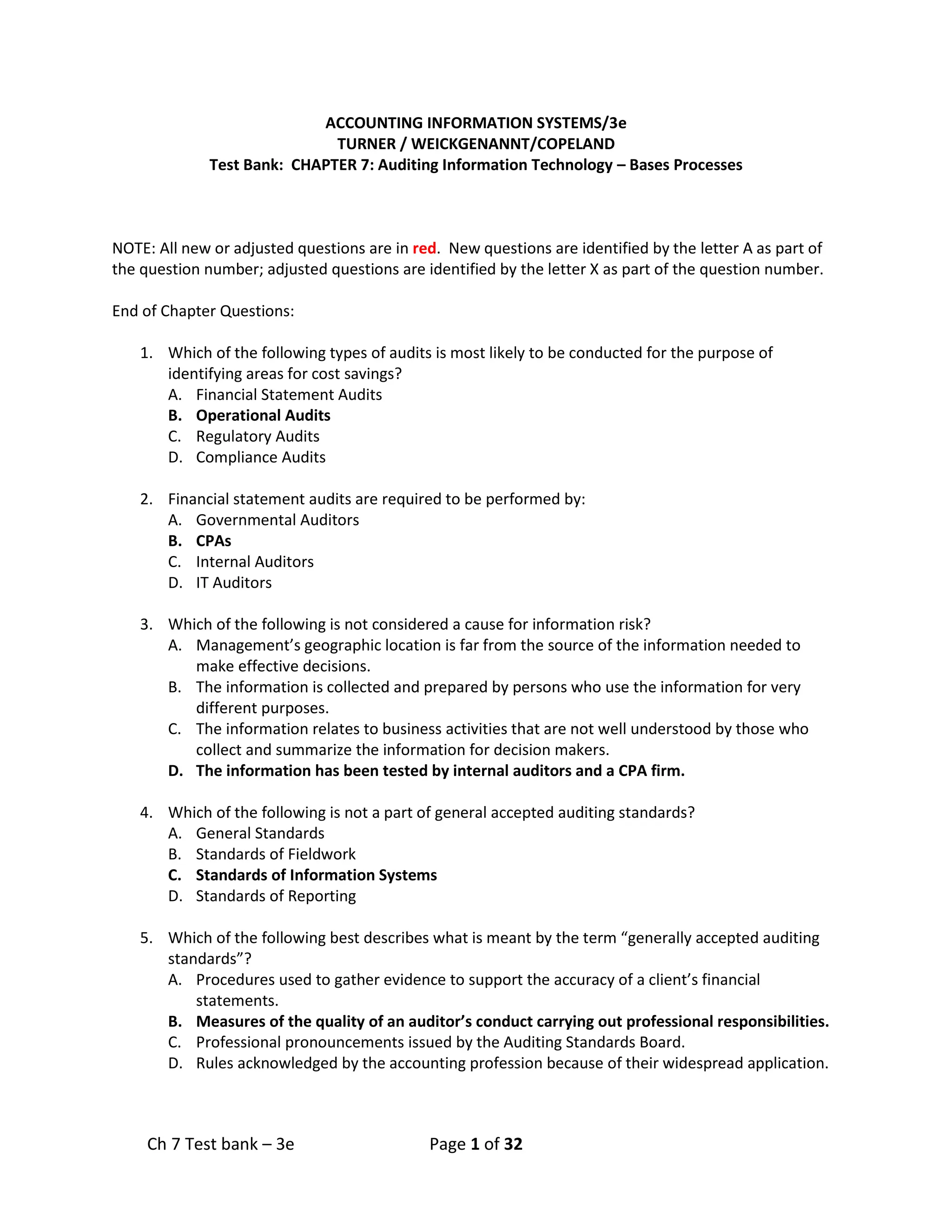
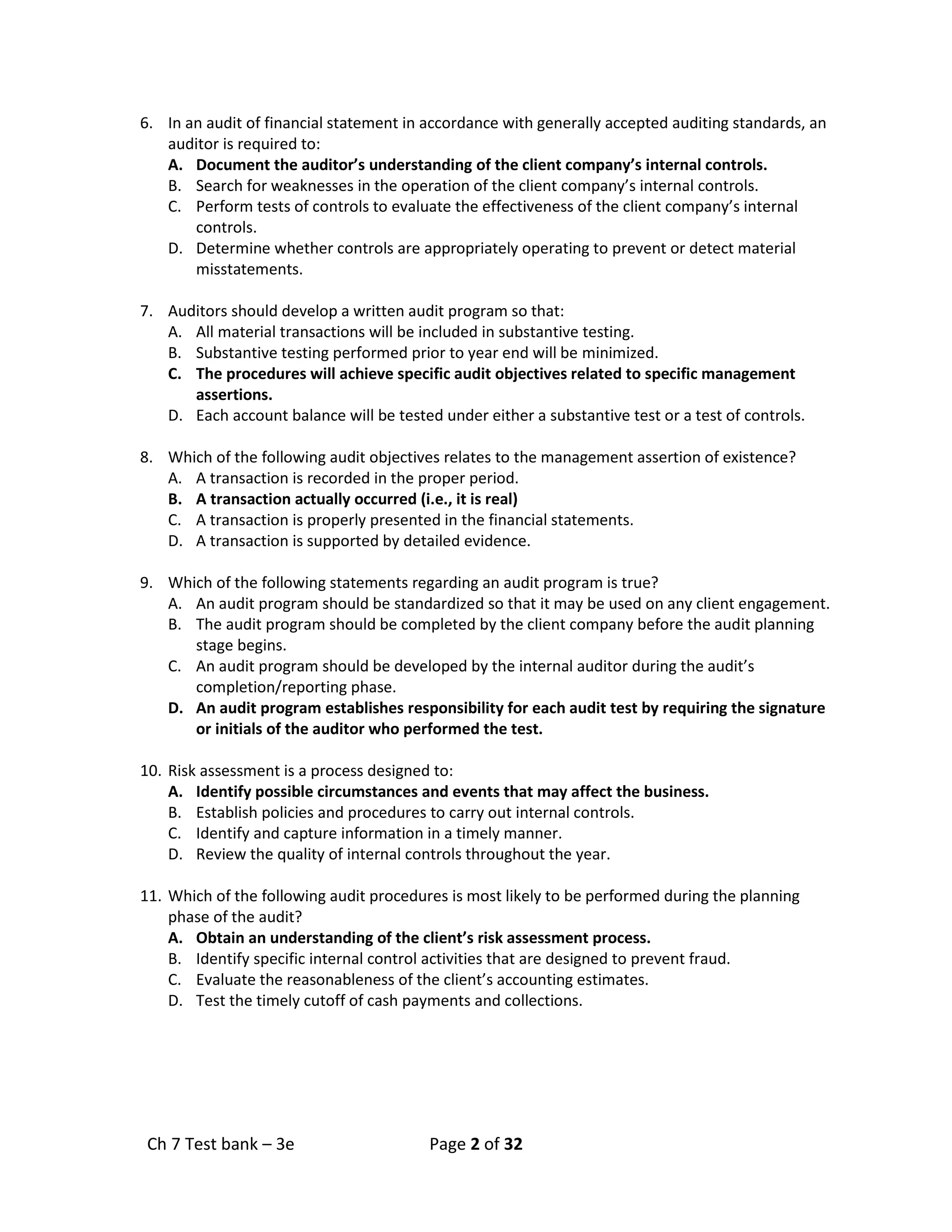
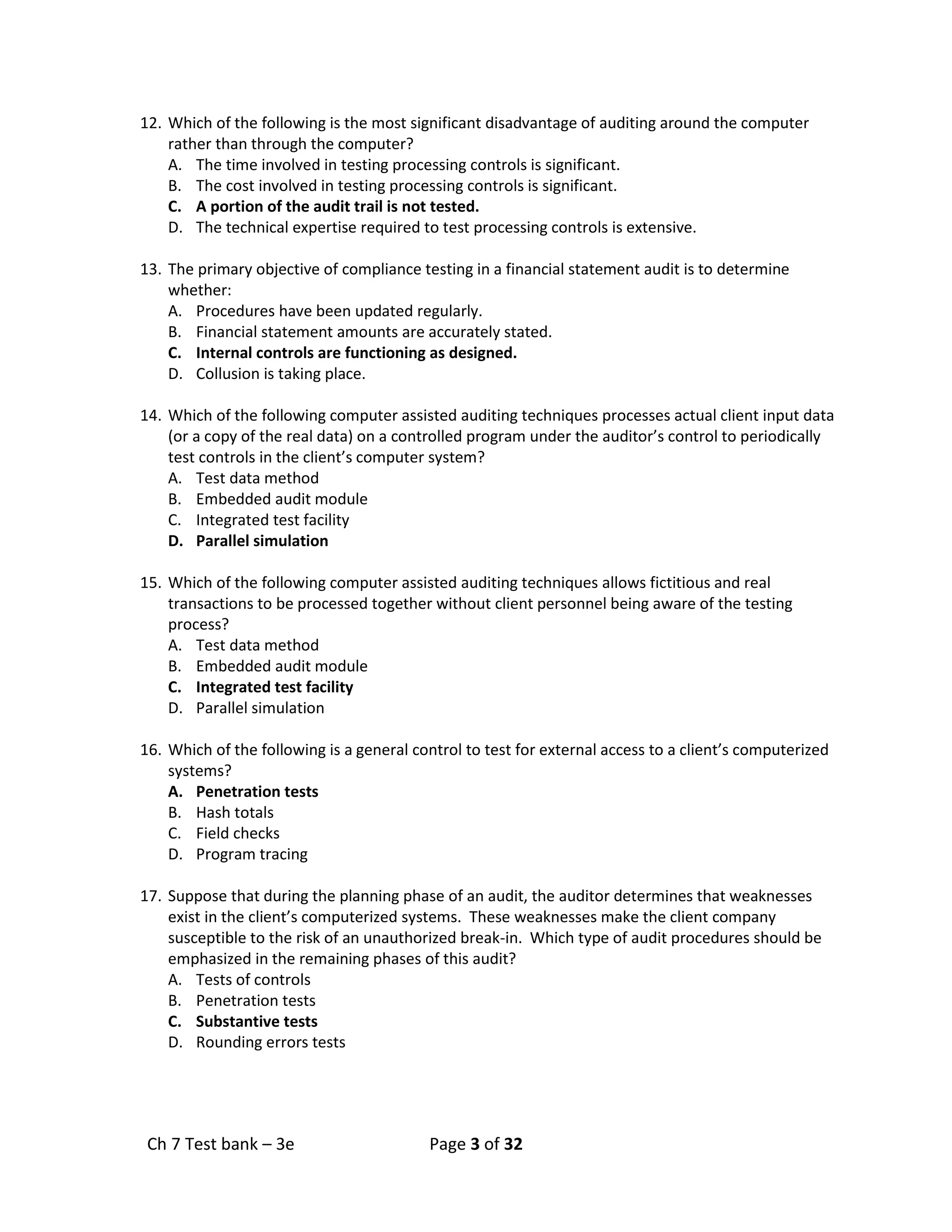
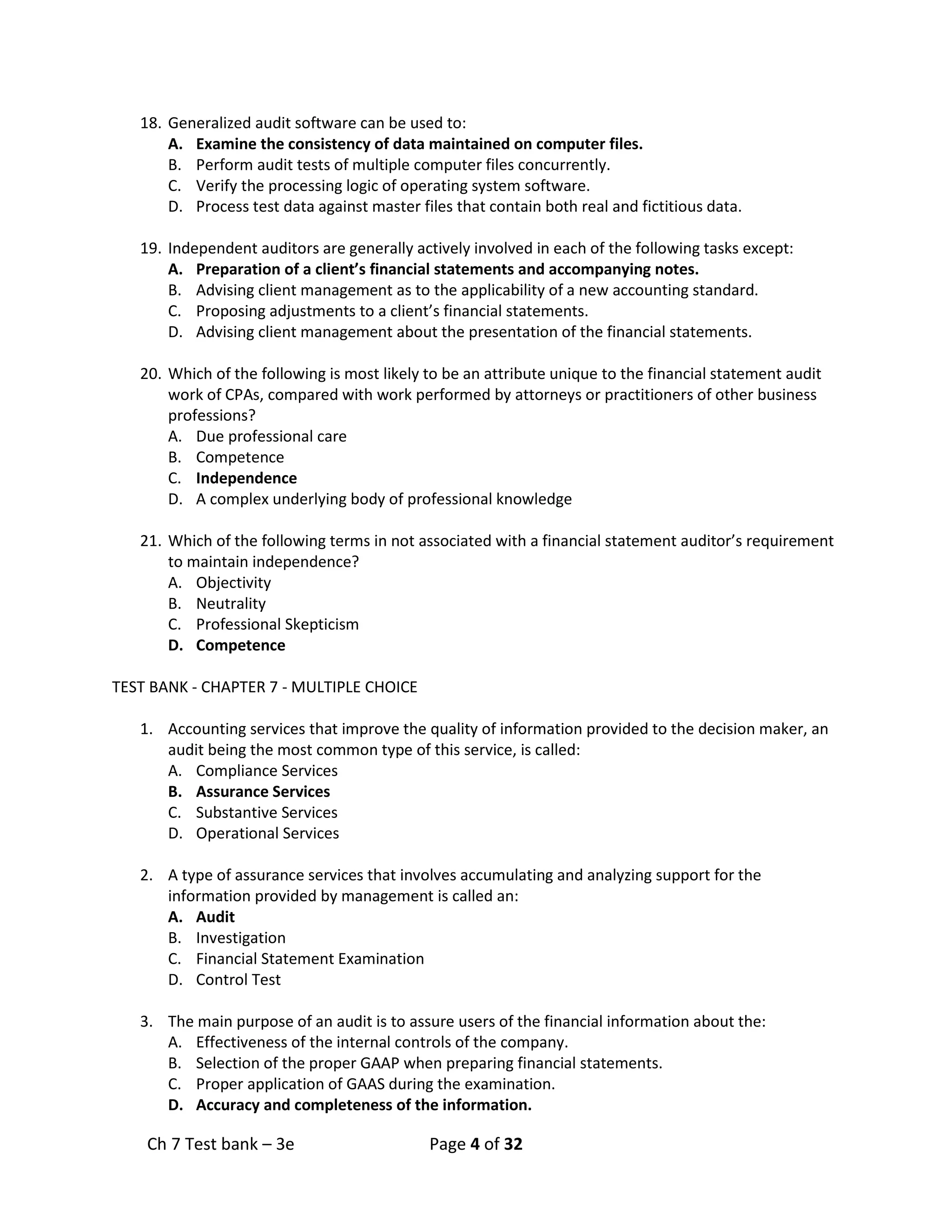
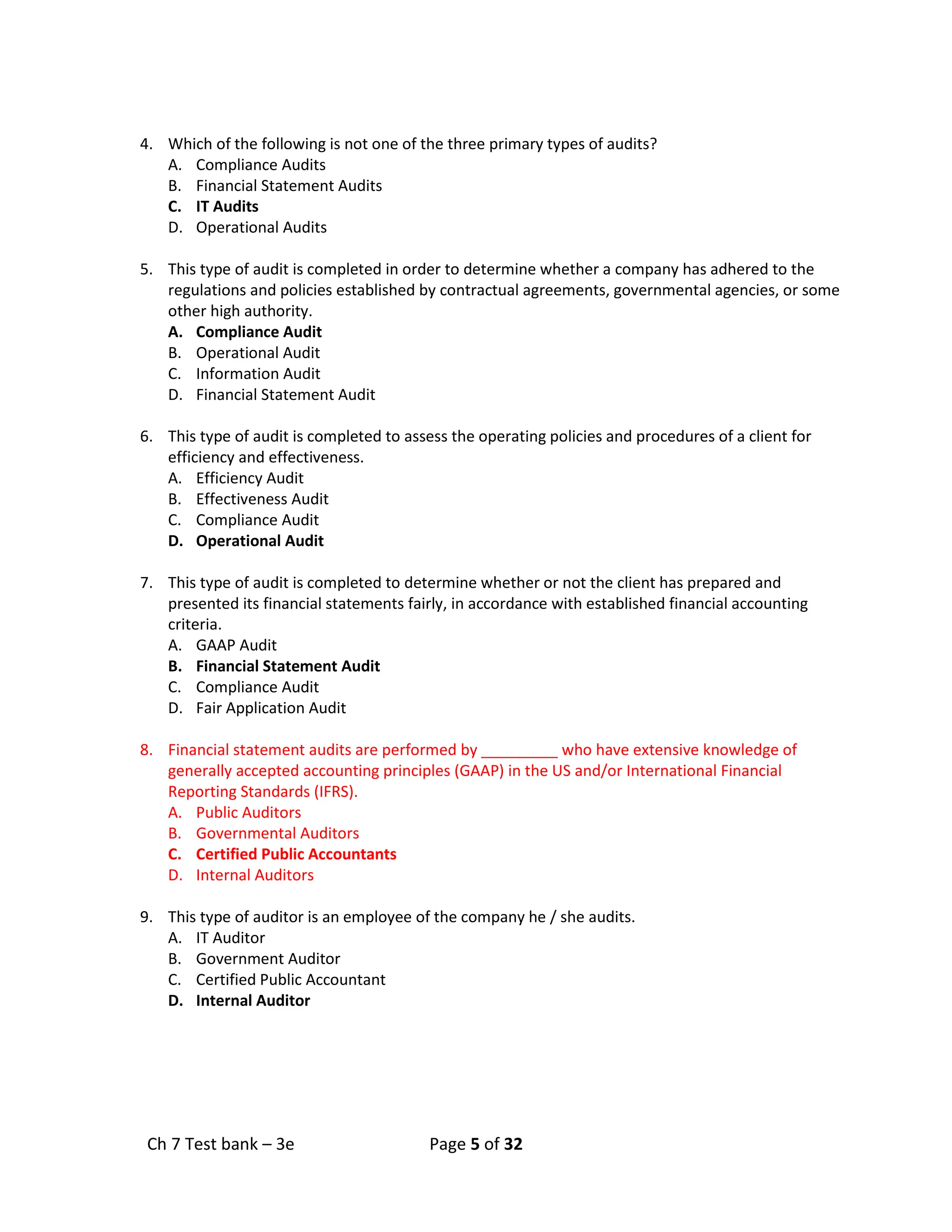
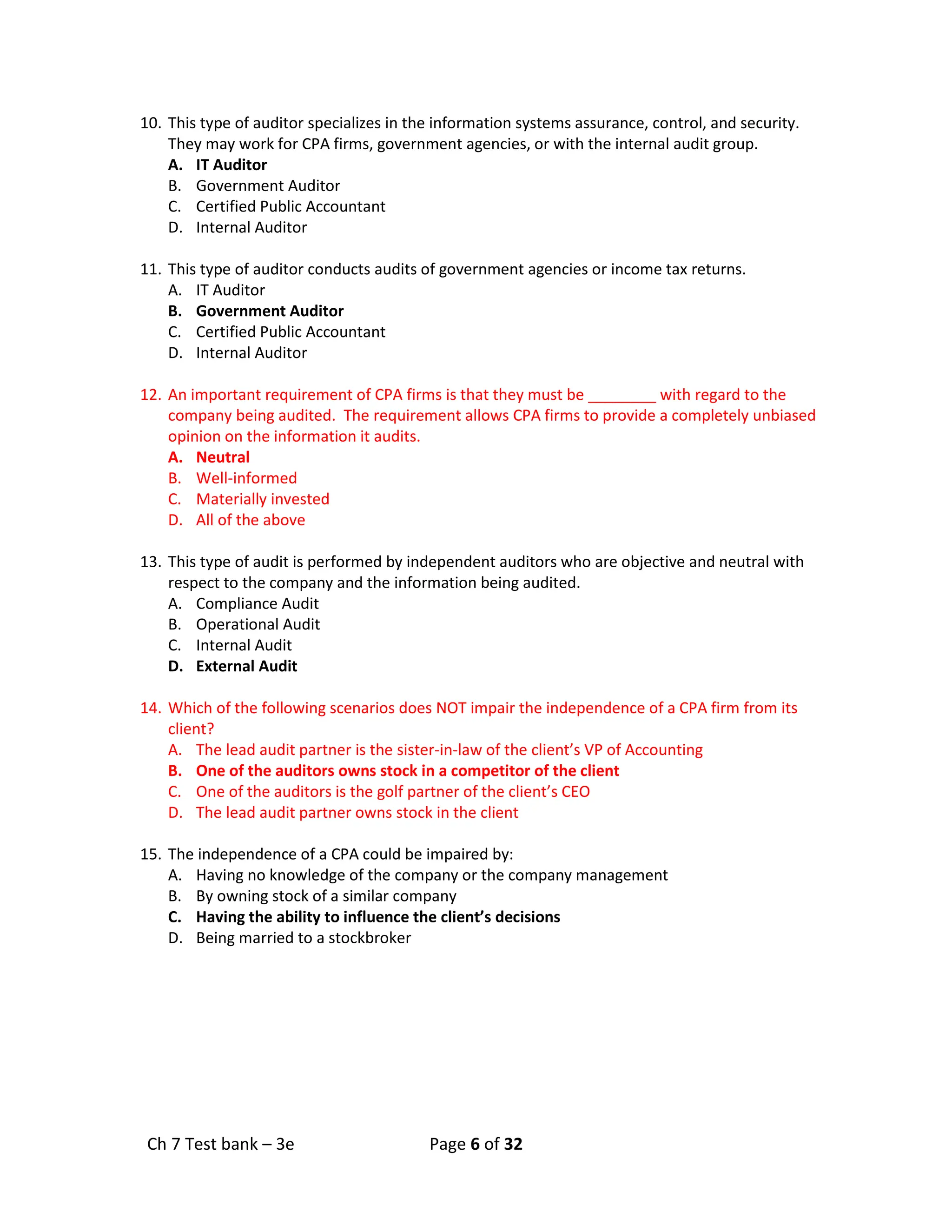
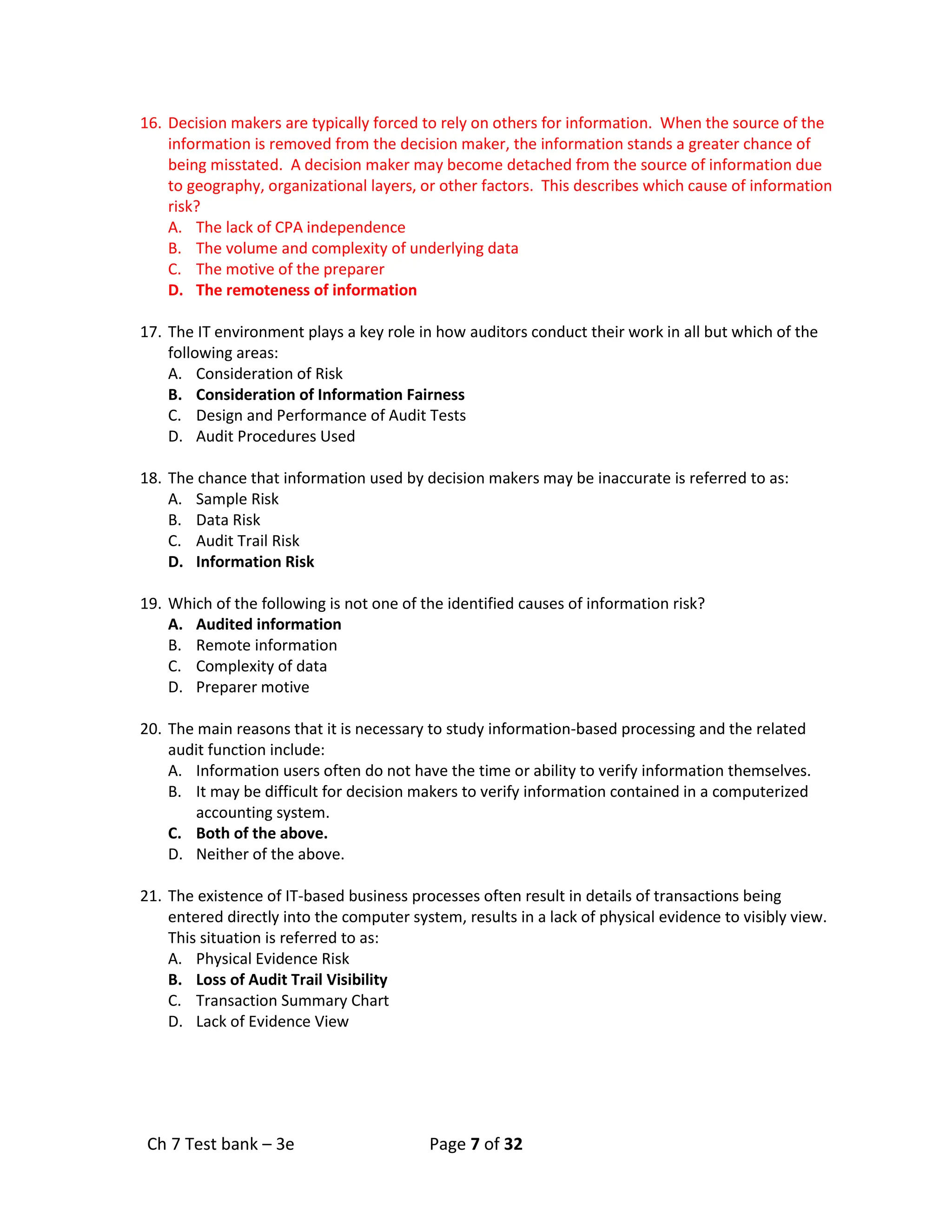
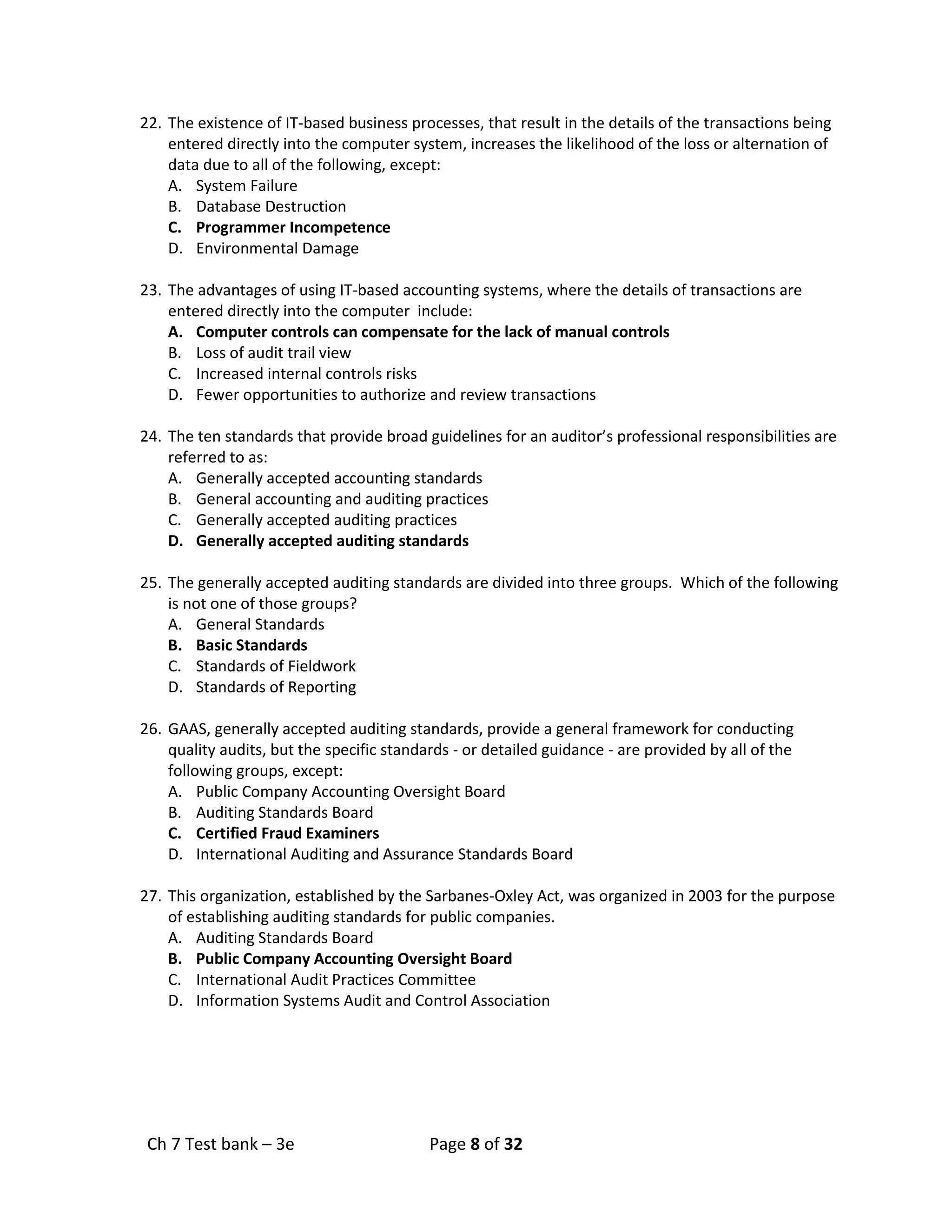
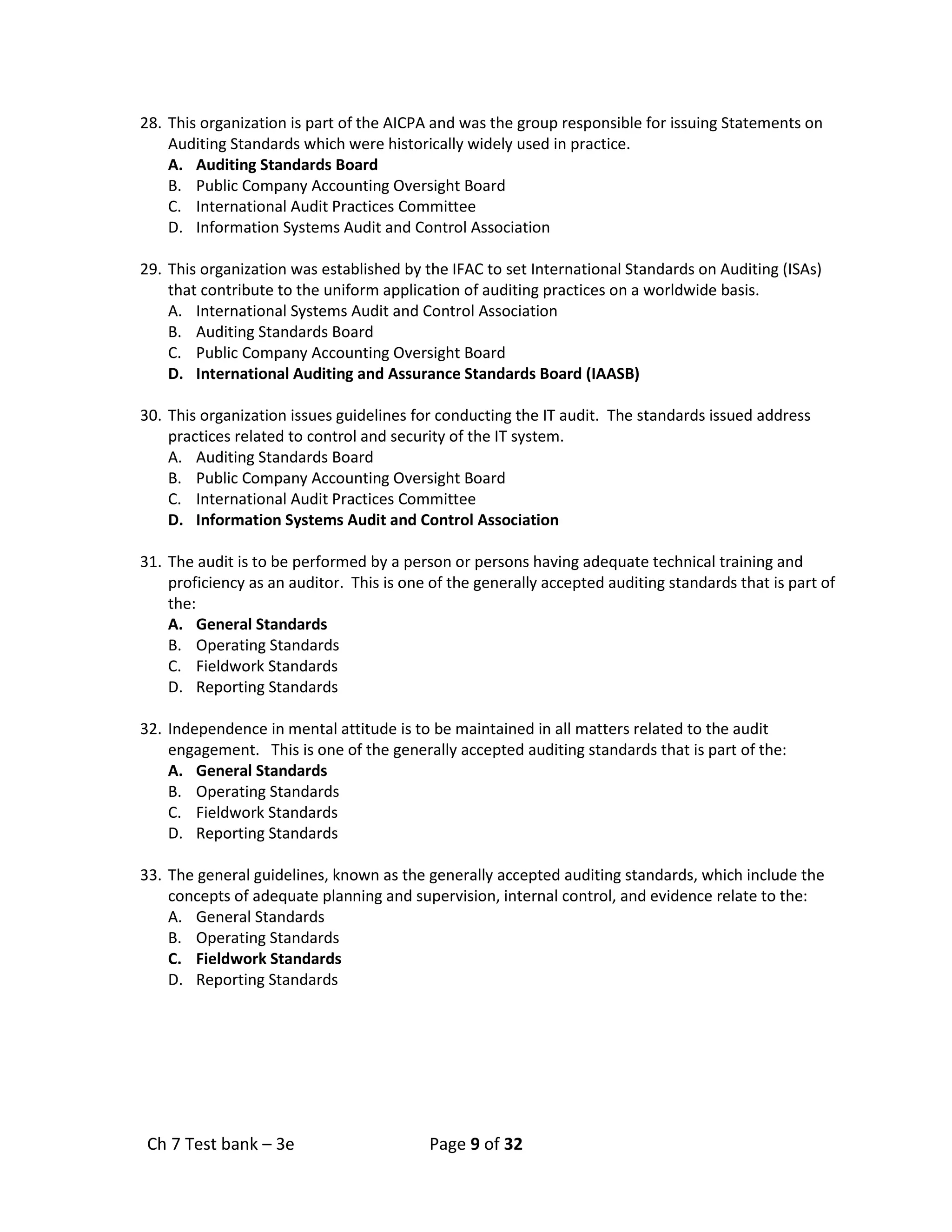
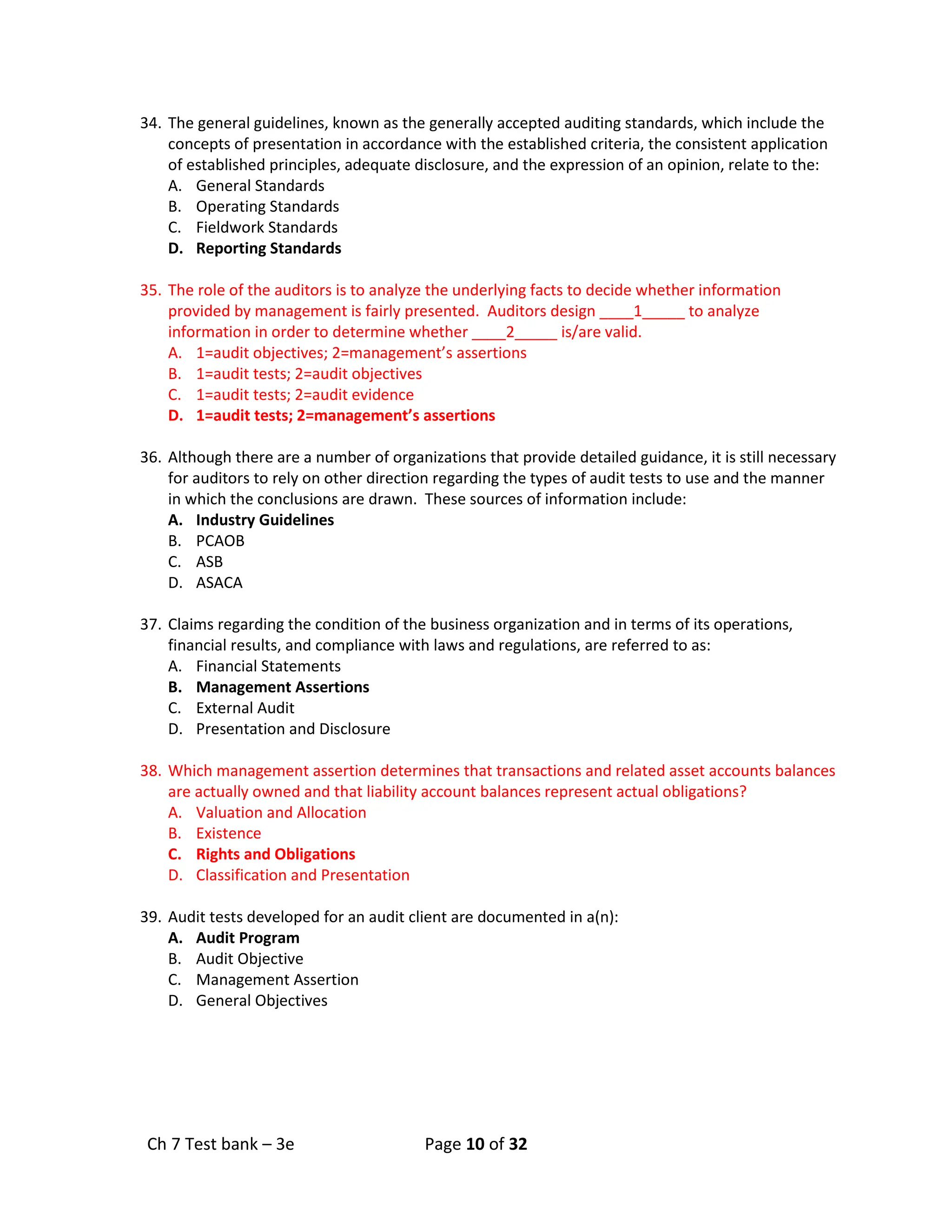
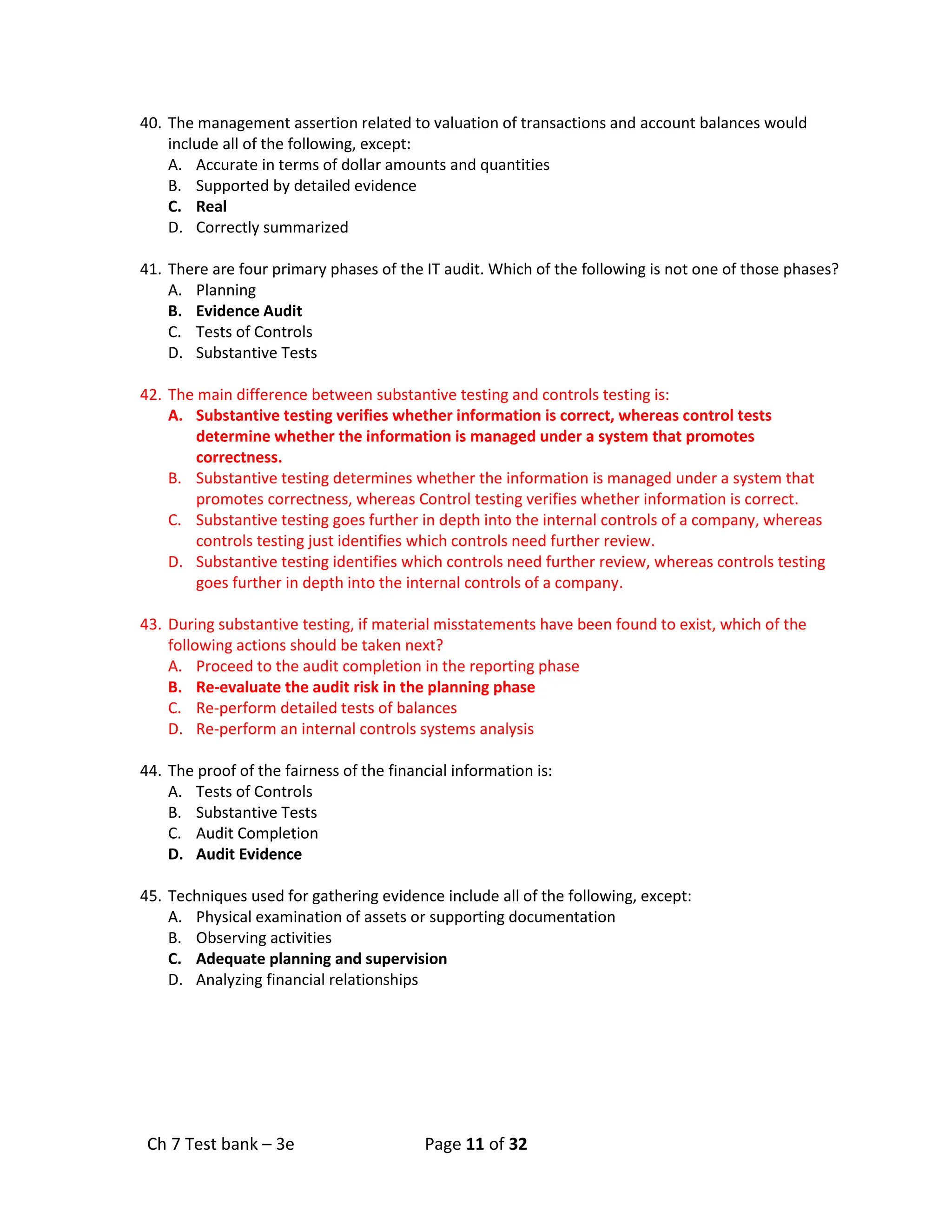
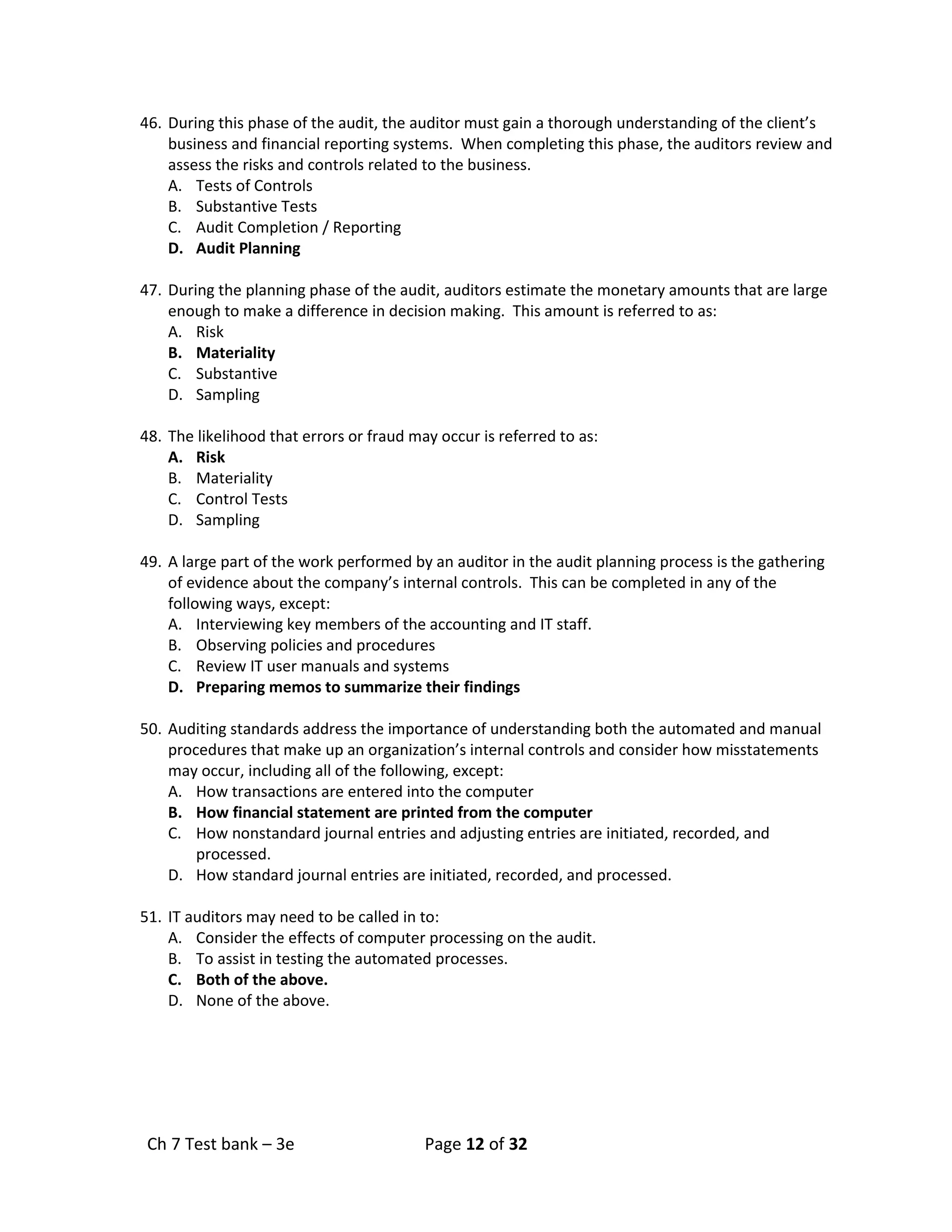
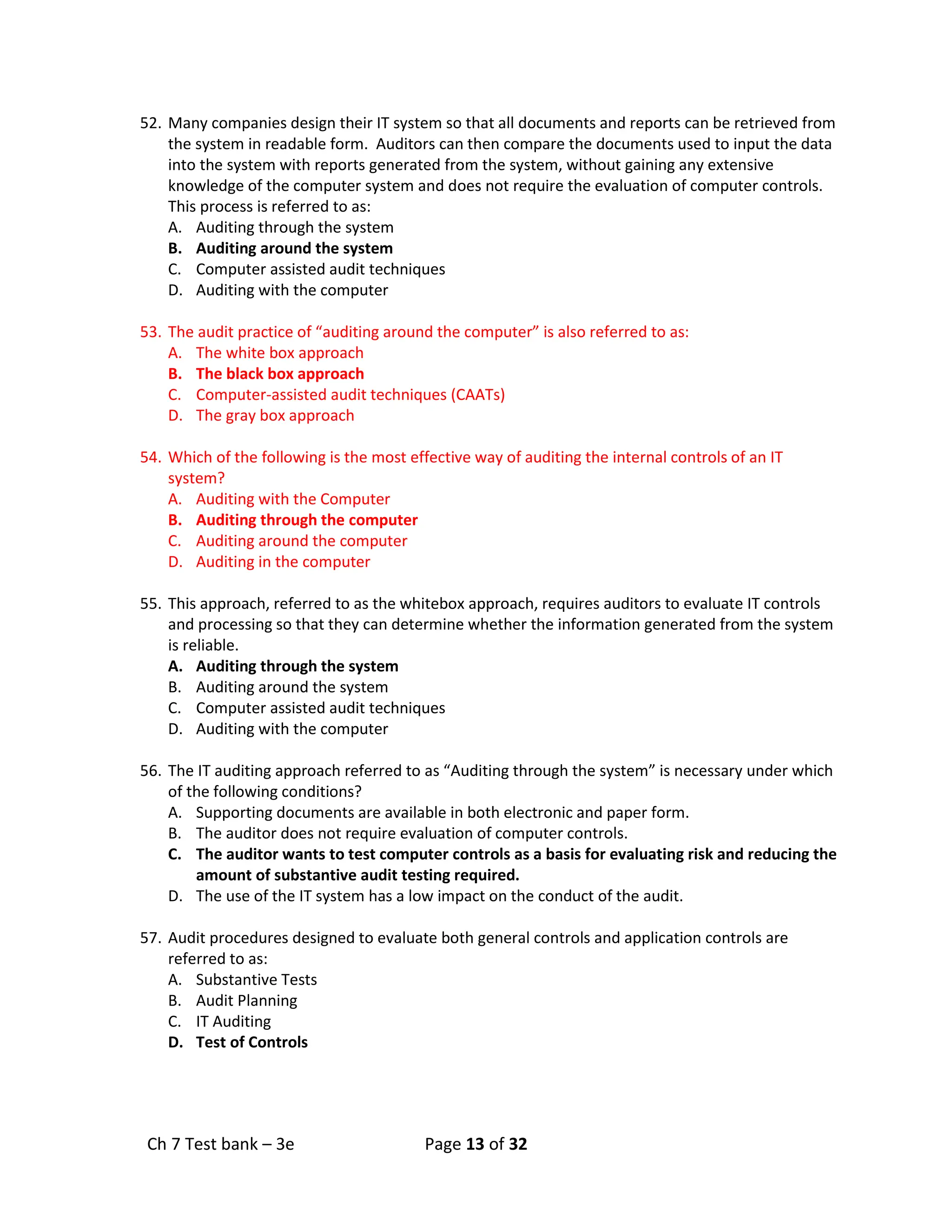
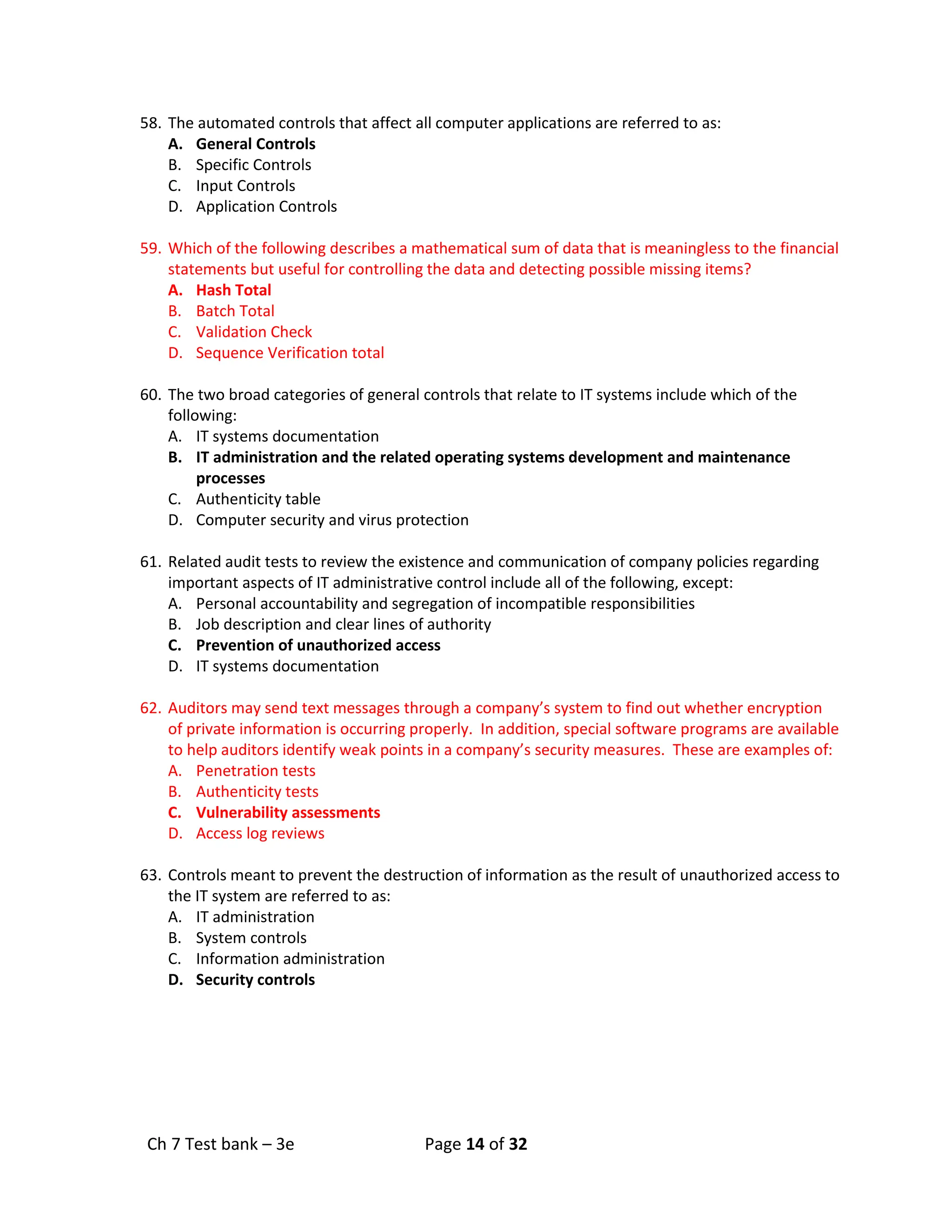
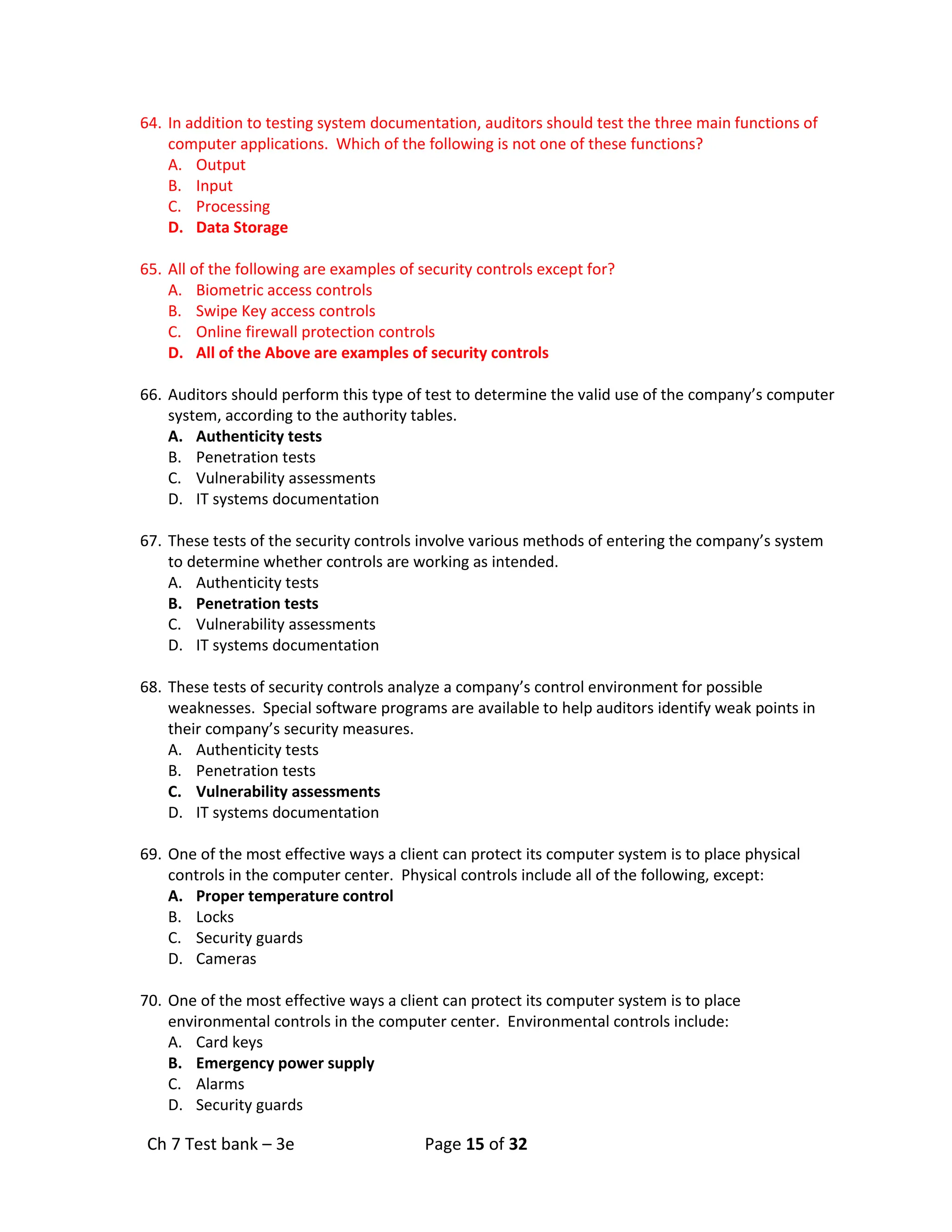
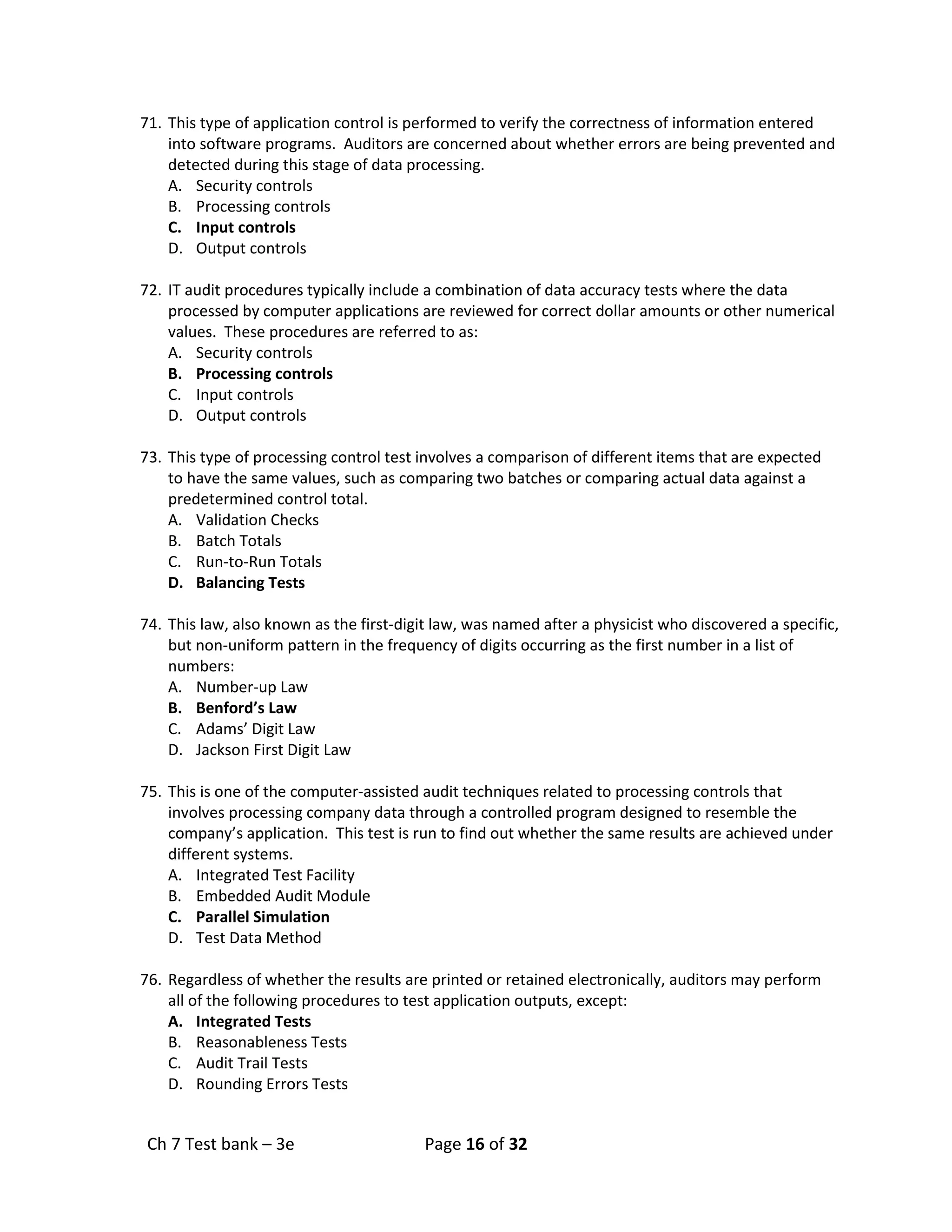
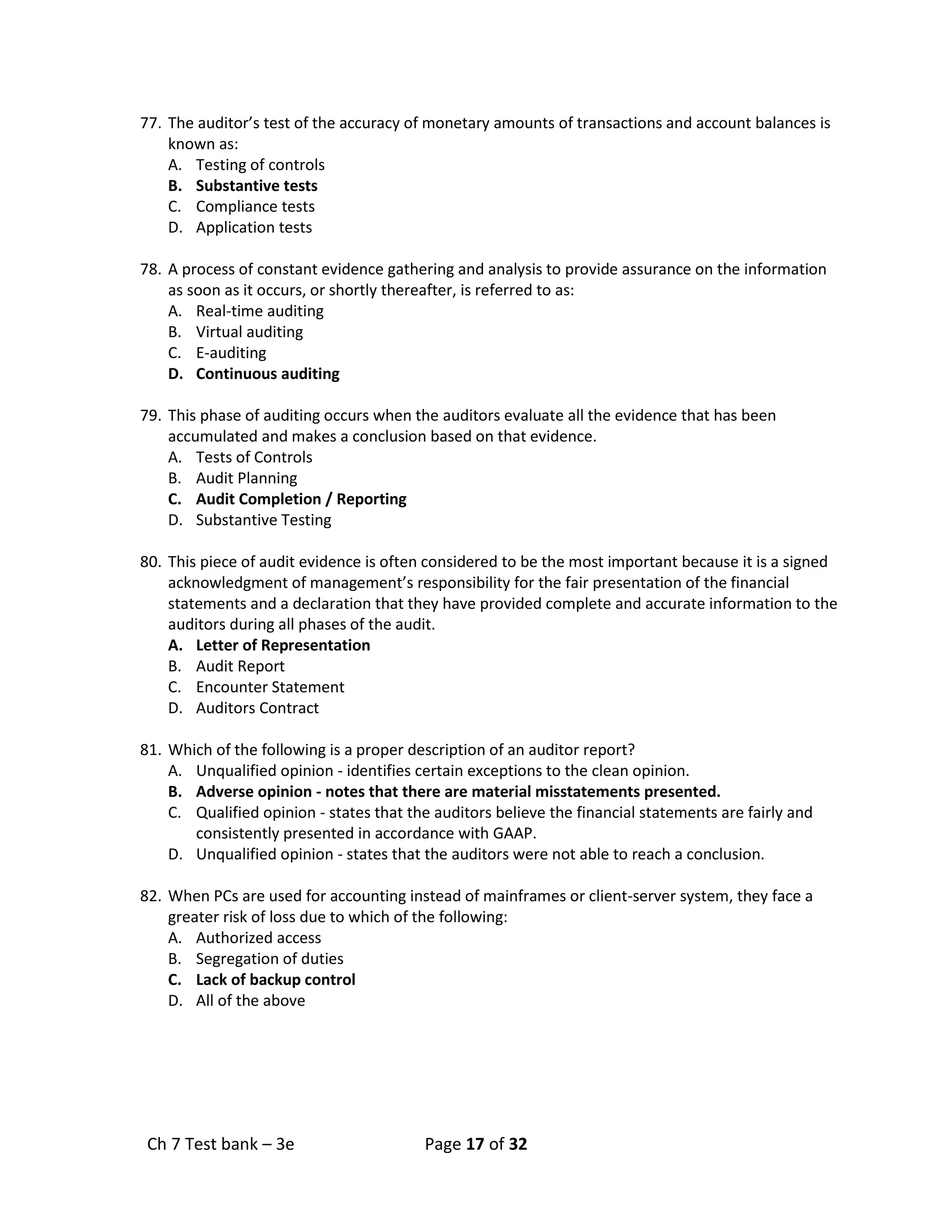
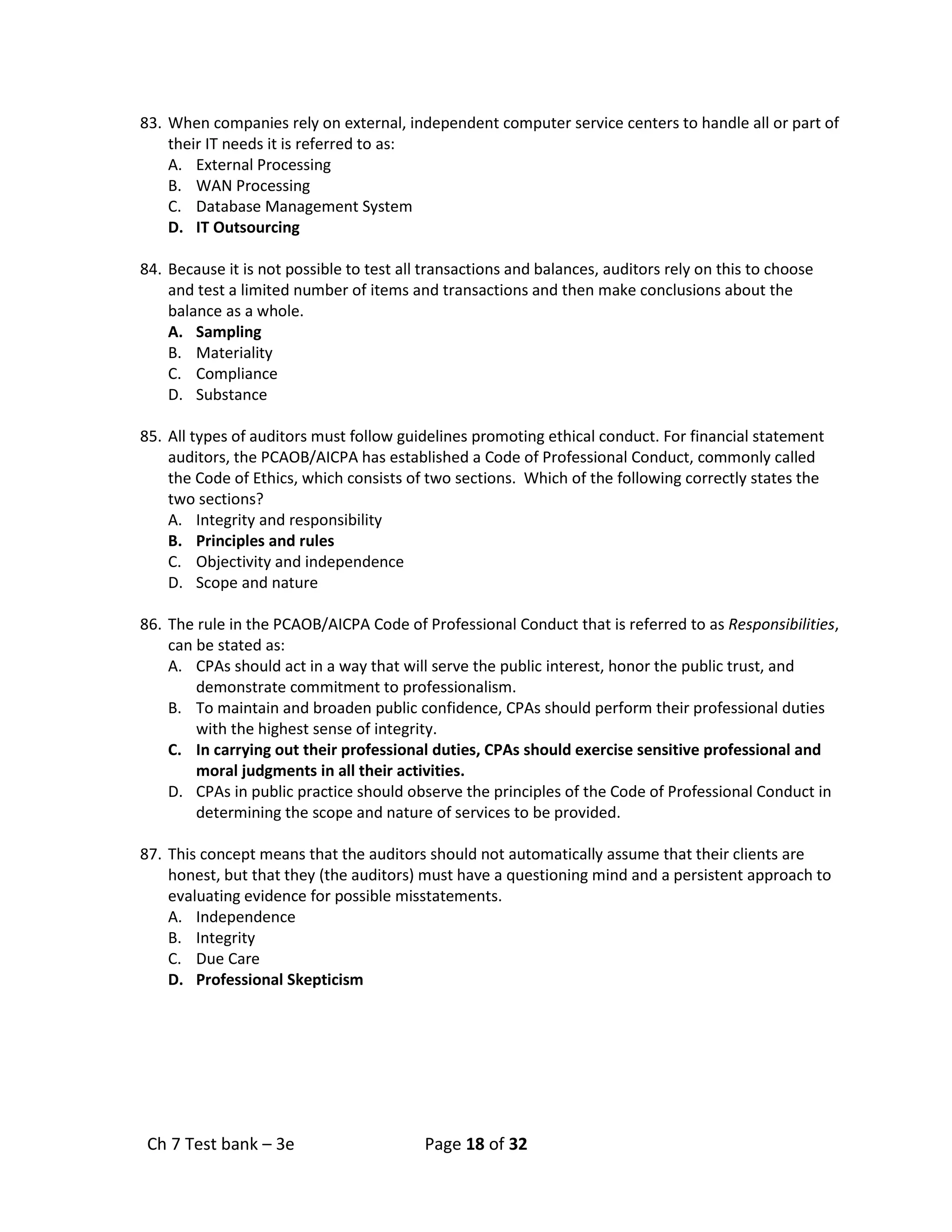
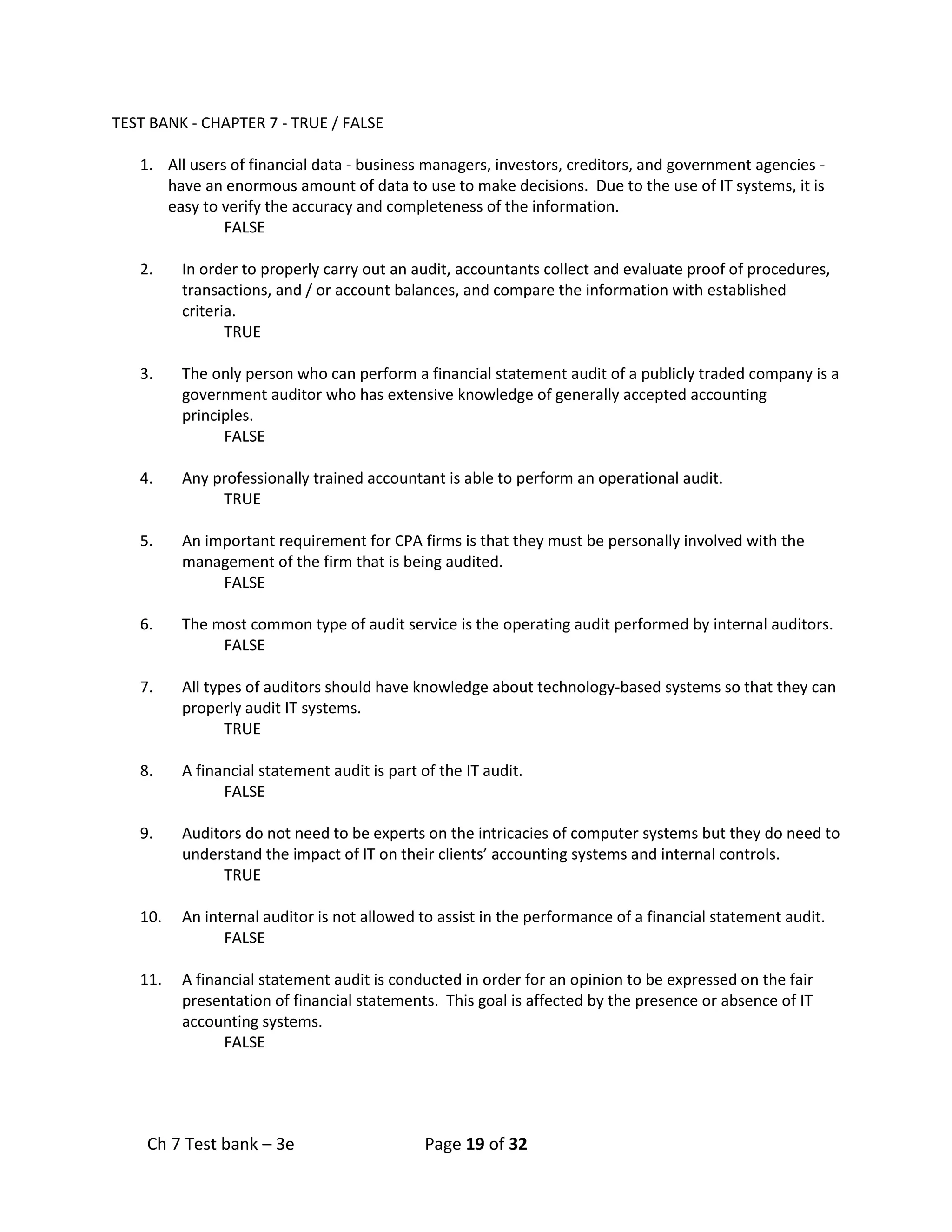
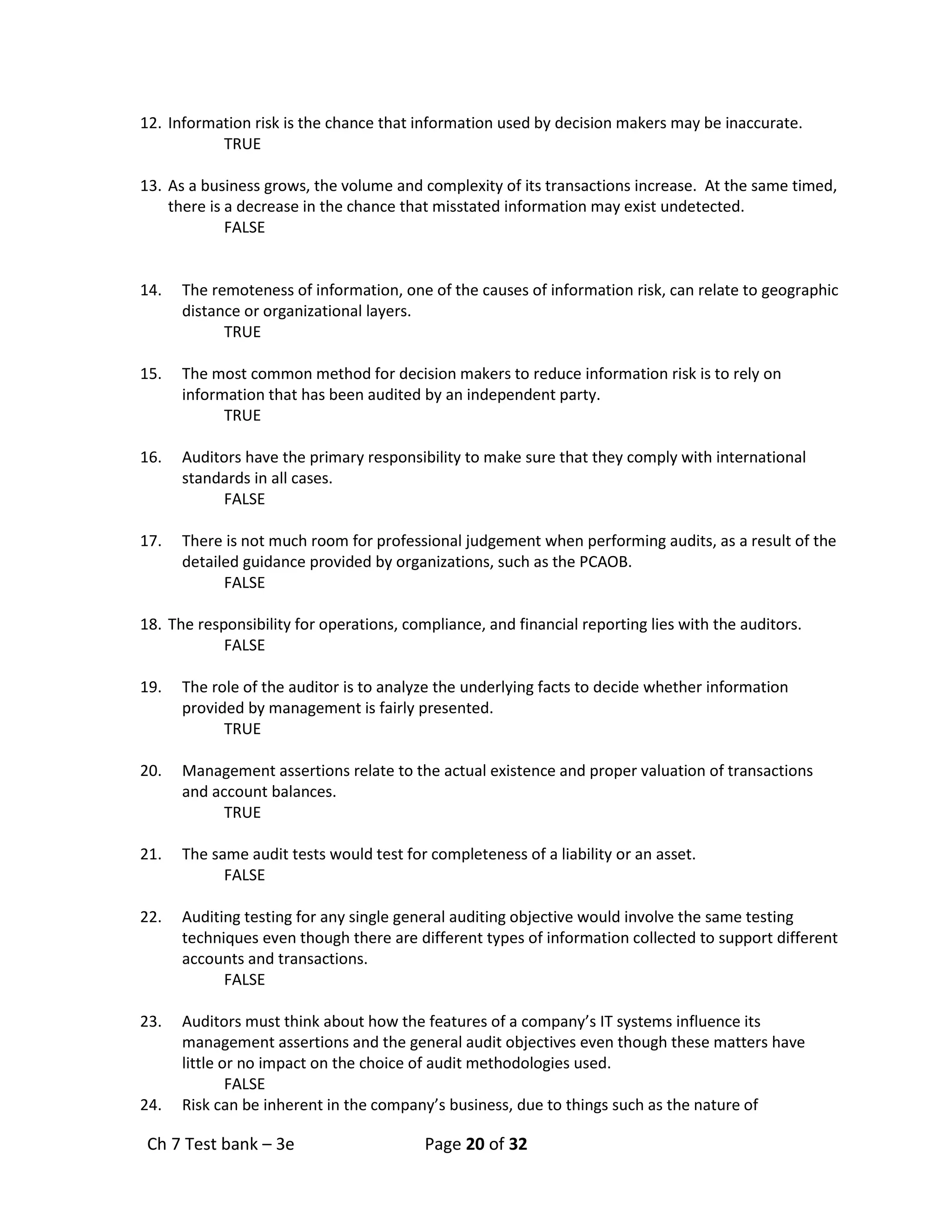
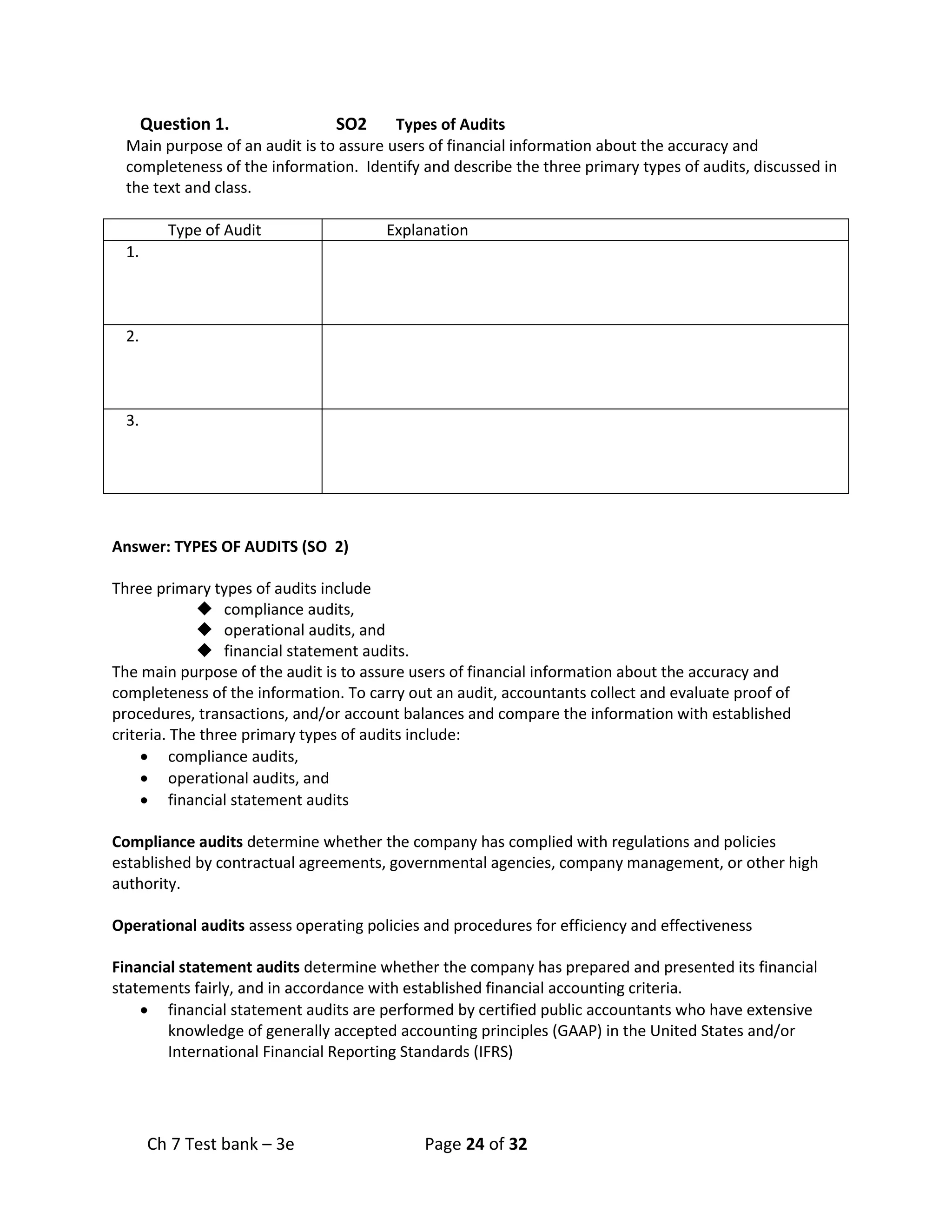
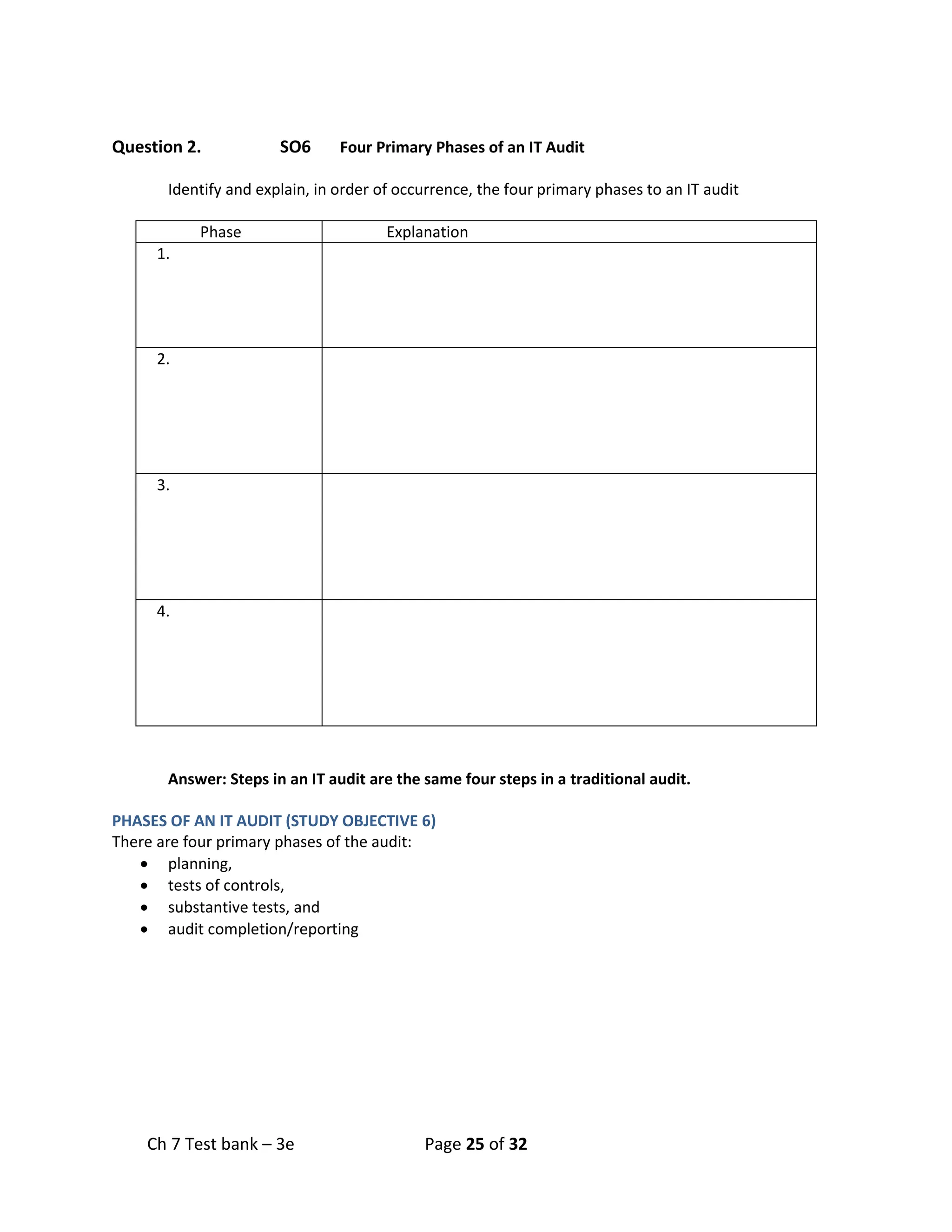
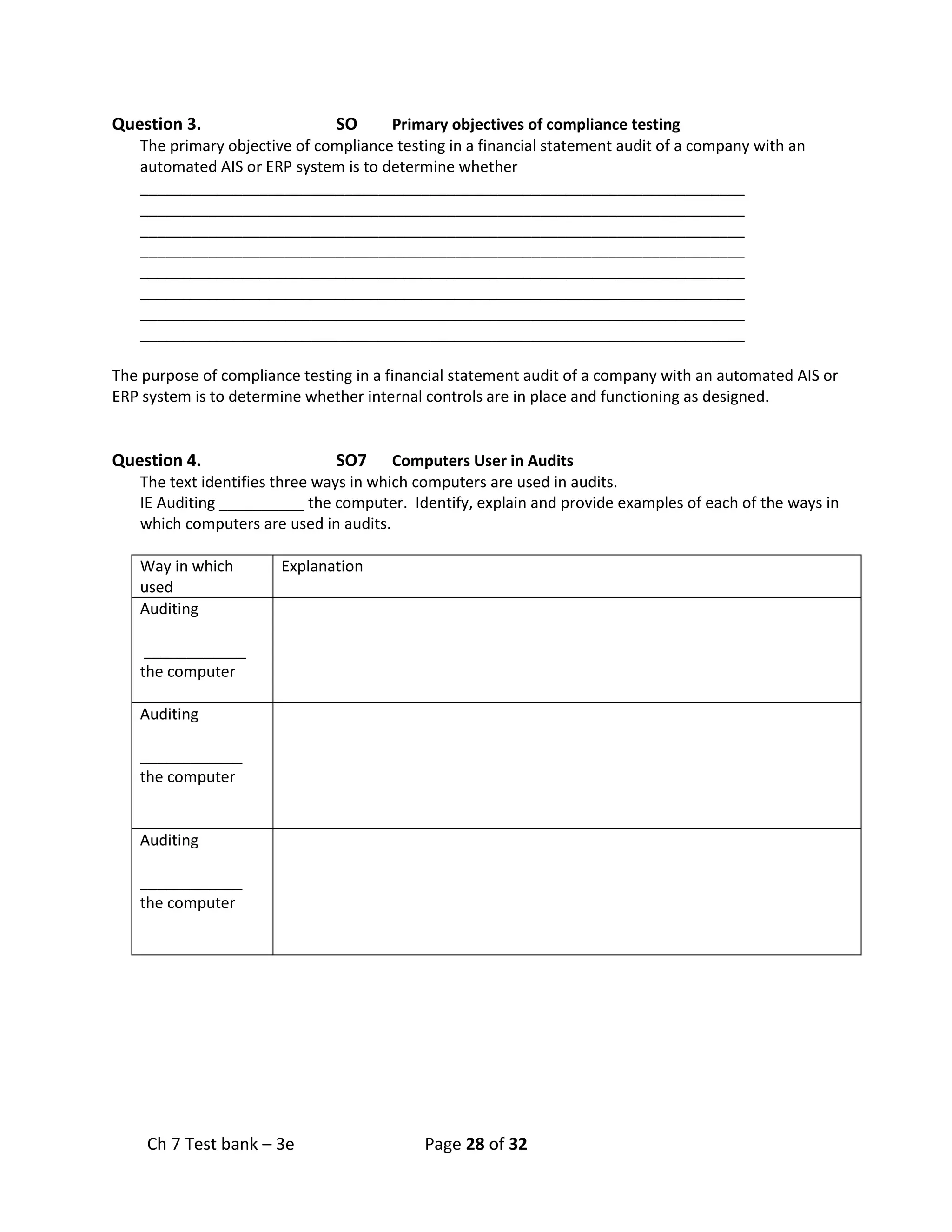

![Arriving within about two hundred yards of the town, and in sight of it,
(all marching Indian file), they fired off their pieces, which compliment was
instantly returned by the young men or the town, drawn up for the purpose;
then raising a melancholy song, they continued singing, until they had
reached the long house, purposely built for their reception; yet not without
first having lodged their arms against some trees they had passed, at a small
distance from the town. Being seated on benches prepared for the purpose
—(the deputies on the opposite side,)—a dead silence prevailed for about
half an hour, and all present cast their eyes on the ground. At length one of
these Chiefs, named the Crow, rose, and with an air of sorrow, and in a low
voice, with his eyes cast up to heaven, spoke to the following effect:
"One morning, after having arisen from my sleep, and according to my
custom, I stepped out at the door to see what weather we had. I observed at
one place in the horizon a dark cloud projecting above the trees; and
looking steadfastly for its movement or disappearance, found myself
mistaken, since it neither disappeared nor moved from the spot, as other
clouds do. Seeing the same cloud successively every morning, and that
always in the same place, I began to think what could be the cause of this
singular phenomenon; at length it struck me, that as the cloud was lying in
the direction that my grandfather dwelt, something might be the matter with
him, which caused him grief. Anxious to satisfy myself, I resolved to goto
my grandfather, and see if any thing was the matter with him. I accordingly
went, steering a course in the direction I had observed the cloud to be. I
arrived at my grandfather's, whom I found quite disconsolate, hanging his
head and the tears running down his cheeks! Casting my eyes around in the
hopes of discovering the cause of his grief, I observed yonder a dwelling
closed up, and from which no smoke [FN-1] appeared to ascend! Looking
in another direction, I discovered an elevated spot of fresh earth, [FN-2] on
which nothing was seen growing; and here I found the cause of my
grandfather's grief. No wonder he is so grieved! No wonder he is weeping
and sobbing, with his eyes cast towards the ground!—Even I cannot help
weeping with my grandfather, seeing in what a situation he is! I cannot
proceed for grief!"
[FN-1] Meaning no person occupying the house.](https://image.slidesharecdn.com/6836-250325183017-cc60d31a/75/Accounting-Information-Systems-Controls-Processes-3rd-Edition-Turner-Test-Bank-36-2048.jpg)
![[FN-2] The grave.
Here, after having seated himself for about twenty minutes, as though
deeply afflicted, he again arose, and receiving from the principal chief, who
was seated by his side, a large string of wampum, said: "Grandfather! Lift
up your head and hear what your grand-children have to say to you! These
having discovered the cause of your grief, it shall be done away! See,
grandfather! I level the ground on yonder spot of yellow earth, [FN-1] and
put leaves and brush thereon to make it invisible! I also sow seeds on that
spot, so that both grass and trees may grow thereon!" (Here handing the
string to the Delaware Chiefs in succession, and taking up another, he
continued:) "Grandfather!—The seed which I had sown has already taken
root; nay, the grass has already covered the ground, and the trees are
growing!" (Handing this string, likewise to the Delaware Chief, and taking
up a third string of wampum, he added:) "Now, my grandfather, the cause of
your grief being removed, let me dry up your tears! I wipe them from your
eyes! I place your body, which, by the weight of grief and a heavy heart, is
leaning to one side, in its proper posture! Your eyes shall be henceforth
clear, and your ears open as formerly! The work is now finished!" Handing
this string likewise to the Delaware Chief, he now stepped forward to where
the Chief and his Councilors were seated, and having first shaken hands
with these, he next did the same with all present, the whole embassy
following his example. This being done, and all again seated as before, the
Delaware Chief, Gelelemend, [FN-2] replied:
[FN-1] The grave.
[FN-2] Commonly called Kill-Buck.
"Grand-children!—You did not come here in vain! You have
performed a good work, in which the Great Spirit assisted you! Your
Grandfather makes you welcome with him."
The meeting, having continued nearly three hours, then broke up. On
the day following, the Chiefs of both nations entered on business relating to
their national concerns, and finally made a mutual covenant for the
continued maintenance of the party and principles of White-Eyes.](https://image.slidesharecdn.com/6836-250325183017-cc60d31a/75/Accounting-Information-Systems-Controls-Processes-3rd-Edition-Turner-Test-Bank-37-2048.jpg)
![It is honorable to the American Congress that after the decease of their
best friend among the Indians, they took measures for the maintenance and
education of his son. On the journals of that body, under date of June 20th,
1785, is the following passage:
"Resolved, That Mr. Morgan [Tamenend, probably,] be empowered
and requested to continue the care and direction of George White-Eyes for
one year, and that the Board of Treasury take order for the payment of the
expenses necessary to carry into execution the views of Congress in this
respect."
The journal of December, 1775, records an interview of Congress with
the father.](https://image.slidesharecdn.com/6836-250325183017-cc60d31a/75/Accounting-Information-Systems-Controls-Processes-3rd-Edition-Turner-Test-Bank-38-2048.jpg)
![CHAPTER IX.
Observations on the character of White-Eyes—Pipe's comment on his death—The latter
gains and sustains an ascendancy in the Delaware nation—Glickkican, Netawatwees
and Wingemund—Subsequent career of Pipe—Joins the British and fights against the
Americans—Grand Indian council at Detroit—Pipe's spirited speech on that occasion
—Makes charges against the Missionaries, but fails to prove them—Remarks on his
habits, principles and talents.
The feet that Captain Pipe and his associates began to gain the
ascendancy in the Delaware nation immediately on the death of his great
antagonist, and that they afterwards supported it with almost uninterrupted
success, is alone sufficient to indicate the influence and character of White-
Eyes. Indeed, Pipe himself paid to his memory the compliment of declaring,
with a solemn air, that "the Great Spirit had probably put him out of the
way, that the nation might be saved." That sagacious personage was well
aware that neither Kill-Buck, nor Big-Cat, nor Glickkican, [FN] nor even
all together, would adequately occupy the station of the deceased Chieftain.
[FN] "The sight of a gun-barrel," and afterwards baptised by the Moravians, and
named Isaac. He was Chief Councilor and Speaker of the old Sachem, Pakanke, who
ruled over the Delawares at Kaskaskunk (in Ohio,) and was a man of uncommon
military and oratorical talent. After his own christianization, he was a highly efficient
advocate and patron of the Christian party. Having thereby, as well as by his spirit and
influence, become obnoxious to their enemies during the Revolution, several attempts
were made to overawe, bribe and destroy him; but they all failed. At length a
considerable party was fitted out, in 1781, for the express purpose of taking him
prisoner. They found him at Salem, but doubting whether the old warrior's pacific
principles would assure their safety, they dared not enter his hut. He saw some of
them before long from a window, and instantly stepped out, and called to them.
"Friends!" said he, "by your manœuvres I conclude you are come for me. If so, why
do you hesitate;—Obey your orders; I am ready to submit. You seem to fear old](https://image.slidesharecdn.com/6836-250325183017-cc60d31a/75/Accounting-Information-Systems-Controls-Processes-3rd-Edition-Turner-Test-Bank-39-2048.jpg)
![Glickkican. Ah! there was a time when I would have scorned to submit to such
cowardly slaves. But I am no more Glickkican, I am Isaac, a believer in the true God,
and for his sake I will suffer anything, even death." Seeing them still hesitate, he
stepped up to them with his hands placed upon his back. "There!" he continued, "you
would tie me if you dared—tie me, then, and take me with you—I am ready." They
now mustered courage to do as he directed. Soon after, Glickkican was murdered,
with a large number of his Christian countrymen, by a banditti of American ruffians
who suspected, or pretended to suspect them, of hostile designs. Probably the result
was brought about by the machinations of his Indian enemies.
White-Eyes was distinguished as much for his milder virtues as for his
courage and energy; and as to his friendly disposition towards the
Americans, particularly, on which some imputations were industriously
thrown by his enemies, we could desire no better evidence of its sincerity
than are still extant In that curious document, the Journal of Frederic Post,
[FN] who, as early as 1758, was sent among the Ohio Delawares by the
Governor of one of the States, for the purpose of inducing them to renounce
the French alliance, is recorded, the "speech" which Post carried back, and
the closing paragraphs of which were as follows:—
[FN] In Prond's History of Pennsylvania.
"Brethren, when you have settled this peace and friendship, and
finished it well, and you send the great peace-belt to me, I will send it to all
the nations of my colour; they will all join to it, and we all will hold it fast.
"Brethren, when all the nations join to this friendship, then the day will
begin to shine clear over us. When we hear once more of you, and we join
together, then the day will be still, and no wind, or storm, will come over
us, to disturb us.
"Now, Brethren, you know our hearts, and what we have to say; be
strong, if you do what we have now told you, and in this peace all the
nations agree to join. Now, Brethren, let the king of England know what our
mind is as soon as possibly you can."
Among the subscribers to this speech appears the name of White-Eyes,
under the form of the Indian term Cochguacawkeghton; nor have we met](https://image.slidesharecdn.com/6836-250325183017-cc60d31a/75/Accounting-Information-Systems-Controls-Processes-3rd-Edition-Turner-Test-Bank-40-2048.jpg)
![with any proof that he ever from that time wavered for a moment in his
attachment to the American interest, as opposed first to the French, and
afterwards to the English. Post himself, in 1762, was permitted to build a
house on the banks of the Muskingum, where he had a lot of land given
him, about a mile distant from the village of White-Eyes; and so, when
Heckewelder first visited that country, during the same season, he informs
us that, "the War-Chief Koguethagechtan," kindly entertained and supplied
him and his party.
About the beginning of the Revolutionary war, when some of the
Indians were much exasperated by murders and trespasses which certain
civilized ruffians committed on the frontiers, an Ohio trader was met and
massacred in the woods by a party of Senecas, who, having in their rage cut
up the body and garnished the bushes with the remains, raised the scalp-yell
and marched off in triumph. White-Eyes being in the vicinity and hearing
the yell, instantly commenced a search for the body, the remnants of which
he collected and buried. The party returned on the following day, and
observing what had been done, privately opened the grave, and scattered the
contents more widely than before. But White-Eyes was this time on the
watch for them. He repaired to the spot again the moment they left it,
succeeded in finding every part of the mangled body, and then carefully
interred it in a grave dug with his own hands, where it was at length
suffered to repose unmolested.
It was about the same time when this affair happened, that the
Chieftain saved the life of one Duncan, an American peace-messenger,
whom he had undertaken to escort through a section of the wilderness. A
hostile Shawanee was upon the point of discharging his musket at Duncan
from behind a tree, when White-Eyes rushed forward, regardless of his own
peril. And compelled the savage to desist. In 1777, Heckewelder had
occasion to avail himself of a similar kindness. Rather rashly, as he
acknowledges, he that year undertook to traverse the forests from the
Muskingum to Pittsburg, wishing to visit his English friends in that quarter.
White-Eves resided at a distance of seventeen miles, but hearing of his
intended journey, he immediately came to see him, accompanied by another
Chief named Wingemund, [FN] and by several of his young men.](https://image.slidesharecdn.com/6836-250325183017-cc60d31a/75/Accounting-Information-Systems-Controls-Processes-3rd-Edition-Turner-Test-Bank-41-2048.jpg)
![[FN] A noted religious impostor.
These, he said, his good friend, the Missionary, should have as an
escort. And moreover he must needs go himself: "He could not suffer me to
go," says that gentlemen, "while the Sandusky warriors were out on war-
excursions, without a proper escort and himself at my side." And it should
be observed, that besides the Sandusky savages, there were several other
tribes who had already engaged on the British side, and were spreading
death and desolation along the whole of the American frontier. The party set
out together, and reached their destination in safety. An alarm occurred only
on one occasion, when the scouts discovered a suspicious track, and report
was made accordingly. White-Eyes, who was riding before his friend, while
Wingemund brought up the rear, turned about and asked if he felt afraid?
"No!" said the Missionary, "not while you are with me." "You are right,"
quickly rejoined White-Eyes. "You are right; no man shall harm you, till I
am laid prostrate." "Nor even then," added Wingemund, "for they must
conquer me also—they must lay us side by side." Mr. Heckewelder
certainly did them but justice in believing that both would have redeemed
their promises.
The other Moravians, and the Indian Congregation under their charge
in Ohio, were still more indebted to the good Chieftain. Loskiel states [FN]
that in 1774, the Christian party had become obnoxious to a majority of the
Pagan Delaware chiefs, and it was several times proposed to expel them by
force. But God brought their counsel to nought, he adds, "and appointed for
this purpose the first Captain among the Delawares, called White-Eyes,"
who kept the chiefs and council in awe, and would not suffer them to injure
the Missionaries. Finding his efforts still unavailing, he at length went so far
as to separate himself wholly from his opponents, resolved to renounce
power, country and kindred for the sake of these just and benevolent men
whom he could not bear to see persecuted.
[FN] History of the Missions of the United Brethren, &c. London, 1794.
His firmness met with a deserved success. Even the old Chief
Netawatwees, who had opposed him most fiercely, acknowledged the
injustice which had been done him; and not only changed his views in](https://image.slidesharecdn.com/6836-250325183017-cc60d31a/75/Accounting-Information-Systems-Controls-Processes-3rd-Edition-Turner-Test-Bank-42-2048.jpg)
![regard to the Christians, but published his recantation in presence of the
whole council. White-Eyes then again came forward, and repeated a
proposal for a national regulation to be made—whereby the Christians
should be specially put under the Delaware protection—which had formerly
been rejected. It was promptly agreed to, and the act was passed. The old
Chieftain expressed great joy on that occasion;—"I am an old man," said
he, "and know not how long I may live. I therefore rejoice, that I have been
able to make this act. Our children and grand-children will reap the benefit
of it,—and now I am ready to die whenever God pleases." [FN]
[FN] He died at Pittsburg in 1776, much lamented by the Delawares and many
neighboring nations. "This wise man," says Loskiel, "spared no pains to conciliate the
affection of all his neighbors. He sent frequent embassies to his Grand-Children,
admonishing them to keep peace, and proved in truth a wise Grandfather to them,"
Being the Senior Chief of the nation, his opinion was of great weight, and he declared
himself warmly in favor of the Christians, and first invited them to settle on the
Muskingum. His grandson, nephew, and son and family, also joined them.
Loskiel states, that White-Eyes was in his own heart convinced of the
truth of the gospel; that this was evident in all his speeches in behalf of the
Christians, during which he was frequently so moved that tears prevented
his words; and that he likewise declared with confidence, that no prosperity
would attend the Indian affairs, unless they received and believed the saving
gospel sent them from God, by means of the Brethren. Not long before his
death he took public occasion to repeat the last will and testament of
Netawatwees,—"That the Delawares should hear the word of God." He held
the bible and some spelling-books in his hand, and addressed the Council in
a strain of the most animated and moving eloquence. "My friends!" he
concluded, "You have now heard the dying wish of our departed Chief. I
will therefore gather together my young men, and their children—I will
kneel down before that Great Spirit who created them and me—I will pray
unto him, that he may have mercy upon us, and reveal his will unto us,—
And as we cannot declare it to those who are yet unborn, we will pray unto
the Lord our God, to make it known to our children and our children's
children."](https://image.slidesharecdn.com/6836-250325183017-cc60d31a/75/Accounting-Information-Systems-Controls-Processes-3rd-Edition-Turner-Test-Bank-43-2048.jpg)
![Sachems of the country were generally set against us," wrote Mr. Elliot in
1650,[FN-1]—"and counter-work the Lord by keeping off their men from
praying to God as much as they can; and the reason of it is this; they plainly
see that religion will make a great change among them, and cut them off
from their former tyranny, &c." Pipe, too, with all his talent, was obnoxious
to some very plain strictures regarding his own morality, and of course had
no theoretical partiality for lectures upon that subject. [FN-2] He was
inimical to White-Eyes, especially, because the latter supported the cause of
reform; and rather than stand second to him, and at the same time surrender
his own bad habits, he determined at all hazards to array a party in
opposition. It was both a personal and a political movement, the objects
being self-defence, in the first place, and in the second, distinction.
[FN-1] The light appearing, &c. London, 1651.
[FN-2] Narrative, p. 286 and passim: "We were obliged to wait for Pipe's becoming
sufficiently sober,"—&c.
Such being the character of the scheme, it must still be admitted that
he exhibited great energy and great ingenuity in promoting it. Some of his
manœuvres have been noticed; and after his rival's decease, his own
declarations, particularly, were much more frequent and fearless, and
therefore more effectual than they had been before. "Thus," says
Heckewelder, "when a young man of his tribe, who had received his
education in Virginia, under the influence of Dr. Walker, on his return into
the Indian country in 1779, spread unfavorable reports of the Virginian
people; representing them as exceeding the Indians in vicious acts—their
beating the Negroes so unmercifully, &c. &c. Pipe would mockingly
enumerate such vicious and cruel acts, as the benefits of civilization." He
could at the same time, with truth, set forth the poverty of the United States,
in not having even a blanket, a shirt, or other article of Indian clothing, to
give them in exchange for their peltry; whereas, (said he) were it not for the
English, we should have to suffer, and perhaps many of us perish for want.
Pipe and the Monseys, we are told elsewhere, were those who were most
dreaded, and the effect of his operations was such, but one year after the
decease of White-Eyes in the midst of his triumphs, that in 1781, the Peace-](https://image.slidesharecdn.com/6836-250325183017-cc60d31a/75/Accounting-Information-Systems-Controls-Processes-3rd-Edition-Turner-Test-Bank-45-2048.jpg)
![Chiefs had for their own safety to withdraw themselves from their several
nations, and take refuge at Pittsburg.
In regard to the personal habits of Pipe, it may be doing him, as well as
several other Indians of some distinction, no more than justice, to allude in
extenuation to the well known nature of the temptations to which they have
sometimes been exposed, and especially on the frontiers, during war, and
the excitement of an attempt by one civilized party to engage their services
against another. The peculiar physical circumstances which, together with
the character of their education, go to diminish their power of self-control,
need not be enlarged on. It is sufficient to say, that it would be a task more
easy than gratifying to prove, that their misfortune in this particular has
only followed after the fault of their civilized neighbors. "Who are you, my
friend?" said a gentleman in Pipe's time to an Indian at Pittsburg, who was
not so much intoxicated as not to be ashamed of his situation. "My name is
Black-fish," he replied; "At home I am a clever fellow—Here, I am a hog."
[FN]
[FN] Mr. Heckewelder's anecdote of the Indian who came into Bethlehem (Penn.) to
dispose of his peltry, throws light on a great source of the evil not alluded to in the
text, and the effects of which, among the Western tribes to this day are beyond
calculation. "Well Thomas," said a trader to him, "I believe you have turned
Moravian." "Moravian!" answered the Indian, "what makes you think
so?"—"Because," replied the other, "you used to come to us, to sell your skins and
peltry, and now you trade them away to the Moravians." "So!" rejoined the Indian,
"now I understand you well, and I know what you mean to say. Now hear me.—See,
my friend! when I come to this place with my skins and peltry to trade, the people are
kind; they give me plenty of good victuals to eat, and pay me in money, or whatever I
want, and no one says a word to me about drinking rum—neither do I ask for it! When
I come to your place with my peltry, all call to me: 'Come, Thomas! here's rum, drink
heartily, drink! it will not hurt yon.' All this is done for the purpose of cheating me.
When you have obtained from me all you want, you call me a drunken dog, and kick
me out of the room."
But we are not under the disagreeable necessity of apologising for
every thing we relate of Captain Pipe. He gave many evidences of a natural
honor and humanity, even amid the bloodiest scenes of the Revolution, and
contrary to the dictation of those who were qualified, by every thing but
feelings, to understand his duty better than himself. Under strong](https://image.slidesharecdn.com/6836-250325183017-cc60d31a/75/Accounting-Information-Systems-Controls-Processes-3rd-Edition-Turner-Test-Bank-46-2048.jpg)
!["Father!—At the time when you gave me this weapon, I had neither
cause nor wish to go to war against a foe who had done me no injury. But
you say you are my father—and call me your child—and in obedience to
you I received the hatchet. I knew that if I did not obey you, you would
withhold from me [FN] the necessaries of life, which I could procure
nowhere but here."
[FN] Meaning his tribe.
"Father! You may perhaps think me a fool, for risking my life at your
bidding—and that in a cause in which I have no prospect of gaining any
thing. For it is your cause, and not mine—you have raised a quarrel among
yourselves—and you ought to fight it out—It is your concern to fight the
Long-Knives—You should not compel your children, the Indians, to expose
themselves to danger for your sake.
"Father!—Many lives have already been lost on your account—The
tribes have suffered, and been weakened—Children have lost parents and
brothers—Wives have lost husbands—It is not known how many more may
perish before your war will be at an end.
"Father!—I have said, you may perhaps think me a fool, for thus
thoughtlessly rushing on your enemy! Do not believe this, Father. Think not
that I want sense to convince me, that although you now pretend to keep up
a perpetual enmity to the Long-Knives, you may, before long, conclude a
peace with them.
"Father! You say you love your children, the Indians.—This you have
often told them; and indeed it is your interest to say so to them, that you
may have them at your service.
"But, Father! Who of us can believe that you can love a people of a
different colour from your own, better than those who have a white skin,
like yourselves?
"Father! Pay attention to what I am going to say. While you, Father,
are setting me [FN] on your enemy, much in the same manner as a hunter](https://image.slidesharecdn.com/6836-250325183017-cc60d31a/75/Accounting-Information-Systems-Controls-Processes-3rd-Edition-Turner-Test-Bank-48-2048.jpg)
![sets his dog on the game; while I am in the act of rushing on that enemy of
yours, with the bloody destructive weapon you gave me, I may, perchance,
happen to look back to the place from whence you started me, and what
shall I see? Perhaps, I may see my father shaking hands with the Long-
Knives; yes, with those very people he now calls his enemies. I may then
see him laugh at my folly for having obeyed his orders; and yet I am now
risking my life at his command!—Father! keep what I have said in
remembrance."
[FN] Meaning his nation.
"Now, Father! here is what has been done with the hatchet you gave
me," [handing the stick with the scalps on it] "I have done with the hatchet
what you ordered me to do, and found it sharp. Nevertheless, I did not do
all that I might have done. No, I did not. My heart failed within me. I felt
compassion for your enemy. Innocence [FN] had no part in your quarrels;
therefore I distinguished—I spared. I took some live flesh, [FN-2] which,
while I was bringing to you, I spied one of your large canoes, on which I
put it for you. In a few days you will receive this flesh, and find that the
skin is of the same color with your own."
[FN-1] Meaning women and children.
[FN-2] Prisoners.
"Father! I hope you will not destroy what I have saved. You, Father,
have the means of preserving that which would perish with us from want.
The warrior is poor, and his cabin is always empty; but your house, Father,
is always full."
During the delivery of this harangue, which is said to have produced a
great effect on all present, and especially on those who understood the
language in which it was spoken, the Orator two or three times advanced so
far towards the Commandant, in the heat of his excitement, that one of the
officers present thought proper to interfere and request him to move back.
The other war-chiefs now made their speeches, and then the Commandant
(an honorable and humane man, notwithstanding the Orator's strictures on](https://image.slidesharecdn.com/6836-250325183017-cc60d31a/75/Accounting-Information-Systems-Controls-Processes-3rd-Edition-Turner-Test-Bank-49-2048.jpg)
![his Father,)—called upon him to substantiate his charges against the
Missionaries. Pipe, who was still standing, was unwilling to make the
attempt, but felt embarrassed. He began to shift and shuffle, (says Loskiel,)
and bending towards his Councilors, asked them what he should say. They
all hung their heads, and were silent. Suddenly, recollecting himself and
rising up, he addressed the Commandant "I said before that some such thing
might have happened, but now I will tell you the plain truth. The
Missionaries are innocent. What they have done, they were compelled to
do." [alluding to their having interpreted letters which the Delaware Chief
received from Pittsburg, &c] "We were to blame—We forced them to it,
when they refused." After some farther conversation the Commandant
declared the Missionaries to be acquitted of all the accusations brought
against them.
Pipe expressed his satisfaction at the result, and on returning from the
council-house, he asked some of the Delaware Chieftains who were present
how they liked what he said. He observed, that he knew it was true, and
added; "I never wished your teachers any harm, knowing that they love the
Indians; but, I have all along been imposed on, and importuned to do what I
did by those who do not love them; and now, when these were to speak,
they hung their heads, leaving me to extricate myself, after telling our
Father things they had dictated and persuaded me to tell him." This
declaration has decidedly the air of candor and truth; and the Captain's
subsequent conduct was much more in accordance with the spirit of it than
it had been before. He did not however distinguish himself particularly after
the close of the war, and even the time of his death has not come within our
knowledge, although we have reason to believe that he was living, and able
to visit the City of Washington, as late as 1817.](https://image.slidesharecdn.com/6836-250325183017-cc60d31a/75/Accounting-Information-Systems-Controls-Processes-3rd-Edition-Turner-Test-Bank-50-2048.jpg)

![and the English, especially for his magnanimity, wisdom, and moderation.
Nor has there ever been, upon the continent, a more faithful or useful friend
to the English cause. We cannot better illustrate his career or his character
than by comparing both with those of White-Eyes; and indeed, some of the
incidents related of that chief, independently of other circumstances, make
it highly probable, that a diplomatic and personal good understanding was
constantly maintained between them.
Like White-Eyes, too, Attakullakulla was opposed by a war-party, the
chief difference being that it was less formally organized, and that it
generally operated in favor of the French. At the head of it was
Occonostota, or the Great-Warrior, a man whose extraordinary prowess
procured him his title, and whose memory is to this day warmly cherished
among his countrymen. Pursuing our comparison, he should remind us of
Pipe; but the suggestion does him injustice. He was not only for war, but a
warrior—in truth, a "great warrior." He fought, and bled, and led on, where
the other appeared only in that capacity of bear-hunter with dogs, which
White-Eyes imputed to him. He was sincere to enthusiasm in his principles,
and frank and fearless almost to fool-hardiness in professing and pursuing
them. He had as much talent as Pipe, and far more virtue.
"Occonostota," says a respectable authority of a date a little subsequent
to that just mentioned, "is returned again from the French fort with powder
and ball, accompanied with some Frenchmen—how many I cannot learn."
And again, soon afterwards,—"Since Occonostota returned from the French
with the goods and ammunition, and has had those assurances from the
Creeks, he says, 'What nation, or what people am I afraid of? I do not fear
all the forces which the great King George can send against me among
these mountains.'" [FN] And yet the Great-Warrior was not rash, as we shall
soon learn from the sequel.
[FN] We refer to Charleston, (S. C.) papers.
A strong excitement followed the provocation already mentioned; and
although the elder part of the nation remained calm, and Attakullakulla and
Occonostota were both against instant war, the French emissaries wrought
so effectually on the younger warriors, that parties of them took the field,](https://image.slidesharecdn.com/6836-250325183017-cc60d31a/75/Accounting-Information-Systems-Controls-Processes-3rd-Edition-Turner-Test-Bank-53-2048.jpg)
![and the English frontiers became the scene of a horrid series of devastation
and massacre. The Governor of South Carolina prepared for active
hostilities, and the militia of the whole Province were summoned to meet at
Congarees.
But no sooner did the Cherokees hear of this movement than they sent
thirty-two of their chief men, among whom was the Great-Warrior, to settle
all differences at Charleston. A conference ensued, the burthen of which
however was assumed by the Governor alone; for when,—after he had
made a long speech of accusations, and concluded with saying that the
Deputies must follow his troops, or he would not be answerable for their
safety,—Occonostota gravely rose to reply, the Governor interrupted him
and forbade him to proceed. He was determined that nothing should prevent
his military expedition; and at all events "he would hear no talk in
vindication of the Orator's countrymen, nor any proposals with regard to
peace." [FN]
[FN] Ramsay's History of South Carolina.
The Great-Warrior was indignant, and his companions were still more
so than himself. It must be allowed, that the Governor's deportment on this
occasion, independently of his treatment of the Deputies out of Council,
was in the highest degree insulting. The Warrior felt it the more keenly,
because he had been appointed to speak, and had prepared himself. The
Cherokees were conscious, too, that the English had originally occasioned
the war. The sacred respect attached in their view,—as it is in that of the
Indians quite generally even now,—to the dignity of their orators, may be
gathered from the well-authenticated anecdote of the Virginian Chieftain
who was rashly interrupted in a Conference with the English by one of his
own subjects. He split the offender's head with a tomahawk at a single blow,
and then calmly proceeded with his speech. [FN]
[FN] Beverly.
The Deputies were detained several days, at the end of which they
accompanied the Governor and his troops to Congarees, where were](https://image.slidesharecdn.com/6836-250325183017-cc60d31a/75/Accounting-Information-Systems-Controls-Processes-3rd-Edition-Turner-Test-Bank-54-2048.jpg)
![collected fourteen hundred men. Accompanied, we say,—but not freely;
they were even made prisoners, to prevent their escaping, (as two had
already done,) and a Captain's guard was set over them. No longer, says the
historian, could they conceal their resentment; sullen and gloomy
countenances showed that they were stung to the heart. To make the matter
worse, on reaching Fort Prince-George, on the borders of their own
territory, they were all confined in a miserable hut scarcely sufficient to
accommodate a tenth part of their number.
But the troops becoming discontented and mutinous, the Governor
dared not advance any farther against the enemy. He therefore sent for
Attakullakulla, as being "esteemed the wisest man in the nation, and the
most steady friend to the English." [FN] The summons was promptly
obeyed, and a conference took place on the 17th of December, (1759.) The
Governor made a long speech as before, to the effect that the Great King
would not suffer his people to be destroyed without satisfaction; that he was
determined to have it; and that twenty-four Cherokee murderers, whom he
named, must be given up in the outset, for which he would graciously allow
the term of twenty-four hours.
[FN] Ramsay.
The Little-Carpenter very calmly replied;—He remembered the
treaties alluded to by the Governor, because he had helped to make them.
He owned the good conduct of South Carolina, as also alleged, but
complained of Virginia, as having caused the present misunderstanding. He
could not forbear adding, that the Governor did not treat all the tribes alike,
any more than all the whites treated the Cherokees alike; he remembered
that, when several Carolinians were killed a few years before by the
Choctaws, satisfaction was neither demanded nor given. Finally, he desired
the release of some of the Deputies, that they might assist him in
endeavoring to procure the performance of the Governor's terms, though he
was by no means confident that they either would or could be complied
with.
Agreeably to this suggestion, the Governor released the Great-Warrior,
together with Fiftoe and Saloueh, the Chief-Men of the towns of Keowee](https://image.slidesharecdn.com/6836-250325183017-cc60d31a/75/Accounting-Information-Systems-Controls-Processes-3rd-Edition-Turner-Test-Bank-55-2048.jpg)
![the enemy from them. The engagement became general, and was fought on
both sides with great bravery. The situation of the troops was in several
respects deplorable—fatigued in a tedious march in rainy weather—
surrounded with woods so that they could not discern the enemy—galled by
the scattering fire of savages who when pressed always fell back, but rallied
again and again. No sooner was any advantage gained over them in one
quarter than they appeared in another. While the attention of the
Commander was occupied in driving the enemy from their lurking-place on
the river's side, his rear was attacked, and so vigorous an effort made for the
flour and cattle, that he was obliged to order a party back to the relief of the
rear-guard. From eight o'clock in the morning until eleven, the savages
continued to keep up an irregular and incessant fire, sometimes from one
place and sometimes from another, while the woods resounded with
hideous war-whoops frequently repeated, but in different directions. At
length the Cherokees gave way and were pursued.
Such is the account of this famous engagement given by history. The
English lost between fifty and sixty killed and wounded. The loss of the
Cherokees was uncertain, as that of an Indian army always is,—they carried
off the slain.
And now commenced a scene of devastation scarcely paralleled in the
annals of the continent. For thirty days, the English army employed
themselves in burning and ravaging the country and settlements of the
enemy. "Heaven has blest us," says a letter-writer from the camp, under
date of July 10th, "with the greatest success; we have finished our business
as completely as the most sanguine of us could have wished. All their
towns, fifteen in number, beside many little villages and scattered houses,
have been burnt; upwards of fourteen hundred acres of corn, according to a
moderate computation, entirely destroyed; and near five thousand
Cherokees, men, women and children, driven to the mountains to starve—
their only sustenance for some time past being horseflesh." [FN]
[FN] Charleston Paper of 1761.
The result of these measures was decisive. A great part of the Cherokee
nation became desirous of procuring peace upon any terms; and the army](https://image.slidesharecdn.com/6836-250325183017-cc60d31a/75/Accounting-Information-Systems-Controls-Processes-3rd-Edition-Turner-Test-Bank-61-2048.jpg)
![thought advisable to refer him to the Governor, and he undertook a journey
to Charleston, several hundred miles distant, for the express purpose of
procuring a mitigation of the treaty of peace in regard to the single
obnoxious provision.
His perseverance and firmness were rewarded as they deserved. "This
day," says a Charleston paper of September 23d, "Attakullakulla had his last
public audience, when he signed the treaty of peace, and received an
authenticated copy under the great seal. . . . He earnestly requested that
Captain John Stuart might be made Chief White-Man [Indian Agent] in
their nation. He said, 'all the Indians love him; and there would never be
any uneasiness if he were there.' This faithful Indian afterwards dined with
his Honor the Governor, and tomorrow sets out for his own country. He has
received several presents as a mark of the regard this government has for
him."
Thus ended the Cherokee war. That its conduct did no discredit to the
talents of the Great-Warrior, we need not argue. As to the principles upon
which it was fought, we may content ourselves with the comment of an
impartial historian. "In the review of the whole," says Ramsay, "there is
much to blame, and more to regret. The Cherokees were the first aggressors
by taking horses from the Virginians; but by killing them for that offence
the balance of injury was on their side. Then treachery begat treachery, and
murder produced murder. The lives of those men who came originally as
messengers of peace, though afterwards retained as hostages, were
barbarously taken away without any fault of theirs, other than their obeying
the laws of nature in resisting a military order for putting their persons in
irons. A deadly hatred and a desolating war was the consequence."
We do not meet with frequent mention of either of the Chieftains
named in this chapter, after the campaign of 1761. They fought against the
neighboring tribes occasionally, but with the English they preserved a firm
peace of at least fifteen years. The character of the contest between England
and the Colonies appears to have confused them, and their embarrassment
was not at all relieved by the unsparing efforts made to instigate them to
hostilities against the latter. The result was a division of opinion, and a
diversity of practice, as in the case of their Northern neighbors. A part of the](https://image.slidesharecdn.com/6836-250325183017-cc60d31a/75/Accounting-Information-Systems-Controls-Processes-3rd-Edition-Turner-Test-Bank-63-2048.jpg)
![nation took up arms for the English,—probably the younger warriors;—but
the whole were compelled to suffer in consequence. A powerful army from
South Carolina invaded their territory, and after a severe struggle, peace
was once more enforced at the point of the bayonet.
It is doubtful whether the Great-Warrior was living at this period, for
his name does not appear in the history of the conflict or the treaty. Little-
Carpenter still survived, but, as usual, took no part in the war. Indeed he
must now have been nearly disabled from very active service by his
advanced age,—as well as disinclined for better reasons,—for he is
believed to have been one of the seven Cherokees who visited England and
were introduced to George II, as early as 1730. But this cannot be affirmed
with certainty.
We shall close our imperfect sketch of this wise and worthy Chieftain,
with the characteristic account of an interview with him, given by Bertram,
author of the well-known Southern Travels. It occurred early in the
Revolution:—
"Soon after crossing this large branch of the Tanase, [in Upper
Georgia,] I observed, descending the heights at a distance, a company of
seven Indians, all well mounted on horseback. They came rapidly forward.
On their nearer approach I observed a Chief at the head of the caravan, and
apprehending him to be the Little Carpenter, Emperor or Grand Chief of the
Cherokees, as they came up I turned off from the path to make way, in
token of respect. The compliment was accepted, and returned, for his
Highness, with a gracious and cheerful smile, came up to me, and clapping
his hand on his breast, offered it to me, saying, 'I am Attakullaculla,' and
heartily shook hands with me, and asked me 'If I knew it.' I answered, that
the Good Spirit who goes before me, spoke to me and said, 'That is the great
Attakullaculla,' and added that I was of the tribe of the white men of
Pennsylvania, who esteem themselves brothers and friends to the Red Men,
but particularly to the Cherokees, and that the name of Attakullaculla was
dear to his white brethren. After this compliment, which seemed to be
acceptable, he inquired 'if I came lately from Charleston, and if John Stuart
was well,' [the agent,] saying that he was going to see him. I replied that I
had come lately from Charleston, on a friendly visit to the Cherokees; that I](https://image.slidesharecdn.com/6836-250325183017-cc60d31a/75/Accounting-Information-Systems-Controls-Processes-3rd-Edition-Turner-Test-Bank-64-2048.jpg)

![against the drunken Indians, and used to ensconce himself within it on all
occasions of riot and outrage. He died in 1749, attended in his last moments
by the good Moravian Bishop Zeisberger, in whose presence, says Loskiel,
"he fell happily asleep in the Lord."
Logan inherited the talents of his father, but not his prosperity. Nor
was this altogether his own fault. He took no part except that of peace-
making in the French and English war of 1760, and was ever before and
afterwards looked upon as emphatically the friend of the white man. But
never was kindness rewarded like his.
In the spring of 1774, a robbery and murder occurred in some of the
white settlements on the Ohio, which were charged to the Indians, though
perhaps not justly, for it is well known that a large number of civilized
adventurers were traversing the frontiers at this time, who sometimes
disguised themselves as Indians, and who thought little more of killing one
of that people than of shooting a buffalo. A party of these men, land-jobbers
and others, undertook to punish the outrage in this case, according to their
custom, as Mr. Jefferson expresses it, in a summary way. [FN]
[FN] Notes on Virginia.
Colonel Cresap, a man infamous for the many murders he had
committed on those much injured people, collected a party, and proceeded
down the Kenhawa in quest of vengeance. Unfortunately, a canoe of women
and children, with one man only, was seen coming from the opposite shore,
unarmed, and not at all suspecting an attack from the whites. Cresap and his
party concealed themselves on the bank of the river, and the moment the
canoe reached the shore, singled out their objects, and, at one fire, killed
every person in it This happened to be the family of Logan. [FN]
[FN] Jefferson.
It was not long after this that another massacre took place, under still
more aggravated circumstances, not far from the present site of Wheeling,
Virginia,—a considerable party of the Indians being decoyed by the whites,](https://image.slidesharecdn.com/6836-250325183017-cc60d31a/75/Accounting-Information-Systems-Controls-Processes-3rd-Edition-Turner-Test-Bank-67-2048.jpg)