






Chapter One:Chapter One:
IntroductionIntroduction
ObjectivesObjectives
At the end of the lesson, students should be able to :
• explain the concepts of Accounting Entity,
Accounting Period, Monetary Convention,
Going Concern and Historical Cost.
• know the Accounting Cycle.
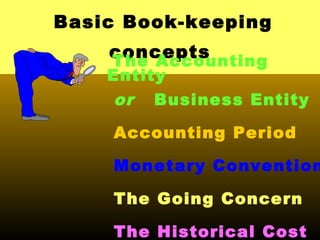
Basic Book-keeping
conceptsThe Accounting
Entity
or Business Entity
Accounting Period
Monetary Convention
The Going Concern
The Historical Cost
The Accounting Entity
Or Business Entity
concept
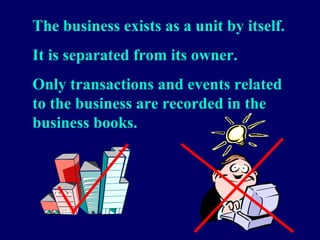
The business exists as a unit by itself.
It is separated from its owner.
Only transactions and events related
to the business are recorded in the
business books.
Accounting Period
The life of a business is divided into
many equal and fixed periods of
time. Eg one year
Similar to your parents’ monthly
salary income & expenses…
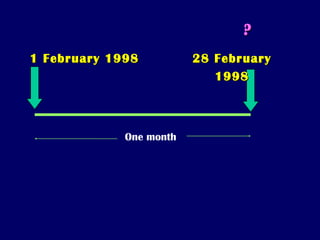
1 February 19981 February 1998
??
One month
28 February28 February
19981998
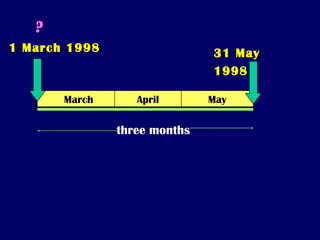
March May
31 May31 May
19981998
??
three months
1 March 19981 March 1998
April
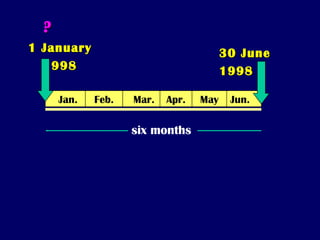
Jan. Jun.Mar. Apr. MayFeb.
1 January1 January
19981998
30 June30 June
19981998
??
six months
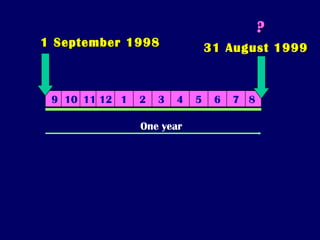
89
31 August 199931 August 1999
10 11 12 1 2 3 4 5 6 7
1 September 19981 September 1998
??
One year
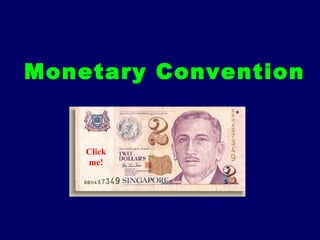
Monetary Convention
Click
me!
Can you tell me…
• How much is your health worth?
• If I want to buy your attitude, how much
should I pay you?
• Can I buy laziness from you?
How much are you willing to sell?
Do you think everything in the
world can be measured in terms of
dollars and cents?
Therefore,Therefore, ONLY MONEYONLY MONEY is usedis used
as the basic measuring unit foras the basic measuring unit for
financial reportingfinancial reporting
Going Concern
Imagine you just set up a new company.
Do you think you want to sell off your
business next year? Why not?
Assumption: The business entity will
continue to operate and it will not close
down.
All assets owned by the business are
assumed to be used into the
unknown future.
Hence, we value the assets at
historical costs.
Historical Cost
BEFORE 11/9
AFTER 11/9
Market price changes all the
time!
Therefore…
All transactions/assets of a
business entity are recorded at
the original cost price.
Can you still remember
the 5 concepts ?
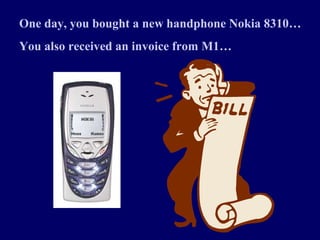
One day, you bought a new handphone Nokia 8310…
You also received an invoice from M1…
You decided to write down what you have spent on
a notebook so that you will not forget…
To record every different expenses on your
notebook seem very messy to you, so you decided
to keep a notebook for hobbies, books &
stationery, food & transport etc…
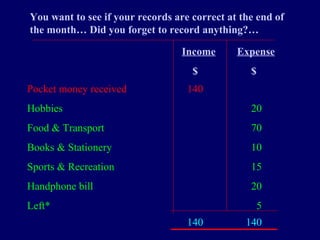
Income Expense
$ $
Pocket money received 140
Hobbies 20
Food & Transport 70
Books & Stationery 10
Sports & Recreation 15
Handphone bill 20
Left* 5
140 140
You want to see if your records are correct at the end of
the month… Did you forget to record anything?…
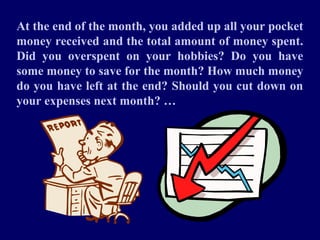
At the end of the month, you added up all your pocket
money received and the total amount of money spent.
Did you overspent on your hobbies? Do you have
some money to save for the month? How much money
do you have left at the end? Should you cut down on
your expenses next month? …
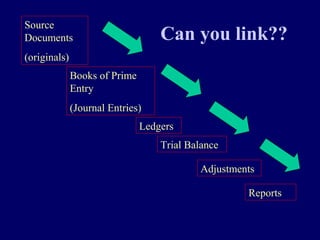
Source
Documents
(originals)
Books of Prime
Entry
(Journal Entries)
Ledgers
Trial Balance
Adjustments
Reports
Can you link??
SUMMARY
 What have you learn today?
 Any questions?
 Do you find POA more interesting
now?
 Class worksheet to test your
understanding.

Accounting concepts

  • 1.
  • 2.
    ObjectivesObjectives At the endof the lesson, students should be able to : • explain the concepts of Accounting Entity, Accounting Period, Monetary Convention, Going Concern and Historical Cost. • know the Accounting Cycle.
  • 3.
    Basic Book-keeping conceptsThe Accounting Entity orBusiness Entity Accounting Period Monetary Convention The Going Concern The Historical Cost
  • 4.
    The Accounting Entity OrBusiness Entity concept
  • 5.
    The business existsas a unit by itself. It is separated from its owner. Only transactions and events related to the business are recorded in the business books.
  • 6.
  • 7.
    The life ofa business is divided into many equal and fixed periods of time. Eg one year Similar to your parents’ monthly salary income & expenses…
  • 8.
    1 February 19981February 1998 ?? One month 28 February28 February 19981998
  • 9.
    March May 31 May31May 19981998 ?? three months 1 March 19981 March 1998 April
  • 10.
    Jan. Jun.Mar. Apr.MayFeb. 1 January1 January 19981998 30 June30 June 19981998 ?? six months
  • 11.
    89 31 August 199931August 1999 10 11 12 1 2 3 4 5 6 7 1 September 19981 September 1998 ?? One year
  • 12.
  • 13.
    Can you tellme… • How much is your health worth? • If I want to buy your attitude, how much should I pay you? • Can I buy laziness from you? How much are you willing to sell?
  • 14.
    Do you thinkeverything in the world can be measured in terms of dollars and cents?
  • 15.
    Therefore,Therefore, ONLY MONEYONLYMONEY is usedis used as the basic measuring unit foras the basic measuring unit for financial reportingfinancial reporting
  • 16.
  • 17.
    Imagine you justset up a new company. Do you think you want to sell off your business next year? Why not? Assumption: The business entity will continue to operate and it will not close down.
  • 18.
    All assets ownedby the business are assumed to be used into the unknown future. Hence, we value the assets at historical costs.
  • 19.
  • 20.
  • 21.
    Market price changesall the time! Therefore… All transactions/assets of a business entity are recorded at the original cost price.
  • 22.
    Can you stillremember the 5 concepts ?
  • 24.
    One day, youbought a new handphone Nokia 8310… You also received an invoice from M1…
  • 25.
    You decided towrite down what you have spent on a notebook so that you will not forget…
  • 26.
    To record everydifferent expenses on your notebook seem very messy to you, so you decided to keep a notebook for hobbies, books & stationery, food & transport etc…
  • 27.
    Income Expense $ $ Pocketmoney received 140 Hobbies 20 Food & Transport 70 Books & Stationery 10 Sports & Recreation 15 Handphone bill 20 Left* 5 140 140 You want to see if your records are correct at the end of the month… Did you forget to record anything?…
  • 28.
    At the endof the month, you added up all your pocket money received and the total amount of money spent. Did you overspent on your hobbies? Do you have some money to save for the month? How much money do you have left at the end? Should you cut down on your expenses next month? …
  • 29.
    Source Documents (originals) Books of Prime Entry (JournalEntries) Ledgers Trial Balance Adjustments Reports Can you link??
  • 30.
    SUMMARY  What haveyou learn today?  Any questions?  Do you find POA more interesting now?  Class worksheet to test your understanding.