PRESENTING
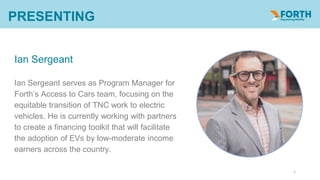
Ian Sergeant
Ian Sergeant serves as Program Manager for
Forth’s Access to Cars team, focusing on the
equitable transition of TNC work to electric
vehicles. He is currently working with partners
to create a financing toolkit that will facilitate
the adoption of EVs by low-moderate income
earners across the country.
1
XX
Agenda
4
2
• Intro
• Why is it important to electrify TNC
work?
• Barriers to access
• What do drivers want?
• Current programs addressing the
needs of rideshare drivers
XX
Why is it important to electrify rideshare?
4
3
• > 8 million fewer cars on the road
because of rideshare
• Even though TNC drivers use hybrid
vehicles 6 times more than average car
owners do, they still have a huge carbon
footprint.
• Rideshare drivers will make
substantially more money not paying for
gas and maintenance on an ICE vehicle
(more than $10k within a few years).
XX
Barriers to Access
4
4
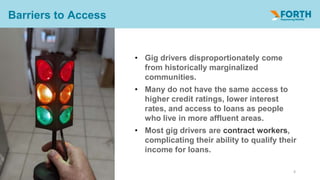
• Gig drivers disproportionately come
from historically marginalized
communities.
• Many do not have the same access to
higher credit ratings, lower interest
rates, and access to loans as people
who live in more affluent areas.
• Most gig drivers are contract workers,
complicating their ability to qualify their
income for loans.
XX
Intermountain West Driver Study
4
5
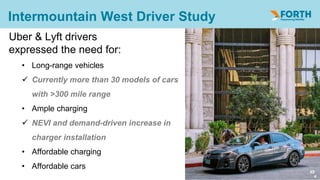
• Long-range vehicles
 Currently more than 30 models of cars
with >300 mile range
• Ample charging
 NEVI and demand-driven increase in
charger installation
• Affordable charging
• Affordable cars
Uber & Lyft drivers
expressed the need for:
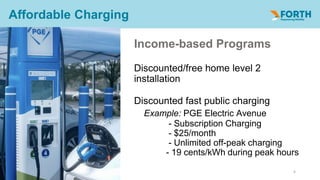
Income-based Programs
Discounted/free home level 2
installation
Discounted fast public charging
Example: PGE Electric Avenue
- Subscription Charging
- $25/month
- Unlimited off-peak charging
- 19 cents/kWh during peak hours
6
Affordable Charging
XX
Affordable EV Financing
4
7
• Financial assistance for low-
moderate-income earners (“cash
on the hood” rebates)
• Affordable and accessible
financing
Comprehensive Financing Programs
Solutions need to be comprehensive and may involve joint efforts
between CBOs, utilities, local government, and lending institutions:
● Education on EV operation and charging
● Credit and financial counseling
● Access to affordable financing
● Income-based grants or cash-on-the-hood incentives that help cover
down payment costs
● Assistance qualifying for local and federal EV incentives
● Discounted/free home level 2 installation
● Discounted/free DCFC charging 8
Approaches to resolve the environmental equity issues around TNC electrification.
(Hint: It’s not simply loan-loss reserves)
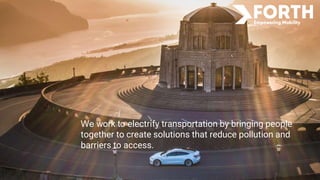
We work to electrify transportation by bringing people
together to create solutions that reduce pollution and
barriers to access.

Accelerating EV Adoption for Gig Drivers by Ian Sergeant

  • 1.
    PRESENTING Ian Sergeant Ian Sergeantserves as Program Manager for Forth’s Access to Cars team, focusing on the equitable transition of TNC work to electric vehicles. He is currently working with partners to create a financing toolkit that will facilitate the adoption of EVs by low-moderate income earners across the country. 1
  • 2.
    XX Agenda 4 2 • Intro • Whyis it important to electrify TNC work? • Barriers to access • What do drivers want? • Current programs addressing the needs of rideshare drivers
  • 3.
    XX Why is itimportant to electrify rideshare? 4 3 • > 8 million fewer cars on the road because of rideshare • Even though TNC drivers use hybrid vehicles 6 times more than average car owners do, they still have a huge carbon footprint. • Rideshare drivers will make substantially more money not paying for gas and maintenance on an ICE vehicle (more than $10k within a few years).
  • 4.
    XX Barriers to Access 4 4 •Gig drivers disproportionately come from historically marginalized communities. • Many do not have the same access to higher credit ratings, lower interest rates, and access to loans as people who live in more affluent areas. • Most gig drivers are contract workers, complicating their ability to qualify their income for loans.
  • 5.
    XX Intermountain West DriverStudy 4 5 • Long-range vehicles  Currently more than 30 models of cars with >300 mile range • Ample charging  NEVI and demand-driven increase in charger installation • Affordable charging • Affordable cars Uber & Lyft drivers expressed the need for:
  • 6.
    Income-based Programs Discounted/free homelevel 2 installation Discounted fast public charging Example: PGE Electric Avenue - Subscription Charging - $25/month - Unlimited off-peak charging - 19 cents/kWh during peak hours 6 Affordable Charging
  • 7.
    XX Affordable EV Financing 4 7 •Financial assistance for low- moderate-income earners (“cash on the hood” rebates) • Affordable and accessible financing
  • 8.
    Comprehensive Financing Programs Solutionsneed to be comprehensive and may involve joint efforts between CBOs, utilities, local government, and lending institutions: ● Education on EV operation and charging ● Credit and financial counseling ● Access to affordable financing ● Income-based grants or cash-on-the-hood incentives that help cover down payment costs ● Assistance qualifying for local and federal EV incentives ● Discounted/free home level 2 installation ● Discounted/free DCFC charging 8 Approaches to resolve the environmental equity issues around TNC electrification. (Hint: It’s not simply loan-loss reserves)
  • 9.
    We work toelectrify transportation by bringing people together to create solutions that reduce pollution and barriers to access.