Academic Writing
Workshop
Yesha Bhatt
Department of English,
M. K. Bhavnagar University
 Academic language (selection of words)
 Thoughtful – Formal – Critical
(conceptual clarity)
 Structured (Main points + Sub points +
key points)
 Well researched + evidenced (Use of
quotes, dialogues, & statements –
Critics/authors)
 Specific and precise
 In third person or objective voice
What is an academic writing…?
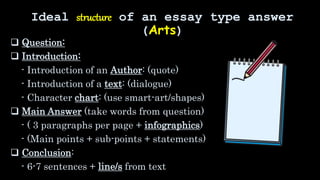
Ideal structure of an essay type answer
(Arts)
 Question:
 Introduction:
- Introduction of an Author: (quote)
- Introduction of a text: (dialogue)
- Character chart: (use smart-art/shapes)
 Main Answer (take words from question)
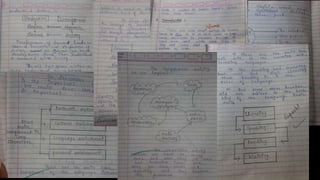
- ( 3 paragraphs per page + infographics)
- (Main points + sub-points + statements)
 Conclusion:
- 6-7 sentences + line/s from text
Common Errors
 Grammar (Language)
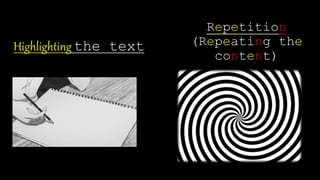
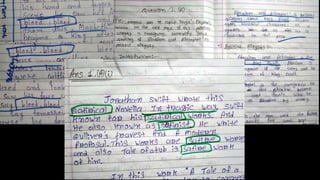
 Highlighting (important portion)
 Repetition (Repeating the content)
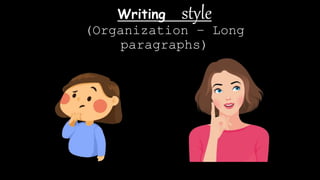
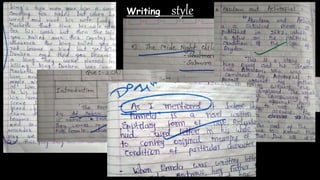
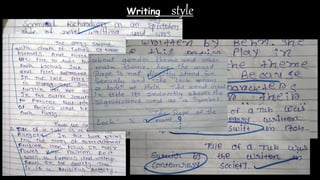
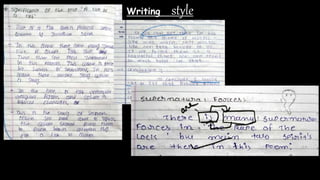
 Writing style ( Organization – Long
paragraphs)
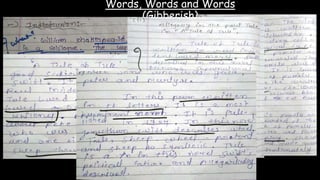
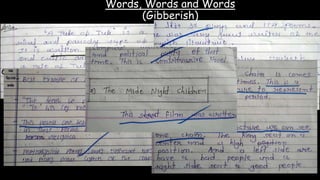
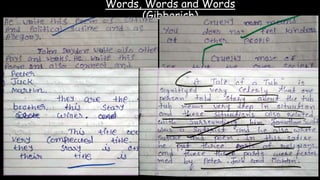
 Words, Words and Words (Gibberish)
Avoid these things
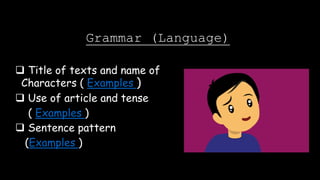
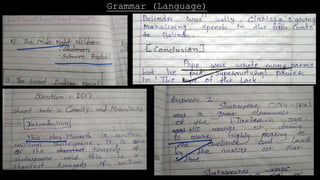
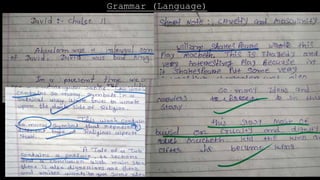
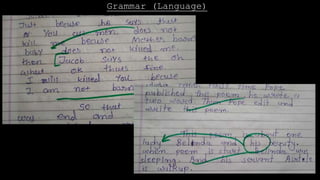
 Title of texts and name of
Characters ( Examples )
 Use of article and tense
( Examples )
 Sentence pattern
(Examples )
Grammar (Language)
Grammar (Language)
Grammar (Language)
Grammar (Language)
Highlighting the text
Repetition
(Repeating the
content)
Writing style
(Organization – Long
paragraphs)
Writing style
Writing style
Writing style
Words, Words and Words (Gibberish)
Words, Words and Words
(Gibberish)
Words, Words and Words
(Gibberish)
Words, Words and Words
(Gibberish)
Infographic
s
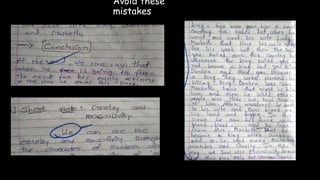
Avoid these
mistakes
Avoid these
mistakes
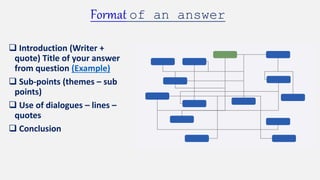
Format of an answer
 Introduction (Writer +
quote) Title of your answer
from question (Example)
 Sub-points (themes – sub
points)
 Use of dialogues – lines –
quotes
 Conclusion
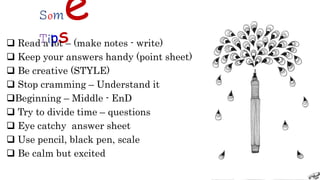
Some
TipS
 Read a lot – (make notes - write)
 Keep your answers handy (point sheet)
 Be creative (STYLE)
 Stop cramming – Understand it
Beginning – Middle - EnD
 Try to divide time – questions
 Eye catchy answer sheet
 Use pencil, black pen, scale
 Be calm but excited
Open
for
Questions…
Thank You!

Academic writing