ABSOLUTE ADVANTAGE vs.
COMPARATIVE ADVANTAGE,
the CIRCULAR FLOW MODEL
of MARKET
PPC Practice
Draw a PPC showing changes for each of the
following:
Pizza and Robots (3)
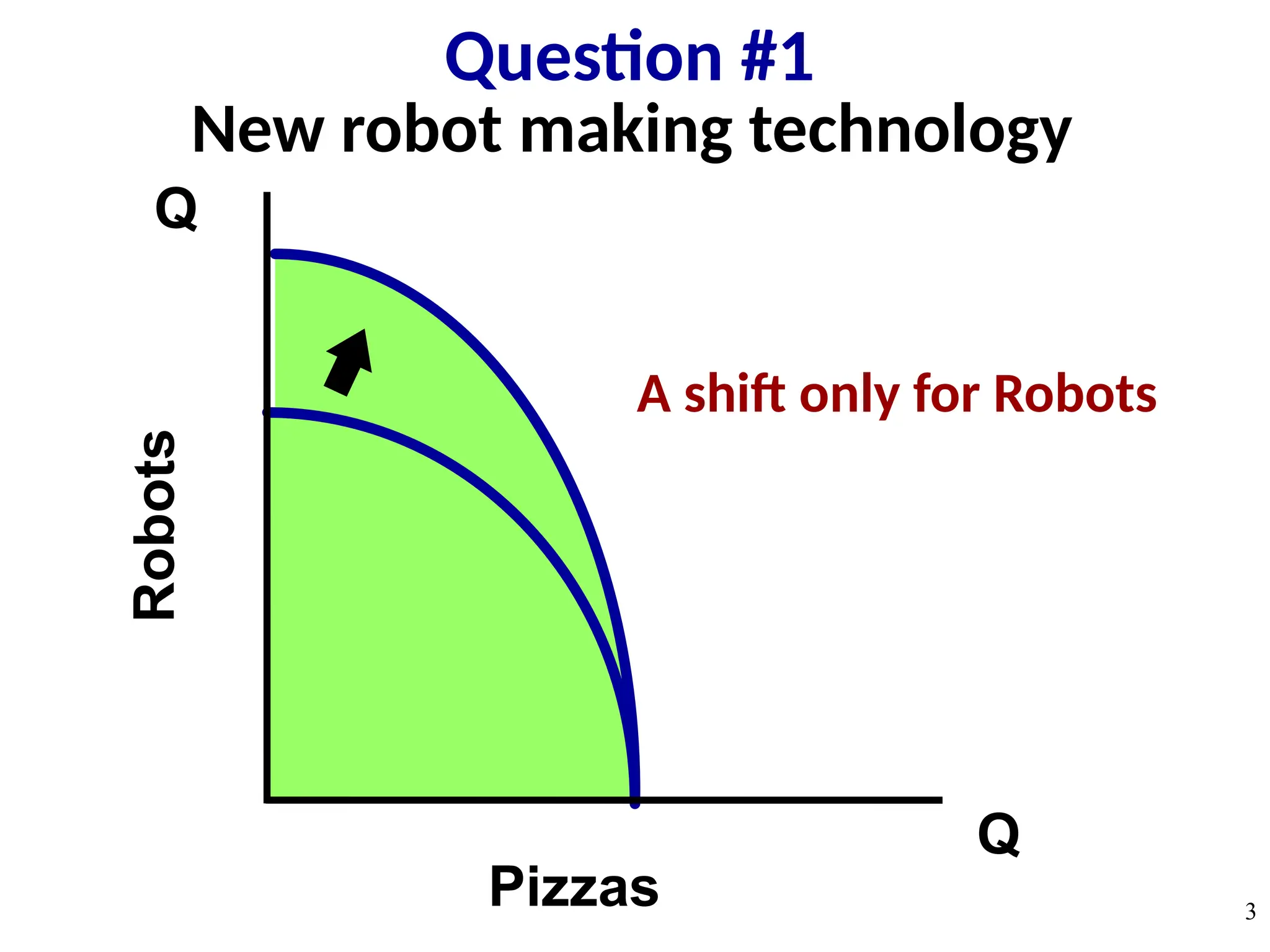
1. New robot-making technology
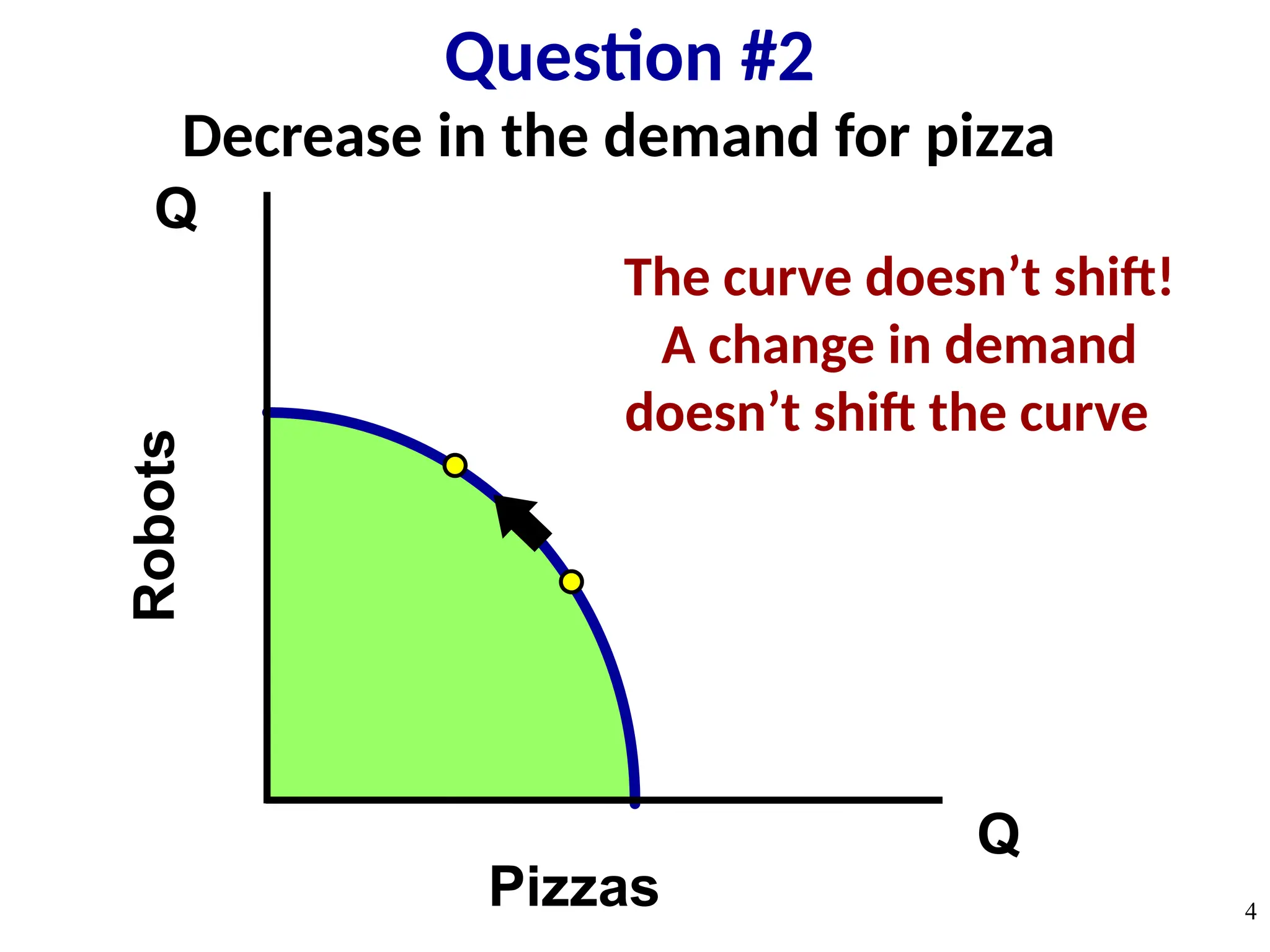
2. Decrease in the demand for pizza
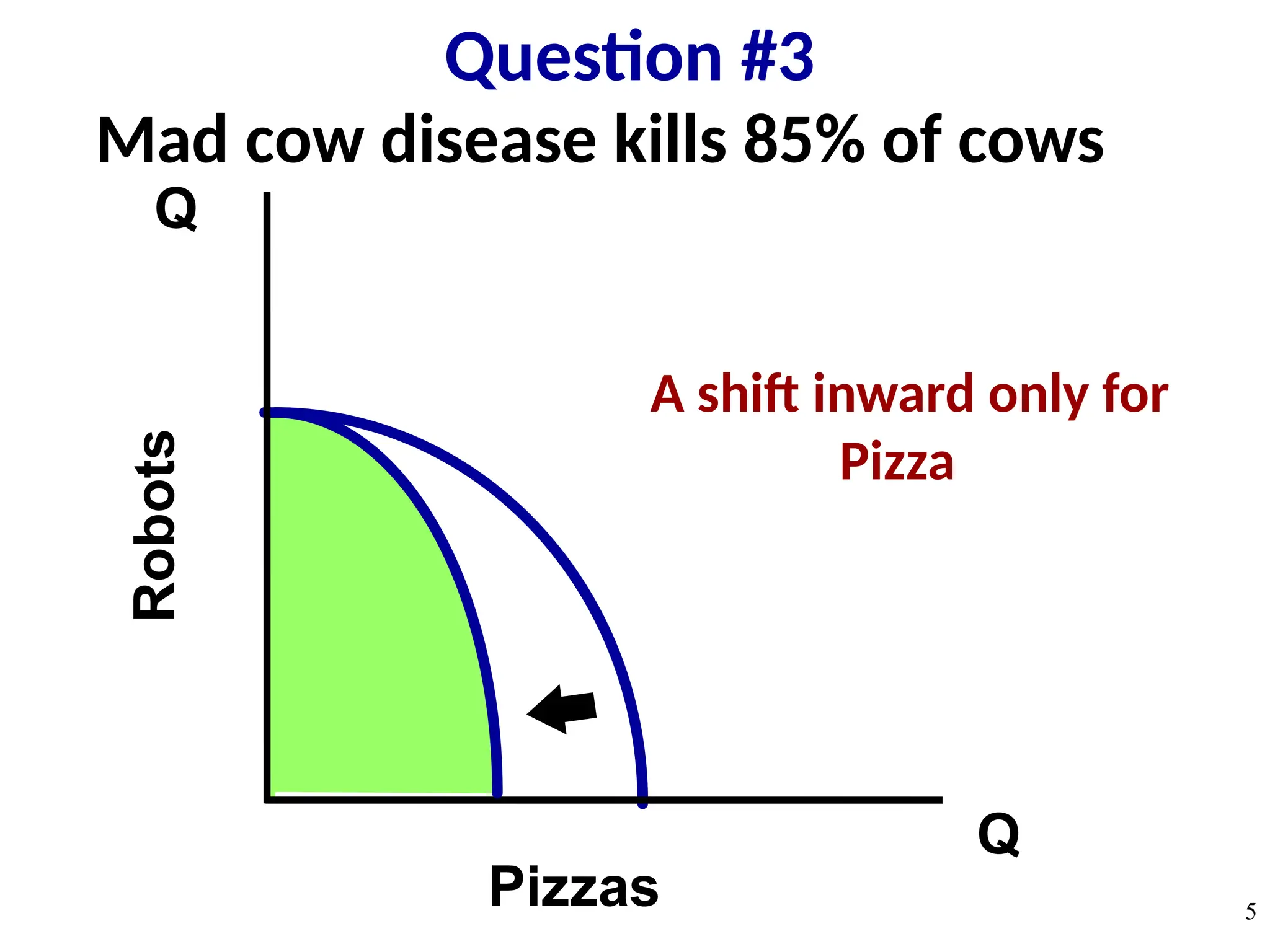
3. Mad cow disease kills 85% of cows
Consumer goods and Capital Goods (4)
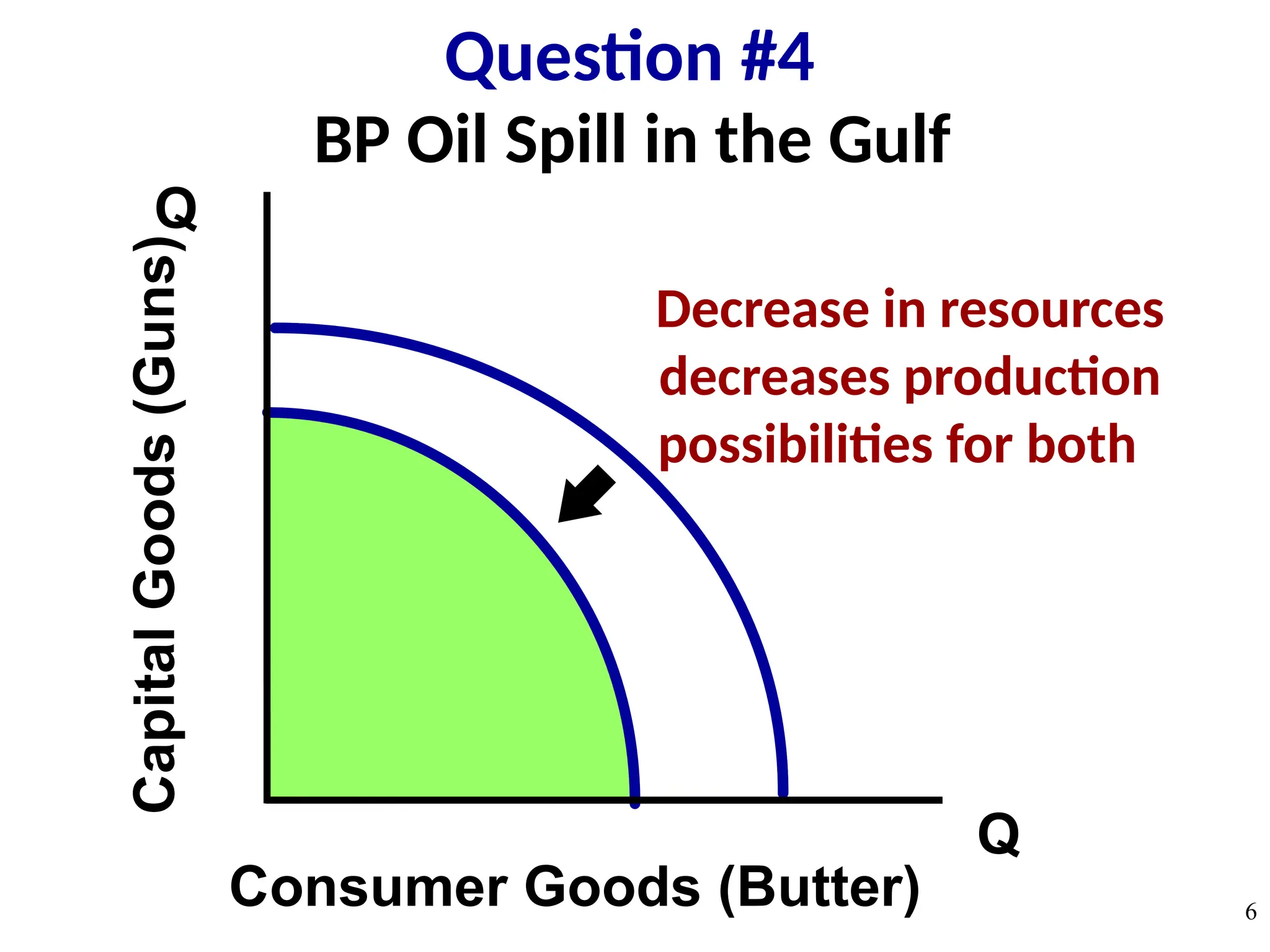
4. BP Oil Spill in the Gulf
5. Faster computer hardware
6. Many workers unemployed
7. Significant increases in education
2
New robot making technology
Q
Q
Robots
Pizzas
Question #1
3
A shift only for Robots
Decrease in the demand for pizza
Q
Q
Robots
Pizzas
Question #2
4
The curve doesn’t shift!
A change in demand
doesn’t shift the curve
Mad cow disease kills 85% of cows
Q
Q
Robots
Pizzas
Question #3
5
A shift inward only for
Pizza
BP Oil Spill in the Gulf
Q
Q
Capital
Goods
(Guns)
Consumer Goods (Butter)
Question #4
6
Decrease in resources
decreases production
possibilities for both
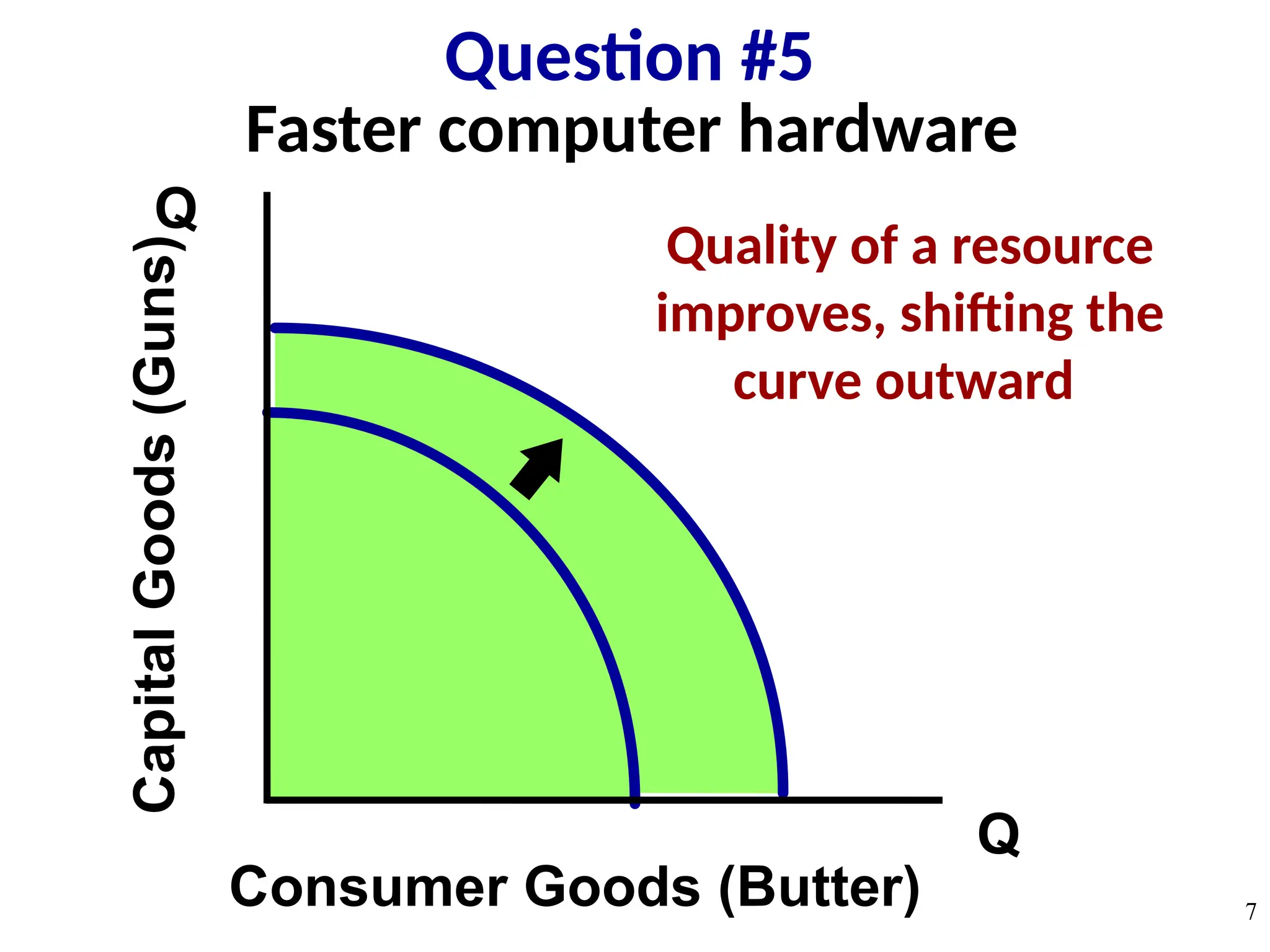
Faster computer hardware
Q
Q
Capital
Goods
(Guns)
Consumer Goods (Butter)
Question #5
7
Quality of a resource
improves, shifting the
curve outward
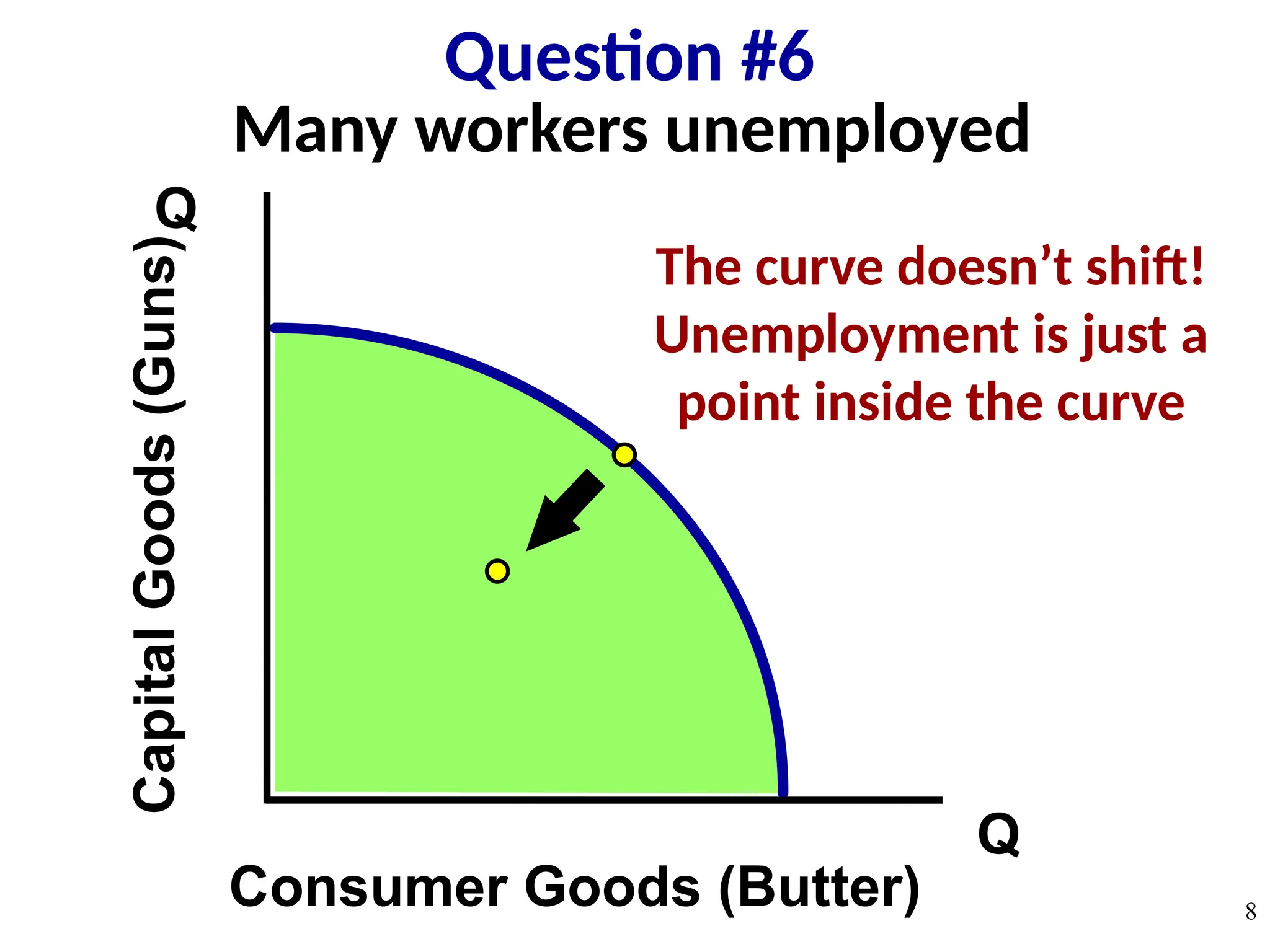
Many workers unemployed
Q
Q
Capital
Goods
(Guns)
Consumer Goods (Butter)
Question #6
8
The curve doesn’t shift!
Unemployment is just a
point inside the curve
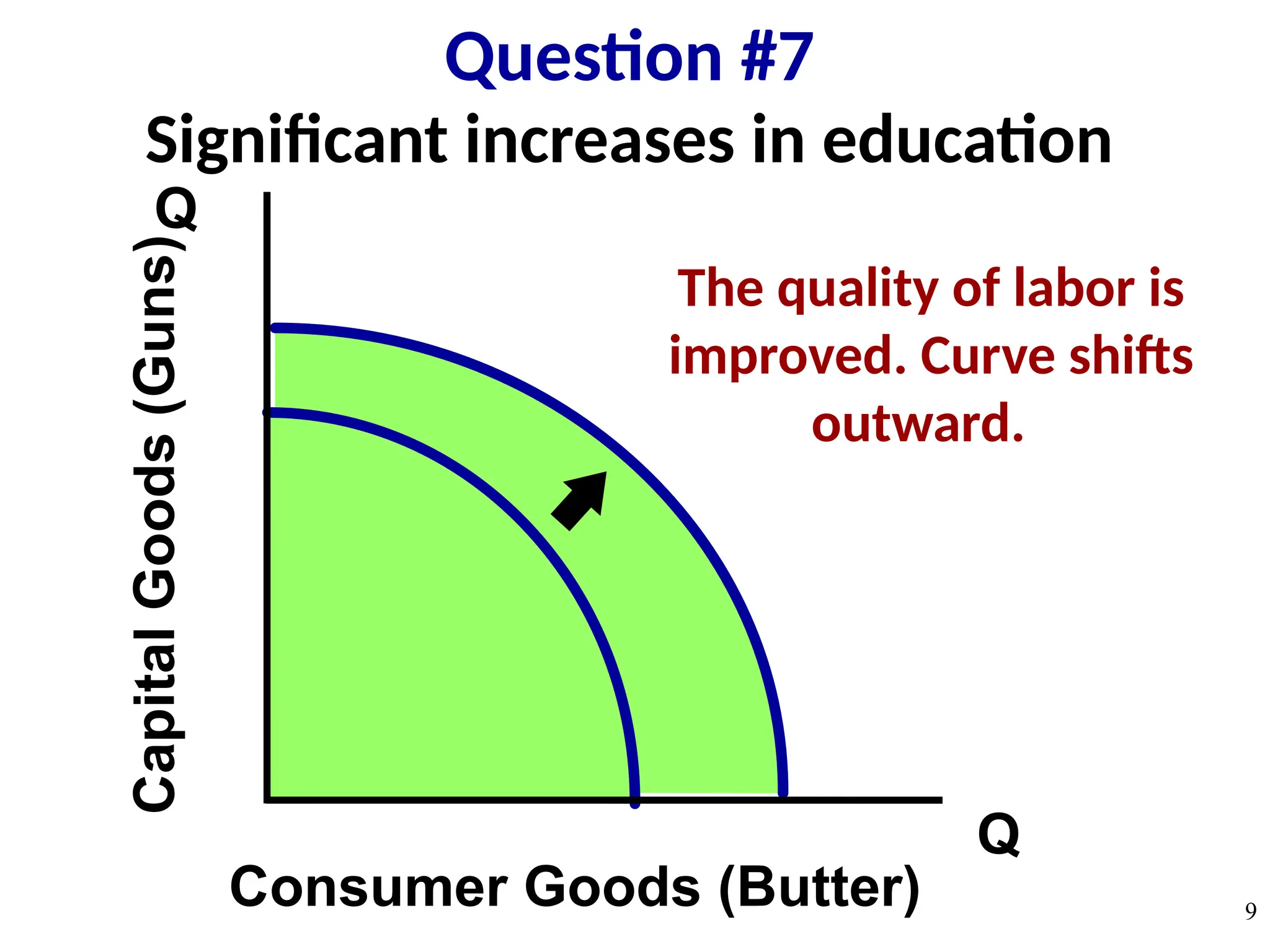
Significant increases in education
Q
Q
Capital
Goods
(Guns)
Consumer Goods (Butter)
Question #7
9
The quality of labor is
improved. Curve shifts
outward.
ABSOLUTE ADVANTAGE
• means that an economy can produce a greater
total of goods for the same quantity of inputs.
• means that fewer resources are needed to
produce the same amount of goods and there will
be lower costs than other economies.
TWO FACTORS to consider::
1. output (the product produced)
2. input (the resources used e.g. time or labor)
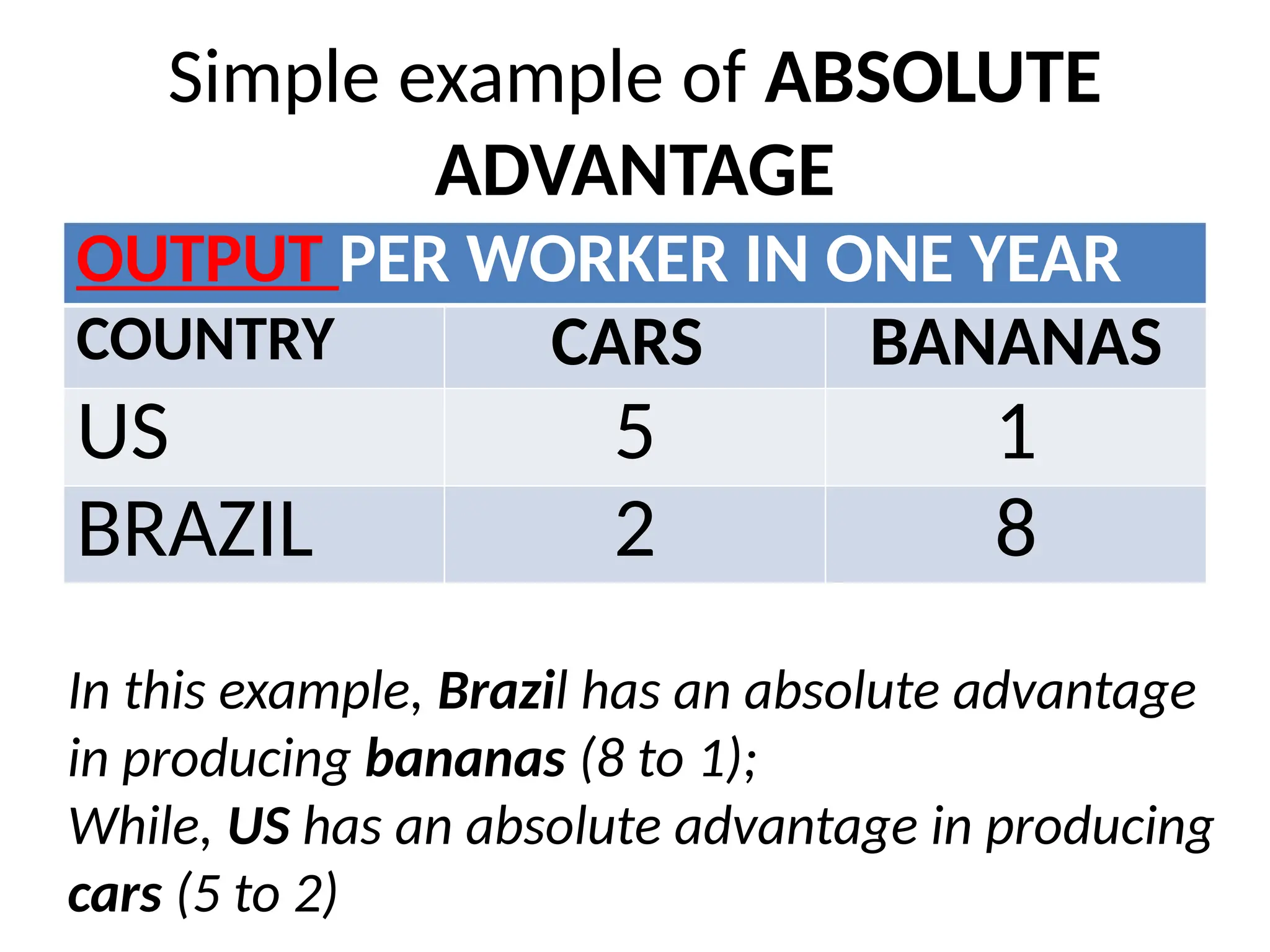
Simple example of ABSOLUTE
ADVANTAGE
OUTPUT PER WORKER IN ONE YEAR
COUNTRY CARS BANANAS
US 5 1
BRAZIL 2 8
In this example, Brazil has an absolute advantage
in producing bananas (8 to 1);
While, US has an absolute advantage in producing
cars (5 to 2)
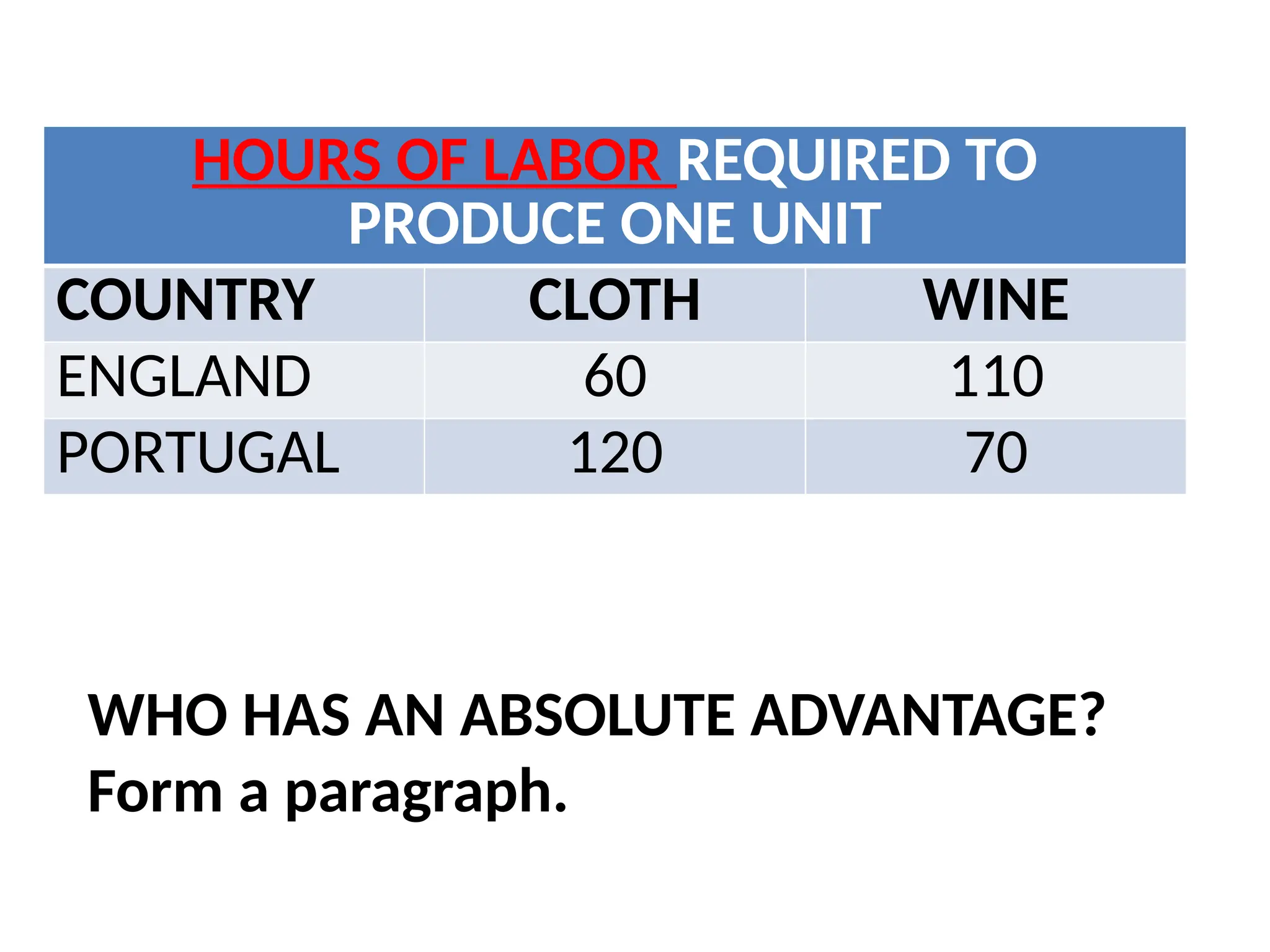
HOURS OF LABOR REQUIRED TO
PRODUCE ONE UNIT
COUNTRY CLOTH WINE
ENGLAND 60 110
PORTUGAL 120 70
WHO HAS AN ABSOLUTE ADVANTAGE?
Form a paragraph.
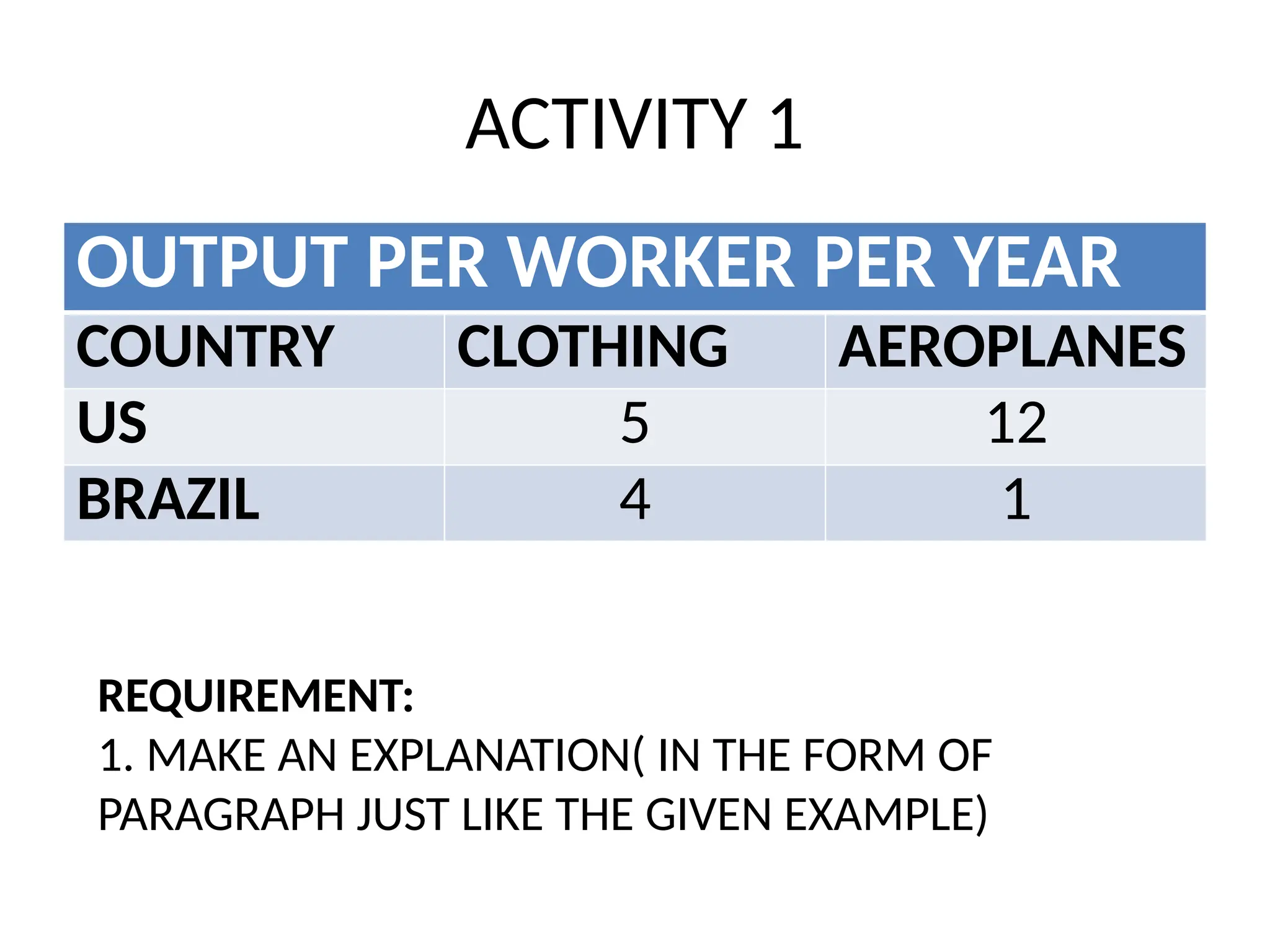
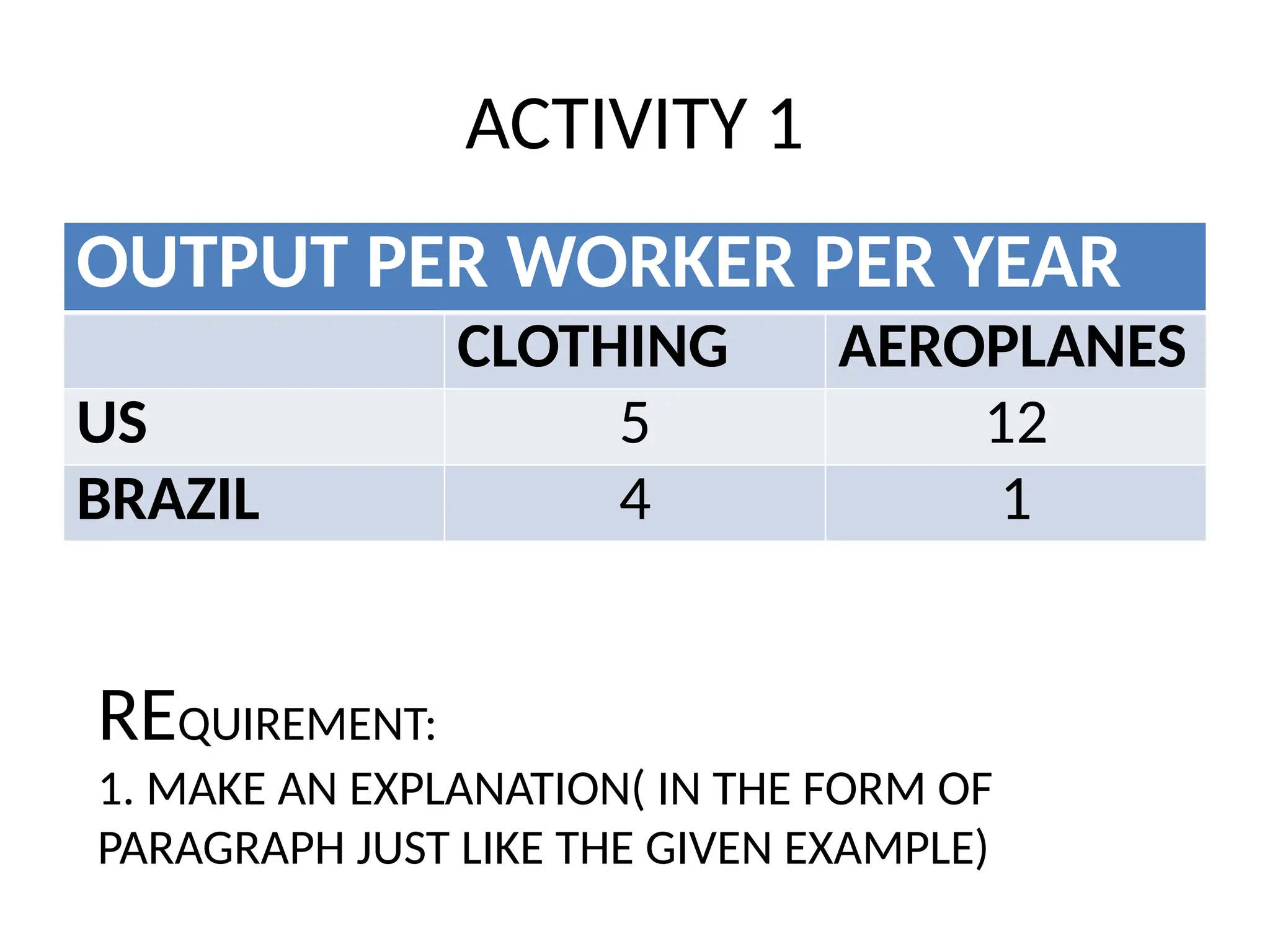
ACTIVITY 1
OUTPUT PER WORKER PER YEAR
COUNTRY CLOTHING AEROPLANES
US 5 12
BRAZIL 4 1
REQUIREMENT:
1. MAKE AN EXPLANATION( IN THE FORM OF
PARAGRAPH JUST LIKE THE GIVEN EXAMPLE)
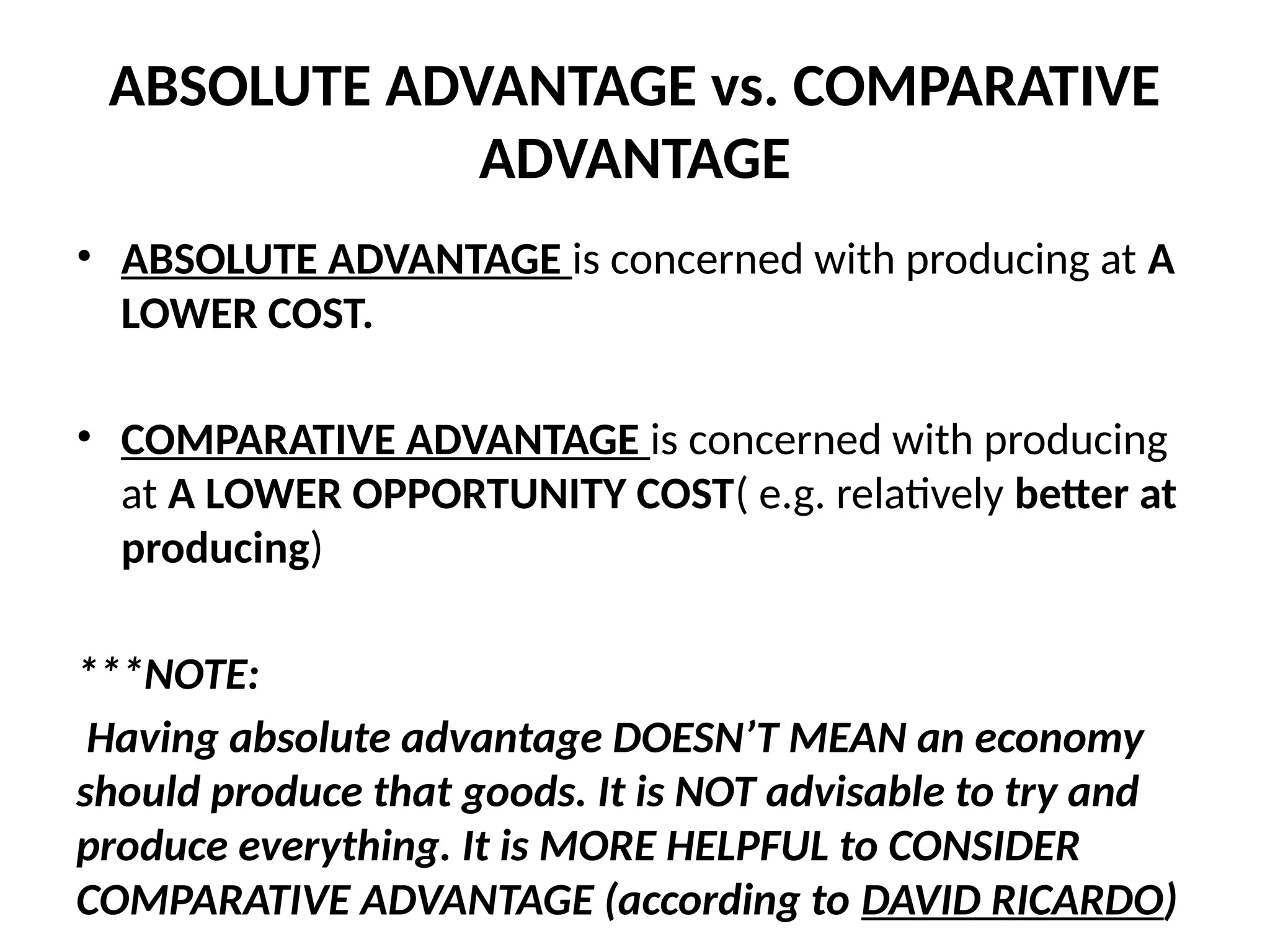
ABSOLUTE ADVANTAGE vs. COMPARATIVE
ADVANTAGE
• ABSOLUTE ADVANTAGE is concerned with producing at A
LOWER COST.
• COMPARATIVE ADVANTAGE is concerned with producing
at A LOWER OPPORTUNITY COST( e.g. relatively better at
producing)
***NOTE:
Having absolute advantage DOESN’T MEAN an economy
should produce that goods. It is NOT advisable to try and
produce everything. It is MORE HELPFUL to CONSIDER
COMPARATIVE ADVANTAGE (according to DAVID RICARDO)
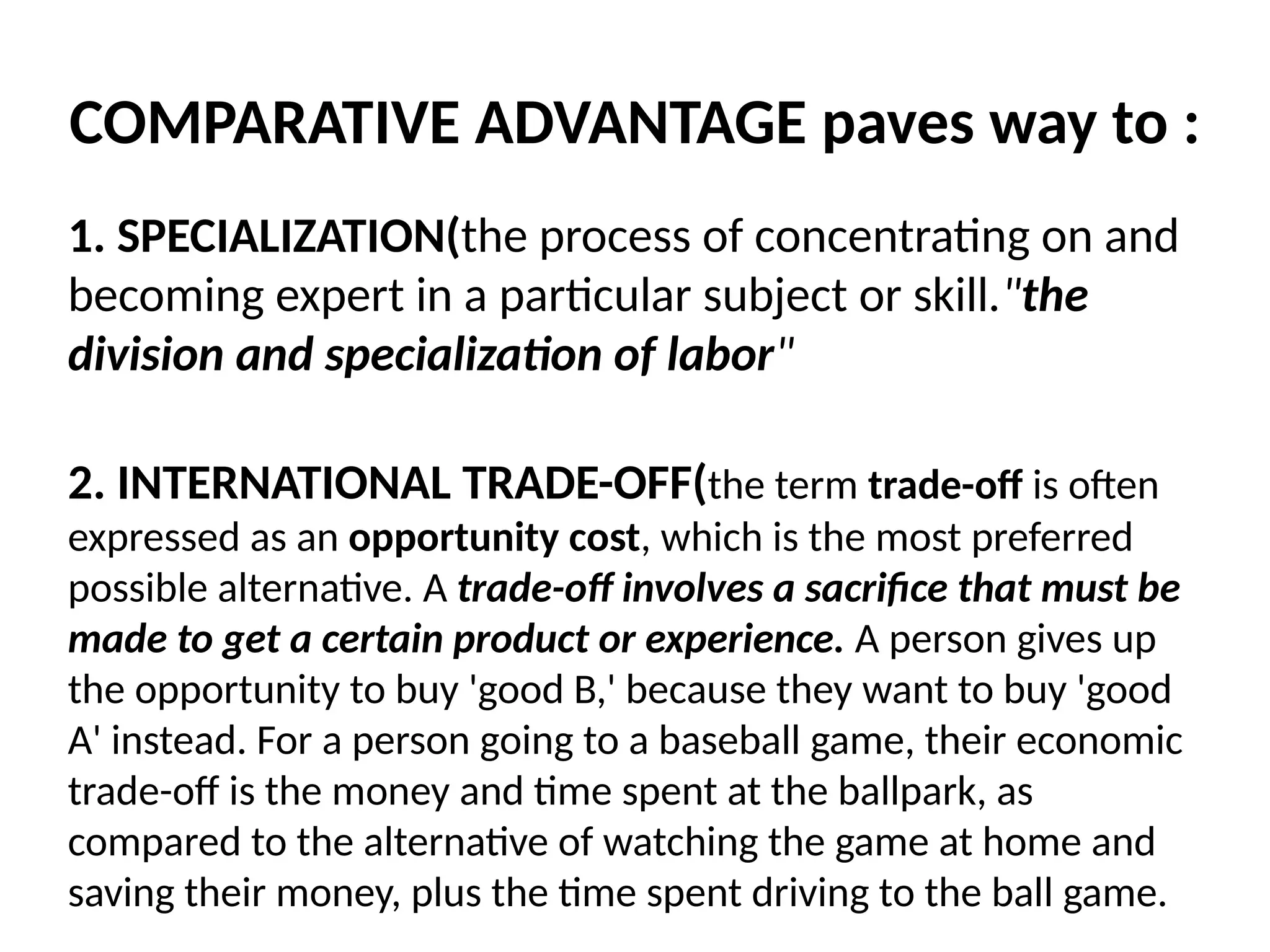
COMPARATIVE ADVANTAGE paves way to :
1. SPECIALIZATION(the process of concentrating on and
becoming expert in a particular subject or skill."the
division and specialization of labor"
2. INTERNATIONAL TRADE-OFF(the term trade-off is often
expressed as an opportunity cost, which is the most preferred
possible alternative. A trade-off involves a sacrifice that must be
made to get a certain product or experience. A person gives up
the opportunity to buy 'good B,' because they want to buy 'good
A' instead. For a person going to a baseball game, their economic
trade-off is the money and time spent at the ballpark, as
compared to the alternative of watching the game at home and
saving their money, plus the time spent driving to the ball game.
ACTIVITY 1
OUTPUT PER WORKER PER YEAR
CLOTHING AEROPLANES
US 5 12
BRAZIL 4 1
REQUIREMENT:
1. MAKE AN EXPLANATION( IN THE FORM OF
PARAGRAPH JUST LIKE THE GIVEN EXAMPLE)
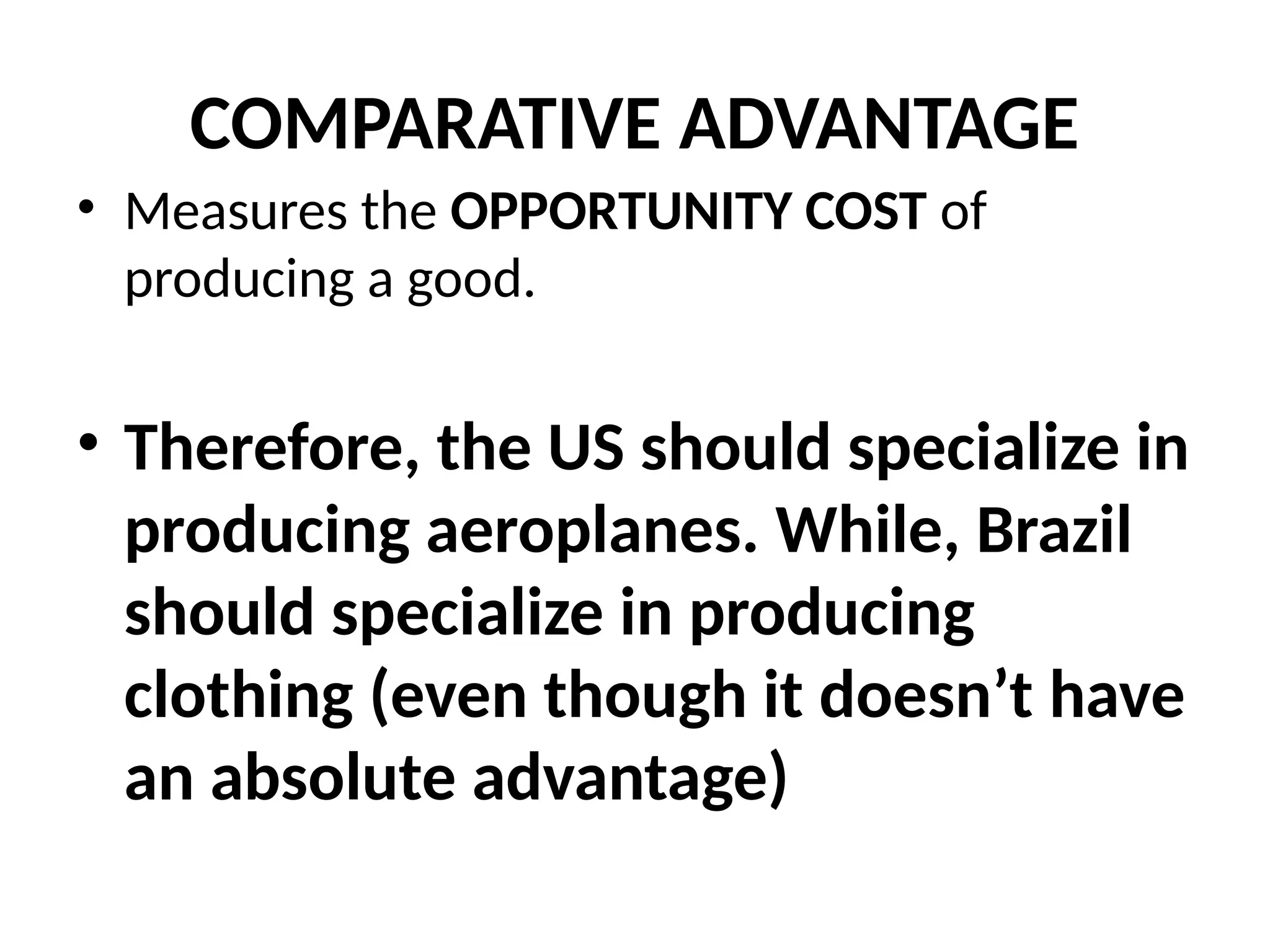
COMPARATIVE ADVANTAGE
• Measures the OPPORTUNITY COST of
producing a good.
• Therefore, the US should specialize in
producing aeroplanes. While, Brazil
should specialize in producing
clothing (even though it doesn’t have
an absolute advantage)
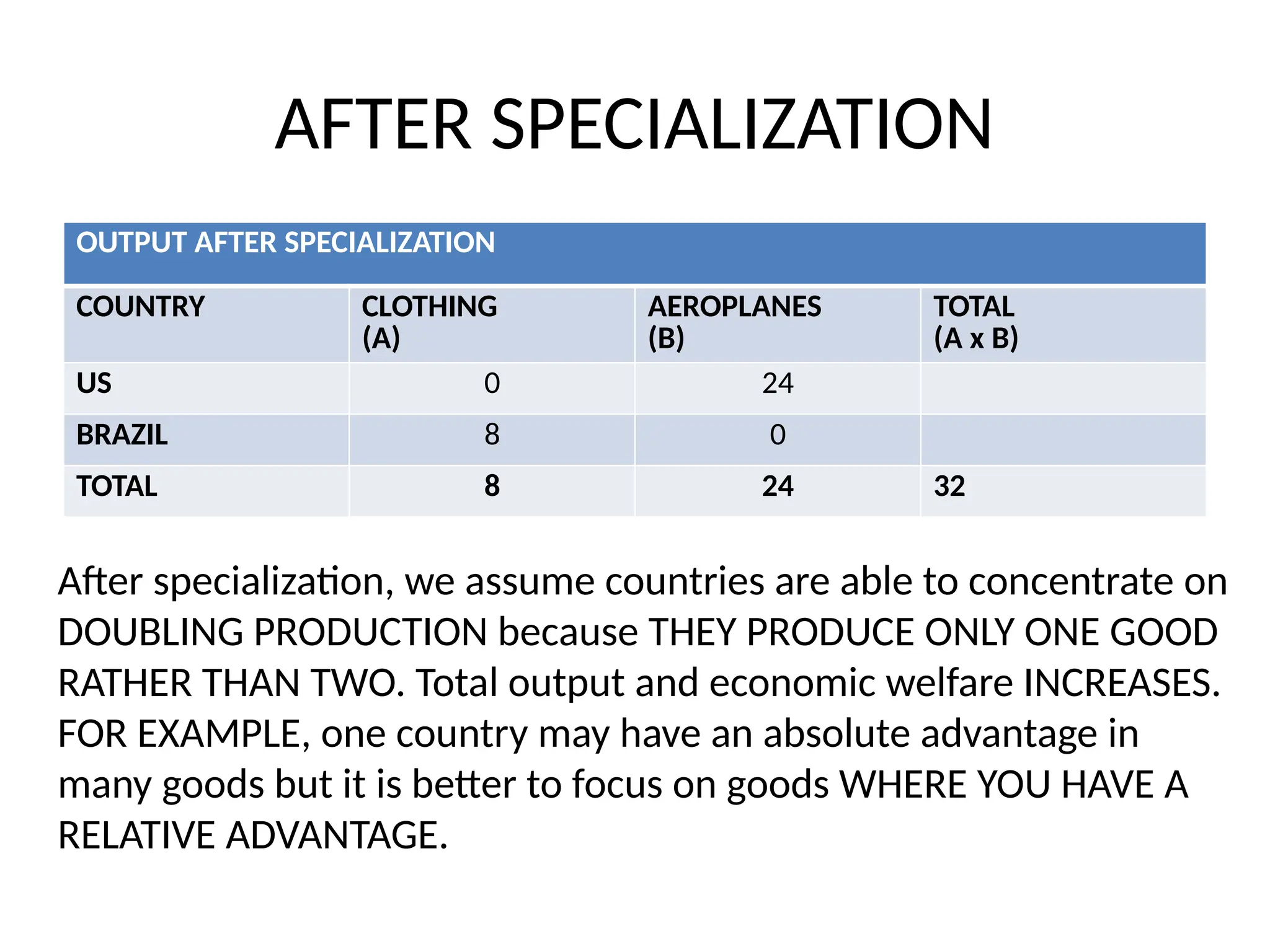
AFTER SPECIALIZATION
OUTPUT AFTER SPECIALIZATION
COUNTRY CLOTHING
(A)
AEROPLANES
(B)
TOTAL
(A x B)
US 0 24
BRAZIL 8 0
TOTAL 8 24 32
After specialization, we assume countries are able to concentrate on
DOUBLING PRODUCTION because THEY PRODUCE ONLY ONE GOOD
RATHER THAN TWO. Total output and economic welfare INCREASES.
FOR EXAMPLE, one country may have an absolute advantage in
many goods but it is better to focus on goods WHERE YOU HAVE A
RELATIVE ADVANTAGE.
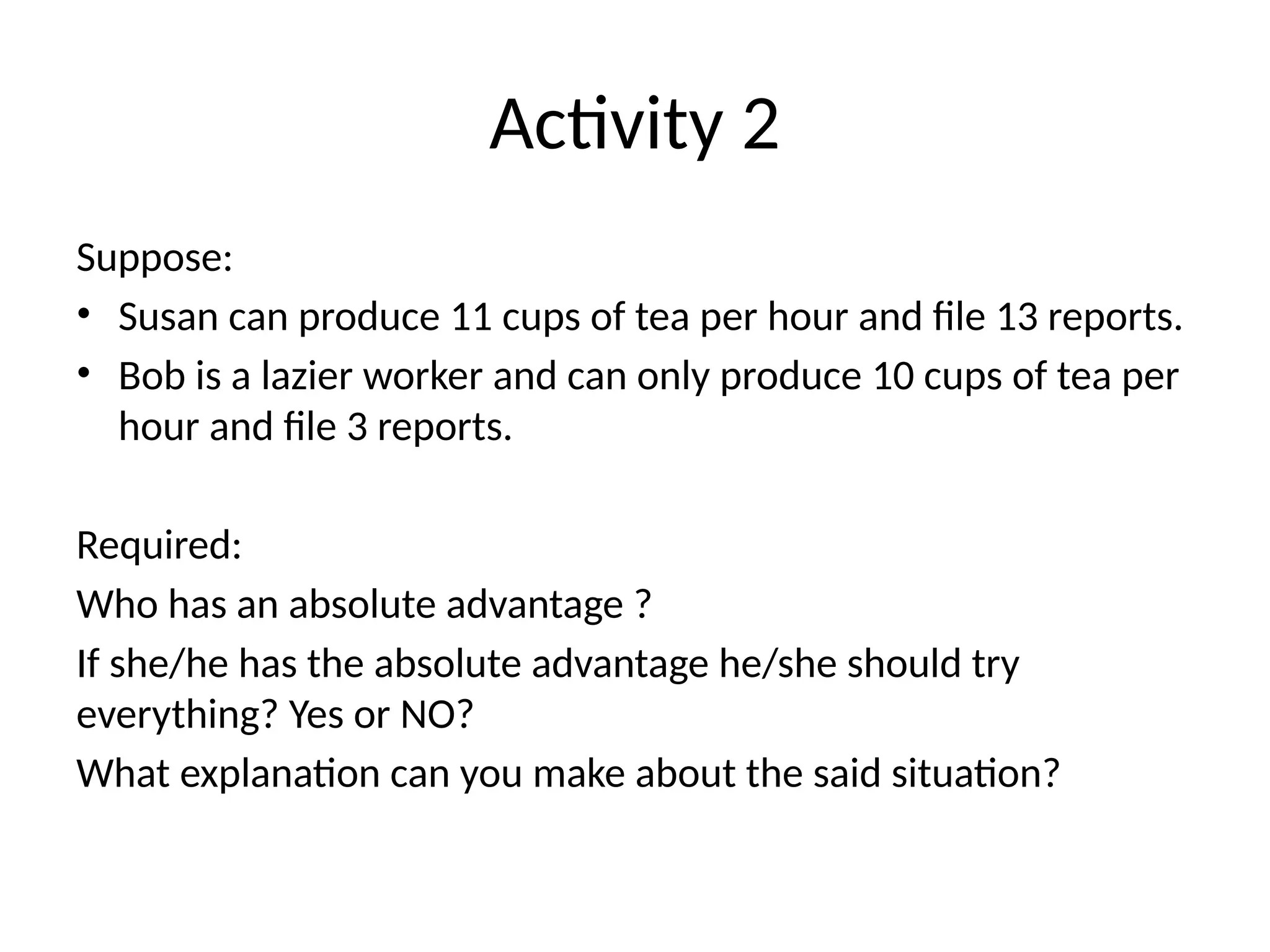
Activity 2
Suppose:
• Susan can produce 11 cups of tea per hour and file 13 reports.
• Bob is a lazier worker and can only produce 10 cups of tea per
hour and file 3 reports.
Required:
Who has an absolute advantage ?
If she/he has the absolute advantage he/she should try
everything? Yes or NO?
What explanation can you make about the said situation?
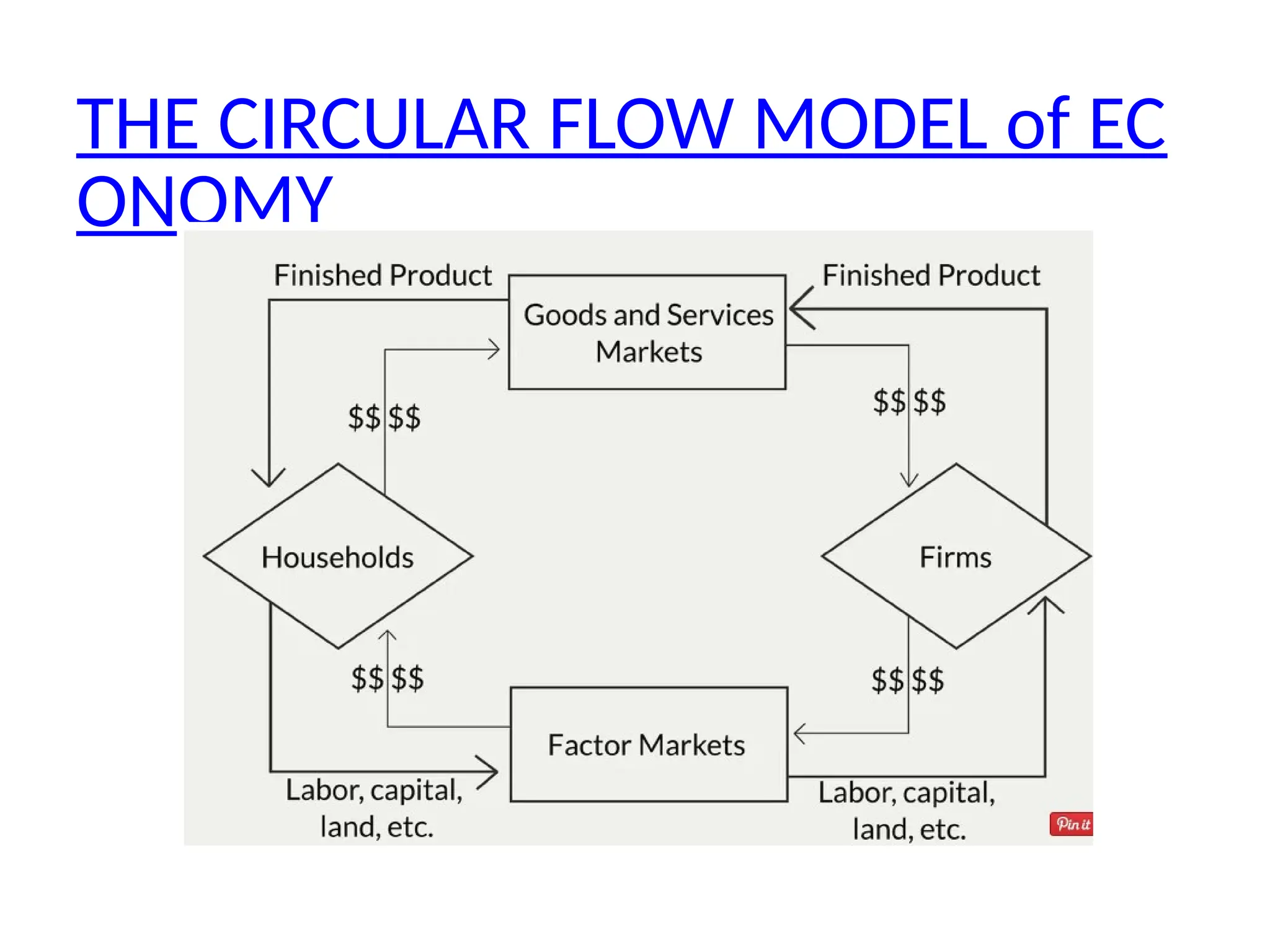
THE CIRCULAR FLOW MODEL of EC
ONOMY
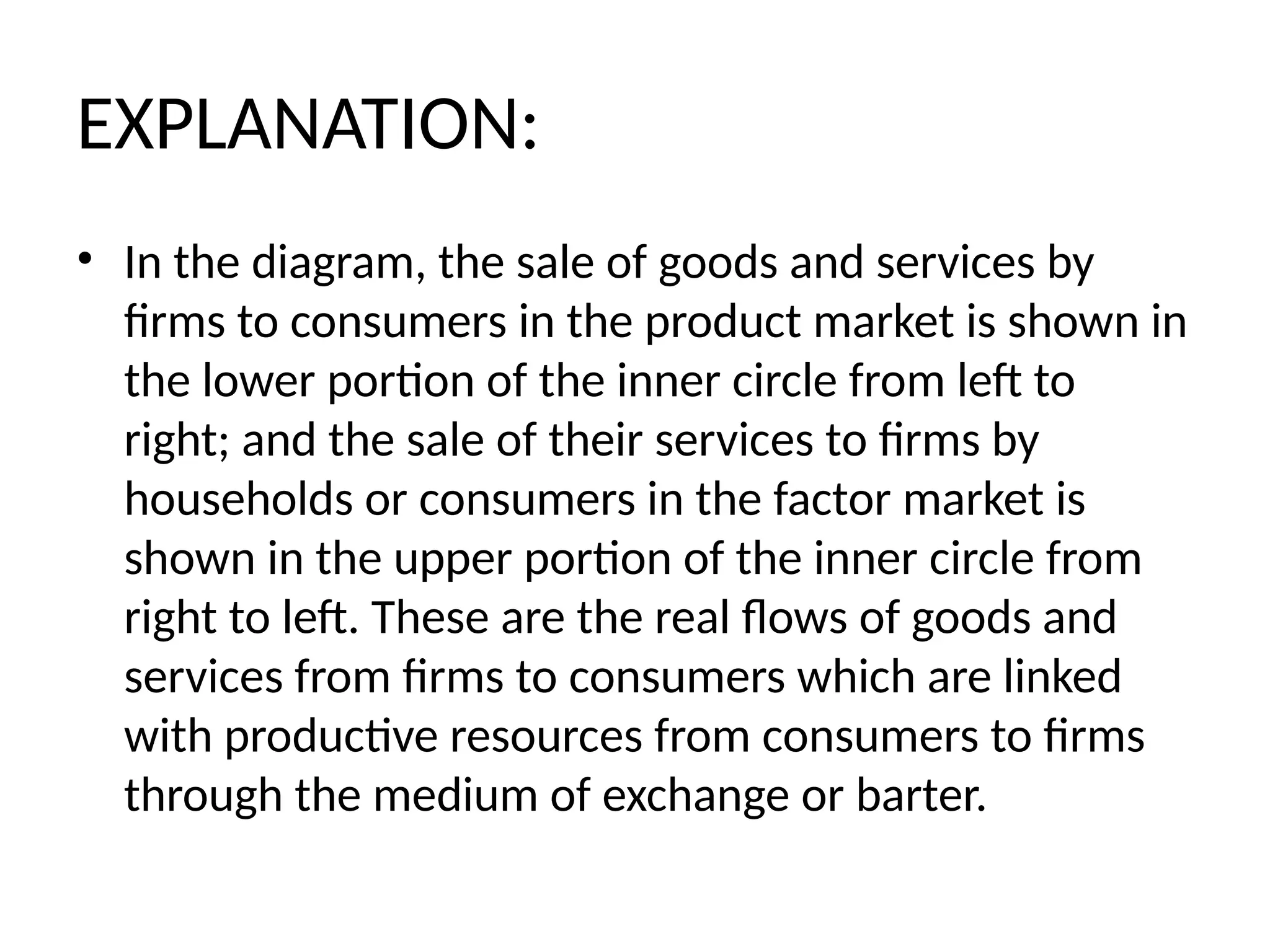
EXPLANATION:
• In the diagram, the sale of goods and services by
firms to consumers in the product market is shown in
the lower portion of the inner circle from left to
right; and the sale of their services to firms by
households or consumers in the factor market is
shown in the upper portion of the inner circle from
right to left. These are the real flows of goods and
services from firms to consumers which are linked
with productive resources from consumers to firms
through the medium of exchange or barter.

Thank you

ABSOLUTE ADVANTAGE vs comparative advantage.pptx

  • 1.
    ABSOLUTE ADVANTAGE vs. COMPARATIVEADVANTAGE, the CIRCULAR FLOW MODEL of MARKET
  • 2.
    PPC Practice Draw aPPC showing changes for each of the following: Pizza and Robots (3) 1. New robot-making technology 2. Decrease in the demand for pizza 3. Mad cow disease kills 85% of cows Consumer goods and Capital Goods (4) 4. BP Oil Spill in the Gulf 5. Faster computer hardware 6. Many workers unemployed 7. Significant increases in education 2
  • 3.
    New robot makingtechnology Q Q Robots Pizzas Question #1 3 A shift only for Robots
  • 4.
    Decrease in thedemand for pizza Q Q Robots Pizzas Question #2 4 The curve doesn’t shift! A change in demand doesn’t shift the curve
  • 5.
    Mad cow diseasekills 85% of cows Q Q Robots Pizzas Question #3 5 A shift inward only for Pizza
  • 6.
    BP Oil Spillin the Gulf Q Q Capital Goods (Guns) Consumer Goods (Butter) Question #4 6 Decrease in resources decreases production possibilities for both
  • 7.
    Faster computer hardware Q Q Capital Goods (Guns) ConsumerGoods (Butter) Question #5 7 Quality of a resource improves, shifting the curve outward
  • 8.
    Many workers unemployed Q Q Capital Goods (Guns) ConsumerGoods (Butter) Question #6 8 The curve doesn’t shift! Unemployment is just a point inside the curve
  • 9.
    Significant increases ineducation Q Q Capital Goods (Guns) Consumer Goods (Butter) Question #7 9 The quality of labor is improved. Curve shifts outward.
  • 10.
    ABSOLUTE ADVANTAGE • meansthat an economy can produce a greater total of goods for the same quantity of inputs. • means that fewer resources are needed to produce the same amount of goods and there will be lower costs than other economies. TWO FACTORS to consider:: 1. output (the product produced) 2. input (the resources used e.g. time or labor)
  • 11.
    Simple example ofABSOLUTE ADVANTAGE OUTPUT PER WORKER IN ONE YEAR COUNTRY CARS BANANAS US 5 1 BRAZIL 2 8 In this example, Brazil has an absolute advantage in producing bananas (8 to 1); While, US has an absolute advantage in producing cars (5 to 2)
  • 12.
    HOURS OF LABORREQUIRED TO PRODUCE ONE UNIT COUNTRY CLOTH WINE ENGLAND 60 110 PORTUGAL 120 70 WHO HAS AN ABSOLUTE ADVANTAGE? Form a paragraph.
  • 13.
    ACTIVITY 1 OUTPUT PERWORKER PER YEAR COUNTRY CLOTHING AEROPLANES US 5 12 BRAZIL 4 1 REQUIREMENT: 1. MAKE AN EXPLANATION( IN THE FORM OF PARAGRAPH JUST LIKE THE GIVEN EXAMPLE)
  • 14.
    ABSOLUTE ADVANTAGE vs.COMPARATIVE ADVANTAGE • ABSOLUTE ADVANTAGE is concerned with producing at A LOWER COST. • COMPARATIVE ADVANTAGE is concerned with producing at A LOWER OPPORTUNITY COST( e.g. relatively better at producing) ***NOTE: Having absolute advantage DOESN’T MEAN an economy should produce that goods. It is NOT advisable to try and produce everything. It is MORE HELPFUL to CONSIDER COMPARATIVE ADVANTAGE (according to DAVID RICARDO)
  • 15.
    COMPARATIVE ADVANTAGE pavesway to : 1. SPECIALIZATION(the process of concentrating on and becoming expert in a particular subject or skill."the division and specialization of labor" 2. INTERNATIONAL TRADE-OFF(the term trade-off is often expressed as an opportunity cost, which is the most preferred possible alternative. A trade-off involves a sacrifice that must be made to get a certain product or experience. A person gives up the opportunity to buy 'good B,' because they want to buy 'good A' instead. For a person going to a baseball game, their economic trade-off is the money and time spent at the ballpark, as compared to the alternative of watching the game at home and saving their money, plus the time spent driving to the ball game.
  • 21.
    ACTIVITY 1 OUTPUT PERWORKER PER YEAR CLOTHING AEROPLANES US 5 12 BRAZIL 4 1 REQUIREMENT: 1. MAKE AN EXPLANATION( IN THE FORM OF PARAGRAPH JUST LIKE THE GIVEN EXAMPLE)
  • 22.
    COMPARATIVE ADVANTAGE • Measuresthe OPPORTUNITY COST of producing a good. • Therefore, the US should specialize in producing aeroplanes. While, Brazil should specialize in producing clothing (even though it doesn’t have an absolute advantage)
  • 23.
    AFTER SPECIALIZATION OUTPUT AFTERSPECIALIZATION COUNTRY CLOTHING (A) AEROPLANES (B) TOTAL (A x B) US 0 24 BRAZIL 8 0 TOTAL 8 24 32 After specialization, we assume countries are able to concentrate on DOUBLING PRODUCTION because THEY PRODUCE ONLY ONE GOOD RATHER THAN TWO. Total output and economic welfare INCREASES. FOR EXAMPLE, one country may have an absolute advantage in many goods but it is better to focus on goods WHERE YOU HAVE A RELATIVE ADVANTAGE.
  • 24.
    Activity 2 Suppose: • Susancan produce 11 cups of tea per hour and file 13 reports. • Bob is a lazier worker and can only produce 10 cups of tea per hour and file 3 reports. Required: Who has an absolute advantage ? If she/he has the absolute advantage he/she should try everything? Yes or NO? What explanation can you make about the said situation?
  • 25.
    THE CIRCULAR FLOWMODEL of EC ONOMY
  • 26.
    EXPLANATION: • In thediagram, the sale of goods and services by firms to consumers in the product market is shown in the lower portion of the inner circle from left to right; and the sale of their services to firms by households or consumers in the factor market is shown in the upper portion of the inner circle from right to left. These are the real flows of goods and services from firms to consumers which are linked with productive resources from consumers to firms through the medium of exchange or barter.
  • 27.