Molly Alexander
Rachel Drummond
Ashley Richardson
How it Began
In 2005, the Office of National Drug Control
Policy’s National Youth Anti-Drug media
campaign created Above the Influence. The
campaign was created to target ages 12-17, but
focus on ages 14-16 in an effort to combat the
influence of drug abuse in both social and
cultural aspects.
How it Works
• The campaign functions as propaganda using nationwide
  commercials and local/community involvement to make
  teens aware of the effects of drug abuse.
• The commercials are meant to function as prevention
  messages for the middle school and high school age
  group. The campaign views the transition from middle to
  high school as critical, which is why they focus on ages
  14-16 in an effort to prevent drug abuse from ever
  starting.
• The community and local involvement is made possible
  because the Campaign partners with youth-serving
  organizations across the nation, offering technical
  assistance and training in the form of conferences,
  workshops, and webinars.
Statistics
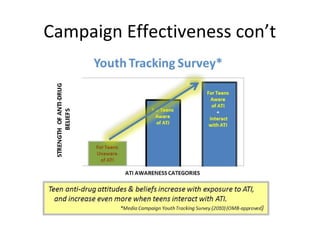
• Youth who are aware of the Above the Influence
  advertising are consistently more likely to have
  stronger anti-drug beliefs compared to those
  unaware of the Campaign’s advertising.
• 75 percent of teens (both genders and all
  ethnicities) say that Above the Influence speaks
  to someone like them
• 85 percent of teens are aware of ATI advertising
How Do They Get Their Message
              Across?
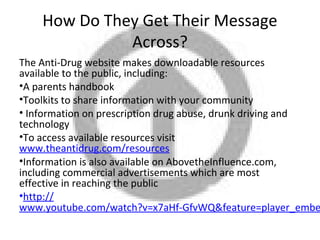
The Anti-Drug website makes downloadable resources
available to the public, including:
•A parents handbook
•Toolkits to share information with your community
• Information on prescription drug abuse, drunk driving and
technology
•To access available resources visit
www.theantidrug.com/resources
•Information is also available on AbovetheInfluence.com,
including commercial advertisements which are most
effective in reaching the public
•http://
www.youtube.com/watch?v=x7aHf-GfvWQ&feature=player_embe
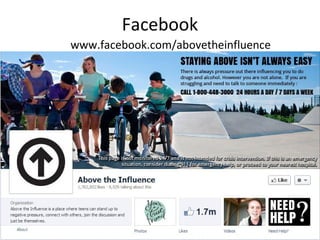
Facebook
www.facebook.com/abovetheinfluence
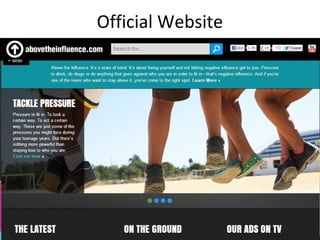
Official Website
Campaign Effectiveness
More recent independent studies:
•Dr. Michael Slater et al (2011), in a study published online by the peer-
reviewed journal Prevention Science, found evidence for the effectiveness of
the Above the Influence Campaign. This independent scientific analysis,
funded through a grant by the National Institutes on Drug Abuse, concluded
that "exposure to the ONDCP (ATI) campaign predicted reduced marijuana
use." The analysis, showed that those youth who reported exposure to the
ATI campaign were less likely to begin use of marijuana compared to those
not exposed to the ATI campaign – a finding consistent with the Campaign's
own year-round Youth Ad Tracking Survey results.
•Dr. Christopher Carpenter and Dr. Cornelia Pechmann (2011), in a study
published in the American Journal of Public Health (AJPH ), linked greater
exposure to ONDCP's Above the Influence Campaign to reduced drug use
among young females. Specifically, the study found girls to be especially
receptive to Above the Influence's anti-drug messages about achievement
and living life above negative influences.
Campaign Effectiveness con’t
Critique
Positive:
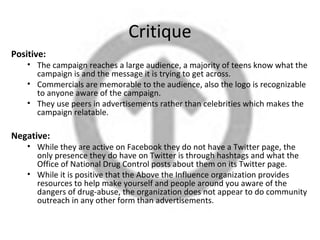
    • The campaign reaches a large audience, a majority of teens know what the
      campaign is and the message it is trying to get across.
    • Commercials are memorable to the audience, also the logo is recognizable
      to anyone aware of the campaign.
    • They use peers in advertisements rather than celebrities which makes the
      campaign relatable.

Negative:
    • While they are active on Facebook they do not have a Twitter page, the
      only presence they do have on Twitter is through hashtags and what the
      Office of National Drug Control posts about them on its Twitter page.
    • While it is positive that the Above the Influence organization provides
      resources to help make yourself and people around you aware of the
      dangers of drug-abuse, the organization does not appear to do community
      outreach in any other form than advertisements.

Above the Influence Campaign

  • 1.
  • 2.
    How it Began In2005, the Office of National Drug Control Policy’s National Youth Anti-Drug media campaign created Above the Influence. The campaign was created to target ages 12-17, but focus on ages 14-16 in an effort to combat the influence of drug abuse in both social and cultural aspects.
  • 3.
    How it Works •The campaign functions as propaganda using nationwide commercials and local/community involvement to make teens aware of the effects of drug abuse. • The commercials are meant to function as prevention messages for the middle school and high school age group. The campaign views the transition from middle to high school as critical, which is why they focus on ages 14-16 in an effort to prevent drug abuse from ever starting. • The community and local involvement is made possible because the Campaign partners with youth-serving organizations across the nation, offering technical assistance and training in the form of conferences, workshops, and webinars.
  • 4.
    Statistics • Youth whoare aware of the Above the Influence advertising are consistently more likely to have stronger anti-drug beliefs compared to those unaware of the Campaign’s advertising. • 75 percent of teens (both genders and all ethnicities) say that Above the Influence speaks to someone like them • 85 percent of teens are aware of ATI advertising
  • 5.
    How Do TheyGet Their Message Across? The Anti-Drug website makes downloadable resources available to the public, including: •A parents handbook •Toolkits to share information with your community • Information on prescription drug abuse, drunk driving and technology •To access available resources visit www.theantidrug.com/resources •Information is also available on AbovetheInfluence.com, including commercial advertisements which are most effective in reaching the public •http:// www.youtube.com/watch?v=x7aHf-GfvWQ&feature=player_embe
  • 6.
  • 7.
  • 8.
    Campaign Effectiveness More recentindependent studies: •Dr. Michael Slater et al (2011), in a study published online by the peer- reviewed journal Prevention Science, found evidence for the effectiveness of the Above the Influence Campaign. This independent scientific analysis, funded through a grant by the National Institutes on Drug Abuse, concluded that "exposure to the ONDCP (ATI) campaign predicted reduced marijuana use." The analysis, showed that those youth who reported exposure to the ATI campaign were less likely to begin use of marijuana compared to those not exposed to the ATI campaign – a finding consistent with the Campaign's own year-round Youth Ad Tracking Survey results. •Dr. Christopher Carpenter and Dr. Cornelia Pechmann (2011), in a study published in the American Journal of Public Health (AJPH ), linked greater exposure to ONDCP's Above the Influence Campaign to reduced drug use among young females. Specifically, the study found girls to be especially receptive to Above the Influence's anti-drug messages about achievement and living life above negative influences.
  • 9.
  • 10.
    Critique Positive: • The campaign reaches a large audience, a majority of teens know what the campaign is and the message it is trying to get across. • Commercials are memorable to the audience, also the logo is recognizable to anyone aware of the campaign. • They use peers in advertisements rather than celebrities which makes the campaign relatable. Negative: • While they are active on Facebook they do not have a Twitter page, the only presence they do have on Twitter is through hashtags and what the Office of National Drug Control posts about them on its Twitter page. • While it is positive that the Above the Influence organization provides resources to help make yourself and people around you aware of the dangers of drug-abuse, the organization does not appear to do community outreach in any other form than advertisements.

Editor's Notes

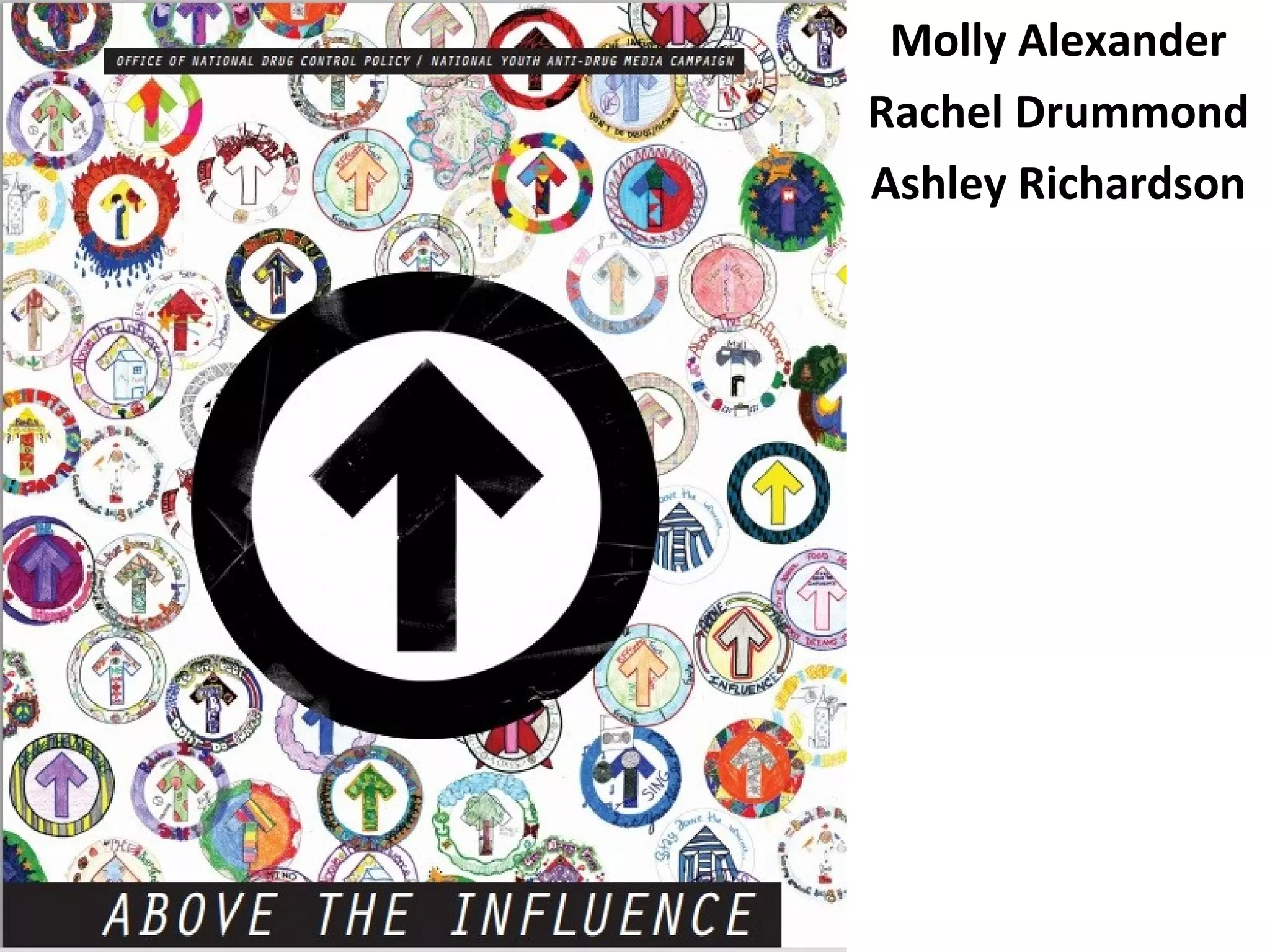
  • #3 http://www.theantidrug.com/resources/pdfs/ATI_InfluenceProject_ActivityKit_PUBLIC_FINAL.pdf – page 24
  • #4 http://www.theantidrug.com/resources/pdfs/ATI_InfluenceProject_ActivityKit_PUBLIC_FINAL.pdf – page 24 http://www.whitehouse.gov/sites/default/files/page/files/ati_fact_sheet_6-26-12.pdf
  • #5 http://www.theantidrug.com/resources/pdfs/ATI_InfluenceProject_ActivityKit_PUBLIC_FINAL.pdf – page 24 http://www.whitehouse.gov/sites/default/files/page/files/ati_fact_sheet_6-26-12.pdf
  • #6 http://www.theantidrug.com/resources/pdfs/ATI_InfluenceProject_ActivityKit_PUBLIC_FINAL.pdf – pages 24&25 The primary ways that youths become aware of this campaign is through the downloadable resources that parents, educators, and community groups make use of and, obviously, the advertisements that they play on TV. As for the downloadable resources, the parents, educators, and community groups use posters and brochures, printable materials of that nature, in the classroom and in community youth centers and youths can be exposed to it in this way, as well.
  • #7 This is the cover photo of the Facebook page. It gives a description of what the organization is about, shows that over 1.7 million people have liked the page, allows viewers access to photos and videos related to the campaign, and information in case you or someone you know needs help with peer pressure related to substance abuse.
  • #8 On the homepage of the site, it gives viewers the option to like their Facebook page and “publicly recommend on Google,” while showing how many others already have. It also gives viewers the option to tweet a link to their website and post to the hashtag #abovetheinfluence so that their followers and others that follow the tag can see. It provides a link to its YouTube channel, as well. As you can see, the homepage provides a description of what it means to be above the influence, information about how to tackle peer pressure, information about what the organization has been up to recently (the latest), a message about teens creating a personal slogan for themselves and how they live above the influence (on the ground), and links to the ads (our ads on tv). This isn’t the full version of the homepage, however. Underneath this it also contains links to information about how to live above the influence, how to help a friend, and facts about substance abuse.
  • #9 http://www.whitehouse.gov/ondcp/Campaign-Effectiveness-and-Rigor Here is some information about some independent studies that were conducted in regards to the campaign. In 2011, Dr. Michael Slater found evidence for the effectiveness of the campaign. The analysis showed that youth that had exposure to the campaign were less likely to begin use of marijuana compared to those not exposed to the campaign. Also in 2011, Dr. Christopher Carpenter and Dr. Cornelia Pechmann conducted a study that found that girls were especially receptive to the campaign’s messages about achievement and living life above negative influences. Link to Slater’s research study: http://researchnews.osu.edu/archive/aboveinfluence.htm
  • #10 http://www.whitehouse.gov/ondcp/Campaign-Effectiveness-and-Rigor This is a chart found on the Office of National Drug Control Policy’s website about the Above the Influence campaign’s effectiveness. As you can see, stronger anti-drug beliefs were found in youths that were more aware of the campaign and interacted with it more.