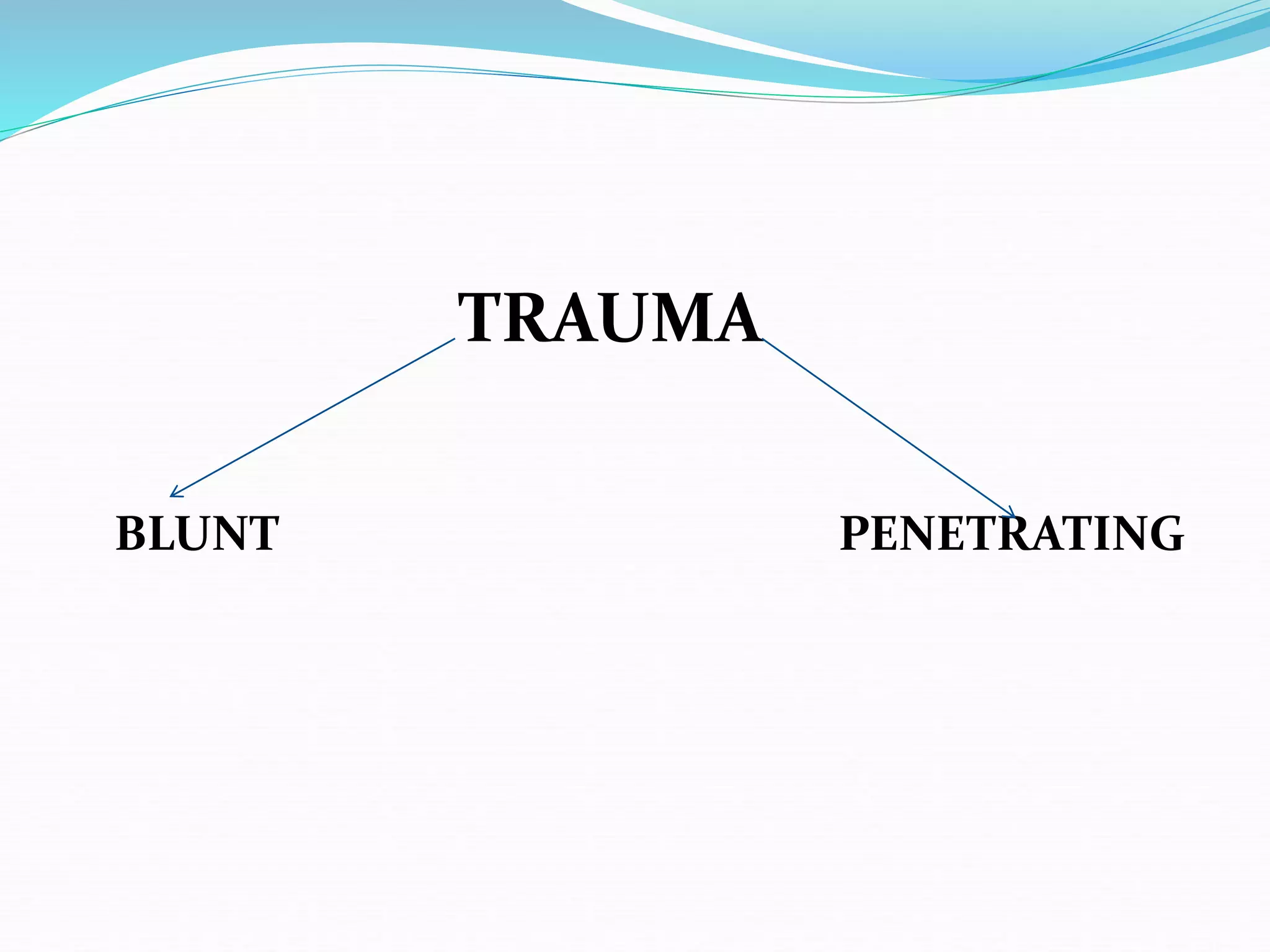
TRAUMA
BLUNT PENETRATING
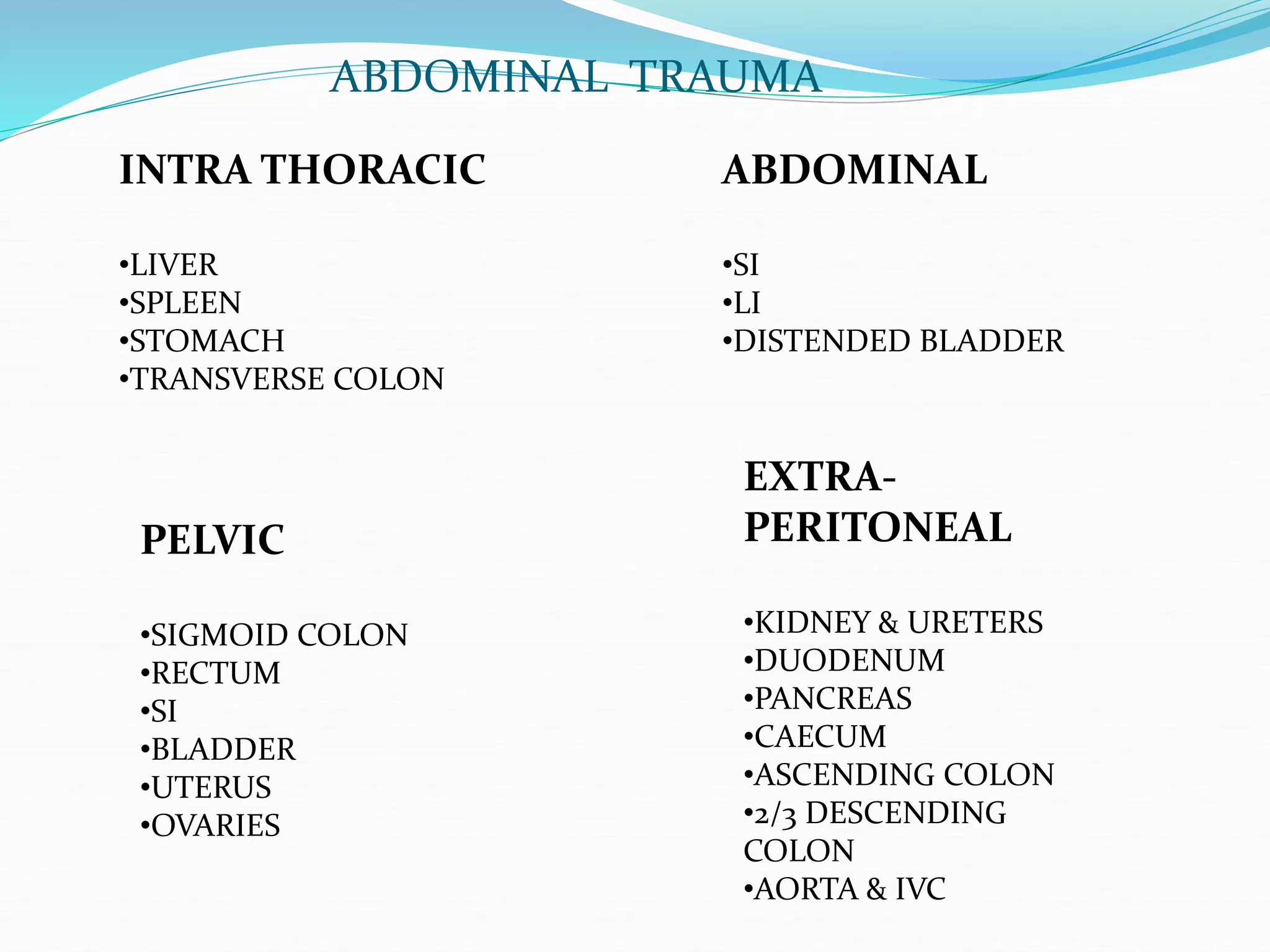
ABDOMINAL TRAUMA
INTRA THORACIC
•LIVER
•SPLEEN
•STOMACH
•TRANSVERSE COLON
ABDOMINAL
•SI
•LI
•DISTENDED BLADDER
PELVIC
•SIGMOID COLON
•RECTUM
•SI
•BLADDER
•UTERUS
•OVARIES
EXTRA-
PERITONEAL
•KIDNEY & URETERS
•DUODENUM
•PANCREAS
•CAECUM
•ASCENDING COLON
•2/3 DESCENDING
COLON
•AORTA & IVC
History
Road traffic accident
Falls
Assaults
Sporting injuries
Gun shot injuries
Stabs
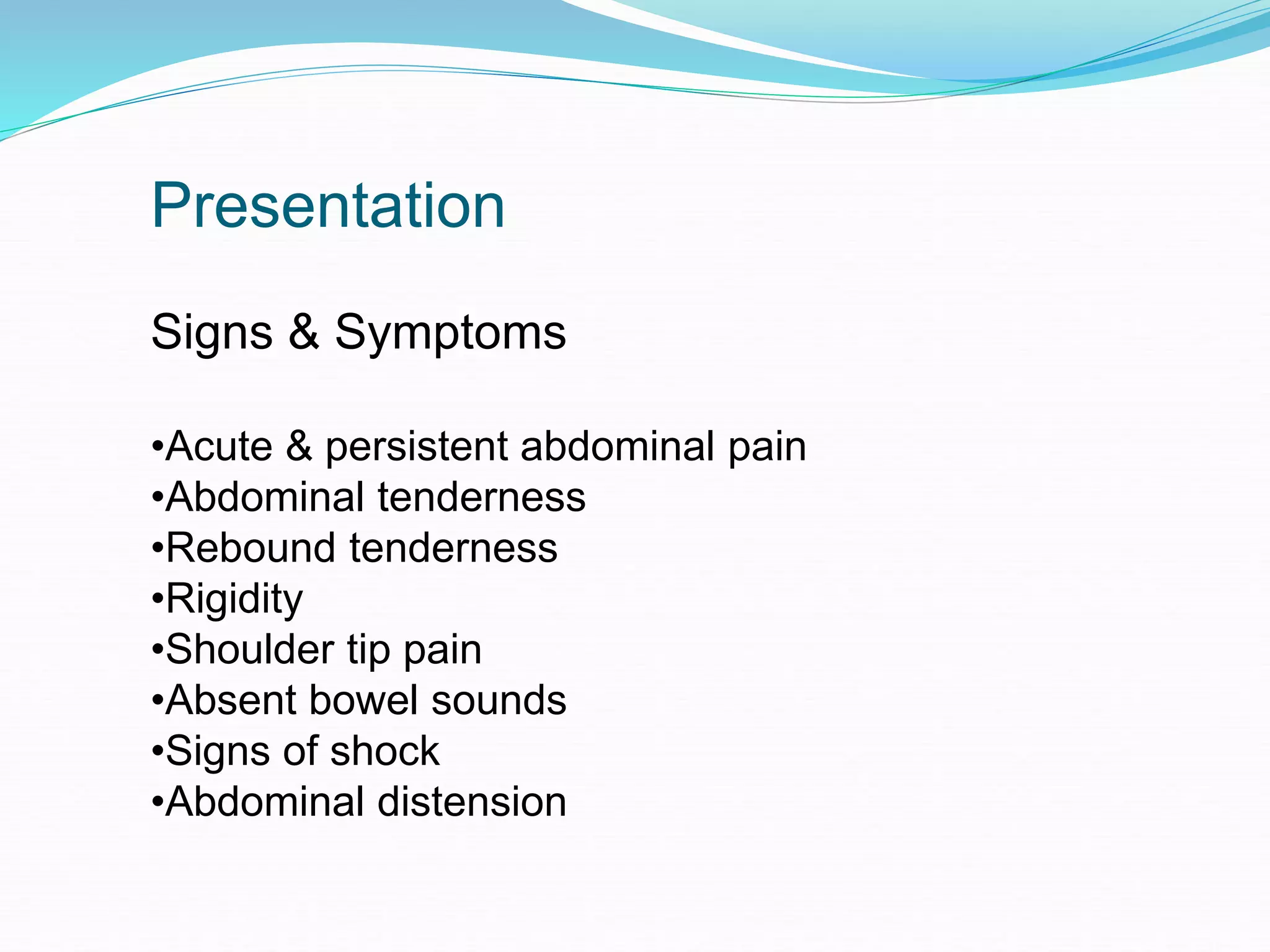
Presentation
Signs & Symptoms
•Acute & persistent abdominal pain
•Abdominal tenderness
•Rebound tenderness
•Rigidity
•Shoulder tip pain
•Absent bowel sounds
•Signs of shock
•Abdominal distension
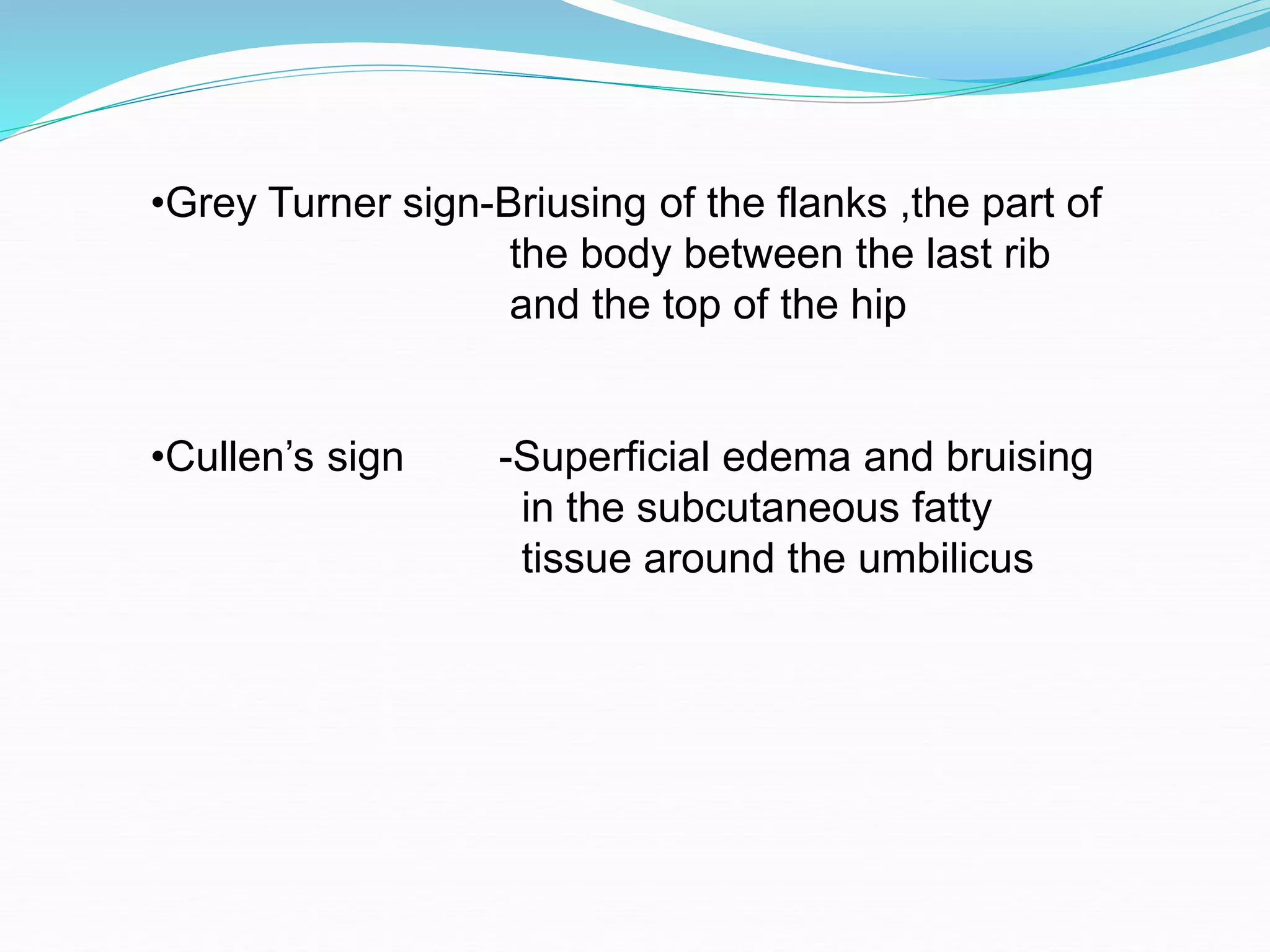
•Grey Turner sign-Briusing of the flanks ,the part of
the body between the last rib
and the top of the hip
•Cullen’s sign -Superficial edema and bruising
in the subcutaneous fatty
tissue around the umbilicus
INVESTIGATIONS
 FBC, LFT, BU/SE
 CXR – Air under the diapragm
 AXR- Not much important in detecting organ damage
 USS – FAST SCAN ( Focused Abdominal Sonography
for Trauma )
Detects Perihepatic, Perisplenic,
Pelvic & Pericardiac fluid
 CT scan
PENETRATING TRAUMA
 CAUSES - Gun shot injuries
Stab injuries
 THE MOST COMMONLY INJURED ORGANS ARE:-
 Small intestine
 Liver
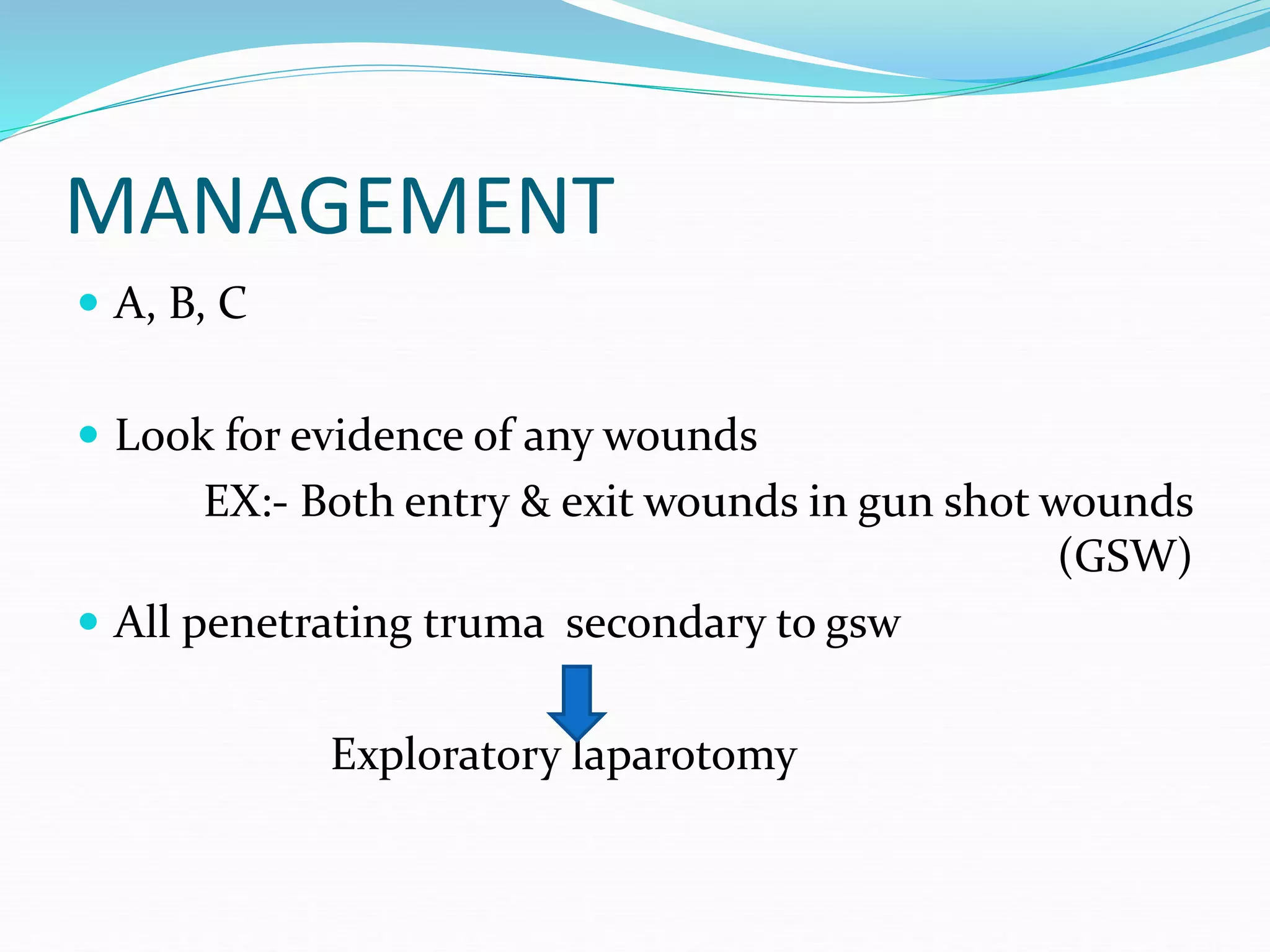
MANAGEMENT
 A, B, C
 Look for evidence of any wounds
EX:- Both entry & exit wounds in gun shot wounds
(GSW)
 All penetrating truma secondary to gsw
Exploratory laparotomy
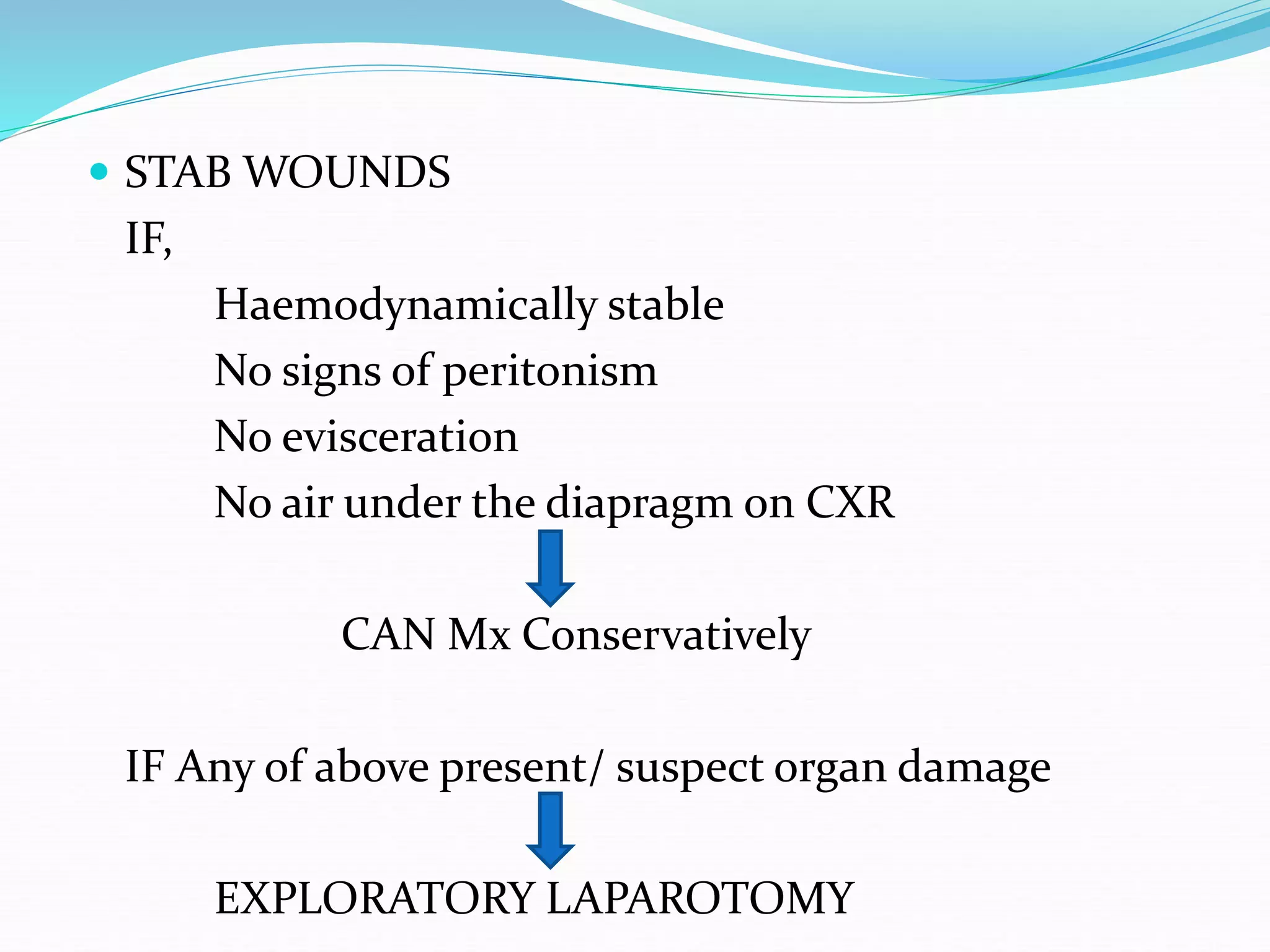
 STAB WOUNDS
IF,
Haemodynamically stable
No signs of peritonism
No evisceration
No air under the diapragm on CXR
CAN Mx Conservatively
IF Any of above present/ suspect organ damage
EXPLORATORY LAPAROTOMY
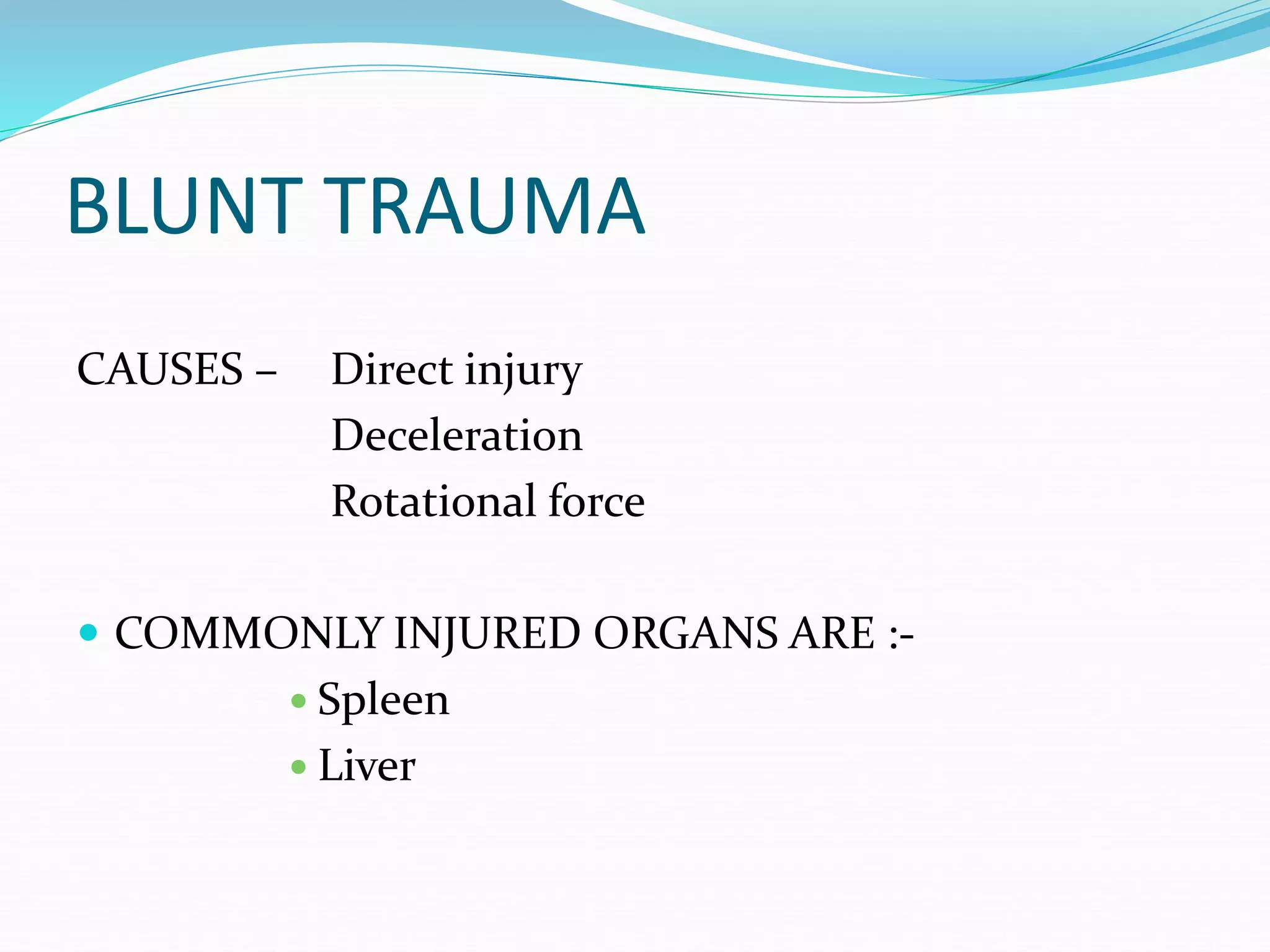
BLUNT TRAUMA
CAUSES – Direct injury
Deceleration
Rotational force
 COMMONLY INJURED ORGANS ARE :-
 Spleen
 Liver
MANAGEMENT
 A, B, C
 Easily missed as it can present without much
symptoms or signs
 Suspect if
 Skin abrasions
 Seat belt imprint
 10-12 rib #
 Peritonism
 Distension
 (-) Bowel sounds
 Shock
 Haematuria
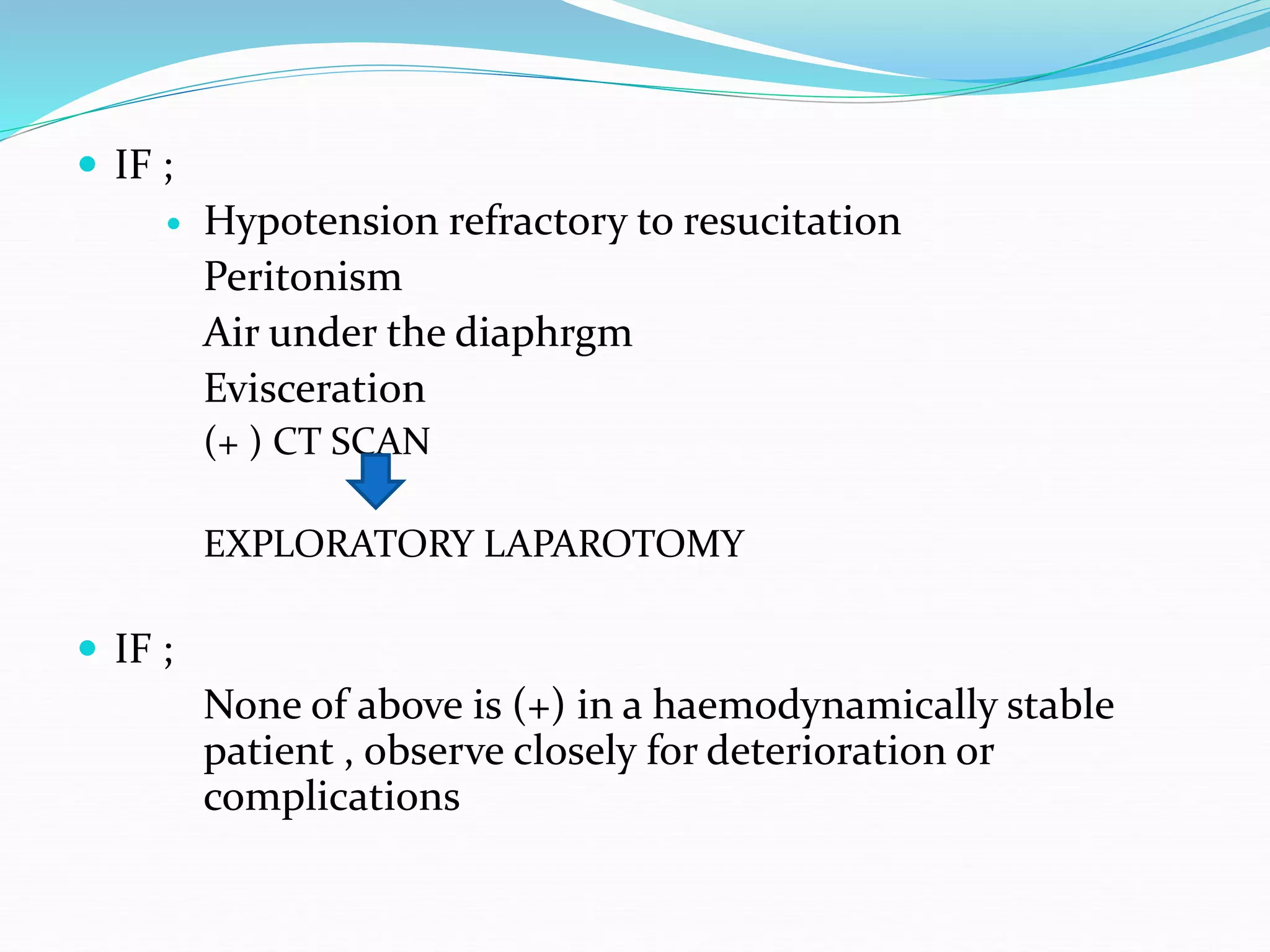
 IF ;
 Hypotension refractory to resucitation
Peritonism
Air under the diaphrgm
Evisceration
(+ ) CT SCAN
EXPLORATORY LAPAROTOMY
 IF ;
None of above is (+) in a haemodynamically stable
patient , observe closely for deterioration or
complications
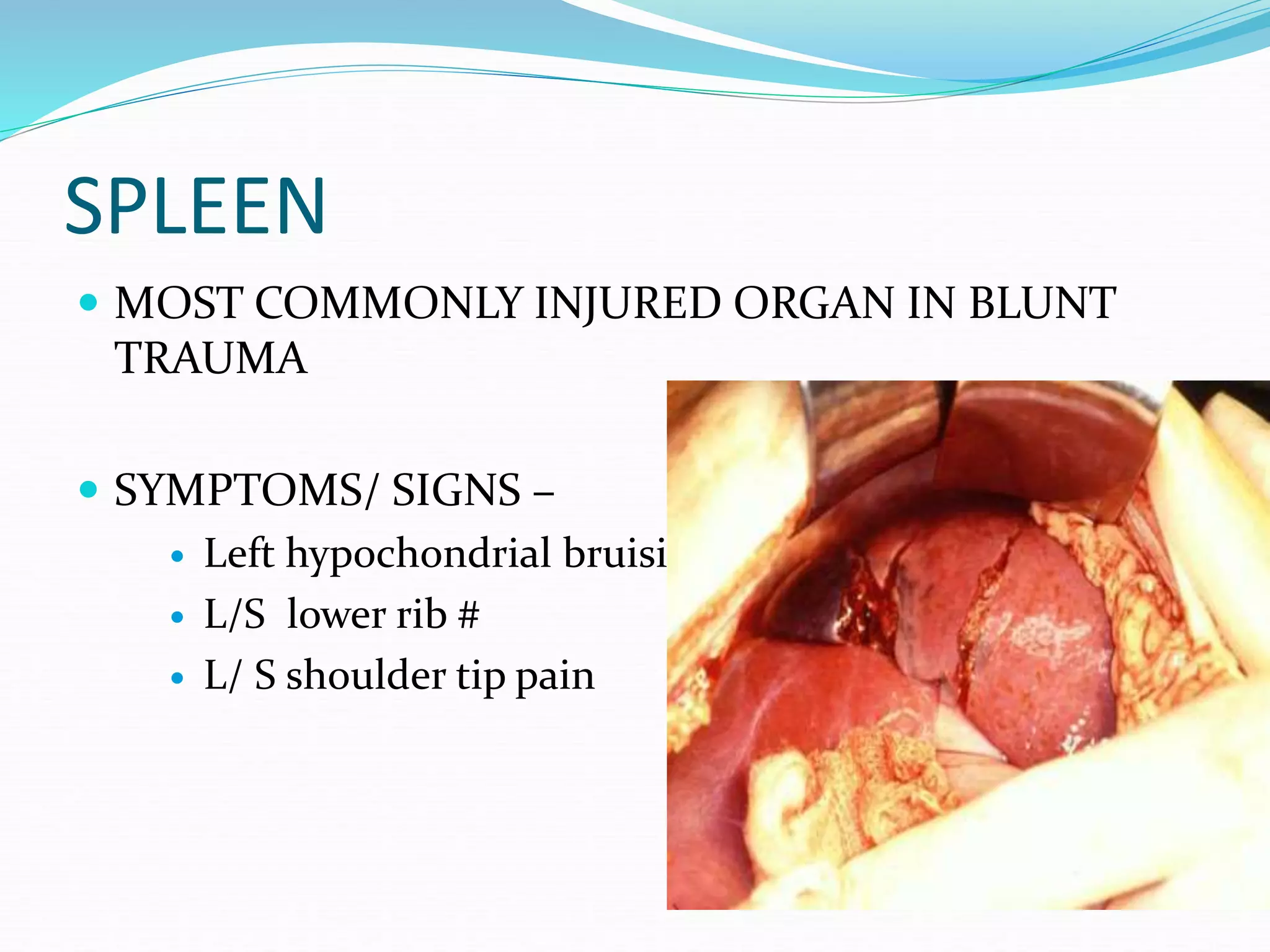
SPLEEN
 MOST COMMONLY INJURED ORGAN IN BLUNT
TRAUMA
 SYMPTOMS/ SIGNS –
 Left hypochondrial bruisig
 L/S lower rib #
 L/ S shoulder tip pain
MANAGEMENT
 Non operative – HD stable pt with no
evidence of organ injury
observe for splenic rupture
 Radiological – Splenic Angio-Embolization
 Operative – Urgent laparotomy
Packing
Diathermy
Suturing the laceration
Ligate splenic vessels
Partial splenectomy
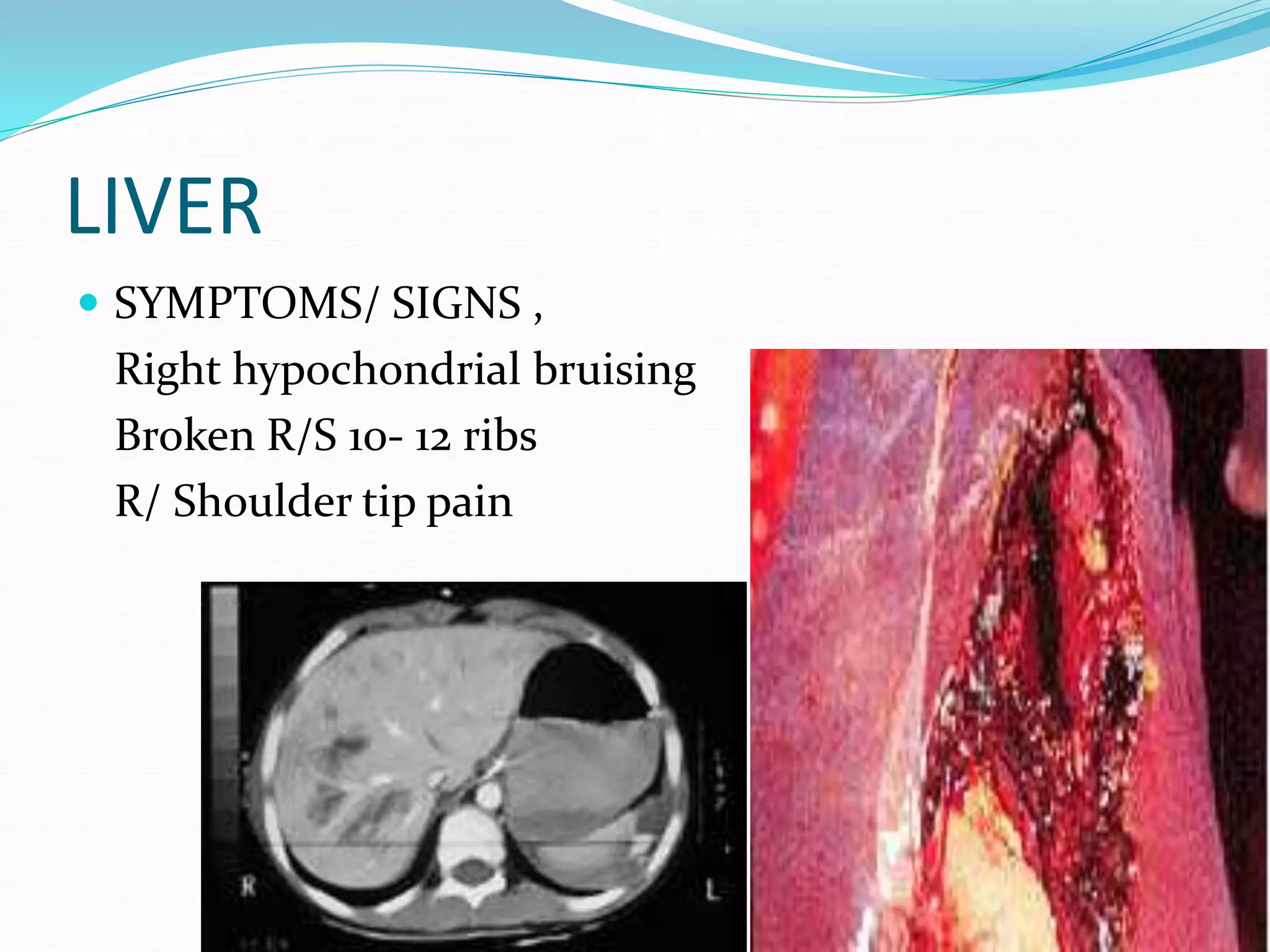
LIVER
 SYMPTOMS/ SIGNS ,
Right hypochondrial bruising
Broken R/S 10- 12 ribs
R/ Shoulder tip pain
MANAGEMENT
 RADIOLOGICAL – Embolization
 OPERATIVE – Urgent laparotomy
Packing liver with gauze
Ligation of the feeding artery
Suture the laceration
Resection of unviable liver
fragments
SMALL BOWEL
 COMMONLY INJURED IN PENETRATING TRAUMA
 CAUSES – Deceleration injury (ileocaecal area)
Blast injury
 SYMPTOMS/ SIGNS – Peritonism
(-) Bowel sounds
MANAGEMENT
 EXPLORATORY LAPAROTOMY RESECTION
ANASTOMOSIS
Kidney
 Following heavy fall, blow or crushing injury
 SYMPTOMS/SIGNS – Pain
Bruising
Swelling in the loin
Haematuria
Ureteric colic
Management
 Non operative – Conservative Management
 Operative - Partial/ total nephrectomy
Suture of lacerations
Bladder & Urethra
SIGNS & SYMPTOMS
 Abdominal distension
 Inability to pass urine
 Haematuria
MANAGEMENT
 Partial rupture of urethra- supra pubic catheterization
 s
Abdominal Traumaa.ppt

Abdominal Traumaa.ppt

  • 2.
  • 3.
    ABDOMINAL TRAUMA INTRA THORACIC •LIVER •SPLEEN •STOMACH •TRANSVERSECOLON ABDOMINAL •SI •LI •DISTENDED BLADDER PELVIC •SIGMOID COLON •RECTUM •SI •BLADDER •UTERUS •OVARIES EXTRA- PERITONEAL •KIDNEY & URETERS •DUODENUM •PANCREAS •CAECUM •ASCENDING COLON •2/3 DESCENDING COLON •AORTA & IVC
  • 4.
  • 5.
    Presentation Signs & Symptoms •Acute& persistent abdominal pain •Abdominal tenderness •Rebound tenderness •Rigidity •Shoulder tip pain •Absent bowel sounds •Signs of shock •Abdominal distension
  • 6.
    •Grey Turner sign-Briusingof the flanks ,the part of the body between the last rib and the top of the hip •Cullen’s sign -Superficial edema and bruising in the subcutaneous fatty tissue around the umbilicus
  • 7.
    INVESTIGATIONS  FBC, LFT,BU/SE  CXR – Air under the diapragm  AXR- Not much important in detecting organ damage  USS – FAST SCAN ( Focused Abdominal Sonography for Trauma ) Detects Perihepatic, Perisplenic, Pelvic & Pericardiac fluid  CT scan
  • 8.
    PENETRATING TRAUMA  CAUSES- Gun shot injuries Stab injuries  THE MOST COMMONLY INJURED ORGANS ARE:-  Small intestine  Liver
  • 9.
    MANAGEMENT  A, B,C  Look for evidence of any wounds EX:- Both entry & exit wounds in gun shot wounds (GSW)  All penetrating truma secondary to gsw Exploratory laparotomy
  • 10.
     STAB WOUNDS IF, Haemodynamicallystable No signs of peritonism No evisceration No air under the diapragm on CXR CAN Mx Conservatively IF Any of above present/ suspect organ damage EXPLORATORY LAPAROTOMY
  • 11.
    BLUNT TRAUMA CAUSES –Direct injury Deceleration Rotational force  COMMONLY INJURED ORGANS ARE :-  Spleen  Liver
  • 12.
    MANAGEMENT  A, B,C  Easily missed as it can present without much symptoms or signs  Suspect if  Skin abrasions  Seat belt imprint  10-12 rib #  Peritonism  Distension  (-) Bowel sounds  Shock  Haematuria
  • 13.
     IF ; Hypotension refractory to resucitation Peritonism Air under the diaphrgm Evisceration (+ ) CT SCAN EXPLORATORY LAPAROTOMY  IF ; None of above is (+) in a haemodynamically stable patient , observe closely for deterioration or complications
  • 14.
    SPLEEN  MOST COMMONLYINJURED ORGAN IN BLUNT TRAUMA  SYMPTOMS/ SIGNS –  Left hypochondrial bruisig  L/S lower rib #  L/ S shoulder tip pain
  • 15.
    MANAGEMENT  Non operative– HD stable pt with no evidence of organ injury observe for splenic rupture  Radiological – Splenic Angio-Embolization  Operative – Urgent laparotomy Packing Diathermy Suturing the laceration Ligate splenic vessels Partial splenectomy
  • 16.
    LIVER  SYMPTOMS/ SIGNS, Right hypochondrial bruising Broken R/S 10- 12 ribs R/ Shoulder tip pain
  • 17.
    MANAGEMENT  RADIOLOGICAL –Embolization  OPERATIVE – Urgent laparotomy Packing liver with gauze Ligation of the feeding artery Suture the laceration Resection of unviable liver fragments
  • 18.
    SMALL BOWEL  COMMONLYINJURED IN PENETRATING TRAUMA  CAUSES – Deceleration injury (ileocaecal area) Blast injury  SYMPTOMS/ SIGNS – Peritonism (-) Bowel sounds
  • 19.
  • 20.
    Kidney  Following heavyfall, blow or crushing injury  SYMPTOMS/SIGNS – Pain Bruising Swelling in the loin Haematuria Ureteric colic
  • 21.
    Management  Non operative– Conservative Management  Operative - Partial/ total nephrectomy Suture of lacerations
  • 22.
    Bladder & Urethra SIGNS& SYMPTOMS  Abdominal distension  Inability to pass urine  Haematuria MANAGEMENT  Partial rupture of urethra- supra pubic catheterization  s