Empowerment Without
      Boundaries


       Michelle Asha Cooper, PhD
               President
               mcooper@ihep.org


AAC&U Student Success Conference
March 2012

                   PRESENTED BY
                   The Institute for Higher Education Policy
About IHEP
Our Vision
•The Institute for Higher Education Policy (IHEP)
envisions a world where all people—particularly
populations who have been underserved—have
the opportunity to reach their full potential by
participating and succeeding in higher education.

Our Mission
•IHEP is committed to improving college access
and success in higher education for all students—
with a special focus on underserved populations—
by providing timely research to inform public
policy decisions.

                                                2
Pop Quiz
Access
• What percentage of all Americans enroll in
   college?
•   What percentage of low-income students enroll
    in college?
Success
• What percentage of all Americans graduate
   from college within 6 years?
•   What percentage of low-income students
    graduate from college within 6 years?

Affordability
• How much is the average student loan debt?3
The College Completion Agenda

    Obama Administration’s Education Goal:
    • The President's Bold Goal: Have the highest
      proportion of college graduates in the world by
      2020.


    The Lumina Foundation for Education:
    • Increase the percent of Americans with a two or
      four year degree from 37.9% to 60% by 2025


    The College Board:
    • At least 55 percent of the U.S. population holds
      a college degree or certificate by 2025
                                                 4
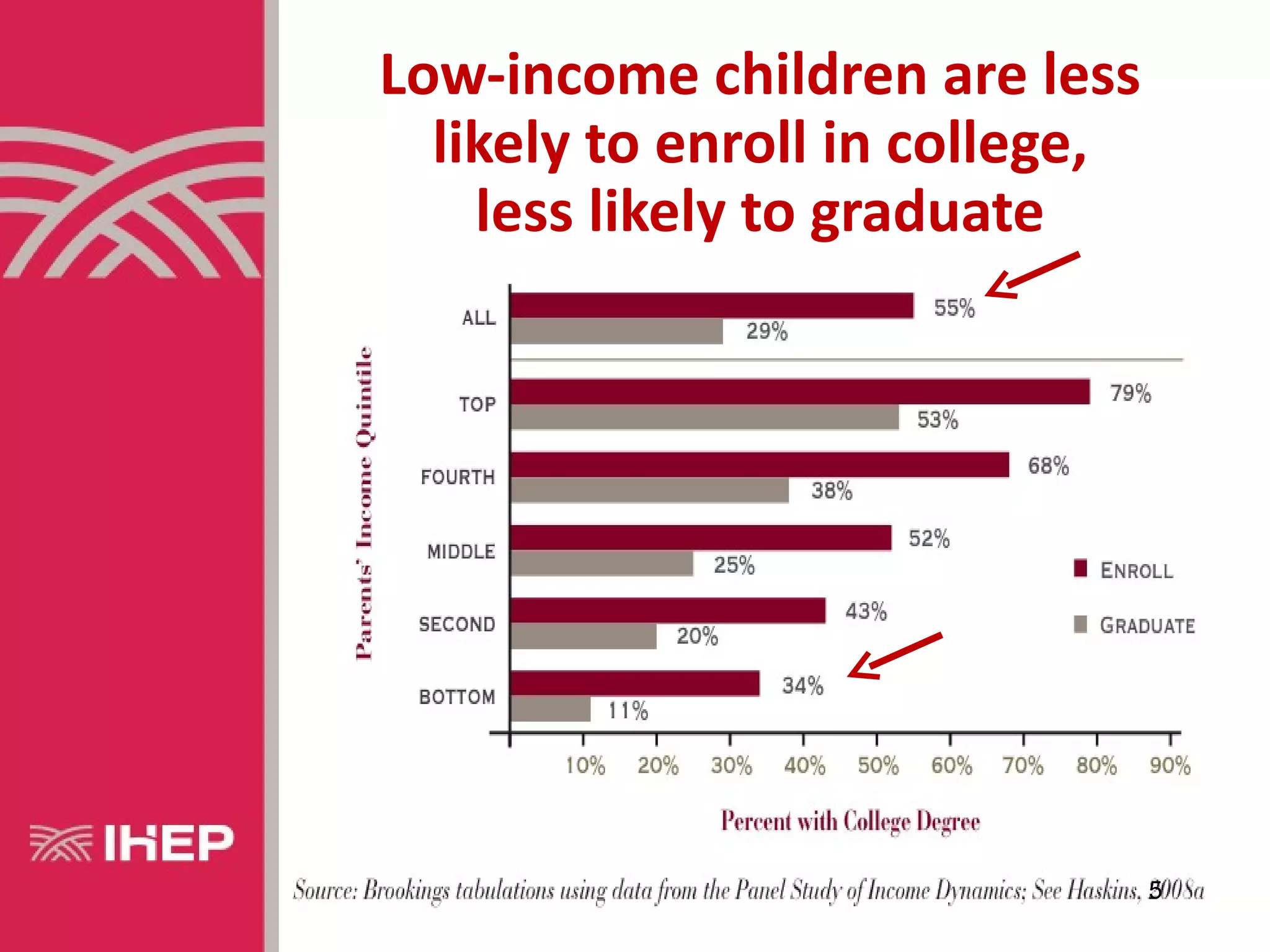
Low-income children are less
  likely to enroll in college,
    less likely to graduate


                                 5
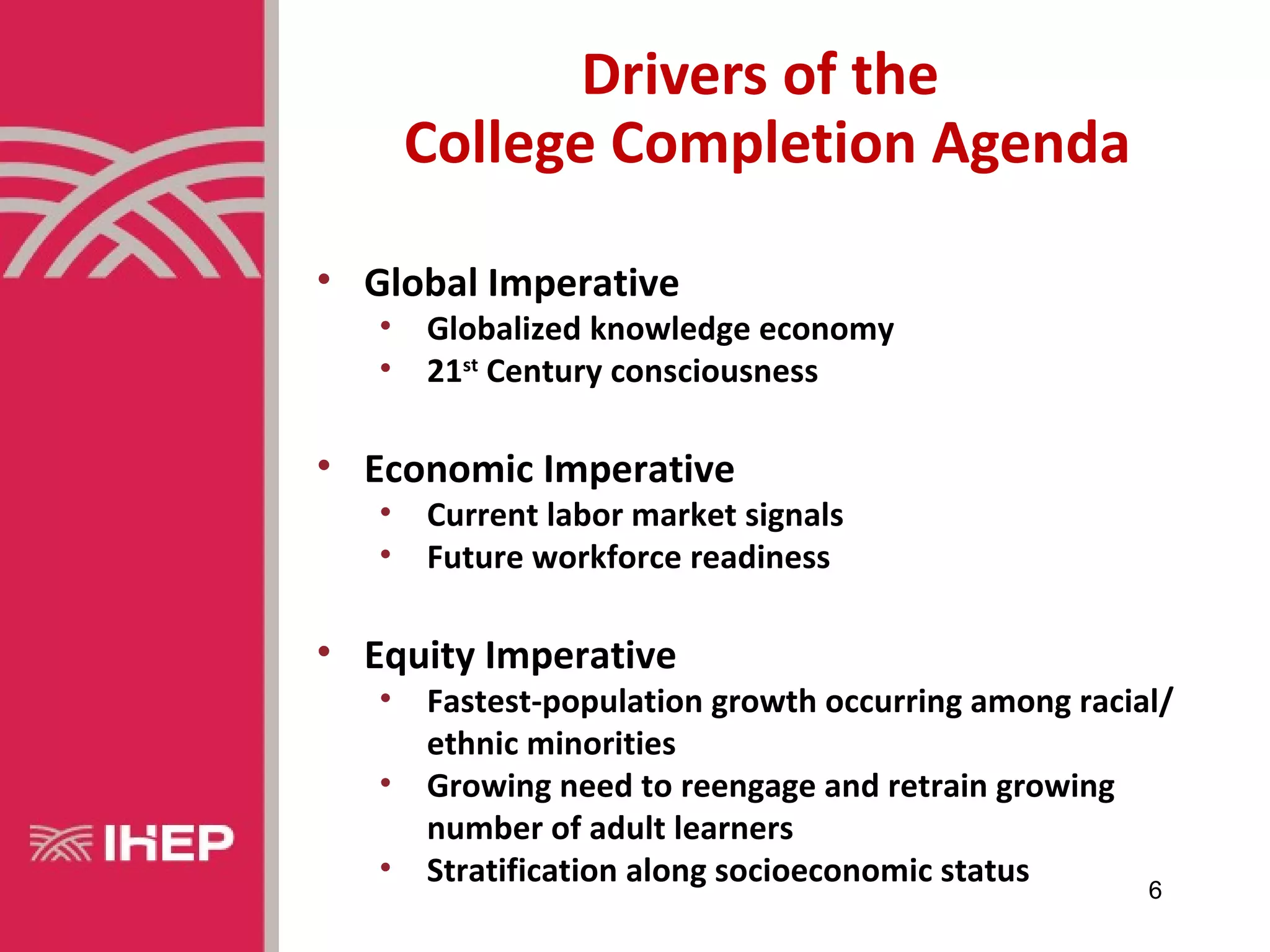
Drivers of the
       College Completion Agenda

• Global Imperative
   •   Globalized knowledge economy
   •   21st Century consciousness

• Economic Imperative
   •   Current labor market signals
   •   Future workforce readiness

• Equity Imperative
   •   Fastest-population growth occurring among racial/
       ethnic minorities
   •   Growing need to reengage and retrain growing
       number of adult learners
   •   Stratification along socioeconomic status      6
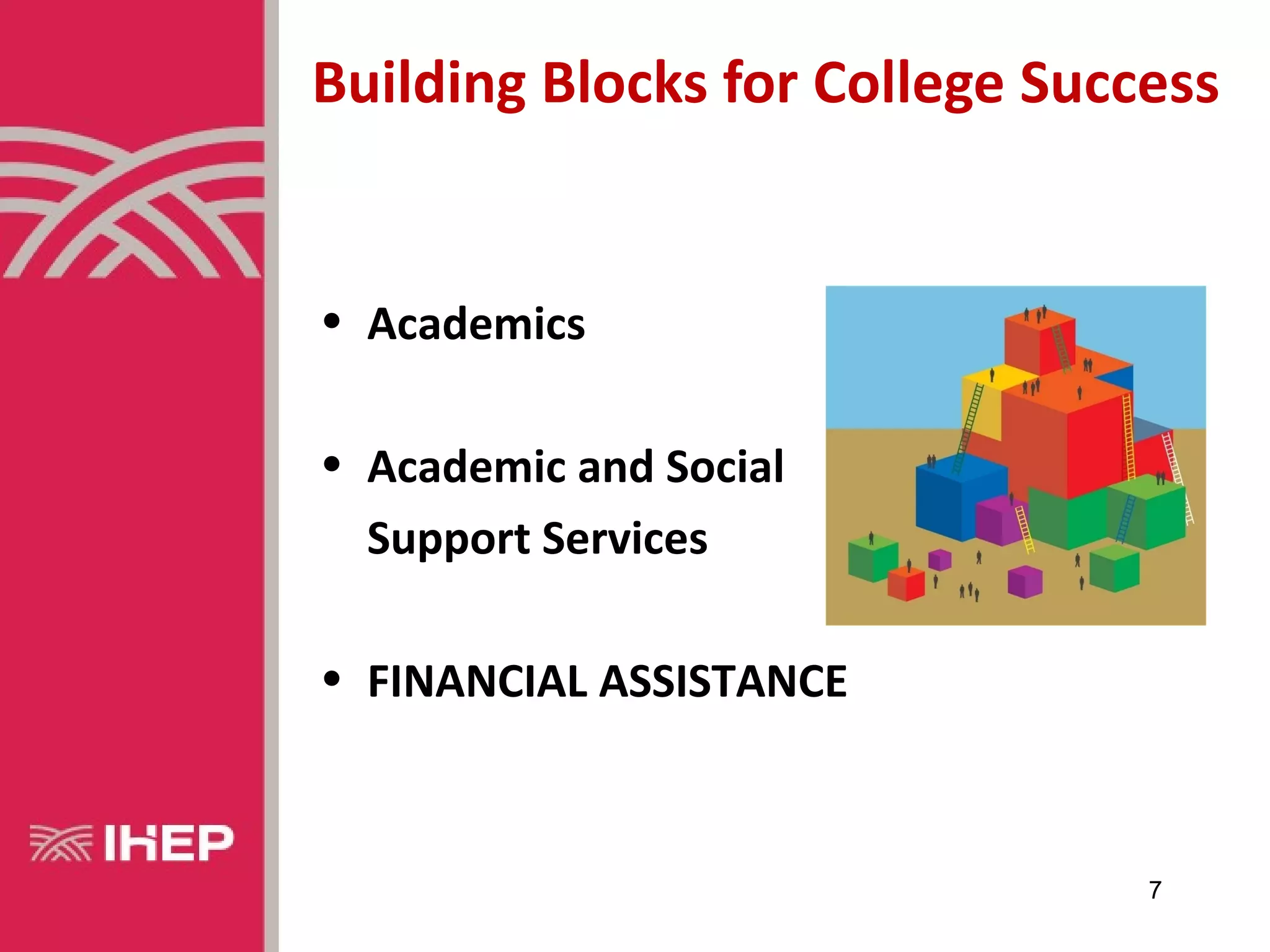
Building Blocks for College Success


• Academics

• Academic and Social
  Support Services

• FINANCIAL ASSISTANCE


                                7
Trends in College Affordability

• College costs have grown nearly 40 percent in
  the past 5 years

• 60 percent of all college graduates leave
  college with debt

• The average graduate leaves college with about
  $23,800 in debt

• Between 2001 and 2010, 2 million academically
  qualified students will not got to college
  because they cannot afford it
                                              8
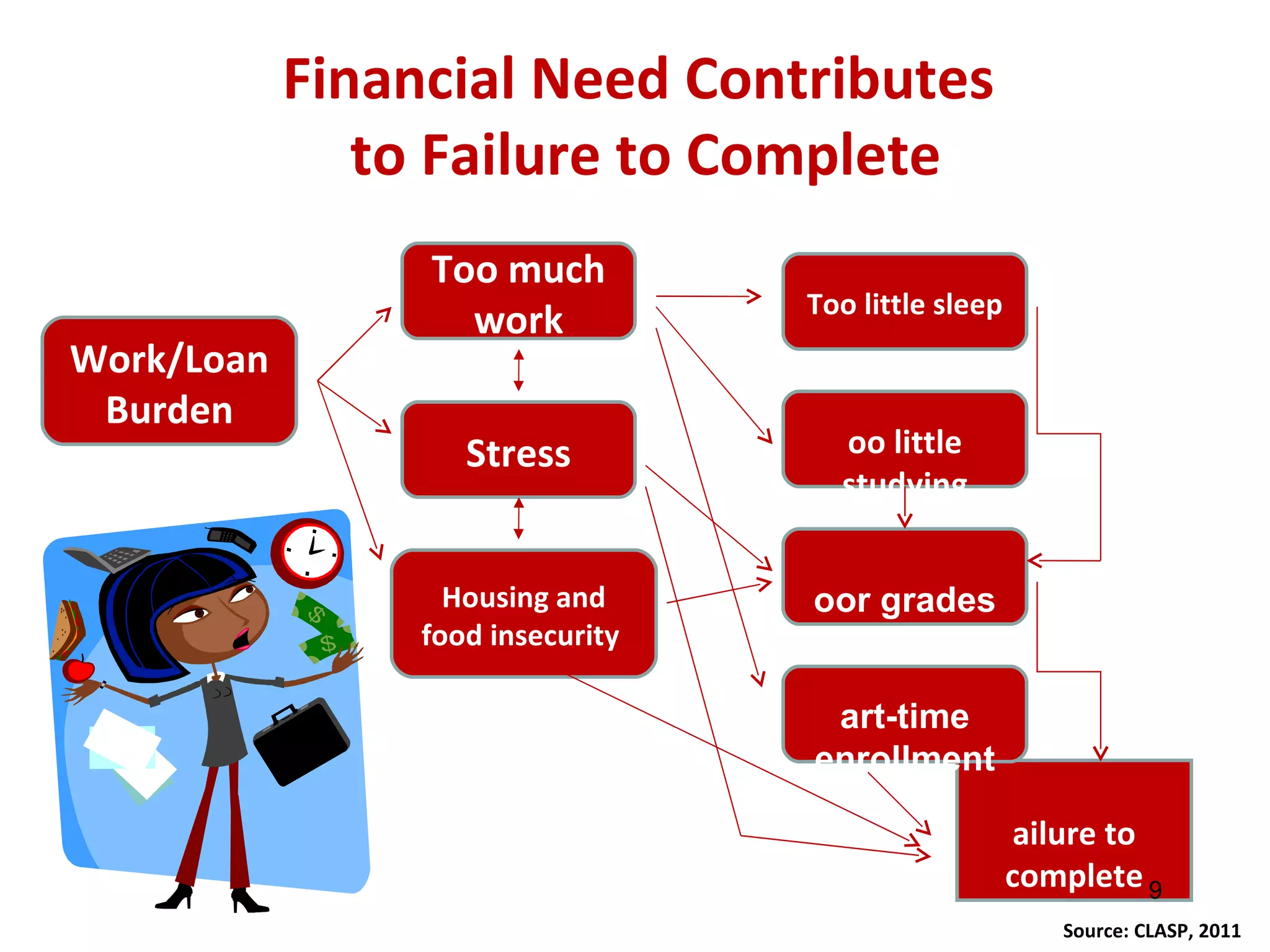
Financial Need Contributes
               to Failure to Complete
                 Too much
                                   Too little sleep
                   work
Work/Loan
 Burden
                    Stress           oo little
                                     studying


                   Housing and     oor grades
                 food insecurity

                                    art-time
                                   enrollment

                                                       ailure to
                                                      complete 9
                                                         Source: CLASP, 2011
Discussion
What innovative ideas or strategies have the
most potential to contribute to student retention
and completion at your institution? How do you
measure and document the effectiveness of
these strategies?

If you had the opportunity to highlight your
strategies to a person of influence what would you
say?

What needs to occur for you to feel empowered to
 continue this dialogue when you return to work
 on Monday morning?
                                              10

Empowerment Without Boundaries

  • 1.
    Empowerment Without Boundaries Michelle Asha Cooper, PhD President mcooper@ihep.org AAC&U Student Success Conference March 2012 PRESENTED BY The Institute for Higher Education Policy
  • 2.
    About IHEP Our Vision •TheInstitute for Higher Education Policy (IHEP) envisions a world where all people—particularly populations who have been underserved—have the opportunity to reach their full potential by participating and succeeding in higher education. Our Mission •IHEP is committed to improving college access and success in higher education for all students— with a special focus on underserved populations— by providing timely research to inform public policy decisions. 2
  • 3.
    Pop Quiz Access • Whatpercentage of all Americans enroll in college? • What percentage of low-income students enroll in college? Success • What percentage of all Americans graduate from college within 6 years? • What percentage of low-income students graduate from college within 6 years? Affordability • How much is the average student loan debt?3
  • 4.
    The College CompletionAgenda Obama Administration’s Education Goal: • The President's Bold Goal: Have the highest proportion of college graduates in the world by 2020. The Lumina Foundation for Education: • Increase the percent of Americans with a two or four year degree from 37.9% to 60% by 2025 The College Board: • At least 55 percent of the U.S. population holds a college degree or certificate by 2025 4
  • 5.
    Low-income children areless likely to enroll in college, less likely to graduate 5
  • 6.
    Drivers of the College Completion Agenda • Global Imperative • Globalized knowledge economy • 21st Century consciousness • Economic Imperative • Current labor market signals • Future workforce readiness • Equity Imperative • Fastest-population growth occurring among racial/ ethnic minorities • Growing need to reengage and retrain growing number of adult learners • Stratification along socioeconomic status 6
  • 7.
    Building Blocks forCollege Success • Academics • Academic and Social Support Services • FINANCIAL ASSISTANCE 7
  • 8.
    Trends in CollegeAffordability • College costs have grown nearly 40 percent in the past 5 years • 60 percent of all college graduates leave college with debt • The average graduate leaves college with about $23,800 in debt • Between 2001 and 2010, 2 million academically qualified students will not got to college because they cannot afford it 8
  • 9.
    Financial Need Contributes to Failure to Complete Too much Too little sleep work Work/Loan Burden Stress oo little studying Housing and oor grades food insecurity art-time enrollment ailure to complete 9 Source: CLASP, 2011
  • 10.
    Discussion What innovative ideasor strategies have the most potential to contribute to student retention and completion at your institution? How do you measure and document the effectiveness of these strategies? If you had the opportunity to highlight your strategies to a person of influence what would you say? What needs to occur for you to feel empowered to continue this dialogue when you return to work on Monday morning? 10