A Practical Guide to IT Risk
Management
This presentation provides a comprehensive guide to Information
Technology risk management, covering the essential steps and
considerations for IT professionals.
by Patricia Jliene
Understanding Risk in IT
Risk Definition
Risk is defined as the likelihood of a threat exploiting a
vulnerability, resulting in a negative impact on the
organization. It's a function of the probability of a threat
occurring and the potential consequences of that event.
Core Components
Key components of risk assessment include identifying
potential threats, vulnerabilities, the potential impact of an
attack, and the likelihood of that attack occurring.
Threat, Vulnerability, and
Impact
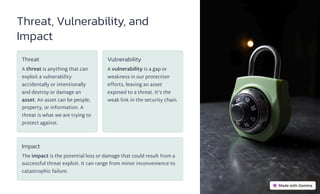
Threat
A threat is anything that can
exploit a vulnerability
accidentally or intentionally
and destroy or damage an
asset. An asset can be people,
property, or information. A
threat is what we are trying to
protect against.
Vulnerability
A vulnerability is a gap or
weakness in our protection
efforts, leaving an asset
exposed to a threat. It's the
weak link in the security chain.
Impact
The impact is the potential loss or damage that could result from a
successful threat exploit. It can range from minor inconvenience to
catastrophic failure.
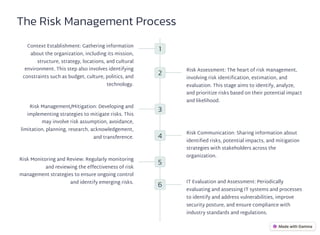
The Risk Management Process
1
Context Establishment: Gathering information
about the organization, including its mission,
structure, strategy, locations, and cultural
environment. This step also involves identifying
constraints such as budget, culture, politics, and
technology.
2
Risk Assessment: The heart of risk management,
involving risk identification, estimation, and
evaluation. This stage aims to identify, analyze,
and prioritize risks based on their potential impact
and likelihood.
3
Risk Management/Mitigation: Developing and
implementing strategies to mitigate risks. This
may involve risk assumption, avoidance,
limitation, planning, research, acknowledgement,
and transference. 4
Risk Communication: Sharing information about
identified risks, potential impacts, and mitigation
strategies with stakeholders across the
organization.
5
Risk Monitoring and Review: Regularly monitoring
and reviewing the effectiveness of risk
management strategies to ensure ongoing control
and identify emerging risks.
6
IT Evaluation and Assessment: Periodically
evaluating and assessing IT systems and processes
to identify and address vulnerabilities, improve
security posture, and ensure compliance with
industry standards and regulations.
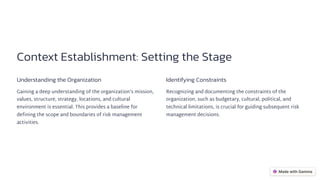
Context Establishment: Setting the Stage
Understanding the Organization
Gaining a deep understanding of the organization's mission,
values, structure, strategy, locations, and cultural
environment is essential. This provides a baseline for
defining the scope and boundaries of risk management
activities.
Identifying Constraints
Recognizing and documenting the constraints of the
organization, such as budgetary, cultural, political, and
technical limitations, is crucial for guiding subsequent risk
management decisions.
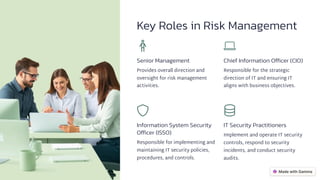
Key Roles in Risk Management
Senior Management
Provides overall direction and
oversight for risk management
activities.
Chief Information Officer (CIO)
Responsible for the strategic
direction of IT and ensuring IT
aligns with business objectives.
Information System Security
Officer (ISSO)
Responsible for implementing and
maintaining IT security policies,
procedures, and controls.
IT Security Practitioners
Implement and operate IT security
controls, respond to security
incidents, and conduct security
audits.
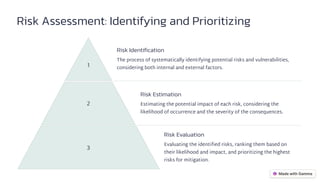
Risk Assessment: Identifying and Prioritizing
1
Risk Identification
The process of systematically identifying potential risks and vulnerabilities,
considering both internal and external factors.
2
Risk Estimation
Estimating the potential impact of each risk, considering the
likelihood of occurrence and the severity of the consequences.
3
Risk Evaluation
Evaluating the identified risks, ranking them based on
their likelihood and impact, and prioritizing the highest
risks for mitigation.
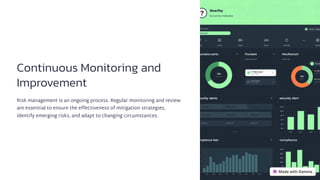
Continuous Monitoring and
Improvement
Risk management is an ongoing process. Regular monitoring and review
are essential to ensure the effectiveness of mitigation strategies,
identify emerging risks, and adapt to changing circumstances.

A-Practical-Guide-to-IT-Risk-Management.pdf

  • 1.
    A Practical Guideto IT Risk Management This presentation provides a comprehensive guide to Information Technology risk management, covering the essential steps and considerations for IT professionals. by Patricia Jliene
  • 2.
    Understanding Risk inIT Risk Definition Risk is defined as the likelihood of a threat exploiting a vulnerability, resulting in a negative impact on the organization. It's a function of the probability of a threat occurring and the potential consequences of that event. Core Components Key components of risk assessment include identifying potential threats, vulnerabilities, the potential impact of an attack, and the likelihood of that attack occurring.
  • 3.
    Threat, Vulnerability, and Impact Threat Athreat is anything that can exploit a vulnerability accidentally or intentionally and destroy or damage an asset. An asset can be people, property, or information. A threat is what we are trying to protect against. Vulnerability A vulnerability is a gap or weakness in our protection efforts, leaving an asset exposed to a threat. It's the weak link in the security chain. Impact The impact is the potential loss or damage that could result from a successful threat exploit. It can range from minor inconvenience to catastrophic failure.
  • 4.
    The Risk ManagementProcess 1 Context Establishment: Gathering information about the organization, including its mission, structure, strategy, locations, and cultural environment. This step also involves identifying constraints such as budget, culture, politics, and technology. 2 Risk Assessment: The heart of risk management, involving risk identification, estimation, and evaluation. This stage aims to identify, analyze, and prioritize risks based on their potential impact and likelihood. 3 Risk Management/Mitigation: Developing and implementing strategies to mitigate risks. This may involve risk assumption, avoidance, limitation, planning, research, acknowledgement, and transference. 4 Risk Communication: Sharing information about identified risks, potential impacts, and mitigation strategies with stakeholders across the organization. 5 Risk Monitoring and Review: Regularly monitoring and reviewing the effectiveness of risk management strategies to ensure ongoing control and identify emerging risks. 6 IT Evaluation and Assessment: Periodically evaluating and assessing IT systems and processes to identify and address vulnerabilities, improve security posture, and ensure compliance with industry standards and regulations.
  • 5.
    Context Establishment: Settingthe Stage Understanding the Organization Gaining a deep understanding of the organization's mission, values, structure, strategy, locations, and cultural environment is essential. This provides a baseline for defining the scope and boundaries of risk management activities. Identifying Constraints Recognizing and documenting the constraints of the organization, such as budgetary, cultural, political, and technical limitations, is crucial for guiding subsequent risk management decisions.
  • 6.
    Key Roles inRisk Management Senior Management Provides overall direction and oversight for risk management activities. Chief Information Officer (CIO) Responsible for the strategic direction of IT and ensuring IT aligns with business objectives. Information System Security Officer (ISSO) Responsible for implementing and maintaining IT security policies, procedures, and controls. IT Security Practitioners Implement and operate IT security controls, respond to security incidents, and conduct security audits.
  • 7.
    Risk Assessment: Identifyingand Prioritizing 1 Risk Identification The process of systematically identifying potential risks and vulnerabilities, considering both internal and external factors. 2 Risk Estimation Estimating the potential impact of each risk, considering the likelihood of occurrence and the severity of the consequences. 3 Risk Evaluation Evaluating the identified risks, ranking them based on their likelihood and impact, and prioritizing the highest risks for mitigation.
  • 8.
    Continuous Monitoring and Improvement Riskmanagement is an ongoing process. Regular monitoring and review are essential to ensure the effectiveness of mitigation strategies, identify emerging risks, and adapt to changing circumstances.