WORKSHOP
“A Person Is A Person
Through Other Persons”
How Culture & Identity
Are Constructed Through
Relationships & Belonging
Society for the Study of
Psychiatry & Culture (SSPC)
Virtual Conference
September 25, 2020
Workshop
Co-chairs
Vincenzo Di Nicola, MPhil, MD,
PhD, FRCPC, DFAPA, FCPA
Child & Adolescent Psychiatrist
Cultural Family Therapist
Montreal, QC, Canada
Anjali Joseph, MA, RP, RMFT
Registered Marriage & Family Therapist
(RMFT)
Registered Psychotherapist (RP)
Ottawa, ON, Canada
Workshop Outline
 Welcome to workshop participants
 Introduction to Cultural Identity (CI)
 Presentation of CI narratives
 Invitation to participants to present their CIs
 Reflections
Introduction to
Cultural Identity (CI)
Cultural Identity
 Cultural identity is the identity or
feeling of belonging to a group
 It is part of a person's self-conception
and self-perception and is related to
nationality, ethnicity, religion, social
class, generation, locality or any kind of
social group that has its own
distinct culture
I. The Relational Self
 Based on personality and social
psychology and social psychiatry
 The relational self refers to aspects of
the self associated with one’s
relationships with significant others
(e.g., family of origin, friends,
romantic partners)
II. “Making Meaning”
Perhaps the biggest “change” necessary in therapy is
to enlarge our capacity to make meaning
We may need to (re)signify our lives rather than
change them in some instrumental way
What do we need to make sense of our lives?
We need acts of meaning and the narrative
resources to enact them in our lives
— V Di Nicola, Letters to a Young Therapist, p. 203
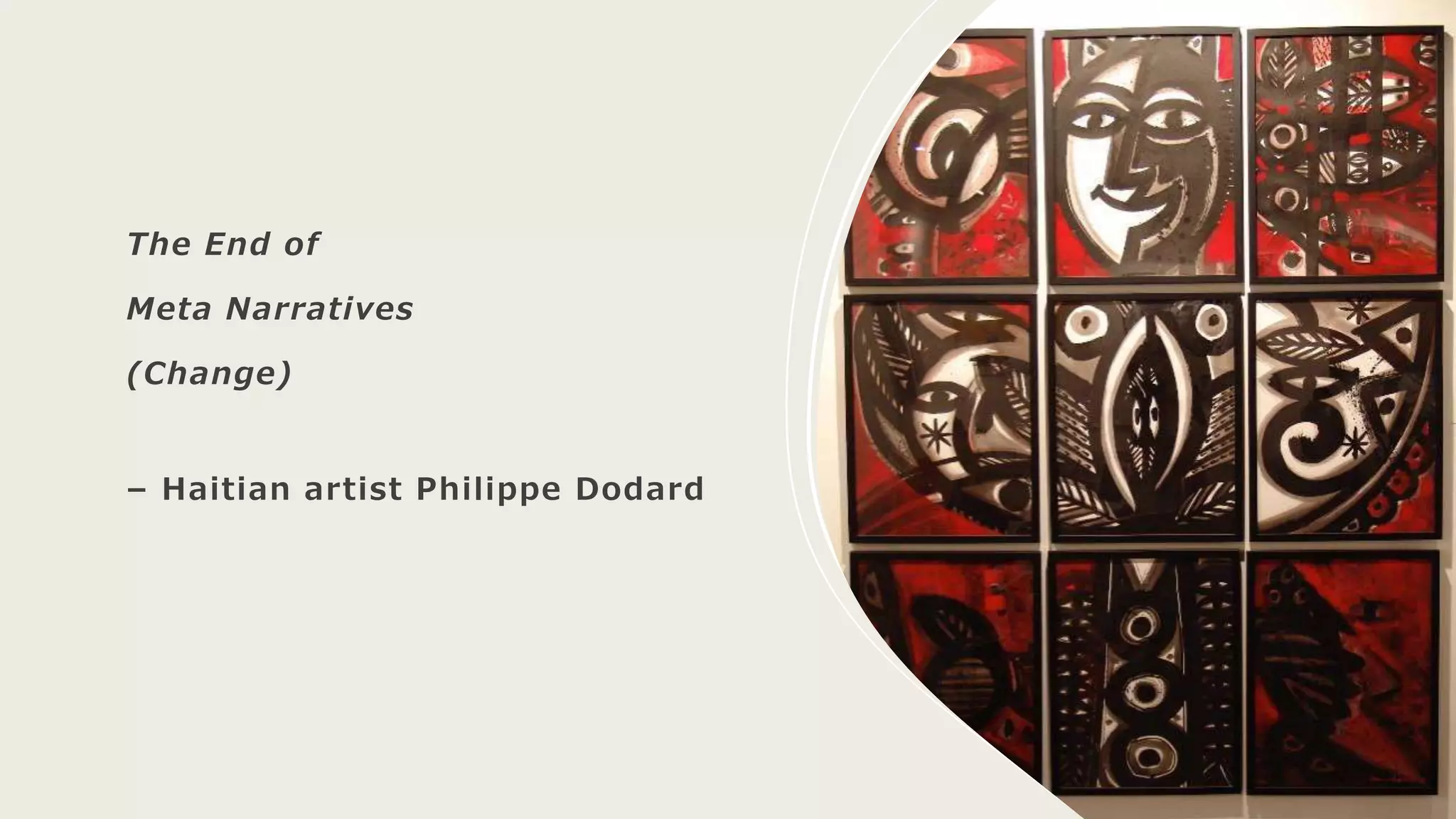
The End of
Meta Narratives
(Change)
– Haitian artist Philippe Dodard
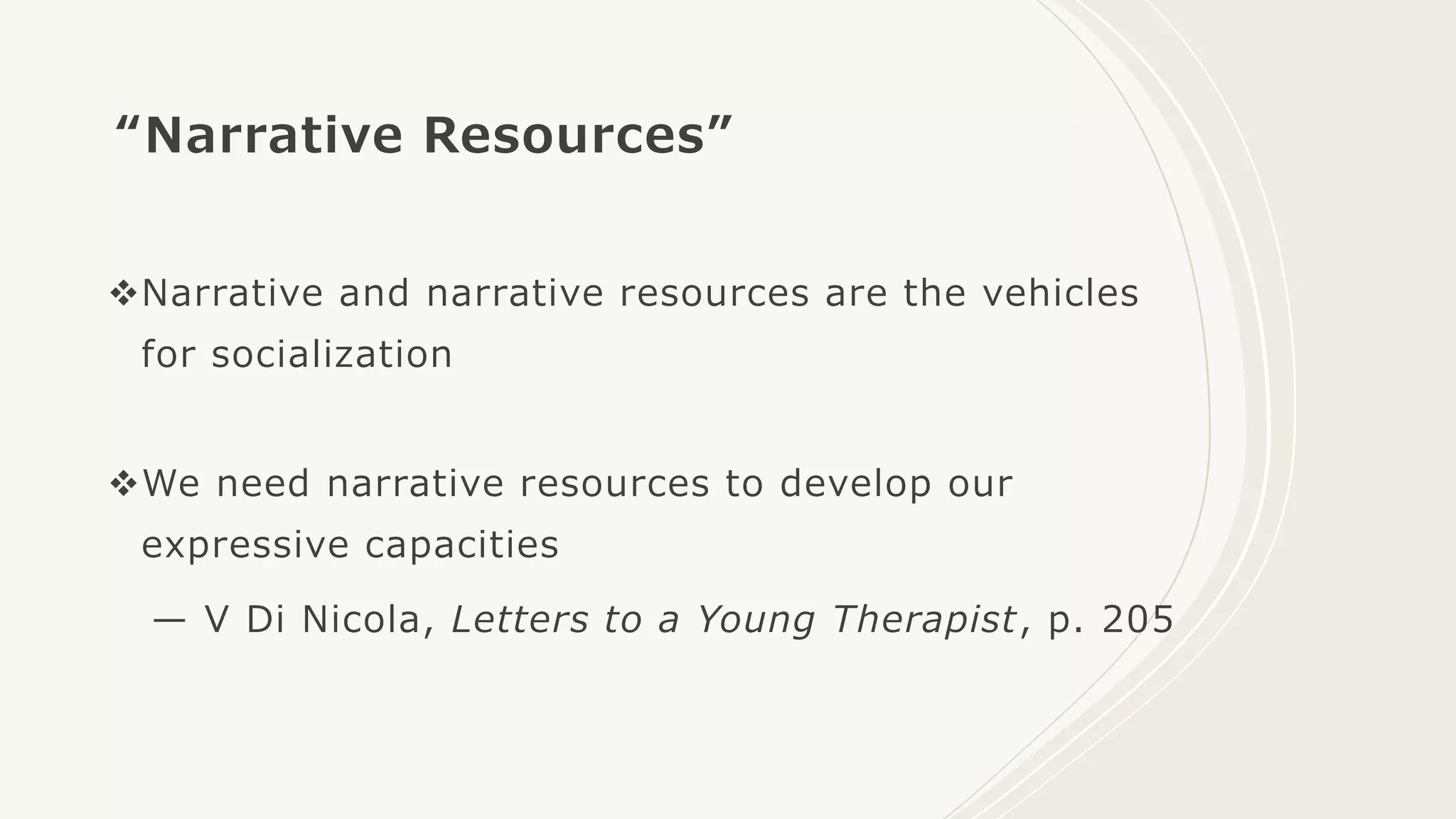
“Narrative Resources”
Narrative and narrative resources are the vehicles
for socialization
We need narrative resources to develop our
expressive capacities
— V Di Nicola, Letters to a Young Therapist, p. 205
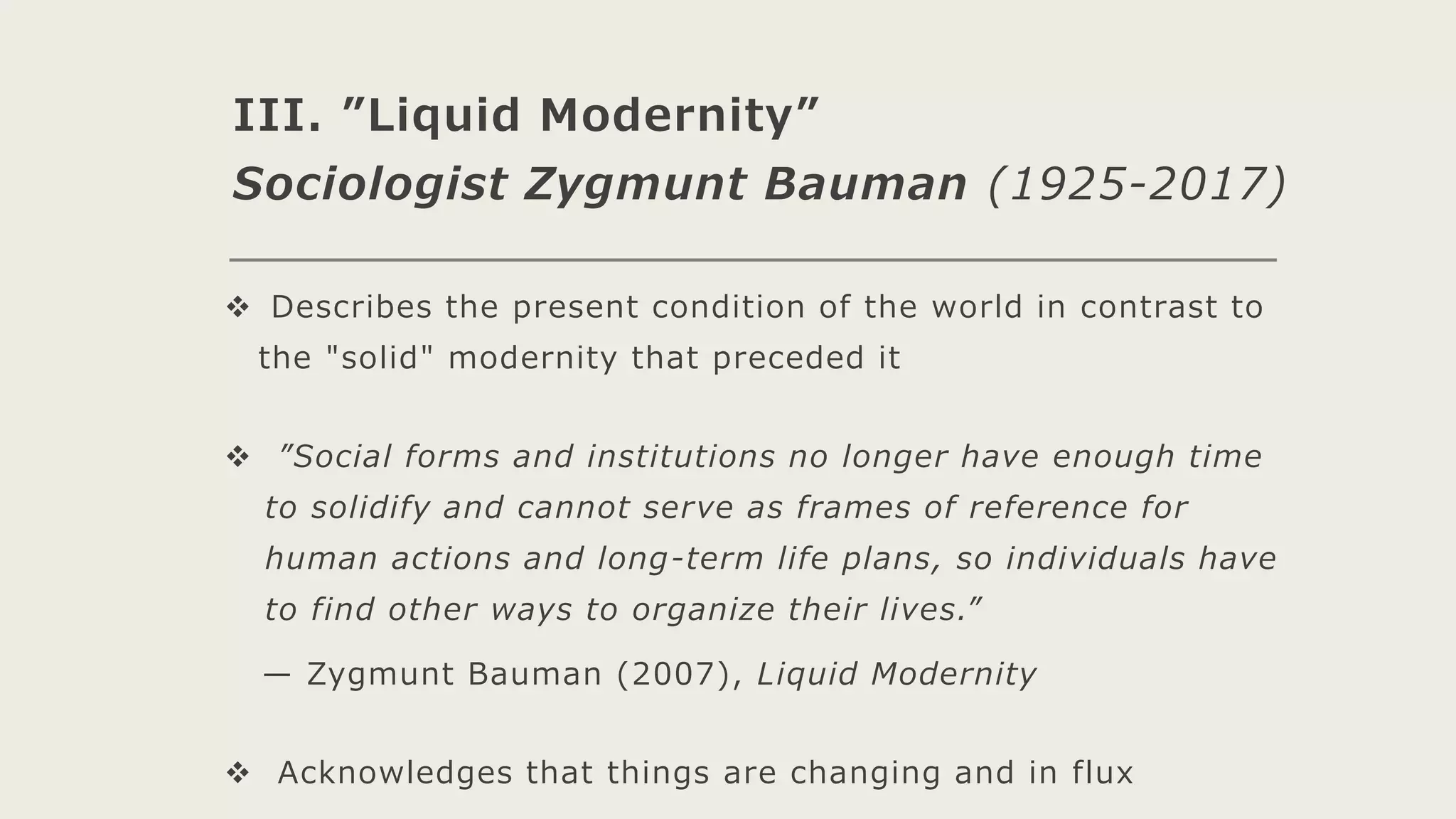
III. ”Liquid Modernity”
Sociologist Zygmunt Bauman (1925-2017)
 Describes the present condition of the world in contrast to
the "solid" modernity that preceded it
 ”Social forms and institutions no longer have enough time
to solidify and cannot serve as frames of reference for
human actions and long-term life plans, so individuals have
to find other ways to organize their lives.”
— Zygmunt Bauman (2007), Liquid Modernity
 Acknowledges that things are changing and in flux
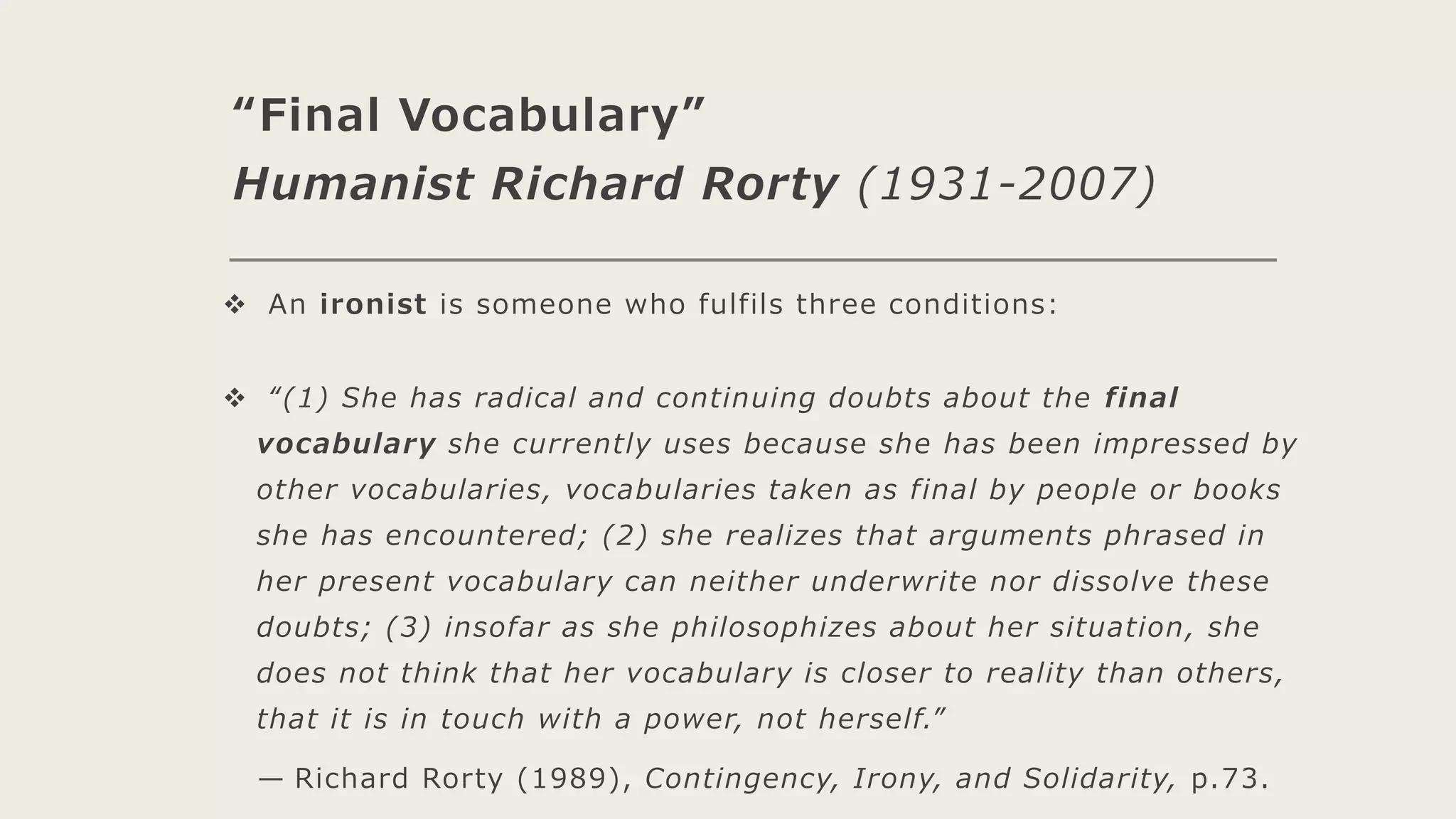
“Final Vocabulary”
Humanist Richard Rorty (1931-2007)
 An ironist is someone who fulfils three conditions:
 “(1) She has radical and continuing doubts about the final
vocabulary she currently uses because she has been impressed by
other vocabularies, vocabularies taken as final by people or books
she has encountered; (2) she realizes that arguments phrased in
her present vocabulary can neither underwrite nor dissolve these
doubts; (3) insofar as she philosophizes about her situation, she
does not think that her vocabulary is closer to reality than others,
that it is in touch with a power, not herself.”
— Richard Rorty (1989), Contingency, Irony, and Solidarity, p.73.
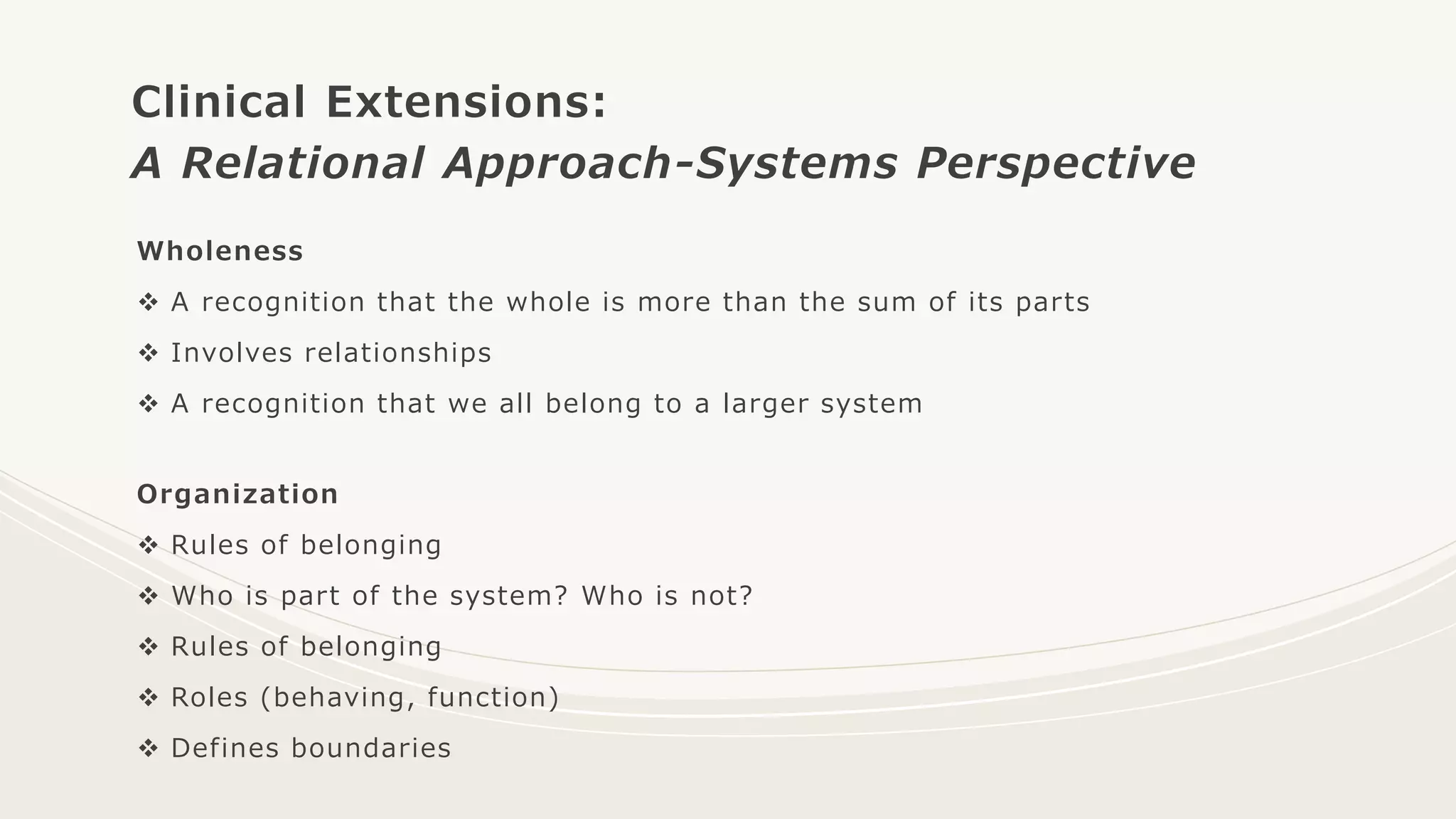
Clinical Extensions:
A Relational Approach-Systems Perspective
Wholeness
 A recognition that the whole is more than the sum of its parts
 Involves relationships
 A recognition that we all belong to a larger system
Organization
 Rules of belonging
 Who is part of the system? Who is not?
 Rules of belonging
 Roles (behaving, function)
 Defines boundaries
Patterns (sequences)
 Recursion – relationships affect and
affected by other system parts and
relationships
 Circularity – a circular pattern we can
see through recursion
 Isomorphism – patterns occur at multiple
levels of a system simultaneously
A Relational Approach-Systems
Perspective (continued)
Presentation of CI
Narratives
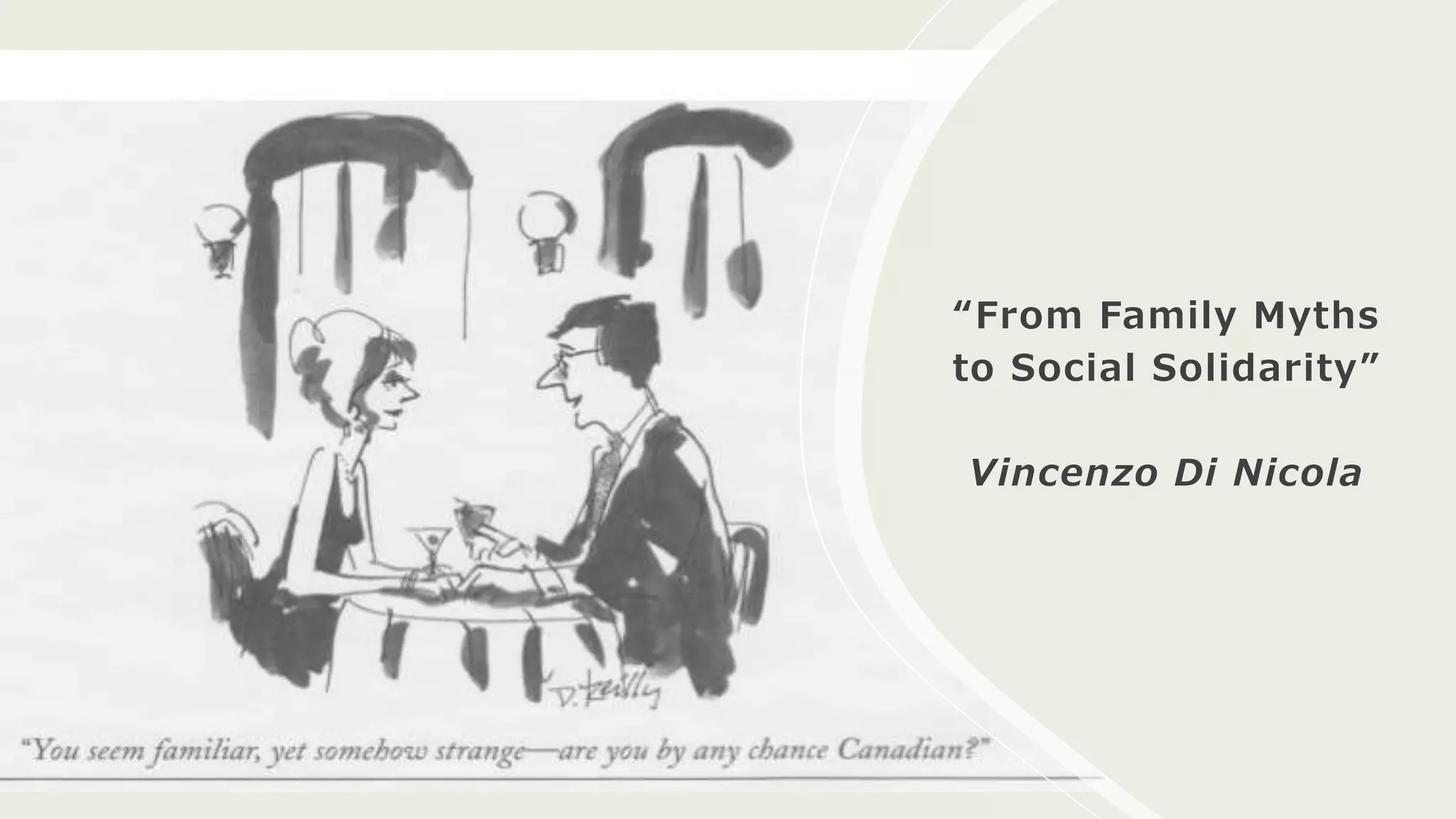
“From Family Myths
to Social Solidarity”
Vincenzo Di Nicola
“Integrating Gifts”
Anjali Joseph
Invitation to
Participants to
Present their CIs
Reflections
References
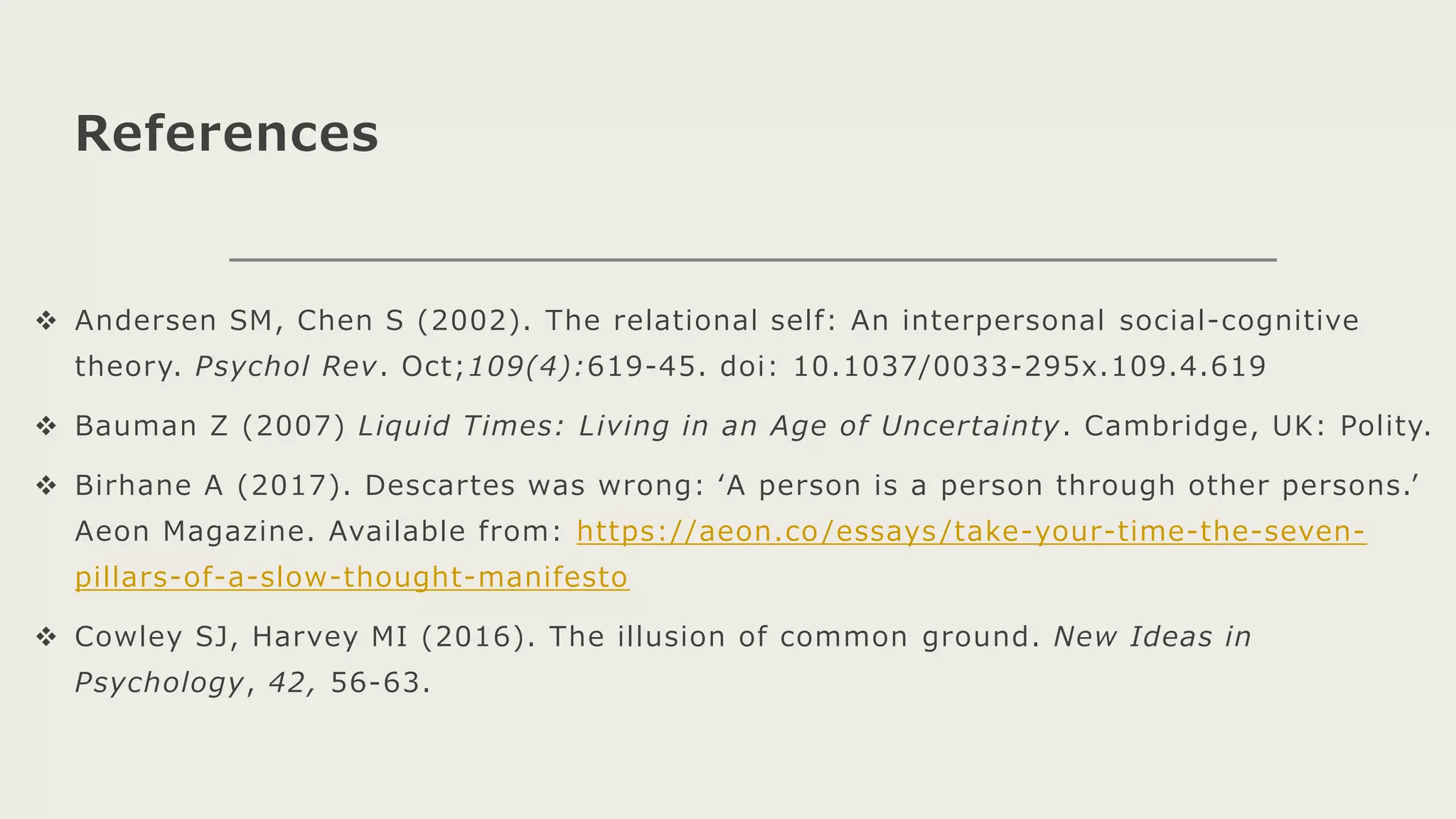
 Andersen SM, Chen S (2002). The relational self: An interpersonal social-cognitive
theory. Psychol Rev. Oct;109(4):619-45. doi: 10.1037/0033-295x.109.4.619
 Bauman Z (2007) Liquid Times: Living in an Age of Uncertainty. Cambridge, UK: Polity.
 Birhane A (2017). Descartes was wrong: ‘A person is a person through other persons.’
Aeon Magazine. Available from: https://aeon.co /essays /take-your-time-the-seven-
pillars-of-a-slow-thought-manifesto
 Cowley SJ, Harvey MI (2016). The illusion of common ground. New Ideas in
Psychology, 42, 56-63.
References
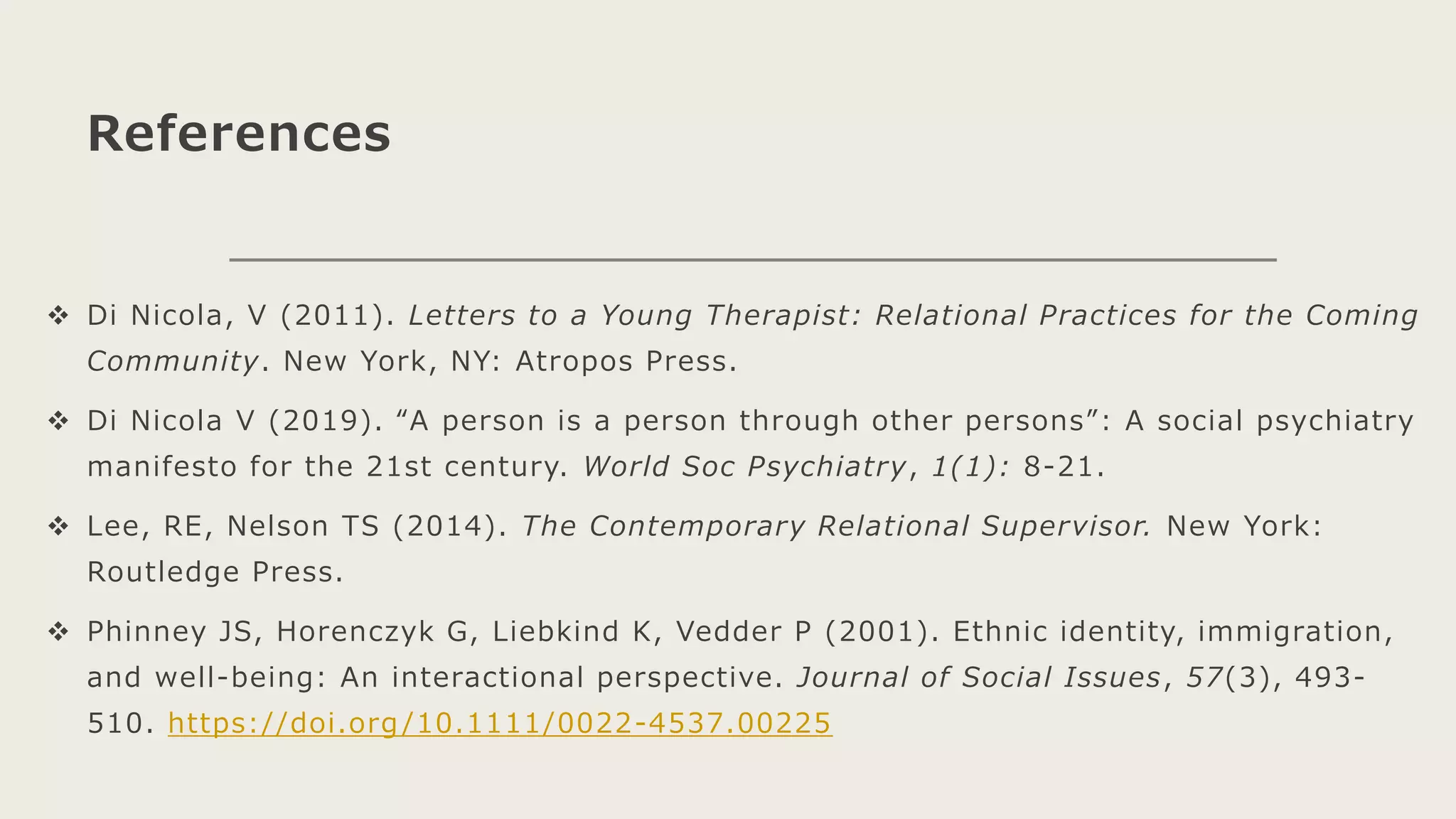
 Di Nicola, V (2011). Letters to a Young Therapist: Relational Practices for the Coming
Community. New York, NY: Atropos Press.
 Di Nicola V (2019). “A person is a person through other persons”: A social psychiatry
manifesto for the 21st century. World Soc Psychiatry, 1(1): 8-21.
 Lee, RE, Nelson TS (2014). The Contemporary Relational Supervisor. New York:
Routledge Press.
 Phinney JS, Horenczyk G, Liebkind K, Vedder P (2001). Ethnic identity, immigration,
and well-being: An interactional perspective. Journal of Social Issues, 57(3), 493-
510. https://doi.org /10.1111/0022-4537.00225
References
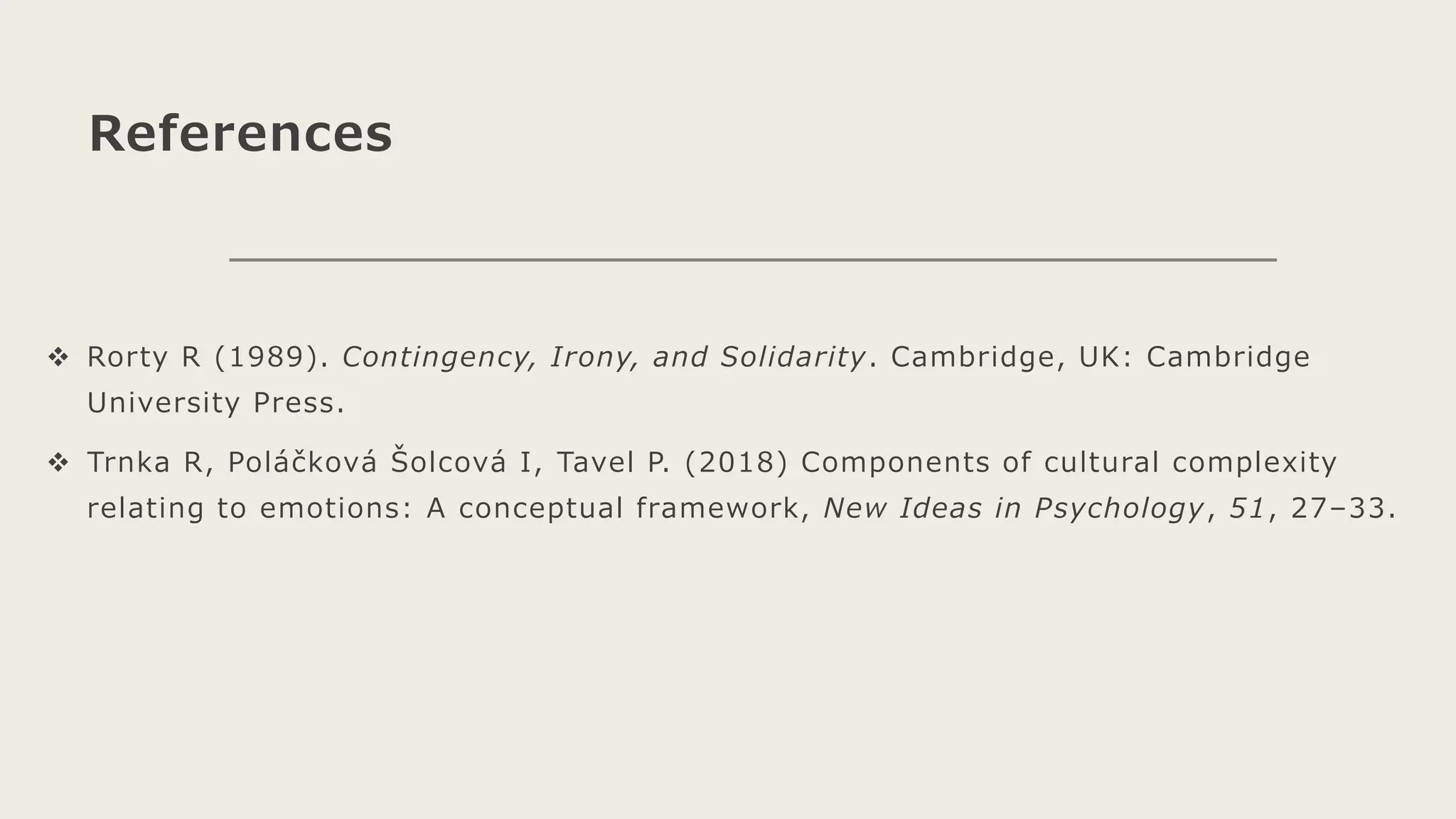
 Rorty R (1989). Contingency, Irony, and Solidarity. Cambridge, UK: Cambridge
University Press.
 Trnka R, Poláčková Šolcová I, Tavel P. (2018) Components of cultural complexity
relating to emotions: A conceptual framework, New Ideas in Psychology, 51, 27–33.

"A Person Is a Person Through Other Persons" - SSPC Cultural Identity Workshop

  • 1.
    WORKSHOP “A Person IsA Person Through Other Persons” How Culture & Identity Are Constructed Through Relationships & Belonging Society for the Study of Psychiatry & Culture (SSPC) Virtual Conference September 25, 2020
  • 2.
    Workshop Co-chairs Vincenzo Di Nicola,MPhil, MD, PhD, FRCPC, DFAPA, FCPA Child & Adolescent Psychiatrist Cultural Family Therapist Montreal, QC, Canada Anjali Joseph, MA, RP, RMFT Registered Marriage & Family Therapist (RMFT) Registered Psychotherapist (RP) Ottawa, ON, Canada
  • 3.
    Workshop Outline  Welcometo workshop participants  Introduction to Cultural Identity (CI)  Presentation of CI narratives  Invitation to participants to present their CIs  Reflections
  • 4.
  • 5.
    Cultural Identity  Culturalidentity is the identity or feeling of belonging to a group  It is part of a person's self-conception and self-perception and is related to nationality, ethnicity, religion, social class, generation, locality or any kind of social group that has its own distinct culture
  • 6.
    I. The RelationalSelf  Based on personality and social psychology and social psychiatry  The relational self refers to aspects of the self associated with one’s relationships with significant others (e.g., family of origin, friends, romantic partners)
  • 7.
    II. “Making Meaning” Perhapsthe biggest “change” necessary in therapy is to enlarge our capacity to make meaning We may need to (re)signify our lives rather than change them in some instrumental way What do we need to make sense of our lives? We need acts of meaning and the narrative resources to enact them in our lives — V Di Nicola, Letters to a Young Therapist, p. 203
  • 8.
    The End of MetaNarratives (Change) – Haitian artist Philippe Dodard
  • 9.
    “Narrative Resources” Narrative andnarrative resources are the vehicles for socialization We need narrative resources to develop our expressive capacities — V Di Nicola, Letters to a Young Therapist, p. 205
  • 10.
    III. ”Liquid Modernity” SociologistZygmunt Bauman (1925-2017)  Describes the present condition of the world in contrast to the "solid" modernity that preceded it  ”Social forms and institutions no longer have enough time to solidify and cannot serve as frames of reference for human actions and long-term life plans, so individuals have to find other ways to organize their lives.” — Zygmunt Bauman (2007), Liquid Modernity  Acknowledges that things are changing and in flux
  • 11.
    “Final Vocabulary” Humanist RichardRorty (1931-2007)  An ironist is someone who fulfils three conditions:  “(1) She has radical and continuing doubts about the final vocabulary she currently uses because she has been impressed by other vocabularies, vocabularies taken as final by people or books she has encountered; (2) she realizes that arguments phrased in her present vocabulary can neither underwrite nor dissolve these doubts; (3) insofar as she philosophizes about her situation, she does not think that her vocabulary is closer to reality than others, that it is in touch with a power, not herself.” — Richard Rorty (1989), Contingency, Irony, and Solidarity, p.73.
  • 12.
    Clinical Extensions: A RelationalApproach-Systems Perspective Wholeness  A recognition that the whole is more than the sum of its parts  Involves relationships  A recognition that we all belong to a larger system Organization  Rules of belonging  Who is part of the system? Who is not?  Rules of belonging  Roles (behaving, function)  Defines boundaries
  • 13.
    Patterns (sequences)  Recursion– relationships affect and affected by other system parts and relationships  Circularity – a circular pattern we can see through recursion  Isomorphism – patterns occur at multiple levels of a system simultaneously A Relational Approach-Systems Perspective (continued)
  • 14.
  • 15.
    “From Family Myths toSocial Solidarity” Vincenzo Di Nicola
  • 16.
  • 17.
  • 18.
  • 19.
    References  Andersen SM,Chen S (2002). The relational self: An interpersonal social-cognitive theory. Psychol Rev. Oct;109(4):619-45. doi: 10.1037/0033-295x.109.4.619  Bauman Z (2007) Liquid Times: Living in an Age of Uncertainty. Cambridge, UK: Polity.  Birhane A (2017). Descartes was wrong: ‘A person is a person through other persons.’ Aeon Magazine. Available from: https://aeon.co /essays /take-your-time-the-seven- pillars-of-a-slow-thought-manifesto  Cowley SJ, Harvey MI (2016). The illusion of common ground. New Ideas in Psychology, 42, 56-63.
  • 20.
    References  Di Nicola,V (2011). Letters to a Young Therapist: Relational Practices for the Coming Community. New York, NY: Atropos Press.  Di Nicola V (2019). “A person is a person through other persons”: A social psychiatry manifesto for the 21st century. World Soc Psychiatry, 1(1): 8-21.  Lee, RE, Nelson TS (2014). The Contemporary Relational Supervisor. New York: Routledge Press.  Phinney JS, Horenczyk G, Liebkind K, Vedder P (2001). Ethnic identity, immigration, and well-being: An interactional perspective. Journal of Social Issues, 57(3), 493- 510. https://doi.org /10.1111/0022-4537.00225
  • 21.
    References  Rorty R(1989). Contingency, Irony, and Solidarity. Cambridge, UK: Cambridge University Press.  Trnka R, Poláčková Šolcová I, Tavel P. (2018) Components of cultural complexity relating to emotions: A conceptual framework, New Ideas in Psychology, 51, 27–33.