


A Non Linear Model to explain
    persons with Stroke

                                 K Hari ohm
                              Professor in PT
                         MSAJ college of PT
       The Indian Centre for Evidence Based
                       Neuro-Rehabilitation
Introduction
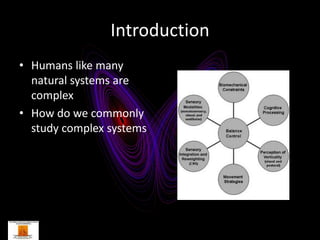
• Humans like many
  natural systems are
  complex
• How do we commonly
  study complex systems
Reductionism
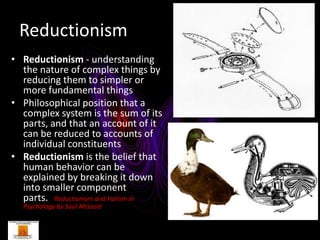
• Reductionism - understanding
  the nature of complex things by
  reducing them to simpler or
  more fundamental things
• Philosophical position that a
  complex system is the sum of its
  parts, and that an account of it
  can be reduced to accounts of
  individual constituents
• Reductionism is the belief that
  human behavior can be
  explained by breaking it down
  into smaller component
  parts. Reductionism and Holism in
  Psychology by Saul McLeod
What is linearity
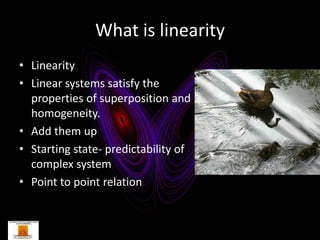
• Linearity
• Linear systems satisfy the
  properties of superposition and
  homogeneity.
• Add them up
• Starting state- predictability of
  complex system
• Point to point relation
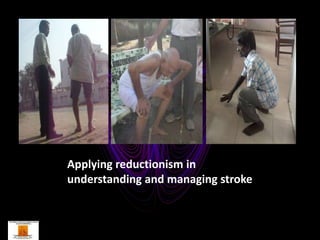
Applying reductionism in
understanding and managing stroke
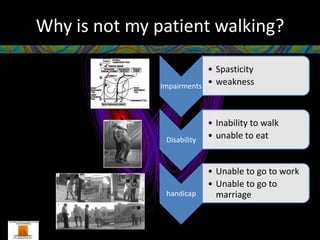
Why is not my patient walking?

                           • Spasticity
               Impairments • weakness


                             • Inability to walk
                Disability   • unable to eat


                             • Unable to go to work
                             • Unable to go to
                handicap       marriage
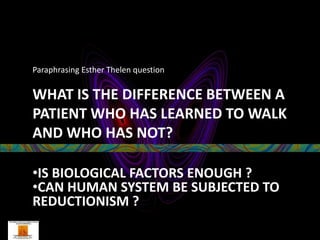
Paraphrasing Esther Thelen question

WHAT IS THE DIFFERENCE BETWEEN A
PATIENT WHO HAS LEARNED TO WALK
AND WHO HAS NOT?

•IS BIOLOGICAL FACTORS ENOUGH ?
•CAN HUMAN SYSTEM BE SUBJECTED TO
REDUCTIONISM ?
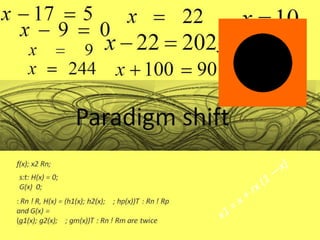
Paradigm shift
• Will be true if it is a Simple system or Static


1. Human systems are dynamic and complex
2. Variable
Understanding variations
• In human biology
   – variation is normality
• Behavioural variability
• Movement variability
   – Throw darts- for example, we are unable to hit the
     ‘bull’s eye’ on every attempt.
   – When we walk, our footprints never repeat themselves
     exactly.
   – When we stand quietly, we continuously sway around a
     central equilibrium point without ever remaining
     exactly still
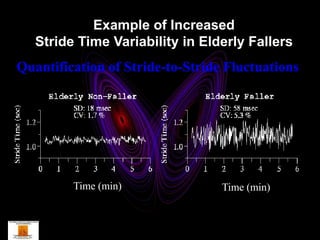
Example of Increased
   Stride Time Variability in Elderly Fallers
Quantification of Stride-to-Stride Fluctuations


         Time (min)               Time (min)
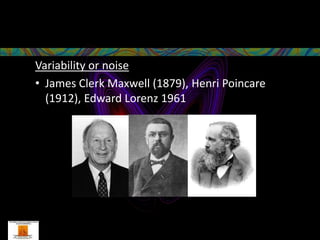
Variability or noise
• James Clerk Maxwell (1879), Henri Poincare
  (1912), Edward Lorenz 1961
Non linearity
• This paradigm has no single name but has
  been described in terms of
1. Chaos
2. Nonlinear dynamics (sometimes called
   nonlinear dynamical systems theory),
3. Complexity theory
4. Self-organization. Scott Barton January 1994 • American Psychologist
    Chaos, Self-Organization, and Psychology
What is Non linearity ?
• “Nonlinear dynamics,” can be defined as a
  system whose output is not proportional to its
  input.
• Nonlinear systems are more complex
Nonlinear
• Nonlinear equations are not additive;
  therefore, they are often difficult to solve.
• Sometimes a single solution can be obtained,
  but often the answer involves a pattern of
  solutions.
• Nonlinear systems tend to settle down over
  time.
• Human beings are nonlinear because a small
  change in input can lead to a huge and
  unpredictable change in output.
• A minor change in initial conditions may lead
  to a significant, abrupt change of behavior
Some properties of non-linear
        dynamic systems are:
• They do not follow the principle of
  superposition (linearity and homogeneity)
• Timing and form of such changes are not fully
  predictable due to the complexity of the
  system
• They may have multiple isolated equilibrium
  points (linear systems can have only one)
• They may exhibit properties such as
  bifurcation, chaos, self organization
  emergence etc.
COMPLEX SYSTEM
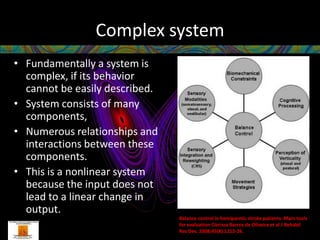
Complex system
• Fundamentally a system is
  complex, if its behavior
  cannot be easily described.
• System consists of many
  components,
• Numerous relationships and
  interactions between these
  components.
• This is a nonlinear system
  because the input does not
  lead to a linear change in
  output.
                                Balance control in hemiparetic stroke patients: Main tools
                                for evaluation Clarissa Barros de Oliveira et al J Rehabil
                                Res Dev. 2008;45(8):1215-26.
Non linearity
• One of the fundamental principles of complex
  systems is non linearity
• Complex systems are dynamical systems they
  change over time
• Difficult to determine the boundaries of a
  complex system
• interdependence of variables in a nonlinear
  system, along with sensitivity to initial
  conditions, lead to the implication that
  studying each factor in isolation may not lead
  to useful knowledge about the behavior of the
  system as a whole
IMPLICATION FOR STROKE
MANAGEMENT
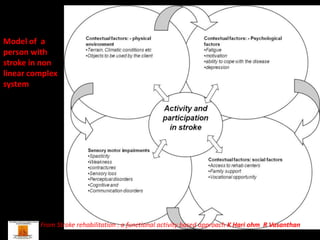
Model of a
person with
stroke in non
linear complex
system


         From Stroke rehabilitation : a functional activity based approach K Hari ohm R Vasanthan
Implication for stroke management
• Non linear systems are hard to solve
  – They cannot be broken into parts

A Non Linear Model to explain persons with Stroke

  • 1.
    A Non LinearModel to explain persons with Stroke K Hari ohm Professor in PT MSAJ college of PT The Indian Centre for Evidence Based Neuro-Rehabilitation
  • 2.
    Introduction • Humans likemany natural systems are complex • How do we commonly study complex systems
  • 3.
    Reductionism • Reductionism -understanding the nature of complex things by reducing them to simpler or more fundamental things • Philosophical position that a complex system is the sum of its parts, and that an account of it can be reduced to accounts of individual constituents • Reductionism is the belief that human behavior can be explained by breaking it down into smaller component parts. Reductionism and Holism in Psychology by Saul McLeod
  • 4.
    What is linearity •Linearity • Linear systems satisfy the properties of superposition and homogeneity. • Add them up • Starting state- predictability of complex system • Point to point relation
  • 5.
  • 6.
    Why is notmy patient walking? • Spasticity Impairments • weakness • Inability to walk Disability • unable to eat • Unable to go to work • Unable to go to handicap marriage
  • 7.
    Paraphrasing Esther Thelenquestion WHAT IS THE DIFFERENCE BETWEEN A PATIENT WHO HAS LEARNED TO WALK AND WHO HAS NOT? •IS BIOLOGICAL FACTORS ENOUGH ? •CAN HUMAN SYSTEM BE SUBJECTED TO REDUCTIONISM ?
  • 8.
  • 9.
    • Will betrue if it is a Simple system or Static 1. Human systems are dynamic and complex 2. Variable
  • 10.
    Understanding variations • Inhuman biology – variation is normality • Behavioural variability • Movement variability – Throw darts- for example, we are unable to hit the ‘bull’s eye’ on every attempt. – When we walk, our footprints never repeat themselves exactly. – When we stand quietly, we continuously sway around a central equilibrium point without ever remaining exactly still
  • 11.
    Example of Increased Stride Time Variability in Elderly Fallers Quantification of Stride-to-Stride Fluctuations Time (min) Time (min)
  • 13.
    Variability or noise •James Clerk Maxwell (1879), Henri Poincare (1912), Edward Lorenz 1961
  • 14.
    Non linearity • Thisparadigm has no single name but has been described in terms of 1. Chaos 2. Nonlinear dynamics (sometimes called nonlinear dynamical systems theory), 3. Complexity theory 4. Self-organization. Scott Barton January 1994 • American Psychologist Chaos, Self-Organization, and Psychology
  • 15.
    What is Nonlinearity ? • “Nonlinear dynamics,” can be defined as a system whose output is not proportional to its input. • Nonlinear systems are more complex
  • 16.
    Nonlinear • Nonlinear equationsare not additive; therefore, they are often difficult to solve. • Sometimes a single solution can be obtained, but often the answer involves a pattern of solutions. • Nonlinear systems tend to settle down over time.
  • 17.
    • Human beingsare nonlinear because a small change in input can lead to a huge and unpredictable change in output. • A minor change in initial conditions may lead to a significant, abrupt change of behavior
  • 18.
    Some properties ofnon-linear dynamic systems are: • They do not follow the principle of superposition (linearity and homogeneity)
  • 19.
    • Timing andform of such changes are not fully predictable due to the complexity of the system • They may have multiple isolated equilibrium points (linear systems can have only one) • They may exhibit properties such as bifurcation, chaos, self organization emergence etc.
  • 20.
  • 21.
    Complex system • Fundamentallya system is complex, if its behavior cannot be easily described. • System consists of many components, • Numerous relationships and interactions between these components. • This is a nonlinear system because the input does not lead to a linear change in output. Balance control in hemiparetic stroke patients: Main tools for evaluation Clarissa Barros de Oliveira et al J Rehabil Res Dev. 2008;45(8):1215-26.
  • 22.
    Non linearity • Oneof the fundamental principles of complex systems is non linearity • Complex systems are dynamical systems they change over time • Difficult to determine the boundaries of a complex system
  • 23.
    • interdependence ofvariables in a nonlinear system, along with sensitivity to initial conditions, lead to the implication that studying each factor in isolation may not lead to useful knowledge about the behavior of the system as a whole
  • 24.
  • 25.
    Model of a personwith stroke in non linear complex system From Stroke rehabilitation : a functional activity based approach K Hari ohm R Vasanthan
  • 26.
    Implication for strokemanagement • Non linear systems are hard to solve – They cannot be broken into parts

Editor's Notes

  • #4 Robert Maurice Sapolsky
  • #7 Example of simple reductionism in stroke management in the last century
  • #8 Especially in relation to PT
  • #10 Simple systems follow basic rules; thus with knowledge of the elements that make up the system andthe rules that govern them, one can accurately predict the system behavior under various conditions.
  • #11 describes differences in observed behavior when an entity is placed in the exact same situation
  • #22 The presence, absence, or nature of these relationships may affect the behavior of the aggregate system, so a description of this behavior must take into account each of these relationships.