A Journey Through the
Evolution of Computers
We'll embark on a fascinating journey through the history of computers,
exploring key milestones, influential figures, and the profound impact
these inventions have had on our world.
by Tanishq Yadav
Early Calculating Devices
The Abacus
One of the earliest calculating devices, used in ancient
Mesopotamia and China, allowed for basic arithmetic
operations.
The Slide Rule
Developed in the 17th century, the slide rule enabled more
complex calculations using logarithmic scales.
The Birth of the Modern
Computer
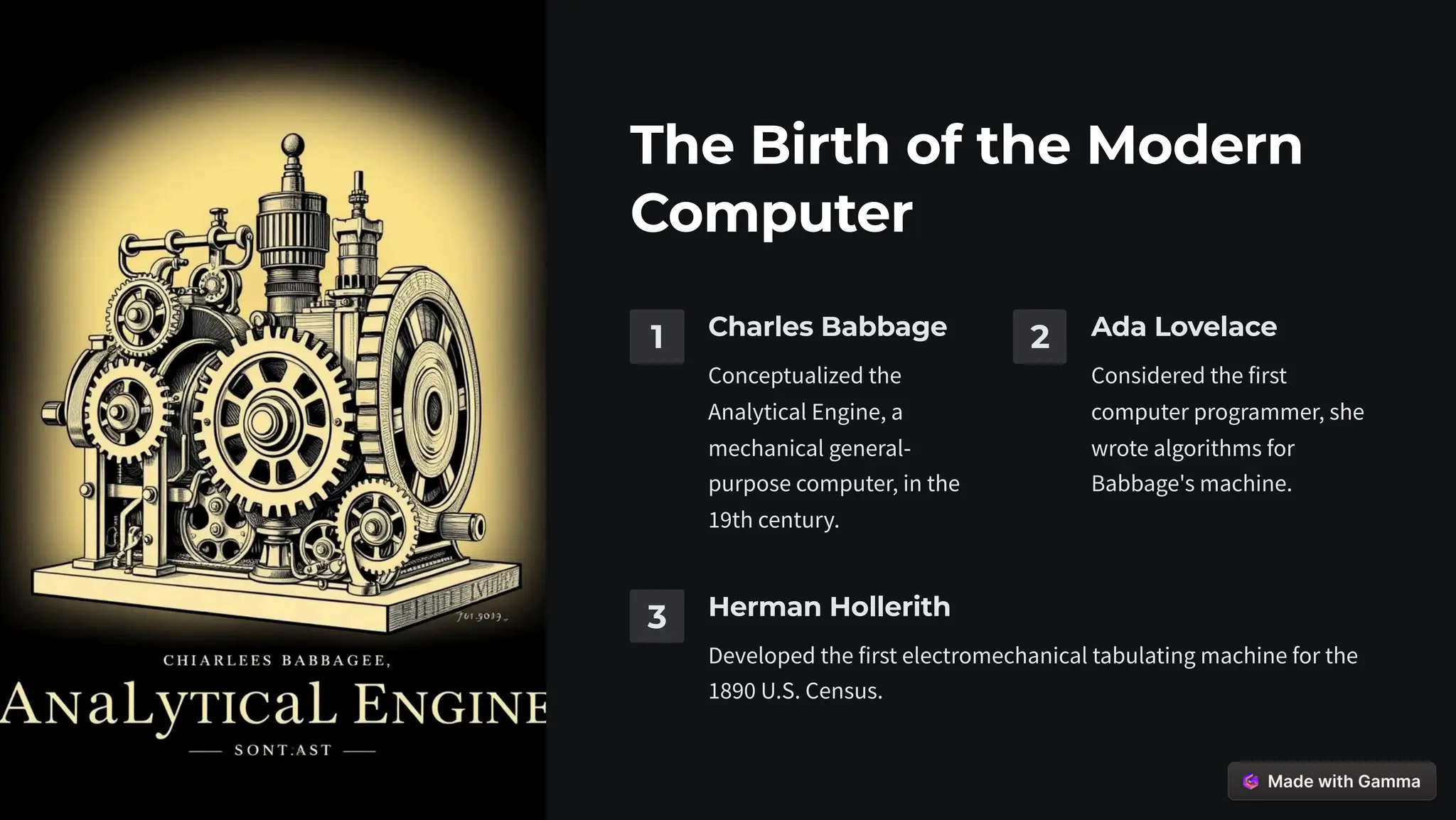
1 Charles Babbage
Conceptualized the
Analytical Engine, a
mechanical general-
purpose computer, in the
19th century.
2 Ada Lovelace
Considered the first
computer programmer, she
wrote algorithms for
Babbage's machine.
3 Herman Hollerith
Developed the first electromechanical tabulating machine for the
1890 U.S. Census.
The ENIAC and the Turing
Machine
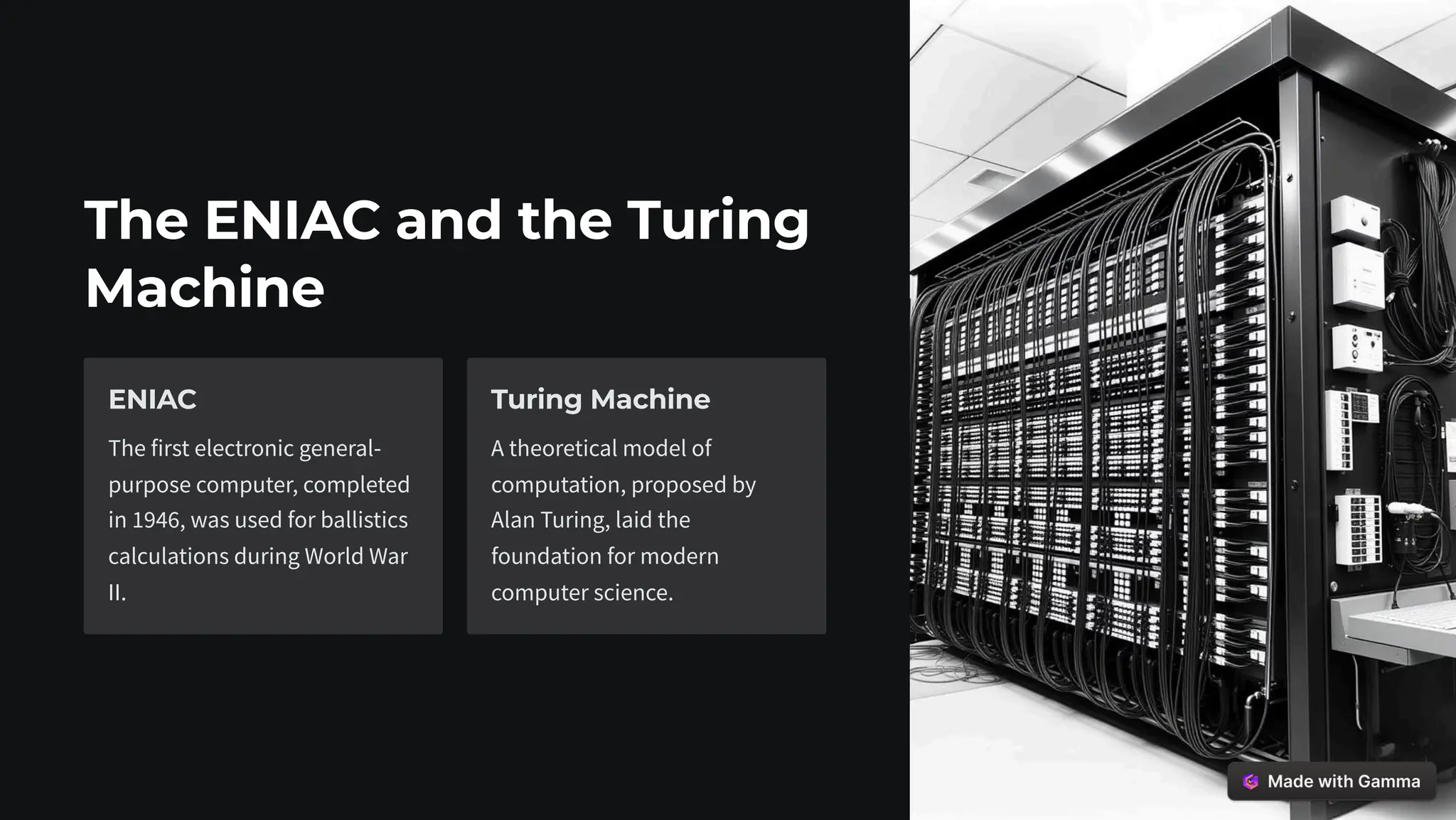
ENIAC
The first electronic general-
purpose computer, completed
in 1946, was used for ballistics
calculations during World War
II.
Turing Machine
A theoretical model of
computation, proposed by
Alan Turing, laid the
foundation for modern
computer science.
The Rise of Personal
Computers
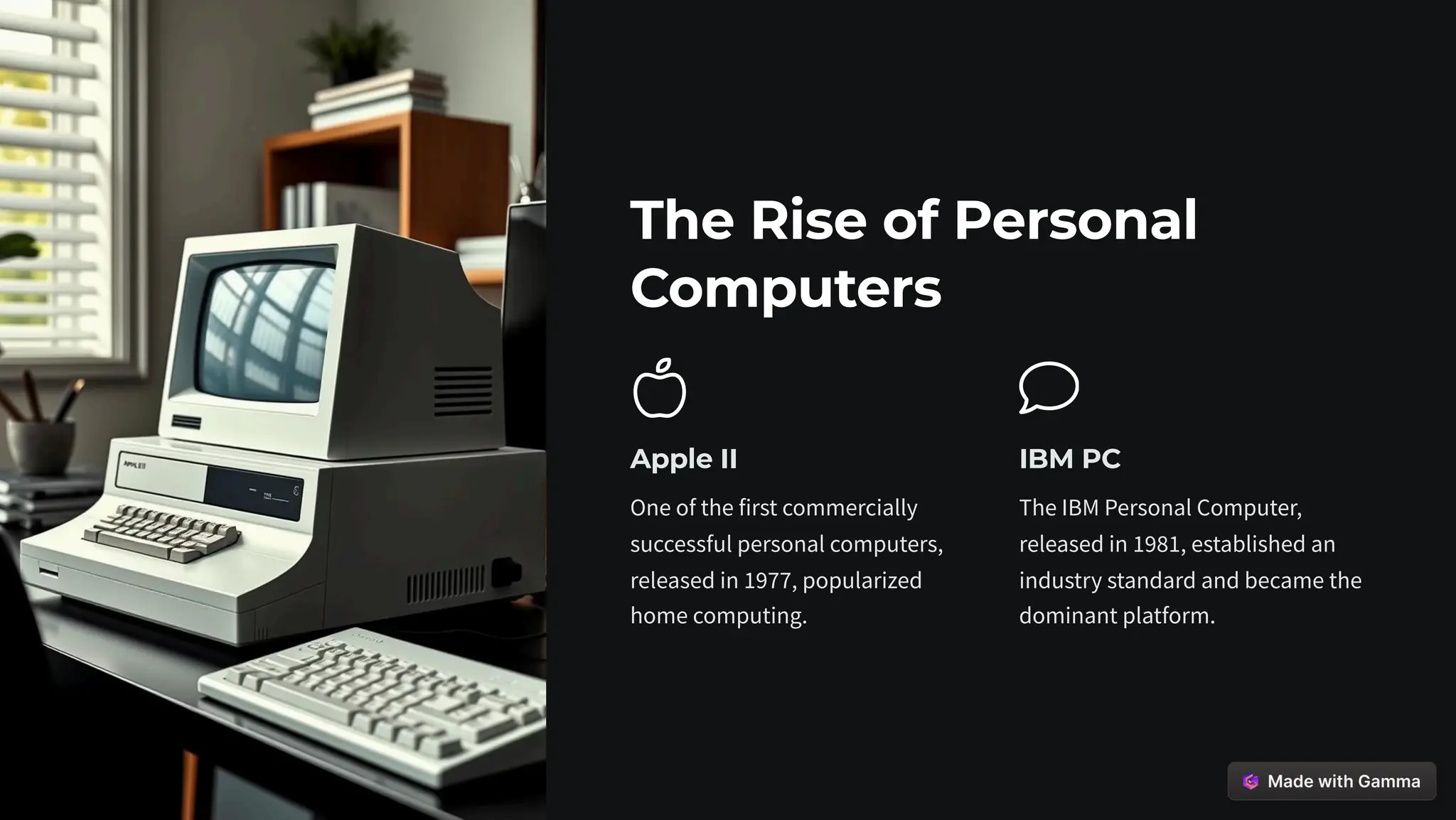
Apple II
One of the first commercially
successful personal computers,
released in 1977, popularized
home computing.
IBM PC
The IBM Personal Computer,
released in 1981, established an
industry standard and became the
dominant platform.
The Evolution of Software
and Programming
1 Assembly Language
Low-level programming language that directly interacts
with hardware.
2 High-Level Languages
Languages like Fortran, COBOL, and BASIC made
programming more accessible.
3 Object-Oriented Programming
Introduced concepts like classes and objects, leading to
more complex and modular software.
The Internet and the
Digital Age
1
ARPANET
The precursor to the internet, developed in the 1960s by
the U.S. Department of Defense.
2
World Wide Web
The World Wide Web, invented by Tim Berners-Lee in the
late 1980s, revolutionized information sharing.
3
Mobile Revolution
Smartphones and mobile devices have transformed the
way we access information and communicate.
The Future of Computing
1
AI and Machine Learning
Intelligent systems that learn from data and perform complex tasks.
2
Quantum Computing
Utilizing quantum mechanics to solve problems that are intractable for
traditional computers.
3
The Metaverse
Immersive virtual reality worlds that blend the physical and
digital realms.

A-Journey-Through-the-Evolution-of-Computers.pdf

  • 1.
    A Journey Throughthe Evolution of Computers We'll embark on a fascinating journey through the history of computers, exploring key milestones, influential figures, and the profound impact these inventions have had on our world. by Tanishq Yadav
  • 2.
    Early Calculating Devices TheAbacus One of the earliest calculating devices, used in ancient Mesopotamia and China, allowed for basic arithmetic operations. The Slide Rule Developed in the 17th century, the slide rule enabled more complex calculations using logarithmic scales.
  • 3.
    The Birth ofthe Modern Computer 1 Charles Babbage Conceptualized the Analytical Engine, a mechanical general- purpose computer, in the 19th century. 2 Ada Lovelace Considered the first computer programmer, she wrote algorithms for Babbage's machine. 3 Herman Hollerith Developed the first electromechanical tabulating machine for the 1890 U.S. Census.
  • 4.
    The ENIAC andthe Turing Machine ENIAC The first electronic general- purpose computer, completed in 1946, was used for ballistics calculations during World War II. Turing Machine A theoretical model of computation, proposed by Alan Turing, laid the foundation for modern computer science.
  • 5.
    The Rise ofPersonal Computers Apple II One of the first commercially successful personal computers, released in 1977, popularized home computing. IBM PC The IBM Personal Computer, released in 1981, established an industry standard and became the dominant platform.
  • 6.
    The Evolution ofSoftware and Programming 1 Assembly Language Low-level programming language that directly interacts with hardware. 2 High-Level Languages Languages like Fortran, COBOL, and BASIC made programming more accessible. 3 Object-Oriented Programming Introduced concepts like classes and objects, leading to more complex and modular software.
  • 7.
    The Internet andthe Digital Age 1 ARPANET The precursor to the internet, developed in the 1960s by the U.S. Department of Defense. 2 World Wide Web The World Wide Web, invented by Tim Berners-Lee in the late 1980s, revolutionized information sharing. 3 Mobile Revolution Smartphones and mobile devices have transformed the way we access information and communicate.
  • 8.
    The Future ofComputing 1 AI and Machine Learning Intelligent systems that learn from data and perform complex tasks. 2 Quantum Computing Utilizing quantum mechanics to solve problems that are intractable for traditional computers. 3 The Metaverse Immersive virtual reality worlds that blend the physical and digital realms.