The Ulwazi Programme:
!
A Case Study for Access,
Skills and Development
!
Niall McNulty
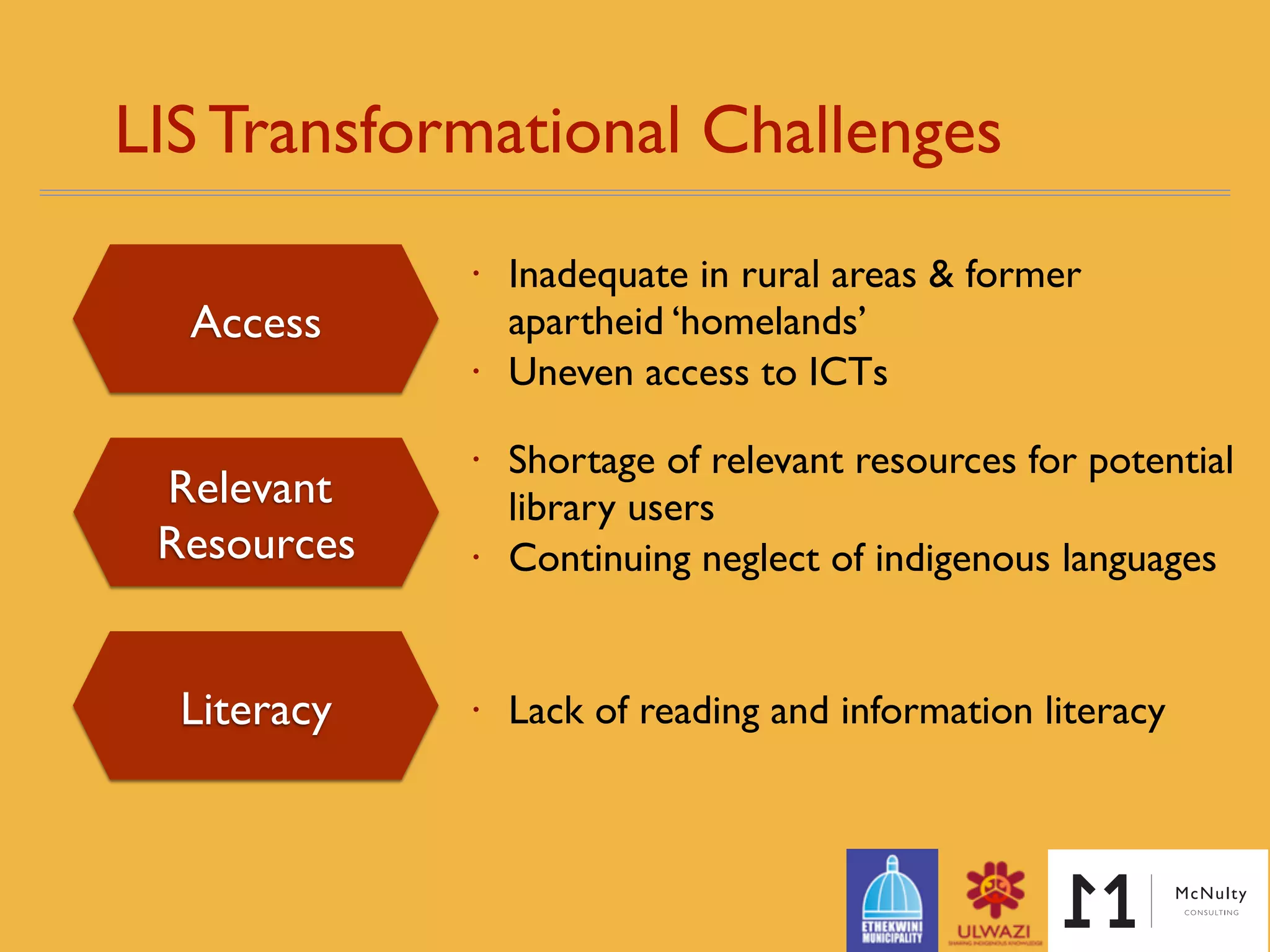
LIS Transformational Challenges
Access!
Literacy!
• Inadequate in rural areas & former
apartheid ‘homelands’
• Uneven access to ICTs!!!
• Shortage of relevant resources for potential
library users
• Continuing neglect of indigenous languages
!
!
• Lack of reading and information literacy
Relevant !
Resources!
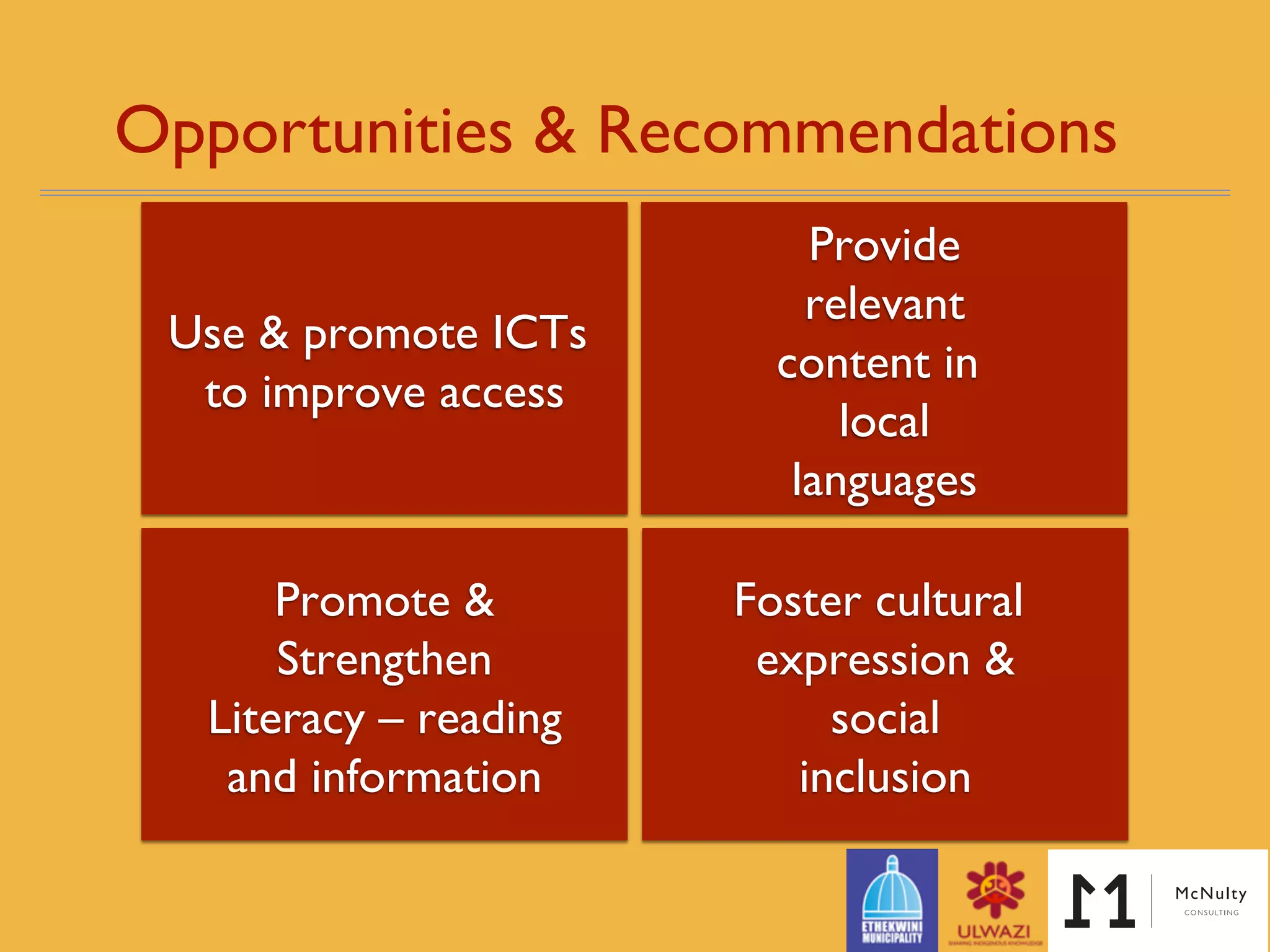
Opportunities & Recommendations
Use & promote ICTs !
to improve access!
Provide!
relevant!
content in !
local!
languages!
Promote &!
Strengthen!
Literacy – reading!
and information!
Foster cultural !
expression &!
social!
inclusion!
The Ulwazi Programme

• What is the Ulwazi Programme?
• Goals of the Programme
• Ulwazi Programme Model
• How does it work?
• Special Projects
• Ulwazi Programme Stats
• Achievements
• Going Forward
What is the Ulwazi Programme?

• Initiative of the Libraries & Heritage Department of the
eThekwini Municipality
• Programme to collect and share local knowledge and
histories in local language
• Conceptuliased by ex-Head of IS, Betsie Greyling
• Insufficient management systems for local knowledge
perpetuated lack of local content on the Internet
• Poor digital literacy in local communities
What is the Ulwazi Programme?

• Developed in line with UN Millennium Development
Goals and the WSIS Action Plans - refined over time
• Calls for access to info for all, capacity-building and
development of local content in local languages
• Potential of the existing library infrastructure to
facilitate the participation
• Developed by McNulty Consulting using open-source
software, in collaboration with the public library and
local communities
• Local wiki for eThekwini Municipality
Goals of the Programme

• Preserve and share local,‘indigenous’ knowledge
• Build capacity in digital skills
• Develop a sustainable digital library of local relevance
and in local language
• Encourage local communities to become part of the
global information society
• Promote social inclusion and contribute to socio-
economic transformation
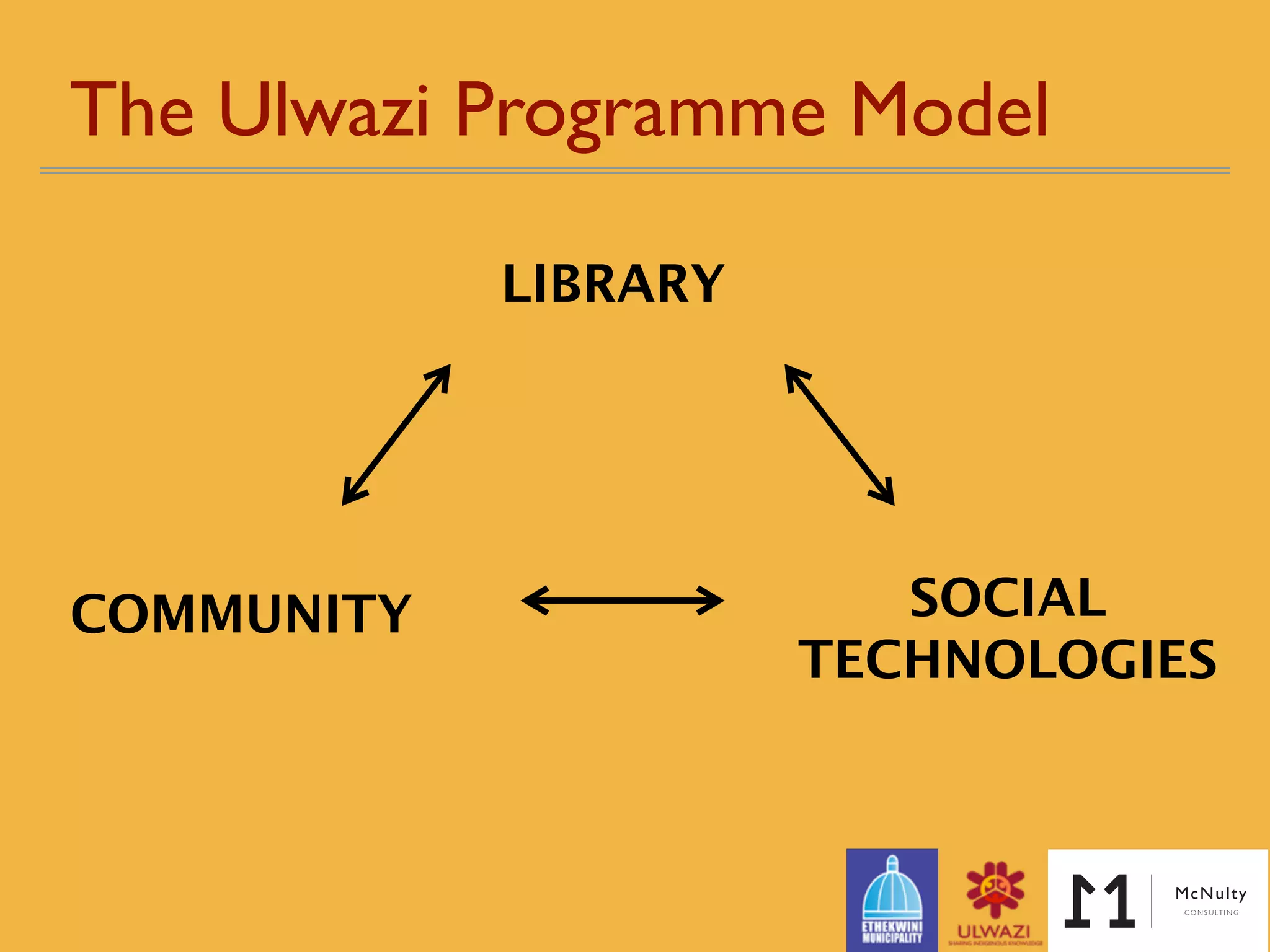
The Ulwazi Programme Model

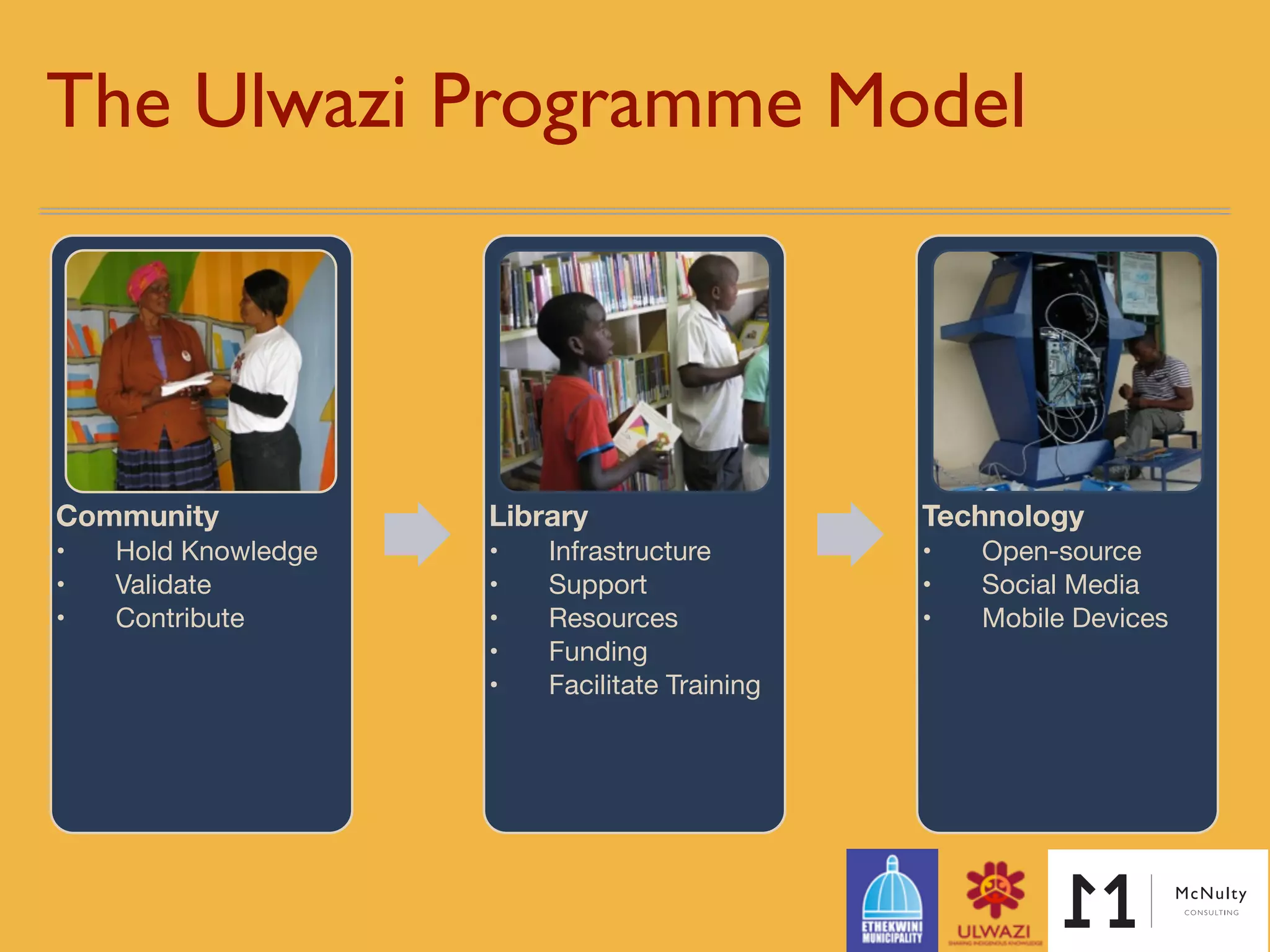
LIBRARY
SOCIAL 
TECHNOLOGIES
COMMUNITY
The Ulwazi Programme Model

Community
• Hold Knowledge

• Validate 

• Contribute

!
Library
• Infrastructure

• Support

• Resources

• Funding

• Facilitate Training
Technology
• Open-source

• Social Media

• Mobile Devices
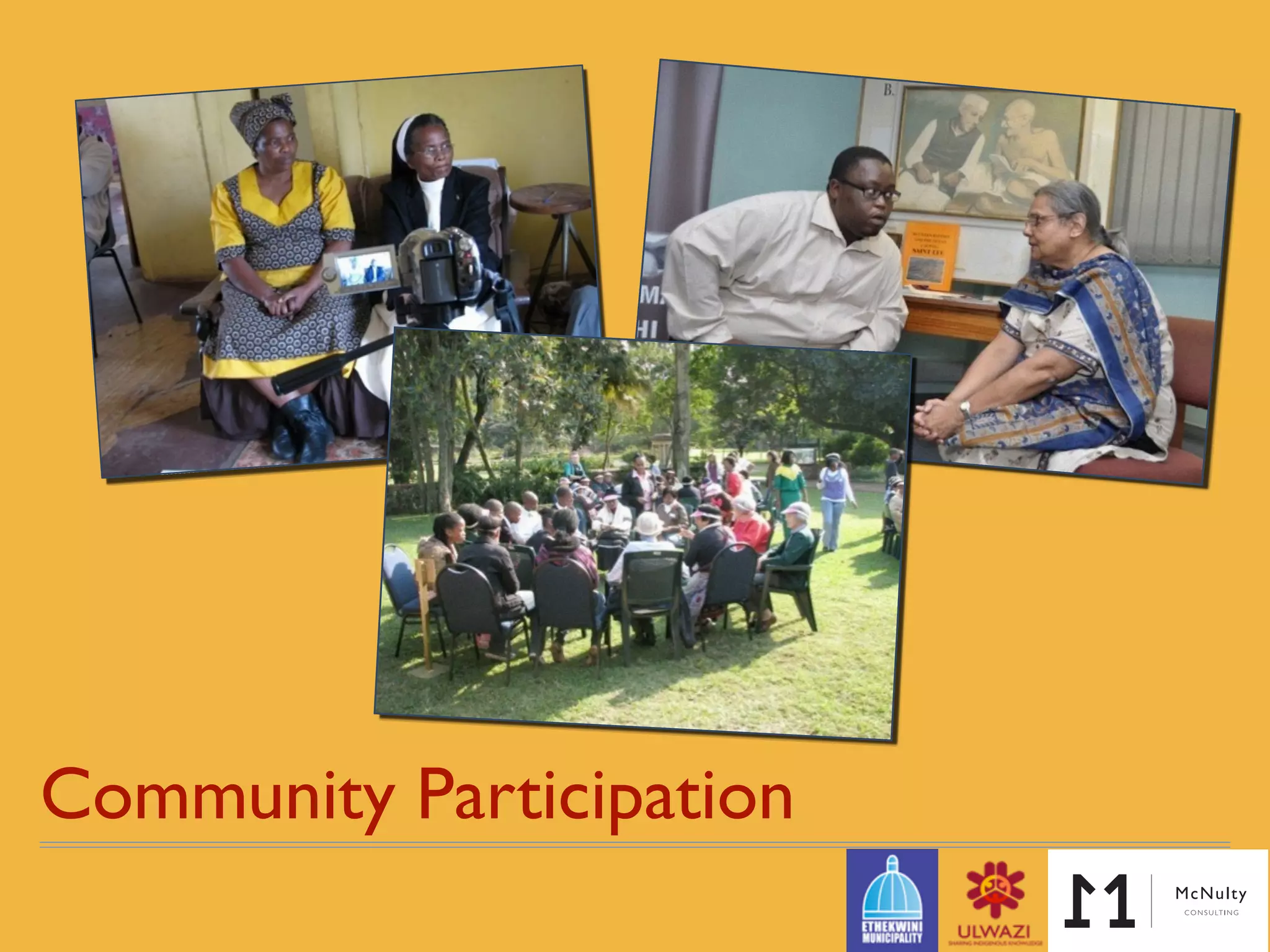
Community Participation

The Community?

• Fieldworkers: trained in oral history methodology, basic
digital media skills and software
• Volunteer fieldworkers, community members, record
knowledge and histories
• Formal researchers from heritage and library
departments, universities, local museums, community
development projects
• Special target groups such as artists, community
historians, poets, writers
• Schools
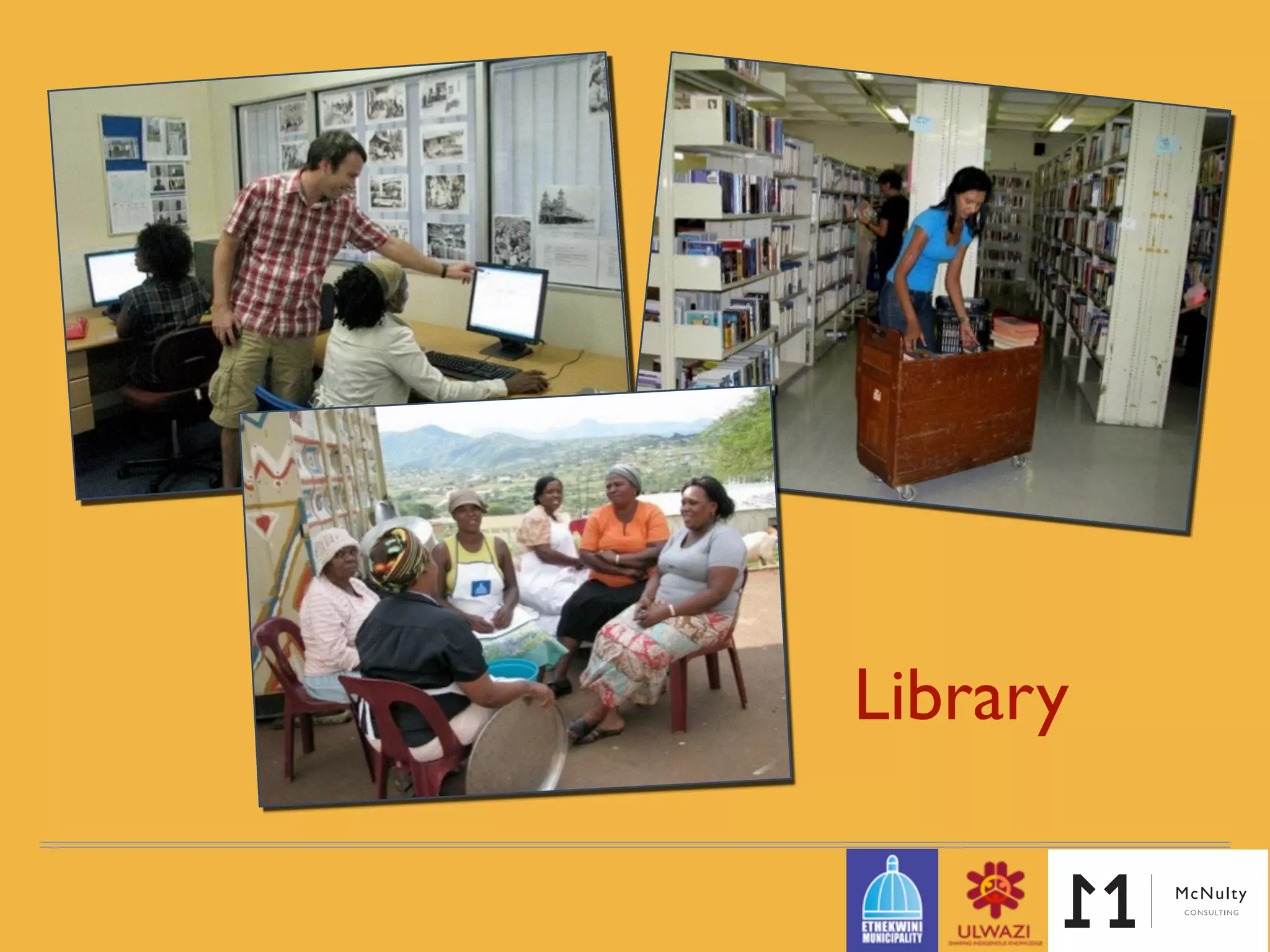
Library
The Library
• Anchor partner – stable position (community and
government structure)
• Uniquely placed - library penetrates semi-rural / peri-urban
areas
• Offers infrastructure and resources
• Facilitates training
• Supports the technology and data collection
• Provides content management and information skills
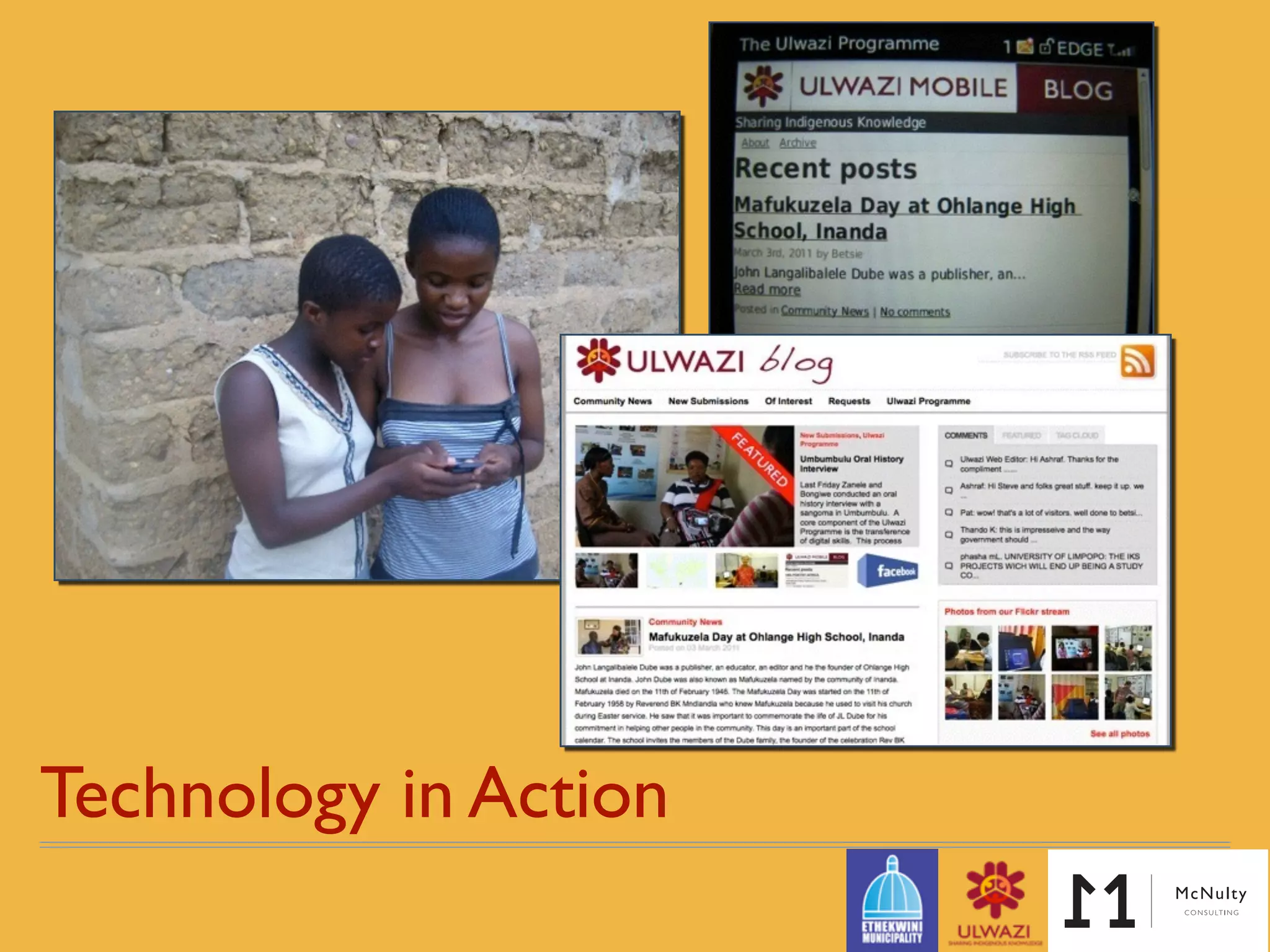
Technology in Action
Open-Source and Social Media
• Combination of open-source software and social media
• Open-source software: freely available, no licensing fees and
a common philosophy of sharing
• Social media: used to create new entry points for the
programme, including:
• Facebook,Twitter & Flickr
• Although search results are main entry point
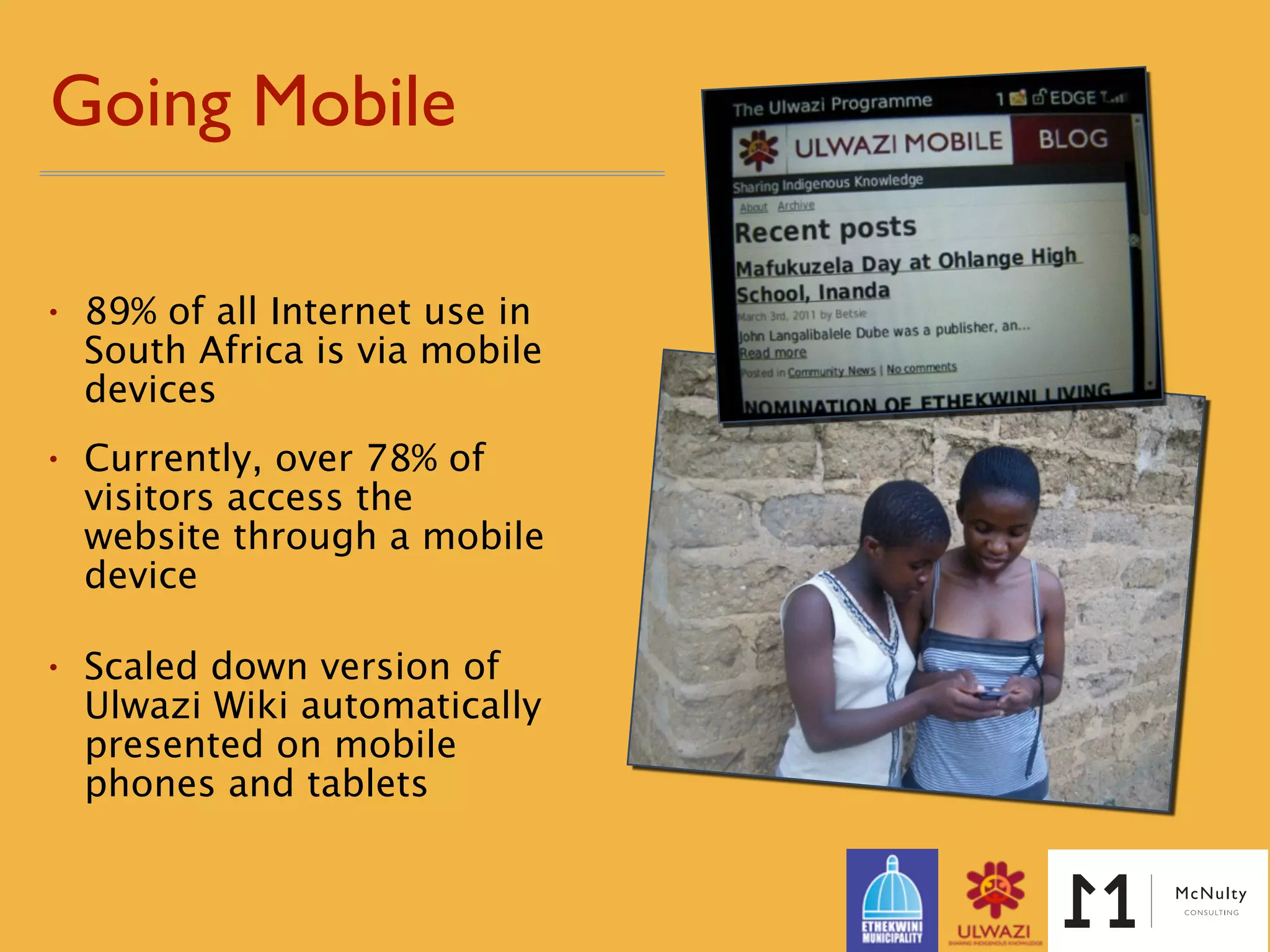
Going Mobile
• 89% of all Internet use in
South Africa is via mobile
devices
• Currently, over 78% of
visitors access the
website through a mobile
device
!
• Scaled down version of
Ulwazi Wiki automatically
presented on mobile
phones and tablets
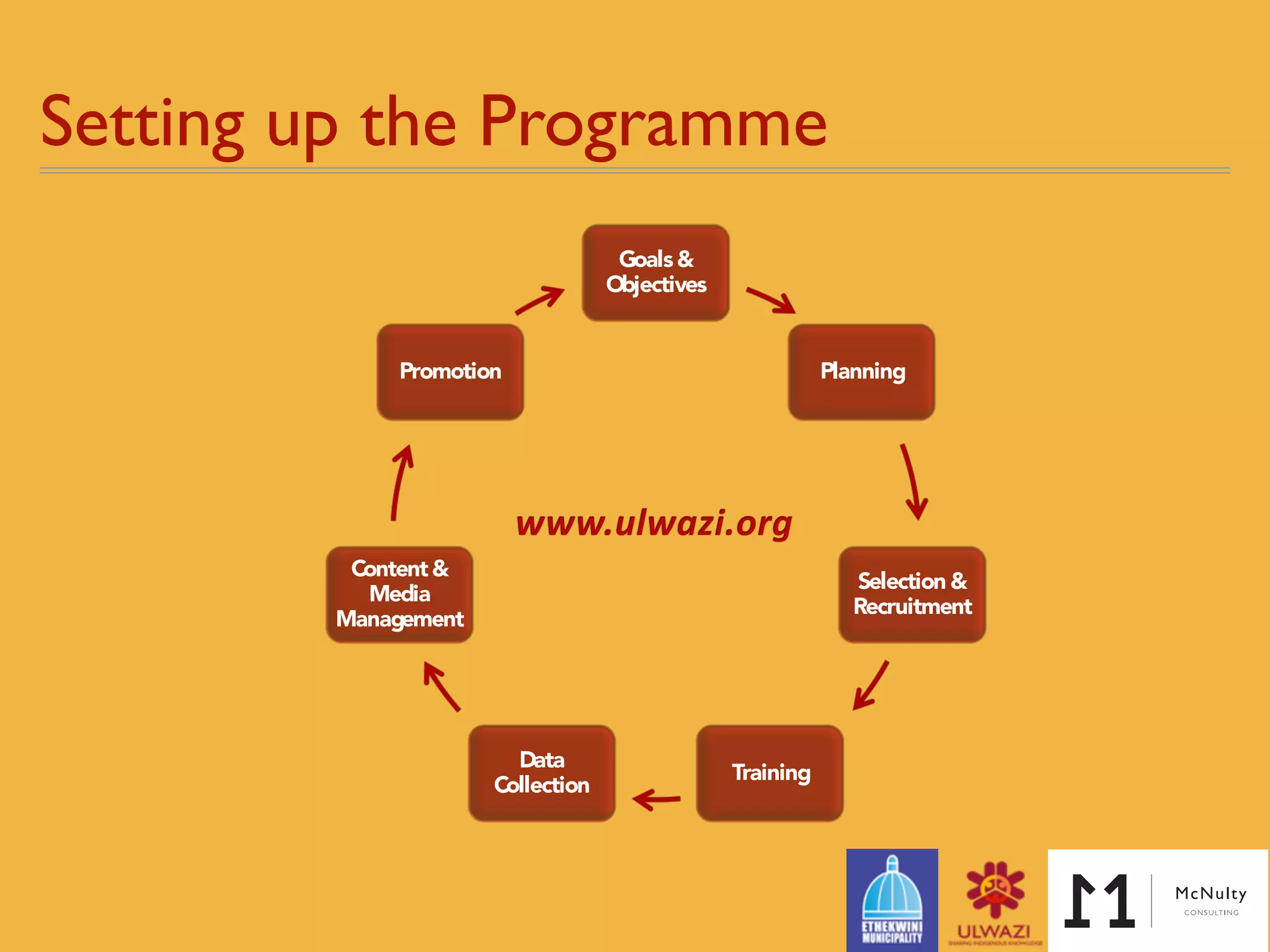
Setting up the Programme
Goals&
Objectives
Planning
Selection &
Recruitment
Training
Data
Collection
Content&
Media
Management
Promotion
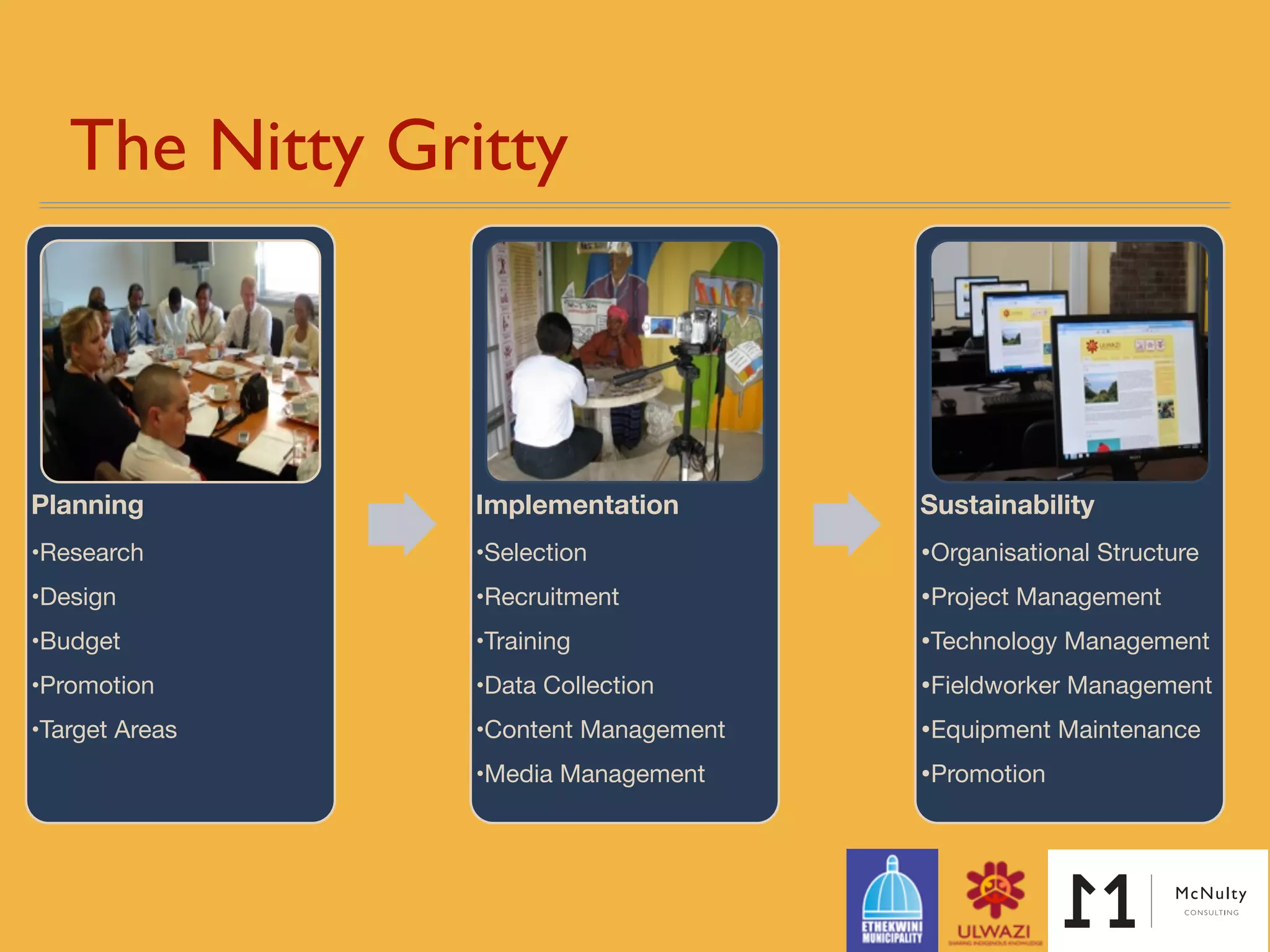
The Nitty Gritty
Planning
•Research

•Design

•Budget

•Promotion

•Target Areas
Implementation
•Selection

•Recruitment

•Training

•Data Collection

•Content Management

•Media Management
Sustainability
•Organisational Structure

•Project Management

•Technology Management

•Fieldworker Management

•Equipment Maintenance

•Promotion
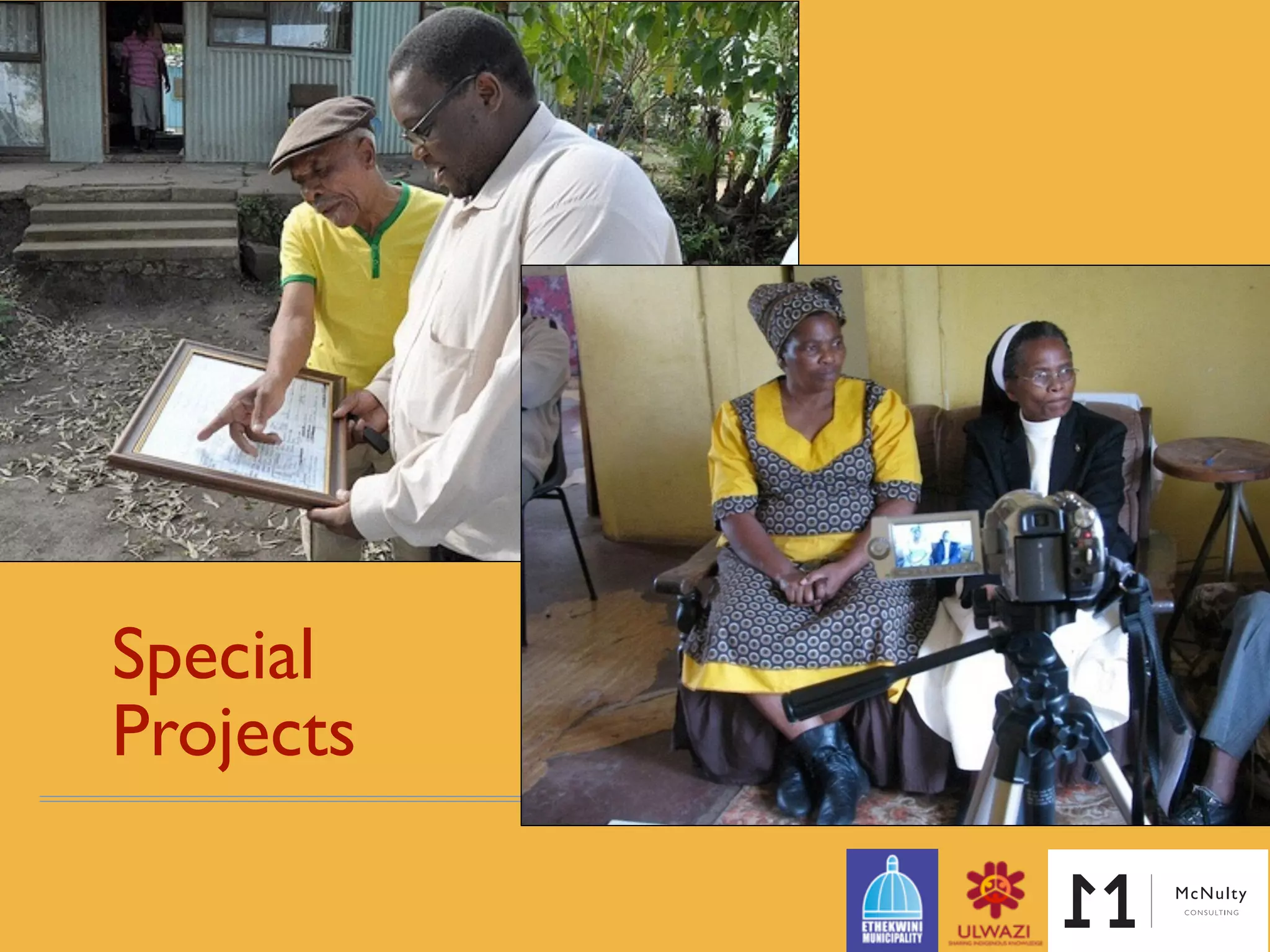
Special
Projects
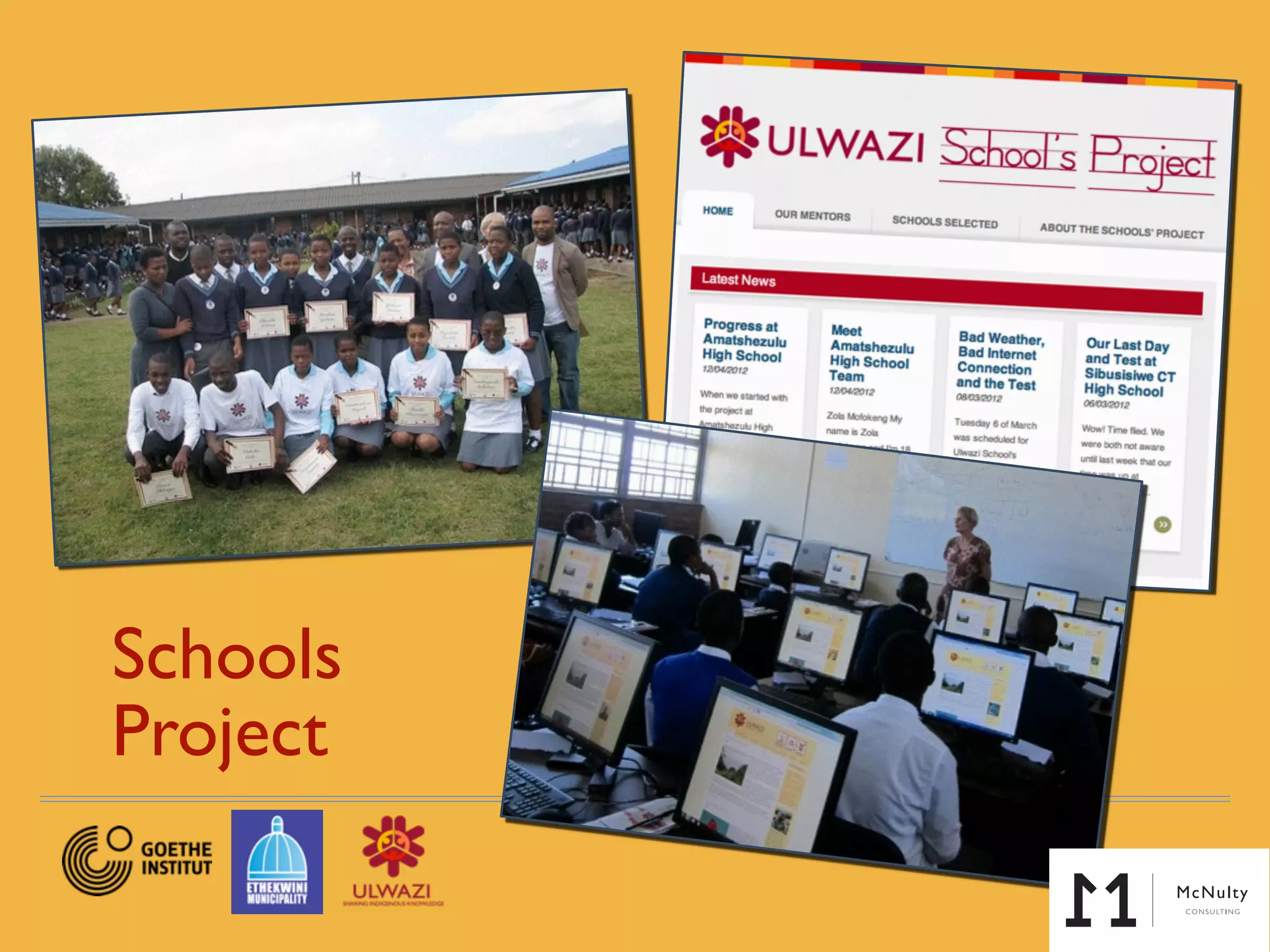
Schools
Project
Schools Project
• Grade 10 to 12 IT students at township and rural
schools around the eThekwini Municipality
• Taught basic web and research skills (email, adding
content online, finding info on the Internet)
• 8 weeks long, extra-mural activity
• Thematic approach: School History, Family Histories,
Places of Significance and Aspects of Local Culture
• 4 articles to the Ulwazi Community Memory Wiki
• Online test with certificates
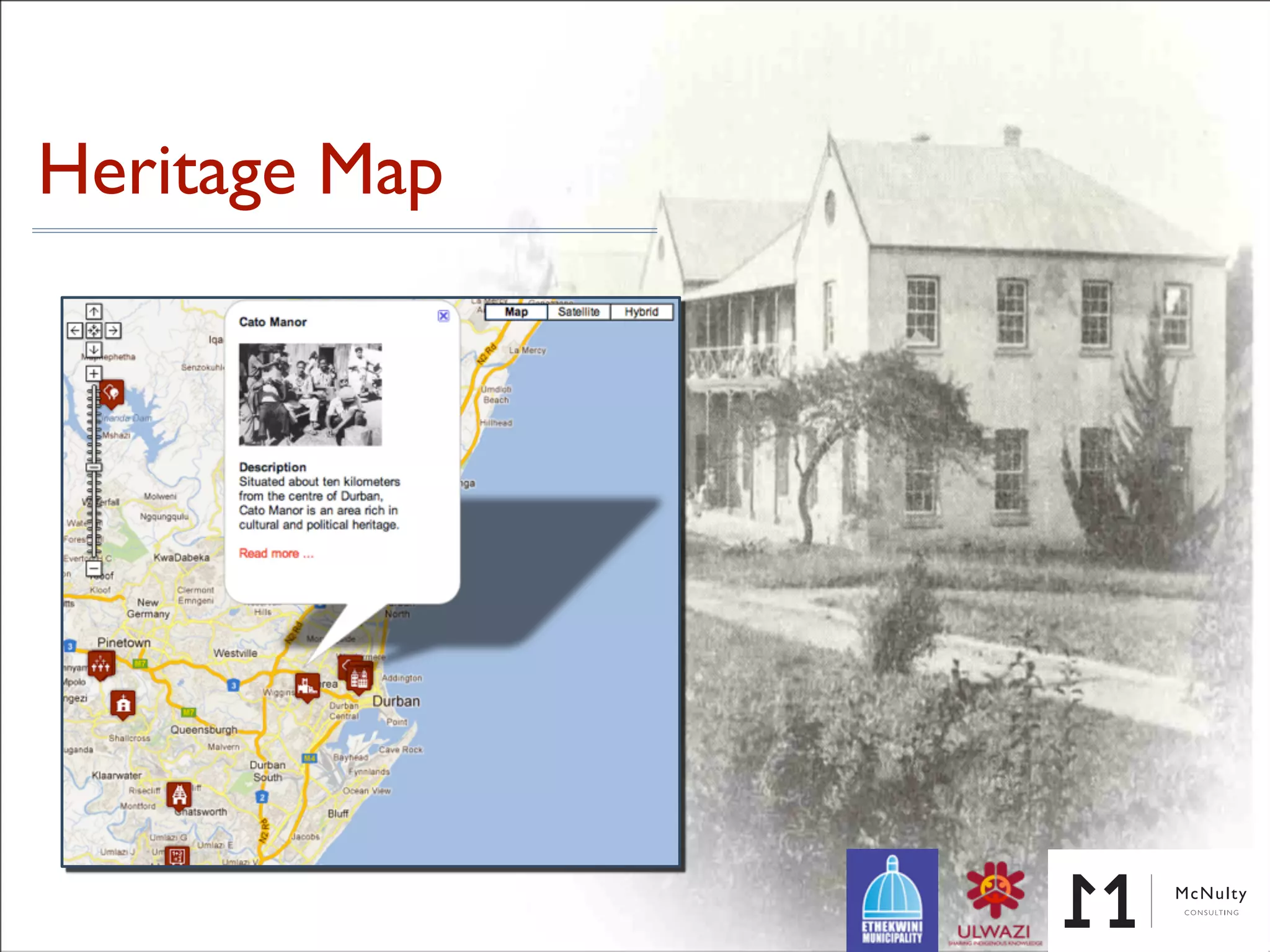
Heritage Map
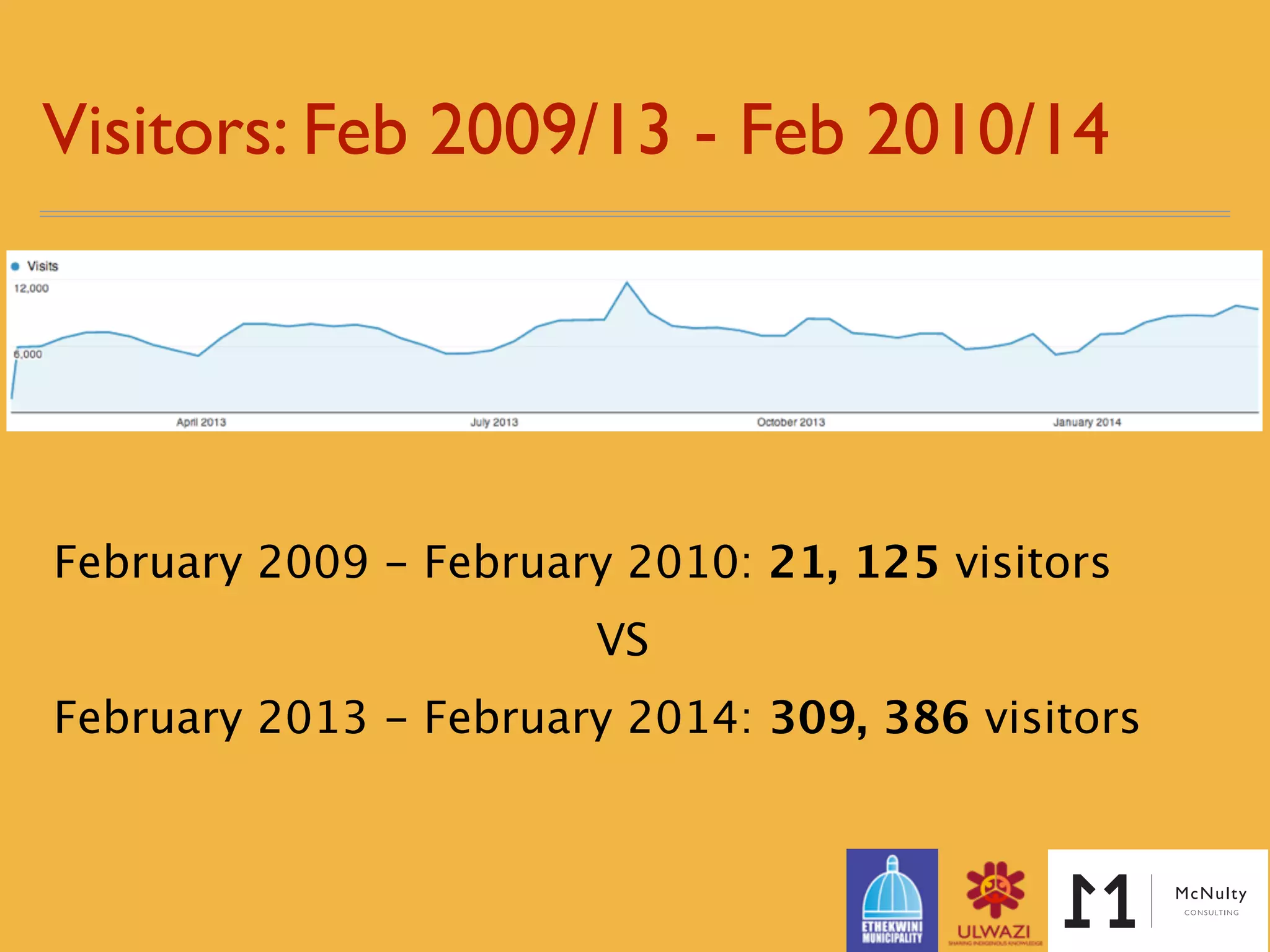
Visitors: Feb 2009/13 - Feb 2010/14
February 2009 - February 2010: 21, 125 visitors
VS
February 2013 - February 2014: 309, 386 visitors
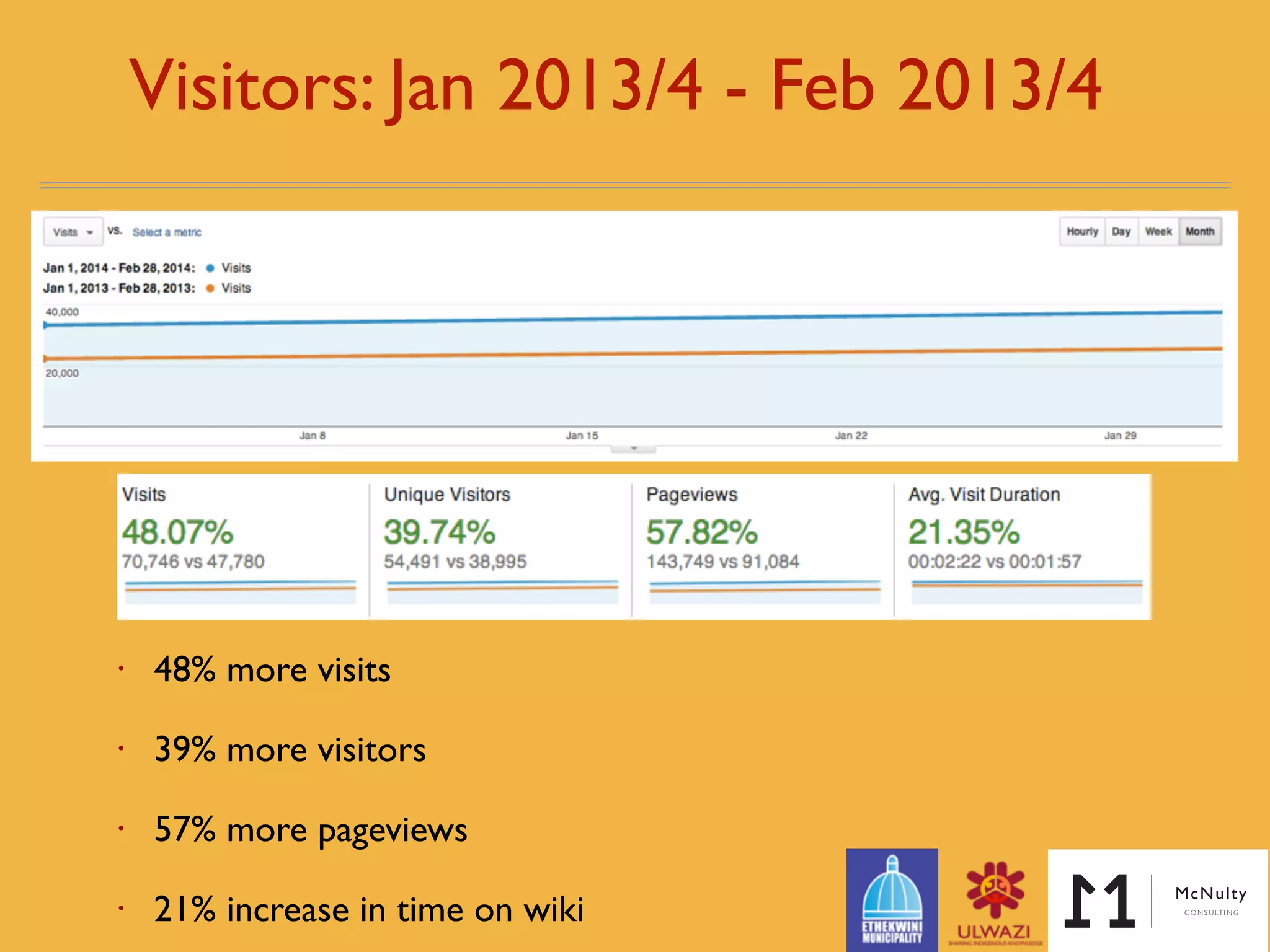
Visitors: Jan 2013/4 - Feb 2014/5
• 91% more visits (sessions)
• 65.5% more visitors (users)
• 224% more pageviews
• 21% increase in time on wiki
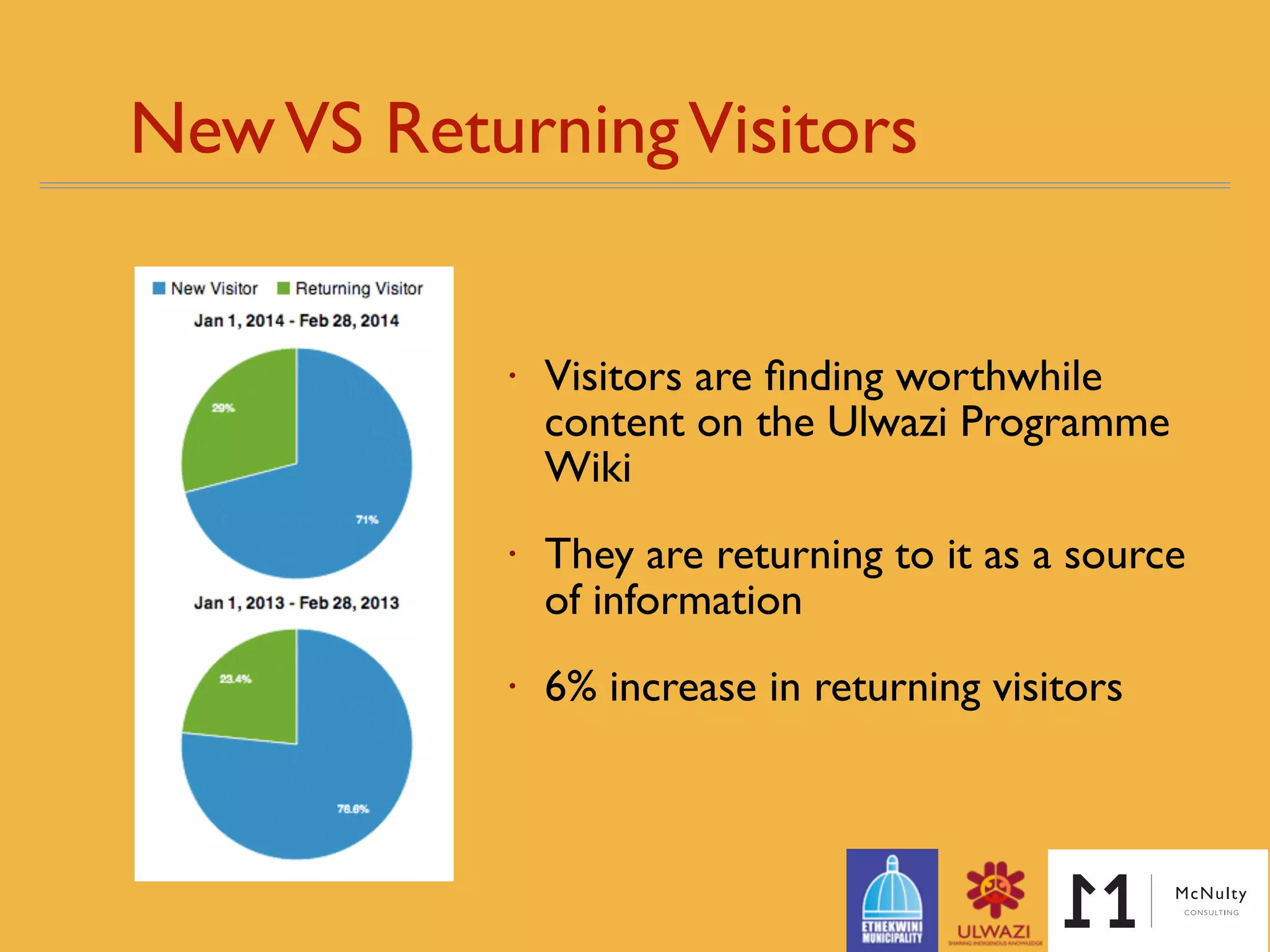
NewVS ReturningVisitors
• Visitors are finding worthwhile
content on the Ulwazi Programme
Wiki
• They are returning to it as a source
of information
• 10% increase (from 25.5% to
35.6%) in returning visitors
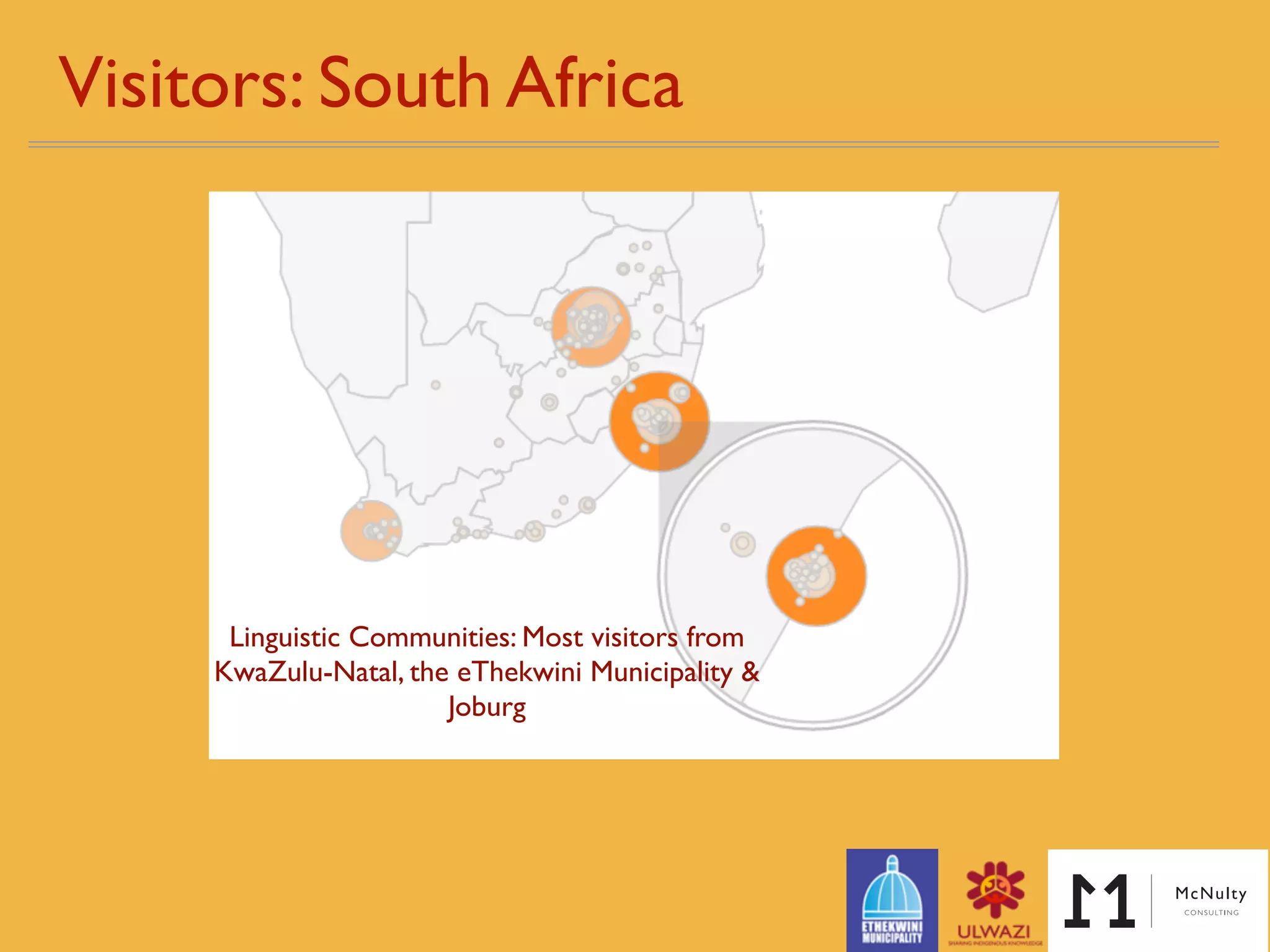
Linguistic Communities: Most visitors from
KwaZulu-Natal, the eThekwini Municipality &
Joburg
Visitors: South Africa
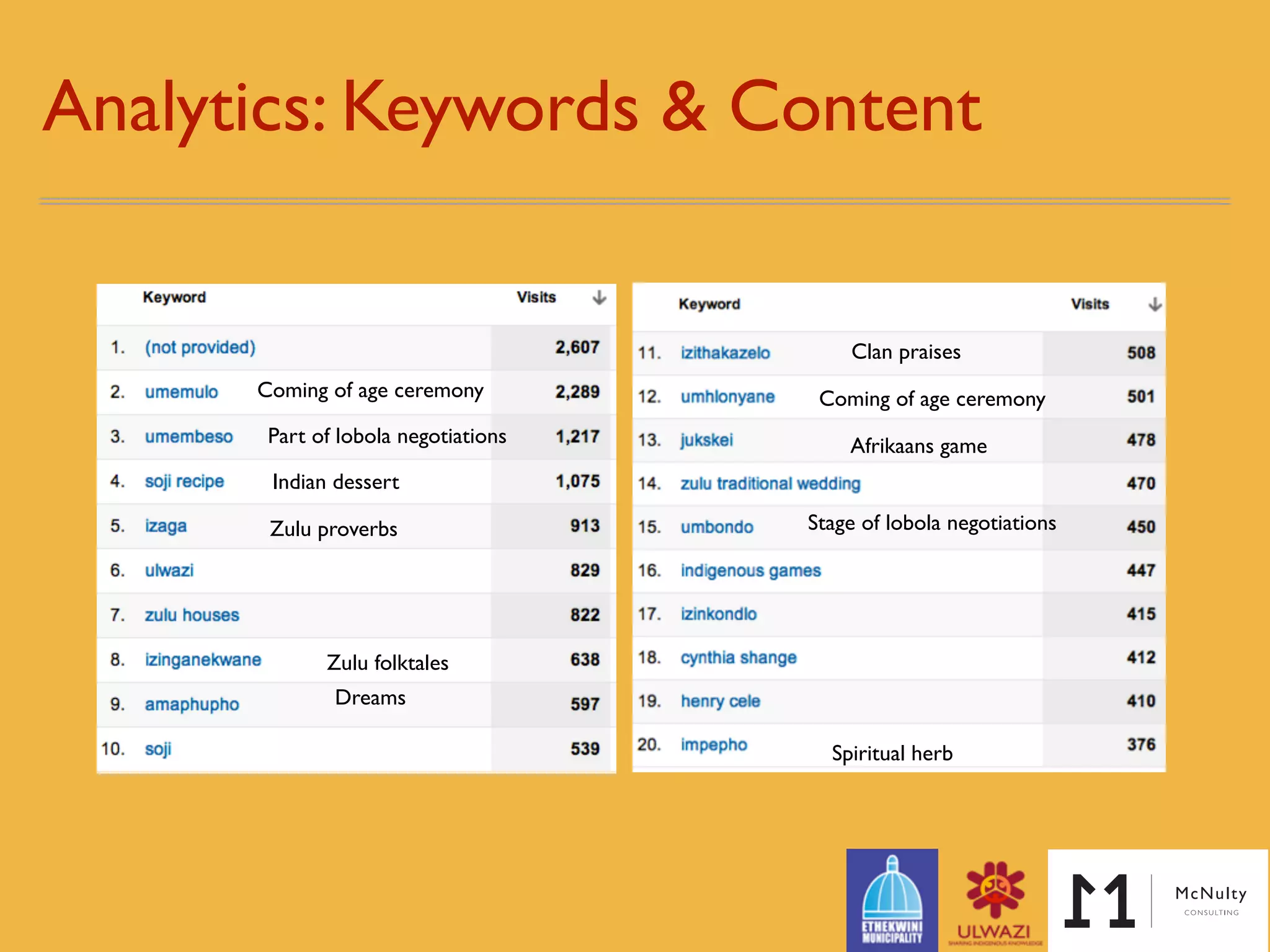
Analytics: Keywords & Content
Zulu proverbs
Coming of age ceremony
Part of lobola negotiations
Zulu folktales
Dreams
Clan praises
Coming of age ceremony
Stage of lobola negotiations
Spiritual herb
Indian dessert
Afrikaans game
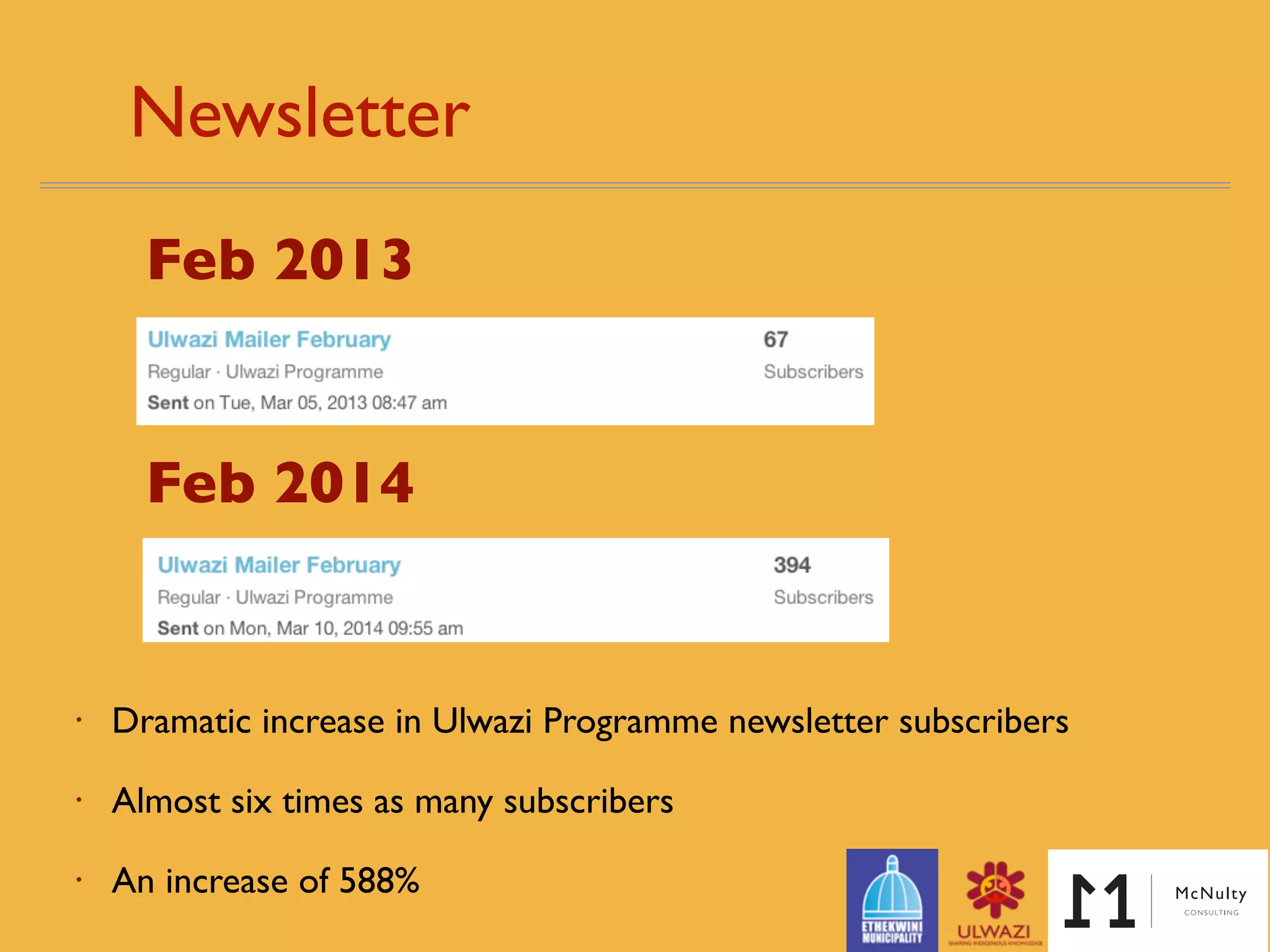
Newsletter
Feb 2014
Feb 2015
• Sustained increase in Ulwazi Programme newsletter subscribers
• An increase of 60%
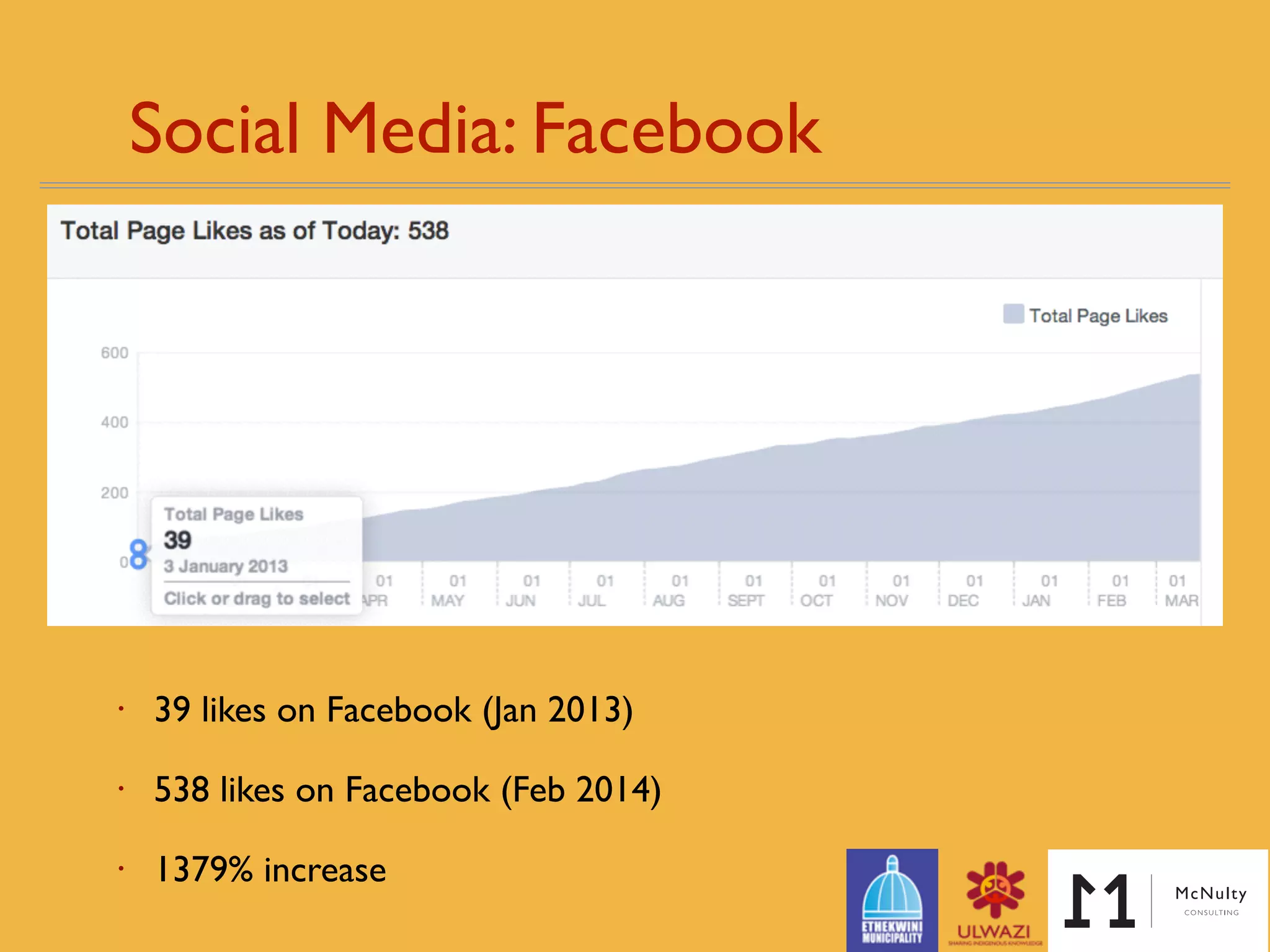
Social Media: Facebook
• 538 likes on Facebook (Jan 2014)
• 1205 likes on Facebook (Feb 2015)
• 124% increase
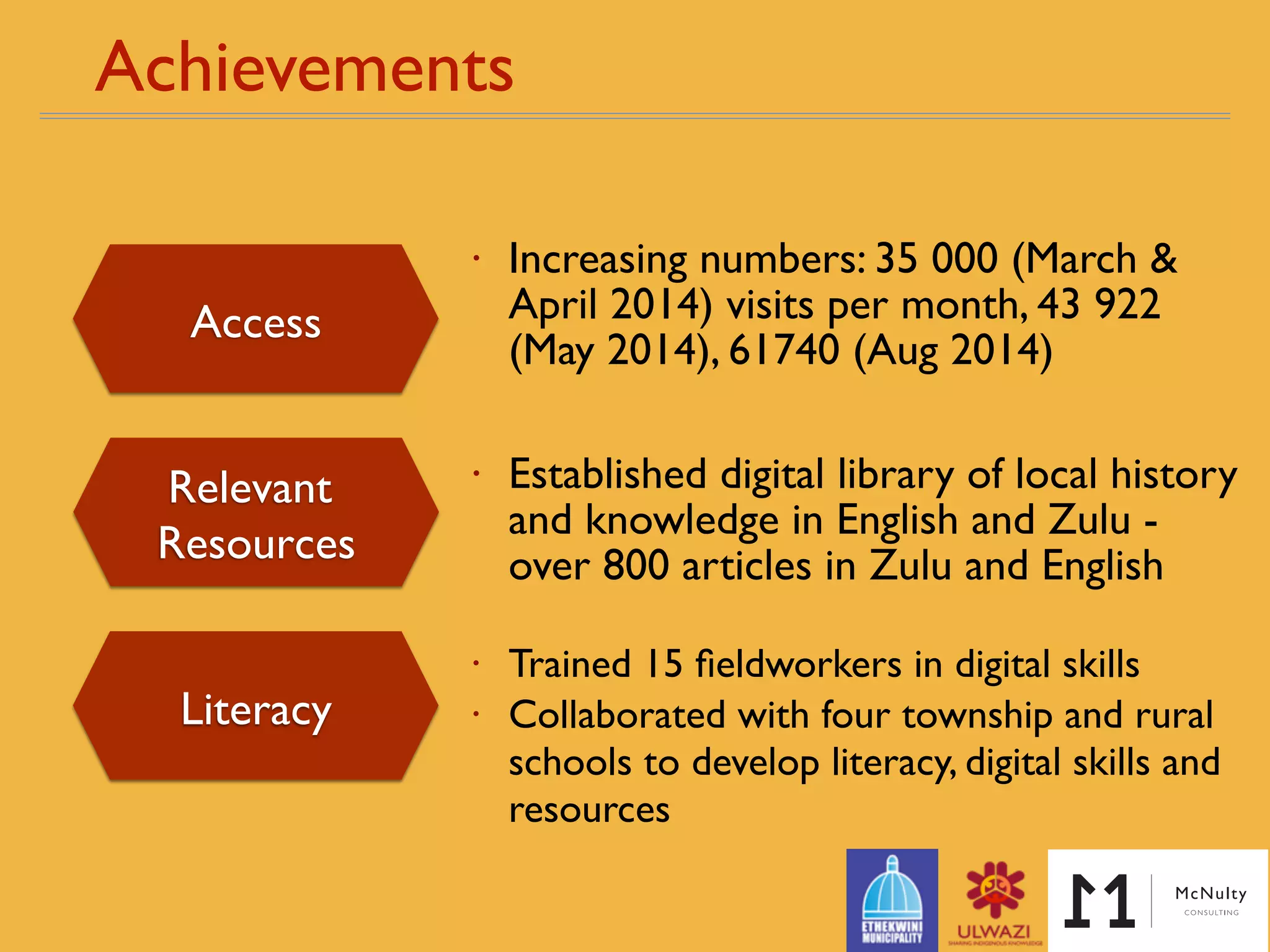
Achievements
• Increasing numbers: 35 000 (March &
April 2014) visits per month, 43 922
(May 2014), 61 740 (Aug 2014), 63 898
(June 2015)
• Established digital library of local history
and knowledge in English and Zulu -
over 800 articles in Zulu and English
!
• Trained 15 fieldworkers in digital skills
• Collaborated with four township and
rural schools
• Enhanced digital literacy & skills
Access!
Literacy!
Relevant !
Resources!
Going Forward:
McNulty Consulting Theory of Change
Access, Skills and Development in Africa
: Local Knowledge in Local Languages

Access, Skills and Development in Africa
: Local Knowledge in Local Languages

  • 2.
    The Ulwazi Programme: ! ACase Study for Access, Skills and Development ! Niall McNulty
  • 3.
    LIS Transformational Challenges Access! Literacy! •Inadequate in rural areas & former apartheid ‘homelands’ • Uneven access to ICTs!!! • Shortage of relevant resources for potential library users • Continuing neglect of indigenous languages ! ! • Lack of reading and information literacy Relevant ! Resources!
  • 4.
    Opportunities & Recommendations Use& promote ICTs ! to improve access! Provide! relevant! content in ! local! languages! Promote &! Strengthen! Literacy – reading! and information! Foster cultural ! expression &! social! inclusion!
  • 5.
    The Ulwazi Programme
 •What is the Ulwazi Programme? • Goals of the Programme • Ulwazi Programme Model • How does it work? • Special Projects • Ulwazi Programme Stats • Achievements • Going Forward
  • 6.
    What is theUlwazi Programme?
 • Initiative of the Libraries & Heritage Department of the eThekwini Municipality • Programme to collect and share local knowledge and histories in local language • Conceptuliased by ex-Head of IS, Betsie Greyling • Insufficient management systems for local knowledge perpetuated lack of local content on the Internet • Poor digital literacy in local communities
  • 7.
    What is theUlwazi Programme?
 • Developed in line with UN Millennium Development Goals and the WSIS Action Plans - refined over time • Calls for access to info for all, capacity-building and development of local content in local languages • Potential of the existing library infrastructure to facilitate the participation • Developed by McNulty Consulting using open-source software, in collaboration with the public library and local communities • Local wiki for eThekwini Municipality
  • 8.
    Goals of theProgramme
 • Preserve and share local,‘indigenous’ knowledge • Build capacity in digital skills • Develop a sustainable digital library of local relevance and in local language • Encourage local communities to become part of the global information society • Promote social inclusion and contribute to socio- economic transformation
  • 9.
    The Ulwazi ProgrammeModel
 LIBRARY SOCIAL TECHNOLOGIES COMMUNITY
  • 10.
    The Ulwazi ProgrammeModel
 Community • Hold Knowledge • Validate • Contribute ! Library • Infrastructure • Support • Resources • Funding • Facilitate Training Technology • Open-source • Social Media • Mobile Devices
  • 11.
  • 12.
    The Community?
 • Fieldworkers:trained in oral history methodology, basic digital media skills and software • Volunteer fieldworkers, community members, record knowledge and histories • Formal researchers from heritage and library departments, universities, local museums, community development projects • Special target groups such as artists, community historians, poets, writers • Schools
  • 13.
  • 14.
    The Library • Anchorpartner – stable position (community and government structure) • Uniquely placed - library penetrates semi-rural / peri-urban areas • Offers infrastructure and resources • Facilitates training • Supports the technology and data collection • Provides content management and information skills
  • 15.
  • 16.
    Open-Source and SocialMedia • Combination of open-source software and social media • Open-source software: freely available, no licensing fees and a common philosophy of sharing • Social media: used to create new entry points for the programme, including: • Facebook,Twitter & Flickr • Although search results are main entry point
  • 17.
    Going Mobile • 89%of all Internet use in South Africa is via mobile devices • Currently, over 78% of visitors access the website through a mobile device ! • Scaled down version of Ulwazi Wiki automatically presented on mobile phones and tablets
  • 18.
    Setting up theProgramme Goals& Objectives Planning Selection & Recruitment Training Data Collection Content& Media Management Promotion
  • 19.
    The Nitty Gritty Planning •Research •Design •Budget •Promotion •TargetAreas Implementation •Selection •Recruitment •Training •Data Collection •Content Management •Media Management Sustainability •Organisational Structure •Project Management •Technology Management •Fieldworker Management •Equipment Maintenance •Promotion
  • 20.
  • 21.
  • 22.
    Schools Project • Grade10 to 12 IT students at township and rural schools around the eThekwini Municipality • Taught basic web and research skills (email, adding content online, finding info on the Internet) • 8 weeks long, extra-mural activity • Thematic approach: School History, Family Histories, Places of Significance and Aspects of Local Culture • 4 articles to the Ulwazi Community Memory Wiki • Online test with certificates
  • 23.
  • 24.
    Visitors: Feb 2009/13- Feb 2010/14 February 2009 - February 2010: 21, 125 visitors VS February 2013 - February 2014: 309, 386 visitors
  • 25.
    Visitors: Jan 2013/4- Feb 2014/5 • 91% more visits (sessions) • 65.5% more visitors (users) • 224% more pageviews • 21% increase in time on wiki
  • 26.
    NewVS ReturningVisitors • Visitorsare finding worthwhile content on the Ulwazi Programme Wiki • They are returning to it as a source of information • 10% increase (from 25.5% to 35.6%) in returning visitors
  • 27.
    Linguistic Communities: Mostvisitors from KwaZulu-Natal, the eThekwini Municipality & Joburg Visitors: South Africa
  • 28.
    Analytics: Keywords &Content Zulu proverbs Coming of age ceremony Part of lobola negotiations Zulu folktales Dreams Clan praises Coming of age ceremony Stage of lobola negotiations Spiritual herb Indian dessert Afrikaans game
  • 29.
    Newsletter Feb 2014 Feb 2015 •Sustained increase in Ulwazi Programme newsletter subscribers • An increase of 60%
  • 30.
    Social Media: Facebook •538 likes on Facebook (Jan 2014) • 1205 likes on Facebook (Feb 2015) • 124% increase
  • 31.
    Achievements • Increasing numbers:35 000 (March & April 2014) visits per month, 43 922 (May 2014), 61 740 (Aug 2014), 63 898 (June 2015) • Established digital library of local history and knowledge in English and Zulu - over 800 articles in Zulu and English ! • Trained 15 fieldworkers in digital skills • Collaborated with four township and rural schools • Enhanced digital literacy & skills Access! Literacy! Relevant ! Resources!
  • 32.