A Course in Time Series Analysis 1st Edition Pena D.
A Course in Time Series Analysis 1st Edition Pena D.
A Course in Time Series Analysis 1st Edition Pena D.
A Course in Time Series Analysis 1st Edition Pena D.
A Course in Time Series Analysis 1st Edition Pena D.
1.
Visit https://ebookfinal.com todownload the full version and
explore more ebooks
A Course in Time Series Analysis 1st Edition
Pena D.
_____ Click the link below to download _____
https://ebookfinal.com/download/a-course-in-time-
series-analysis-1st-edition-pena-d/
Explore and download more ebooks at ebookfinal.com
2.
Here are somesuggested products you might be interested in.
Click the link to download
Nonlinear Time Series Analysis 2nd Edition Holger Kantz
https://ebookfinal.com/download/nonlinear-time-series-analysis-2nd-
edition-holger-kantz/
A First Course in Complex Analysis with Applications 1st
Edition Dennis G. Zill And Patrick D. Shanahan
https://ebookfinal.com/download/a-first-course-in-complex-analysis-
with-applications-1st-edition-dennis-g-zill-and-patrick-d-shanahan/
Time Series Analysis Fourth Edition George E. P. Box
https://ebookfinal.com/download/time-series-analysis-fourth-edition-
george-e-p-box/
Harmonic Analysis A Comprehensive Course in Analysis Part
3 1st Edition Barry Simon
https://ebookfinal.com/download/harmonic-analysis-a-comprehensive-
course-in-analysis-part-3-1st-edition-barry-simon/
3.
A Course inAbstract Analysis 1st Edition John B. Conway
https://ebookfinal.com/download/a-course-in-abstract-analysis-1st-
edition-john-b-conway/
Time Series Data Analysis Using EViews Statistics in
Practice I. Gusti Ngurah Agung
https://ebookfinal.com/download/time-series-data-analysis-using-
eviews-statistics-in-practice-i-gusti-ngurah-agung/
A Second Course in Mathematical Analysis J. C. Burkill
https://ebookfinal.com/download/a-second-course-in-mathematical-
analysis-j-c-burkill/
A First Course in Functional Analysis 1st Edition Orr
Moshe Shalit
https://ebookfinal.com/download/a-first-course-in-functional-
analysis-1st-edition-orr-moshe-shalit/
Analysis in Vector Spaces A Course in Advanced Calculus
1st Edition Mustafa A. Akcoglu
https://ebookfinal.com/download/analysis-in-vector-spaces-a-course-in-
advanced-calculus-1st-edition-mustafa-a-akcoglu/
5.
A Course inTime Series Analysis 1st Edition Pena D.
Digital Instant Download
Author(s): Pena D., Tiao G.C., Tsay R.S. (Eds.)
ISBN(s): 9780471361640, 047136164X
Edition: 1
File Details: PDF, 19.68 MB
Year: 2001
Language: english
WILEY SERIES INPROBABILITY A N D STATISTICS
PROBABILITY AND STATISTICS SECTION
Established by WALTER A. SHEWHART and SAMUEL S. WILKS
Editors: Noel A. C. Cressie, Nicholas I. Fisher, Iain M. Johnstone, J. B. Kadane,
David W. Scott, Bernard W. Silverman, Adrian F. M. Smith, JozefL. Teugels;
Vic Barnett, Emeritus, Ralph A. Bradley, Emeritus, J. Stuart Hunter, Emeritus,
David G. Kendall, Emeritus
A complete list of the titles in this series appears at the end of this volume.
9.
A Course inTime Series Analysis
Edited by
DANIEL ΡΕΝΑ
Universidad Carlos III de Madrid
GEORGE C. TIAO
University of Chicago
RUEY S. TSAY
University of Chicago
A Wiley-Interscience Publication
JOHN WILEY & SONS, INC.
New York · Chichester · Weinheim · Brisbane · Singapore · Toronto
Contents
Preface xv
About ECASxvi
Contributors xvii
1. Introduction 1
D. Pena and G. C. Tiao
1.1. Examples of time series problems, 1
1.1.1. Stationary series, 2
1.1.2. Nonstationary series, 3
1.1.3. Seasonal series, 5
1.1.4. Level shifts and outliers in time series, 7
1.1.5. Variance changes, 7
1.1.6. Asymmetric time series, 7
1.1.7. Unidirectional-feedback relation between series, 9
1.1.8. Comovement and cointegration, 10
1.2. Overview of the book, 10
1.3. Further reading, 19
PART I BASIC CONCEPTS IN UNIVARIATE TIME SERIES
2. Univariate Time Series: Autocorrelation, Linear Prediction,
Spectrum, and State-Space Model 25
G. T. Wilson
2.1. Linear time series models, 25
2.2. The autocorrelation function, 28
2.3. Lagged prediction and the partial autocorrelation function, 33
ν
12.
vi CONTENTS
2.4. Transformationsto stationarity, 35
2.5. Cycles and the periodogram, 37
2.6. The spectrum, 42
2.7. Further interpretation of time series acf, pacf,
and spectrum, 46
2.8. State-space models and the Kalman Filter, 48
3. Univariate Autoregressive Moving-Average Models 53
G. C. Tiao
3.1. Introduction, 53
3.1.1. Univariate A R M A models, 54
3.1.2. Outline of the chapter, 55
3.2. Some basic properties of univariate ARMA models, 55
3.2.1. The ψ and TT weights, 56
3.2.2. Stationarity condition and autocovariance structure
o f z „ 58
3.2.3. The autocorrelation function, 59
3.2.4. The partial autocorrelation function, 60
3.2.5. The extended autocorrelaton function, 61
3.3. Model specification strategy, 63
3.3.1. Tentative specification, 63
3.3.2. Tentative model specification via SEACF, 67
3.4. Examples, 68
4. Model Fitting and Checking, and the Kalman Filter 86
G. T. Wilson
4.1. Prediction error and the estimation criterion, 86
4.2. The likelihood of A R M A models, 90
4.3. Likelihoods calculated using orthogonal errors, 94
4.4. Properties of estimates and problems in estimation, 98
4.5. Checking the fitted model, 101
4.6. Estimation by fitting to the sample spectrum, 104
4.7. Estimation of structural models by the Kalman filter, 105
5. Prediction and Model Selection 111
D. Pefia
5.1. Introduction, 111
5.2. Properties of minimum mean-square error prediction, 112
5.2.1. Prediction by the conditional expectation, 112
5.2.2. Linear predictions, 113
13.
CONTENTS vii
5.3. Thecomputation of ARIMA forecasts, 114
5.4. Interpreting the forecasts from A R I M A models, 116
5.4.1. Nonseasonal models, 116
5.4.2. Seasonal models, 120
5.5. Prediction confidence intervals, 123
5.5.1. Known parameter values, 123
5.5.2. Unknown parameter values, 124
5.6. Forecast updating, 125
5.6.1. Computing updated forecasts, 125
5.6.2. Testing model stability, 125
5.7. The combination of forecasts, 129
5.8. Model selection criteria, 131
5.8.1. The FPE and AIC criteria, 131
5.8.2. The Schwarz criterion, 133
5.9. Conclusions, 133
6. Outliers, Influential Observations, and Missing Data 136
D. Pena
6.1. Introduction, 136
6.2. Types of outliers in time series, 138
6.2.1. Additive outliers, 138
6.2.2. Innovative outliers, 141
6.2.3. Level shifts, 143
6.2.4. Outliers and intervention analysis, 146
6.3. Procedures for outlier identification and estimation, 147
6.3.1. Estimation of outlier effects, 148
6.3.2. Testing for outliers, 149
6.4. Influential observations, 152
6.4.1. Influence on time series, 152
6.4.2. Influential observations and outliers, 153
6.5. Multiple outliers, 154
6.5.1. Masking effects, 154
6.5.2. Procedures for multiple outlier identification, 156
6.6. Missing-value estimation, 160
6.6.1. Optimal interpolation and inverse autocorrelation
function, 160
6.6.2. Estimation of missing values, 162
6.7. Forecasting with outliers, 164
6.8. Other approaches, 166
6.9. Appendix, 166
14.
viii CONTENTS
7. AutomaticModeling Methods for Univariate Series 171
V. Gomez and A. Maravall
7.1. Classical model identification methods, 171
7.1.1. Subjectivity of the classical methods, 172
7.1.2. The difficulties with mixed ARMA models, 173
7.2. Automatic model identification methods, 173
7.2.1. Unit root testing, 174
7.2.2. Penalty function methods, 174
7.2.3. Pattern identification methods, 175
7.2.4. Uniqueness of the solution and the purpose of
modeling, 176
7.3. Tools for automatic model identification, 177
7.3.1. Test for the log-level specification, 177
7.3.2. Regression techniques for estimating unit roots, 178
7.3.3. The Hannan-Rissanen method, 181
7.3.4. Liu's filtering method, 185
7.4. Automatic modeling methods in the presence of outliers, 186
7.4.1. Algorithms for automatic outlier detection and
correction, 186
7.4.2. Estimation and filtering techniques to speed up the
algorithms, 190
7.4.3. The need to robustify automatic modeling methods,
191
7.4.4. An algorithm for automatic model identification in
the presence of outliers, 191
7.5. An automatic procedure for the general regression-ARIMA
model in the presence of outlierw, special effects, and,
possibly, missing observations, 192
7.5.1. Missing observations, 192
7.5.2. Trading day and Easter effects, 193
7.5.3. Intervention and regression effects, 194
7.6. Examples, 194
7.7. Tabular summary, 196
8. Seasonal Adjustment and Signal Extraction
Time Series 202
V. Gomez and A. Maravall
8.1. Introduction, 202
8.2. Some remarks on the evolution of seasonal adjustment
methods, 204
15.
CONTENTS
8.2.1. Evolution ofthe methodologic approach, 204
8.2.2. The situation at present, 207
8.3. The need for preadjustment, 209
8.4. Model specification, 210
8.5. Estimation of the components, 213
8.5.1. Stationary case, 215
8.5.2. Nonstationary series, 217
8.6 Historical or final estimator, 218
8.6.1. Properties of final estimator, 218
8.6.2. Component versus estimator, 219
8.6.3. Covariance between estimators, 221
8.7. Estimators for recent periods, 221
8.8. Revisions in the estimator, 223
8.8.1. Structure of the revision, 223
8.8.2. Optimality of the revisions, 224
8.9. Inference, 225
8.9.1. Optical Forecasts of the Components, 225
8.9.2. Estimation error, 225
8.9.3. Growth rate precision, 226
8.9.4. The gain from concurrent adjustment, 227
8.9.5. Innovations in the components (pseudoinnovations),
228
8.10. An example, 228
8.11. Relation with fixed filters, 235
8.12. Short-versus long-term trends; measuring economic cycles,
236
PART II ADVANCED TOPICS IN UNIVARIATE TIME SERIES
9. Heteroscedastic Models
R. S. Tsay
9.1. The ARCH model, 250
9.1.1. Some simple properties of ARCH models, 252
9.1.2. Weaknesses of ARCH models, 254
9.1.3. Building ARCH models, 254
9.1.4. An illustrative example, 255
9.2. The GARCH Model, 256
9.2.1. An illustrative example, 257
9.2.2. Remarks, 259
16.
χ CONTENTS
9.3. Theexponential GARCH model, 260
9.3.1. An illustrative example, 261
9.4. The CHARMA model, 262
9.5. Random coefficient autoregressive (RCA) model, 263
9.6. Stochastic volatility model, 264
9.7. Long-memory stochastic volatility model, 265
10. Nonlinear Time Series Models: Testing and Applications 267
R. S. Tsay
10.1. Introduction, 267
10.2. Nonlinearity tests, 268
10.2.1. The test, 268
10.2.2. Comparison and application, 270
10.3. The Tar model, 274
10.3.1. U.S. real GNP, 275
10.3.2. Postsample forecasts and discussion, 279
10.4. Concluding remarks, 282
11. Bayesian Time Series Analysis 286
R. S. Tsay
11.1. Introduction, 286
11.2. A general univariate time series model, 288
11.3. Estimation, 289
11.3.1. Gibbs sampling, 291
11.3.2. Griddy Gibbs, 292
11.3.3. An illustrative example, 292
11.4. Model discrimination, 294
11.4.1. A mixed model with switching, 295
11.4.2. Implementation, 296
11.5. Examples, 297
12 Nonparametric Time Series Analysis: Nonparametric
Regression, Locally Weighted Regression, Autoregression,
and Quantile Regression 308
S. Heiler
12.1 Introduction, 308
12.2 Nonparametric regression, 309
12.3 Kernel estimation in time series, 314
12.4 Problems of simple kernel estimation and restricted
approaches, 319
17.
CONTENTS xi
12.5 Locallyweighted regression, 321
12.6 Applications of locally weighted regression to time series,
329
12.7 Parameter selection, 330
12.8 Time series decomposition with locally weighted regression,
336
13. Neural Network Models 348
K. Hornik and F. Leisch
13.1. Introduction, 348
13.2. The multilayer perceptron, 349
13.3. Autoregressive neural network models, 354
13.3.1. Example: Sunspot series, 355
13.4. The recurrent perceptron, 356
13.4.1. Examples of recurrent neural network models, 357
13.4.2. A unifying view, 359
PART III MULTIVARIATE TIME SERIES
14. Vector A R M A Models 365
G. C. Tiao
14.1. Introduction, 365
14.2. Transfer function or unidirectional models, 366
14.3. The vector A R M A model, 368
14.3.1. Some simple examples, 368
14.3.2. Relationship to transfer function model, 371
14.3.3. Cross-covariance and correlation matrices, 371
14.3.4. The partial autoregression matrices, 372
14.4. Model building strategy for multiple time series, 373
14.4.1. Tentative specification, 373
14.4.2. Estimation, 378
14.4.3. Diagnostic checking, 379
14.5. Analyses of three examples, 380
14.5.1. The SCC data, 380
14.5.2. The gas furnace data, 383
14.5.3. The census housing data, 387
14.6. Structural analysis of multivariate time series, 392
14.6.1. A canonical analysis of multiple time series, 395
18.
xii CONTENTS
14.7. Scalarcomponent models in multiple time series, 396
14.7.1. Scalar component models, 398
14.7.2. Exchangeable models and overparameterization,
400
14.7.3. Model specification via canonical correlation
analysis, 402
14.7.4. An illustrative example, 403
14.7.5. Some further remarks, 404
15. Cointegration in the VAR Model 408
5. Johansen
15.1. Introduction, 408
15.1.1. Basic definitions, 409
15.2. Solving autoregressive equations, 412
15.2.1. Some examples, 412
15.2.2. An inversion theorem for matrix polynomials, 414
15.2.3. Granger's representation, 417
15.2.4. Prediction, 419
15.3. The statistical model for / ( l ) variables, 420
15.3.1. Hypotheses on cointegrating relations, 421
15.3.2. Estimation of cointegrating vectors and calculation
of test statistics, 422
15.3.3. Estimation of β under restrictions, 426
15.4. Asymptotic theory, 426
15.4.1. Asymptotic results, 427
15.4.2. Test for cointegrating rank, 427
15.4.3. Asymptotic distribution of β and test for restrictions
on β, 429
15.5. Various applications of the cointegration model, 432
15.5.1. Rational expectations, 432
15.5.2. Arbitrage pricing theory, 433
15.5.3. Seasonal cointegration, 433
16. Identification of Linear Dynamic Multiinput/Multioutput Systems 436
M. Deistler
16.1. Introduction and problem statement, 436
16.2. Representations of linear systems, 438
16.2.1. Input/output representations, 438
19.
CONTENTS xiii
16.2.2. Solutionsof linear vector difference equations
(VDEs), 440
16.2.3. A R M A and state-space representations, 441
16.3. The structure of state-space systems, 443
16.4. The structure of A R M A systems, 444
16.5. The realization of state-space systems, 445
16.5.1. General structure, 445
16.5.2. Echelon forms, 447
16.6. The realization of A R M A systems, 448
16.7. Parametrization, 449
16.8. Estimation of real-valued parameters, 452
16.9. Dynamic specification, 454
INDEX 457
20.
Preface
This book isbased on the lectures of the ECAS' 97 Course in Time Series Analysis
held at El Escorial, Madrid, Spain, from September 15 to September 19, 1997. The
course was sponsored by the European Courses in Advanced Statistics (ECAS). In
accordance with the objectives of ECAS, the lectures are directed to both researchers
and teachers of statistics in academic institutions and statistical professionals in in-
dustry and govermment, with the goal of presenting an overview of the current status
of the area. In particular, different approaches to time series analysis are discussed and
compared. In editing the book, we have worked hard to uphold ECAS' objectives. In
addition, special efforts have been made to unify the notation and to include as many
topics as possible, so that readers of the book can have an overview of the current
status of time series research and applications.
The book consists of three main components. The first component concern basic
materials of univariate time series analysis presented in the first eight chapters. It
includes recent developments in outlier detection, automatic model selection, and
seasonal adjustment. The second component addresses advanced topics in univariate
time series analysis such as conditional heteroscedastic models, nonlinear models,
Bayesian analysis, nonparametric methods, and neural networks. This component
represents current research activities in univariate time series analysis. The third and
final component of the book concerns with multivariate time series, including vector
A R M A models, cointegration, and linear systems.
The book can be used as a principal text or a complementary text for courses
in time series. A basic time series course can be taught from the first part of the
book that presents the basic material that can be found in the standard texts in time
series. This part also includes topics not normally covered in these texts, such as
the extended and inverse autocorrelation function, the decomposition of the forecast
function of ARIMA models, a detailed analysis of outliers and influential observations
and automatic methods for model building and model based seasonal adjustment. For
a basic course this book should be complemented with some of the excellent texts
available. The book would be very well suited for an advanced course in which
some of the basic material can be quickly reviewed using the first part, that skips
many details and concentrates in the main concepts of general applicability. Then the
xv
21.
xvi PREFACE
course canconcentrate in the topics in Parts 2 and 3. If the scope of the course is more
in methodological extensions of univariate linear models the material in Part 2 can
be useful, whereas if the objective is to introduce multivariate modeling Part 3 will
be appropriate. To facilitate the use of the book as a text, all the time series data used
in this book can be down loaded from the web address: http://gsbwww.
uchicago. edu/fac/ruey. tsay/teaching/ecas/
We are grateful to all people who have made this book possible: (1) to the 11 authors
of the chapters of the book who have been extremely helpful in the timely revisions
of the drafts of the chapters and have made a big effort to unify the presentation and
(2) to the organizers of the course and all the students from many different countries
in four continents that made this one week of lectures a very enjoyable experience for
all the participants. We are very grateful to our host in the Monastery of El Escorial,
father Agustin Alonso, who did his best to make our staying in the monastery an
unforgettable experience. The success of the course was in large part due to the
enthusiastic work in all the organization details of Ana Justel, Regina Kaiser, Juan
Romo, Esther Ruiz, and Maria Jesus Sanchez. In the preparation of the book we are
also grateful to Monica Benito for her help in organizing the index and the references
in the book.
The Editors
ABOUT ECAS
ECAS is a foundation of Statistical Societies within Europe that, according to its
constitution, was founded in order to foster links and to promote cooperation between
statisticians in Europe. In order to achieve these aims, courses on an advanced level
covering varying aspects of statistics are organized every 2 years in different countries
of Europe. In 1999 Statistical Societies members of ECAS belongs to the following
countries: Austria, Belgium, Denmark, France, Finland, Germany, Italy, Portugal,
Spain, Sweden, Switzerland, The Netherlands, and the United Kingdom.
The first ECAS course was held in Capri, Italy, on Multidimensional Data Analysis
in 1987. Subsequent courses were held on robustness in statistics in 1989 in the
castle Reisenburg, Germany; on experimental design in 1991 in Sete, France; on the
analysis of categorical data in 1995 in Leiden, The Netherlands; on longitudinal data
analysis and repeated measures in 1995 in Milton Keynes, United Kingdom; on time
series analysis in 1997 in San Lorenzo del Escorial, Spain; and on environmental
statistics in 1999 in Garpenberg, Sweden.
A Council has the overall responsibility for ECAS. Its members are nominated
by the statistical societies of participating countries. The Presidents of ECAS have
been Jean Jacques Debrosque (Belgium, 1987-1993) and Siegfried Heiler (Germany,
1994-1997). The current President is Daniel Pefia (Spain, 1998-2001).
22.
Contributors
Manfred Deistler
Institut fiirOkonometrie, Operations
Research und Systemtheorie
Technische Universitat Wien
Wien, Austria
Victor Gomez
Direccion General de Presupuestos
Ministerio de Hacienda
Madrid, Spain
Siegfried Heiler
Fakultaet fuer Mathematik und
Informatik
Universitat Konstanz
Konstanz, Germany
Kurt Hornik
Institut fiir Statistik
Technische Universitat Wien
Wien, Austria
S0ren Johansen
Economic Department
European University Institute
Florence, Italy
Friedrich Leisch
Institut fiir Statistik
Technische Universitat Wien
Wien, Austria
Agustin Maravall
Servicio de Estudios
Banco de Espana
Madrid, Spain
Daniel Pefia
Departamento de Estadistica y
Econometria
Universidad Carlos III de
Madrid
Madrid, Spain
George C. Tiao
Graduate School of
Business
University of Chicago
Chicago, IL, USA
Ruey S. Tsay
Graduate School of
Business
University of Chicago
Chicago, IL, USA
G. Tunnicliffe Wilson
Department of Mathematics and
Statistics
Lancaster University
Lancaster, UK
xvii
2 INTRODUCTION
• Outlier,level shift, structural change, and intervention
• Comovement and cointegration
These concepts motivate many of the topics discussed in this book.
1.1.1. Stationary series
Figure 1.1a shows a series of the yield of 70 consecutive batches of a chemical
process given in Box and Jenkins (1976). The observations fluctuate about a fixed
mean level with constant variance over the observational period. In other words, the
overall behavior of the series remains the same over time. Such a series is called a
stationary series. A formal definition of stationarity will be given later.
(a) Yield of Chemical Process - Box-Jenkins Series F
0)
0 10 20 30 40 50 60 70
time
(b) Monthly Changes in 90-Day T-Bill Rate 1983-1993
1983 1985 1987 1989 1991 1993
year
FIGURE 1.1 Two examples of stationary series.
26.
1.1. EXAMPLES OFTIME SERIES PROBLEMS 3
As another example of stationary series, Figure 1.1b gives a series of the month to
month changes in the interest rates of 90-day U.S. Treasury bills (T-bills) from 1983
to 1993. Except for the sharp dip near the end of 1984, this series appears to be quite
stationary with a mean level close to zero over time.
In practice, temporal changes (week to week, month to month, or quarter to quarter)
of many economic time series often exhibit this kind of stationary behavior. Good
examples are stock returns and changes in exchange rates.
1.1.2. Nonstationary series
Instead of month to month changes, if we look at the series of monthly rates of the 90-
day T-bills themselves, we see a vastly different behavior. This is shown in Figure 1.2a.
(a) Monthly 90-day T-Bill Rate 1981-1993
10
1983 1985 1987 1989 1991 1993
(b) Monthly Changes in 90-Day T-Bill Rate 1983-1993
1983 1985 1987 1989 1991 1993
year
FIGURE 1.2 A nonstationary series and its first difference.
27.
INTRODUCTION
This series doesnot seem to have a mean level and exhibits a drifting or wandering
behavior. It is clearly not a stationary series. Financial time series such as stock prices,
prices of derivatives, and exchange rates often behave in this manner. However, by
taking successive differences of the observations, we obtain the series of monthly
changes in Figure 1.1b, which is reproduced in Figure 1.2b for easy comparison.
This example shows that a drifting nonstationary series can be transformed into a
stationary one by the differencing operation. The series in Figure 1.2b is called the
first difference of the series in Figure 1.2a. In practice, sometimes the first difference
series may not be stationary and it may be necessary to difference the series again to
make it stationary.
Figure 1.3a shows quarterly data of U.S. real GNP (gross national product) over the
period 1946-1991. The series shows an exponential growth. By taking a logarithmic
(a) Quarterly Real GNP
5000
4000
§3000
2000
1000
0
1946 1956 1966 1976 1986
(b) Logarithms of Quarterly Real GNP
_ 8
ο.
ζ
a 7
c
6
1946 1956 1966 1976 1986
(c) First Difference of Logarithms of Quarterly Real GNP
1946 1956 1966 1976 1986
year
FIGURE 1.3 Quarterly U.S. real GNP 1946-1991.
28.
1.1. EXAMPLES OFTIME SERIES PROBLEMS 5
υ
c
8
FIGURE 1.4 Concentration readings of a chemical process: Box-Jenkins series A.
transformation of the observations, we see a persistent linear growth in Figure 1.3b.
The first difference series of the logged data is shown in Figure 1.3c, which is fairly
stationary, although there appears to have some changes in the variability of the series
over the data period.
Figure 1.4 presents series A and Figure 1.5 shows series C of Box and Jenkins
(1976). The first appears to lie in the gray area of a stationary or a nonstationary series.
For the second, differencing may be called for. Both have been used in the literature
by other authors to illustrate novel methods for modeling time series.
1.1.3. Seasonal series
Time series data in business, economics, environment, and other disciplines often
exhibit a strong cyclical or seasonal behavior. Modeling and analyzing such series
Q.
Ε
Φ
100 150
time
FIGURE 1.5 Temperature readings: Box-Jenkins series C.
200
29.
6 INTRODUCTION
(a) InternationalAirline Passenger Totals - Box-Jenkins Series G
1950 1952 1954 1956 1958 1960
year
(b) Monthly Readings of Ozone at Downtown L.A. 1955-1972
8
6 -
C
D
c
ο
Ν
Ο
4 -
2
1955 1960 1965 1970
year
FIGURE 1.6 Two examples of seasonal series.
is an important topic in time series study. Figure 1.6a shows monthly international
airline passenger totals in 1949-1959, which were used by Box and Jenkins (1976)
to illustrate their innovative seasonal models. In practice, the user of the data may
wish to remove the seasonality from the series in order to discern the "underlying
trend," and this has led to the vast literature on seasonal decomposition and seasonal
adjustment, which will be discussed later.
Figure 1.6b shows monthly averages of ozone in downtown Los Angeles during
the period 1955-1972. Ambient ozone is an indicator of air pollution and is strongly
seasonal: high in the summer months and low in the winter. In addition to seasonal
cycles, there appears to be a level shift in the beginning of the sixth year and a down
trend in the last 7 years of the data. The level shift may be associated with changes in
30.
1.1. EXAMPLES OFTIME SERIES PROBLEMS 7
φ
S 0.3
0.1
0.5 λ
0.4 A
0.2 ^
1958 1959 1960 1961 1962 1963
year
FIGURE 1.7 The Crest market share weekly data 1958-1963.
the traffic pattern and/or changes in the composition of gasoline sold in Los Angeles,
and the down trend may be the result of progressively more stringent air quality
standards at that time. This series was used by Box and Tiao (1975) to motivate
intervention analysis in time series.
1.1.4. Level shifts and outliers in time series
Another example of a level shift is shown in Figure 1.7, the weekly market share data
of Crest toothpaste from January 1958 to April 1963. In August 1960, the American
Dental Association publicly endorsed Crest, and this led to a substantial jump in its
market share as it is clearly seen in the figure. If the timing of this event is known, as
in this case, the intervention analysis techniques can be applied to estimate its effect.
In practice, such interventions are often unknown to the investigator, and detection
of level shifts, outliers, and other types of structural changes becomes an important
problem in time series analysis.
1.1.5. Variance changes
Figure 1.8 shows monthly returns of value-weighted S&P (Standard and Poor) 500
stocks from 1926 to 1991. While the mean level stayed close to zero over the entire
period, it is clear that changes in the variance, called volatility in the finance literature,
occurred. There has been an intense interest in modeling data of this kind in recent (at
the time of writing) years, and some of the methods will be discussed later in the book.
1.1.6. Asymmetric time series
Two time series are shown in Figure 1.9. The first, in panel (a) is a series of annual
sunspot numbers from 1700 to 1979; the other in panel (b), shows seasonally adjusted
quarterly U.S. unemployment rates from 1948 to 1993. Both series share a common
31.
1926 1936 19461956 1966 1976 1986
year
FIGURE 1.8 Value-weighted S&P 500 returns 1926-1991.
(a) Annual Sunspot Numbers 1700-1979
1700 1750 1800 1850 1900 1950
year
(b) Seasonally Adjusted Quarterly US Unemployment Rates
1948-1993
1950 1960 1970 1980 1990
FIGURE 1.9 Two nonlinear time series.
32.
1.1. EXAMPLES OFTIME SERIES PROBLEMS 9
feature; asymmetry in the rise and fall of the observations. Another way to express this
asymmetric behavior is to say that these series are not time-reversible. The first will
be used to illustrate nonlinear time series models, which is one of the most important
research topics in time series analysis.
All the examples given above are univariate time series, and models will be intro-
duced to relate the observations to their own past history. In practice, the principal
purpose of modeling univariate series is on forecasting future observations of the
series using its own past values. In the following examples, we now turn to consider
several time series jointly.
1.1.7. Unidirectional-feedback relation between series
Figure 1.10 shows two series given in Box and Jenkins (1976), the input gas rate and
the output CO2 of a chemical reactor. The data were taken in 9-s intervals. These two
(a) Input Gas Rate
50 100 150 200 250 300
(b) Output C02
C
O
8
FIGURE 1.10 The gas furnace data: Box-Jenkins series J.
33.
10 INTRODUCTION
series areclearly related; when one goes up the other comes down. The figure also
shows that, as expected, the input series leads the output series by several periods.
Intuitively, the input series should therefore help to produce more efficient forecasts
of the output series than just using the past values of the output. This example was
used by Box and Jenkins to introduce their transfer function modeling techniques,
but has also been used by others to illustrate modeling several series together.
The three series in Figure 1.11 are quarterly Financial Times stock, car production,
and commodity indices over the period 1952-1967. They were first used by Coen
et al. (1969) to establish an apparent regression relationship between stock index,
car production index, which lagged six periods, as well as commodity index, which
lagged seven periods. This result has led to many criticisms in the literature and
has become a notorious example showing the importance of careful checking of the
independence assumption of the residuals in regression of time series data.
1.1.8. Comovement and cointegration
Figure 1.12 gives five series, consisting of annual hog supply, hog prices, corn supply,
corn prices and farm wages for the period 1867-1948. The data were given in Que-
nouille (1957), and all five series appear to be nonstationary. Box and Tiao (1977)
used the data to illustrate their canonical analysis of multiple time series showing
that linear combinations of nonstationary series can be stationary. Figure 1.13 shows
five linearly transformed series, the first two of which are apparently stationary. This
phenomenon has become known as "cointegration" (Engle and Granger 1986) and
has been one of the most intensely studied topics in the econometrics literature in the
last 10 years.
The three series in Figure 1.14 represent monthly logged flour price indices over
the 9-year period 1972-1980 at the commodity exchanges of Buffalo, Minneapo-
lis, and Kansas City, respectively. The example was used by Tiao and Tsay (1989)
to illustrate their scalar component model technique in multiple time series model
specification. The three series move in tandem as they should be, but they are not
found to be cointegrated. This raises the interesting question as to how to characterize
comovement in multiple time series.
As an further example of comovement of economic time series, Figure 1.15 shows
three monthly series of 3-month, 6-month, and 9-month interest rates on bank de-
posits in Taiwan from 1961 to 1989. Again the three series move largely in tan-
dem, but there is no cointegration. Tiao et al. (1993) employed this data set to
illustrate the usefulness and limitations of various dimension reduction techniques
including principal component, canonical correlation, and scalar component model
methods.
1.2. OVERVIEW OF THE BOOK
The book is organized in three parts. Parts 1 and 2 concentrate on univariate time series
models and Part 3, on multivariate models. A model for a univariate time series, zt,
1.2. OVERVIEW OFTHE BOOK 15
S
4
1961 1964 1967 1970 1973 1976 1979 1982 1985 1988
(b) 6-month rate
1961 1964 1967 1970 1973 1976 1979 1982 1985 1988
year
FIGURE 1.15 Taiwan's interest rate data 1961-1989.
takes usually the additive decomposition form
z, = f(z,-, ...,n) + a, (1.1)
where f(z,-, • • •, Z) is a function of the past values of the series, to be determined
from the data, and a, is a sequence of independent and identically distributed (iid)
variables. The time series model can be seen as a way to decompose the data into a
(a) 3-month rate
39.
16 INTRODUCTION
systematic part(the signal part), which depends on past values and therefore can be
forecasted, f(z,~i, . . . , Ζ ι ) , andanoise part, a,, which is independent from previous
values and therefore it is unpredictable from its past. In some cases obtaining the
structure of the function / is the main objective of the analysis whereas in other cases
our interest is mostly in obtaining forecasts.
Part 1, on basic concepts for univariate time series modeling, presents the main
ideas and tools for building univariate time series models. The presentation empha-
sizes linear autoregressive integrated moving-average (ARIMA) models, in which it
is assumed that the function / has a linear form, that is, it can be written as
/ ( z » - i Ζ) = ττ[Ζ,-+ h -ΙΓ/—ΙΖ1 (1.2)
and a key problem is how to approximate the sequences of weights (ττj, ττ2 ) by
using a small number of parameters. This is the idea of ARIMA models studied by
Box and Jenkins (1976) in a landmark book on time series analysis. In addition to
ARIMA models, this part also presents a brief analysis of two alternative time series
approaches. The first one is the spectral approach in which it is assumed that the
function / can be represented as a sum of sine and cosine waves. The second is the
state space approach in which the evolution of the series is assumed to be a linear
function of some unobserved factors or states as
ζ, = μι +a,,
where μ, is the mean, and a, has the same interpretation as before. Then we have to
assume some equation for the evolution of the mean as, for instance
μΓ = μ<-ι + u,,
where u, is another sequence of iid variables. State-space models and ARIMA models
are closely related, but the latter provide more flexibility as we do not need to determine
the evolution of the state variables; it is identified from the data.
Part 2, on advanced topics for univariate time series, covers Chapters 9-13, and
includes more sophisticated time series models. The first generalization is to assume
that the variability of the noise process is not constant but depends on past values of
the process. This allows for particular forms of heteroscedasticity in a, that have many
applications in financial data. A second generalization is to assume some parametric
nonlinear structures for the function / , and then we have nonlinear time series models.
A third generalization is to try to estimate the function / without assuming a priori
any parametric structure. This can be carried out by the nonparametric approach, if
we have a large sample size, or we can try to approximate / by a general method as
neural network models.
The third part of the book deals with multivariate models. In the simplest case of
a bivariate system the two components series can be split into a dependent response
time series, y,, and an independent input series x,. The first model equation will
describe the dynamic evolution of the response as a function of the input variable in
40.
1.2. OVERVIEW OFTHE BOOK 17
what is called a dynamic regression model
y, = g(xt,...,xi) + / ( y r - i , ...,yi) + a, (1.3)
where, as before, a, is a sequence of independent and identically distributed (iid)
variables and the functions / and g are to be determined from the data. In addition
to this equation, the time series model has to specify the model for the evolution of
the univariate independent series x,, that will be a univariate time series model. In
the general case, we cannot say that the variable x, causes y, or vice versa because
there is feedback between the two variables. The time series model will describe this
situation by two dynamic regression equations. In general, letting z, be a vector of k
related time series, a multivariate time series model takes the form
where now f is a vector of functions of the past values of all the components of the
vector time series to be determined from the data and a, is a sequence of vector vari-
ables without lag dependency. This model will be equivalent to k dynamic regression
equations, in which each series is explained as a function of the past of all the other
series and its own past. Note, however, that the noises from different equations are
usually correlated. If we assume that / has a linear form, we obtain the multivariate
A R I M A models and the linear system models. A key problem in multivariate mod-
eling is finding simplifying structures in order to reduce the number of parameters
in the model and facilitate its interpretation. An interesting structure with clear eco-
nomic meaning is that linear combinations of the components of the vector time series
are more stable over time than the series themselves. In particular, if the vector of
series has some stochastic trend, it is interesting to find linear combinations that are
stable around some fixed mean. This is the idea of cointegration. Finally, multivariate
model can be analyzed form the state-space approach and a review of the field is also
included in this third part of the book.
The subject matter of Part 1 is distributed into chapters as follows. Chapter 2
introduces stationary time series models and presents the three most important
classical approaches to analyze time series data: A R I M A models, periodicity
analysis in the frequency domain, and state-space models. The chapter introduces
the basic tools for each of these analysis: the autocorrelation function and the
partial autocorrelation function for linear stationary process, the periodogram, and
the spectrum for periodicity analysis and the dynamic linear system for the state-space
representation. Chapter 3 considers the model specification strategy for univariate
ARIMA models. Assuming that we have a linear process, the key problem is how
to parametrize it in order to represent its structure with a small number of parameter
values that can be estimated from the data. The chapter explains three statistical tools
that can be used for this objective: the autocorrelation function, partial autocorrelation
function, and the extended autocorrelation function. It is shown how an A R I M A model
can be identified by these tools, and examples are given of the use of this methodology.
Chapter 4 presents an introduction to the maximum likelihood estimation of A R M A
z , = f(z,_,, . . . , z , ) + a, (1.4)
41.
18 INTRODUCTION
models anddiscusses the diagnostic checking of the fitted model. It also includes
procedures for parameter estimation using the sample spectrum and the estimation of
state-space models by the Kalman filter. Chapter 5 presents the prediction problem
and concentrates in the computation of ARIMA forecasts with emphasis on under-
standing the structure of the forecasts generated by these models. It is shown that the
forecast function can be easily understood in terms of the main parts of the ARIMA
model. This chapter also includes an introduction to the combination of forecast from
different sources and to the problem of model selection in time series. Time series, as
any kind of statistical data, are often subject to outliers, and Chapter 6 discusses out-
liers and influential observations in univariate time series. Different types of outliers
are introduced, and a methodology is presented to identify them and estimate their
effects. It is shown that outlier analysis is related to the estimation of missing values in
a time series, and a brief introduction to this important practical problem is presented.
Chapter 7 presents a procedure for automatic ARIMA modeling of univariate time
series that is implemented in the program TRAMO. This program allows a powerful
and fast application of the methodology presented in the previous chapters. Finally,
Chapter 8 discusses the use of ARIMA models in the important problem of seasonal
adjustment in economic time series. The chapter shows how ARIMA models provide
a powerful tool for decomposing the observed time series and carrying out seasonal
adjustment and discusses this topic within the broader context of signal extraction.
Part 2, on advanced topics, includes Chapters 9-13. Chapter 9 considers a particular
class of nonlinear time series models with many application in finance: heteroscedas-
tic models. The chapter concentrates in the most often used ARCH and GARCH
models and presents examples of their applications. Chapter 10 considers more gen-
eral nonlinear time series models. This chapter presents a general test to detect three
kinds of non linearity (bilinear, exponential autorregressive, and threshold autorre-
gressive) often found in time series and discusses in more detail the fitting of threshold
models. Chapter 11 analyzes in a common framework linear and nonlinear model by
using the Bayesian approach. It is shown how Markov chain Monte Carlo methods
(MCMC) provides a powerful tool for the analysis of complex models within the
Bayesian framework. Chapter 12 presents an alternative way to analyze time series:
the nonparametric approach. In particular, it is shown how this approach can be ap-
plied to the decomposition and seasonal adjustment of economic time series. Finally,
Chapter 13 includes an introduction of neural network models in time series. This
method provides a simple way to generate forecast for a time series with a minimum
set of assumptions about the underlying structure.
Part 3, on multiple time series analyses, includes Chapter 14-16. Chapter 14
presents a methodology for building multivariate time series ARIMA models. The
three stages of identification, estimation, and diagnostic are presented, and illus-
trated with examples. The chapter also discusses the important problem of model
simplification by different types of eigenvalue analysis. A key idea in multivariate
modeling is finding simplifying structure in the vector time series, and, in particu-
lar, this includes finding linear combination of the vector time series that are more
stable than the observed series. This leads to the idea of cointegration, developed in
Chapter 15, in which a general methodology is presented for testing and estimating
42.
REFERENCES 19
cointegration relationships.Finally, Chapter 16 presents an introduction to the multi-
variate analyses of linear system from the linear system approach. This methodology
offers an alternative to the vector ARIMA methodology for multivariate analysis of
time series.
1.3. FURTHER READING
The reader interested in a deeper analysis of the basic concepts in time series should
consult the books by Abraham and Ledolter (1983), Anderson (1971), Box and
Jenkins (1976), Box et al. (1994), Brockwell and Davis (1987, 1996), Gourieroux
and Monfort (1997), Granger and Newbold (1977), Fuller (1976), Pandit and Wu
(1983), Shumway (1988), Shumway and Stoffer (2000), and Wei (1990). The spec-
tral approach is presented in Brillinger (1975), Granger and Hatanaka (1964), Jenkins
and Watts (1968), and Priestley (1981). Harvey (1989) discusses with detail the struc-
tural approach in time series based on the state-space representation (see Anderson
and Moore 1979) for economic time series. Hamilton (1994) and Enders (1995) also
emphasize economic time series and econometrics. Hendry and Clements (1998)
concentrates on economic forecasting.
Moving to the advanced topic section, ARCH and GARCH models are discussed
in recent econometric texts, and the reader can find a deeper study in the books by
Engle (1995) and Gourieroux (1997). Nonlinear models are discussed by Granger and
Andersen (1980), Priestley (1988), and Tong (1990). Bayesian models are discussed
by West and Harrison (1997), nonparametric regression by Hardle (1990), and neural
networks by Ripley (1996).
Multivariate A R M A time series models are considered by Hannan (1970),
Lutkepohl (1993), Reinsel (1993), and Reinsel and Velu (1998). Aoki (1990) and
Hannan and Deistler (1988) are important references for state-space modeling of
multivariate time series.
The limitation of space and time has made that many interesting development in
time series have not been introduced in this text. Among them are long memory pro-
cesses (Beran 1994), wavelets (Hardle et al. 1998, Morettin 1999), and discrimination
and clustering in time series (Karizawa et al. 1998).
REFERENCES
Abraham, B. and Ledolter, J. (1983). Statistical Methods for Forecasting. Wiley, New York.
Anderson, B. O. and Moore, J. B. (1979). Optimal Filtering. Prentice-Hall, Englewood Cliffs,
NJ.
Anderson, T. W. (1971). The Statistical Analysis of Time Series. Springer-Verlag, New York.
Aoki, M. (1990). State Space Modeling of Time Series. Springer-Verlag, New York.
Beran, J. (1994). Statistics for Long-Memory Processes. Cambridge Univ. Press, Cambridge,
UK.
43.
20 INTRODUCTION
Box, G.E. P. and Jenkins, G. M. (1976). Time Series Analysis: Forecasting and Control.
Holden-Day, San Francisco.
Box, G. E. P., Jenkins, G. M. and Reinsel, G. (1994). Time Series Analysis: Forecasting and
Control, 3rd ed. Prentice-Hall, Englewood Cliffs, NJ.
Box, G. E. P. and Tiao, G. C. (1975). Intervention analysis with applications to economic and
environmental problems. J. Am. Stat. Assoc. 75, 70-79.
Box, G. E. P. and Tiao, G. C. (1977). A canonical analysis of multiple time series. Biometirka
64,355-366.
Brillinger, D. R. (1975). Time Series: Data Analysis and Theory. Holt, Rinehart & Winston,
New York.
Brockwell, P. J. and Davis, R. A. (1987). Time Series: Theory and Methods. Springer-Verlag,
New York.
Brockwell, P. J. and Davis, R. A. (1996). An Introduction to Time Series: Theory and Methods.
Springer-Verlag, New York.
Coen, P. J. Gomme, E. D., and Kendall, M. G. (1969). Lagged relationships in economic
forecasting (with discussion). J. Roy. Stat. Soc. A 132, 133-163.
Enders W. (1995). Applied Econometric Time Series. Cambridge Univ. Press, Cambridge UK.
Engle, R. F. (1995). ARCH: Selected Readings. Oxford Univ. Press, Oxford, UK.
Engle, R. F. and Granger, C. W. J. (1986). Co-integration and error correction: Representation,
estimation, and testing. Econometrica 55, 251-267.
Fuller, W. A. (1976). Introduction to Statistical Time Series. Wiley, New York.
Gourieroux, C. (1997). ARCH Models and Financial Applications. Springer, Berlin.
Gourieroux, C. and Monfort, A. M.( 1997). Time Series and Dynamic Models. Cambridge Univ.
Press, Cambridge, UK.
Granger, C. W. J. and Adensen, A. P. (1980). An Introduction to Bilinear Time Series Models.
Vandenhoeck and Ruprecht, Amsterdam.
Granger, C. W. J. and Hatanaka, M. (1964). Spectral Analysis of Economic Time Series. Prince-
ton Univ. Press, Princeton, NJ.
Granger, C. W. J. and Newbold, T. (1977). Forecasting Economic Time Series. Academic Press,
New York.
Hamilton, J. D.(1994). Time Series Analysis, Princeton Univ. Press, Princeton, NJ.
Hannan, E. J. (1970). Multiple Time Series. Wiley, New York.
Hannan, E. J. and Deistler, M. (1988). The Statistical Theory of Linear Systems. Wiley, New
York.
Hardle W. (1990). Applied Nonparametric Regression. Cambridge Univ. Press, Cambridge,
UK.
Hardle, W. et al. (1998). Wavelets, Approximation and Statitical Applications. Cambridge Univ.
Press, Cambridge, UK.
Harvey, A. C. (1989). Forecasting, Structural Time Series Models and the Kalman Filter.
Cambridge Univ. Press, Cambridge, UK.
Hendry, D. F. and Clements, M. P. (1998). Forecasting Economic Time Series. Cambridge Univ.
Press, Cambridge, UK.
Jenkins, G. M, and Watts, D. G. (1968). Spectral Analysis and Its Applications. Holden-Day,
San Francisco.
44.
REFERENCES 21
Karizawa, Y.,Shumway, R. H., and Taniguchi, M. (1998). Discrimination and clustering for
multivariate time series. J. Am. Stat. Assoc. 93, 328-340.
Lutkepohl, H. (1993). Introduction to Multiple Time-Series Analysis. Springer-Verlag, Berlin.
Morettin, P. (1999). Ondas e Ondaletas. Edusp, Sao-Paulo.
Pandit, D. M. and Wu, S. M. (1983). Time Series and System Analysis with Applications. Wiley,
New York.
Priestley, Μ. B. (1981). Spectral Analysis and Time Series. Academic Press, Orlando, FL.
Priestley, Μ. B. (1988). Non-linear and Non-stationary Time Series Analysis. Academic Press,
Orlando, FL.
Quenouille, Μ. H. (1957). The Analysis of Multiple Time-Series. Griffin, London.
Reinsel, G. C. (1993). Elements of Multivariate Time-Series Analysis. Springer-Verlag,
New York.
Reinsel, G. C. and Velu, R. P. (1998). Multivariate Reduced Rank Regression. Springer-Verlag,
New York.
Ripley B. D. (1996). Pattern Recognition and Neural Networks. Cambridge Univ. Press,
Cambridge, UK.
Shumway, R. H. (1988). Applied Statistical Time Series Analysis. Prentice-Hall, Englewood
Cliffs, NJ.
Shumway, R. H. and Stoffer, D. A. (2000). Time Series Analysis and its Applications. Springer-
Verlag, New York.
Tiao, G. C. and Tsay, R. S. (1994). Some advances in non-linear and adaptive modelling in
time-series. J. Forecasting 13, 109-131.
Tiao, G. C, Tsay, R. S., and Wang, T. (1993). Usefulness of linear transformations in multi-
variate time-series analysis. Empirical Econ. 18, 567-593.
Tong, H. (1990). Nonlinear Time Series. A Dynamical System Approach. Oxford Science
Publications, New York.
Wei, W. W. S. (1990). Time Series Analysis. Addison-Wesley, Reading, MA.
West, M. and Harrison, J. (1997). Bayesian Forecasting and Dynamic Models, 2nd ed. Springer-
Verlag, New York.
The Project GutenbergeBook of Domestic
Annals of Scotland from the Reformation to
the Revolution, Volume 2 (of 2)
50.
This ebook isfor the use of anyone anywhere in the United
States and most other parts of the world at no cost and with
almost no restrictions whatsoever. You may copy it, give it away
or re-use it under the terms of the Project Gutenberg License
included with this ebook or online at www.gutenberg.org. If you
are not located in the United States, you will have to check the
laws of the country where you are located before using this
eBook.
Title: Domestic Annals of Scotland from the Reformation to the
Revolution, Volume 2 (of 2)
Author: Robert Chambers
Release date: May 25, 2024 [eBook #73695]
Language: English
Original publication: Edinburgh: W. & R. Chambers, 1859
Credits: Susan Skinner, Mr David Mowatt, Brian Wilcox and the
Online Distributed Proofreading Team at
https://www.pgdp.net (This file was produced from
images generously made available by The Internet
Archive)
*** START OF THE PROJECT GUTENBERG EBOOK DOMESTIC
ANNALS OF SCOTLAND FROM THE REFORMATION TO THE
REVOLUTION, VOLUME 2 (OF 2) ***
BY ROBERT CHAMBERS,
F.R.S.E.,F.S.A.Sc., &c.
SECOND EDITION.
VOLUME II.
Dunnottar Castle.
W. & R. CHAMBERS, EDINBURGH AND LONDON.
MDCCCLIX.
Edinburgh:
Printed by W. and R. Chambers.
53.
CONTENTS OF VOL.II.
PAGE
REIGN OF CHARLES I.: 1625-1637, 1
REIGN OF CHARLES I.: 1637-1649, 105
INTERREGNUM: 1649-1660, 174
REIGN OF CHARLES II.: 1660-1673, 255
REIGN OF CHARLES II.: 1673-1685, 349
REIGN OF JAMES VII.: 1685-1688, 469
GENERAL INDEX, 503
54.
Illustrations.
VOL. II.
Frontispiece Vignette.—DUNNOTTARCASTLE.
PAGE
BOG AN GICHT CASTLE, 46
HOLYROOD PALACE, AS BEFORE THE FIRE OF 1650, 205
MONS MEG, 468
THE JOUGS—AT DUDDINGSTON CHURCH, 501
HALF-GLAZED WINDOW OF SEVENTEENTH CENTURY, 524
REIGN OF CHARLESI.: 1625-1637.
James I. was peaceably succeeded on the throne by his son Charles
I., then in the twenty-fifth year of his age. The administration of
Scottish affairs continued to be conducted by the Privy Council in
Edinburgh. For the endowment of the Episcopal Church now
established, the king (1625) attempted a revocation of the church-
lands from the lay nobles and others into whose hands they had
fallen; but this excited so strong a spirit of resistance, that he was
obliged to give it up. He ended by issuing (1627) a commission to
receive the surrender of impropriated tithes and benefices, and out
of these, and the superiorities of the church-lands, to increase the
provisions of the clergy. These proceedings, though legal, were
unpopular. The nobles, alarmed for their property, began to lean
towards the middle and humbler classes, who objected to a
hierarchy on religious grounds solely. While all was smooth on the
surface, while the lords of the Privy Council were full of expressions
of servile obedience, while they, as well as all judges and
magistrates, gave most loyal and regular attendance at church, and
duly knelt at the communion—a strong spirit of discontent ran
through society. The more zealous Presbyterians formed the habit of
meeting in private houses for prayer and worship. They beheld with
apprehension the tendency to medieval ceremonies which Charles,
and his favourite councillor, Laud, Archbishop of Canterbury, were
manifesting in England. That leaning to Arminianism which the
English Church was also accused of—modifying Calvinism so far as
to say that the perdition of sinners had been only foreseen, not
decreed, and that God’s wrath against them was not to last for ever
—was viewed with the utmost alarm in Scotland. The only means
the king had of giving reassurance was to make a loud profession of
horror for popery, and to practise all possible severities upon its
57.
adherents. That theking and his Council availed themselves of this
chance, will be found abundantly evidenced in our chronicle.
It is rather remarkable, that the adjustment of the tithes by King
Charles in 1627 has proved a most useful practical measure, in
annulling a certain class of disputes between the clergy and their
flocks; anticipating, in short, the valuable commutation acts of
England and Ireland by upwards of two centuries.
During the first few years of the reign, large bodies of troops were
raised in Scotland, and conducted by native officers to serve the
Protestant powers of the continent, engaged in the great thirty
years’ struggle with Catholic Germany.
The king paid a visit to Scotland in 1633, in order to be crowned as
its sovereign, and to see what further could be done for perfecting
the Episcopal system. His reception was respectful, but not so
affectionate as that experienced by his father. He wanted the good-
humour of James; he treated all difficulties in a stern and imperious
manner. The people were overborne by his power and his obduracy,
but left unconvinced, unreconciled. In the subsequent year, he lost
additional ground by a tyrannical and unjust trial of the Lord
Balmerino on a charge of treason, for merely having in his
possession the scroll of a petition against the royal measures. At the
same time, the Scotch people knew of the king’s quarrels with the
English patriots Elliot, Pym, and others; they knew that he had
resolved on calling no more parliaments; they heard of Strafford’s
despotic government in Ireland; they sympathised with the Puritans
who were now and then pilloried and cropped of their ears, or driven
in multitudes to Holland and America. Although, then, there was a
strong prepossession for the institution of monarchy, there was also
a steady muster of irritation and fear against the government of this
particular monarch. It might have been evident to any dispassionate
observer, that, if the present system were persevered in, an
explosion would sooner or later take place.
There was this further difference between the late and present king,
that while James was only anxious for a church polity which would
58.
1625. May 28.
workharmoniously with his doctrines of state, Charles—who, unlike
his father, was an earnestly religious man—deemed Episcopacy a
necessary part of faith. The struggle was now, therefore, between a
people fanatic for one system, and a king fanatic for another. One
thing Charles had long considered as necessary to complete his
favourite project in Scotland—the introduction of a liturgy into the
ordinary worship. He thought the proper time was now come,
because he everywhere saw external obedience. A service-book
being accordingly prepared by Laud, on the basis of that commonly
used in England, but with a few innovations relishing of popery and
Arminianism, an order of Privy Council was given for its being read in
the churches. This was precisely what was necessary to exhaust the
popular powers of endurance. It seemed to the multitude as if
popery, almost undisguised, were once more about to be introduced.
When the dreaded book was opened in St Giles’s Church (July 1637),
the congregation rose in violent agitation to protest against it. It was
hooted as a mass in disguise, and a stool was thrown at the head of
the reader. Similar scenes occurred elsewhere; but the clergy in
general had declined to bring the book forward. The state-officers
and bishops now found themselves objects of popular hate to such
an extent that they could not present themselves in public. The
service-book was not merely a failure in itself, but it had produced a
kind of rebellion. Charles discovered, when too late, that, as usually
happens with men of headstrong temper, the truth had been
concealed from him. The general obedience had been a hypocrisy.
Nineteen-twentieths of the people were in their hearts opposed to
his measures, and now he had given them occasion to declare
themselves and enter at all hazards upon a course of resistance.
This is the date of the patent of Charles I.,
conferring on Sir Robert Gordon of Gordonstown
the dignity of a baronet of Nova Scotia, being the
first patent of the kind granted. Gordon of Cluny and Gordon of
59.
Lesmoir also gotsimilar patents during the same year, and Lesmoir’s
eldest son, being of full age, was at the same time made a knight;
such being the original design regarding this honour. The order of
baronets of Nova Scotia, which still holds an honourable place in
Scottish society, was projected by King James, as an encouragement
to gentlemen of property in his native kingdom to enter into the
scheme of Sir William Alexander (subsequently Earl of Stirling) to
plant Nova Scotia. In the patent of each, a certain portion of land in
that country is assigned along with the honour, the infeoffment
being executed on the Castle Hill of Edinburgh; but this, as is well
known, has never been otherwise than an ideal advantage. ‘His
majesty, the more to encourage the baronets in that heroic
enterprise [of planting Nova Scotia], besides other privileges, did
augment every one of their coats of arms by joining thereto a saltire
azure, or a blue St Andrew’s cross, set in a white field, with another
scutcheon in the middle of the blue cross, comprehending a red
rampant lion in a yellow field, with a red tressure of fleur-de-luces
about the lion, with an imperial crown above the scutcheon, being
the arms of New Scotland. The crest of the arms of New Scotland is
two hands joined together, the one armed, the other unarmed,
holding a laurel and a thistle twisted, issuing out of them, with this
motto, “Munit hæc, et altera vincit.” The supporters are a unicorn
upon the right side, and a savage man upon the left.’—G. H. S.
The town-council of Aberdeen at this time anticipated the wisdom
and good manners of a later age, by ordaining that ‘no person
should, at any public or private meeting, presume to compel his
neighbour, at table with him, to drink more wine or beer than what
he pleased, under the penalty of forty pounds.’1
60.
June 12.
July 20.
July26.
1625.
Thomas Crombie, burgess of Perth, was
‘summoned to underlie the law, for the alleged
slaughter of ane William Blair, a westland
gentleman, wha notwithstanding had done the same negligently to
himself. Being of intention to have struck the said Thomas with ane
whinger, he hurt himself in the arm, whereof he died twenty days
after. The said Thomas compeared with eighty burgesses of Perth,
besides five earls, six lords, and twenty-six barons, upon the burgh
of Perth’s desire to back him, [and] was clengit and freed
therefrae.’—Chron. Perth.
By the royal command, a fast was held throughout
Scotland, in consequence of the heavy rains which
had prevailed since the middle of May, threatening
the destruction of the fruits of the earth. It was a time of calamity.
The marriage of the king to the Princess Henrietta Maria of France
(June 16th), had of course brought the mass into London, and ‘no
sooner was the queen’s mass, the plague of the soul, received, than
a raging pestilence broke out in the city of London and parts
adjoining, which in a short time cut off above 40,000 persons.’—
Stevenson’s Hist. C. Scot.
The government was incensed by bruits set in
circulation by a set of ‘restless and unquiet spirits,’
to the effect that the king designed some change
in the kirk and its canons. The king issued a
proclamation denouncing these injurious rumours
as troublesome to the commonwealth, and protesting that so well
was he pleased with the existing arrangements, that, if he had not
found them established by his late dear father, he would himself
have never rested till they were perfected as they now stood. It may
61.
Aug. 30.
be suspectedthat this proclamation did not put an end to the bruits,
for in October the king discovered that a number of Catholic
noblemen and gentlemen were bringing up their children in popish
seminaries abroad, and at the same time entertaining popish priests
at home; wherefore it had become necessary that some suitable
anti-papist edicts should be published. The parents of children
educated abroad were ordered to have them brought home before a
certain day, under severe penalties. Great pains were threatened
against those who should give entertainment or shelter to popish
priests after a certain day. Finally, the proclamation charged ‘all our
subjects, of whatsoever rank or degree, to conform themselves to
the publict profession of the true religion, prohibiting the exercise of
ony contrary profession, under the pains conteinit in the laws made
thereanent.’—P. C. R.
A proclamation was resolved on for a strict
execution of the laws against the selling of tallow
out of the country. Contrary to the views of
modern mercantile men, there was a general fear and dislike in
those days regarding export trade. It was always thought to have a
bad effect in making things scarce and dear at home. No one seems
ever to have dreamed of the profitable quid pro quo without which
the trade could not have been carried on. We require to have a full
conception of this universal delusion, before we can understand the
frame of mind under which the Privy Council of the day could speak
of the transport of tallow as ‘a crime most pernicious and wicked,’
perpetrated by a set of ‘godless and avaritious persons,’ acting
‘without regard of honesty or of those common duties of civil
conversation whilk in a good conscience they ought to carry in the
estate.’
It was, to all appearance, under a sincere horror for ‘this mischeant
and wicked trade,’ which threatened to leave not enough of tallow to
supply the needs of the population, that the lords announced their
62.
1625.
resolution to punishit with confiscation of all the remaining movable
goods of the guilty parties.—P. C. R.
John Gordon of Enbo, having suffered some injury at the hands of
Sutherland of Duffus, longed for revenge, but for some time in vain.
At length, riding with a single friend between Sideray and Skibo, he
encountered Duffus’s brother, the Laird of Clyne, also attended by a
single friend on horseback. Gordon, with a cudgel in his hand,
assaulted Clyne, and gave him many blows. ‘Then they drew their
swords, and, with their seconds, fell to it eagerly.’
Clyne, after being sorely wounded in the head and
hand, was suffered by Eubo to escape with his life.
The curious part of the affair is to come. Enbo was prosecuted by
Duffus before the Privy Council, and committed to the Castle of
Edinburgh. The Duffus party were full of triumph, making sure of
ample retribution. At that crisis arrives the sage and courteous Sir
Robert Gordon of Gordonstown, who had heretofore made so many
rough matters smooth in the north. He first dealt with Duffus, to
induce him to withdraw the prosecution, which he apparently looked
on in no other light than as a species of unrighteous revenge. Duffus
proved obdurate, ‘thinking to get great sums of money decerned to
him by the lords from John Gordon, for satisfaction of the wrong
done to his brother, whereby he might undo John Gordon’s estate.’
Feeling now relieved from all ties towards Duffus, Sir Robert ‘dealt
by all means for John Gordon’s relief and mitigation of his fine.’ Very
much by the interest of the Lord Gordon, then in Edinburgh with the
French commissioners, he succeeded in inducing the Privy Council to
let John Gordon off with a fine of a hundred pounds Scots, equal to
£8, 6s. 8d. sterling!—‘and nothing to the party.’ Duffus left Edinburgh
in sad discomfiture, to meet the blame of his friends for not having
accepted the better conditions offered at first by Sir Robert Gordon.
The proto-baronet at the same time returned to the north, bringing
63.
Oct. 27.
1625.
John Gordonof Enbo along with him, ‘beyond the expectation of all
his friends and foes in those parts, who thought that he should not
have been released so soon, nor fined at so small a rate, wherein Sir
Robert purchased himself great credit and commendation.’ So Sir
Robert calmly assures us in his own narrative of the transaction.—G.
H. S.
A convention of Estates was held, under the Earl of
Nithsdale as commissioner, to treat regarding the
revocation of the church-lands. Those whose
fortunes were thus threatened were greatly
alarmed and incensed by the urgency of the king.
The suspicion of the Earl of Nithsdale being a papist must have
added to the unpopularity of the affair. If we are to believe a story
which Burnet reports from Sir Archibald Primrose, they held a private
meeting to consult how they might best protect their own interests,
and it was agreed by them that, when assembled, ‘if no other
argument did prevail to make the Earl of Nithsdale desist, they
would fall upon him and all his party in the old Scots manner, and
knock them on the head.... One of these lords, Belhaven, of the
name of Douglas, who was blind, bid them set him by one of the
party, and he would make sure of one. So he was set next the Earl
of Dumfries. He was all the while holding him fast. And when the
other asked him what he meant by that, he said, ever since the
blindness was come on him, he was in such fear of falling, that he
could not help the holding fast to those who were next to him. He
had all the while a poniard in his other hand, with which he had
certainly stabbed Dumfries, if any disorder had happened. The
appearance at that time was so great, and so much heat was raised
upon it, that the Earl of Nithsdale would not open all his instructions,
but came back to court, looking on the service as desperate.’
It is much to be desired for this anecdote that it had some support
in other authority. The Lord Belhaven pointed to was then a man
64.
Oct.
1626. Apr.
little overfifty, and his epitaph in Holyrood Abbey describes him as
kind to his relations, charitable to the poor, moderate in prosperity,
and constant under adversity—though, to be sure, posthumous
certificates of that kind do not generally rank as evidence of the first
class.2
A taxation was granted to the king by the Scottish
parliament, amounting to £40,000 Scots. Some of
the burghs came to an agreement with the lords of
the Privy Council for certain proportions of this taxation, to be paid
annually while it continued; and we are thus supplied with a means
of estimating the comparative importance and wealth of some of the
principal towns in the kingdom. We find the following towns set
down, with the annexed sums at their names: Glasgow, £815, 12s.
6d.; Linlithgow, £163, 2s. 6d.; Stirling, £422, 17s. 9d.; St Andrews,
£490; Dunbar, £90, 15s.; Culross, £84, 10s.; Canongate, £100;
Hamilton, 100 merks.
Paisley, now a huge city of the industrious, was, in
the reign of Charles I., only a village surrounding
the ruins of an ancient abbey. The dominant
personage of the place was the Earl of Abercorn, a cadet of the
Hamilton family, enriched by the possession of the abbey-lands.
Through the influence of the earl’s mother, who had become a
Catholic, the town was described as ‘a nest of papists.’ Nevertheless,
the interest of Lady Abercorn’s relative, Lord Boyd, had procured a
presentation to the parish church in favour of Mr Robert Boyd of
Trochrig, recently principal of the Edinburgh University—one of a
group of men deep in theological learning, adepts in Latin versifying,
who then threw a lustre upon Scotland—but at the same time a
65.
zealous protester againstthe late Episcopalian innovations in the
church. Being thus obnoxious to Lady Abercorn, albeit her ladyship’s
relation, his settling in Paisley was viewed by her, her sons, and her
friends, with great disrelish, and the consequence was a material
resistance to the presentee, being perhaps the first occurrence of
the kind in our country, the precursor of many.
‘He was ordained to have his manse in the fore-house of the abbey,
as the most convenient place for that use. And having put his books
and a bed thereintill; one Sunday, he being preaching, in the
afternoon, the Master of Paisley,3 being the Earl of Abercorn’s
brother, with some others, came to the minister’s house, none being
thereintill, and cast all his books on the ground, and thereafter
locked the door.’ On a complaint from Boyd to the Privy Council, the
Master was brought to penitence for this outrage, and it was then
hoped that matters would go on smoothly. On his returning,
however, to his manse, he found the locks of the doors stopped up
with stones, so that he could not get in without force, which he was
not permitted to use. As he was going away, ‘the rascally women of
the town, coming to see the matter—for the men purposely
absented themselves—not only upbraided Mr Robert with
opprobrious speeches, and shouted and hoyed him, but likewise cast
dirt and stones at him; so that he was forced to leave the town and
go to Glasgow.’
Being a man of a gentle nature, Boyd withdrew to his house of
Trochrig in Ayrshire, without making any complaint as to his late ill-
usage. The case, however, being taken up by the Archbishop of
Glasgow, and brought before the Privy Council, Lady Abercorn, the
earl her son, and the Master her second son, all came to Edinburgh
in the earl’s ‘gilded carroch,’ accompanied in the usual manner with
their friends, to answer for the outrages which had been committed.
An order was given for the replacement of Boyd in his parish; but,
meanwhile, he sunk under a weakly and reduced constitution, and
died, January 5, 1627, at the age of forty-nine.4
66.
1626. June 15.
June.
Oct.10.
‘Betwixt the hours of eight and nine in the
morning, there appeared a phenomenon in the
open firmament, which was looked on by many as
a presage of some future calamity. The sun shining bright, there
appeared, to the view of all people, as it were three suns; one be-
east, and the other south-be-west the true sun, and in appearance
not far from it. From that which lay south-west, there proceeded a
luminary in the form of a horn, that pointed north-west, and carried
as it were a rainbow, in colour gray, but clearer than the rest of the
sky. Whether these signs were ominous or not, manifold were the
calamities which then prevailed.5
Just before this time, a large body of men,
variously stated at 3000 and 4400, was raised in
Scotland by Sir Donald M‘Kay of Strathnaver, ‘a
gentleman of a stirring spirit,’ and Sir James Leslie
—supposed to have been of the Lindores family—
to assist Ernest Count Mansfeldt in the Bohemian army against the
Emperor of Germany. This being the Protestant cause, and likewise
the cause of the king’s brother-in-law, the Elector Palatine, who had
accepted the crown of Bohemia, the enlistment received the royal
sanction and patronage, £2000 being disbursed to Sir Donald, and
£600 to Sir James, while a further sum of £400 was promised to be
at the service of the troops on their landing in Hamburg.6 The
movement harmonised with the feelings of the people of Scotland,
to many of whom an honourable military service with pay was
convenient and agreeable on less exalted considerations than that of
religious sympathy, as the industry of the country was then too little
advanced to hold out a gainful occupation to all who were anxious
for it. The estates and influence of Sir Donald being in
Sutherlandshire, it naturally fell out that a large portion of the
officers of the corps were from that county and the adjacent districts
of Ross and Caithness—Monroes, Mackenzies, Rosses, Gordons,
67.
1626.
Sinclairs, and Gunns.The greater number of the recruits embarked
at Cromarty in October, and had a prosperous voyage to the Elbe;
but their commander, Sir Donald, was detained by sickness till the
spring of the ensuing year. Owing to the death of Count Mansfeldt,
the corps took a new destination, though adhering to the same
cause, for they entered the service of the King of Denmark, their
own king’s uncle, who had engaged in the war against the emperor.
The exploits of these Scottish levies have been
recorded in a curious but confused narrative, the
production of one of the officers, and now a great
rarity, entitled Monro his Expedition, with the worthy Scots Regiment
called M‘Kay’s Regiment, &c.7 The author, Colonel Robert Monro,
states that he composed it at his spare hours, ‘for the use of all
worthy cavaliers favouring the laudable profession of arms.’ He gives
a long list of officers, all bearing familiar Scottish names—as Forbes,
Monro, M‘Kay, Sinclair, Ross, Gordon, Stewart, Innes, Seton, Dunbar,
Hay, and Gunn. In the ranks were included a small band of
Macgregors, who had been lying for some time in the Tolbooth of
Edinburgh, on account of their irregularities, and who are said to
have proved good soldiers under regular discipline and with a
legitimate outlet for their inherent turbulence and courage.
One portion of the Scots Regiment was sent to join the English
auxiliaries under General Morgan. Another was put to a severe duty
in defending the Pass of Oldenburg against Tilly’s army. The latter
are described as shewing a remarkable degree of firmness and
gallantry in that trying situation, from which they had to retire, after
a loss of four hundred men. Another party, of four companies, under
Major Dunbar, defended the Castle of Brandenburg in Holstein
against 10,000 men under Tilly, with such desperate and sanguinary
pertinacity, that, on the place being ultimately taken, they were all
put to the sword. On many other occasions, these valiant Scotsmen
distinguished themselves greatly, insomuch that they came to be
called the Invincible Regiment. It was greatly owing to them that
Stralsund made such an obstinate defence against Wallenstein. Here
68.
1626.
they lost 500men in seven weeks, only about 400 being now left.
When the Danish king was forced to evacuate Pomerania, the Scots
defended the bridge at Wolgast, till he was safe. So early as January
1628, Sir Donald M‘Kay had to go home for fresh levies. He returned
in July with as many as raised the corps to 1400 effective men. But
before any further remarkable service had been performed by the
regiment, the King of Denmark was glad to make peace.
The regiment then transferred itself to the service
of Gustavus Adolphus of Sweden, who had now
put himself at the head of the Protestant interest
against Catholic Germany. Throughout his remarkable campaign in
Pomerania and Mecklenburg, our brave Scots were on incessant
service, and were usually employed on posts of peculiar difficulty or
danger. The waste of men was enormous; and in February 1631,
Lord Reay—for so Sir Donald M‘Kay was now styled—returned home
once more for fresh levies. He was detained in England by some
circumstances of an unpleasant nature, which enter into our national
history; but the levies were sent out notwithstanding, and the
efficiency of the Scots Regiment, or rather regiments, never for a
moment flagged. At the brilliant capture of Frankfort-on-the-Oder,
when so many of the imperialists perished, and so much of their
wealth fell into the hands of the Swedish king, our countrymen had
a distinguished part. In the subsequent transactions ending with the
splendid victory of Leipsic, by which the Protestant world was for the
time liberated, they were ever in the front, doing and suffering
much. And so it went on, even after the death of the king at Lutzen
in 1633, their great losses being continually made up again by the
arrival of fresh levies from Scotland. Amongst many gallant officers
who received their training in these wars, were two men destined to
take prominent parts in the history of their country—namely,
Colonels Alexander and David Leslie.8
69.
July 19.
Sep.
1626.
Amongst thepreparations for war at this time, the
Privy Council, reflecting on the inconveniences of
being wholly dependent on foreign countries for
gunpowder, empowered Sir James Baillie of Lochend, knight, to see
if he could induce some Englishmen to come and settle in Scotland
for the manufacture of that article.—P. C. R.
Mr Thomas Ramsay, minister of Dumfries, was
unusually zealous against popery, probably by
reason of its peculiar abundance within the bounds
of his cure. One day, as he and some co-
presbyters were passing along the bridge over the
Nith, they encountered a person on horseback whom they
recognised to be ‘ane mess priest by whom numbers of the country
people are pervertit not only in their religion, but in their allegiance
to the king’s majesty.’ ‘Having used their best endeavours to have
apprehendit the priest, it fell out that, by the help of some
excommunicat papists, who was in company with him, he escaped.’
They, however, secured ‘his horse and cloak-bag, wherein there was
a number of oisties, superstitious pictures, priests’ vestments, altar,
chalice, plate-boxes with oils and ointments, with such other trash as
priests carry about with them for popish uses.’
Mr Thomas Ramsay and his friends immediately came to Edinburgh,
and presented themselves before the Privy Council, who, according
to their wishes, passed an act of approbation in their favour, and
ordered them to make a bonfire at the market-cross of Dumfries,
and there burn all the popish ‘trash’ excepting the silver articles,
which were to be melted down for the benefit of the poor.—P. C. R.
70.
1627. July 17.
1627.
Fourof the bishops, and a number of
commissioners from presbyteries, met in
Edinburgh to deliberate on church matters, being
the nearest approach to a General Assembly which could now be
permitted. Amongst the matters discussed were the increase of
papistry and sin, the persecutions of the Protestants in Germany,
and the war against France. Anxiety was also expressed regarding
the prospects of the harvest. ‘Because of the extraordinar rains,
which now threaten rotting of the fruits of the ground before they be
ripe, and so a fearful famine upon this land in so dangerous a time,
when the seas are closed by the enemies, and no hope of help from
other countries if God shall send a famine, [it was resolved] to
entreat the Lord that he wold cause the heaven answer the earth,
and the earth answer the corn, and the corns to answer our
necessity, and us to answer His will, in faith, repentance, and
obedience.’9
At this time, Great Britain might be said to be
drifting towards a war with France. The king
having offended Louis XIII. by turning off all the
Catholic priests who had come over in attendance upon his queen,
the French monarch retaliated by ordering the seizure of British
vessels within his ports. There were a hundred and twenty English
and Scottish ships in those ports, chiefly loading with wine, and the
whole were seized. The Scotch, however, contrived to make
themselves appear as still connected with France by an ancient
league—a league which, it is to be feared, only existed as a friendly
illusion common to the two nations. Out of deference to this notion,
the Scotch vessels were all dismissed, while the English were
retained.—Bal.
‘There was a warrant from the king’s majesty and his Council, for
listing in Scotland 9000 men, to go to serve under the king of
71.
Denmark, in theGerman wars for renewing the palatinate and
Bohemia.... There was many forcit, as beggars, idle men, and [those
wanting] competent means to live upon, under the conduct of the
Earl of Nithsdale, my Lord Spynie, and the Laird of Murkle (Sinclair),
as colonels.
‘There was the same year 2000 gentlemen, landed men, barons,
lords, and others of guid sort, levanted from Scotland under the Earl
of Morton, for helping to take the Isle of [Ré] in France. But the isle
was recovered by the French frae the English.’—Chron. Perth.
The recruiting of these German legions does not appear to have
been conducted in a very scrupulous manner. Some of the
circumstances afford a rich illustration of the social condition of
Scotland at that time. On the 1st of November 1627, Robert Scott,
bailie of Hawick, reported to the Privy Council a number of ‘idle and
masterless men, fit to be employed in the wars’—namely, ‘Allan
Deans, miller; Allan Wilson; George Dickson, callit the Wran; John
Rowcastle; Walter Scott, maltman; John Tait, piper; William
Beatison; Robert Lidderdale, callit the Corbie; Robert Langlands;
James Waugh, officiar; James Towdop; William Scott, callit Young
Gillie; John Laing, piper; William M‘Vitie; Walter Fowler; and Andrew
Deans.’ This proceeding of Bailie Scott was in obedience to an act of
Estates. The lords, having narrowly examined these men, liberated
seven as ‘not fit persons to be employed in the wars.’ Two were set
free, under surety to appear again when called upon. The remaining
persons they ordained to be delivered to the Earl of Nithsdale, ‘to be
sent by him with the rest of his company to the wars in Germany.’
Seeing, however, that ‘the said persons are men and servants to
William Douglas of Drumlanrig, and that reason and equity craves
that they sould be rather delivered to Sir James Douglas of Mowsill,
brother to the said Laird, nor to any other colonel or captain
whatsoever,’ they ordained accordingly, provided that Sir James
should satisfy the Earl for his expenses. The men thus dealt with
were to be lodged in the Tolbooth, until the ship should be ready to
carry them abroad, the Earl undertaking to satisfy Andrew White the
72.
1627. Aug. 12.
jailer,‘for their expenses during the time of their remaining in
ward.’—P. C. R.
In the exigencies of the unfortunate wars in which
the king became involved with Spain and France,
he was led to the strange idea of raising a small
troop of Highland bowmen. This weapon, which had long since
declined in most European countries before the advance of firearms,
was still in use in the north of Scotland—indeed, continued partially
so for sixty years yet to come. Most probably it was the chief of the
MacNaughtans, now a gentleman of the Privy Chamber, who had
suggested such a levy to the king, for he it was who undertook to
raise and command the corps. At the date noted, Charles wrote to
the Privy Council of Scotland, to the Earl of Morton, and the Laird of
Glenurchy, asking assistance and co-operation for MacNaughtan in
his endeavours to raise the men, it being declared that they should
have ‘as large privileges as any has had heretofore in the like kind.’
It appears that MacNaughtan came to the Highlands in the course of
the autumn, and engaged upwards of one hundred men for this
extraordinary service. ‘George Mason’s ship’ was placed at
Lochkilcheran, to receive the men as they were engaged, and carry
them to their field of action. It seems to have been designed that
they should join a regiment commanded by the Earl of Morton,
which was now lying at the Isle of Wight, designed to support the
Duke of Buckingham in the dismally unfortunate expedition he had
made for the relief of Rochelle. It was not till some weeks after that
affair was concluded by his Grace’s evacuation of the Isle of Ré, that
the bowmen, to the stinted number of one hundred, left their native
shores. Departing in the very middle of winter, the ship encountered
weather unusually tempestuous, was chased by the enemy, and
obliged to put into Falmouth. There MacNaughtan wrote to the Earl
of Morton—‘Our bagpipers and marlit plaids served us to guid wise
in the pursuit of ane man-of-war that hetly followit us.’ He told his
lordship he would come on with his men to the Isle of Wight as soon
as possible, being afraid of a lack of victuals where he was; and
meanwhile he entreated that his lordship would prepare clothes for
73.
1627. Aug.
the corps,‘for your lordship knows, although they be men of
personages, they cannot muster before your lordship in their plaids
and blue caps.’
What came of these ‘poor sojours, quho ar far from thair owin
countrie,’ we nowhere learn.10
‘... there being upon the coast of Zetland about the
number of 250 Fleming busses at the herring-
fishing, attended with nine waughters ... there cam
upon them fourteen great Biscayen Spanish ships, in whilk there
were 4000 soldiers, with ane great sum of money for the payment of
the Spanish army in Germany; whilk ships, being bound for Dunkirk,
cam that north way for their safest passage, till keep themselves
free from the harm of Flemish or English ships. But, approaching to
the said coast, they set upon the Hollanders, and, sinking three of
the waughters, the haill busses took the flight, some till little creeks
in Zetland, where the Spaniard did sink a number of their busses,
and taking their master, did put the rest of their company to the
edge of the sword, with some also of the country people, inhabitants
thereof, resisting their tyranny.’
The Privy Council, duly apprised of these outrages on the 13th of the
month, were taking measures for their correction, when, on the
16th, ‘there arase a great fray in the town of Edinburgh, for, the
busses having left the waughters combating with the Dunkirkers,
and having fled away therefrae, there cam of them the number of
threescore all together in form of ane half-moon, up the Firth of
Forth; where, at the first perceiving afar off of such a number of
ships in the form foresaid, as if they had been in battle or onset
thereof, the haill people thought they had been ane army of
Spaniards and Dunkirkers assuredly. Whereupon the Privy Council
caused mak a proclamation, that all manner of men, offensive and
defensive, under the pain of death, should all in arms to the sea-
shore, upon the first touk of the drum. All this day, the Lords of
Council held their council at Leith, where also David Aikenhead,
provost of Edinburgh, with some of the bailies and council thereof,
74.
1627. Oct. 10.
Nov.27.
attended the event of the said ships, till advertise the people of the
town what they sould do thereanent. About eight hours at night, by
command of the Privy Council, the cannons were trailed down with
furnishing thereto from the Castle of Edinburgh till Leith, and the
town of Edinburgh were put in arms under ten handseignies, every
man better resolved than another to abide the worst till death, or
they to put the enemies to destruction.... About ten hours at night
certain word cam, by two boats that was sent from Leith, to the
effect that they were our friends and only a number of busses fled
from the tyranny of the Dunkirkers ... and then the cannons were
trailed back again to the Castle, and the people were commanded to
their rest.’—Jo. H.
As the Privy Council was sitting in its chamber in
Holyrood Palace, an outrage took place, recalling
the wild acts of thirty years since. One John
Young, poultry-man, attacked Mr Richard Bannatyne, bailie-depute
of the regality of Broughton, at the council-room door, and struck
him in the back with a whinger, to the peril of his life. The Council, in
great indignation, immediately sent off Young to be tried on the
morrow at the Tolbooth, with orders, ‘if he be convict, that his
majesty’s justice and his depute cause doom to be pronounced
against him, ordaining him to be drawn upon ane cart backward frae
the Tolbooth to the place of execution at the Mercat Cross of
Edinburgh, and there hangit to the deid and quartered, and his head
to be set upon the Nether Bow, and his hand to be set upon the
Water Yett.’—P. C. R.
A warrant was granted by the Privy Council
regarding Alexander Robison, a Jesuit lately taken
and put into the Tolbooth of Edinburgh, ‘where he
has remained divers months bygane’ [since the 20th September of
preceding year]. As his staying in the country could not but lead to
the corruption of the people in their religious opinions and their
75.
1627.
allegiance to theking, the Council deemed it expedient that Robison
be ‘sent away out of the country nor unnecessarily halden within the
same.’ He was therefore to be called before a justice court in the
Tolbooth, where, ‘after acknowledging of his offence in transgressing
of his majesty’s laws made against the resorting and remaining of
Jesuits within this kingdom,’ they were to ‘take him solemnly sworn
and judicially acted, that he sall depairt and pass furth of this
kingdom with the first commodity of a ship going toward the Low
Countries, and that he sall not return again within the same without
his majesty’s licence ... under pain of deid.’—P. C. R.
Two days after, the Council took into consideration certain petitions
of Alexander Robison, ‘heavily regretting the want of means to
entertein him in ward and satisfy his bypast charges therein.’ ‘Seeing
it accords not with Christian charity to suffer him to starve for
hunger, he being his majesty’s prisoner,’ the lords agreed that he
should have 13s. 4d. [that is, 1s. 1-1/3d. sterling] per day, counting
from the 20th of September last.
The latter part of this year, marked by a military
disaster and disgrace nearly unexampled in British
annals11, was made further memorable by a
tempest of extraordinary violence, which destroyed a vast quantity
of mercantile shipping, including many collier vessels carrying their
commodity to the Thames. At one part of the coast of Scotland, a
high tide, assisted by the storm, produced an inundation over a large
tract of low land. It came upon the Blackshaw in Carlaverock parish,
and upon certain parts of the parish of Ruthwell ‘in such a fearful
manner as none then living had ever seen the like. It went at least
half a mile beyond the ordinary course, and threw down a number of
houses and bulwarks in its way, and many cattle and other bestial
were swept away with its rapidity; and, what was still more
melancholy, of the poor people who lived by making salt on Ruthwell
76.
Dec. 25.
1627.
sands seventeenperished; thirteen of these were found next day,
and were all buried together in the churchyard of Ruthwell, which no
doubt was an affecting sight to their relations, widows, and children,
&c., and even to all that beheld it. One circumstance more ought not
to be omitted. The house of Old Cockpool being environed on all
hands, the people fled to the top of it for safety; and so sudden was
the inundation upon them, that, in their confusion, they left a young
child in a cradle exposed to the flood, which very speedily carried
away the cradle; nor could the tender-hearted beholders save the
child’s life without the manifest danger of their own. But, by the
good providence of God, as the cradle, now afloat, was going forth
of the outer door, a corner of it struck against the door-post, by
which the other end was turned about; and, going across the door, it
stuck there till the waters were assuaged.
‘Upon the whole, that inundation made a most surprising devastation
in those parts; and the ruin occasioned by it had an agreeable
influence on the surviving inhabitants, convincing them, more than
ever, of what they owed to divine Providence; and for ten years
thereafter, they had the holy communion about that time, and
thereby called to mind even that bodily deliverance.’12
There now being much anxiety about foreign
invasion, some care was taken to ascertain the
state of the national defences, and there was also
a proposal to fortify various places, of which, it
may be remarked, Leith was one. Sir John Stewart
of Traquair had been sent to inquire into the condition of Dumbarton
Castle, and now reported as follows: ‘At his entry within the castle,
he found only three men and a boy in ordinar guarding the same.
The walls in the chief and most important parts were ruinous and
decayed; the house wanting doors, locks, or bolts, and nather wind
nor water tight; the ordnance unmounted, and little or no provision
77.
Welcome to ourwebsite – the ideal destination for book lovers and
knowledge seekers. With a mission to inspire endlessly, we offer a
vast collection of books, ranging from classic literary works to
specialized publications, self-development books, and children's
literature. Each book is a new journey of discovery, expanding
knowledge and enriching the soul of the reade
Our website is not just a platform for buying books, but a bridge
connecting readers to the timeless values of culture and wisdom. With
an elegant, user-friendly interface and an intelligent search system,
we are committed to providing a quick and convenient shopping
experience. Additionally, our special promotions and home delivery
services ensure that you save time and fully enjoy the joy of reading.
Let us accompany you on the journey of exploring knowledge and
personal growth!
ebookfinal.com



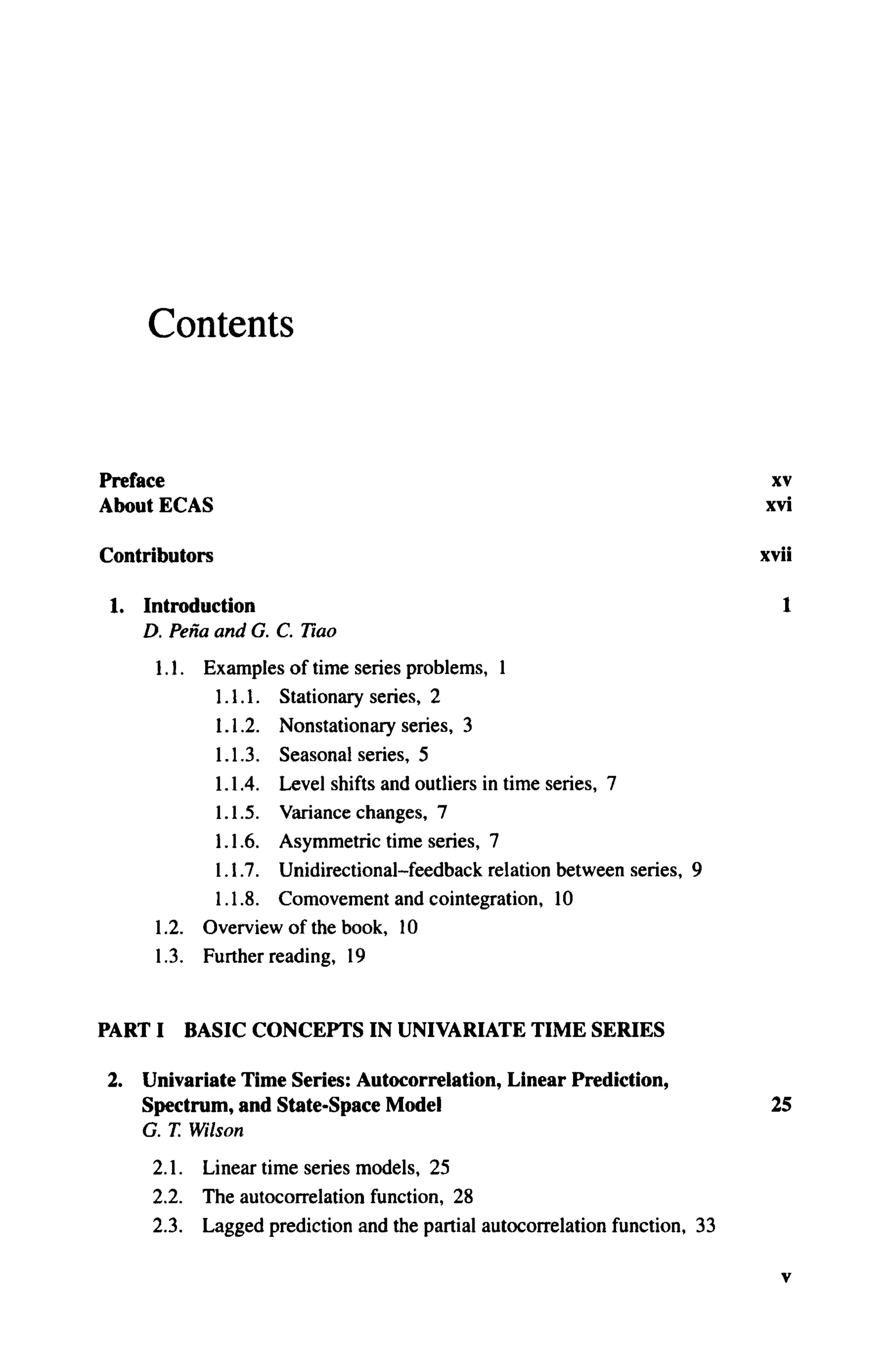
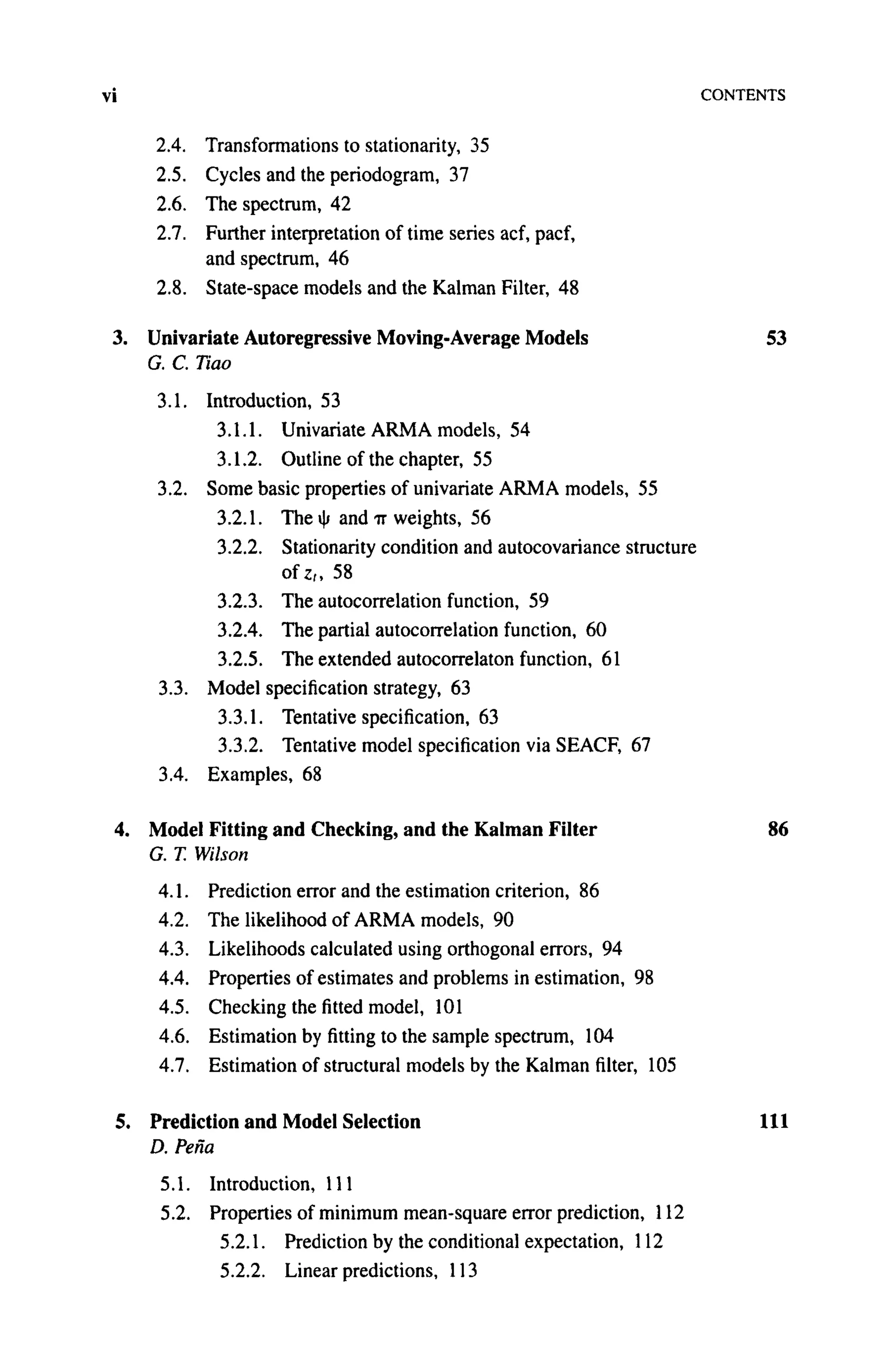
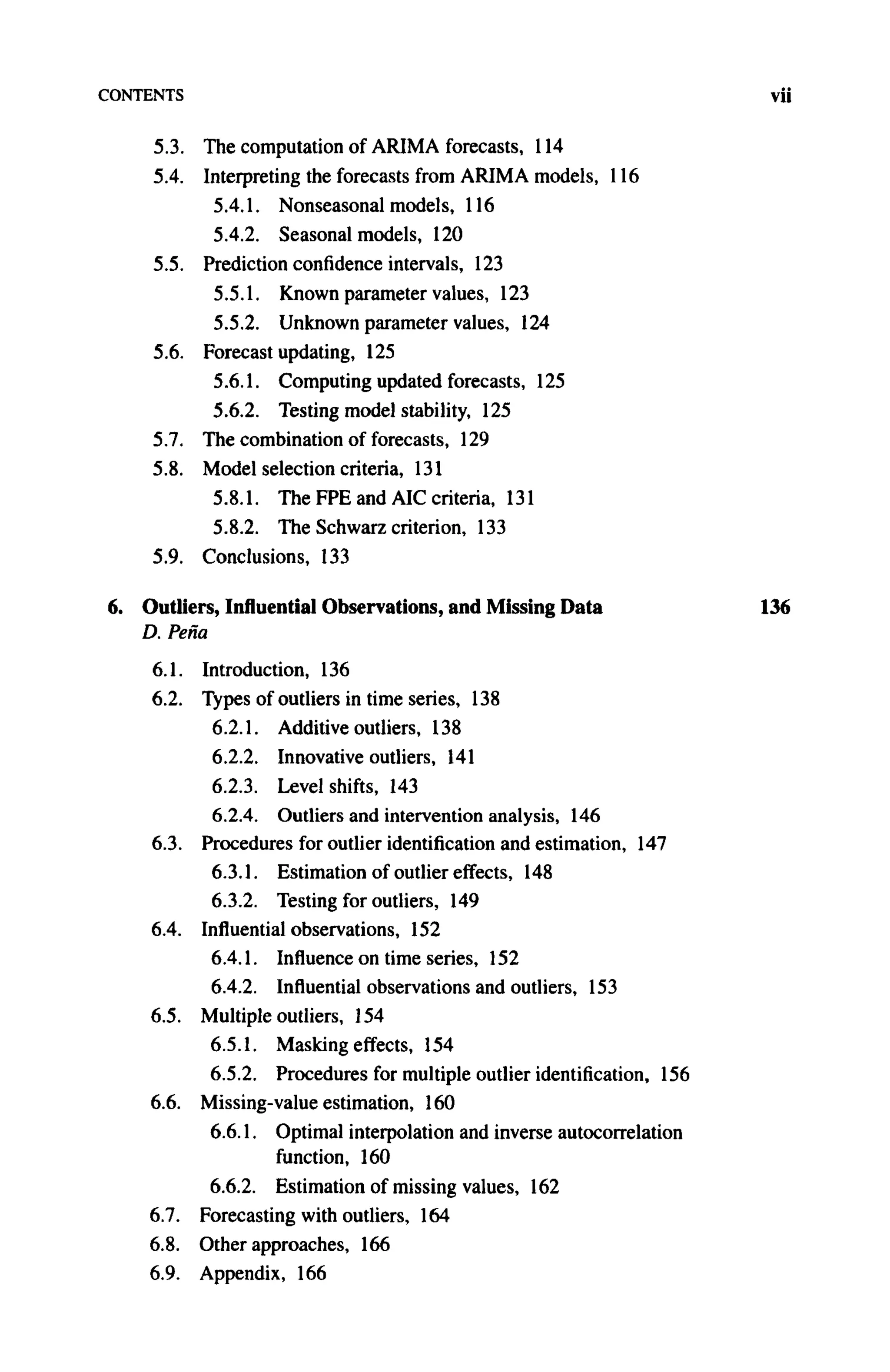
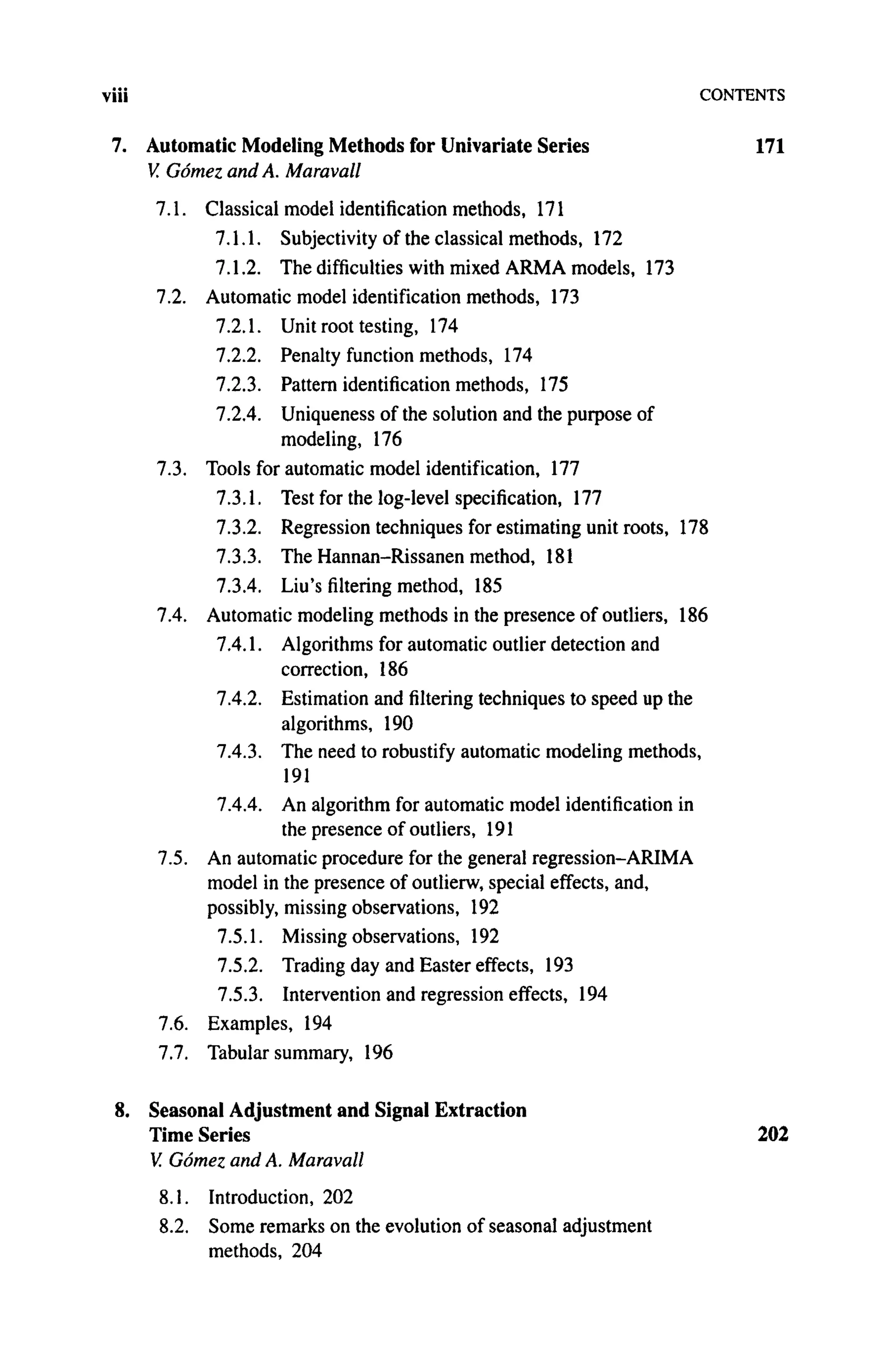
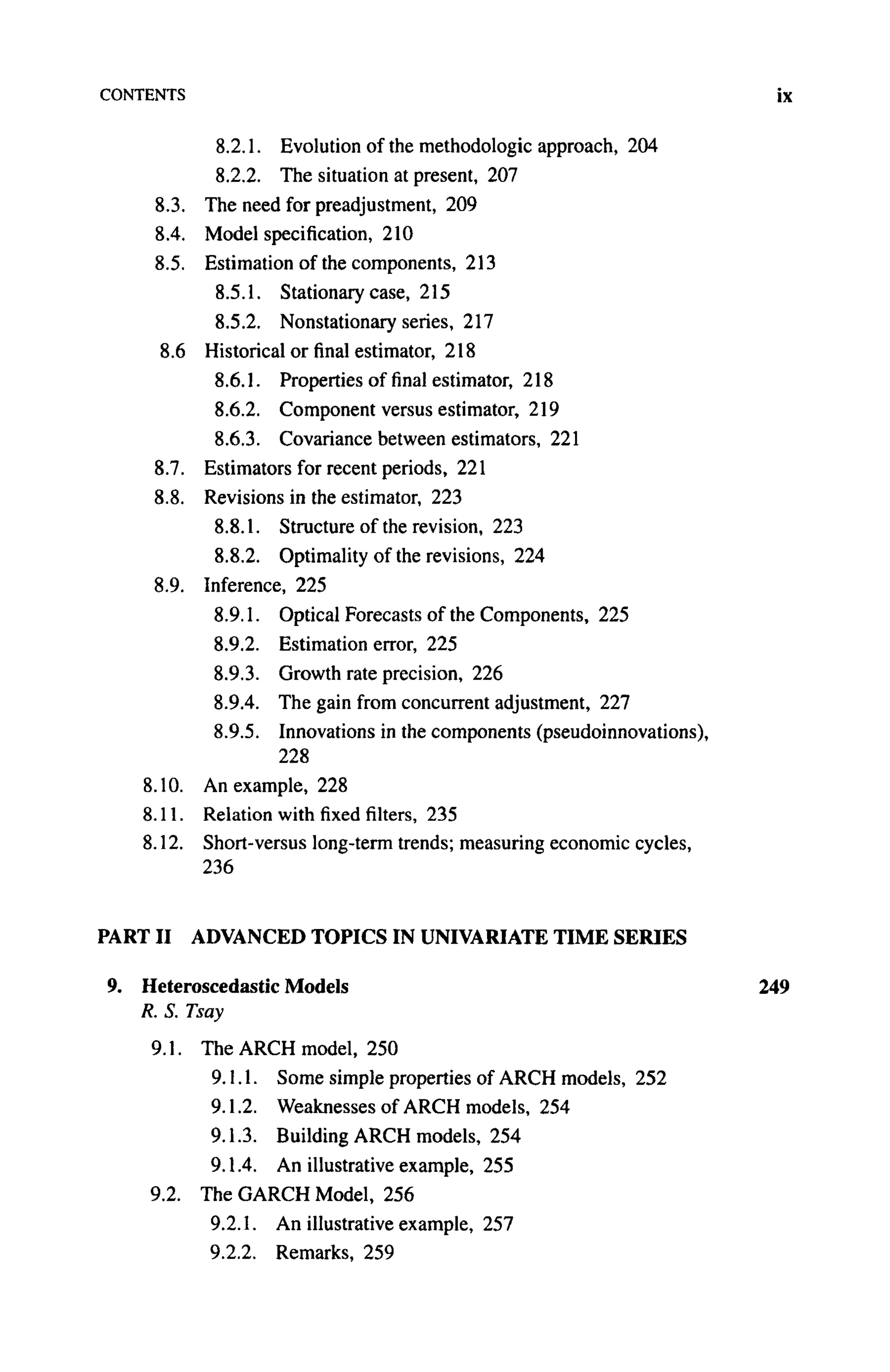
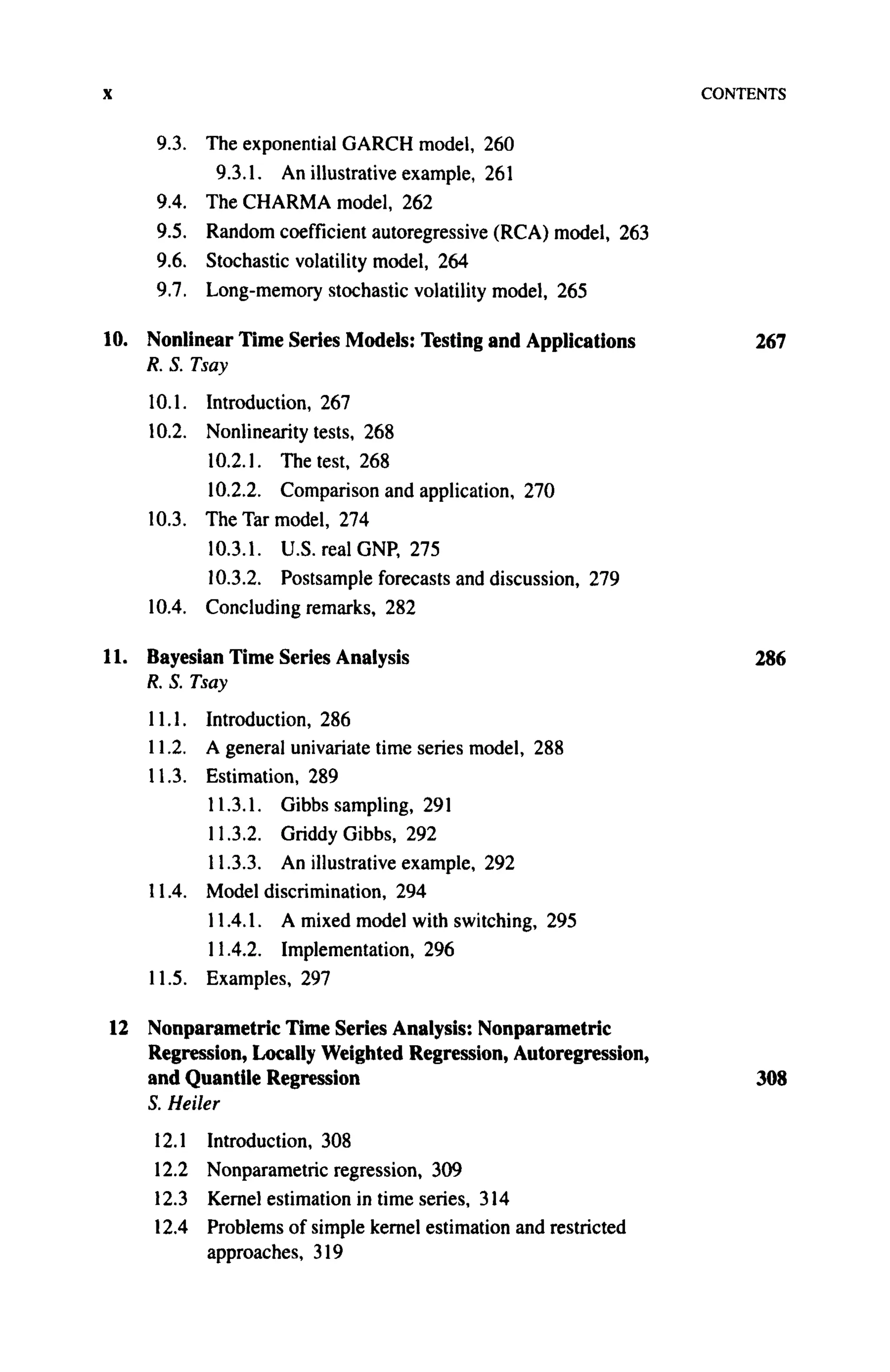
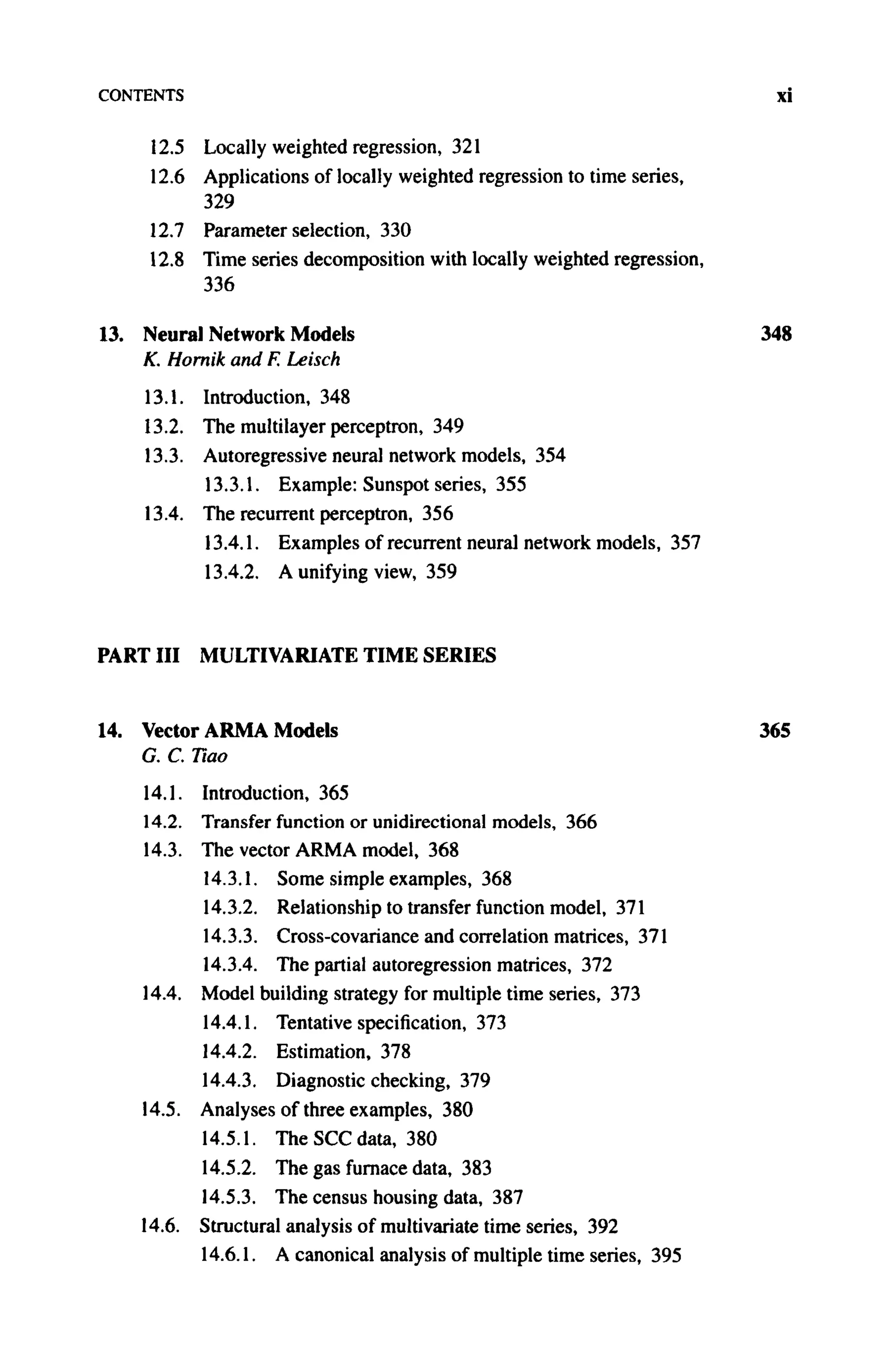
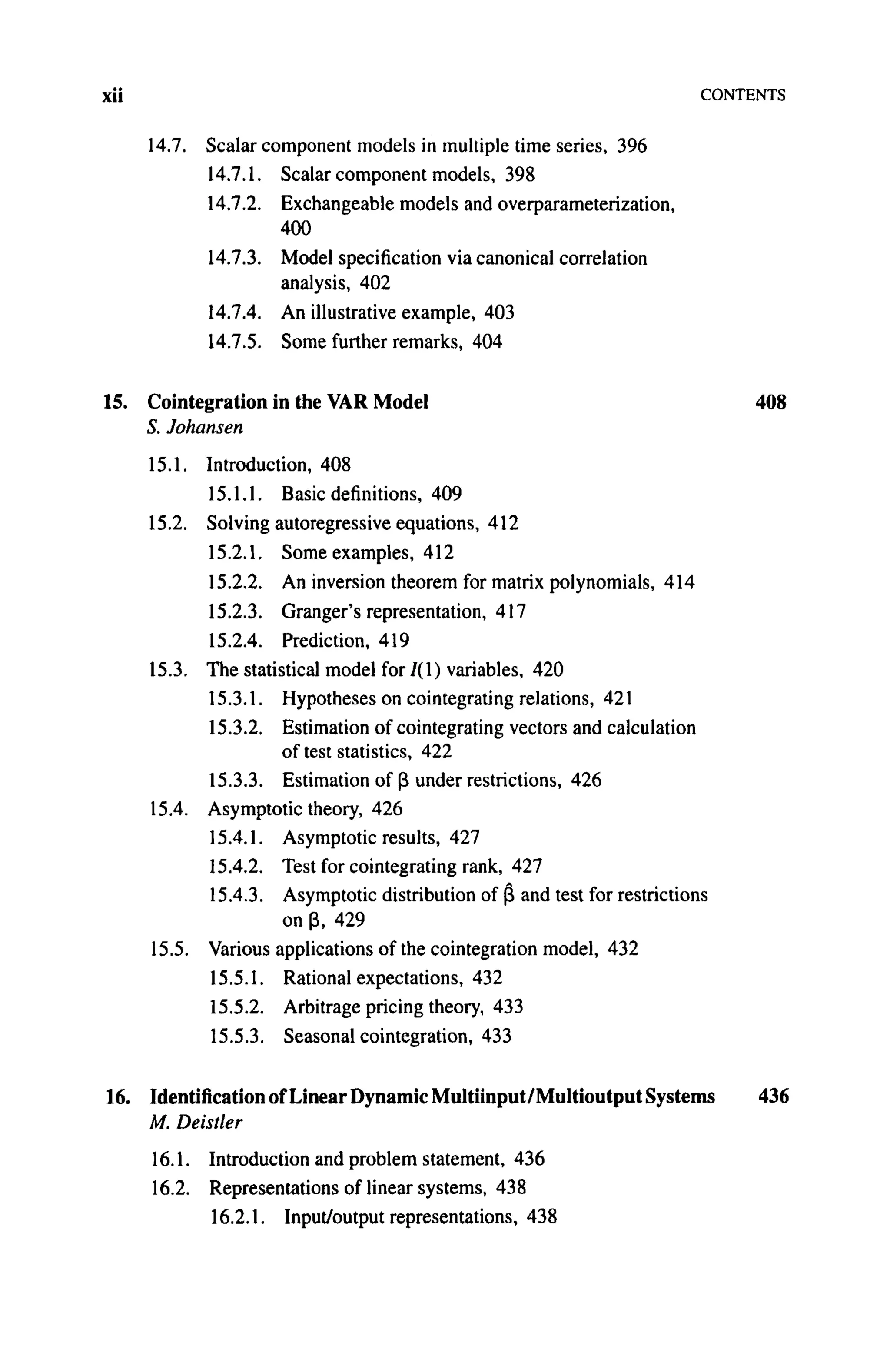

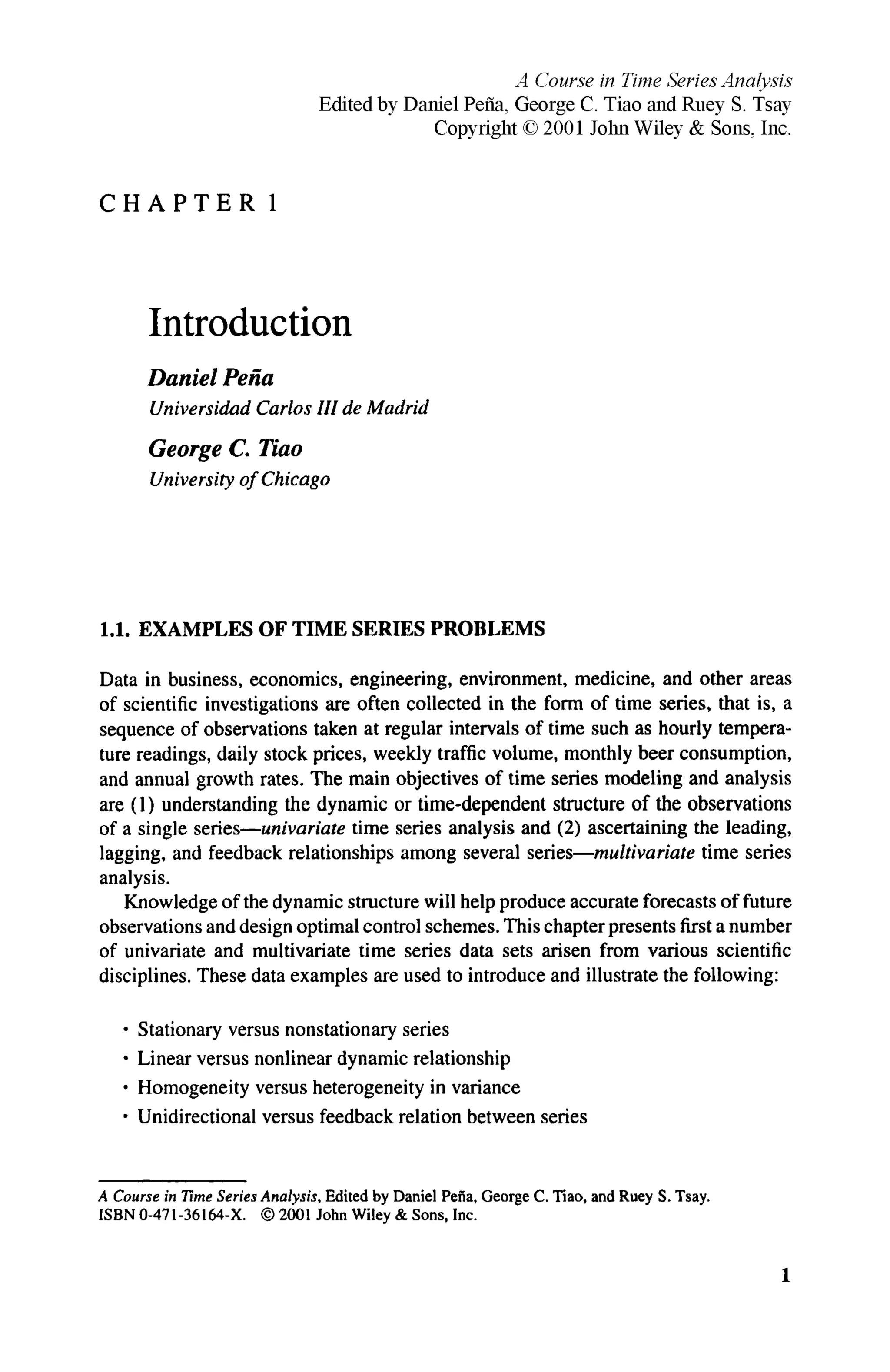
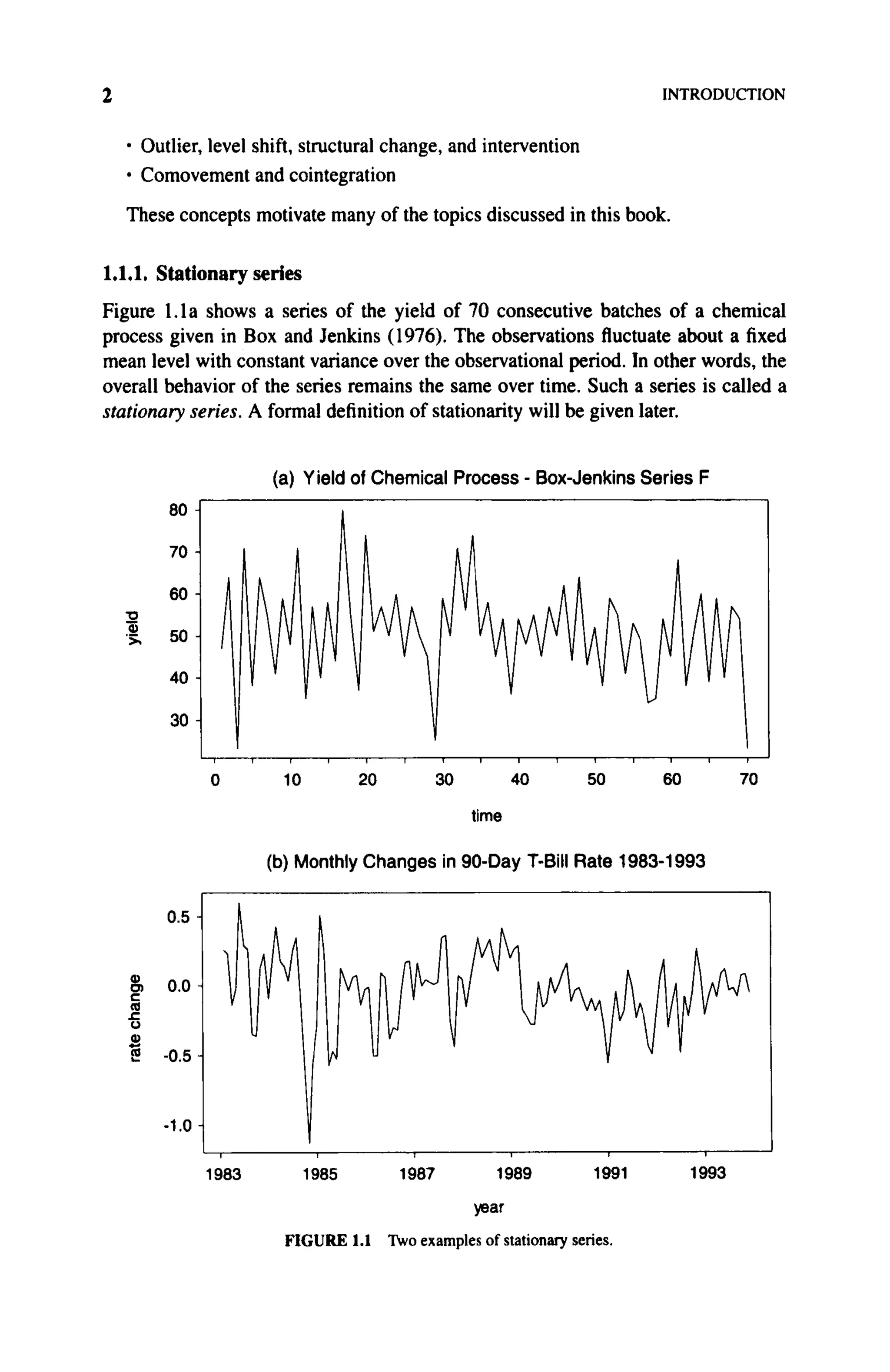
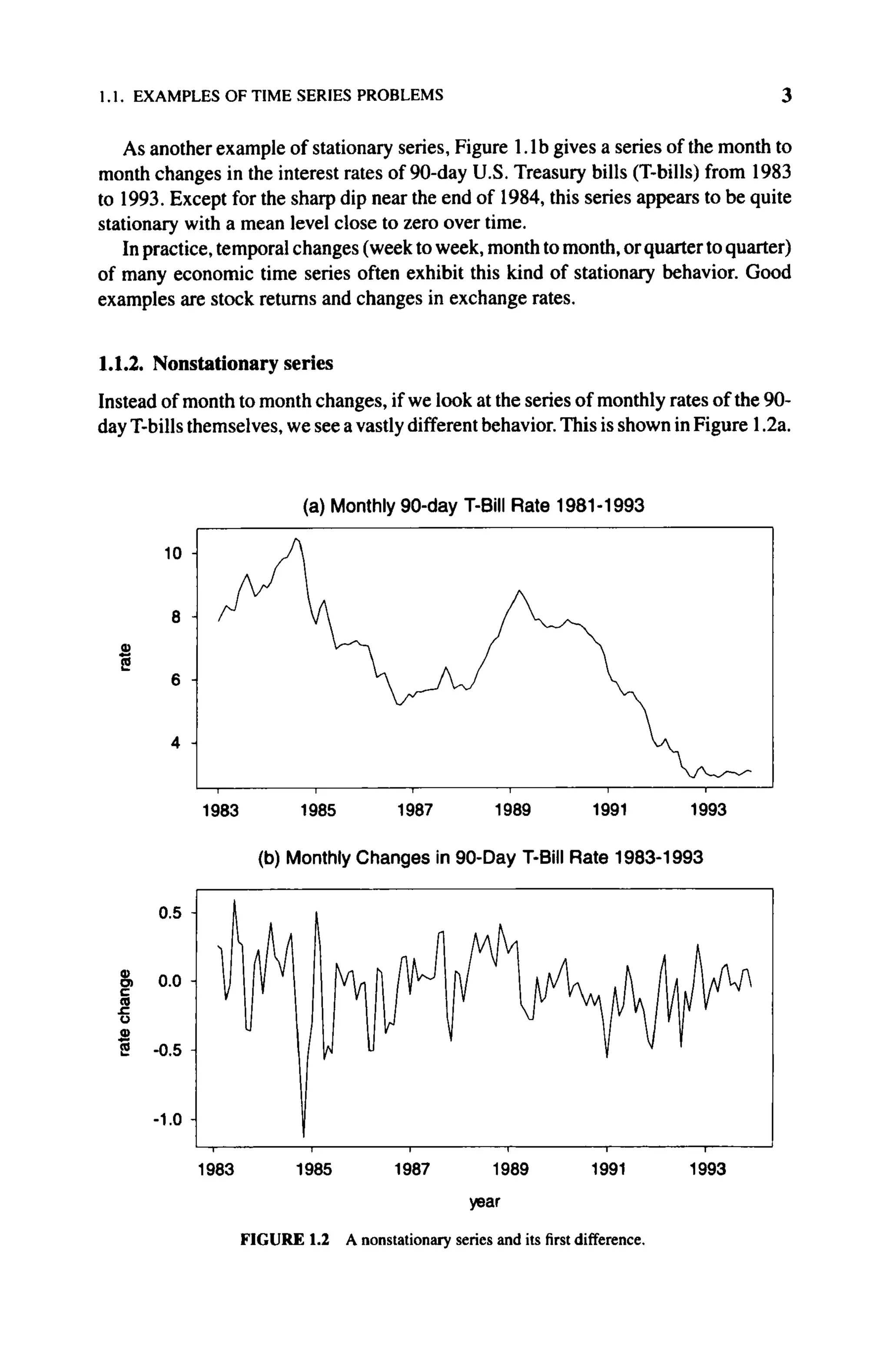
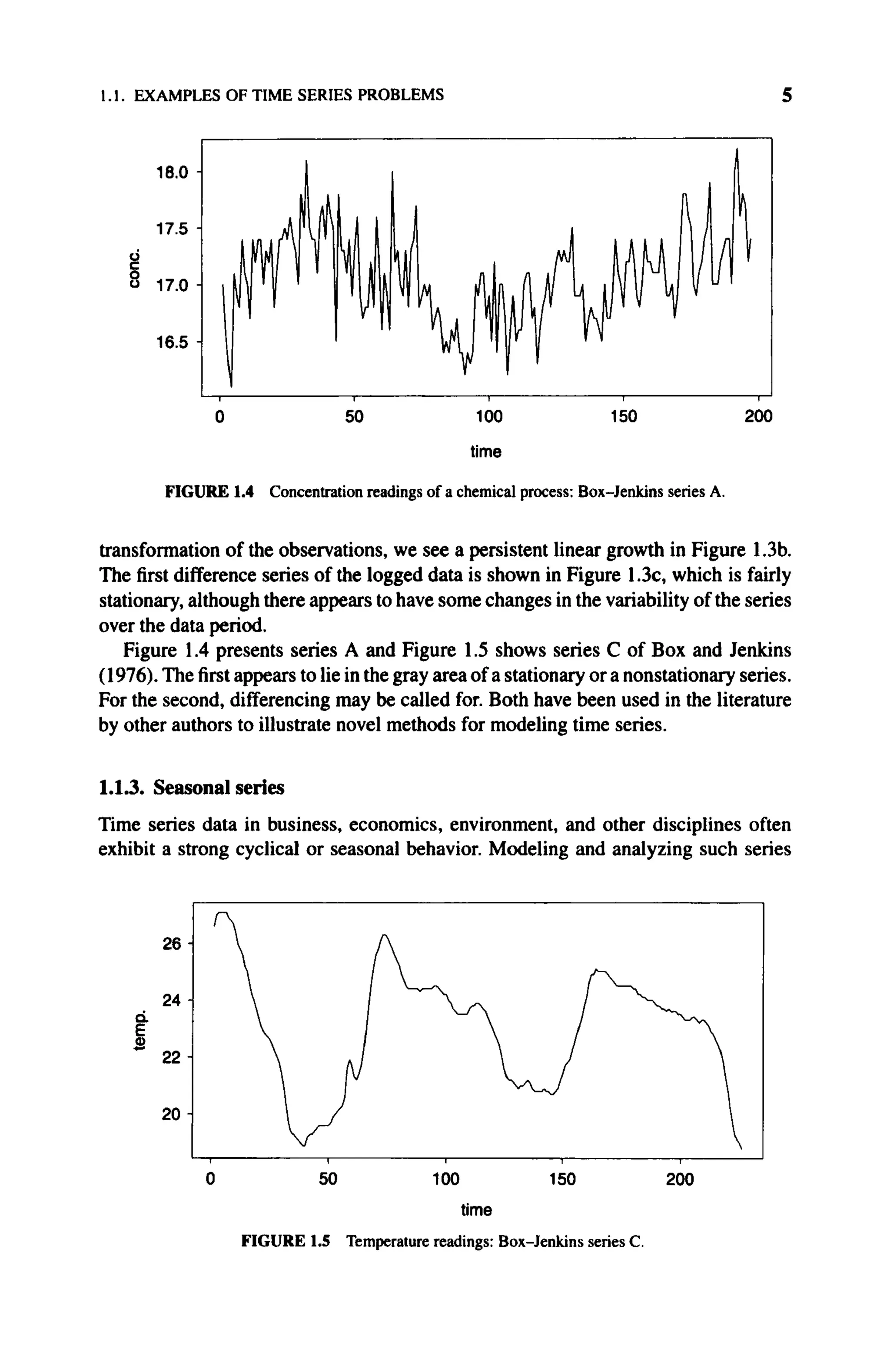
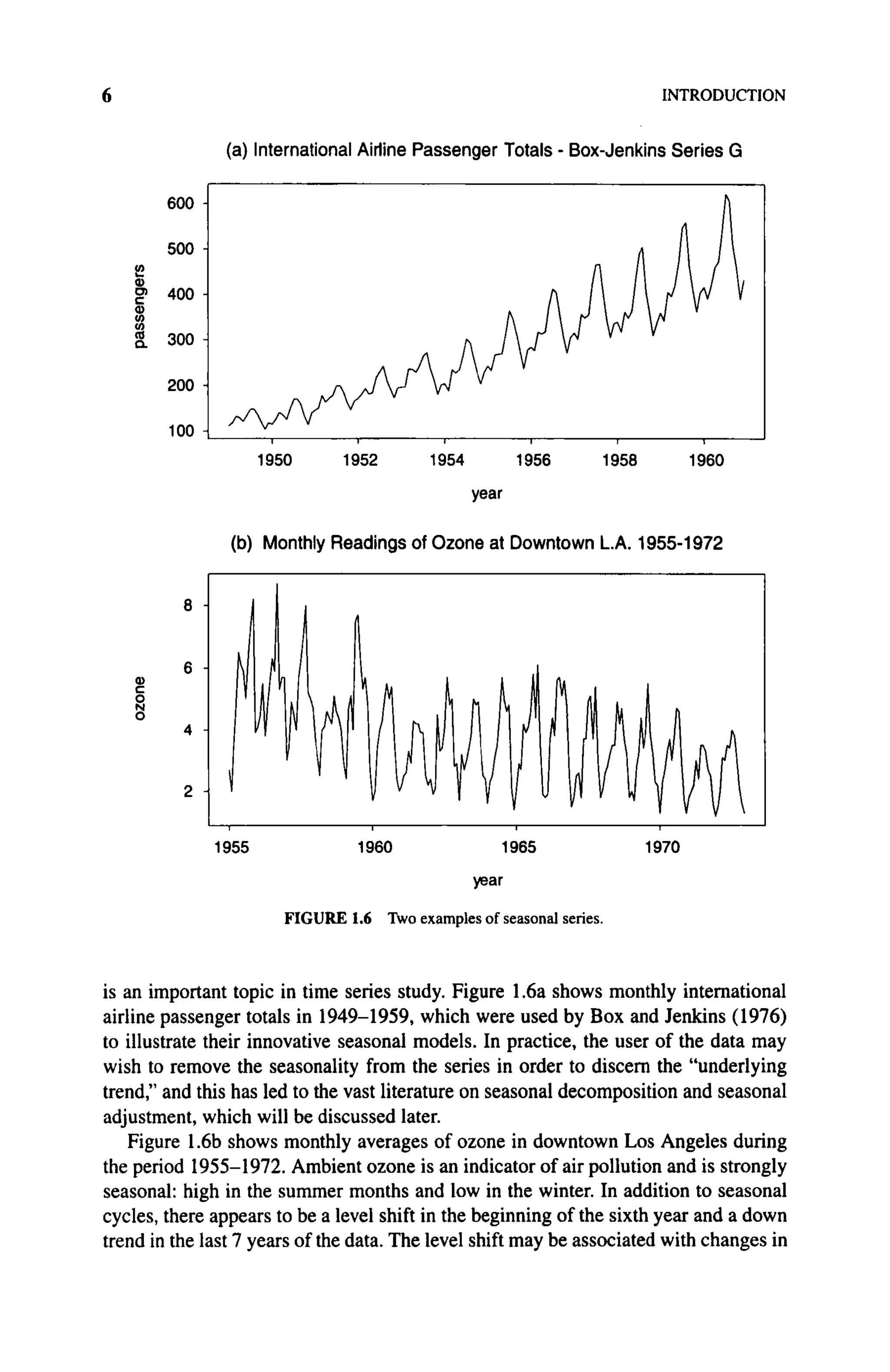
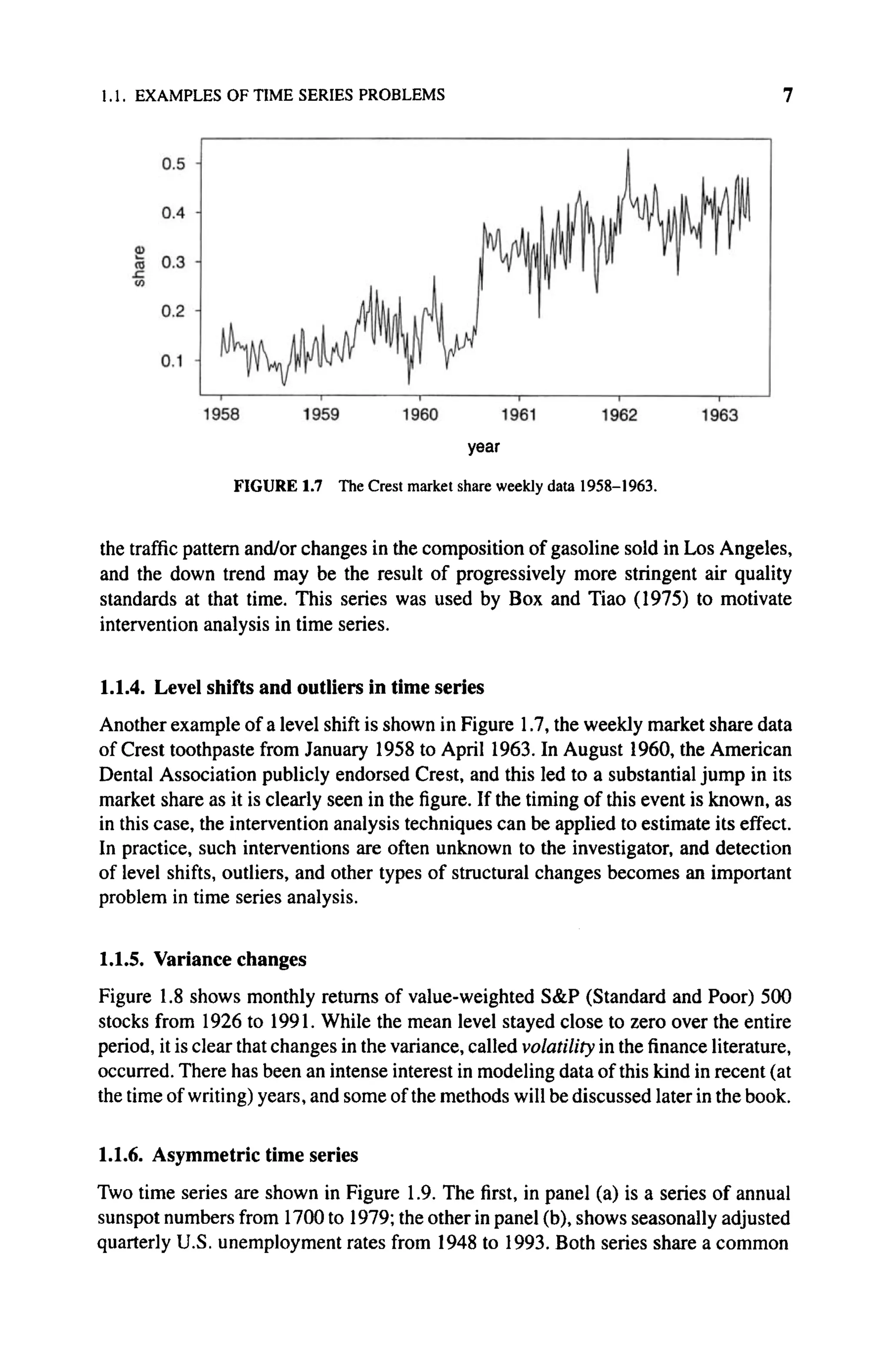
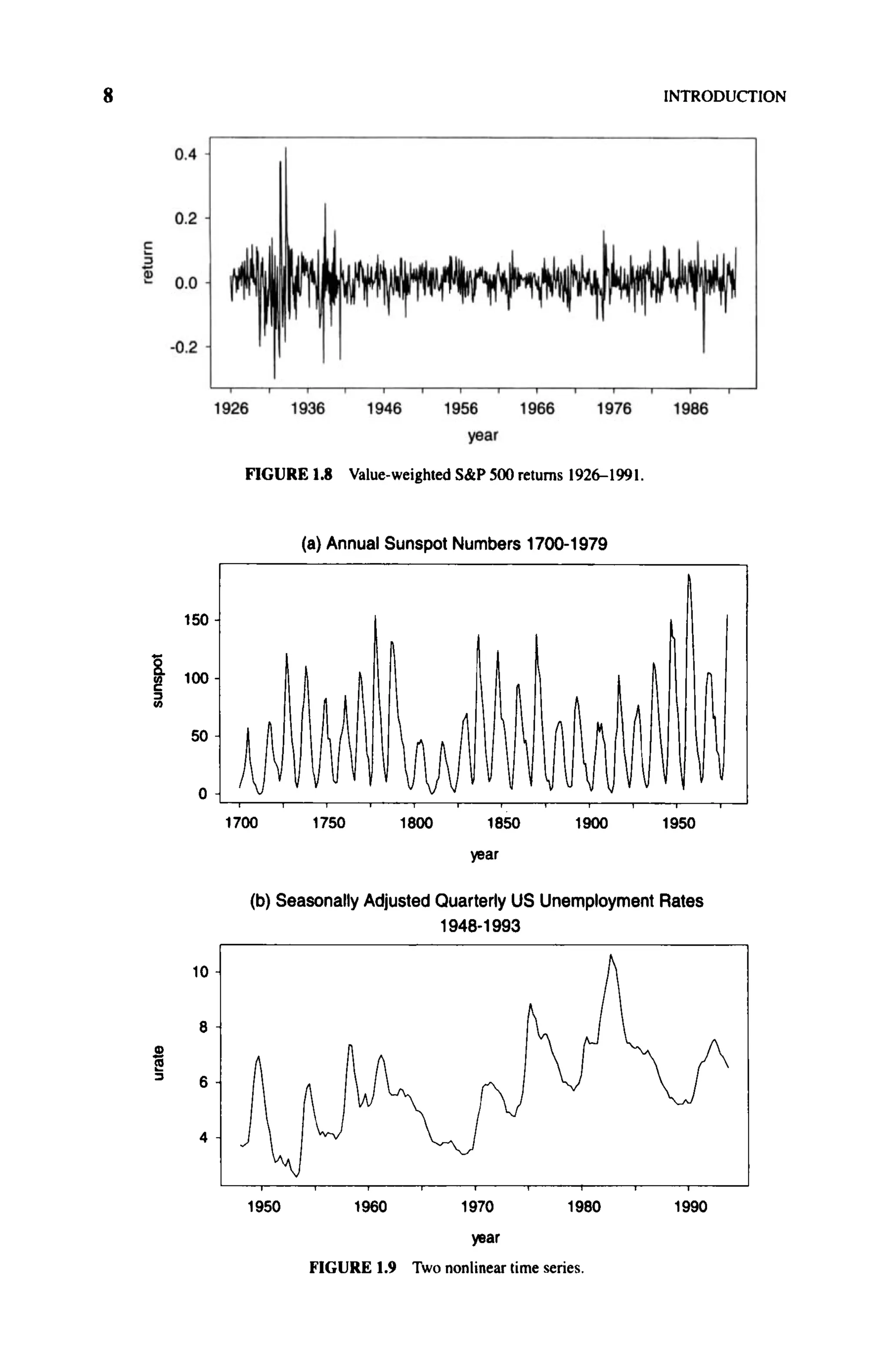
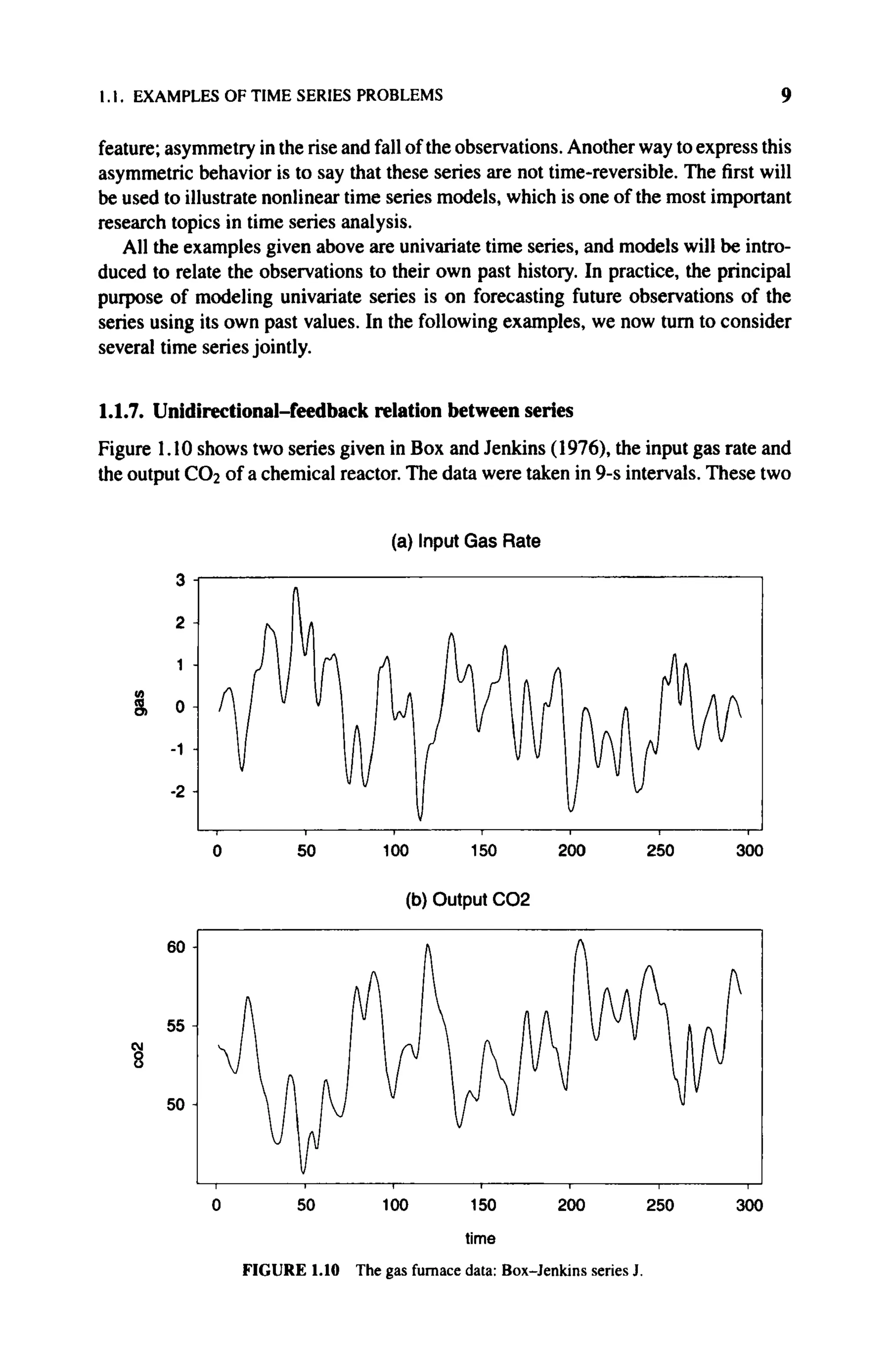
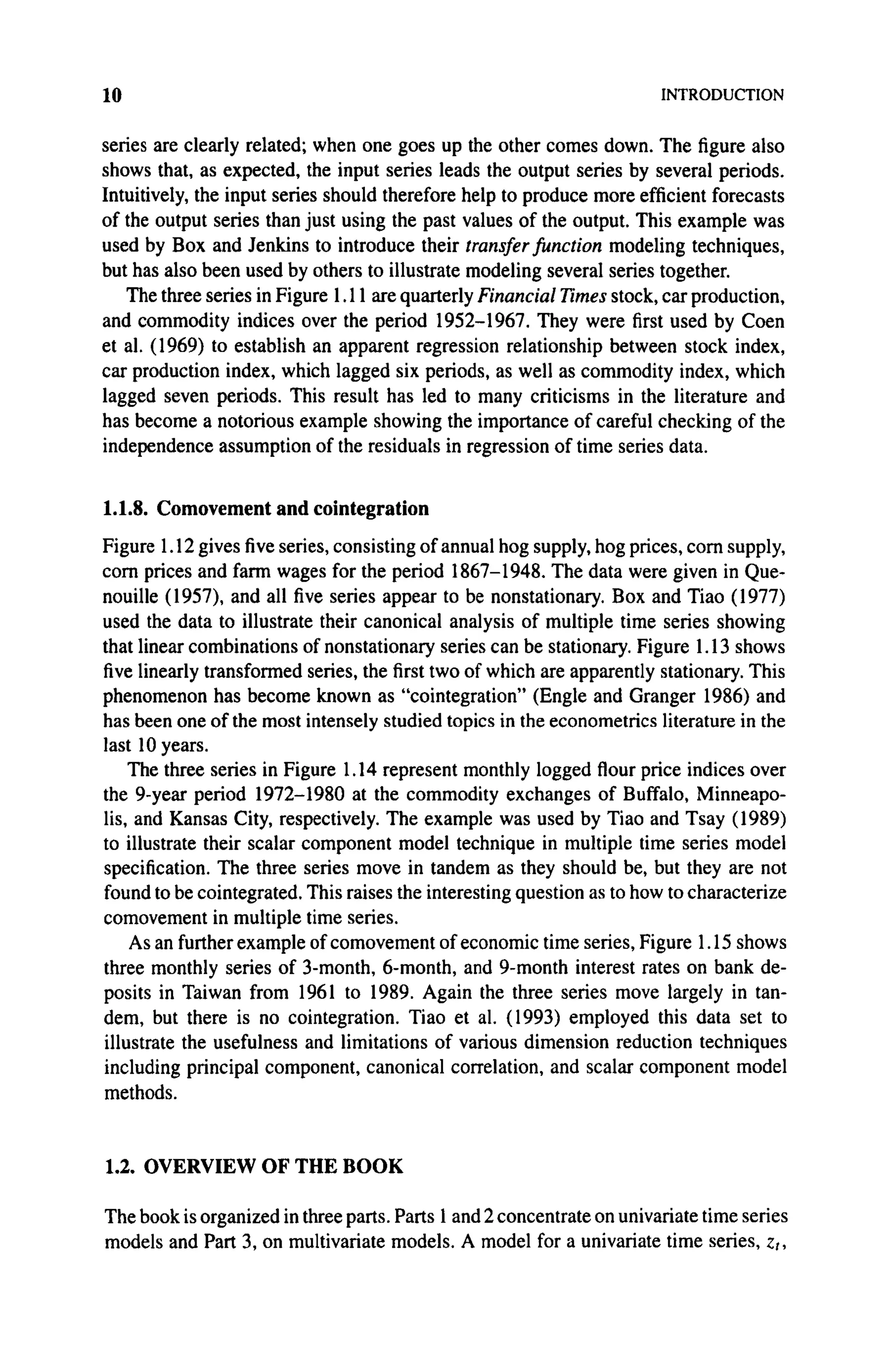
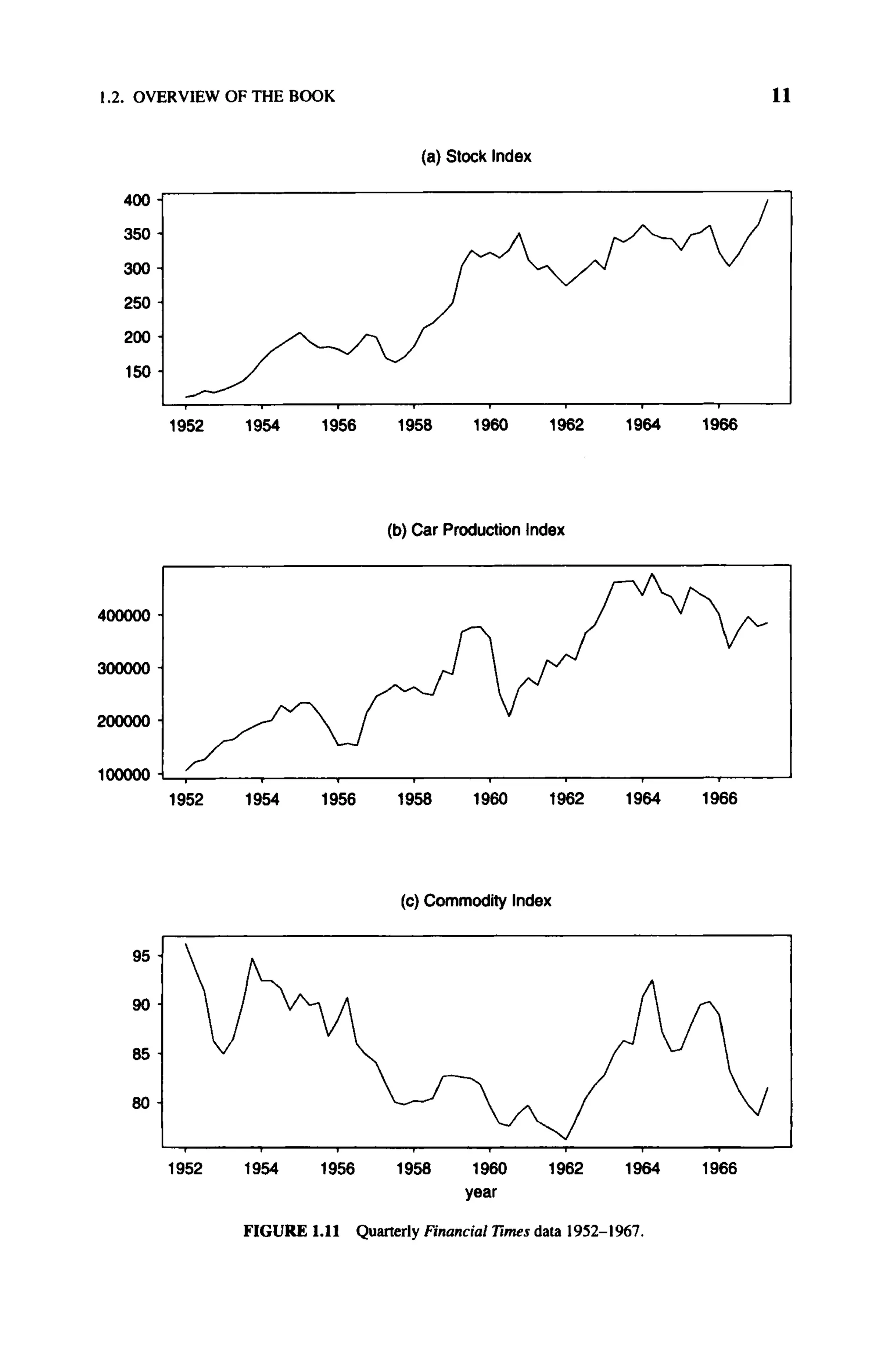
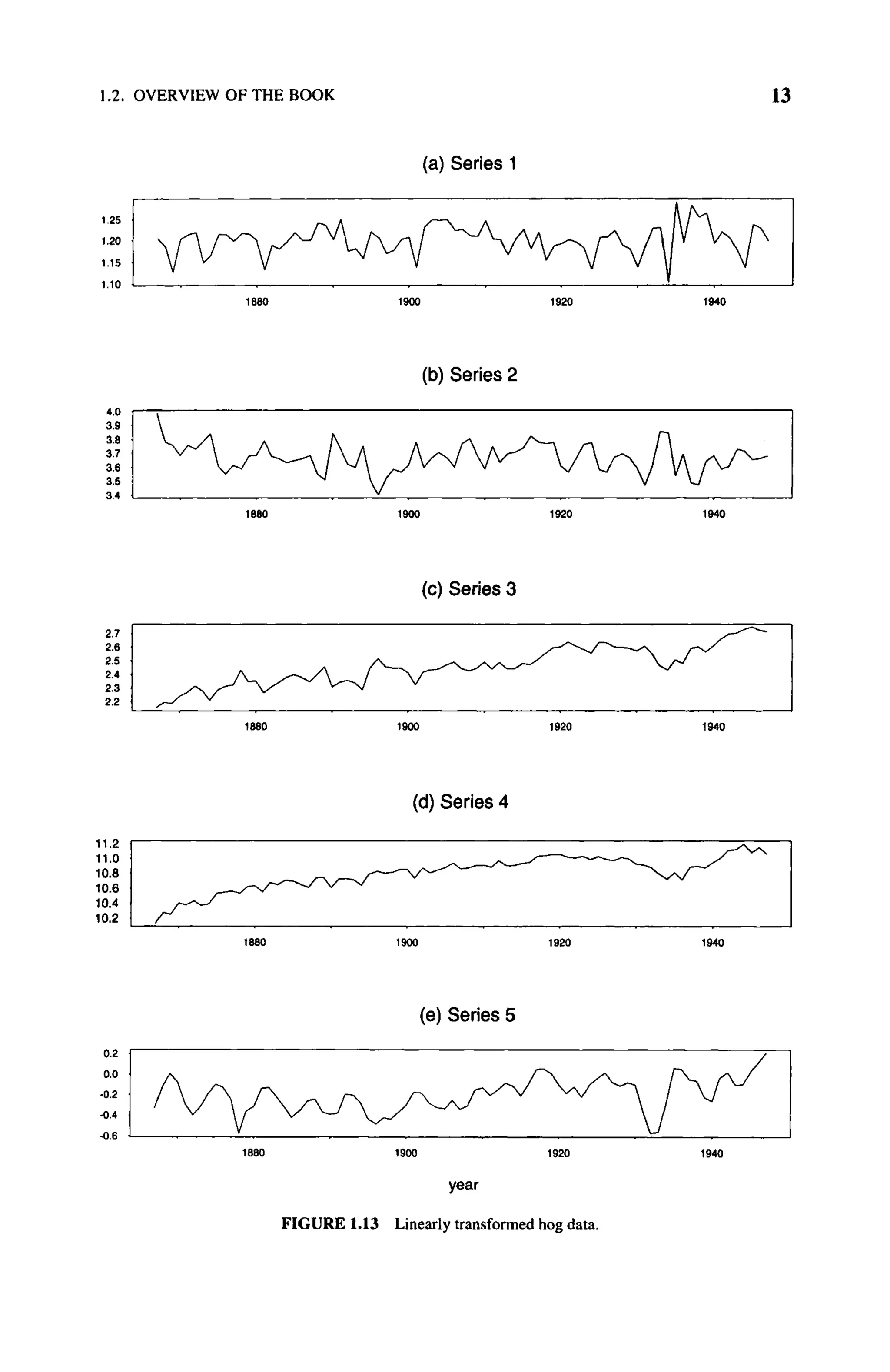
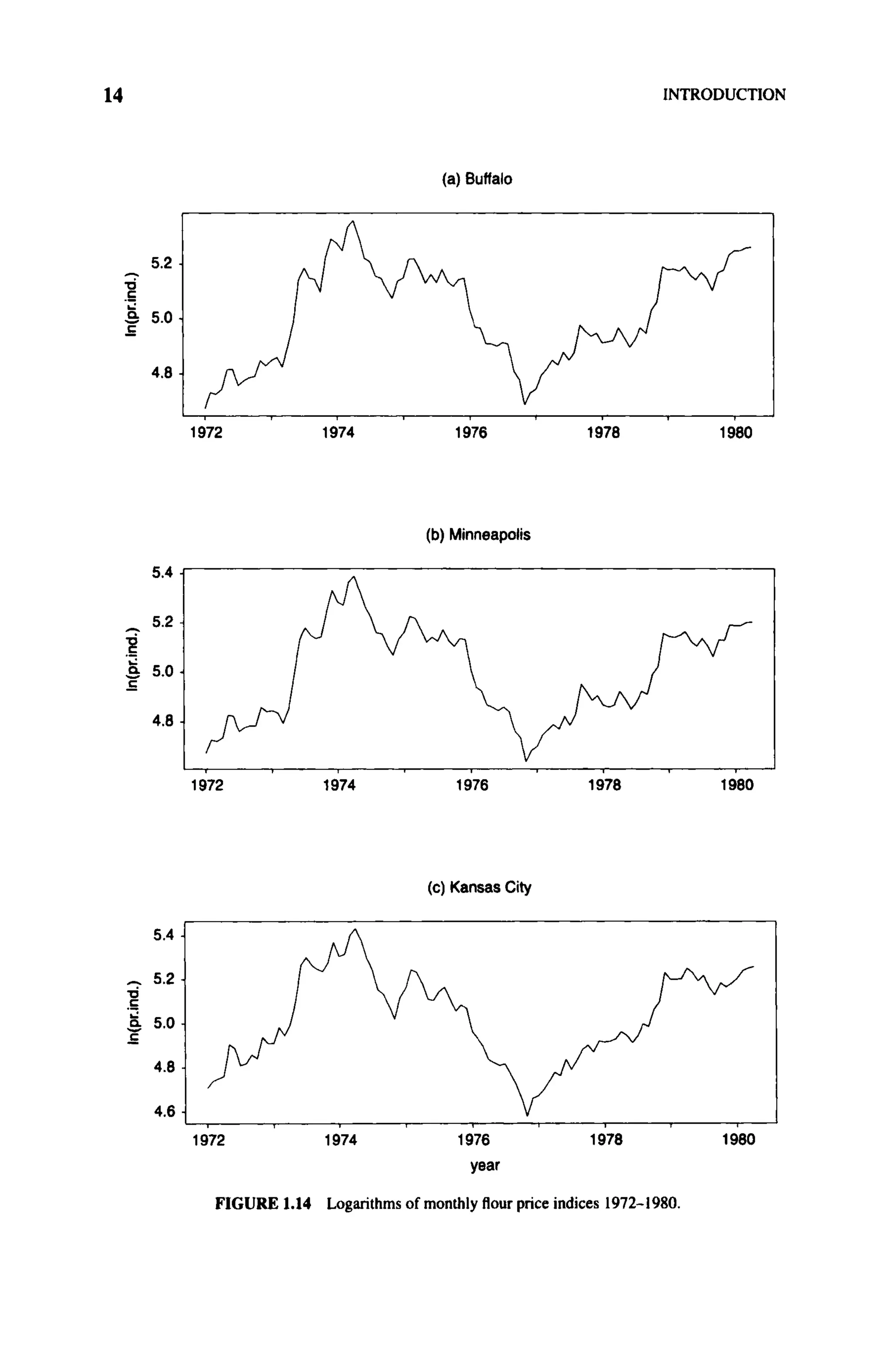
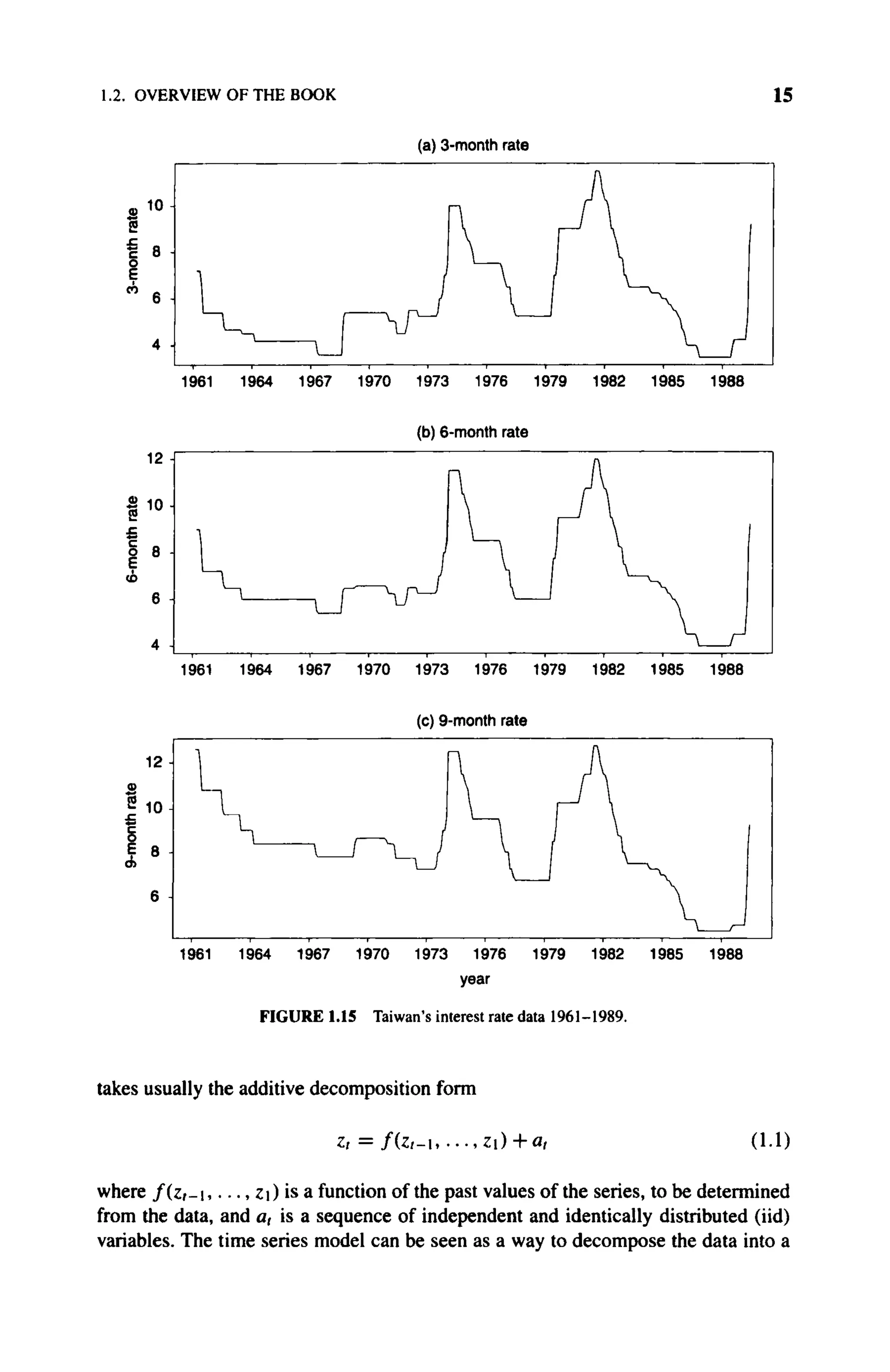
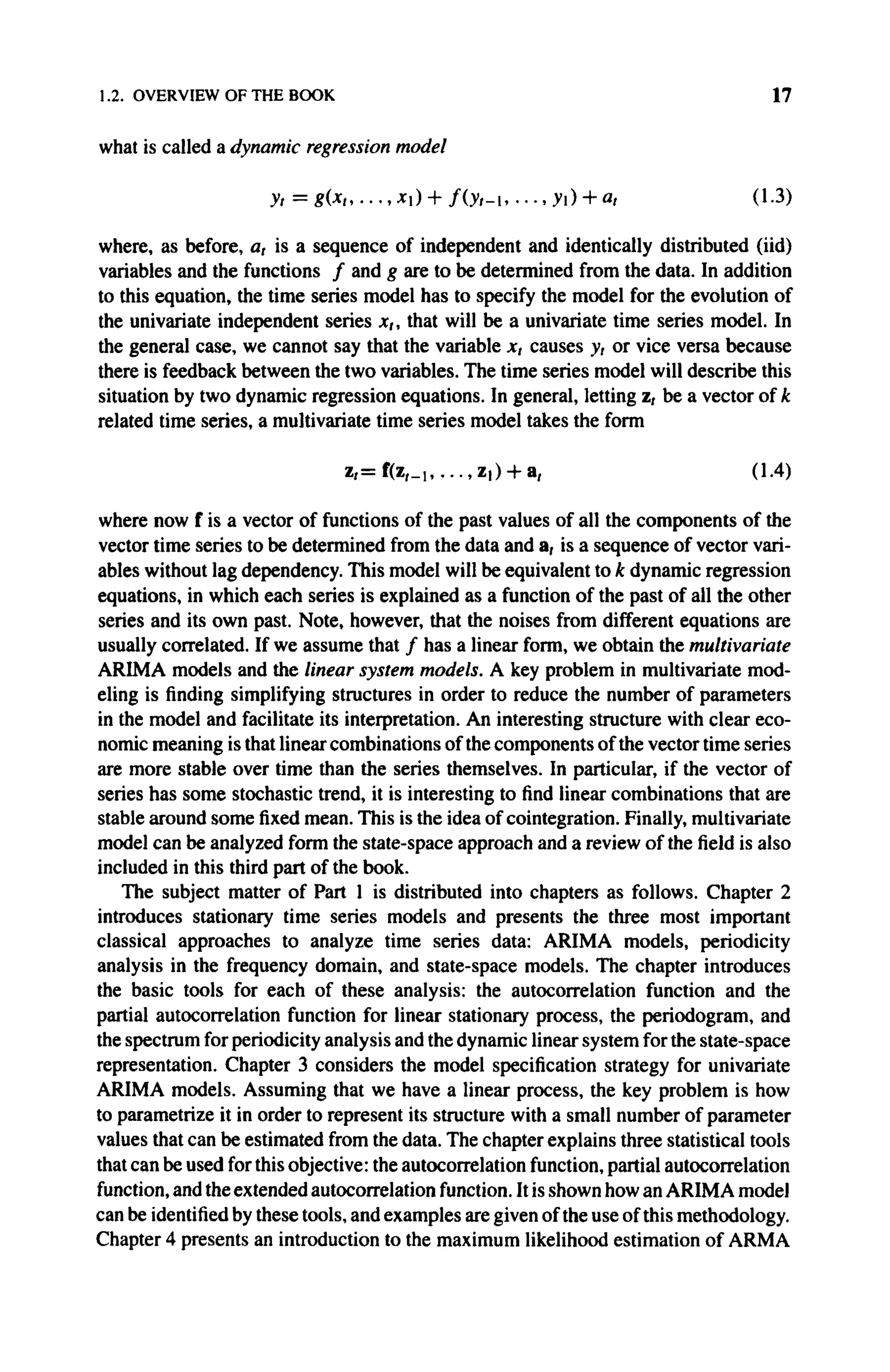

![This ebook is for the use of anyone anywhere in the United
States and most other parts of the world at no cost and with
almost no restrictions whatsoever. You may copy it, give it away
or re-use it under the terms of the Project Gutenberg License
included with this ebook or online at www.gutenberg.org. If you
are not located in the United States, you will have to check the
laws of the country where you are located before using this
eBook.
Title: Domestic Annals of Scotland from the Reformation to the
Revolution, Volume 2 (of 2)
Author: Robert Chambers
Release date: May 25, 2024 [eBook #73695]
Language: English
Original publication: Edinburgh: W. & R. Chambers, 1859
Credits: Susan Skinner, Mr David Mowatt, Brian Wilcox and the
Online Distributed Proofreading Team at
https://www.pgdp.net (This file was produced from
images generously made available by The Internet
Archive)
*** START OF THE PROJECT GUTENBERG EBOOK DOMESTIC
ANNALS OF SCOTLAND FROM THE REFORMATION TO THE
REVOLUTION, VOLUME 2 (OF 2) ***](https://image.slidesharecdn.com/26088-250224160540-c8e6abce/75/A-Course-in-Time-Series-Analysis-1st-Edition-Pena-D-50-2048.jpg)
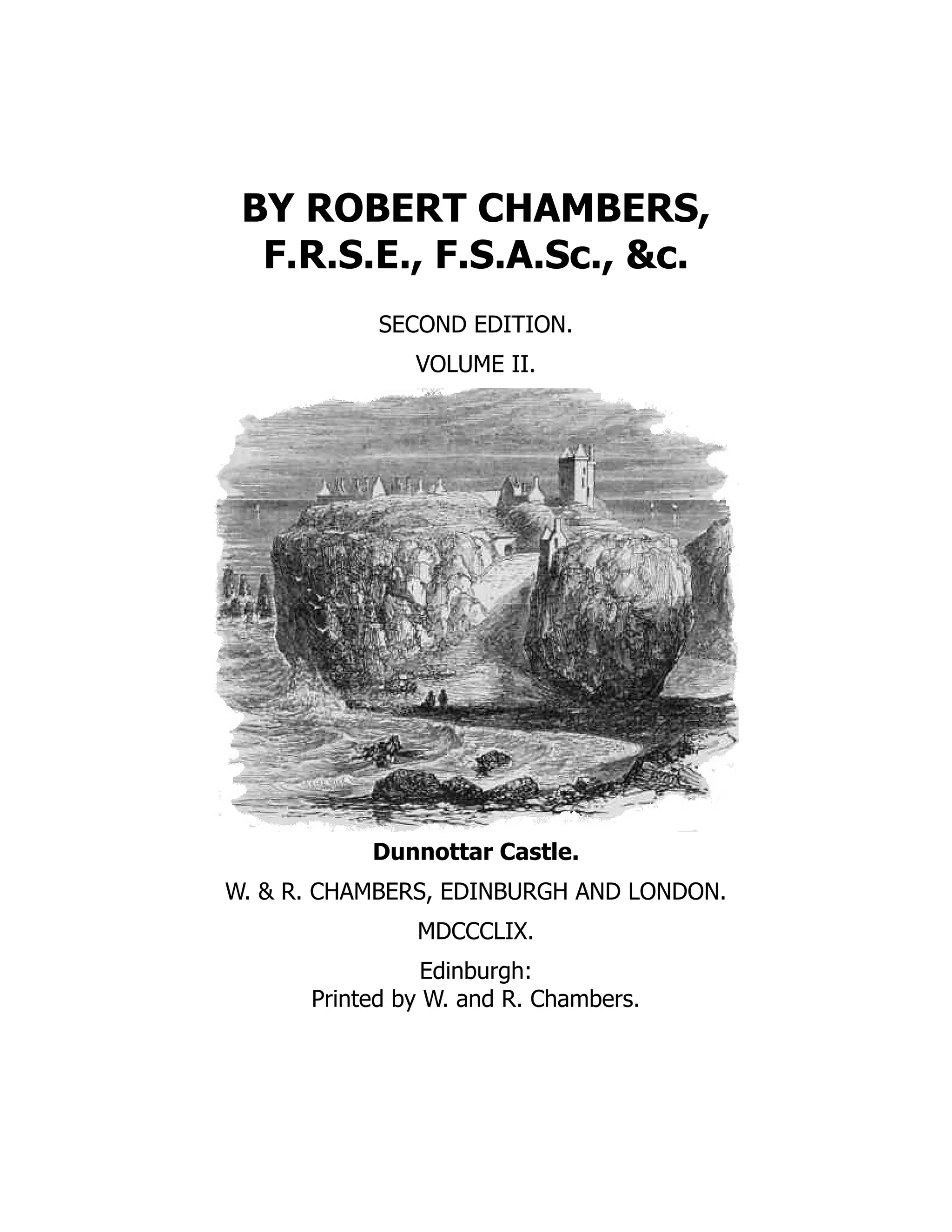

![Lesmoir also got similar patents during the same year, and Lesmoir’s
eldest son, being of full age, was at the same time made a knight;
such being the original design regarding this honour. The order of
baronets of Nova Scotia, which still holds an honourable place in
Scottish society, was projected by King James, as an encouragement
to gentlemen of property in his native kingdom to enter into the
scheme of Sir William Alexander (subsequently Earl of Stirling) to
plant Nova Scotia. In the patent of each, a certain portion of land in
that country is assigned along with the honour, the infeoffment
being executed on the Castle Hill of Edinburgh; but this, as is well
known, has never been otherwise than an ideal advantage. ‘His
majesty, the more to encourage the baronets in that heroic
enterprise [of planting Nova Scotia], besides other privileges, did
augment every one of their coats of arms by joining thereto a saltire
azure, or a blue St Andrew’s cross, set in a white field, with another
scutcheon in the middle of the blue cross, comprehending a red
rampant lion in a yellow field, with a red tressure of fleur-de-luces
about the lion, with an imperial crown above the scutcheon, being
the arms of New Scotland. The crest of the arms of New Scotland is
two hands joined together, the one armed, the other unarmed,
holding a laurel and a thistle twisted, issuing out of them, with this
motto, “Munit hæc, et altera vincit.” The supporters are a unicorn
upon the right side, and a savage man upon the left.’—G. H. S.
The town-council of Aberdeen at this time anticipated the wisdom
and good manners of a later age, by ordaining that ‘no person
should, at any public or private meeting, presume to compel his
neighbour, at table with him, to drink more wine or beer than what
he pleased, under the penalty of forty pounds.’1](https://image.slidesharecdn.com/26088-250224160540-c8e6abce/75/A-Course-in-Time-Series-Analysis-1st-Edition-Pena-D-59-2048.jpg)
![June 12.
July 20.
July 26.
1625.
Thomas Crombie, burgess of Perth, was
‘summoned to underlie the law, for the alleged
slaughter of ane William Blair, a westland
gentleman, wha notwithstanding had done the same negligently to
himself. Being of intention to have struck the said Thomas with ane
whinger, he hurt himself in the arm, whereof he died twenty days
after. The said Thomas compeared with eighty burgesses of Perth,
besides five earls, six lords, and twenty-six barons, upon the burgh
of Perth’s desire to back him, [and] was clengit and freed
therefrae.’—Chron. Perth.
By the royal command, a fast was held throughout
Scotland, in consequence of the heavy rains which
had prevailed since the middle of May, threatening
the destruction of the fruits of the earth. It was a time of calamity.
The marriage of the king to the Princess Henrietta Maria of France
(June 16th), had of course brought the mass into London, and ‘no
sooner was the queen’s mass, the plague of the soul, received, than
a raging pestilence broke out in the city of London and parts
adjoining, which in a short time cut off above 40,000 persons.’—
Stevenson’s Hist. C. Scot.
The government was incensed by bruits set in
circulation by a set of ‘restless and unquiet spirits,’
to the effect that the king designed some change
in the kirk and its canons. The king issued a
proclamation denouncing these injurious rumours
as troublesome to the commonwealth, and protesting that so well
was he pleased with the existing arrangements, that, if he had not
found them established by his late dear father, he would himself
have never rested till they were perfected as they now stood. It may](https://image.slidesharecdn.com/26088-250224160540-c8e6abce/75/A-Course-in-Time-Series-Analysis-1st-Edition-Pena-D-60-2048.jpg)
![1627. July 17.
1627.
Four of the bishops, and a number of
commissioners from presbyteries, met in
Edinburgh to deliberate on church matters, being
the nearest approach to a General Assembly which could now be
permitted. Amongst the matters discussed were the increase of
papistry and sin, the persecutions of the Protestants in Germany,
and the war against France. Anxiety was also expressed regarding
the prospects of the harvest. ‘Because of the extraordinar rains,
which now threaten rotting of the fruits of the ground before they be
ripe, and so a fearful famine upon this land in so dangerous a time,
when the seas are closed by the enemies, and no hope of help from
other countries if God shall send a famine, [it was resolved] to
entreat the Lord that he wold cause the heaven answer the earth,
and the earth answer the corn, and the corns to answer our
necessity, and us to answer His will, in faith, repentance, and
obedience.’9
At this time, Great Britain might be said to be
drifting towards a war with France. The king
having offended Louis XIII. by turning off all the
Catholic priests who had come over in attendance upon his queen,
the French monarch retaliated by ordering the seizure of British
vessels within his ports. There were a hundred and twenty English
and Scottish ships in those ports, chiefly loading with wine, and the
whole were seized. The Scotch, however, contrived to make
themselves appear as still connected with France by an ancient
league—a league which, it is to be feared, only existed as a friendly
illusion common to the two nations. Out of deference to this notion,
the Scotch vessels were all dismissed, while the English were
retained.—Bal.
‘There was a warrant from the king’s majesty and his Council, for
listing in Scotland 9000 men, to go to serve under the king of](https://image.slidesharecdn.com/26088-250224160540-c8e6abce/75/A-Course-in-Time-Series-Analysis-1st-Edition-Pena-D-70-2048.jpg)
![Denmark, in the German wars for renewing the palatinate and
Bohemia.... There was many forcit, as beggars, idle men, and [those
wanting] competent means to live upon, under the conduct of the
Earl of Nithsdale, my Lord Spynie, and the Laird of Murkle (Sinclair),
as colonels.
‘There was the same year 2000 gentlemen, landed men, barons,
lords, and others of guid sort, levanted from Scotland under the Earl
of Morton, for helping to take the Isle of [Ré] in France. But the isle
was recovered by the French frae the English.’—Chron. Perth.
The recruiting of these German legions does not appear to have
been conducted in a very scrupulous manner. Some of the
circumstances afford a rich illustration of the social condition of
Scotland at that time. On the 1st of November 1627, Robert Scott,
bailie of Hawick, reported to the Privy Council a number of ‘idle and
masterless men, fit to be employed in the wars’—namely, ‘Allan
Deans, miller; Allan Wilson; George Dickson, callit the Wran; John
Rowcastle; Walter Scott, maltman; John Tait, piper; William
Beatison; Robert Lidderdale, callit the Corbie; Robert Langlands;
James Waugh, officiar; James Towdop; William Scott, callit Young
Gillie; John Laing, piper; William M‘Vitie; Walter Fowler; and Andrew
Deans.’ This proceeding of Bailie Scott was in obedience to an act of
Estates. The lords, having narrowly examined these men, liberated
seven as ‘not fit persons to be employed in the wars.’ Two were set
free, under surety to appear again when called upon. The remaining
persons they ordained to be delivered to the Earl of Nithsdale, ‘to be
sent by him with the rest of his company to the wars in Germany.’
Seeing, however, that ‘the said persons are men and servants to
William Douglas of Drumlanrig, and that reason and equity craves
that they sould be rather delivered to Sir James Douglas of Mowsill,
brother to the said Laird, nor to any other colonel or captain
whatsoever,’ they ordained accordingly, provided that Sir James
should satisfy the Earl for his expenses. The men thus dealt with
were to be lodged in the Tolbooth, until the ship should be ready to
carry them abroad, the Earl undertaking to satisfy Andrew White the](https://image.slidesharecdn.com/26088-250224160540-c8e6abce/75/A-Course-in-Time-Series-Analysis-1st-Edition-Pena-D-71-2048.jpg)
![1627. Oct. 10.
Nov. 27.
attended the event of the said ships, till advertise the people of the
town what they sould do thereanent. About eight hours at night, by
command of the Privy Council, the cannons were trailed down with
furnishing thereto from the Castle of Edinburgh till Leith, and the
town of Edinburgh were put in arms under ten handseignies, every
man better resolved than another to abide the worst till death, or
they to put the enemies to destruction.... About ten hours at night
certain word cam, by two boats that was sent from Leith, to the
effect that they were our friends and only a number of busses fled
from the tyranny of the Dunkirkers ... and then the cannons were
trailed back again to the Castle, and the people were commanded to
their rest.’—Jo. H.
As the Privy Council was sitting in its chamber in
Holyrood Palace, an outrage took place, recalling
the wild acts of thirty years since. One John
Young, poultry-man, attacked Mr Richard Bannatyne, bailie-depute
of the regality of Broughton, at the council-room door, and struck
him in the back with a whinger, to the peril of his life. The Council, in
great indignation, immediately sent off Young to be tried on the
morrow at the Tolbooth, with orders, ‘if he be convict, that his
majesty’s justice and his depute cause doom to be pronounced
against him, ordaining him to be drawn upon ane cart backward frae
the Tolbooth to the place of execution at the Mercat Cross of
Edinburgh, and there hangit to the deid and quartered, and his head
to be set upon the Nether Bow, and his hand to be set upon the
Water Yett.’—P. C. R.
A warrant was granted by the Privy Council
regarding Alexander Robison, a Jesuit lately taken
and put into the Tolbooth of Edinburgh, ‘where he
has remained divers months bygane’ [since the 20th September of
preceding year]. As his staying in the country could not but lead to
the corruption of the people in their religious opinions and their](https://image.slidesharecdn.com/26088-250224160540-c8e6abce/75/A-Course-in-Time-Series-Analysis-1st-Edition-Pena-D-74-2048.jpg)
![1627.
allegiance to the king, the Council deemed it expedient that Robison
be ‘sent away out of the country nor unnecessarily halden within the
same.’ He was therefore to be called before a justice court in the
Tolbooth, where, ‘after acknowledging of his offence in transgressing
of his majesty’s laws made against the resorting and remaining of
Jesuits within this kingdom,’ they were to ‘take him solemnly sworn
and judicially acted, that he sall depairt and pass furth of this
kingdom with the first commodity of a ship going toward the Low
Countries, and that he sall not return again within the same without
his majesty’s licence ... under pain of deid.’—P. C. R.
Two days after, the Council took into consideration certain petitions
of Alexander Robison, ‘heavily regretting the want of means to
entertein him in ward and satisfy his bypast charges therein.’ ‘Seeing
it accords not with Christian charity to suffer him to starve for
hunger, he being his majesty’s prisoner,’ the lords agreed that he
should have 13s. 4d. [that is, 1s. 1-1/3d. sterling] per day, counting
from the 20th of September last.
The latter part of this year, marked by a military
disaster and disgrace nearly unexampled in British
annals11, was made further memorable by a
tempest of extraordinary violence, which destroyed a vast quantity
of mercantile shipping, including many collier vessels carrying their
commodity to the Thames. At one part of the coast of Scotland, a
high tide, assisted by the storm, produced an inundation over a large
tract of low land. It came upon the Blackshaw in Carlaverock parish,
and upon certain parts of the parish of Ruthwell ‘in such a fearful
manner as none then living had ever seen the like. It went at least
half a mile beyond the ordinary course, and threw down a number of
houses and bulwarks in its way, and many cattle and other bestial
were swept away with its rapidity; and, what was still more
melancholy, of the poor people who lived by making salt on Ruthwell](https://image.slidesharecdn.com/26088-250224160540-c8e6abce/75/A-Course-in-Time-Series-Analysis-1st-Edition-Pena-D-75-2048.jpg)