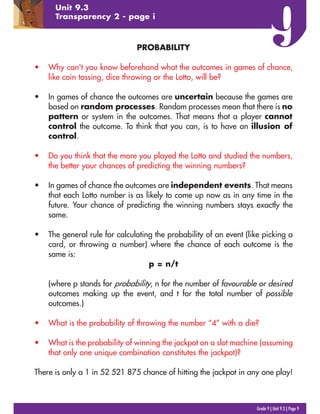
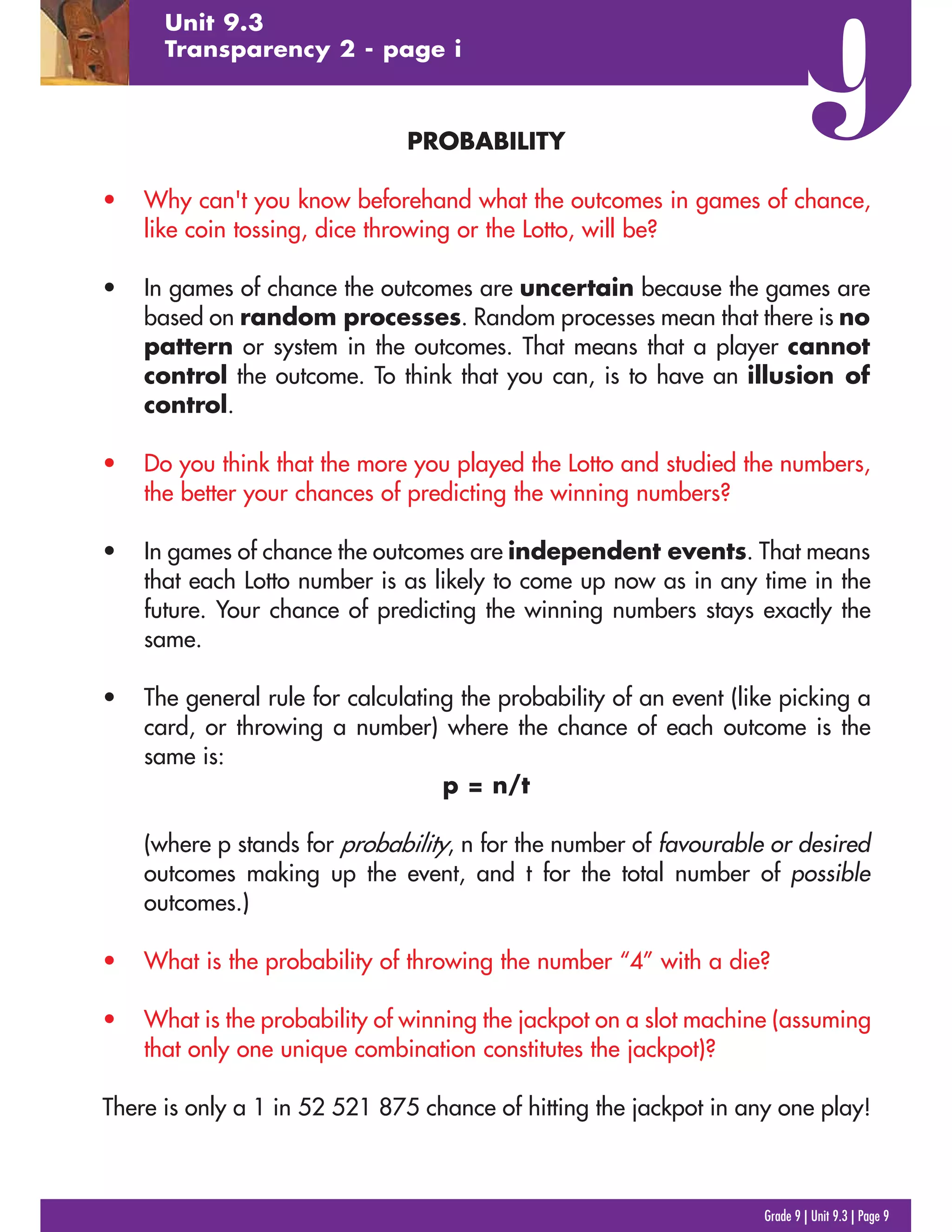
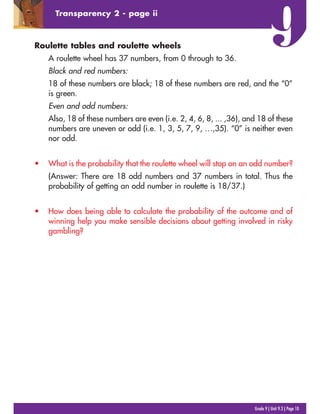
This document discusses probability and games of chance like coin tosses, dice rolls, and lotteries. It explains that in these games, outcomes are random and unpredictable because they involve chance without patterns. The probabilities of outcomes do not change over time. For example, the chance of picking a specific lottery number now is the same as in the future. When calculating probability, it is the number of desired outcomes divided by the total possible outcomes. In roulette, the probability of landing on an odd number is 18/37 since there are 18 odd numbers out of 37 total numbers on the wheel. Understanding probabilities can help people make sensible decisions about gambling by recognizing the risks involved.