O
                   The
                                     Acid Test
      ne thing chemists want to know when they
      investigate liquids (and some solids) is
      whether or not they’re acids or bases. It’s one
                                                            at least. Ammonia, baking soda, and many soaps are
                                                            bases. If you tasted soap, it would be bitter (many
                                                            bases are not for tasting either). If you rubbed some on
factor they consider when trying to predict how one         your hands, it might feel filmy. Not all acids are
substance will react with another.                          exactly the same—some are strong and others are
   You’ve heard of acids. You might have even tasted a      mild. The same is true for bases. And, there’s one
couple—lemon juice and vinegar. A sharp taste is            substance that’s neither—distilled water. It’s what is
characteristic of acids (though many acids are NOT for      known as neutral.
tasting). A base is the opposite of an acid, to chemists


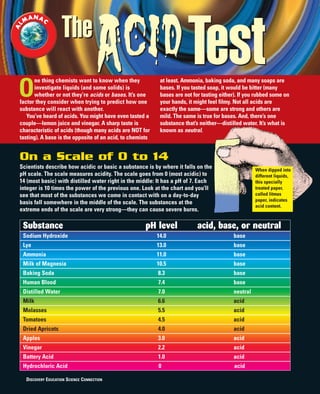
On a Scale of 0 to 14
Scientists describe how acidic or basic a substance is by where it falls on the                      When dipped into
pH scale. The scale measures acidity. The scale goes from 0 (most acidic) to                         different liquids,
14 (most basic) with distilled water right in the middle: It has a pH of 7. Each                     this specially
integer is 10 times the power of the previous one. Look at the chart and you’ll                      treated paper,
see that most of the substances we come in contact with on a day-to-day                              called litmus
                                                                                                     paper, indicates
basis fall somewhere in the middle of the scale. The substances at the
                                                                                                     acid content.
extreme ends of the scale are very strong—they can cause severe burns.

 Substance                                            pH level              acid, base, or neutral
 Sodium Hydroxide                                          14.0                            base
 Lye                                                       13.0                            base
 Ammonia                                                   11.0                            base
 Milk of Magnesia                                          10.5                            base
 Baking Soda                                               8.3                             base
 Human Blood                                               7.4                             base
 Distilled Water                                           7.0                             neutral
 Milk                                                      6.6                             acid
 Molasses                                                  5.5                             acid
 Tomatoes                                                  4.5                             acid
 Dried Apricots                                            4.0                             acid
 Apples                                                    3.0                             acid
 Vinegar                                                   2.2                             acid
 Battery Acid                                              1.0                             acid
 Hydrochloric Acid                                         0                                acid

  DISCOVERY EDUCATION SCIENCE CONNECTION
Showing Their True Colors
 One way to measure an acid’s strength is with a paper strip that has been specially treated with chemicals.
 These chemicals react by changing color in a predictable way when they come into contact with various
 levels of concentration. Like the scale below, universal indicator paper uses a scale of 0 to 14 to show the
 acidity of different substances.
 0       1       2       3        4       5        6       7       8         9        10       11        12         13        14


        Lemon Juice             Orange Juice                      Seawater                                 Bleach


123456
 By the
 Numbers
                                                                Mix-Ups
                                                                What happens to acidity levels when
                                                                a base is combined with an acid? The
                                                                acidity level decreases. A bee injects
                                                                you with an acid when it stings. To
 The abbreviation “pH” stands for the “potential
                                                                counteract the stinging of the acid,
 hydrogen.” Technically, the numbers on the pH scale
                                                                you can rub the sting with a paste of
 refer to the concentration of hydrogen ions in the             baking soda (a base) and water, which will increase
 substance being tested. (Learn more about hydrogen             the pH level and relieve some of the discomfort


98765
 ions on the Internet at www.Chem4Kids.com).
                                                                caused by the acid.


 Acid in                                                                         A PENNY SAVED         Pennies are made
                                                                                 of metals, which tarnish, or darken and

 the News
                                                                                 lose their shine, when they come in
                                                                                 contact with oxygen and moisture. Test
                                                                                 which works best to clean a tarnished
 If you listen to the news or                                                    penny. In a cup, pour 2 tablespoons
 read the papers, you’ve                                                         of vinegar. In another cup, combine
 heard about acid rain. The                                                      1 tablespoon dishwashing liquid and
 normal pH for unpolluted                                                        3 tablespoons of water. In a third cup,
 rain is 5.6, but acid rain has Stone sculpture damaged by acid rain             place 4 tablespoons of water. Drop
 a pH of about 4.6. That                                                         a tarnished penny into each. Wait
 means the acid content is about ten times higher than normal.                   30 minutes, then take a look to see
 The increased acidity is caused by pollution such as car exhaust                which penny is cleanest. What can
                                                                                 you conclude about acids and tarnish
 and industrial emissions that have been released into the
                                                                                 on pennies?
 atmosphere over the years. The rain becomes acidic when the                        Try this experiment with five other
 emissions in the air react with the rainwater. Acid is corrosive,               types of coins or metals. If you can,
 so when acid rain hits a statue or a building, it starts to wear                make one of them a foreign coin.
 away the material. When acid rain hits the soil or a water                      Compile your results on a chart.
 source, it may dissolve important nutrients, making them
 unavailable to plants and fish that need them.

                                                                                     DISCOVERY EDUCATION SCIENCE CONNECTION

9. the acid test

  • 1.
    O The Acid Test ne thing chemists want to know when they investigate liquids (and some solids) is whether or not they’re acids or bases. It’s one at least. Ammonia, baking soda, and many soaps are bases. If you tasted soap, it would be bitter (many bases are not for tasting either). If you rubbed some on factor they consider when trying to predict how one your hands, it might feel filmy. Not all acids are substance will react with another. exactly the same—some are strong and others are You’ve heard of acids. You might have even tasted a mild. The same is true for bases. And, there’s one couple—lemon juice and vinegar. A sharp taste is substance that’s neither—distilled water. It’s what is characteristic of acids (though many acids are NOT for known as neutral. tasting). A base is the opposite of an acid, to chemists On a Scale of 0 to 14 Scientists describe how acidic or basic a substance is by where it falls on the When dipped into pH scale. The scale measures acidity. The scale goes from 0 (most acidic) to different liquids, 14 (most basic) with distilled water right in the middle: It has a pH of 7. Each this specially integer is 10 times the power of the previous one. Look at the chart and you’ll treated paper, see that most of the substances we come in contact with on a day-to-day called litmus paper, indicates basis fall somewhere in the middle of the scale. The substances at the acid content. extreme ends of the scale are very strong—they can cause severe burns. Substance pH level acid, base, or neutral Sodium Hydroxide 14.0 base Lye 13.0 base Ammonia 11.0 base Milk of Magnesia 10.5 base Baking Soda 8.3 base Human Blood 7.4 base Distilled Water 7.0 neutral Milk 6.6 acid Molasses 5.5 acid Tomatoes 4.5 acid Dried Apricots 4.0 acid Apples 3.0 acid Vinegar 2.2 acid Battery Acid 1.0 acid Hydrochloric Acid 0 acid DISCOVERY EDUCATION SCIENCE CONNECTION
  • 2.
    Showing Their TrueColors One way to measure an acid’s strength is with a paper strip that has been specially treated with chemicals. These chemicals react by changing color in a predictable way when they come into contact with various levels of concentration. Like the scale below, universal indicator paper uses a scale of 0 to 14 to show the acidity of different substances. 0 1 2 3 4 5 6 7 8 9 10 11 12 13 14 Lemon Juice Orange Juice Seawater Bleach 123456 By the Numbers Mix-Ups What happens to acidity levels when a base is combined with an acid? The acidity level decreases. A bee injects you with an acid when it stings. To The abbreviation “pH” stands for the “potential counteract the stinging of the acid, hydrogen.” Technically, the numbers on the pH scale you can rub the sting with a paste of refer to the concentration of hydrogen ions in the baking soda (a base) and water, which will increase substance being tested. (Learn more about hydrogen the pH level and relieve some of the discomfort 98765 ions on the Internet at www.Chem4Kids.com). caused by the acid. Acid in A PENNY SAVED Pennies are made of metals, which tarnish, or darken and the News lose their shine, when they come in contact with oxygen and moisture. Test which works best to clean a tarnished If you listen to the news or penny. In a cup, pour 2 tablespoons read the papers, you’ve of vinegar. In another cup, combine heard about acid rain. The 1 tablespoon dishwashing liquid and normal pH for unpolluted 3 tablespoons of water. In a third cup, rain is 5.6, but acid rain has Stone sculpture damaged by acid rain place 4 tablespoons of water. Drop a pH of about 4.6. That a tarnished penny into each. Wait means the acid content is about ten times higher than normal. 30 minutes, then take a look to see The increased acidity is caused by pollution such as car exhaust which penny is cleanest. What can you conclude about acids and tarnish and industrial emissions that have been released into the on pennies? atmosphere over the years. The rain becomes acidic when the Try this experiment with five other emissions in the air react with the rainwater. Acid is corrosive, types of coins or metals. If you can, so when acid rain hits a statue or a building, it starts to wear make one of them a foreign coin. away the material. When acid rain hits the soil or a water Compile your results on a chart. source, it may dissolve important nutrients, making them unavailable to plants and fish that need them. DISCOVERY EDUCATION SCIENCE CONNECTION