CHAPTER 9:
HUMAN RESOURCES MANAGEMENT
CH 9
© 2015 SAGE Publications
Human Resources Management
Harassment
• Harassment- Unwelcome conduct that is based on race, color,
religion, sex (including pregnancy), national origin, age (40 or
older), disability or genetic information
• Sexual harassment- Unwelcome sexual advances, requests for
sexual favors, and other verbal or physical harassment of a
sexual nature
Job Analysis
• Job analysis
• Determines what a position entails and the qualifications needed to staff
the position
• Job description
• Identifies the tasks and responsibilities of a position
• Job specifications
• Identifies the qualifications needed by the person who is to fill a position
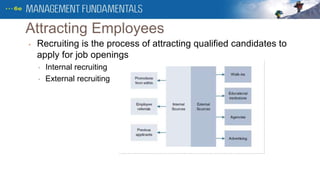
Attracting Employees
• Recruiting is the process of attracting qualified candidates to
apply for job openings
• Internal recruiting
• External recruiting
Internal recruiting
• Internal recruiting involves filling job openings with current
employees or people they know
• Promotions from within
• Employee referrals
External recruiting
• External recruiting involves filling job openings with applicants
outside the organization
• Walk-ins
• Educational institutions
• Agencies
• Advertising
The Selection Process
• Application Form
• Screening Interviews
• Testing
• Background and Reference Checks
• Interviewing
• Hiring
Orientation
• Introducing new employees to the organization and their jobs
• Most orientations emphasize corporate values, culture and
strengths
• Description of organization and department functions
• Specification of job tasks and responsibilities
• Explanation of standing plans
• A tour of the building(s)
• Introduction to coworkers
Training and Development
• Training is the process of teaching employees the skills
necessary to perform a job
• Development is the ongoing education to improve skills for
present and future jobs
Off-the-Job and On-the-Job Training
• Off-the-job training is conducted away from the work
site. A common method is vestibule training
• Vestibule training develops skills in a simulated setting
• On-the-job training is done at the work site with the
resources the employee uses to perform the job
Job Instructional Training
Job Evaluation
• Job evaluation
• Determining the worth of each job relative to the other jobs within the
organization
• Comparable worth is the principle that jobs that are distinctly different
but that entail similar levels of ability, responsibility, skills, and working
conditions, are of equal value and should have the same pay scale
Benefits
• Benefits are various nonwage compensations provided to
employees in addition to their normal wages or salaries
• Legally required benefits include workers’ compensation to
cover job-related injuries, unemployment compensation to
provide for employees who are laid off or terminated, and Social
Security for retirement.
Health and Safety
• Companies must meet safety standards set by the U.S.
Occupational Safety and Health Administration (OSHA),
maintain records of injuries and deaths due to workplace
accidents, and submit to on-site inspections
Unions and Labor Relations
• A labor union is an organization that represents employees in
collective bargaining over wages, benefits, and working
conditions with the employer
• Labor relations are the interactions between management and
unionized employees
• Collective bargaining is the negotiation process resulting in a
contract between employees and management that covers
employment condition
The Union-Organizing Process
Terminating Employees
• Attrition: occurs when employees leave for other jobs, elect to
stop working for a period of time, or retire
• Firing: employees who do not perform to standards or violate
serious rules should be fired
• Layoffs/downsizing: employees can also lose their jobs due to
company layoffs or downsizing based on a retrenchment strategy

9 human resources management

  • 1.
    CHAPTER 9: HUMAN RESOURCESMANAGEMENT CH 9 © 2015 SAGE Publications
  • 2.
  • 3.
    Harassment • Harassment- Unwelcomeconduct that is based on race, color, religion, sex (including pregnancy), national origin, age (40 or older), disability or genetic information • Sexual harassment- Unwelcome sexual advances, requests for sexual favors, and other verbal or physical harassment of a sexual nature
  • 4.
    Job Analysis • Jobanalysis • Determines what a position entails and the qualifications needed to staff the position • Job description • Identifies the tasks and responsibilities of a position • Job specifications • Identifies the qualifications needed by the person who is to fill a position
  • 5.
    Attracting Employees • Recruitingis the process of attracting qualified candidates to apply for job openings • Internal recruiting • External recruiting
  • 6.
    Internal recruiting • Internalrecruiting involves filling job openings with current employees or people they know • Promotions from within • Employee referrals
  • 7.
    External recruiting • Externalrecruiting involves filling job openings with applicants outside the organization • Walk-ins • Educational institutions • Agencies • Advertising
  • 8.
    The Selection Process •Application Form • Screening Interviews • Testing • Background and Reference Checks • Interviewing • Hiring
  • 9.
    Orientation • Introducing newemployees to the organization and their jobs • Most orientations emphasize corporate values, culture and strengths • Description of organization and department functions • Specification of job tasks and responsibilities • Explanation of standing plans • A tour of the building(s) • Introduction to coworkers
  • 10.
    Training and Development •Training is the process of teaching employees the skills necessary to perform a job • Development is the ongoing education to improve skills for present and future jobs
  • 11.
    Off-the-Job and On-the-JobTraining • Off-the-job training is conducted away from the work site. A common method is vestibule training • Vestibule training develops skills in a simulated setting • On-the-job training is done at the work site with the resources the employee uses to perform the job
  • 12.
  • 13.
    Job Evaluation • Jobevaluation • Determining the worth of each job relative to the other jobs within the organization • Comparable worth is the principle that jobs that are distinctly different but that entail similar levels of ability, responsibility, skills, and working conditions, are of equal value and should have the same pay scale
  • 14.
    Benefits • Benefits arevarious nonwage compensations provided to employees in addition to their normal wages or salaries • Legally required benefits include workers’ compensation to cover job-related injuries, unemployment compensation to provide for employees who are laid off or terminated, and Social Security for retirement.
  • 15.
    Health and Safety •Companies must meet safety standards set by the U.S. Occupational Safety and Health Administration (OSHA), maintain records of injuries and deaths due to workplace accidents, and submit to on-site inspections
  • 16.
    Unions and LaborRelations • A labor union is an organization that represents employees in collective bargaining over wages, benefits, and working conditions with the employer • Labor relations are the interactions between management and unionized employees • Collective bargaining is the negotiation process resulting in a contract between employees and management that covers employment condition
  • 17.
  • 18.
    Terminating Employees • Attrition:occurs when employees leave for other jobs, elect to stop working for a period of time, or retire • Firing: employees who do not perform to standards or violate serious rules should be fired • Layoffs/downsizing: employees can also lose their jobs due to company layoffs or downsizing based on a retrenchment strategy