Disease associated with pregnancy
Some of the disease associated with pregnancy are:
Anemia
Cardiac disease
Diabetic mellitus
Pulmonary tuberculosis
Malaria
UTI
2
Anemia in pregnancy
Definition: it is defined as a Hgb level of < 11g/dl
(Hct<33%) except during the second trimester,
when the cut-off point is reduced to 10.5 g/dl
It is said to be SEVER if the Hgb is < 7gm/dl
Incidence
Affect ~5%-50% of pregnant women in tropics and
< 2% in developed country
Majority are nutritional anemia
Iron deficiency account for 80-95% of nutritional
anemia during pregnancy
Megaloblastic anemia from folate & vitamin B12
deficiency account for only 3-4% of nutritional
3
Anemia in pregnancy…cont’d
Incidence … cont’d
Other cause of anemia (Hgb, Leukemia, hemolytic
anemia, anemia of chronic illness and the like) are
not common during pregnancy
Pathophysiology
 The requirement of iron during pregnancy is around
1000 mg
 There is additional needs for blood loss during
delivery (190 mg) & lactation (1mg/day)
 Assuming the stores are adequate, a pregnant
women’s average daily dietary requirement is 3.5
mg/day.
4
Anemia in pregnancy…cont’d
The predisposing factors for iron deficiency
anemia are
 Inadequate intake of iron: food taboos, poor
dietary habit, low socioeconomic status
 Low store at the beginning of pregnancy: short
interval b/n pregnancy, excess menstrual flow,
hookworm infestation
 Blood loss during pregnancy: early & late
pregnacy bleeding, hookworm
 Increased demand: multiple pregnancy , chronic
infections
5
Anemia in pregnancy…cont’d
Complication
Fetal: spontaneous abortion, preterm delivery, low
birth weight, IUGR, still birth
Maternal: CHF & pulmonary edema especially in
labour and postpartum period, PPH, puerperal
sepsis, delayed wound healing, apathy, increased
risk of other infections such as TB
Neonatal : anemia of infancy
6
Anemia in pregnancy…cont’d
Management
It depend on the cause, severity and gestational age
I. Iron deficiency anemia
 Ferrous sulfate 100 mg containing 60 mg elemental iron
w/h 10% are absorbed, Tid, po
Continue the treatment for 3 months till the Hgb
concentration return to normal
 Alternative are Ferrous fumarate & ferrous gluconate
 Follow up with weekly Hgb & reticulocyte
determination
 Parenteral route of treatment in cases of intolerance of
oral route or refractory to treatment by oral route and
7
Anemia in pregnancy…cont’d
Management … cont’d
 Indication for blood transfusion are:-
presence of CHF,
sever anemia with Hgb of < 4.4 gm/dl,
anemia with sepsis & renal failure,
anemic patient with Hgb of 6-7gm/dl seen for
the first time in labour, abortion or in the last 4
weeks of pregnancy
 Packed RBC should be used
 Underlying causes, if any (like hook worm, malaria
& chronic illness), other than nutritional deficiency
should also be treated
8
Anemia in pregnancy…cont’d
Management … cont’d
II. Megaloblastic anemia
 Folic acid 5 mg tid/day & continued at a dose of
5mg/day for the rest of prregnancy
9
Anemia in pregnancy…cont’d
Prevention of anemia
Improve diet and dietary habit, socioeconomic
status
Prevent and treat hook worm (deforming) &
malaria
Child spacing by FP
Universal supplementation of iron and folic acid
to all pregnant women throughout pregnancy
Iron fortification of staple diet
10
Cardiac disease in pregnancy
Introduction
 A women with a known cardiac illness can become
pregnant or a healthy pregnant women can develop
cardiac illness while pregnant
 In a women with preexisting cardiac illness, the
increased homodynamic burden of pregnancy,
labour and delivery can aggravate the Sm of the
illness and/or precipitate complications
 The risk of CHF is highest around:
 24 week of gestation,
labour and
the immediate postpartum period
11
Cardiac disease in pregnancy…cont’d
Significance
 Cardiovascular diseases are the most important
non-obstetric causes of disability and death of
pregnant women, 0.4-4% of pregnancies
 The most common form that complicate
pregnancy is rheumatic heart disease
12
Cardiac disease in pregnancy…cont’d
Classification
The degree of functional disability due to cardiac
disease is graded
according to the New York Heart Association as
follow
Class I : No Sm limiting ordinary physical
activity
Class II: slight limitation with mild to moderate
activity with no symptom at rest
13
Class III: marked limitation with less
than ordinary activity; dyspnea or pain
on minimal activity
Class IV: Sm at rest or with minimal
activity and Sm of frank CHF
Note: with rare exceptions, women in
class I and most in class II go
through pregnancy without
morbidity
14
Cardiac disease in pregnancy…cont’d
Classification…
 As much as possible pt in class III & IV should
avoid pregnancy
Therapeutic abortion is an option in early
pregnancy
If pregnancy is continued, prolonged
hospitalization or bed rest is will often be
necessary
These women tolerate major surgical procedures
poorly
15
Cardiac disease in pregnancy…cont’d
Management
Once diagnosed, these pt should be referred for
specialized care by obstetrician, internist and
neonatologist
The general principle in management are
I. Antepartum
Bed rest
Moderate dietary restriction
Provision of diuretics
Prophylactic digitalization /If the pulse rate exceeds 110
per minute in between uterine contractions, rapid
digitalization is done by intravenous digoxin 0.5 mg.
Frequent ANC for maternal and fetal monitoring
16
Cardiac disease in pregnancy…cont’d
Management…
II. Intrapartum
 Unless contraindicated, vaginal route of delivery is prefered
 Conduct labour and delivery in lateral decubitus position
 Provide adequate pain relief
 Restrict IV fluid
 Provide O2 with breathing mask along with continuous
oxymeter
 Shorten the second stage by instrumental delivery
 Do not use ergometrin in the third stage
 Prevent postpartum pulmonary edema by keeping the
women in sitting position
17
Cardiac disease in pregnancy…cont’d
Management…
II. Intrapartum …
Provide thrombus prophylaxis by early
ambulation and/or low dose asprin
Note: a pt with a known heart disease should
consult her physician before becoming pregnant
to determine the advisability & optimum timing
for pregnancy
18
Cardiac disease in pregnancy…cont’d
Management…
II. Intrapartum …
In a pregnant women with cardiac disease :
Recognize the presence of preexisting cardiac
disease
Assess the degree of disability
Anticipate, prevent, diagnose and treat
complications such as arrhythmia, CHF when
they arise
Advise the pt regarding discontinuation or
continuation of pregnancy and risk of future
19
Malaria in pregnancy
It is one of the infectious disease
 During pregnancy, immunity slackens
resulting in increased parasitemia and
relapse rate of dormant exocerythrocytic
stages
 Episode of malarial infection increase by 3
to 4 folds during the latter 2 trimesters of
pregnancy and 2 month postpartum
 Severity of falicparum malaria is increased
 Malarial attacks are severe and cerebral
malaria is common especially in nulliparous
20
Malaria in pregnancy… cont’d
Effects
 They are related to pyrexia, haemolysis,
placental parasitization (in immune), and
transplacental infection (in nonimmune)
Maternal: increase number of attacks, anemia
from folic acid deficiency induced by
haemolysis, cerebral malaria, purperal pyrexia
Fetal: spontanous abortion, preterm labor and
prematurity, IUGR, intra uterine fetal death
(stillbirth), congenital maleria in nonimmune in
few days after delivery
21
Malaria in pregnancy… cont’d
Diagnosis
 In immune women Symptom are stable
 Non immune women present with Symptom
with fever and chills
 Blood film(B/F) identifying the plasmodium
parasite confirm the diagnosis
22
Malaria in pregnancy… cont’d
Treatment
 Once diagnosed, malaria should be treated
aggressively
 Sever form need inpatient treatment with
parenteral antimalarials
 Drug of choice depends on the type of
plasmodium parasite and the degree of
resistance in the community
 Chloroquine, sulfadoxine-pyrimethamine, mef
loquine and quinine are safe to be used in
pregnancy
23
Malaria in pregnancy… cont’d
Prophylaxis
 This is given for nonimmune people traveling to
endemic areas
 The drug should be taken 1-2 weeks before
travel & continued for 4 weeks after return
 Depending on the pattern of resistance, drug
like chloroquine, mef loquine, sulfadoxine-
pyrimethamine, can be used
24
Tuberculosis
Effect on pregnancy
 Preterm delivery, IUGR, & low birth weight
w/h increase perinatal mortality by 6 fold
 Adverse outcome on pregnancy correlate
with late diagnosis, incomplete or irregular
treatment and advanced disease
25
Dx and management
 Diagnosis & management is similar to
non pregnant state
 With the exception of streptomycin &
pyrazinamide, all the first-line
antituberculosis drug are safe to be
used during pregnancy
 Streptomycin causes congenital defness
in the new born
 The safety of the use of pyrazinamide
during pregnancy is not ascertained
26
Tubeculosis…cont’d
Dx and management…
 Drug used for treatment of tuberculosis
include
Isonizide (INH), rifampicin, and
ethambutol
 However pyrazinamide can be included into
the regimen if there is drug resistance
27
Tubeculosis…cont’d
Neonatal TB
 Neonate, though rare, can get TB infection
in utero if the mother is suffering from active
tuberculosis
 The incidence of congenital infection
increases if the mother is HIV positive
 The TB lesions in the newborn are usually
found in the liver
 This can be prevented if the mother is
properly treated while pregnant
28
Diabetic mellitus in pregnancy
 PREGESTATIONAL
 TYPE I: IDDM
 TYPE II: NIDDM
 GESTATIONAL
29
Diabetic mellitus in pregnancy…cont’d
 Gestational diabetics(GDM):Glucose
intolerance of variable degree with onset or
first recognition during pregnancy
30
Diabetic mellitus in pregnancy…cont’d
PHYSIOLOGIC CHANGE
 Pregnancy is characterized by insulin
resistance and hyperinsulinemia
 The resistance stems from placental
secretion of diabetogenic hormones
Human placental lactogen- most
responsible
Growth hormone
Corticotropin-releasing hormone
Progesterone
Estrogen
31
Diabetic mellitus in pregnancy…cont’d
PHYSIOLOGIC CHANGE…CONT’D
 Glucose is transported to the fetus via carrier
mediated active transport
 Free fatty acid, triglycerides and ketones
increase resulting in accelerated starvation
 Glucose is spared for fetal consumption
 Decreased fasting glucose level in early
pregnancy
 Fetal glucose level is 80% of maternal value
32
Diabetic mellitus in pregnancy…cont’d
SCREENING
 At 24-28 weeks but earlier if there is high
degree of suspicion
 Universal screening: All pregnant women
 Selective: based on risk factors
Age >30 yrs
Previous infant > 4 Kg
History of GDM
Family history Of diabetes
33
Obesity
Polyhydramnios
Previous unexplained perinatal loss
 << birth of a malformed child
Glycosuria
Polycystic ovary syndrome
Current use of glucocorticoids
Personal birth weight of over 9 lbs
34
Diabetic mellitus in pregnancy…cont’d
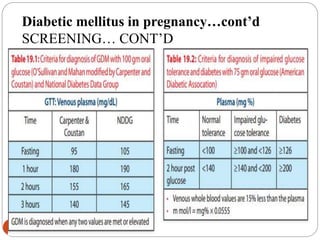
SCREENING… CONT’D
 SCREENING PROTOCOL
 50 gm glucose is taken po with out prior
preparation then
 If 1hr RBG is > 140 mg/dl
 100g 3hr OGTT should be done after 8-
14 hrs fasting
 This will identify 80% of women with
GDM
 If the value is >180mg/dl FBS should be
checked the next day
 OGTT is abnormal if >2 values are equal
35
36
Diabetic mellitus in pregnancy…cont’d
SCREENING… CONT’D
Diabetic mellitus in pregnancy…cont’d
COMPLICATIONS
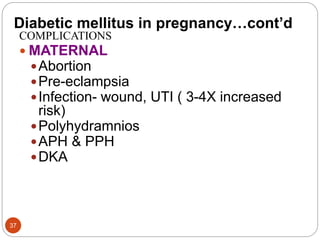
 MATERNAL
Abortion
Pre-eclampsia
Infection- wound, UTI ( 3-4X increased
risk)
Polyhydramnios
APH & PPH
DKA
37
Diabetic mellitus in pregnancy…cont’d
COMPLICATIONS
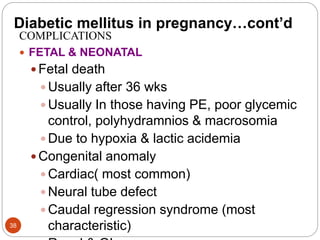
 FETAL & NEONATAL
 Fetal death
 Usually after 36 wks
 Usually In those having PE, poor glycemic
control, polyhydramnios & macrosomia
 Due to hypoxia & lactic acidemia
 Congenital anomaly
 Cardiac( most common)
 Neural tube defect
 Caudal regression syndrome (most
characteristic)
38
Diabetic mellitus in pregnancy…cont’d
COMPLICATIONS
 FETAL & NEONATAL… cont’d
 Macrosomia
 Birth trauma
 Shoulder dystocia- due to disproportionate
growth
 Hypoglycemia
 RDS- due to reduced production of
surfactant
 Hypo calcemia & hypo magnesemia
 Polycythemia & hyperbilirubinemia
 Diabetes in later life
39
Diabetic mellitus in pregnancy…cont’d
Management
 Diet
 Daily caloric intake of 30kcal/Kg with 3
meals 3 snacks
 10% breakfast, 30%lunch, 30%dinner &
30%snacks
 40-50% CHO, 30% fat & 20-30% protein
 Exercise
 Moderate exercise
40
 Monitoring blood glucose
 Optimal values are FBS 70-95 mg/dl &
2hr post prandial <120 mg/dl
 Glycosylated hemoglobin (HbA1c) every
4 weeks to assess control
41
Diabetic mellitus in pregnancy…cont’d
Management… cont’d
 Insulin
 If FBG is > 105 mg/dl or 2hr BG is > 120
mg/dl
 Starting dose
 0.6u/Kg, 0.7u/Kg & 0.8u/Kg in the 1st , 2nd
& 3rd trimester
 2/3 in the morning & 1/3 in the evening
 For the morning
 2/3 intermediate acting & 1/3 short acting
 For the evening
 1/2 intermediate acting & 1/2 short acting
 Oral hypoglycemic agent is not
42
Diabetic mellitus in pregnancy…cont’d
Management… cont’d
 Pre conception & at first visit
 Pre conception counseling
 Standard prenatal test
 More frequent visits
 Base line renal function test,
electrocardiogram, etc
 Hb A1c( risk for congenital anomaly is high if
>10%)
 Serum α fetoprotein at 16 wks
 Antepartum surveillance
 Kick counts
43
Diabetic mellitus in pregnancy…cont’d
Management… cont’d
 Timing of delivery
Depending on metabolic control & fetal
condition
Fetal monitoring especially for insulin
requiring
 Route of delivery
C/S for macrosomia( wt > 4500g) and
other obstetric indications
44
Diabetic mellitus in pregnancy…cont’d
Management… cont’d
 Labor
Withhold morning insulin before an
elective induction or C/S
Intrapartum 5% or 10% glucose & regular
insulin infusion at a rate of 0.5-2u/hr
10u regular insulin in 5%/10% DNS at a
rate of 100-125ml/hr
Blood glucose measurement every 2 hrs
45
Diabetic mellitus in pregnancy…cont’d
Management… cont’d
 Puerperium
Relax tight control
Honeymoon period with decreased
insulin requirement after delivery
GDM patients usually don’t need insulin
For pre-gestational diabetes 2/3 of the
pre-pregnancy dose or ½ of the present
dose
Blood glucose measurement every 6 hrs
Breast feeding is encouraged
75g OGTT at 6th wks for GDM- diabetes
diagnosed if
FBS is > 126mg/dl or
46
Diabetic mellitus in pregnancy…cont’d
Management… cont’d
 Contraception
Tubal ligation if family is completed
Barrier methods
Low dose OCPs- in well controlled cases
IUCD
DMPA & implant- not recommended
47
Diabetic mellitus in pregnancy…cont’d
KETO ACIDOSIS DURING PREGNANCY
 Definition
Plasma glucose >300mg/dl,
HCO3<15mEq/l &
PH<7.3
 Risk factors
Infection, volume depletion, failure to take
insulin & C/S
 Management
Lab assessment
Insulin – regular insulin 10-20 u IV then
5-10 u/hr
IV fluid( 4- 6L in the 1st 12 hrs)
48
Urinary problem during pregnancy
A) Asymptomatic bacteruria
 It is defined as the presence of >105 colony
forming unit (CFU) of bacteria of single
pathogen per ml of clean catch midstream
urine sample with no clinical Sm of urinary
tract diseas
Predisposing factors
Reduced peristalsis & dilatation of ureters &
the bladder causing incomplete emptying
and stasis of urine
Pregnancy induced glycosuria
49
Urinary problem during pregnancy
A) Asymptomatic bacteruria …
Significance
 If not treated, 25%-30% of pt with
asymptomatic bacteruria will latter develop
acute pyelonephritis as compared to 2%-
3% of pt who have been treated
 It’s also associated with preterm labor &
postpartum endometritis
 Acute pylonephritis is one of cause of
preterm birth, PROM, IUGR, & perinatal
death
50
Urinary problem during pregnancy
A) Asymptomatic bacteruria …
Etiology
 E. coli (80%-90%)
 Others are: Klebsiella, Proteus,
Pseudomonas, S. saprophyticus & C
trachomatis
Diagnosis & Management
 Routine urine culture is recommended in
ANC
 Once diagnosed, all women with
asymptomatic bacteruria should be treated
51
Urinary problem during pregnancy
A) Asymptomatic bacteruria …
Diagnosis & Management…
Commonly used antibiotics (since the
common pathogen is E coli):
Amoxicillin, Amoxicillin/clavulunate
potassium, Cephalexin, Nitrofurantoin,
Trimethoprim – sulfamethoxazole or
one of the third generation
cephalosporin
52
 The antibiotic should be safe to be used
during pregnancy
 Culture of urine should be done 1-2
weeks after therapy is begun & monthly
for the remaining of pregnancy
 Treatment failure can be due to
resistance & pt non compliance
53
Urinary problem during pregnancy
B) Acute pylonephritis
 It is infection of renal pelvis and kidneys
 The single most important predisposing
factor for acute pylonephritis during
pregnancy is asymptomatic bacteruria
 The etiological agent is similar with those of
asymptomatic bacteruria and cystitis
54
Clinical feature
Generally develop rapidly over a few hrs
or a day
Sm include fever (usually > 39 oc ),
shaking chills, nausea vomiting, bilateral
flank pain, and possibly diarhhea
Sm of cystitis may or may not be there
(frequency, urgency, dysuria, suprapubic
discomfort/pain)
55
Urinary problem during pregnancy
B) Acute pylonephritis…
Clinical feature …
 In some, hematuria may be evident
 On P/E, there is pyrexia and tachycardia along with
costovertabral angle (CVA) tenderness on one or both
side
56
Diagnosis
 Urine microscopy showing pyuria (in
centrifuged urin > 10 WBC per high
power field)
 Bacteruria, hematuria (1-2 RBC in
centrifuged urine or > 5 RBC in
uncentrifuged urin per high power field ),
Leukocytosis (WBC> 15,000/mm3) &
 Positive urine/blood culture
57
Urinary problem during pregnancy
B) Acute pylonephritis…
Complication
 Septic shock, acute renal failure, preterm
labor, PROM, IUGR& low birth weight baby
Management
Admit for parentral antibiotics
Start high dose parentral antibiotics until the
pt is affebril for 24-48 hrs (usually for 3-4
days) then continue orally for 7 -10 days
Antibiotics are initially started empirically
but latter can be adjusted according to
58
Urinary problem during pregnancy
B) Acute pylonephritis…
Management
Example: Ampicillin 1 gm qid + gentamycin
80 mg Tid or ceftriaxone 1-2 g daily
 Supportive care include
Correction of DHN
 antipyretics agent to control fever
Monitoring of V/S and urine out put
59

8-Disease associated with pregnancy - Copy.ppt

  • 1.
  • 2.
    Disease associated withpregnancy Some of the disease associated with pregnancy are: Anemia Cardiac disease Diabetic mellitus Pulmonary tuberculosis Malaria UTI 2
  • 3.
    Anemia in pregnancy Definition:it is defined as a Hgb level of < 11g/dl (Hct<33%) except during the second trimester, when the cut-off point is reduced to 10.5 g/dl It is said to be SEVER if the Hgb is < 7gm/dl Incidence Affect ~5%-50% of pregnant women in tropics and < 2% in developed country Majority are nutritional anemia Iron deficiency account for 80-95% of nutritional anemia during pregnancy Megaloblastic anemia from folate & vitamin B12 deficiency account for only 3-4% of nutritional 3
  • 4.
    Anemia in pregnancy…cont’d Incidence… cont’d Other cause of anemia (Hgb, Leukemia, hemolytic anemia, anemia of chronic illness and the like) are not common during pregnancy Pathophysiology  The requirement of iron during pregnancy is around 1000 mg  There is additional needs for blood loss during delivery (190 mg) & lactation (1mg/day)  Assuming the stores are adequate, a pregnant women’s average daily dietary requirement is 3.5 mg/day. 4
  • 5.
    Anemia in pregnancy…cont’d Thepredisposing factors for iron deficiency anemia are  Inadequate intake of iron: food taboos, poor dietary habit, low socioeconomic status  Low store at the beginning of pregnancy: short interval b/n pregnancy, excess menstrual flow, hookworm infestation  Blood loss during pregnancy: early & late pregnacy bleeding, hookworm  Increased demand: multiple pregnancy , chronic infections 5
  • 6.
    Anemia in pregnancy…cont’d Complication Fetal:spontaneous abortion, preterm delivery, low birth weight, IUGR, still birth Maternal: CHF & pulmonary edema especially in labour and postpartum period, PPH, puerperal sepsis, delayed wound healing, apathy, increased risk of other infections such as TB Neonatal : anemia of infancy 6
  • 7.
    Anemia in pregnancy…cont’d Management Itdepend on the cause, severity and gestational age I. Iron deficiency anemia  Ferrous sulfate 100 mg containing 60 mg elemental iron w/h 10% are absorbed, Tid, po Continue the treatment for 3 months till the Hgb concentration return to normal  Alternative are Ferrous fumarate & ferrous gluconate  Follow up with weekly Hgb & reticulocyte determination  Parenteral route of treatment in cases of intolerance of oral route or refractory to treatment by oral route and 7
  • 8.
    Anemia in pregnancy…cont’d Management… cont’d  Indication for blood transfusion are:- presence of CHF, sever anemia with Hgb of < 4.4 gm/dl, anemia with sepsis & renal failure, anemic patient with Hgb of 6-7gm/dl seen for the first time in labour, abortion or in the last 4 weeks of pregnancy  Packed RBC should be used  Underlying causes, if any (like hook worm, malaria & chronic illness), other than nutritional deficiency should also be treated 8
  • 9.
    Anemia in pregnancy…cont’d Management… cont’d II. Megaloblastic anemia  Folic acid 5 mg tid/day & continued at a dose of 5mg/day for the rest of prregnancy 9
  • 10.
    Anemia in pregnancy…cont’d Preventionof anemia Improve diet and dietary habit, socioeconomic status Prevent and treat hook worm (deforming) & malaria Child spacing by FP Universal supplementation of iron and folic acid to all pregnant women throughout pregnancy Iron fortification of staple diet 10
  • 11.
    Cardiac disease inpregnancy Introduction  A women with a known cardiac illness can become pregnant or a healthy pregnant women can develop cardiac illness while pregnant  In a women with preexisting cardiac illness, the increased homodynamic burden of pregnancy, labour and delivery can aggravate the Sm of the illness and/or precipitate complications  The risk of CHF is highest around:  24 week of gestation, labour and the immediate postpartum period 11
  • 12.
    Cardiac disease inpregnancy…cont’d Significance  Cardiovascular diseases are the most important non-obstetric causes of disability and death of pregnant women, 0.4-4% of pregnancies  The most common form that complicate pregnancy is rheumatic heart disease 12
  • 13.
    Cardiac disease inpregnancy…cont’d Classification The degree of functional disability due to cardiac disease is graded according to the New York Heart Association as follow Class I : No Sm limiting ordinary physical activity Class II: slight limitation with mild to moderate activity with no symptom at rest 13
  • 14.
    Class III: markedlimitation with less than ordinary activity; dyspnea or pain on minimal activity Class IV: Sm at rest or with minimal activity and Sm of frank CHF Note: with rare exceptions, women in class I and most in class II go through pregnancy without morbidity 14
  • 15.
    Cardiac disease inpregnancy…cont’d Classification…  As much as possible pt in class III & IV should avoid pregnancy Therapeutic abortion is an option in early pregnancy If pregnancy is continued, prolonged hospitalization or bed rest is will often be necessary These women tolerate major surgical procedures poorly 15
  • 16.
    Cardiac disease inpregnancy…cont’d Management Once diagnosed, these pt should be referred for specialized care by obstetrician, internist and neonatologist The general principle in management are I. Antepartum Bed rest Moderate dietary restriction Provision of diuretics Prophylactic digitalization /If the pulse rate exceeds 110 per minute in between uterine contractions, rapid digitalization is done by intravenous digoxin 0.5 mg. Frequent ANC for maternal and fetal monitoring 16
  • 17.
    Cardiac disease inpregnancy…cont’d Management… II. Intrapartum  Unless contraindicated, vaginal route of delivery is prefered  Conduct labour and delivery in lateral decubitus position  Provide adequate pain relief  Restrict IV fluid  Provide O2 with breathing mask along with continuous oxymeter  Shorten the second stage by instrumental delivery  Do not use ergometrin in the third stage  Prevent postpartum pulmonary edema by keeping the women in sitting position 17
  • 18.
    Cardiac disease inpregnancy…cont’d Management… II. Intrapartum … Provide thrombus prophylaxis by early ambulation and/or low dose asprin Note: a pt with a known heart disease should consult her physician before becoming pregnant to determine the advisability & optimum timing for pregnancy 18
  • 19.
    Cardiac disease inpregnancy…cont’d Management… II. Intrapartum … In a pregnant women with cardiac disease : Recognize the presence of preexisting cardiac disease Assess the degree of disability Anticipate, prevent, diagnose and treat complications such as arrhythmia, CHF when they arise Advise the pt regarding discontinuation or continuation of pregnancy and risk of future 19
  • 20.
    Malaria in pregnancy Itis one of the infectious disease  During pregnancy, immunity slackens resulting in increased parasitemia and relapse rate of dormant exocerythrocytic stages  Episode of malarial infection increase by 3 to 4 folds during the latter 2 trimesters of pregnancy and 2 month postpartum  Severity of falicparum malaria is increased  Malarial attacks are severe and cerebral malaria is common especially in nulliparous 20
  • 21.
    Malaria in pregnancy…cont’d Effects  They are related to pyrexia, haemolysis, placental parasitization (in immune), and transplacental infection (in nonimmune) Maternal: increase number of attacks, anemia from folic acid deficiency induced by haemolysis, cerebral malaria, purperal pyrexia Fetal: spontanous abortion, preterm labor and prematurity, IUGR, intra uterine fetal death (stillbirth), congenital maleria in nonimmune in few days after delivery 21
  • 22.
    Malaria in pregnancy…cont’d Diagnosis  In immune women Symptom are stable  Non immune women present with Symptom with fever and chills  Blood film(B/F) identifying the plasmodium parasite confirm the diagnosis 22
  • 23.
    Malaria in pregnancy…cont’d Treatment  Once diagnosed, malaria should be treated aggressively  Sever form need inpatient treatment with parenteral antimalarials  Drug of choice depends on the type of plasmodium parasite and the degree of resistance in the community  Chloroquine, sulfadoxine-pyrimethamine, mef loquine and quinine are safe to be used in pregnancy 23
  • 24.
    Malaria in pregnancy…cont’d Prophylaxis  This is given for nonimmune people traveling to endemic areas  The drug should be taken 1-2 weeks before travel & continued for 4 weeks after return  Depending on the pattern of resistance, drug like chloroquine, mef loquine, sulfadoxine- pyrimethamine, can be used 24
  • 25.
    Tuberculosis Effect on pregnancy Preterm delivery, IUGR, & low birth weight w/h increase perinatal mortality by 6 fold  Adverse outcome on pregnancy correlate with late diagnosis, incomplete or irregular treatment and advanced disease 25
  • 26.
    Dx and management Diagnosis & management is similar to non pregnant state  With the exception of streptomycin & pyrazinamide, all the first-line antituberculosis drug are safe to be used during pregnancy  Streptomycin causes congenital defness in the new born  The safety of the use of pyrazinamide during pregnancy is not ascertained 26
  • 27.
    Tubeculosis…cont’d Dx and management… Drug used for treatment of tuberculosis include Isonizide (INH), rifampicin, and ethambutol  However pyrazinamide can be included into the regimen if there is drug resistance 27
  • 28.
    Tubeculosis…cont’d Neonatal TB  Neonate,though rare, can get TB infection in utero if the mother is suffering from active tuberculosis  The incidence of congenital infection increases if the mother is HIV positive  The TB lesions in the newborn are usually found in the liver  This can be prevented if the mother is properly treated while pregnant 28
  • 29.
    Diabetic mellitus inpregnancy  PREGESTATIONAL  TYPE I: IDDM  TYPE II: NIDDM  GESTATIONAL 29
  • 30.
    Diabetic mellitus inpregnancy…cont’d  Gestational diabetics(GDM):Glucose intolerance of variable degree with onset or first recognition during pregnancy 30
  • 31.
    Diabetic mellitus inpregnancy…cont’d PHYSIOLOGIC CHANGE  Pregnancy is characterized by insulin resistance and hyperinsulinemia  The resistance stems from placental secretion of diabetogenic hormones Human placental lactogen- most responsible Growth hormone Corticotropin-releasing hormone Progesterone Estrogen 31
  • 32.
    Diabetic mellitus inpregnancy…cont’d PHYSIOLOGIC CHANGE…CONT’D  Glucose is transported to the fetus via carrier mediated active transport  Free fatty acid, triglycerides and ketones increase resulting in accelerated starvation  Glucose is spared for fetal consumption  Decreased fasting glucose level in early pregnancy  Fetal glucose level is 80% of maternal value 32
  • 33.
    Diabetic mellitus inpregnancy…cont’d SCREENING  At 24-28 weeks but earlier if there is high degree of suspicion  Universal screening: All pregnant women  Selective: based on risk factors Age >30 yrs Previous infant > 4 Kg History of GDM Family history Of diabetes 33
  • 34.
    Obesity Polyhydramnios Previous unexplained perinatalloss  << birth of a malformed child Glycosuria Polycystic ovary syndrome Current use of glucocorticoids Personal birth weight of over 9 lbs 34
  • 35.
    Diabetic mellitus inpregnancy…cont’d SCREENING… CONT’D  SCREENING PROTOCOL  50 gm glucose is taken po with out prior preparation then  If 1hr RBG is > 140 mg/dl  100g 3hr OGTT should be done after 8- 14 hrs fasting  This will identify 80% of women with GDM  If the value is >180mg/dl FBS should be checked the next day  OGTT is abnormal if >2 values are equal 35
  • 36.
    36 Diabetic mellitus inpregnancy…cont’d SCREENING… CONT’D
  • 37.
    Diabetic mellitus inpregnancy…cont’d COMPLICATIONS  MATERNAL Abortion Pre-eclampsia Infection- wound, UTI ( 3-4X increased risk) Polyhydramnios APH & PPH DKA 37
  • 38.
    Diabetic mellitus inpregnancy…cont’d COMPLICATIONS  FETAL & NEONATAL  Fetal death  Usually after 36 wks  Usually In those having PE, poor glycemic control, polyhydramnios & macrosomia  Due to hypoxia & lactic acidemia  Congenital anomaly  Cardiac( most common)  Neural tube defect  Caudal regression syndrome (most characteristic) 38
  • 39.
    Diabetic mellitus inpregnancy…cont’d COMPLICATIONS  FETAL & NEONATAL… cont’d  Macrosomia  Birth trauma  Shoulder dystocia- due to disproportionate growth  Hypoglycemia  RDS- due to reduced production of surfactant  Hypo calcemia & hypo magnesemia  Polycythemia & hyperbilirubinemia  Diabetes in later life 39
  • 40.
    Diabetic mellitus inpregnancy…cont’d Management  Diet  Daily caloric intake of 30kcal/Kg with 3 meals 3 snacks  10% breakfast, 30%lunch, 30%dinner & 30%snacks  40-50% CHO, 30% fat & 20-30% protein  Exercise  Moderate exercise 40
  • 41.
     Monitoring bloodglucose  Optimal values are FBS 70-95 mg/dl & 2hr post prandial <120 mg/dl  Glycosylated hemoglobin (HbA1c) every 4 weeks to assess control 41
  • 42.
    Diabetic mellitus inpregnancy…cont’d Management… cont’d  Insulin  If FBG is > 105 mg/dl or 2hr BG is > 120 mg/dl  Starting dose  0.6u/Kg, 0.7u/Kg & 0.8u/Kg in the 1st , 2nd & 3rd trimester  2/3 in the morning & 1/3 in the evening  For the morning  2/3 intermediate acting & 1/3 short acting  For the evening  1/2 intermediate acting & 1/2 short acting  Oral hypoglycemic agent is not 42
  • 43.
    Diabetic mellitus inpregnancy…cont’d Management… cont’d  Pre conception & at first visit  Pre conception counseling  Standard prenatal test  More frequent visits  Base line renal function test, electrocardiogram, etc  Hb A1c( risk for congenital anomaly is high if >10%)  Serum α fetoprotein at 16 wks  Antepartum surveillance  Kick counts 43
  • 44.
    Diabetic mellitus inpregnancy…cont’d Management… cont’d  Timing of delivery Depending on metabolic control & fetal condition Fetal monitoring especially for insulin requiring  Route of delivery C/S for macrosomia( wt > 4500g) and other obstetric indications 44
  • 45.
    Diabetic mellitus inpregnancy…cont’d Management… cont’d  Labor Withhold morning insulin before an elective induction or C/S Intrapartum 5% or 10% glucose & regular insulin infusion at a rate of 0.5-2u/hr 10u regular insulin in 5%/10% DNS at a rate of 100-125ml/hr Blood glucose measurement every 2 hrs 45
  • 46.
    Diabetic mellitus inpregnancy…cont’d Management… cont’d  Puerperium Relax tight control Honeymoon period with decreased insulin requirement after delivery GDM patients usually don’t need insulin For pre-gestational diabetes 2/3 of the pre-pregnancy dose or ½ of the present dose Blood glucose measurement every 6 hrs Breast feeding is encouraged 75g OGTT at 6th wks for GDM- diabetes diagnosed if FBS is > 126mg/dl or 46
  • 47.
    Diabetic mellitus inpregnancy…cont’d Management… cont’d  Contraception Tubal ligation if family is completed Barrier methods Low dose OCPs- in well controlled cases IUCD DMPA & implant- not recommended 47
  • 48.
    Diabetic mellitus inpregnancy…cont’d KETO ACIDOSIS DURING PREGNANCY  Definition Plasma glucose >300mg/dl, HCO3<15mEq/l & PH<7.3  Risk factors Infection, volume depletion, failure to take insulin & C/S  Management Lab assessment Insulin – regular insulin 10-20 u IV then 5-10 u/hr IV fluid( 4- 6L in the 1st 12 hrs) 48
  • 49.
    Urinary problem duringpregnancy A) Asymptomatic bacteruria  It is defined as the presence of >105 colony forming unit (CFU) of bacteria of single pathogen per ml of clean catch midstream urine sample with no clinical Sm of urinary tract diseas Predisposing factors Reduced peristalsis & dilatation of ureters & the bladder causing incomplete emptying and stasis of urine Pregnancy induced glycosuria 49
  • 50.
    Urinary problem duringpregnancy A) Asymptomatic bacteruria … Significance  If not treated, 25%-30% of pt with asymptomatic bacteruria will latter develop acute pyelonephritis as compared to 2%- 3% of pt who have been treated  It’s also associated with preterm labor & postpartum endometritis  Acute pylonephritis is one of cause of preterm birth, PROM, IUGR, & perinatal death 50
  • 51.
    Urinary problem duringpregnancy A) Asymptomatic bacteruria … Etiology  E. coli (80%-90%)  Others are: Klebsiella, Proteus, Pseudomonas, S. saprophyticus & C trachomatis Diagnosis & Management  Routine urine culture is recommended in ANC  Once diagnosed, all women with asymptomatic bacteruria should be treated 51
  • 52.
    Urinary problem duringpregnancy A) Asymptomatic bacteruria … Diagnosis & Management… Commonly used antibiotics (since the common pathogen is E coli): Amoxicillin, Amoxicillin/clavulunate potassium, Cephalexin, Nitrofurantoin, Trimethoprim – sulfamethoxazole or one of the third generation cephalosporin 52
  • 53.
     The antibioticshould be safe to be used during pregnancy  Culture of urine should be done 1-2 weeks after therapy is begun & monthly for the remaining of pregnancy  Treatment failure can be due to resistance & pt non compliance 53
  • 54.
    Urinary problem duringpregnancy B) Acute pylonephritis  It is infection of renal pelvis and kidneys  The single most important predisposing factor for acute pylonephritis during pregnancy is asymptomatic bacteruria  The etiological agent is similar with those of asymptomatic bacteruria and cystitis 54
  • 55.
    Clinical feature Generally developrapidly over a few hrs or a day Sm include fever (usually > 39 oc ), shaking chills, nausea vomiting, bilateral flank pain, and possibly diarhhea Sm of cystitis may or may not be there (frequency, urgency, dysuria, suprapubic discomfort/pain) 55
  • 56.
    Urinary problem duringpregnancy B) Acute pylonephritis… Clinical feature …  In some, hematuria may be evident  On P/E, there is pyrexia and tachycardia along with costovertabral angle (CVA) tenderness on one or both side 56
  • 57.
    Diagnosis  Urine microscopyshowing pyuria (in centrifuged urin > 10 WBC per high power field)  Bacteruria, hematuria (1-2 RBC in centrifuged urine or > 5 RBC in uncentrifuged urin per high power field ), Leukocytosis (WBC> 15,000/mm3) &  Positive urine/blood culture 57
  • 58.
    Urinary problem duringpregnancy B) Acute pylonephritis… Complication  Septic shock, acute renal failure, preterm labor, PROM, IUGR& low birth weight baby Management Admit for parentral antibiotics Start high dose parentral antibiotics until the pt is affebril for 24-48 hrs (usually for 3-4 days) then continue orally for 7 -10 days Antibiotics are initially started empirically but latter can be adjusted according to 58
  • 59.
    Urinary problem duringpregnancy B) Acute pylonephritis… Management Example: Ampicillin 1 gm qid + gentamycin 80 mg Tid or ceftriaxone 1-2 g daily  Supportive care include Correction of DHN  antipyretics agent to control fever Monitoring of V/S and urine out put 59