AGENDA
 Introduction to Node JS
 How to Install
 Simple Examples
 NPM
 Q & A
WHAT IS NODE.JS
 Node.js is a JavaScript runtime built on Chrome's V8
JavaScript engine
 Node.js uses an event-driven, non-blocking I/O model that
makes it lightweight and efficient
WHY NODE.JS
 Asynchronous and Event Driven – many
connections can be handled concurrently
 Lightweight and Very Fast
WHERE ALL NODE.JS
 I/O bound Applications
 Data Streaming Applications
 JSON APIs based Applications
Note - It is not advisable to use Node.js for CPU intensive
applications.
HOW TO INSTALL NODEJS
 Download latest nodejs.exe from -
https://nodejs.org/en/
 Execute the exe
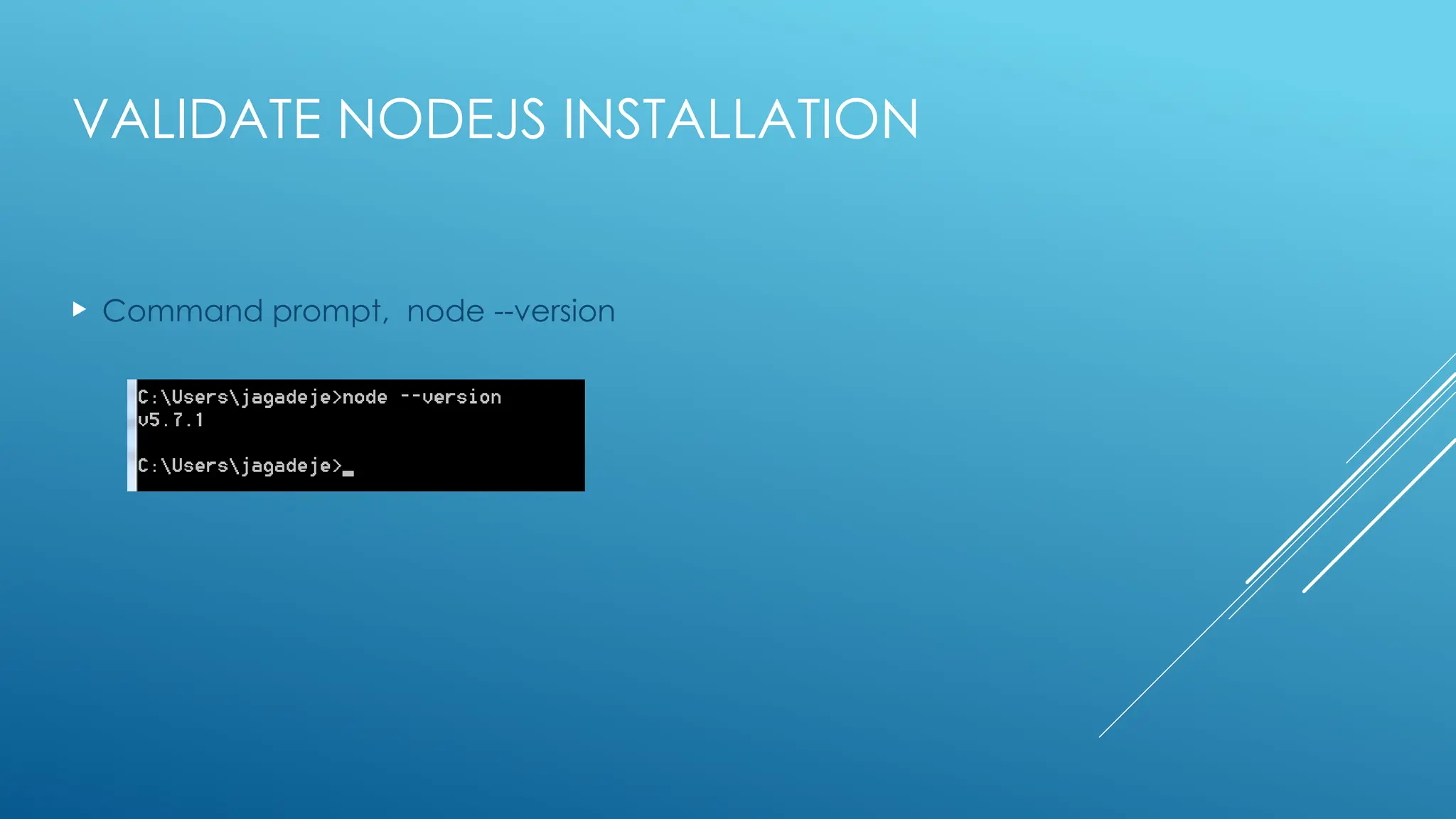
VALIDATE NODEJS INSTALLATION
 Command prompt, node --version
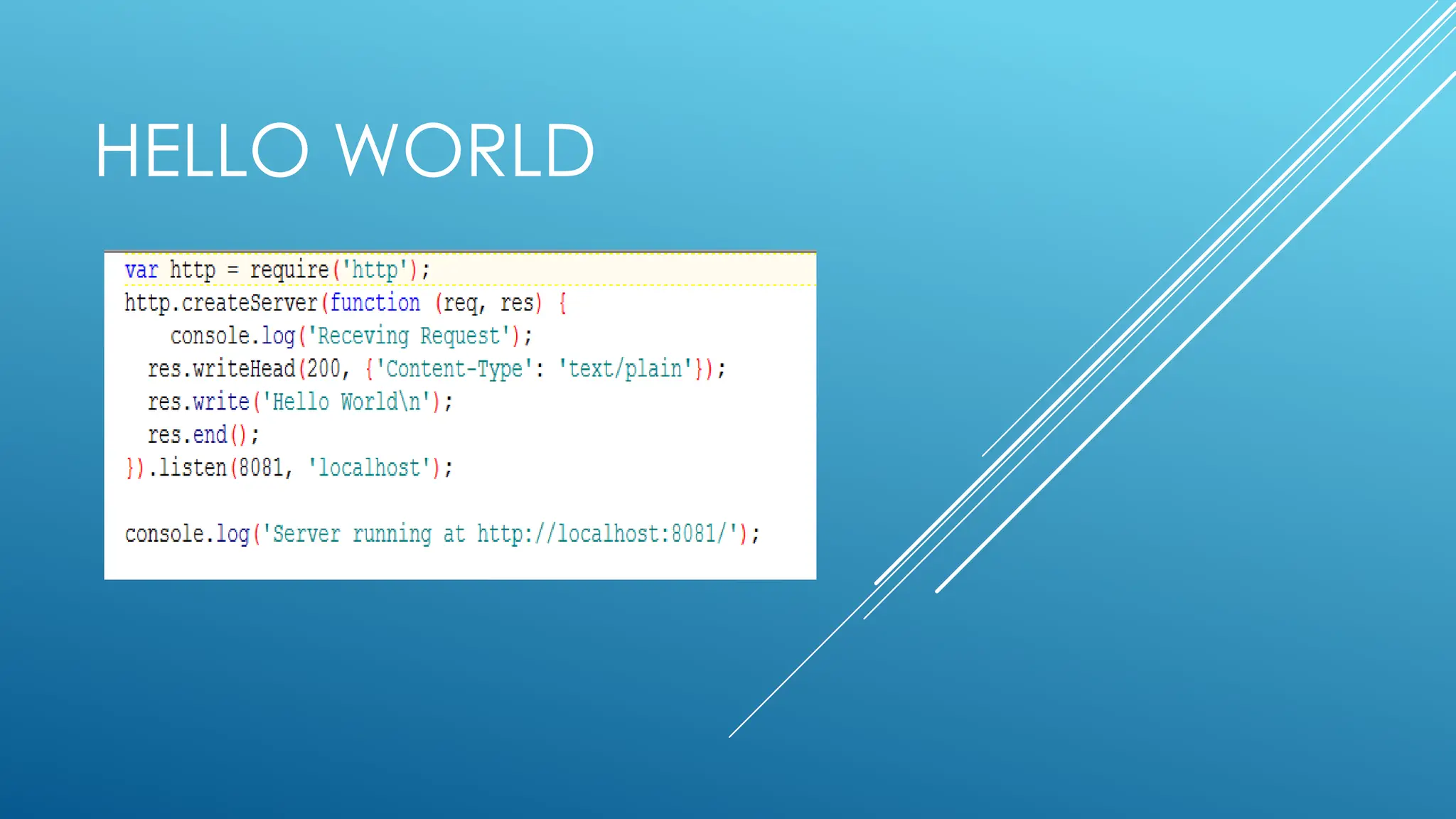
HELLO WORLD
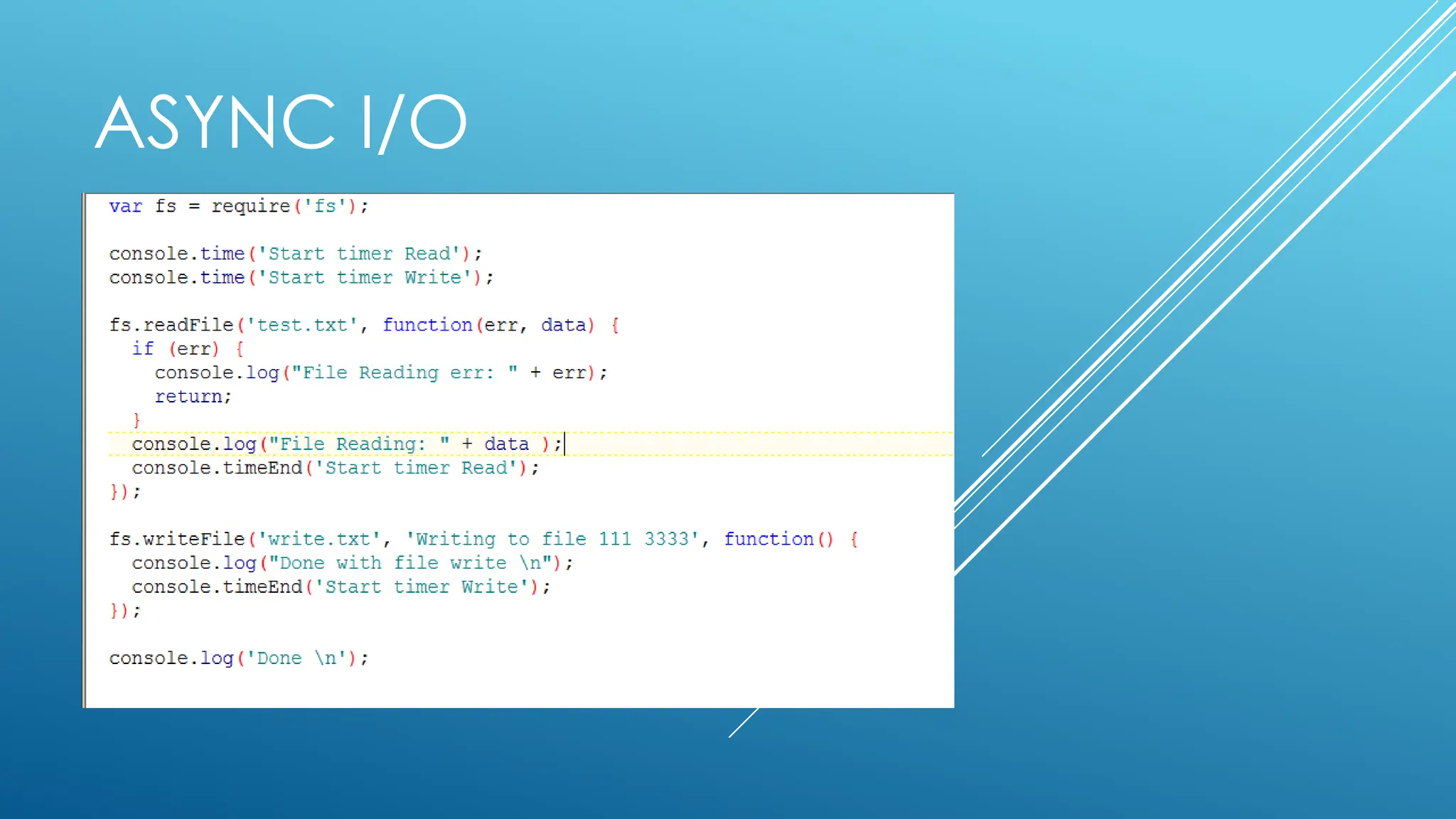
ASYNC I/O
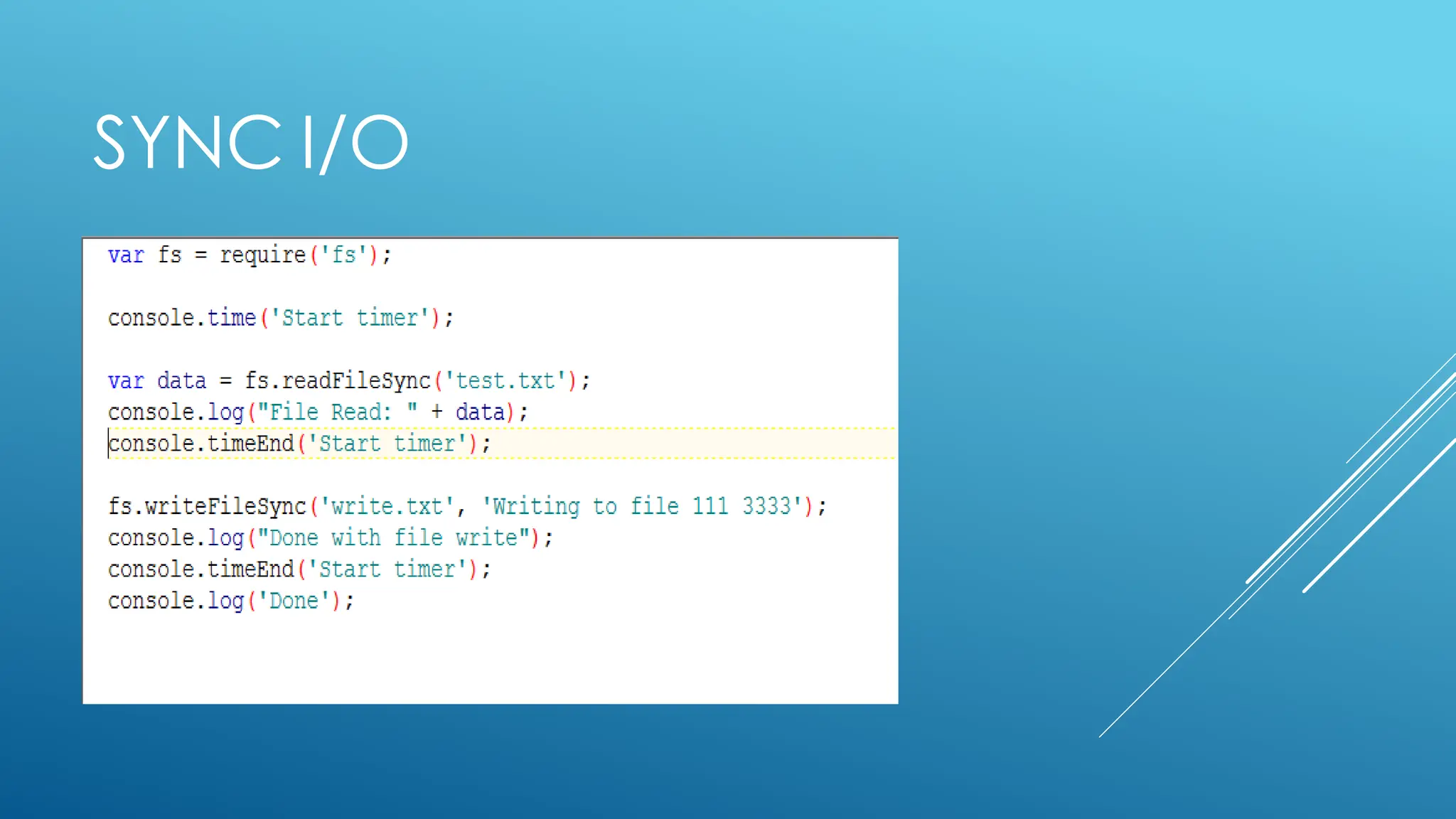
SYNC I/O
NODE PACKAGE MANAGER (NPM)
 Node.js supports modularity. Each modules can be bundled
under a single package.
 NPM is used to install, update, uninstall and configure Node JS
Platform modules/packages very easily.
INSTALLING THIRD PARTY MODULES
 NPM Install
npm install <options> <package unique name>
Eg - npm install express --save
NODE.JS “REQUIRE”
The modules/packages available can be imported in .js file using
“require” function.
Ex – require(“http”);
This helps in loading “http” package in current .js file.
MODULES EXPORT N IMPORT
 A module in node.js can be exported, by which it can be
imported in other files.
 The “require” function helps in importing modules.
 Exporting -
module.exports{<module to be exported>}
 Importing –
var <varName> = require(<module name>);
REFERENCES
 https://nodejs.org/en/
 http://www.journaldev.com/7462/node-js-architecture-single-thr
eaded-event-loop
 https://www.npmjs.com
828f536b2ee20f4b02d8f4fd5da22ed2node js.pptx

828f536b2ee20f4b02d8f4fd5da22ed2node js.pptx

Editor's Notes

  • #4 Most regular Web Servers like Apache uses OS threads for request handling. That means that every request the server handles will spawn a OS thread and the web server won't release the thread until the request finish. Most of the time OS threads wait till some I/O operation finish: var result = query("select * from users"); for(user in result){     //You get the idea // In this case the OS thread just sits and waits the I/O operation returns to resume the flow. } Every OS thread takes some memory, so regular servers can't handle many simultaneous connections without penalizing the system performance