Proposed Approach for Tracking
Implementation of the River Basin
Management Plan
EPA Catchments Unit
Eva Mockler
14th November 2018
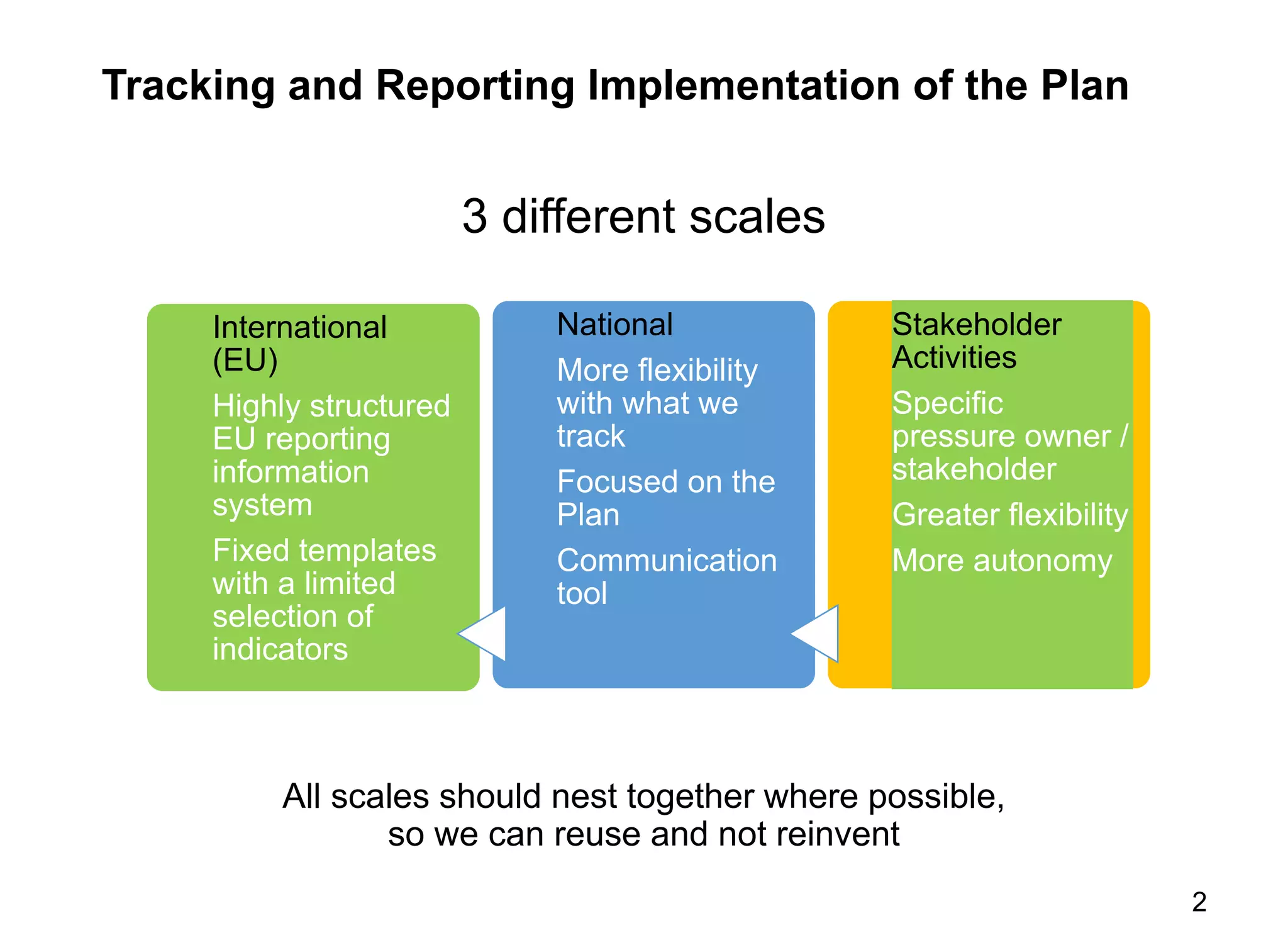
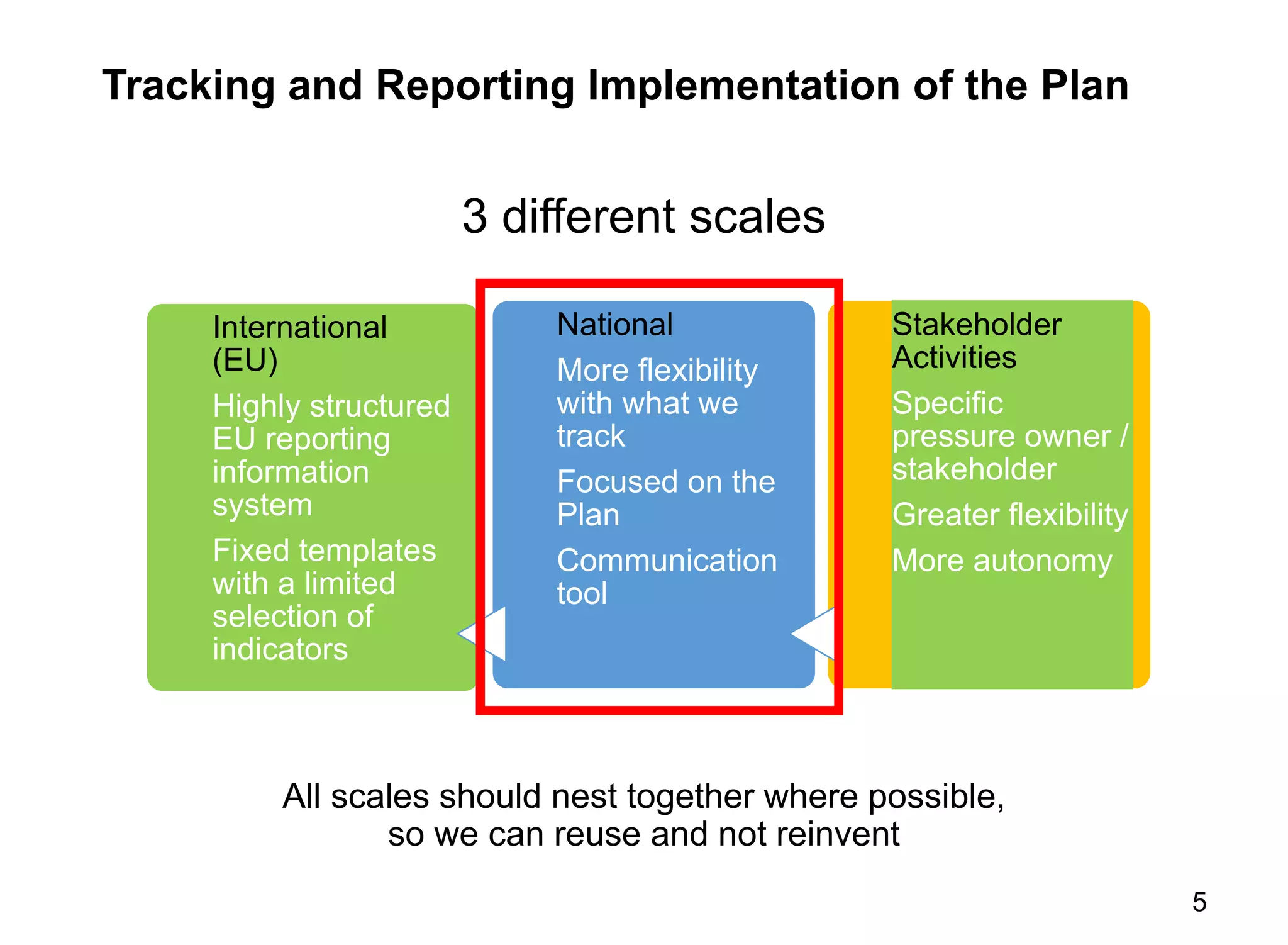
3 different scales
All scales should nest together where possible,
so we can reuse and not reinvent
International
(EU)
Highly structured
EU reporting
information
system
Fixed templates
with a limited
selection of
indicators
National
More flexibility
with what we
track
Focused on the
Plan
Communication
tool
Stakeholder
Activities
Specific
pressure owner /
stakeholder
Greater flexibility
More autonomy
Tracking and Reporting Implementation of the Plan
2
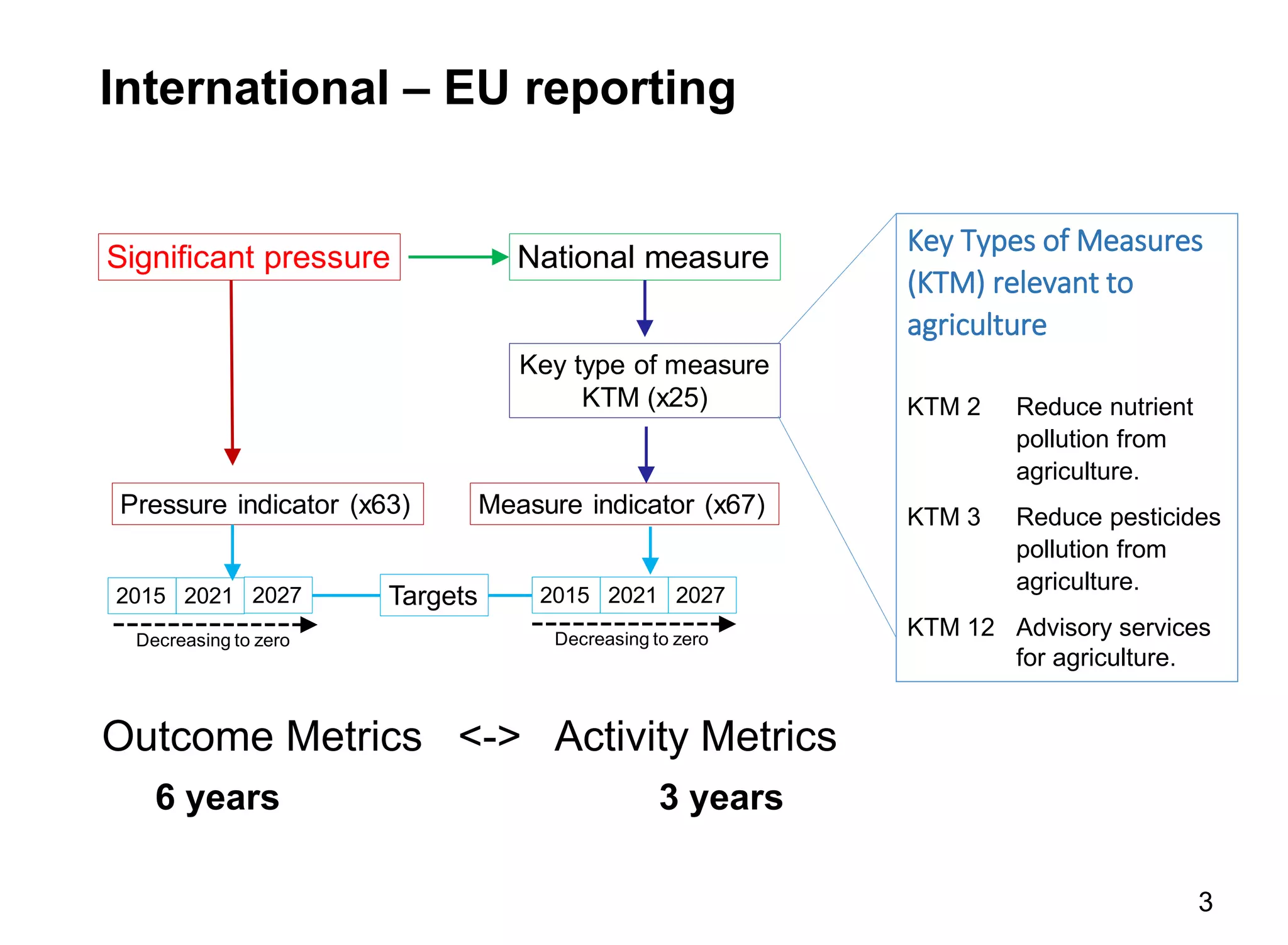
International – EU reporting
Outcome Metrics <-> Activity Metrics
6 years 3 years
National measureSignificant pressure
Key type of measure
KTM (x25)
Measure indicator (x67)Pressure indicator (x63)
2015 20152021 20212027 2027Targets
Decreasing to zeroDecreasing to zero
Key Types of Measures
(KTM) relevant to
agriculture
KTM 2 Reduce nutrient
pollution from
agriculture.
KTM 3 Reduce pesticides
pollution from
agriculture.
KTM 12 Advisory services
for agriculture.
3
Significant
pressure
Indicators for
pressure
2015 value
2021 target
National measure Relevant KTM Indicators for KTM 2015 value
2021 target
2.2 ‐ Diffuse –
Agricultural
(Agriculture)
PN99 Number of
At Risk
waterbodies with
agriculture as a
significant
pressure
804  711 Nitrates Action Program
Rural Development
Programme (GLAS and
TAMs schemes)
KTM2 – Reduce nutrient
pollution from agriculture
KN30 – Number of
water bodies
required to be
covered by
measures to achieve
objectives
799  706
Pesticides Regulations KTM3 – Reduce pesticides
pollution from agriculture.
KN99 Number of
Drinking water
supplies on the
remedial action list
for pesticides
exceedances
5  0
Sustainability Support and
Advisory Programme
Dairy Sustainability Initiative
Knowledge transfer
programme
KTM12 Advisory services for
agriculture
KN30 – Number of
water bodies
required to be
covered by
measures to achieve
objectives
804  490
Public Drinking-Water
Source Risk Assessments
KTM13 – Drinking water
protection measures (e.g.
establishment of safeguard
zones, buffer zones etc)
KO99 – Number of
Public Drinking-
Water Source Risk
Assessments
790  437
The Agricultural Catchments
Programme (ACP)
KTM14 – Research,
improvement of knowledge
base reducing uncertainty
KN18 – Number of
research studies etc
that are required to
achieve objectives
1  0
Sustainability Support and
Advisory Programme
KTM17 – Measures to
reduce sediment from soil
erosion and surface run‐off
KTM2 – Reduce nutrient
pollution from agriculture
KN30 – Number of
water bodies
required to be
covered by
measures to achieve
objectives
799  485
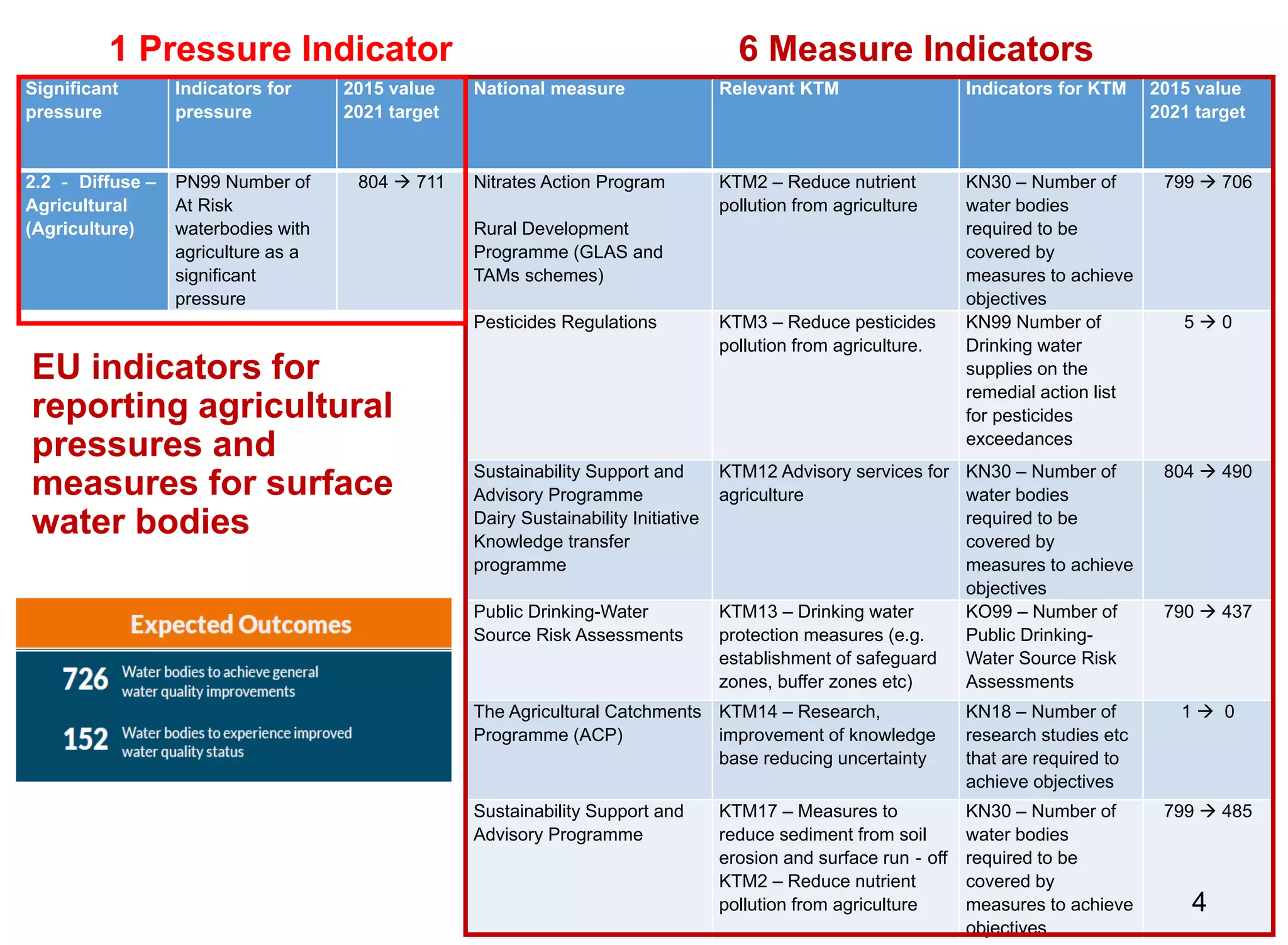
1 Pressure Indicator 6 Measure Indicators
EU indicators for
reporting agricultural
pressures and
measures for surface
water bodies
4
3 different scales
All scales should nest together where possible,
so we can reuse and not reinvent
International
(EU)
Highly structured
EU reporting
information
system
Fixed templates
with a limited
selection of
indicators
National
More flexibility
with what we
track
Focused on the
Plan
Communication
tool
Stakeholder
Activities
Specific
pressure owner /
stakeholder
Greater flexibility
More autonomy
Tracking and Reporting Implementation of the Plan
5
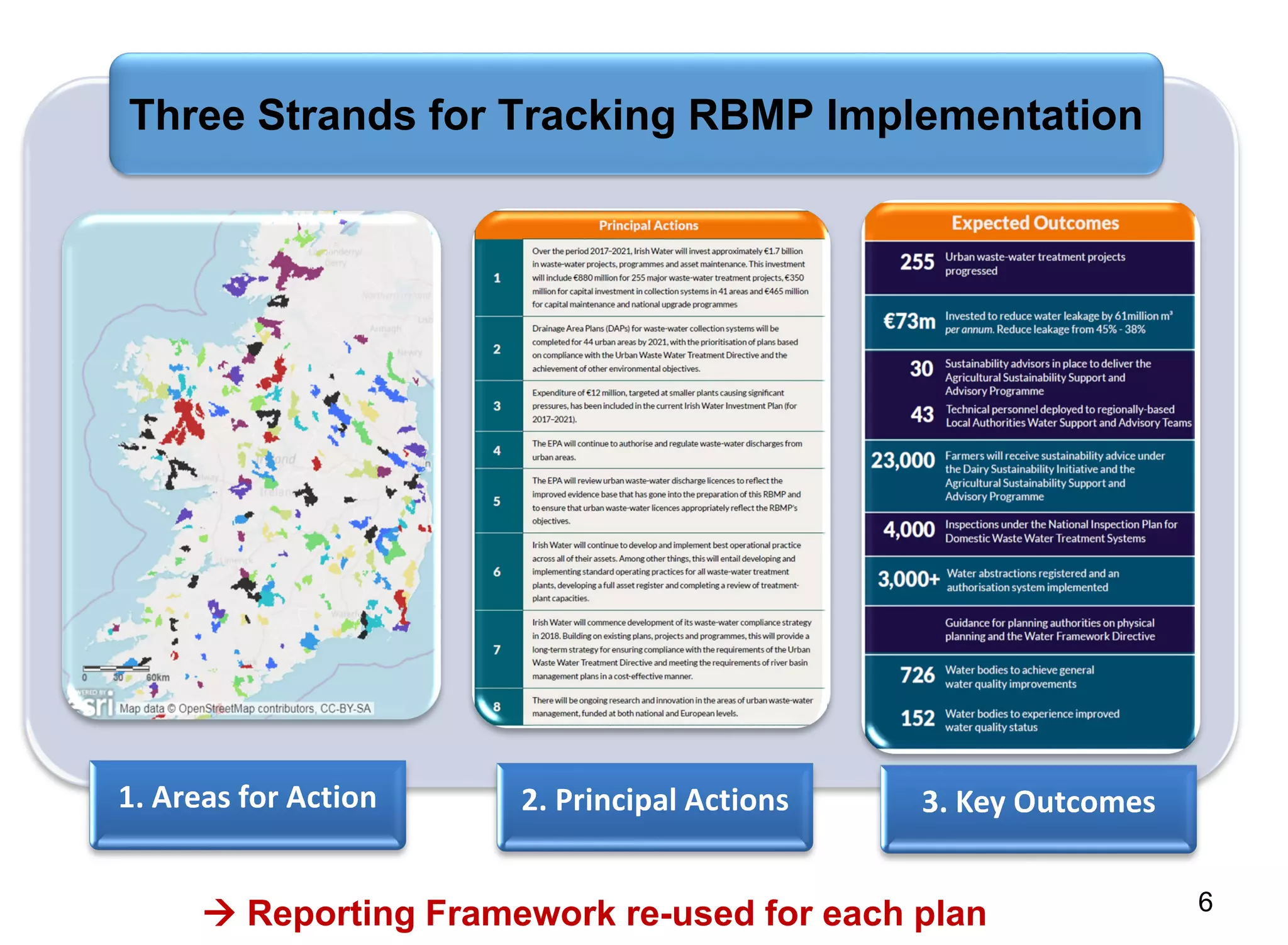
Three Strands for Tracking RBMP Implementation
 Reporting Framework re-used for each plan 6
Areas for Action
Progress in Areas for Action
showing details of e.g. five steps
to be agreed with LA Waters
Programme and linked to KPIs
using:
1. Evaluation of the level of
local stakeholder
engagement and mobilisation
2. Information on local
catchment assessments and
the implementation of
measures gathered in the
WFD App
Figure 3. Progressin Areasfor Action shown in interactive map onwww.catchments.ie.
Area for Action: Owenavorragh
Number of Waterbodies in Area
for Action: 10
Progress:
Step 1 - Desk Study
Desk Study Uploaded
to the WFD App
Step 2 –
Engagement
Public meeting held
Step 3 - Local
Catchment Walks
and Assessment
Complete the Local
Catchment
Assessment (in the
App)
Step 4
Finalise Measures
and Implementation
Plan
for Area for Action
Referrals to pressure
owners
Step 5
Measures
Implemented
/ in place where
applicable
1. Areas for Action
7
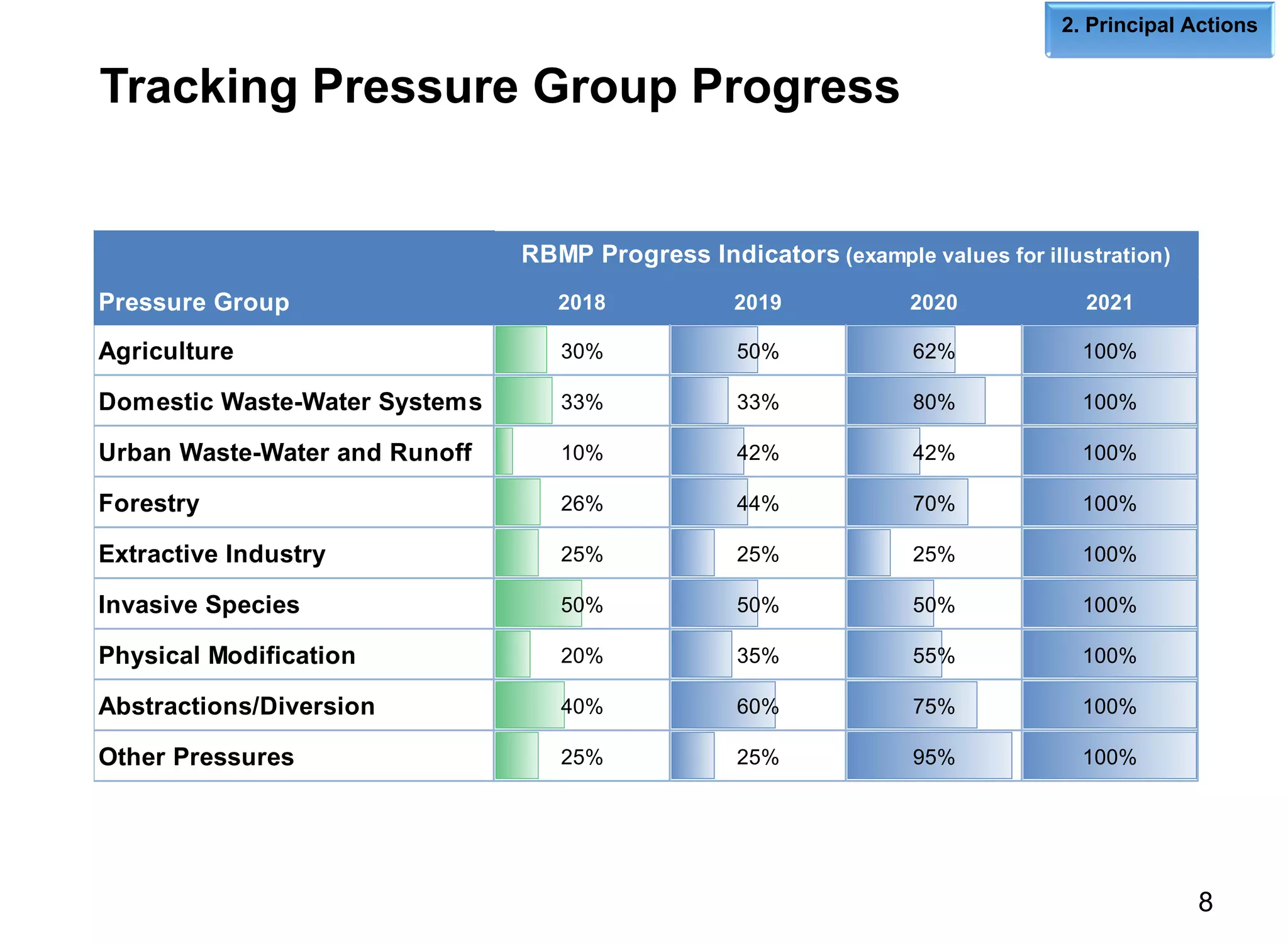
Tracking Pressure Group Progress
2. Principal Actions
8
Pressure Group 2018 2019 2020 2021
Agriculture 30% 50% 62% 100%
Domestic Waste-Water Systems 33% 33% 80% 100%
Urban Waste-Water and Runoff 10% 42% 42% 100%
Forestry 26% 44% 70% 100%
Extractive Industry 25% 25% 25% 100%
Invasive Species 50% 50% 50% 100%
Physical Modification 20% 35% 55% 100%
Abstractions/Diversion 40% 60% 75% 100%
Other Pressures 25% 25% 95% 100%
RBMP Progress Indicators (example values for illustration)
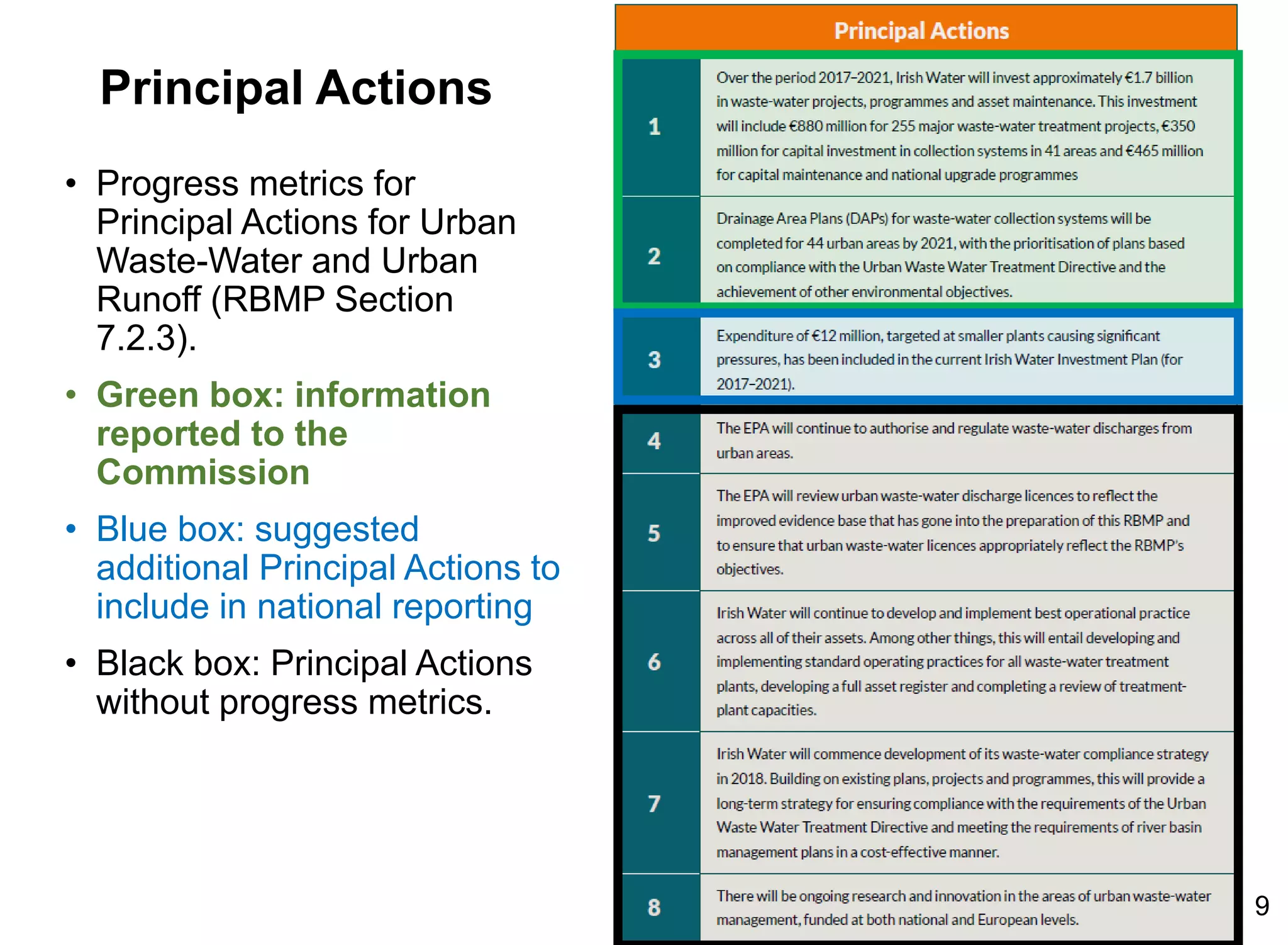
Principal Actions
• Progress metrics for
Principal Actions for Urban
Waste-Water and Urban
Runoff (RBMP Section
7.2.3).
• Green box: information
reported to the
Commission
• Blue box: suggested
additional Principal Actions to
include in national reporting
• Black box: Principal Actions
without progress metrics.
9
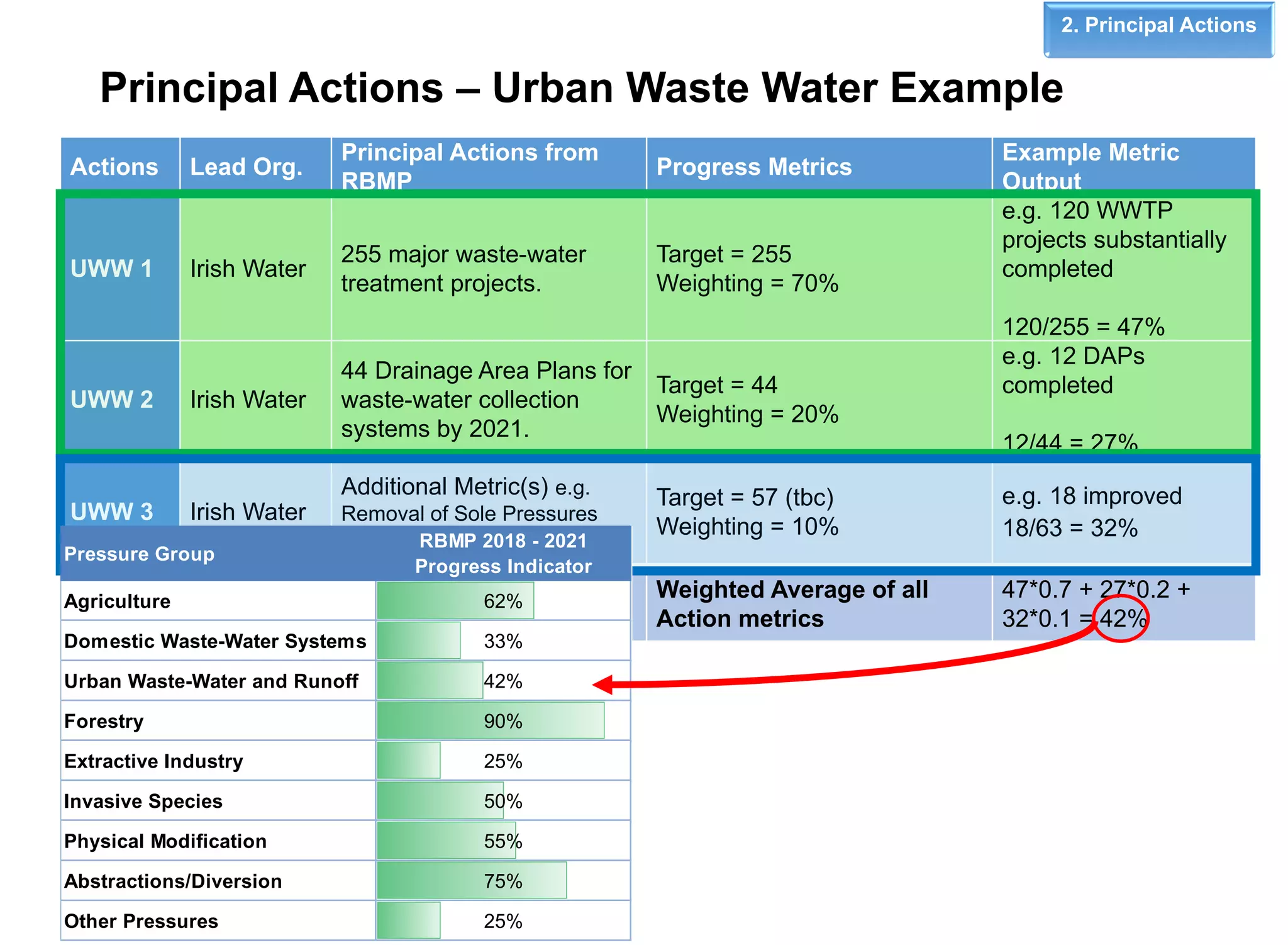
Actions Lead Org.
Principal Actions from
RBMP
Progress Metrics
Example Metric
Output
UWW 1 Irish Water
255 major waste-water
treatment projects.
Target = 255
Weighting = 70%
e.g. 120 WWTP
projects substantially
completed
120/255 = 47%
UWW 2 Irish Water
44 Drainage Area Plans for
waste-water collection
systems by 2021.
Target = 44
Weighting = 20%
e.g. 12 DAPs
completed
12/44 = 27%
UWW 3 Irish Water
Additional Metric(s) e.g.
Removal of Sole Pressures
from the Priority List
Target = 57 (tbc)
Weighting = 10%
e.g. 18 improved
18/63 = 32%
UWW
Total for Urban Waste-
Water and Urban Runoff
Weighted Average of all
Action metrics
47*0.7 + 27*0.2 +
32*0.1 = 42%
Principal Actions – Urban Waste Water Example
2. Principal Actions
Pressure Group
RBMP 2018 - 2021
Progress Indicator
Agriculture 62%
Domestic Waste-Water Systems 33%
Urban Waste-Water and Runoff 42%
Forestry 90%
Extractive Industry 25%
Invasive Species 50%
Physical Modification 55%
Abstractions/Diversion 75%
Other Pressures 25%
3. Key
Outcomes
11
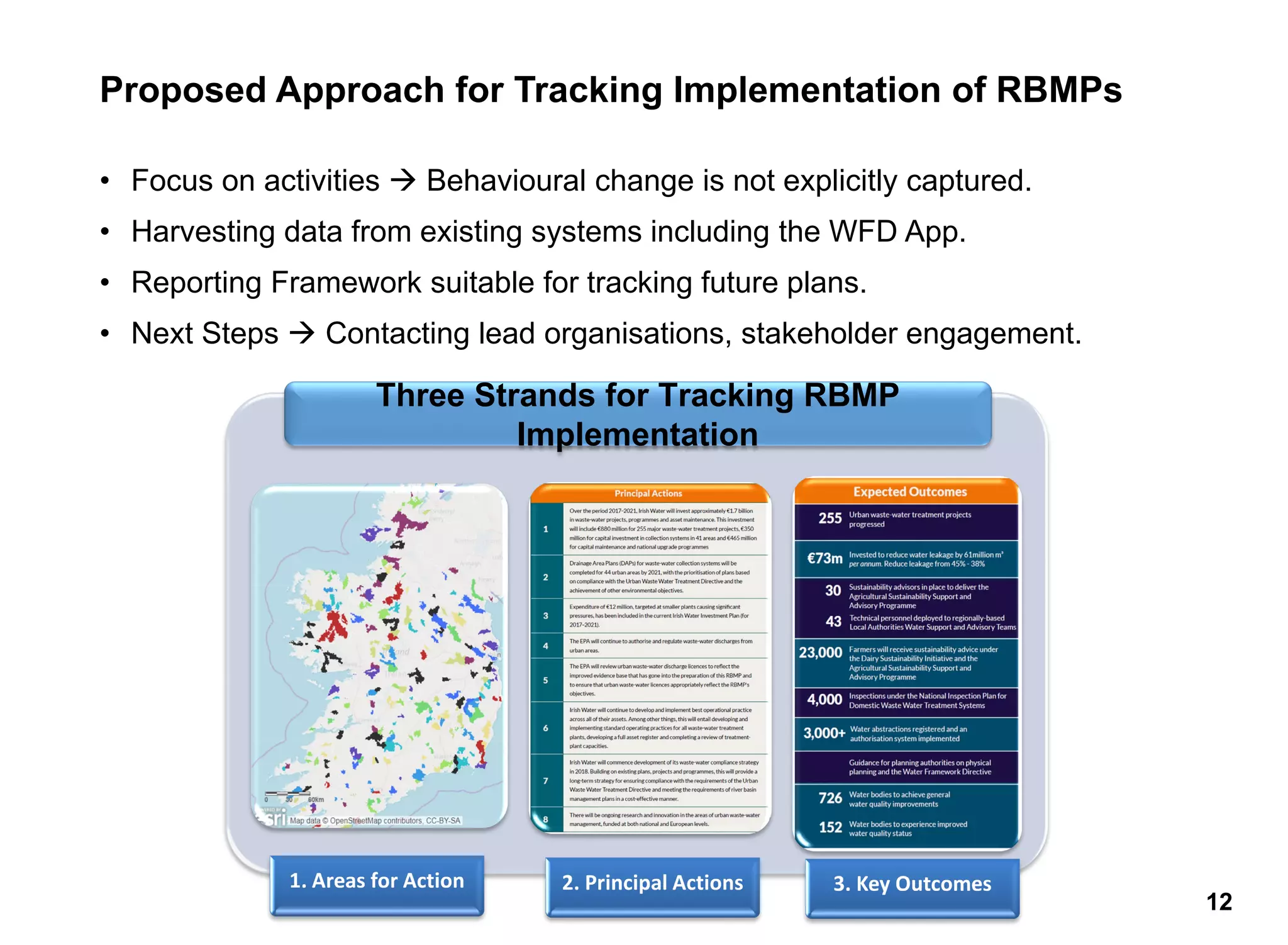
Three Strands for Tracking RBMP
Implementation
Proposed Approach for Tracking Implementation of RBMPs
• Focus on activities  Behavioural change is not explicitly captured.
• Harvesting data from existing systems including the WFD App.
• Reporting Framework suitable for tracking future plans.
• Next Steps  Contacting lead organisations, stakeholder engagement.
12

8. Proposed approach for tracking implementation of the RBMP - Eva Mockler, EPA

  • 1.
    Proposed Approach forTracking Implementation of the River Basin Management Plan EPA Catchments Unit Eva Mockler 14th November 2018
  • 2.
    3 different scales Allscales should nest together where possible, so we can reuse and not reinvent International (EU) Highly structured EU reporting information system Fixed templates with a limited selection of indicators National More flexibility with what we track Focused on the Plan Communication tool Stakeholder Activities Specific pressure owner / stakeholder Greater flexibility More autonomy Tracking and Reporting Implementation of the Plan 2
  • 3.
    International – EUreporting Outcome Metrics <-> Activity Metrics 6 years 3 years National measureSignificant pressure Key type of measure KTM (x25) Measure indicator (x67)Pressure indicator (x63) 2015 20152021 20212027 2027Targets Decreasing to zeroDecreasing to zero Key Types of Measures (KTM) relevant to agriculture KTM 2 Reduce nutrient pollution from agriculture. KTM 3 Reduce pesticides pollution from agriculture. KTM 12 Advisory services for agriculture. 3
  • 4.
    Significant pressure Indicators for pressure 2015 value 2021target National measure Relevant KTM Indicators for KTM 2015 value 2021 target 2.2 ‐ Diffuse – Agricultural (Agriculture) PN99 Number of At Risk waterbodies with agriculture as a significant pressure 804  711 Nitrates Action Program Rural Development Programme (GLAS and TAMs schemes) KTM2 – Reduce nutrient pollution from agriculture KN30 – Number of water bodies required to be covered by measures to achieve objectives 799  706 Pesticides Regulations KTM3 – Reduce pesticides pollution from agriculture. KN99 Number of Drinking water supplies on the remedial action list for pesticides exceedances 5  0 Sustainability Support and Advisory Programme Dairy Sustainability Initiative Knowledge transfer programme KTM12 Advisory services for agriculture KN30 – Number of water bodies required to be covered by measures to achieve objectives 804  490 Public Drinking-Water Source Risk Assessments KTM13 – Drinking water protection measures (e.g. establishment of safeguard zones, buffer zones etc) KO99 – Number of Public Drinking- Water Source Risk Assessments 790  437 The Agricultural Catchments Programme (ACP) KTM14 – Research, improvement of knowledge base reducing uncertainty KN18 – Number of research studies etc that are required to achieve objectives 1  0 Sustainability Support and Advisory Programme KTM17 – Measures to reduce sediment from soil erosion and surface run‐off KTM2 – Reduce nutrient pollution from agriculture KN30 – Number of water bodies required to be covered by measures to achieve objectives 799  485 1 Pressure Indicator 6 Measure Indicators EU indicators for reporting agricultural pressures and measures for surface water bodies 4
  • 5.
    3 different scales Allscales should nest together where possible, so we can reuse and not reinvent International (EU) Highly structured EU reporting information system Fixed templates with a limited selection of indicators National More flexibility with what we track Focused on the Plan Communication tool Stakeholder Activities Specific pressure owner / stakeholder Greater flexibility More autonomy Tracking and Reporting Implementation of the Plan 5
  • 6.
    Three Strands forTracking RBMP Implementation  Reporting Framework re-used for each plan 6
  • 7.
    Areas for Action Progressin Areas for Action showing details of e.g. five steps to be agreed with LA Waters Programme and linked to KPIs using: 1. Evaluation of the level of local stakeholder engagement and mobilisation 2. Information on local catchment assessments and the implementation of measures gathered in the WFD App Figure 3. Progressin Areasfor Action shown in interactive map onwww.catchments.ie. Area for Action: Owenavorragh Number of Waterbodies in Area for Action: 10 Progress: Step 1 - Desk Study Desk Study Uploaded to the WFD App Step 2 – Engagement Public meeting held Step 3 - Local Catchment Walks and Assessment Complete the Local Catchment Assessment (in the App) Step 4 Finalise Measures and Implementation Plan for Area for Action Referrals to pressure owners Step 5 Measures Implemented / in place where applicable 1. Areas for Action 7
  • 8.
    Tracking Pressure GroupProgress 2. Principal Actions 8 Pressure Group 2018 2019 2020 2021 Agriculture 30% 50% 62% 100% Domestic Waste-Water Systems 33% 33% 80% 100% Urban Waste-Water and Runoff 10% 42% 42% 100% Forestry 26% 44% 70% 100% Extractive Industry 25% 25% 25% 100% Invasive Species 50% 50% 50% 100% Physical Modification 20% 35% 55% 100% Abstractions/Diversion 40% 60% 75% 100% Other Pressures 25% 25% 95% 100% RBMP Progress Indicators (example values for illustration)
  • 9.
    Principal Actions • Progressmetrics for Principal Actions for Urban Waste-Water and Urban Runoff (RBMP Section 7.2.3). • Green box: information reported to the Commission • Blue box: suggested additional Principal Actions to include in national reporting • Black box: Principal Actions without progress metrics. 9
  • 10.
    Actions Lead Org. PrincipalActions from RBMP Progress Metrics Example Metric Output UWW 1 Irish Water 255 major waste-water treatment projects. Target = 255 Weighting = 70% e.g. 120 WWTP projects substantially completed 120/255 = 47% UWW 2 Irish Water 44 Drainage Area Plans for waste-water collection systems by 2021. Target = 44 Weighting = 20% e.g. 12 DAPs completed 12/44 = 27% UWW 3 Irish Water Additional Metric(s) e.g. Removal of Sole Pressures from the Priority List Target = 57 (tbc) Weighting = 10% e.g. 18 improved 18/63 = 32% UWW Total for Urban Waste- Water and Urban Runoff Weighted Average of all Action metrics 47*0.7 + 27*0.2 + 32*0.1 = 42% Principal Actions – Urban Waste Water Example 2. Principal Actions Pressure Group RBMP 2018 - 2021 Progress Indicator Agriculture 62% Domestic Waste-Water Systems 33% Urban Waste-Water and Runoff 42% Forestry 90% Extractive Industry 25% Invasive Species 50% Physical Modification 55% Abstractions/Diversion 75% Other Pressures 25%
  • 11.
  • 12.
    Three Strands forTracking RBMP Implementation Proposed Approach for Tracking Implementation of RBMPs • Focus on activities  Behavioural change is not explicitly captured. • Harvesting data from existing systems including the WFD App. • Reporting Framework suitable for tracking future plans. • Next Steps  Contacting lead organisations, stakeholder engagement. 12