Arun Zaveri
www.ScientificMeditation.com
Phone: +91 22 2414-2989 Email: arunzaveri07@gmail.com
Paryushan Parva Lecture Series
Jain Center of Greater Boston
Norwood, Massachusetts, USA
September 2-9, 2013
Day 7
for
Emotional, Mental and Physical Well-being
 Fruition of inauspicious karma produces ashubh lesya
 Produces negative urges, impulses, and an imbalance
in the neuro-endocrine secretions in the body
 The hormonal imbalance produce powerful negative
emotions, feelings, and behavior:
 These produce emotional tensions as well as attract
more inauspicious karma – (the vicious cycle)
Fruition of Inauspicious Karma
The Root Cause of Emotional, Mental, and Physical Disorders
• Enmity
• Envy
• Cruelty
• Violence
• Impatience
• Insecurity
• Irrational fears
• Intolerance
• Anger
• Pride
• Deceit
• Greed
www.scientificmeditation.com
2
Endocrine Imbalance & Emotional Tensions
Messages from
nucleus of cells
secrete toxins and
poisons into
blood-stream
The Perfect Recipe for Disaster!
CELL
Nucleus
 Weakens the immune system
 Causes inflammation in the body
www.scientificmeditation.com 3
Most of the diseases are psychosomatic -- caused
or worsened by emotional tensions & stress
Physical Diseases & Disorders
 Heart disease
 Hypertension
 Diabetes
 Obesity
 Insomnia
 Depression
Emotional
Tensions
Emotional tensions are time bombs that eventually
explode into all kinds of physical ailments
 Nervousness
 Anxiety
 Headaches
 Acidity /Ulcer
 Arthritis
 Dermatitis
www.scientificmeditation.com
4
And eventually succumb to
 the vicious circle of drugs and medicines
 harmful addictions and debilitating habits
The outcome is always the same
 pain, suffering, loss of health and wealth
 premature death!!
As remedies, most people
 try to “cure” the symptoms with medicines,
which often have severe side-effects, or
 find false relief in alcohol, tobacco, and illegal drugs
The Common Outcome
www.scientificmeditation.com 5
Holistic Healing
The root causes of psychosomatic disorders must be
removed at the mental, emotional, and spiritual levels
Today, many doctors also agree that
Meditation
helps
Medication
www.scientificmeditation.com 6
 Observe the subtle aspects of one’s own self by direct
perception, and produce desirable changes/effects via
contemplation, visualization and auto-suggestions
 Derived from ancient Jain philosophy and is supported
by modern scientific theories of body and mind
 Powerful tool for
• Removing the effects of inauspicious karma
• Replacing it with positive virtues
• Restoring emotional, mental, and physical health
• Living peaceful and happy life
Contemplative (Bhavana) Meditation
Therapeutic Thinking
www.scientificmeditation.com
7
 Amity (Maitri)
 Appreciation (Pramod)
 Compassion (Karuna)
 Equanimity (Madhyastha)
Bhavanas
www.scientificmeditation.com 8
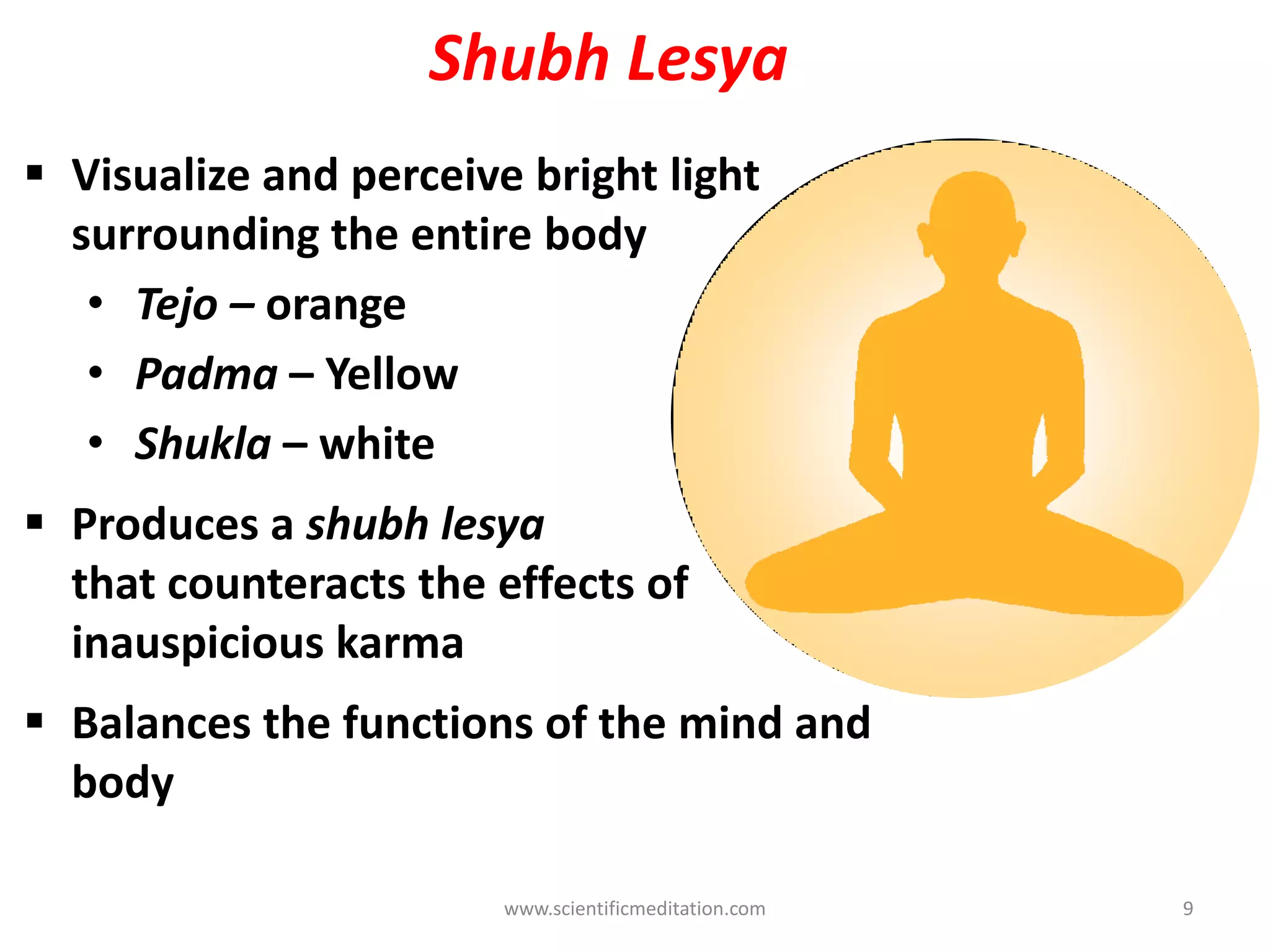
Shubh Lesya
 Visualize and perceive bright light
surrounding the entire body
• Tejo – orange
• Padma – Yellow
• Shukla – white
 Produces a shubh lesya
that counteracts the effects of
inauspicious karma
 Balances the functions of the mind and
body
www.scientificmeditation.com 9
Perception of Psychic centers
Knowledge (Cerebral Cortex)
Enlightenment (Pineal)
Intuition (Pituitary)
Purity (Thyroid)
Bliss (Thymus)
Bio-electricity (Adrenal)
Energy (Gonads)
Focusing full attention at the psychic centers along with
auto-suggestions harmonizes neuroendocrine secretions
www.scientificmeditation.com 10
Bhavana - Therapeutic Thinking
 Positive thoughts permeates in every cell of the body
 Produces healing bio-chemicals
 Purges toxins
CELL
Nucleus
Messages
of therapeutic
bio-chemicals
www.scientificmeditation.com 11
Amity
 By harming others one damages himself
 Enmity leads to irrational fears, cruelty, violence
 Friendship leads to fearlessness and peace
 Change negative patterns (e.g., blaming others)into
positive patterns (e.g., well wishes, politeness)
 Increase power of tolerance, purify own weakness
 Establish amity
www.scientificmeditation.com 12
Appreciation of Good Qualities of Others
 Identify and acknowledge good qualities of others
 Have a positive attitude
 Avoid arguments
 Avoid finding faults or defects in others
 Encourage good qualities of others
 Reduces jealousy – a mental disorder that destroys
relationships with others and emotional well-being
of one’s own self
www.scientificmeditation.com 13
Forgiveness
 Social and professional relationships improve
 Mind relaxes
 Friendship increases
 Ego vanishes
 Tolerance increases
 Forgive everyone while not considering the
other person’s age, status, rank, position, etc.
www.scientificmeditation.com 14
Compassion





www.scientificmeditation.com 15
Equanimity -




www.scientificmeditation.com 16
Kayotsarg:
Steadiness
Relaxed muscles
Body cast away
Mental steadiness
Self-awareness
Feel separateness
No attraction / aversion
Message of equanimity
Only seeing & knowing
Contemplation:
Auto suggestions
Positive virtues
Establish:
 Amity
 Appreciation
 Compassion
 Equanimity
Benevolent
Lesya
Taijjas Body
Purification of
Primal Karmic
Expressions
Inhibition of
Influx of Karma
Falling off
of Karma
Contemplative (Bhavana) Meditation
Soul (Atma)
Karma body
Taijjas body
Physical Body
www.scientificmeditation.com
17
Steps of Contemplative Meditation:
 Preconditions: Place – body posture – Steadiness
 Recitation of Mantra
 Recitation of aim and resolve
 Relaxation with self-awareness
 Internal journey in the spinal cord
 Perception of:
• conscious breathing deliberately make long
• body
• psychic centres
• psychic colors (Lesya cleansing)
 Contemplation with Auto-suggestions
www.scientificmeditation.com 18

Bhavana with Lesya Dhyan

  • 1.
    Arun Zaveri www.ScientificMeditation.com Phone: +9122 2414-2989 Email: arunzaveri07@gmail.com Paryushan Parva Lecture Series Jain Center of Greater Boston Norwood, Massachusetts, USA September 2-9, 2013 Day 7 for Emotional, Mental and Physical Well-being
  • 2.
     Fruition ofinauspicious karma produces ashubh lesya  Produces negative urges, impulses, and an imbalance in the neuro-endocrine secretions in the body  The hormonal imbalance produce powerful negative emotions, feelings, and behavior:  These produce emotional tensions as well as attract more inauspicious karma – (the vicious cycle) Fruition of Inauspicious Karma The Root Cause of Emotional, Mental, and Physical Disorders • Enmity • Envy • Cruelty • Violence • Impatience • Insecurity • Irrational fears • Intolerance • Anger • Pride • Deceit • Greed www.scientificmeditation.com 2
  • 3.
    Endocrine Imbalance &Emotional Tensions Messages from nucleus of cells secrete toxins and poisons into blood-stream The Perfect Recipe for Disaster! CELL Nucleus  Weakens the immune system  Causes inflammation in the body www.scientificmeditation.com 3
  • 4.
    Most of thediseases are psychosomatic -- caused or worsened by emotional tensions & stress Physical Diseases & Disorders  Heart disease  Hypertension  Diabetes  Obesity  Insomnia  Depression Emotional Tensions Emotional tensions are time bombs that eventually explode into all kinds of physical ailments  Nervousness  Anxiety  Headaches  Acidity /Ulcer  Arthritis  Dermatitis www.scientificmeditation.com 4
  • 5.
    And eventually succumbto  the vicious circle of drugs and medicines  harmful addictions and debilitating habits The outcome is always the same  pain, suffering, loss of health and wealth  premature death!! As remedies, most people  try to “cure” the symptoms with medicines, which often have severe side-effects, or  find false relief in alcohol, tobacco, and illegal drugs The Common Outcome www.scientificmeditation.com 5
  • 6.
    Holistic Healing The rootcauses of psychosomatic disorders must be removed at the mental, emotional, and spiritual levels Today, many doctors also agree that Meditation helps Medication www.scientificmeditation.com 6
  • 7.
     Observe thesubtle aspects of one’s own self by direct perception, and produce desirable changes/effects via contemplation, visualization and auto-suggestions  Derived from ancient Jain philosophy and is supported by modern scientific theories of body and mind  Powerful tool for • Removing the effects of inauspicious karma • Replacing it with positive virtues • Restoring emotional, mental, and physical health • Living peaceful and happy life Contemplative (Bhavana) Meditation Therapeutic Thinking www.scientificmeditation.com 7
  • 8.
     Amity (Maitri) Appreciation (Pramod)  Compassion (Karuna)  Equanimity (Madhyastha) Bhavanas www.scientificmeditation.com 8
  • 9.
    Shubh Lesya  Visualizeand perceive bright light surrounding the entire body • Tejo – orange • Padma – Yellow • Shukla – white  Produces a shubh lesya that counteracts the effects of inauspicious karma  Balances the functions of the mind and body www.scientificmeditation.com 9
  • 10.
    Perception of Psychiccenters Knowledge (Cerebral Cortex) Enlightenment (Pineal) Intuition (Pituitary) Purity (Thyroid) Bliss (Thymus) Bio-electricity (Adrenal) Energy (Gonads) Focusing full attention at the psychic centers along with auto-suggestions harmonizes neuroendocrine secretions www.scientificmeditation.com 10
  • 11.
    Bhavana - TherapeuticThinking  Positive thoughts permeates in every cell of the body  Produces healing bio-chemicals  Purges toxins CELL Nucleus Messages of therapeutic bio-chemicals www.scientificmeditation.com 11
  • 12.
    Amity  By harmingothers one damages himself  Enmity leads to irrational fears, cruelty, violence  Friendship leads to fearlessness and peace  Change negative patterns (e.g., blaming others)into positive patterns (e.g., well wishes, politeness)  Increase power of tolerance, purify own weakness  Establish amity www.scientificmeditation.com 12
  • 13.
    Appreciation of GoodQualities of Others  Identify and acknowledge good qualities of others  Have a positive attitude  Avoid arguments  Avoid finding faults or defects in others  Encourage good qualities of others  Reduces jealousy – a mental disorder that destroys relationships with others and emotional well-being of one’s own self www.scientificmeditation.com 13
  • 14.
    Forgiveness  Social andprofessional relationships improve  Mind relaxes  Friendship increases  Ego vanishes  Tolerance increases  Forgive everyone while not considering the other person’s age, status, rank, position, etc. www.scientificmeditation.com 14
  • 15.
  • 16.
  • 17.
    Kayotsarg: Steadiness Relaxed muscles Body castaway Mental steadiness Self-awareness Feel separateness No attraction / aversion Message of equanimity Only seeing & knowing Contemplation: Auto suggestions Positive virtues Establish:  Amity  Appreciation  Compassion  Equanimity Benevolent Lesya Taijjas Body Purification of Primal Karmic Expressions Inhibition of Influx of Karma Falling off of Karma Contemplative (Bhavana) Meditation Soul (Atma) Karma body Taijjas body Physical Body www.scientificmeditation.com 17
  • 18.
    Steps of ContemplativeMeditation:  Preconditions: Place – body posture – Steadiness  Recitation of Mantra  Recitation of aim and resolve  Relaxation with self-awareness  Internal journey in the spinal cord  Perception of: • conscious breathing deliberately make long • body • psychic centres • psychic colors (Lesya cleansing)  Contemplation with Auto-suggestions www.scientificmeditation.com 18