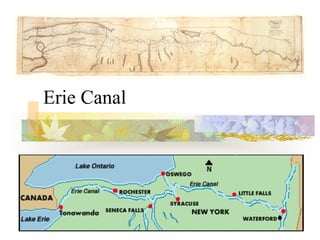
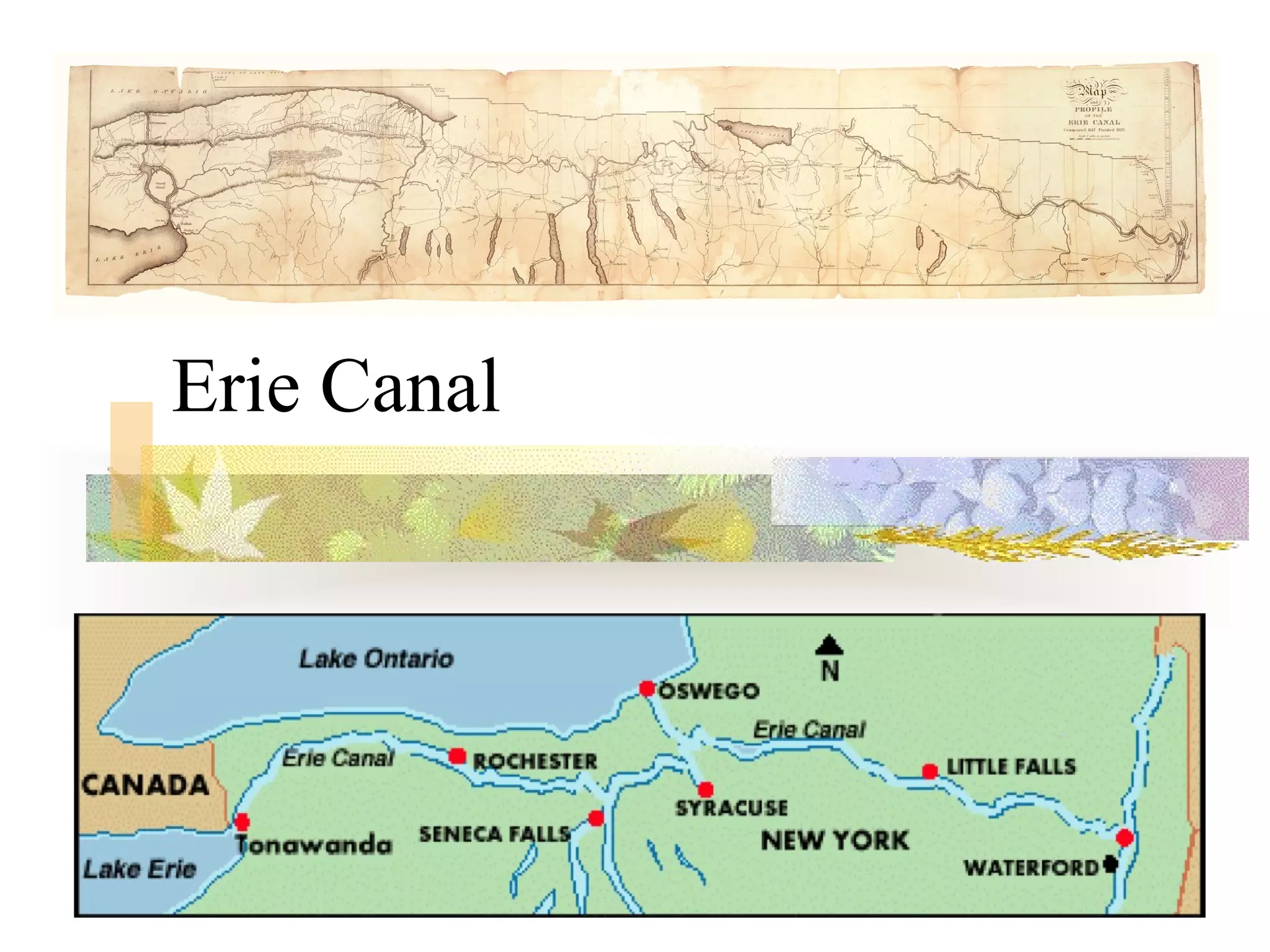
Erie Canal
History of the Erie Canal
 In order to open the country west of the Appalachian Mountains to
settlers and to offer a cheap and safe way to carry produce to a
market, in 1808, Governor Dewitt Clinton proposed the
construction of a canal. However, it was not until July 4, 1817 that
Governor Clinton finally broke ground for the construction of the
canal. In those early days, it was often sarcastically referred to as
"Clinton's Big Ditch". When finally completed on October 26,
1825, it was the engineering marvel of its day. It included 18
aqueducts to carry the canal over ravines and rivers, and 83 locks,
with a rise of 568 feet from the Hudson River to Lake Erie. It was
4 feet deep and 40 feet wide, and floated boats carrying 30 tons of
freight. A ten foot wide towpath was built along the bank of the
canal for horses, mules, and oxen led by a boy boat driver or
"hoggee".
History of the Erie Canal
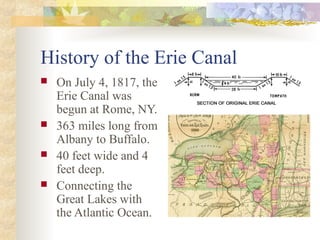
 On July 4, 1817, the
Erie Canal was
begun at Rome, NY.
 363 miles long from
Albany to Buffalo.
 40 feet wide and 4
feet deep.
 Connecting the
Great Lakes with
the Atlantic Ocean.
The Locks
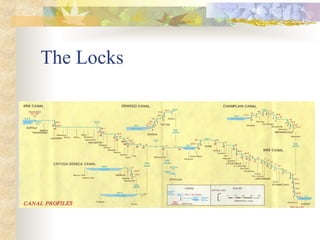
The Erie Canal rises 566 feet from the Hudson River
to Lake Erie through 57 (originally 83) locks. From
tide-water level at Troy, the Erie Canal rises through a
series of locks in the Mohawk Valley to an elevation
of 420 feet above sea-level at the summit level at
Rome. Continuing westward, it descends to an
elevation of 363 feet above sea-level at the junction
with the Oswego Canal, and finally rises to an
elevation of 565.6 feet above sea-level at the Niagara
River.
The Locks
The Locks
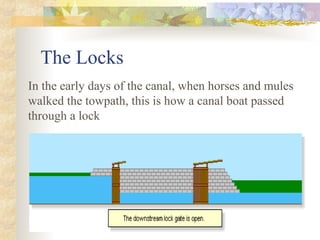
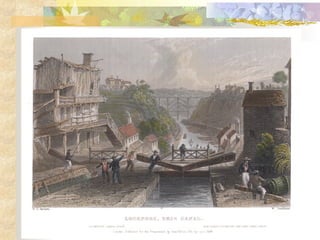
In the early days of the canal, when horses and mules
walked the towpath, this is how a canal boat passed
through a lock
The Boats
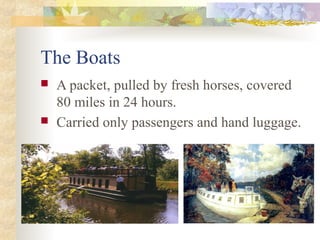
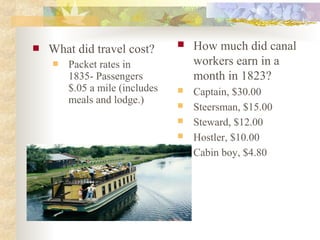
 A packet, pulled by fresh horses, covered
80 miles in 24 hours.
 Carried only passengers and hand luggage.
 What did travel cost?
 Packet rates in
1835- Passengers
$.05 a mile (includes
meals and lodge.)
 How much did canal
workers earn in a
month in 1823?
 Captain, $30.00
 Steersman, $15.00
 Steward, $12.00
 Hostler, $10.00
 Cabin boy, $4.80
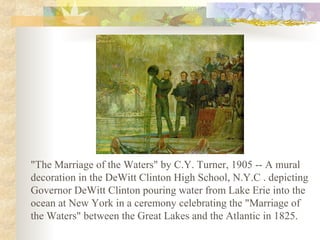
"The Marriage of the Waters" by C.Y. Turner, 1905 -- A mural
decoration in the DeWitt Clinton High School, N.Y.C . depicting
Governor DeWitt Clinton pouring water from Lake Erie into the
ocean at New York in a ceremony celebrating the "Marriage of
the Waters" between the Great Lakes and the Atlantic in 1825.
Canal Terms
 Muleskinner- A mule driver.
 Canal- A man-made waterway.
 Hoggee- A young boy who drove the
mules that towed the canal boats.
 Lock- A way to raise or lower a boat on a
canal.
 Packet- Passenger boat on canal, usually
traveling about four miles per hour.
7 5 erie canal

7 5 erie canal

  • 1.
  • 2.
    History of theErie Canal  In order to open the country west of the Appalachian Mountains to settlers and to offer a cheap and safe way to carry produce to a market, in 1808, Governor Dewitt Clinton proposed the construction of a canal. However, it was not until July 4, 1817 that Governor Clinton finally broke ground for the construction of the canal. In those early days, it was often sarcastically referred to as "Clinton's Big Ditch". When finally completed on October 26, 1825, it was the engineering marvel of its day. It included 18 aqueducts to carry the canal over ravines and rivers, and 83 locks, with a rise of 568 feet from the Hudson River to Lake Erie. It was 4 feet deep and 40 feet wide, and floated boats carrying 30 tons of freight. A ten foot wide towpath was built along the bank of the canal for horses, mules, and oxen led by a boy boat driver or "hoggee".
  • 3.
    History of theErie Canal  On July 4, 1817, the Erie Canal was begun at Rome, NY.  363 miles long from Albany to Buffalo.  40 feet wide and 4 feet deep.  Connecting the Great Lakes with the Atlantic Ocean.
  • 4.
    The Locks The ErieCanal rises 566 feet from the Hudson River to Lake Erie through 57 (originally 83) locks. From tide-water level at Troy, the Erie Canal rises through a series of locks in the Mohawk Valley to an elevation of 420 feet above sea-level at the summit level at Rome. Continuing westward, it descends to an elevation of 363 feet above sea-level at the junction with the Oswego Canal, and finally rises to an elevation of 565.6 feet above sea-level at the Niagara River.
  • 5.
  • 6.
    The Locks In theearly days of the canal, when horses and mules walked the towpath, this is how a canal boat passed through a lock
  • 7.
    The Boats  Apacket, pulled by fresh horses, covered 80 miles in 24 hours.  Carried only passengers and hand luggage.
  • 8.
     What didtravel cost?  Packet rates in 1835- Passengers $.05 a mile (includes meals and lodge.)  How much did canal workers earn in a month in 1823?  Captain, $30.00  Steersman, $15.00  Steward, $12.00  Hostler, $10.00  Cabin boy, $4.80
  • 12.
    "The Marriage ofthe Waters" by C.Y. Turner, 1905 -- A mural decoration in the DeWitt Clinton High School, N.Y.C . depicting Governor DeWitt Clinton pouring water from Lake Erie into the ocean at New York in a ceremony celebrating the "Marriage of the Waters" between the Great Lakes and the Atlantic in 1825.
  • 13.
    Canal Terms  Muleskinner-A mule driver.  Canal- A man-made waterway.  Hoggee- A young boy who drove the mules that towed the canal boats.  Lock- A way to raise or lower a boat on a canal.  Packet- Passenger boat on canal, usually traveling about four miles per hour.