HEMODYNAMIC DISORDERS
• EDEMA
• HEAMOSTASIS (BLEEDING)
• THROMBOSIS
• EMBOLISM
• SHOCK
Distribution of Body Fluids
• Total body water (TBW) 60% of total body
weight
– Intracellular fluid – inside the cells
– Extracellular fluid – not encased in cells
• Interstitial fluid – found in between cells and tissues
• Intravascular fluid- plasma found in circulatory system
• Lymph, synovial, intestinal, biliary, hepatic, pancreatic,
CSF, sweat, urine, pleural, peritoneal, pericardial, and
intraocular fluids are extracellular
A .Edema
• Edema is defined as excess fluid in interstitial
compartment
Interstitial fluid is the balance between
• capillary hydrostatic pressure which tends to
encourage water to enter the interstitium
• plasma oncotic pressure which tends to
encourage water to leave the interstitium
• lymphatic drainage which allows water and
proteins to leave the interstitium
Cont..
1.Increased Capillary Hydrostatic Pressure
Normal situation
• pressure inside the capillary is greater than
pressure in the interstitial space
• water tends to flow out of the capillary into
the interstitium
Cont…
1.1.Edema production
• Increased hydrostatic pressure in the capillary bed
leads to increased rate of fluid loss into the
intestitium
• This is most commonly associated with impeded
outflow through venous system (increased venous
back pressure)
• Examples: congestive heart failure, portal
hypertension; localized: venous thrombosis, varicose
veins, pressure from outside (tumours)
Cont…
2.1`Edema production
• Reduced plasma proteins (especially albumin)
lead to reduced osmotic reabsorption of
interstitial fluid back into capillaries
• Associated with: loss of proteins (nephrotic
syndrome, protein losing enteropathies, burns) or
decreased production of albumin (liver failure,
protein malnutrition)
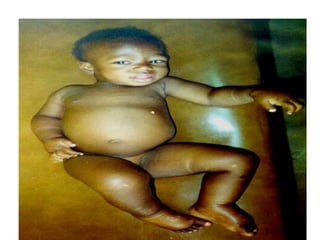
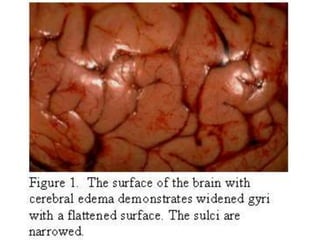
Morphology of edema
Grossly – easily recognizable
Cont..
3.Lymphatic obstruction
Normal situation
• lymphatic vessels begin as blind ended capillaries
in the interstitium
• they collect excess fluid (about 2ml/min) and the
small amount of protein that accumulate in the
interstitium; this fluid is returned to the venous
circulation via thoracic duct
Cont…
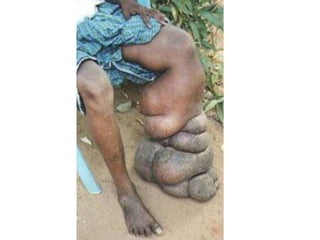
3.1.Edema production
• obstruction of lymphatics prevents removal of excess
interstitial fluid
• produces localized edema depending upon which
lymphatic drainage is obstructed
• examples: tumors (esp. metastatic to lymph nodes)
surgical removal of lymphatics (radical mastectomy)
fibrosis and scaring (post-inflammatory or post-
radiation) parasites (filariasis)
Cont…
4.Sodium Retention
Normal situation
• sodium is the major determinant of the
osmolarity of extracellular fluid
• sodium therefore is a major influence in
extracellular fluid volume
• sodium levels are primarily controlled by renal
excretion,
Cont…
4.1Edema production
• increased sodium ! increased extracellular
fluid volume; that means
– a proportional increase in interstitial fluid
– increased blood volume ! increased
hydrostatic pressure
• usually occurs on the basis of impaired renal
excretion of sodium (decreased blood flow to
the kidneys,renal disease)
Cont…
5. Increased Capillary Permeability
• leads to loss of fluid and protein into interstitium
• usually produces localized edema associated with
inflammation (blisters, hives), burns, allergic
reaction
Cont…
6.Congestive Heart Failure
• A syndrome that occurs when the heart does not
pump an adequate volume of blood to meet the
needs of the body (decreased cardiac output).
Cont..
6.1.Edema production is associated with:
– sodium retention, which leads to increased blood
volume
– increased venous back pressure due to inability
of the heart to effectively pump the blood that is
returned to it
Cont..
7.Renal disease
• Decreased renal blood flow and some intrinsic
renal diseases lead to sodium retention and thus
production of edema.
8.Nephrotic syndrome
• Massive loss of protein in urine, accompanied by
hypoproteinemia, and generalized edema.
Associated with glomerular damage..
Cont…
8.1.Mechanism of edema in nephrotic syndrome
1. increased glomerular capillary permeability to proteins
2. loss of protein (especially albumin) in urine
3. hypoalbuminemia
4. decreased colloid osmotic pressure
5. movement of fluid from intravascular space to interstitium
leads to decreased blood volume
6. that leads to activation of renin-angiotensin system
7. results in retention of sodium and water
Cont…
9.Cirrhosis of the Liver
9.1. Pathogenesis of edema in cirrhosis
1. Scarring and reorganization of liver architecture
obstructs blood flow through the liver; and high
arterial pressure is transmitted into portal system.
This mechanisms lead to increased hydrostatic
pressure in portal system. Ascites is formed.
2. Loss of functioning hepatocytes ! decreased
production of albumines and other plasma proteins !
decreased oncotic pressure of the plasma.
B. Hemostasis and thrombosis
• Normal hemostasis – rapid and localized
hemostatic plug formation at a site of vascular
injury.
• Thrombosis
– Pathologic opposite to hemostasis.
– Inappropriate activation of normal hemostatic
process:
• Clot(thrombus) in uninjured vessel
• Thrombotic occlusion of a vessel after minor injury
CONT..
• Both hemostasis and thrombosis depends on 3
components:
1.Vascular wall
2.Platelet
3.Coagulation cascade
Normal hemostasis
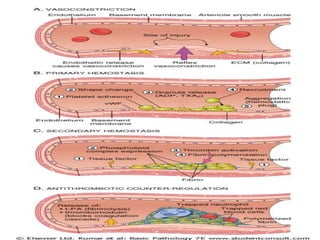
1.Sequence of events at sites of vascular injury:
1. Arteriolar vasoconstriction
2. Primary hemostasis(platelet plug)
3. Secondary hemostasis – fibrin deposition
4. Permanent plug
• Polymerized fibrin and platelet aggregate
5. Counter regulatory response
• Restricts hemostatic plug at site of injury
• Tissue plasminogen activator
ENDOTHELIUM
• Antithrombotic and prothrombotic properties.
• The balance b/n antithrombotic and
prothrombotic activities determines whether
thrombus formation, propagation or dissolution
occurs.
• Intact endothelium – antithrombotic
• Injury or activation – prothrombotic
– Hemodynamic factors, cytokines, infectious agents
Antithrombotic properties
• Antiplatelet
1.Endothelial plasma membrane
2.Prostacyclin(PGI2)
3.Nitric oxide
4.Adenosine diphosphatase
• Anticoagulant
1.Membrane associated heparin-like molecules
2.Thrombomodulin – thrombin receptor
Cont…
• Fibrinolytic
1.Tissue plasminogen activator(t-PA)
2.Clear fibrin deposits
Prothrombotic properties
1.Platelet adhesion
– Exposure of ECM components
– Von willebrand factor(vWF)
2.Procoagulant
– Synthesis of tissue factor
– Augmentation of effects of clotting factors
• IXa , Xa
3.Antifibrinolytic
– Inhibitors of plasminogen activator(PAIs)
2.PLATELETS
• The interplay of PGI2 and TXA2 constitutes an
exquisitely balanced mechanism for modulating
human platelet function:
– in the normal state, it prevents intravascular platelet
aggregation, but
– after endothelial injury it favors the formation of
hemostatic plugs.
• The clinical use of aspirin (a cyclooxygenase inhibitor)
in patients at risk for coronary thrombosis is related
to its ability to inhibit the synthesis of TXA2.
3.COAGULATION CASCADE
• 3rd component of hemostatic process.
• Major contributor to thrombosis.
• Once activated the coagulation cascade must be
restricted to the site of vascular injury.
Cont…
• Clotting is regulated by 3 anticoagulants:
1. Antithrombin III
• Activated by heparin-like molecules
• Inhibit thrombin, IXa, Xa, XIa, XIIa,
2. Protein c and s
• Inactivates factors Va and VIIIa.
• Protein c is activated by thrombomodulin
3. Plasmin
• Derived from serum plasminogen
• Inhibit fibrin polymerization
• Degrade fibrin to fibrin degradative products
THROMBOSIS
• Definition: The formation of a solid or semisolid mass
from the constituents of the blood within the vascular
system during life.
PATHOGENESIS:
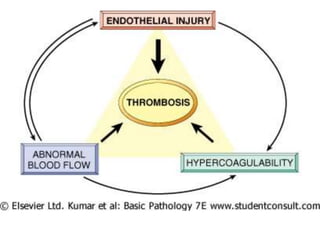
• Three predisposing factors for thrombus formation (
virchow’s triad)
1.Endothelial injury
2.Stasis or turbulence of blood flow
3.Blood hypercoagulability
Cont…
1. Endothelial injury
– Most important factor in thrombus formation
– Will expose to the highly thrombogenic sub
endothelial ECM (collagen &tissue factors)platelet
adherence &contact activation.
– E.g-thrombus in endocardium following infarction or
on ulcerated atheromatous plaques in artery walls.
Cont…
2. stasis or turbulence blood flow
• Normal blood flow is laminar.
• Stasis & turbulence
– bring platelets to the surface
– Reduce PGI2 ,
– t-PA
• Stasis- major factor in venous thrombi
• Turbulence –arteries and cardiac thrombosis
2. stasis or turbulence blood flow cont.….
• E.g- ulcerated plaqueturbulence
• Aneurysms- site of stasis
• myocardial infarction-site of stasismural
thrombus formation
• mitral valve stenosisdilated left atrium-site of
stasis
• polycytemiastasis in small blood vessels.
3. hypercoagulability
Definition: any alteration of the coagulation
pathway that predisposes to thrombosis
• Can be divided in to:
1.Primary(genetic)
2.Secondary(acquired)
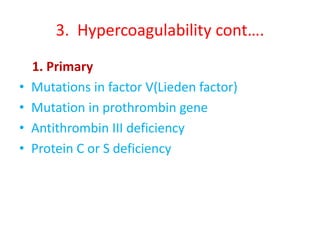
3. Hypercoagulability cont….
1. Primary
• Mutations in factor V(Lieden factor)
• Mutation in prothrombin gene
• Antithrombin III deficiency
• Protein C or S deficiency
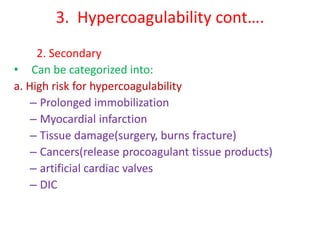
3. Hypercoagulability cont….
2. Secondary
• Can be categorized into:
a. High risk for hypercoagulability
– Prolonged immobilization
– Myocardial infarction
– Tissue damage(surgery, burns fracture)
– Cancers(release procoagulant tissue products)
– artificial cardiac valves
– DIC
3. Hypercoagulability cont….
b. low risk factors
• Atrial fibrillation
• Cardiomyopathy
• NS
• Oral contraceptives
• Smoking
• Hyper estrogenic states E.g –pregnancy
Morphology
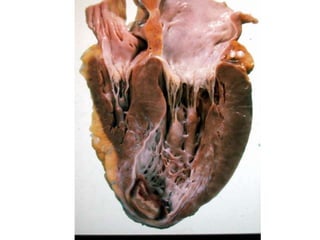
• Can develop anywhere in the cardiovascular system
cardiac chambers ,valve cusps,
arteries, veins,
capillaries
-variable size and shape
-usually have area of attachment to the underlying vessel
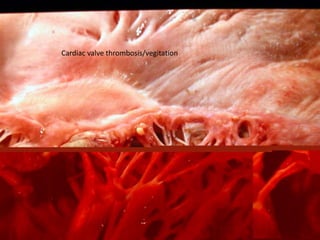
Cardiac valve thrombosis/vegitation
Cont.. exm
• The most common site of arterial thrombi In
ascending order
 femoral arteries
Cerebral arteries
Coronary arteries
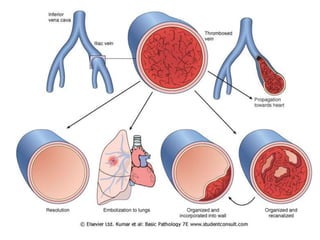
Fates of thrombus
• Propagation
• Embolization
• Organization &recanalization
• Dissolution
Fates of thrombus Cont..
a. Propagation
– Thrombus may accumulate more platelets & fibrin and
propagate to cause vessel obstruction
b. Embolization
– May dislodge &travel to other sites in the
vasculatureEmbolusobstruction of vesselsdeath of
tissues and cells Infarction
E.g- thromboembolismcerebral infarction
Fates of thrombus Cont..
c. Organization and recanalization
in growth of endothelial cells ,smooth
muscle cells & fibroblasts  capillary
channels lumen formationRecanalization
d. Dissolution
• Thrombus may be removed by fibrinolytic
activity
Cont..
Clinical significance of thrombi
• Thrombi are clinically significant because:
– Causes blood vessel obstruction
– Possible sources of emboli
Clinical effects of arterial &venous thrombi:
A. Venous thrombosis (phlebothrombosis)
• Affects the lower extremity veins~90%
• Divided in to 1 –superficial and
2-deep venous thrombosis
1. Suprficial VT
• Usually occurs in saphenous venous system
E.g-in varicosities
• Predisposes to infection after slight traumaVaricous Ulcer
• Rarely embolizes
• Causes local edema ,pain ,tenderness(i.e symptomatic
2. Deep Vein Thrombosis (DVT)
• May embolize, hence serious
• Occurs in deep veins of calf muscles
• May cause pain , edema
• Asymptomatic in ~50%, because of collateral by pass
channels.
• Higher incidence in middle aged &elderly people ,due to
increased platelet aggregation& decreased PGI2 by
endothelium
2. Deep Vein Thrombosis (DVT) cont…
DVT has the following predisposing factors:
1. trauma, surgery, burns-result in:-
• Reduced physical activity
• Injury to vessels
• Procoagulant release from tissues
• Reduced t-PA activity(fibrinolysis)
Cont….
2. pregnancy &puerperal states
• Increase coagulation factors& decrease synthesis
of antithrombic substances
3. myocardial infarction& heart failure stasis in
the left side
Embolism
• Definition: Embolus –detached intravascular
solid, liquid or gaseous mass that is carried by
blood to sites distant from its point of origin.
Embolism cont.…
Causes of embolism:
 Embolus can arise from:-
• Thrombus(90% casesthromboembolus)
• Platelet aggregates
• fragment of a tumor
• fat globules
• bubbles of air
• fragment of material from ulcerating atheromatous plaque
• amniotic fluid
• infected foreign material
• bites of bone marrow
• etc…..
• NB: Unless specified embolismthromboembolism
Embolism cont.…
Thromboembolism
based on the site of origin &impaction-divided in to:
a. Pulmonary thromboemblism(PTE)
b. Systemic thromboembolism
Embolism cont.…
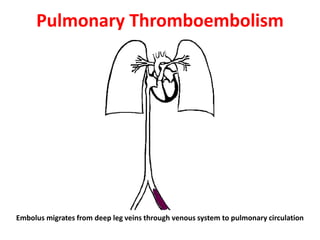
a. Pulmonary thromboembolism
• Embolus in the pulmonary arteries &their
branches
• Derived from thrombus in the systemic veins or
right side of the heart.
• ~95% arise from deep leg veins
• Follows venous return  pulmonary arteries
Pulmonary Thromboembolism
Embolus migrates from deep leg veins through venous system to pulmonary circulation
Embolism cont.…
Depending on size of embolus &state of pulmonary
circulation can have the following effects:
1.if large thrombus  block right ventricle out flow or
bifurcation of the main pulmonary trunc(saddle embolus)
or both of its branches sudden circulatory arrest and
Death
• It may result in cor pulmonale or CVA collapse if 60% of
blood volume is obstructed.
Embolism cont.…
2.very small embolus(60-80% of cases)
• Clinically silent,
• obstruction of medium sized arteries -> pulmonary
haemorrhage but not infarction,because
collaterals from bronchial circulation.
• but in poor cardioresparatory condition,medium
arteries obstructionpulmonary infarction.
Embolism cont.…
• Small end-arterial vessel obstruction causes
infarction.
• Recurrent thromboembolism  pulmonary
hypertension in the long run
NB: A patient who had one pulmonary embolus is at
high risk of having more.
Embolism cont.…
b. Systemic thromboembolism
• 80% arise from intracardiac mural thrombi
• 2/3 of intramural thrombi associated with left ventricular
wall infarcts &1/4 with dilated left atria 2° to rheumatic
heart diseases.
• 20% emboli arise from aortic aneurysm, thrombi on
ulcerated atherosclerotic plaques, or fragmentation of
valvular vegetation.
• Major sites of embolization: lower extremities(75%),
brain(10%), rest ,intestines, kidneys, spleen.
SHOCK
• Definition: is a state /failure of the circulatory system to
maintain adequate cellular perfusion resulting in
widespread reduction in delivery of oxygen &other
nutrients to tissues.
• systemic hypoperfusion -due to
- co
-ineffective circulating blood volume
• Hypotension impaired tissue perfusion &cellular
hypoxia
Classification of shock
a. hypovolumic shock
b. cardiogenic shock
c. distributive shock-septic shock
-neurogenic shock
-anaphylactic shock
-endocrine shock
Cont….
A. Hypovolumic shock
Definition: shock due to reduced blood
volumeCOtissue perfusion
causes:
1. Haemorrhage
2. Diarrhea & vomiting
3. trauma, burns, etc....
• most common shock in clinical medicine loss of >25% of
blood volume  shock
B. Cardiogenic shock
• Definition: shock results from sever depression of
cardiac performance.
• primarily-pump failure(myocardial failure)
• hemodynamically-.
Causes:
1.myopathic
2. Mechanical
1. myopathic
a. acute MI-if >40% Lt Ventricle &more on Rt
ventricle infarction
b. myocarditis
c. cardiomyopaties
d. myocardial depression in septic shock
2. Mechanical
1. Intracardiac
a. out flow obstruction- E.g-AS
b. arrhythmia
c .reduction in forward CO E.g-AR,MR
2. Extra cardiac
Obstructive shock
a. pericardial tamponade
b. tension pneumothorax
c. acute sever PTE (50-60% pulmonary bed involved)
d. sever pulmonary HTN(10)
C. Distributive shock
Definition: refers to a group of shock subtypes caused by profound
peripheral vasodilatation despite normal or high cardiac output.
Causes:
1. Septic shock-commonest
2. Neurogenic shock-in anesthetic procedure, in spinal cord injury
-owing to loss of vascular tone &peripheral pooling of blood.
3. Anaphylactic shock
• -by generalized Ige mediated hypersensitivity response, associated
with systemic vasodilatation &increased vascular permeability.
4. Endocrine shock
-typically occurs in adrenal insufficiency
e.g tubrculous adrenalitis
Aspects of sepsis(terms):
• Bacteremia-presence of viable bacteria in the blood
as evidenced by blood culture.
• Septicemia- presence of microbes or their toxin in
the blood.
• SIRS – two or more of the following conditions
– Fever or hypothermia
– Tachypnea(>24/min)
– Tachycardia(>90/min)
– Leucocytosis or leucopenia
Cont…
• Sepsis – SIRS with proven or suspected microbial
etiology.
• Septic shock – sepsis with hypotension(arterial
blood pressure <90 mmHg systolic, or 40 mmHg
less than patient's normal blood pressure) for at
least 1 h despite adequate fluid resuscitation.
SEPTIC SHOCK
• Can be defined as: sepsis+ hypotension+ organ
dysfunction &unresponsive to fluid
administration.
• kind of shock by microbial infection by G-ve-most
common (endotoxic shock)
• can also occur in G+ve or fungal infections
Stages of Shock
Shock is a progressive disorder that if uncorrected leads to death.
• shock tends to evolve through three stages.
• These stages have been documented most clearly in
hypovolemic shock but are common to other forms as well:
1. An initial nonprogressive stage during which reflex
compensatory mechanisms are activated and perfusion of vital
organs is maintained .
2. A progressive stage characterized by tissue hypoperfusion and
onset of worsening circulatory and metabolic imbalances .
3. An irreversible stage that sets in after the body has incurred
cellular and tissue injury so severe that even if the
hemodynamic defects are corrected, survival is not possible.
1.In the early nonprogressive phase of shock,
various neurohumoral mechanisms help maintain
cardiac output and blood pressure.
• Neurohumoral mechanisms:
– baroreceptor reflexes,
– release of catecholamines,
– activation of the renin-angiotensin axis,
– antidiuretic hormone release, and
– generalized sympathetic stimulation.
• The net effect is tachycardia, peripheral
vasoconstriction, and renal conservation of fluid.
• Cutaneous vasoconstriction is responsible for
the characteristic coolness and pallor of skin in
shock (although septic shock may initially cause
cutaneous vasodilation and thus present with
warm, flushed skin).
• Coronary and cerebral vessels are less sensitive
to the sympathetic response and thus maintain
relatively normal caliber, blood flow, and oxygen
delivery to their respective vital organs.
2.the progressive phase
• the progressive phase, during which there is
widespread tissue hypoxia.
• In the setting of persistent oxygen deficit,
intracellular aerobic respiration is replaced by
anaerobic glycolysis with excessive production of
lactic acid.
• The resultant metabolic lactic acidosis lowers the
tissue pH and blunts the vasomotor response;
arterioles dilate, and blood begins to pool in the
microcirculation.
• Peripheral pooling not only worsens the
cardiac output but also puts endothelial cells
at risk of developing anoxic injury with
subsequent DIC.
• With widespread tissue hypoxia, vital organs
are affected and begin to fail;
• clinically, the patient may become confused,
and the urinary output declines.
an irreversible stage.
– Widespread cell injury is reflected in lysosomal
enzyme leakage, further aggravating the shock state.
– Myocardial contractile function worsens, in part
because of nitric oxide synthesis.
– If ischemic bowel allows intestinal flora to enter the
circulation, endotoxic shock may also be
superimposed.
– At this point, the patient has complete renal shutdown
due to acute tubular necrosis and, despite heroic
measures, the downward clinical spiral almost
inevitably culminates in death.

6.HEMODYNAMICS.pptx

  • 1.
    HEMODYNAMIC DISORDERS • EDEMA •HEAMOSTASIS (BLEEDING) • THROMBOSIS • EMBOLISM • SHOCK
  • 2.
    Distribution of BodyFluids • Total body water (TBW) 60% of total body weight – Intracellular fluid – inside the cells – Extracellular fluid – not encased in cells • Interstitial fluid – found in between cells and tissues • Intravascular fluid- plasma found in circulatory system • Lymph, synovial, intestinal, biliary, hepatic, pancreatic, CSF, sweat, urine, pleural, peritoneal, pericardial, and intraocular fluids are extracellular
  • 3.
    A .Edema • Edemais defined as excess fluid in interstitial compartment Interstitial fluid is the balance between • capillary hydrostatic pressure which tends to encourage water to enter the interstitium • plasma oncotic pressure which tends to encourage water to leave the interstitium • lymphatic drainage which allows water and proteins to leave the interstitium
  • 4.
    Cont.. 1.Increased Capillary HydrostaticPressure Normal situation • pressure inside the capillary is greater than pressure in the interstitial space • water tends to flow out of the capillary into the interstitium
  • 5.
    Cont… 1.1.Edema production • Increasedhydrostatic pressure in the capillary bed leads to increased rate of fluid loss into the intestitium • This is most commonly associated with impeded outflow through venous system (increased venous back pressure) • Examples: congestive heart failure, portal hypertension; localized: venous thrombosis, varicose veins, pressure from outside (tumours)
  • 6.
    Cont… 2.1`Edema production • Reducedplasma proteins (especially albumin) lead to reduced osmotic reabsorption of interstitial fluid back into capillaries • Associated with: loss of proteins (nephrotic syndrome, protein losing enteropathies, burns) or decreased production of albumin (liver failure, protein malnutrition)
  • 7.
    Morphology of edema Grossly– easily recognizable
  • 8.
    Cont.. 3.Lymphatic obstruction Normal situation •lymphatic vessels begin as blind ended capillaries in the interstitium • they collect excess fluid (about 2ml/min) and the small amount of protein that accumulate in the interstitium; this fluid is returned to the venous circulation via thoracic duct
  • 9.
    Cont… 3.1.Edema production • obstructionof lymphatics prevents removal of excess interstitial fluid • produces localized edema depending upon which lymphatic drainage is obstructed • examples: tumors (esp. metastatic to lymph nodes) surgical removal of lymphatics (radical mastectomy) fibrosis and scaring (post-inflammatory or post- radiation) parasites (filariasis)
  • 11.
    Cont… 4.Sodium Retention Normal situation •sodium is the major determinant of the osmolarity of extracellular fluid • sodium therefore is a major influence in extracellular fluid volume • sodium levels are primarily controlled by renal excretion,
  • 12.
    Cont… 4.1Edema production • increasedsodium ! increased extracellular fluid volume; that means – a proportional increase in interstitial fluid – increased blood volume ! increased hydrostatic pressure • usually occurs on the basis of impaired renal excretion of sodium (decreased blood flow to the kidneys,renal disease)
  • 14.
    Cont… 5. Increased CapillaryPermeability • leads to loss of fluid and protein into interstitium • usually produces localized edema associated with inflammation (blisters, hives), burns, allergic reaction
  • 15.
    Cont… 6.Congestive Heart Failure •A syndrome that occurs when the heart does not pump an adequate volume of blood to meet the needs of the body (decreased cardiac output).
  • 16.
    Cont.. 6.1.Edema production isassociated with: – sodium retention, which leads to increased blood volume – increased venous back pressure due to inability of the heart to effectively pump the blood that is returned to it
  • 17.
    Cont.. 7.Renal disease • Decreasedrenal blood flow and some intrinsic renal diseases lead to sodium retention and thus production of edema. 8.Nephrotic syndrome • Massive loss of protein in urine, accompanied by hypoproteinemia, and generalized edema. Associated with glomerular damage..
  • 18.
    Cont… 8.1.Mechanism of edemain nephrotic syndrome 1. increased glomerular capillary permeability to proteins 2. loss of protein (especially albumin) in urine 3. hypoalbuminemia 4. decreased colloid osmotic pressure 5. movement of fluid from intravascular space to interstitium leads to decreased blood volume 6. that leads to activation of renin-angiotensin system 7. results in retention of sodium and water
  • 19.
    Cont… 9.Cirrhosis of theLiver 9.1. Pathogenesis of edema in cirrhosis 1. Scarring and reorganization of liver architecture obstructs blood flow through the liver; and high arterial pressure is transmitted into portal system. This mechanisms lead to increased hydrostatic pressure in portal system. Ascites is formed. 2. Loss of functioning hepatocytes ! decreased production of albumines and other plasma proteins ! decreased oncotic pressure of the plasma.
  • 20.
    B. Hemostasis andthrombosis • Normal hemostasis – rapid and localized hemostatic plug formation at a site of vascular injury. • Thrombosis – Pathologic opposite to hemostasis. – Inappropriate activation of normal hemostatic process: • Clot(thrombus) in uninjured vessel • Thrombotic occlusion of a vessel after minor injury
  • 21.
    CONT.. • Both hemostasisand thrombosis depends on 3 components: 1.Vascular wall 2.Platelet 3.Coagulation cascade
  • 22.
    Normal hemostasis 1.Sequence ofevents at sites of vascular injury: 1. Arteriolar vasoconstriction 2. Primary hemostasis(platelet plug) 3. Secondary hemostasis – fibrin deposition 4. Permanent plug • Polymerized fibrin and platelet aggregate 5. Counter regulatory response • Restricts hemostatic plug at site of injury • Tissue plasminogen activator
  • 24.
    ENDOTHELIUM • Antithrombotic andprothrombotic properties. • The balance b/n antithrombotic and prothrombotic activities determines whether thrombus formation, propagation or dissolution occurs. • Intact endothelium – antithrombotic • Injury or activation – prothrombotic – Hemodynamic factors, cytokines, infectious agents
  • 25.
    Antithrombotic properties • Antiplatelet 1.Endothelialplasma membrane 2.Prostacyclin(PGI2) 3.Nitric oxide 4.Adenosine diphosphatase • Anticoagulant 1.Membrane associated heparin-like molecules 2.Thrombomodulin – thrombin receptor
  • 26.
    Cont… • Fibrinolytic 1.Tissue plasminogenactivator(t-PA) 2.Clear fibrin deposits
  • 27.
    Prothrombotic properties 1.Platelet adhesion –Exposure of ECM components – Von willebrand factor(vWF) 2.Procoagulant – Synthesis of tissue factor – Augmentation of effects of clotting factors • IXa , Xa 3.Antifibrinolytic – Inhibitors of plasminogen activator(PAIs)
  • 28.
    2.PLATELETS • The interplayof PGI2 and TXA2 constitutes an exquisitely balanced mechanism for modulating human platelet function: – in the normal state, it prevents intravascular platelet aggregation, but – after endothelial injury it favors the formation of hemostatic plugs. • The clinical use of aspirin (a cyclooxygenase inhibitor) in patients at risk for coronary thrombosis is related to its ability to inhibit the synthesis of TXA2.
  • 29.
    3.COAGULATION CASCADE • 3rdcomponent of hemostatic process. • Major contributor to thrombosis. • Once activated the coagulation cascade must be restricted to the site of vascular injury.
  • 30.
    Cont… • Clotting isregulated by 3 anticoagulants: 1. Antithrombin III • Activated by heparin-like molecules • Inhibit thrombin, IXa, Xa, XIa, XIIa, 2. Protein c and s • Inactivates factors Va and VIIIa. • Protein c is activated by thrombomodulin 3. Plasmin • Derived from serum plasminogen • Inhibit fibrin polymerization • Degrade fibrin to fibrin degradative products
  • 31.
    THROMBOSIS • Definition: Theformation of a solid or semisolid mass from the constituents of the blood within the vascular system during life. PATHOGENESIS: • Three predisposing factors for thrombus formation ( virchow’s triad) 1.Endothelial injury 2.Stasis or turbulence of blood flow 3.Blood hypercoagulability
  • 33.
    Cont… 1. Endothelial injury –Most important factor in thrombus formation – Will expose to the highly thrombogenic sub endothelial ECM (collagen &tissue factors)platelet adherence &contact activation. – E.g-thrombus in endocardium following infarction or on ulcerated atheromatous plaques in artery walls.
  • 34.
    Cont… 2. stasis orturbulence blood flow • Normal blood flow is laminar. • Stasis & turbulence – bring platelets to the surface – Reduce PGI2 , – t-PA • Stasis- major factor in venous thrombi • Turbulence –arteries and cardiac thrombosis
  • 35.
    2. stasis orturbulence blood flow cont.…. • E.g- ulcerated plaqueturbulence • Aneurysms- site of stasis • myocardial infarction-site of stasismural thrombus formation • mitral valve stenosisdilated left atrium-site of stasis • polycytemiastasis in small blood vessels.
  • 36.
    3. hypercoagulability Definition: anyalteration of the coagulation pathway that predisposes to thrombosis • Can be divided in to: 1.Primary(genetic) 2.Secondary(acquired)
  • 37.
    3. Hypercoagulability cont…. 1.Primary • Mutations in factor V(Lieden factor) • Mutation in prothrombin gene • Antithrombin III deficiency • Protein C or S deficiency
  • 38.
    3. Hypercoagulability cont…. 2.Secondary • Can be categorized into: a. High risk for hypercoagulability – Prolonged immobilization – Myocardial infarction – Tissue damage(surgery, burns fracture) – Cancers(release procoagulant tissue products) – artificial cardiac valves – DIC
  • 39.
    3. Hypercoagulability cont…. b.low risk factors • Atrial fibrillation • Cardiomyopathy • NS • Oral contraceptives • Smoking • Hyper estrogenic states E.g –pregnancy
  • 40.
    Morphology • Can developanywhere in the cardiovascular system cardiac chambers ,valve cusps, arteries, veins, capillaries -variable size and shape -usually have area of attachment to the underlying vessel
  • 41.
  • 43.
    Cont.. exm • Themost common site of arterial thrombi In ascending order  femoral arteries Cerebral arteries Coronary arteries
  • 44.
    Fates of thrombus •Propagation • Embolization • Organization &recanalization • Dissolution
  • 46.
    Fates of thrombusCont.. a. Propagation – Thrombus may accumulate more platelets & fibrin and propagate to cause vessel obstruction b. Embolization – May dislodge &travel to other sites in the vasculatureEmbolusobstruction of vesselsdeath of tissues and cells Infarction E.g- thromboembolismcerebral infarction
  • 47.
    Fates of thrombusCont.. c. Organization and recanalization in growth of endothelial cells ,smooth muscle cells & fibroblasts  capillary channels lumen formationRecanalization d. Dissolution • Thrombus may be removed by fibrinolytic activity
  • 48.
    Cont.. Clinical significance ofthrombi • Thrombi are clinically significant because: – Causes blood vessel obstruction – Possible sources of emboli
  • 49.
    Clinical effects ofarterial &venous thrombi: A. Venous thrombosis (phlebothrombosis) • Affects the lower extremity veins~90% • Divided in to 1 –superficial and 2-deep venous thrombosis 1. Suprficial VT • Usually occurs in saphenous venous system E.g-in varicosities • Predisposes to infection after slight traumaVaricous Ulcer • Rarely embolizes • Causes local edema ,pain ,tenderness(i.e symptomatic
  • 50.
    2. Deep VeinThrombosis (DVT) • May embolize, hence serious • Occurs in deep veins of calf muscles • May cause pain , edema • Asymptomatic in ~50%, because of collateral by pass channels. • Higher incidence in middle aged &elderly people ,due to increased platelet aggregation& decreased PGI2 by endothelium
  • 51.
    2. Deep VeinThrombosis (DVT) cont… DVT has the following predisposing factors: 1. trauma, surgery, burns-result in:- • Reduced physical activity • Injury to vessels • Procoagulant release from tissues • Reduced t-PA activity(fibrinolysis)
  • 52.
    Cont…. 2. pregnancy &puerperalstates • Increase coagulation factors& decrease synthesis of antithrombic substances 3. myocardial infarction& heart failure stasis in the left side
  • 53.
    Embolism • Definition: Embolus–detached intravascular solid, liquid or gaseous mass that is carried by blood to sites distant from its point of origin.
  • 54.
    Embolism cont.… Causes ofembolism:  Embolus can arise from:- • Thrombus(90% casesthromboembolus) • Platelet aggregates • fragment of a tumor • fat globules • bubbles of air • fragment of material from ulcerating atheromatous plaque • amniotic fluid • infected foreign material • bites of bone marrow • etc….. • NB: Unless specified embolismthromboembolism
  • 55.
    Embolism cont.… Thromboembolism based onthe site of origin &impaction-divided in to: a. Pulmonary thromboemblism(PTE) b. Systemic thromboembolism
  • 56.
    Embolism cont.… a. Pulmonarythromboembolism • Embolus in the pulmonary arteries &their branches • Derived from thrombus in the systemic veins or right side of the heart. • ~95% arise from deep leg veins • Follows venous return  pulmonary arteries
  • 57.
    Pulmonary Thromboembolism Embolus migratesfrom deep leg veins through venous system to pulmonary circulation
  • 58.
    Embolism cont.… Depending onsize of embolus &state of pulmonary circulation can have the following effects: 1.if large thrombus  block right ventricle out flow or bifurcation of the main pulmonary trunc(saddle embolus) or both of its branches sudden circulatory arrest and Death • It may result in cor pulmonale or CVA collapse if 60% of blood volume is obstructed.
  • 59.
    Embolism cont.… 2.very smallembolus(60-80% of cases) • Clinically silent, • obstruction of medium sized arteries -> pulmonary haemorrhage but not infarction,because collaterals from bronchial circulation. • but in poor cardioresparatory condition,medium arteries obstructionpulmonary infarction.
  • 60.
    Embolism cont.… • Smallend-arterial vessel obstruction causes infarction. • Recurrent thromboembolism  pulmonary hypertension in the long run NB: A patient who had one pulmonary embolus is at high risk of having more.
  • 61.
    Embolism cont.… b. Systemicthromboembolism • 80% arise from intracardiac mural thrombi • 2/3 of intramural thrombi associated with left ventricular wall infarcts &1/4 with dilated left atria 2° to rheumatic heart diseases. • 20% emboli arise from aortic aneurysm, thrombi on ulcerated atherosclerotic plaques, or fragmentation of valvular vegetation. • Major sites of embolization: lower extremities(75%), brain(10%), rest ,intestines, kidneys, spleen.
  • 62.
    SHOCK • Definition: isa state /failure of the circulatory system to maintain adequate cellular perfusion resulting in widespread reduction in delivery of oxygen &other nutrients to tissues. • systemic hypoperfusion -due to - co -ineffective circulating blood volume • Hypotension impaired tissue perfusion &cellular hypoxia
  • 63.
    Classification of shock a.hypovolumic shock b. cardiogenic shock c. distributive shock-septic shock -neurogenic shock -anaphylactic shock -endocrine shock
  • 64.
    Cont…. A. Hypovolumic shock Definition:shock due to reduced blood volumeCOtissue perfusion causes: 1. Haemorrhage 2. Diarrhea & vomiting 3. trauma, burns, etc.... • most common shock in clinical medicine loss of >25% of blood volume  shock
  • 65.
    B. Cardiogenic shock •Definition: shock results from sever depression of cardiac performance. • primarily-pump failure(myocardial failure) • hemodynamically-. Causes: 1.myopathic 2. Mechanical
  • 66.
    1. myopathic a. acuteMI-if >40% Lt Ventricle &more on Rt ventricle infarction b. myocarditis c. cardiomyopaties d. myocardial depression in septic shock
  • 67.
    2. Mechanical 1. Intracardiac a.out flow obstruction- E.g-AS b. arrhythmia c .reduction in forward CO E.g-AR,MR 2. Extra cardiac Obstructive shock a. pericardial tamponade b. tension pneumothorax c. acute sever PTE (50-60% pulmonary bed involved) d. sever pulmonary HTN(10)
  • 68.
    C. Distributive shock Definition:refers to a group of shock subtypes caused by profound peripheral vasodilatation despite normal or high cardiac output. Causes: 1. Septic shock-commonest 2. Neurogenic shock-in anesthetic procedure, in spinal cord injury -owing to loss of vascular tone &peripheral pooling of blood. 3. Anaphylactic shock • -by generalized Ige mediated hypersensitivity response, associated with systemic vasodilatation &increased vascular permeability.
  • 69.
    4. Endocrine shock -typicallyoccurs in adrenal insufficiency e.g tubrculous adrenalitis
  • 70.
    Aspects of sepsis(terms): •Bacteremia-presence of viable bacteria in the blood as evidenced by blood culture. • Septicemia- presence of microbes or their toxin in the blood. • SIRS – two or more of the following conditions – Fever or hypothermia – Tachypnea(>24/min) – Tachycardia(>90/min) – Leucocytosis or leucopenia
  • 71.
    Cont… • Sepsis –SIRS with proven or suspected microbial etiology. • Septic shock – sepsis with hypotension(arterial blood pressure <90 mmHg systolic, or 40 mmHg less than patient's normal blood pressure) for at least 1 h despite adequate fluid resuscitation.
  • 72.
    SEPTIC SHOCK • Canbe defined as: sepsis+ hypotension+ organ dysfunction &unresponsive to fluid administration. • kind of shock by microbial infection by G-ve-most common (endotoxic shock) • can also occur in G+ve or fungal infections
  • 73.
    Stages of Shock Shockis a progressive disorder that if uncorrected leads to death. • shock tends to evolve through three stages. • These stages have been documented most clearly in hypovolemic shock but are common to other forms as well: 1. An initial nonprogressive stage during which reflex compensatory mechanisms are activated and perfusion of vital organs is maintained . 2. A progressive stage characterized by tissue hypoperfusion and onset of worsening circulatory and metabolic imbalances . 3. An irreversible stage that sets in after the body has incurred cellular and tissue injury so severe that even if the hemodynamic defects are corrected, survival is not possible.
  • 74.
    1.In the earlynonprogressive phase of shock, various neurohumoral mechanisms help maintain cardiac output and blood pressure. • Neurohumoral mechanisms: – baroreceptor reflexes, – release of catecholamines, – activation of the renin-angiotensin axis, – antidiuretic hormone release, and – generalized sympathetic stimulation.
  • 75.
    • The neteffect is tachycardia, peripheral vasoconstriction, and renal conservation of fluid. • Cutaneous vasoconstriction is responsible for the characteristic coolness and pallor of skin in shock (although septic shock may initially cause cutaneous vasodilation and thus present with warm, flushed skin). • Coronary and cerebral vessels are less sensitive to the sympathetic response and thus maintain relatively normal caliber, blood flow, and oxygen delivery to their respective vital organs.
  • 76.
    2.the progressive phase •the progressive phase, during which there is widespread tissue hypoxia. • In the setting of persistent oxygen deficit, intracellular aerobic respiration is replaced by anaerobic glycolysis with excessive production of lactic acid. • The resultant metabolic lactic acidosis lowers the tissue pH and blunts the vasomotor response; arterioles dilate, and blood begins to pool in the microcirculation.
  • 77.
    • Peripheral poolingnot only worsens the cardiac output but also puts endothelial cells at risk of developing anoxic injury with subsequent DIC. • With widespread tissue hypoxia, vital organs are affected and begin to fail; • clinically, the patient may become confused, and the urinary output declines.
  • 78.
    an irreversible stage. –Widespread cell injury is reflected in lysosomal enzyme leakage, further aggravating the shock state. – Myocardial contractile function worsens, in part because of nitric oxide synthesis. – If ischemic bowel allows intestinal flora to enter the circulation, endotoxic shock may also be superimposed. – At this point, the patient has complete renal shutdown due to acute tubular necrosis and, despite heroic measures, the downward clinical spiral almost inevitably culminates in death.