5S ANALYSIS,
IMPLEMENTATION AND
ITS EFFECTS ON
ORGANIZATIONS

Duan Xiaobo     Ewa Przybylska
Özge Cokpekin   Manuel Moreno Diez
Agenda
   What is 5S
   How to implement it
   Why we need it
   What its importance is
   How to promote employee ownership
Introduction –What is 5
S
 Japanese system
 Creates clean, organized and well designed
  work place
 100% efficiency and occupational safety
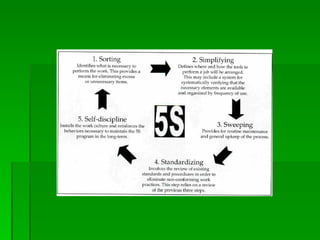
 Seiti, seiton,seiso, seiketsu and shitsuke
5S_1 Seiri(Sort,
Organization)
  Eliminating unnceserary items from the workplace.
     Waste of time.
  If working place in order, more comfortable
     Leave the tools in correct place
     If not a specific place, common area (temporary)
  Main problem, getting rid of some materials
  Decide the order
     Shape
     Importance
     Usage
     …
5S_2 Seiton(Set In Order)

    Setting tools in order
    Organizing the rank of the work
    No waste of time
    No demotivating interruptions
    No risk of hitting, spilling while looking for tools
    Reduces risk of occupational accidents
    Visualized seiton
5S_3 Seiso(Sweep, Shine)

  Sweeping means to physically clean up the work area
  Things put in order and kept in excellent condition

  Involvement every employee in daily cleaninig process
  Acceptance maintenance as a part of the job

  Identyfication of wasted sources  improvement of
   effectiveness and effeciency
  Reduced number of hazrds  safer working
   environment
5S_4
Seiketsu(Standardize)
  Seiketsu means creating standard ways to keep the
   work areas organized, clean and orderly and to
   document agreements made as part of the 5S’s.

  Variability in the process can be controlled by
   eliminating ”non-standard” resources.

  Every employee follows those standards, understand
   and maintaining them will improve the efficiency and
   reduce the cost.

  Repeat the first three steps over and over to
   continuously improve.
5S_5 Shiksute(Self-
Discipline)
  Maintainace of favourable habits for a longer
   time  continuous improvement


    the involvement of employees
    integrated performance measurement system
    support of management
    discipline
    all the safety information should be put to
     production and quality reports
How to implement?
   Clear objectives
   Effective communication system
   Opinions of employees
   Training
   Follow up, feedback
   Regular updates
How to implement?
 Cleaning and order is the basis of standarization,
  continous order and improvement.
 5S help: based on common sense, discipline and
  visual management
    Impact on quality, cost and human environment.
    Cost as waste eliminated
 Before implementation a plan is needed
      Set objectives
      Steering group needs established
      Pilot areas defined
      …
 5S work will be performed by teams from within the
  area concerned.
Why this programme?
 reduction of waste in every operation
 inventory organised in better way
 additional space in the room
 saves time
 introduces good management practices  no
  safety problems commitment of employees
 significant impact on the entire performance of
  the company increased productivity,
  effectiveness and efficiency
 continuous improvement
 competitive advantage
The importance of
working environment
 Clean, orderly and comfortable working area is
  very important.

 Good for health, away from danger, efficiency,
  gain, save times, reduce wastes, etc.

 Bad working environment
  Mess, dirty, disorder, bad efficiency, waste,
  easy to fall sick, etc
How to promote
employee ownership
 Define and launch a promotional plan

 Specific, explicit rewards and punishment

 Transparent manage system

 Concern about the safety and healthy working
  environment for employees

 Implementing 5S, work satisfaction is enhanced as
  employee see the impact they make on their work
  environment
Conclusion
   Clean, tidy, well organized workplace
   Safer workplace
   High quality work
   Employee satisfaction
   Customer satisfaction
   Management satisfaction
   Continuous improvement culture
Questions &
feedback
Thanks!

5s

  • 1.
    5S ANALYSIS, IMPLEMENTATION AND ITSEFFECTS ON ORGANIZATIONS Duan Xiaobo Ewa Przybylska Özge Cokpekin Manuel Moreno Diez
  • 2.
    Agenda  What is 5S  How to implement it  Why we need it  What its importance is  How to promote employee ownership
  • 3.
    Introduction –What is5 S  Japanese system  Creates clean, organized and well designed work place  100% efficiency and occupational safety  Seiti, seiton,seiso, seiketsu and shitsuke
  • 5.
    5S_1 Seiri(Sort, Organization) Eliminating unnceserary items from the workplace.  Waste of time.  If working place in order, more comfortable  Leave the tools in correct place  If not a specific place, common area (temporary)  Main problem, getting rid of some materials  Decide the order  Shape  Importance  Usage  …
  • 6.
    5S_2 Seiton(Set InOrder)  Setting tools in order  Organizing the rank of the work  No waste of time  No demotivating interruptions  No risk of hitting, spilling while looking for tools  Reduces risk of occupational accidents  Visualized seiton
  • 7.
    5S_3 Seiso(Sweep, Shine)  Sweeping means to physically clean up the work area  Things put in order and kept in excellent condition  Involvement every employee in daily cleaninig process  Acceptance maintenance as a part of the job  Identyfication of wasted sources  improvement of effectiveness and effeciency  Reduced number of hazrds  safer working environment
  • 8.
    5S_4 Seiketsu(Standardize)  Seiketsumeans creating standard ways to keep the work areas organized, clean and orderly and to document agreements made as part of the 5S’s.  Variability in the process can be controlled by eliminating ”non-standard” resources.  Every employee follows those standards, understand and maintaining them will improve the efficiency and reduce the cost.  Repeat the first three steps over and over to continuously improve.
  • 9.
    5S_5 Shiksute(Self- Discipline) Maintainace of favourable habits for a longer time  continuous improvement  the involvement of employees  integrated performance measurement system  support of management  discipline  all the safety information should be put to production and quality reports
  • 10.
    How to implement?  Clear objectives  Effective communication system  Opinions of employees  Training  Follow up, feedback  Regular updates
  • 11.
    How to implement? Cleaning and order is the basis of standarization, continous order and improvement.  5S help: based on common sense, discipline and visual management  Impact on quality, cost and human environment.  Cost as waste eliminated  Before implementation a plan is needed  Set objectives  Steering group needs established  Pilot areas defined  …  5S work will be performed by teams from within the area concerned.
  • 12.
    Why this programme? reduction of waste in every operation  inventory organised in better way  additional space in the room  saves time  introduces good management practices  no safety problems commitment of employees  significant impact on the entire performance of the company increased productivity, effectiveness and efficiency  continuous improvement  competitive advantage
  • 13.
    The importance of workingenvironment  Clean, orderly and comfortable working area is very important.  Good for health, away from danger, efficiency, gain, save times, reduce wastes, etc.  Bad working environment Mess, dirty, disorder, bad efficiency, waste, easy to fall sick, etc
  • 14.
    How to promote employeeownership  Define and launch a promotional plan  Specific, explicit rewards and punishment  Transparent manage system  Concern about the safety and healthy working environment for employees  Implementing 5S, work satisfaction is enhanced as employee see the impact they make on their work environment
  • 15.
    Conclusion  Clean, tidy, well organized workplace  Safer workplace  High quality work  Employee satisfaction  Customer satisfaction  Management satisfaction  Continuous improvement culture
  • 16.
  • 17.