Visual Storytelling: The five-shot
method and beyond
It works UNDERWATER too!
Common diving video issues
(for videos you want to share)
Video too long (in love with the footage)
You MUST edit videos either in camera or
with some editing software to make it
consumable
Video not stable
Trying to shoot deep without lights
No diffuser/video reflector on lights
The story starts on land
BUT, how do we tell this story????
Storytelling for Divers
(each sequence can be short)
Story starts topside - people like to be included in the adventure, even
if they don’t dive (think Cousteau) - Yes, I’ll repeat this again and
again. Get those topside shots! :)
Every story has three parts: Beginning, middle, conclusion.
Storytelling for Divers
(Not talking fish tales)
Topside can be short and sweet, basically a few sequences to help
bring the audience up to speed, or more in depth if the subject matter
is a bigger deal, such as a tech dive or vacation requiring more
preparation.
In making the opening faster paced and then things slow down once
you get underwater (with longer cuts, etc..) you help share the feeling
of weightlessness and relaxation that makes diving special.
The Beginning
The audience likes to be included, even if they don’t dive, topside
content helps them feel connected.
Planning stages
 Preparation (as simple as getting gear together or more in depth
such as getting proper education, gear, getting fit, etc…)
 The night before (making that list, checking it twice)
 Loading gear and heading out
 Traveling to destination
The Adventure
 Execution!
 Arrival! Yay! We made it! Let the wild rumpus begin!
 If its a boat dive, more loading up and another travel sequence
 Getting into kit! (TIME TO DIVE!)
 DIVE!!!! (still try to tell the story of the dive: descent, dive, ascent)
 Happy Smiling Divers getting out of water (this can also be
conclusion)
(The story can end here)
Conclusion of dive adventure
 Conclusion
 Debrief/riding back on boat, getting hot chocolate…
 Loading wet soggy gear, laughing about messy hair, general fun,
social time, feeling of relief if it was a big expedition…
 Driving home
 Home
 Unloading gear, rinsing
 Clock showing final time or sitting down to post about the dive or
any other creative ‘end of day’ scenario and …fade to black.
(conclusion can be super short, simple as High Five’s
and a door closing on the car, or more in-depth -
even if more in depth, make sure its still short duration)
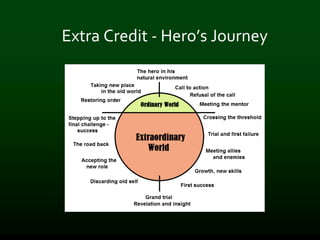
Extra Credit - Hero’s Journey
To sum things up….
You don't have to do everything described,
even just doing a little bit will vastly improve
your video, while still keeping it short.
Why is teaching and learning
video hard?
Ten years of training journalists
and students: video storytelling
is the toughest thing to teach
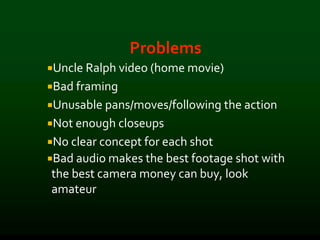
Problems
Uncle Ralph video (home movie)
Bad framing
Unusable pans/moves/following the action
Not enough closeups
No clear concept for each shot
Bad audio makes the best footage shot with
the best camera money can buy, look
amateur
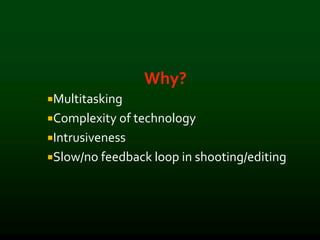
Why?
Multitasking
Complexity of technology
Intrusiveness
Slow/no feedback loop in shooting/editing
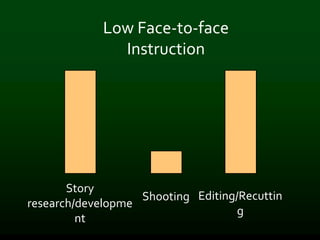
Story
research/developme
nt
Shooting Editing/Recuttin
g
Low Face-to-face
Instruction
Reading/writing closely linked
Watching and creating video is not
Usually more art than science
Need more science
BBC 5 Shot method
Pioneered by Michael Rosenblum, NYT
Television, NY1, BBC, CurrentTV
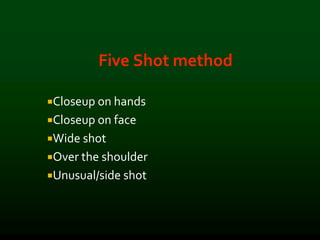
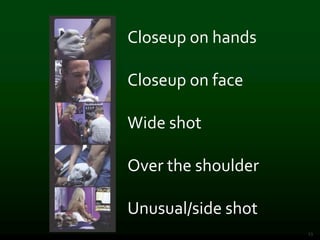
Five Shot method
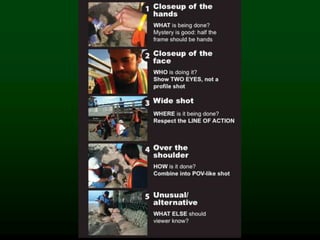
Closeup on hands
Closeup on face
Wide shot
Over the shoulder
Unusual/side shot
19
Venice Pier Gets its Fill
Five Shot basics
Start with best shot
Get audience to ask questions/be
curious
Hold the shot: no pans, zooms, moves
Why it works
Sequence always cuts together
Usable B-roll all the time
Mystery draws viewers in
23
Closeup on hands
Closeup on face
Wide shot
Over the shoulder
Unusual/side shot
Adam Westbrook
“What’s the difference between
amateurs and professionals?
Pros shoot sequences.”
http://adamwestbrook.wordpress.com/2011/10/24/10-common-video-storytelling-mistakes-and-how-to-avoid-them-adam-westbrook-online-video/
Why it’s useful
Compels journalist/storyteller to get close
Provides known game plan
Frees up time for story decision making
Web video demands closeups
Additional shots
 Interview
 Reveal shots
 Establishing shot
 Tracking shot
 Cut-away shots
Tools for Evaluation
People other than the divers on the dive looking to see
themselves will watch the entire video (outside
audience appreciation)
People (non divers) will learn something “Wow! It’s so
bright and colorful down there”
If you watch your YouTube Analytics people make it
through the majority of your video
People share your video
Keep in mind…
Not meant to be rigid formula
Know when to break rules
Under stress, fall back on basic training:
closeups, faces, holding shots,
line of action
REMEMBER!
With GOOD SHOOTING
TECHNIQUE you can create
professional style video
with iPhone, P&S camera
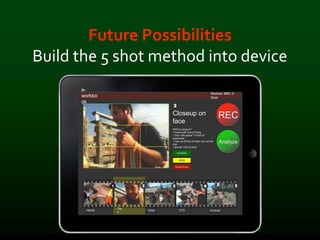
Future Possibilities
Build the 5 shot method into device
Hands
Fac
e
OTSWide Unusual
Closeup on
face
WHO is doing it?
• Frame with rule of thirds
• Give “talk space” in front of
eyes/nose.
• Can cut off top of head, but not the
chin.
• SHOW TWO EYES!
FRAMING
EYES
NOSEROOM
e-
workbo
ok
REC
Analyze
Module: BBC 5
Shot
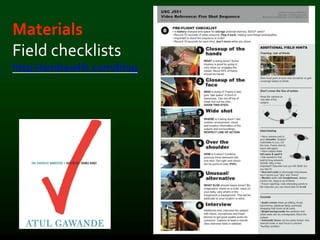
Materials
Field checklists
http://andrewlih.com/blog

Shooting better SCUBA diving videos utilizing visual storytelling methods.

  • 1.
    Visual Storytelling: Thefive-shot method and beyond It works UNDERWATER too!
  • 2.
    Common diving videoissues (for videos you want to share) Video too long (in love with the footage) You MUST edit videos either in camera or with some editing software to make it consumable Video not stable Trying to shoot deep without lights No diffuser/video reflector on lights
  • 3.
    The story startson land BUT, how do we tell this story????
  • 4.
    Storytelling for Divers (eachsequence can be short) Story starts topside - people like to be included in the adventure, even if they don’t dive (think Cousteau) - Yes, I’ll repeat this again and again. Get those topside shots! :) Every story has three parts: Beginning, middle, conclusion.
  • 5.
    Storytelling for Divers (Nottalking fish tales) Topside can be short and sweet, basically a few sequences to help bring the audience up to speed, or more in depth if the subject matter is a bigger deal, such as a tech dive or vacation requiring more preparation. In making the opening faster paced and then things slow down once you get underwater (with longer cuts, etc..) you help share the feeling of weightlessness and relaxation that makes diving special.
  • 6.
    The Beginning The audiencelikes to be included, even if they don’t dive, topside content helps them feel connected. Planning stages  Preparation (as simple as getting gear together or more in depth such as getting proper education, gear, getting fit, etc…)  The night before (making that list, checking it twice)  Loading gear and heading out  Traveling to destination
  • 7.
    The Adventure  Execution! Arrival! Yay! We made it! Let the wild rumpus begin!  If its a boat dive, more loading up and another travel sequence  Getting into kit! (TIME TO DIVE!)  DIVE!!!! (still try to tell the story of the dive: descent, dive, ascent)  Happy Smiling Divers getting out of water (this can also be conclusion) (The story can end here)
  • 8.
    Conclusion of diveadventure  Conclusion  Debrief/riding back on boat, getting hot chocolate…  Loading wet soggy gear, laughing about messy hair, general fun, social time, feeling of relief if it was a big expedition…  Driving home  Home  Unloading gear, rinsing  Clock showing final time or sitting down to post about the dive or any other creative ‘end of day’ scenario and …fade to black. (conclusion can be super short, simple as High Five’s and a door closing on the car, or more in-depth - even if more in depth, make sure its still short duration)
  • 9.
    Extra Credit -Hero’s Journey
  • 10.
    To sum thingsup…. You don't have to do everything described, even just doing a little bit will vastly improve your video, while still keeping it short.
  • 11.
    Why is teachingand learning video hard?
  • 12.
    Ten years oftraining journalists and students: video storytelling is the toughest thing to teach
  • 13.
    Problems Uncle Ralph video(home movie) Bad framing Unusable pans/moves/following the action Not enough closeups No clear concept for each shot Bad audio makes the best footage shot with the best camera money can buy, look amateur
  • 14.
  • 15.
  • 16.
    Reading/writing closely linked Watchingand creating video is not Usually more art than science Need more science
  • 17.
    BBC 5 Shotmethod Pioneered by Michael Rosenblum, NYT Television, NY1, BBC, CurrentTV
  • 18.
    Five Shot method Closeupon hands Closeup on face Wide shot Over the shoulder Unusual/side shot
  • 19.
  • 21.
    Five Shot basics Startwith best shot Get audience to ask questions/be curious Hold the shot: no pans, zooms, moves
  • 22.
    Why it works Sequencealways cuts together Usable B-roll all the time Mystery draws viewers in
  • 23.
    23 Closeup on hands Closeupon face Wide shot Over the shoulder Unusual/side shot
  • 24.
    Adam Westbrook “What’s thedifference between amateurs and professionals? Pros shoot sequences.” http://adamwestbrook.wordpress.com/2011/10/24/10-common-video-storytelling-mistakes-and-how-to-avoid-them-adam-westbrook-online-video/
  • 25.
    Why it’s useful Compelsjournalist/storyteller to get close Provides known game plan Frees up time for story decision making Web video demands closeups
  • 26.
    Additional shots  Interview Reveal shots  Establishing shot  Tracking shot  Cut-away shots
  • 27.
    Tools for Evaluation Peopleother than the divers on the dive looking to see themselves will watch the entire video (outside audience appreciation) People (non divers) will learn something “Wow! It’s so bright and colorful down there” If you watch your YouTube Analytics people make it through the majority of your video People share your video
  • 28.
    Keep in mind… Notmeant to be rigid formula Know when to break rules Under stress, fall back on basic training: closeups, faces, holding shots, line of action
  • 29.
    REMEMBER! With GOOD SHOOTING TECHNIQUEyou can create professional style video with iPhone, P&S camera
  • 30.
    Future Possibilities Build the5 shot method into device Hands Fac e OTSWide Unusual Closeup on face WHO is doing it? • Frame with rule of thirds • Give “talk space” in front of eyes/nose. • Can cut off top of head, but not the chin. • SHOW TWO EYES! FRAMING EYES NOSEROOM e- workbo ok REC Analyze Module: BBC 5 Shot
  • 31.

Editor's Notes

  • #2 20 minutes for presentation , 10 minutes for Q&A