5 DIFFERENT PHASES
OF ETHICAL HACKING
TAKE ONLINE CLASSES TO FULFIL YOUR DESIRE TO
IMPROVE YOUR SKILLS.
OBSERVATION
A survey, often known as information
collection, is the initial stage of ethical
hacking. It entails gathering as much
knowledge on the target system or network
as feasible. Ethical hackers conduct research
on the target company's workers,
infrastructure, and third-party connections.
Open-source intelligence, social engineering
tactics, and technologies such as Nmap and
Shodan assist ethical hackers in gathering
vital information for later phases.
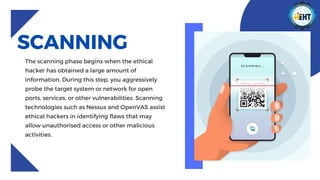
SCANNING
The scanning phase begins when the ethical
hacker has obtained a large amount of
information. During this step, you aggressively
probe the target system or network for open
ports, services, or other vulnerabilities. Scanning
technologies such as Nessus and OpenVAS assist
ethical hackers in identifying flaws that may
allow unauthorised access or other malicious
activities.
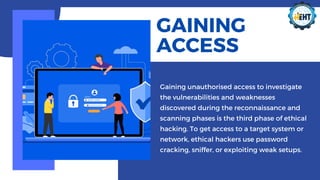
GAINING
ACCESS
Gaining unauthorised access to investigate
the vulnerabilities and weaknesses
discovered during the reconnaissance and
scanning phases is the third phase of ethical
hacking. To get access to a target system or
network, ethical hackers use password
cracking, sniffer, or exploiting weak setups.
MAINTAINING ACCESS
The ethical hacker advances to the fourth
phase after successfully breaching a
system or network. The goal here is to
maintain access without being detected.
This phase allows you to investigate the
target system, get more important
information, and elevate privileges. Ethical
hackers use tactics such as backdoors,
rootkits, or malicious software to keep
access while minimising the possibility of
detection by security measures.
COVERING TRACKS
Covering tracks is the final stage of ethical
hacking, which entails removing all evidence
of the hacker's presence from the hacked
system or network. Ethical hackers must
conceal their operations in order to avoid legal
repercussions or to allow prospective
malevolent actors to exploit the same
vulnerabilities. This phase consists of
eliminating harmful software, erasing logs, and
returning the machine to its original state.
CONTACT US
(+91) 81780 71995
iieht370@gmail.com
www.iieht.com/
Laxmi Nagar, Delhi, 110092

5 Different Phases of Ethical Hacking

  • 1.
    5 DIFFERENT PHASES OFETHICAL HACKING TAKE ONLINE CLASSES TO FULFIL YOUR DESIRE TO IMPROVE YOUR SKILLS.
  • 2.
    OBSERVATION A survey, oftenknown as information collection, is the initial stage of ethical hacking. It entails gathering as much knowledge on the target system or network as feasible. Ethical hackers conduct research on the target company's workers, infrastructure, and third-party connections. Open-source intelligence, social engineering tactics, and technologies such as Nmap and Shodan assist ethical hackers in gathering vital information for later phases.
  • 3.
    SCANNING The scanning phasebegins when the ethical hacker has obtained a large amount of information. During this step, you aggressively probe the target system or network for open ports, services, or other vulnerabilities. Scanning technologies such as Nessus and OpenVAS assist ethical hackers in identifying flaws that may allow unauthorised access or other malicious activities.
  • 4.
    GAINING ACCESS Gaining unauthorised accessto investigate the vulnerabilities and weaknesses discovered during the reconnaissance and scanning phases is the third phase of ethical hacking. To get access to a target system or network, ethical hackers use password cracking, sniffer, or exploiting weak setups.
  • 5.
    MAINTAINING ACCESS The ethicalhacker advances to the fourth phase after successfully breaching a system or network. The goal here is to maintain access without being detected. This phase allows you to investigate the target system, get more important information, and elevate privileges. Ethical hackers use tactics such as backdoors, rootkits, or malicious software to keep access while minimising the possibility of detection by security measures.
  • 6.
    COVERING TRACKS Covering tracksis the final stage of ethical hacking, which entails removing all evidence of the hacker's presence from the hacked system or network. Ethical hackers must conceal their operations in order to avoid legal repercussions or to allow prospective malevolent actors to exploit the same vulnerabilities. This phase consists of eliminating harmful software, erasing logs, and returning the machine to its original state.
  • 7.
    CONTACT US (+91) 8178071995 iieht370@gmail.com www.iieht.com/ Laxmi Nagar, Delhi, 110092