Contraction
Patterns of
Labour
How do they influence our
management of care to
support the normal process
of labour?
Know the
normal
Work with the abnormal to
make it normal
In the past quarter century,
advances in medical technology
have been accompanied by an
increase in
intervention-intensive labour and
birth
( Hamilton, Martin, & Ventura, 2006 ).
Nature ’ s simple
plan for birth has been replaced by a
maternity care
system that routinely interferes with the
normal physiological
process and in doing so introduces
unnecessary
risks for mother and baby.
Women no longer have confi -
dence in their ability to give birth without
technologic intervention.
The physiological mechanisms
of labour and childbirth
are NOT completely understood.
Intrinsic factors within the uterine muscle
affect contractions and progressive
cervical dilation. Thus,
spontaneous onset of term labour
signifies the baby’s
readiness to be born as well as the
mother ’s physiological
receptiveness to the process.
Don’t pick a plum before it is
ripe
The Cervix needs to be soft
With good observation applied
anatomy and physiology, and
critical thinking during the birthing
process it is possible to achieve
normal vaginal birth.
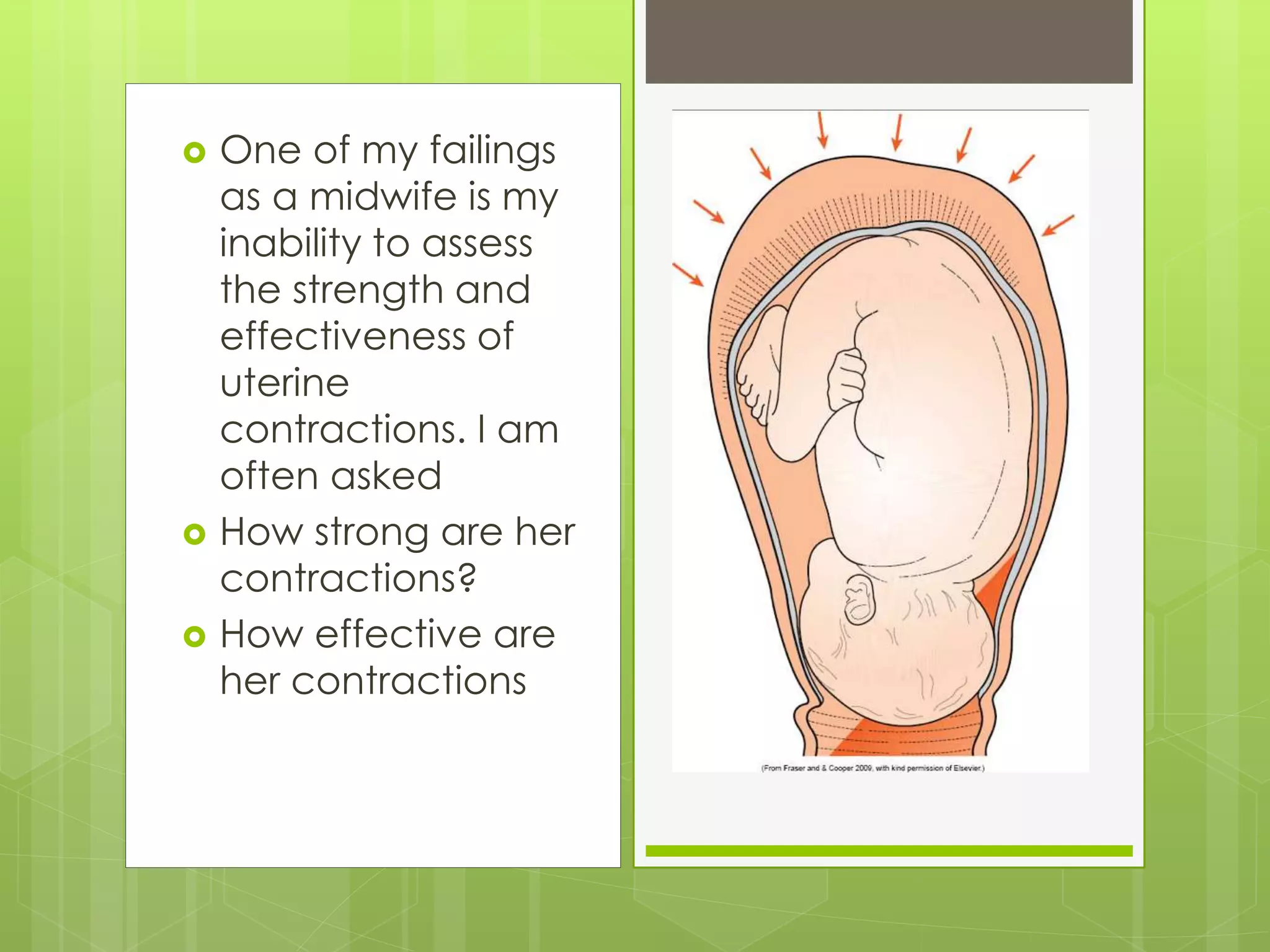
 One of my failings
as a midwife is my
inability to assess
the strength and
effectiveness of
uterine
contractions. I am
often asked
 How strong are her
contractions?
 How effective are
her contractions
Can we measure
the effectiveness
of contractions?
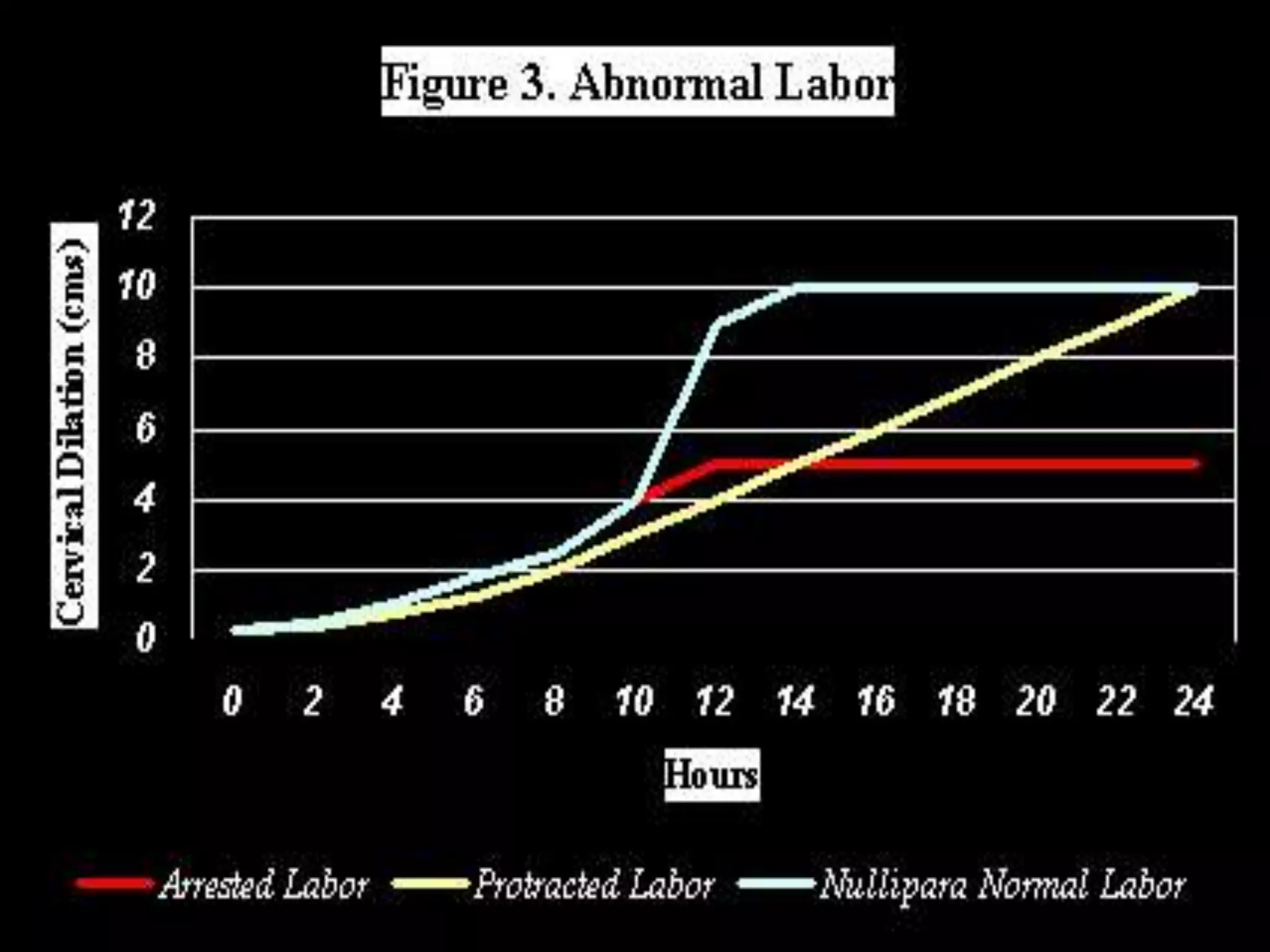
Failure to understand labour
 Early interventions
 Pain relief
 Epidurals
 Artificial rupture of membranes
 Oxytocinon/Syntocinon/Pitocin
 C section
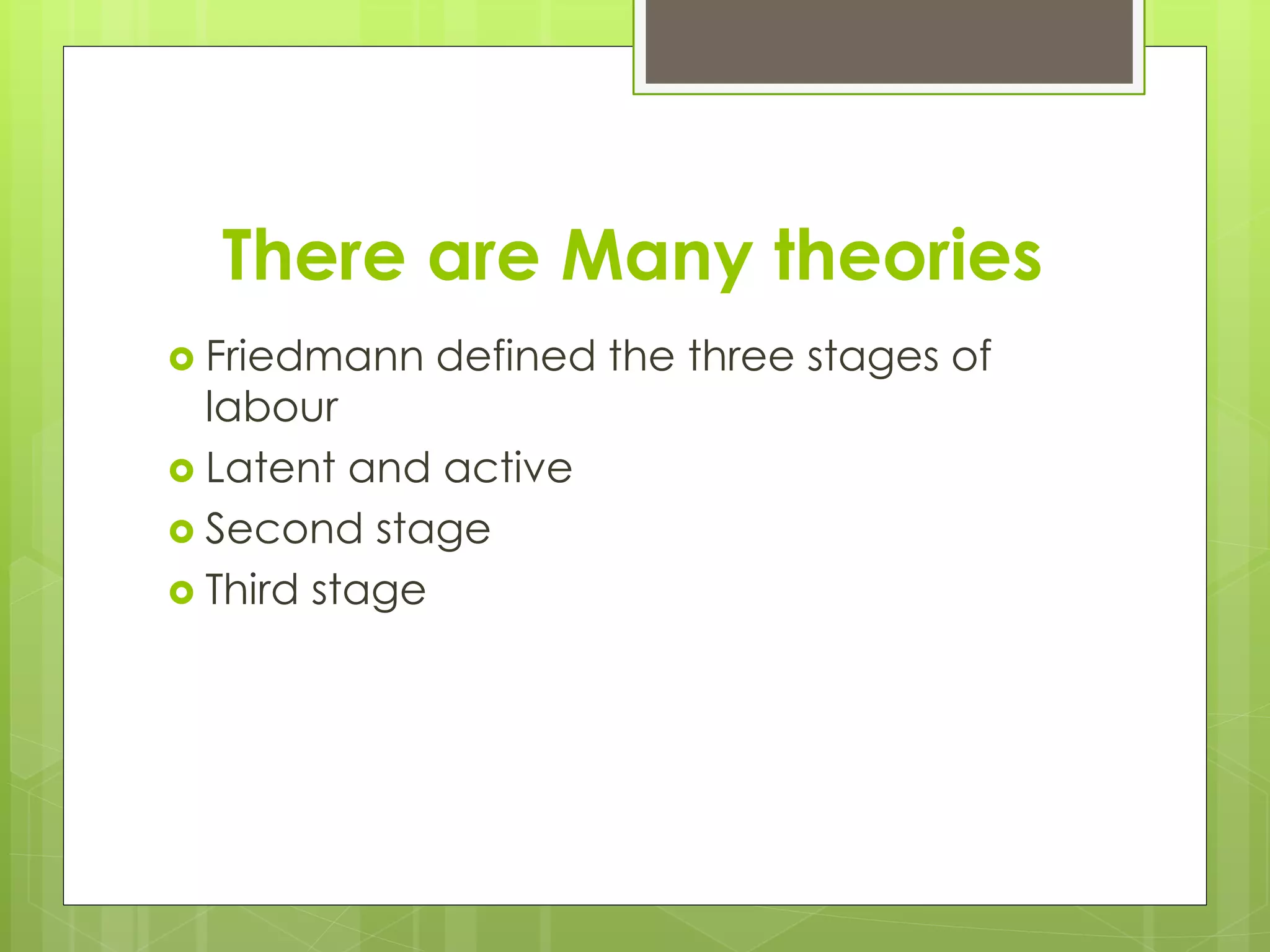
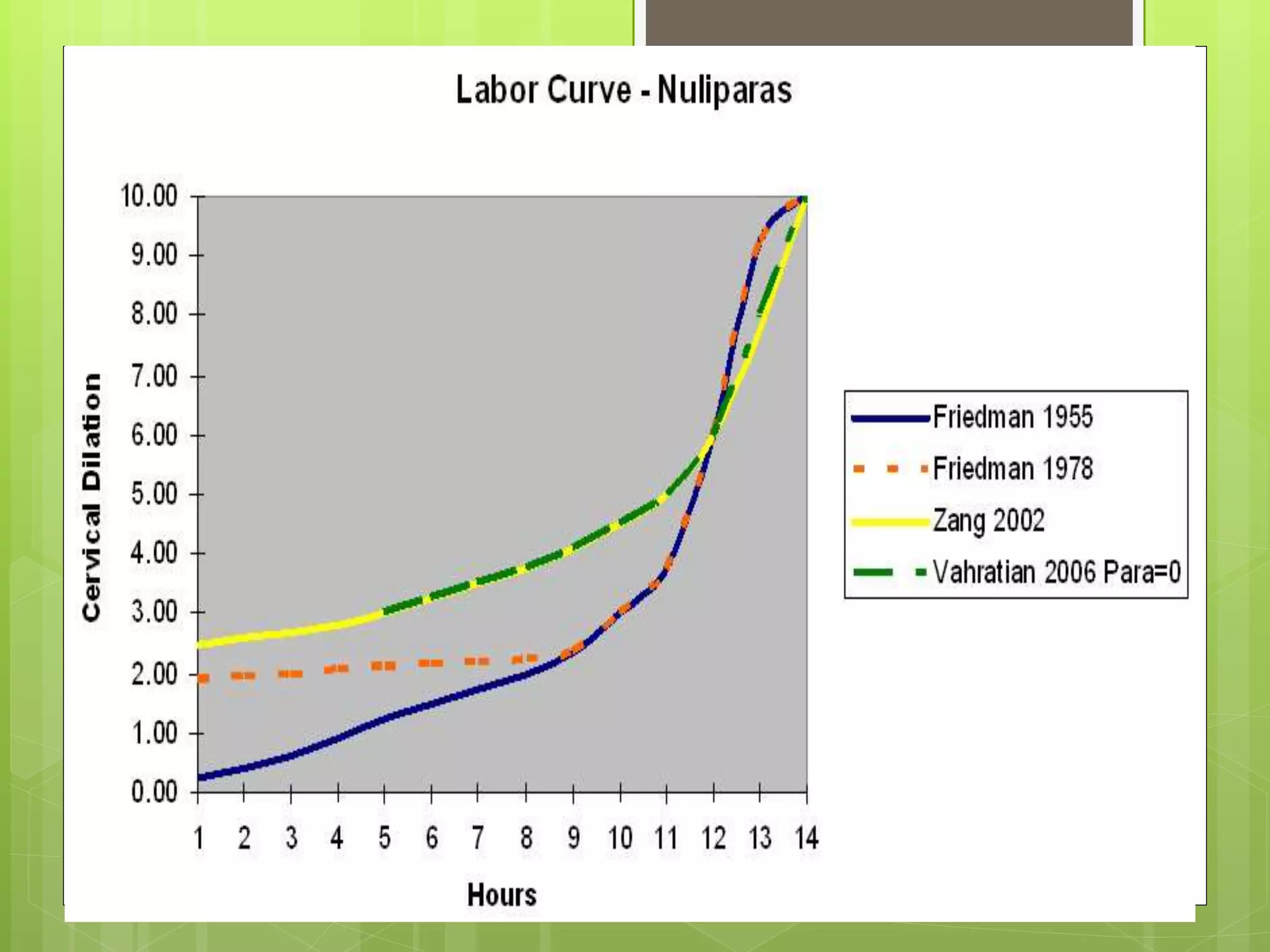
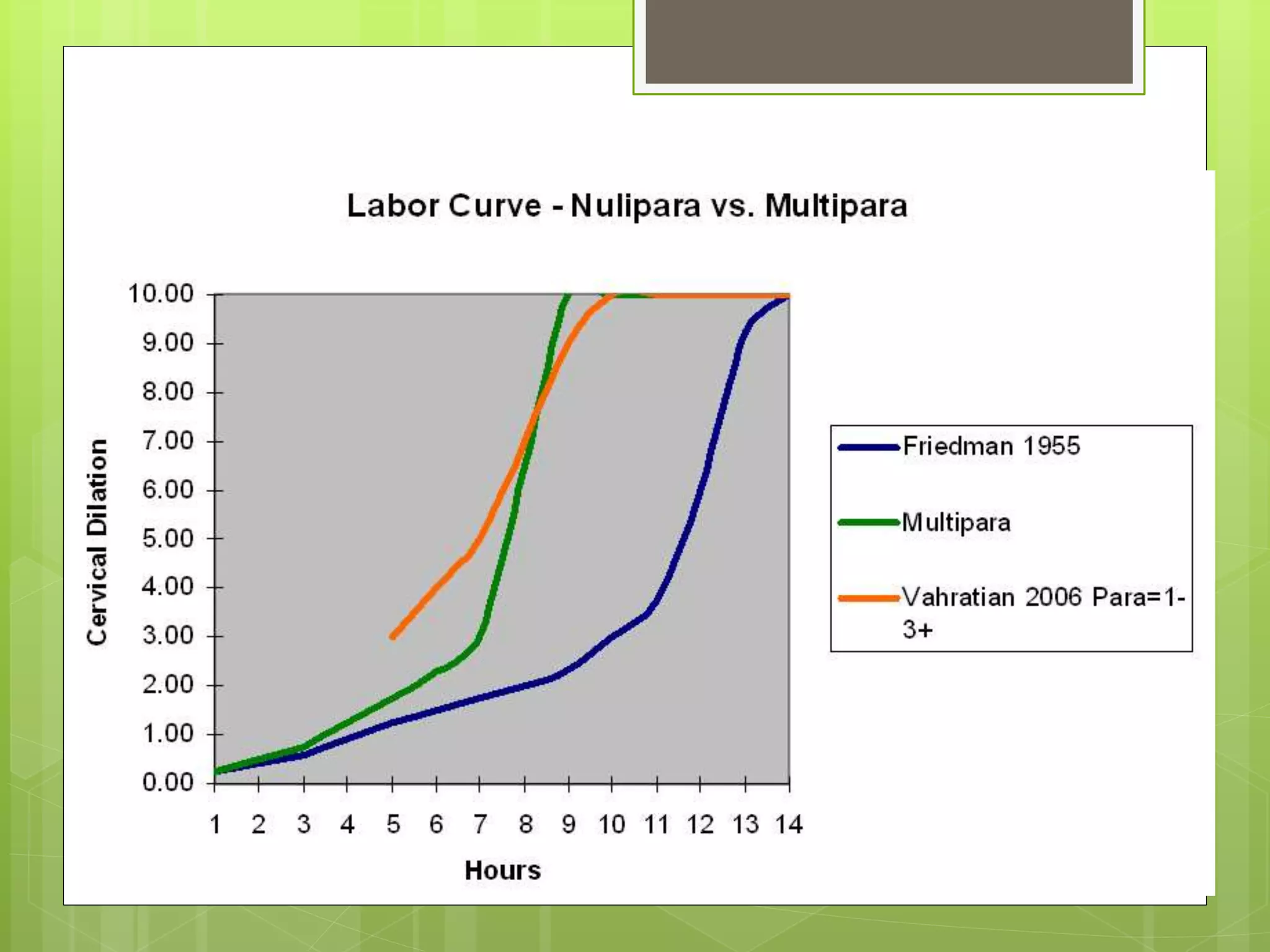
There are Many theories
 Friedmann defined the three stages of
labour
 Latent and active
 Second stage
 Third stage
These theories do not have any
application to anatomy and
physiology or to the contraction
patterns of labour
they merely measure time
frames.
Failure to diagnose labour
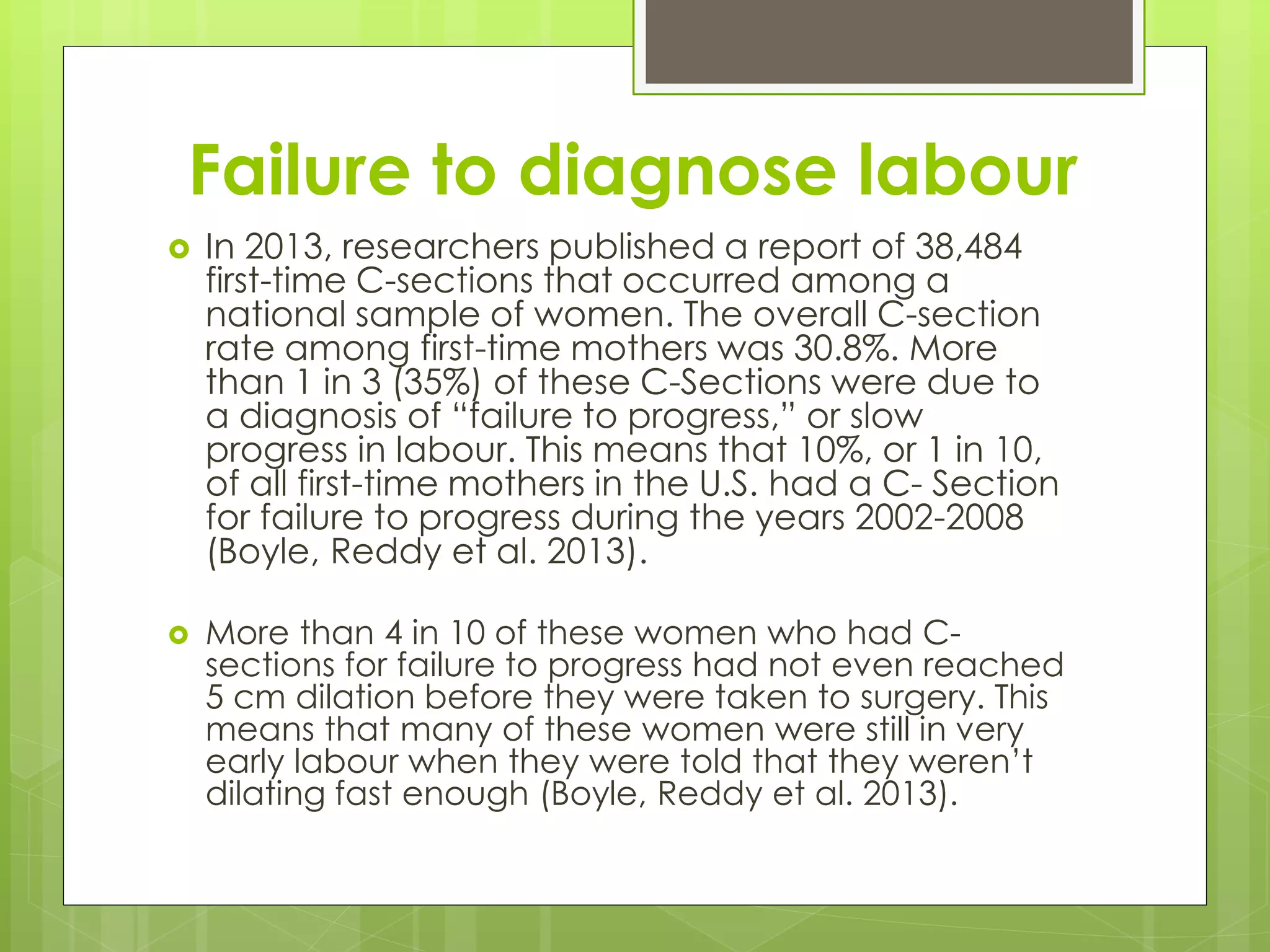
 In 2013, researchers published a report of 38,484
first-time C-sections that occurred among a
national sample of women. The overall C-section
rate among first-time mothers was 30.8%. More
than 1 in 3 (35%) of these C-Sections were due to
a diagnosis of “failure to progress,” or slow
progress in labour. This means that 10%, or 1 in 10,
of all first-time mothers in the U.S. had a C- Section
for failure to progress during the years 2002-2008
(Boyle, Reddy et al. 2013).
 More than 4 in 10 of these women who had C-
sections for failure to progress had not even reached
5 cm dilation before they were taken to surgery. This
means that many of these women were still in very
early labour when they were told that they weren’t
dilating fast enough (Boyle, Reddy et al. 2013).
Progress and Time
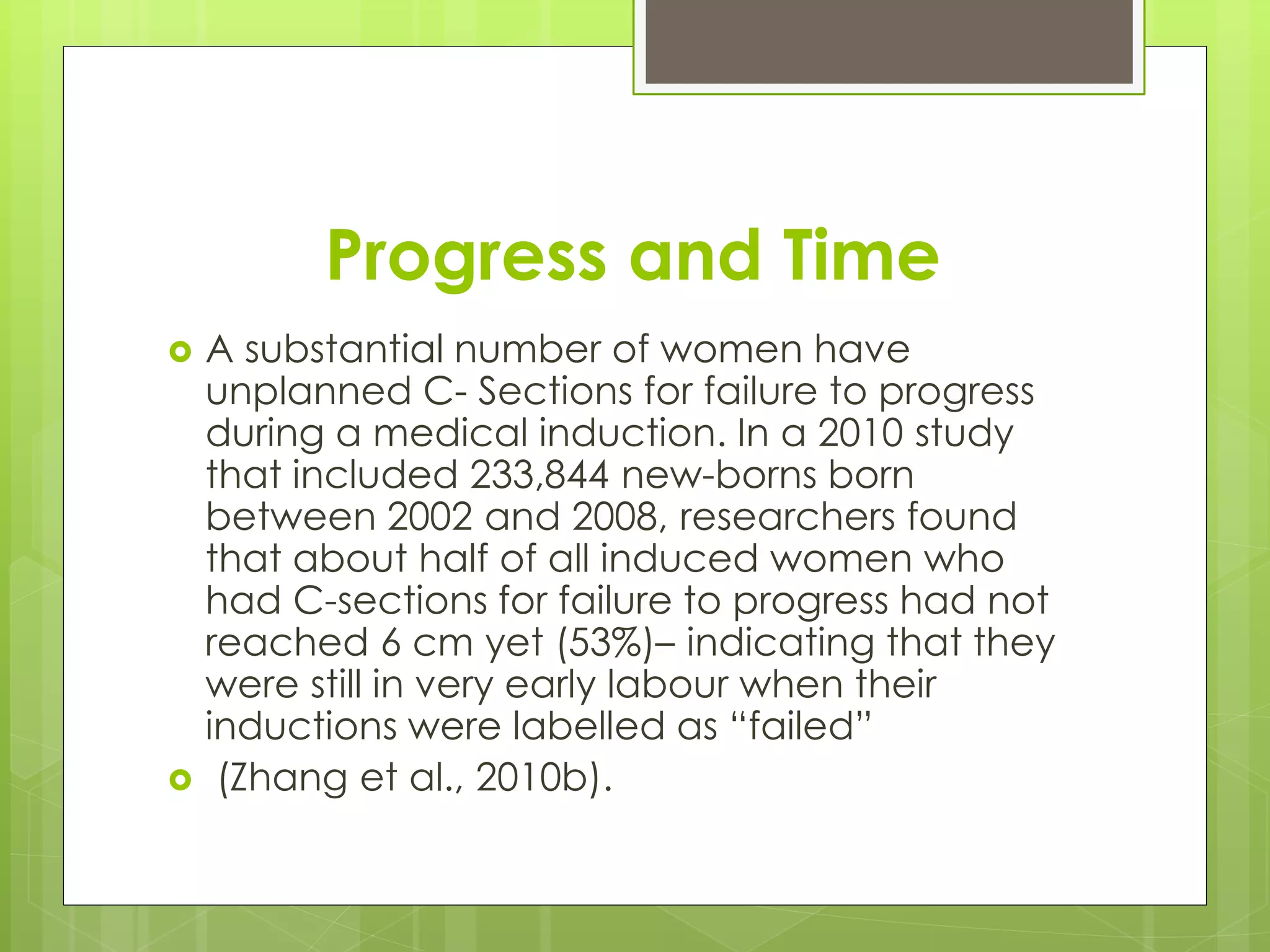
 A substantial number of women have
unplanned C- Sections for failure to progress
during a medical induction. In a 2010 study
that included 233,844 new-borns born
between 2002 and 2008, researchers found
that about half of all induced women who
had C-sections for failure to progress had not
reached 6 cm yet (53%)– indicating that they
were still in very early labour when their
inductions were labelled as “failed”
 (Zhang et al., 2010b).
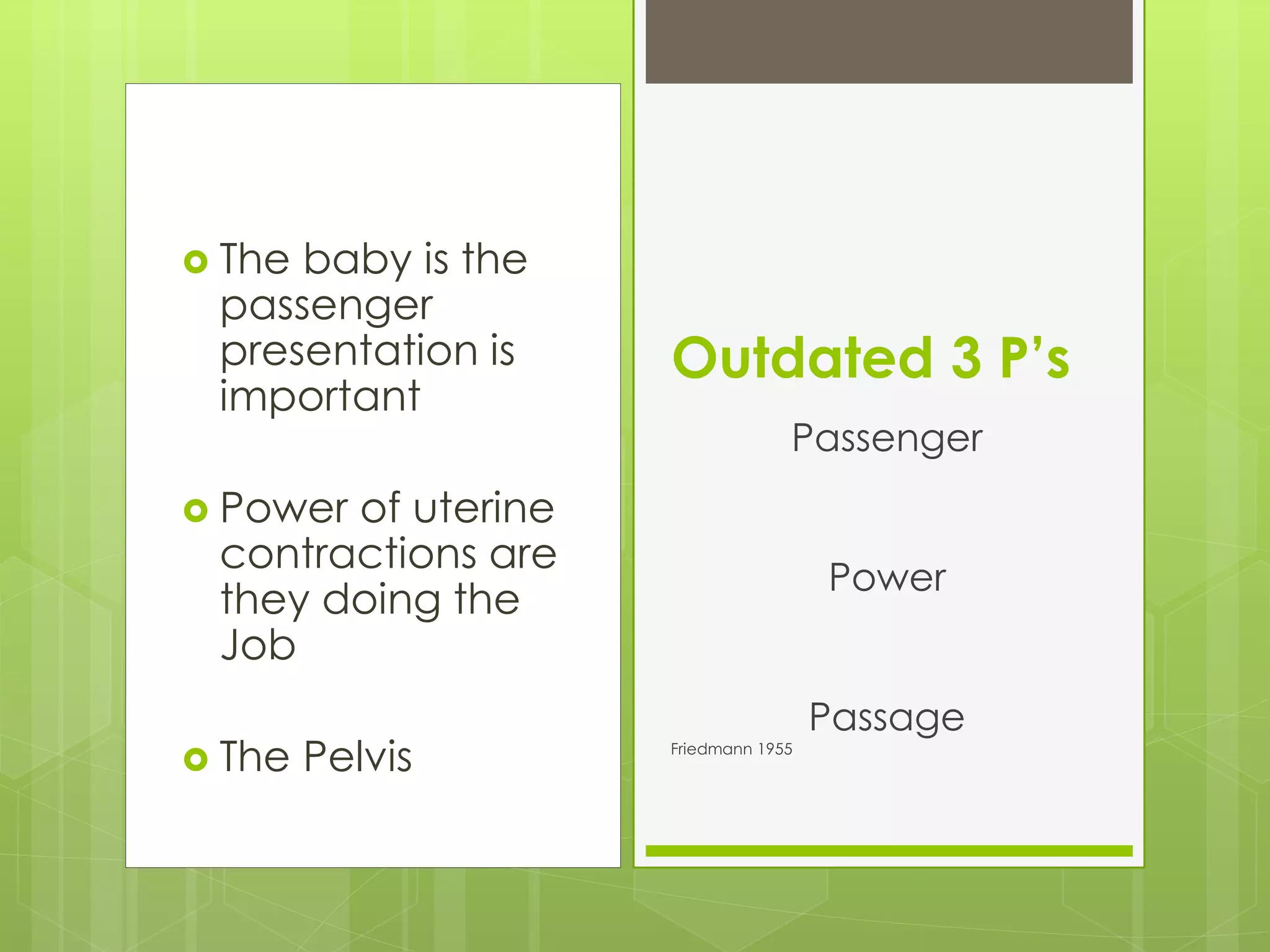
 The baby is the
passenger
presentation is
important
 Power of uterine
contractions are
they doing the
Job
 The Pelvis
Outdated 3 P’s
Passenger
Power
Passage
Friedmann 1955
Midwives
perspective
to look at
the bigger
picture and
plan care
to support
the normal
physiologic
al process
of child
birth
The 5 P’s
• Passenger
• Power
• Passage
• Psyche
• Preparation
The Art of Midwifery
 Consider the Five P’s
 Observe contraction
patterns
 Apply anatomy and
physiology to the six
stages of labour
 Know the birthing
hormones and
applied anatomy
and physiology
 Look at the bigger
picture then plan
yourcare/advice
And education to
get the best
outcomes for the
individual woman
Labour contractions can
increase and decrease in
frequency following admission
to hospital. This may be
associated with dilatation and
posture rather than anxiety
Midwifery 2009 June 25: (3)242-52 Epub2007 july 12
Missing from the
statement
No reference to applied anatomy and physiology
What is really Happening?
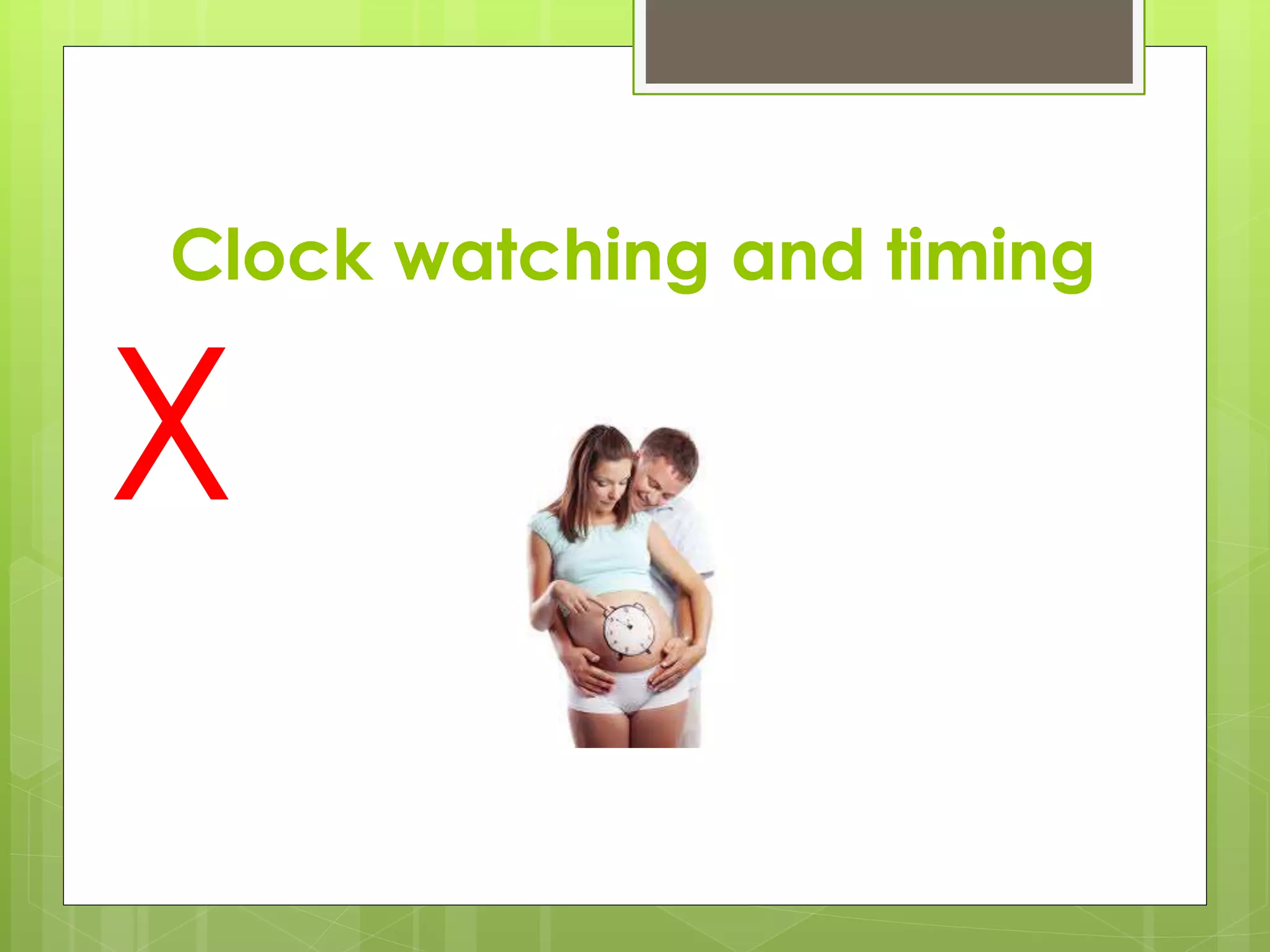
Clock watching and timing
X
Lack of understanding leads to
 Contractions are
slow
 Augmentation that is
in apropriatley
managed
 Need to know latent
and active phase
 Lets augment the
process
 Foetal distress
 Caesarean
 Neonatal units
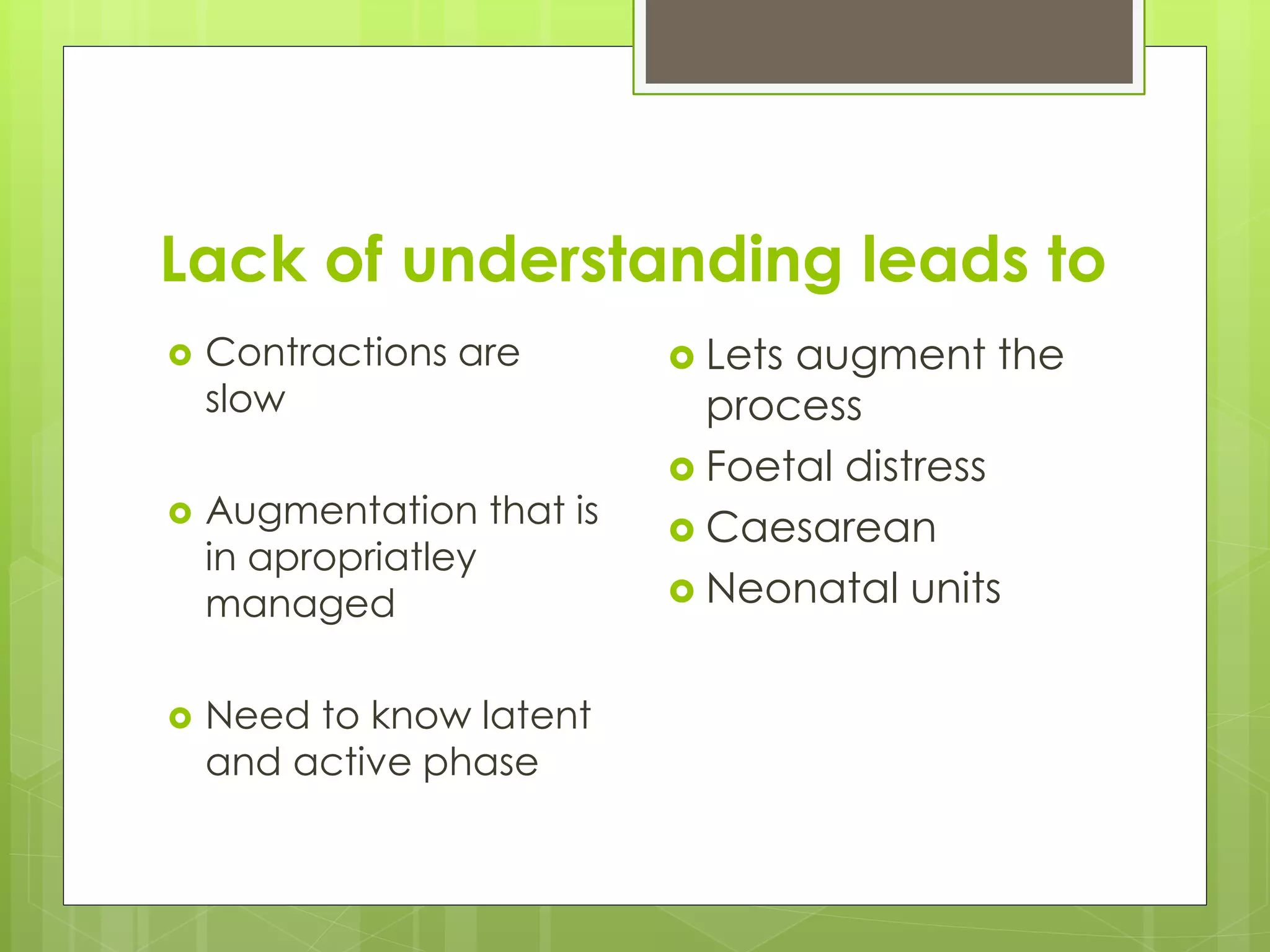
Are there 6 stages of Labour?
 Descent
 Effacement
 Active
 Transition
 Second Stage
 Third stage
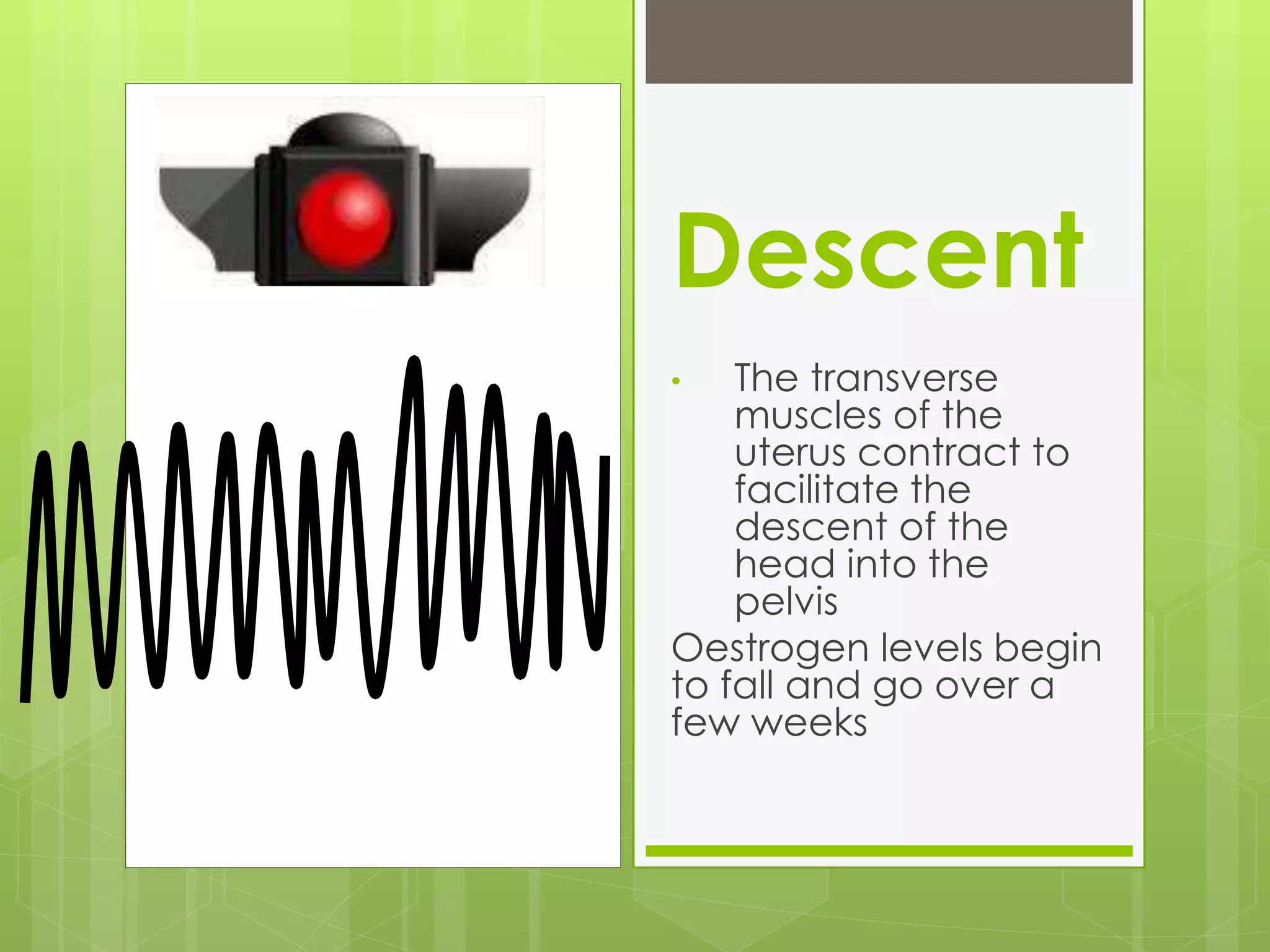
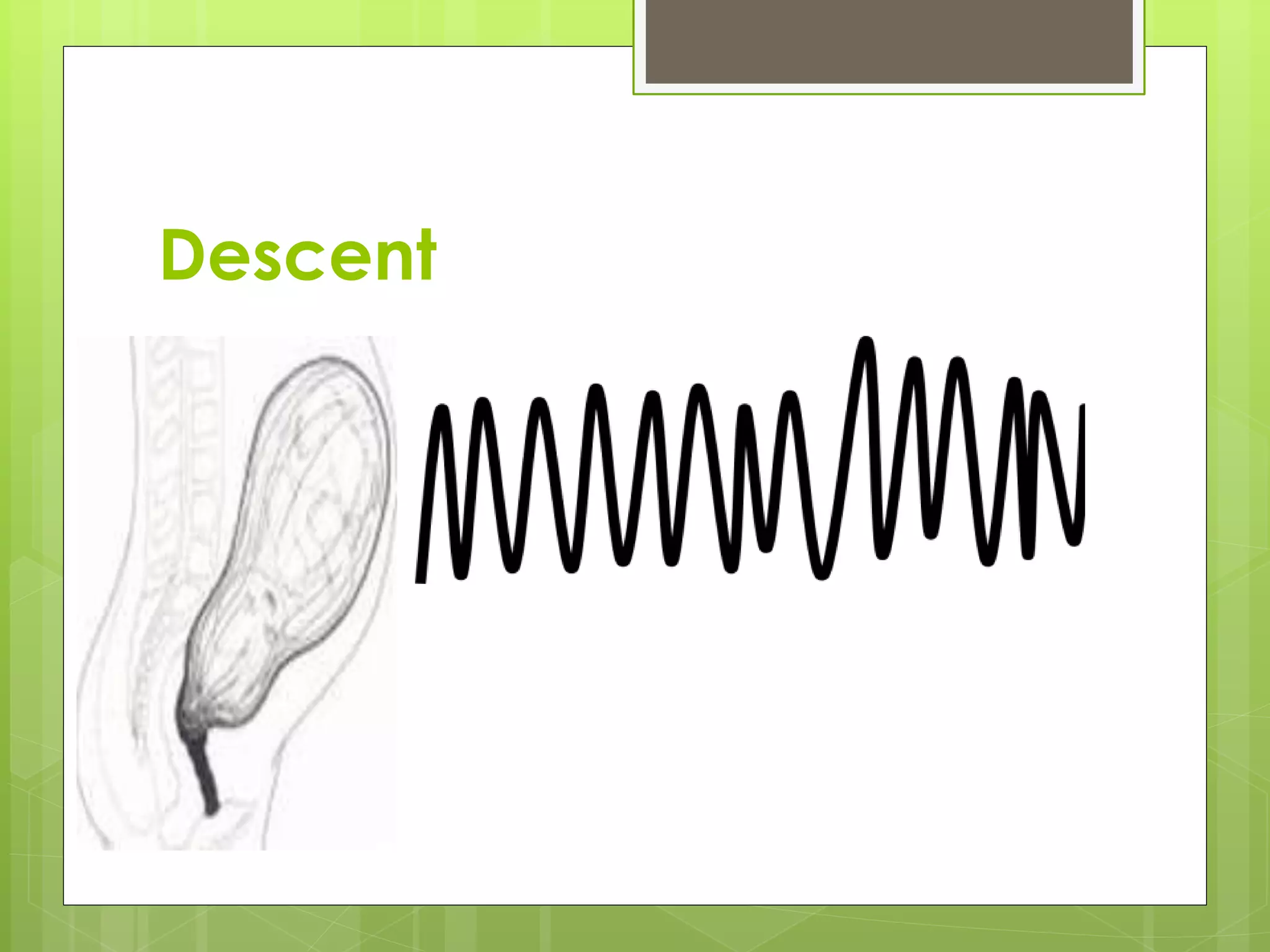
Descent
• The transverse
muscles of the
uterus contract to
facilitate the
descent of the
head into the
pelvis
Oestrogen levels begin
to fall and go over a
few weeks
Descent
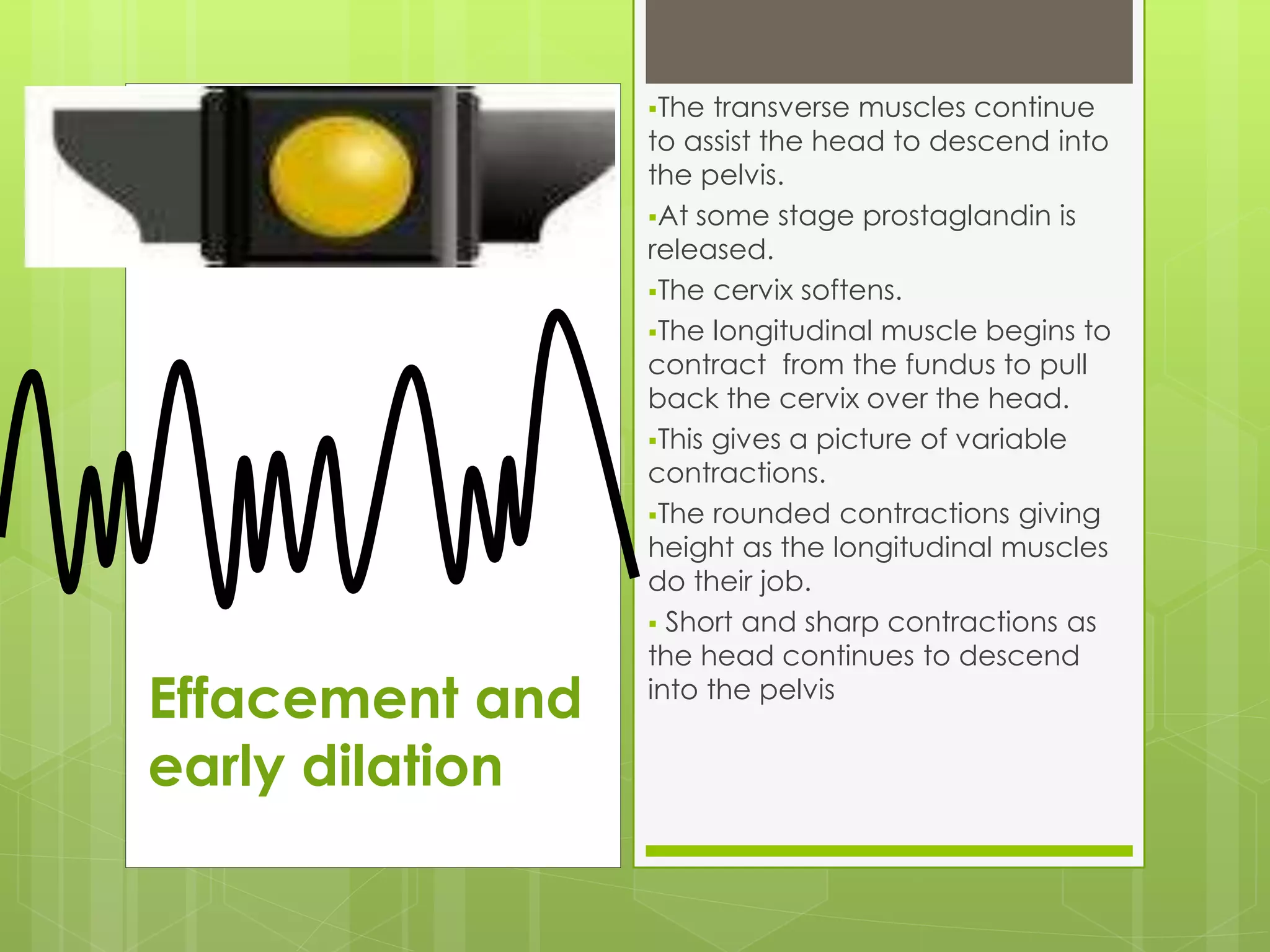
The transverse muscles continue
to assist the head to descend into
the pelvis.
At some stage prostaglandin is
released.
The cervix softens.
The longitudinal muscle begins to
contract from the fundus to pull
back the cervix over the head.
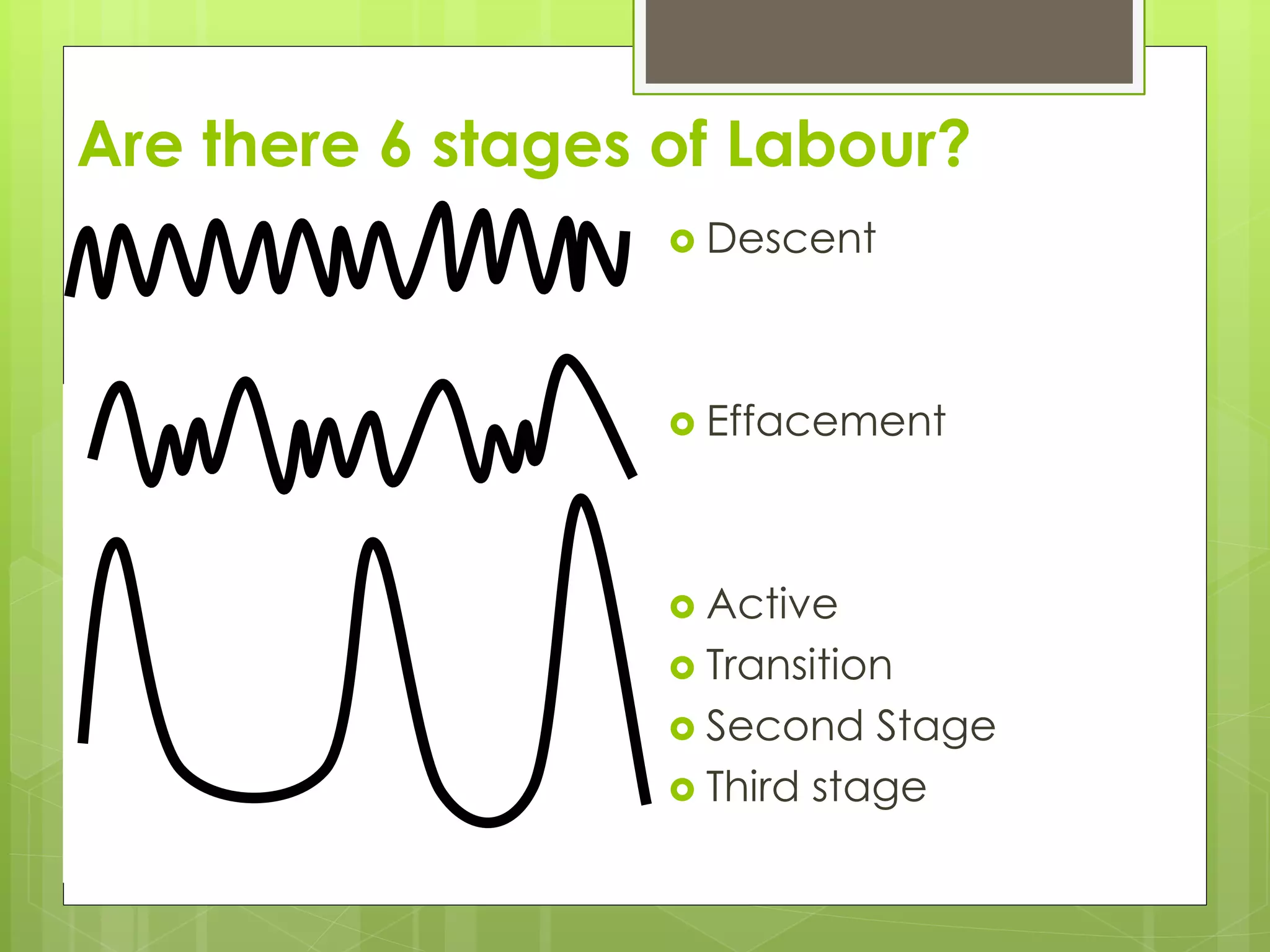
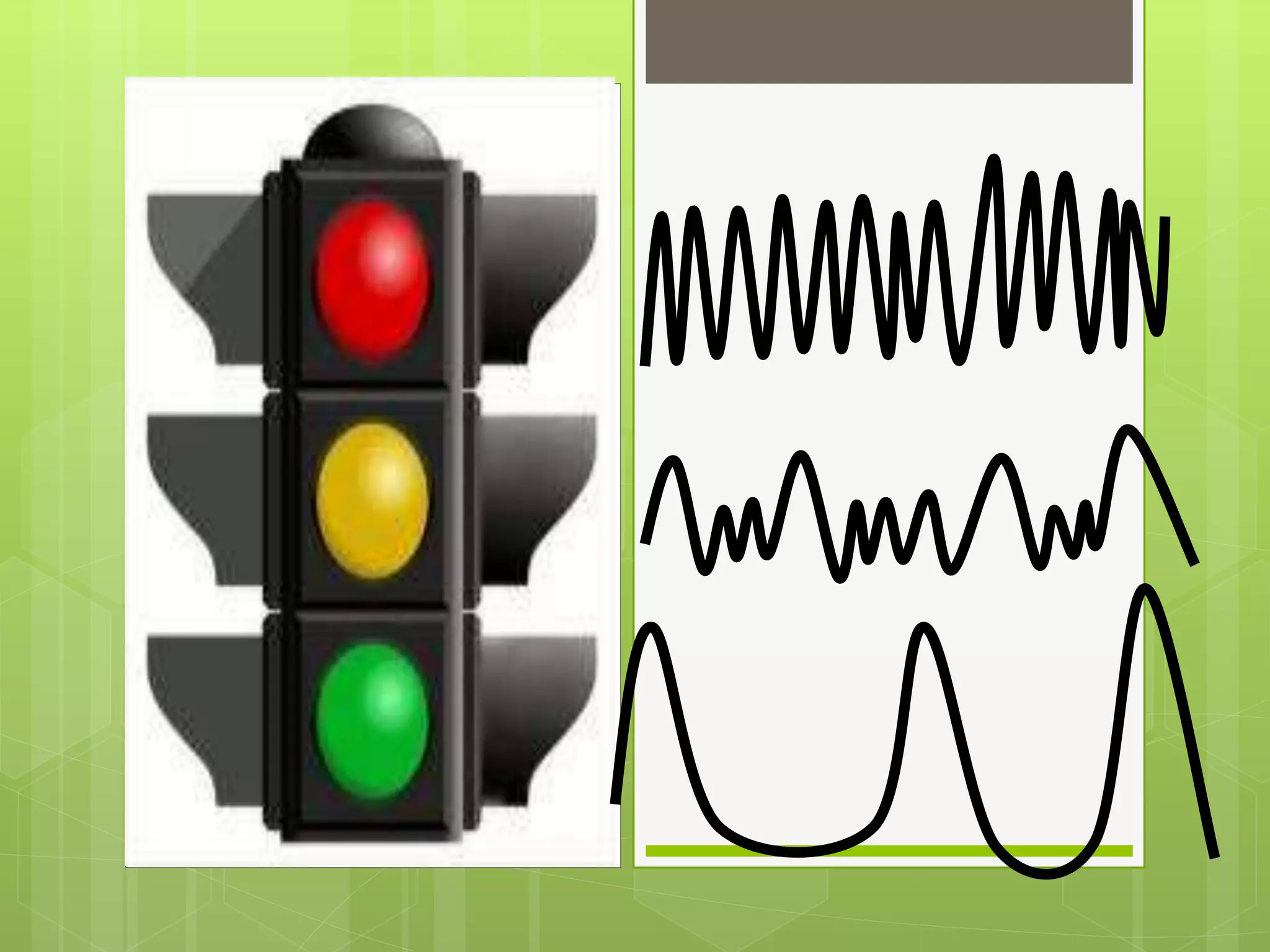
This gives a picture of variable
contractions.
The rounded contractions giving
height as the longitudinal muscles
do their job.
 Short and sharp contractions as
the head continues to descend
into the pelvis
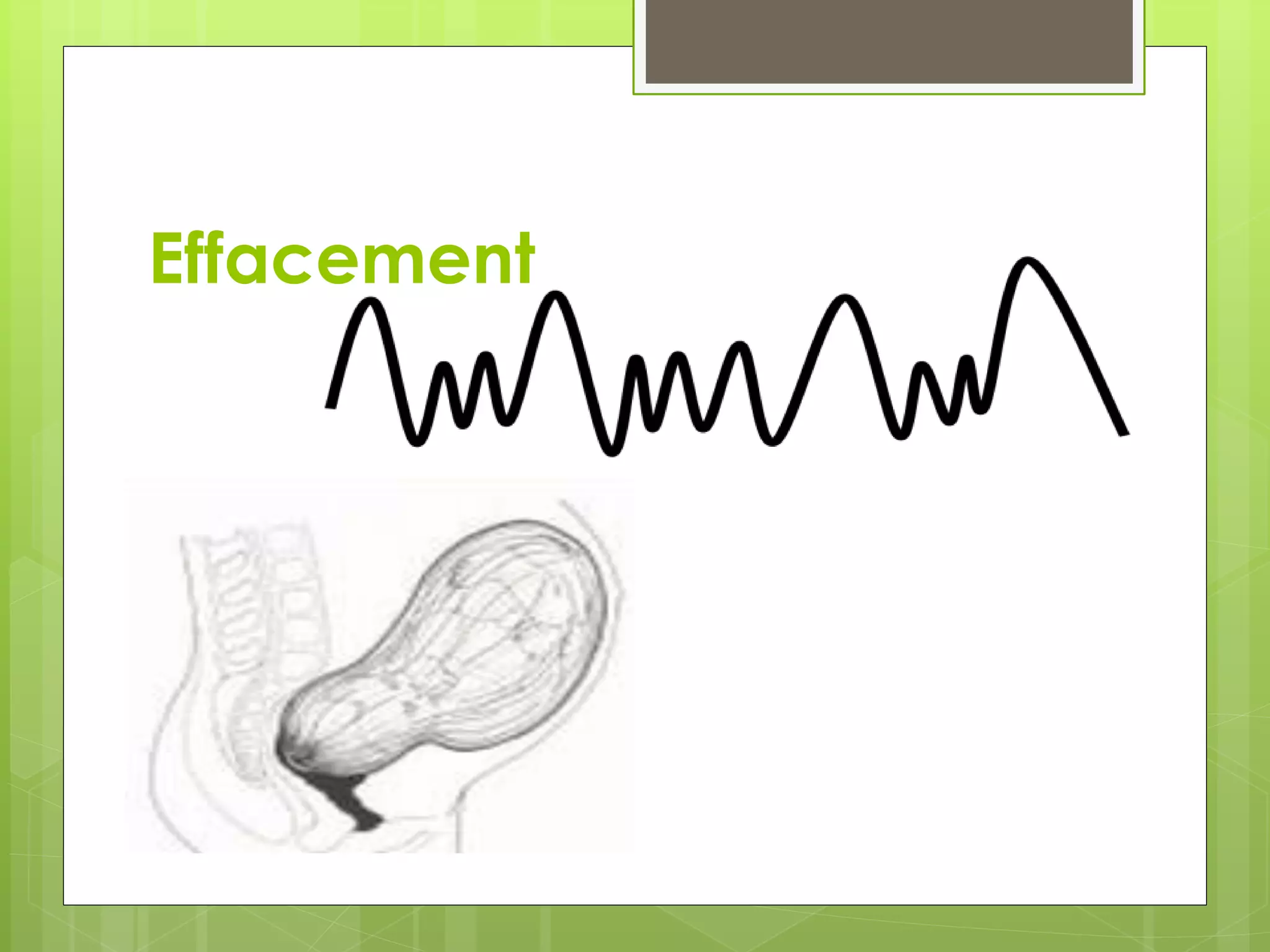
Effacement and
early dilation
Effacement
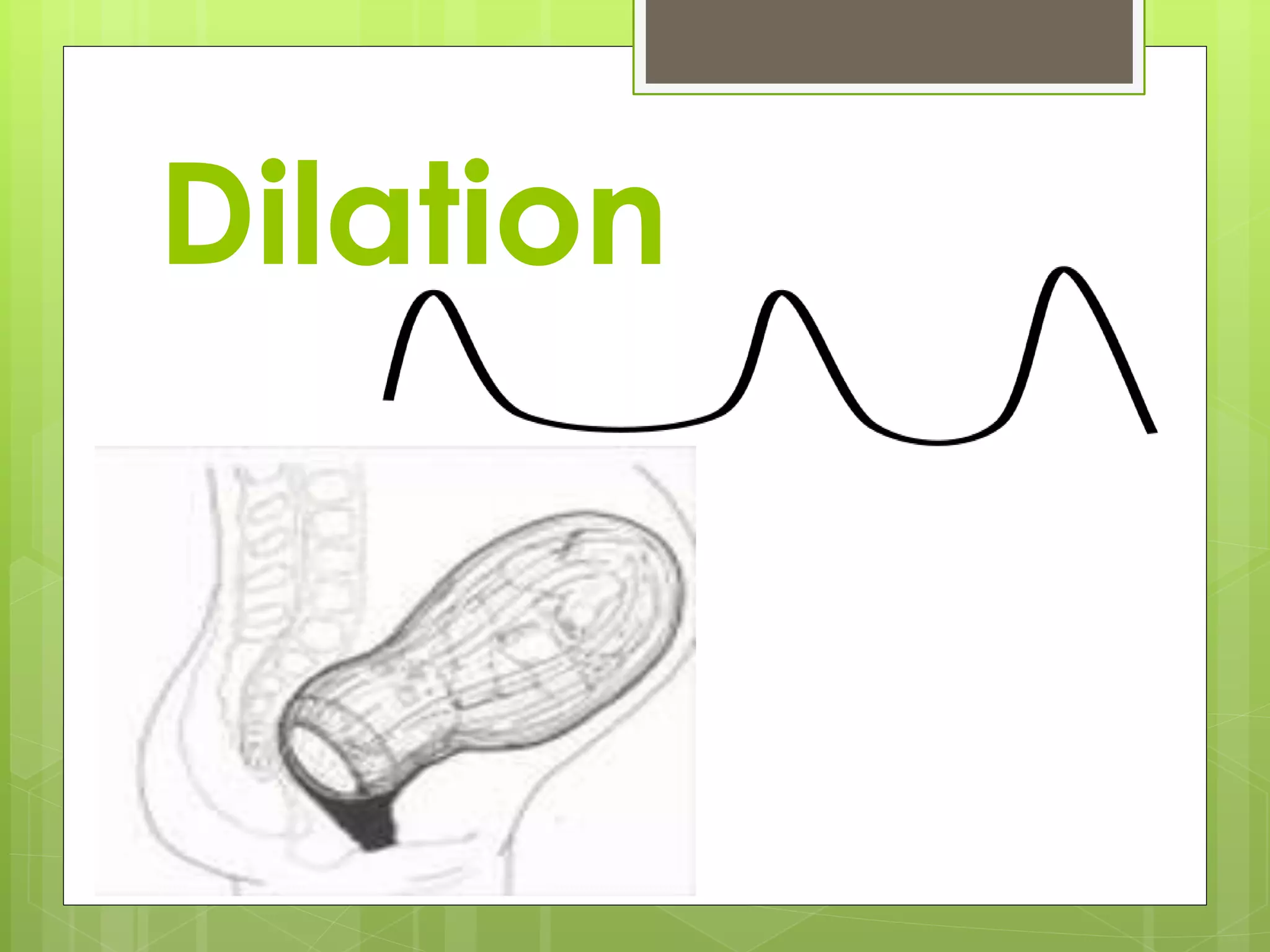
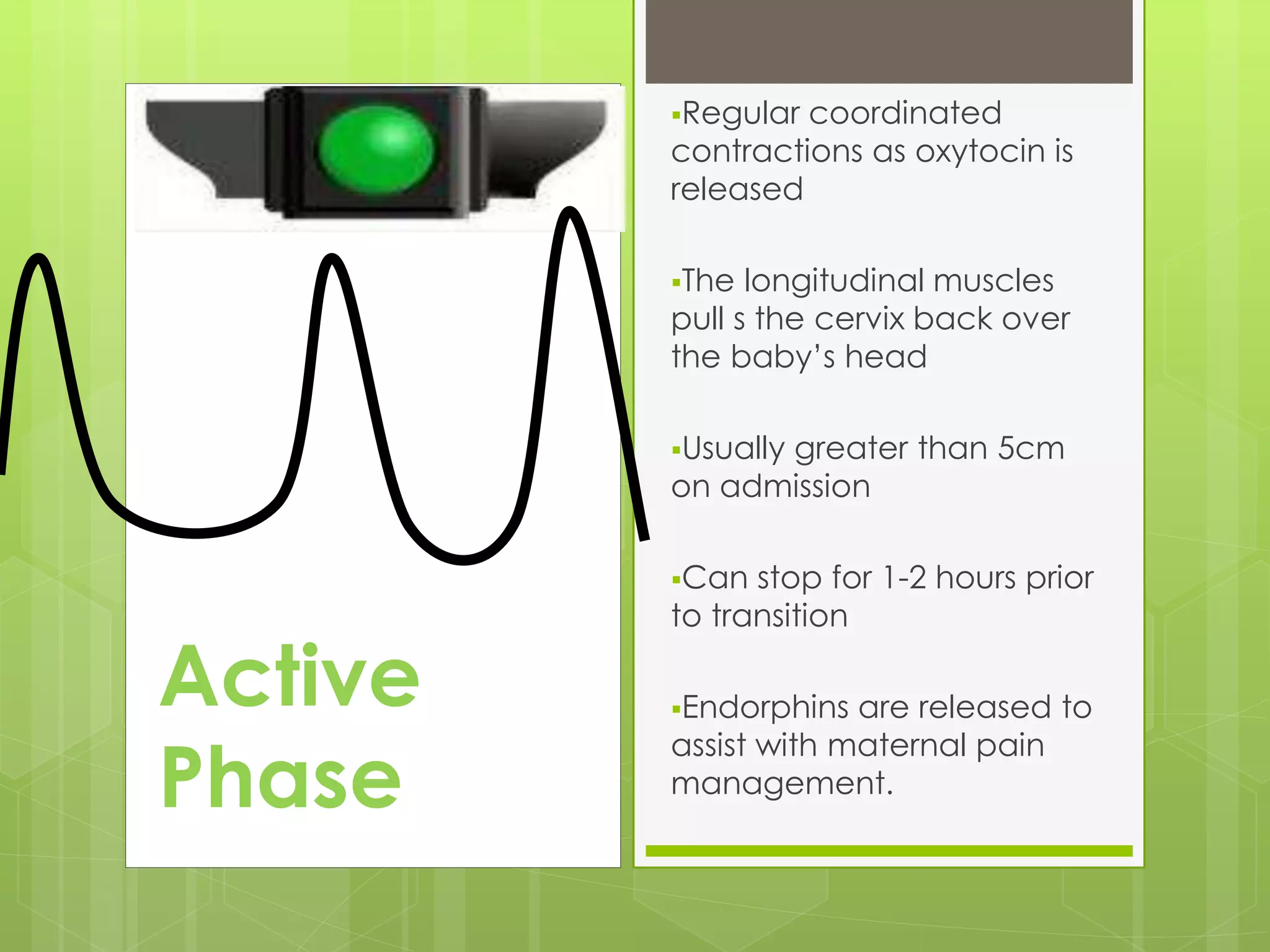
Regular coordinated
contractions as oxytocin is
released
The longitudinal muscles
pull s the cervix back over
the baby’s head
Usually greater than 5cm
on admission
Can stop for 1-2 hours prior
to transition
Endorphins are released to
assist with maternal pain
management.
Active
Phase
Dilation
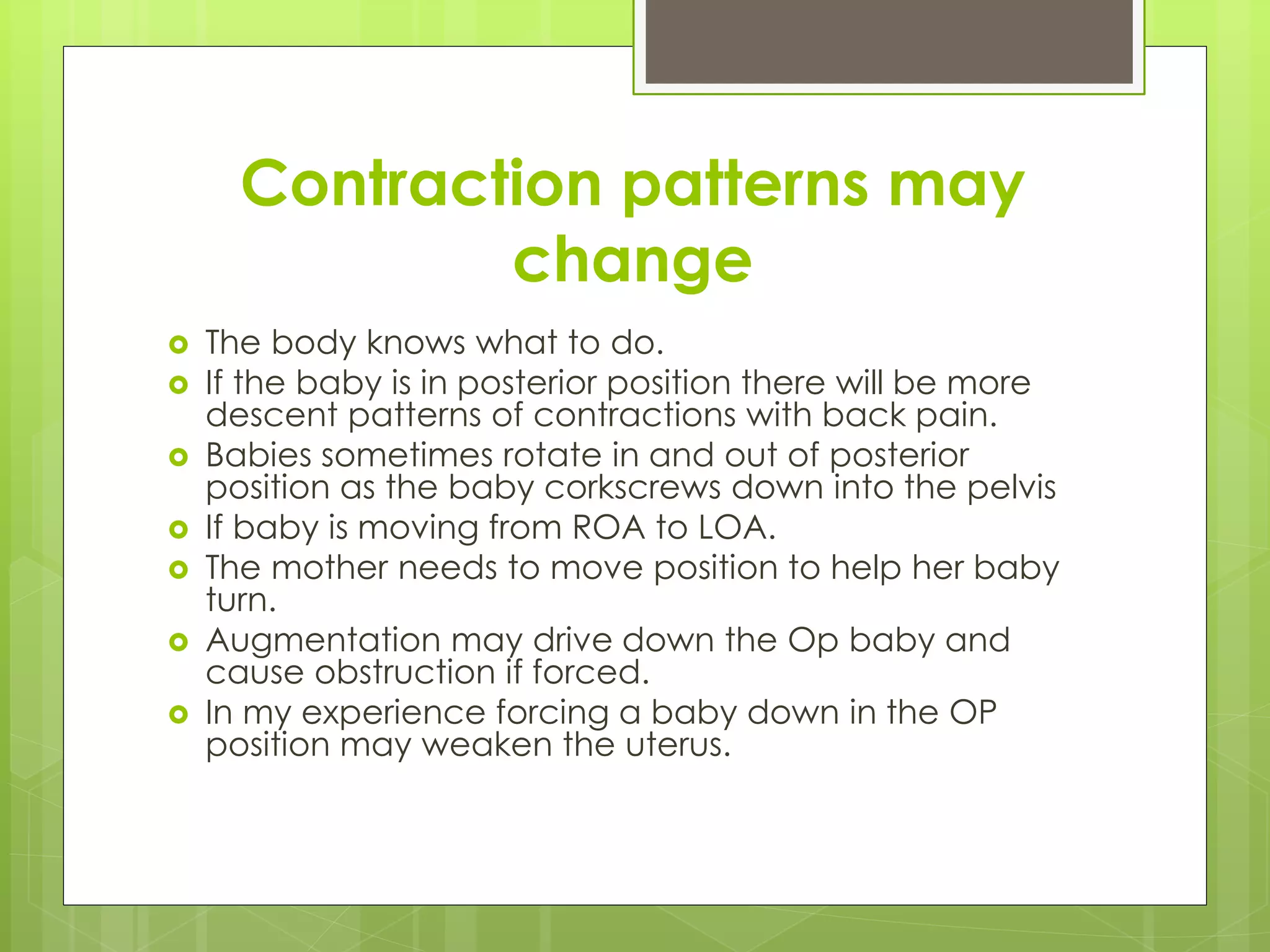
Contraction patterns may
change
 The body knows what to do.
 If the baby is in posterior position there will be more
descent patterns of contractions with back pain.
 Babies sometimes rotate in and out of posterior
position as the baby corkscrews down into the pelvis
 If baby is moving from ROA to LOA.
 The mother needs to move position to help her baby
turn.
 Augmentation may drive down the Op baby and
cause obstruction if forced.
 In my experience forcing a baby down in the OP
position may weaken the uterus.
 Can’t do it
 Won’t do it
 Cut it out
 Give me an
epidural
 Get me out of
here
 It’s all your fault
 I hate you
Transition
Usually occurs
around 7-8cm
Adrenaline is
released the flight
and fight hormone
Can last around 20
minutes
Amy and Jo Worlds Apart
 Jo in a large
tertiary Hospital
 Opinions for child
birth
 No choices
 Not ambulant
 Augmentation
 Fetal Distress
 LSCS
 Amy in a midwifery
led unit
 Ambulant
 Choices
 Positioning
 Squatting
 Well informed
 Normal delivery
 Elated about her
experience
Case scenarios
 Mary home birth
 Rajeshri- induction
 Jo- Posterior birth
 Kshama -
Unprepared
 Noha- Waterbirth
 Picture perfect
 Tough love and
bargaining
 Positioning
 Tough
love/positioning
 Tough love
Early admission leads to
intervention
 Burnt out midwives
 More midwifery staff for one to one care.
 High intervention rates
 Increases the risk of LSCS
 Increased risk babies requiring intensive care
 Affects on breastfeeding
 Postnatal depression
 Increased staffing levels
 Exhausted obstetricians
The Birthing Environment
warm
safe
private
quiet
dark
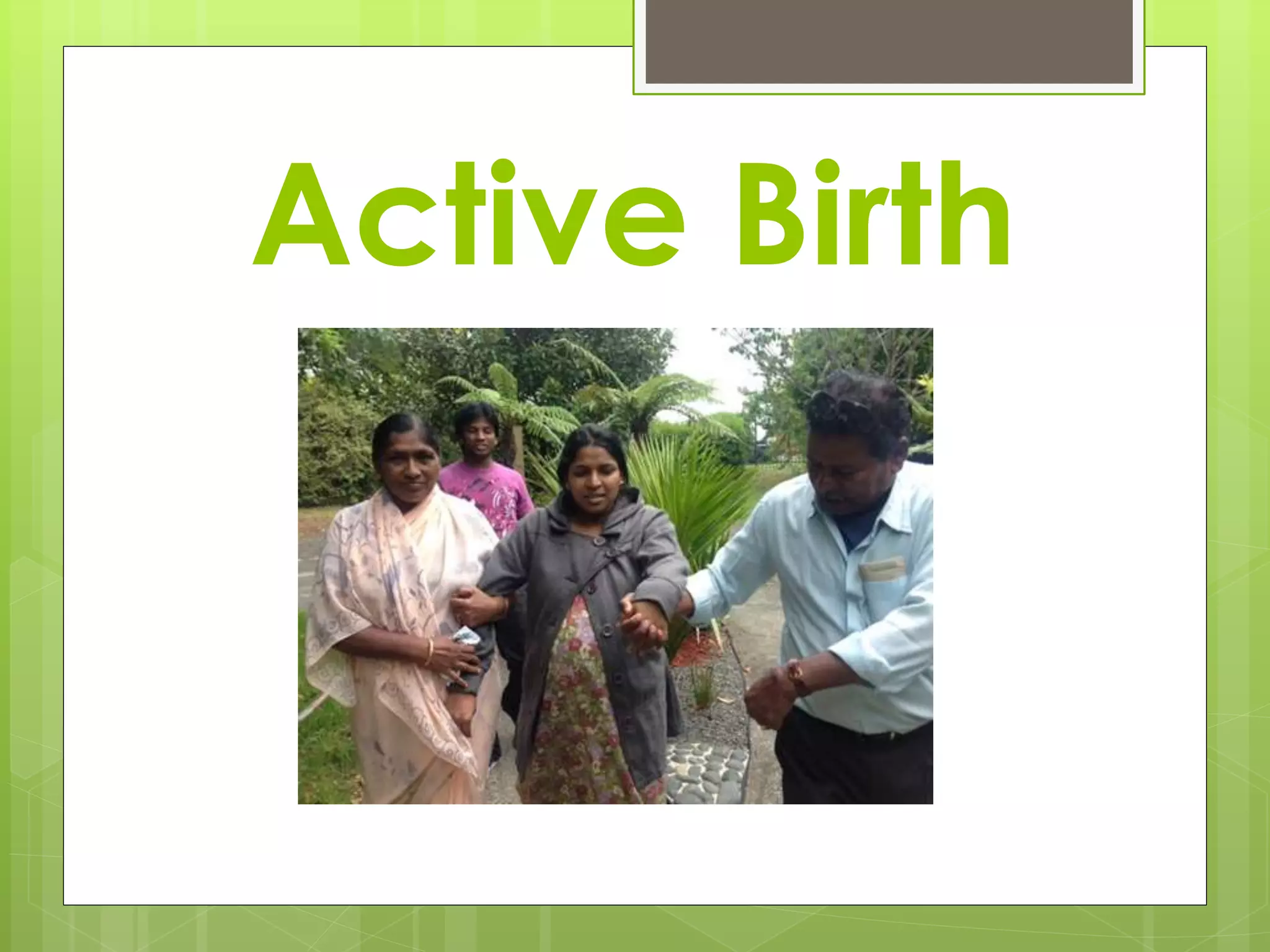
Active Birth
Hospital Walking Garden
 Understand the
contraction
patterns of labour
 Understand and
apply anatomy
and physiology of
the uterus
 Take into account
the Five P’s when
making decisions
 Understand the
roles of birthing
hormones
Midwife’s
Role
To support the
normal
physiological
process of
childbirth
My intervention rate was much
higher.
I did not understand the normal physiological process of labour
I did not know how to manage the contraction patterns of labour
or manage care applied to the 5P’s with a midwifery perspective
I did not know how to educate and empower my women
I was not strong enough to provide tough love
 In the beginning I spent many of 16 hours with
women on delivery unit.
 Now I can drink tea. Usually only two to fours hours
on Delivery unit.
Thanks to the continuity of care,
reflection of practice, use of
complementary therapies, my vaginal
birth rate is around 95%. My epidural
rate is around 4%
“Very few women spend a long time in hospital and
have faith in childbirth. When midwives learn from
reflection, share knowledge and work as a team
the future for our families will be sound” Irene Chain
Midwife
Your Decisions
 Affect the woman for life
 Take into consideration the professional team
 If not sure Ask
 If you don’t apply the anatomy physiology,
mental state you will have longer times on
delivery maternal exhaustion and burnt out
colleagues
 We are a team with a wealth of knowledge
and experience
Recommendations
 Support the natural process
 Tough love where necessary
 Better antenatal education
 Ambient Rooms and acceptance for women who
have little support
 Support your colleagues/and better
communications
 On call sleep room for health professionals with
facilities.
 Empower women to take charge
 No CTG monitoring for low risk women

5 Contraction Patterns of Labour

  • 1.
    Contraction Patterns of Labour How dothey influence our management of care to support the normal process of labour?
  • 2.
    Know the normal Work withthe abnormal to make it normal
  • 4.
    In the pastquarter century, advances in medical technology have been accompanied by an increase in intervention-intensive labour and birth ( Hamilton, Martin, & Ventura, 2006 ).
  • 5.
    Nature ’ ssimple plan for birth has been replaced by a maternity care system that routinely interferes with the normal physiological process and in doing so introduces unnecessary risks for mother and baby.
  • 6.
    Women no longerhave confi - dence in their ability to give birth without technologic intervention.
  • 7.
    The physiological mechanisms oflabour and childbirth are NOT completely understood.
  • 8.
    Intrinsic factors withinthe uterine muscle affect contractions and progressive cervical dilation. Thus, spontaneous onset of term labour signifies the baby’s readiness to be born as well as the mother ’s physiological receptiveness to the process.
  • 9.
    Don’t pick aplum before it is ripe
  • 10.
    The Cervix needsto be soft
  • 11.
    With good observationapplied anatomy and physiology, and critical thinking during the birthing process it is possible to achieve normal vaginal birth.
  • 12.
     One ofmy failings as a midwife is my inability to assess the strength and effectiveness of uterine contractions. I am often asked  How strong are her contractions?  How effective are her contractions Can we measure the effectiveness of contractions?
  • 13.
    Failure to understandlabour  Early interventions  Pain relief  Epidurals  Artificial rupture of membranes  Oxytocinon/Syntocinon/Pitocin  C section
  • 14.
    There are Manytheories  Friedmann defined the three stages of labour  Latent and active  Second stage  Third stage
  • 18.
    These theories donot have any application to anatomy and physiology or to the contraction patterns of labour they merely measure time frames.
  • 19.
    Failure to diagnoselabour  In 2013, researchers published a report of 38,484 first-time C-sections that occurred among a national sample of women. The overall C-section rate among first-time mothers was 30.8%. More than 1 in 3 (35%) of these C-Sections were due to a diagnosis of “failure to progress,” or slow progress in labour. This means that 10%, or 1 in 10, of all first-time mothers in the U.S. had a C- Section for failure to progress during the years 2002-2008 (Boyle, Reddy et al. 2013).  More than 4 in 10 of these women who had C- sections for failure to progress had not even reached 5 cm dilation before they were taken to surgery. This means that many of these women were still in very early labour when they were told that they weren’t dilating fast enough (Boyle, Reddy et al. 2013).
  • 20.
    Progress and Time A substantial number of women have unplanned C- Sections for failure to progress during a medical induction. In a 2010 study that included 233,844 new-borns born between 2002 and 2008, researchers found that about half of all induced women who had C-sections for failure to progress had not reached 6 cm yet (53%)– indicating that they were still in very early labour when their inductions were labelled as “failed”  (Zhang et al., 2010b).
  • 21.
     The babyis the passenger presentation is important  Power of uterine contractions are they doing the Job  The Pelvis Outdated 3 P’s Passenger Power Passage Friedmann 1955
  • 22.
    Midwives perspective to look at thebigger picture and plan care to support the normal physiologic al process of child birth The 5 P’s • Passenger • Power • Passage • Psyche • Preparation
  • 23.
    The Art ofMidwifery  Consider the Five P’s  Observe contraction patterns  Apply anatomy and physiology to the six stages of labour  Know the birthing hormones and applied anatomy and physiology  Look at the bigger picture then plan yourcare/advice And education to get the best outcomes for the individual woman
  • 24.
    Labour contractions can increaseand decrease in frequency following admission to hospital. This may be associated with dilatation and posture rather than anxiety Midwifery 2009 June 25: (3)242-52 Epub2007 july 12
  • 25.
    Missing from the statement Noreference to applied anatomy and physiology What is really Happening?
  • 26.
  • 27.
    Lack of understandingleads to  Contractions are slow  Augmentation that is in apropriatley managed  Need to know latent and active phase  Lets augment the process  Foetal distress  Caesarean  Neonatal units
  • 28.
    Are there 6stages of Labour?  Descent  Effacement  Active  Transition  Second Stage  Third stage
  • 30.
    Descent • The transverse musclesof the uterus contract to facilitate the descent of the head into the pelvis Oestrogen levels begin to fall and go over a few weeks
  • 31.
  • 32.
    The transverse musclescontinue to assist the head to descend into the pelvis. At some stage prostaglandin is released. The cervix softens. The longitudinal muscle begins to contract from the fundus to pull back the cervix over the head. This gives a picture of variable contractions. The rounded contractions giving height as the longitudinal muscles do their job.  Short and sharp contractions as the head continues to descend into the pelvis Effacement and early dilation
  • 33.
  • 34.
    Regular coordinated contractions asoxytocin is released The longitudinal muscles pull s the cervix back over the baby’s head Usually greater than 5cm on admission Can stop for 1-2 hours prior to transition Endorphins are released to assist with maternal pain management. Active Phase
  • 35.
  • 36.
    Contraction patterns may change The body knows what to do.  If the baby is in posterior position there will be more descent patterns of contractions with back pain.  Babies sometimes rotate in and out of posterior position as the baby corkscrews down into the pelvis  If baby is moving from ROA to LOA.  The mother needs to move position to help her baby turn.  Augmentation may drive down the Op baby and cause obstruction if forced.  In my experience forcing a baby down in the OP position may weaken the uterus.
  • 37.
     Can’t doit  Won’t do it  Cut it out  Give me an epidural  Get me out of here  It’s all your fault  I hate you Transition Usually occurs around 7-8cm Adrenaline is released the flight and fight hormone Can last around 20 minutes
  • 38.
    Amy and JoWorlds Apart  Jo in a large tertiary Hospital  Opinions for child birth  No choices  Not ambulant  Augmentation  Fetal Distress  LSCS  Amy in a midwifery led unit  Ambulant  Choices  Positioning  Squatting  Well informed  Normal delivery  Elated about her experience
  • 39.
    Case scenarios  Maryhome birth  Rajeshri- induction  Jo- Posterior birth  Kshama - Unprepared  Noha- Waterbirth  Picture perfect  Tough love and bargaining  Positioning  Tough love/positioning  Tough love
  • 40.
    Early admission leadsto intervention  Burnt out midwives  More midwifery staff for one to one care.  High intervention rates  Increases the risk of LSCS  Increased risk babies requiring intensive care  Affects on breastfeeding  Postnatal depression  Increased staffing levels  Exhausted obstetricians
  • 41.
  • 42.
  • 43.
  • 44.
     Understand the contraction patternsof labour  Understand and apply anatomy and physiology of the uterus  Take into account the Five P’s when making decisions  Understand the roles of birthing hormones Midwife’s Role To support the normal physiological process of childbirth
  • 45.
    My intervention ratewas much higher. I did not understand the normal physiological process of labour I did not know how to manage the contraction patterns of labour or manage care applied to the 5P’s with a midwifery perspective I did not know how to educate and empower my women I was not strong enough to provide tough love  In the beginning I spent many of 16 hours with women on delivery unit.  Now I can drink tea. Usually only two to fours hours on Delivery unit.
  • 46.
    Thanks to thecontinuity of care, reflection of practice, use of complementary therapies, my vaginal birth rate is around 95%. My epidural rate is around 4% “Very few women spend a long time in hospital and have faith in childbirth. When midwives learn from reflection, share knowledge and work as a team the future for our families will be sound” Irene Chain Midwife
  • 47.
    Your Decisions  Affectthe woman for life  Take into consideration the professional team  If not sure Ask  If you don’t apply the anatomy physiology, mental state you will have longer times on delivery maternal exhaustion and burnt out colleagues  We are a team with a wealth of knowledge and experience
  • 48.
    Recommendations  Support thenatural process  Tough love where necessary  Better antenatal education  Ambient Rooms and acceptance for women who have little support  Support your colleagues/and better communications  On call sleep room for health professionals with facilities.  Empower women to take charge  No CTG monitoring for low risk women