Redhorse Constructors, UC Berkeley RAEL, Kao Design Group
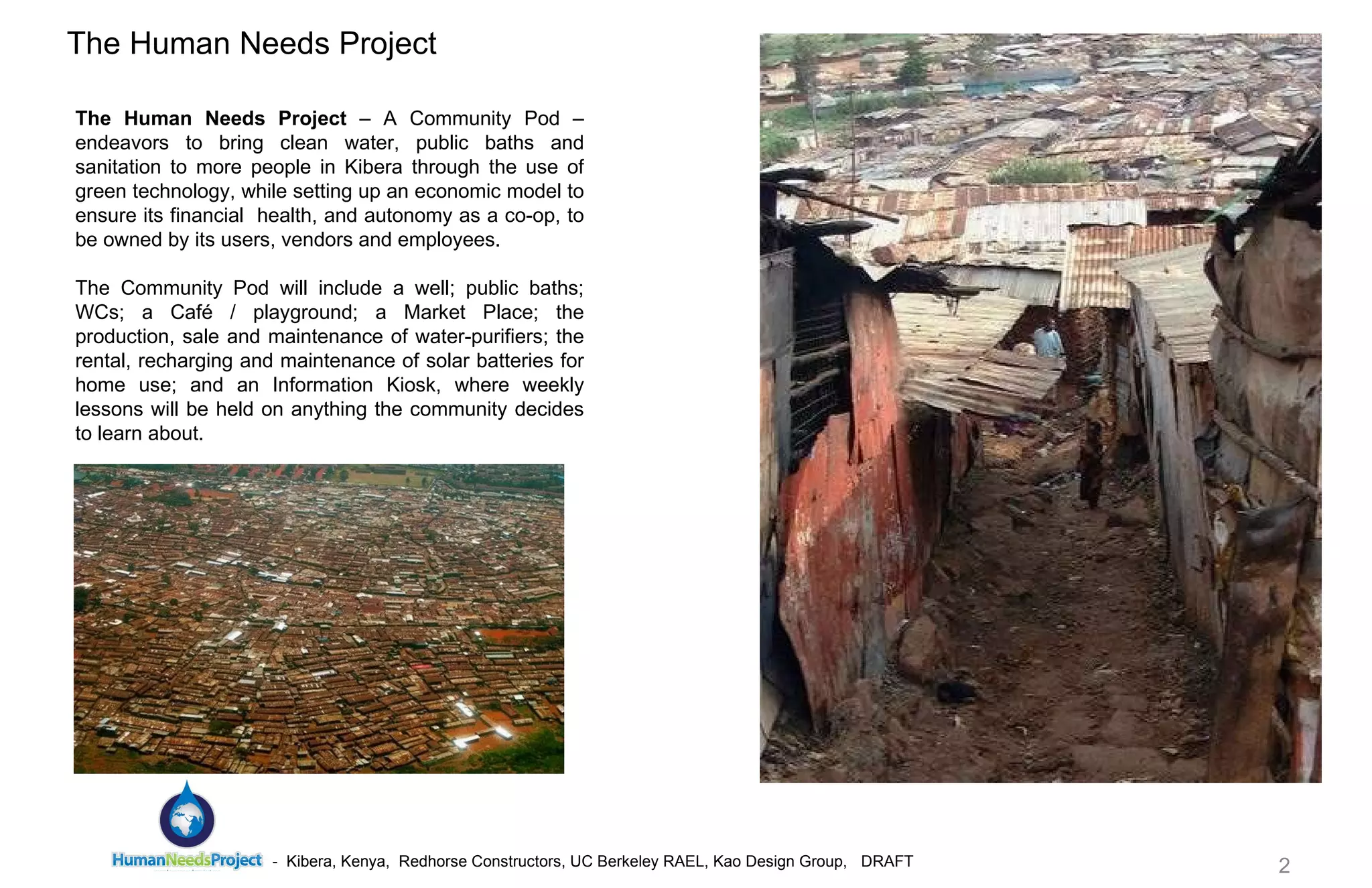
The Human Needs Project  – A Community Pod – endeavors to bring clean water, public baths and sanitation to more people in Kibera through the use of green technology, while setting up an economic model to ensure its financial  health, and autonomy as a co-op, to be owned by its users, vendors and employees.  The Community Pod will include a well; public baths; WCs; a Café / playground; a Market Place; the production, sale and maintenance of water-purifiers; the rental, recharging and maintenance of solar batteries for home use; and an Information Kiosk, where weekly lessons will be held on anything the community decides to learn about. The Human Needs Project
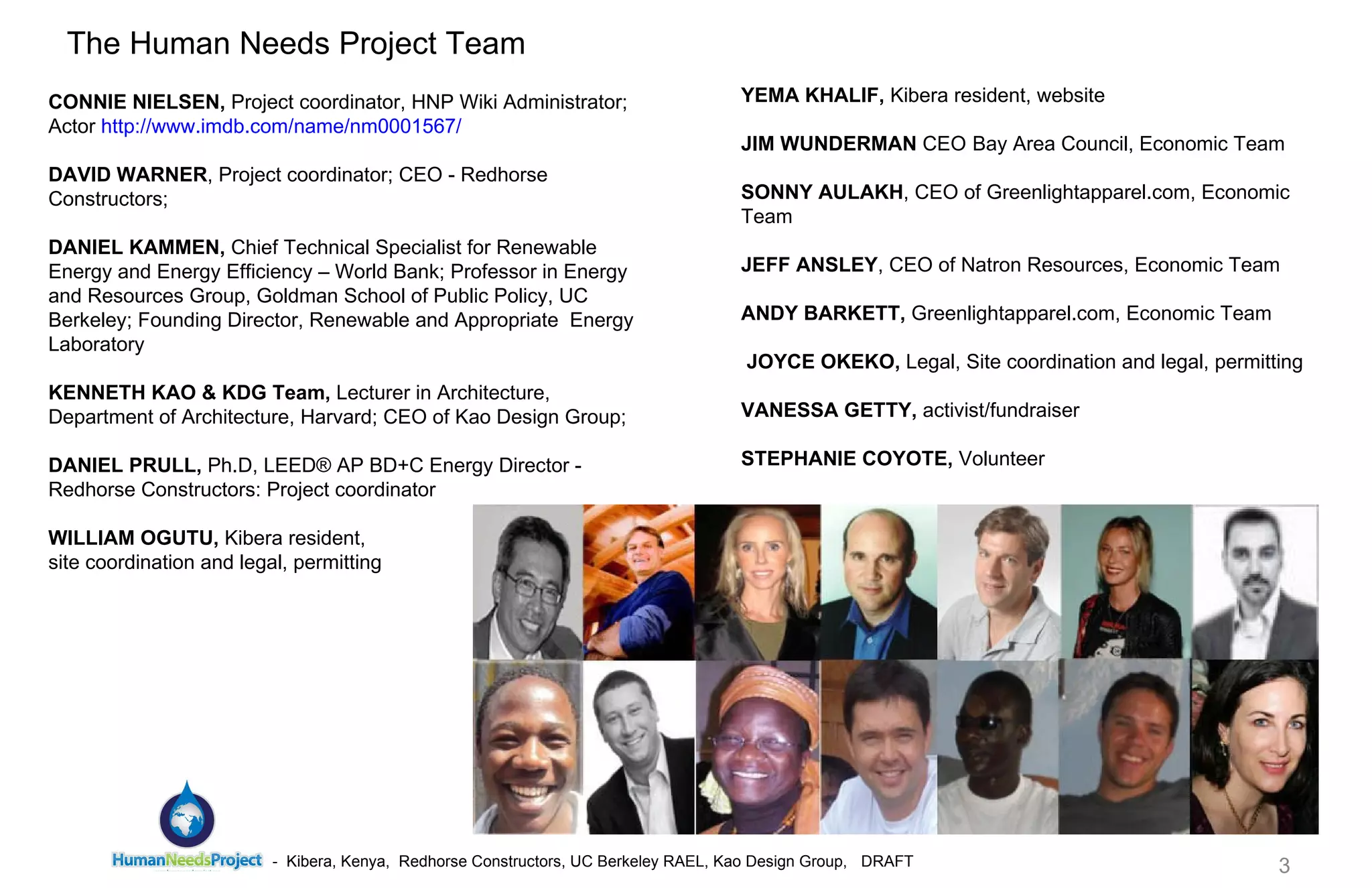
CONNIE NIELSEN,  Project coordinator, HNP Wiki Administrator; Actor  http://www.imdb.com/name/nm0001567/   DAVID WARNER , Project coordinator; CEO - Redhorse Constructors;  DANIEL KAMMEN,  Chief Technical Specialist for Renewable Energy and Energy Efficiency – World Bank; Professor in Energy and Resources Group, Goldman School of Public Policy, UC Berkeley; Founding Director, Renewable and Appropriate  Energy Laboratory KENNETH KAO & KDG Team,  Lecturer in Architecture, Department of Architecture, Harvard; CEO of Kao Design Group;  DANIEL PRULL,  Ph.D, LEED® AP BD+C Energy Director - Redhorse Constructors: Project coordinator  WILLIAM OGUTU,  Kibera resident,  site coordination and legal, permitting   The Human Needs Project Team YEMA KHALIF,  Kibera resident, website  JIM WUNDERMAN  CEO   Bay Area Council, Economic Team  SONNY AULAKH , CEO of Greenlightapparel.com, Economic Team JEFF ANSLEY , CEO of Natron Resources, Economic Team  ANDY BARKETT,  Greenlightapparel.com, Economic Team   JOYCE OKEKO,  Legal, Site coordination and legal, permitting VANESSA GETTY,  activist/fundraiser   STEPHANIE COYOTE,  Volunteer
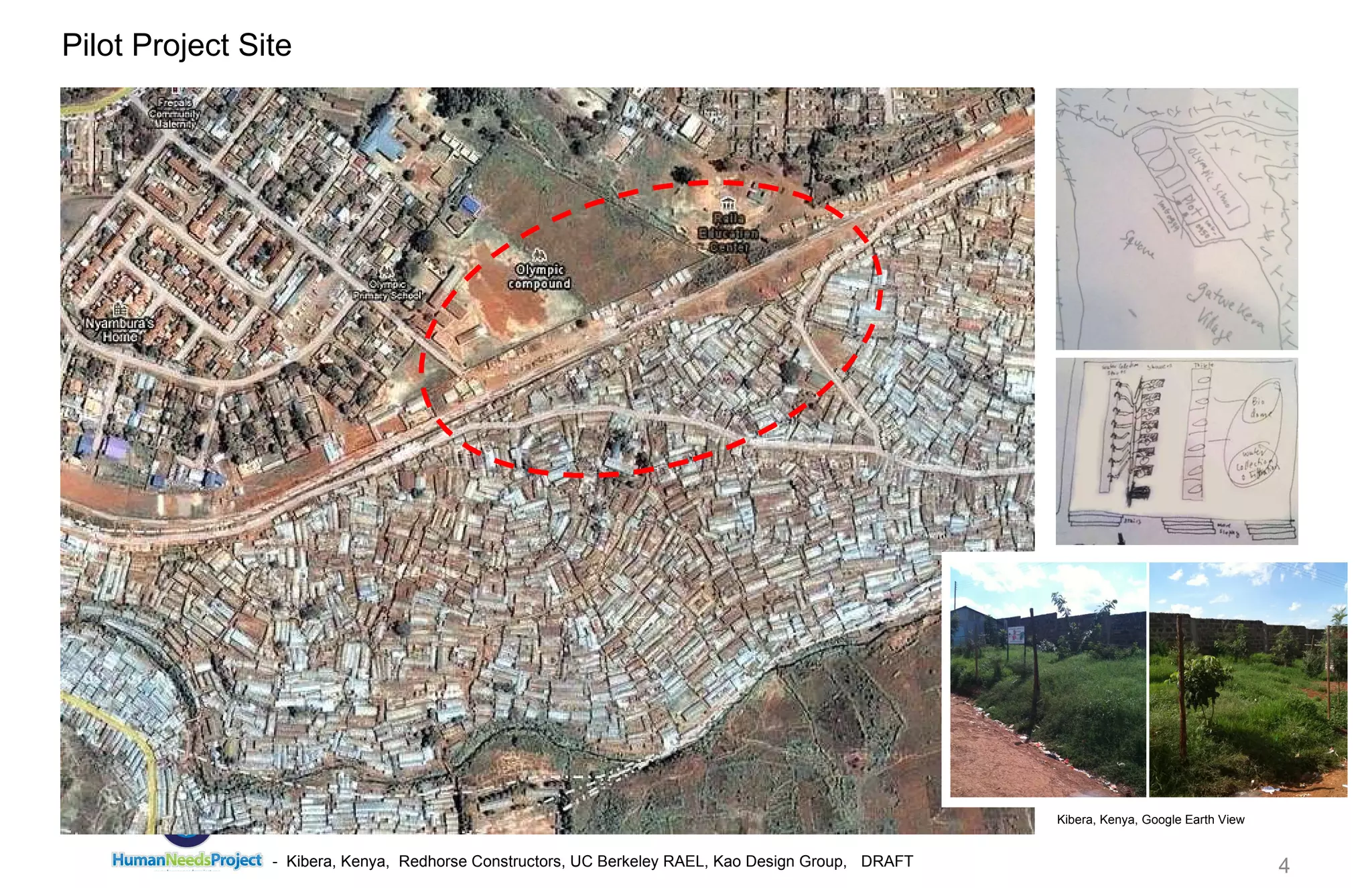
Pilot Project Site  Kibera, Kenya, Google Earth View
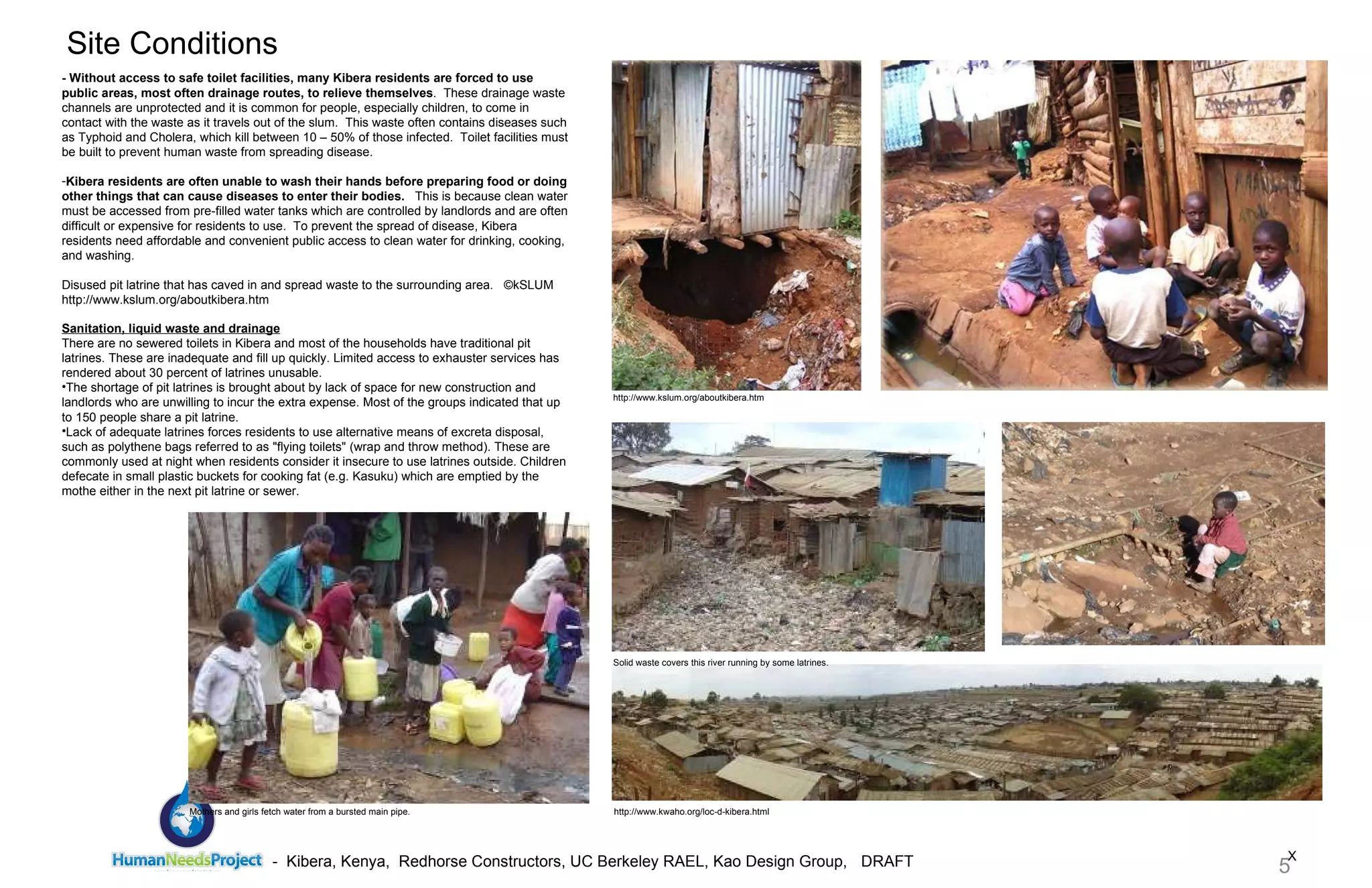
X Site Conditions - Without access to safe toilet facilities, many Kibera residents are forced to use public areas, most often drainage routes, to relieve themselves .  These drainage waste channels are unprotected and it is common for people, especially children, to come in contact with the waste as it travels out of the slum.  This waste often contains diseases such as Typhoid and Cholera, which kill between 10 – 50% of those infected.  Toilet facilities must be built to prevent human waste from spreading disease. Kibera residents are often unable to wash their hands before preparing food or doing other things that can cause diseases to enter their bodies.    This is because clean water must be accessed from pre-filled water tanks which are controlled by landlords and are often difficult or expensive for residents to use.  To prevent the spread of disease, Kibera residents need affordable and convenient public access to clean water for drinking, cooking, and washing. Disused pit latrine that has caved in and spread waste to the surrounding area.  ©kSLUM http://www.kslum.org/aboutkibera.htm http://www.kwaho.org/loc-d-kibera.html http://www.kslum.org/aboutkibera.htm Sanitation, liquid waste and drainage There are no sewered toilets in Kibera and most of the households have traditional pit latrines. These are inadequate and fill up quickly. Limited access to exhauster services has rendered about 30 percent of latrines unusable. The shortage of pit latrines is brought about by lack of space for new construction and landlords who are unwilling to incur the extra expense. Most of the groups indicated that up to 150 people share a pit latrine.  Lack of adequate latrines forces residents to use alternative means of excreta disposal, such as polythene bags referred to as "flying toilets" (wrap and throw method). These are commonly used at night when residents consider it insecure to use latrines outside. Children defecate in small plastic buckets for cooking fat (e.g. Kasuku) which are emptied by the mothe either in the next pit latrine or sewer.  Solid waste covers this river running by some latrines.  Mothers and girls fetch water from a bursted main pipe.
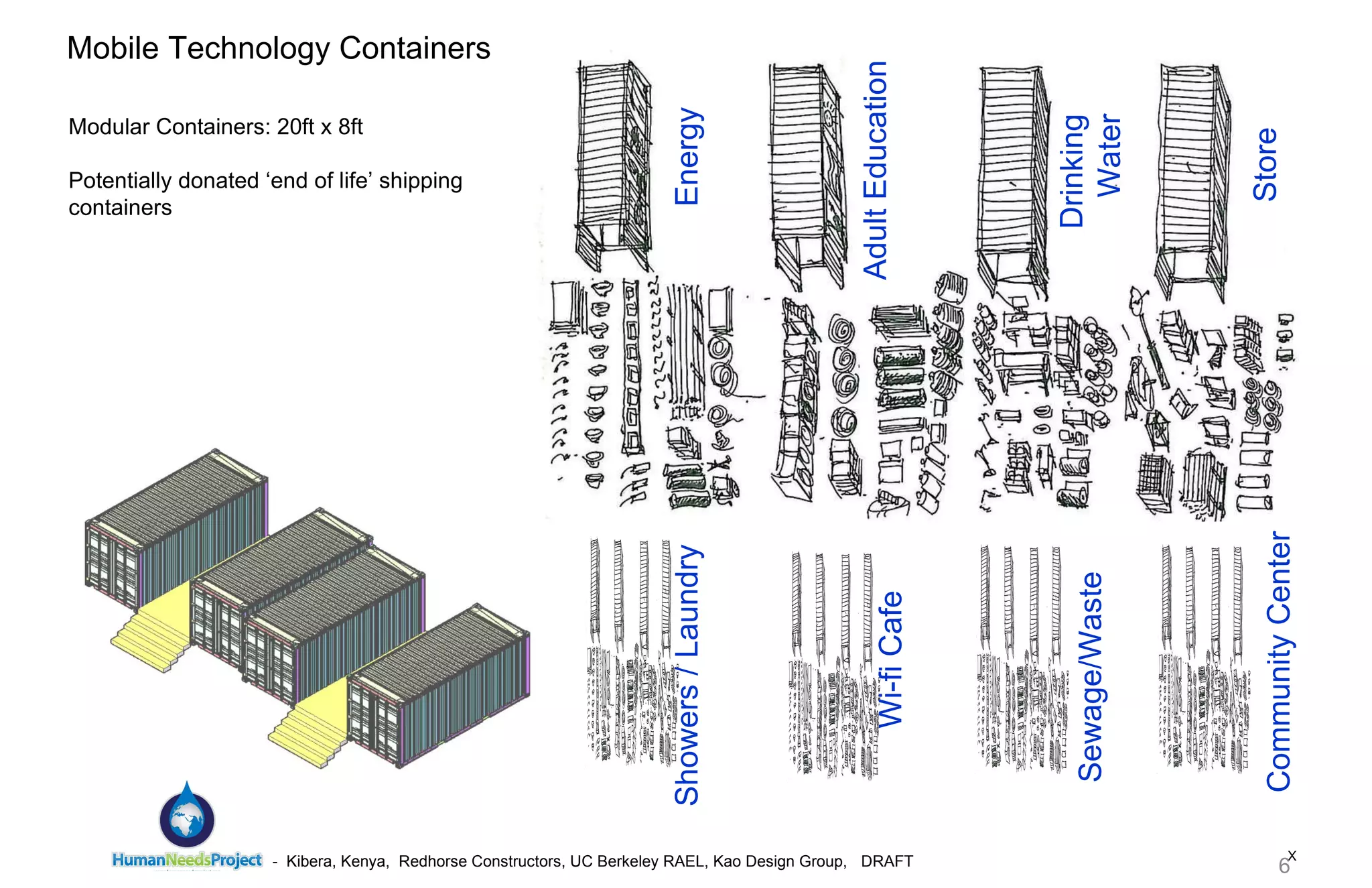
X Mobile Technology Containers Drinking Water Energy Adult Education Showers / Laundry Sewage/Waste Wi-fi Cafe Modular Containers: 20ft x 8ft Potentially donated ‘end of life’ shipping containers  Community Center Store
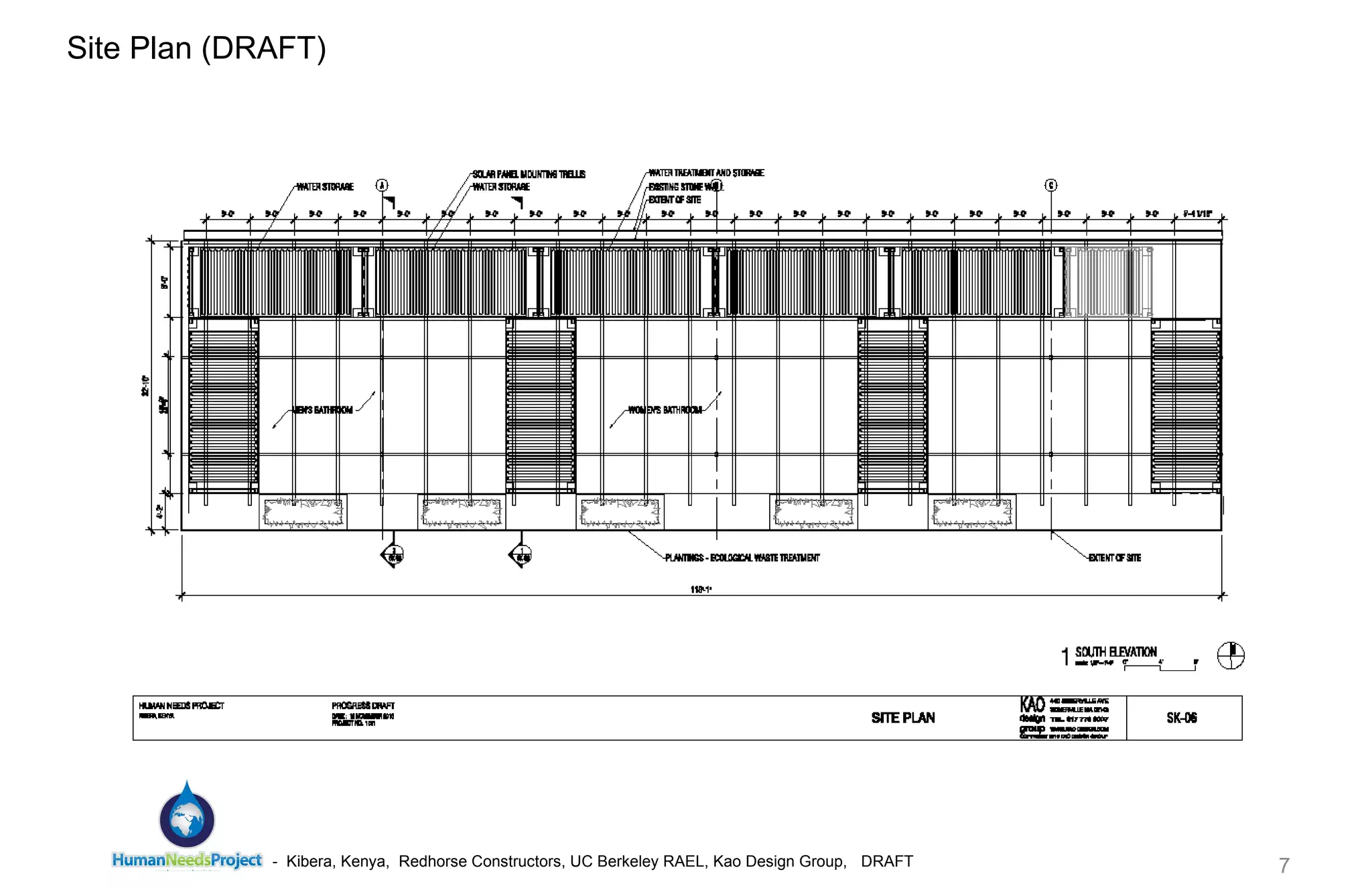
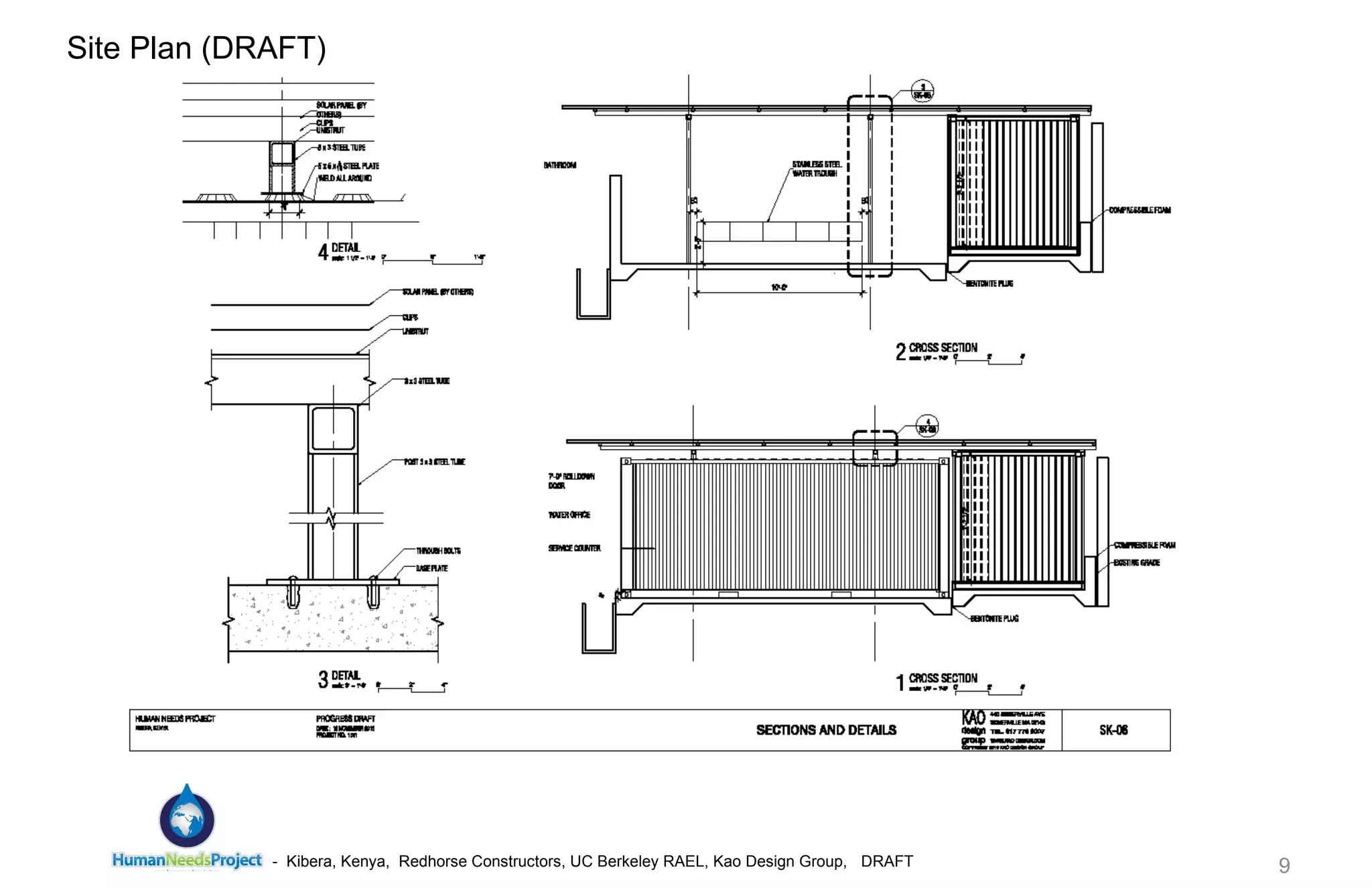
Site Plan (DRAFT)
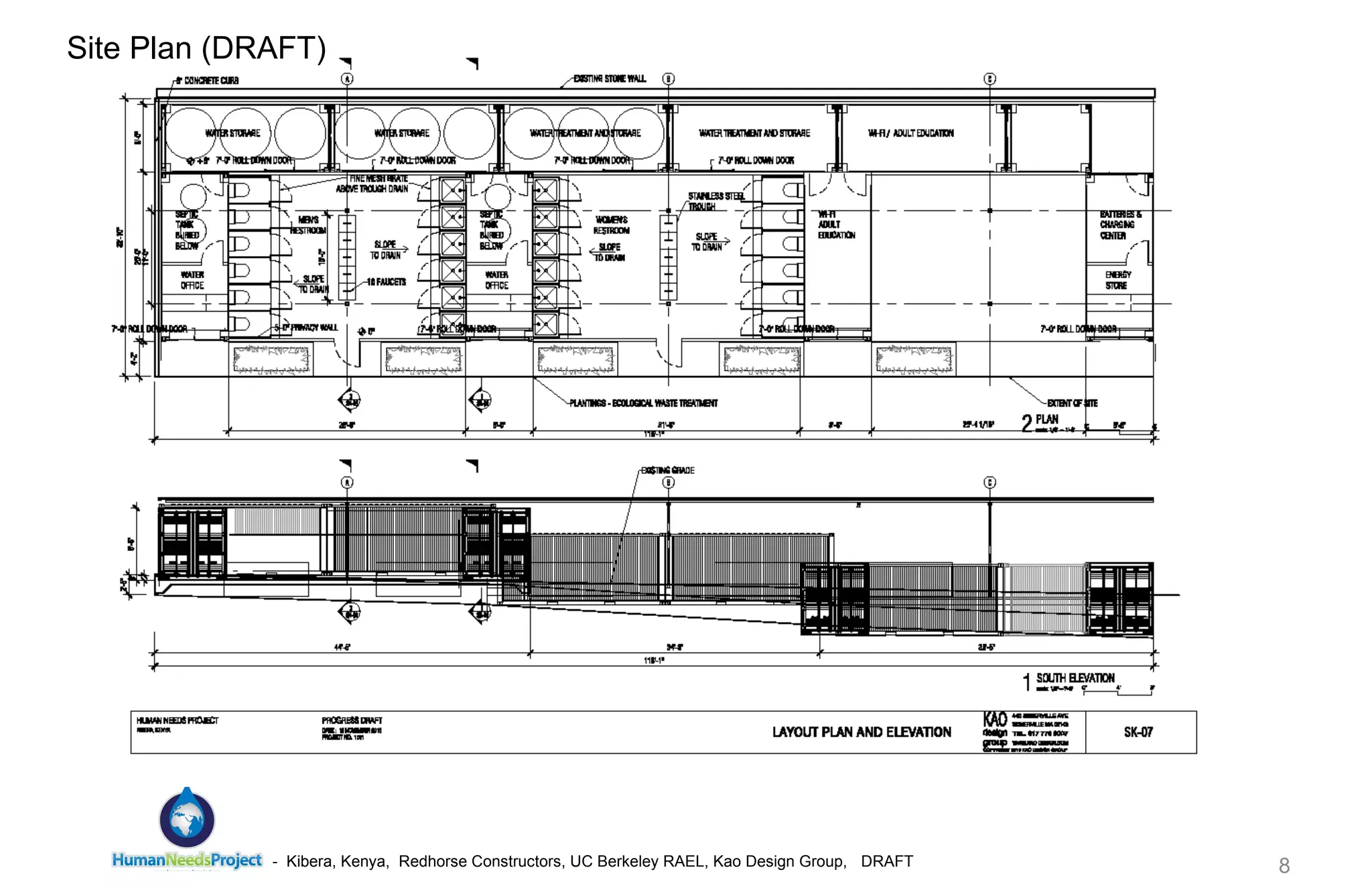
Site Plan (DRAFT)
Site Plan (DRAFT)
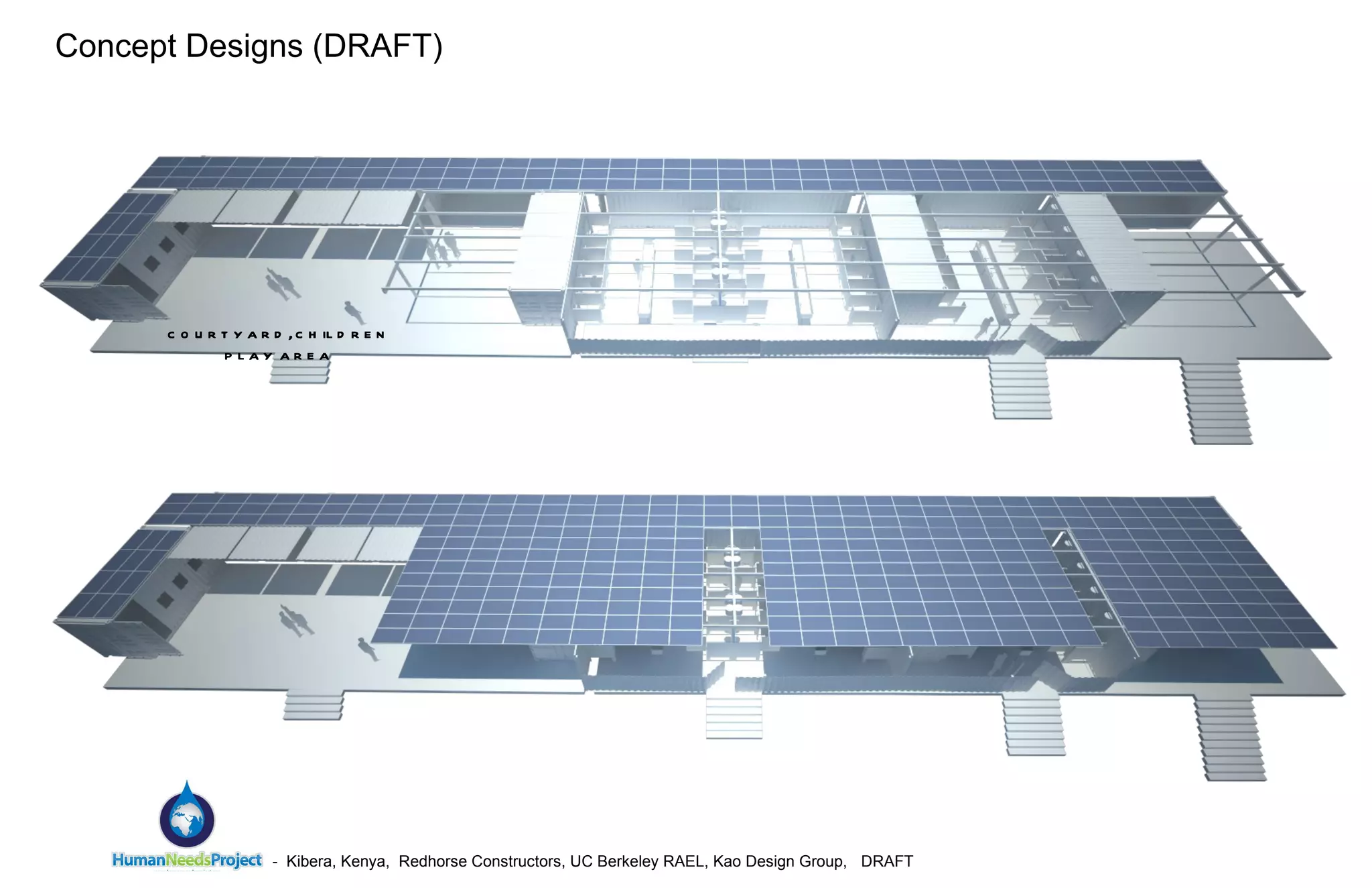
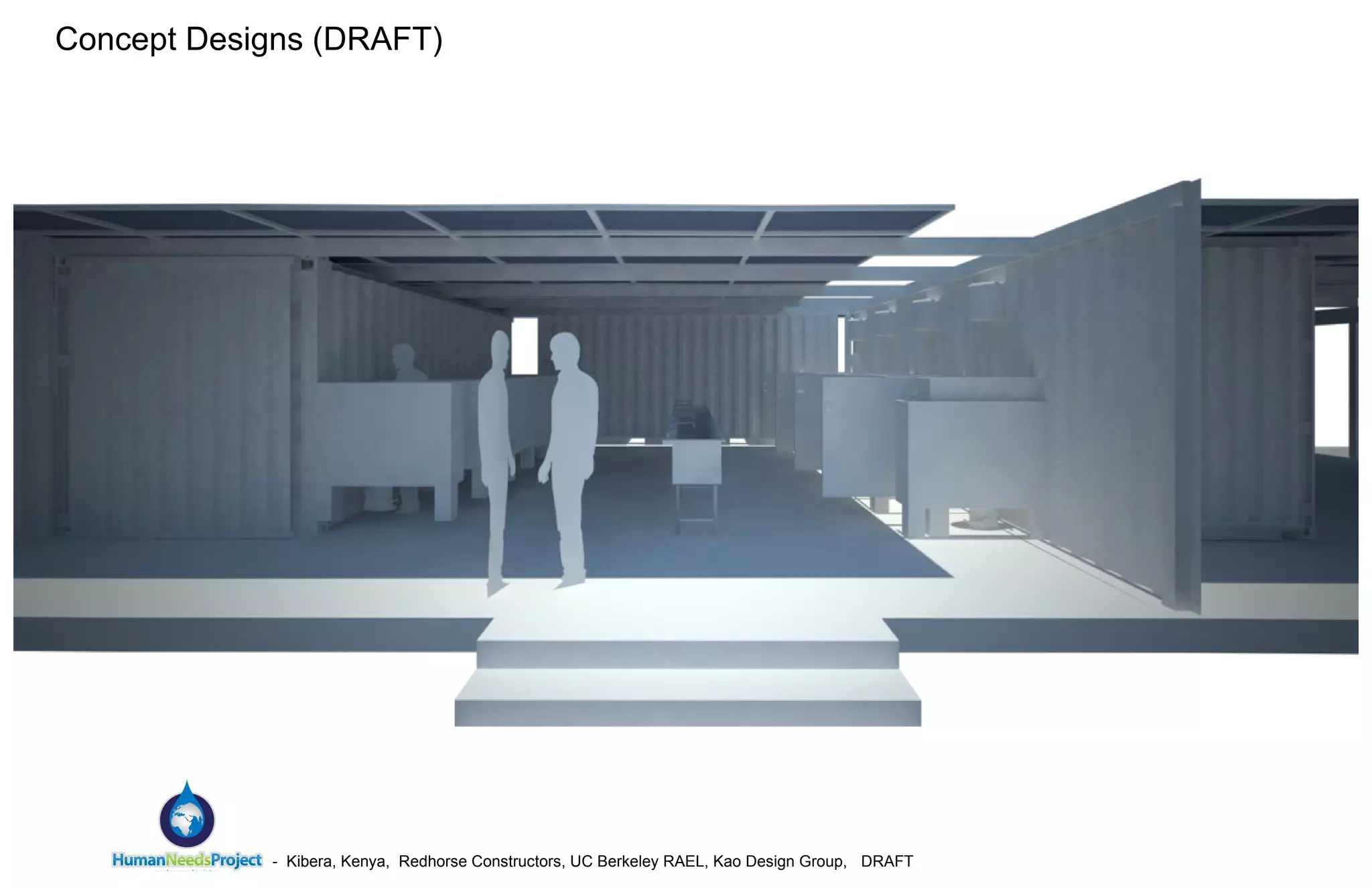
Concept Designs (DRAFT) courtyard, children play area
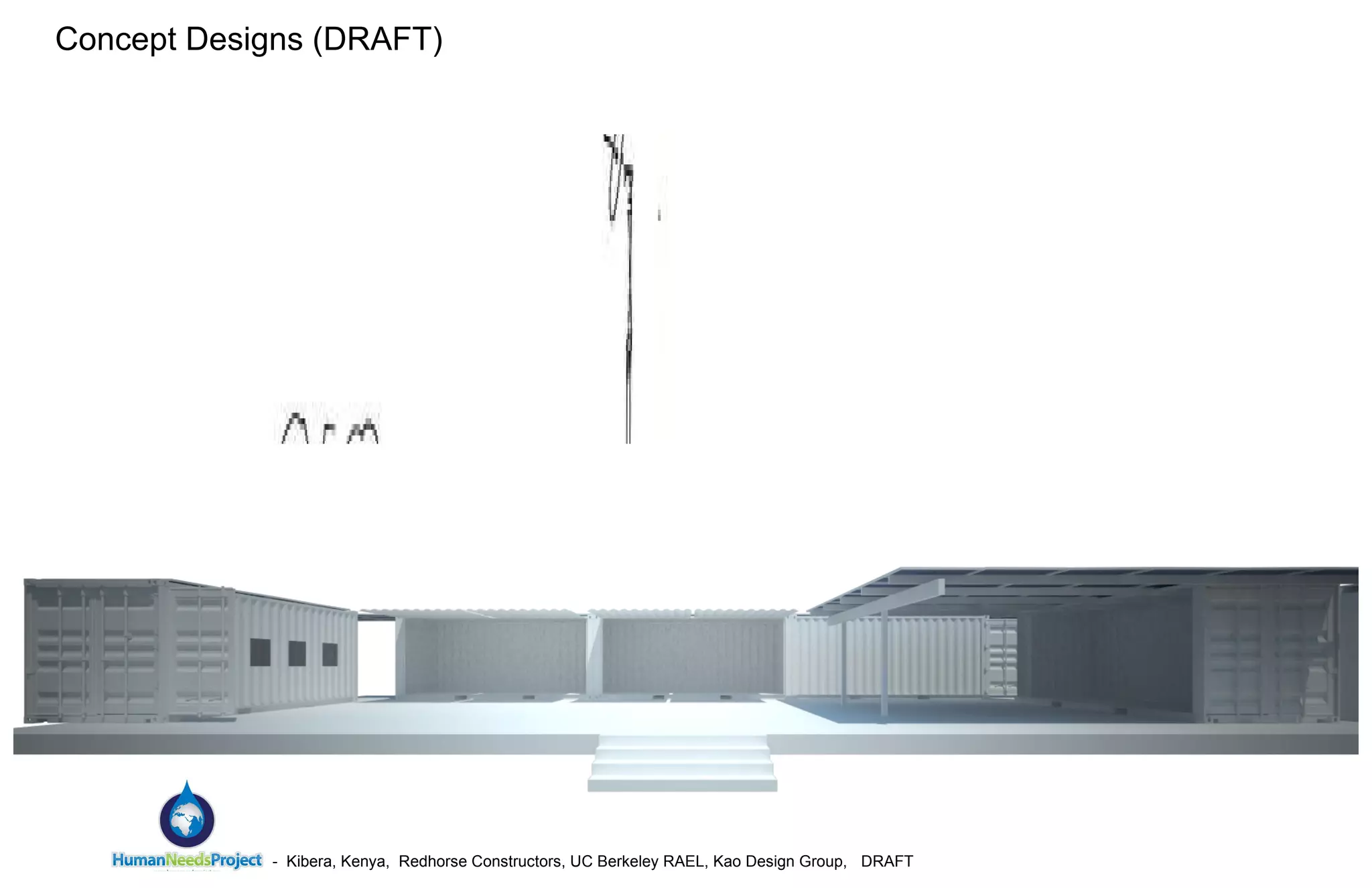
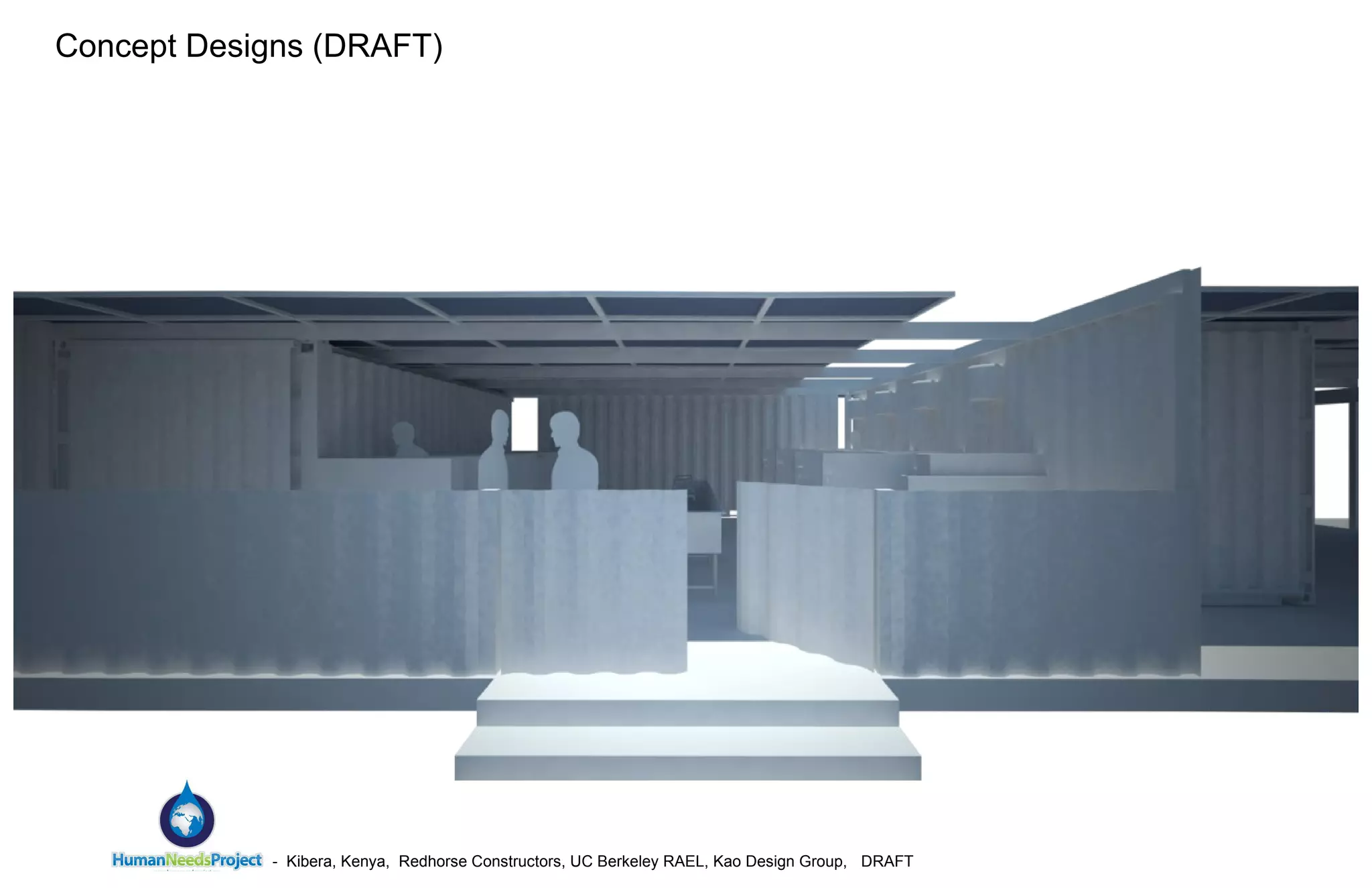
Concept Designs (DRAFT)
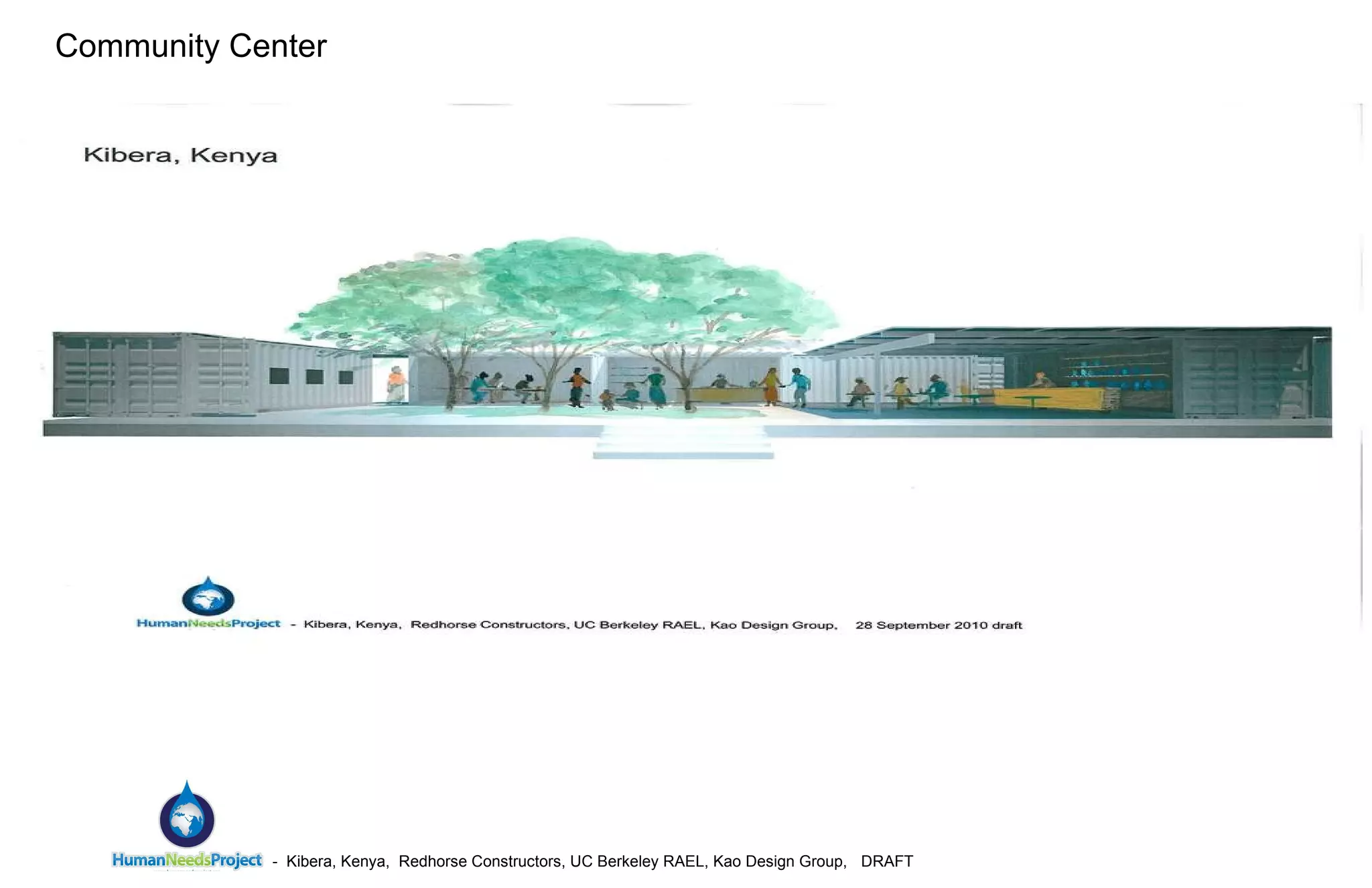
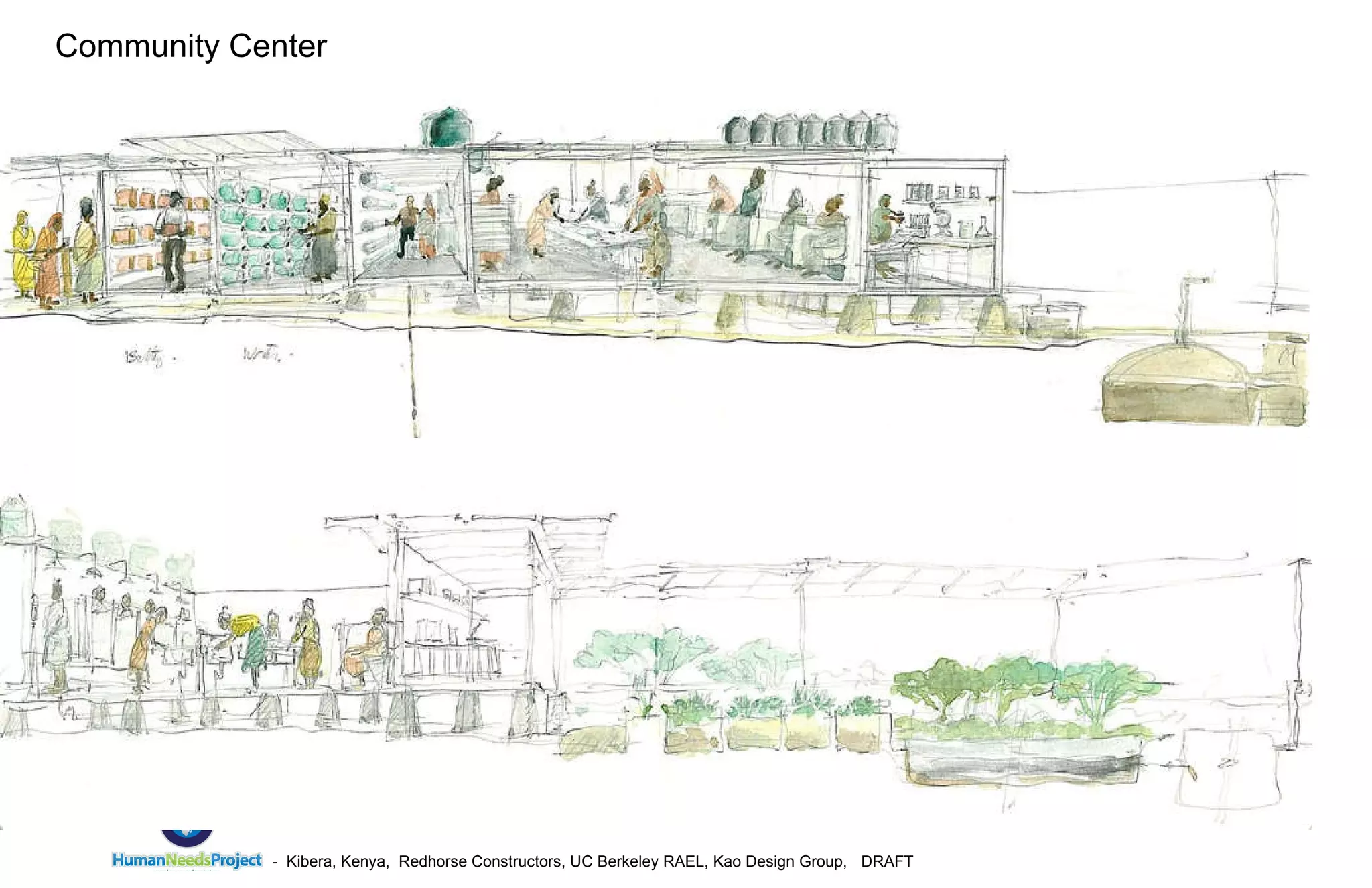
Community Center
Kibera, Kenya Community Center
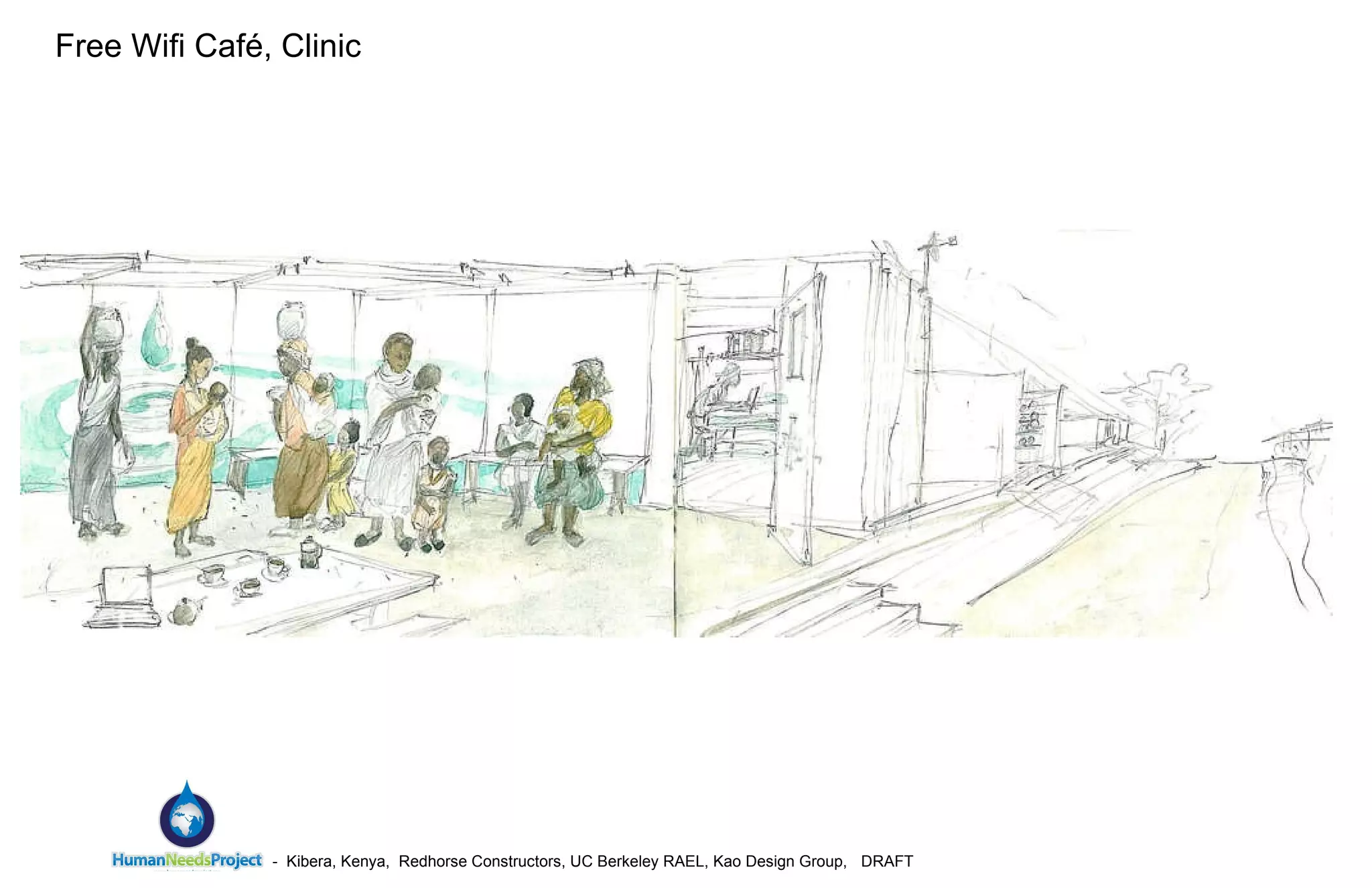
Free Wifi Café, Clinic
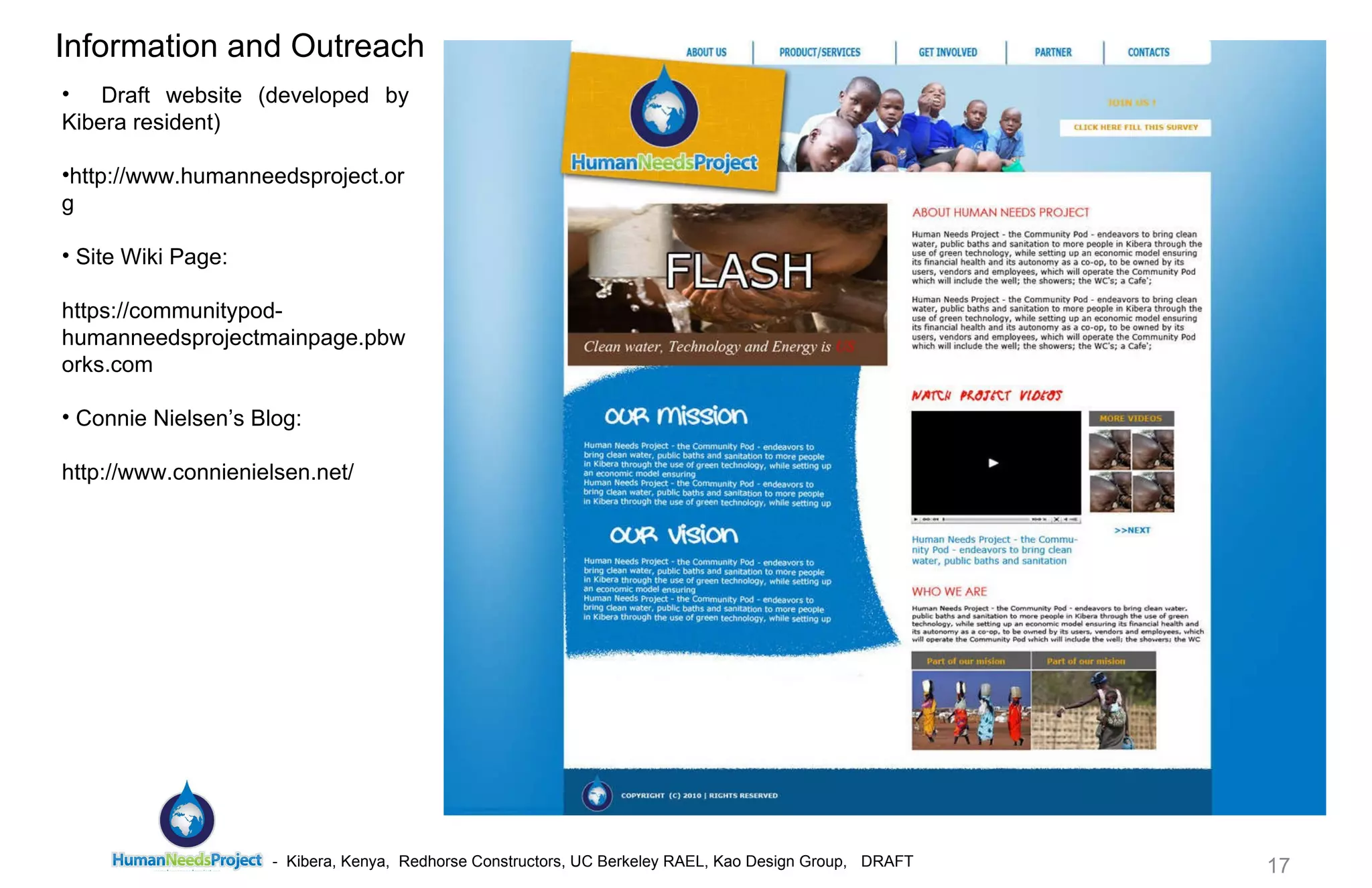
Draft website (developed by Kibera resident) http://www.humanneedsproject.org Site Wiki Page: https://communitypod-humanneedsprojectmainpage.pbworks.com Connie Nielsen’s Blog: http://www.connienielsen.net/  Information and Outreach
Where are we now… Major Milestones: Well-log data Signed approval from Chief of Kibera Schematic site design plans Design team Co-op structure Public survey (Swahili & English)  Next Steps: Lease with Kenyan Railway Schematic design of eco-machine Prepare RFP for Kenyan builders and specialists Partner with Kenyan academic institution to ensure sustainable oversight

4th HNP Kibera presentation

  • 1.
    Redhorse Constructors, UCBerkeley RAEL, Kao Design Group
  • 2.
    The Human NeedsProject – A Community Pod – endeavors to bring clean water, public baths and sanitation to more people in Kibera through the use of green technology, while setting up an economic model to ensure its financial health, and autonomy as a co-op, to be owned by its users, vendors and employees. The Community Pod will include a well; public baths; WCs; a Café / playground; a Market Place; the production, sale and maintenance of water-purifiers; the rental, recharging and maintenance of solar batteries for home use; and an Information Kiosk, where weekly lessons will be held on anything the community decides to learn about. The Human Needs Project
  • 3.
    CONNIE NIELSEN, Project coordinator, HNP Wiki Administrator; Actor http://www.imdb.com/name/nm0001567/   DAVID WARNER , Project coordinator; CEO - Redhorse Constructors; DANIEL KAMMEN, Chief Technical Specialist for Renewable Energy and Energy Efficiency – World Bank; Professor in Energy and Resources Group, Goldman School of Public Policy, UC Berkeley; Founding Director, Renewable and Appropriate  Energy Laboratory KENNETH KAO & KDG Team, Lecturer in Architecture, Department of Architecture, Harvard; CEO of Kao Design Group; DANIEL PRULL, Ph.D, LEED® AP BD+C Energy Director - Redhorse Constructors: Project coordinator WILLIAM OGUTU, Kibera resident, site coordination and legal, permitting   The Human Needs Project Team YEMA KHALIF, Kibera resident, website JIM WUNDERMAN CEO  Bay Area Council, Economic Team SONNY AULAKH , CEO of Greenlightapparel.com, Economic Team JEFF ANSLEY , CEO of Natron Resources, Economic Team ANDY BARKETT, Greenlightapparel.com, Economic Team   JOYCE OKEKO, Legal, Site coordination and legal, permitting VANESSA GETTY, activist/fundraiser   STEPHANIE COYOTE, Volunteer
  • 4.
    Pilot Project Site Kibera, Kenya, Google Earth View
  • 5.
    X Site Conditions- Without access to safe toilet facilities, many Kibera residents are forced to use public areas, most often drainage routes, to relieve themselves .  These drainage waste channels are unprotected and it is common for people, especially children, to come in contact with the waste as it travels out of the slum.  This waste often contains diseases such as Typhoid and Cholera, which kill between 10 – 50% of those infected.  Toilet facilities must be built to prevent human waste from spreading disease. Kibera residents are often unable to wash their hands before preparing food or doing other things that can cause diseases to enter their bodies.   This is because clean water must be accessed from pre-filled water tanks which are controlled by landlords and are often difficult or expensive for residents to use.  To prevent the spread of disease, Kibera residents need affordable and convenient public access to clean water for drinking, cooking, and washing. Disused pit latrine that has caved in and spread waste to the surrounding area. ©kSLUM http://www.kslum.org/aboutkibera.htm http://www.kwaho.org/loc-d-kibera.html http://www.kslum.org/aboutkibera.htm Sanitation, liquid waste and drainage There are no sewered toilets in Kibera and most of the households have traditional pit latrines. These are inadequate and fill up quickly. Limited access to exhauster services has rendered about 30 percent of latrines unusable. The shortage of pit latrines is brought about by lack of space for new construction and landlords who are unwilling to incur the extra expense. Most of the groups indicated that up to 150 people share a pit latrine. Lack of adequate latrines forces residents to use alternative means of excreta disposal, such as polythene bags referred to as "flying toilets" (wrap and throw method). These are commonly used at night when residents consider it insecure to use latrines outside. Children defecate in small plastic buckets for cooking fat (e.g. Kasuku) which are emptied by the mothe either in the next pit latrine or sewer. Solid waste covers this river running by some latrines. Mothers and girls fetch water from a bursted main pipe.
  • 6.
    X Mobile TechnologyContainers Drinking Water Energy Adult Education Showers / Laundry Sewage/Waste Wi-fi Cafe Modular Containers: 20ft x 8ft Potentially donated ‘end of life’ shipping containers Community Center Store
  • 7.
  • 8.
  • 9.
  • 10.
    Concept Designs (DRAFT)courtyard, children play area
  • 11.
  • 12.
  • 13.
  • 14.
  • 15.
  • 16.
  • 17.
    Draft website (developedby Kibera resident) http://www.humanneedsproject.org Site Wiki Page: https://communitypod-humanneedsprojectmainpage.pbworks.com Connie Nielsen’s Blog: http://www.connienielsen.net/ Information and Outreach
  • 18.
    Where are wenow… Major Milestones: Well-log data Signed approval from Chief of Kibera Schematic site design plans Design team Co-op structure Public survey (Swahili & English) Next Steps: Lease with Kenyan Railway Schematic design of eco-machine Prepare RFP for Kenyan builders and specialists Partner with Kenyan academic institution to ensure sustainable oversight