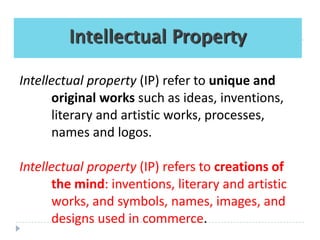
This document discusses computer ethics and intellectual property. It defines intellectual property as unique and original works such as ideas, inventions, literary and artistic works. There are two main types of intellectual property: industrial property, which includes patents, trademarks, and industrial designs, and copyright, which covers literary and artistic works. Patents protect inventions by giving inventors exclusive rights. Trademarks distinguish the goods and services of one trader from another. Copyright gives authors and artists exclusive rights to their creative works. Intellectual property is important as it protects creators' ownership over their original works and ideas.



![IPR & Cyber Laws (October - 2014) [CBSGS - Paper Solution]](https://cdn.slidesharecdn.com/ss_thumbnails/ipr-cbsgs-oct-2014-ps-190605012406-thumbnail.jpg?width=640&height=640&fit=bounds)


![Copy & related rights [compatibility mode]](https://cdn.slidesharecdn.com/ss_thumbnails/copyrelatedrightscompatibilitymode-121009092045-phpapp02-thumbnail.jpg?width=640&height=640&fit=bounds)


