UPPER RESPIRATORY
TRACT INFECTION
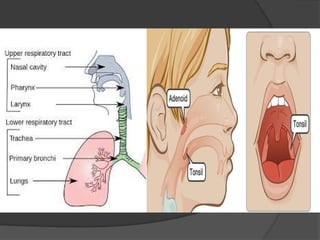
DEFINITION
 An upper respiratory tract infection, or
upper respiratory infection, is an
infectious process of any of the
components of the upper airway.
CLASSIFICATION
 RHINITIS/ COMMON COLD
 SINUSITIS
 EPIGLOTTITIS
 PHARYNGITIS
 LARYNGITIS
1. Common cold
 Colds often go away on their own. Colds can:
 Occur at any age.
 Have a wide range of symptoms.
 Spread through direct contact with respiratory secretions
 Last about 7 to 10 days, though a cough can last up to
three weeks.
 Lead to complications such as ear infections, eye
infections, sinus infections and pneumonia.
Treatment
 Use acetaminophen
 Stay hydrated.
 Get plenty of rest.
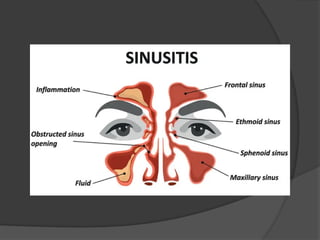
2. Sinusitis
 Sinusitis, or a sinus infection, is a common problem.
S/S
 Postnasal drip (mucus dripping into throat)
 Green mucus from nose.
 Stuffiness or congestion.
 Pain when press on face, especially on the bones right under
eyes.
 Bad breath.
 Cough.
 Fatigue.
 Fever.
 Headaches
Treatment
 Antibiotics may be needed to clear up a sinus infection in this case
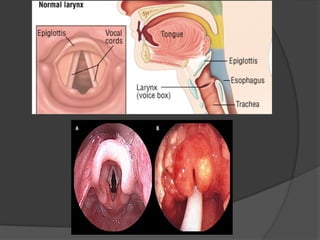
3. Epiglottitis
 Epiglottitis is when the epiglottis gets inflamed.
 This condition can be serious, it can block your airway.
Symptoms of epiglottitis include:
 Difficulty breathing or swallowing.
 Fever and Severe sore throat.
Epiglottitis requires treatment at a hospital or medical facility.
 Supplemental oxygen
 IV fluids to keep you hydrated until you can swallow
without problems.
 Antibiotics, if your provider thinks you may have a
bacterial infection.
 Steroids to reduce the swelling.
4. Pharyngitis
 Pharyngitis is also known as a sore throat.
S/S
 Severe throat pain.
 Difficulty swallowing and speaking.
 Ear pain.
 Tender lymph nodes in the neck.
 Swollen, red tonsils.
Treatment
 If the throat swab (strep test) is positive for strep throat, take a course
of antibiotics, such as penicillin.
 If the test is negative, may recommend:
 Over-the-counter pain relievers, such as acetaminophen or NSAIDs,
to help with throat pain.
 Gargling with warm salt water to soothe your throat.
 A single dose of a steroid to help with symptoms.
5. Laryngitis
 Laryngitis is when the larynx becomes inflamed.
s/s
 Become very hoarse.
 Only be able to talk at a low volume.
 Lose voice entirely.
 a fever, have difficulty swallowing and sore throat.
Treatment
 Voice rest. Try not to speak. If you do need to speak, talk in a
low voice rather than a whisper. Whispering can irritate larynx.
 Drink plenty of extra fluids.
 Breathe in steam.
 Use cough suppressants.
Clinical features
 Cough.
 Fever.
 Hoarse voice.
 Fatigue and lack of energy.
 Red eyes.
 Runny nose.
 Sore throat.
 Swollen lymph nodes (swelling on the
sides of your neck).
Diagnostic measures
 Lung (chest) X-ray.
 Lung CT scan.
 Lung (pulmonary) function test
 Nasal swab.
 Throat swab.
 Sputum test.
Do’s
Live a healthy lifestyle:
 Wash hands, especially
before eating or
preparing food.
 Sneeze and cough into a
tissue and wash hands
after.
 Take rest
 Avoid contact with sick
 Drink plenty of fluids.
 Get enough sleep.
Treatment
 Head elevation
 Gargling
 Steam inhalation
 Antibiotic therapy
 Keep up with routine
checkups and
immunizations.
 get the pneumococcal
vaccine, which prevents
pneumonia.
Don’ts
 do not let children breathe in steam from
a bowl of hot water as there's a risk of
scalding
 do not give aspirin to children under 16
 do not smoke – it may worsen
symptoms
 Do not allow visitors
 Don’t smoke
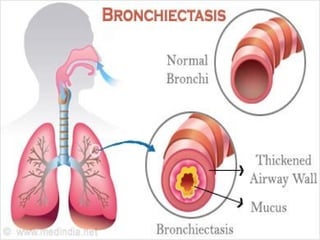
Definition
 Chronic irreversible dilation of the
bronchi and bronchioles
 Permanent abnormal dilation of
one or more large bronchi
Incidence
 Bronchiectasis predominantly affect
extremes of age.
 The prevalence of bronchiectasis rises
steeply from 4-5 per 100,000 adults
aged 18-34 years to 250 to 300 per
100,000 individuals aged > 75 years.
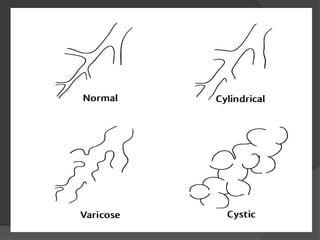
Types
 Cylindrical bronchiectasis : it’s a
mildest form and reflects the loss of
the normal tapering of the airways.
 Saccular bronchiectasis : its more
severe, with further distortion of the
airway. Produce sputum
 Cystic bronchiectasis : is the most
severe form , chronic productive
cough.
Risk factors
• Primary disorders of structures in the bronchi
• Severe childhood bronchial infection
• Inflammatory disease
• Pneumonia
• Inhaled foreign bodies
• Bronchial tumors
• Tuberculosis
• Cystic fibrosis-Inherited disorder, which affect
the cells that produce mucus, sweat &
digestive juice. Causes these fluid thick &
sticky, then they plug tubes, duct & passage
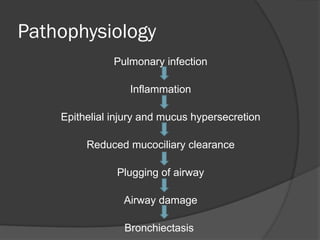
Pathophysiology
Pulmonary infection
Inflammation
Epithelial injury and mucus hypersecretion
Reduced mucociliary clearance
Plugging of airway
Airway damage
Bronchiectasis
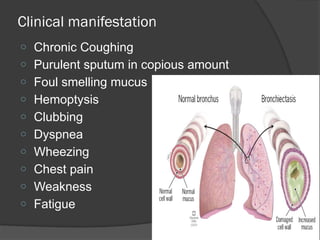
Clinical manifestation
o Chronic Coughing
o Purulent sputum in copious amount
o Foul smelling mucus
o Hemoptysis
o Clubbing
o Dyspnea
o Wheezing
o Chest pain
o Weakness
o Fatigue
Diagnostic measures
 History collection
 Physical examination
 Chest x ray-opacities
 Blood test
 Sputum study
 CT scan-excellent view of dilated bronchi
and bronchioles
 Bronchoscopy-to find out the cause
 PFT-find out the extend & severity of ds
Management
• Bronchodilator medication ,eg : Albuterol
• Steroids , eg : Fluticasone and salmeterol
• Antibiotics : augmentin, gemifloxacin,
clindamycin, ciprofloxacin,
(Corner stone therapy for bronchiectatic exacerbation)
• Mucus thinners and expectorants ,eg :
acetylcysteine
• Chest physiotherapy
• Hydration
• O2 therapy
Surgical Management
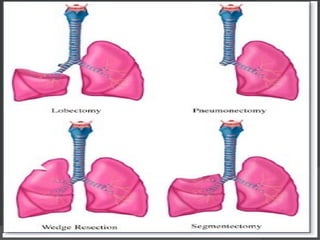
 Segmental resection. The
diseased segment of a lobe is
removed.
 Lobectomy. The diseased lobe is
removed.
 Pneumonectomy. The entire
diseased lung segment is
removed, but this rarely happens.
Complication
 Atelectasis. Collapse of the alveoli
is a common complication.
 Pneumonia. Infection is recurrent in
patients with bronchiectasis.
 Empyema. Overproduction of
sputum causes the bronchi to be
filled with pus
Nursing assessment
 Nursing assessment of a patient with
bronchiectasis include:
 Evaluation of current smoking status.
 Evaluation of current exposure to
occupational toxins or pollutants and
in indoor/outdoor pollution.
 Assess the patient’s current level of
functioning.
Nursing Diagnosis
 Impaired gas exchange related to
ventilation-perfusion imbalance.
 Ineffective airway clearance related to
increased mucus production.
 Ineffective breathing pattern related to
mucus and airway irritants.
 Activity intolerance related to
hypoxemia and ineffective breathing
patterns.
Nursing Intervention
 Smoking cessation.
 Bronchodilators. Administer
bronchodilators as prescribed.
 Postural drainage. Perform postural
drainage with percussion and vibration in
the morning
 Antibiotics. Administer antibiotics as
prescribed.
 Activities. Encourage alternating activity
with rest periods.
Client education
 Smoking cessation.
 Postural drainage.
 Exposure to infections.
 Signs of infection.
 Nutrition.
THANK YOU

4. Upper respiratory tract infection & bronchiectasis

  • 1.
  • 2.
    DEFINITION  An upperrespiratory tract infection, or upper respiratory infection, is an infectious process of any of the components of the upper airway.
  • 3.
    CLASSIFICATION  RHINITIS/ COMMONCOLD  SINUSITIS  EPIGLOTTITIS  PHARYNGITIS  LARYNGITIS
  • 4.
    1. Common cold Colds often go away on their own. Colds can:  Occur at any age.  Have a wide range of symptoms.  Spread through direct contact with respiratory secretions  Last about 7 to 10 days, though a cough can last up to three weeks.  Lead to complications such as ear infections, eye infections, sinus infections and pneumonia. Treatment  Use acetaminophen  Stay hydrated.  Get plenty of rest.
  • 5.
    2. Sinusitis  Sinusitis,or a sinus infection, is a common problem. S/S  Postnasal drip (mucus dripping into throat)  Green mucus from nose.  Stuffiness or congestion.  Pain when press on face, especially on the bones right under eyes.  Bad breath.  Cough.  Fatigue.  Fever.  Headaches Treatment  Antibiotics may be needed to clear up a sinus infection in this case
  • 7.
    3. Epiglottitis  Epiglottitisis when the epiglottis gets inflamed.  This condition can be serious, it can block your airway. Symptoms of epiglottitis include:  Difficulty breathing or swallowing.  Fever and Severe sore throat. Epiglottitis requires treatment at a hospital or medical facility.  Supplemental oxygen  IV fluids to keep you hydrated until you can swallow without problems.  Antibiotics, if your provider thinks you may have a bacterial infection.  Steroids to reduce the swelling.
  • 9.
    4. Pharyngitis  Pharyngitisis also known as a sore throat. S/S  Severe throat pain.  Difficulty swallowing and speaking.  Ear pain.  Tender lymph nodes in the neck.  Swollen, red tonsils. Treatment  If the throat swab (strep test) is positive for strep throat, take a course of antibiotics, such as penicillin.  If the test is negative, may recommend:  Over-the-counter pain relievers, such as acetaminophen or NSAIDs, to help with throat pain.  Gargling with warm salt water to soothe your throat.  A single dose of a steroid to help with symptoms.
  • 10.
    5. Laryngitis  Laryngitisis when the larynx becomes inflamed. s/s  Become very hoarse.  Only be able to talk at a low volume.  Lose voice entirely.  a fever, have difficulty swallowing and sore throat. Treatment  Voice rest. Try not to speak. If you do need to speak, talk in a low voice rather than a whisper. Whispering can irritate larynx.  Drink plenty of extra fluids.  Breathe in steam.  Use cough suppressants.
  • 12.
    Clinical features  Cough. Fever.  Hoarse voice.  Fatigue and lack of energy.  Red eyes.  Runny nose.  Sore throat.  Swollen lymph nodes (swelling on the sides of your neck).
  • 13.
    Diagnostic measures  Lung(chest) X-ray.  Lung CT scan.  Lung (pulmonary) function test  Nasal swab.  Throat swab.  Sputum test.
  • 14.
    Do’s Live a healthylifestyle:  Wash hands, especially before eating or preparing food.  Sneeze and cough into a tissue and wash hands after.  Take rest  Avoid contact with sick  Drink plenty of fluids.  Get enough sleep. Treatment  Head elevation  Gargling  Steam inhalation  Antibiotic therapy  Keep up with routine checkups and immunizations.  get the pneumococcal vaccine, which prevents pneumonia.
  • 15.
    Don’ts  do notlet children breathe in steam from a bowl of hot water as there's a risk of scalding  do not give aspirin to children under 16  do not smoke – it may worsen symptoms  Do not allow visitors  Don’t smoke
  • 17.
    Definition  Chronic irreversibledilation of the bronchi and bronchioles  Permanent abnormal dilation of one or more large bronchi
  • 18.
    Incidence  Bronchiectasis predominantlyaffect extremes of age.  The prevalence of bronchiectasis rises steeply from 4-5 per 100,000 adults aged 18-34 years to 250 to 300 per 100,000 individuals aged > 75 years.
  • 19.
    Types  Cylindrical bronchiectasis: it’s a mildest form and reflects the loss of the normal tapering of the airways.  Saccular bronchiectasis : its more severe, with further distortion of the airway. Produce sputum  Cystic bronchiectasis : is the most severe form , chronic productive cough.
  • 21.
    Risk factors • Primarydisorders of structures in the bronchi • Severe childhood bronchial infection • Inflammatory disease • Pneumonia • Inhaled foreign bodies • Bronchial tumors • Tuberculosis • Cystic fibrosis-Inherited disorder, which affect the cells that produce mucus, sweat & digestive juice. Causes these fluid thick & sticky, then they plug tubes, duct & passage
  • 22.
    Pathophysiology Pulmonary infection Inflammation Epithelial injuryand mucus hypersecretion Reduced mucociliary clearance Plugging of airway Airway damage Bronchiectasis
  • 23.
    Clinical manifestation o ChronicCoughing o Purulent sputum in copious amount o Foul smelling mucus o Hemoptysis o Clubbing o Dyspnea o Wheezing o Chest pain o Weakness o Fatigue
  • 24.
    Diagnostic measures  Historycollection  Physical examination  Chest x ray-opacities  Blood test  Sputum study  CT scan-excellent view of dilated bronchi and bronchioles  Bronchoscopy-to find out the cause  PFT-find out the extend & severity of ds
  • 25.
    Management • Bronchodilator medication,eg : Albuterol • Steroids , eg : Fluticasone and salmeterol • Antibiotics : augmentin, gemifloxacin, clindamycin, ciprofloxacin, (Corner stone therapy for bronchiectatic exacerbation) • Mucus thinners and expectorants ,eg : acetylcysteine • Chest physiotherapy • Hydration • O2 therapy
  • 26.
    Surgical Management  Segmentalresection. The diseased segment of a lobe is removed.  Lobectomy. The diseased lobe is removed.  Pneumonectomy. The entire diseased lung segment is removed, but this rarely happens.
  • 28.
    Complication  Atelectasis. Collapseof the alveoli is a common complication.  Pneumonia. Infection is recurrent in patients with bronchiectasis.  Empyema. Overproduction of sputum causes the bronchi to be filled with pus
  • 29.
    Nursing assessment  Nursingassessment of a patient with bronchiectasis include:  Evaluation of current smoking status.  Evaluation of current exposure to occupational toxins or pollutants and in indoor/outdoor pollution.  Assess the patient’s current level of functioning.
  • 30.
    Nursing Diagnosis  Impairedgas exchange related to ventilation-perfusion imbalance.  Ineffective airway clearance related to increased mucus production.  Ineffective breathing pattern related to mucus and airway irritants.  Activity intolerance related to hypoxemia and ineffective breathing patterns.
  • 31.
    Nursing Intervention  Smokingcessation.  Bronchodilators. Administer bronchodilators as prescribed.  Postural drainage. Perform postural drainage with percussion and vibration in the morning  Antibiotics. Administer antibiotics as prescribed.  Activities. Encourage alternating activity with rest periods.
  • 32.
    Client education  Smokingcessation.  Postural drainage.  Exposure to infections.  Signs of infection.  Nutrition.
  • 33.

Editor's Notes

  • #15 Reye syndrome- brain swelling- associated with aspirin use