4 Spine Surgery
Complications
(and How to Avoid Them)
By Dr. Stefano Sinicropi
Every surgery has risks
• Spine surgery is no exception.
Decrease Your Risk
• There are ways to cut down on these risks.
• Here are the 4 most common surgery complications, and how
to avoid each.
1. Anesthesia
• Anesthesia is a necessary element in most spine surgeries.
• It is a complicated science as the anesthetic interacts with
each patient’s body differently.
How to Avoid
• Talk to your surgeon and anesthesiologist before the
procedure.
• Tell them about any medications you’re taking and any
medical conditions you have.
2. Blood Loss
• Blood loss is inevitable in any surgery. It is usually nothing to worry
about.
• However, major blood loss during surgery is a problem.
How to Avoid
• Talk to your surgeon about any concerns.
• Donate your own blood before surgery if it’s an option.
Nerve Injury
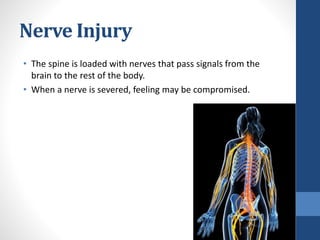
• The spine is loaded with nerves that pass signals from the
brain to the rest of the body.
• When a nerve is severed, feeling may be compromised.
How to Avoid
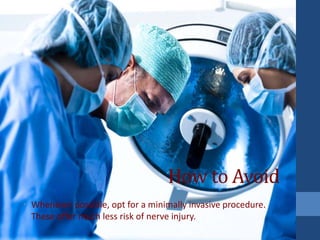
• Whenever possible, opt for a minimally invasive procedure.
These offer much less risk of nerve injury.
4. Hardware
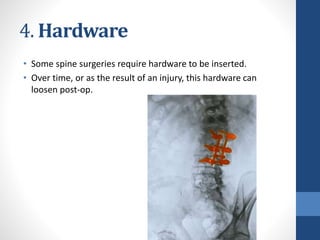
• Some spine surgeries require hardware to be inserted.
• Over time, or as the result of an injury, this hardware can
loosen post-op.
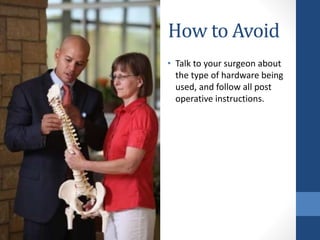
How to Avoid
• Talk to your surgeon about
the type of hardware being
used, and follow all post
operative instructions.
Questions?
• Reach out to Dr. Sinicropi here:
• Sinicropispine.com
• @sinicropispine
• Facebook
• Google+
• Phone: 1.800.234.1826

4 Spine Surgery Complications

  • 1.
    4 Spine Surgery Complications (andHow to Avoid Them) By Dr. Stefano Sinicropi
  • 2.
    Every surgery hasrisks • Spine surgery is no exception.
  • 3.
    Decrease Your Risk •There are ways to cut down on these risks. • Here are the 4 most common surgery complications, and how to avoid each.
  • 4.
    1. Anesthesia • Anesthesiais a necessary element in most spine surgeries. • It is a complicated science as the anesthetic interacts with each patient’s body differently.
  • 5.
    How to Avoid •Talk to your surgeon and anesthesiologist before the procedure. • Tell them about any medications you’re taking and any medical conditions you have.
  • 6.
    2. Blood Loss •Blood loss is inevitable in any surgery. It is usually nothing to worry about. • However, major blood loss during surgery is a problem.
  • 7.
    How to Avoid •Talk to your surgeon about any concerns. • Donate your own blood before surgery if it’s an option.
  • 8.
    Nerve Injury • Thespine is loaded with nerves that pass signals from the brain to the rest of the body. • When a nerve is severed, feeling may be compromised.
  • 9.
    How to Avoid •Whenever possible, opt for a minimally invasive procedure. These offer much less risk of nerve injury.
  • 10.
    4. Hardware • Somespine surgeries require hardware to be inserted. • Over time, or as the result of an injury, this hardware can loosen post-op.
  • 11.
    How to Avoid •Talk to your surgeon about the type of hardware being used, and follow all post operative instructions.
  • 12.
    Questions? • Reach outto Dr. Sinicropi here: • Sinicropispine.com • @sinicropispine • Facebook • Google+ • Phone: 1.800.234.1826