Download as PDF, PPTX
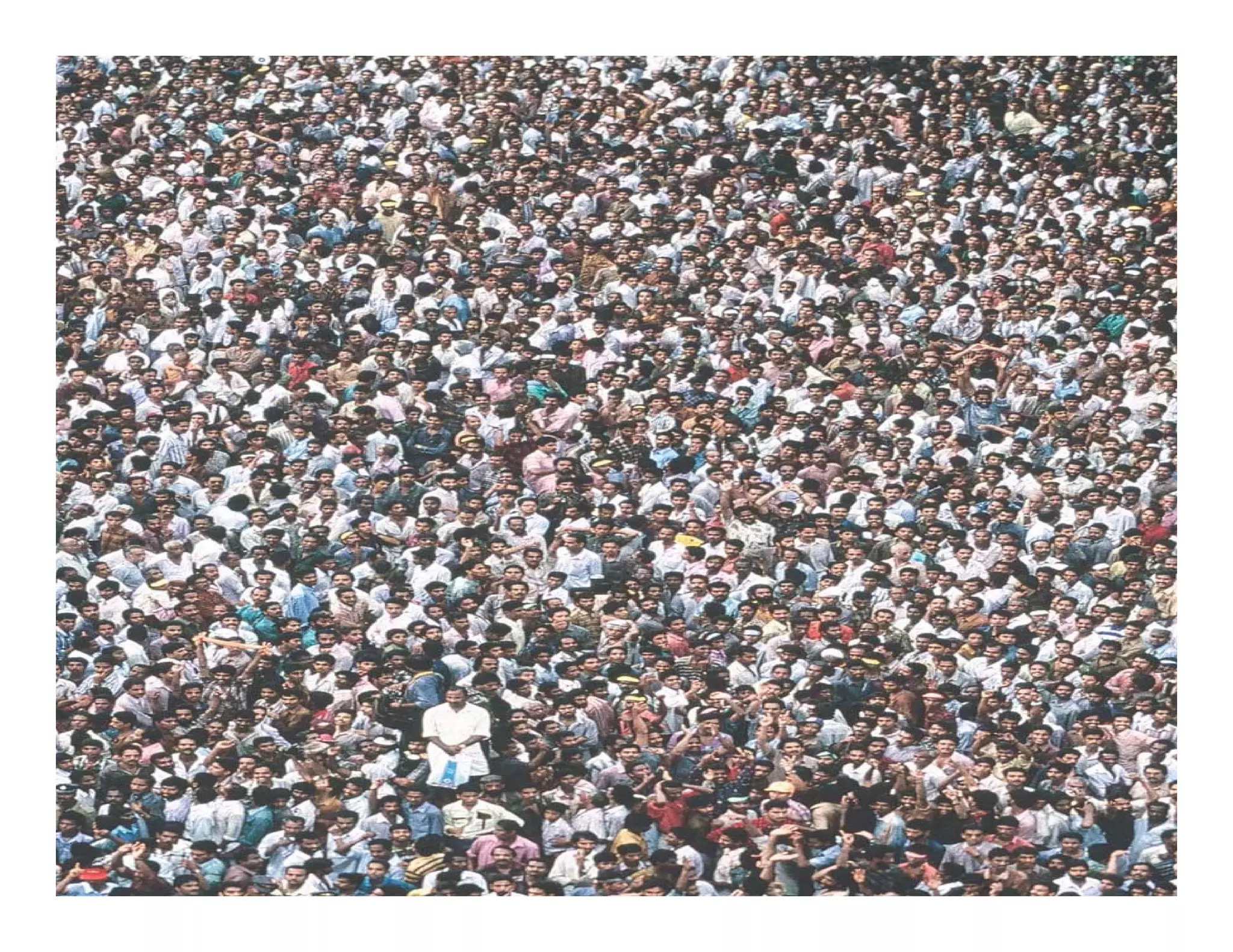
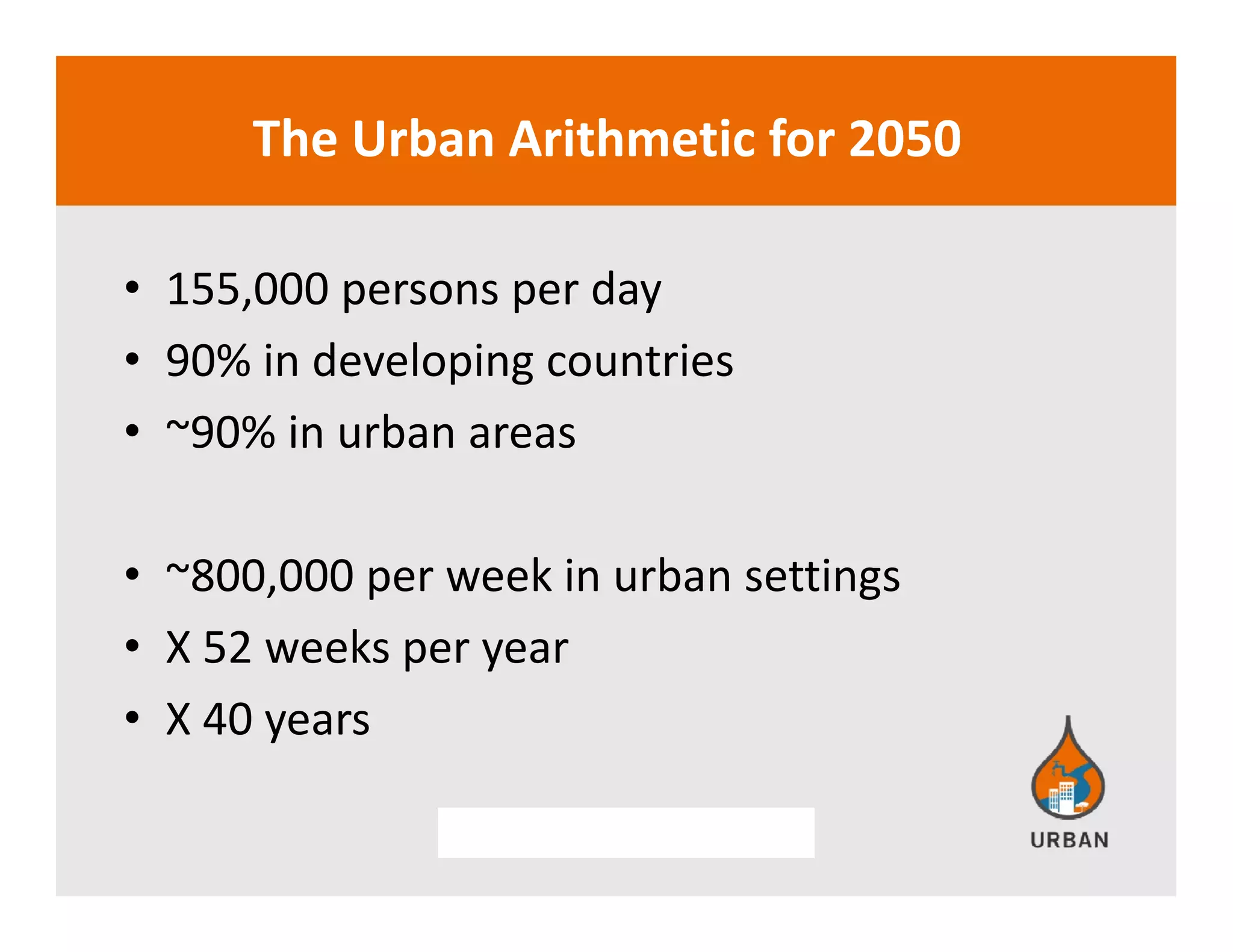
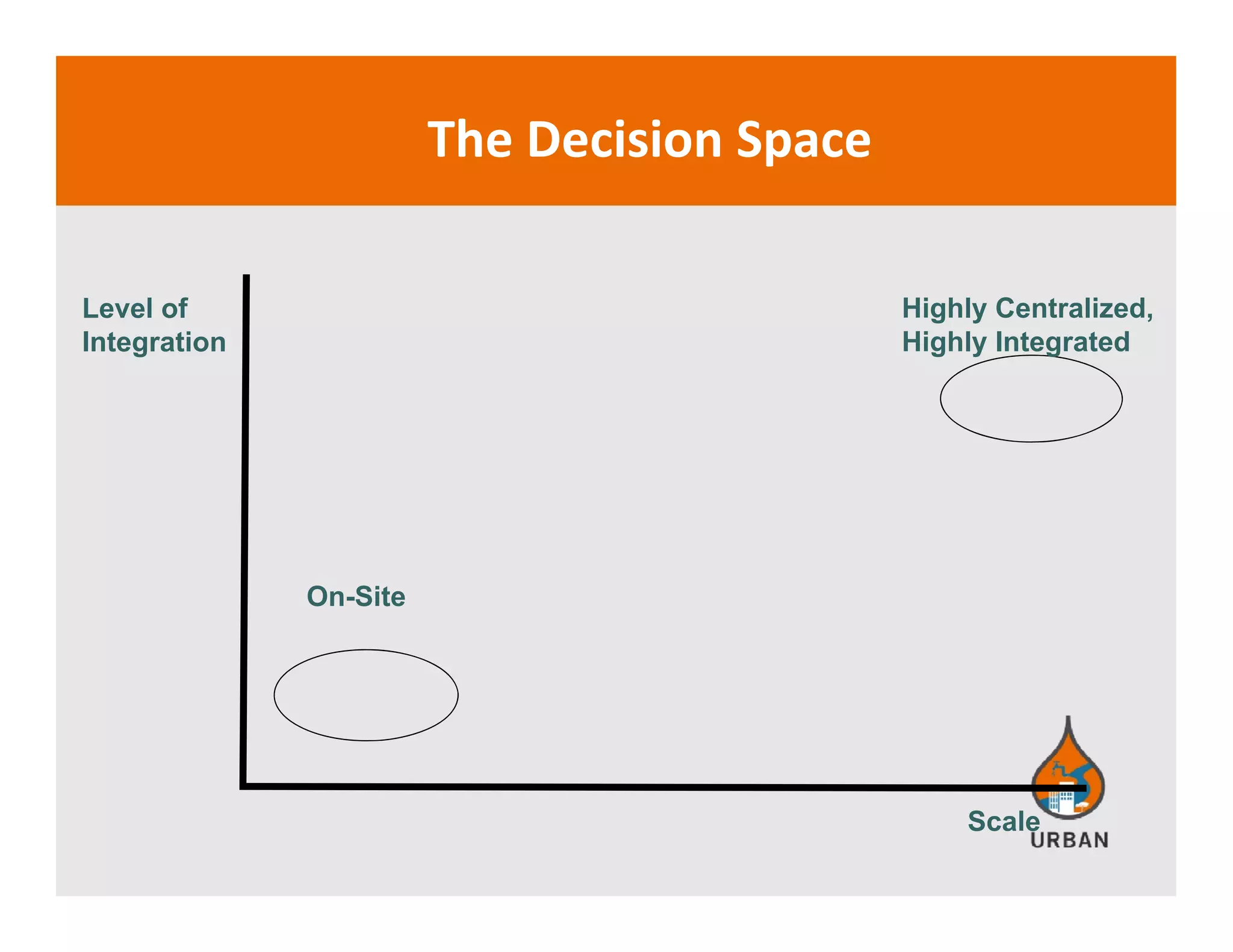
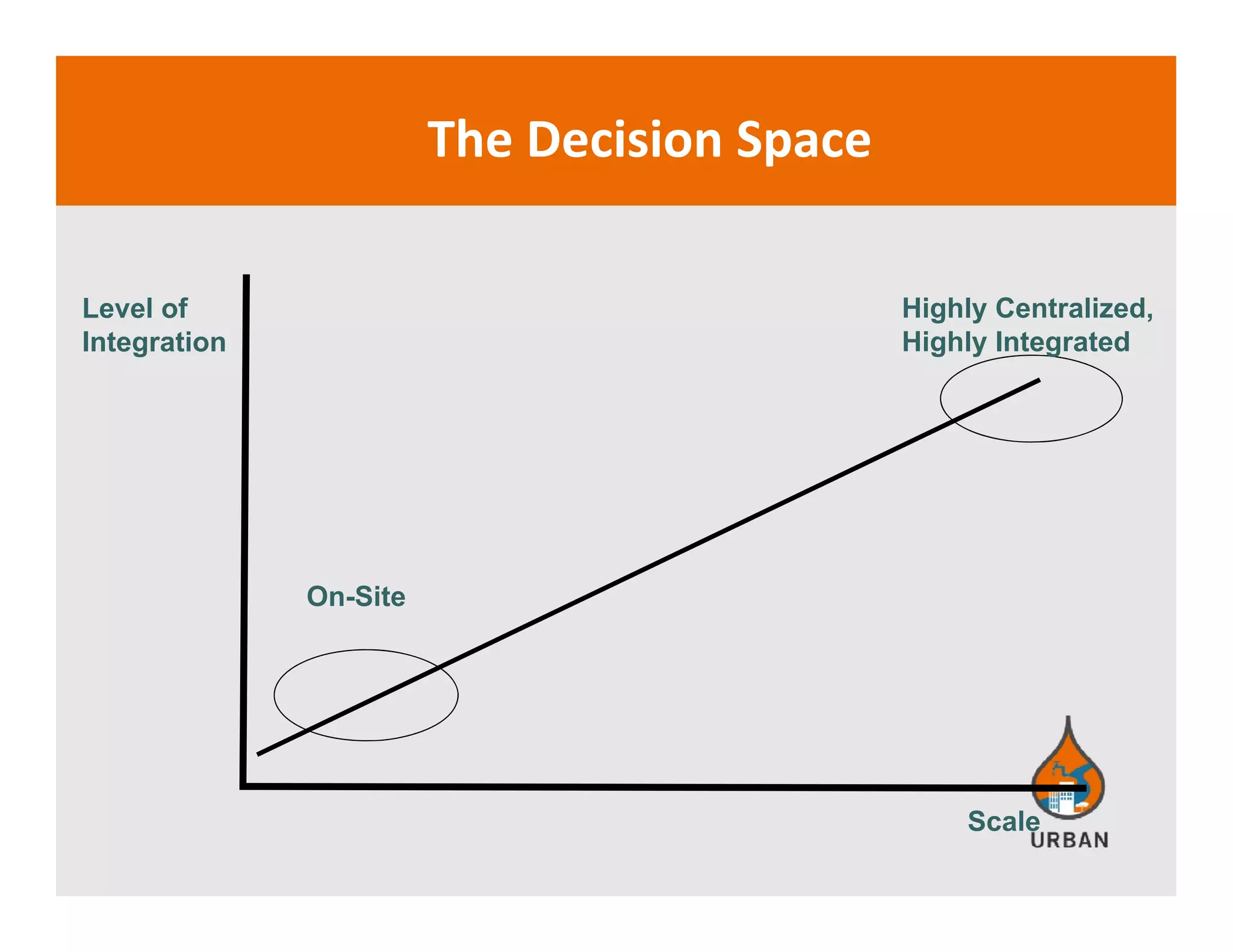
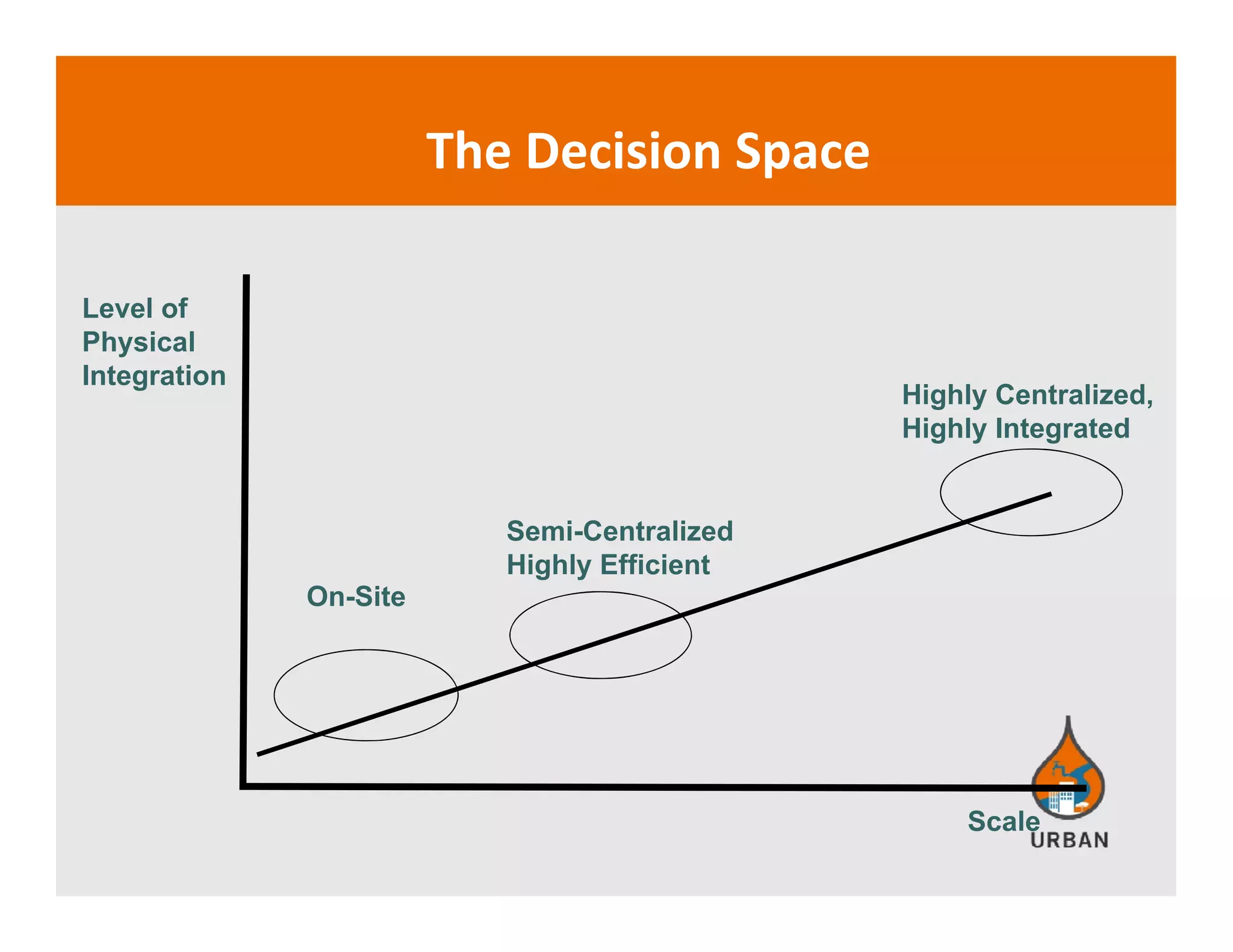
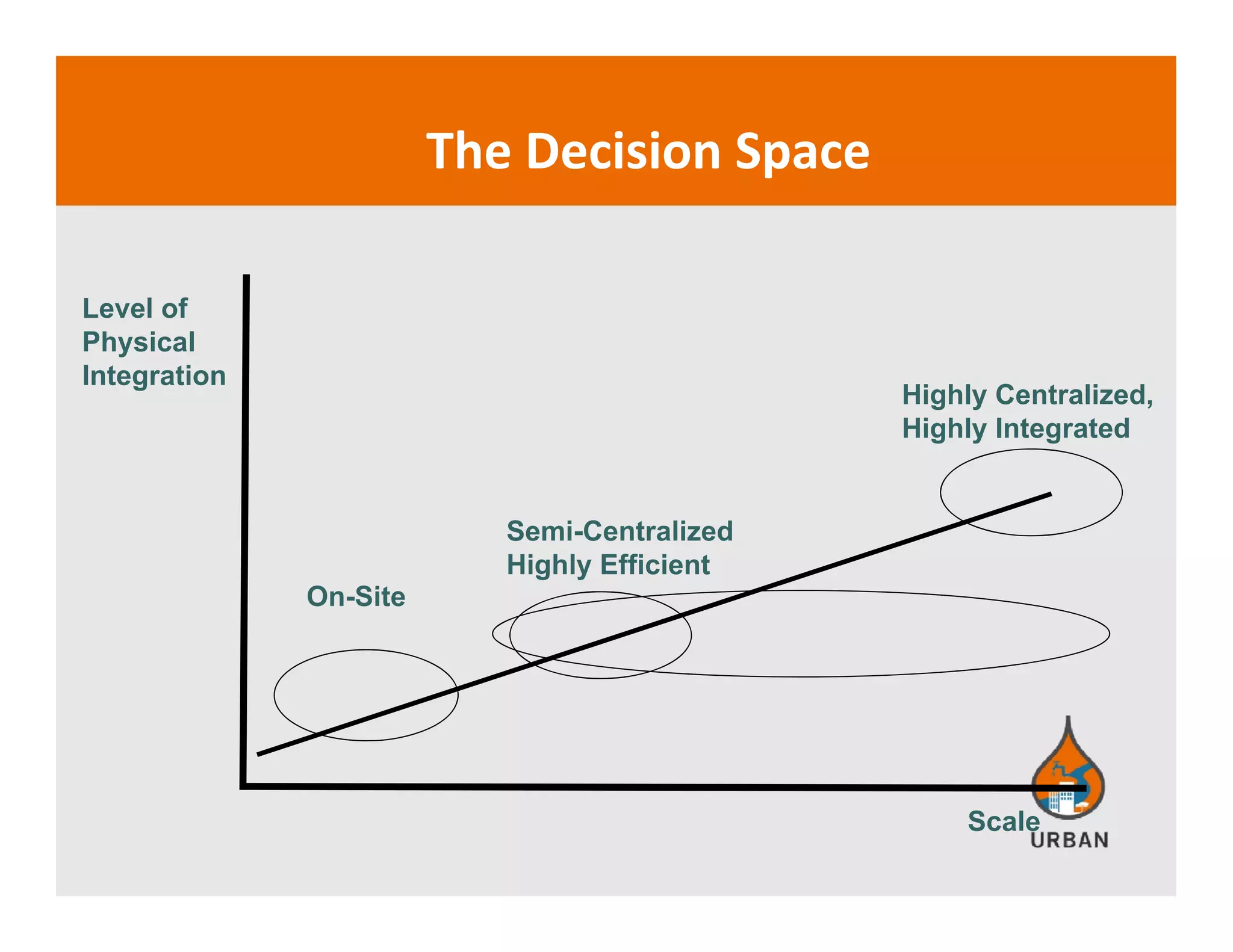
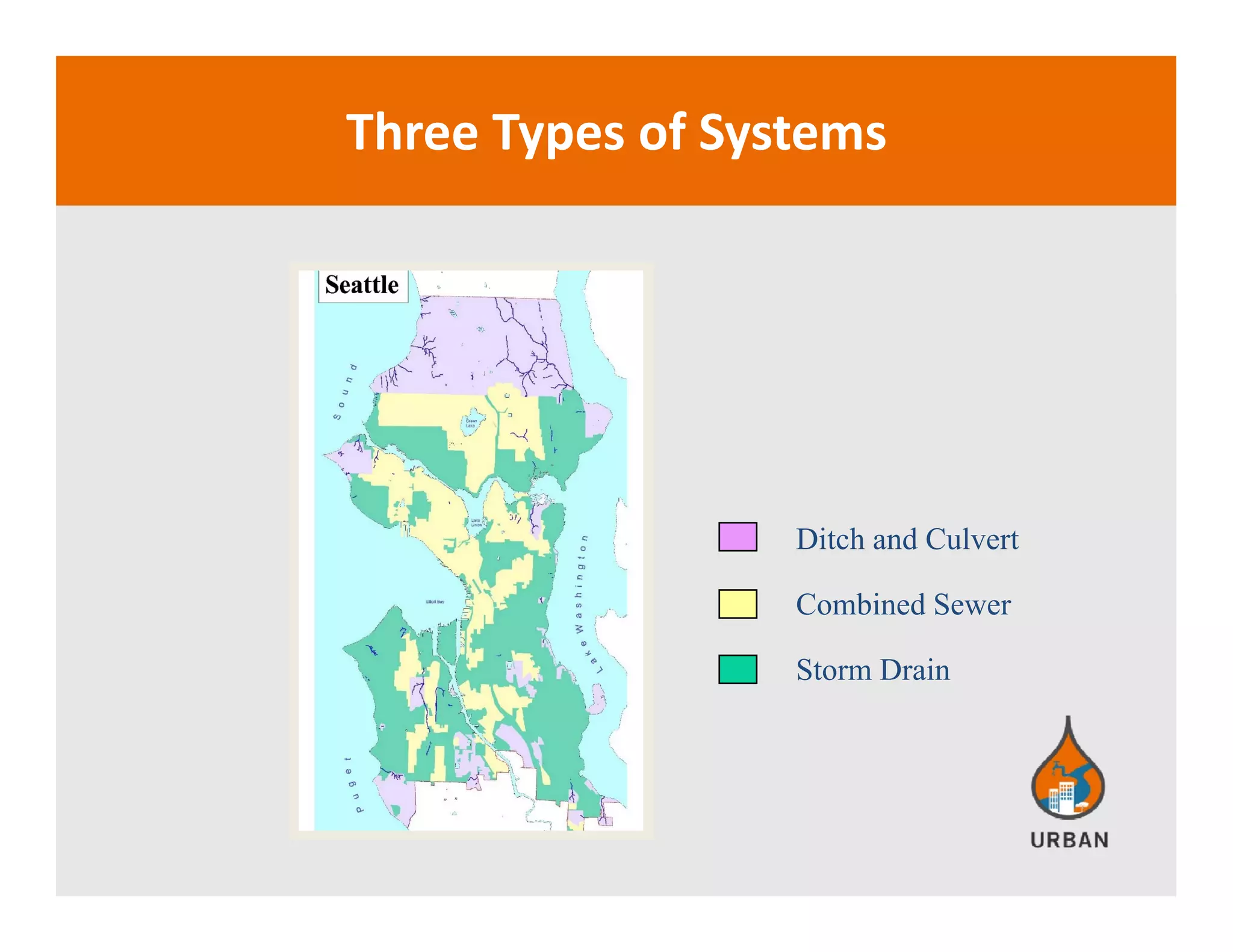
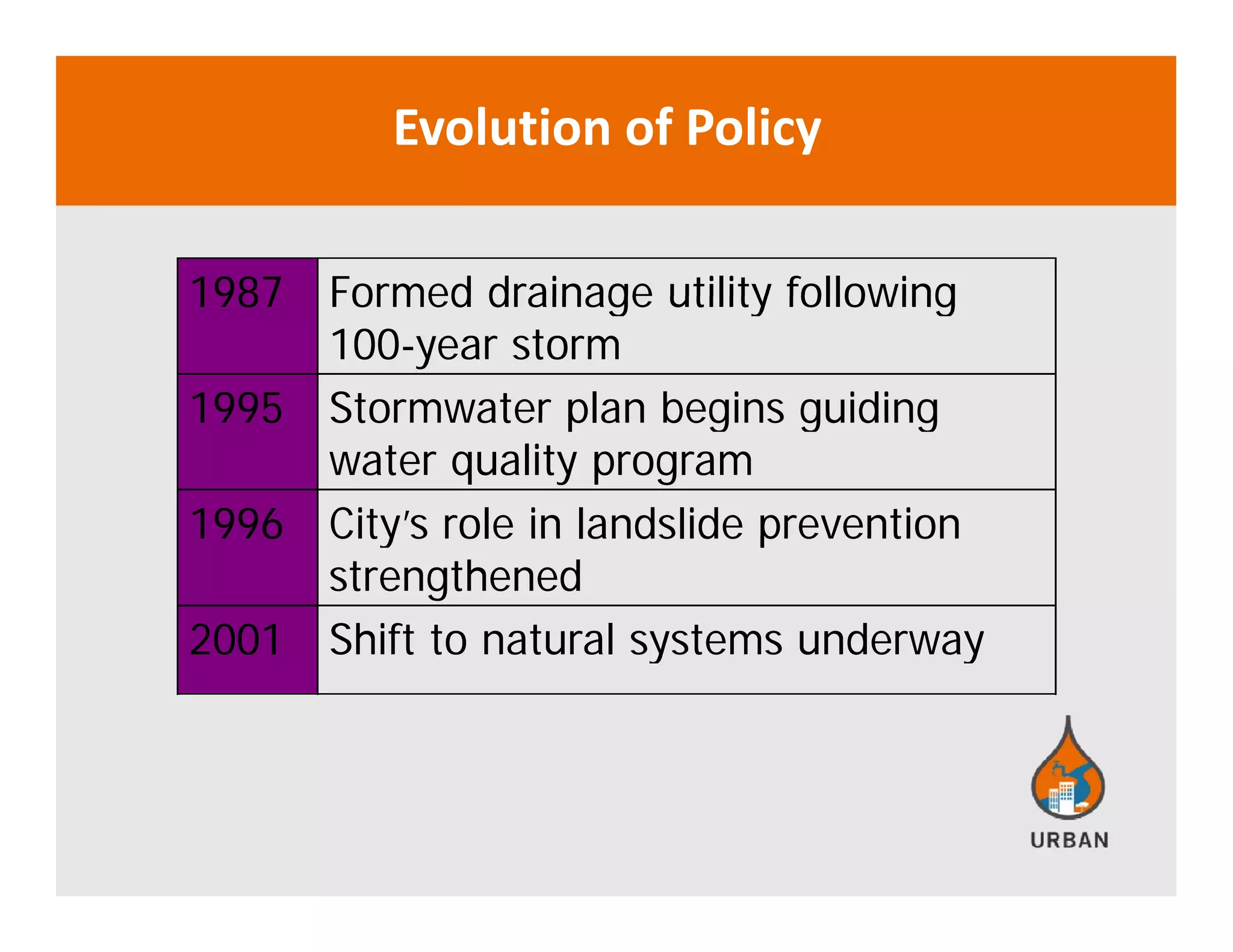
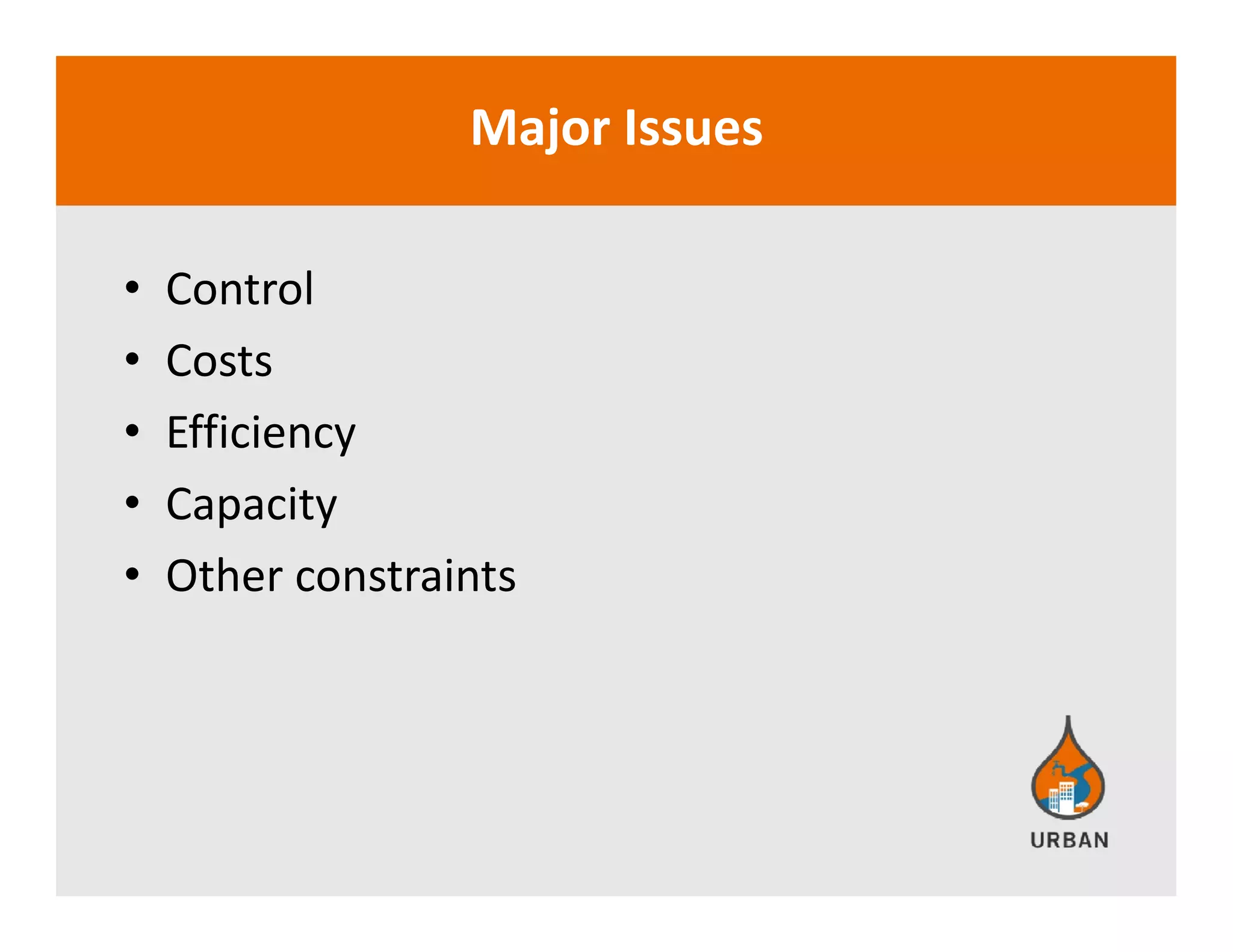

Mr. Paul Reiter of the International Water Association presented on the growing urban population and need for water and sanitation systems. By 2050, 155,000 more people will need services in urban areas each day, with 90% of growth occurring in developing countries. Municipalities must decide between centralized, integrated systems or more localized, on-site solutions. There are tradeoffs between control, costs, efficiency, capacity and other constraints to consider for combined sewer, storm drain, or ditch and culvert systems. Policy has shifted over time towards natural systems that guide water quality and landslide prevention.


