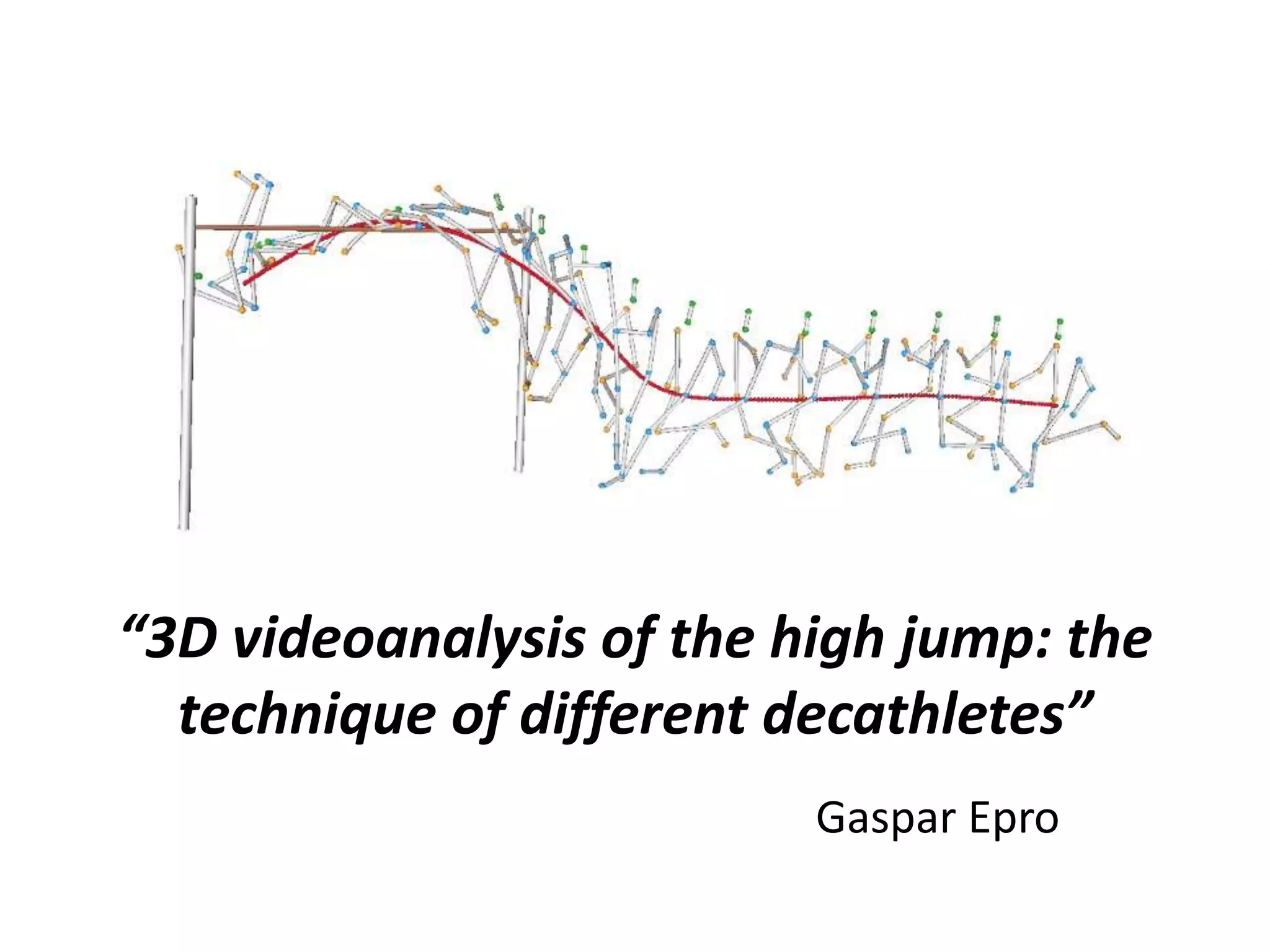
“3D videoanalysis of the high jump: the technique of different decathletes”Gaspar Epro
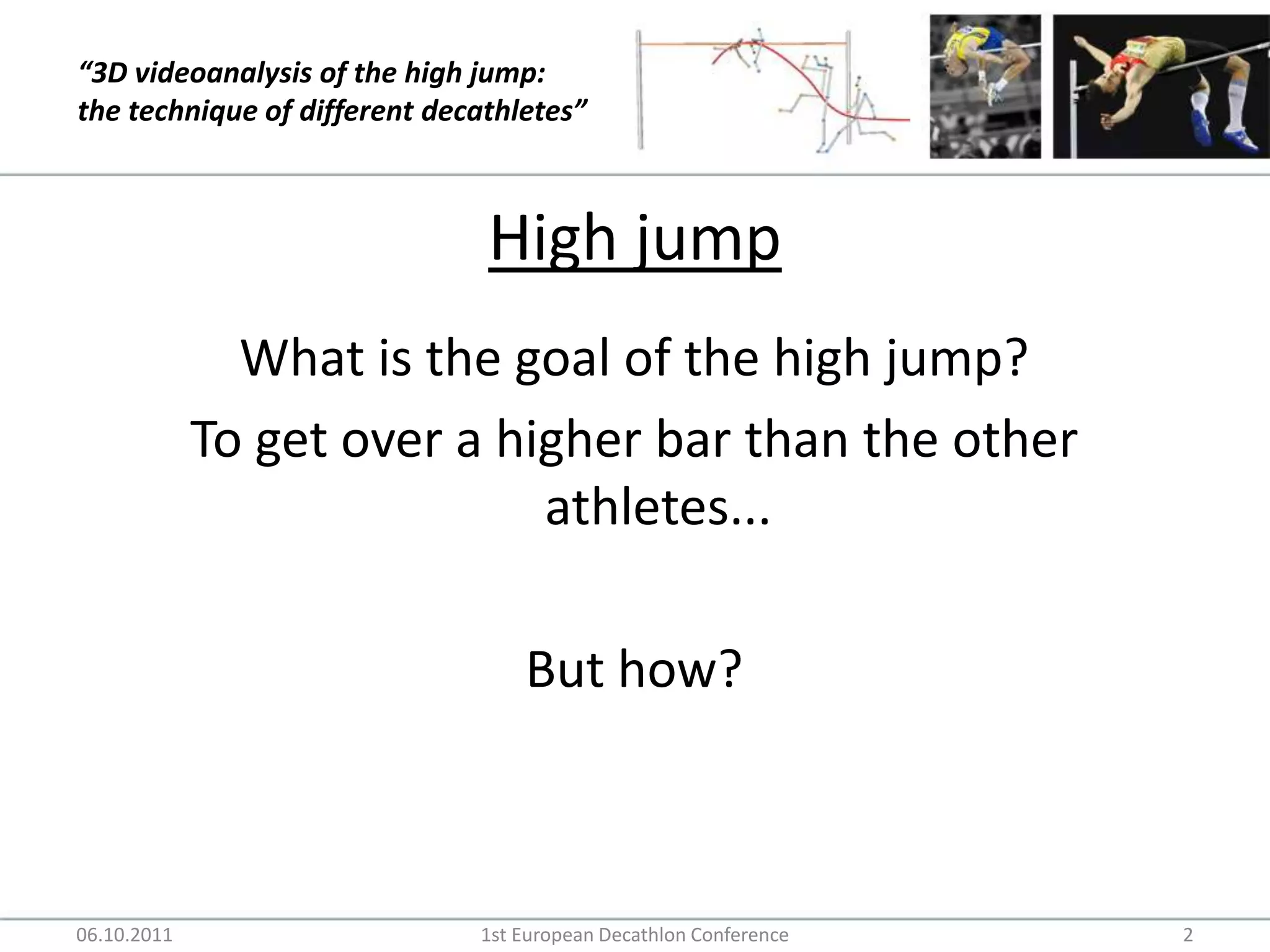
High jumpWhat is the goal of the high jump?To get over a higher bar than the other athletes...But how?06.10.20111st European Decathlon Conference2
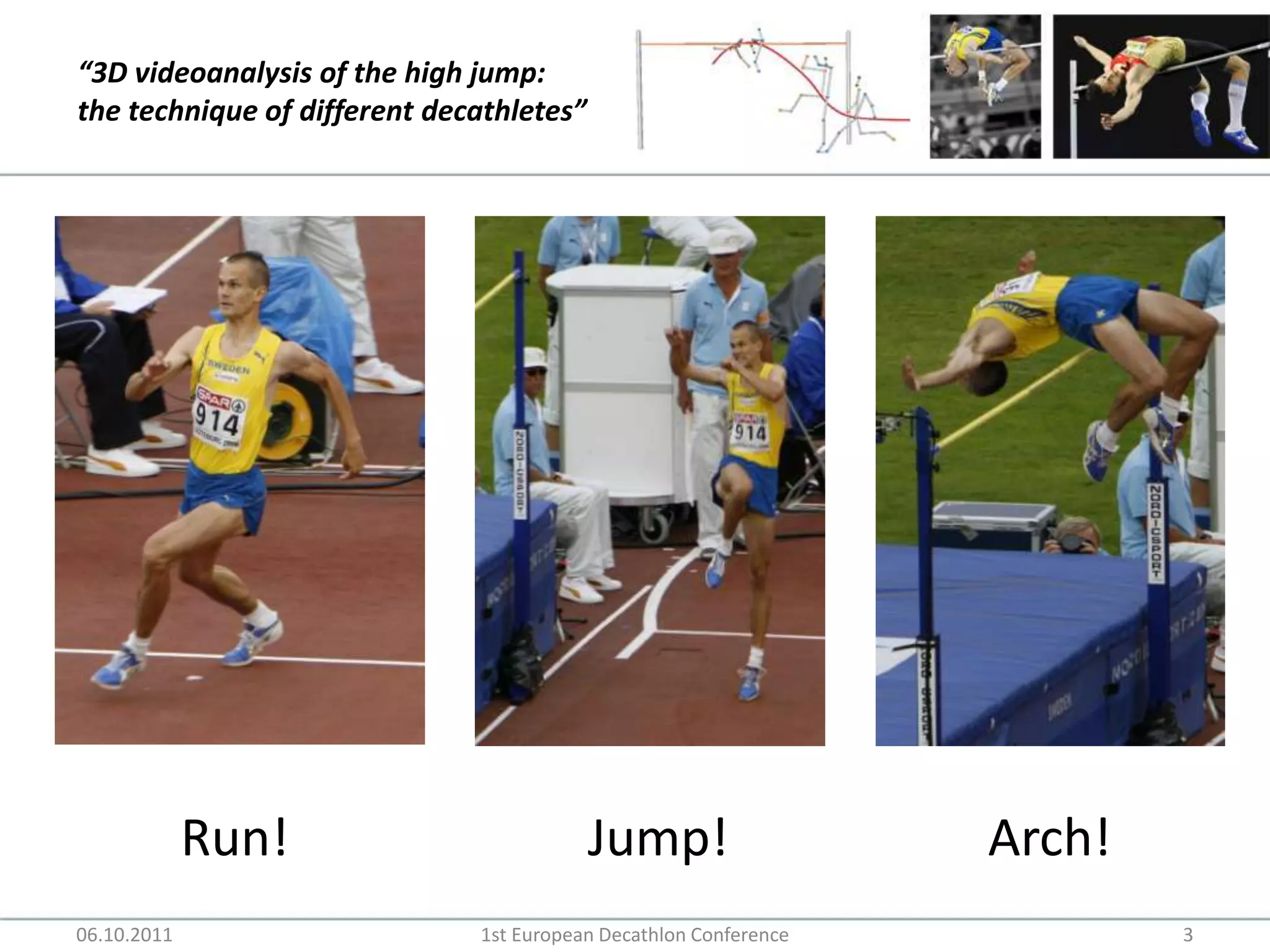
Run!Jump!Arch!06.10.20111st European Decathlon Conference3
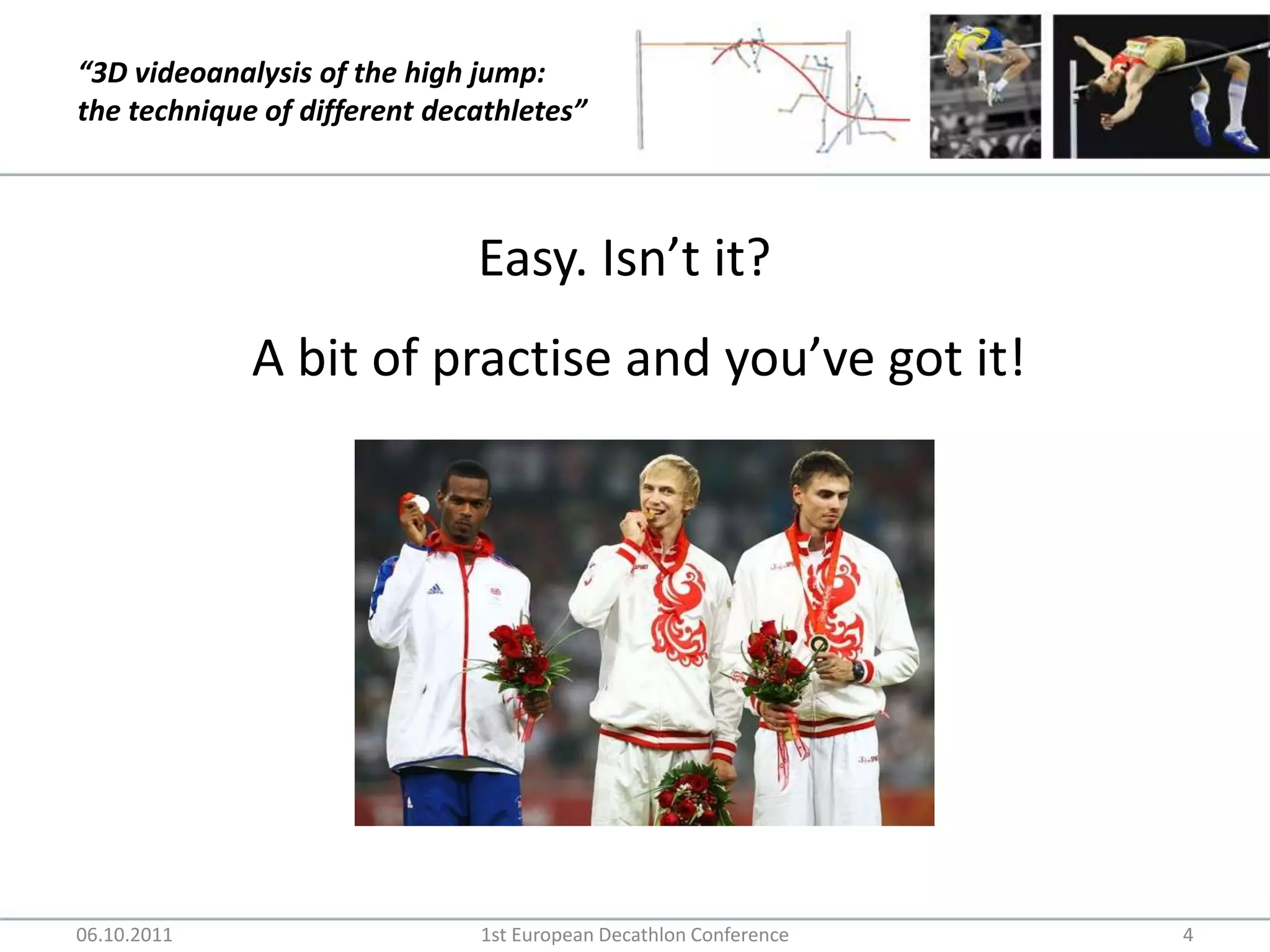
Easy. Isn’t it?A bit of practise and you’ve got it!06.10.20111st European Decathlon Conference4
If it were so easy, every single athlete, who is training for some event, would be like...06.10.20111st European Decathlon Conference5
06.10.20111st European Decathlon Conference6High jump, like every other sport, needs a lot of hard work and talent, but even if you work really hard, you might not get it right...You need get your technique right, precise and constant!
06.10.20111st European Decathlon Conference7Decathletes have 10 different events, 10 challenges in 2 days, they need to focus on getting their max in every single event!Every attempt counts, every attempt is worth points!They can’t let the fatigue win and destroy their technique!
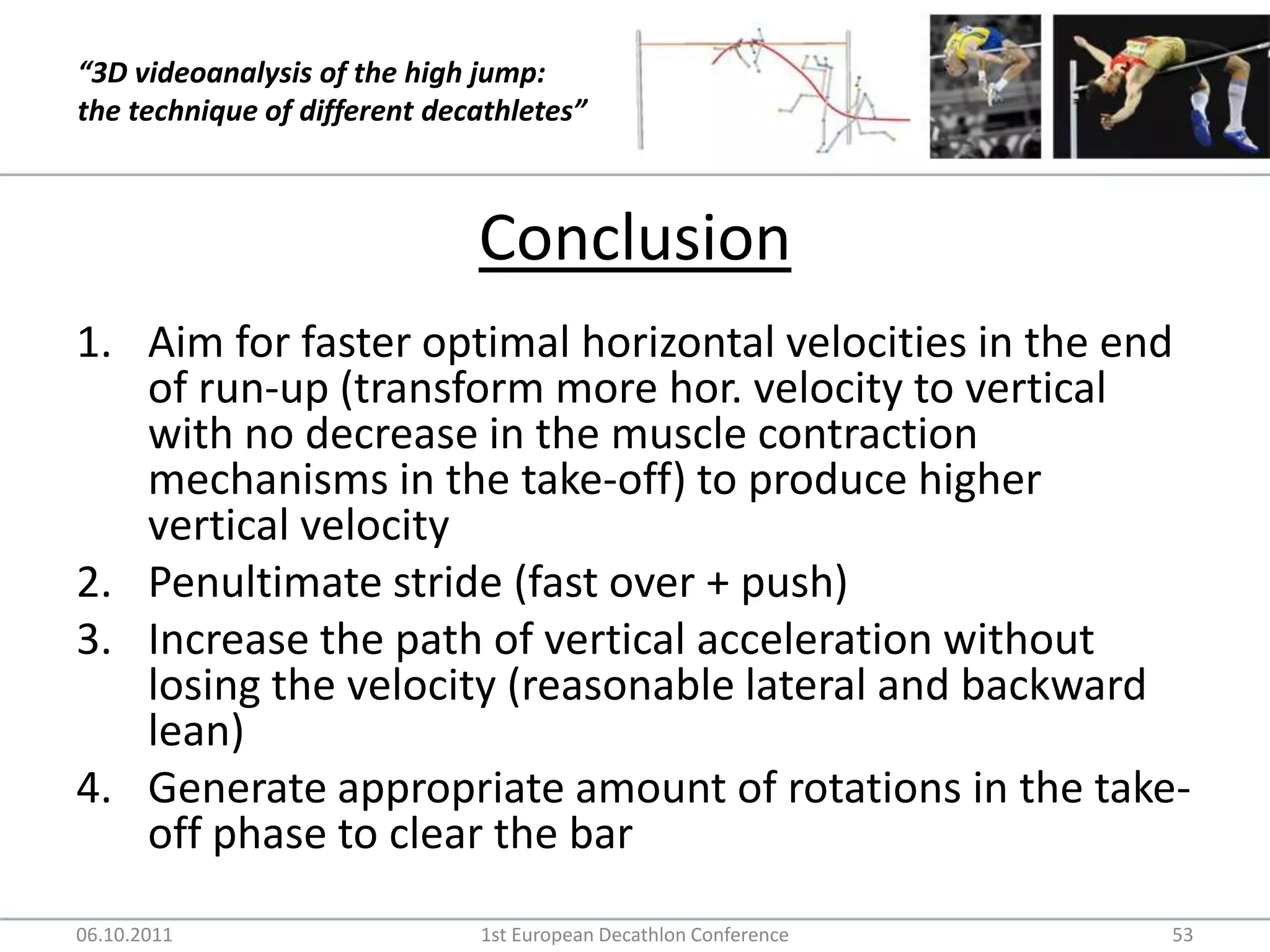
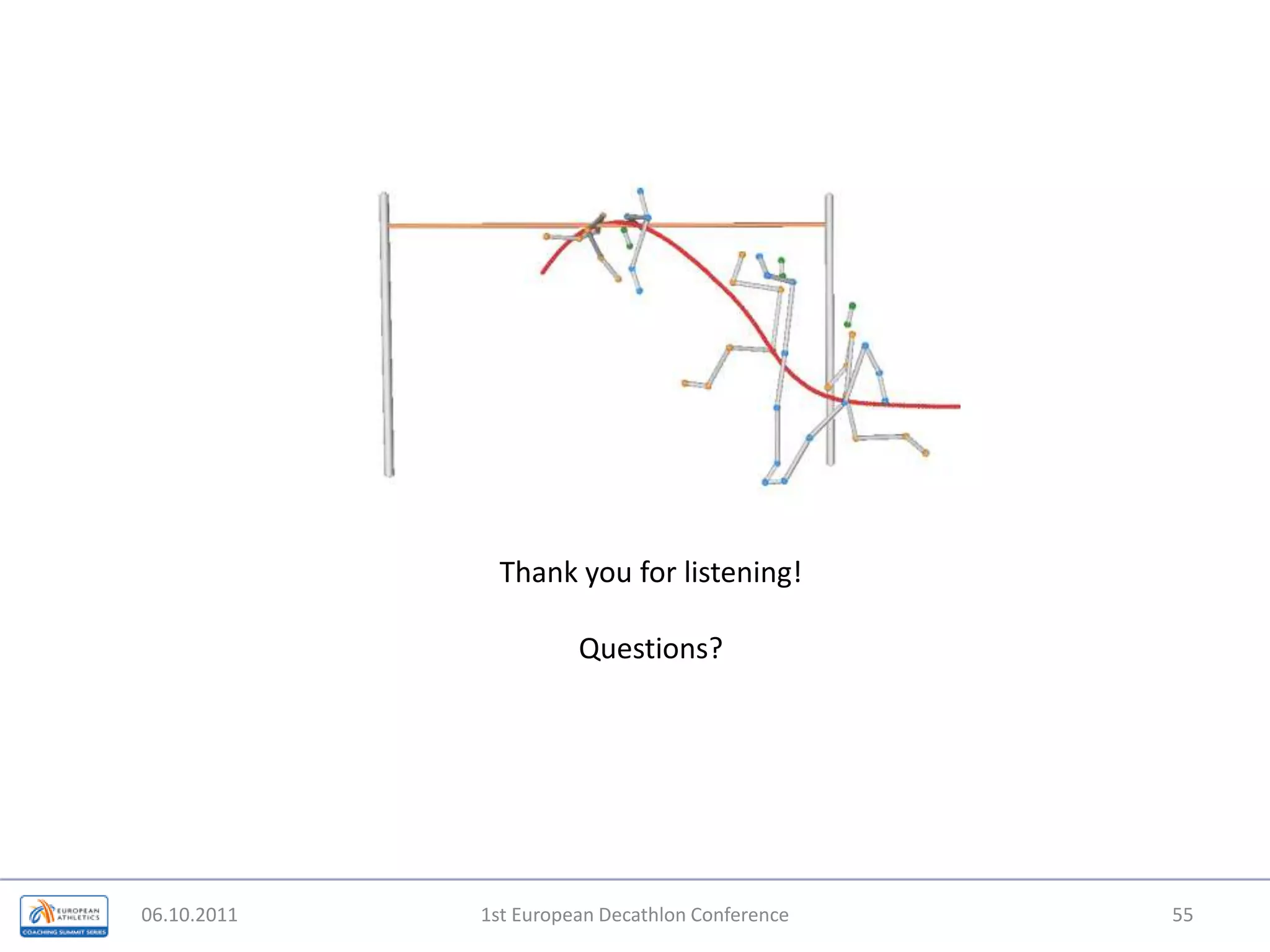
3D biomechanical videoanalysisDetect important details in athlete’s technique + compare different athletesGraphical 3D modelNumerical data (CM velocities & positions, step lengths, take-off distance etc.)06.10.20111st European Decathlon Conference8
06.10.20111st European Decathlon Conference9
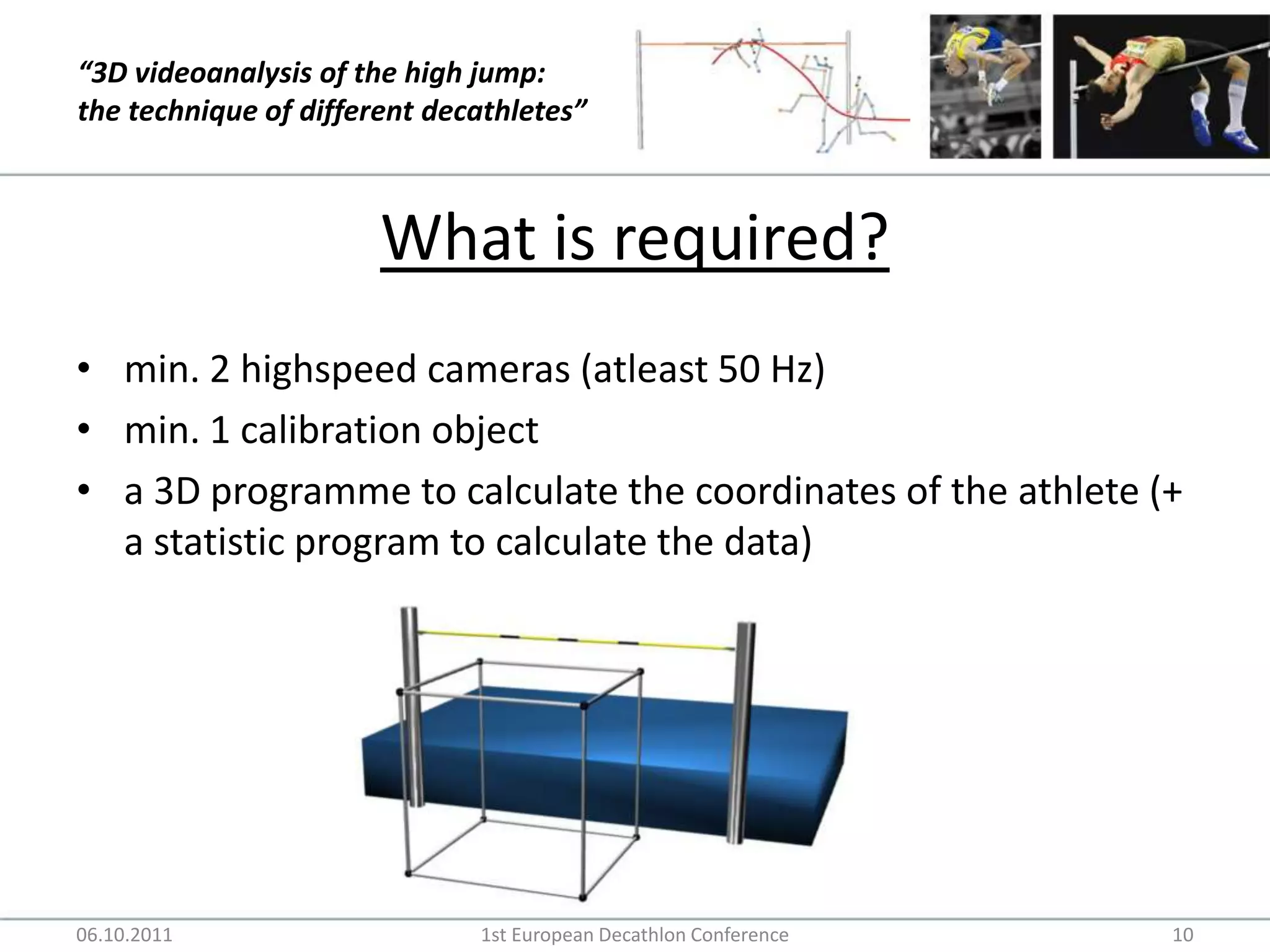
What is required?min. 2 highspeed cameras (atleast 50 Hz)min. 1 calibration objecta 3D programme to calculate the coordinates of the athlete (+ a statistic program to calculate the data)06.10.20111st European Decathlon Conference10
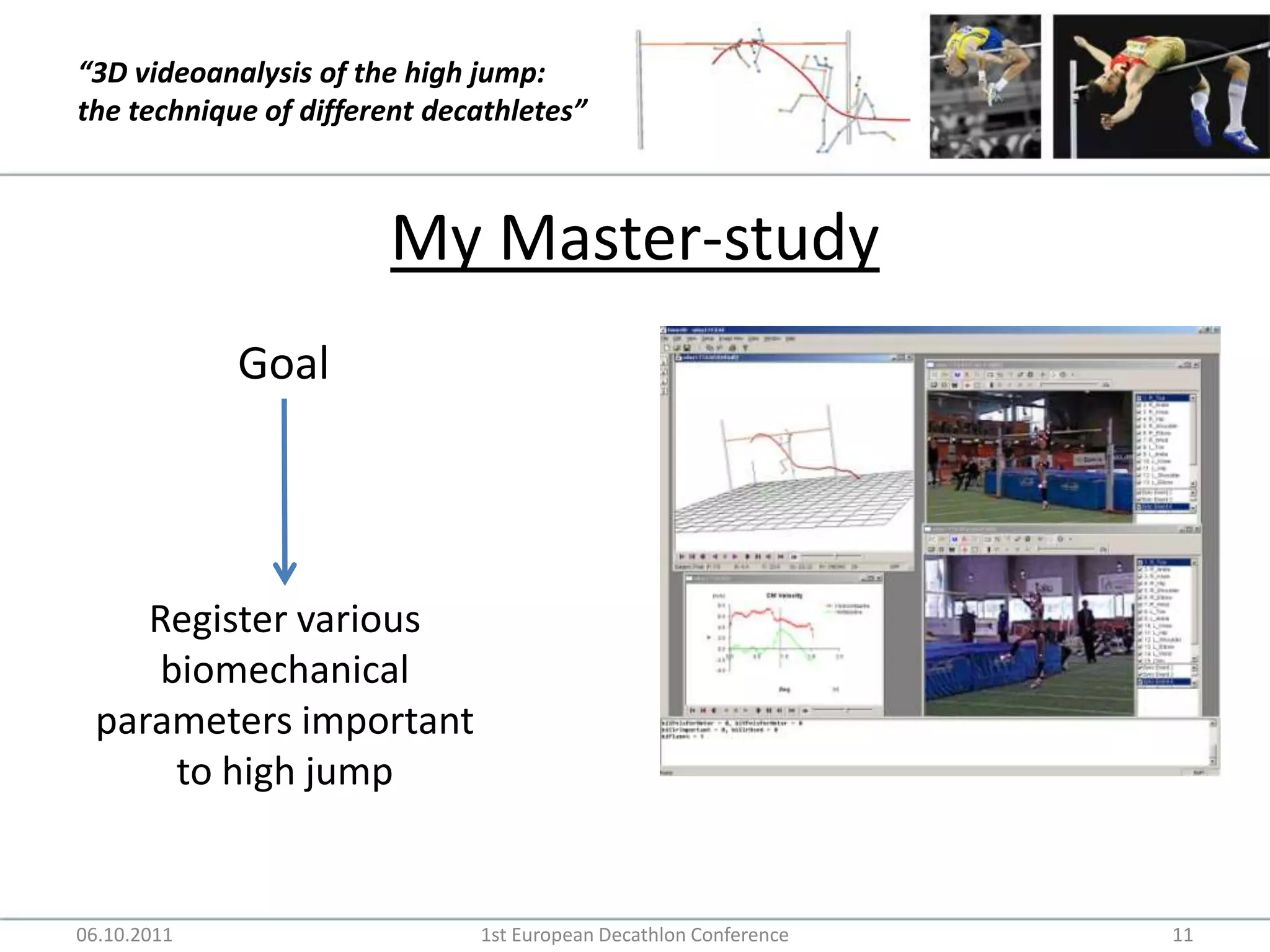
My Master-studyGoalRegister various biomechanical parameters important to high jump06.10.20111st European Decathlon Conference11
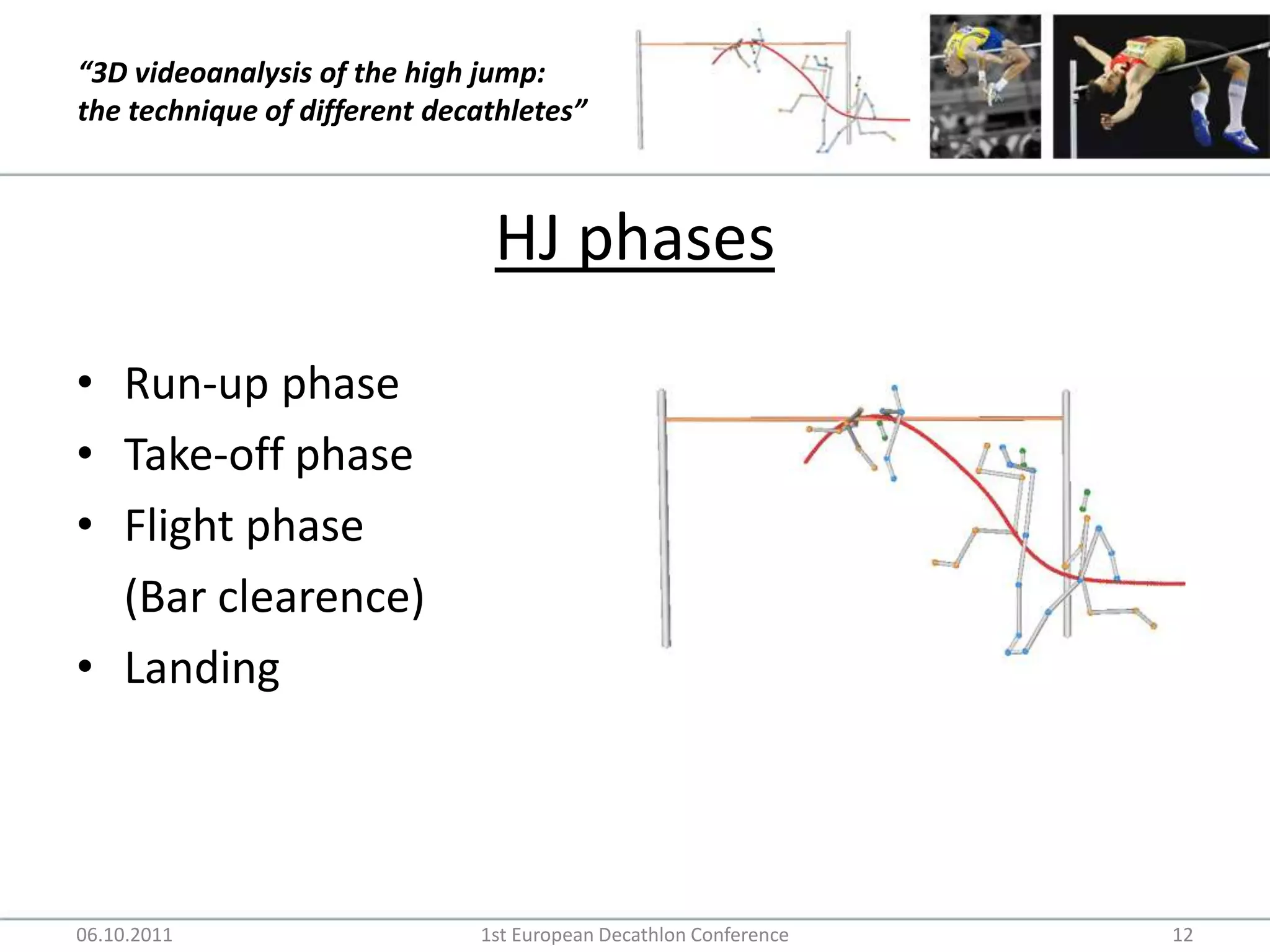
HJ phasesRun-up phaseTake-off phaseFlight phase 	(Bar clearence)Landing06.10.20111st European Decathlon Conference12
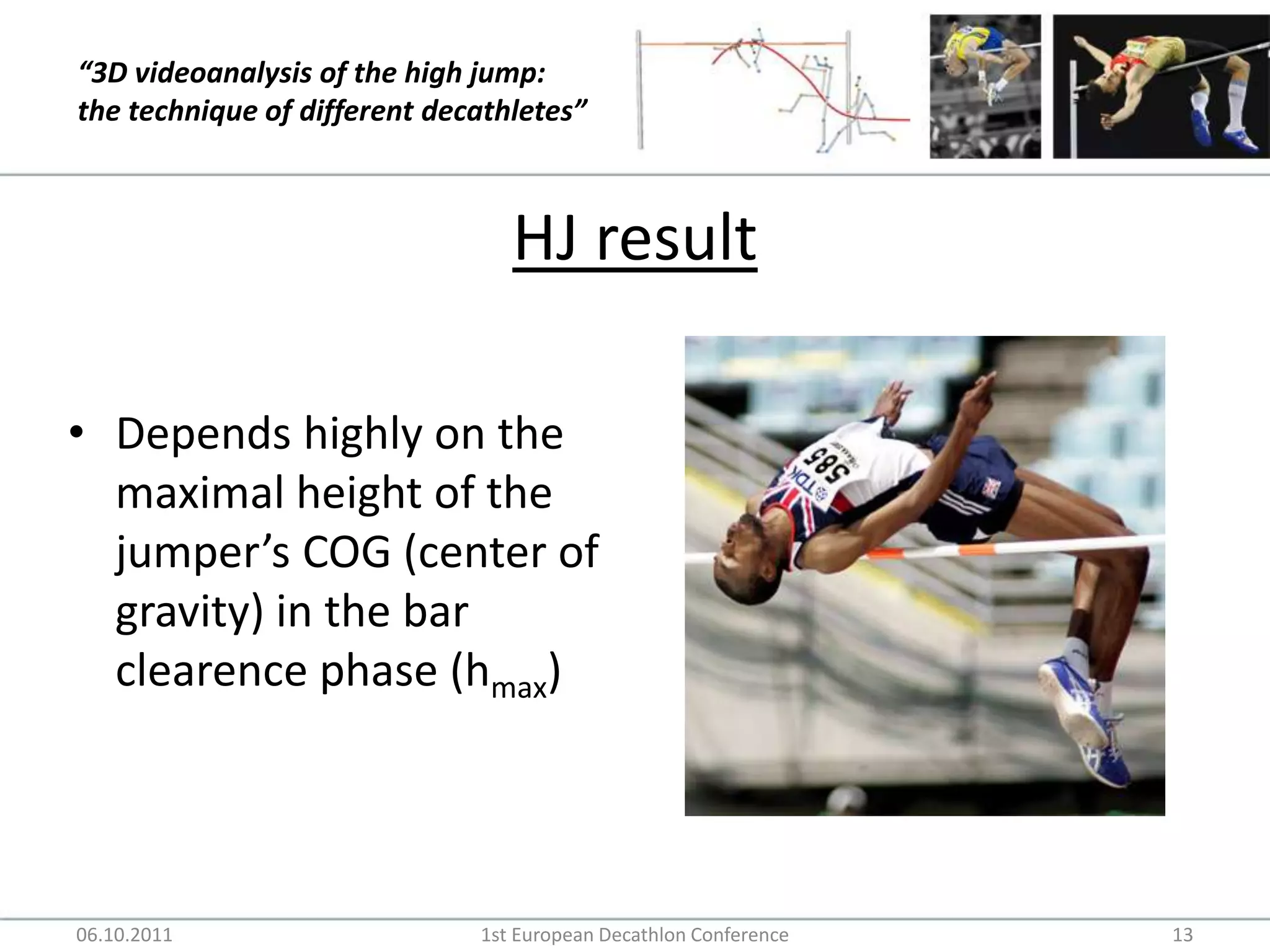
HJ resultDepends highly on the maximal height of the jumper’s COG (center of gravity) in the bar clearence phase (hmax) 06.10.20111st European Decathlon Conference13
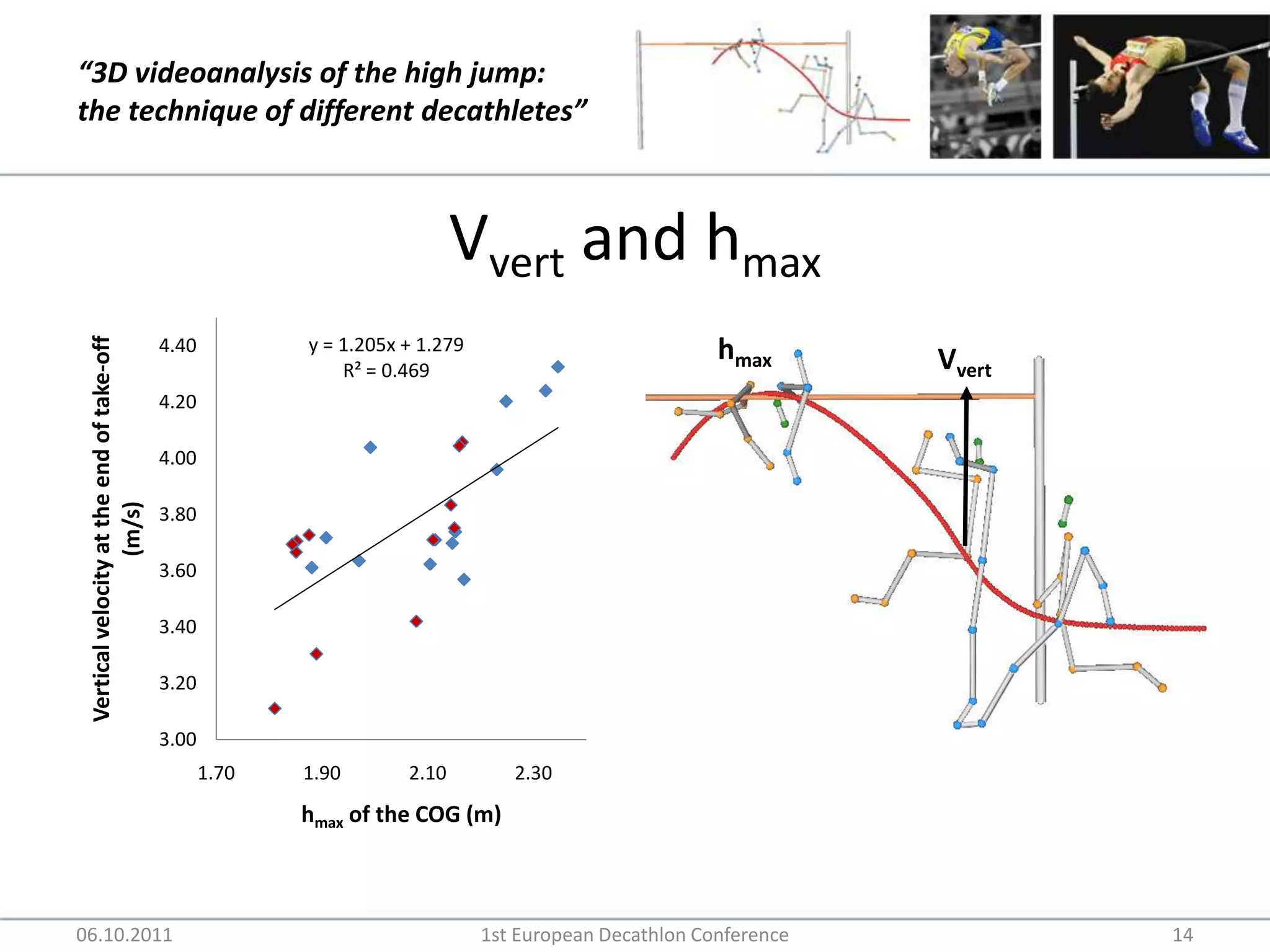
Vvert and hmax06.10.20111st European Decathlon Conference14hmaxVvert
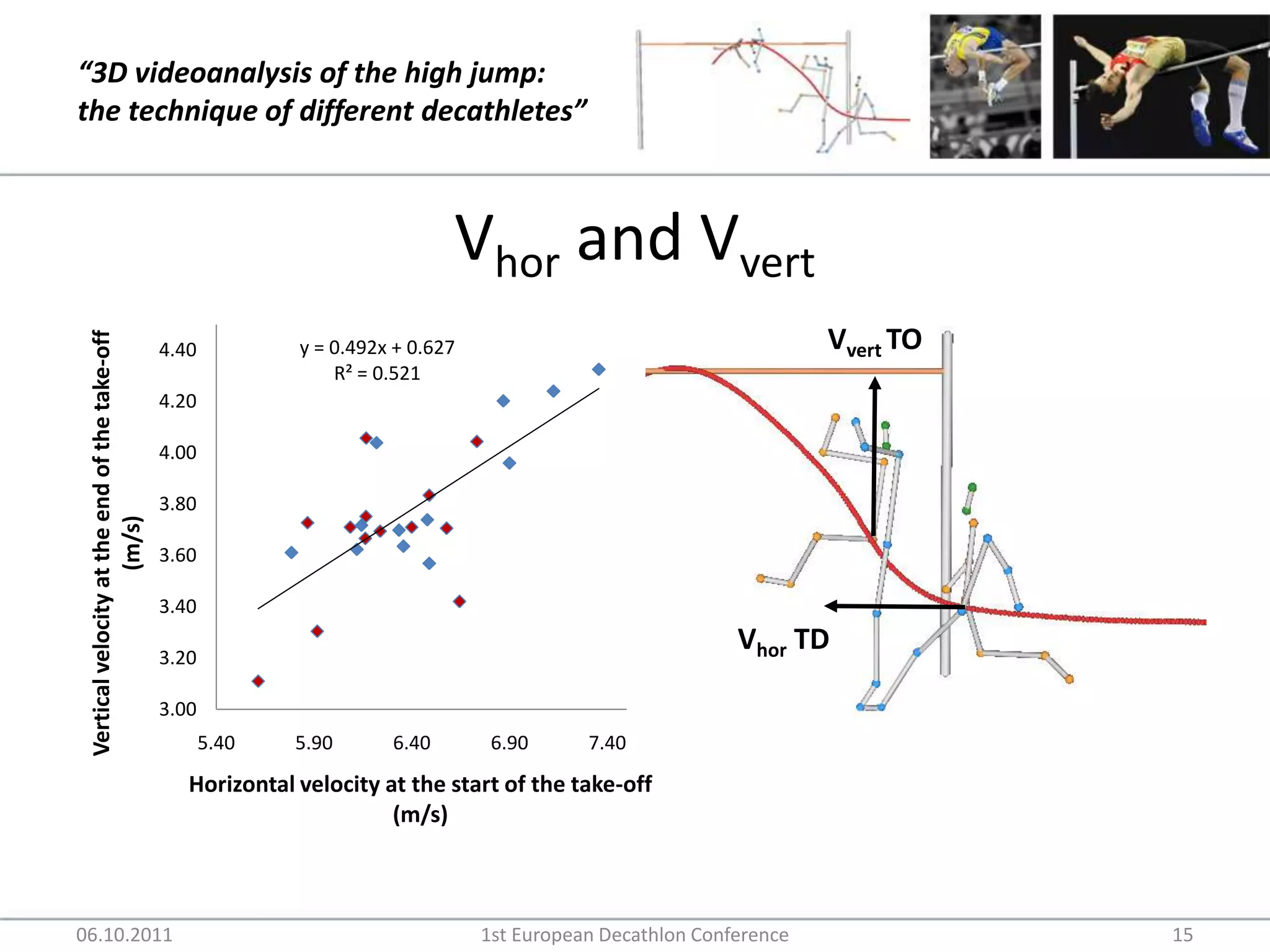
Vhor and Vvert06.10.20111st European Decathlon Conference15Vvert TOVhorTD
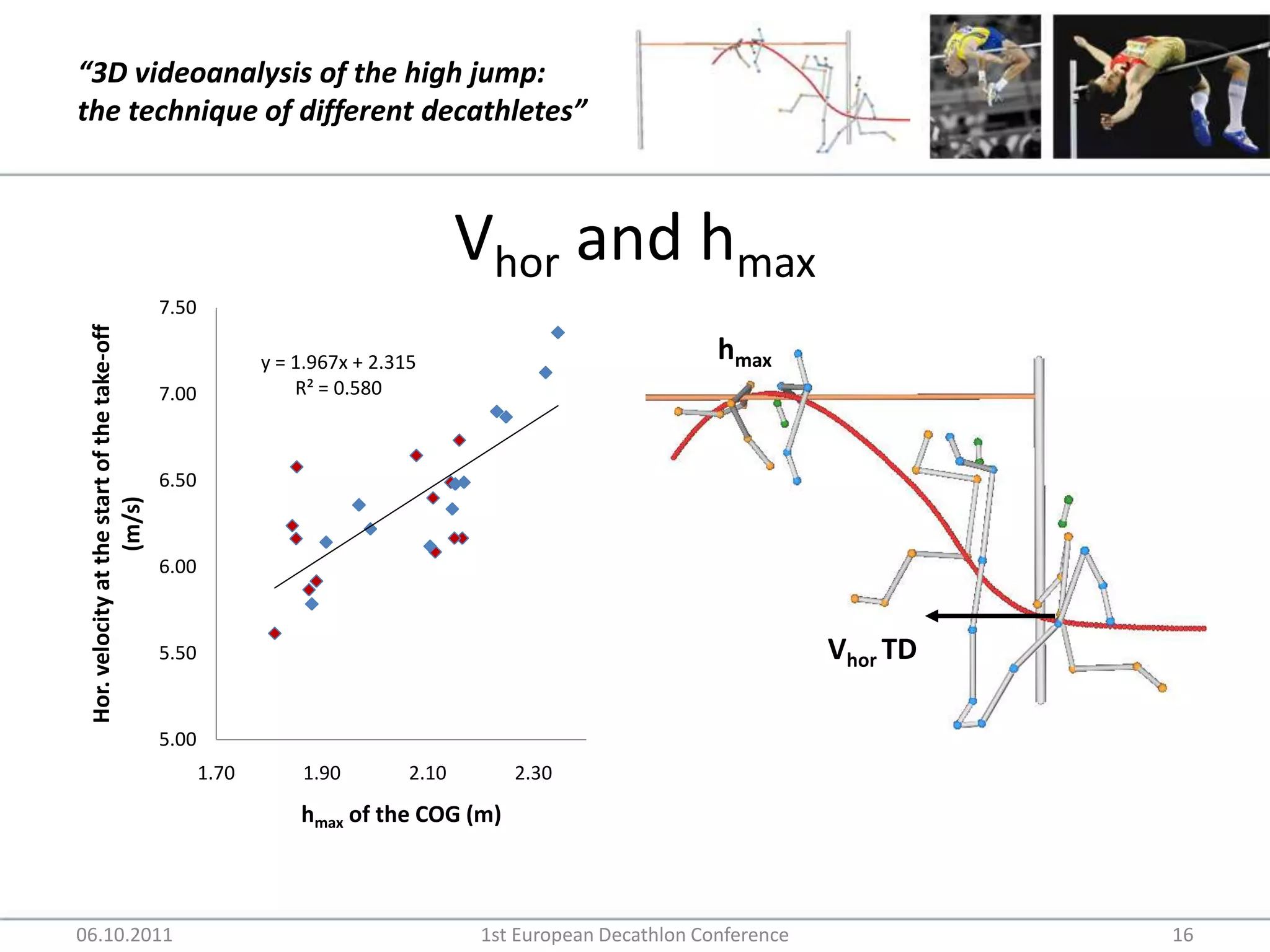
Vhor and hmax06.10.20111st European Decathlon Conference16hmaxVhor TD
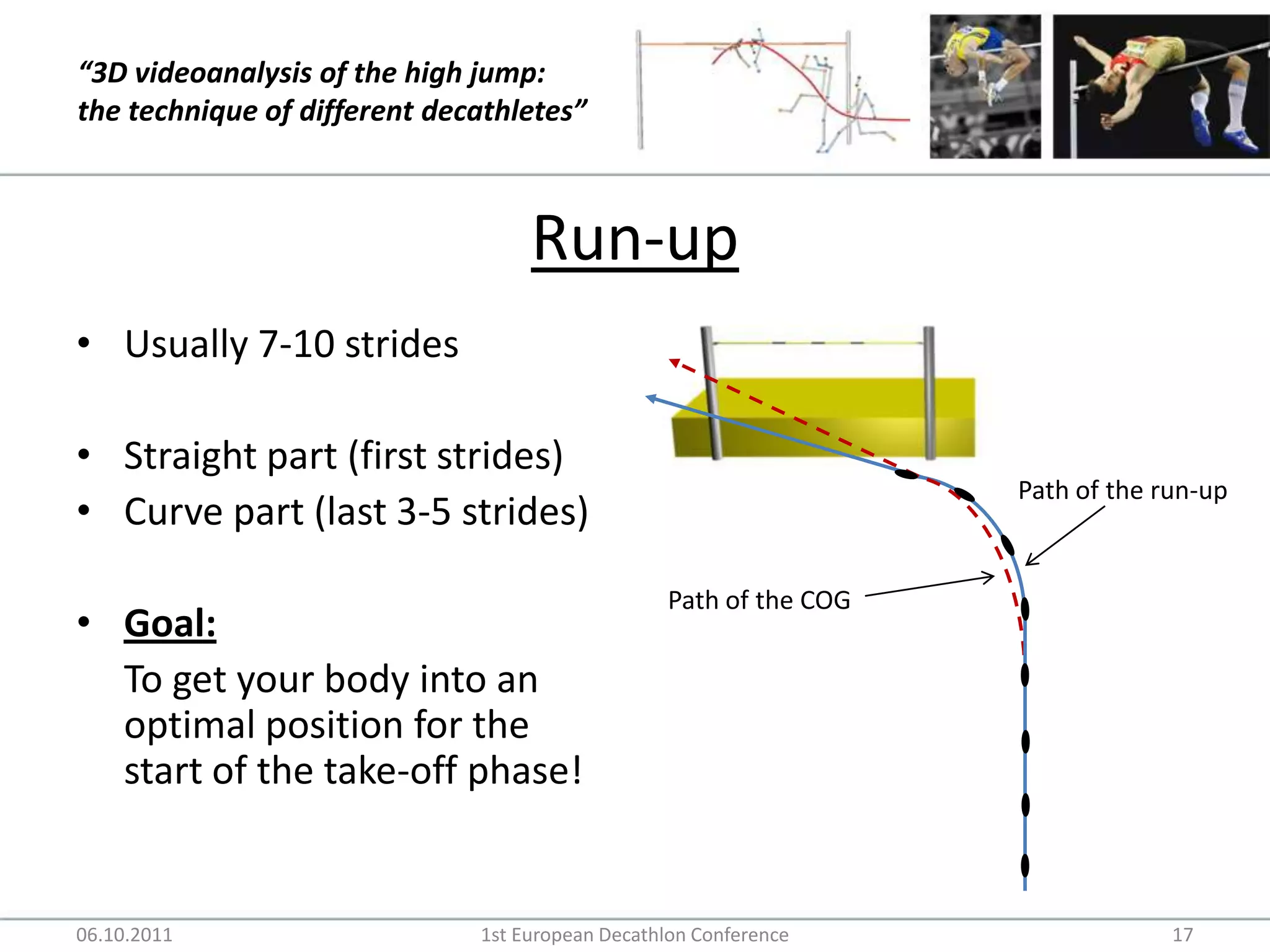
Run-upUsually 7-10 stridesStraight part (first strides)Curve part (last 3-5 strides)Goal: 	To get your body into an optimal position for the start of the take-off phase! 06.10.20111st European Decathlon Conference17Path of the run-upPath of the COG
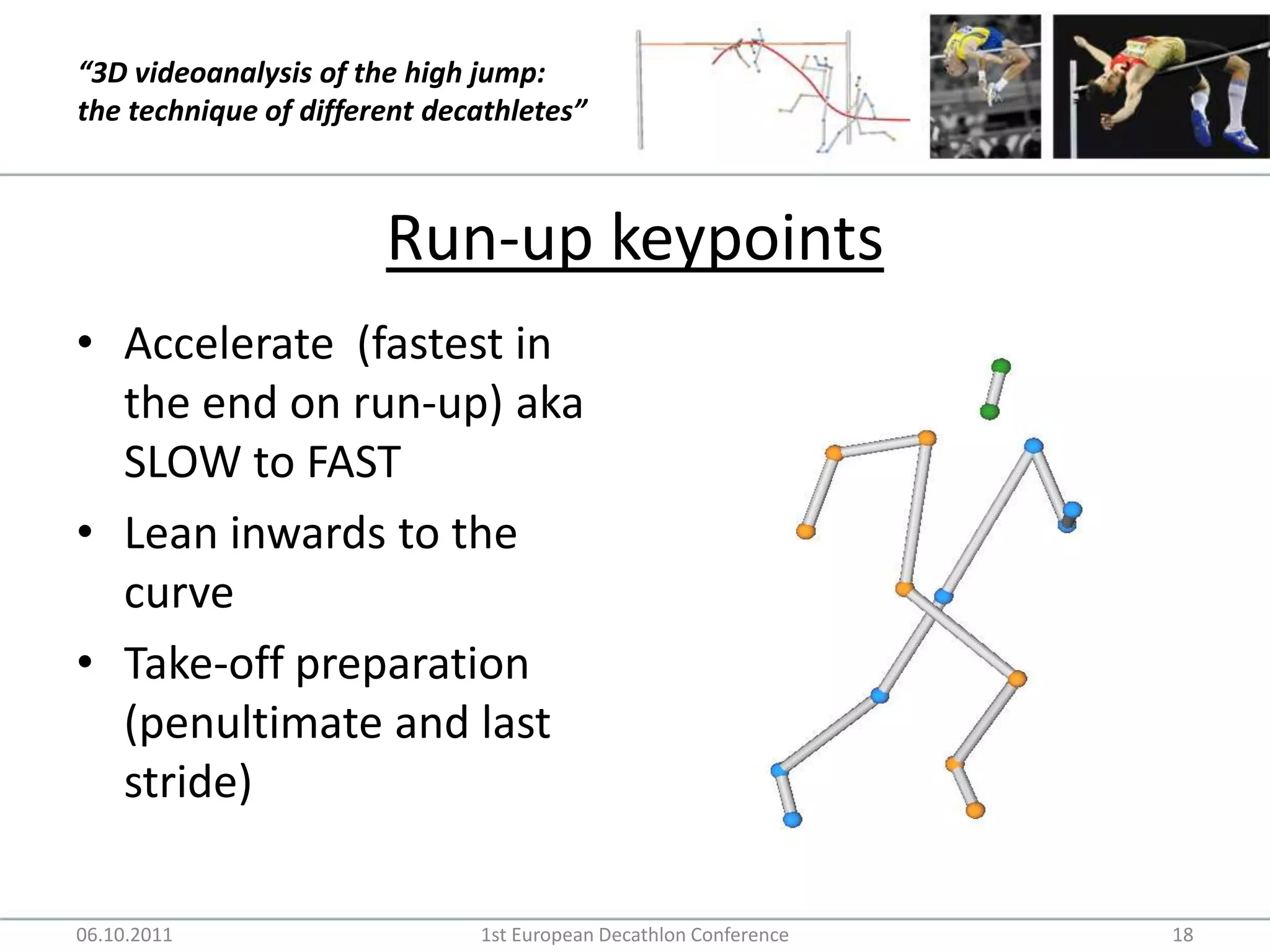
Run-up keypointsAccelerate  (fastest in the end on run-up) aka SLOW to FAST Lean inwards to the curveTake-off preparation (penultimate and last stride)06.10.20111st European Decathlon Conference18
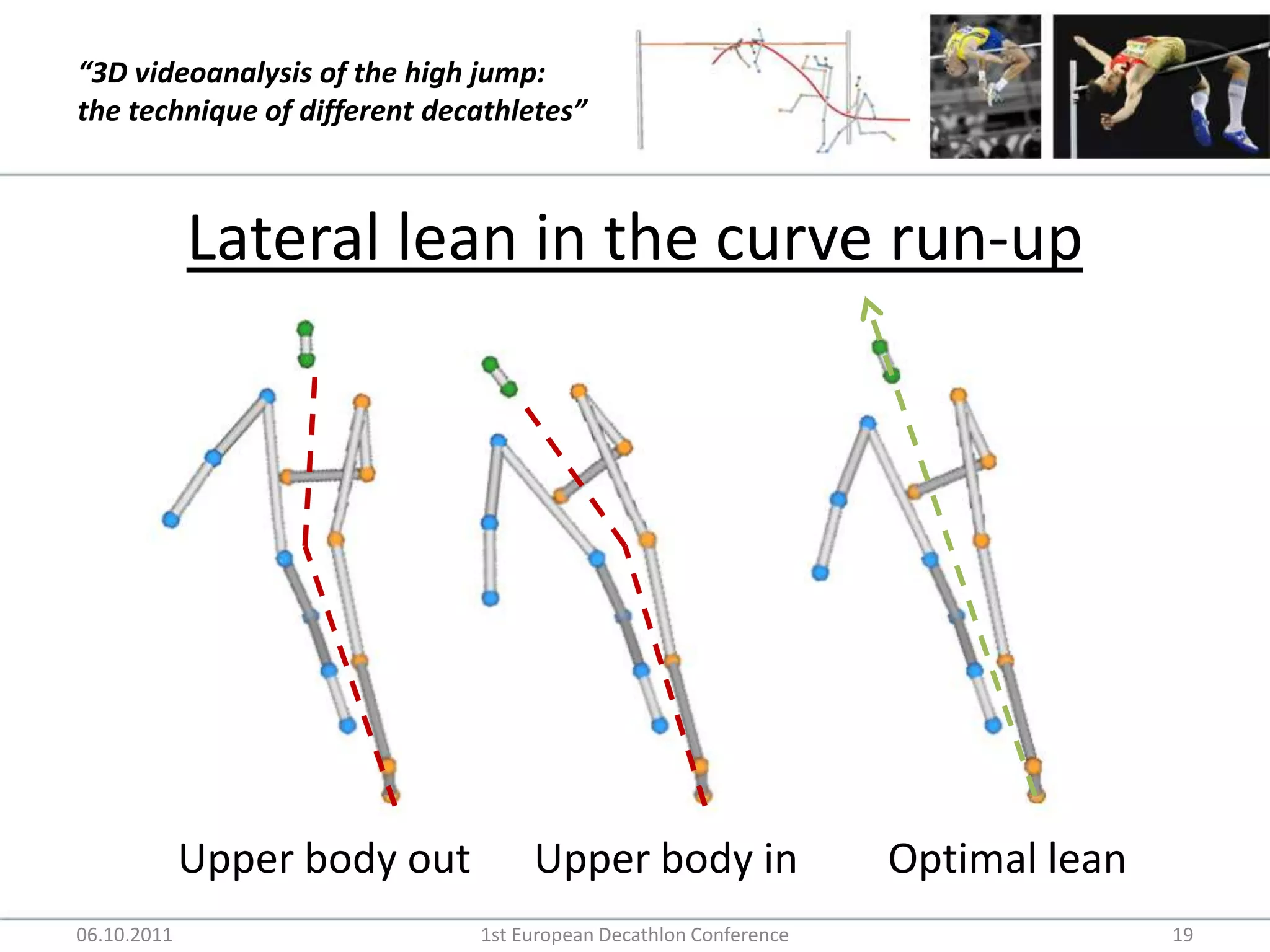
Lateral lean in the curve run-up06.10.20111st European Decathlon Conference19Optimal leanUpper body outUpper body in
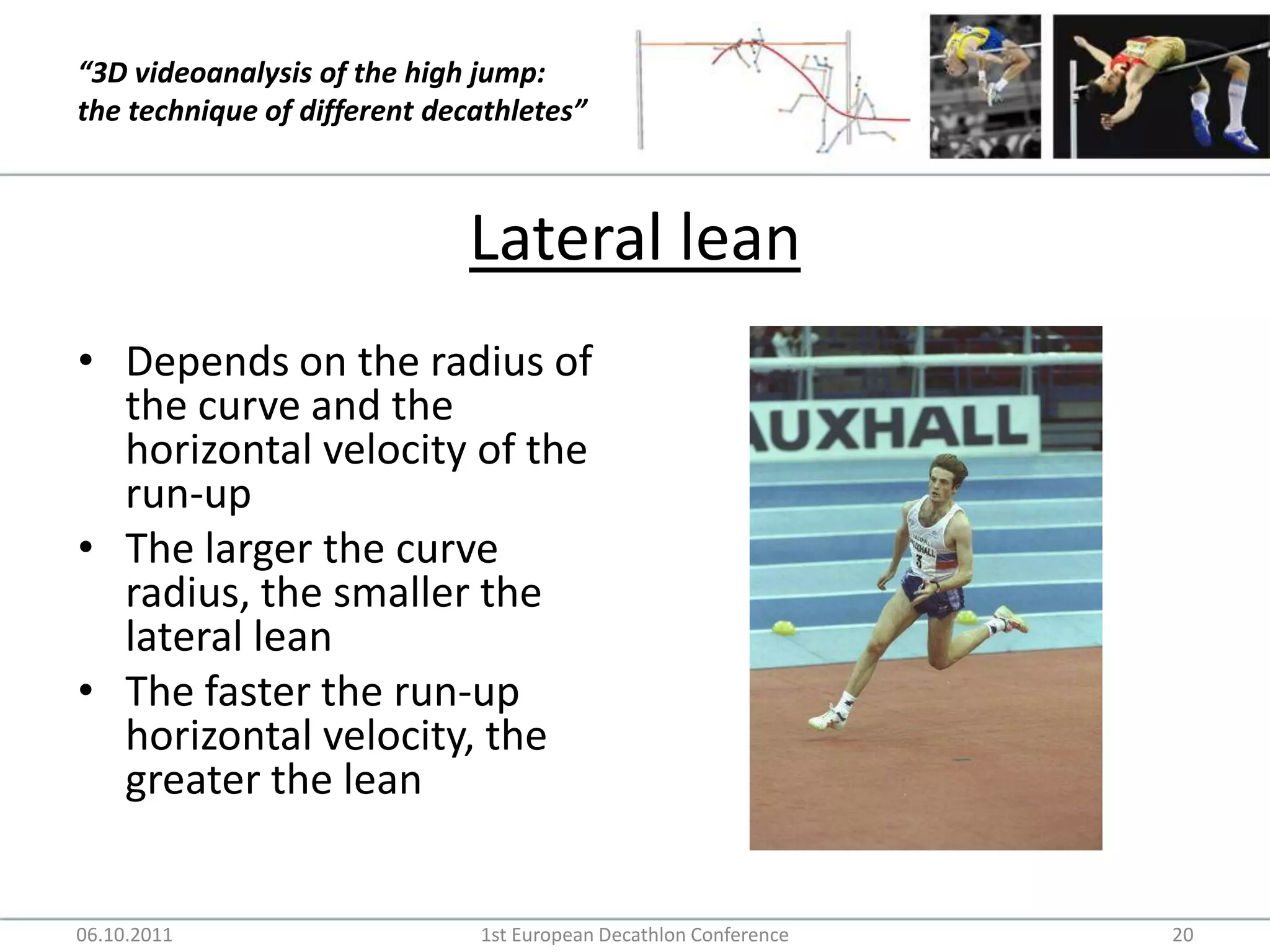
Lateral leanDepends on the radius of the curve and the horizontal velocity of the run-upThe larger the curve radius, the smaller the lateral leanThe faster the run-up horizontal velocity, the greater the lean06.10.20111st European Decathlon Conference20
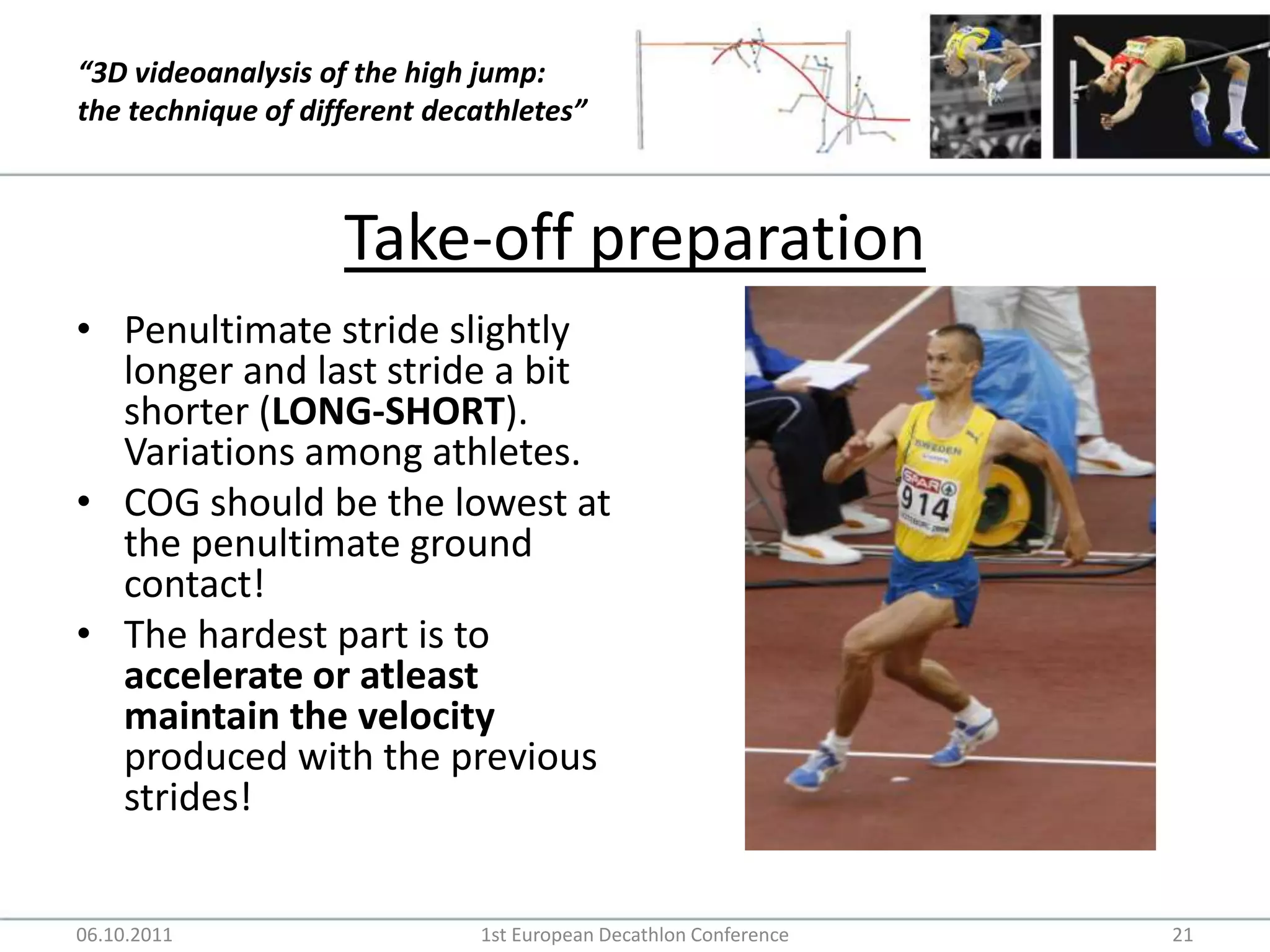
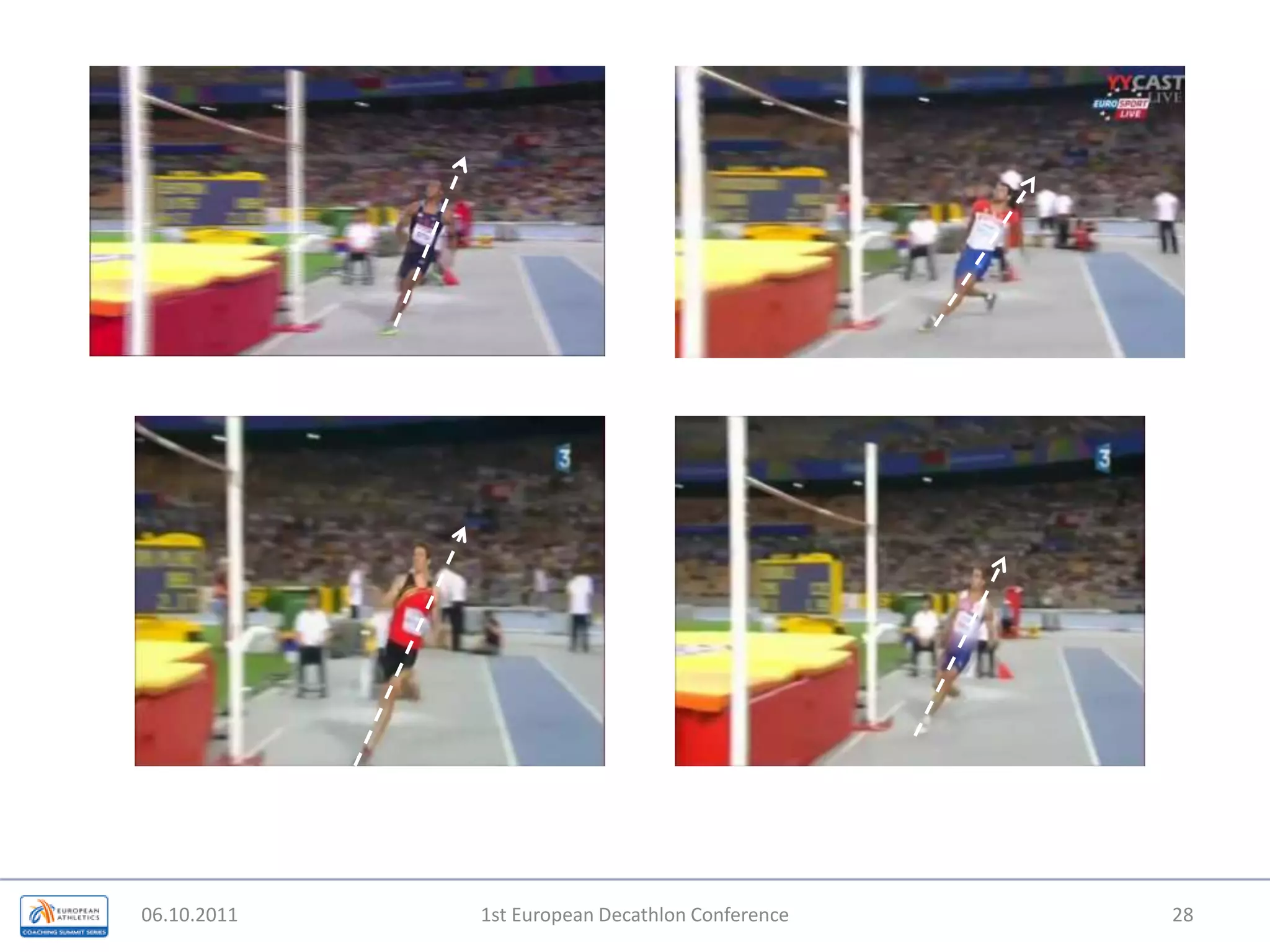
Take-off preparationPenultimate stride slightly longer and last stride a bit shorter (LONG-SHORT). Variations among athletes.COG should be the lowest at the penultimate ground contact!The hardest part is to accelerate or atleast maintain the velocity produced with the previous strides!06.10.20111st European Decathlon Conference21
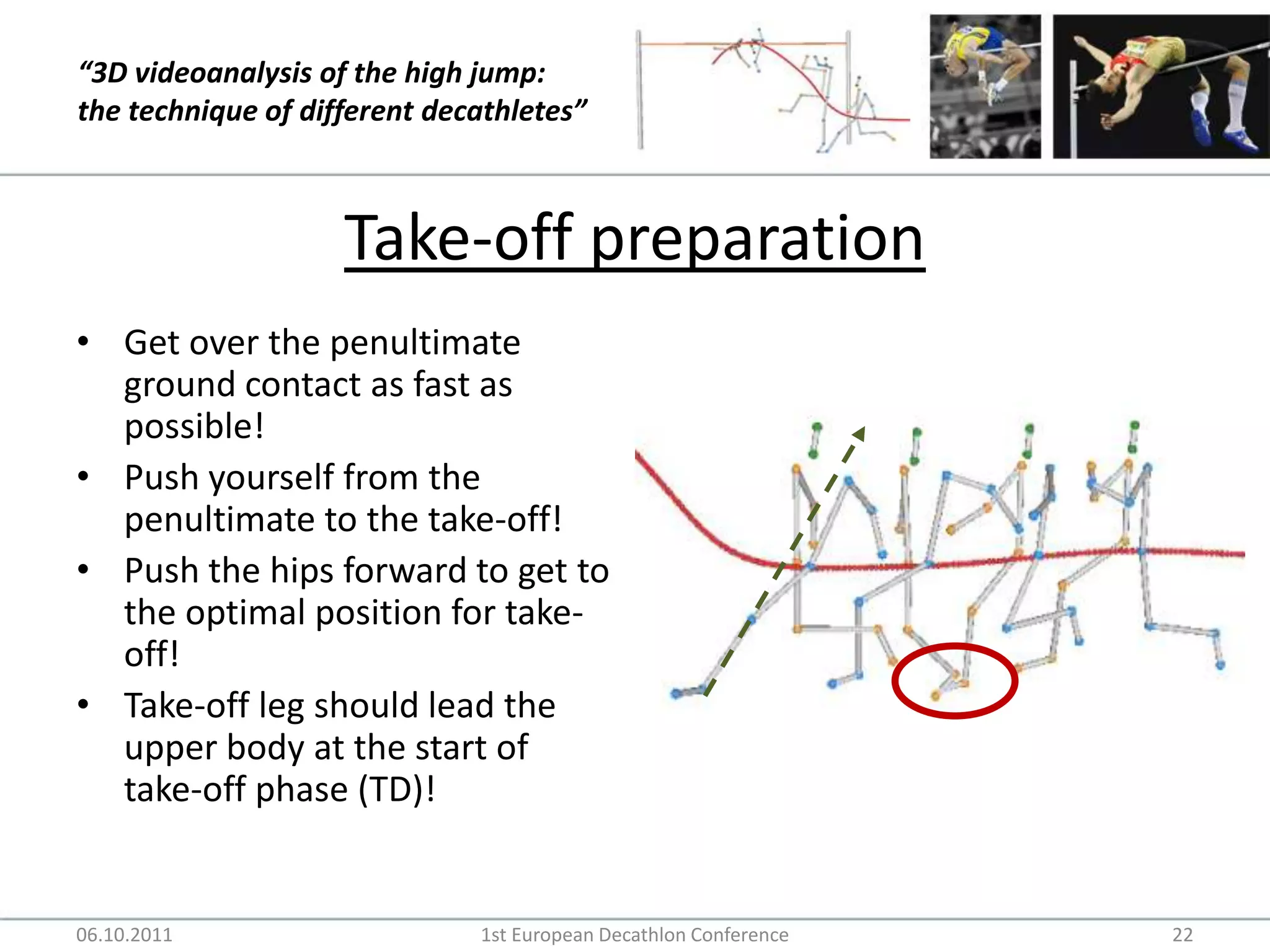
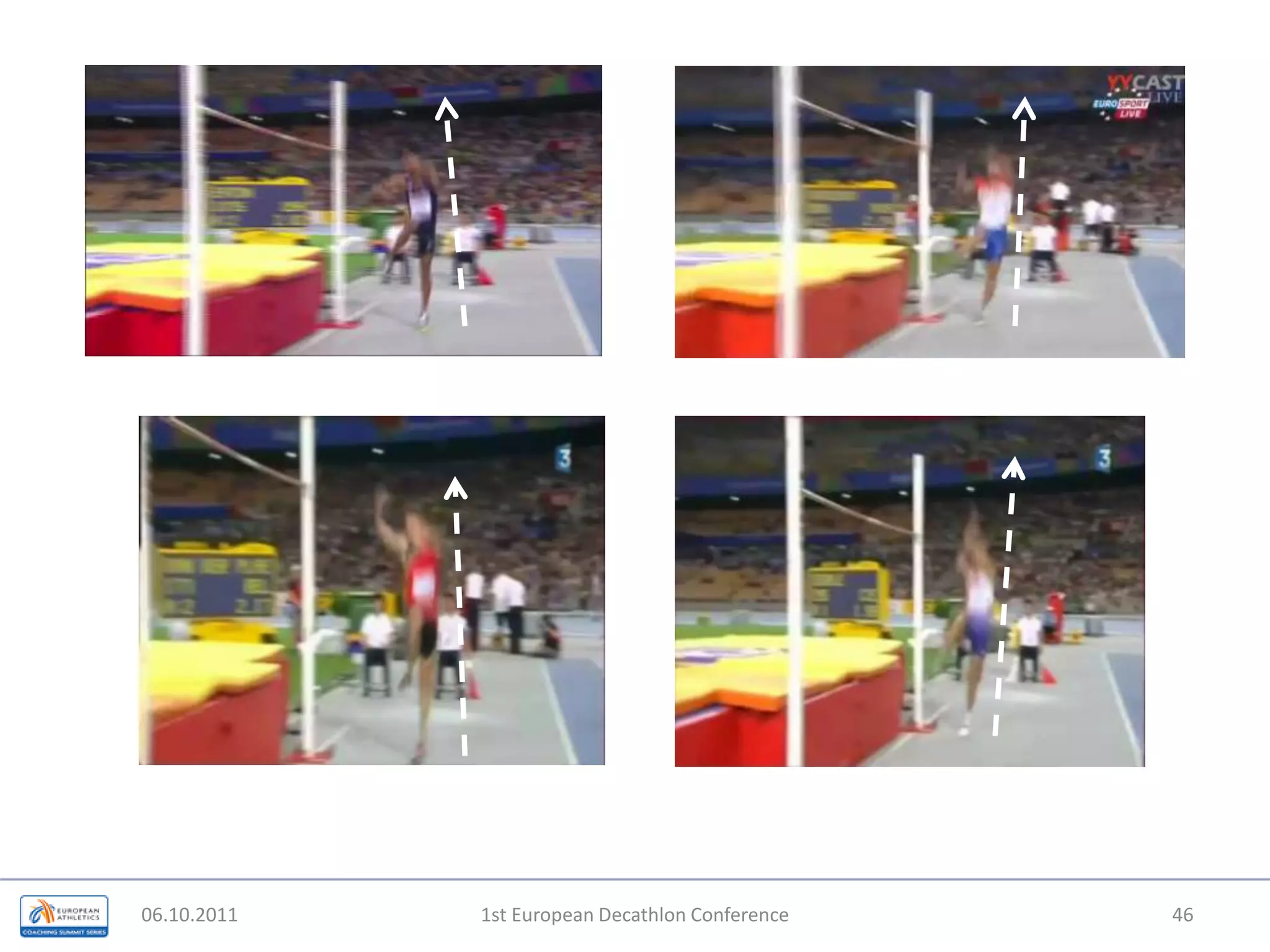
Take-off preparationGet over the penultimate ground contact as fast as possible!Push yourself from the penultimate to the take-off!Push the hips forward to get to the optimal position for take-off!Take-off leg should lead the upper body at the start of take-off phase (TD)!06.10.20111st European Decathlon Conference22
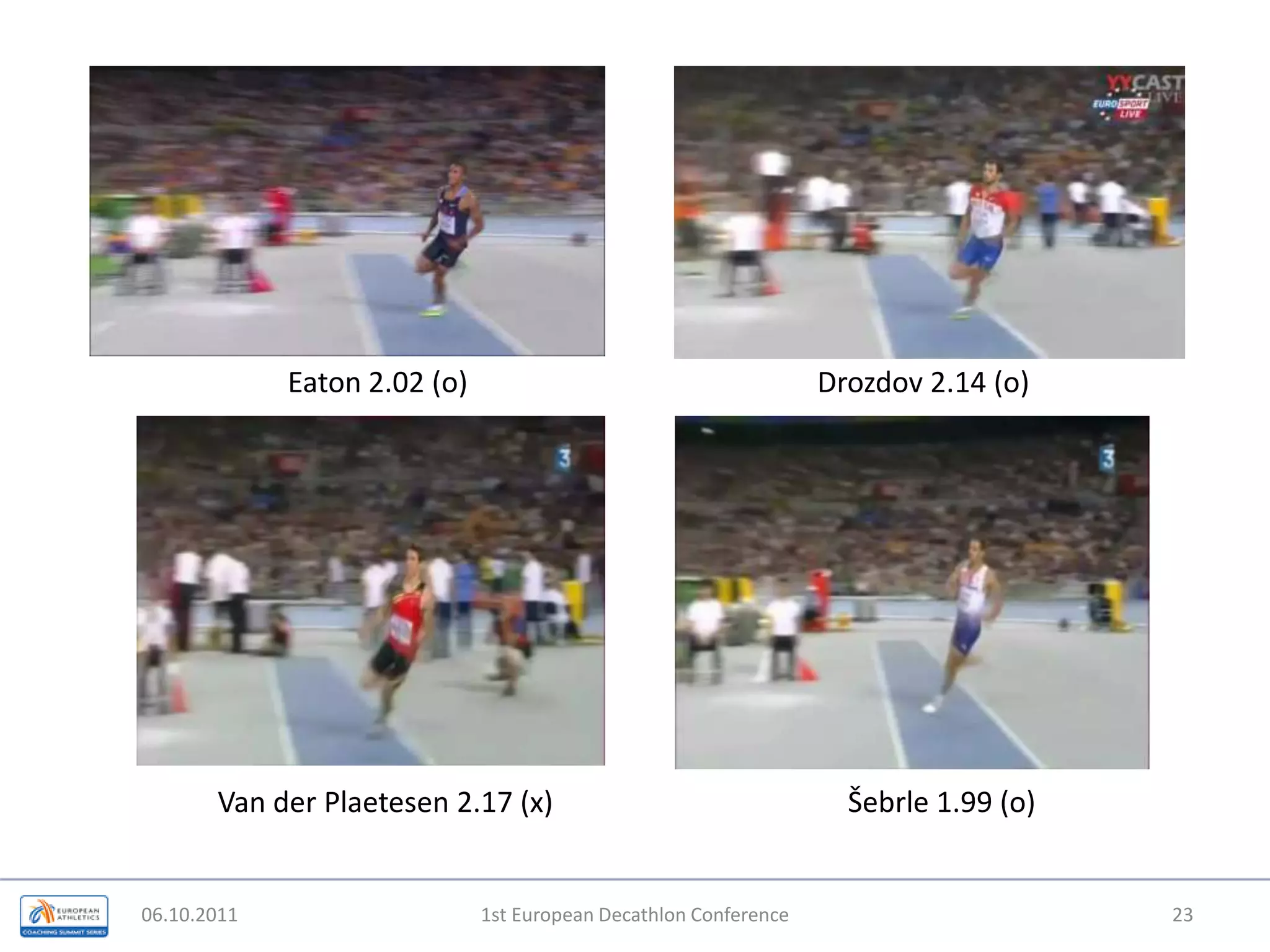
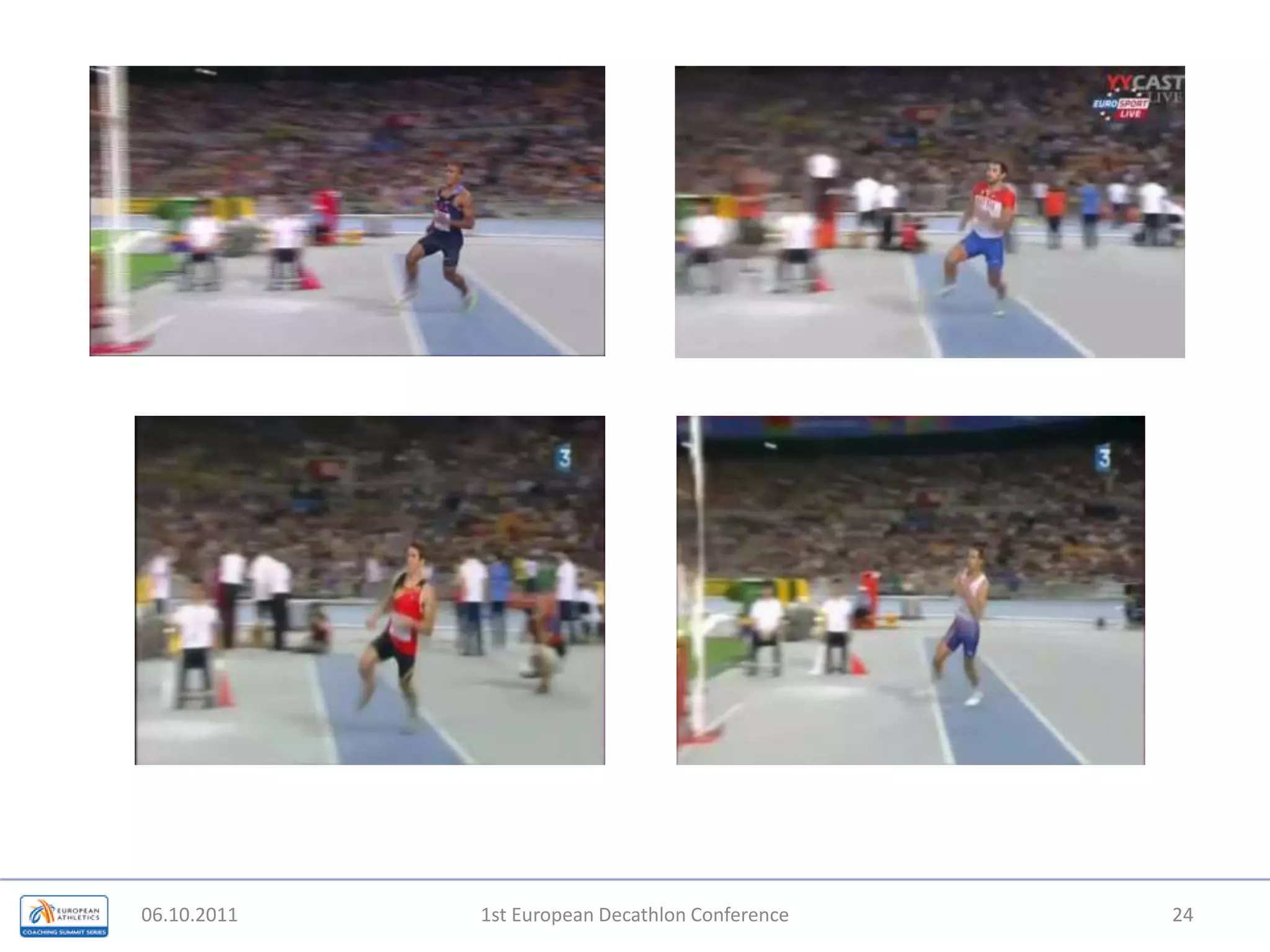
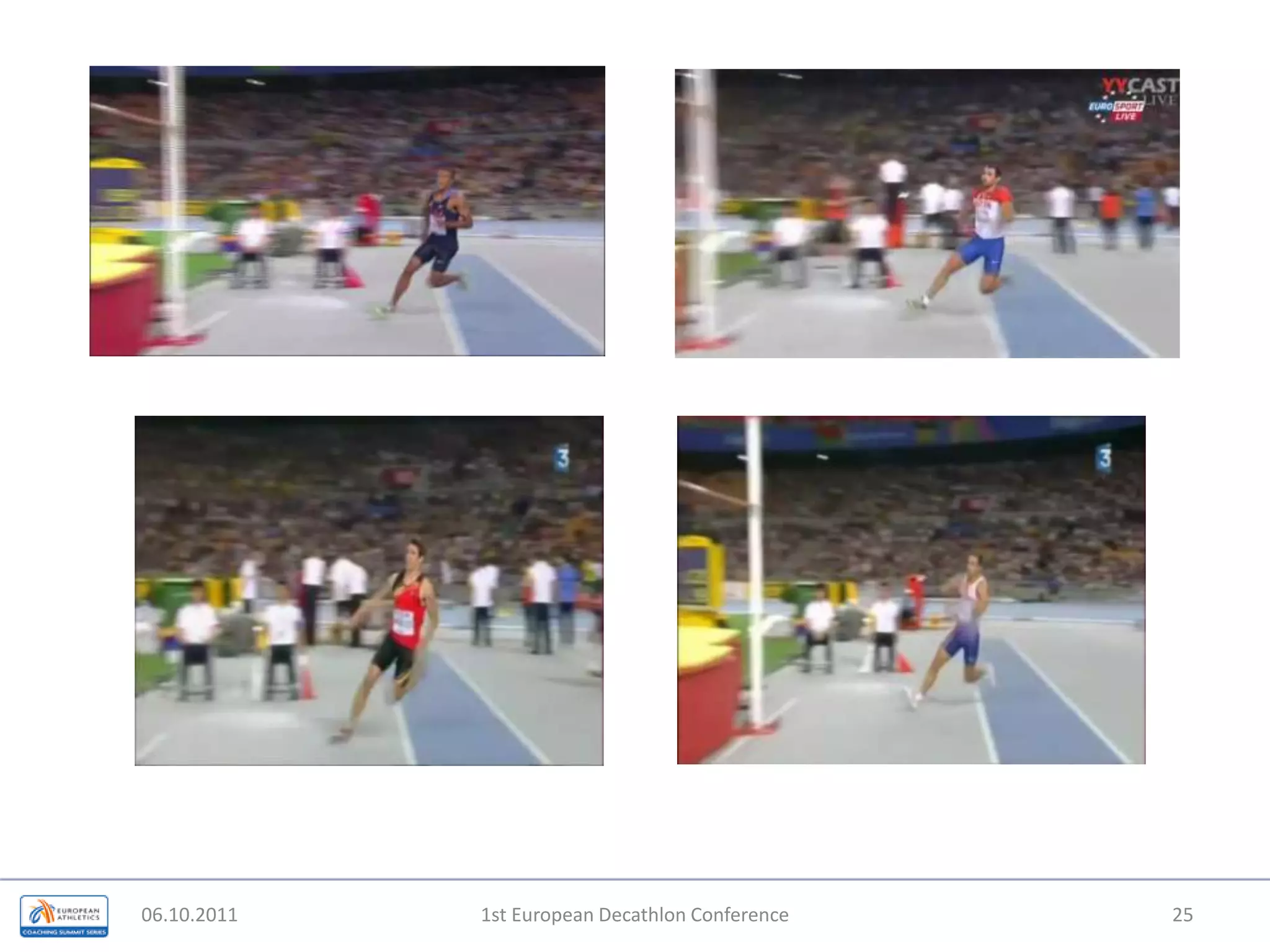
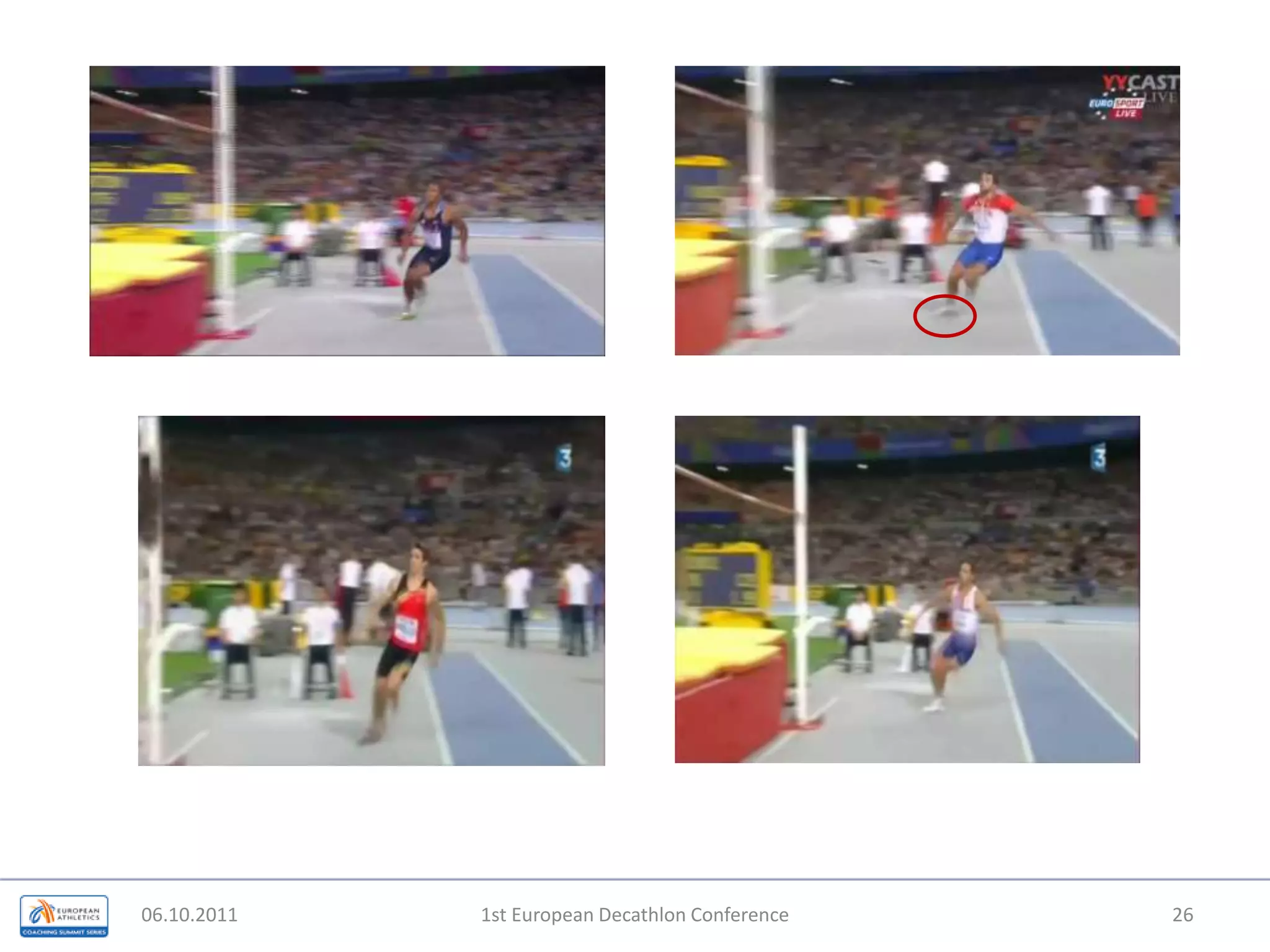
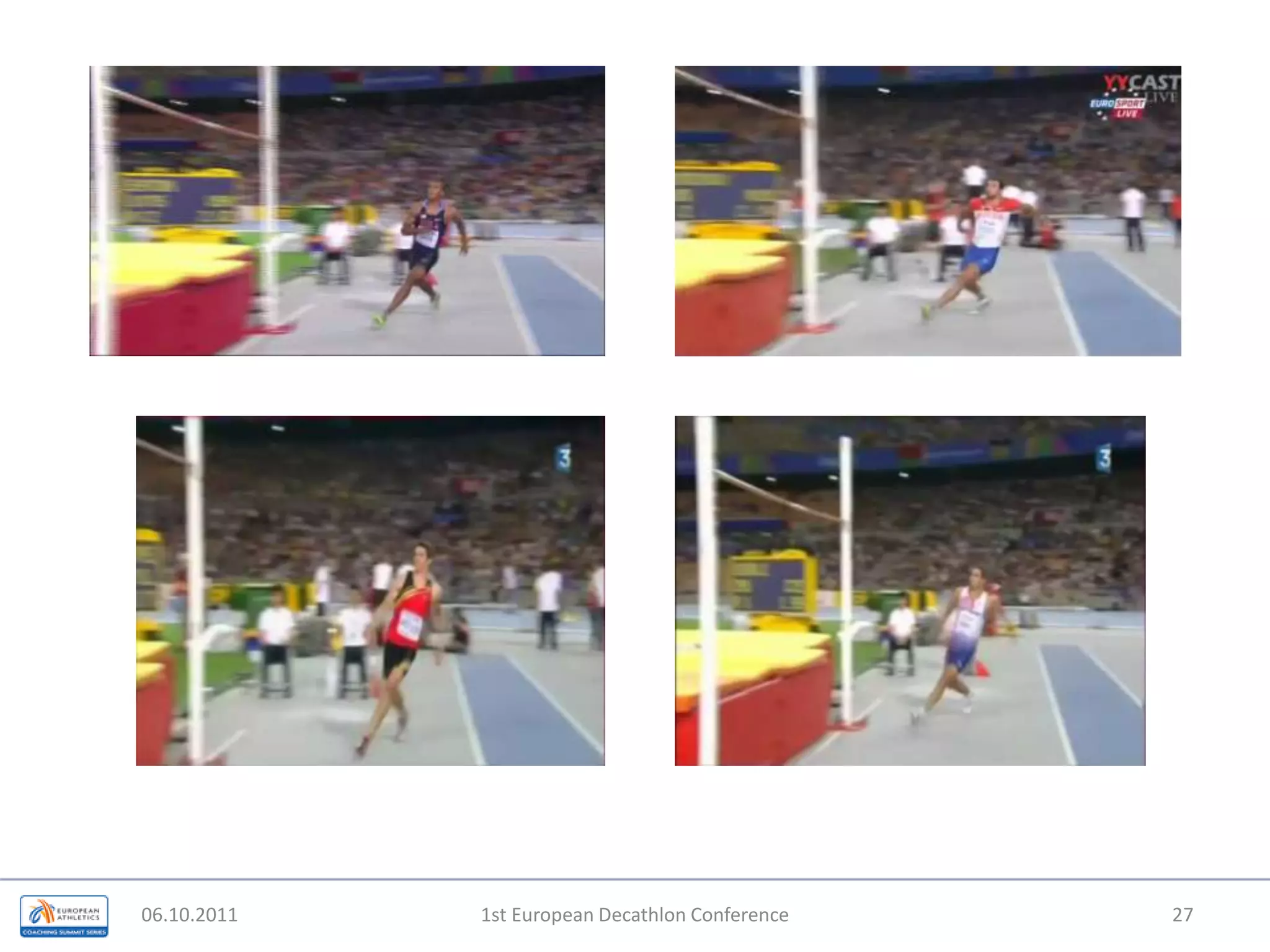
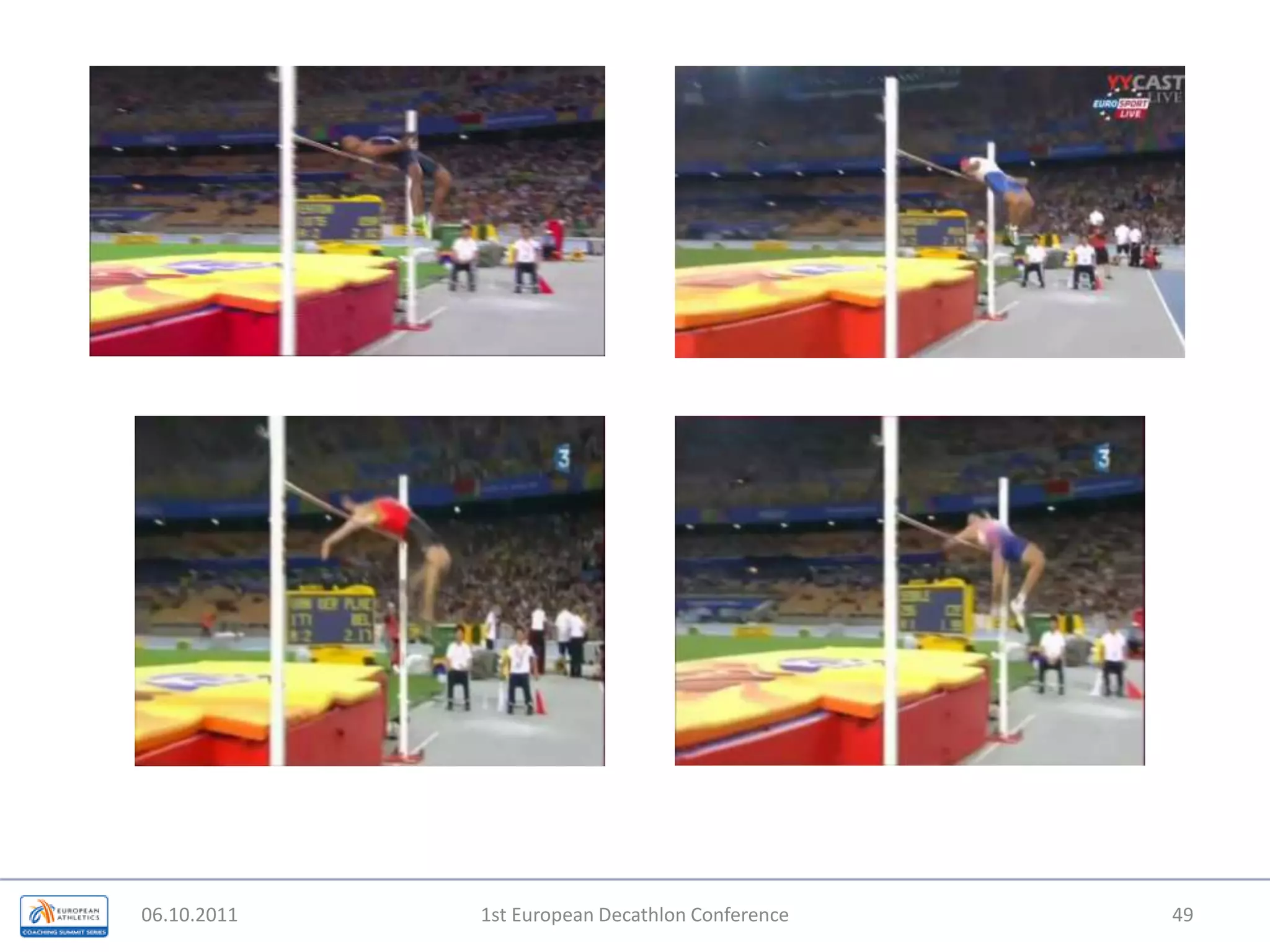
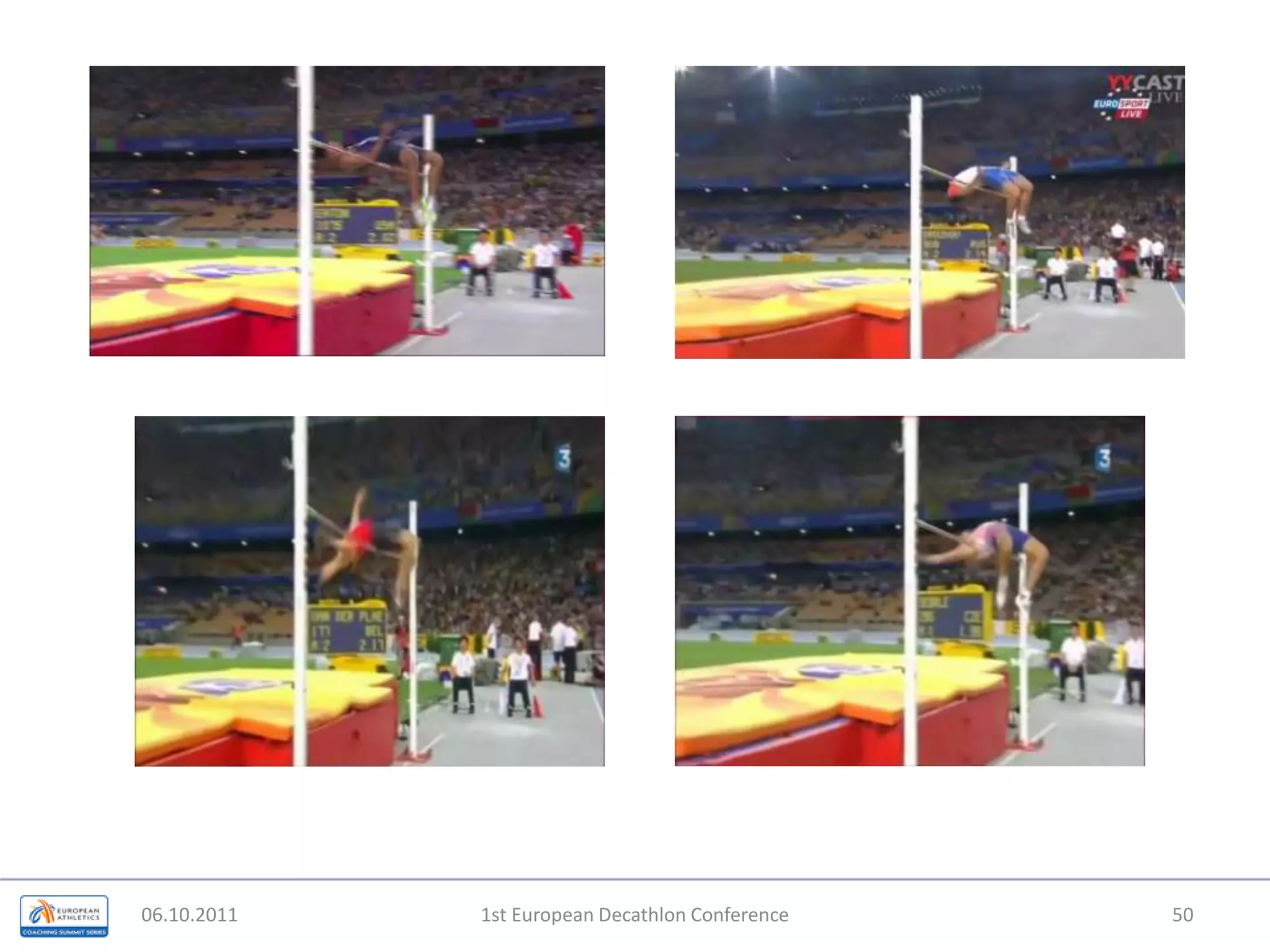
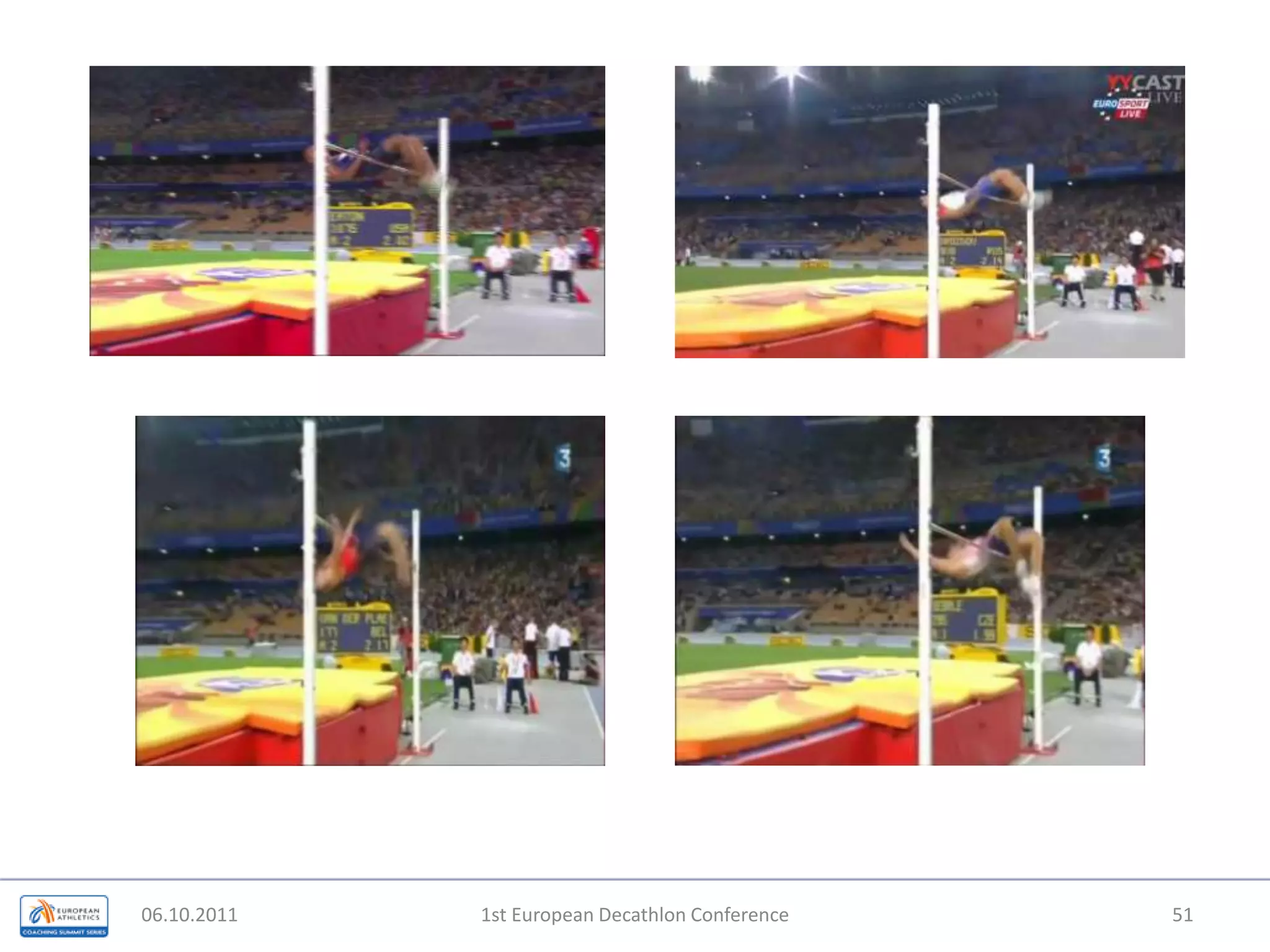
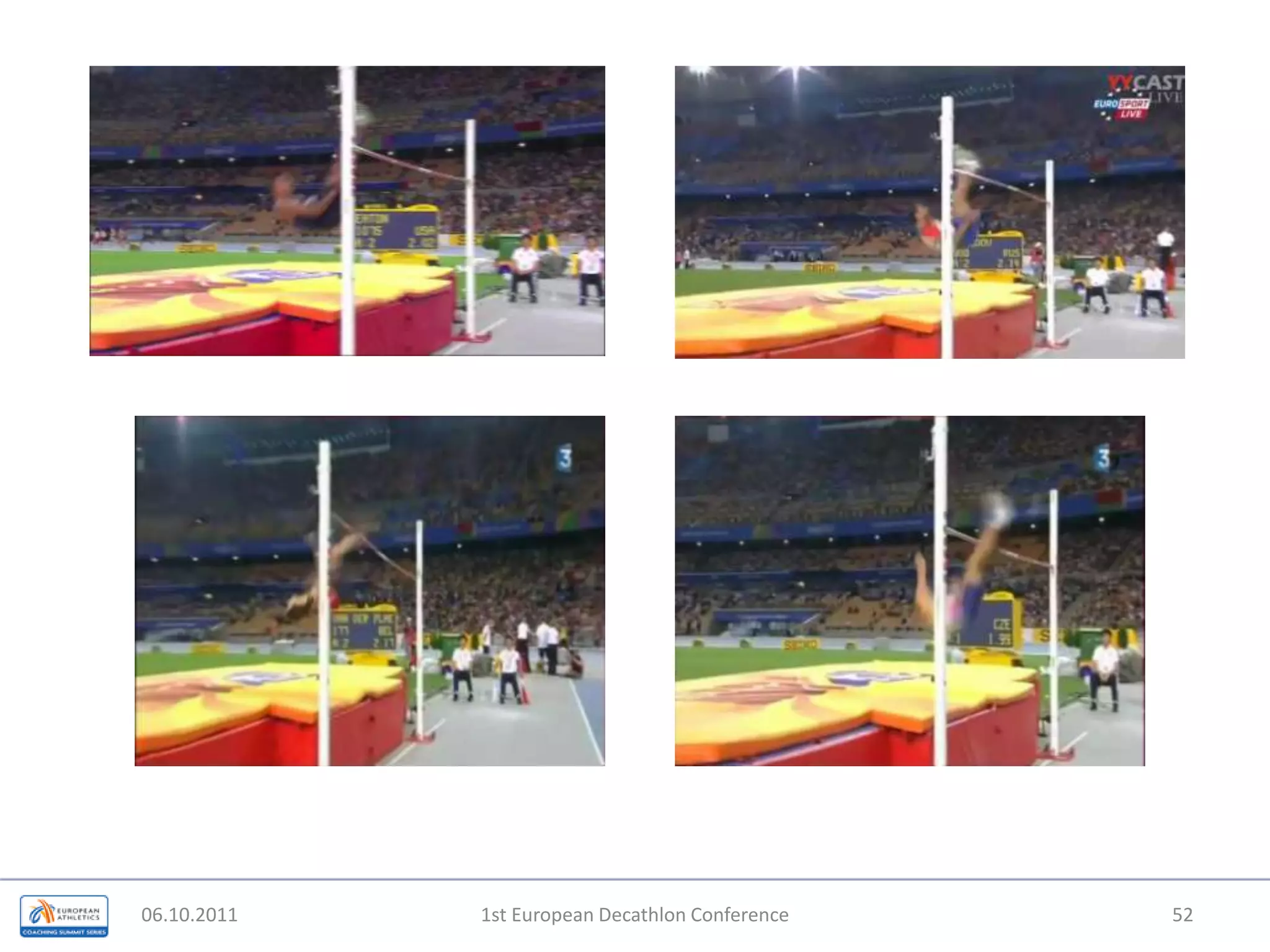
06.10.20111st European Decathlon Conference23Drozdov 2.14 (o)Eaton 2.02 (o)Šebrle 1.99 (o)Van der Plaetesen 2.17 (x)
06.10.20111st European Decathlon Conference24
06.10.20111st European Decathlon Conference25
06.10.20111st European Decathlon Conference26
06.10.20111st European Decathlon Conference27
06.10.20111st European Decathlon Conference28
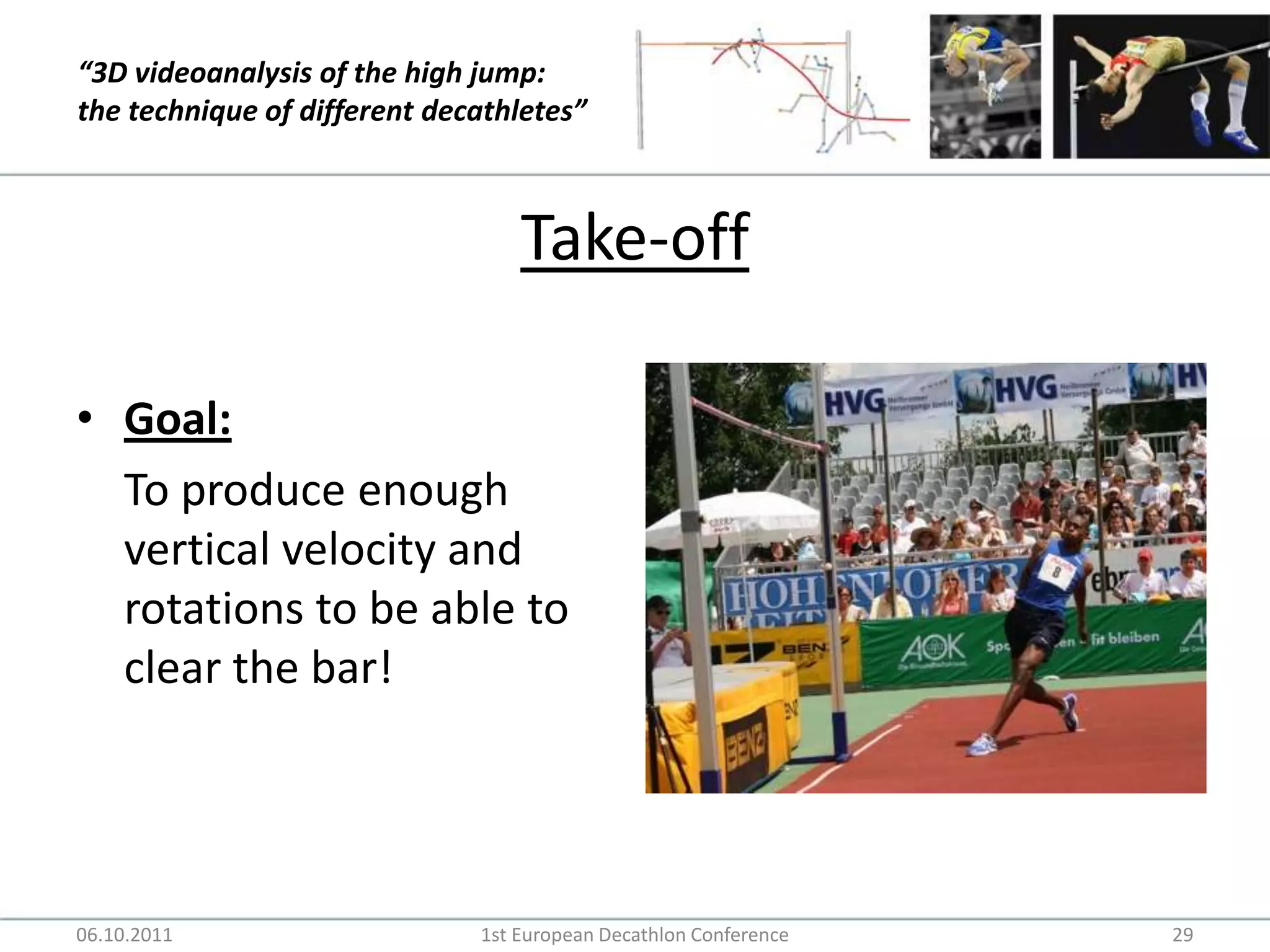
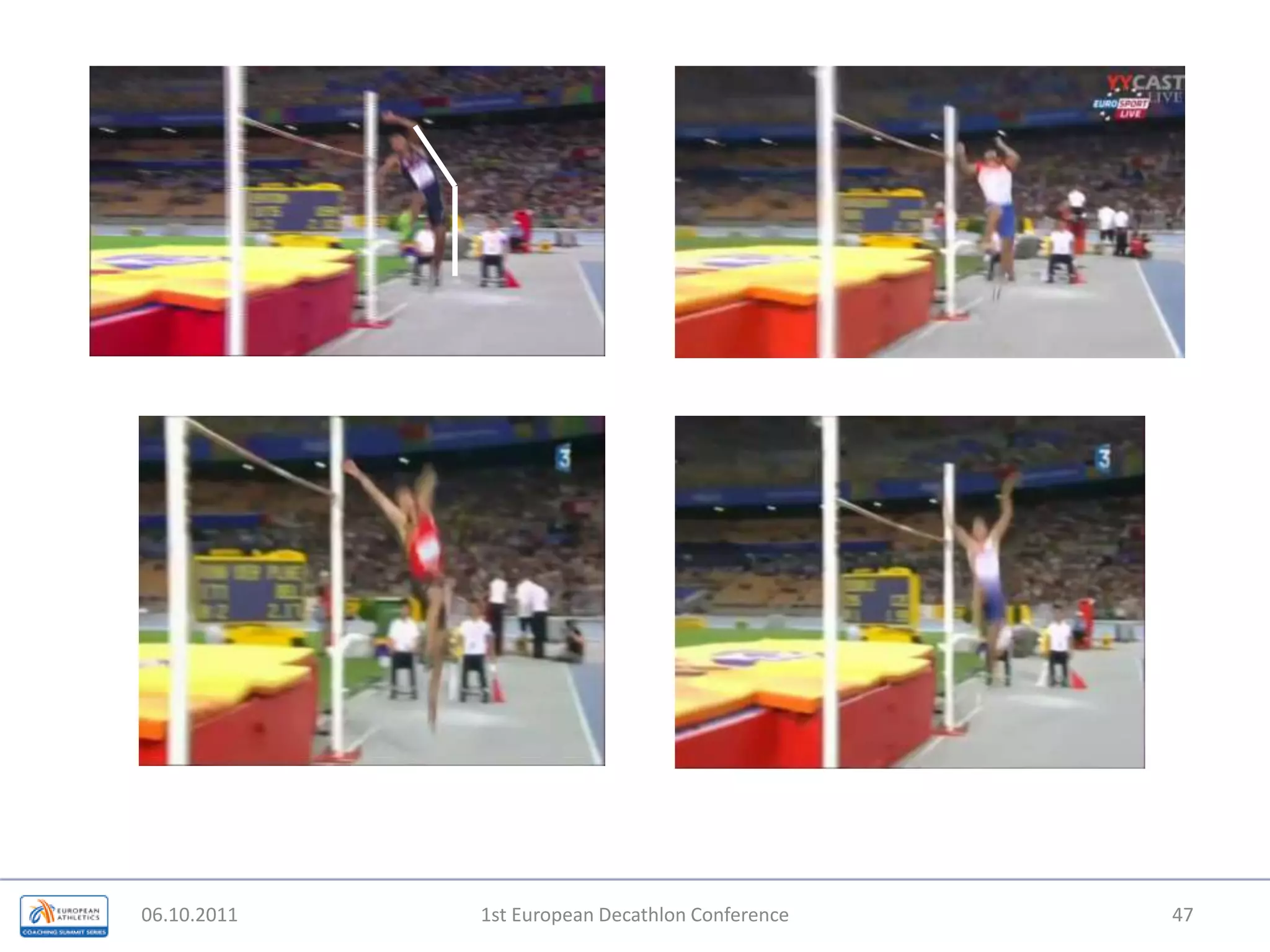
Take-offGoal:	To produce enough vertical velocity and rotations to be able to clear the bar!06.10.20111st European Decathlon Conference29
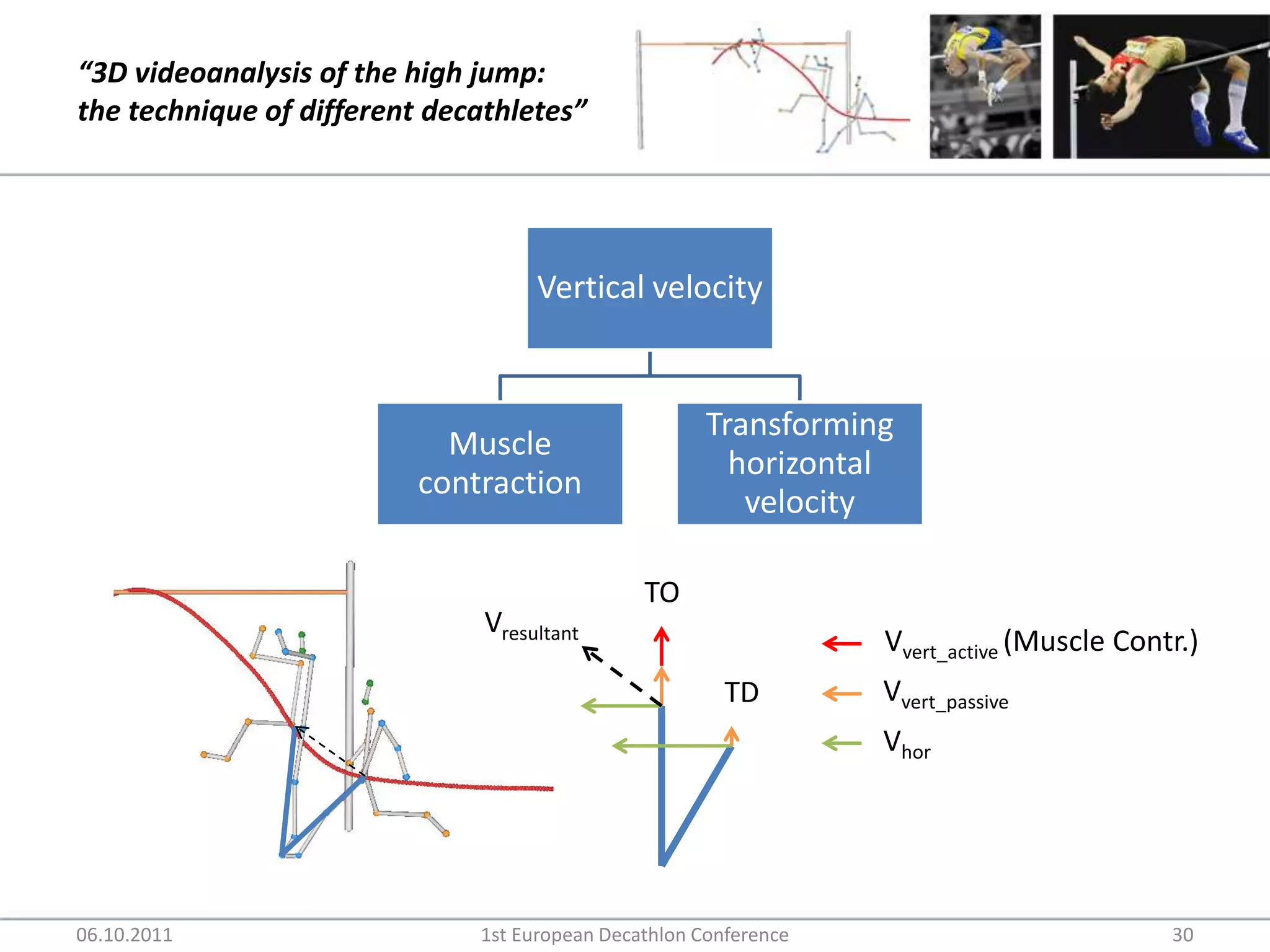
06.10.20111st European Decathlon Conference30TOVresultantVvert_active (Muscle Contr.)Vvert_passiveTDVhor
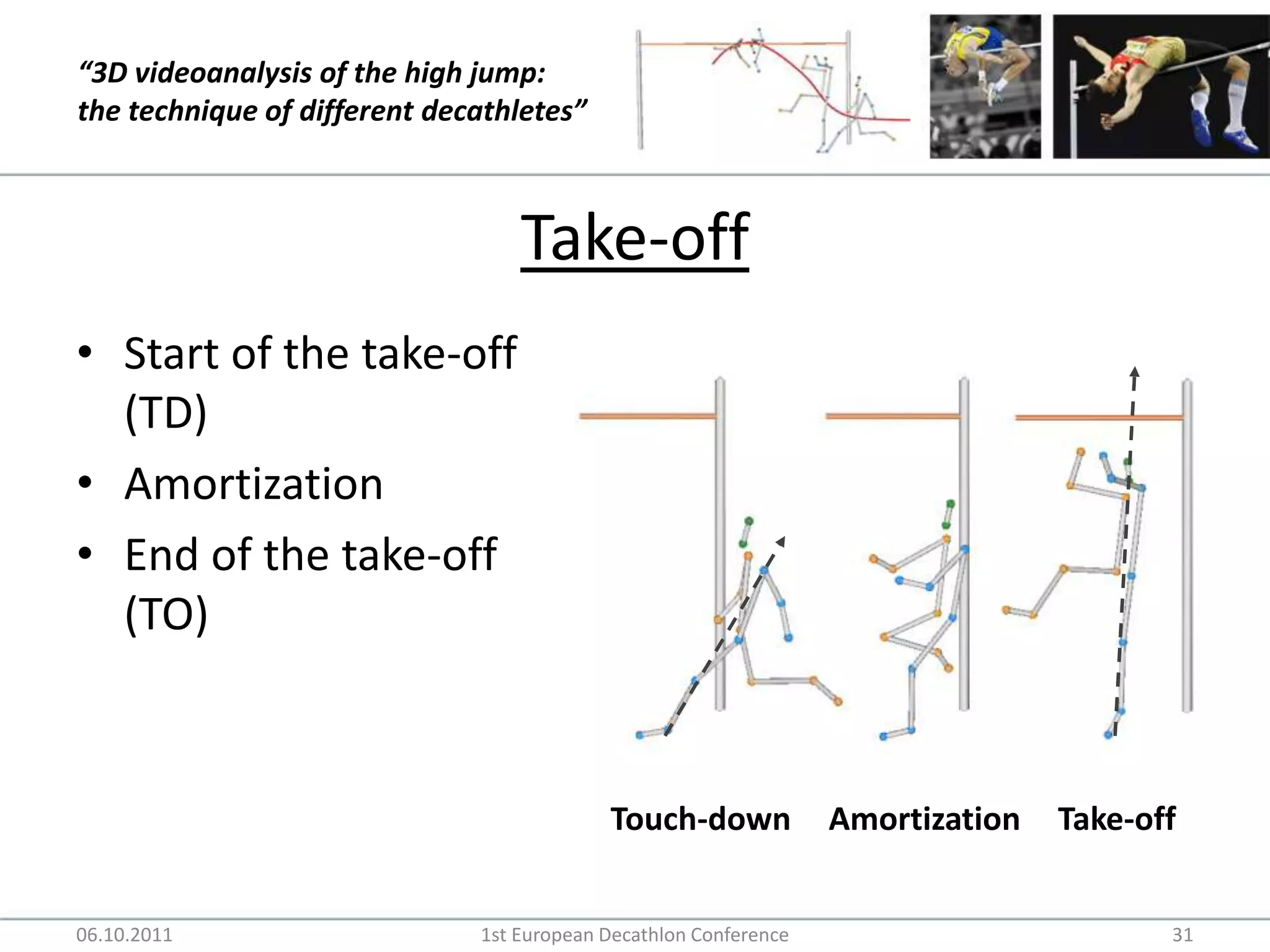
Take-offStart of the take-off (TD)AmortizationEnd of the take-off (TO)06.10.20111st European Decathlon Conference31Touch-downAmortizationTake-off
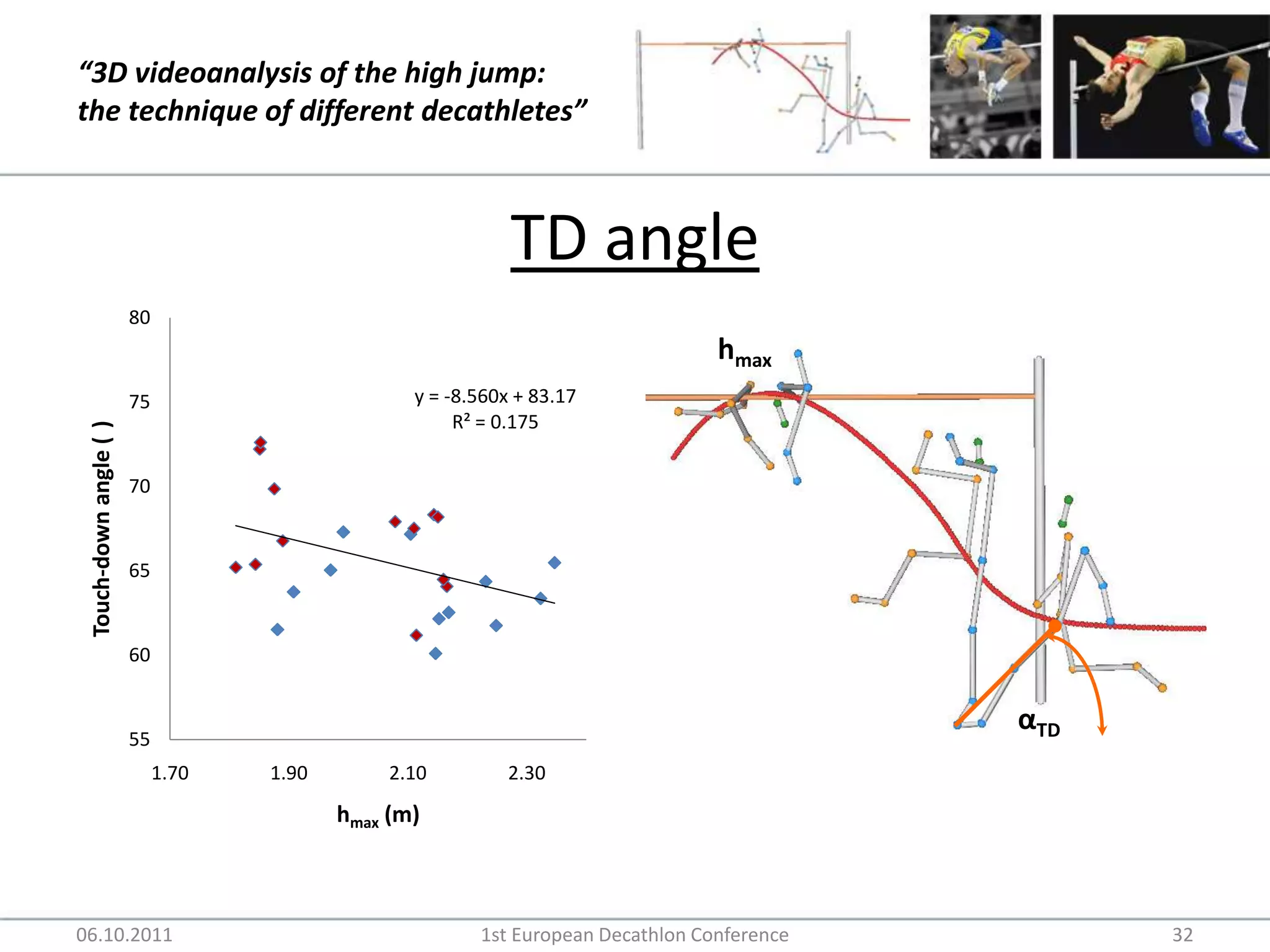
TD angle06.10.20111st European Decathlon Conference32hmaxαTD
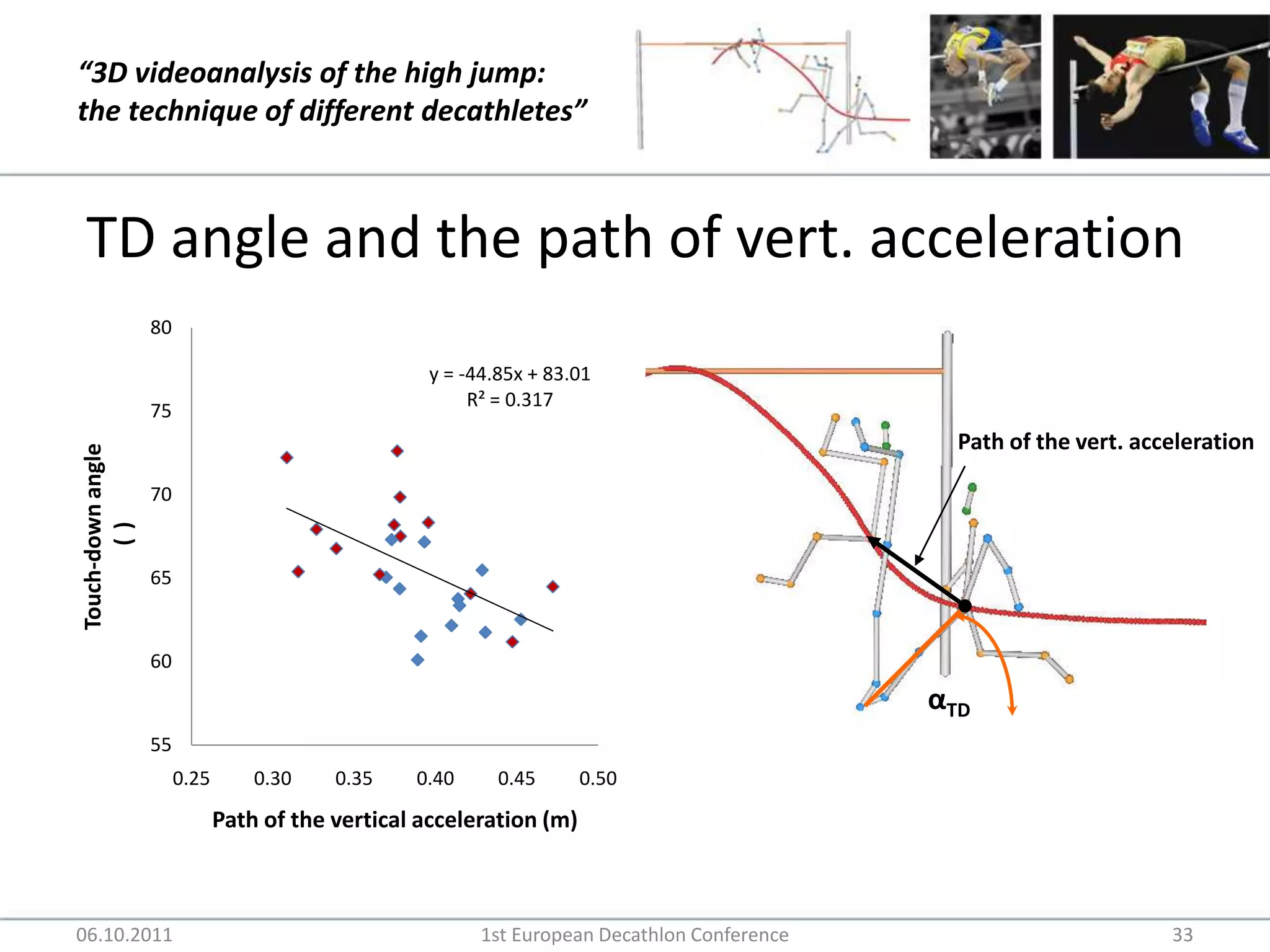
TD angle and the path of vert. acceleration06.10.20111st European Decathlon Conference33Path of the vert. accelerationαTD
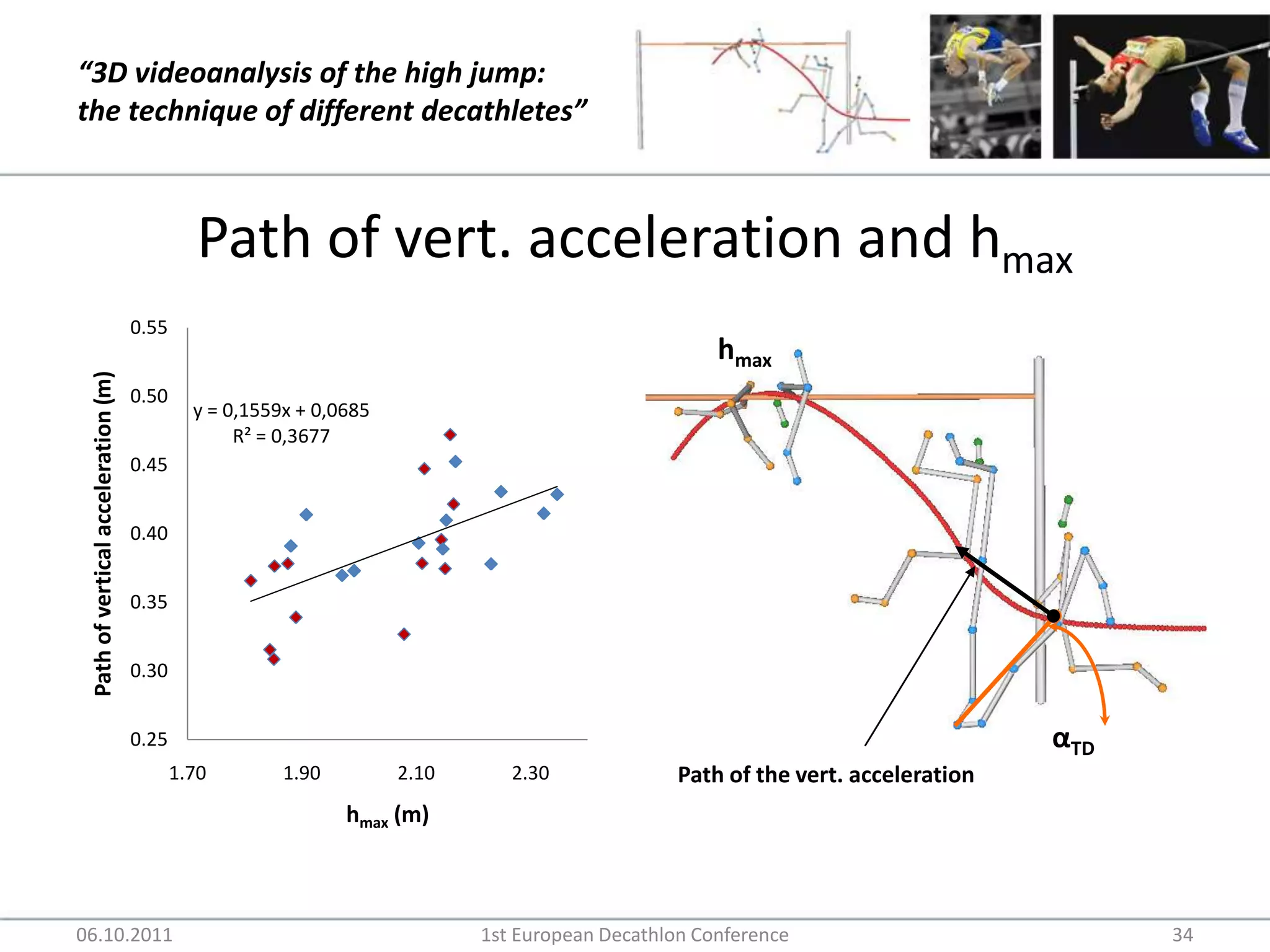
Path of vert. acceleration and hmax06.10.20111st European Decathlon Conference34hmaxαTDPath of the vert. acceleration
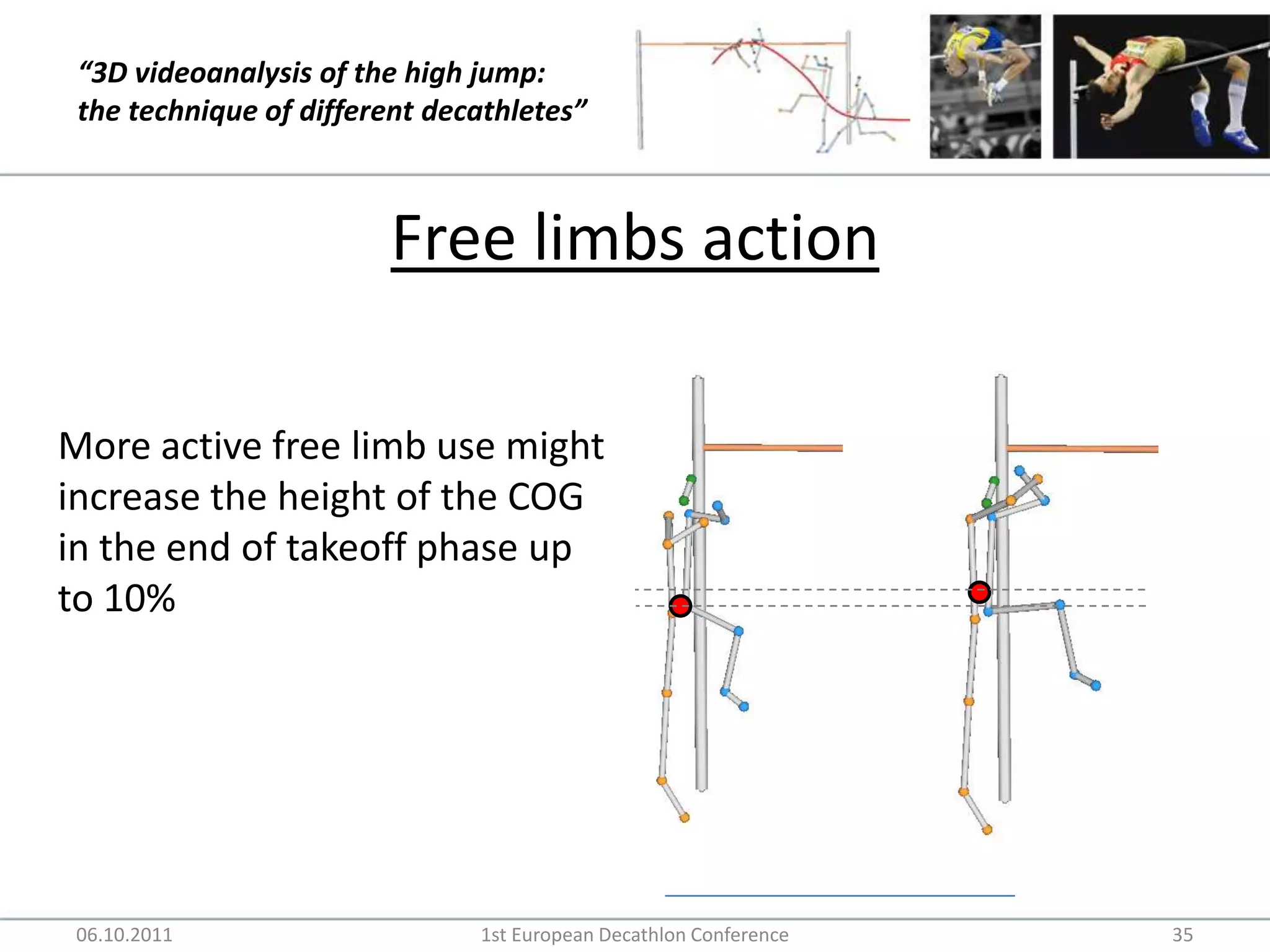
Free limbs action06.10.20111st European Decathlon Conference35More active free limb use might increase the height of the COG in the end of takeoff phase up to 10%
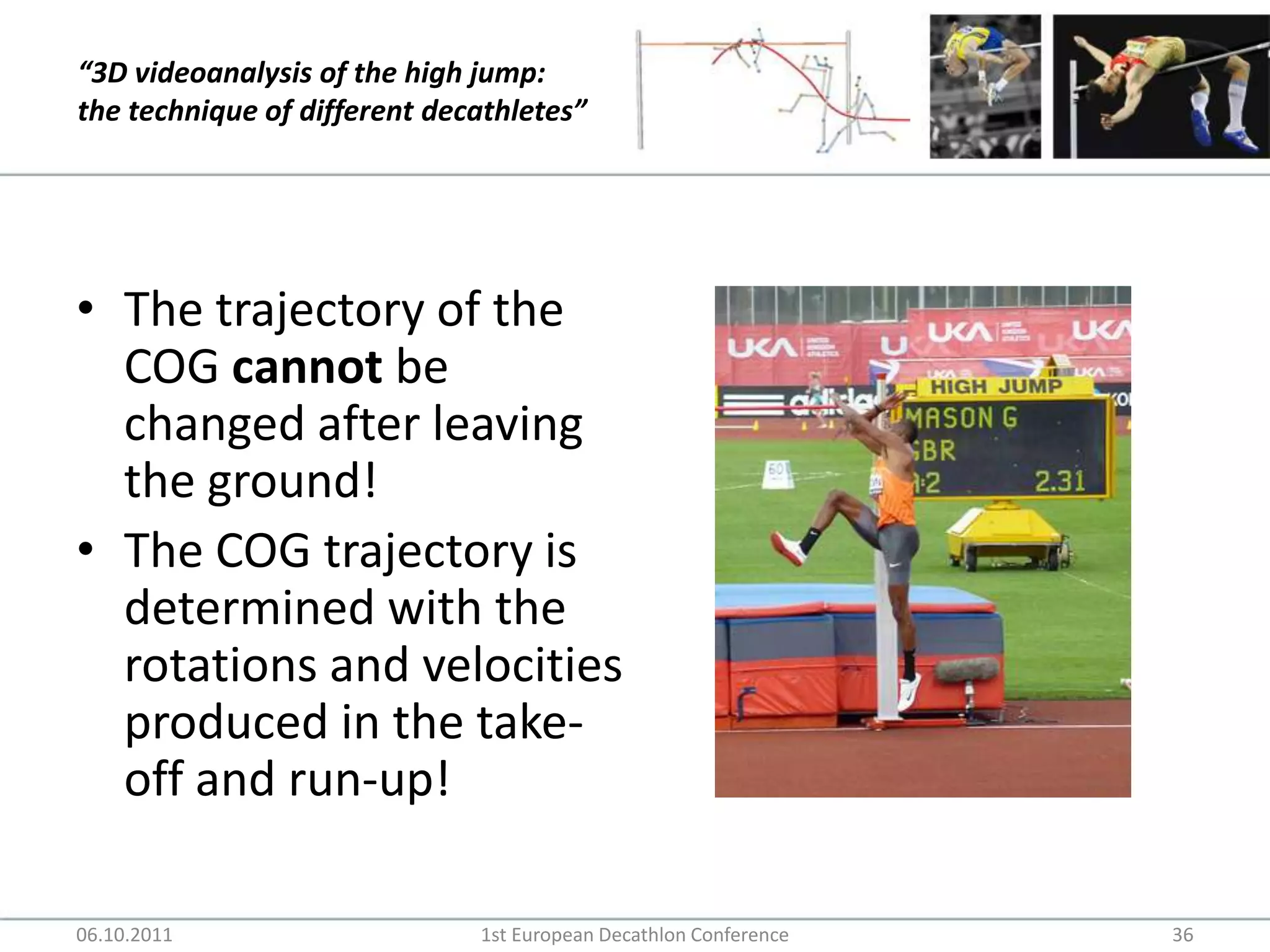
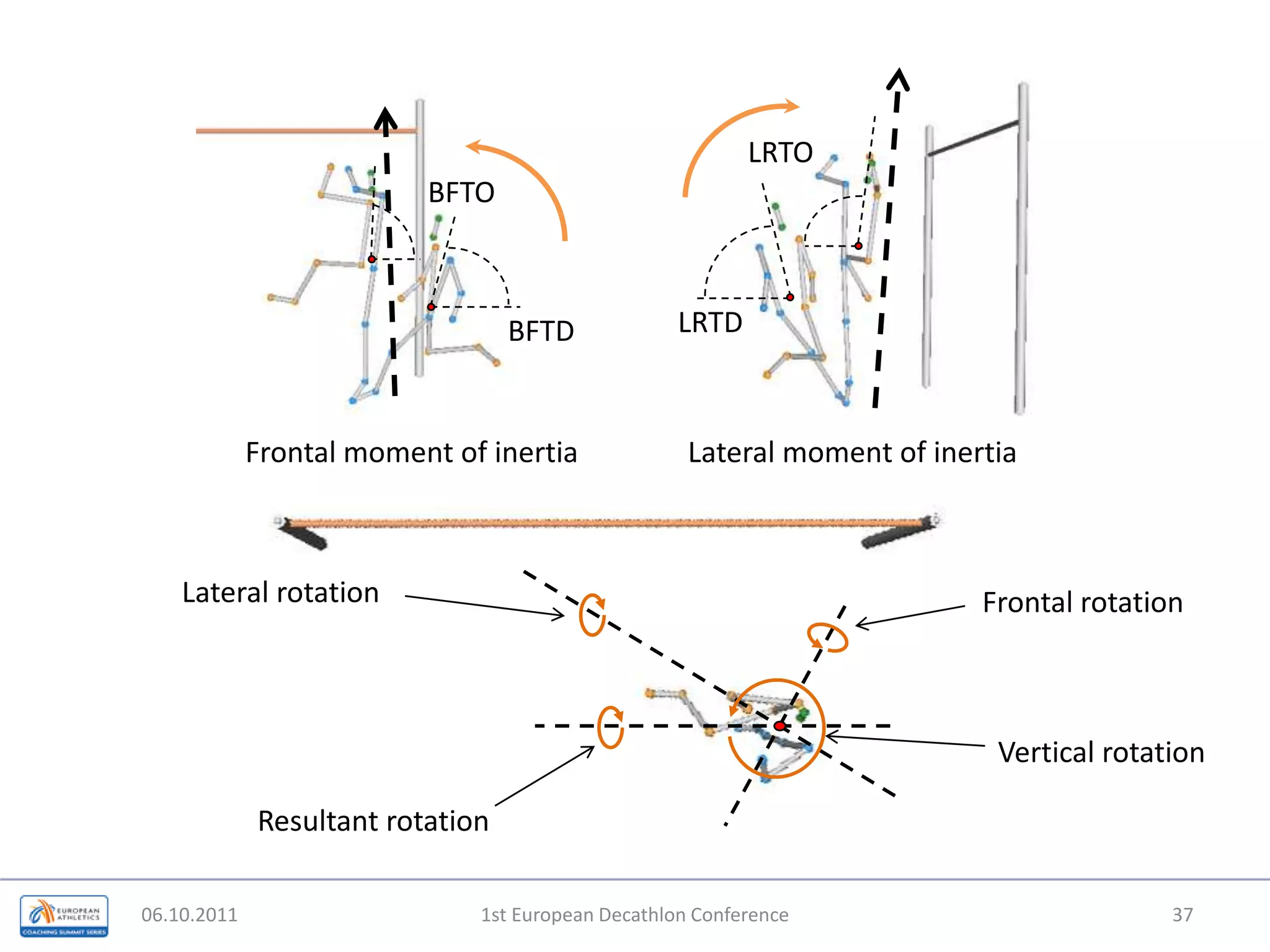
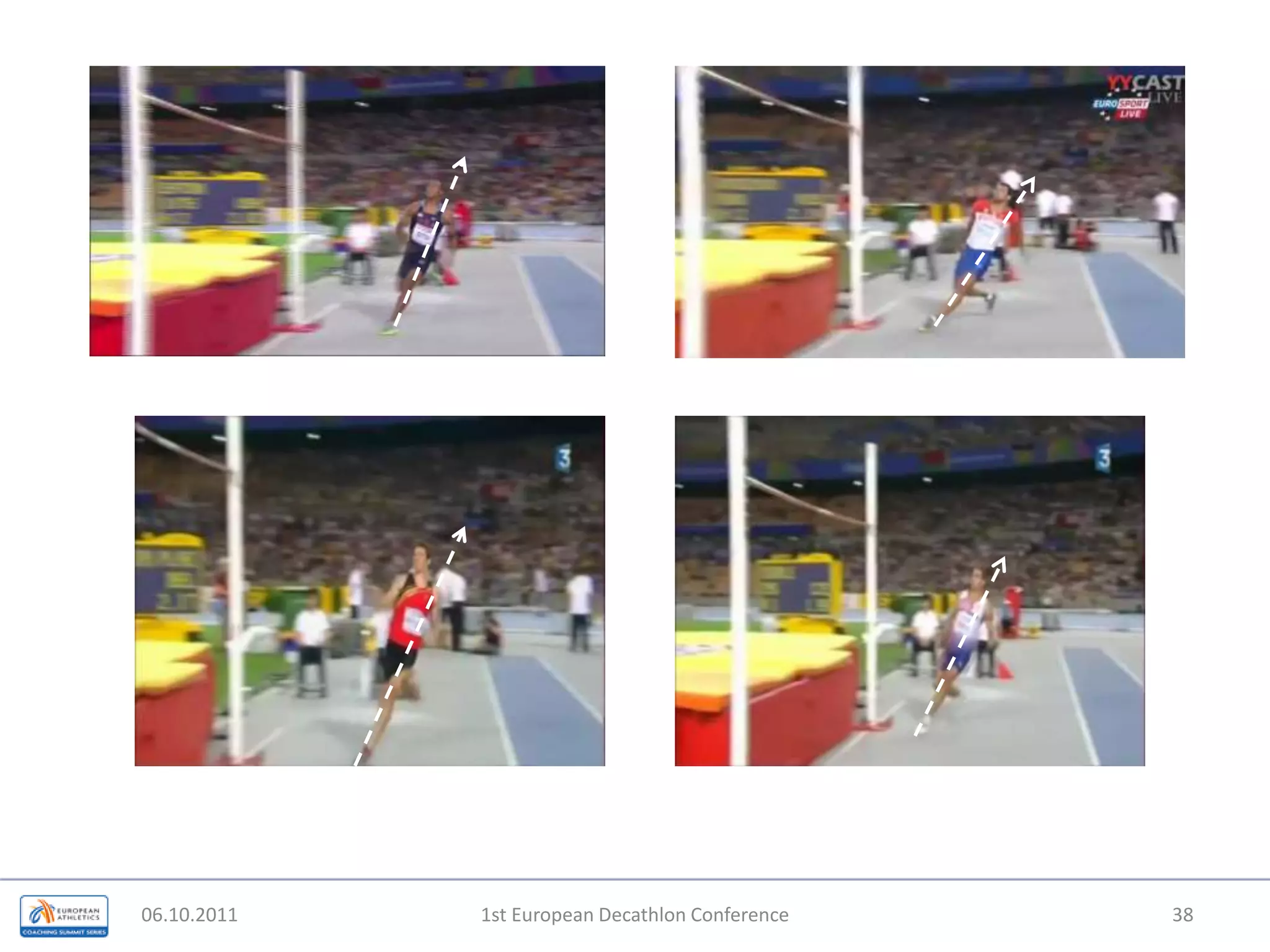
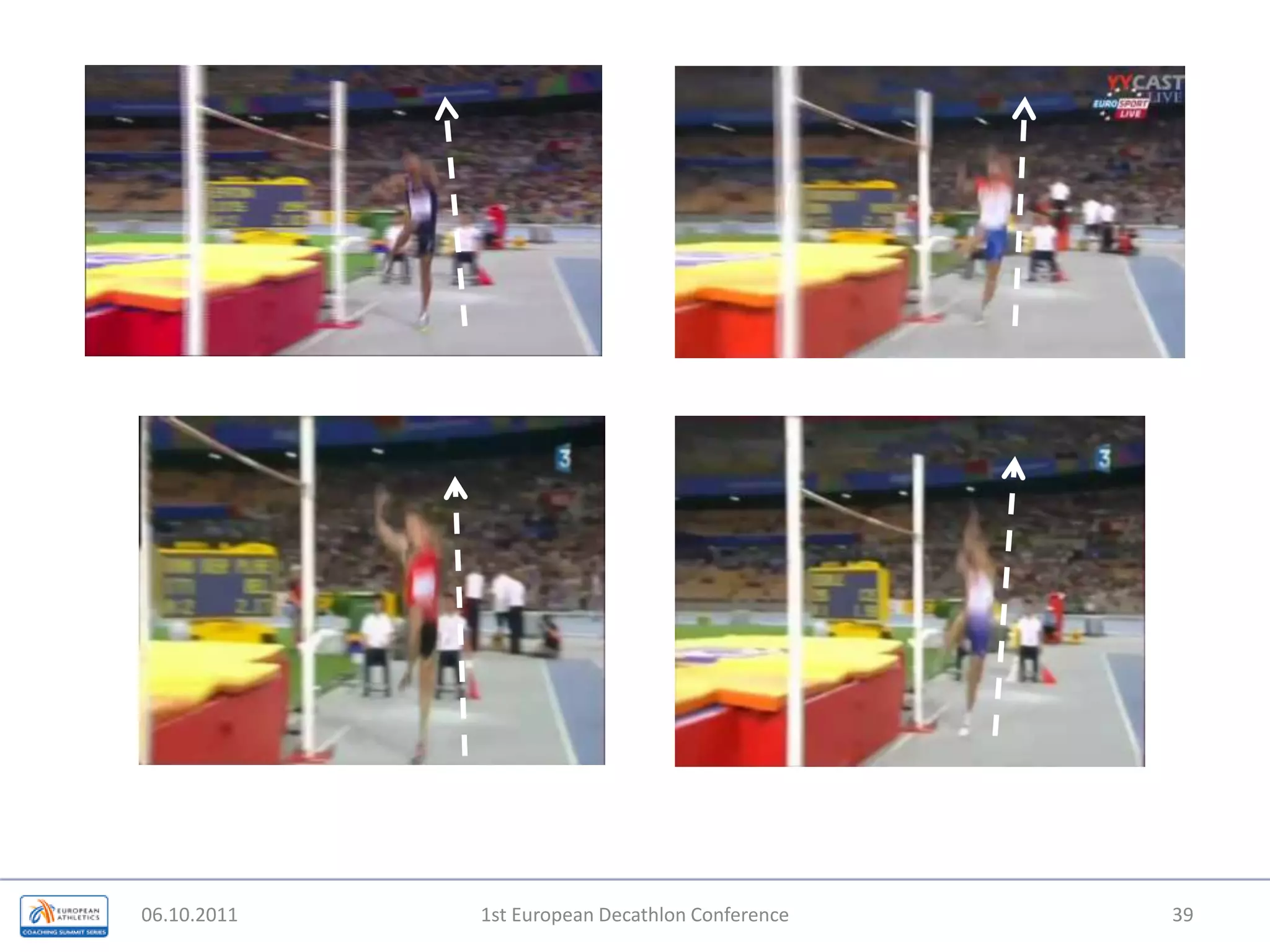
The trajectory of the COG cannot be changed after leaving the ground!The COG trajectory is determined with the rotations and velocities produced in the take-off and run-up!06.10.20111st European Decathlon Conference36
06.10.20111st European Decathlon Conference37LRTOBFTOLRTDBFTDFrontal moment of inertiaLateral moment of inertiaLateral rotationFrontal rotationVertical rotationResultant rotation
06.10.20111st European Decathlon Conference38
06.10.20111st European Decathlon Conference39
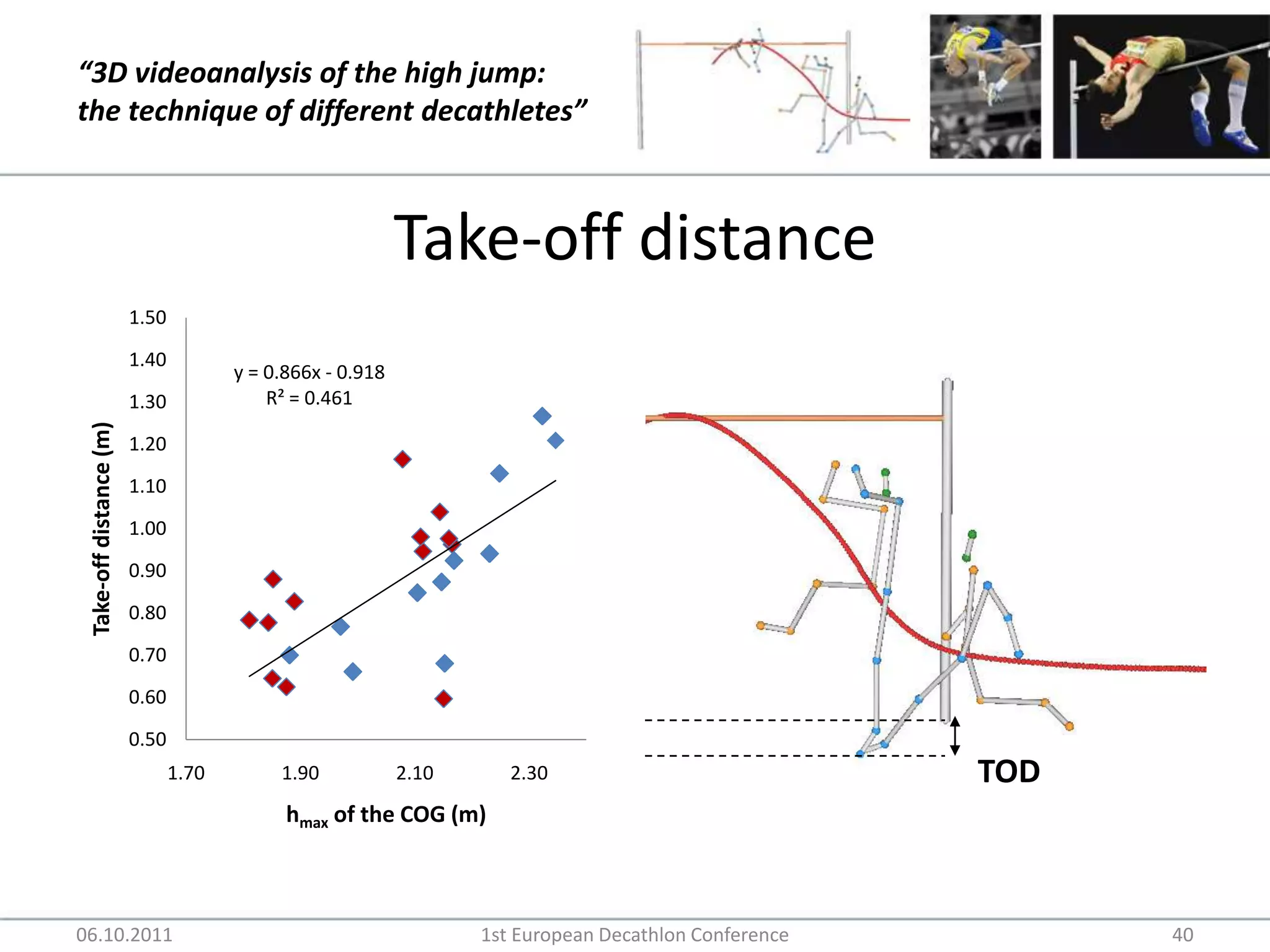
Take-off distance06.10.20111st European Decathlon Conference40TOD
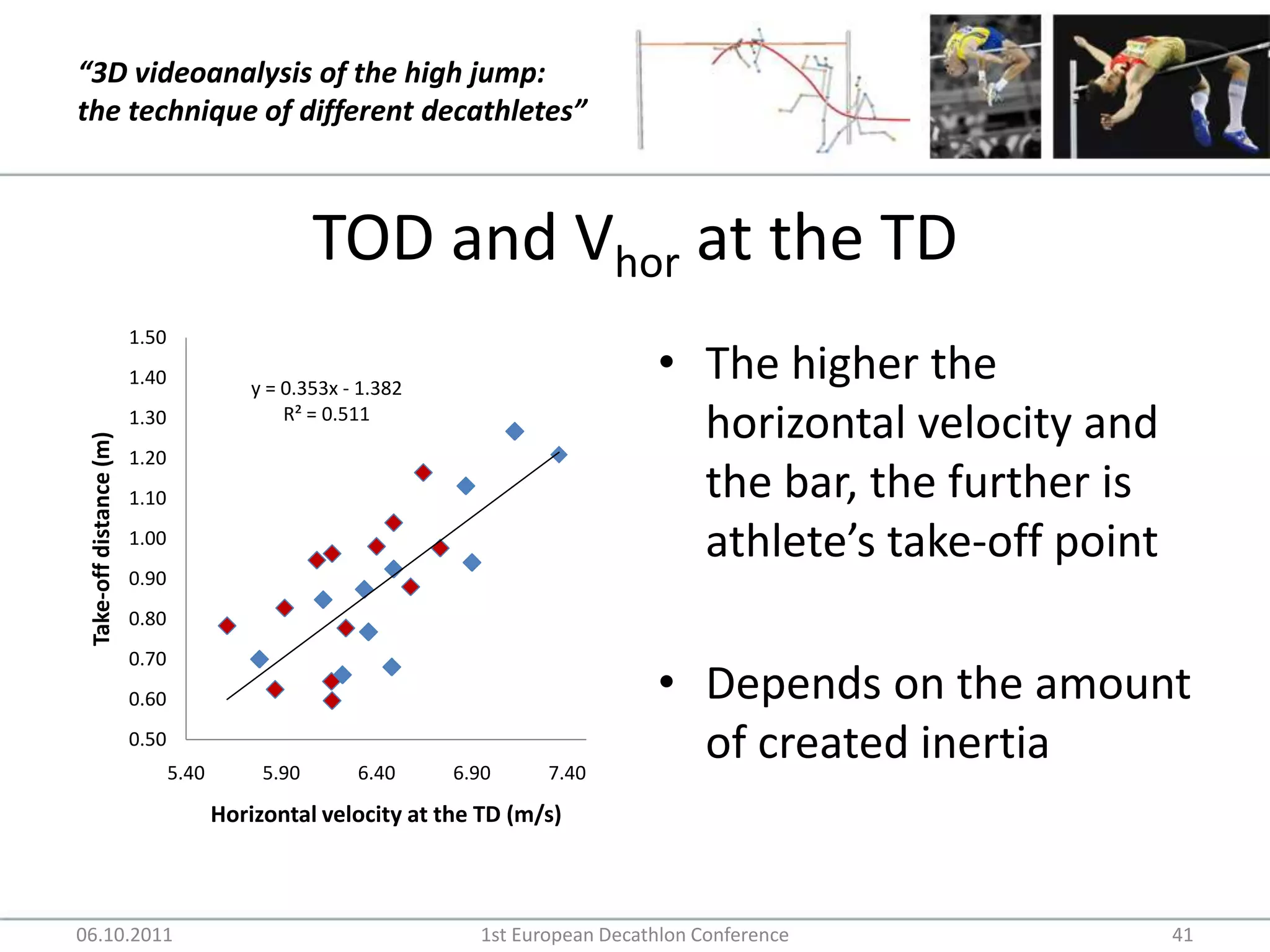
TOD and Vhor at the TDThe higher the horizontal velocity and the bar, the further is athlete’s take-off pointDepends on the amount of created inertia06.10.20111st European Decathlon Conference41
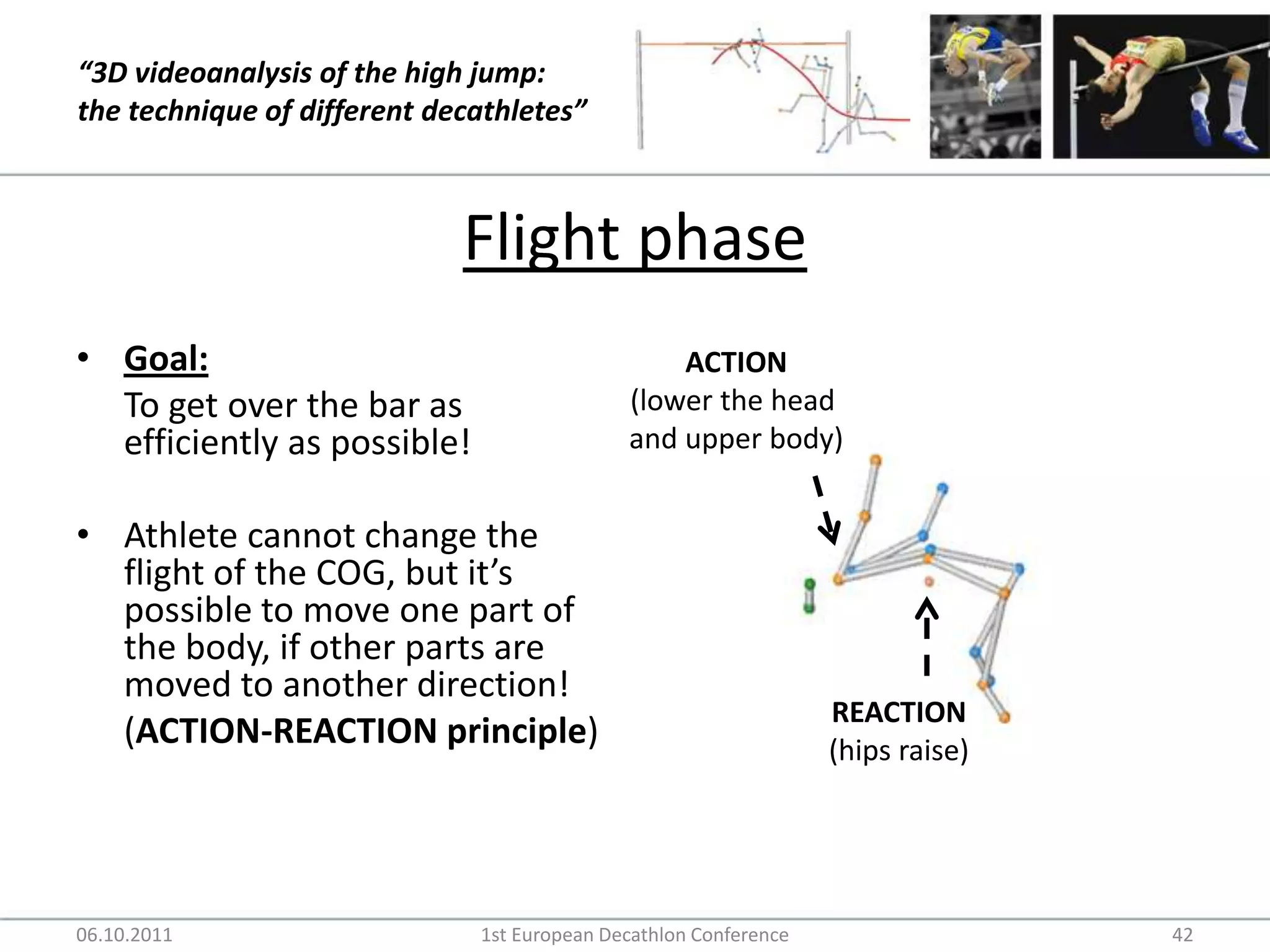
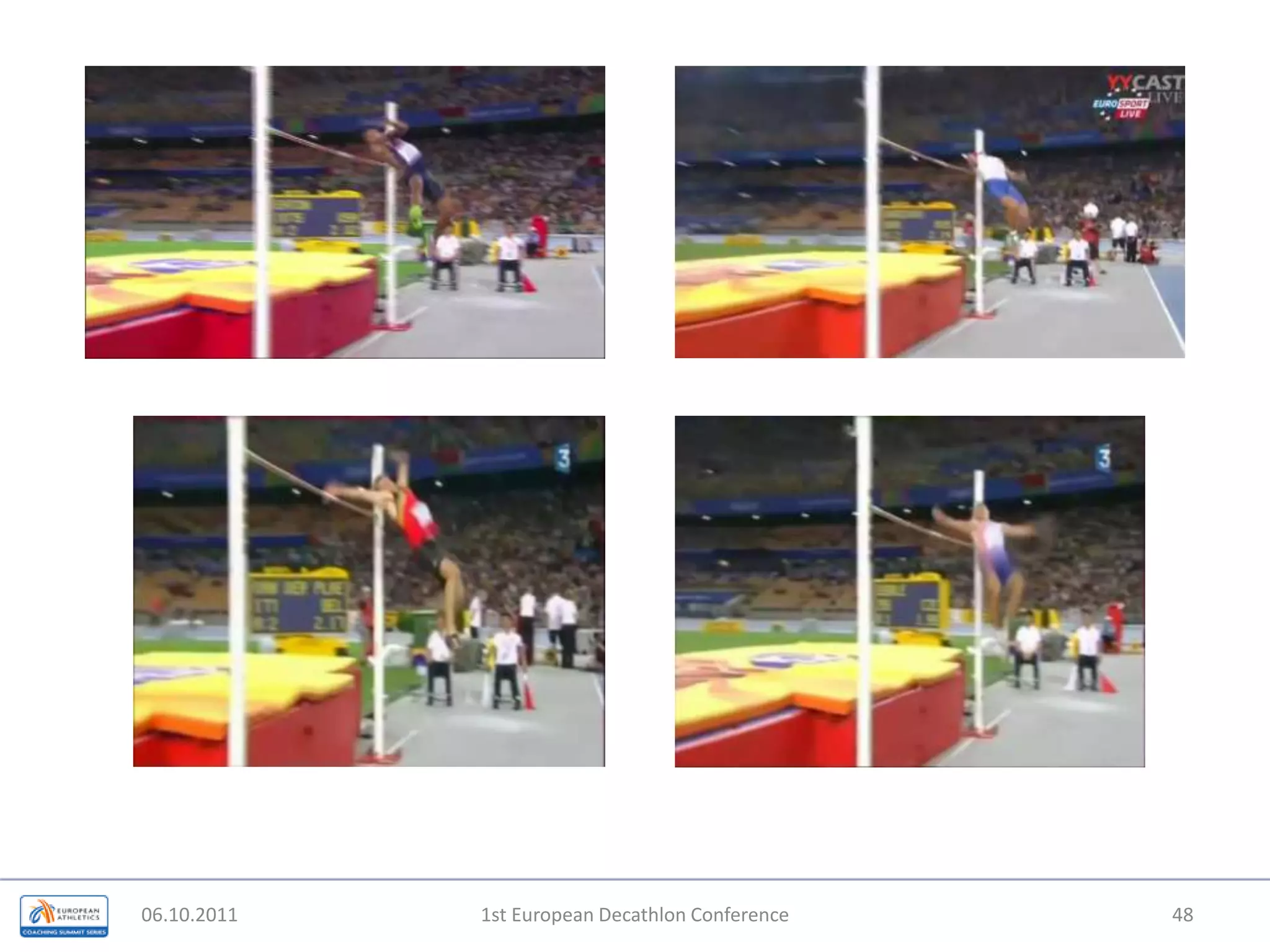
Flight phaseGoal:	To get over the bar as efficiently as possible!Athlete cannot change the flight of the COG, but it’s possible to move one part of the body, if other parts are moved to another direction!	(ACTION-REACTION principle) 06.10.20111st European Decathlon Conference42ACTION(lower the head and upper body)REACTION(hips raise)
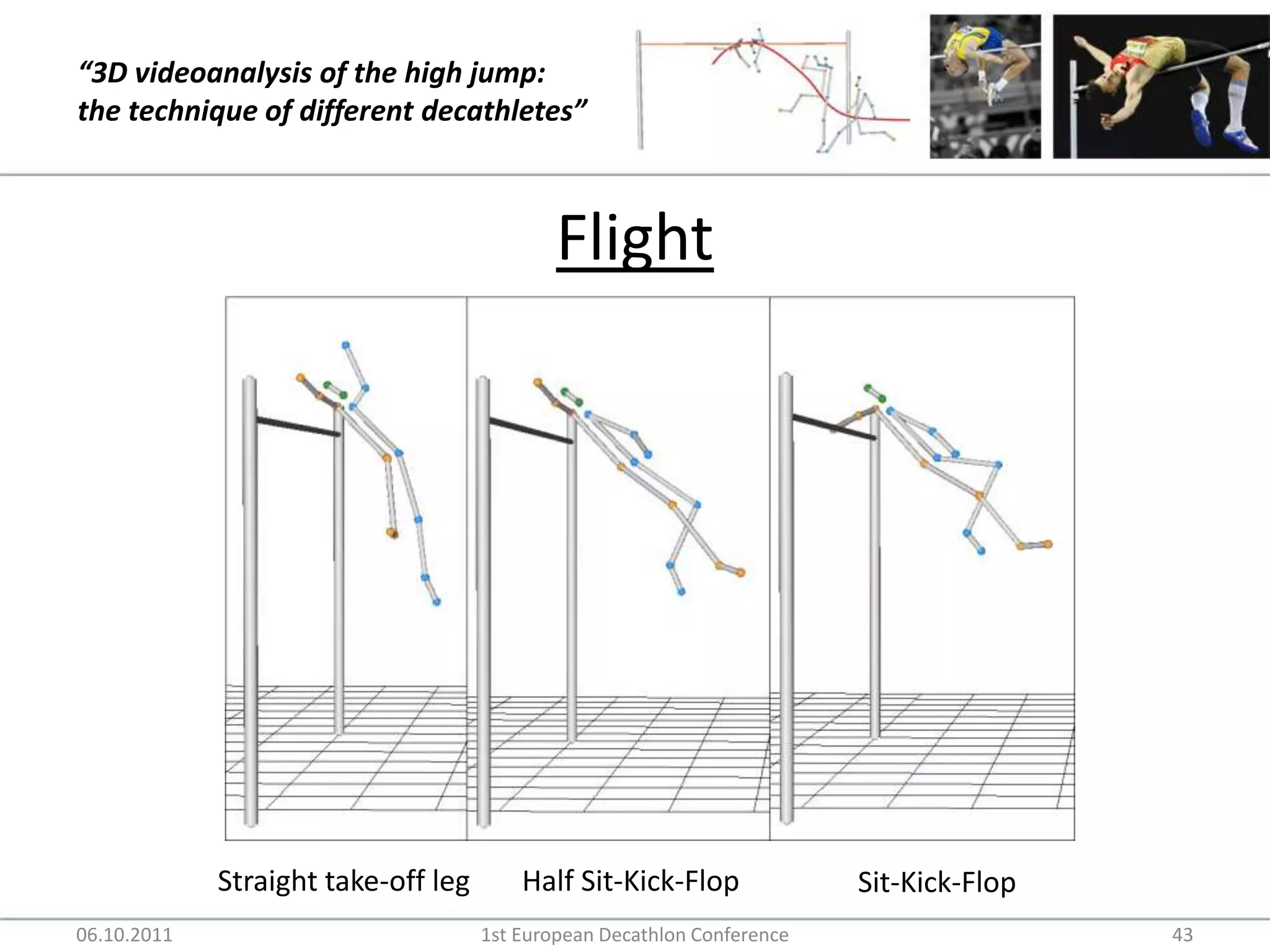
Flight06.10.20111st European Decathlon Conference43Straight take-off legHalf Sit-Kick-FlopSit-Kick-Flop
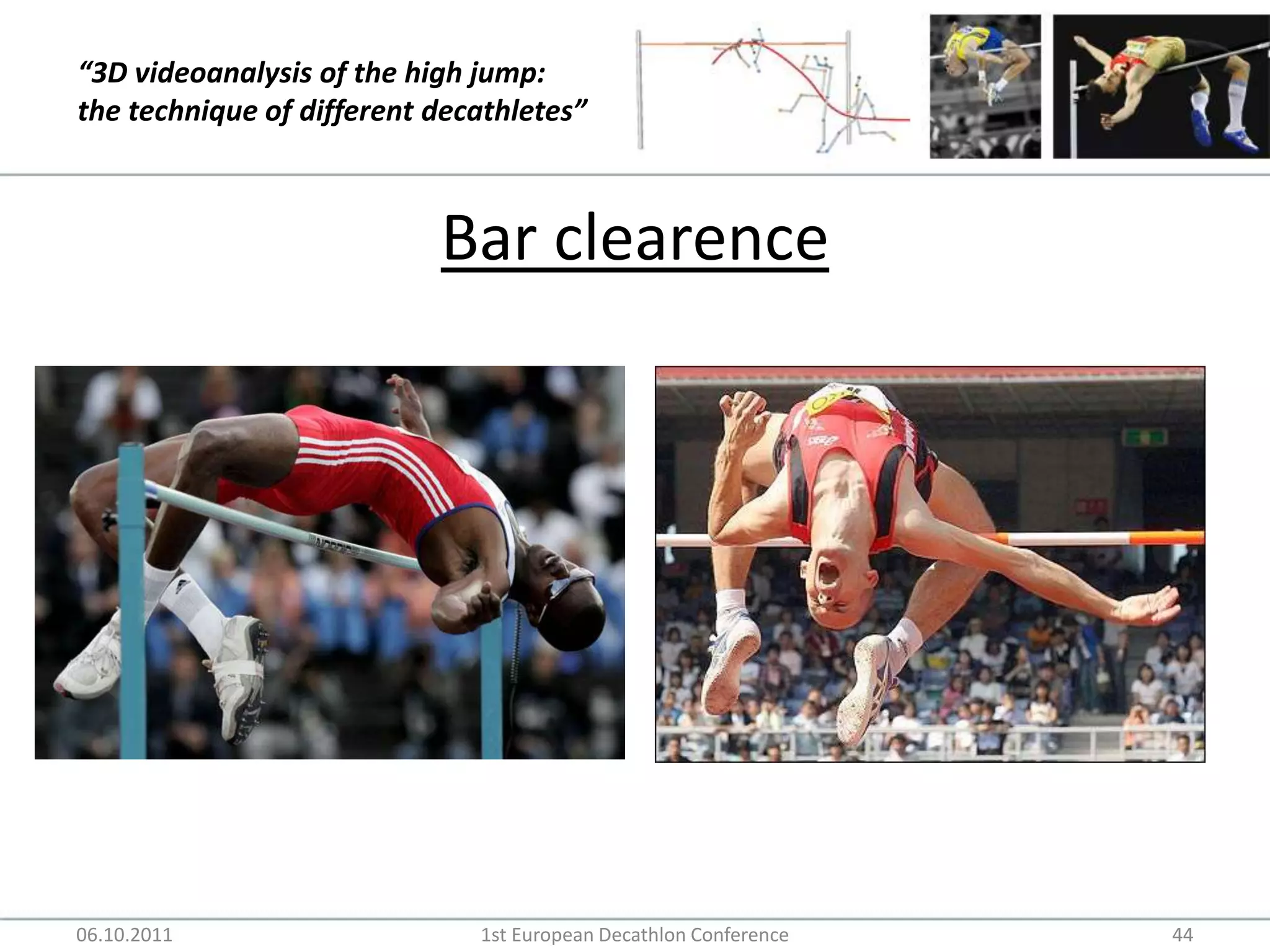
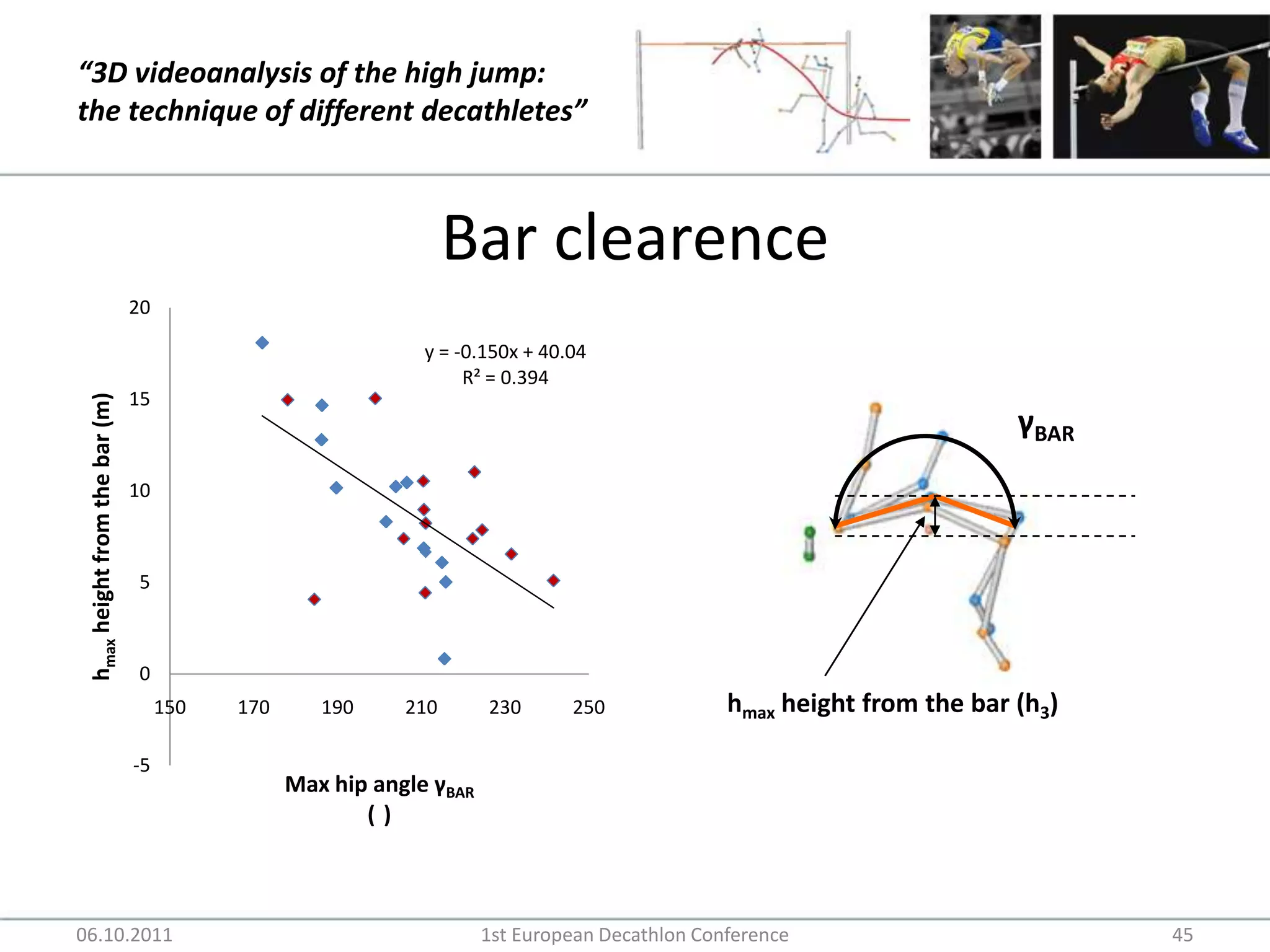
Bar clearence06.10.20111st European Decathlon Conference44
Bar clearence06.10.20111st European Decathlon Conference45γBARhmax height from the bar (h3)
06.10.20111st European Decathlon Conference46
06.10.20111st European Decathlon Conference47
06.10.20111st European Decathlon Conference48
06.10.20111st European Decathlon Conference49
06.10.20111st European Decathlon Conference50
06.10.20111st European Decathlon Conference51
06.10.20111st European Decathlon Conference52
ConclusionAim for faster optimal horizontal velocities in the end of run-up (transform more hor. velocity to vertical with no decrease in the muscle contraction mechanisms in the take-off) to produce higher vertical velocityPenultimate stride (fast over + push)Increase the path of vertical acceleration without losing the velocity (reasonable lateral and backward lean)Generate appropriate amount of rotations in the take-off phase to clear the bar06.10.20111st European Decathlon Conference53
Recommended literaturehttp://www.indiana.edu/~sportbm/High-Jump-Report-29-2006-Women.pdfhttp://www.indiana.edu/~sportbm/High-Jump-Report-32-2007-Men.pdfKilling, Wolfgang. Trainings- und Bewegungslehre des Hochsprungs (ed. 1, 2004; ed. 2, 2009)www.jumpscoach.eu06.10.20111st European Decathlon Conference54
06.10.20111st European Decathlon Conference55Thank you for listening!Questions?

3d videoanalysis of the high jump: the techniques of different decathletes