
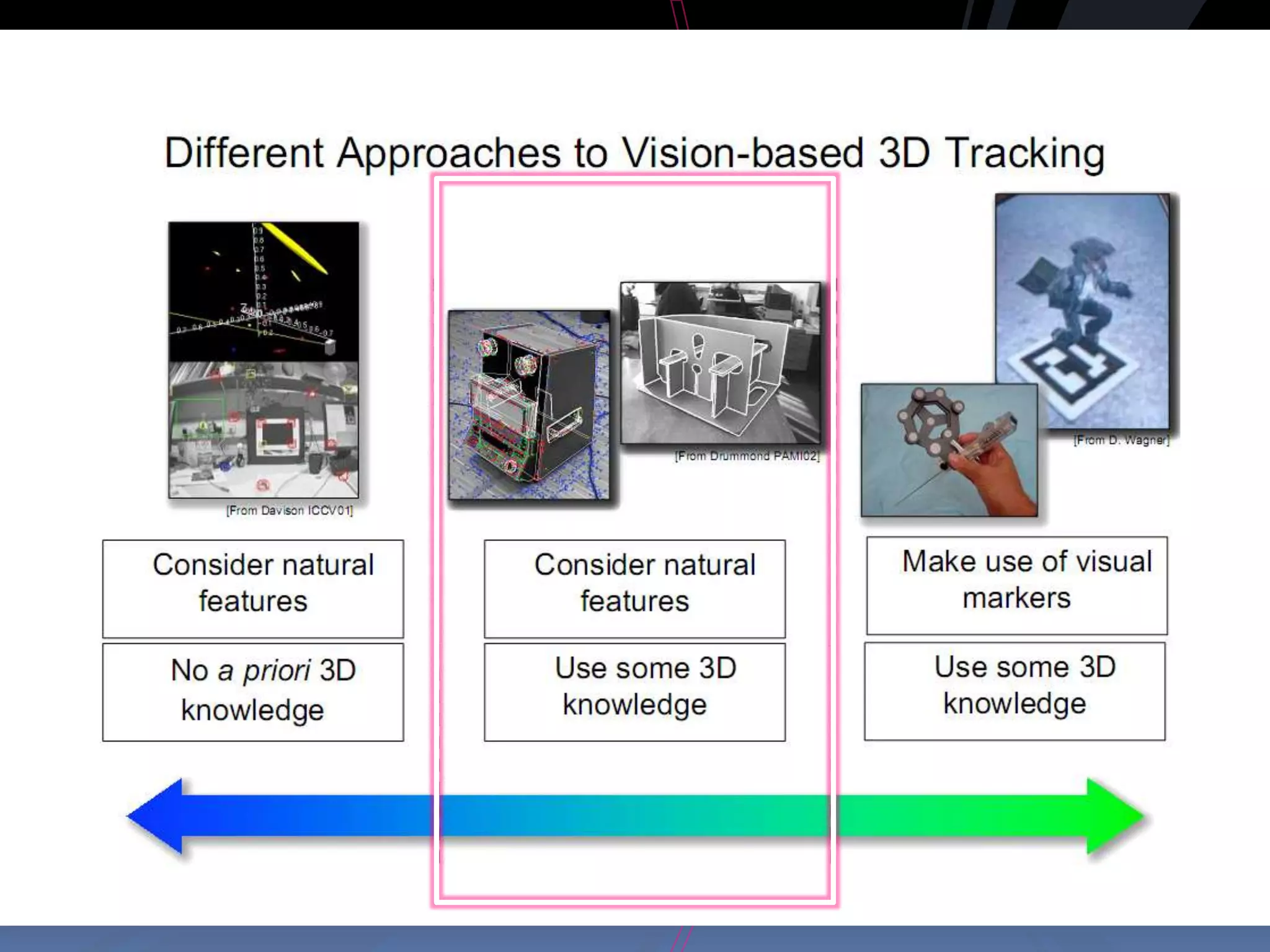


Monocular Model-Based 3D Tracking of Rigid Objects: A Survey2008. 12. 15.백운혁Chapter 4. Natural Features, Model-Based Tracking
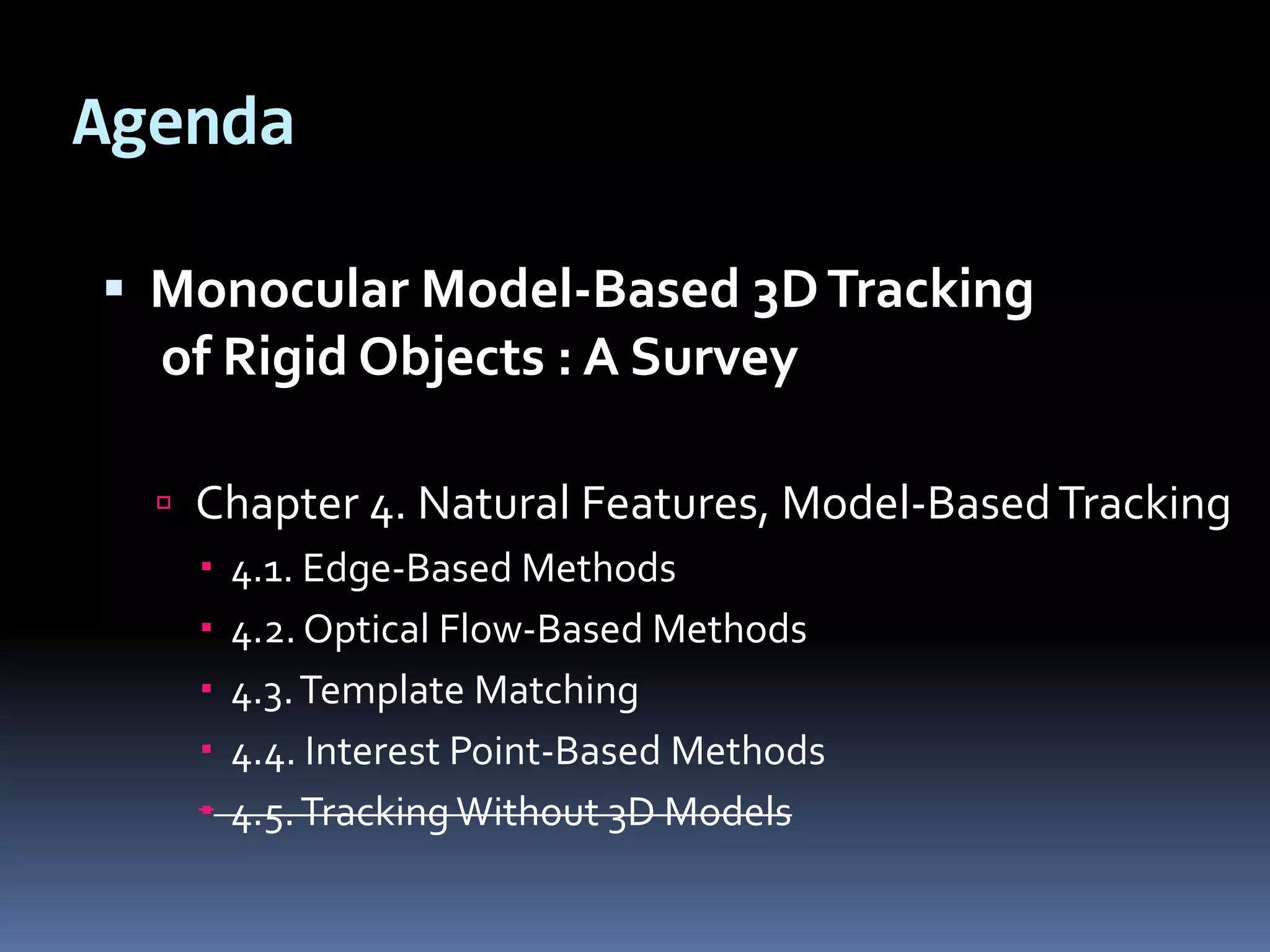
AgendaMonocular Model-Based 3D Tracking of Rigid Objects : A SurveyChapter 4. Natural Features, Model-Based Tracking4.1. Edge-Based Methods4.2. Optical Flow-Based Methods4.3. Template Matching4.4. Interest Point-Based Methods4.5. Tracking Without 3D Models
4.1 Edge-Based Methodsstraight line segments and to fit the model outlines
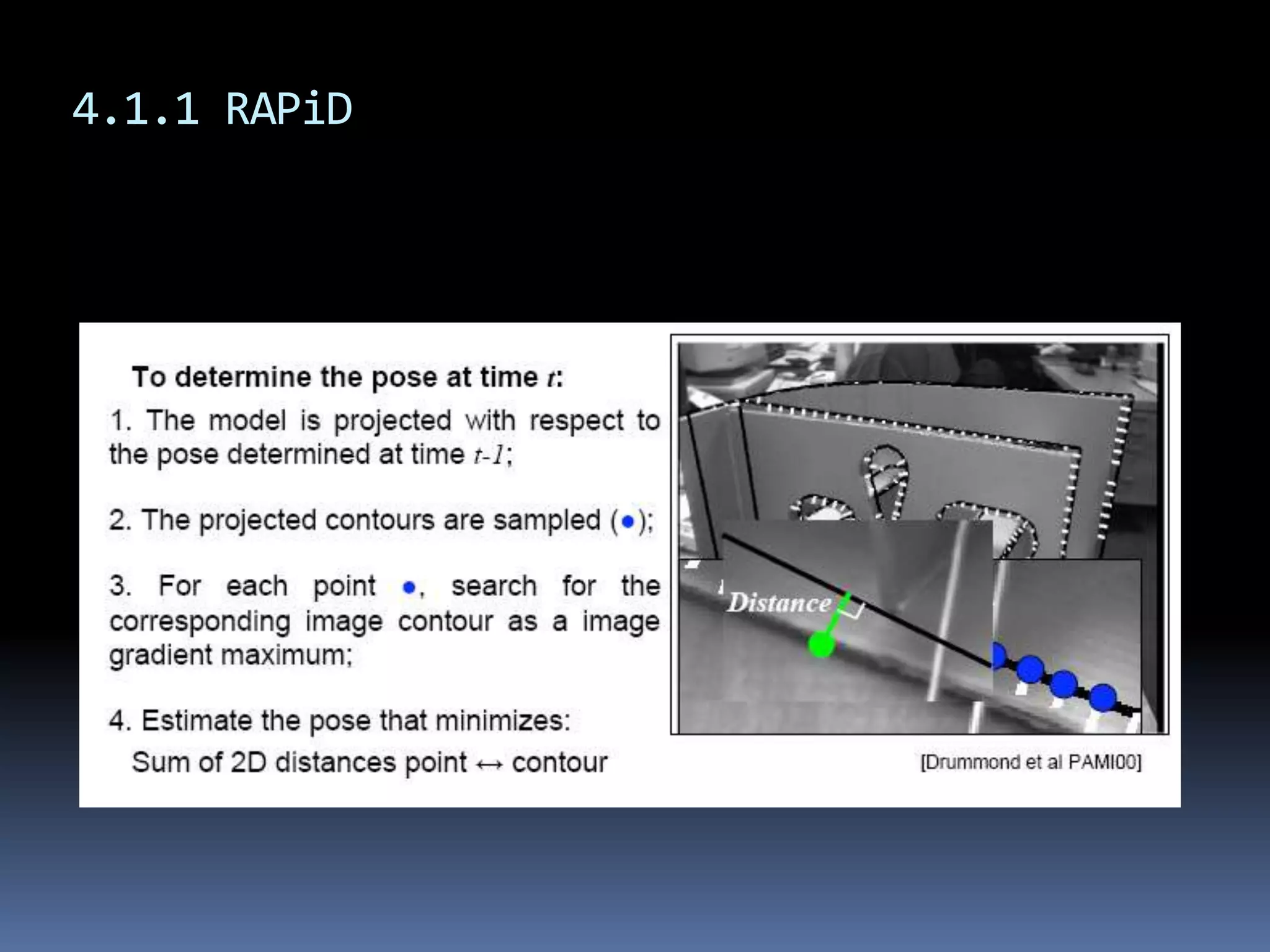
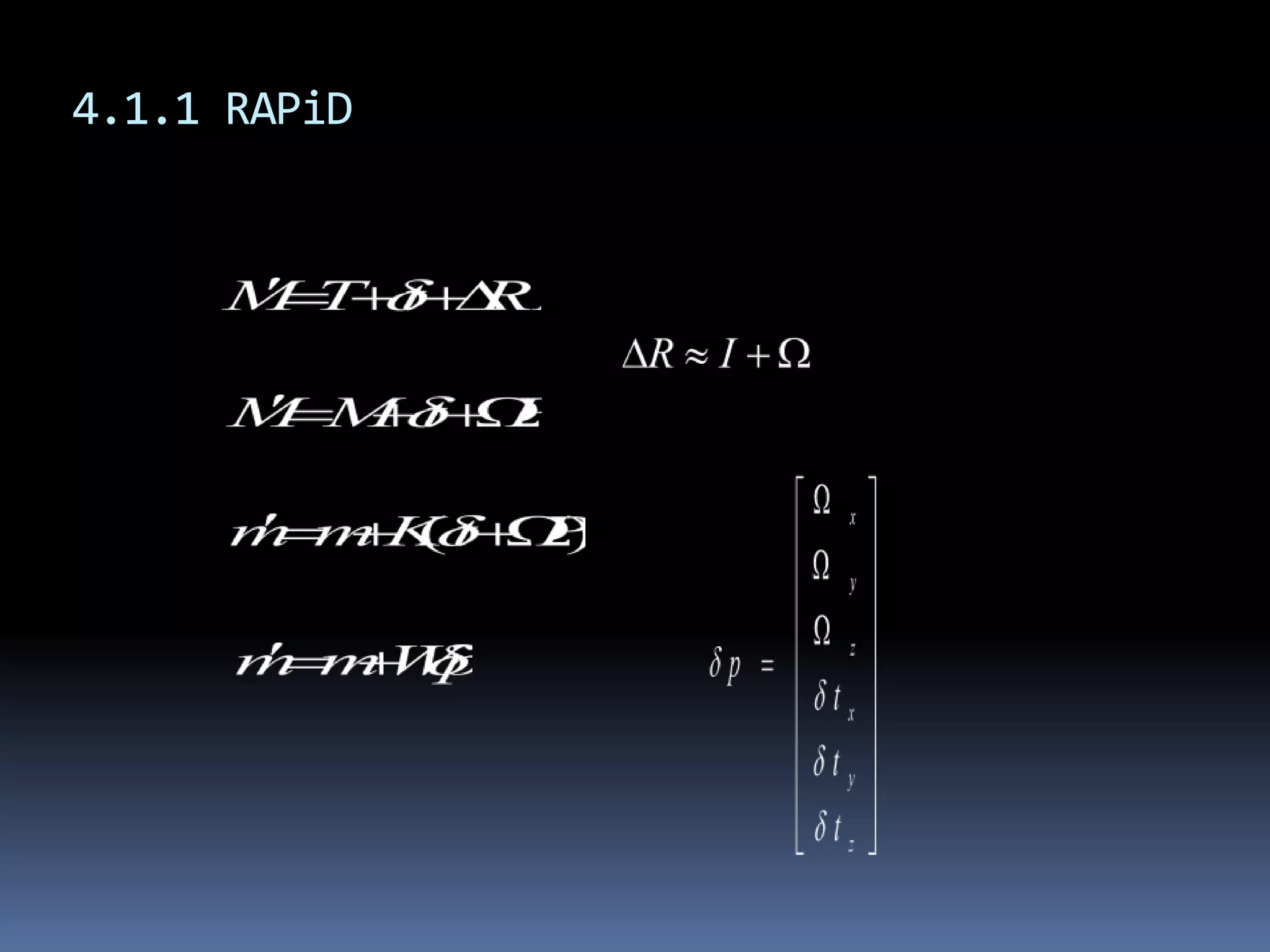
4.1.1 RAPiD
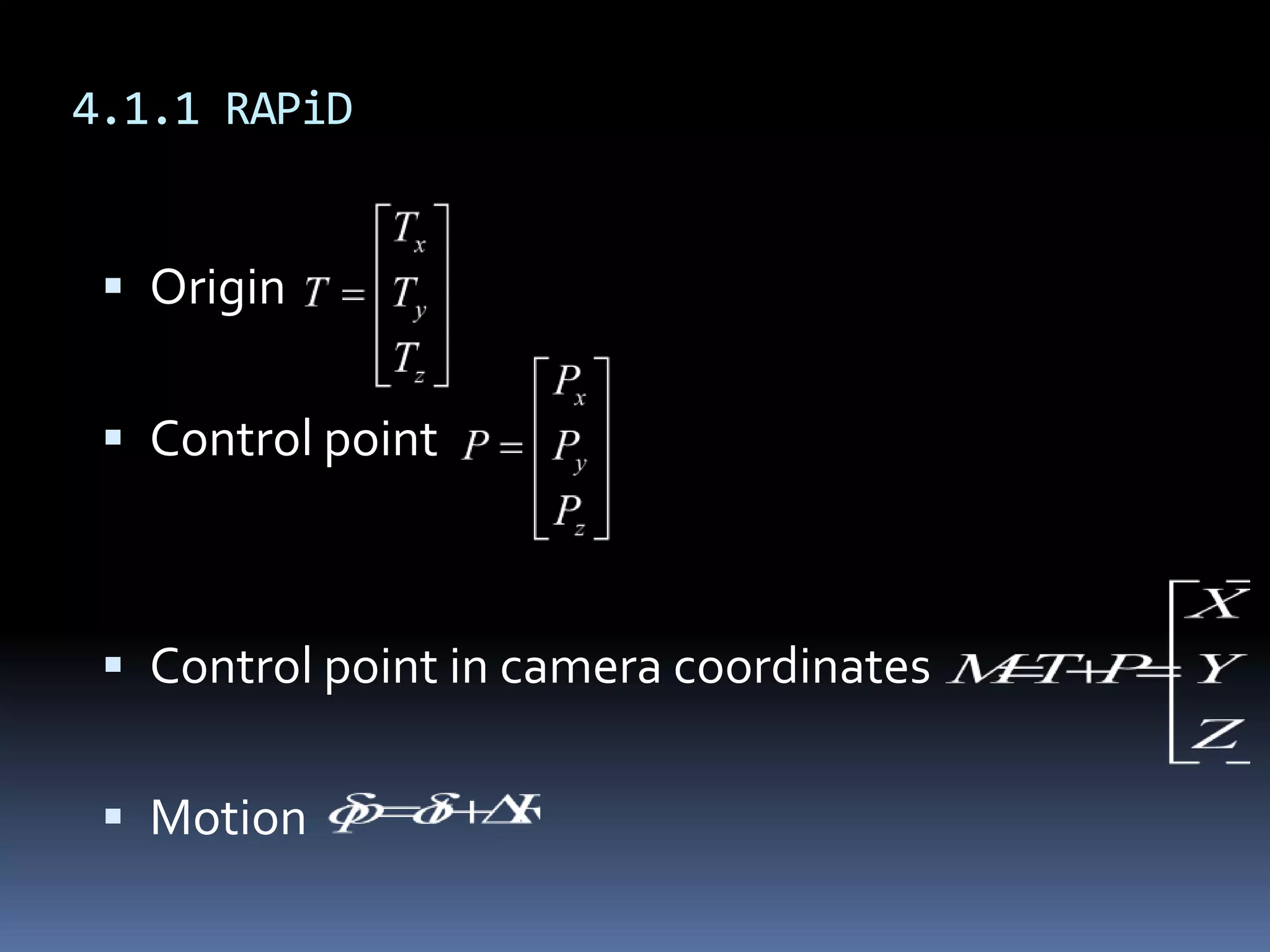
4.1.1 RAPiDOriginControl pointControl point in camera coordinatesMotion
4.1.1 RAPiD
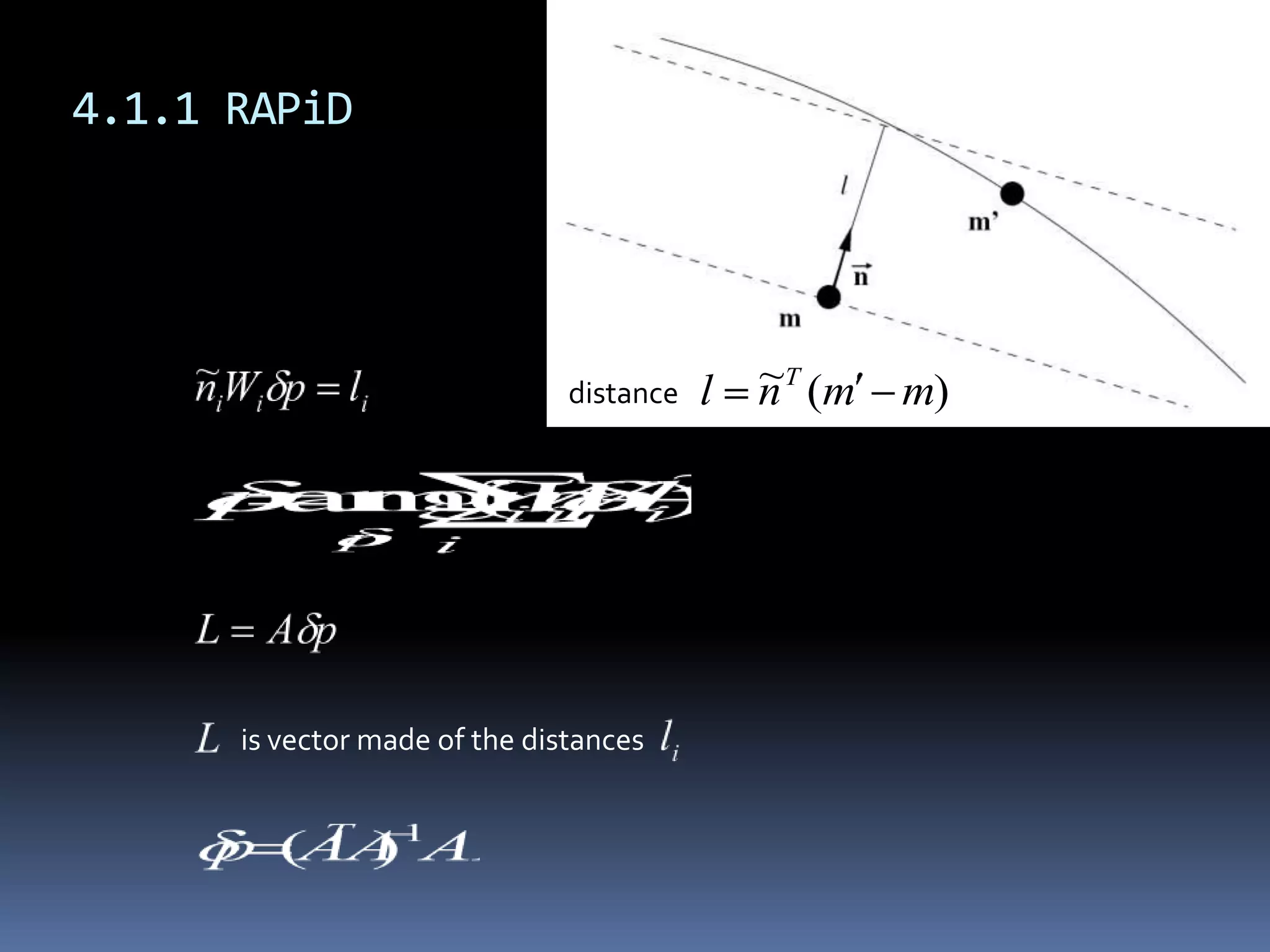
4.1.1 RAPiDdistanceis vector made of the distances
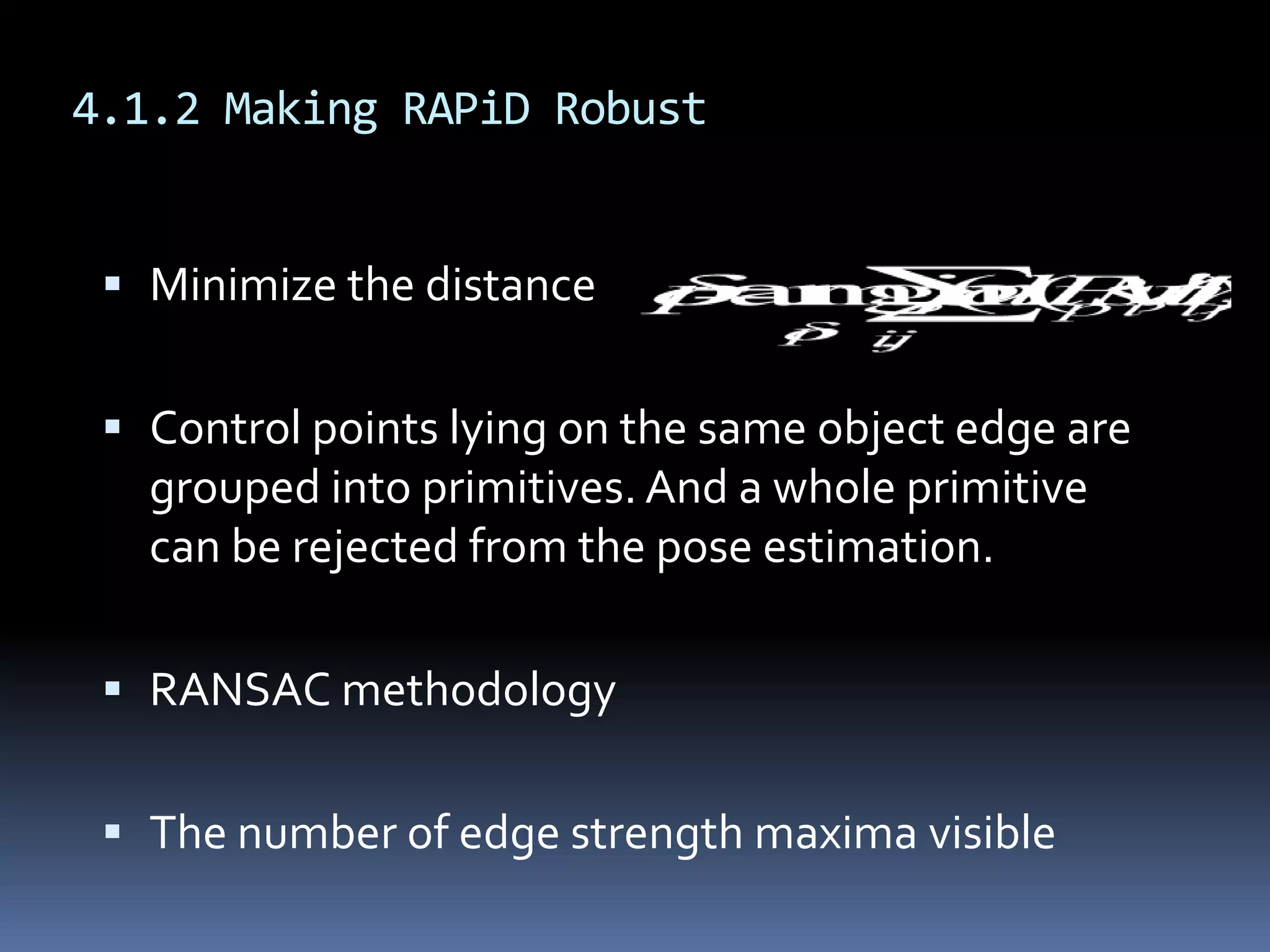
4.1.2 Making RAPiD RobustMinimize the distanceControl points lying on the same object edge are grouped into primitives. And a whole primitive can be rejected from the pose estimation.RANSAC methodologyThe number of edge strength maxima visible
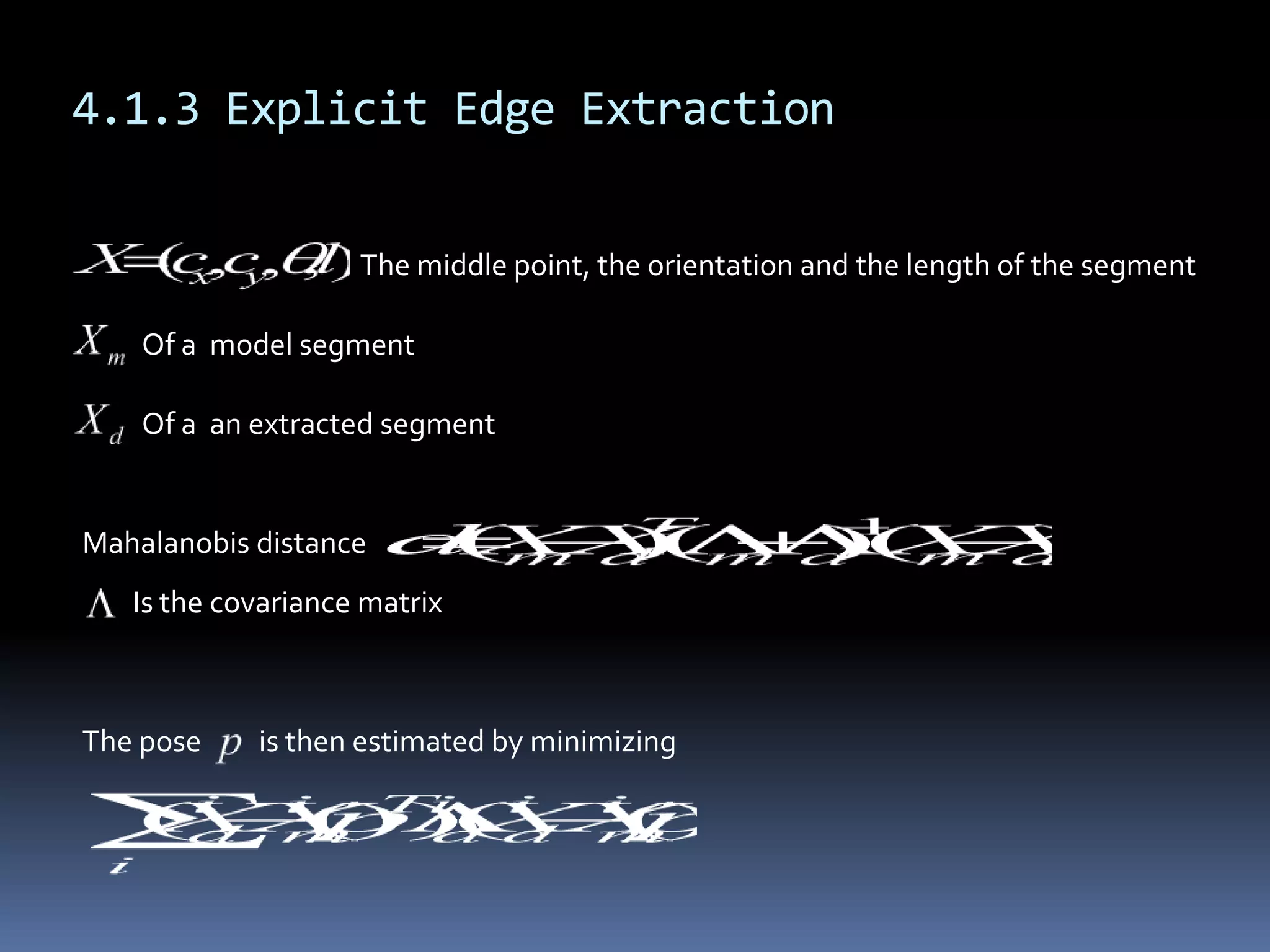
4.1.3 Explicit Edge ExtractionThe middle point, the orientation and the length of the segmentOf a  model segmentOf a  an extracted segmentMahalanobis distanceIs the covariance matrixThe pose         is then estimated by minimizing
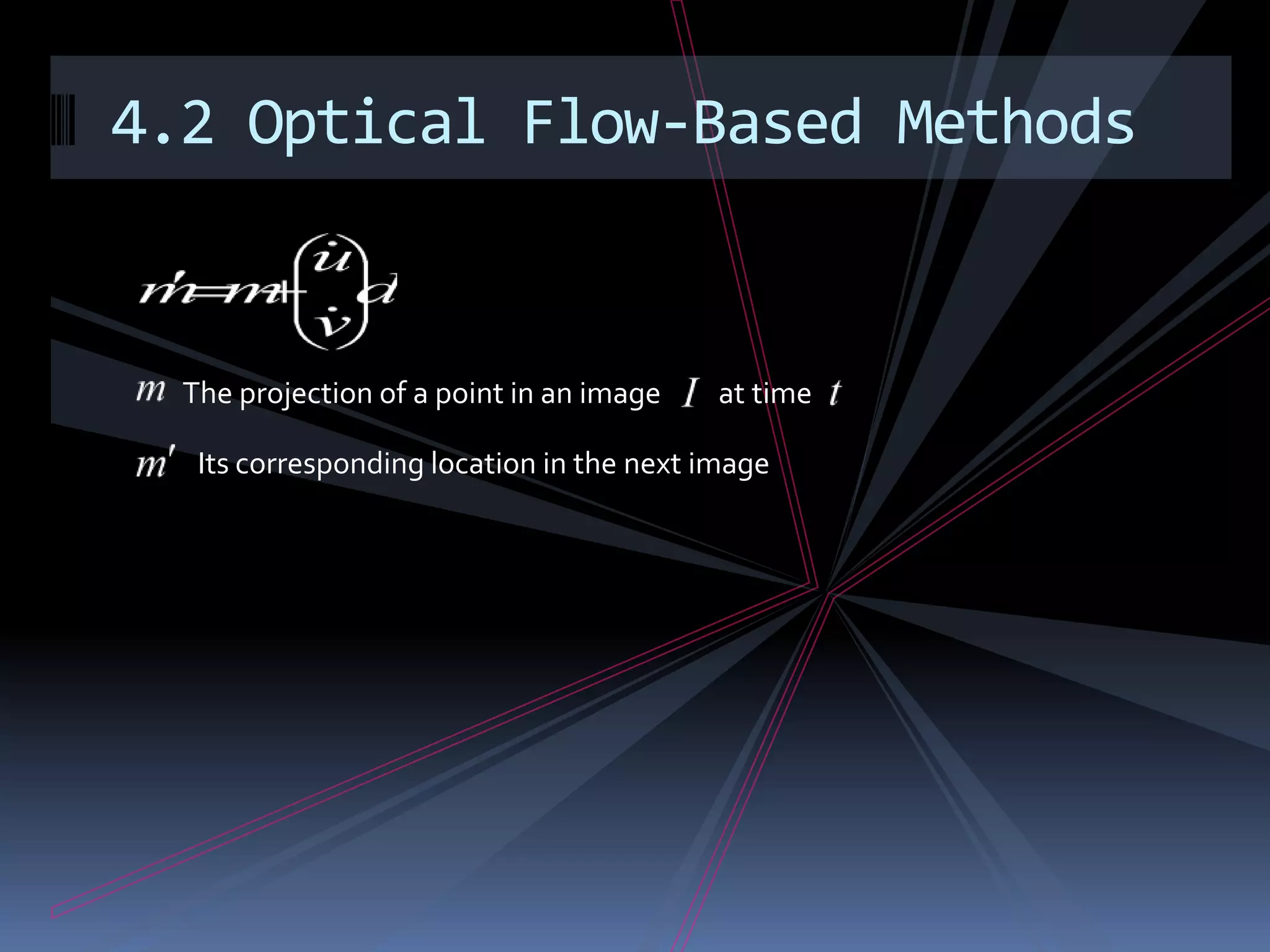
4.2 Optical Flow-Based MethodsIts corresponding location in the next imageThe projection of a point in an image         at time
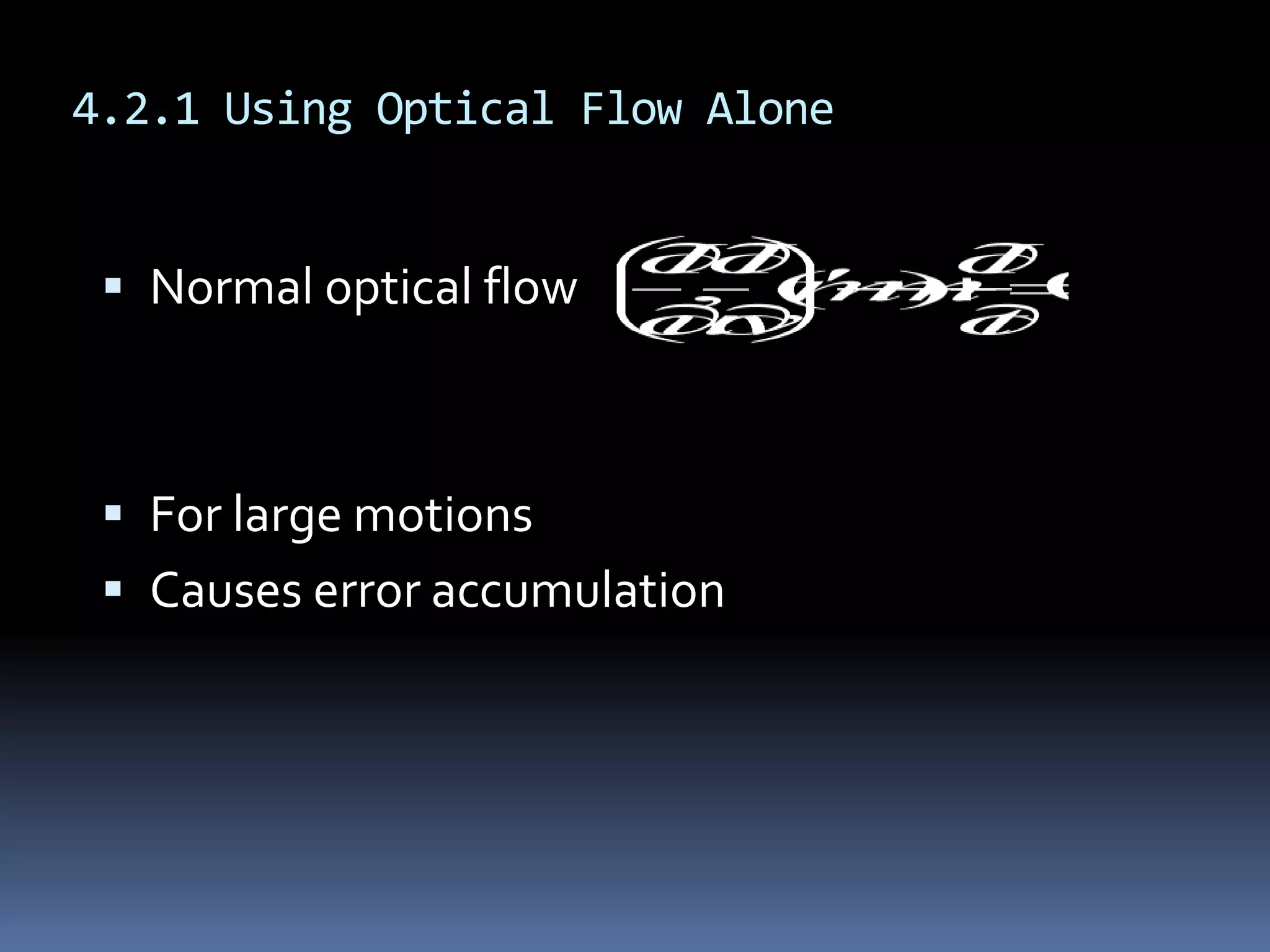
4.2.1 Using Optical Flow AloneNormal optical flowFor large motionsCauses error accumulation
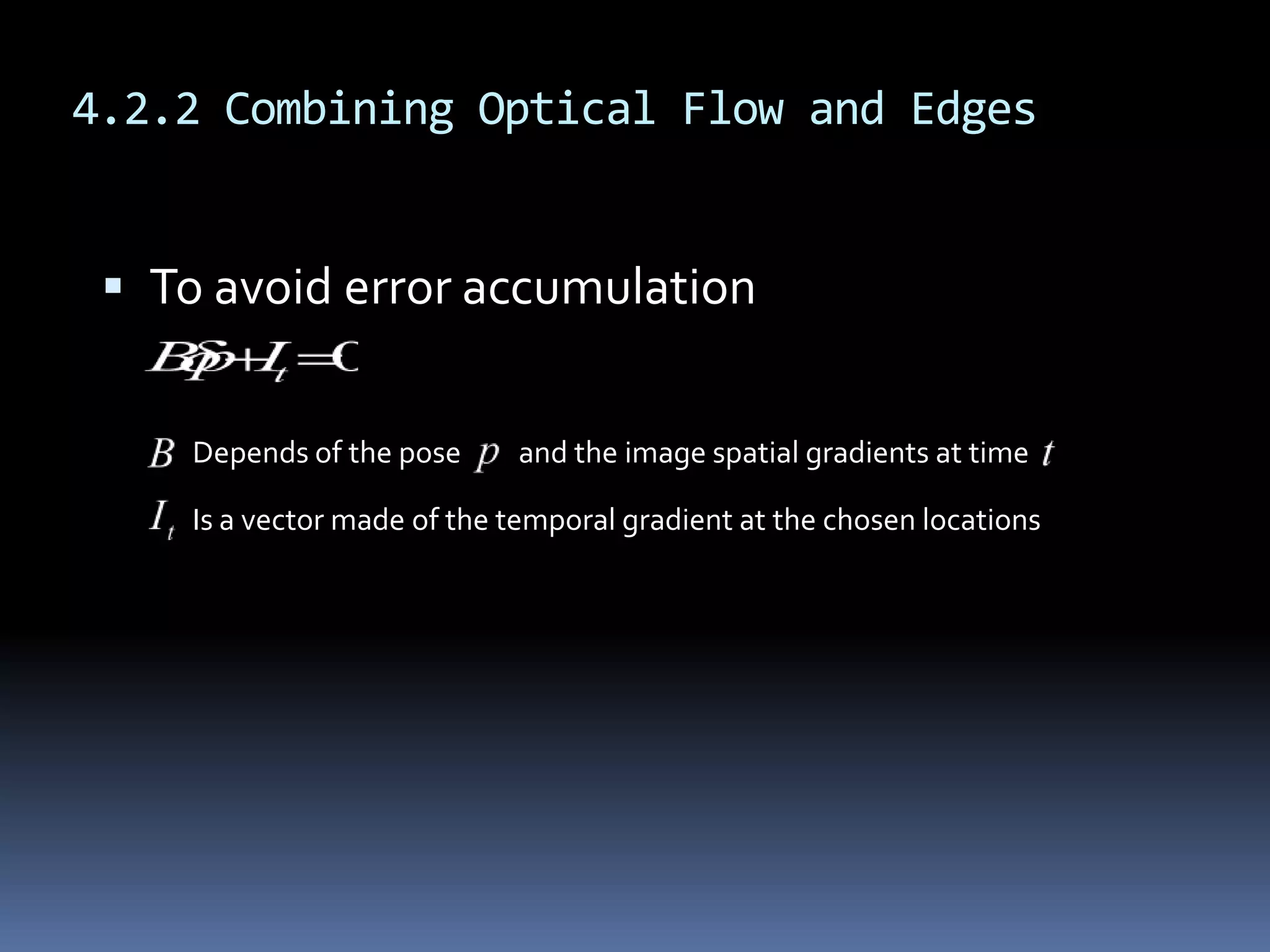
4.2.2 Combining Optical Flow and EdgesTo avoid error accumulationDepends of the pose         and the image spatial gradients at timeIs a vector made of the temporal gradient at the chosen locations
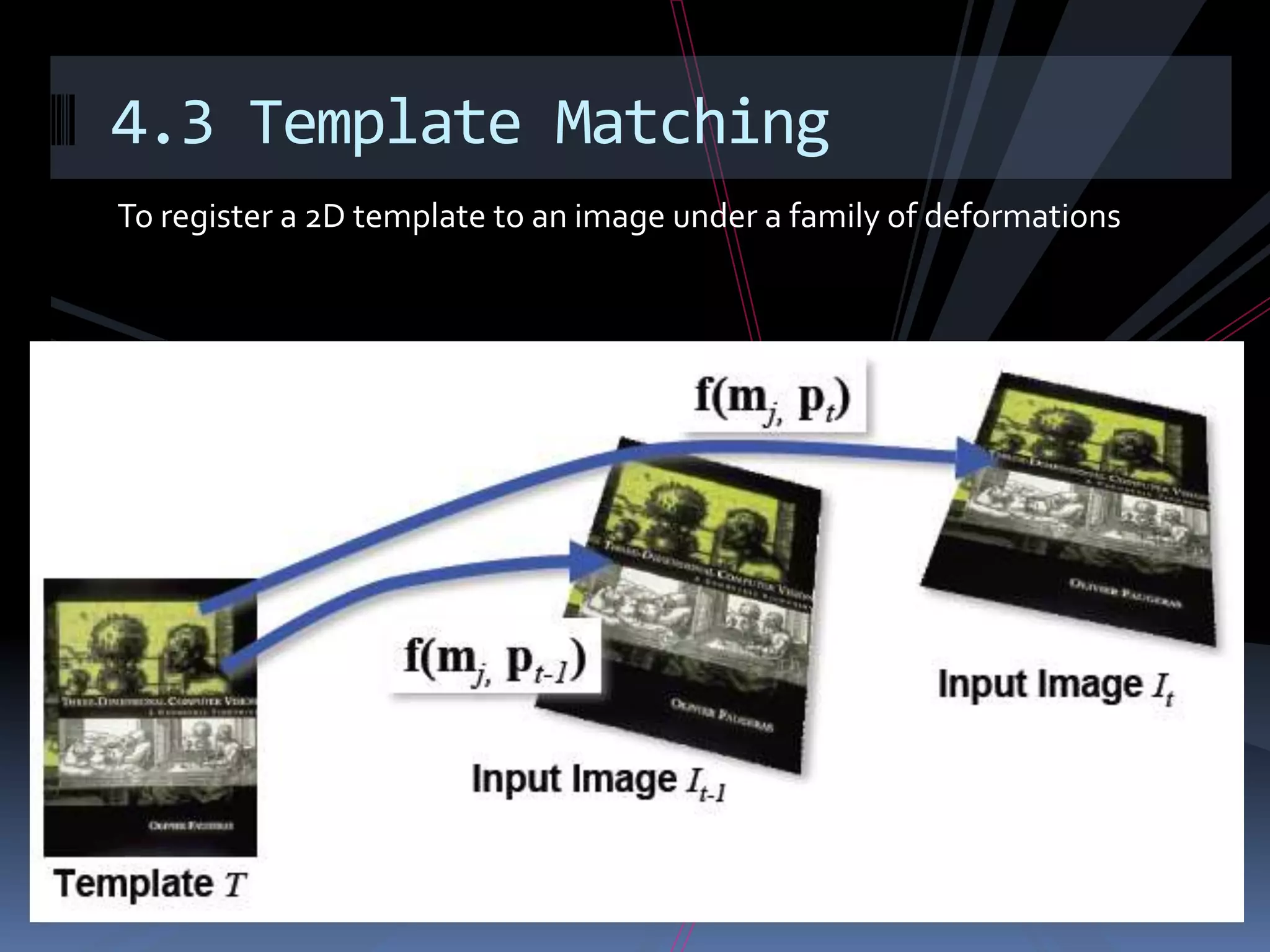
4.3 Template MatchingTo register a 2D template to an image under a family of deformations
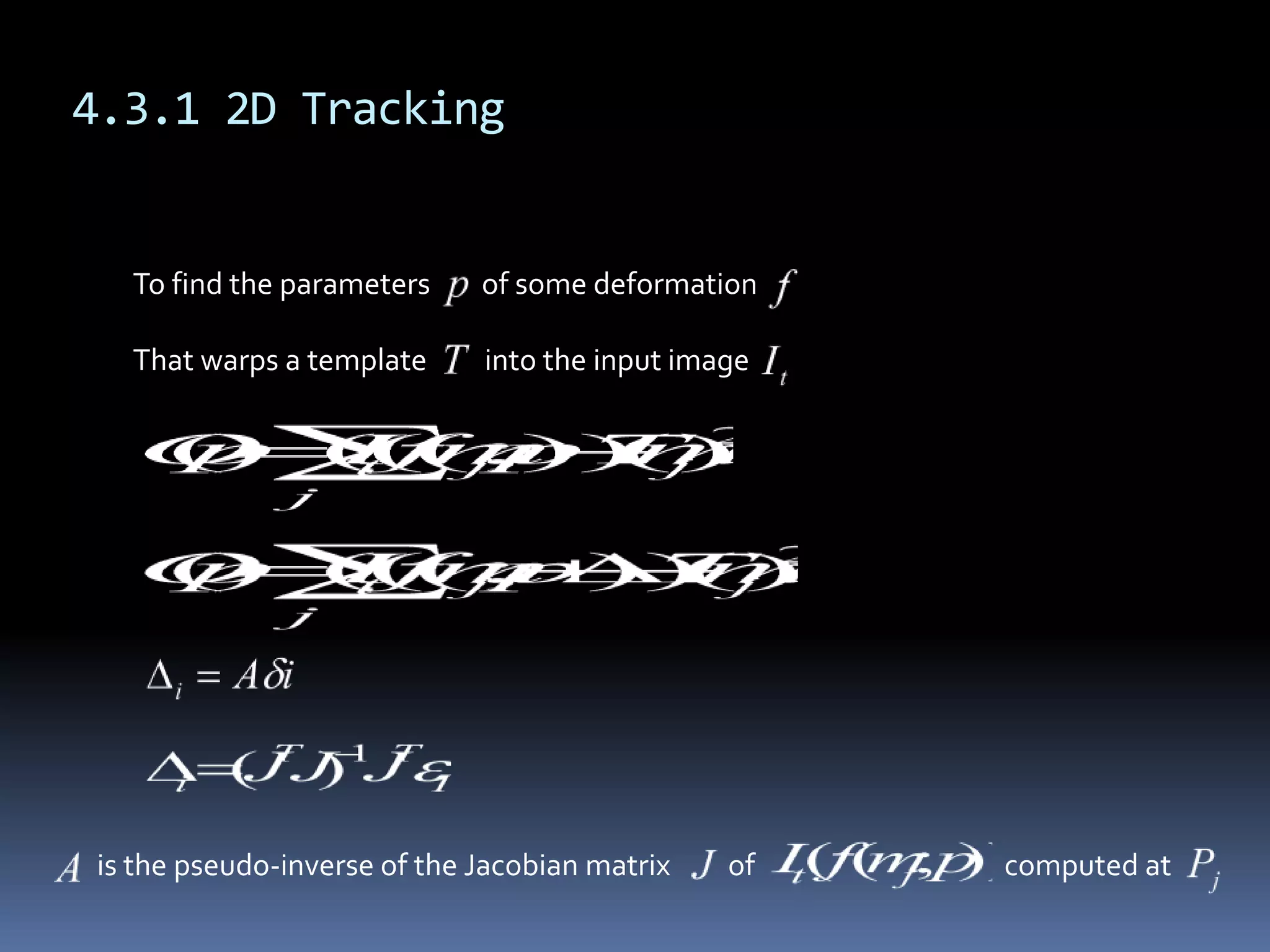
4.3.1 2D TrackingTo find the parameters        of some deformation     That warps a template         into the input image       is the pseudo-inverse of the Jacobian matrix         of                                       computed at
4.4 Interest Point-Based MethodsUse localized featuresRely on matching individual features across images and are therefore easy to robustify against partial occlusions or matching errors
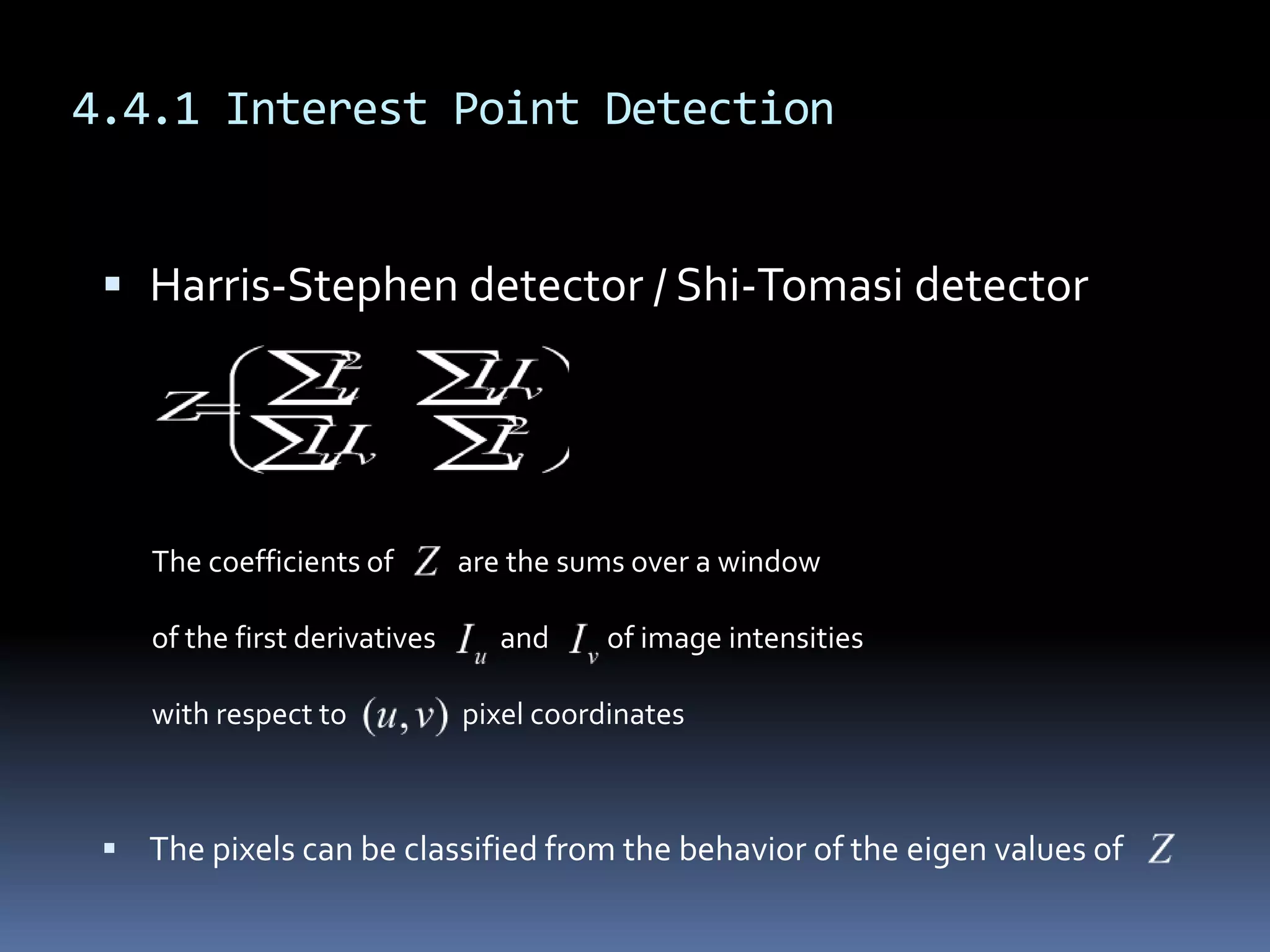
4.4.1 Interest Point DetectionHarris-Stephen detector / Shi-Tomasi detectorThe pixels can be classified from the behavior of the eigen values of The coefficients of          are the sums over a windowof the first derivatives          and         of image intensitieswith respect to                  pixel coordinates
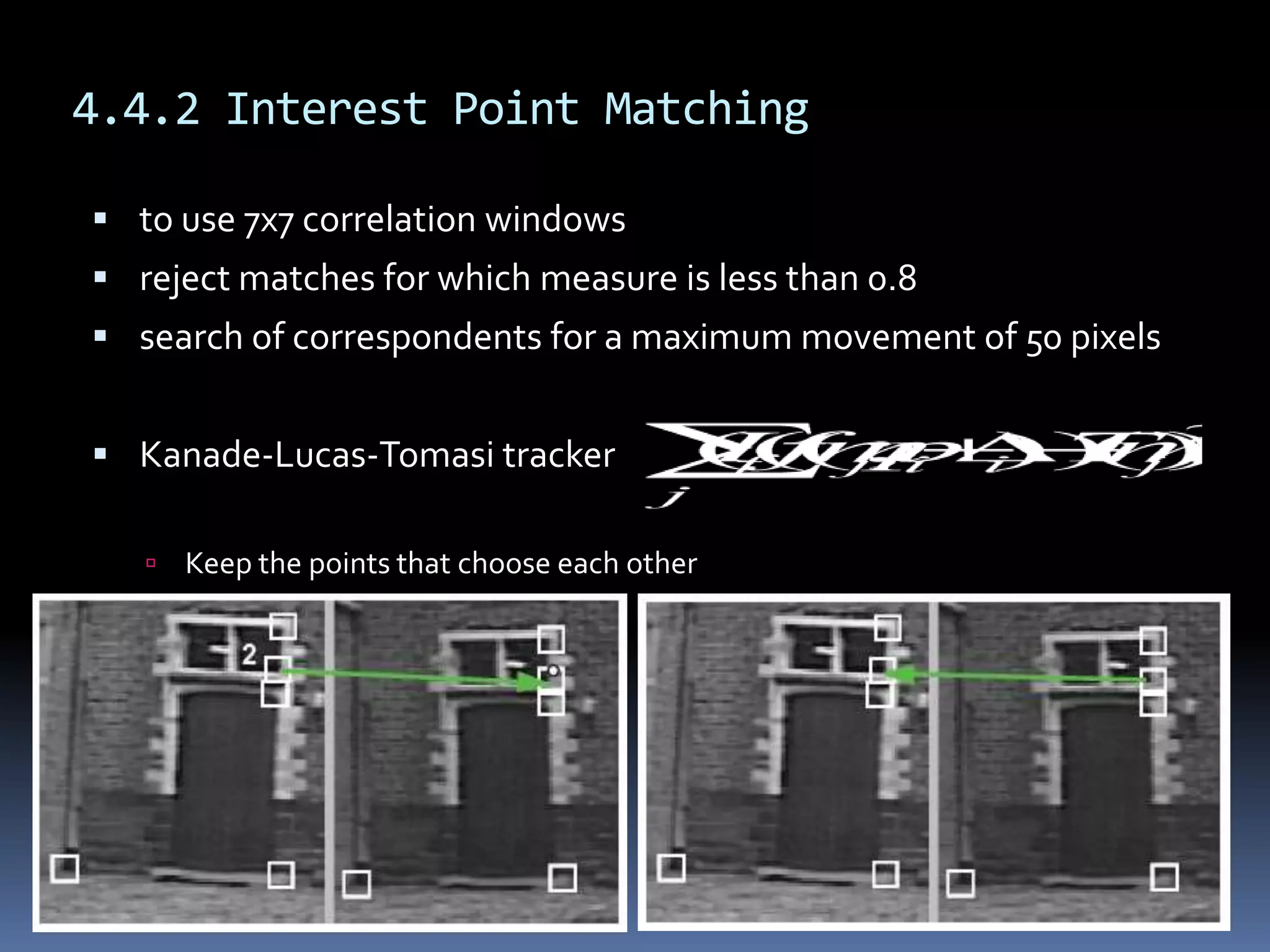
4.4.2 Interest Point Matchingto use7x7 correlation windowsreject matches for which measure is less than 0.8search of correspondents for a maximum movement of 50 pixelsKanade-Lucas-Tomasi trackerKeep the points that choose each other
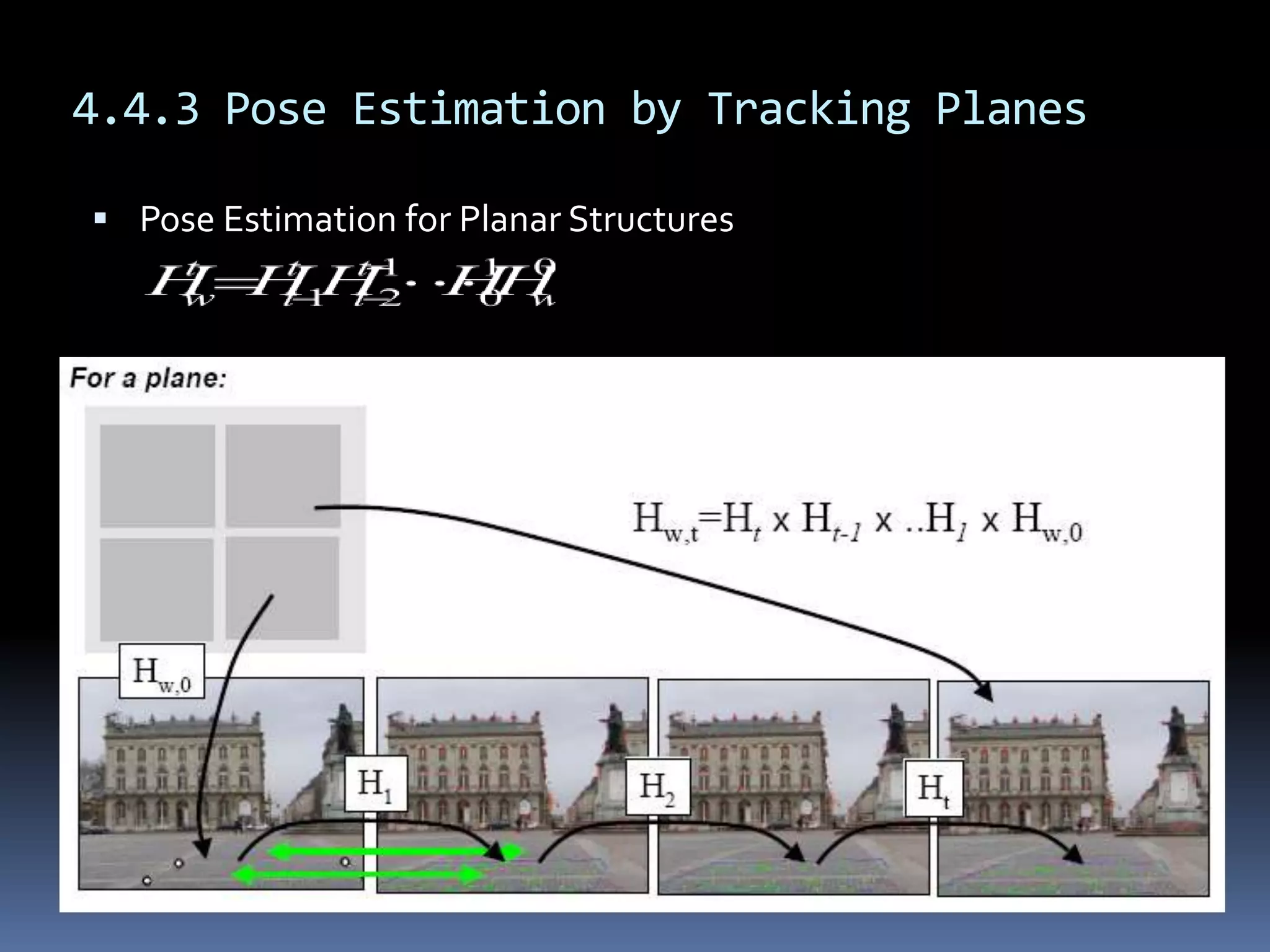
4.4.3 Pose Estimation by Tracking PlanesPose Estimation for Planar Structures
Thanks for your attention

3d tracking : chapter4 natural features, model-based tracking

  • 1.
    Monocular Model-Based 3DTracking of Rigid Objects: A Survey2008. 12. 15.백운혁Chapter 4. Natural Features, Model-Based Tracking
  • 3.
    AgendaMonocular Model-Based 3DTracking of Rigid Objects : A SurveyChapter 4. Natural Features, Model-Based Tracking4.1. Edge-Based Methods4.2. Optical Flow-Based Methods4.3. Template Matching4.4. Interest Point-Based Methods4.5. Tracking Without 3D Models
  • 4.
    4.1 Edge-Based Methodsstraightline segments and to fit the model outlines
  • 5.
  • 6.
    4.1.1 RAPiDOriginControl pointControlpoint in camera coordinatesMotion
  • 7.
  • 8.
    4.1.1 RAPiDdistanceis vectormade of the distances
  • 9.
    4.1.2 Making RAPiDRobustMinimize the distanceControl points lying on the same object edge are grouped into primitives. And a whole primitive can be rejected from the pose estimation.RANSAC methodologyThe number of edge strength maxima visible
  • 10.
    4.1.3 Explicit EdgeExtractionThe middle point, the orientation and the length of the segmentOf a model segmentOf a an extracted segmentMahalanobis distanceIs the covariance matrixThe pose is then estimated by minimizing
  • 11.
    4.2 Optical Flow-BasedMethodsIts corresponding location in the next imageThe projection of a point in an image at time
  • 12.
    4.2.1 Using OpticalFlow AloneNormal optical flowFor large motionsCauses error accumulation
  • 13.
    4.2.2 Combining OpticalFlow and EdgesTo avoid error accumulationDepends of the pose and the image spatial gradients at timeIs a vector made of the temporal gradient at the chosen locations
  • 14.
    4.3 Template MatchingToregister a 2D template to an image under a family of deformations
  • 15.
    4.3.1 2D TrackingTofind the parameters of some deformation That warps a template into the input image is the pseudo-inverse of the Jacobian matrix of computed at
  • 16.
    4.4 Interest Point-BasedMethodsUse localized featuresRely on matching individual features across images and are therefore easy to robustify against partial occlusions or matching errors
  • 17.
    4.4.1 Interest PointDetectionHarris-Stephen detector / Shi-Tomasi detectorThe pixels can be classified from the behavior of the eigen values of The coefficients of are the sums over a windowof the first derivatives and of image intensitieswith respect to pixel coordinates
  • 18.
    4.4.2 Interest PointMatchingto use7x7 correlation windowsreject matches for which measure is less than 0.8search of correspondents for a maximum movement of 50 pixelsKanade-Lucas-Tomasi trackerKeep the points that choose each other
  • 19.
    4.4.3 Pose Estimationby Tracking PlanesPose Estimation for Planar Structures
  • 20.