Downloaded 316 times
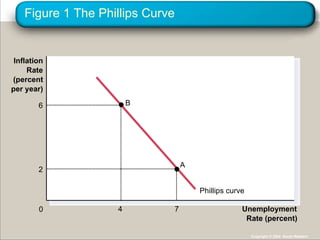
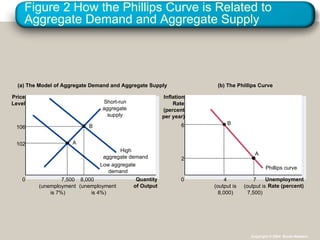
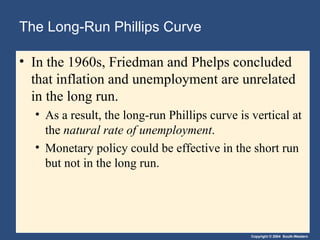
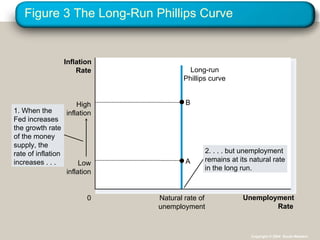
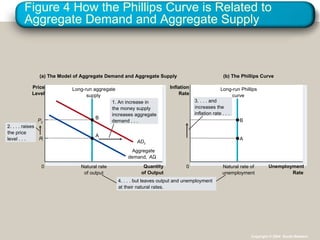
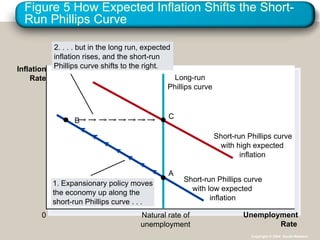
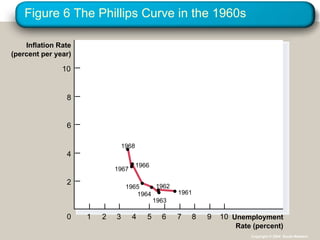
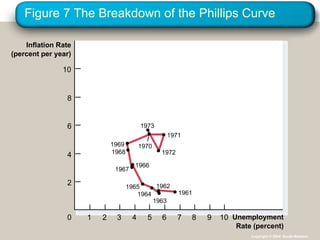
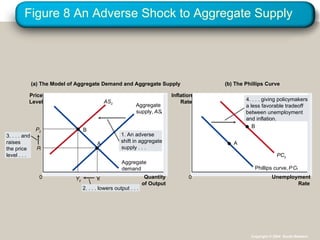
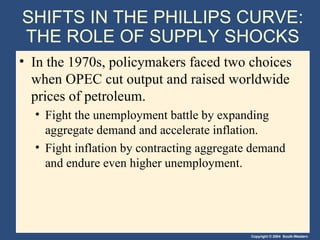
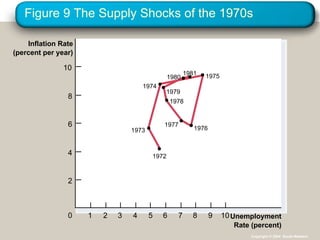
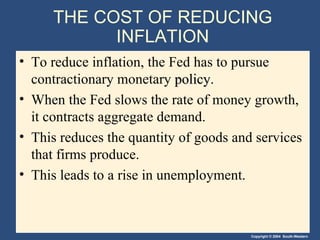
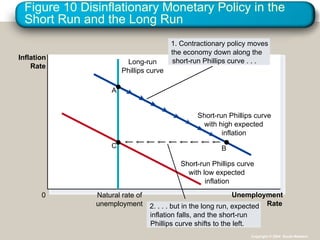
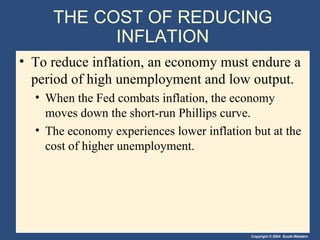
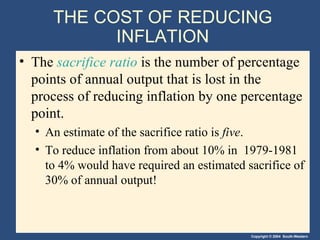
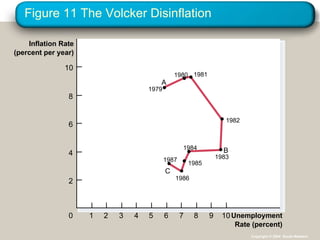
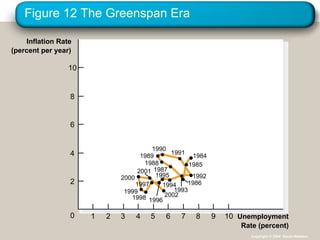

1. The document discusses the relationship between inflation and unemployment, known as the Phillips curve. It shows that in the short-run, lower unemployment can be achieved by increasing aggregate demand, but this leads to higher inflation. 2. In the long-run, monetary policy cannot affect unemployment levels, which return to the "natural rate." The Phillips curve becomes vertical at this natural unemployment rate regardless of inflation levels. 3. The Phillips curve can shift due to changes in expectations about future inflation or due to supply shocks, worsening the tradeoff between inflation and unemployment in the short-run. Reducing inflation requires contractionary policy that raises unemployment.


