Dr Rashida Hanif
Demonstrator physiology
§ At the end of this practical should should be able to know
ØNames of cranial nerves and their nature
ØImportance of 3rd ,4th and 6th cranial berves
ØEye muscles ,their innervation and actions
ØHow to examine these nerves
ØEffects produced due to lesions of these nerves
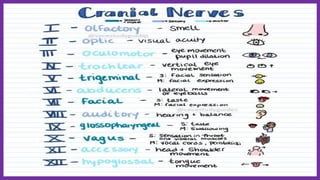
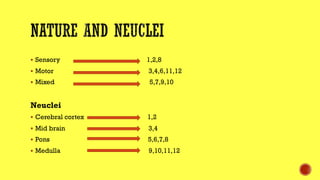
§ Sensory 1,2,8
§ Motor 3,4,6,11,12
§ Mixed 5,7,9,10
Neuclei
§ Cerebral cortex 1,2
§ Mid brain 3,4
§ Pons 5,6,7,8
§ Medulla 9,10,11,12
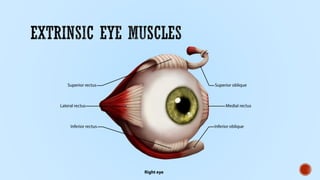
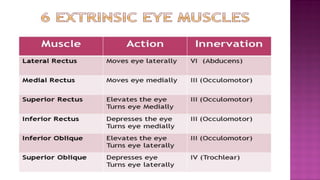
EXTRINSIC MUSCLES/extraocular
1. Superior rectus
2. Inferior rectus
3. Medial rectus
4. Lateral rectus
5. Superior oblique
6. Inferior oblique
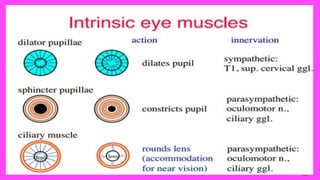
INTRINSIC MUSCLE /intraocular
1. Cilliary muscle
2. Iris ( sphincter pupillae and dilator
pupillae )
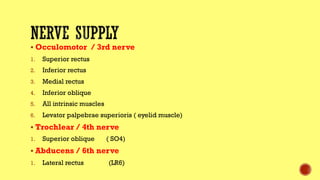
§ Occulomotor / 3rd nerve
1. Superior rectus
2. Inferior rectus
3. Medial rectus
4. Inferior oblique
5. All intrinsic muscles
6. Levator palpebrae superioris ( eyelid muscle)
§ Trochlear / 4th nerve
1. Superior oblique ( SO4)
§ Abducens / 6th nerve
1. Lateral rectus (LR6)
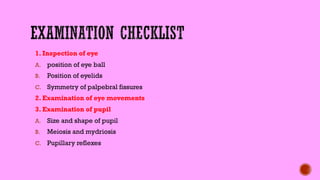
1. Inspection of eye
A. position of eye ball
B. Position of eyelids
C. Symmetry of palpebral fissures
2. Examination of eye movements
3. Examination of pupil
A. Size and shape of pupil
B. Meiosis and mydriosis
C. Pupillary reflexes
§ Oculomotor / 3rd nerve lesion:
1. SR, IR, MR, IO muscles are paralyzed so eyeball cannot move Medially and
Upward and it is deviated Laterally and slightly donwards due to unopposed
action of LR and SO muscle.
2. Intrinsic muscles are damaged.There is ptosis , fixed and dilated pupils with
absent light but intact accomodation reflex (Argyll Robertson pupil)
§ Trochlear /4th nerve lesion:
1. Superior oblique is paralyzed and eyeball is deviated laterally
§ Abducent /6th nerve lesion:
1. Lateral rectus is paralyzed and eyeball is deviated medially
3,4,6 nerves practical .pdf

3,4,6 nerves practical .pdf

  • 1.
  • 2.
    § At theend of this practical should should be able to know ØNames of cranial nerves and their nature ØImportance of 3rd ,4th and 6th cranial berves ØEye muscles ,their innervation and actions ØHow to examine these nerves ØEffects produced due to lesions of these nerves
  • 5.
    § Sensory 1,2,8 §Motor 3,4,6,11,12 § Mixed 5,7,9,10 Neuclei § Cerebral cortex 1,2 § Mid brain 3,4 § Pons 5,6,7,8 § Medulla 9,10,11,12
  • 8.
    EXTRINSIC MUSCLES/extraocular 1. Superiorrectus 2. Inferior rectus 3. Medial rectus 4. Lateral rectus 5. Superior oblique 6. Inferior oblique INTRINSIC MUSCLE /intraocular 1. Cilliary muscle 2. Iris ( sphincter pupillae and dilator pupillae )
  • 12.
    § Occulomotor /3rd nerve 1. Superior rectus 2. Inferior rectus 3. Medial rectus 4. Inferior oblique 5. All intrinsic muscles 6. Levator palpebrae superioris ( eyelid muscle) § Trochlear / 4th nerve 1. Superior oblique ( SO4) § Abducens / 6th nerve 1. Lateral rectus (LR6)
  • 13.
    1. Inspection ofeye A. position of eye ball B. Position of eyelids C. Symmetry of palpebral fissures 2. Examination of eye movements 3. Examination of pupil A. Size and shape of pupil B. Meiosis and mydriosis C. Pupillary reflexes
  • 14.
    § Oculomotor /3rd nerve lesion: 1. SR, IR, MR, IO muscles are paralyzed so eyeball cannot move Medially and Upward and it is deviated Laterally and slightly donwards due to unopposed action of LR and SO muscle. 2. Intrinsic muscles are damaged.There is ptosis , fixed and dilated pupils with absent light but intact accomodation reflex (Argyll Robertson pupil) § Trochlear /4th nerve lesion: 1. Superior oblique is paralyzed and eyeball is deviated laterally § Abducent /6th nerve lesion: 1. Lateral rectus is paralyzed and eyeball is deviated medially