P.B. Dharmasena
0777 613234, 0717 613234
dharmasenapb@ymail.com , dharmasenapb@gmail.com
https://independent.academia.edu/PunchiBandageDharmasena
https://www.researchgate.net/profile/Punchi_Bandage_Dharmasena/contributions
http://www.slideshare.net/DharmasenaPb
Poverty and Environment
Course code: ECON/EMGT 4214
Friday from 8.30-11.30 a.m
Lesson 3 – Poverty: Definition and descriptions
P.B. Dharmasena
0777 613234, 0717 613234
dharmasenapb@ymail.com , dharmasenapb@gmail.com
https://independent.academia.edu/PunchiBandageDharmasena
https://www.researchgate.net/profile/Punchi_Bandage_Dharmasena/contributions
http://www.slideshare.net/DharmasenaPb
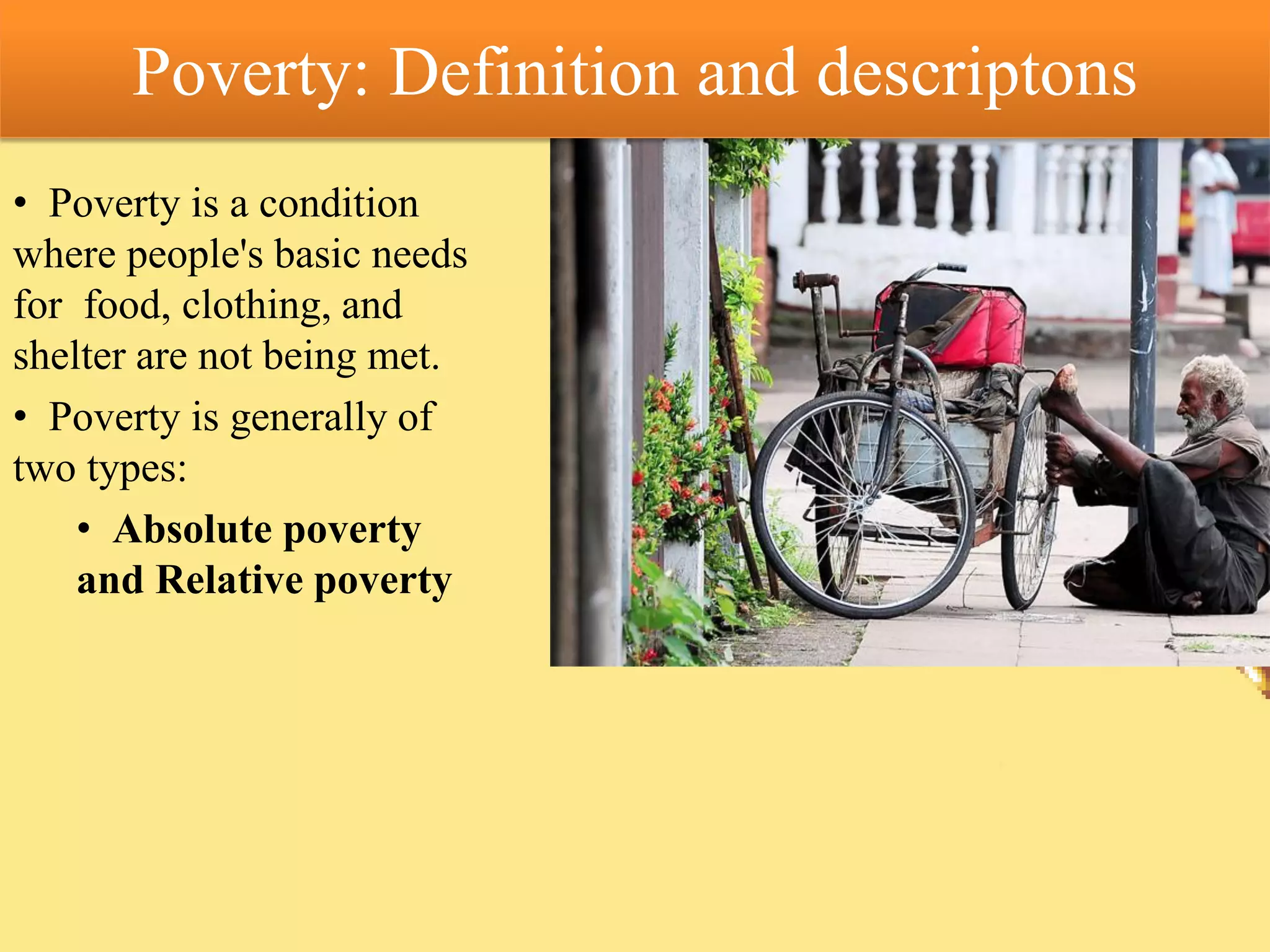
• Poverty is a condition
where people's basic needs
for food, clothing, and
shelter are not being met.
• Poverty is generally of
two types:
• Absolute poverty
and Relative poverty
Poverty: Definition and descriptons
Rural Development
Lesson 2: Rural Poverty
• Absolute poverty occurs when
people cannot obtain adequate
resources (measured in terms of
calories or nutrition) to support a
minimum level of physical health.
(same everywhere, and can be
eradicated as demonstrated by
some countries)
• Relative poverty occurs when
people do not have the minimum
level of living standards as
determined by a government.
(varies from country to country,
sometimes within the same
country)
4
Absolute Poverty
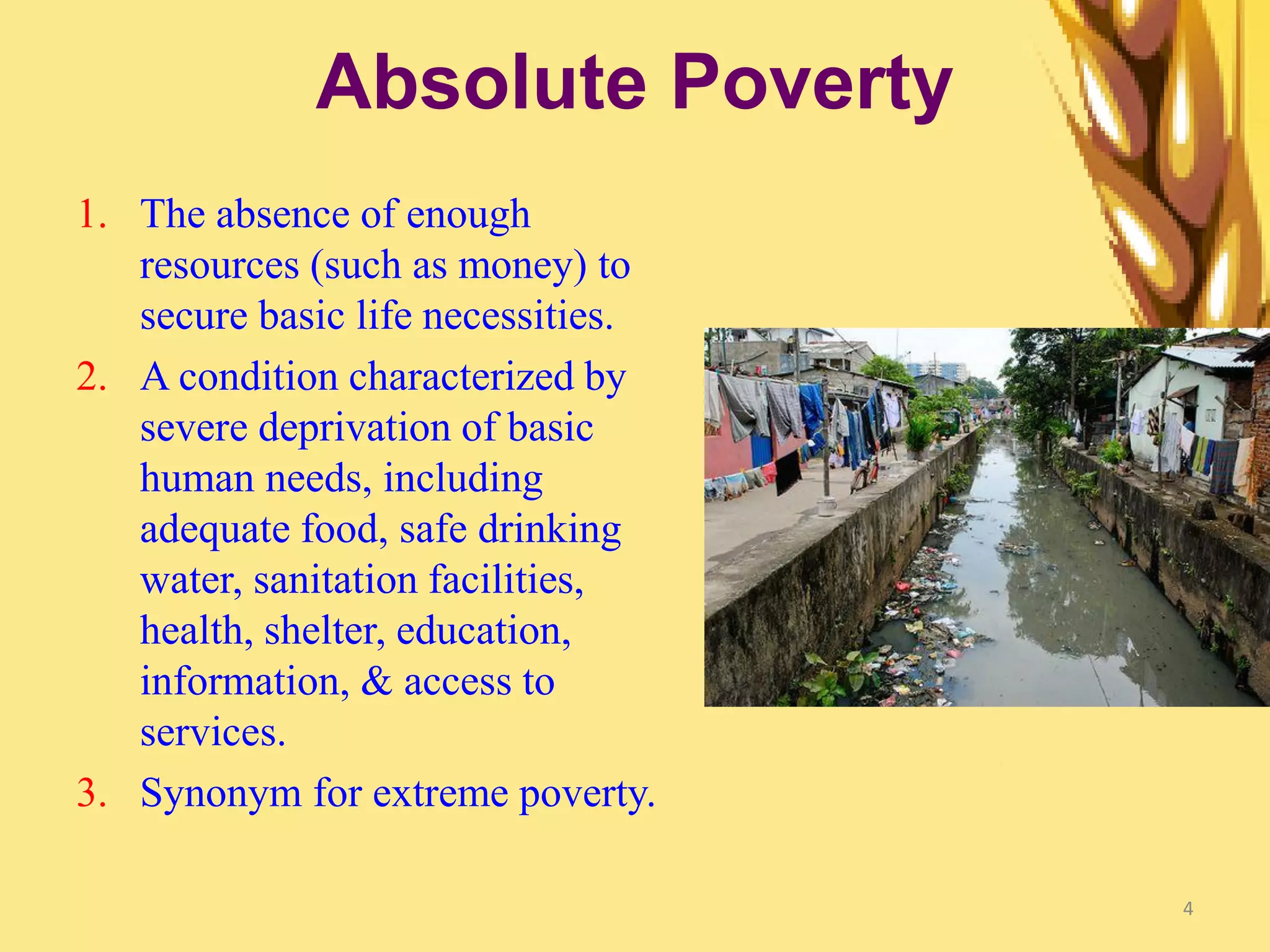
1. The absence of enough
resources (such as money) to
secure basic life necessities.
2. A condition characterized by
severe deprivation of basic
human needs, including
adequate food, safe drinking
water, sanitation facilities,
health, shelter, education,
information, & access to
services.
3. Synonym for extreme poverty.
Absolute Poverty
The actual needs of the poor and not by comparing
the expenditure of those who are not poor
6
Relative Poverty
 Definition
 Inequality between groups.
 Proportion of household earning in
incomes < 1/2 the mean/median
income.
 Measured; income disparity ratio of
income groups ethnic, urban & rural.
 In this system, if everyone's real
income in an economy increases, but
the income distribution stays the same,
then the rate of relative poverty will
also stay the same.
 Example; households with an accumulated
income < 50% of the median income are
living in poverty.
Relative Poverty
Global Prevalence of Poverty
• The World Bank estimates that 702.1 million
people (9.6%) are living in extreme poverty in
2015, down from 1.75 billion (37.1%) in 1990.
• Of these 702.1 million people, about 347.1 million
people (35.2%) live in Sub-Saharan Africa and
231.3 million (13.5%) live in South Asia .
• UNICEF estimates half the world's children (or 1.1
billion) live in poverty.
• Another estimate places the true scale of poverty
much higher than the World Bank, with an
estimated 4.3 billion people (59 %) living with less
than $5 a day and unable to meet basic needs
adequately.
Different definitions of Poverty
13
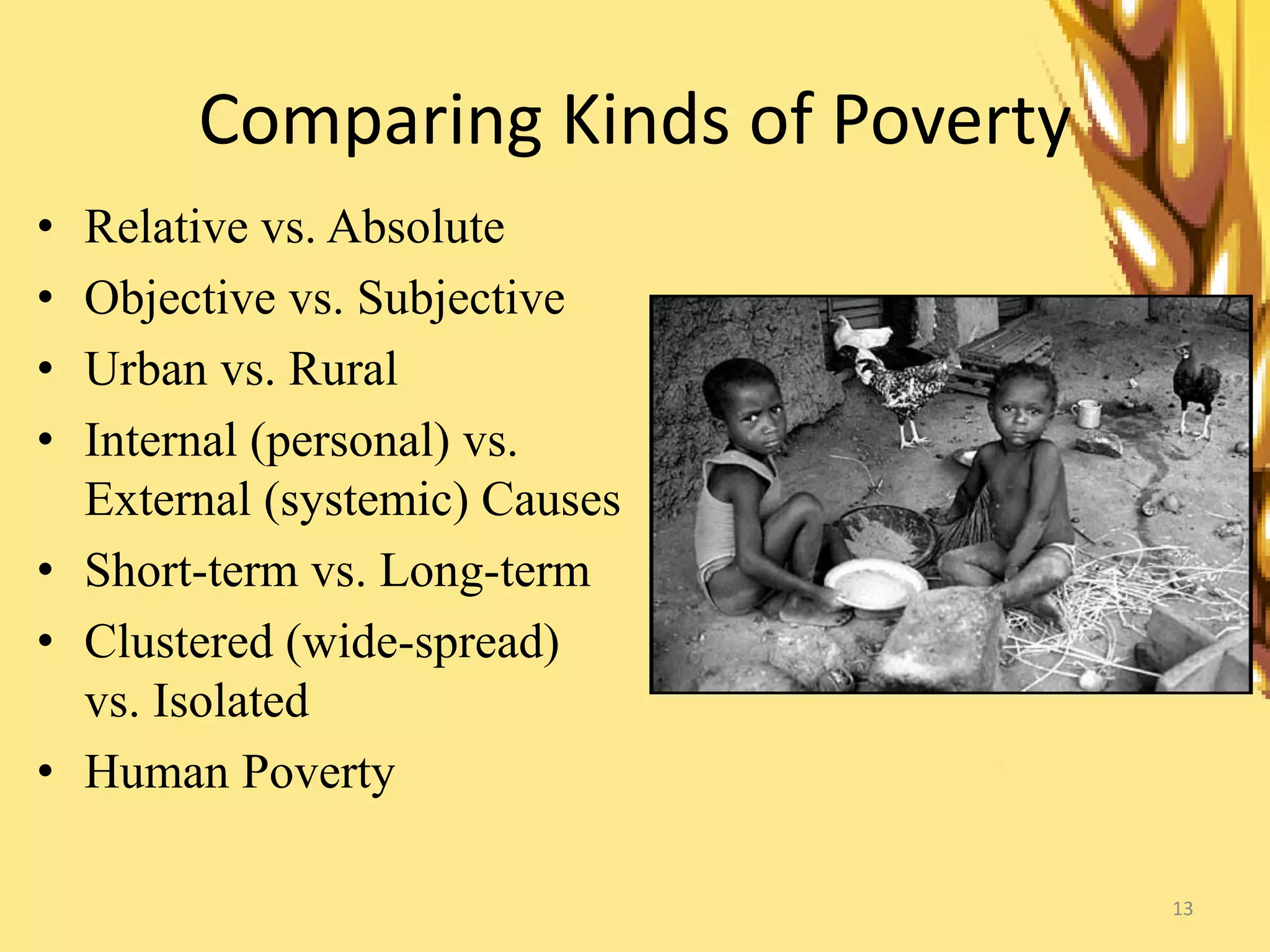
Comparing Kinds of Poverty
• Relative vs. Absolute
• Objective vs. Subjective
• Urban vs. Rural
• Internal (personal) vs.
External (systemic) Causes
• Short-term vs. Long-term
• Clustered (wide-spread)
vs. Isolated
• Human Poverty
Absolute vs. Relative Poverty
Relative
• Comparative
• Perceived (apparent)
deficits
• Primarily emotional
consequences
Absolute
• Absolute
• Actual deficits
• Primarily physical
consequences
14
Absolute Poverty ……………………..
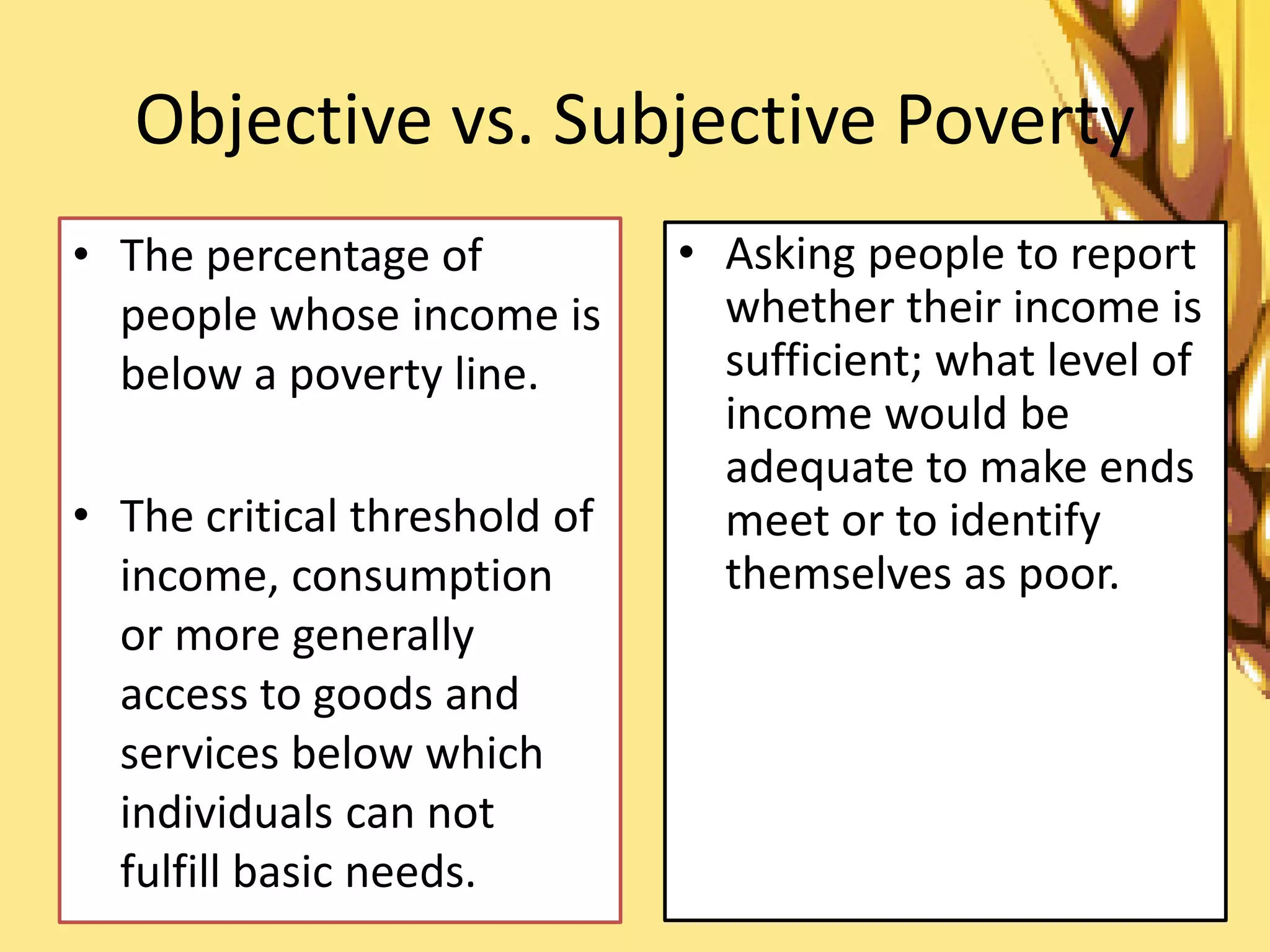
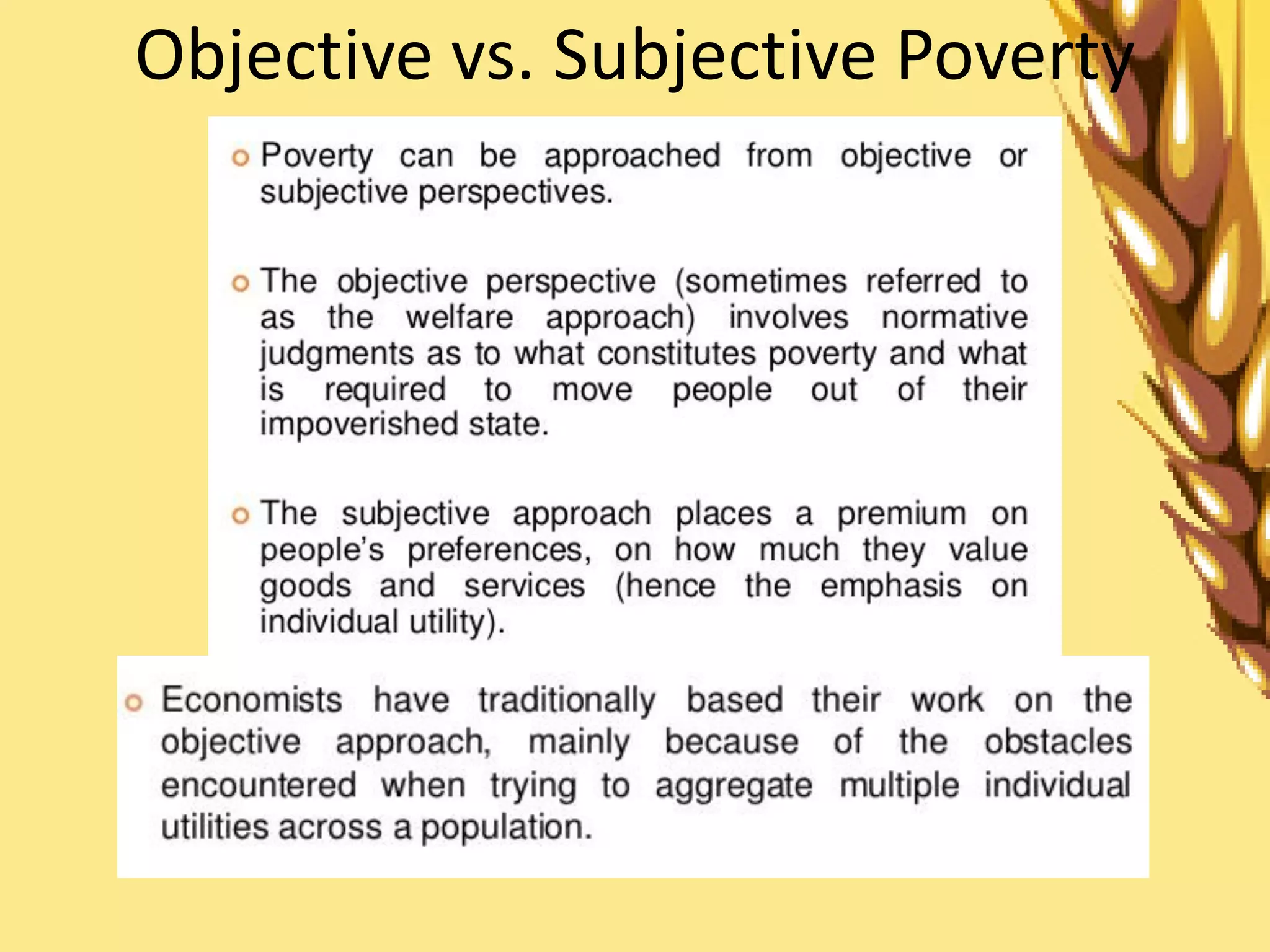
Objective vs. Subjective Poverty
• Asking people to report
whether their income is
sufficient; what level of
income would be
adequate to make ends
meet or to identify
themselves as poor.
• The percentage of
people whose income is
below a poverty line.
• The critical threshold of
income, consumption
or more generally
access to goods and
services below which
individuals can not
fulfill basic needs.
Objective vs. Subjective Poverty
Subjective Poverty
Human Poverty
22
Deprivation of
essential capabilities
such as a long and
healthy life,
knowledge, economic
resources and
community
participation.
The Feminisation of Poverty
• In most countries poverty has a
female face: about 70 percent of
the 1.2 billion people living in
poverty are female.
• In many countries, the number of
women in poverty has risen
significantly over that of men over
the last two decades.
• Women are twice as likely as men
to be illiterate and significantly
more likely to suffer from poverty
related health conditions such as
iron deficiency anaemia and
protein-energy malnutrition.
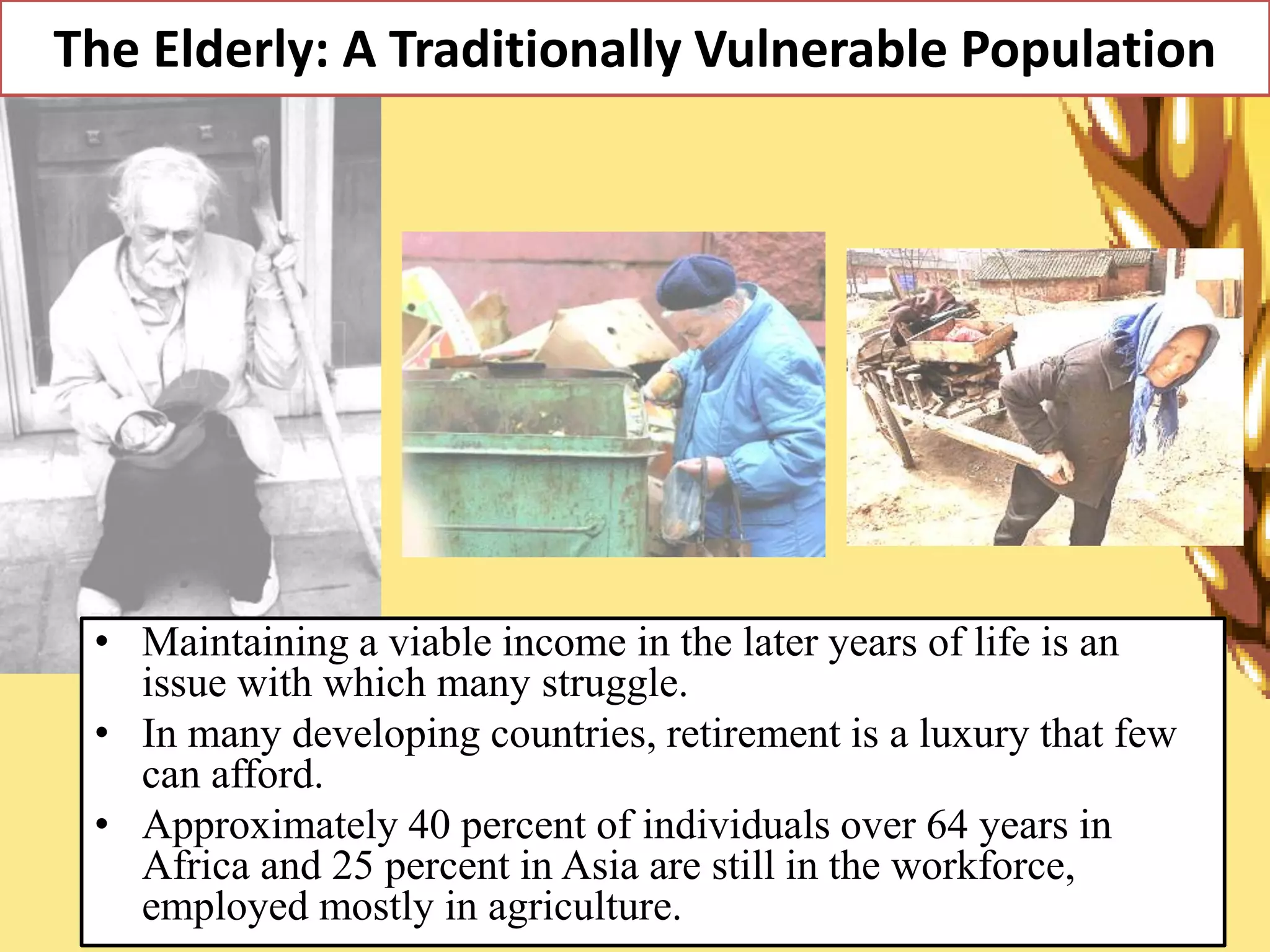
The Elderly: A Traditionally Vulnerable Population
• Maintaining a viable income in the later years of life is an
issue with which many struggle.
• In many developing countries, retirement is a luxury that few
can afford.
• Approximately 40 percent of individuals over 64 years in
Africa and 25 percent in Asia are still in the workforce,
employed mostly in agriculture.
25
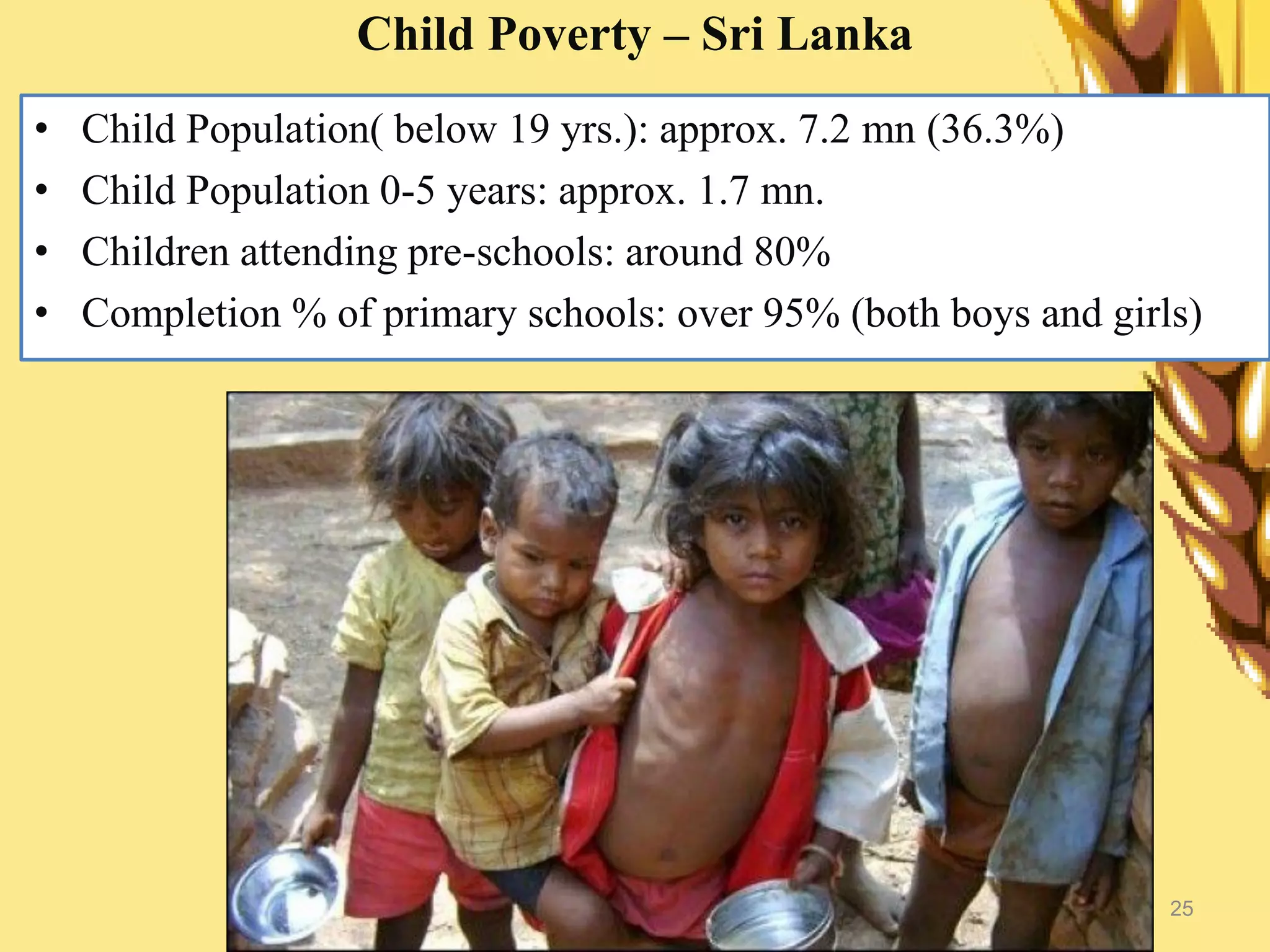
Child Poverty – Sri Lanka
• Child Population( below 19 yrs.): approx. 7.2 mn (36.3%)
• Child Population 0-5 years: approx. 1.7 mn.
• Children attending pre-schools: around 80%
• Completion % of primary schools: over 95% (both boys and girls)
26
Child Poverty – Sri Lanka
• Secondary enrolment % is 82.6 %
• Disabled children 0 -19 yrs – 55,500 (2001)
• Infant mortality rate 11.7 per 1000 live-births
• Under 5 mortality rate 13 per 1000 live-births
27
Child Poverty – Sri Lanka
• Under-nutrition of children varies from 19- 29% for
wasting, stunting and underweight
• Immunization rate 96.5
• Maternal mortality rate – 18 per 100,000 live-births
28
Child Poverty – Sri Lanka
• Internally displaced children living with parents with friends & family
(43,689 families) and in temporary shelter (7,800 families) (UNHCR
2008)
 Children in voluntary homes (22,000 children)
 Child domestic labour– Approx. 25,500 children between 5-14 years
engaged in economic activity (ad hoc studies)
 Street Children about 10,000
POVERTY AND HEALTH
Poverty and ill-health: the vicious circle
Caused by;
Lack of income & knowledge,
Poverty in community-social norms, weak
institutions and infrastructure, bad
environment;
Poor health provision-inaccessible, lack of key
inputs, irrelevant services, low quality;
Excluded from health finance system-limited
insurance, co-payments
Characteristics of the poor
Inadequate service utilization,
unhealthy sanitary, dietary
practice etc.
Poor health outcomes
Ill health
Malnutrition
High fertility
Diminished income
Loss of wages
Costs of health care
Greater vulnerability to
catastrophic (disastrous)
illness
• Most of the illnesses associated with poverty are infectious
diseases, such as diarrheal illness, malaria, and tuberculosis.
• All of them are associated with the lack of income, clean water
and sanitation, food, and access to medical services and
education which are characteristics of poor countries and
communities.
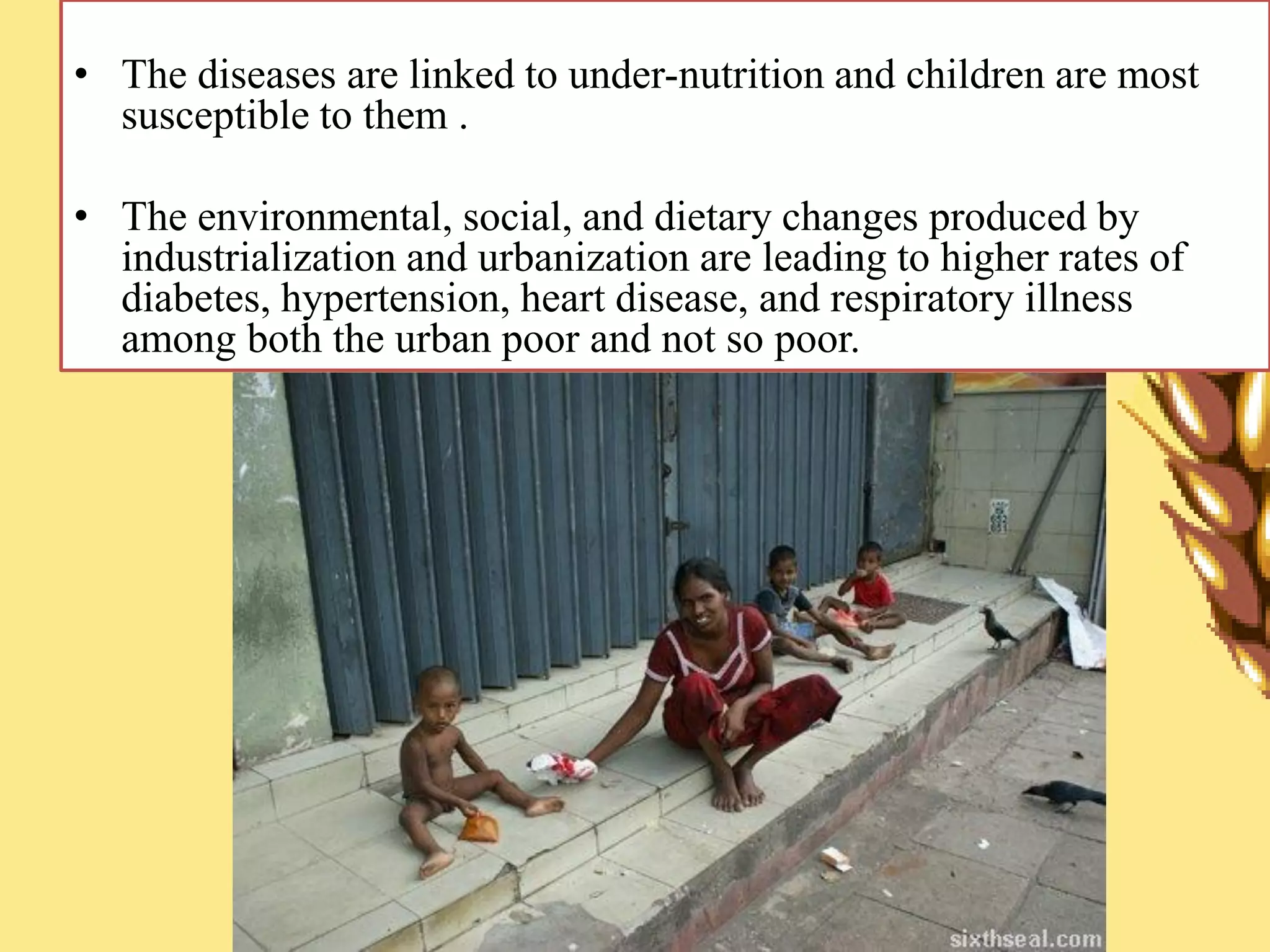
• The diseases are linked to under-nutrition and children are most
susceptible to them .
• The environmental, social, and dietary changes produced by
industrialization and urbanization are leading to higher rates of
diabetes, hypertension, heart disease, and respiratory illness
among both the urban poor and not so poor.
• Poor countries and poor
people suffer from multiple
deprivations that translate
into high levels of ill health
and disability.
• Poverty is an absolute
barrier to good health. It
impacts health by
influencing all other factors
adversely.
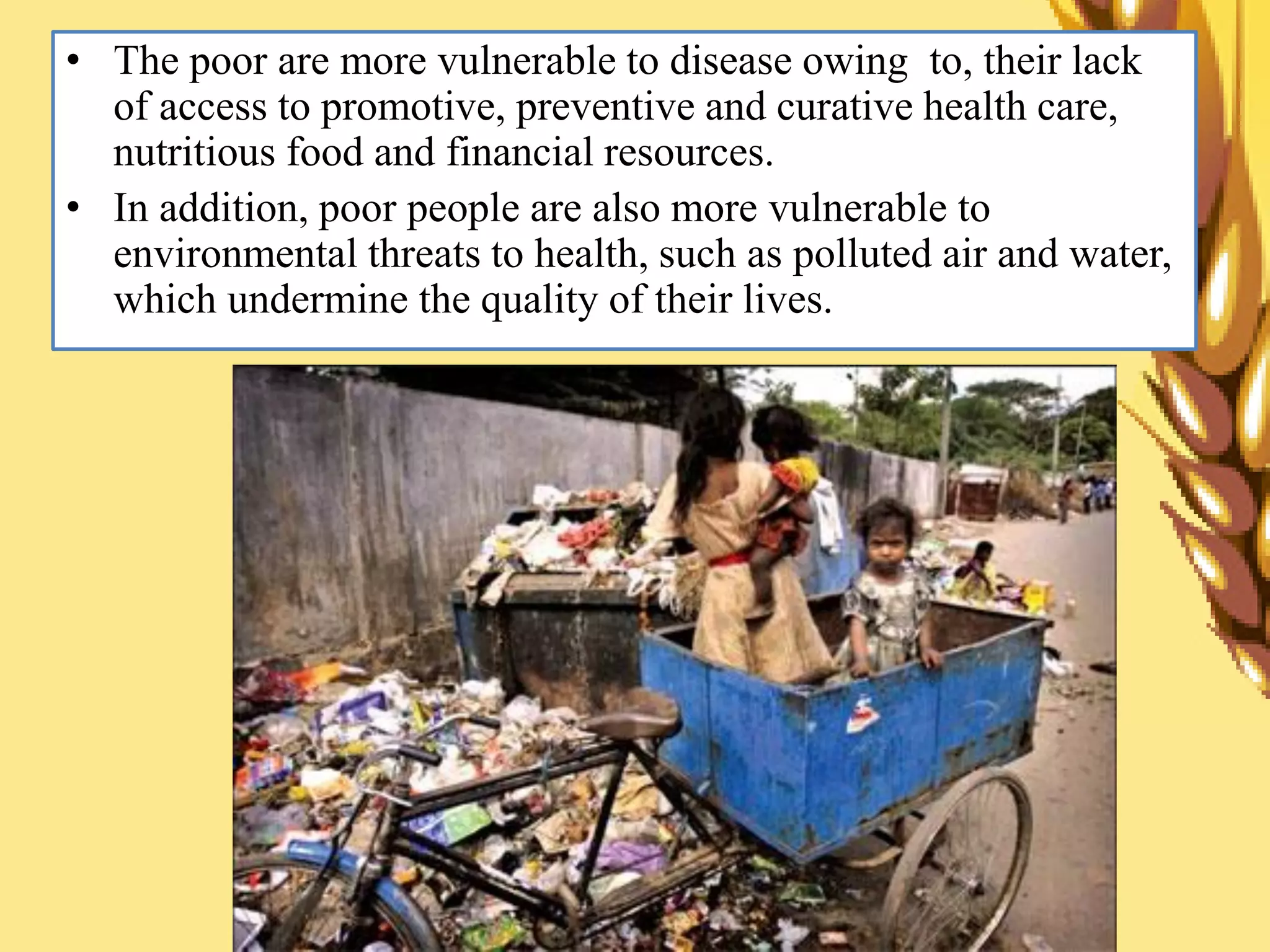
• The poor are more vulnerable to disease owing to, their lack
of access to promotive, preventive and curative health care,
nutritious food and financial resources.
• In addition, poor people are also more vulnerable to
environmental threats to health, such as polluted air and water,
which undermine the quality of their lives.
• Preventable and treatable diseases
therefore take an enormous toll on
the poorest people.
• Primarily in developing countries,
people die from eight vaccine-
preventable diseases.
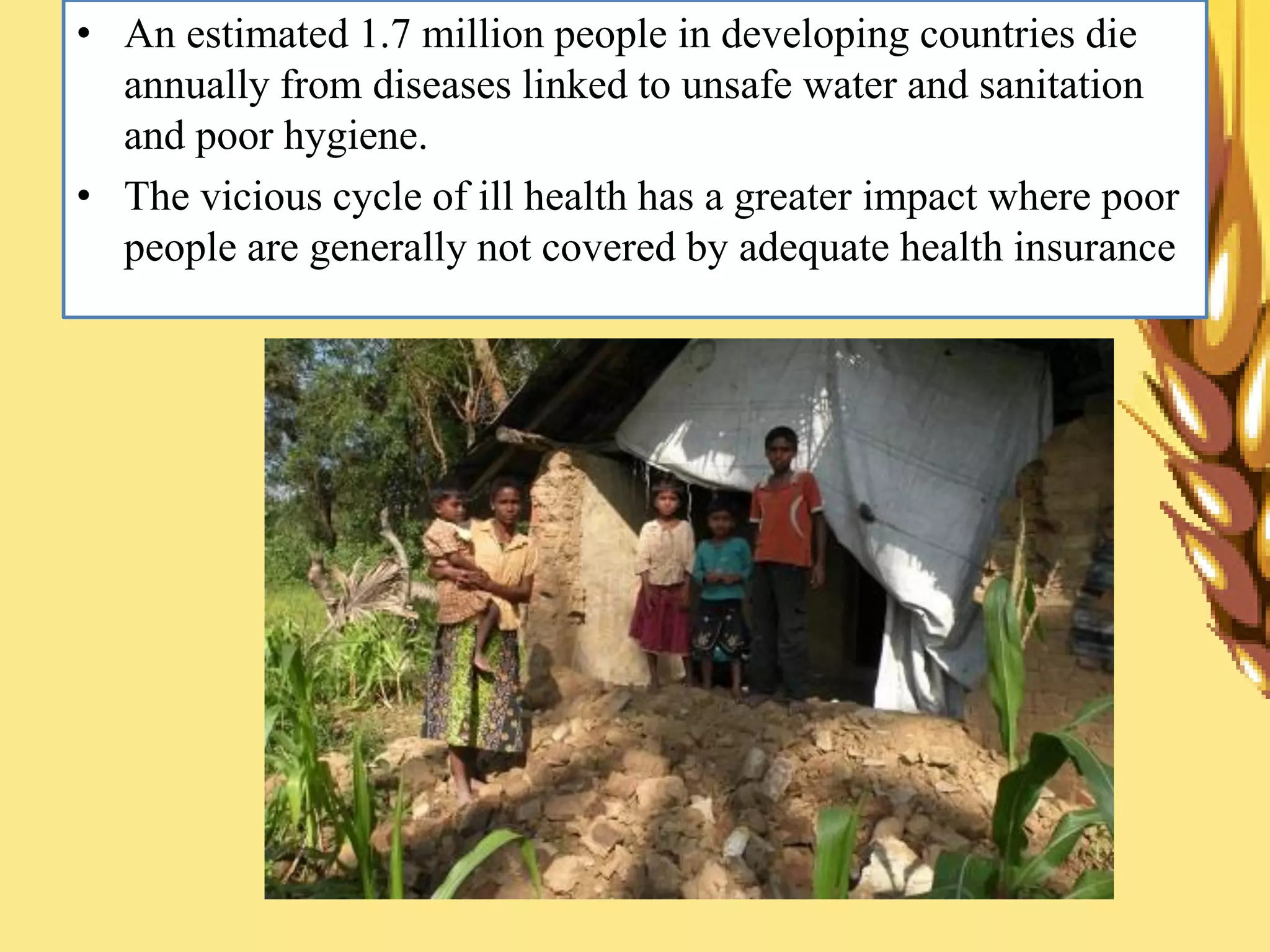
• An estimated 1.7 million people in developing countries die
annually from diseases linked to unsafe water and sanitation
and poor hygiene.
• The vicious cycle of ill health has a greater impact where poor
people are generally not covered by adequate health insurance
PERSPECTIVE OF SOCIOLOGICAL POVERTY
Discussion points ahead
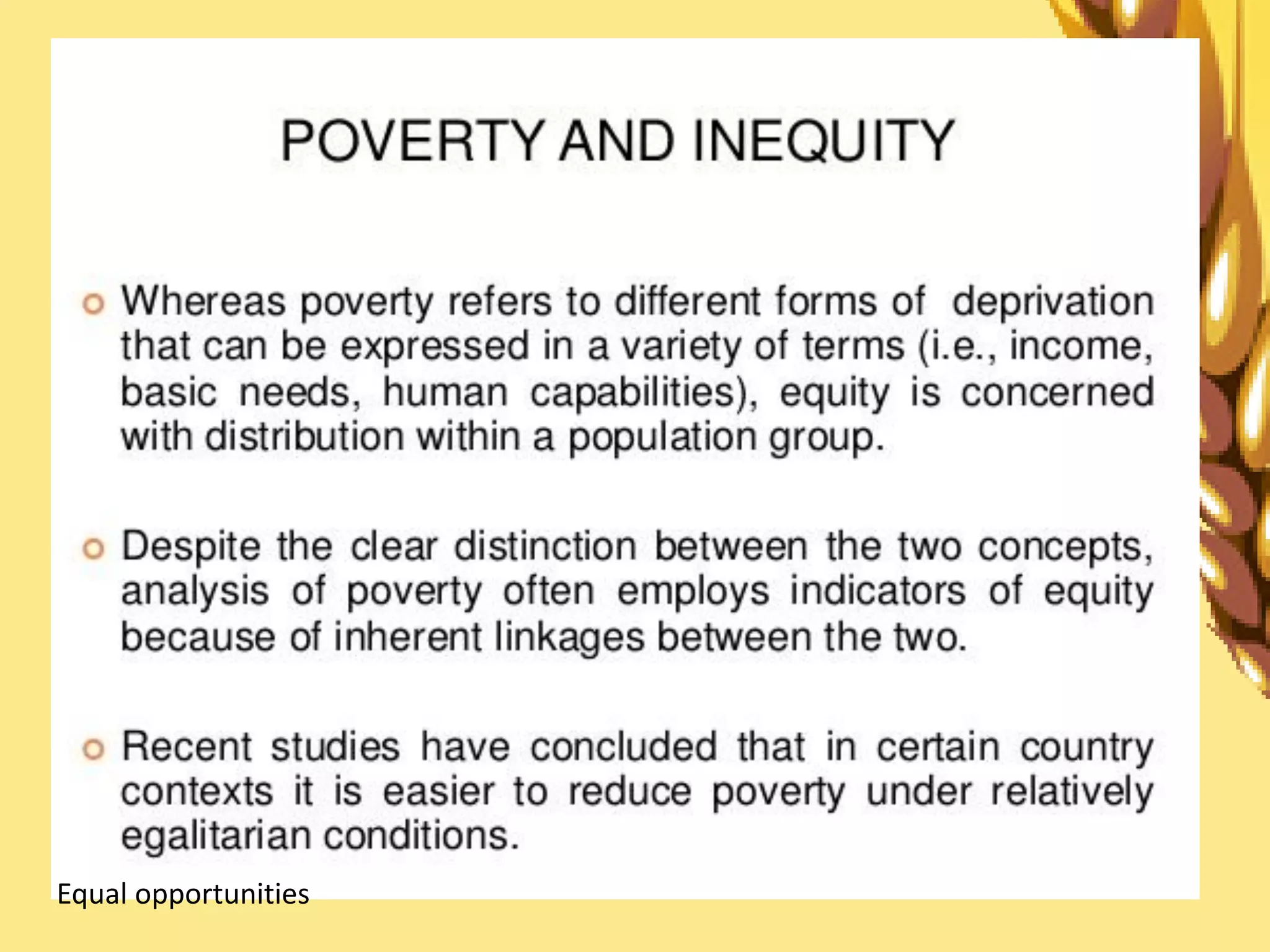
• Poverty and inequity
• Poverty and vulnerability
• Poverty and exclusion
• Poverty and under-development
• Indication of poverty – head count ratio,
poverty line, deprivation indicators
Equal opportunities
Poverty and Exclusion
Poverty and Under-development
Multi groups
Deprivation cannot simply be addressed by addressing poverty
Egalitarian - classless
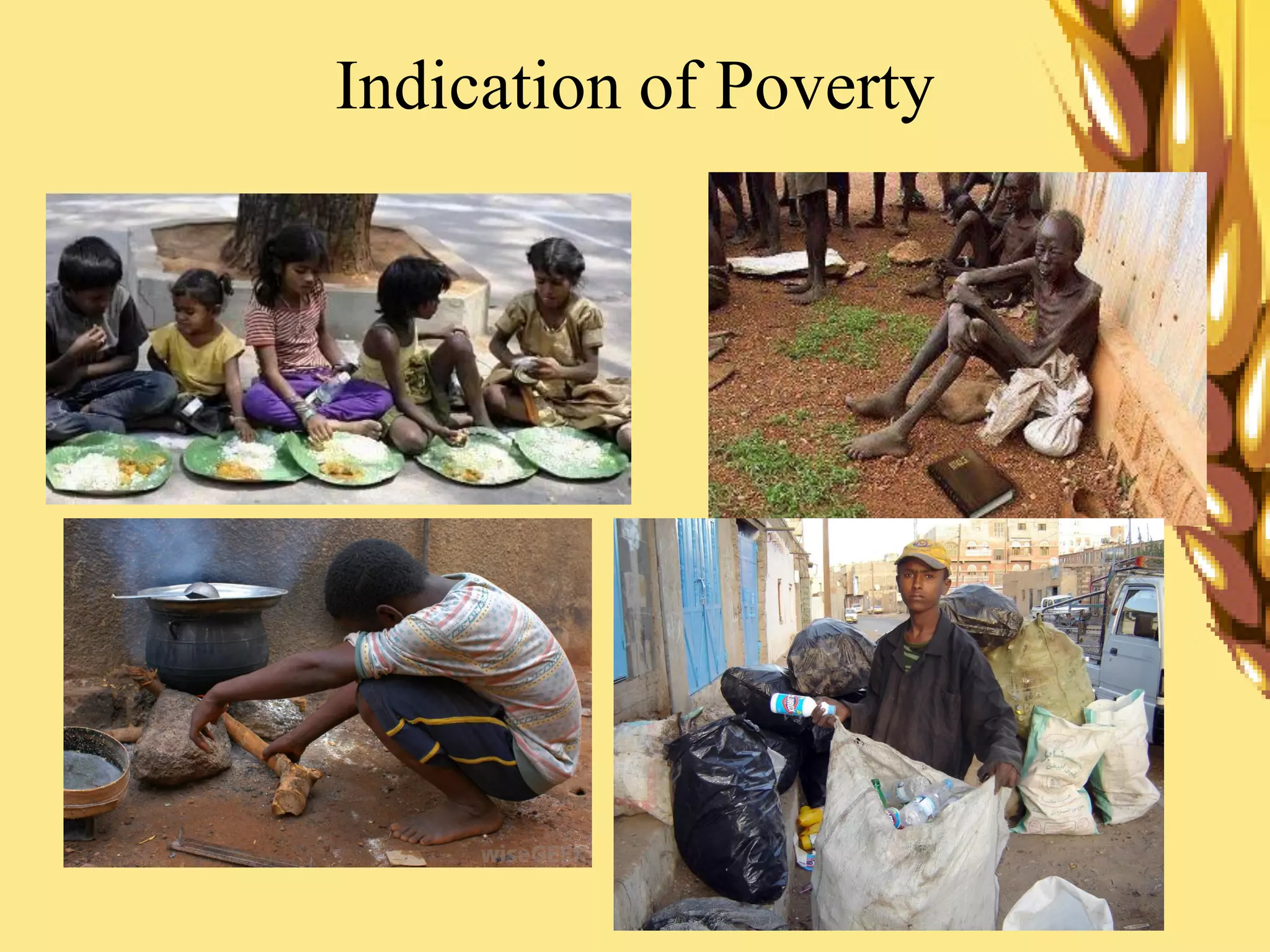
Indication of Poverty
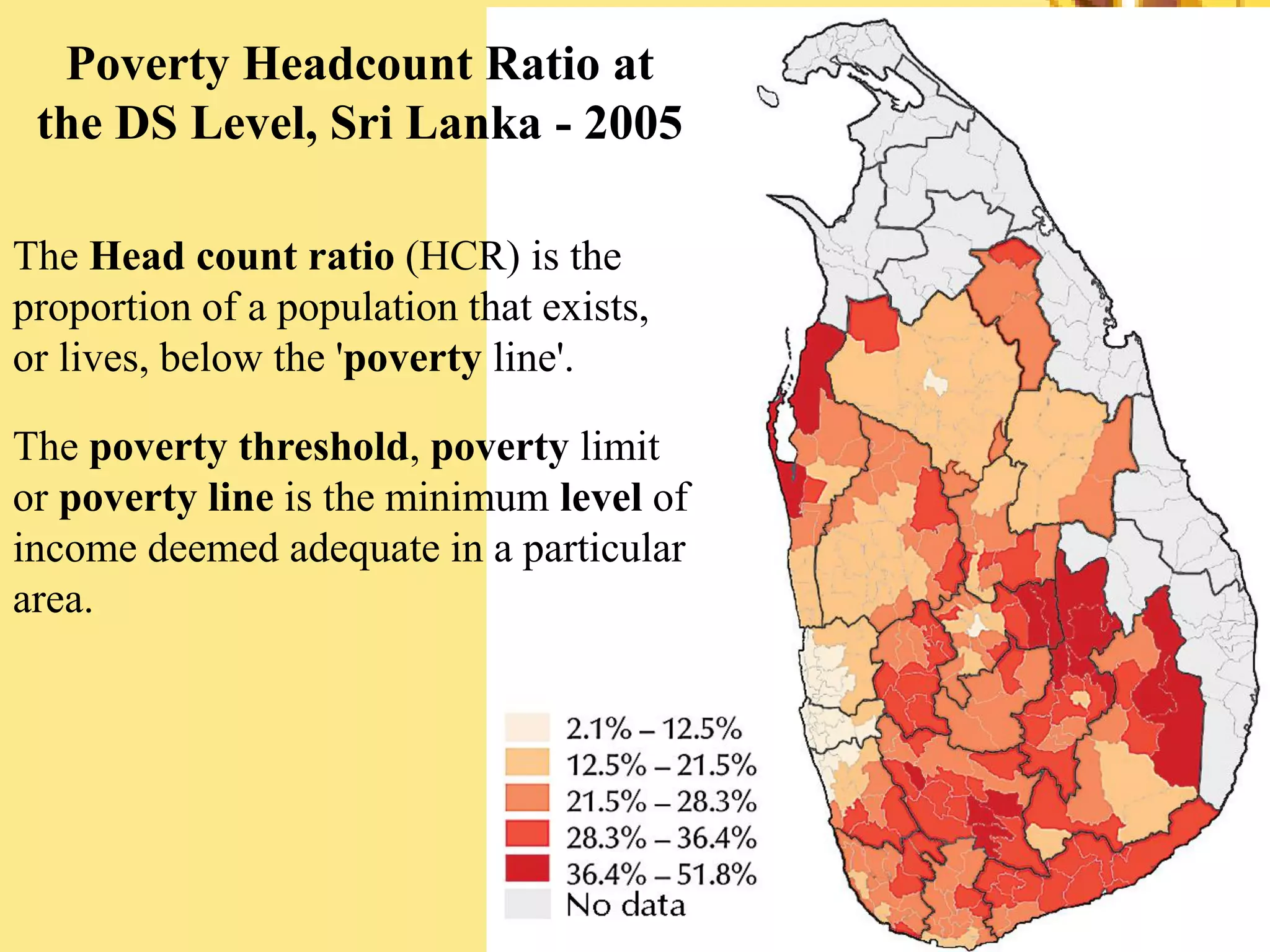
Poverty Headcount Ratio at
the DS Level, Sri Lanka - 2005
The Head count ratio (HCR) is the
proportion of a population that exists,
or lives, below the 'poverty line'.
The poverty threshold, poverty limit
or poverty line is the minimum level of
income deemed adequate in a particular
area.
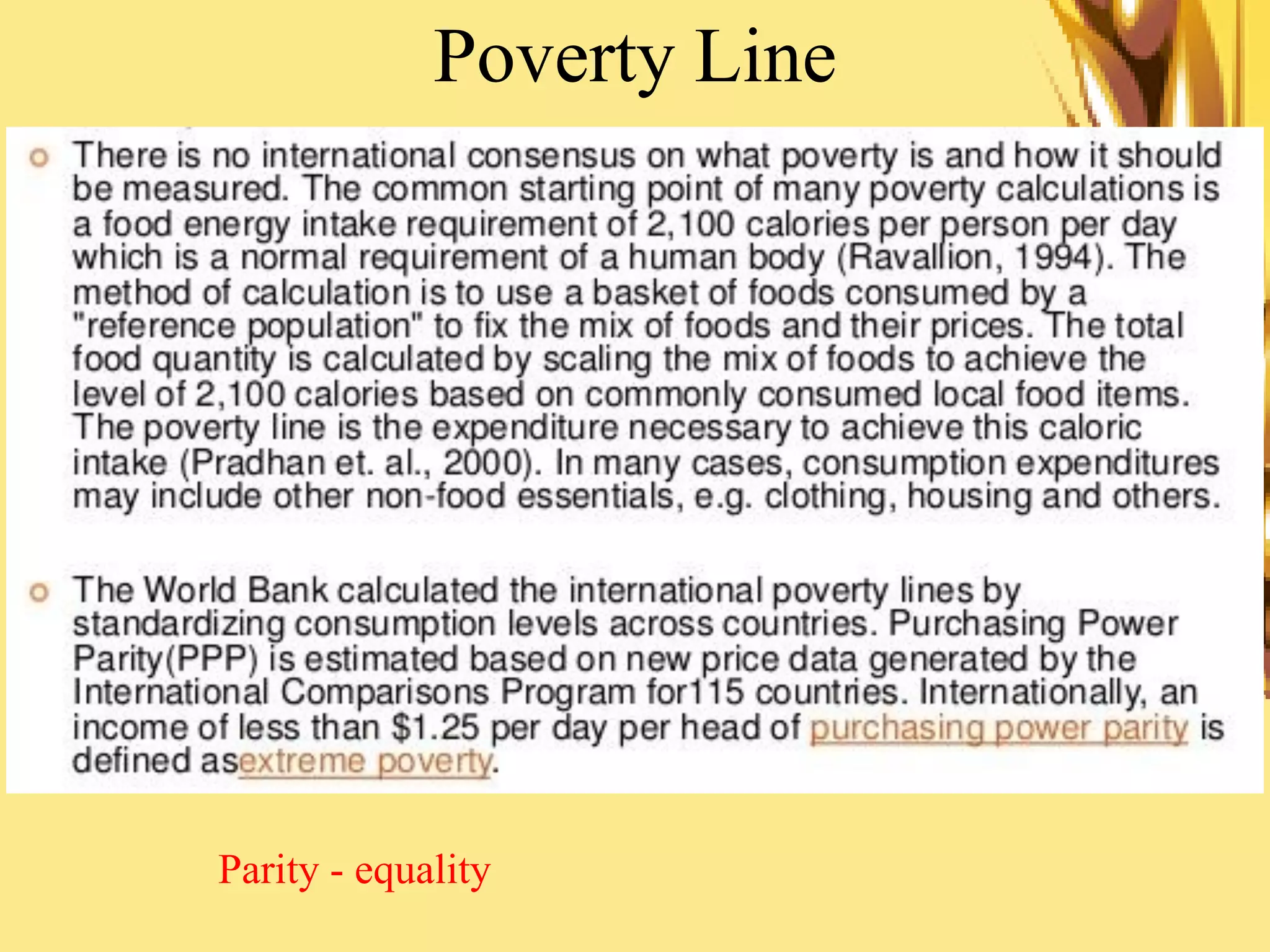
Poverty Line
Parity - equality
Poverty line in Districts of Sri Lanka – July 2016District
National
Colombo
Gampaha
Kaluthara
Kandy
Matale
NuwaraEliya
Galle
Mathara
Hambantota
Jaffna
Mannar
Vavuniya
Mullaithivu
Kilinochchi
Batticaloa
Amprara
Trincomalee
Kurunegala
Puttalam
Anuradhapura
Polonnaruwa
Badulla
Monaragala
Rathnapura
Keggalle
2016JulRs.
4132
4295
4290
4183
4125
4150
4168
3994
3969
3806
4074
4268
4223
4087
4189
4183
4100
4132
3992
4128
3909
4075
3961
3755
4015
4172
Minimum Expenditure per person per month to fulfill the basic needs
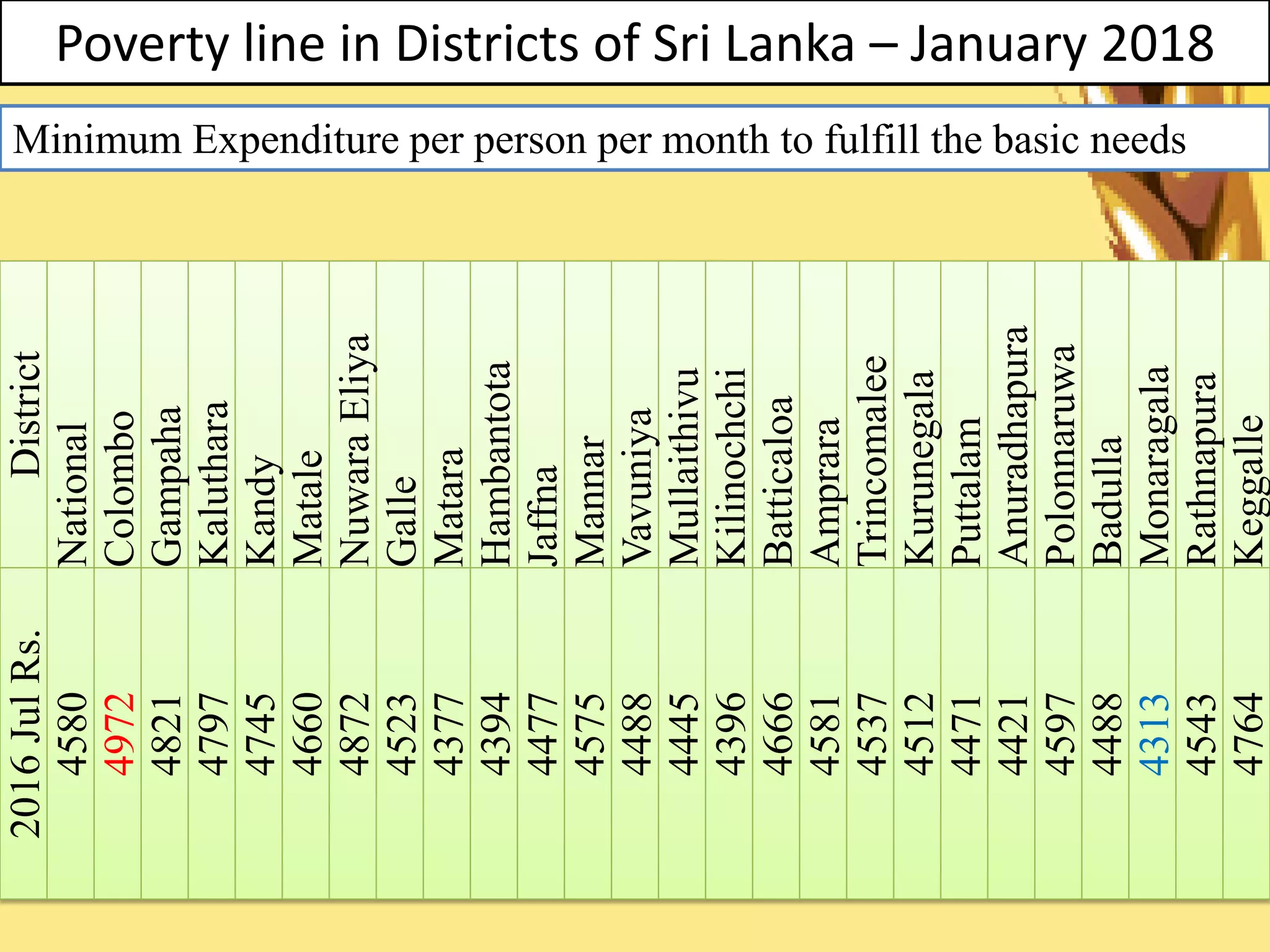
Poverty line in Districts of Sri Lanka – January 2018District
National
Colombo
Gampaha
Kaluthara
Kandy
Matale
NuwaraEliya
Galle
Matara
Hambantota
Jaffna
Mannar
Vavuniya
Mullaithivu
Kilinochchi
Batticaloa
Amprara
Trincomalee
Kurunegala
Puttalam
Anuradhapura
Polonnaruwa
Badulla
Monaragala
Rathnapura
Keggalle
2016JulRs.
4580
4972
4821
4797
4745
4660
4872
4523
4377
4394
4477
4575
4488
4445
4396
4666
4581
4537
4512
4471
4421
4597
4488
4313
4543
4764
Minimum Expenditure per person per month to fulfill the basic needs
Estimated Distribution of the
Poor, Sri Lanka - 2005
Estimates of Poverty Headcount Ratio by District, Sri Lanka
Province District 1990/91 1995/96 2002
(%) (%) (%)
______________________________________________________________________
Western Colombo 16 12 6
Gampaha 15 14 11
Kalutara 32 29 20
Central Kandy 36 37 25
Matale 29 42 30
Nuwara Eliya 20 32 23
Southern Galle 30 32 26
Matara 29 35 27
Hambantota 32 31 32
North Western Kurunegala 27 26 25
Puttalam 22 31 31
North Central Anuradhapura 24 27 20
Polonnaruwa 24 20 24
Uva Badulla 31 41 37
Monaragala 34 56 37
Sabaragamuwa Ratnapura 31 46 34
Kegalle 31 36 32
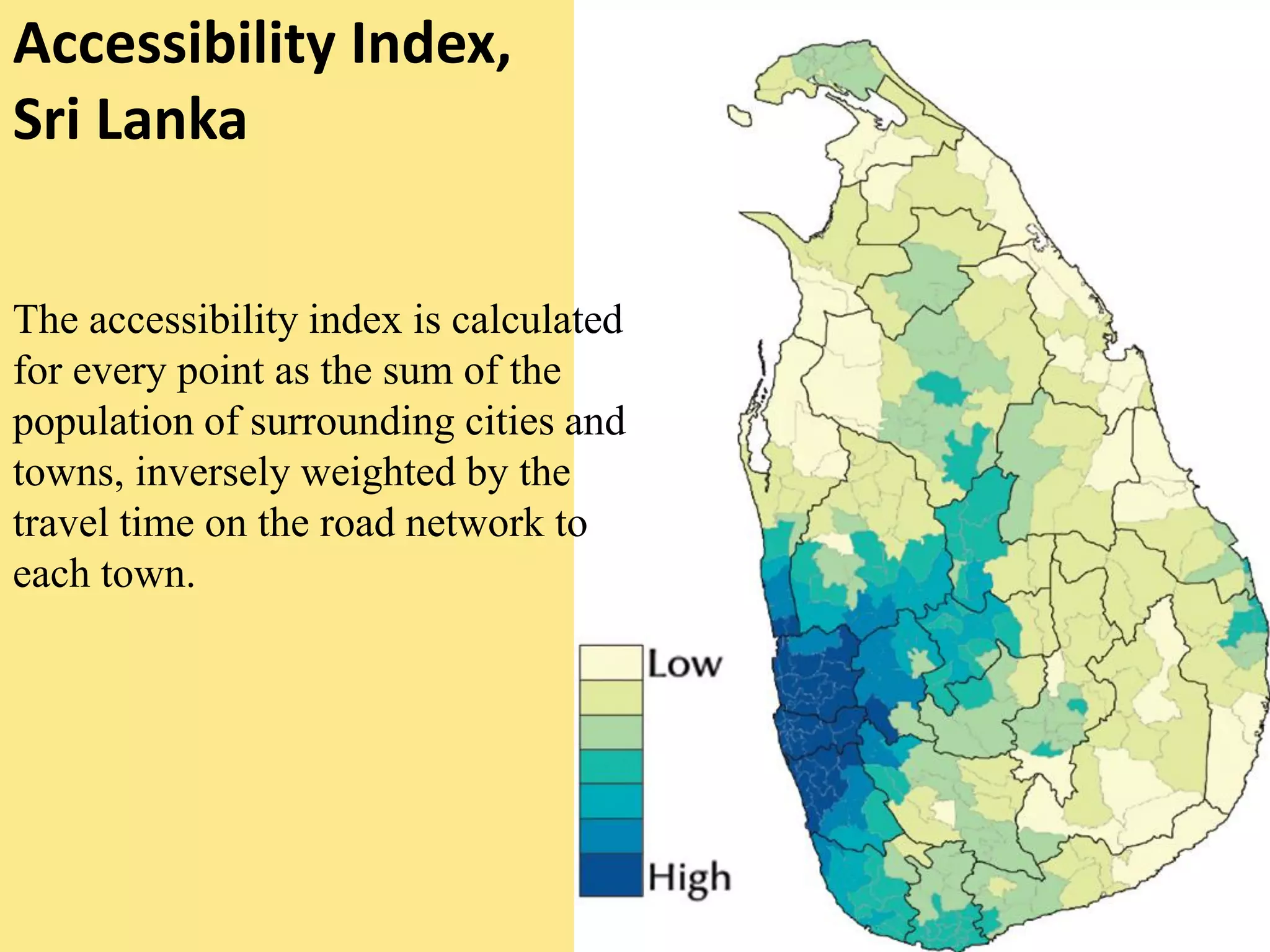
Accessibility Index,
Sri Lanka
The accessibility index is calculated
for every point as the sum of the
population of surrounding cities and
towns, inversely weighted by the
travel time on the road network to
each town.
Poverty Accessibility
Deprivation
Poverty should be eradicated, but how?

3. Poverty definition and descriptions

  • 1.
    P.B. Dharmasena 0777 613234,0717 613234 dharmasenapb@ymail.com , dharmasenapb@gmail.com https://independent.academia.edu/PunchiBandageDharmasena https://www.researchgate.net/profile/Punchi_Bandage_Dharmasena/contributions http://www.slideshare.net/DharmasenaPb Poverty and Environment Course code: ECON/EMGT 4214 Friday from 8.30-11.30 a.m Lesson 3 – Poverty: Definition and descriptions P.B. Dharmasena 0777 613234, 0717 613234 dharmasenapb@ymail.com , dharmasenapb@gmail.com https://independent.academia.edu/PunchiBandageDharmasena https://www.researchgate.net/profile/Punchi_Bandage_Dharmasena/contributions http://www.slideshare.net/DharmasenaPb
  • 2.
    • Poverty isa condition where people's basic needs for food, clothing, and shelter are not being met. • Poverty is generally of two types: • Absolute poverty and Relative poverty Poverty: Definition and descriptons
  • 3.
    Rural Development Lesson 2:Rural Poverty • Absolute poverty occurs when people cannot obtain adequate resources (measured in terms of calories or nutrition) to support a minimum level of physical health. (same everywhere, and can be eradicated as demonstrated by some countries) • Relative poverty occurs when people do not have the minimum level of living standards as determined by a government. (varies from country to country, sometimes within the same country)
  • 4.
    4 Absolute Poverty 1. Theabsence of enough resources (such as money) to secure basic life necessities. 2. A condition characterized by severe deprivation of basic human needs, including adequate food, safe drinking water, sanitation facilities, health, shelter, education, information, & access to services. 3. Synonym for extreme poverty.
  • 5.
    Absolute Poverty The actualneeds of the poor and not by comparing the expenditure of those who are not poor
  • 6.
    6 Relative Poverty  Definition Inequality between groups.  Proportion of household earning in incomes < 1/2 the mean/median income.  Measured; income disparity ratio of income groups ethnic, urban & rural.  In this system, if everyone's real income in an economy increases, but the income distribution stays the same, then the rate of relative poverty will also stay the same.  Example; households with an accumulated income < 50% of the median income are living in poverty.
  • 7.
  • 8.
    Global Prevalence ofPoverty • The World Bank estimates that 702.1 million people (9.6%) are living in extreme poverty in 2015, down from 1.75 billion (37.1%) in 1990. • Of these 702.1 million people, about 347.1 million people (35.2%) live in Sub-Saharan Africa and 231.3 million (13.5%) live in South Asia . • UNICEF estimates half the world's children (or 1.1 billion) live in poverty. • Another estimate places the true scale of poverty much higher than the World Bank, with an estimated 4.3 billion people (59 %) living with less than $5 a day and unable to meet basic needs adequately.
  • 9.
  • 10.
  • 11.
  • 12.
  • 13.
    13 Comparing Kinds ofPoverty • Relative vs. Absolute • Objective vs. Subjective • Urban vs. Rural • Internal (personal) vs. External (systemic) Causes • Short-term vs. Long-term • Clustered (wide-spread) vs. Isolated • Human Poverty
  • 14.
    Absolute vs. RelativePoverty Relative • Comparative • Perceived (apparent) deficits • Primarily emotional consequences Absolute • Absolute • Actual deficits • Primarily physical consequences 14
  • 16.
  • 18.
    Objective vs. SubjectivePoverty • Asking people to report whether their income is sufficient; what level of income would be adequate to make ends meet or to identify themselves as poor. • The percentage of people whose income is below a poverty line. • The critical threshold of income, consumption or more generally access to goods and services below which individuals can not fulfill basic needs.
  • 19.
  • 20.
  • 22.
    Human Poverty 22 Deprivation of essentialcapabilities such as a long and healthy life, knowledge, economic resources and community participation.
  • 23.
    The Feminisation ofPoverty • In most countries poverty has a female face: about 70 percent of the 1.2 billion people living in poverty are female. • In many countries, the number of women in poverty has risen significantly over that of men over the last two decades. • Women are twice as likely as men to be illiterate and significantly more likely to suffer from poverty related health conditions such as iron deficiency anaemia and protein-energy malnutrition.
  • 24.
    The Elderly: ATraditionally Vulnerable Population • Maintaining a viable income in the later years of life is an issue with which many struggle. • In many developing countries, retirement is a luxury that few can afford. • Approximately 40 percent of individuals over 64 years in Africa and 25 percent in Asia are still in the workforce, employed mostly in agriculture.
  • 25.
    25 Child Poverty –Sri Lanka • Child Population( below 19 yrs.): approx. 7.2 mn (36.3%) • Child Population 0-5 years: approx. 1.7 mn. • Children attending pre-schools: around 80% • Completion % of primary schools: over 95% (both boys and girls)
  • 26.
    26 Child Poverty –Sri Lanka • Secondary enrolment % is 82.6 % • Disabled children 0 -19 yrs – 55,500 (2001) • Infant mortality rate 11.7 per 1000 live-births • Under 5 mortality rate 13 per 1000 live-births
  • 27.
    27 Child Poverty –Sri Lanka • Under-nutrition of children varies from 19- 29% for wasting, stunting and underweight • Immunization rate 96.5 • Maternal mortality rate – 18 per 100,000 live-births
  • 28.
    28 Child Poverty –Sri Lanka • Internally displaced children living with parents with friends & family (43,689 families) and in temporary shelter (7,800 families) (UNHCR 2008)  Children in voluntary homes (22,000 children)  Child domestic labour– Approx. 25,500 children between 5-14 years engaged in economic activity (ad hoc studies)  Street Children about 10,000
  • 29.
    POVERTY AND HEALTH Povertyand ill-health: the vicious circle Caused by; Lack of income & knowledge, Poverty in community-social norms, weak institutions and infrastructure, bad environment; Poor health provision-inaccessible, lack of key inputs, irrelevant services, low quality; Excluded from health finance system-limited insurance, co-payments Characteristics of the poor Inadequate service utilization, unhealthy sanitary, dietary practice etc. Poor health outcomes Ill health Malnutrition High fertility Diminished income Loss of wages Costs of health care Greater vulnerability to catastrophic (disastrous) illness
  • 30.
    • Most ofthe illnesses associated with poverty are infectious diseases, such as diarrheal illness, malaria, and tuberculosis. • All of them are associated with the lack of income, clean water and sanitation, food, and access to medical services and education which are characteristics of poor countries and communities.
  • 31.
    • The diseasesare linked to under-nutrition and children are most susceptible to them . • The environmental, social, and dietary changes produced by industrialization and urbanization are leading to higher rates of diabetes, hypertension, heart disease, and respiratory illness among both the urban poor and not so poor.
  • 32.
    • Poor countriesand poor people suffer from multiple deprivations that translate into high levels of ill health and disability. • Poverty is an absolute barrier to good health. It impacts health by influencing all other factors adversely.
  • 33.
    • The poorare more vulnerable to disease owing to, their lack of access to promotive, preventive and curative health care, nutritious food and financial resources. • In addition, poor people are also more vulnerable to environmental threats to health, such as polluted air and water, which undermine the quality of their lives.
  • 34.
    • Preventable andtreatable diseases therefore take an enormous toll on the poorest people. • Primarily in developing countries, people die from eight vaccine- preventable diseases.
  • 35.
    • An estimated1.7 million people in developing countries die annually from diseases linked to unsafe water and sanitation and poor hygiene. • The vicious cycle of ill health has a greater impact where poor people are generally not covered by adequate health insurance
  • 36.
  • 37.
    Discussion points ahead •Poverty and inequity • Poverty and vulnerability • Poverty and exclusion • Poverty and under-development • Indication of poverty – head count ratio, poverty line, deprivation indicators
  • 38.
  • 40.
  • 41.
  • 42.
    Deprivation cannot simplybe addressed by addressing poverty Egalitarian - classless
  • 43.
  • 44.
    Poverty Headcount Ratioat the DS Level, Sri Lanka - 2005 The Head count ratio (HCR) is the proportion of a population that exists, or lives, below the 'poverty line'. The poverty threshold, poverty limit or poverty line is the minimum level of income deemed adequate in a particular area.
  • 45.
  • 46.
    Poverty line inDistricts of Sri Lanka – July 2016District National Colombo Gampaha Kaluthara Kandy Matale NuwaraEliya Galle Mathara Hambantota Jaffna Mannar Vavuniya Mullaithivu Kilinochchi Batticaloa Amprara Trincomalee Kurunegala Puttalam Anuradhapura Polonnaruwa Badulla Monaragala Rathnapura Keggalle 2016JulRs. 4132 4295 4290 4183 4125 4150 4168 3994 3969 3806 4074 4268 4223 4087 4189 4183 4100 4132 3992 4128 3909 4075 3961 3755 4015 4172 Minimum Expenditure per person per month to fulfill the basic needs
  • 47.
    Poverty line inDistricts of Sri Lanka – January 2018District National Colombo Gampaha Kaluthara Kandy Matale NuwaraEliya Galle Matara Hambantota Jaffna Mannar Vavuniya Mullaithivu Kilinochchi Batticaloa Amprara Trincomalee Kurunegala Puttalam Anuradhapura Polonnaruwa Badulla Monaragala Rathnapura Keggalle 2016JulRs. 4580 4972 4821 4797 4745 4660 4872 4523 4377 4394 4477 4575 4488 4445 4396 4666 4581 4537 4512 4471 4421 4597 4488 4313 4543 4764 Minimum Expenditure per person per month to fulfill the basic needs
  • 48.
    Estimated Distribution ofthe Poor, Sri Lanka - 2005
  • 49.
    Estimates of PovertyHeadcount Ratio by District, Sri Lanka Province District 1990/91 1995/96 2002 (%) (%) (%) ______________________________________________________________________ Western Colombo 16 12 6 Gampaha 15 14 11 Kalutara 32 29 20 Central Kandy 36 37 25 Matale 29 42 30 Nuwara Eliya 20 32 23 Southern Galle 30 32 26 Matara 29 35 27 Hambantota 32 31 32 North Western Kurunegala 27 26 25 Puttalam 22 31 31 North Central Anuradhapura 24 27 20 Polonnaruwa 24 20 24 Uva Badulla 31 41 37 Monaragala 34 56 37 Sabaragamuwa Ratnapura 31 46 34 Kegalle 31 36 32
  • 50.
    Accessibility Index, Sri Lanka Theaccessibility index is calculated for every point as the sum of the population of surrounding cities and towns, inversely weighted by the travel time on the road network to each town.
  • 51.
  • 52.
  • 54.
    Poverty should beeradicated, but how?