Presentation outline
•Definition ofpoverty
•Kinds of poverty
•Causes of poverty
•Impacts of poverty
•Continuous cycle of poverty
•Methods used reducing poverty
•Example
4.
Definition
It is complexto define poverty. Because it is depend on multifaceted and
multidimensional elements like region, era, geographical condition, circumstances and
many more.
The word poverty comes from French word “poverté” which means poor.
1. Individuals, families and groups in the population can be said to be in poverty when
they lack resources to obtain the type of diet, participate in the activities and have
the living conditions and amenities which are customary,.’ — Peter Townsend
2. it is when someone experiences a fundamental deprivation of well-being.
3. World Bank:
4. Poverty is pronounced deprivation in well-being, and comprises many dimensions.
It includes low incomes and the inability to acquire the basic goods and services
necessary for survival with dignity. Poverty also encompasses low levels of health
and education, poor access to clean water and sanitation, inadequate physical
security, lack of voice, and insufficient capacity and opportunity to better one's life.
[21]
5.
On the basisof social, economical and political aspects, there
are different ways to identify the type of Poverty:
• 1. Absolute poverty.
2. Relative Poverty.
3. Situational Poverty.
4. Generational Poverty.
5. Rural Poverty.
6. Urban Poverty.
• Now let us understand them one by one:
• Absolute poverty: Also known as extreme poverty or abject poverty, it involves the scarcity of basic
food, clean water, health, shelter, education and information. Those who belong to absolute
poverty tend to struggle to live and experience a lot of child deaths from preventable diseases like
malaria, cholera and water-contamination related diseases. Absolute Poverty is usually uncommon
in developed countries.
It was first introduced in 1990, the “dollar a day” poverty line measured absolute poverty by the
standards of the world's poorest countries. In October 2015, the World Bank reset it to $1.90 a day.
This number is controversial; therefore each nation has its own threshold for absolute poverty line.
"It is a condition so limited by malnutrition, illiteracy, disease, squalid surroundings, high infant mortality, and
low life expectancy as to be beneath any reasonable definition of human decency." Said by Robert McNamara, the
former president of the World Bank
6.
• 2 .Relative Poverty: It is defined from the social perspective that is living standard compared to the
economic standards of population living in surroundings. Hence it is a measure of income inequality.
For example, a family can be considered poor if it cannot afford vacations, or cannot buy presents for
children at Christmas, or cannot send its young to the university.
Usually, relative poverty is measured as the percentage of the population with income less than
some fixed proportion of median income.
It is a widely used measure to ascertain poverty rates in wealthy developed nations.
3. Situational Poverty: It is a temporary type of poverty based on occurrence of an adverse event like
environmental disaster, job loss and severe health problem.
People can help themselves even with a small assistance, as the poverty comes because of
unfortunate event.
4. Generational Poverty: It is handed over to individual and families from one generation to the one.
This is more complicated as there is no escape because the people are trapped in its cause and
unable to access the tools required to get out of it.
“Occurs in families where at least two generations have been born into poverty. Families living in this
type of poverty are not equipped with the tools to move out of their situation” (Jensen, 2009).
7.
• 5. RuralPoverty: It occurs in rural areas with population below 50,000. It is the area where
there are less job opportunities, less access to services, less support for disabilities and quality
education opportunities. People are tending to live mostly on the farming and other menial
work available to the surroundings.
The rural poverty rate is growing and has exceeded the urban rate every year since data
collection began in the 1960s. The difference between the two poverty rates has averaged
about 5 percent for the last 30 years, with urban rates near 10–15 percent and rural rates near
15–20 percent (Jolliffe, 2004).
6. Urban Poverty: It occurs in the metropolitan areas with population over 50,000. These are
some major challenges faced by the Urban Poor:
• Limited access to health and education.
• Inadequate housing and services.
• Violent and unhealthy environment because of overcrowding.
• Little or no social protection mechanism.
Note: “Extreme global poverty could be eliminated by 2025 if the wealthy countries of the
world were to increase their combined foreign aid budgets to between $135 billion and $195
billion from 2005 to 2015. In 2004, 1.1 billion people lived in extreme poverty on less than a
8.
factors that causepoverty
1. Income inequality
Research shows that when a country grows economically, overall poverty reduces. If the national income is not equally distributed among all
communities in the country,
2. Conflicts and Unrests
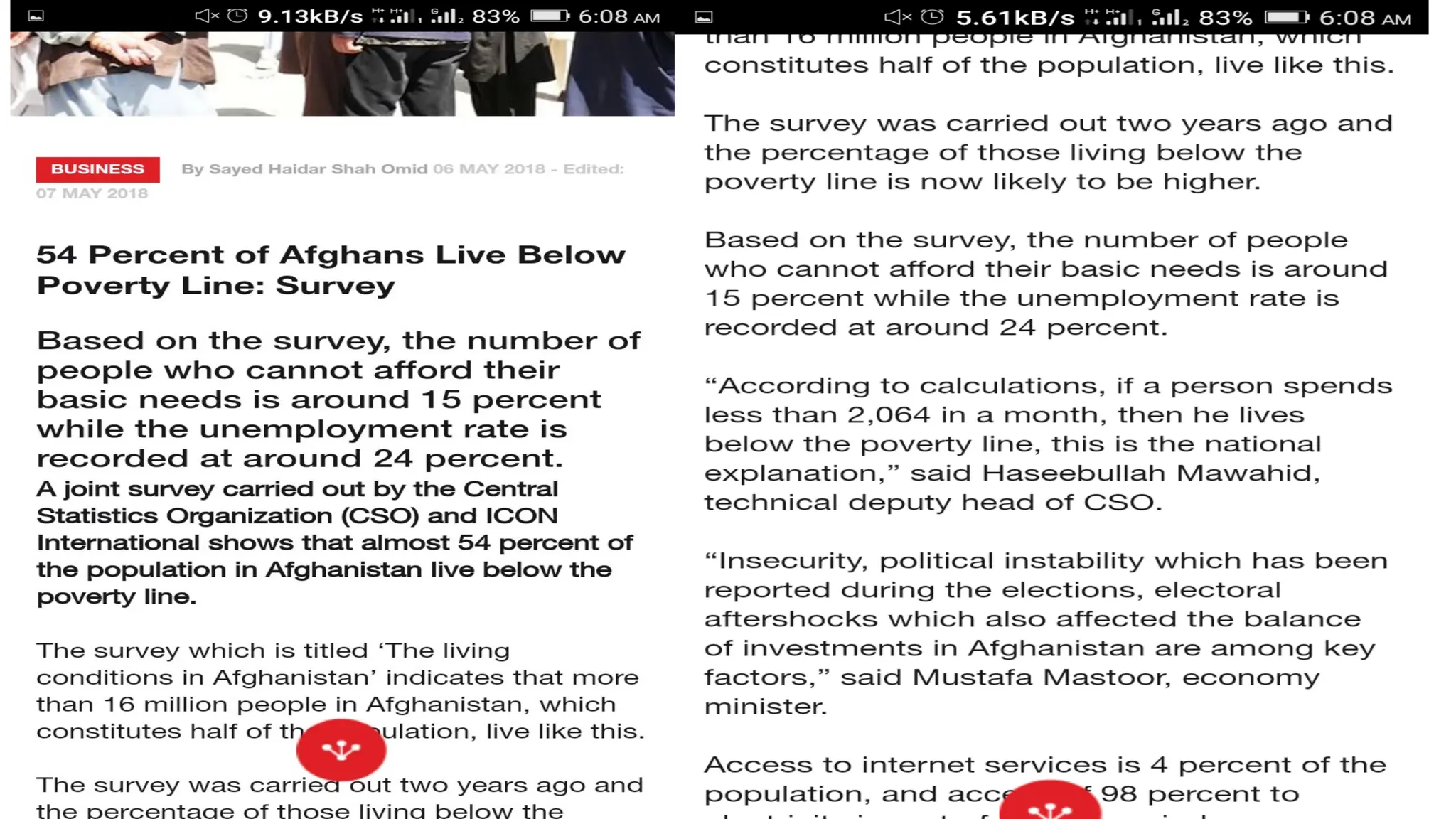
About 33% of communities in absolute poverty live in places of conflict. In the past, countries like Rwanda and Sri-Lanka have suffered
poverty as a result of years of tribal and civil wars. In recent years, Afghanistan, Iraq and the like are all going through difficult times and
poverty is rife in these areas. Unrests result in massive loss of human lives, diseases, hunger and violence, destruction of property and
infrastructure, economic investments and quality labour. It is also a put-off for foreign investments.
3. Location, adverse ecology and location
Location of countries, as well as communities within the country can make people poor. Geographic and ecological factors such as
mountains, swamps, deserts and the like have also made living conditions unbearable in many places. This is why some rural areas are
poorer than others, even in the same country..
In other instances, some communities are cut off from the main economic centers of the country. They find themselves
located so far from roads, markets, health services, schools and economic facilities. This makes it just impossible for the
locals to access support and assistance, and also makes it discouraging for economic investors to consider investing there.
In Bangladesh for example, poverty is severe in areas of physical remoteness, as indicated by the fact that seven rural
districts are home to half of the country’s severely stunted children.
4. Natural disasters
Droughts, floods, hurricanes and other unexpected natural events cause deaths, illness and loss of income. In Ethiopia alone, there were 15
droughts (and famines) between 1978 and 1998 that led to the displacement, injury, or death of more than 1 million people. In better
connected communities, families are able to come out of poverty and get on with their lives, but other remote and less accessible
communities suffer for longer periods.
9.
• 5. IllHealth and Disability
Poverty can also get worse if communities are affected by diseases such as Malaria and HIV Aids. Diseases cause
many deaths and children are left with no parents or caregivers. Household wealth can also drain quickly from family
members with disabilities. In many communities, disabled members are looked down upon and not allowed to
inherit assets. They are considered a stigma and excluded from public events and exposure. This mentality can
adversely affect the well-being of families. For example, the incidence of poverty is 15-44% higher in households
with a disabled head or adult.
6. Inheritance of Poverty
Families that have had a lifetime of poverty tend to pass on the situation to their children. They cannot afford
education for their children and children grow with no skills. Children work on the same family farms, and marry into
families with similar conditions as they turn adults. They, in turn, pass on the tradition to their children.
7. Education, Training and skills
People who are educated or had some training or skills are in a better position to apply ideas and knowledge into
fixing basic problems and enhancing their livelihoods. They are able to plan, follow instructions and get reach out to
access information, tools and support that can improve their livelihoods. In the absence of training, skills or
education, people cannot help themselves. They cannot prevent diseases, and cannot apply new ways of doing
things. The result is that their poverty situation is worse of and are even more vulnerable than before.
8. Gender discrimination
In many African communities, girls were not allowed to be in school. Families preferred to invest in boys’ education
than in girls. Women were also not allowed to do major economic activity and had less ownership of lands and
assets. This idea negatively impacts on the well-being of women, and the development of their children is also
impacted negatively.
10.
Impact of poverty
Hunger,Health and Deaths.
Absolute poverty results in extreme hunger,
starvation and malnutrition. People (and children)
become vulnerable to preventable diseases such as
cholera, dysentery and tuberculosis, with no access
to health services and medications. Death rates rise.
Relative poverty on the other hand, forces people to
engage in behaviors that expose them to diseases
such as HIV Aids. Whiles they may not starve to
death, they may be living on unhealthy foods, which
ultimately weaken their immunity and expose them
to diseases.
Infectious diseases continue to blight the lives of the poor across the world. An
estimated 40 million people are living with HIV/AIDS, with 3 million deaths in
2004. Every year there are 350–500 million cases of malaria, with 1 million
fatalities: Africa accounts for 90 percent of malarial deaths and African children
account for over 80 percent of malaria victims worldwide. —Source: 2007 Human
Development Report (HDR), United Nations Development Program, November 27, 2007,
p.25.
Social and Political
Relative poverty may cause people to indulge in social vices such as drugs, prostitution and
petty crimes as a means to meet their immediate needs. In many developing countries,
political leaders and rebel leaders take advantage and recruit young people,
(especially those in relative poverty) to fight for their interests, in return for food
and basic needs. These young folks feel vulnerable if they do not comply, as they have no
other way out of their situation.
Economic
People in absolute poverty simply cannot afford
food, water and shelter. They are not healthy
enough to undertake any economic activity. They
cannot send their young to school and the youth
cannot get any skills. This results in economic
breakdown of the community, which directly affects
the larger region where they are. Further to that,
those in relative poverty, who have a bit of training
or education, are forced to move out (migrate) in
search of better lives in the cities. This deprives the
rural areas of the man-power and makes their
situation worse. As they migrate into the cities, the
end up in slums, increase populations and put
pressure on amenities in the cities.
11.
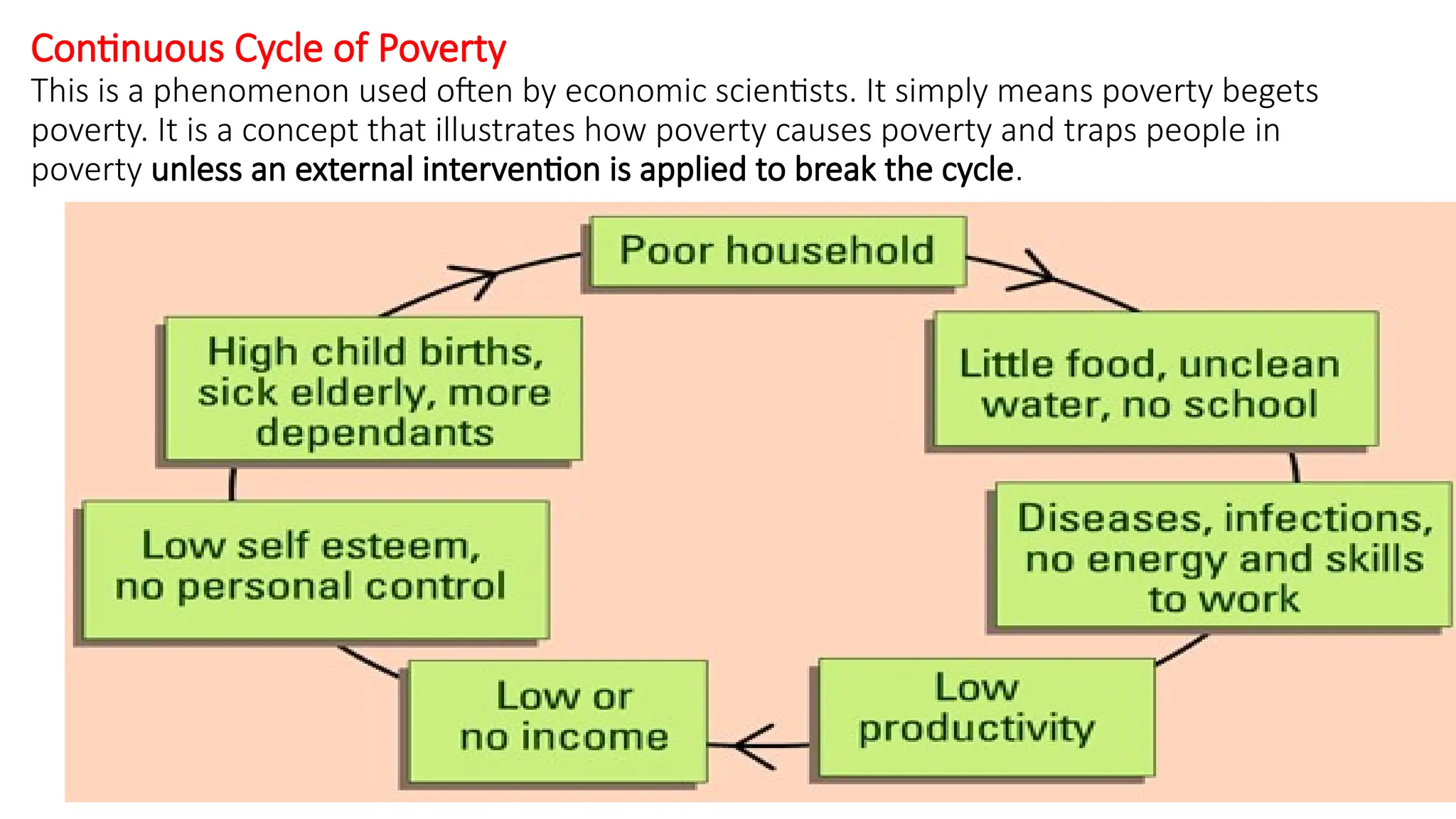
Continuous Cycle ofPoverty
This is a phenomenon used often by economic scientists. It simply means poverty begets
poverty. It is a concept that illustrates how poverty causes poverty and traps people in
poverty unless an external intervention is applied to break the cycle.
12.
methods used atreducing poverty .
•
1
.
Education
Quality education empowers people to take advantage of opportunities around them. It helps children get knowledge,
information and life skills they need to realize their potential. Training teachers, building schools, providing education
materials and breaking down that prevent children from accessing education are important features of poverty alleviation
programmes.
2. Health, food and water
Many programs aim at feeding kids at school and providing health services as well. This encourages parents to send the
children to school and keep them there. If children have food to eat, and are healthy, they can learn and respond to the needs
of the program.
3. Provision of skills and Training
The youth and able-to-work in the communities are provided skills to help with farm work or other economic activity, which
helps them earn money to make a living and take care of their families.
4. Income redistribution
It is important that the government extends its development programs such as roads, bridges, and other economic facilities to
rural areas, to make it easy for goods and services and farm produce to move to and from the farming communities.
With a bit of effort in the areas mentioned above, it won’t take long to see real improvements in the living conditions of the
community
.
13.
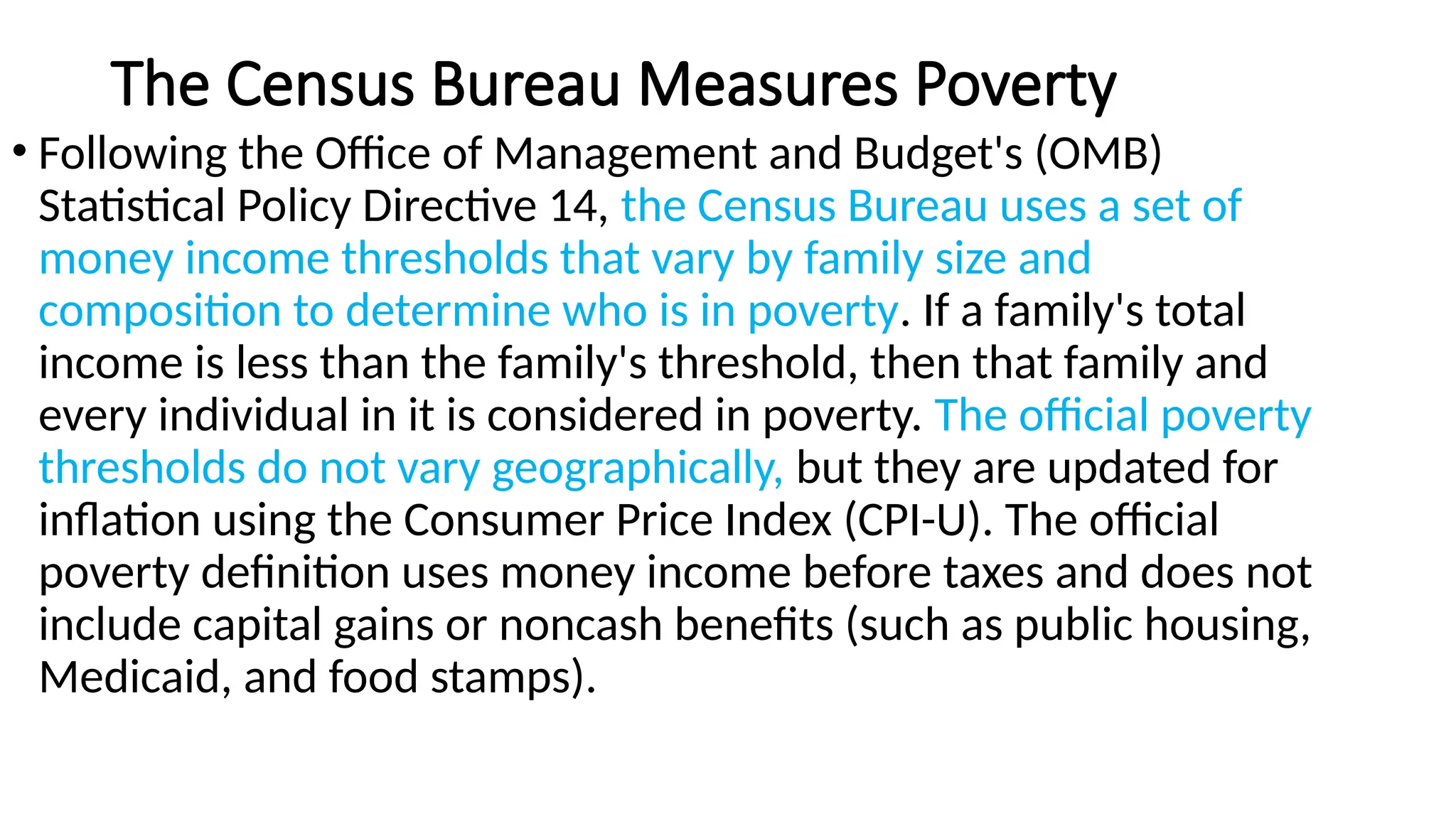
The Census BureauMeasures Poverty
• Following the Office of Management and Budget's (OMB)
Statistical Policy Directive 14, the Census Bureau uses a set of
money income thresholds that vary by family size and
composition to determine who is in poverty. If a family's total
income is less than the family's threshold, then that family and
every individual in it is considered in poverty. The official poverty
thresholds do not vary geographically, but they are updated for
inflation using the Consumer Price Index (CPI-U). The official
poverty definition uses money income before taxes and does not
include capital gains or noncash benefits (such as public housing,
Medicaid, and food stamps).
14.
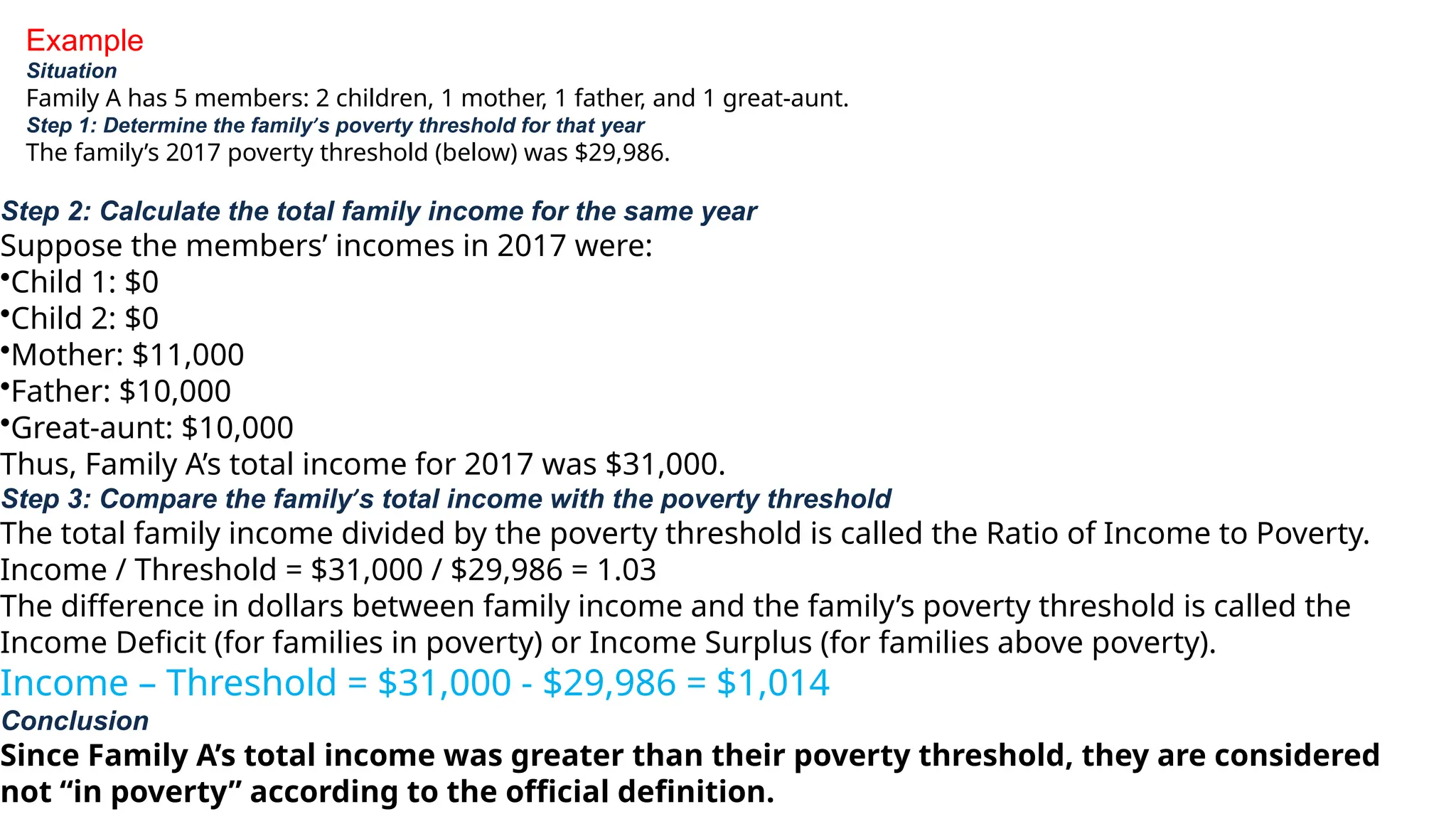
Example
Situation
Family A has5 members: 2 children, 1 mother, 1 father, and 1 great-aunt.
Step 1: Determine the family’s poverty threshold for that year
The family’s 2017 poverty threshold (below) was $29,986.
Step 2: Calculate the total family income for the same year
Suppose the members’ incomes in 2017 were:
•Child 1: $0
•Child 2: $0
•Mother: $11,000
•Father: $10,000
•Great-aunt: $10,000
Thus, Family A’s total income for 2017 was $31,000.
Step 3: Compare the family’s total income with the poverty threshold
The total family income divided by the poverty threshold is called the Ratio of Income to Poverty.
Income / Threshold = $31,000 / $29,986 = 1.03
The difference in dollars between family income and the family’s poverty threshold is called the
Income Deficit (for families in poverty) or Income Surplus (for families above poverty).
Income – Threshold = $31,000 - $29,986 = $1,014
Conclusion
Since Family A’s total income was greater than their poverty threshold, they are considered
not “in poverty” according to the official definition.
15.
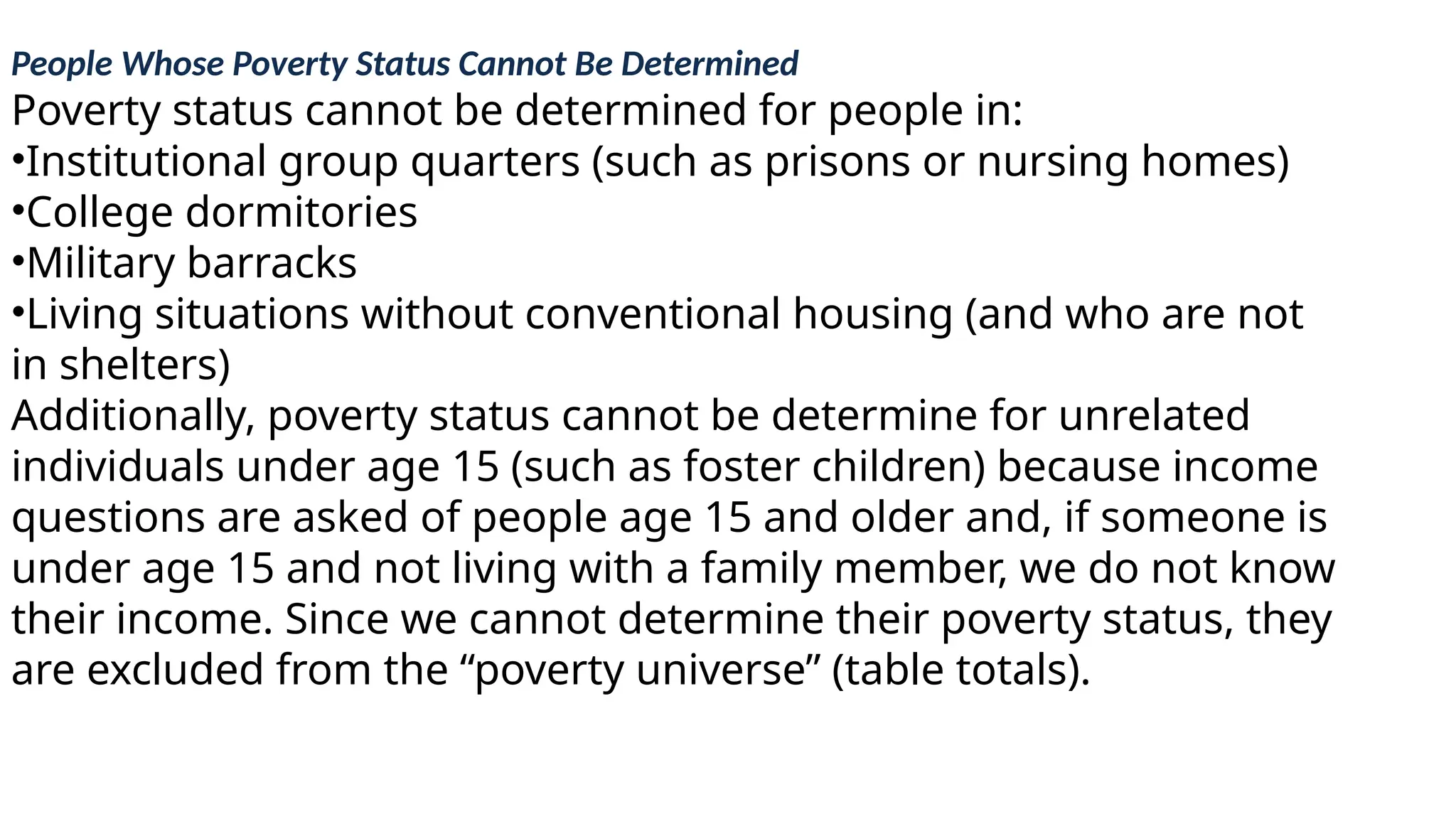
People Whose PovertyStatus Cannot Be Determined
Poverty status cannot be determined for people in:
•Institutional group quarters (such as prisons or nursing homes)
•College dormitories
•Military barracks
•Living situations without conventional housing (and who are not
in shelters)
Additionally, poverty status cannot be determine for unrelated
individuals under age 15 (such as foster children) because income
questions are asked of people age 15 and older and, if someone is
under age 15 and not living with a family member, we do not know
their income. Since we cannot determine their poverty status, they
are excluded from the “poverty universe” (table totals).
16.
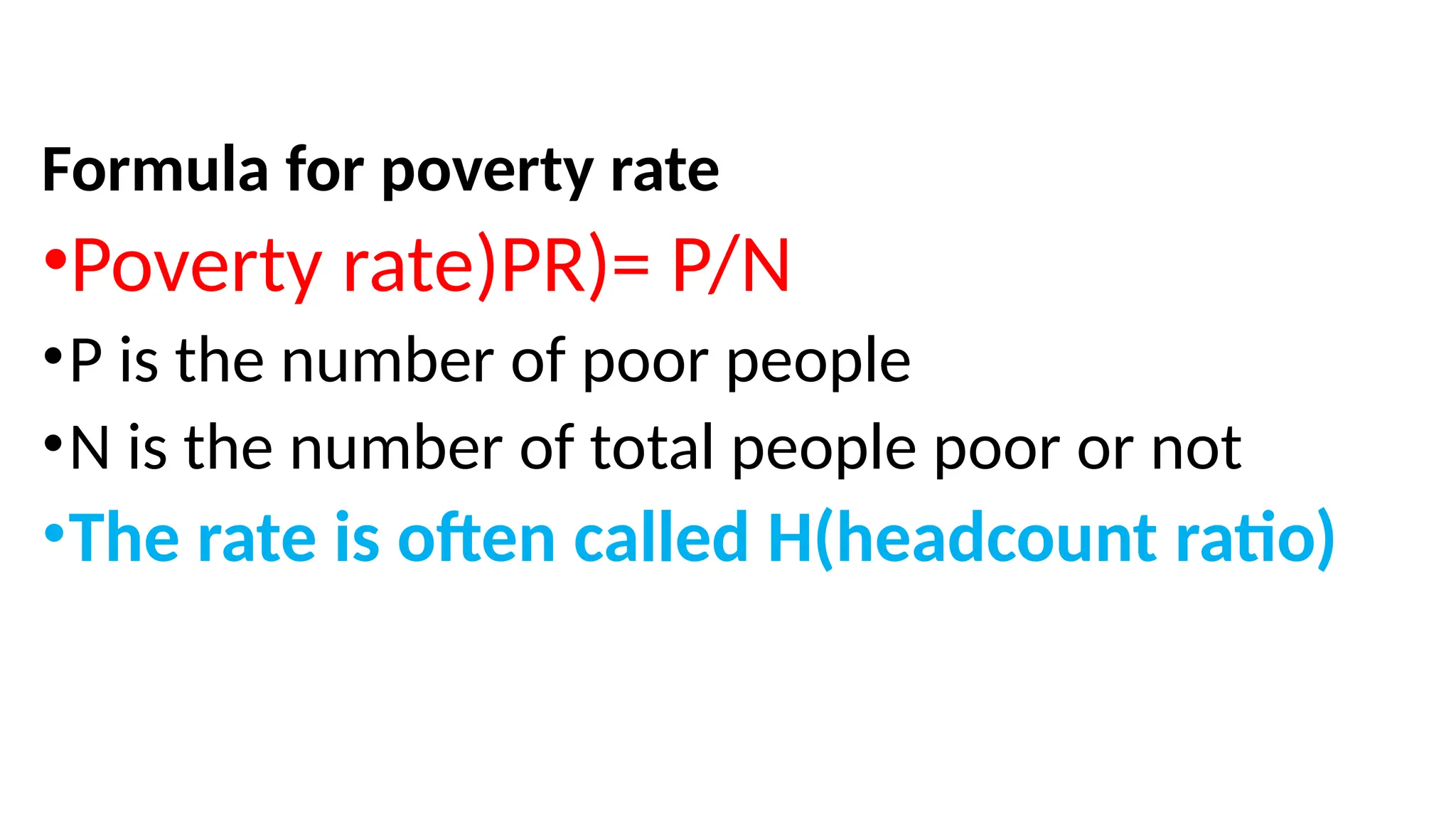
Formula for povertyrate
•Poverty rate)PR)= P/N
•P is the number of poor people
•N is the number of total people poor or not
•The rate is often called H(headcount ratio)
17.
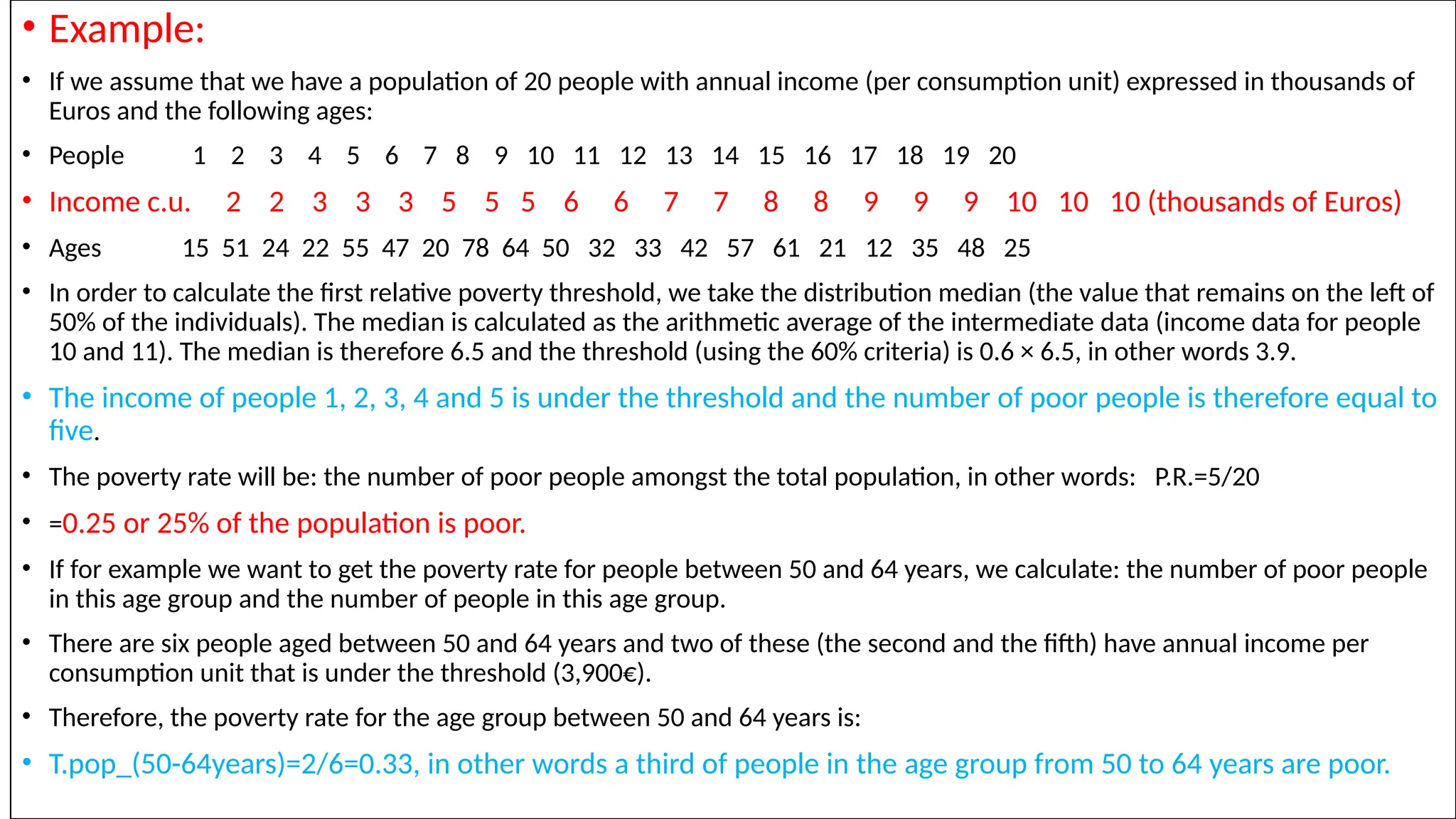
• Example:
• Ifwe assume that we have a population of 20 people with annual income (per consumption unit) expressed in thousands of
Euros and the following ages:
• People 1 2 3 4 5 6 7 8 9 10 11 12 13 14 15 16 17 18 19 20
• Income c.u. 2 2 3 3 3 5 5 5 6 6 7 7 8 8 9 9 9 10 10 10 (thousands of Euros)
• Ages 15 51 24 22 55 47 20 78 64 50 32 33 42 57 61 21 12 35 48 25
• In order to calculate the first relative poverty threshold, we take the distribution median (the value that remains on the left of
50% of the individuals). The median is calculated as the arithmetic average of the intermediate data (income data for people
10 and 11). The median is therefore 6.5 and the threshold (using the 60% criteria) is 0.6 × 6.5, in other words 3.9.
• The income of people 1, 2, 3, 4 and 5 is under the threshold and the number of poor people is therefore equal to
five.
• The poverty rate will be: the number of poor people amongst the total population, in other words: P.R.=5/20
• =0.25 or 25% of the population is poor.
• If for example we want to get the poverty rate for people between 50 and 64 years, we calculate: the number of poor people
in this age group and the number of people in this age group.
• There are six people aged between 50 and 64 years and two of these (the second and the fifth) have annual income per
consumption unit that is under the threshold (3,900€).
• Therefore, the poverty rate for the age group between 50 and 64 years is:
• T.pop_(50-64years)=2/6=0.33, in other words a third of people in the age group from 50 to 64 years are poor.
18.
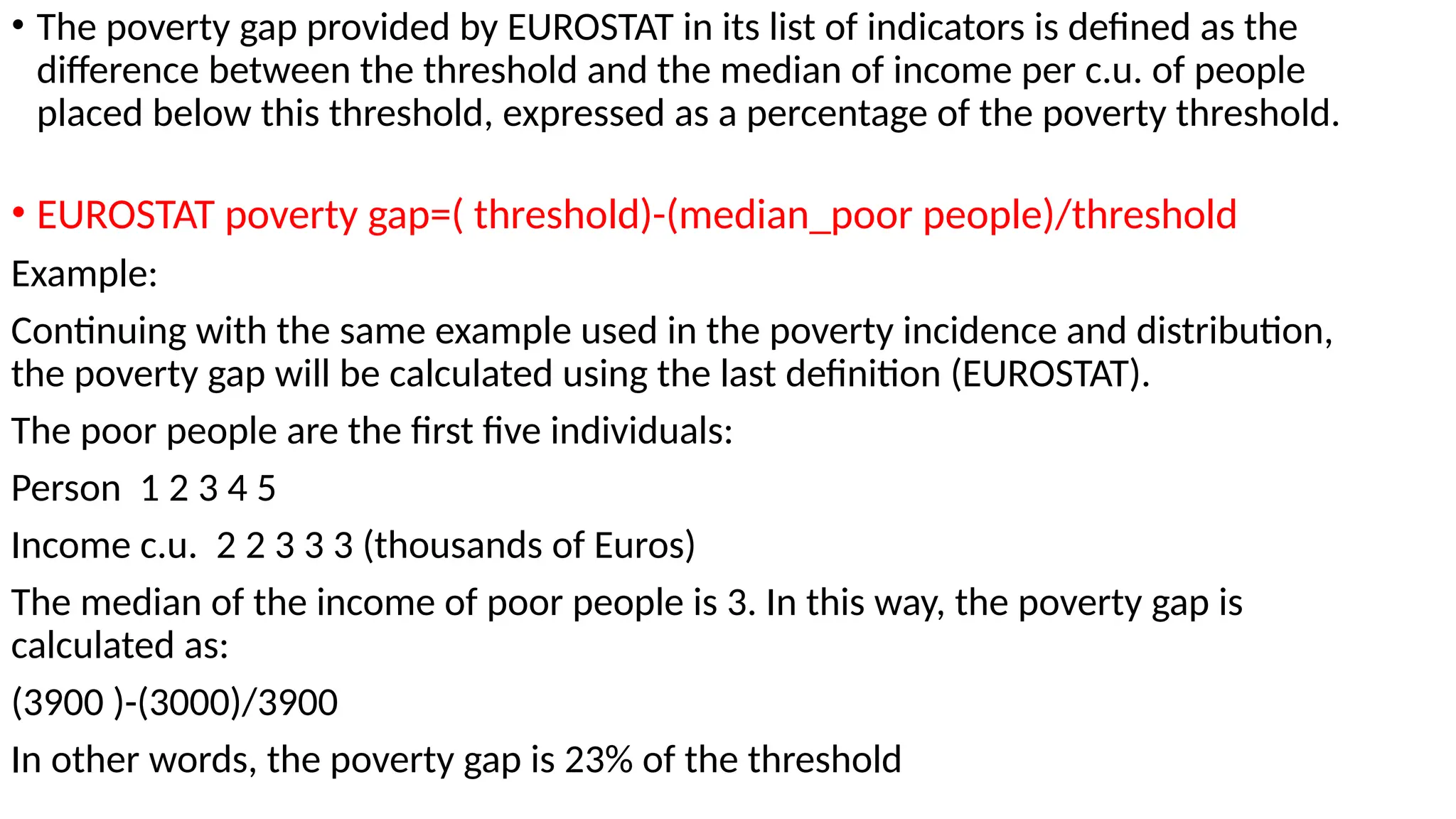
• The povertygap provided by EUROSTAT in its list of indicators is defined as the
difference between the threshold and the median of income per c.u. of people
placed below this threshold, expressed as a percentage of the poverty threshold.
• EUROSTAT poverty gap=( threshold)-(median_poor people)/threshold
Example:
Continuing with the same example used in the poverty incidence and distribution,
the poverty gap will be calculated using the last definition (EUROSTAT).
The poor people are the first five individuals:
Person 1 2 3 4 5
Income c.u. 2 2 3 3 3 (thousands of Euros)
The median of the income of poor people is 3. In this way, the poverty gap is
calculated as:
(3900 )-(3000)/3900
In other words, the poverty gap is 23% of the threshold
![Definition
It is complex to define poverty. Because it is depend on multifaceted and
multidimensional elements like region, era, geographical condition, circumstances and
many more.
The word poverty comes from French word “poverté” which means poor.
1. Individuals, families and groups in the population can be said to be in poverty when
they lack resources to obtain the type of diet, participate in the activities and have
the living conditions and amenities which are customary,.’ — Peter Townsend
2. it is when someone experiences a fundamental deprivation of well-being.
3. World Bank:
4. Poverty is pronounced deprivation in well-being, and comprises many dimensions.
It includes low incomes and the inability to acquire the basic goods and services
necessary for survival with dignity. Poverty also encompasses low levels of health
and education, poor access to clean water and sanitation, inadequate physical
security, lack of voice, and insufficient capacity and opportunity to better one's life.
[21]](https://image.slidesharecdn.com/poverty-250626074211-b556a728/75/Poverty-explained-by-the-lecturer-pptx-pptx-4-2048.jpg)