3. WEIGHTS
Performance JAR 25
WEIGHTS
 Takeoff weights
 MTOW
 RLW
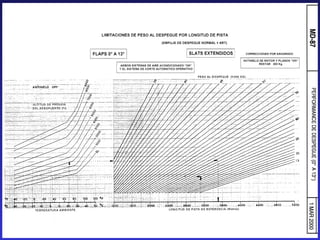
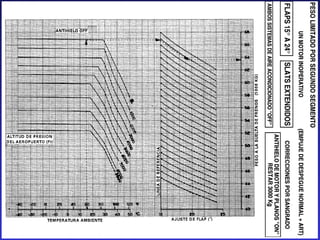
 SSLW & FSLW
 OLTOW
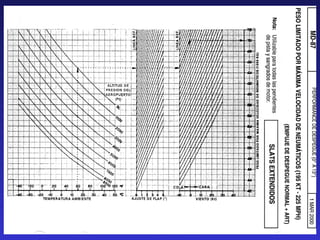
 Weight limited by Vmbe or Vmaxtire
 Runway Bearing Capacity
TAKEOFF WEIGHTS
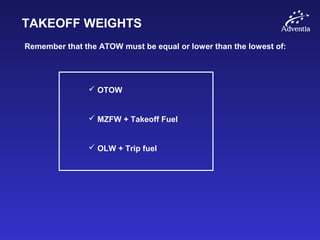
Remember that the ATOW must be equal or lower than the lowest of:
 OTOW
 MZFW + Takeoff Fuel
 OLW + Trip fuel
TAKEOFF WEIGHTS
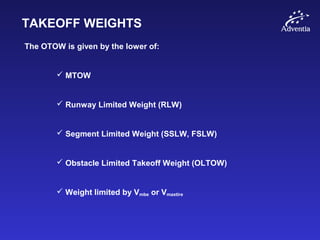
The OTOW is given by the lower of:
 MTOW
 Runway Limited Weight (RLW)
 Segment Limited Weight (SSLW, FSLW)
 Obstacle Limited Takeoff Weight (OLTOW)
 Weight limited by Vmbe or Vmaxtire
SSLW
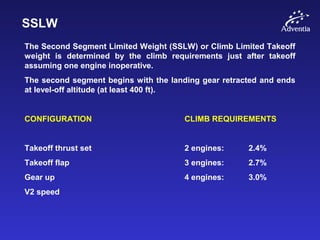
The Second Segment Limited Weight (SSLW) or Climb Limited Takeoff
weight is determined by the climb requirements just after takeoff
assuming one engine inoperative.
The second segment begins with the landing gear retracted and ends
at level-off altitude (at least 400 ft).
CONFIGURATION CLIMB REQUIREMENTS
Takeoff thrust set 2 engines: 2.4%
Takeoff flap 3 engines: 2.7%
Gear up 4 engines: 3.0%
V2 speed
SSLW
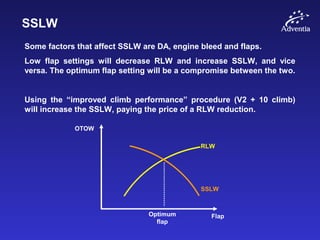
Some factors that affect SSLW are DA, engine bleed and flaps.
Low flap settings will decrease RLW and increase SSLW, and vice
versa. The optimum flap setting will be a compromise between the two.
Using the “improved climb performance” procedure (V2 + 10 climb)
will increase the SSLW, paying the price of a RLW reduction.
Flap
OTOW
RLW
SSLW
Optimum
flap
OLTOW
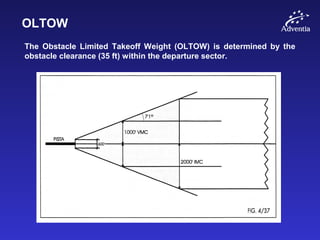
The Obstacle Limited Takeoff Weight (OLTOW) is determined by the
obstacle clearance (35 ft) within the departure sector.
OLTOW
Factors that affect OLTOW are:
 Distance to obstacles
 Wind
 Density altitude
 Engine bleed (A/C, anti-ice…)
 Flap setting
RUNWAY BEARING CAPACITY
The runway strength may be not enough to bear the weight of a heavy
aeroplane. Depending on the mass, number of tyres, pressure of tyres,
etc, two classifications have been established:
ACN: Aircraft Classification Number. It represents the load that the
aircraft puts onto the runway and taxiways.
PCN: Pavement Classification Number. It must be equal or higher than
the ACN to permit operation of the aircraft.
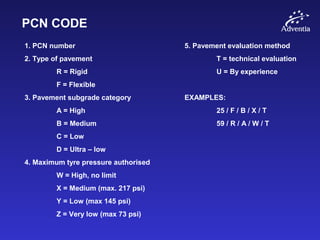
PCN CODE
1. PCN number 5. Pavement evaluation method
2. Type of pavement T = technical evaluation
R = Rigid U = By experience
F = Flexible
3. Pavement subgrade category EXAMPLES:
A = High 25 / F / B / X / T
B = Medium 59 / R / A / W / T
C = Low
D = Ultra – low
4. Maximum tyre pressure authorised
W = High, no limit
X = Medium (max. 217 psi)
Y = Low (max 145 psi)
Z = Very low (max 73 psi)

3. jar 25 weights

  • 1.
  • 2.
    WEIGHTS  Takeoff weights MTOW  RLW  SSLW & FSLW  OLTOW  Weight limited by Vmbe or Vmaxtire  Runway Bearing Capacity
  • 3.
    TAKEOFF WEIGHTS Remember thatthe ATOW must be equal or lower than the lowest of:  OTOW  MZFW + Takeoff Fuel  OLW + Trip fuel
  • 4.
    TAKEOFF WEIGHTS The OTOWis given by the lower of:  MTOW  Runway Limited Weight (RLW)  Segment Limited Weight (SSLW, FSLW)  Obstacle Limited Takeoff Weight (OLTOW)  Weight limited by Vmbe or Vmaxtire
  • 6.
    SSLW The Second SegmentLimited Weight (SSLW) or Climb Limited Takeoff weight is determined by the climb requirements just after takeoff assuming one engine inoperative. The second segment begins with the landing gear retracted and ends at level-off altitude (at least 400 ft). CONFIGURATION CLIMB REQUIREMENTS Takeoff thrust set 2 engines: 2.4% Takeoff flap 3 engines: 2.7% Gear up 4 engines: 3.0% V2 speed
  • 7.
    SSLW Some factors thataffect SSLW are DA, engine bleed and flaps. Low flap settings will decrease RLW and increase SSLW, and vice versa. The optimum flap setting will be a compromise between the two. Using the “improved climb performance” procedure (V2 + 10 climb) will increase the SSLW, paying the price of a RLW reduction. Flap OTOW RLW SSLW Optimum flap
  • 9.
    OLTOW The Obstacle LimitedTakeoff Weight (OLTOW) is determined by the obstacle clearance (35 ft) within the departure sector.
  • 10.
    OLTOW Factors that affectOLTOW are:  Distance to obstacles  Wind  Density altitude  Engine bleed (A/C, anti-ice…)  Flap setting
  • 12.
    RUNWAY BEARING CAPACITY Therunway strength may be not enough to bear the weight of a heavy aeroplane. Depending on the mass, number of tyres, pressure of tyres, etc, two classifications have been established: ACN: Aircraft Classification Number. It represents the load that the aircraft puts onto the runway and taxiways. PCN: Pavement Classification Number. It must be equal or higher than the ACN to permit operation of the aircraft.
  • 13.
    PCN CODE 1. PCNnumber 5. Pavement evaluation method 2. Type of pavement T = technical evaluation R = Rigid U = By experience F = Flexible 3. Pavement subgrade category EXAMPLES: A = High 25 / F / B / X / T B = Medium 59 / R / A / W / T C = Low D = Ultra – low 4. Maximum tyre pressure authorised W = High, no limit X = Medium (max. 217 psi) Y = Low (max 145 psi) Z = Very low (max 73 psi)