Emergency Alert System – Comprehensive Description
Introduction
In today’s fast-paced and increasingly interconnected world, the importance of timely communication during emergencies cannot be overstated. The Emergency Alert System (EAS) is designed to provide a robust, reliable, and scalable platform for notifying individuals, organizations, and authorities about critical incidents that require immediate attention. The objective of this presentation is to explore every aspect of such a system, from conceptual frameworks to practical deployment scenarios, and to provide a detailed understanding of the mechanisms involved in ensuring public safety.
Chapter 1: The Need for an Emergency Alert System
1.1 Background
Emergencies, ranging from natural disasters like earthquakes, floods, and wildfires to man-made crises such as industrial accidents and terrorist attacks, pose significant risks to life and property. Traditional communication methods often fail to deliver alerts promptly, resulting in unnecessary casualties and chaos. The EAS is a technological solution aimed at bridging this gap by automating the process of detection, notification, and response.
1.2 Importance of Speed and Accuracy
The effectiveness of an emergency alert depends on the speed at which information is disseminated and the accuracy of the data being transmitted. False alarms or delays can erode trust and reduce the willingness of people to respond in critical situations. Therefore, it is essential to develop systems that integrate real-time data collection with fail-safe communication channels.
1.3 Stakeholders
The primary stakeholders of an EAS include:
- Government agencies responsible for disaster management.
- Healthcare providers and emergency medical services.
- Industrial facilities prone to hazardous events.
- The general public, particularly vulnerable populations.
- Technology providers and developers.
Chapter 2: System Architecture
2.1 Overview
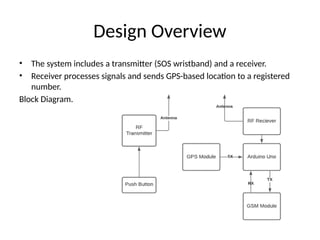
The Emergency Alert System is built upon a modular architecture that allows it to be customized for specific environments and requirements. It integrates sensors, data processing units, communication networks, and user interfaces to create a seamless flow of information from the point of detection to end users.
2.2 Components
- Sensors and Detectors: These include temperature sensors, motion detectors, smoke alarms, seismic monitors, and wearable health trackers that collect critical data.
- Data Processing Units: Central or distributed servers process incoming data, filter out false positives, and trigger alerts.
- Communication Protocols: The system employs both internet-based protocols (such as TCP/IP, MQTT, and WebSockets) and cellular networks (SMS, USSD, LTE) to transmit messages.
- User Interfaces: Dashboards, mobile applications, and public alert systems ensure that alerts are accessible and actionable.
2.3 Network Infrastructure
Redundancy and failover mechanisms are incorporated into the design to prevent si