1) What are some topics in your
discipline that align well with the
           “real world”?
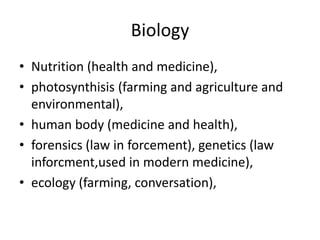
Biology
• Nutrition (health and medicine),
• photosynthisis (farming and agriculture and
  environmental),
• human body (medicine and health),
• forensics (law in forcement), genetics (law
  inforcment,used in modern medicine),
• ecology (farming, conversation),
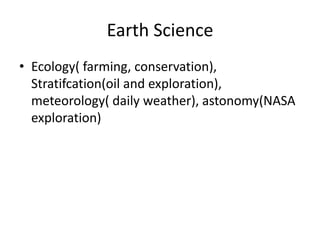
Earth Science
• Ecology( farming, conservation),
  Stratifcation(oil and exploration),
  meteorology( daily weather), astonomy(NASA
  exploration)
2) How are skills learned in your
 classroom useful outside your
          classroom?
awarness)
  nutrition (human body, social issues, obesity/ eating disorder,
         carcinogens in food and how it effects the body)
Ecology (agriculture, how conservations of the animal and plants
 can change our world, (why we are concerned with saving our
              environment and the green movement)
 Genetics (traits to find out the traits that might be dominant in
                            family/ friend)
              Meterology- (understand the weather)
             astronomy (how to find the constilations)
             stratification (for oil and gas exploration)
    carcinogens causes cancer, etc, how it impacts the body
                       it does tie it all together
            agriculture and environment conservation
               how agriculture ties into conservation-
               weather patterns and global warming
                   what to wear outside everyday
genetics and agriculture, transgenesis and genetically modifying
                               foods, etc
3) What are ways to bring new
 forms of technology (not just
PowerPoints and Tvs) into the
 classroom for students’ used
Skype to get experts into the classroom.
   Mind maps to organize their thoughts and ideas.
   Smart board also is a great tool to use everyday.
      Websites like NASA , usgs, census and other
        government web sites to get good data.
  The scientific method, like the experiment he was
                      talking about.
  Clickers to have classroom votes and answers in an
                    anonymous way.
You tube also has ways to show experiments that your
                 classroom can not do.
             3d programs with holograms...
      And of course we cannot forget, second life.
4)What are topics in your discipline
that could be weaved together in a
        long term project?
for earth science you could do a long term project on
                   space exploration
 metrology daily log of the weather, as a bell ringer.
  Biology: helping countries like Africa learn to grow
                crops more responsibly
                Biology: a plant project
            Biology: a humanitarian project
 how much land and resources are needed for each
                         person
  genetics, by altering plants so they can grow more
    *****I do not know what this is Tamara wrote
                     “nopers”****
tying in with going green and saving natural resources
genetics with going green and growing your own food
composting, using worms and the food from the cafe
5) What challenges do you
anticipate in having students take
   part in a long term, student
        centered project?
The challenges you can anticipate are keeping their
attention throughout the project and keeping them at
                    the same pace.
 As Andrew mentioned the importance of ownership
  can be addressed here to help with any problems.
   [19:04] Tamara Miles: All of the equipment that is
 needed will there be enough for the whole class and
enough for the whole time period, and knowing how to
              use all of the equipment .
 Make sure there is enough time to finish the project
               and the reflections after.
Always having a backup plan for every thing that could
                       go wrong.
      The cost of equipment may be a challenge.
6) What is your role as a teacher in
  an environment that is student
            centered?
As the teacher in a student centered classroom it is important to
plan and be organized through out the project.
The teacher should know when to back off and when to take
control and be the boss, there can be a fine line between the
two.
Need to make sure to have the materials and other resources
available.
As the teacher you need to know what questions to ask to get
the student motivated in the right direction.
Be a reference to guide not to lead, give lots of support.
Know where to find the references to the questions they might
ask.
Know the lesson well enough to know what could happen, good
or bad, and know what might happen from that point.
Assessments by watching and evaluating and also reflecting.
2.7 second life meeting

2.7 second life meeting

  • 1.
    1) What aresome topics in your discipline that align well with the “real world”?
  • 2.
    Biology • Nutrition (healthand medicine), • photosynthisis (farming and agriculture and environmental), • human body (medicine and health), • forensics (law in forcement), genetics (law inforcment,used in modern medicine), • ecology (farming, conversation),
  • 3.
    Earth Science • Ecology(farming, conservation), Stratifcation(oil and exploration), meteorology( daily weather), astonomy(NASA exploration)
  • 4.
    2) How areskills learned in your classroom useful outside your classroom?
  • 5.
    awarness) nutrition(human body, social issues, obesity/ eating disorder, carcinogens in food and how it effects the body) Ecology (agriculture, how conservations of the animal and plants can change our world, (why we are concerned with saving our environment and the green movement) Genetics (traits to find out the traits that might be dominant in family/ friend) Meterology- (understand the weather) astronomy (how to find the constilations) stratification (for oil and gas exploration) carcinogens causes cancer, etc, how it impacts the body it does tie it all together agriculture and environment conservation how agriculture ties into conservation- weather patterns and global warming what to wear outside everyday genetics and agriculture, transgenesis and genetically modifying foods, etc
  • 7.
    3) What areways to bring new forms of technology (not just PowerPoints and Tvs) into the classroom for students’ used
  • 8.
    Skype to getexperts into the classroom. Mind maps to organize their thoughts and ideas. Smart board also is a great tool to use everyday. Websites like NASA , usgs, census and other government web sites to get good data. The scientific method, like the experiment he was talking about. Clickers to have classroom votes and answers in an anonymous way. You tube also has ways to show experiments that your classroom can not do. 3d programs with holograms... And of course we cannot forget, second life.
  • 10.
    4)What are topicsin your discipline that could be weaved together in a long term project?
  • 11.
    for earth scienceyou could do a long term project on space exploration metrology daily log of the weather, as a bell ringer. Biology: helping countries like Africa learn to grow crops more responsibly Biology: a plant project Biology: a humanitarian project how much land and resources are needed for each person genetics, by altering plants so they can grow more *****I do not know what this is Tamara wrote “nopers”**** tying in with going green and saving natural resources genetics with going green and growing your own food composting, using worms and the food from the cafe
  • 13.
    5) What challengesdo you anticipate in having students take part in a long term, student centered project?
  • 14.
    The challenges youcan anticipate are keeping their attention throughout the project and keeping them at the same pace. As Andrew mentioned the importance of ownership can be addressed here to help with any problems. [19:04] Tamara Miles: All of the equipment that is needed will there be enough for the whole class and enough for the whole time period, and knowing how to use all of the equipment . Make sure there is enough time to finish the project and the reflections after. Always having a backup plan for every thing that could go wrong. The cost of equipment may be a challenge.
  • 16.
    6) What isyour role as a teacher in an environment that is student centered?
  • 17.
    As the teacherin a student centered classroom it is important to plan and be organized through out the project. The teacher should know when to back off and when to take control and be the boss, there can be a fine line between the two. Need to make sure to have the materials and other resources available. As the teacher you need to know what questions to ask to get the student motivated in the right direction. Be a reference to guide not to lead, give lots of support. Know where to find the references to the questions they might ask. Know the lesson well enough to know what could happen, good or bad, and know what might happen from that point. Assessments by watching and evaluating and also reflecting.