1
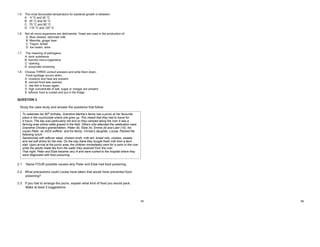
CONSUMER STUDIES
Learner
Gr 10
2025
2
TERM 1
PROGRAMME OF ASSESSMENT TERM 1
Task 1 March Control Test (75 marks) 100%
Skills Test (Contribute 25% to PAT marks, and only added to term 4)
TERM 1 TERM 2 TERM 3 TERM 4
The Consumer
(3 weeks)
Food and Nutrition
(4 weeks)
Revision
Food and Nutrition
(2 weeks)
Entrepreneurship
(6 weeks)
Revision
Clothing
(3 weeks)
Fibres & Fabrics
(2 weeks)
Housing & Interior
(2 weeks)
Revision
Housing & Interior
(2 weeks)
Revision
TOPICS IN CONSUMER STUDIES
CONTENT
3
TWO MAIN OBJECTIVES OF CONSUMER STUDIES
1. EDUCATING consumers to
 be able to make informed decisions,
 optimally use resources
2. MAKING AND MARKETING QUALITY PRODUCTS
THE CONSUMER (3 weeks)
INTRODUCTION TO CONSUMER STUDIES
 What is Consumer Studies?
What is a consumer?
 Consumers needs and wants (refer to Maslow’s hierarchy of needs )
 Consumer rights and responsibilities
Decision making
Types of Decision Making
 Spur- of- the moment decisions, habitual decisions, intuitive
decisions
 Consumer rational decision-making process
- Problem recognition, information search, evaluation of
alternatives, purchase decision, post purchase behaviour
Sustainable consumption
 Defining sustainable consumption
 Principals of sustainability
 Sustainable consumption decisions
 Good buying habits
Factors influencing consumer buyer behaviour
 Psychological ( motivation and needs; perception;
knowledge; values; attitudes; lifestyle)
 Socio-cultural (personal, reference group, family, social
class, culture, subculture)
 Economic (income, credit facilities, price)
4
TERMINOLOGY
Consumer society: a society in which the buying and using of goods is an important
economic factor
Entrepreneur: one who is willing to accept the responsibility, risk, and rewards of starting
and operating a business
Need: something basic that a person needs to survive
Desire/Want: is a desire for something that is not necessary for survival, but that a person
would like
Hierarchy: a system where people or things are ranked one over the other according to
status or importance
Independent: free from out of control or influences
Misrepresentation: giving false or misleading information
Identify: find, name and mention
Explain: give the details of something in full sentences and give reasons
Name: giving what is called something with no expectations
Intuitive: based on what you feel like to be true
Recognize: identify or understand something when you see it
Sustainable: able to be continued; avoid using natural resources
Motivation: the driving force in each of us directing our actions
Rational: based on reason, logically
Compact fluorescent lamps: energy-saving light bulbs
Biodegradable: capable of decay or decomposition by bacteria or other living
organisms
Green choices: choices that benefit the environment and do not have a negative effect on
environment
Organic products: fruits and vegetables grown naturally without the use of harmful
chemical fertilizers and pesticides
Gimmicks: things used to attract attention
Discuss: talk or write in / full sentences about something, give different ideas and
arguments on topic
5
BASELINE ASSESSMENT:
1. Give reasons why you have chosen Consumer Studies as one of your subjects.
2. Discuss the relevancy of the subject in South African context. The findings are to be written
down in the class activity books.
BASELINE ASSESSMENT memo:
1. The responses will differ from learner to learner as they will be voicing out their opinions
2. Consumer Studies is a highly relevant subject in the South African context due to its
ability to empower learners with practical skills, knowledge, and understanding
needed in various aspects of everyday life. Below are key points highlighting its
importance:
o Economic Empowerment - Consumer Studies equips learners with
entrepreneurial skills, enabling them to start small businesses, which can
contribute to job creation and poverty alleviation.
o Financial Literacy - Consumer Studies teaches learners how to budget,
save, and make informed financial decisions, helping all to be financially
responsible.
o Consumer Rights and Responsibilities - the subject educates students
about their rights as consumers under South African law (e.g., the
Consumer Protection Act). This knowledge helps them avoid exploitation
and promotes ethical consumer practices.
o Nutrition and Health - Consumer Studies provides knowledge about
nutrition, meal planning, and healthy eating, contributing to improved public
health.
o Skill for Self-Reliance - practical component prepares learners to obtain
skills
to be self-sufficient or that enhances their employability.
6
EVERYONE/YOU are a consumer
CONSUMER NEEDS AND DESIRES/WANTS
WHAT IS A CONSUMER...
A consumer is a person who purchases a PRODUCT or SERVICE for personal use.
WANTS/DESIRES
= desire that means something that someone would
like but can live without, for example a new mobile
phone or tablet
NEEDS
= something needed in order to survive.
7
Hierarchy = A system where people or things are ranked one above the other according to
status or importance.
Abraham Maslow developed a model that shows our 5 basic NEEDS.
Level 1 (bottom) = Water, food, and shelter to survive.
Level 2 = Need to feel safe and protected.
Level 3 = Fulfilled → love and kindness in a certain social and religious group
→ feel accepted.
Level 4 = Confidence and reputation.
Level 5 (Top) = Reaching your full potential by learning from others and growing.
MASLOW’S HIERARCHY OF NEEDS AND WANTS
8
ACTIVITY 1 The Consumer and Maslow’s Hierarchy of needs
1. Define the word “consumer”.
2. Differentiate between a want and a need and give ONE example of each.
3. By means of a collage, classify your FIVE needs according to Maslow’s Hierarchy and
write down the headings of each level.
ACTIVITY 1 memo
1. Define the word “consumer”
consumer is a person who buys and uses goods and services
2. Differentiate between a want and a need and give ONE example of each
Want: is a desire to obtain something but you can still do without e.g. expensive and
fashionable shoes
A need: is something that you cannot do without e.g. food
3. By means of a collage, classify your FIVE needs according to Maslow’s Hierarchy
and write down the headings of each level:
Level1: Physical needs – Food/drink/shelter/warmth/sleep
Level 2: Safety and Security needs – Security/law/protection/stability
Level 3: Social Needs – Relationships/ family/work
Level 4: Self -esteem – Achievement/status/responsibility/ reputation
Level 5: Self-actualisation - Personal growth/fulfilment
Learners to draw the pyramid and divide it according to 5 levels and label each level
accordingly. Then they should paste one appropriate picture per level with appropriate
caption. The pyramid should be wide enough to accommodate both the picture
and the heading
9
The Bill of Rights is a document that sets the basic rights of every person, including the
rights of a consumer when buying products. It therefore defines the basic rights of everyone
living in the country, including the consumer's rights if he or she buys something
BASIC RIGHTS:
1. To be heard – must be able to complain and indicate their unhappiness if product is
not up to standard
2. To be informed - information on labels necessary to make wise decisions.
3. To be safe – If products are unsafe, the manufacturer may be forced to withdraw
them
4. Up have choices - can choose from a variety of products and services at competitive
prices.
5. To complain if not satisfied - can complain about poor quality or misrepresentations
and demand for correction
6. To have basic needs met – It is the government's responsibility to keep an eye on the
price of basic foods such as bread.
7. To consumer education – people need to be made aware of their consumer rights
8. To a healthy environment – environment should be protected by not littering and by
recycling waste.
9. At reasonable price charged – exorbitant prices may not be charged
10. To get quality service or products – must get what pays for
11. To receive kind and respectful treatment
CONSUMER RIGHTS
10
ACTIVITY 2
1. Match the consumer right in column B to a specific example in column A. Write the
letter of your choice next to the relevant question number.
COLUMN A COLUMN B
1.1 You will find the information, which is published in
the consumer's weekly magazine, very helpful
when you go shopping.
A Right to be informed
1.2 When you turned on the hair dryer you recently
bought, it didn't work. You take it back to the
dealer and the manager returned your money.
B Right to fair prices
1.3 You are allergic to peanuts and check the food
labels regularly to make sure there are no nuts in
the product you are buying.
C Right to safety
1.4 You slipped and injured your ankle as there was no
warning sign in the supermarket warning customers
that the floor was wet.
D Right to a healthy
environment
1.5 While you're looking for bananas, you find out the
local supermarket's prices are nearly double that of
the vegetable store.
E The right to courtly
treatment
F Right to repair or
refund of products/
services
G Right to consumer
education.
2. Match consumer right in column B to a specific example in column A. Write the letter
of your choice next to the relevant question number.
COLUMN A COLUMN B
2.1 Pieter pays his Markhams bill on time every
month.
A To save for unforeseen
circumstances
2.2 Ronald was taught from an early age to save
water and electricity and not to throw empty
soda cans out the car's window.
B To preserve the natural
environment
2.3 Roline accidentally dropped a jar of
mayonnaise in the store. She immediately
reported it and offered to pay for it.
C To act courteously and
fairly
2.4 Zena took the cash slip and handbag, whose
zipper was constantly pulling open, back to the
store and asked for a possible swap.
D To handle goods carefully
and guard against
damage to goods
E To fulfil your obligations
and pay promptly
F To be well informed.
11
ACTIVITY 2 memorandum
1.1 G
1.2 F
1.3 A & C
1.4 C
1.5 B
2.1 E
2.2 B
2.3 D
2.4 C
ACTIVITY 3 MEMO
1. The right to safety. Consumers have the right to know that the products and
Services they purchase are safe and will not put their health at risk. (2)
2. The responsibility to fulfil obligations. (1)
3. Identify the following responsibilities (4)
a) The responsibility to draw up a budget that you stick to
b) The responsibility to be honest
c) The responsibility to conserve the natural environment
d) The responsibility to act ethically
ACTIVITY 3
1. Asiphe finds a pin in the sweater she bought for her baby. Identify and explain
the consumer rights that apply to Asiphe in this situation (2)
2. You have a clothing bill at a major store. You have not been able to pay the
monthly instalments for the past two months. Indicate which consumer
responsibility applies to the statement (1)
3. Identify the following responsibilities (4)
a) You already have all your pocket money for the month by the end of the
first week spend
b) You know someone who steals store items
c) The boy who lives next door to you throws his garbage on the sidewalk
d) Your mother was given a speeding ticket that she does not want to pay
12
ACTIVITY 4
Read the case study and answer the questions that follow:
Delia is very particular about her appearance and also very health conscious, she
realizes that her skin is very dry. She sees an advertisement for a new type of
face cream at her local pharmacy. She went into the pharmacy to inquire
about the new face cream.
1. The shop assistant was busy on her cell phone, totally ignoring Delia. Delia
loses her temper and insists on seeing the manager. However, the manager
was busy, and another assistant showed her the face cream. She sees that
the product contains herbs, so she asks about the herbal ingredients,
2. but the assistant admits that he has no knowledge of the product.
3. Delia read the label and immediately realized that it could cause an allergic
reaction in persons with a lighter complexion. Because of the poor service, she
walked out and
4. bought her usual face cream that she has been using for the last three years
from another pharmacy. It is more expensive than the other types, but she
believes it is the best. She pays cash for the face cream.
5. When she got home, she wrote a letter to the pharmacy owner complaining
about the poor service she had received.
1. Define the term "consumer".
2. Delia loses her temper and insists on seeing the manager. Identify the way
Delia wanted to resolve the complaint.
3. Identify the consumer rights marked (a) – (e) in the case study.
4. Name ONE consumer responsibility that is clearly visible in the case study.
ACTIVITY 4 MEMO
1. A person who buys and sells a product/service.
2. Aggressive
3. (a) the right to be treated courteously and with respect
(b) the right to be informed
(c) the right to safety / to be informed
(d) the right to choose
(e) the right to complain/right to be heard
4. The responsibility to express your opinion and to complain if not satisfied, also the
responsibility to stay informed
13
Every right comes with a responsibility → consumers MUST do their part.
• Take responsibility for your actions and know what the consequences will be.
MAIN RESPONSIBILITY IS:
1. Solidarity - working together and establishing groups to ensure that
consumers' concerns and problems are addressed.
2. Critical awareness
- being well-informed by asking questions and ensuring familiarity with
product details
- to understand the conditions or guarantees that come with the product
- Be honest and follow rules and regulations
- stick to a budget and not spend more than you have complain about poor
quality or service
- Be polite and fair when complaining, do not get emotional, rude, or
angry.
3. Social concern
- be aware of how their buying decisions or actions affect other people.
- For example, use water sparingly and use energy-saving light bulbs to
save electricity.
4. Environmental awareness – care about the environment, buy recyclables,
don't litter and don't waste water or energy
CONSUMER RESPONSIBILITIES
14
ACTIVITY 5
1. Read the following examples and decide which consumer rights apply in
each case:
1.1 You bought a radio with your savings carrying the SABS approval mark.
A week later, the screen plate fell off without anyone being careless with
it.
1.2 While shopping in a supermarket, you slip on an oil spill on the floor and
break your leg.
1.3 You are allergic to benzoic acid. You bought a bottle of fruit juice whose
label states that it contains no benzoic acid. Half an hour after drinking the
juice, you get a severe allergic reaction.
1.4 You bought sunglasses, and after a weekend at the beach, you notice that
it has faded. You go back to the store and talk to the manager about it. He
refuses to listen to your complaint.
2. Identify which consumer responsibilities apply to each example .
2.1 The kitchen faucet has been leaking for months.
2.2 Your father received a traffic ticket and is very upset about it.
2.3 You have a clothing account at a large store. You haven't paid the
instalment in the past two months.
ACTIVITY 5 MEMO
1.1 The right to quality/the right to redress
1.2 The right to safety
1.3 The right to be informed/the right to safety
1.4 The right to redress
2.1 The right to preserve the natural environment
2.2 To respect rules and regulations
2.3 The right to fulfil obligations
15
1. Impulsive decisions
 Impulsive – do without thinking
 Think little about it
 Do not consider the consequences
2. Habitual decisions
 Decisions made out of habit
 Daily routines
 Buy the same brand/s without even comparing it to others
3. Intuitive decisions
 Emotional decision – the right thing to do
 Based on instinct not on facts
 Not an impulsive decision
4. Rational decisions
 Logical
 Follow specific steps
DECISION-MAKING
Decisions = consequences
DECISION-
MAKING
PROCESS
TYPES
DECISION
DECISION-
MAKING
Step 1:
Identify the problem
Step 2:
Seek information
Step 3:
Evaluate
alternatiive
Step 4:
By the product
Stap 5:
After sale
16
ACTIVITY 6
1. Define the following terms:
1.1 A decision 1.2 Decision making 1.3 An alternative
2 In each case, select the type of decision from COLUMN B that best fits the
example in COLUMN A.
COLUMN A COLUMN B
2.1 Roline is constantly on a diet A Impulsive
2.2 Roline, on the spur of the moment, bought slimming
tablets without thinking about the consequences.
B Habit
2.3 Roline, without thorough research, decided to buy
slimming tablets
C Rational
2.4 Roline, after careful consideration, decided to turn to
a dietitian for help.
D Intuitive
3 Read the following case study and answer the questions that follow.
It was in response to a talk by a dietitian at the school that the Grade 10 learners
realised that a healthy body is important. A large group of them were between 2 and
5 kg overweight. Very enthusiastically, they decided to shake off the unnecessary
mass within 3 months. Crash diets were out and good eating habits in. They joined
the school's gymnasium to help in their pursuit of a healthy body and beautiful figure.
The latest fashions will then also be number fit.
Good financial planning was also essential so that they do not end up in debt with
their parents. They decided to work extra shifts in the cafeteria in order to pay for the
membership at the gym.
After two months of good progress, one day, on the spur of the moment, they each
consumed a large piece of cream cakes at the end of their shift at the cafeteria.
3.1 Name the steps in the decision-making process that they can follow
to make the best decisions. (5)
3.2 Identify and explain, using examples from the case study, 2 types of
decisions they made. (2x2) (4)
ACTIVITY 6 MEMO
1.1 A decision: Is a choice between alternatives to solve the problem
1.2 Decision making: Is a process where alternatives are considered,
and a decision is made
1.3 An alternative: Is a set of strategies with which the problem can be solved
2.1 B 2.2 A 2.3 D 2.4 C
3.1 Determine the problem
Find information/alternative solutions
Evaluate every alternative
Make a choice/ choose best alternative
Evaluate the outcome and accept responsibility.
3.2 Rational decision- plans made to lose weight
Impulsive decision- on the spur of the moment decided to consume each of
them a large piece of cream cake.
17
ACTIVITY 7
1. Read the case study below and answer the questions that follow.
The Goosen family is planning a family festival during the Easter weekend
next year. The festival can be held at a resort or at the local caravan park.
At the resort, there are more recreational facilities as well as enough
accommodation available, although they are more expensive. The caravan
park is cheaper, with adequate recreational facilities, but accommodation is
then limited.
Use the information above to complete the table below. Draw the table and fill in
the necessary information.
STEPS IN THE DECISION-
MAKING PROCESS
APPLICATION FROM CASE STUDY
1. (1)
2. (2)
3. Benefits
Option 1:
Option 2:
Disadvantages
Option 1:
Option 2: (4)
4. (1)
5.
2. Read the case study below and answer the questions that follow.
Nothando has outgrown all of her clothes from last year. She doesn't have much
sewing experience, and she doesn't like sewing. Unfortunately, she spent all her
money on booking a vacation in 2 months. No employer wants to hire her for the
next 2 months because she goes on vacation for 3 weeks.
2.1 Identify Nothando's problem. (1)
2.2 Name possible solutions to her problem from the case study. (2)
2.3 Name the type of decision she needs to make. (1)
2.4 List the 5 main decisions you should make when shopping. (5)
18
ACTIVITY 7 MEMO
1.
STEPS IN THE DECISION-
MAKING PROCESS
APPLICATION FROM CASE STUDY
1. Determine the problem Arranging a family feast
2. Find information/
alternatives solutions
1. Stick to resort
2. Caravan Park
3. Evaluate each
alternative
Benefits
Option 1: More recreational
facilities
Option 2: Cheaper
Adequate
recreational facilities
Disadvantages
Option 1: Very
expensive
Option 2:
Accommodation
is limited
4. Make a choice/ choose
Best alternative
Resort
5. Evaluate outcome and
accept responsibility
2.1 Need new clothes
2.2 She will have to make herself some new basic garments.
She can have changes made to her current clothes
She can ask her mom/dad/family for a loan, which she should undertake to
repay
2.3 Rational decision
2.4 What your real needs are.
How much money you have to spend on the purchases.
What products and services you need to buy.
What qualities are important to you.
Compare different brands, prices, and sizes etc.
Where to buy.
When to buy/be aware of all the techniques that advertisers use to tricking
consumers into making purchases.
19
ACTIVITY 8
1. Read the case study below and answer the questions that follow.
Sunette would very much like to join the European school tour that takes place
during the June holidays next year. However, her grandmother turns 80 years
old at that time and the family is planning a big party. She doesn't want to miss
her grandmother's special birthday.
Help Sunette make a rational decision by completing the table below. Use the
information in the case study to explain each step.
STEPS IN THE DECISION-
MAKING PROCESS
EXAMPLES FROM THE CASE STUDY
Identify the problem 1.1
1.2 European school tour
Evaluate every alternative BENEFITS DISADVANTAGES
1.3 1.4
1.5 1.6
Choose the best alternative 1.7
Evaluate the outcome and
accept responsibility.
ACTIVITY 8 MEMO
1.1 Attending a grandmother's birthday party or going on a school tour
1.2 Find information/ alternative solutions
1.3 Socialising with friends
See the world
Can built experience in world
1.4 Miss grandma's party and Tour is very expensive
1.5 Spend time with family and Save money
1.6 Miss time with friends and can’t chat with friends.
1.7 Sunette attends a party because she does not know how many parties of her
grandmother, she can attend but she can go on a world tour at any time.
20
ACTIVITY 9
1. Read the case study below and answer the questions that follow:
Referring to the given steps in the decision-making process, explain how Susan
was able to decide what would be the best solution. Tabulate your answer as follows
2. Explain why good decision-making is necessary
3. Complete the table below by writing down an example of each type of
decision in each case.
TYPE DECISION EXAMPLE
Impulsive decision
Habitual decisions
Intuitive decision
Rational decision
STEPS IN THE DECISION-MAKING PROCESS EXPLANATION
ACTIVITY 9 MEMO
1.
2. Make it possible to find the best way of doing things.
Make the best use of resources.
Help find solutions to problems.
Helps meet needs to get the best value for money.
3.
STEPS IN THE
DECISION-MAKING PROCESS
EXPLANATION
Step 1: Determine problem
/need.
Identify the problem or outline your goal.
Step 2: Search information. View alternative solutions.
Step 3: Evaluate alternatives. Consider each alternative.
Step 4: Make a choice. Choose one of the alternatives – make a decision.
Step 5: Do an after-choice
analysis.
Analyses and accept the consequences of the
decision.
TYPE DECISION EXAMPLE
Impulsive decision To run away when a dog chases you.
Habit decisions To brush teeth every morning before school.
Intuitive decision Not to smoke with mates behind the pavilion.
Rational decision Career choice after school.
All of Susan's mates go to the movies Wednesday night. However, she is writing
a big test on Thursday. It is a lot of work, and the movie ticket costs R20. Her
mother said she had to decide for herself what was most important to her. She
can save the R20 and learn for the test, but then her peers may not invite her
again. When she goes to the movies, she can put on her new leather jacket, for
everyone to see it. She realizes then she will not do so well in the test and her
parents will be disappointed. She decides to save the money and just learn for
the test. When the results of the test came, she realised that it was worth staying
and learning, because she had won the R50 progress prize.
21
SUSTAINABLILITY
Meeting the needs of the present without compromising the ability of future generations to
meet their own needs.
Three Pillars
1. Social sustainability
2. Environmental sustainability
3. Economic sustainability
SUSTAINABLE CONSUMPTION :
It is the use of products and services in ways that
minimizes impacts on the environment.
Meet the needs of present and future generations
for goods and services for an economic, social
and environmentally oriented lifestyle.
PRINCIPLES OF SUSTAINABILITY
The principles of sustainability explain how to apply sustainable consumption.
If consumers follow the principles of sustainability, it will lead to sustainable
consumption of products.
Reduce→ Buy only what is essential and what will be used.
→ Buy products with little packaging that need to be discarded.
→ Waste puts pressure on the environment.
→ Use water and electricity sparingly.
Reuse → Reduce clutter by re-using articles, where possible.
→ For example, reuse shopping bags and plastic cutlery.
→ Adjust or modernize clothes so you can use them again, for example,
by adding pouches or decorative embroidery.
Recycle → Separate waste and take it to recycling bins rather than disposing of it.
SUSTAINABLE CONSUMPTION DECISIONS
Sustainable consumption means making choices about purchases that have the least
possible effect on the environment.
Guidelines for sustainable purchasing decisions:
• Buy biodegradable products – which can be
decomposed by bacteria/living organisms
• Protect and conserve natural resources such
as water, soil, and air
• Use solar power
• Support locally produced products and contribute
positively to the economy
• Use recycled materials, e.g., recycled paper
• Make healthy choices by avoiding toxic products.
Dependent on each other
22
Good buying habits
1. Shop Local.
2. Grow your own food or buy whole foods such as fruit and vegetables in their natural state.
3. Choose organic or natural fibres and products.
4. Do not buy goods that have a lot of packaging or have been significantly processed.
5. Packaging and processing have a detrimental impact on the environment.
ACTIVITY 10: Sustainable consumption
1. Define the term “sustainable consumption”
2. Tabulate ways to encourage sustainability with explanations.
Principles Explanations
Reduce
Reuse
Recycle
Sustainable transport
Sustainable water
ACTIVITY 10: Memo
1. Define the term “sustainable consumption”
Sustainable consumption is the use of goods and services to satisfy basic human
needs while reducing harmful effects on the environment and natural resources
OR
Refers to the way in which humans use their resources to meet their needs while
ensuring that future generations will also be able to meet their needs OR Is a way
people utilising their resources to satisfy their basic needs and at the same time
take precautions so that the environment and natural resources are not damaged
or depleted
2. Tabulate the principles of sustainability with explanations.
PRINCIPLES EXPLANATIONS
Reduce Do not buy unnecessary items
Do not discard/waste input unnecessary items – cause pressure
on the environment - Recycle or reuse them Use electricity/
water sparingly
Reuse Whenever possible – reuse shopping bags/plastic cutlery Alter or
adapt – old clothes
Recycle Sort the waste products – paper/plastic/glass Donate old clothed
to charity
Support recycling programmes
Sustainable
transport
Travel by train and car/taxi are contributing to climate change, air
and noise pollution and congestion. We need to walk more – way
to reduce the number of cars /taxis on the roads
Sustainable
water
Local supplies of water are often insufficient for humans
use due to pollution and depletion. We need to conserve water.
23
ACTIVITY 11 MEMO
1. Protect and conserve natural resources (water, air, and soil).
Buy biodegradable (products that can be broken down by bacteria or other living
organisms) and recyclables
Make healthy choices – grow your own vegetables and avoid using pesticides
Buy organic products
Buy locally – fewer products are transported so there is less pollution – look for Pride SA
products
Buy SABS products – good quality so you buy fewer products
Compare Brand Names, stores' prices and the
Compare safety, services, variety, and parking at stores
Look out for shipping costs
Buy products with a warranty
Read contracts before you sign them
Buy organic products
Buy a better one with min packing material
Buy only the necessary products – don't buy products just because they're on a special
offer
Set a budget and stick to it
Check the expiration date of products
ACTIVITY 11
1. Susan learned that sustainable consumption means making purchasing choices
that are not detrimental to the environment. Give her FIVE guidelines for good
decisions. (5)
2. Identify the mark below. Explain when may a
product get this mark and what are the
benefits of buying products with this brand. (8)
3. Choose from the list below FOUR guidelines that help you make the best use of
your resources when purchasing food. Write down only the letters (A-I). (4)
A If you buy food, look at the expiration date.
B Always buy the cheapest food items
C Buy the perishable products first.
D Buy at a store with a good reputation.
E Always buy at a local market.
F Prepare food yourself rather than buying convenience foods.
G Compare prices of products
H Buy expensive food products as they are always a better quality.
I Only buy on credit
24
2. Proudly South African
PROS / ADVANTAGES:
 Production cost benefits SA
 Stands for High quality
 Indicate it Comply with labour laws
 Be made environmentally friendly.
 Consumers are assured of quality products
 Boost SA's economy
 Assist in combating poverty, crime, and disease
3. A, D, E, G
25
CONSUMER BEHAVIOR
Are the decision-making processes and actions of people involved in buying and using
products
FACTORS AFFECTING BUYER BEHAVIOR
Psychological factors (THINKING,
FEELING, BELIEVING, VALUES)
Socio-cultural factors Economic factors
o Personality
o Motivation and needs
o Perceptions
o Value & Beliefs
o Knowledge & Attitude
o Lifestyle
o Personal
o Family
o Reference group
o Social class
o Culture/ Sub-
culture
o Income
o Lifestyle
o Credit facilities
PSYCHOLOGICAL INFLUENCES
how people think or feel, as well as what they believe or consider to be of value.
 Motivation and needs – If you want to go on vacation, you will be motivated to save
his or her money rather than buying luxury items.
 Personality - Smart consumers understand the influence of their personality on their
buying decisions and do not use personality or character traits as an excuse to make
unwise buying decisions.
 Perceptions - Perceptions are about how people see themselves and their
surroundings, e.g., overweight persons will often buy loose or baggy clothes
 Values and beliefs – Values are what people believe are right or wrong and are often
important when making buying decisions.
 Attitudes and knowledge - A good experience at a store will encourage a person to
shop there again and tell others about the store.
SOCIO-CULTURAL INFLUENCES
 Family
Family is one of the most influential social units, shaping attitudes, values, and
behaviour from a young age.
 Peers/ Reference Groups
 People of the same age share the same ideas
 Peer groups have a very strong influence on adolescent consumer
behaviour
These factors are significant in shaping individual behaviours, attitudes, and
preferences. It influences decision-making and interpersonal interactions
 Personal
 Relate to individual's unique traits age, gender, occupation, lifestyle, financial
 situation and personality.
 People who are admired", influence the person's values and attitudes
 People buy goods that will make them more like their role model
26
ECONOMIC INFLUENCES
 Income - The disposable income that a person has determines the type of products
that person will buy.
 The amount of money or its equivalent received during a period of time in
exchange for labour or services, from the sale of goods or property, or as
a gain from financial investments.
 Disposable income is the amount of money a person surrenders to pay
after paying taxes, and other personal expenses
 The higher the income, the more products a consumer will buy
 Credit facilities
 Credit facilities are a critical economic factor that influence individual and
organizational behaviour by providing access to borrowed capital.
 These facilities enable consumers, businesses, and governments to invest,
grow, and meet financial needs even when immediate funds are unavailable.
Examples of credit facilities
• Credit cards
• Lay-down buy
• Price
• Instalment payments
 Lifestyle - Lifestyle is determined by people's interests, opinions, activities, and
social group, e.g., people who love the outdoors and sports will spend more
money on sportswear, equipment, and operations, for example.
 Social Class
Social class is determined by an individual’s income, occupation, education,
and social status, influencing societal interactions and opportunities.
• Culture/Sub-culture
Culture refers to shared values, beliefs, and customs of a society, while sub-
culture refers to distinct groups within a larger culture.
 Set of ideas, values and attitudes accepted by a group of people
 Customs, language, ethnic groups, and religion
 Faith influences people's buying decisions
27
ACTIVITY 12
Match the psychological influence in column A to a specific example in column B.
Write the letter of your choice next to the relevant question number.
COLOUM A COLOUM B
1.1 Motivation A Monty only buys BP petrol
1.2 Need B Shenice prefers clothes that are easy to care for
because
she travels a lot.
1.3 Attitude C Ruth is an impulsive buyer and cannot resist a
"bargain".
1.4 Beliefs D Sally uses a budget to make sure she has money for an
overseas vacation.
1.5 Lifestyle E Albert only buys his fruit from Woolworths because he
feels the produce has a longer shelf life.
1.6 Personality F Susan always compares prices before buying an
expensive item.
1.7 Perception G Victor can only go to the movies, having paid his rent.
1.8 Knowledge H Izhar feels very strongly about the need for recycled
paper products to be used.
I Disposable diapers have a negative impact on the
environment.
2. Name the three main groups that will influence the consumer's purchasing
behaviour.
3. Name THREE psychological factors that influence consumers' buying habits.
4. Discuss credit facilities as an economic factor influencing consumers' buying
habits.
5. Read the following statement and answer the questions that follow.
Maria learned that sustainable consumption means making purchase
choices that have the least possible impact on the environment, but she
struggles to understand what is meant by that statement.
5.1 Write down four practical tips that will make it clear to Maria that good purchasing
choices/decisions are less harmful to the environment.
5.2 Make Mary aware of at least three psychological factors that may influence her
purchase choices.
5.3 Name 2 factors that will influence a consumer's choice of store.
5.4 Discuss 2 factors that may affect the price of goods.
28
ACTIVITY 12 MEMO
1.1 D
1.2 G
1.3 A
1.4 H
2. Psychological factors; Socio-cultural factors; Economic factors
3. Motivation and needs Personality Perception
Knowledge Values Attitudes
Lifestyle
4. Credit facilities make people spend more money and can afford more expensive
products.
5.1 Protect and conserve natural resources such as water air and soil
Make healthy choices
Insist on better options
Support groups/advocates of environmental awareness
5.2 Motivation and need
 Personality * Perceptions
 Values and preferences * Attitude and knowledge
 Lifestyle
5.3 * Location * Stock
 Services provided * Price of goods
 informed and knowledgeable salespeople * quality products.
 store give guarantees and money-back guarantees
5.4 * Imported goods: the cost price is strongly influenced by the exchange rate,
postage and the import duty.
 Locally made products: The cost price is affected by labour costs, raw
material costs (these may be higher if imported raw materials are used),
and the markup added by the manufacturer
 The demand for product also affect the price of items. For example, high demand
may lead to more expensive prices
 Well-known brand names and designer clothes are likely to cost more.
This is because the companies of the brands spend millions of rands on
advertising and marketing of the product.
 The timing of purchases can also have an impact on the price of items.
For example,
- When a new store opens, there are opening specials to attracts the consumer
- At the end of a season, they can use the excess items sold much cheaper.
- Promotions: when a new product is launched at a lower price
- Sales: when a store closes, and all the inventory needs to be sold
- When a store moves, it can sell excess inventory to avoid the movement
with unnecessary stock
 Local, national, and global events can affect the price of the goods.
For example, if the price of oil rises on the international market, it affects the
Petrol price and because transport costs are rising, the prices of most
consumer items will also rise.
1.5 B
1.6 C
1.7 E
1.8 F
29
FOOD AND NUTRITION
Food practices of consumers
The influence of culture, religion, socio-economic status, education, attitudes, and
emotions on food practices of consumers.
Consumers' energy and nutritional needs
• South Africa's food-based dietary guidelines.
• The food groups in the South African food pyramids (six groups).
• Recommended number of servings per day per young adult food group.
Terminology in nutrition: nutrition, malnutrition, nutrients, balanced diet,
balanced meal, meal plan, menu.
The nutrients and their functions in the food pyramids
• proteins, carbohydrates, lipids, and water
• minerals (calcium, phosphorus, iron)
• vitamins (fat-soluble, water-soluble)
Daily Meal Planning for Young Adults by Feeding Factors
• How to plan a menu for a meal (selecting dishes)
• Compare a day's food intake of a young adult with the food pyramid in terms of food.
• The impact of food choices on own health
FOOD AND NUTRITION
30
FOOD AND NUTRITION
TERMINOLOGY
BASELINE ASSESSMENT
Choose the correct word between brackets. Underline the correct word.
1.1 The absorption and use of food and nutrients by the body is called
(nutrition/chemistry)
1.2 (Nutrients / Diet) includes all foods eaten during the day.
1.3 Chemical elements in food that are essential for certain functions in our body are
known as (nutrients/food groups).
1.4 A diet that contains the correct quantities of nutrients, from all the basic food
groups for healthy growth and activity is called (malnutrition/balanced diet).
1.5 (Meal pattern/Meal plan) is the number of meals eaten per day and the foods served
during each of the meals.
BASELINE ASSESSMENT memo
1.1 (nutrition/chemistry)
1.2 (Nutrients / Diet)
1.3 (nutrients/food groups)
1.4 (malnutrition/balanced diet).
1.5 (Meal pattern/Meal plan)
FACTORS THAT INFLUENCE FOOD PRACTICES
1. Religion
2. Culture and tradition
3. Socio-economic status/class
4. Social influences
5. Influence of emotional and psychological needs
6. Attitudes and Individual/ Personal Preferences
7. Education
8. Advertising, magazines, movies, and television
9. Environmental factors / concerns
1. RELIGION INFLUENCES
Religious beliefs with specific rules about what may and may not be eaten.
Example: In some religions certain foods of animal origin are forbidden.
1.1 Islam:
• Muslim faith,
• Halal food
• Food must be prepared under certain conditions
• Animal must be slaughtered in specific way
• Pork and Alcohol are forbidden
• Ramadan (month of fasting between sunrise and sunset.
They do not eat or drink anything)
• Dishes : Fish, breyani, fruit punches, milk-based beverage
• Eid is the most important celebration in the Muslim calendar.
Eid marks the end of Ramadan
31
1.2 Judaism:
• Jewish people
• Kosher
• Blessed and prepared under certain conditions.
• Ritual slaughter and blood of meat must be drained
• Orthodox Jews do not eat pork, ham, bacon, shellfish
and animal gelatine.
• Meat and dairy products may not be eaten together
• Jewish holy day is the Sabbath from sunset of Friday to sunset on
Saturday and celebrated with a special meal on Friday evening.
1.3 Christianity:
• Eat any type of food.
• Celebrations are Easter and Christmas.
• Some Christians give up certain foods during Lent
(40 days before Easter).
• Christians take bread and wine in the celebration of the Holy Communion.
• Holy Communion: Bread (body) and wine (blood)
• Catholics have fish rather than meat on Fridays.
• Easter: pickled fish.
1.4 Hinduism:
• Eat no beef or pork.
• Cows are seen as sacred animal, that should not be killed,
therefore, do not eat meat, only used to plough the land.
• Do not eat pork, as they regard pigs as unclean.
• Mostly vegetarians.
• They do eat dairy products
• Most Hindus do not drink alcohol
• Important Hindu celebration is Diwali where they eat sweet treats.
1.5 Rastafarianism:
• Devoted Rastafarians are vegetarians
• Eat only food that is Ital, meaning completely natural and has never
touched chemicals.
• Food is served in the rawest form possible without salts,
preservatives, or condiments.
1.6 Buddhism
• Mostly vegetarians
• Believe animals should not be harmed
• Do sometimes eat meat and fish for cultural and health reasons.
32
2. INFLUENCE OF CULTURE
Cultural groups provide guidelines about food, food combinations, eating patterns
and eating behaviour.
• Associated with different countries
• Locally grown food, for instance maize in South Africa and rice in China.
• Introduced traditional foods to other countries
• Traditional food for every cultural group
• Different traditions and taboos involving food
3. INFLUENCE OF LIFESTYLE AND SOCIO-ECONOMIC STATUS/ CLASS
LOW-INCOME GROUP
• People in low-income groups spend more of their income on food than people in
the middle or high-income groups.
• They do not have a large choice when it comes to food, since they have to buy
what they can afford.
• Prone to unbalanced diets like meat, fruits and vegetables are expensive, they do
not always eat enough of it.
MIDDLE- AND HIGH-INCOME
• the groups are often more fussy about what they buy and where they buy it.
• Where both parents work, there is more money to buy food, but less time to plan,
buy and prepare the food, so they sometimes eat more junk food.
• Better Shopping Accessibility
4. SOCIAL INFLUENCES (your friends and family)
• First eating habits determined by your parents
• You eat what your family eat
• Teenagers are also influenced by social groups
5. INFLUENCE OF EMOTIONAL AND PSYCHOLOGICAL NEEDS
Reasons why we eat can be influenced by our emotions
• Hunger
• Reward – something good happened
• Symbol of love – Valentine’s Day
• Celebrating special events - Christmas
• Depression, anxiety, and stress – feeling alone
• Bored – nothing else to do then we open the fridge
• Comfort eaters – eat when sad, down, excited, nervous
6. INFLUENCE OF VALUES AND ATTITUDES
• Eating patterns, habits, and attitudes of your family.
• Likes and dislikes.
• Education/Knowledge about nutrition.
• Appearance, texture, and flavour of foods.
• Associations with food.
33
7. INFLUENCE OF EDUCATION
Education helps you to:
• have enough knowledge to ensure a healthy lifestyle.
• make correct and informed choices
• get better attitudes and beliefs
• have a healthier lifestyle
• apply knowledge correctly
8. INFLUENCE OF ADVERTISEMENTS, MAGAZINES, MOVIES AND
TELEVISION
Influenced by messages from the media
9. INFLUENCE OF ENVIRONMENTAL FACTORS
• Climate – hot and cold temperatures
• Local foods – readily available and cheaper
• Foods that grow commonly and easily
ACTIVITY 13
1. Explain how peer group pressure can influence the eating habits of teenagers.
2. Outline how socio-economic status impact food choices in South Africa.
ACTIVITY 13 MEMO
1. Explain how peer group pressure can influence the eating habits of
teenagers.
Teenagers eat a lot of their meals away from home  and may choose the same
type of food as their friends. 
Teenagers often choose food because of their perception attached to the food. 
Teenagers may develop poor eating habits because of their friends  for
example their friends are on a diet, so they will also follow a diet to fit in. 
2. Outline how socio-economic status impact food choices in South Africa.
The amount of money available to buy food has an influence on what is bought
and how much is bought. 
High socio-economic groups have much more choice regarding food. 
High-income groups eat more convenience foods. 
High-income groups also eat out more in restaurants. 
Income groups on the poverty line can only afford basic cheap staple foods. 
Social groups can influence what they choose to eat. They eat what their
friends eat. 
34
ACTIVITY 14
1. Complete the table below about the role of food in various religions
2. To which religion do the following religious signs belong to?
2.1 2.2
3. Discuss how socio-economic status affects eating habits.
4. Explain how pressure from peers can influence teenagers eating habits.
5. Give reasons why young adults may have unhealthy eating
RELIGION
FOODS THAT ARE
NOT EATEN
FESTIVALS THAT
INCLUDE FOOD
1.1 Islam
1.2 Judaism
1.3 Christianity
1.4 Hinduism
ACTIVITY 14 MEMO
RELIGION
TYPES OF FOOD THAT MAY
NOT BE EATEN
FESTIVALS THAT
INCLUDE FOOD
1.1 Islam
 Food that is not Halal
 Alcohol
 Pork
 Ramadan
 Eid
1.2 Judaism
 Food must be kosher
 Pork, ham, bacon,
shellfish, animal gelatine
 Dairy and meat products are
not prepared or eaten together
 Rosh Hashanah
 Yom Kippur
 Chanukah
 Pesach (Passover)
1.3 Christianity
 Most Christians eat any type
of food
 Easter
 Christmas
1.4 Hinduism
 Pork
 Beef
 Diwali
35
2.1 Judaism
2.2 Islam
3.
 Socio-economic status indicates an individual’s or family’s place in the
community, based on income, education, and occupation.
 The amount of money at your disposal affects your choices and the
quantity you buy.
 People in high socio-economic groups have a higher income and have
many more choices regarding food intake.
 High-income groups eat more convenience food and eat out more often.
4.
 Teenagers are influenced by their peers and most of them find it extremely
difficult to retain their own individuality when it comes to eating habits.
 For instance, teenagers can be influenced by their friends’ diets.
 They will eat certain types of food when they are with their friends, and other
types when they are in their parents’ company.
5.
 Young adults often lead a very active life – they work long hours and do not
have enough time to buy food and prepare proper, healthy meals.
 They often do not have time to eat three times a day – they often skip
breakfast, eat snacks at lunchtime and are too tired to prepare a proper meal
in the evening.
SOUTH AFRICAN FOOD-BASED DIETARY GUIDELINES
1. Use salt sparingly
2. Eat fats sparingly, but do not cut out entirely
3. If you drink alcohol, drink sensibly
4. Consume less sugary foods and drinks
5. Make starchy foods the basis of most meals
6. Eat lots of fruit and vegetables every day
7. Regularly eat lentils, beans, peas, and soya
8. Eat meat, fish, eggs, milk, or chicken every day
9. Eat a variety of foods
10. Be active
11. Drink a lot of (clean) water
RED
YELLOW
GREEN
36
SIX FOOD GROUPS:
1. Grains - Eat mostly WHOLE grains (unrefined)
- Provide Carbohydrates, B vitamins, Folic Acid, and Iron
2. Vegetables - Eat a variety: different types
- Provide Vitamins, Minerals, Fibre
3. Fruit - Eat fresh (raw & unprocessed, where possible)
- Eat a variety
- Provide Vitamins, Minerals and Fibre
4. Milk & milk products - Milk, cheese, yoghurt (NOT ice-cream & butter)
- Provide Calcium and Protein
5. Meat & beans - Beef, lamb, pork, chicken, eggs, fish, legumes (Variety)
- Choose low-fat options, if possible
- NOT fried
- Controlled portions Approx. 150 -180 g per day
- Provide Protein
6. Fats & oils - reduced intake, but do not cut out (Less than 30% of
total dietary intake)
- Provide body with essential fatty acids, Fat-soluble vitamins
A, D, E, & K and Unsaturated fats
7. Water - 70% of body content
- use clean & safe, Uncarbonated
- 6-8 portions
SOUTH AFRICAN FOOD GUIDE PYRAMID
37
ACTIVITY 15
Choose the correct word between brackets. Underline the correct word.
1.1 The absorption and use of food and nutrients by the body is called (nutrition/chemistry)
1.2 (Nutrients / Diet) include all foods eaten during the day.
1.3 Chemical elements in food that is essential for certain functions in our body is
known as (Nutrients / Food groups).
1.4 A diet that contains the correct quantities of nutrients, from all the basic food
groups for healthy growth and activity is called (Malnutrition / Balanced diet).
1.5 (Meal pattern / Meal plan) is the number of meals eaten per day and the foods
served during each of the meals.
2. Briefly explain how you understand the following terminology:
2.1 Malnutrition
2.2 Balanced diet
2.3 Meal plan
2.4 Nutrients
3. Read the scenario and answer the questions that follow
3.1 List TWO dietary guidelines that Ben followed and THREE dietary guidelines
that he did not follow. In each case, mention the foods involved in each
guideline. Tabulate your answer as follows:
TWO dietary guidelines he followed Food involved
1.
2.
3.2
Suggest a healthier substitute for TWO of the dishes or side dishes where the
dietary guidelines (as in 3.1) were ignored.
THREE dietary guidelines he did not follow Food involved
1.
2.
3.
Ben eats the following for his main meal:
Fried chicken and fried potato chips
Pumpkin puffs with a caramel sauce
Three beans and lentil salad
Ice cream with chocolate sauce
Sodas
38
ACTIVITY 15 MEMO
1.1 Feeding
1.2 Diet
1.3 Nutrients
1.4 Balanced diet
1.5 Meal pattern
2.1 Malnutrition: poor nutrition of the body due to too much / little food / a poorly
balanced diet.
2.2 Balanced diet: a diet containing sufficient amounts of nutrients from the basic
food groups.
2.3 Meal plan: a plan containing all the food over the course of a day
2.4 Nutrients; Chemical elements in foods that are essential for humans to form,
build and repair tissue.
3.1
TWO dietary guidelines followed Food involved
1 – Eat a variety of foods Chicken, chips, pumpkin,
salad, ice cream
2 – Eat enough protein – also plant
proteins
Three-beans and lentil salad
3 – Eat lots of fibre
THREE dietary guidelines not followed Food involved
1 – Eat less sugary foods Caramel sauce / Ice cream /
Chocolate sauce / Fizzy drinks
2 – Eat less fatty foods Fried Chicken and Chips / Ice
Cream / Chocolate Sauce
– Drink plenty of water Sodas
3.2
Food in Ben's meal Healthy substitute
Ice cream Sorbet or fruit salad
Chocolate sauce Fruit puree/fruit smoothie
Caramel sauce (pumpkin puffs) Leave caramel sauce and use
sugar and cinnamon only
Sodas Replace with water
Fried chicken Grilled chicken
(Any TWO dishes and appropriate substitutes)
39
ACTIVITY 16: FOOD – GUIDE PYRAMID
Use the pyramid below to complete your food – guide pyramid activity. OR (Redraw in your
learners’ book and fill in the correct food group in the different block of the pyramid)
Cut out the two rows at the bottom of the page. Then fit the food groups in the correct block as
well as the amount of servings that best suits the food group.
ACTIVITY 16: memo
40
6 FOOD GROUPS: NUTRIENTS PORTIONS
1. Grains Starch; fibre 6-11 servings
2. Vegetables Vitamins & minerals 3 - 5 servings
3. Fruit Vitamins & minerals 2 - 4 servings
4. Milk & milk products Calcium; Protein 2 - 3 servings
5. Meat & beans Protein; iron 2 - 3 servings
6. Fats & oils Fat soluble vitamins Less than 30%
• Different foods have different portion sizes.
Size of a portion
41
NUTRITIONAL TERMINOLOGY
NUTRITION
The way the body uses food and its nutrients for growth, recovery and maintenance of
the body, as well as for healthy energy.
MALNUTRITION
Caused when too few or too many nutrients are ingested due to poor diet.
NUTRIENTS
Chemical elements in food that is essential for certain functions in our body.
It provides nourishment for growth or metabolism.
Nutrients have specific functions in the body.
DIET
Includes all foods eaten during the day.
BALANCED DIET
A diet that contains the correct quantities of
nutrients, from all the basic food groups for
healthy growth and activity.
BALANCED MEAL
A meal that contains food from all the food groups
to provide variety of nutrients to the body
MEAL PATTERN
The number of meals eaten per day and the foods served during each of the meals.
MEAL PLAN
A plan that accounts for all the foods eaten during a specific time interval: a day, a
week or longer.
The purpose of this is to be able to evaluate what, and how much, was eaten over a
certain time period.
MENU
The specific foods or dishes that will be eaten during a meal. Typically planned for
breakfast, lunch, and dinner.
A list of the dishes to be served or available for a specific meal.
Variety is the key word here.
42
FOOD AND ENERGY AND NUTRITIONAL REQUIREMENTS
The energy content of food is measured in kilojoules (kJ) or kilocalories (kcal).
Need energy for:
 Growth.
 Muscle movement and other activities.
 Renewal and maintenance of body tissues.
 Maintaining normal body temperature
 Body functions, among which digestion falls as well as breathing and
pumping blood around in the body.
Energy Providing Nutrients Non-Energy Won Nutrients
 Proteins.
 Starch
 Sugar
 Lipids
 Fibre
 Vitamins
 Minerals
We need food guidelines to prevent:
1. Obesity – overeating and INACTIVITY increase among children
2. Dietary diseases - arise due to incorrect eating habits (Anorexia nervosa:
media portrays happy people as thin; gives self-esteem issues)
3. Weak immune system that makes you easily contract diseases
4. Poor concentration due to insufficient energy
PROTEIN
FUNCTIONS
Building cells & Repair and maintain Provides Energy
body muscle body cells and muscles
1. Proteins are the basis
of all body cells
2. Building new body
muscle cells
3. Excess is stored as fat
1. Repair and maintain tissue cells
2. Control body functions
3. Builds haemoglobin
4. Helps in the formation of antibodies
5. Enzymes accelerate chemical
reactions in the body.
1. Provide
energy
2. Excess
stored as fat
43
PROTEIN SOURCES
Animal sources: Meat, fish, poultry, eggs, milk & milk products
Plant-based sources : Legumes, beans, nuts
Soluble fibre:
Fiber that form to a gel in water.
It slows down the entry of sugar
(glucose) into the bloodstream
Insoluble fibre:
Fiber that cannot be digested as it does not dissolve in
water but rather binds and holds water as it passes
through the body.
Promotes peristalsis
44
FATS & LIPIDS
FUNCTIONS OF FATS
1. Provide energy to the body
2. Protect the internal organs
3. Contains the fat-soluble vitamins - Vitamin A,D, E and K
4. Provides essential fatty acids
5. Helps regulate body temperature
SOURCES OF FAT
1. Butter; Cream; fatty bacon
2. Plant oils (canola; sunflower; olive; groundnuts)
3. Margarine; mayonnaise; Salad dressings
4. Nuts
45
ACTIVITY 16
1.1.1 The carbohydrates in breakfast cereals are
A. Lactose.
B. Starch
C. Fructose
D. Galactose
1.1.2 Name which of the following breakfasts will be the most balanced meal?
A. Breakfast cereal with milk and tea.
B. Yogurt, white bread roll with cheese and bunch of grapes
C. Apple juice, buttered toast with honey and coffee
D. Orange juice, scrambled eggs on whole grain bread and coffee
1.1.3 A very important function of soluble fibre is that it ...
A. blood cholesterol levels decrease.
B. body functions regulate.
C. Damaged cells repair
D. enzyme functions support.
1.1.4 Which one of the breakfasts provides a balanced meal?
A. Orange juice, scrambled eggs on whole grain bread and coffee
B. Breakfast cereal with milk and tea
C. Apple juice, buttered toast with honey and coffee
D. Yogurt, white bread roll with cheese and tomato
1.1.5 These nutrients act as antioxidants and provide support to the enzymes in the body.
A. Proteins
B. Vitamins
C. Lipids
D. Carbohydrates
1.1.6 Which of the following contributes to a reduced cancer risk?
A. High fibre intake
B. High fat intake
C. Low fibre intake
D. Low Intake of Vitamin C Rich Foods
1.1.7 Potato and pasta dishes are rich in...
A. Fat.
B. cholesterol.
C. Carbohydrates.
D. Gelatine.
46
1.1.8 The main function of the meat and meat alternatives are:
A. For building and repairing body tissues
B. To provide the body with heat and energy
C. To protect the body from diseases
D. To regulate bodily processes
1.1.9 The following food type is part of the meat and meat-alternative group
A. Condensed milk
B. Macaroni
C. Butter
D. Soybeans
1.1.10 A good source of fibre is:
A. Canned peaches
B. Boiled eggs
C. White bread sandwich
D. Apple
1.1.11 According to the food pyramids of which you should take the least ...
A. Whole grain cheese sandwich
B. Fudge
C. Steamed fish
D. Oranges
1.1.12 A list of specific foods or dishes, eaten in a specific order during a meal:
A. Diet
B. Meal pattern
C. Meal Plan
D. Menu
1.1.13 An example of low nutrient-dense food is:
A. Milk.
B. Low GI bread.
C. Fizzy drink
D. Yogurt.
2. Evaluate Ben's meal in terms of the following principles of menu planning:
a) Colour
b) Cooking methods
c) Texture
47
3. Below is the analysis of foods that Brenda from the morning till late the afternoon.
BREAKFAST:
250 ml All Bran breakfast cereal (1 serving)
200 ml full-cream milk (1 serving)
SCHOOL BREAK:
2 slices of whole grain bread (2 servings)
30 g tuna fish (1 serving)
5 g Margarine (1 portion)
LUNCH
90 g fried fatty mutton chops (1 serving)
125 ml rice (1 serving)
125 ml pure orange juice (1 serving)
AFTERNOON SNACK
1 glass Kola soda (250 ml)
1 chocolate (30 g - 1 portion)
30 g crispy potato chips (1 serving)
3.1 Classify the underlined food items listed above into the suitable food group,
giving the main nutrients of each group. Tabulate your answers as follows
FOOD ITEM FOOD GROUP MAIN NUTRIENT
E.g., Boiled rice Cereals and cereals Starch/Carbohydrates
3.2 Identify two health risks Brenda faces if she continues with her unhealthy
eating habits.
48
ACTIVITY 16 MEMO
1.1.1 A
1.1.2 D
1.1.3 A
1.1.4 A
1.1.5 B
1.1.6 A
1.1.7 C
2. a) Colour
The colour combination is not very appetizing - There are too many foods with
A yellow colour – Chicken, chips, and pumpkin – there are not enough other
colours
b) Cooking methods
There are no variety of cooking methods - most dishes are fried e.g., Chicken,
chips and pumpkin
c) Texture
Fried foods are crunchy on the outside with a softer interior and in the menu,
there is a lot of fried foods - so there are different textures. The Salad also
gives a variety of texture.
d) Variety of foods
There are a variety of foods, but there are too many dishes or accessories
that contain sugar
3.1 Classifying into food groups
FOOD ITEM FOOD GROUP MAIN NUTRIENT
Grain bran (All Bran) Cereals and cereals Starch / Carbohydrates
Margarine Fats and oils Fats/lipids
Sheep chops Meat and meat alternatives Protein
Pure orange juice Fruit group Vitamins
3.2 Two health risks
 Diabetes
 High blood pressure
 Heart attack / Heart problem
1.1.8 A
1.1.7 D
1.1.8 D
1.1.9 B
1.1.10 D
1.1.11 C
49
ACTIVITY 17: PROTEIN, CARBOHYDRATES AND FATS
1. Analyse the two meals and decide which one is the best to have. Motivate your answers.
2. Identify the nutrients that you will find in the following food.
a. KFC
b. Whole-wheat sandwich
c. Cheese
d. Coke
3. Explain the effect that Susan’s lunch will have in the long term. Motivate your answer.
Describe the importance of eating whole-wheat products.
ACTIVITY 17: PROTEIN, CARBOHYDRATES AND LIPIDS memo
1. Susan’s lunch is made out of junk food that contains a lot of empty kJ.
She only takes in some of the nutrients that is prescribed.
Thandi eats healthily and she has most of the important nutrients in her food.
She is eating a balanced meal as all the food groups are present.
2. a. KFC – protein and fat
b. Whole-wheat sandwich - carbohydrates
c. Cheese -proteins
d. Coke –Carbohydrates, sugar
3. If Susan keeps on eating these meals, she will gain weight and will not be
healthy. She is taking in a lot of fatty food and sugary food, and she seems
not to be very active.
Whole-wheat products contain a lot of fibre, and it will help the digestive system to
work correctly. It will also digest slowly and make you feel full for a longer time.
Susan and her friend Thandi each bring lunch boxes with food to school. They are in Gr.10,
and they have Consumer Studies as a subject. Although they know how important it is to eat
correctly, they often have disagreements about what is the best.
Susan loves junk food, and she often takes KFC chicken with chips and warms it up in the
Consumers studies kitchen. She does not like to do any exercises. She usually drinks Coke
with this. Thandi loves to take a whole-wheat sandwich with ham, cheese and tomato and
always enjoys
50
MINERALS
Classification
of minerals
Micro minerals
(Need a little of it)
• Iron
• Zinc
• Iodine
• Fluoride
Macro minerals
(Need a lot of it)
• Calcium
• Phosphorus
• Sodium
• Potassium
• Magnesium
• Chloride
CALCIUM
Calcium - Functions
• Important to build and maintain strong bones and teeth.
• Essential for blood clotting
• Also serves as calcium bank, offering available calcium should the body need it.
• Works with Vitamin D and Phosphorus
• Important for pregnant women, growing children and older people.
Calcium - Sources
• Sardines cooked with bones
• Milk
• Yoghurt
• Tofu
• Cheese
PHOSPHORUS
Functions of Phosphorus
• Essential for strong bones and teeth.
• Work with Calcium and Vitamin D.
• Helps maintain cells and tissues
• Works with Vitamin B - group
Sources of Phosphorus
Milk & milk products
Meat, fish, chicken, eggs
51
IRON
Functions of Iron
• Part of haemoglobin found in red blood cells
• Essential part of haemoglobin – carries oxygen in blood
• Forms a part of the enzymatic system
Sources of Iron
Animal sources:
• Lean red meat; game meat
• Liver
• Eggs – especially egg yolks
Plant sources:
• Dried beans & dried fruits
• Fortified cereals
• Parsley
• Strawberries
WATER functions
• Flushes toxins out of vital organs
• Carries nutrients to your cells
• Provides a moist environment for ear, nose, and throat tissues
• All cells need water to function properly
• Transport of blood cells, nutrients, and waste products.
• Acts as a lubricant for joints.
• Regulates body temperature.
• Drink 6-8 glasses of water each day to prevent dehydration
Water sources:
• Clean, safe water
• Also acceptable: Tea, coffee, juices & soft drinks (little sugar, low kilojoules.
no caffeine, etc)
ACTIVITY18: MINERALS AND WATER
1. Explain why we need minerals in the food we eat
2. List the minerals you know.
3. Identify the mineral that we take in that is the most important and explain why you say so.
4. Explain why water is classified as a nutrient
5 Give reasons for the need for water in your body
6. Name the disadvantages of not drinking enough water. Is it possible to survive without
water
52
ACTIVITY 18: MINERALS AND WATER memo
1. Explain why we need minerals in the food we eat
 Minerals are essential for the correct functioning of our body cells. And we need to
take them in through the food that we eat as our bodies cannot produce it.
 We obtain minerals from the plants we eat as well as the water that we drink.
2. List the minerals you know.
 Calcium, Phosphorous, Iron, Zinc, Magnesium, Potassium, Iodine
3. Identify the mineral that we take in that is the most important and explain why
you say so.
(Depends on what the students say. This does not have to be fact it is what their
perception is. It is important to see how they motivate their choice.
4. Explain why water is classified as a nutrient
It is essential to life and therefore a nutrient.
5. Give reasons for the need for water in your body
 60- 70% of an adult’s body weight consists out of water.
 It is also the largest single substance in the human body.
 To maintain all our body functions.
5. Name the disadvantages of not drinking enough water
You will become dehydrated and eventually die.
6. Is it possible to survive without water
No, we can survive weeks without food but only 5-7 days without water.
53
ACTIVITY 19: MINERALS AND WATER
1.1 On the label the following nutritional information was found:
Minerals:
Per 20g Milo
Powder
HOT MILO
20 g powder, 100ml Low fat
milk and 100 ml water
COLD MILO:
20 g powder, 175 ml Low fat
milk, 25 ml water
Calcium 195 mg 318,6 mg 411,3 mg
Iron 4,2 mg 4,3 mg 4,3 mg
Phosphorous 187,5 mg 284,4 mg 359 mg
1.1 Explain the difference between the amount of calcium in the hot Milo and the
cold Milo.
1.2 Decide which Milo drink will be the best to give to a growing child. Motivate
your answer.
1.3 Milo is promoted to sports people. Discuss the reasoning behind this.
1.4 List the minerals and vitamins that will work together to ensure that bones and
teeth are well-formed and maintained.
• Explain why the content of iron in the Milo is so low.
1.6 Describe the importance of iron in the diet.
54
ACTIVITY 19: MINERALS AND WATER memo
1.1 Explain the difference between the amount of calcium in the hot Milo and the
cold Milo.
 The hot Milo contains less calcium because it is made with only 100 ml milk and
milk is a good source of calcium.
 The cold Milo is made with more milk 175 ml therefore there is more calcium in
the drink.
1.2 Decide which Milo drink will be the best to give to a growing child. Motivate your
answer.
 The cold Milo contains more calcium and therefore is better for a growing child
because they need a lot of calcium to build strong bones and teeth.
1.3 Milo is promoted to sports people. Discuss the reasoning behind this.
 Sports people are very active, it contains sugar that will give them energy.
 It also will give enough calcium and phosphorous to ensure that they have strong
bones.
1.4 List the minerals and vitamins that will work together to ensure that bones and
teeth are well formed and maintained.
 Calcium, phosphorous and vitamin D
1.5 Explain why the content of iron in the Milo is so low.
 The Milo powder contains 4.2 mg iron the milk that is added is not a very good
source of iron therefore the amount of iron in both the drinks stays more or less
the same.
1.6 Describe the importance of iron in diet.
 Part of haemoglobin found in red blood cells
 Help to carry oxygen in blood
 Forms a part of the enzymatic system
55
CLASSIFICATION OF VITAMINS
Water soluble
Cannot be stored in the body, must be taken daily
• Vitamin C
• Vitamin B
Fat soluble
Stored in body fat do not have to take every day
• Vitamin A
• Vitamin D
• Vitamin E
• Vitamin K
Vitamins B: (Thiamine, Riboflavien, Niacin)
• Important in metabolism (Releasing energy from food)
• Important in cell growth
• Found in: Fish, poultry, meat, eggs, dairy products. Leafy green vegetables, beans,
and peas; fortified cereals and fortified breads
Vitamin C (ascorbic acid)
• Powerful antioxidant
• Protects the body against disease
• Helps in healing of wounds
• Important for forming connective tissue
• Found in fruit & vegetables: citrus, red and green peppers, tomatoes, broccoli, and
greens; fortified juices
Vitamin A ( retinol)
• Healthy eyes, mucous membranes, and skin
• Found in yellow and orange vegetables, Liver, Full cream milk, cheese
Vitamin D (Calciferol)
• Helps with absorption of calcium
• Builds strong bones & teeth
• Found in: Fortified margarine; liver; full-cream milk; sunshine produces vit D in
the skin
Vitamin E
• Powerful anti-oxidant
• Healthy cell membranes
• Found in: Vegetable oils, margarine, nuts, seeds, and Leafy greens
Vitamin K
• Helps with blood clotting
• Found in green vegetables and dark red berries
56
ACTIVITY 20: MINERALS AND WATER
Use the following table and classify the food into the different nutrients by adding a
mark in the correct column.
Food Calcium Iron Water
ACTIVITY 20: MINERALS AND WATER memo
Use the following table and classify the food into the different nutrients by adding a
mark in the correct column.
Food Calcium Iron Water
X
X
X
Food Calcium Iron Water
X X
X
X
57
• Contains all the food groups
• Portion sizes not too big
• A variety of food is eaten
• Lots of fresh fruit and Vegetables
NOT SO BALANCED
• Food choices are not according to the food pyramid
• Contains lots of starch and fatty food
• Limited amount of fresh fruit and vegetables
Food intake will be affected by:
• Gender
• Age
• Body size
• Lifestyle
• How active you are
ACTIVITY 21
Peter and Suzy Mahamba and their twin sons, William, and Rob, lead very busy
lives. The parents are both teachers who work long hours, and the twins are very
involved in sport and other extramural school activities. They often do not have
time to cook or to buy the necessary ingredients to prepare wholesome meals.
They eat breakfast on the run, snacks at lunchtime and fast foods often for
supper. However, this meal pattern is starting to take its toll.
1. Identify all the dietary guidelines that are followed by the family and give a
reason for your answer.
2. Identify all the dietary guidelines that are not followed by the family and
give a reason for your answer.
ACTIVITY 21 MEMO
1. Dietary guidelines that are followed
 They are active and exercise regularly – involved in sport and other
extramural activities.
 They eat fresh fruit and vegetables – over weekends they eat
delicious salads.
2. Dietary guidelines that are not followed
 Eat a variety of food types – they do not have time to cook.
 Eat less fat – often eat fast foods.
 Eat less sugar – syrup and jam.
 Drink lots of clean water – they like drinking fizzy cool drinks and little water.
BALANCED MEALS
58
THE IMPACT OF FOOD CHOICES ON OWN HEALTH
Identify healthy food choices
 Food that contains all the needed nutrients.
 Food that is low in fat, cholesterol, and sodium (salt).
 Food that provides lots of vitamins and minerals.
 Food that contains fibre.
Effects of healthy food
• It will help to maintain healthy weight
• Will give enough energy
• Will help me to feel good
• It will prevent constipation
• It will prevent vitamin deficiencies
• Will boost immune system
Unhealthy food choices
• Food that provide empty kJ’s
• Food high in fat, sugar, starch, and sodium (salt)
• Food containing lots of preservatives
• Highly processed food
• Often ready to eat or heat food
Effects of unhealthy food
• Vitamin deficiencies
• Obesity
• Constipation
• Fatigue
• Poor concentration daily
• Meal Planning
59
Food group
recommende
d portions
Meal planning
recommendations
Choices when little money is
available/limited budget
Bread, cereals,
rice, and pasta
6-11 servings
• Choose whole wheat
/unrefined foods that add
more fibre, vitamins, and
minerals to your diet.
 Combine whole wheat
with other nutritious foods
in mixed dishes.
• Do not buy refined or processed
foods, they are more expensive.
• Standard brown bread is cheaper and
more nutritious than white bread.
 Corn porridge is the cheapest porridge
available.
Vegetables
3-5 or more
servings
• Eat a variety of
vegetables.
• Include dark green leafy
vegetables at least once
a day.
• Vegetables and fruits in season are
cheaper.
• Do not buy canned food, it is very
expensive.
• Legumes and eggs can be eaten
instead of meat.
• Buy margarine instead of butter, it is
cheaper.
• Vegetables in season are cheaper,
fresher, and more nutritious.
 Buy less expensive vegetables such
as mushrooms and green peppers.
Fruit
2-4 or more
servings
• Plan more vegetable
meals.
• Add vegetables to main
dishes.
• Give preference to fresh
whole fruits.
• Try to include a citrus fruit
or other fruit with lots of
vitamin C (such as
kiwifruit, strawberries, or
guavas) every day
• Fruit at markets is usually cheaper
than at the vegetable store or
supermarket
• Fruits in season are cheaper, fresher,
and more nutritious.
Milk, cheese,
and other
dairy products
2-3 servings
• Choose low-fat dairy
products.
• Choose low-fat products
• Use low-fat yogurt
instead of cream in
recipes
• Edam cheese contains
less fat than
cheddar/gouda
• Milk in sachets is cheaper than milk in
bottles
• Yogurt, cheese, condensed milk and
evaporated milk are expensive and
should be used in moderation.
Meat, poultry,
fish, eggs, dry
beans, and
nuts
2–3 servings
• Choose fish and poultry,
they have little fat.
• Reduce fat during
preparation.
• Eat legumes instead of
meat because they
contain little fat.
• Try to eat fish twice a
week.
• Choose meat with less bones and fat.
• Compare meat prices at different
stores.
60
ACTIVITY 22
1. Describe the difference between a menu and a meal plan.
2. Susan is a Grade 10 student whose family is very difficult financially. They often
don't have enough money to buy food, and they need to use the money they have
wisely. Give them tips on how they can save money when planning meals.
3. Describe the possible effects of poor diet on the health of the family.
4. Put together guidelines to help them adopt a healthier meal pattern.
ACTIVITY 22 MEMO
1. • The meal plan is a list of all the foods that will be eaten during the day.
• Menu is a list of foods that will be served during a meal.
2. • She needs to buy food that is in season, it is cheaper.
• Buy brown and unrefined bread instead, as it is cheaper.
• Instead, buy less of the more expensive vegetables such as green or red peppers, but
buy cheaper vegetables such as pumpkin.
• Start a vegetable garden to provide their own vegetables.
• Instead, buy fruit at a fruit market, it is cheaper and can be bought in bulk.
• Buy fruits that are yet to ripen, they last longer.
• Buy milk in sachets, it is cheaper.
• Compare food prices at different stores.
• Buy cooking meat, it is usually cheaper than meat to be fried.
• Chicken livers/livers are good sources of protein, and they are cheap to buy.
• Limit the use of oil and fat.
• Use margarine instead of butter instead.
3. Possible consequences of the poor diet (any four of the following):
• Family members may become overweight or underweight.
• They may begin to suffer from tooth decay.
• They may suffer from digestive problem such as constipation.
• They may become lethargic or get tired quickly.
• They can develop skin problems.
4 Guidelines:
• Eat small meals or healthy snacks throughout the day, instead of two or three
larger meals.
• Invest in a juicer so that smoothies can be prepared quickly and taken for
breakfast on the way to work or school.
• Make nutritious and interesting lunchboxes for the whole family that they will
keep throughout the day.
• Prevent blood sugar levels from becoming too low by eating a healthy snack
every four to six hours.
• Choose important and healthy foods to snack on, such as whole grain cookies,
cheese, and vegetables or fruits.
• Includes many raw vegetables and salads that can be prepared quickly and
easily.
• Avoid foods high in fat, salt, and sugar. Snacking on fat and high-fat sugary
foods can become a habit and can easily replace nutritious foods.
• Limit fast food to the absolute minimum.
61
PROGRAMME OF ASSESSMENT TERM 2
Task 2 Practical x 4 25%
Task 3 June Examination (100 marks) 75%
FOOD AND NUTRITION content to be covered
Food spoilage
• Micro-organisms
-Bacteria, moulds, yeasts, and pathogenic micro-organisms
-Factors influencing growth
-Preventing the growth of micro-organisms: commercial and domestic
• Natural decay
Enzymes, oxidation, natural toxicants
Food Hygiene
• Personal hygiene
• Kitchen hygiene
Food Safety
• Safety measures when purchasing food
• Safe food handling practices when preparing food, serving food, and eating.
Food storage (procedures to prolong quality of perishable and non-perishable foods)
• Storage areas: dry, refrigerator, freezer
• Kitchen pests
• Waste control and disposal.
62
FOOD SPOILAGE
When food has spoiled, it means that the original nutritional value, texture, taste, or appearance of the
food has been damaged or changed.
Food spoilage: is a natural process in which food decays overtime.
- Food goes "off" after a while, especially if it is stored incorrectly.
- The taste, smell, appearance, and texture change.
- Foods with a higher water content usually spoil sooner.
- food spoilage is caused by micro-organisms and natural spoilage.
- spread of harmful bacteria usually takes place through cross-contamination
(That is, the transfer of bacteria from one item to another).
TERMINOLOGY
 Perishable foods
- Spoil in 1-3 days at room temperature
- Food should be covered and stored in fridge or freezer,
can be frozen, e.g., meat, poultry, fish, and dairy products
like milk and cream
• Semi perishable foods
- Spoil in 4 – 10 days at room temperature
- Food can be stored in fridge or well-ventilated cupboard
E.g., eggs, butter, margarine, cheese, fruit, and vegetables,
jam and bread
 Non-perishable foods
- Can last longer than 2 weeks at room temperature
- Food can be stored in containers for a few months
e.g., sugar, coffee, flour, oats, breakfast cereal, rice, pasta,
dried fruit, nuts, and canned food
 Enzymes: a chemical that speeds up the process of decay by
breaking down food, e.g., rotting of fruit and vegetables
 Oxidation: the chemical reaction that takes place between food and the
oxygen in the air e.g., discolouration of an apple or potatoes when
cut or peeled and not put it in water.
CAUSES OF FOOD DISORDERS:
1. Natural rotting
a) Loss or absorption of moisture
b) Enzymes & Oxidation
2. Micro-organisms
a) Bacteria
b) Moulds
c) Yeast
3. Pathogenic microorganisms
4. Animals & insects / infestation
REASONS FOR SAFE HANDLING OF FOOD
• The longer time elapses between harvestings
of food or the slaughter of animals, the greater
the chance of food spoilage.
• The process can be delayed by the hygienic
handling of food.
• Food contamination gives bad taste and smell
to food
LAWS THAT HELP PROTECT FOOD
• Consumer law that enforces the expiration date
• Numerous laws for safe and hygienic
preparation of food
63
1. Natural rotting
• Perishable foods such as milk, meat, fruits, and vegetables contain water - spoil
quickly
• Processed and cooked food also start spoiling as soon as it is opened / thawed
• Foods with little water and a lot of salt / acid / sugar do not spoil so easily
• One of the following happens with natural rotting:
A. Moisture loss B. Absorption of moisture
- evaporation of
water on the surface
- cheese / meat / fish
dries out
- fruits and vegetables
wither
- potato chips,
bread or cookies
get mushy
C. Enzymes D. Oxidation
Most enzymes
naturally occurring in
food are activated
as soon as food is
harvested or
slaughtered
Chemical reaction that
takes place between
oxygen and food, it
affects the colour and
texture of certain
foods and destroys
vitamin C
Properties of enzymes
• Once activated, it speeds up the process of natural decay in food products.
• Change colour and flavours but are not harmful.
• Low temperature slows down enzyme action but does not stop it.
• Enzymes thrive between (30 ° C and 50 ° C)
• Enzymes are destroyed at 60 ° C.
E. Natural ripening F. Micro-organisms
Enzymes are involved
that ripens fruits and
vegetables,
• It make fruits and
vegetables softer
and sweeter
• changes colour, e.g.
green bananas
contain starch which
slowly turns into
sugar. When
exposure to light
• during ripening
process vit. A is
destroyed
• Is invisibly small and is everywhere (hands,
food, in water, dust, soil and air)
• Can contaminate food and harmful micro-
organisms are called pathogens - which
produce natural toxins and cause food
spoilage or poisoning for example,
oxalic acid poisoning
• not all microorganisms are harmful – some
are used for making of cheese, milk, beer,
and antibiotics
• It needs food, moisture, favourable
temperature, and a suitable balance to
grow and multiply
64
MICRO-ORGANISMS RESPONSIBLE FOR FOOD SPOILAGE ARE:
1. Bacteria
• Can be transferred to food by dirty
hands or when not washing hands
after using the toilet, when food and
skin or hair is touched and by dirty
nails.
• Equipment - cross-contamination
(bacteria becomes from one
surface to another transferred).
Favourable conditions for growth
• Grows and multiplies rapidly in warm
conditions.
• If moisture and food are available
• Aerobic bacteria need oxygen to
grow
• Anaerobic bacteria do not need
oxygen and can grow in vacuum-
packed food
• The growth rate is influenced by
different temperatures.
How to prevent microorganisms from multiplying.
• Use high temperatures to destroy.
• Use low temperatures to control growth
• Prevent contamination.
• Use preservatives (salt, sugar, and vinegar) to inhibit growth
2. Mould
 Moulds are tiny plants
that grow on sweet foods,
fresh fruit, vegetables
and cereal products.
 Grow on the outer part
of the food, when cut
away you can eat the
rest of the food product
~But it is best to throw
the mouldy food way
for it may contain
mycotoxins (poisonous
may harm our kidneys).
Favourable conditions
 Grow in moist conditions and
warmth prevention of growth
 Temperatures between 20 °C and
25°C (higher temperatures
prevent growth)
 Acidic conditions
3. Yeasts
 Microscopic single celled
fungi
 Found in the air, soil and
on surface of fruits.
 It uses the flour or sugar
in food to produce carbon
dioxide and alcohol
(fermentation)
Favourable conditions
 Grow in warm, moist conditions
needs food to produce.
 Best temperatures for growth
(25-29˚C)
65
PATHOGENIC MICRO-ORGANISMS
Are harmful bacteria that contain toxic
substances food may form
Two types of pathogens
1. those causing food contamination
2. those causing food poisoning
Both make you extremely sick and if not
treated become, it can lead to death.
Examples of pathogens
 Salmonella
 Staphylococcus
 Clostridium botulinum
 E. Coli
PATHOGENES
 Not always easily observable in
food
 May sometimes be slimy / smell
bad
 Bacterial spores survive in adverse
conditions, so they survive in very
cold or very hot temperatures.
 Possible symptoms
• Nausea
• Braking
• Diarrhoea
• Stomach cramps
FACTORS AFFECTING BACTERIA
GROWTH RATE:
 Food type / composition of food
 Moisture quality of food
 Time exposed
 Acid content
 Temperature
EFFECTS OF PATHOGENS ON
FOOD.
Signs of decay
• Smell
• Mucus
• Discoloration
• Gas
EFFECTS OF SPOILED FOOD
ranging from change in taste, smell, and colour to food poisoning
(Headache, vomiting, abdominal pain, diarrhoea, can even lead
to death) when food are contaminated with microorganisms
IMPORTANCE TO PREVENT FOOD DECAY
• Can cause food poisoning and make people sick
• Can be harmful to business name if people get sick from food
• Changes food taste, smell, appearance, and texture
• Losses can lead to financial loss.
• May lead to claims or fines to companies where it comes from
66
ACTIVITY 23
1. Explain why it is important to prevent food spoilage
2. Give symptoms of food poisoning
3. Name the causes food spoilage
4. Indicate which microorganisms are responsible for food contamination
5. Evaluate the statement. "All microorganisms are harmful"
ACTIVITY 23 MEMO
1. Why is it important to prevent food spoilage?
* Food loses quality over time, so it is important to slow down the process by
handle food hygienically at all times
* Consequences can range from bad taste to food poisoning
* If food spoils, it encourages the growth of microorganisms
2. Give some symptoms of food poisoning
Mild headache, vomiting, abdominal pain, diarrhoea and even death
3. What causes food spoilage?
* Natural food rot
* Loss of moisture
* Absorption of moisture
* Enzymes
4. Which microorganisms are responsible for food contamination
* Bacteria
* Fungi (yeasts and fungi)
* Viruses
5. Are all microorganisms harmful?
The statement is not true as some microorganisms are used in food production
ACTIVITY 24
1. Name the conditions needed for bacteria to reproduce quickly
2. Indicate at which temperature bacteria are destroyed
3. Indicate at which temperature bacteria grow at the best
4. Indicate if it is safe to eat mould-infected foods, give reason
5. Name the favourable conditions for the growth of mould
6. Explain how mould growth can be prevented
67
ACTIVITY 24 MEMO
1. What conditions are needed for bacteria to reproduce quickly?
Heat, Moisture, Food and Oxygen
2. At what temperature are bacteria destroyed?
100 ° C but mostly already at 60 ° C
3. At what temperature do bacteria grow at their fastest?
37 ° C
4. Is it safe to eat mould-infected foods? Give reason
Some moulds cause mycotoxins in food which cannot be seen with the naked eye
does not become. It can damage body organs.
Some mycotoxins e.g., aflatoxin is considered a potential carcinogenic
5. What are favourable conditions for mould growth?
Moist conditions (moist foods such as oranges)
Heat
6. How can mould growth be prevented?
Acid conditions
Cool, dry storage places prevent this for a short while
ACTIVITY 25
1. Indicate which foods are spoiled by yeasts
2. Explain what fermentation is
3. Indicate the favourable conditions for the growth of yeast fungi
ACTIVITY 25 MEMO
1. What foods are spoiled by yeasts?
Fruits, fruit juices, jams, canned fruits, and carbohydrate foods
2. What is fermentation?
Chemical reaction where yeasts use sugar and flour for food to produce CO2 and
alcohol
3. What are favourable conditions for the growth of yeast fungi?
Humidity
Heat (25-29 ° C)
Food
68
ACTIVITY 26
Buffet food is on display for hours at a time. These restaurants have to take particular
care to maintain strict hygiene standards to keep the food safe to eat.
1. Explain to the restaurant manager what the ideal temperature for pathogen
growth and development are.
2. Except for keeping the food on display at the correct temperature, there are
many other factors contributing to pathogen development. Make a list and
explain the other factors that may influence pathogen development to the
restaurant manager.
3. Identify and explain the signs to look for in food to determine if the food is
infected with pathogens.
4. Explain the following with a definition and example:
 Cross-contamination:
 Aerobic bacteria:
 Anaerobic bacteria:
5. Name 4 signs that may indicate food spoilage:
6. Study the growth rate of bacteria at different temperatures and explain the
"danger zone" for bacterial growth.
ACTIVITY 26 MEMO
1. Ideal temperature for pathogen growth and development are.
Danger zone – temperatures between 10˚C and 50˚C.
2. Other factors that may influence pathogen development
- Food: will grow in any food except food with high acid content.
- Moisture: pathogens need moisture to grow.
- Time: multiply very rapidly, food should not be kept at ideal temperature, danger
zone, for longer than 2-3 hours.
- Oxygen: Some bacteria need oxygen, and some do not.
3. Identify and explain the signs of food infected with pathogens.
- Smell: Unpleasant smell
- Sliminess: Slimy, jelly-like liquid
- Discolouration: Meat develops greenish streaks
- Gas: Cans making a fizzy sound when opened.
4. Explain the following with a definition and example:
Cross-contamination:
contamination (infection) that occurs when bacteria intentionally or inadvertently
transmitted from one surface to another e.g., cutting board on which raw and fresh
foods are prepared
Aerobic bacteria:
Microorganisms that need oxygen to grow
Anaerobic bacteria:
Microorganisms that do not need oxygen to grow
69
6. Name 4 signs that may indicate food spoilage:
 Unpleasant odour
 Discoloration
 Slenderness
 Gas
7. Explain the "danger zone" for bacterial growth.
Ideal temperature for rapid growth of bacteria and production of toxins by some
bacteria.
Food should not be kept at this temperature zone for more than 2 hours.
ANIMALS, PESTS AND PESTS IN THE KITCHEN
Why kitchens are the ideal place for pests
• The kitchens are hot
• There is food and water
• Natural place where pests can thrive
• Pests feed mostly on spices, dried fruits, grain products
and dog food
Animals and pests spread disease, and thrive on
uncovered food and food pieces
Get rid of pests as soon as possible otherwise multiplies
rapidly and forms pests.
Examples of pests are flies, cockroaches, mice, and rats
70
GUIDELINES FOR PEST CONTROL
• Store food in airtight plastic, metal, or glass
containers
• Keep the kitchen clean
• Cover all food - do not leave it open overnight
• Remove dirt and food from drains
• Garbage can must be properly sealed
• Take rubbish out of the kitchen every day
• Remember that prevention is the best way to
fight pests
FOOD HYGIENE AND HANDLING
Base line-assessment
Identify hygiene and safety risks
71
PERSONAL HYGIENE
72
Bacteria also occur on hair, skin, and nails, therefore
• Wash hands
• Scrub fingernails
• Tie and cover hair
• Clean clothes and apron
• Keep clothes out of the food
• Cuts must be covered and wear gloves.
• Do not sit on work surfaces
• Harmful bacteria can enter the nose and throat growth and transferred to food,
never cough or sneeze over the food
ACTIVITY 27
1. MULTIPLE CHOICE QUESTIONS
Various options are given as possible answers to the following questions. Choose the
answer and write only the letter (A – D) next to the question number (1.1 – 1.4)
1.1 High standards of personal hygiene are necessary to prepare and serve healthy food
and beverages. An important guideline to follow is to …
A. keep hair uncovered.
B. wear jewellery.
C. bath or shower daily.
D. work with long nails.
1.2 Wash your hands with …
A. warm water and apply soap.
B. warm water with added disinfectant.
C. cold soapy water with added disinfectant.
D. warm or cold running water and apply soap.
1.3 Continue rubbing your hands when washing for at least … seconds.
A. 10
B. 20
C. 30
D. 40
1.4 If you have a cold or infection, you can very easily contaminate food by transferring …
to other people or food.
A. viruses
B. germs
C. bacteria
D. poison
2. It is important to wash your hands when your hands could have been contaminated.
Give FOUR examples of situations that will require from you to wash your hands.
73
ACTIVITY 27 MEMO
1.1 C bath and shower daily
1.2 D hot or cold running water and put on soap.
1.3 B 20
1.4 C bacteria
2. Wash hands.
 Before eating food.
 Before, during, and after preparing food.
 Before and after treating a cut or wound.
 Before and after caring for someone who is sick.
 After handling uncooked eggs, or raw meat, poultry, seafood, or their juices.
 After blowing your nose, coughing, or sneezing.
 After touching an animal or animal waste.
 After touching garbage.
 After using the toilet.
KITCHEN HYGIENE
Definition of clean:
• According to the Health Law clean means to be free from any dirt, impurities or
pollution that may be unhygienic.
 Work areas, equipment and apparatus could be a potential health hazard if it is not
cleaned properly
Washing up of dishes/utensils etc.
Before you start with your practical, run clean water in both of the sinks of
your working unit with warm soap water in one and hot clean water in the other.
Wash in the warm soap water and rinse in the clean hot water, place on the
drying rack to dry or then dry with a clean dish cloth.
General hygienic uses in the kitchen
• Only use clean equipment
• When handling appliance do not allow fingers to touch the parts that will touch food,
e.g. Do not handle knife on handle on cutting edge
• Remove all cracked and broken items
• Always cover food that should stand
• Do not allow pets in the kitchen
• Make sure there are no pests in the kitchen
• Use different storage areas for detergents and food
• Clean regularly while working
Hygiene in the kitchen is important because it:
(i) is in accordance with the law
(ii) prevent the outbreak of food poisoning
(iii) keep guests satisfied
(iv) prevent pest infestation
(v) prolong the shelf life of food and reduce wastage
(vi) motivate the staff as they will work under good conditions
74
PRECAUTIONS FOR HYGIENE IN THE KITCHEN
Clothes, dishcloths, drying cloths and work surfaces can be a breeding ground for bacteria
75
WASTE MANAGEMENT
• Line bins with garbage bags
• Empty bins regularly
• Sort waste for recycling purposes
• Rinse all empty containers before throwing them away, reduces flies
• Flatten plastic containers, cans, and boxes flat
before throwing away, it reduces volume of waste
• Wash hands after handling waste
• Wash rubbish bins / containers regularly
• Seal garbage bags properly.
• Remove garbage regularly from the premises to
prevent odours.
• Place the bin far from the kitchen
• Seal the garbage bags properly
• Remove all kitchen waste and empty the rubbish bins inside and outside as flies lay
their eggs in the waste.
• If rubbish, especially meat waste, is left for too long, maggots will hatch which can
cause hygienic problems
PROBLEMS CAUSED BY WASTE
• It's ugly and demotivating – it negatively impact environment as it spoils the landscape
• Pollutes the air, water, soil.
• Create health hazards if not cleaned.
• Landfill sites become overcrowded and fill land that could have
been used for other purposes
RESPONSIBILITY OF WASTE CONTROL
• Each person is responsible for reducing waste.
• the municipality is responsible for the collection of waste in different areas.
THE BEST WAY TO CONTROL WASTE
The three R's to save the environment
• Reduce
The use of less natural resources and
waste of natural resources.
• Reuse
Use things over and over again so that less
waste is produced.
• Recycle
Non-biodegradable materials can be recycled to make new things.
REDUCTION OF WASTE
• Use products that last longer - rechargeable batteries
• If bulk is purchased, there is less packaging
• Choose reusable or recyclable packaging
• Use shopping bags made from material
• Do not throw away good food - rather give it to someone
• Making your own compost is a good idea
76
FOOD PREPARATION
Food contamination: refers to the presence of harmful micro-organisms or chemicals in
food that can cause illness
Infection occurs in two ways:
1. Direct contamination - contamination of raw food, or contamination of the plants
and animals where food comes from.
2. Cross-contamination - transmission of harmful bacteria from one food item to
another.
RENEWAL OF WASTE
• Reuse plastic shopping bags
• Use both sides of a paper
• Use plastic containers such as margarine
bowls again
• Share magazines with
a friend
• Reuse glass bottles
and return them to
shops
BENEFITS OF RECYCLING
• Reduce waste
• Reduce litter/clutter
• Create jobs
• Reduce pollution
• Help with conservation
• Save energy
• Reduce manufacturing
costs
77
GENERAL RULES FOR CROSS-CONTAMINATION
• Surfaces and equipment that came in contact with food must be clean and be
disinfected
• Never work with raw and cooked food on the same surface
• Make sure that utensils are washed thoroughly before working with cooked food
• Always work clean and tidy - clean spills up immediately
• Do not keep food for too long at temperatures between 5 ° C to 60 ° C
• Discard food if any of the following occurred:
 Moisture loss
 Browning
 Bad smell
 Sliminess/Mussiness
 Gas has formed
 Discoloration has occurred
TO ENSURE FOOD SAFETY:
1. Prevent infection by cross-contamination
2. Reduce / remove moisture by:
- Drying e.g. biltong, dried fruit
- Smoke food (Dry food surface out) e.g. bacon
- Salting (Salt binds moisture) e.g. “Bokkoms
3. Control exposure / time
- Eat food as soon as possible after preparation
- Limited transport time
- Cook food long enough to make sure microorganisms are destroyed
- Do not keep food for too long at temperatures in danger zone (2 hours
maximum)
- Save leftover food as soon as possible
4. Add preservatives: (Acid, Sugar or spices)
Acid lowers the pH value, microorganisms will not grow e.g. vinegar, Wyn
5. Remove air / oxygen: Oxygen is needed to grow except anaerobic bacteria
Vacuum packaging or canned food excludes oxygen and therefore slows down the
growth of bacteria
6. Temperature control:
• Keep food below 4 ° C OR
• Keep food above 60 ° C
• Cool down or freeze leftover food as quickly as possible.
• Heat leftover food properly before re-serving it
• Cook food especially meat until thoroughly cooked
• Heat leftover food only once.
• Discard leftovers after a short time.
78
IMPORTANT GUIDELINES FOR PURCHASING FOOD PRODUCTS
• Buy in clean stores
• Do not shop where assistants have low standards of personal hygiene
• Check packing dates and sales date
• Do not buy bulging cans
• Buy perishable food last when you shop
• Transport frozen food in a cooler bag to keep it frozen
DATES ON PACKAGES
Sell-by-date
• Indicate how long the product may be displayed for purchases
• You should not buy a product that passed this date.
Best-before date
• Show how long the product will retain the best flavour and quality
• This is not a purchase or safety date
Use-by-date
• Indicate the last recommended use date on which the product is still from
top quality.
• The manufacturer determines this date
Packaging date
• Provide information to the manufacturer regarding the stock, rotation of the
stock or to locate a product that may have a problem
• This date does not indicate freshness or quality
79
ACTIVITY 28
1. What do you understand by the following terms:
a) sold by
b) best before
c) use by
2. Study the illustrations below and discuss how food is contaminated.
ACTIVITY 28 MEMO
1. What do you understand under the following terms:
a) sell by date – tell the store how long to exhibit the product. You do not belong.
not selling a product after the date.
b) best if used before date – tell you how long the product retains its best flavour
or quality
c) use before – give the last recommended date for use while the product is
still top quality
2. Contamination
• Nails dirty
• Nails long
• Band aid loose
• wear no glove over band aid
80
STORAGE OF FOOD
Importance of storing food correctly
* Correct storage preserves:
 Quality
 Nutritional value
 Appearance, texture, and flavour
* Saves money- prevents food spoilage
* Prevents food-borne illnesses caused by
harmful micro-organisms
* Always apply the first in first out (FIFO) principle
STORAGE TEMPERATURES:
Store raw materials and all ingredients in correct conditions to:
• prevent harmful deterioration
• protect them from contamination.
• prevent multiplication of bacteria
• prevent cross-contamination
FOOD STORAGE AREAS:
DRY STORAGE
 Must be cool, dry, dark, and well ventilated
 Temperature below 21ºC
• For non-perishable foods
• Must be clean, cool, dry, and dark
• Adequate ventilation
• Products must not be stored on the floor
• Store food and chemicals away from each other
• No crumbs or open packets as it attracts mice,
rats, cockroaches
• Should be cleaned regularly
• Unopened items must be stored in original containers
• Opened items must be placed into glass or plastic containers, with tight fitting lids
REFRIGERATOR STORAGE
* A refrigerator must operate between 0ºC and 4ºC
* Refrigerating slows down bacterial growth
* Helps reduce risk of food-borne illnesses & food contamination
* Food must be covered to maintain quality
* Avoid overfilling/loading of refrigerator
* Make sure stock is rotated
* Do not store food in opened can in refrigerator
* Do not store food in the fridge for too long
* Do not place opened cans in the refrigerator
* Make sure the food is stored on the correct shelves
 Top shelf – High risk foods
 Middle shelf – Ready to eat raw food
 Bottom Shelf – Raw food
* Avoid opening the door too often – warm air flows in and temperature raises
(Open and close quickly)
* Cool hot food before putting it into the refrigerator
* Clean regularly
81
FREEZER STORAGE
* A freezer must operate at -18ºC
* Bacteria is inactive below this temperature
* These temperatures will stop bacteria growing but will not kill them
* Before fresh food can be frozen it must be blanched to inactivate all the
active enzymes
* Freeze food as soon as possible
* Package food in airtight containers or wrappers.
* Label food properly and add a date
* Pack thoroughly - Remove air
- Indicate date on label
* Put new food behind the old ones (FIFO)
* Seal tightly to prevent frostbite
* Regular thawing gives for best operation
82
ACTIVITY 29
1. Explain why it is important to store food under hygienic conditions
2. Complete the table below about the classification of how easily food can spoil.
PERISHABLE
FOOD
SEMI-PERISHABLE
FOOD
NON-PERISHABLE
FOOD
Definition
Examples
3. Explain what the expiry date of a food product means.
4. Complete the table on the storage areas.
5. Name FIVE rules of personal hygiene that must be applied during food preparation.
6. Explain why personal hygiene is important when preparing food.
7. Discuss how you control/deal with and remove kitchen waste in your home.
8. Explain the safe practices to:
8.1 Prevent contamination.
8.2 Handle food
8.3 Heat and reheat of food.
DRY
STORAGE
REFRIGERATOR
STORAGE
FREEZER
STORAGE
Ideal temperature
Food types that must be
stored here
83
ACTIVITY 29 MEMO
1. It is important that food is stored properly, as it preserves the food quality, as
well as nutritional value, appearance, texture, and taste.
It saves money because it spoils and prevents food waste and diseases
transmitted by food due to harmful microorganisms.
2.
PERISHABLE FOOD SEMI-PERISHABLE FOOD NON-PERISHABLE FOOD
Definition Foods that reach
room temperature
within one to three
days spoil
Foods that reach room
temperature within one to
three days spoil
Foods that stay at room
temperature for more than
two weeks
Examples Raw meat, poultry,
fish, cooked protein
foods, milk
Raw meat, poultry, fish,
cooked protein foods, milk
Eggs, butter, cold meats,
margarine, cheese, fresh
fruits and vegetables,
unsealed bread, and jam
Dry grains, flour, breakfast
cereals, legumes, nuts
canned food, and
unopened
canned food
3. This is the date after which the food should no longer be eaten.
4.
5. Wash hands after using toilet.
Always wear clean clothes.
Scrub hands and fingernails before handling food.
Keep hair clean and tied away from your face.
Cover open wounds and cuts on your hands.
Do not sit on the surface where food is being prepared.
6. Dangerous bacteria can grow in your throat and nose and could be transferred to
food.
Bacteria grow in cuts and sores on the skin.
Dangerous bacteria are found in the faeces.
Bacteria also occur on the hair, skin and nails, clothes, and cleaning cloths.
7. Dispose of all waste such as peels and empty cans immediately.
Wrap peels and perishable food in newsprint.
Throw out the kitchen trash can every day and wash well.
Put the outside rubbish bin out once a week so that the municipality can empty it.
DRY
STORAGE
REFRIGERATOR
STORAGE
FREEZER
STORAGE
Ideal temperature 21 ° C 2 - 4 ° C –18 ° C
Food types that
must be stored here
Canned food,
flour, sugar, cereal
Milk, cheese, eggs,
margarine, vegetables
Meat, fish,
poultry
84
8.1
• Keep everything extremely clean.
• Work with good quality, clean, fresh products.
• Keep food covered as far as possible.
• Be careful when preparing meat, poultry, and dairy products.
• Wash fruits and vegetables thoroughly to remove all possible contaminants.
• Prevent cross-contamination.
• Keep time between food preparation and serving as short as possible.
8.2
• Handle food as little as possible.
• Do not smoke while handling food.
• Use a clean spoon to taste; wash the spoon when done.
• Do not lick your fingers while working with food.
8.3
• Cook food thoroughly - destroy harmful micro-organisms.
• Heat leftover food only once until very hot.
• Inadequate or repeated heating can lead to food poisoning.
• Do not keep leftovers for too long - can be spoiled.
• If you have any doubts, throw away leftovers.
• Make sure your food is hot throughout and not just hot in certain parts.
ACTIVITY 30
1. One answer from each group is related to the corresponding statement / question.
Choose the correct answer
1.1 Food poisoning is caused by the following bacteria:
A Enzymes
B Salmonella
C Mould
D Oxidase
1.2 What is the effect of salt, vinegar, and sugar on bacteria?
A Promote increase
B These additives preserve food and slow down growth of bacteria
C Destroy bacteria
D Make bacteria more active
1.3 A guide to purchasing food to ensure food safety:
A Fruits and vegetables should be purchased at the end of the shopping trip
B Check the expiration date to make sure it has not expired
C Always buy after comparing prices, as this is an indication of good quality
D Buy frozen foods first
1.4 The bacterium that causes the deadliest food contamination is:
A Streptococcus
B Clostridium Botulinum
C Salmonella
D Staphylococcus
85
1.5 The most favourable temperature for bacterial growth is between:
A 4 °C and 20 °C
B 20 °C and 50 °C
C 75 °C and 80 °C
D 115 °C and 120 °C
1.6 Not all micro-organisms are detrimental. Yeast are used in the production of:
A Blue cheese, skimmed milk
B Marmite, ginger beer
C Yogurt, bread
D Ice cream, wine
1.7 The meaning of pathogens:
A toxic substance
B harmful micro-organisms
C ripening
D enzymatic browning
1.8 Choose THREE correct answers and write them down.
Food spoilage occurs when…
A moisture and heat are present.
B canned food was opened.
C raw fish is frozen again.
D high concentrate of salt, sugar or vinegar are present.
E leftover food is cooled and put in the fridge.
QUESTION 2
Study the case study and answer the questions that follow:
2.1 Name FOUR possible causes why Peter and Elsie had food poisoning.
2.2 What precautions could Louise have taken that would have prevented food
poisoning?
2.3 If you had to arrange the picnic, explain what kind of food you would pack.
Make at least 3 suggestions.
To celebrate her 80th
birthday, Grandma Martha’s family has a picnic at her favourite
place in the countryside where she grew up. This meant that they had to travel for
4 hours. The day was particularly hot and so they camped along the river It was a
farming area where cattle grazed in the field. Others who attended the celebration were
Grandma Christa’s grandchildren, Pieter (6), Elsie (4), Emma (9) and Liam (10), his
cousin Peter, an AIDS sufferer, and his family. Christa’s daughter, Louise, Packed the
following lunch:
Sandwiches with leftover steak, chicken broth, milk tart, bread rolls, cookies, sweets,
and red soft drinks for the kids. On the way there they bought fresh milk from a farm
stall. Upon arrival at the picnic area, the children immediately went for a swim in the river
while the adults made tea from the water they received from the river.
That night, Peter and Elsie became very ill and were rushed to the hospital where they
were diagnosed with food poisoning.
86
ACTIVITY 30 MEMO
QUESTION 1
1.1.1 B
1.1.2 B
1.1.3 B
1.1.4 A
1.1.5 B
1.1.6 C
1.1.7 B
1.1.8 A; B; C
QUESTION 2
2.1 Name FOUR possible causes why Peter and Elsie had food poisoning.
* Leftover steak, chicken pieces, used for sandwiches, and milk high protein
content- suitable for growth of microorganisms
* Warm day - warm weather - favourable for bacterial growth
* Four hours’ drive - plenty of time for microorganisms to multiply
* Bacteria in fresh milk from farm stall may be contaminated - not pasteurized
or cooked
* Livestock could have contaminated water
2.2 Precautions that would have prevented food poisoning
* Cooling bag for cold keeping protein-containing on hot day
* Selected foods that are less susceptible to contamination e.g., fresh fruits,
salad etc.
* Bring your own water / bottled water - or have to make sure had the water
boiled from the river before use
* "Long-life" milk (UHT) / powdered milk - unpasteurized milk may be
contaminated.
2.3 If you had to arrange the picnic, explain what kind of food you would pack.
* Biltong
* Fresh fruit
* Bread rolls
* Long-life milk
* Fruit juice
* Canned meat / fish
* Vacuum-packed cooked meat
* Raw meat - packed in a cooling bag for frying
87
THE CONSUMER content to be covered
Marketing
• The aim of marketing
• The difference between marketing and selling
• Marketing strategies for consumer products
- segmenting
- target market
The 5 P marketing mix model
• Product / service (quality, suitability)
• Place/distribution (shop, mail order, electronic marketing, informal)
• Price (retail price, discounts)
• Promotion (advertising, personal selling, sales promotion)
• People (the target market)
AIDA Model
• Marketing communication channels
• Influence of marketing and promotion on consumer behaviour:
• Packaging, labelling, advertisements
MARKETING IS DONE TO
Increase sales and profits by
concentrating on the customer's
needs and adapting a product or
service to meet those needs.
MARKETING
Marketing is the process of
pricing, promotion and
dissemination of ideas, to plan
goods and services and to
execute idea in order to create exchanges
that meet individual and
organizational goals.
Purpose of marketing
 To provide satisfactory products and services
to potential buyers at a profit.
 It involves a variety of activities in which
producers meet the needs of their customers
and get value back for them.
 Marketing includes finding out:
• Which group of customers is preferred
(Target market)
• The needs of these customers
• What product of services can be
developed to meet the needs
• How customers prefer to use the products
and services
• Be aware of what competitors are doing
• Suitable price to be used
• How to advertise products and services
and distribute to the target market
THE PROCESS OF MARKETING
CONSIST OF
 planning and
 executing the conception,
 pricing,
 promotion and
 distribution of ideas, goods, and
services to satisfy consumer
needs
88
DIFFERENCE BETWEEN MARKETING
AND SALES
MARKETING
 Focus on customer need
 To advertise and promote products
 This includes doing market research to determine
who the target market is and what they are looking
for
 It also involves identifying the best way to
reach potential customers on
ground of their needs and desires.
 Marketers need to create an advertising campaign
 The marketing process identifies the
potential objections / complaints
 Trading on figures, research, statistics
 Create need for product
SALES
 Focus on product sales
 The sales technique is part of the marketing
process
 Salesperson convinces buyer to buy
 potential objections / complaints are resolved
MARKETING STRATEGIES FOR CONSUMER
PRODUCTS:
A marketing strategy refers to the activities involved in
the description and development of a marketing mix to
select and maintain target markets that will yield
satisfactory exchanges It helps to
• develop long-term plans for a competitive
advantage.
• determine consumer behaviour for marketing
strategies
• plan products according to the customer's taste,
needs and preferences.
Marketing strategies involve the segmentation,
targeting and planning of activities.
It affects the whole organization,
so the:
• Type of products made and sold,
• Selling price
• How to inform consumer and
• Where product will be sold.
TARGET MARKET
Specific group people who have a
need or desire it to a specific
product and prepared
is to for it pay.
Mass
Marketing
Target
Marketing
Market
Segmentation
Marketing
Strategies
89
TARGET MARKETING
Specific group consumers on
which marketing / promotion
are directed
MASS MARKETING
Purpose: To reach as
much as possible to all
people
MARKET RESEARCH
• Determine specific target
market that needs the
product.
• Divide the target market
into different segments
MARKET SEGMENTATION
Market segmentation means that a group of people is divided into smaller groups who have
the same needs and desires for products and services, so the market is divided into
different sections (segments).
Purpose: To understand specific needs of particular group of consumers. Market
segments involve the division of the market into groups or segments of people who
share needs, interests, likes and dislikes, i.e., the specific group whose needs must be
met is found
For a segmentation structure to be useful, each segment must:
• Has an identity that describes the members.
• Demonstrates behaviour that differs from other segments.
• Behave consistently
• Have profit potential
TYPES OF MARKET SEGMENTATION
1. Geographic segmentation - Where does consumer live
2. Demographic segmentation - age, sex, income, culture, beliefs.
3. Psychographic segmentation - Lifestyle, social class, interests, and status.
4. Behaviour segmentation - How often the product is it used/loyalty regarding product
5. Benefit segmentation - Needs and wants of potential consumers. E.g.: health
conscious, keeps an eye on weight, active, social butterfly, etc.
90
MARKETING MIX
This is the marketing mix because the
elements of a marketing strategy cannot
be considered in isolation. It is successful
when mixed.
 Mix according to consumer’s needs
 Composed of 5 P’s
 5 Elements working
together to sell the:
 Right product
 To the right person
 At the right price
 In the right place
 With the right promotion.
5 P’S OF MARKETING
All these elements must work together
to make sure the right product is sold
to the right person, at the right price in
the right place using the right
promotional method
1. PRODUCT
Product or service offered to customers. The physical properties, what the product
Is used for, the quality and suitability, how it differs from other competing products
or services and what benefits it offers.
Important that every business should have core product/service
Identify and determine how it competes with competitors
products or services differ
The following taken into consideration:
 Suitability
 Quality
 Variety
IMPORTANT FACTORS IN
PRODUCT POLICY
1. Suitability
 Suitable for purpose
 Satisfies needs
 Suitable name, size,
colour, and cost
2. Quality
 Quality suitable
for purpose
 Long term/short term quality
 Brand name
QUALITY IS DETERMINED BY:
• SABS mark of approval indicates the
product was tested and that approval was
given that it adheres to set standards.
• Labels - Sell-by-date,
ingredients and fibre
content of textiles
• Specifications - What can product do?
• Product samples -
Gives idea of quality /
usefulness, e.g., Washing
powder sample in magazines
91
2. PLACE / DISTRBUTION
Where do customers look for the product or services /
where is your business selling its product or services.
How do you use those services or
can get products from your customers (distribution).
E.g., mail order, shops, electronics etc.
 Refers to distribution policy of business.
 Flow of products from manufacturer or farmer to the consumer.
HOW DO CUSTOMERS HAVE ACCESS TO PRODUCTS OR SERVICES?
Electronic marketing Informal sector Spaza shops
3. PRICE POLICY
price for the product or service must
remain competitive, but you must
make a profit, the retail
price and discount
offered word
Calculating price depends on:
• Quality
• Amount that target market
can afford
• Competitor’s prices
• Discount
IMPORTANT FACTORS IN PRICE POLICY
1. Retail price
 Covers cost of product
 Covers overhead costs (e.g., rent,
salaries and insurance)
 Makes a profit
 Competitive price
 Some prices are fixed, such as bread
2. Discount
 Offers product at lower price
 Types of discounts:
1. Quantity discount
When buying large amounts.
2. Seasonal discount
Left-over stock at end of season.
3. Trade discount
Special customers – good
relationship.
4. Cash discount
To encourage earlier payment
of accounts
92
4. PROMOTION POLICY
Refers to communication with
customers, i.e., the method used to
communicate your products or
services, features, and benefits to
target market, such as advertising,
personal sales, or sales
promotions
TYPES OF PROMOTIONS
1. Advertisements
 Involves many
people
 Cost determined by
chosen medium
2. Personal sales
 Sales personnel or
sales representatives
very convincing
3. Sales promotions
Short term incentives
encouraging people
to buy product or service.
POOR CUSTOMER SERVICE
LEADS TO BAD
PUBLICITY
BEST WAY OF ADVERTISING
93
5. PEOPLE
 People targeted marketing (target market)
 People who help to keep distributing the
news about your business
How to treat people / target group
 Handle correctly so that they are satisfied /
happy
 Well-treated customers will expand business
 Always create a good image
 Poor customer service leads to bad publicity
 Complaints must be addressed and resolved effectively
ACTIVITY 31
1. Explain what the main purpose of marketing is.
2. Describe each of the following concepts:
2.1 Marketing
2.2 Sales
2.3 Target marketing
2.4 Market segment
3. Give a detailed description of market strategy.
ACTIVITY 31 MEMO
1.
 The main purpose is to provide potential buyers with the desired products
and services at a profit.
 Marketing endeavours to reach all potential clients and to remind them
constantly of the product/service, inform them about where they can buy it
and what price they can expect to pay for it.
 Marketing is essential for the growth of the business.
2.1 The process of planning and executing an idea, price determination,
promotion and distribution of ideas, goods, and services to satisfy the needs
of consumers.
2.2 Sales are part of the marketing campaign during which the salesperson
convinces the consumer to buy the product.
2.3 The target market is the specific group of consumers at which the marketing/
promotion is aimed. This group usually needs the product and can afford it.
2.4 A group of people that is divided into smaller groups with the same needs
and desires.
3. A marketing strategy sets out the long-term marketing strategy for the
business and assists in developing the competitive advantage. It concerns the
entire organisation, including the type of products to be made and sold, the
selling price, how to inform the consumer about the products and where they
will be sold.
94
MARKETING COMMUNICATION
& AIDA-MODEL
EFFECTIVE ADVERTISING
 Advertisements have a positive or negative
influence on consumers
 Carries a message
 Important that message is
interpreted correctly
 AIDA-principle
AIDA - model
is an abbreviation that describes what needs to happen to a
product or successfully advertise and sell service.
It stands for Attention, Interest, Desire, and Action / Action.
 Describes various levels of marketing.
 Aim: successful sales of product or service.
ACTION
ATTENTION
DESIRE
INTEREST
95
ABBA
A = Attention
potential customers' attention is drawn to an advertisement that e.g., music, unusual
contacts, bold headings, humour, bright colours, etc. can include
I = Interest
to increase / stimulate customers' interest by focusing on the benefits of the product
or concentrate services. E.g., Logo or slogan, or claims about the product /service to
increase interest. The aim is to get consumers to investigate in set
D = Desire
To convince consumers that they need the product or service and that it is in their
needs will be provided, e.g., which may increase the popularity, attractiveness or
social status of the product or service. They must desire product
A = Action
motivate the consumer to act by buying the product or service.
The marketers use action words like "Buy NOW" and "Do not wait".
Advertising must inform the consumer exactly where and how the product / service
can be obtained.
MARKETING COMMUNICATION CHANNELS
This is the way to introduce the product / service to potential customers, as
consumers cannot buy products they do not know about. To do this, marketers
need to study and understand customer behaviour:
• How customers feel and think when choosing alternative brands / products.
• Are customers influenced by the environment.
• How do customers behave while shopping.
• Restrictions in consumers' knowledge influence their decisions
• Different ways can be used to communicate with the target market.
• Essential for marketing
• Use various ways of advertising to get maximum exposure
96
CHANNELS OF COMMUNICATION
1. Print media
• Any advertisement, article, or publicity in various forms.
• For example, article in magazine or advertisement by
of a pamphlet.
 Newspapers - Most common and cheapest form
of advertising
 Flyer ad, for example weekly Pick & Pay bargains
 Magazines - More expensive than newspapers, reach chosen market
 Packaging and Envelopes - Recipes, competitions, and promotions to
persuade consumers.
2. Billboards
• Large enough to be clearly legible
• Reach a wide audience
3. Electronic media
• Radio - Cheapest and reaches many consumers
• Television - Very expensive, excellent for demonstrations
and easily convinces consumer
• Internet - Difficult to reach specific target market,
e.g., Facebook and Twitter
• Cell phones - More personal and efficient, reach consumers by texting or calling.
4. Post Marketing
Especially suitable for small businesses to put in post boxes of houses
 Brochures,
 Pamphlets,
5. “Word of mouth”
• Free / cheap
• Motivate customers to tell friends and family
about product / service
• Sometimes a customer receives a discount if a
certain number of consumers after business is
involved.
97
INFLUENCE OF MARKETING AND
PROMOTION ON CONSUMER BEHAVIOR
Marketers use many different methods to
promote their products and encourage
consumers to buy them. This includes
1. Packaging
Packaging influences the consumer's
purchasing decision because it:
• the product must be protected (main purpose)
• designed to catch the consumer's eye
• Influences consumers' buying decision
• Used to persuade the customer to buy the
product
• improves the appearance of a product
• designed to be display easily
• Acts as a marketing tool and communication
channel for the product
• Display trade names and trade names
• Make the product easy to identify
• Must promote product functionality
 Must be sturdy
 Protection of product
 Must be safe
 Easy to handle and open
 Beneficial as recyclable or reusable
2. Labelling
Be part of the product and gives the
consumer important and factual information
• It is the responsibility of the consumer
to put the information on read the label
• Consumer helps with informed
purchasing decisions
• Examples of information provided:
 Shelf life
 Ingredients
 Weight
 Allergies
 Safety
98
INFORMATION ON THE LABELS
3. Advertisements
• Is aimed at a specific target audience
• Usually addresses one or more of the basic needs
of the target market
• Must be persuasive, convincing
• Provide the consumer with the knowledge and
necessary information so that a need develops
• Use emotions to convey messages
(Any emotion is good even frustration ensures
that you remember it)
• Build brand preferences and loyalty
• Increase sales and awareness
99
4. Store Layout and Display / Exhibitions
The store layout is the floor plan of the store
and how the products are arranged in the
store. Display means how the products are
arranged on the shelves.
• Layout & display must be as such that consumer
will buy more than planned for example candy on
display at checkout
(Impulsive buying)
• The best way to expose customers to shopping is
to let them get lost in the store and see and buy
what they did not intend to buy. E.g., bread and
milk always at the back of the store
• Attractive stores encourage customers to keep
shopping there and to return every time.
• Consumer must be able to move around
comfortably
• There must be enough space for the exhibition of
products
• Music, aroma, and colour are used regularly.
• Exhibitions need to be changed regularly
to keep consumers interested.
• Exhibitions must visually attract customers
ACTIVITY 32
1 Explain the 5Ps in the 5P marketing mix by completing the following mind map.
.
2. Name FOUR methods of electronic marketing.
3. Identify the following ABBA purchasing
model and explain each principle
100
ACTIVITY 32 MEMO
1. Explain the 5Ps in the 5P marketing mix through the following mind map
to complete.
2. FOUR methods of electronic marketing.
1. Television
2. Radio
3. Internet
4. SMS and phones
3. ABBA model
A = attention - to focus the customers' attention on the product/ to raise awareness
of the product
I = interested - to pique the interest of the client through benefits to emphasize or
demonstrate product
D = desire - to develop a desire in the consumer to make the product their own
A = action - to create such a great desire that customers act and
to buy the product
101
ACTIVITY 33
Read the case study below and answer the questions that follow:
1. Name the 5 P's of marketing and give an example of each from the case study.
2. Name FIVE store layout and display techniques that retailers use to
increase sales and entice consumers to buy products.
3. Explain to Solly why packaging can influence consumers' purchasing decisions.
4. Identify from the list below the ABBA principle when Solly a design for his
business.
4.1 Attention
4.2 Image
4.3 Desire
4.4 Shares
4.5 Interest
4.6 Action
5. Study the food label below and give the correct labels for the information
which appears on the label.
.
"Sammy's Mini Baker" is a small business in Upington. Sammy's freshly baked sponge cake,
sandwiches, red velvet cake, bread and bread rolls are always in demand. Sammy receives
orders from far and wide for his wedding and birthday cakes, because he regularly places an
ad in the local newspaper. The prices of his wedding and birthday cakes range between R70
and R150.
A
28 g
E
D
C
B
102
ACTIVITY 33 MEMO
1.
 Product: sponge cake, butter sandwiches, red velvet cake, bread, and bread
rolls
 Location: Soweto, Gauteng
 Price: R70 – R150
 Promotion: advert in local newspaper
 Persons: people who get married and need birthday cakes
2.
The biggest possible exposure – bread and milk in the back of the store.
Higher price and impulse items or key points – candy and magazines at payment
points.
Changing layout and location of merchandise – becoming store layout moved.
Placement of related items side by side – shoes and stockings together.
Height of the exhibited product – more expensive and less essential items at
eye level.
Special offers – are placed on the ends of the shelves where traffic slows
down.
3.
• Packaging improves the appearance of the product.
• Provide information about the product.
• Serves as a marketing channel for the product.
• Displays brand names and brands.
4.
1. Attention
2. Orders
3. Interest
4. Action
5.
A. Quantity in the package
B. Nutritional Information
C. Brand name
D. Product Name
E. List of ingredients
F. Warning about allergens
103
ACTIVITY 34
Study the advertisement below and answer the questions which follow:
1. Describe the target market for this
advertisement.
2. Advertisements follow the AIDA principles.
Explain these principles indicating whether they
have been applied to this advertisement.
3. List four appropriate marketing communication
channels that can be used to make consumers
aware of the product in the above advertisement.
4. Discuss three ways in which store layout and
window displays can be used to influence
consumers’ buying behaviour, to increase sales.
5. Distinguish between marketing and selling.
6. List the basic information that should be provided on product packaging.
ACTIVITY 34 MEMO
1. Active people/ people wanting to get in shape
  
2. A = attention - to get the customers attention (learner must motivate whether or
not the advert will grab the attention of the consumer)
I = interest - to arouse the interest of the consumer  (learner must motivate
whether or not the advert will get the consumer interested)
D = desire - to get customers to desire the product  (learner must motivate
whether or not the advert will create a desire to buy the product)
A = action - to get the need to be so great that customers take action and buy the
product  (learner must motivate whether or not the advert will convince
the consumer to buy the product)
3. Television, radio, magazines, internet, billboards, in-store advertisement
104
4. Any three of the following:
The greatest possible exposure - Essential products such as bread and milk
placed in the back shop that will expose consumers to as many products every
time they go to buy basic items. 
High mark-up and impulsive items in key spots – Place chocolate, toys at
cash registers to encourage impulsive purchases.  Put sweets, magazines,
exhibitions, etc. where traffic is slow.  Products with high mark-up and gifts
must be placed in key positions, where consumers need to walk past. 
Changing layout and location of merchandise - Changing layouts
regularly , customers must then seek products and that promotes impulsive
purchases. 
Placing related items next to each other - Put related items together, e.g.,
Shirts, ties, pants, and jackets.  In this way, consumers are encouraged to buy
more items. 
Height of the product displayed – Display more expensive and non-essential items
at eye level - easy to see.  Put essential products higher on shelves and toys on
levels where children can see it. 
Special offers - exhibitions, etc. where traffic slows down. 
105
ENTREPRENEURSHIP content to be covered
Entrepreneurship
• What is an entrepreneur?
• Reasons why people decide to become entrepreneurs
• Qualities of a successful entrepreneur
- reasons why some entrepreneurs fail.
• The importance of entrepreneurship for the
South African economy and society.
Costing
• What makes up the cost of a product?
• Use the cost of the ingredients/materials and calculate
the cost of a product/ item.
Choice of items for small-scale production:
Factors to consider
 The cultural, socio- economic conditions and preferences of the target group.
 The human, material, and environmental resources available to the entrepreneur.
Planning for small-scale production
• Use the principles of work simplification to adapt household processes and workflow to
produce a product for small scale from home.(production on a larger scale than for a
household)
• The main working areas: planning, production, controlling /evaluating, packing
• Correct sizes and heights of work surfaces, storage of equipment and other resources
106
107
ACTIVITY 35
1. Explain the concept entrepreneur.
2. Name FIVE reasons why people such as Sandy decide to become an
entrepreneur.
3. List TEN characteristics of a successful entrepreneur.
4. Explain to Sandy FIVE good reasons why some entrepreneurs sometimes
fail.
5. Discuss the importance of entrepreneurship for the South African economy.
6. Make a list of everything that contributes to the total costs of a product.
7. Why is it important that a realistic selling price must be determined for a
product?
8. Explain the following concepts:
8.1 Real cost
8.2 Amount used
8.3 Purchase price
ACTIVITY 35 MEMO
1. An entrepreneur is someone who can combine knowledge and skills with raw
materials and inspiration to create a new item of value, and then to convert this
idea into an economic opportunity.
2.
 She is unemployed and must create work for herself
 Must generate an income
 Passionate about her product
 Wants to be independent and her own boss
 Wants to have the freedom to live according to her own standards and
principles
3.
 Willing to take risks
 Enthusiastic, optimistic
 Strong sense of responsibility
 Practical
 Original and creative
 Devotes attention to detail
 Does not like being restricted
 Initiate action and does not wait for things to happen
 Willing to do more than their part to finalise a task
 Are patient and learn from their mistakes
Sandy has been dreaming about her own business for a long time. After she lost her job, she started
a small business selling takeaway lunches from her house.
.
108
4.
 They are not doing sufficient market research
 Do not always focus on a specific market segment
 Lack of experience
 Not doing effective management planning
 Their record keeping of the company’s activities is not effective
5.
 Makes a positive contribution to the country’s economic and social
development.
 Creates new products and services and creates new markets.
 New businesses usually bring about job creation, which in turn
stimulates the economy.
 Empowers the country’s citizens, generates new ideas and lets people
think differently about things.
6.
 Ingredients/materials
 Labour costs
 Overheads – electricity, water, rent, packaging, transport
7. If you ask too much for a product, nobody is going to buy it; and if you ask
too little, you may not make enough profit to cover your expenses.
8.1 The costs of the materials or components/ingredients used to make the items
8.2 Quantity of components/ingredients or materials you have used
8.3 The price you have paid for the quantity
109
STEPS FOR THE COST CALCULATION:
1. The total cost of the item or recipe is usually given.
2. Divide the total cost by the number of items/ portions to get the costs of each portion
3. Calculate the cost price of one or more products.
4. Calculate the selling price by adding profit.
Example Buy 12 buttons for R17.70 but only use 4
Cost of buttons used = (Purchase price ÷ purchase amount) x amount used
= (R17.70 ÷ 12) x 4
= R 5.90 for the 4 buttons
Example A pizza have 8 pieces and cost R87.00 calculate the cost of 1 piece
Cost of 1 portion/item = Total cost ÷ amount of items/portions
= R87.00 ÷ 8
= R 10, 875
= R10,88 rounded correctly
Example The production cost of a potholder is R18,20, calculate the selling price if
75%
profit is added. Round to the nearest rand
Selling price of product = Production cost + 75%
= 18,20 + (18,20 * 75 ÷ 100)
= R 18, 20 + 13,65
= R31,85
= R32,00 Rounded to nearest rand
110
ACTIVITY 36
1. Define the term selling price.
2. Define the term cost price.
3. Study the information below and answer the questions that follow.
• The profit margin is 75%.
• The total cost price of 12 scones is R57,78.
3.1 Calculate the cost of each of the given ingredients.
3.2 Calculate the cost price of one (1) scone. Show all calculations.
3.3 Calculate the selling price of one (1) scone. Show all calculations.
3.4 Indicate whether it is a good price for a scone and whether people will pay for it.
Give a reason for your answer.
ACTIVITY 36 MEMO
1. Selling price.
Selling price refers to the price at which a product is sold, including the cost price
and profit.
2. Cost price.
Cost price refers to the price at which a product is manufactured includes cost of
manufacture and all raw materials
3.1 Cost of Sprite = (Purchase price ÷ purchase quantity) x quantity used
= (R10.00 / 375ml) x 300ml = R8.00.
Cost of cream = (Purchase price ÷ purchase quantity) x quantity used
= (R17.99 / 250ml) x 300ml = R25.19.
3.2 Cost of 1 scone
Cost of 1 scone = Total cost ÷ quantity of items made
= R57.78 / 12
= R4.82 per scone
3.3 Selling price of 1 scone.
Selling price = Production cost + 75%
= R4.82 x 75%
= R8.43 per scone
3.4 Will business survive
Learners' own answer based on whether the price is good or not - will vary
depending on their own field of reference
Ingredient: Quantity used:
Quantity purchased
and purchase price
Cost:
Sprite 300ml 375ml @ R 10.00 ?
Cream 300ml 250ml @ R 17.99 ?
111
ACTIVITY 37
1. Susan is going to make pendants to sell from home. Calculate the selling price
of one (1) pendant using the information below. Show all your calculations.
Cost price: R 11.00
Profit margin: 150%
2. Calculate the cost price of one (1) tracksuit by entering the information below
use. Show all your calculations.
Overhead cost for 10 tracksuits: R 3 500,00
Profit margin: 80%
ACTIVITY 37 MEMO
1. Selling price = Production cost + 150%
= R 11.00 + (R11.00 x 150/100)
= R 11.00 + R16.50
= R 27.50 per pendant
2. Selling price of 10 = Production cost + 80%
= R 3500.00 + (R3500.00 * 80/100)
= R 3500.00 + 2800
= R 6 300 for tracksuits
Selling price of 1 = R 6 300 ÷ 10
= R 630.00
OR
Cost of 1 tracksuit = total cost ÷ 10
= R 3500.00 ÷ 10
= R 350.00
Selling price of 1 = Production cost + 80%
= R 350.00 + (R350.00 * 80/100)
= R 350.00 + R 280.00
= R 630.00 for 1 tracksuit
112
= R 630.00 for 1 tracksuit
CHOICE OF TYPE OF PRODUCT FOR SMALL-SCALE PRODUCTION
FACTORS TO CONSIDER:
1. Culture
2. Socio-economic conditions of the target group
3. Preferences
4. Human
5. Materials available to the entrepreneur
6. Environmental resources
Culture
• Habits differ from culture to culture
• Consider preferences and dislikes of the target group
• Ensure that the target audience will find the ingredients and preparation method of
the product acceptable, consider religious beliefs and practices
• Western dress styles are globally acceptable
• Typical designs, colours and symbols representing different cultural groups,
is often used as a basis for developing new patterns
Socio-economic situation
- people with higher socio-economic status, earn more and have access
to credit facilities, so they can afford to buy expensive and better-quality items
- socio-economic conditions determine what people eat, wear and where they live
- therefore, know the socio-economic status and condition of the target group
Target group preferences
- keep in mind the habits, customs, and typical dishes of the target group
when selecting a product for your business
- the acceptability of a product is determined by its smell and taste
- the appearance of the product plays a big role as people buy with their eyes
- the preference of the target groups is crucial for the choice of clothing
garments or furniture
- fashion trends determine which clothing products customers will buy
113 114
ACTIVITY 38
1. Reflect on the characteristics of an entrepreneur
2. Indicate why are certain entrepreneurs not successful
3. Write a paragraph with the following heading and expand; "I can become a
successful
entrepreneur ”.
ACTIVITY 38 MEMO
1. Characteristics Successful entrepreneurs:
• Willing to take chances
• Is enthusiastic
• Optimistic
• responsible
• creative and patient
• take action / pay attention to “detail”
2. Why do people become entrepreneurs?
 They are unemployed
 They need income
 They are passionate
 They have a strong need to be independent
 They want to be free
3. Reasons why certain entrepreneurs are not successful:
 Not enough market research done
 Do not focus on the market
 Not enough experience
 No management
 No administrative skills
 Finance
ACTIVITY 39
1. List five reasons why people strive to become entrepreneurs and start up
their own businesses.
2. Write a paragraph on the importance of entrepreneurship for the South African
economy.
115
ACTIVITY 39 MEMO
1. List five reasons why people strive to become entrepreneurs and start up
their own businesses.
 They are unemployed and need to create their own employment
 They need to generate an income
 That want to be their own boss
 They want the freedom to live by their own standards and principals.
 They are passionate about their product and are convinced that it will sell
2. Write a paragraph on the importance of entrepreneurship for the South
African economy.
They create and bring to life new technologies, products, and services. Entrepreneurs create
new markets. On an economical level, they stimulate growth in the marketplace.
Entrepreneurs create new jobs, therefore combatting unemployment problems.
People will feel a sense of pride when supporting their families. Self-confidence and self-
respect will increase. Citizens are empowered, new innovative ideas are put into practice
and mindsets are changed. Productivity also increases, which leads to an increase of sales,
profit and ultimately tax income for the government and overall economy of South Africa.
There will also be a smaller burden on the government to
supply social grants and more money will be available for housing and medical care. Crime
will decrease when more people can feed themselves. More competition
between producers will ultimately lead to better quality of products.
ACTIVITY 40
1. Define the term ergonomics
2. Name the FOUR basic principles of ergonomics.
3. The purpose of ergonomics is to make actions more effective. Name THREE
ergonomic practices how one can save time to finish a task effectively.
116
ACTIVITY 40 MEMO
1. Ergonomics is the science that studies the connection between people and
their working environment and is aimed at improving working environments.
2.
 Human dimensions
 Posture
 Repetitive movements
 Design of the workplace
3.
 Streamline the task
 Simplify the task
 Use ergonomic instruments and equipment
117
TERM 3
PROGRAMME OF ASSESSMENT TERM 3
Task 4 Practical x 4 25%
Task 5 Sept Control Test (75 marks) 75%
CLOTHING
The young adult’s choice of suitable clothing:
• Reasons for wearing clothes, e.g., aesthetics, fashion, status, protection etc.
• Wearing clothes for different purposes, e.g., school, sport, leisure, events, etc.
• The impact of socio-economic conditions, culture and peer preferences on clothing choices made
by young adults
• The choice of clothing items according to personality and lifestyle.
Adaptive clothing for people with disabilities:
• Designs, fabrics, and fasteners, etc. to dress independently.
• Clothing choices: physical comfort, safety, appearance, convenience, and care.
Fashion: The clothing style accepted by a large group of people at a time.
Aesthetics: Concerned with beauty or the appreciation of beauty.
Accessories: Items that finish off or complete an outfit.
Institution: A company or organisation.
Culture: The customs and traditions of a society or group of people.
Modesty: Not wanting to attract attention.
Sari: Traditional garment worn by Indian girls and women; a very long strip of brightly
colouredcloth that is wrapped around the body.
Cultural heritage: Set of values, traditions, beliefs, customs, artistic and other achievements,
musical expressions, and language passed on through family and
community.
Unisex: Can be worn by males and females.
Socio – economic status: A combination of social and economic characteristics that
categorisepeople within a society.
Trademark: Name or symbol that identifies the garment as being different from the
same productmade by another manufacturer.
118
REASONS WHY CLOTHES ARE WORN:
1. Aesthetics
people wear clothes that are beautiful to them, then they feel better about
themselves
2. Fashion
• people like to wear clothes that are in fashion,
because then they feel they fit in
• It is especially important for teenagers to
be in fashion and thus be accepted by their
peer group
• teenagers also like to wear clothes with
well-known brands to fit in with their circle of
friends
3. Status
• clothing can be an indication of a person's status or social status in society
• a nurse's or policeman's rank/status is indicated on their epaulettes
4. Protection
• clothes are worn to protect us from weather conditions, e.g.,
warm clothes worn in cold countries and cool clothes worn in
summer
• a sun hat and sunglasses provided protection from harmful
UV rays
• Firefighters, astronauts, doctors, etc. wear special protective
clothing
• During sports activities, such as cycling, cricket and boxing,
specific protective clothing is worn
5. Decency
• clothes are worn to be acceptable in the society
• different people and religions have different views on which body
parts may be exposed
6. Identification
• the uniform that some people wear indicates what job they
are doing, e.g., police, soldiers or nurses
• a school uniform indicates that the person is a learner
• different school uniforms identify the school where
the person is a learner
119
WEARING CLOTHES FOR DIFFERENT EVENTS:
1. School clothes
 most schools require learners to wear a uniform
 in some school’s learners wear casual (ordinary) clothes, but then
there are usually strict rules regarding exactly what is
permissible clothing and what is not
2. Sportswear
 Clothing designers use the trend of becoming aware
of a healthy lifestyle to design different types of sportswear
 sportswear must be comfortable, strong, and elastic
 in a team sport the positions of the different team
members can be identified by the colours of the garments
 brightly coloured sportswear makes runners or
cyclists more visible
3. Casual/Leisure wear
 these are usually more casual clothes
 the clothes are determined by the lifestyle as well as the season
 the clothes must be comfortable and must also be easy to care for
 examples include jeans, T-shirts, and tracksuits
4. Clothes for special occasions
 for formal occasions, smart clothes
must be worn
 fancy clothes are usually made of luxurious,
more expensive textiles
 choose versatile / classic styles when you
buy fancy clothes so that you can wear
them to other occasions
120
THE IMPACT OF SOCIO-ECONOMIC STATUS, CULTURE AND PEER GROUP
PREFERENCES ON YOUNG ADULTS 'CLOTHING CHOICE
Socio-economic conditions:
• socio-economic circumstances determine what type of
clothing is bought and worn
• the family's income determines whether more
than just the basic needs of the family can be met
• For low-income families, it is advisable to buy clothes
in simple styles that can be mixed and matched
• in many families both parents work which makes it possible to spend more money on
clothes
• teens from affluent families can shop at boutiques and upscale clothing stores
• credit facilities cause there to be more money available to spend on clothes and
luxuries, e.g., expensive accessories, to spend
• sometimes it is not possible to distinguish between people with different socio-
economic circumstances, because mass production makes fashion items available at
lower prices
• the clothes of a person in a high socio-economic class usually of higher quality
Culture
• in some countries the culture has a huge influence on the
clothing of their inhabitants
• South Africa is home to a rainbow nation with different
cultural groups, which is reflected in their clothing
• Muslim women have to cover their bodies and
some wear burkas
• Muslims wear kofias when visiting the mosque
• Indian women wear dresses called saris
• African beadwork is applied to clothes and also worn as jewellery
• Chinese-made clothing floods our clothing markets (which is
not good for the country's economy)
Peer group preferences
• teenagers want to conform and look like their friends –
it gives them confidence and the feeling that they fit in
with the peer group
• Nowadays, there is a great need among teenagers and young adults, and they
sometimes insist, to wear expensive branded clothes (e.g., Nike and Diesel,
which are very popular) even though their parents cannot always afford them.
• some young people are individuals for whom it is not important to dress like the peer
group - they usually wear unique clothes that suit their personalities
121
THE CHOICES OF CLOTHING ITEMS ACCORDING TO PERSONALITY AND
LIFESTYLE
Personality
o it is very important that you choose clothes that suit your personality
o an extrovert will not be afraid to wear brightly coloured clothes with
interesting designs
o an introvert will feel uncomfortable in brightly coloured clothes, with large
designs
o sporty people become more comfortable in sportswear
o a romantic person often wears clothes with soft lines and colours
o a person with a classic style avoids extremes in fashion
o people with a lot of confidence are not afraid to be individual and
like to wear unique designs
Lifestyle
o lifestyle is influenced by income, social status, traditions, activities, climate, and values
o it is important that your clothes match your lifestyle
o if you have a large income, you can afford an extensive wardrobe
o if you have a low income, it is better to have some classic garments that you can mix and
match
ACTIVITY 41
1. Name THREE factors that could influence Sarah’s choice of clothing for the party.
2. Explain the THREE factors listed in question 1 by providing examples from the
given scenario
ACTIVITY 41 MEMO
1. Factors that could influence Sarah’s choice of clothing for the party.
• Socio-economic factors
• Cultural factors
• Peer pressure
• Personal preference
2. Explain the factors listed in question 1 by providing examples from scenario.
• Socio-economic factors: A combination of social and economic characteristics
that categorize people within society, e.g., South African teenager,
middle-income family
• Cultural factors: Tradition and culture affect one’s clothing choices, e.g.,
South-African.
• Peer pressure: Need to be accepted by a group, e.g., friends like brand-name
clothes
• Personal preference: She likes her families traditional accessories.
Surien is an active, outgoing, proudly South African teenager from a middle-income
family. Her father is a successful building contractor, and her mother is a teacher. She
has many friends, and they like to wear brand-nameclothes with traditional African
accessories. Sarah needs an outfit for an upcoming party of one of her friends.
122
CLOTHES ADAPTED FOR PEOPLE WITH DISABILITIES
By wearing comfortable clothes that look nice
and fit well, a person with a physical
disability can dress and undress independently
and have more self-confidence.
DESIGNS, TEXTILES AND FASTENERS
Problems that people with disabilities can have with garments include:
Design
• fastening and loosening of garments
 garments must open at the front
 it is frustrating to work with buttons,
zippers and straps that fasten behind
the back - rather use Velcro and elastics
• clothes that are too tight
trousers should be wide enough, especially if
they are to be worn over leg support,
textiles that are not durable are easily damaged
by wheelchairs, crutches, etc.
• putting on and taking off shoes
avoid shoes with laces, rather buy
shoes with Velcro or insert shoes
• for persons with wheelchairs, the following must be noted:
 trouser legs should be longer than normal because they pull up when a
person is sitting
 Back of trousers should be cut higher, for extra comfort when sitting
 Pants should be cut lower in front to prevent dust from bundling when sitting
 Zippers must be longer with large rings to put on
 Stretch around the waist (blood circulation and easier to handle than fasteners)
 Longer legs for the pants (pants tend to pull up when sitting)
 elastic at the ankles keeps the heat inside
 shirts must have a large stretchable opening for the neck and also things to
store items
 shirt or jacket sleeves should be shorter than normal so that they do not get caught in
the wheels
 large sleeve openings, e.g., kimono and raglan sleeves, facilitate the dressing
process
123
Textiles
 garments that cling and do not move comfortably with the person
 stretchable substances, e.g., knitwear, is comfortable
 clothes with smooth linings facilitate the putting on and taking off process
Fasteners
large buttons, Velcro, zippers with loops / tassels
on the front facilitate the pull-out
and put-on process
CLOTHES CHOICES
1. Physical comfort
• natural fibres are very absorbent, e.g., linen and cotton are cool in summer
and wool is warm in winter
• textiles must be lightweight and allow air to pass
• Avoid coarse, scratchy textures that can irritate the skin
• textile fabrics must be stretchable to facilitate getting on and off
• pants and skirts with pleats facilitate movement
• skip garments make getting on and off easier
• choose short jackets because it is easier to wear
2. Safety
• Trousers and sleeves should not be so long that they can become entangled in the
wheels of a wheelchair
• textiles must be flame retardant
• textiles must be anti-allergic
• Flat heels must be comfortable and fit well
3. Comfort and care
• textiles must be easy to wash, dry quickly and iron easily
• dark clothes and uneven textures do not show dirt is soon
• buy durable, high-quality garments that are easy to care for and strong and elastic
• garments should have double stitching in places where friction and wear occur
4. Attractive appearance
It is very important for a person with physical disabilities to have self-confidence
that he / she feels good in the clothes he / she is wearing. Garments must be
functional and attractive. The following must be considered:
• the cut and style must fit the person's figure and divert attention from
problem areas
• the colour of the garment must match the person's complexion
• garments should sit comfortably, hang smoothly and not make bundles in the middle,
or anywhere else
• garments should preferably be wrinkle resistant
124
ACTIVITY 42
Question 1
In each case, choose ONE answer to make the statement true.
1.1 The reason why a policeman wears a uniform:
A. decency
B. hygiene
C. attractiveness
D. identification
1.2 Identify the requirement for clothing of a physically disabled person
with regard to ease and independence
A. Sleeves that sit tight
B. Velcro fasteners at the back and materials with a coarse texture
C. anti-static finishes and a fashionable look
D. large buttons and materials that are lightweight
Question 2
Explain how a family's socio-economic circumstances play a role in the
purchase of clothes will play.
Question 3
Explain the impact of the following on young adults' clothing choices:
3.1 Culture
3.2 Peer group preferences
Question 4
Joanne is in a wheelchair and finds it difficult to buy clothes that meet her
specific needs.
4.1 Advise her on the design of clothing for people in wheelchairs.
4.2 How can she ensure that her clothes:
4.2.1 looks attractive
4.2.2 stay clean
125
ACTIVITY 42 MEMO
1.1 D
1.2 D
2. SOCIO-ECONOMIC CONDITIONS
• Income will ensure that family will be able to meet basic needs
• If parents work, family may be able to spend more on clothes
• Richer teenagers shop in boutiques and upscale stores
• Richer teens can also afford real brands
• Poorer teenagers will be more likely to buy cheap imitations
3.1 CULTURE
* In some countries clothing is prescribed
* Muslim women's clothes should cover the whole body
* African cultures have a lot of beadwork and colours
3.2 PEER GROUP
* Teens want to look like their peers
* Teens have more confidence when it comes to wearing brand name clothes
* Teenagers also tend to be individualistic and according to their personality
to dress
4.1 * Garments must open at the front
• Smooth textures facilitate putting on and taking off process
• Use strong durable textiles that do not easily damage
• Shoes should be easy to put on and take off
• Shoes with Velcro better than with laces
• Pants should be slightly longer as pants pull up when a person is sitting
• Reaching singles holds heat inside
• Shirts with stretchy openings better
• Shorter sleeves ensure that it will not heel in wheelchair wheels
• Stretchy textiles better
4.2 How can she ensure that her clothes:
4.2.1 looks attractive
Use textile fabrics that do not wrinkle
Clothes should fit neatly and not be too narrow or too wide / baggy
Choose colours that compliment your complexion
Focus attention on eyes / head / shoulders to divert attention from
wheelchair
4.2.2 stay clean
Dark colours do not show dirt so easily
Uneven textures do not show dirt so quickly
Quality durable clothes easier to care for and stay beautiful longer
126
ACTIVITY 43
Study the scenario below and answer the questions that follow:
1. Explain how Anna’s pants can be adapted to make themmore effective and
comfortable to wear.
2. Suggest characteristics of clothing that will help her to dress and undress easily.
3. Explain the aspects Anna needs to look at when selectingshoes for her workday.
4. Name the importance of choosing the right fabric for her clothes.
5. Explain why it is important for her to keep on dressing fashionable.
ACTIVITY 43 MEMO
1. Explain how Anna's pants can be adjusted to make them more effective and
comfortable to wear.
 trouser legs should be longer than normal because they pull up when a person is
sitting
 Back of trousers should be cut higher, for extra comfort when sitting
 Pants should be cut lower in front to prevent dust from bundling when sitting
 Zippers must be longer with large rings to put on
 Stretch around the waist (blood circulation and easier to handle than fasteners)
 Longer legs for the pants (pants tend to pull up when sitting)
 elastic at the ankles keeps the heat inside
2. Characteristics of clothing that will help her to dress and undress easily.
- Large, flat buttons are easy to use
- Zippers with large pull rings
- Velcro fastenings
Anna, 18 years old, lost the use of her legs in a car accident and is now limited to a
wheelchair. She also struggles with her one hand after the accident; she can’t
control the muscles in the hand that effectively anymore. She is very ambitious and
kept on working at the local grocery store after her accident. She isa sales
assistant working directly with the customers. However, she struggles to look
professional and make a good impression on customers
127
3. Aspects Anna needs to look at when selecting shoes for her workday.
- Strong and supportive (easy movement)
- Velcro fasteners, slip on shoes (easier to put on or take off)
- Low heels and not high heels
- Soles of shoes should be non-slip
- Shoes must have a good fit and grip
4. Name the importance of choosing the right fabric for her clothes.
- Stretch and knit fabrics will withstand more strain
- Should allow for stretch and keep their shape
5. Explain why it is important for her to keep on dressing fashionable.
- Unfashionable clothes send out a negative message (mentally incompetent)
- Considered different and stand out even more for being disable.
- Enhance physical appearance
128
FABRIC AND FIBRE
Use of natural fibres for clothing and soft furnishing.
• Cotton, linen, and bamboo (vegetable/cellulose)
• Wool and silk (animal/protein).
 Use of textile blends (polyester cotton, cotton/nylon, wool blends) for clothing and soft furniture
 The choice of textile fabrics for clothing and soft furniture items by fashion, suitability, fibre
characteristics, price, and environmental concerns.
TEXTILE TERMINOLOGY
1. Fibres:
Are fine threads of different natural or manufactured textiles.
2. Yarn:
Consist of strands produced by spinning many fibres together.
3. Fabric:
Consists of strands weaved together.
4. Durable:
Lasts a long time.
5. Generic:
Product similar to original one
6. Regenerated cellulose:
Made partly from plant fibres and partly from synthetic fibres.
7. Cellulosic:
Made of the cellulose of plant cells.
NATURAL FIBRES
Natural fibres are separated in two main groups, namely animal and plant fibres.
Animal fibres
Made from the hair of animal, for example sheep,
and the silk wire from the silkworm.
Known as protein fibres.
Examples include wool, silk, cashmere,
camelhair, and horsehair.
Gr 10 only focus on wool and silk
Plant fibres
Made from seeds (e.g., cotton), the bark
(e.g., linen) and fibres (e.g., sisal).
Known as cellulose fibres.
Examples are cotton, linen, and sisal.
129
TEXTILE BLENDS
For a more durable, cheaper end product with improved properties, fibres are blended/
mixed to create textile blends (e.g., polyester-cotton, cotton-nylon, wool blends) which can be used
for clothing and soft furnishings.
Textile Uses
Polyester
cotton
 Clothes Bedding & Table Linen
 Curtains Upholstery
Cotton
nylon
 Underwear Socks
 Windbreaker Commercial fabric in the avionic
and construction industry
Wool
blends
 Winter clothes / sweaters Jackets / coats
 Carpets Socks
NATURAL FIBRES USES CARE AND MAINTENANCE
Cotton  Used for garments and
soft furnishing
 To quilt with
Special finishes to make it crease resistant and
reduce ironing
Washed in machine
Can with stand high temperatures
Can be Tumble dried
Ironed on hot
Easier to iron when it is damped
Linen (flax)  Suitable for summer
suits and trousers
 Table linen
Can be washed at high temperature
Iron on hot, while fabric it still damp
Expensive clothes must be dry-cleaned
Wool  Winter garments
 Curtains
 Drapes
 Blankets
Not easy to care for.
Must be laundered carefully
Gentle hand-washed in warm water
Avoid hot water to shrink the fibre
Do not rub – will twist/mat the fibres together
Dry woollen garments flat, do not hang them
Expensive garments should be dry-cleaned
Silk  Garments for special
occasions
 Scarves
 Curtains
 Soft Furnishing
Only hand washed with mild soap.
Do not wring out
Hang up silk items to dry carefully – in the shade
and not direct sunlight
Iron – low temperature while damp
Expensive silk garments should be dry-cleaned
Bamboo  Underwear
 Surgical cloths
 Masks
 Bandages
Can be washed in a machine
Will withstand high temperature
Can be ironed on hot setting
130
THE CHOICE OF TEXTILES
Factors to consider when choosing textiles include the following in:
1. Fashion
• fashion determines what textures, colours, designs
and types of textiles are used at a given time
• look at the existing fashion trends and decide
whether the that are in fashion will be a good
choice for your needs
• consider your lifestyle and circumstances before
choosing the fabrics that are in fashion
• fashion is not equally important for all
people, but our choices are influenced by fashion.
2. Suitability
• when choosing textiles, decide what your expectation is of the item
• for a beautiful look, look at texture, colour, and style
• for durability and strength, you look at the fibre content and weaving
techniques
• for care instruction make sure to read the label
• the climate also plays a role, because for summer textiles like linen and cotton
must be chosen as it is cool, wool in winter will provide the needed heat
3. Characteristics of fibre
Choose fabrics that are:
• easily to care for, e.g., plant and synthetic fibres
• cheap, e.g., regenerate fibres
• cool to wear, e.g., plant fibres
• durable, e.g., synthetic polymer fibres
4. Price
• the price of a garment, plays the biggest role in its choice
• when buying an item that should last a long time, it is
more important to buy good quality items, regardless of the price
5. Environmental concerns
• people nowadays are very environmentally conscious which influences their choices
regarding textiles fibres that cause little damage to the environment are preferred
• the hazardous chemicals used in the production of synthetic and
regenerate fibres can end up in dams and rivers and pollute drinking water
• the cotton production uses large amounts of water, pesticides and fertilizers that
cause pollution and therefore threaten the natural resources as well as
the environment
• during the production of regenerated bamboo and lyocell fibres, water and chemicals
are recycled in the production system
• Organic fibres do not have such a detrimental effect on the environment
• consumers must reduce, reuse, or recycle the use of textiles.
131
• reduce the use of textiles by
 buying good quality products that will last a long time
 read instructions carefully so items are not damaged
 buying second-hand clothes
 buy reusable instead of disposable products
 buy reusable farm of disposable products,
e.g., baby wipes textile
• reduce the use of textiles by
 donating clothes to clothing banks,
charities or churches
• recycle textiles by
 using natural fibres can be recycled
and not synthetic fibres that are non-degradable,
 wool that is degradable, but take note of the fact that it releases
methane gas which leads to global warming
CLOTHING LABEL INFORMATION, INCLUDING CARE LABELS
A CLOTHING LABEL MUST PROVIDE THE FOLLOWING INFORMATION:
1. The size of the article
• according to description, e.g., small (S),
medium (M), large (L) or extra-large (XL)
• according to a body size, e.g., chest,
waist or hip size and leg length
• according to ages, e.g., 0 - 3 months,
2 - 3 years (mainly baby and children's
clothes)
• according to standard sizes, e.g.,10, 12 and 14
• according to a pictogram, is a new and practical
way to indicate clothing sizes. It is used to
represent information using a picture, or
series of pictures.
2. The brand or name of the manufacturer
* in designer garments, the brand is placed
on the outside of the garment so that it
can be seen
132
3. An indication of the country in which it was manufactured
4. The style number
5. Fibre content
• the fibre content of the textile fabric is usually
given as a presentation, e.g.
60% polyester and 40% cotton
6. Quality symbols such as 100% cotton, organic etc.
7. Finishing processes applied to it
• this information indicates which special processes the textile fabric has
undergone, e.g., whether it is made wrinkle-resistant, drip-dry, colour-fast,
stain-resistant, flame-retardant, or moth-resistant
8. Care instructions
 These are instructions for washing, ironing, bleaching, tumble and drying the
garment
 It also includes warnings about substances that can damage the garment
Cotton blend Cotton mark
133
ACTIVITY 44
Question 1
Various options are given as possible answers to the following questions. Choose the
appropriate answer.
1.1 A durable product is:
A. more expensive than other similar products.
B. supposed to last a long time.
C. simple and easy to use.
D. complicated to use
134
1.2 Wool fabric will be a good choice for a sweater, because wool:
A. is elastic and comfortable to wear.
B. is easy to wash and dries quickly.
C. is cheap and easily available.
D. is resistant to alkalis.
1.3 Synthetic textiles:
A. does not shrink easily in water.
B. cannot be washed at high temperatures.
C. does not build up static electricity.
D. takes quite a long time to dry.
1.4 Identify the regenerated cellulose fibres:
A. polyester and nylon
B. acrylic and acetate
C. lyocell and viscose
D. regenerated bamboo and polypropylene
1.5 Identify the synthetic polymer fibres:
A. polyester
B. viscose
C. acetate
D. lyocell
1.6 The eco-friendly fibre, bamboo is antimicrobial which means that it:
A. will not irritate the skin.
B. will keep the body warm in winter and cool in summer.
C. does not allow bacteria that cause odours, to grow
D. leads sweat away from the body.
1.7 Polypropylene is seen as a 'miracle fibre'. The reason for this is that it:
A. durable, resistant to heat and chemicals.
B. is strong, resilient, and resistant to sunlight.
C. is strong and resistant to chemicals and has anti-microbial properties.
D. is durable, has good absorbency and is stain resistant.
1.8 Indicate which one of the following fibres is the most heat resistant and can have the
highest withstand ironing temperatures
A. acetate
B. viscose
C. wool
D. linen
1.9 One advantage of mixing polyester and wool is:
A. it improves the fabric's ability to absorb moisture.
B. it makes the fabric stronger.
C. it improves the comfort and permeability of the fabric.
D. it makes the fabric more colour fast.
135
1.10 Cotton is the fabric most commonly used for towels, because it:
A. can be dyed in many different colours.
B. is very absorbent.
C. is very strong.
D. can withstand very high heat when ironed.
1.11 The following factors must be considered when choosing textiles:
A. fibre characteristics, environmental concerns, fashion, and culture.
B. price, environmental concerns, fashion, and fibre characteristics.
C. fashion, price, environmental concerns, and personality.
D. price, suitability, fibre properties and reusability.
Question 2
Match the type of fibre in COLUMN B when choosing textiles in COLUMN A.
COLUMN A Choice of textiles COLUMN B Type fibre
2.1 easy to care A. regenerated fibres
2.2 is cheap B. plant- and synthetic fibre
2.3 suitable for summer wear C. plant fibres
2.4 very durable D. regenerated bamboo
2.5 is environmentally friendly E. animal fibres like wool
F. synthetic polymer fibre
Question 3
In each case, select the correct answer in COLUMN B and C that matches the fibre
in COLUMN A.
COLUMN A
Fibre
COLUMN B
Classification of fibres
COLUMN C
Uses
3.1 cotton A. synthetic polymer i. winter clothing
3.2 wool B. regenerated cellulose ii. sport wear
3.3 Polyester cotton blend C. animal fibre iii. wedding dresses
3.4 silk D. Textile mixture iv. bed linen
E. plant fibre v. dresses in beautiful colours
F. human fibre vi. towels
ACTIVITY 44 MEMO
1. B
2. A
3. B
4. C
5. A
6. C
7. D
8. A
9. C
10. D
11. B
12. B
13. B
136
2.1 B
2.2 A
2.3 C
2.4 F
2.5 D
3.1 E, vi
3.2 C, i
3.3 D, iv
3.4 C, iii
ACTIVITY 45
Read the paragraph below and answer the questions that follow.
1.1 Name and explain FIVE factors that Cari considers when choosing a textile fabric.
1.2 Explain how fashion will influence the choice of clothing for your dress.
1.3 Study the care label and indicate how the dress should be handled
2. Johan decided to buy him a Nike T-shirt. Study the label on the shirt and answer
the questions that follow:
2.1 The T-shirt consists of a blend of fibres. Give
reasons why fibres are blended.
2.2 Give the classification of the following fibres:
2.2.1 Cotton
2.2.2 bamboo
Cari would like to go to the school's Matric farewell, but she does not have a dress
to wear. Her mother said she would make a new evening dress for her. Cari went
to look at various patterns and types of textiles and then decided on black silk
for the dress.
NIKE
Style no: J605ReP3
Extra Large XL
65% cotton
35% bamboo
O
137
3. Read the following and explain the following
3.1 use less fabric/ textiles
3.2 reuse fabric/textiles
ACTIVITY 45 MEMO
1.1 List and explain FIVE factors that Karen must consider when choosing a
choose fabric.
• Fashion - the type of dress and types of clothing that will determine in
fashion what she will choose
• Suitability for the purpose - the garment should be soft and luxurious if
it is for a formal dance
• Fibre properties - this garment must be strong, soft, and drapeable
to make this dress. It should also be comfortable and
be absorbent so she does not sweat in it
• Price - the fabric should be affordable as it is just a
matric dance dress is not something like a wedding dress.
• Environmental concerns - she is a natural fibre and therefore not
harmful to the environment when used does not become.
It will be a good choice
1.2 Explain how fashion will influence the choice of clothing for your dress.
Fashion will determine the texture, colours, designs, and types of textile fabric
during a specific time will be used. Current fashion trends will determine
1.3 Study the grooming label and indicate how the dress should be groomed
A = Hand wash
B = Wash in lukewarm water
C = lukewarm Iron
D = Do not tumble dry
2.1 Give reasons why fibres are mixed.
• For a more durable,
• cheaper end product
• with improving properties
2.2 Give the classification of the following fibres:
2.2.1 Cotton - natural fibre
2.2.2 Polyester - man-made / synthetic
Environmental concerns are the order of the day. It is very important that we
also, textiles will be recycled to preserve our natural resources for posterity.
138
3.1 less textiles can be used
• buy good quality products that will last a long time
• take good care of products, read instructions
• buy second-hand products
• Buy recycled products instead of disposable products
3.2 textiles can be reused
• Donate clothes to the underprivileged or to charity
• Make other clothes from the clothes
• Reuse clothes as dusters / washcloths etc.
ACTIVITY 46
Complete the following table by drawing the correct care symbols.
DESCRIPTION CARE SYMBOL
1 Wash with lukewarm / warm water
2 Do not wash
3 Only hand wash
4 Delicate wash
5 No dry-cleaning
6 A very hot / high temperature
ironing
7 Dry in shade
8 Cool / low temperature ironing
9 No ironing
10 Tumble dry
11 Chlorine bleach may be used
12 Do not wring
13 Drip dry
14 Dry flat
139
ACTIVITY 46 MEMO
BESKRYWING VERSORGINGSIMBOOL
1 Wash with lukewarm / warm water
2 Do not wash
3 Only hand wash
4 Delicate wash
5 No dry-cleaning
6 A very hot / high temperature
ironing
7 Dry in shade
8 Cool / low temperature ironing
9 No ironing
10 Tumble dry
11 Chlorine bleach may be used
12 Do not wring
13 Drip dry
14 Dry flat
140
ACTIVITY 47
Study the clothing label below and answer the questions that follow:
1. Describe the care symbols on the label. Draw and name the symbols
2.1 Identify the brand name of the clothing item.
2.2 Explain the purpose of the brand name on the clothing label.
3. Provide the serial number of the clothing item.
4. Identify the place of manufacture.
5. Identify the fibre content.
6. Identify the size of the garment.
ACTIVITY 47 MEMO
1.
Can safely be washed at 40˚C
Item should not be bleached
Item should not be dry-cleaned
Safe for ironing – moderate heat
141
2.1 Brand name
Marks & Spencer
2.2 Purpose of brand name
Help to identify the product.
3. Style number
1937
4. Place of manufacturing
China
5. Fibre content
50% cotton
50% Modal
6. Size
UK – 14
ACTIVITY 48
1. Explain to Sally the general care procedures to ensure the durability of her clothes.
2. Explain to Sally how to treat blood stains on her clothes.
ACTIVITY 48 MEMO
1. Explain to Sally the general care procedures to ensure the durability of her clothes.
- Hang garments as soon as you take it off.
- Fasten all the fasteners (helps to keep the shape of the garment).
- Do small mending jobs.
- Remove stains immediately.
- Hang garments outside first to allow some air.
- Underwear, blouses, and shirts should be washed after each wear.
- Wash items such as bras, panties and underpants in mild detergent and lukewarm
temp.
- Hand-knitted garments should be folded and placed on a shelf or in a drawer.
- Read the care instructions of the garment.
2. Explain to Sally how to treat blood stains on her clothes.
Treat with cool water and enzyme washing powder. Hot water will set the stain
permanently in the fabric.
Sarah, a grade 10 learners, bought herself a few new clothing items to extend her
summer wardrobe. She feels the clothes were expensive and would like to get the
142
TERM 4
ASSESSMENTPROGRAMME TERM 4
Task 6 Nov. Control Tests (150 marks) 30%
SBA 40%
PAT 30%
(PAT = Skills Test (of Term 1) 25% + PAT (Nov.) 75% )
HOUSING
NEW DEFINITIONS / CONCEPTS
Design: Draw up a plan for something on paper.
Needs - innate - need for water, air, food, clothing, shelter. Needed to survive
Desires - like because they are beautiful, others have them - not really needed for survival.
Norms: The general rules of behaviour that govern the behaviour of a specific
group of people, for example a cultural group.
Values: The beliefs, ideals and desires that give direction to your life and help you
to set goals.
Condominium: A unit in a multi-unit development in which each unit is individually
owned and common areas, such as hallways and recreational
facilities, are jointly owned by all the unit owners.
Heterogeneous: Areas in which people that are unlike each other live.
Homogeneous: Areas in which people who are like each other live, for example
people of the same cultural group.
Full title/ Single title/freehold: A form of tenure in which you are the legal owner
of the whole property.
Sectional – title ownership: A tenure in which a person is the legal owner of a
section of a housing complex and has shares in the
undivided lot on which it stands.
Levy: A monthly charge that condominium owners pay for the maintenance of the
common areas of the condominium complex.
Traffic Patterns - Walkway - Natural Route to Enter, Move and Leave Departure
Ergonomics: Is the science of the worker and the work, the product, and the user.
It also involves the interaction of furniture and workplaces to fit the
user.
Universal: Involving everyone or applicable to all purpose conditions and
situations regardless of his/her height/age/size and/or disability
Factors influencing housing decisions
 Housing needs (refer to Maslow’s hierarchy of needs) within the socio-economic and cultural context of different
South Africans.
 Type of housing Full title and sectional title free standing homes, townhouses in security complexes and in access-
controlled complexes, condominiums and flats, shacks.
 Location: community and neighbourhood, site (orientation to wind, sun, scenery, effective use of natural light and
heat, etc.).
 Safety.
 Functionality (lay-out of rooms, space, and storage).
 Suitability for the stage of the family cycle (young adult, young married couple, developing family, Contracting
family, empty nest).
143
HOUSING means a dwelling place and everything around it, the yard,
neighbourhood and even the community.
• Housing has a major impact on:
- personal and family life
- spending on housing makes up a large part of budget therefore important to
make wise decisions in choosing housing
MASLOW'S HIERARCH OF NEEDS ALSO ON HOUSING APPLICABLE
NEEDS EXPLANATION AND EXAMPLES
1. Physical Needs Basic shelter for protection and a place to eat and sleep
2. Safety and
security
A house offers protection and security, windows and doors that
can lock
3. Social needs Entertaining & interacting with other people in the house.
Children learn at home:
• to interact with other people (family and friends / friends -
socializing)
• develop own skills
• cultural behaviour
4. Self-esteem/
respect
Different standards of housing - contribute to security and identity.
Serve as a symbol of status
Housing provides an opportunity to express one's own identity by
choosing housing and decorating it.
Housing used as:
- symbol of success
- independence
- status (reflects financial success)
5. Self-actualization Achieve best potential by building / improving and decorating a
house yourself. It gives opportunity to be creative
- use imagination and skill to create something new
E.g., build own house, buy old house, and restore
- home offers space for hobbies and creative activities
PERSONAL PRIORITIES
Personal priorities are influenced by
norms and values the type of
housing decisions are determined by
- type of housing preferred
- amount of money willing to spend
144
1. SINGLE DWELLING / DETACHED HOUSING
The single dwelling is a housing unit erected on a separate plot. There are open spaces
right around the house where people can enjoy the privacy of their own garden.
o Free-standing full-title houses:
Lawful owner of whole property
o Free-standing sectional-title houses:
A unit/s as part of a whole is owned by an individual
ADVANTAGES DISADVANTAGES
 More privacy ( in- and outside)
 Investment and security
 Can sell and make profit
 Can leave to heirs
 Plenty of space to house and
can expand in future
 Less noise from the neighbours
 Can live out creativity and
develop garden
 Can keep pets
 Initially expensive to buy
 Must pay all maintenance costs and
maintenance of garden
 Safety and security is the owner's
responsibility
 Less secure than living units located
close to each other e.g., townhouses
 Must pay municipal tax
 Can't just lock up and go away -
pets and garden need care
145
2. TOWNHOUSES
- usually freestanding or semi- freestanding houses that are built close to each other
- usually looks the same although size may differ
- usually, each unit has its own garden
- Houses usually fenced off together and have better security than freestanding houses
- complex can consist of single storey (simplex) or double storey-units
(duplexes)
- owners are jointly responsible for maintenance that are covered by the monthly levy
they pay
- can own unit (sectional title ownership) or rent the unit
• Sectional title ownership forms a property right where a person
is the legal owner of part of a complex, and part of the undivided property on which it
stands
ADVANTAGES DISADVANTAGES
 Low maintenance
 Ideal for people who cannot devote much
time to the maintenance of the house
and garden
 Cheaper than a single home
 Safer - smaller distance between
neighbours.
 Serve as an investment and create a
sense of independence
 Common areas such as swimming pool
and playgrounds
 Little indoor and outdoor privacy
 Each owner must pay a monthly
levy to trustees which is used for
maintenance
 Difficult to give own identity to the
dwelling because units look alike
 Options to change on the outside
are limited
 Less private than freestanding
house on separate plot
 Parking and playground limited
 Noisy neighbours can be a
nuisance
146
3. SHACKS
• Cheapest type of housing
• Often little or no infrastructure
• Temporary or permanent residence
• Easy to construct or move
• Suitable for single families (often utilised by multi-families)
4. FLATS / CONDOMINIUMS
• Provide housing for many people on a relatively small area
• Units can be rented or owned.
• Common areas and facilities such as braai facilities, stairs, and swimming pools
• Usually in cities or towns where there is a shortage of housing
• Ideal for students, singles, and young workers.
ADVANTAGES DISADVANTAGES
 Cheaper
 Usually centrally located
near shops and workplaces
 Little maintenance expected
of residents
 Can easily relocate/ lock up
and go on holiday without
worrying about garden or
maintenance
 Lack of privacy and sometimes
exposed to a lot of noise
 Small
 No control on who come and go on
the premises.
 Children have little / no playground
 Strict accommodation rules such as
no pets, after a certain time in the
evening there may not be noise and
the number of residents usually limited
147
ACTIVITY 49
Factors influencing housing decisions
1. Read the case study below and answer the questions that follow:
1.1 Write down the FIVE housing needs based on Maslow’s hierarchy.
Identify examples of each need from the case study.
1.2 Name all the factors that will influence the family’s choices regarding housing.
Explain each factor with the help of examples from the case study.
2. Identify the aspects of the location of the house that can influence the Jacobs
family’s housing decision.
3. Advise the Jacobs family on the type of house to choose. Give reasons for your
answer.
4. Name the safety aspects that could be important for the Jacobs family in the
choice of a suitable house.
5. Identify the stage of the life cycle in which the Jacobs family currently finds
themselves.
ACTIVITY 49 MEMORANDUM
1.1
 Physiological: place to rest, sleep or eat
 Safety: keep them safe from intruders
 Social: can socially mix with people in the house – entertain people
 Ego and self-respect: they want to have a nice house
 Self-realisation: want to have the best house they can afford
1.2
 Location: close to a school
 Type of housing: spacious house – they have three children
 Safety: want a safe house
 Functionality: comfortable house for a family – they like gardening and the
outdoors
The Jacobs family lives in a very small two-bedroom house. They have two children, and
Sarah expects their third child. They are looking for an attractive, comfortable, and safe
house close to a school, because their eldest child is going to Grade 1 next year. Peter
and Sarah like gardening and the outdoor life.
148
2.
 Region: The province in which they want to live.
 Community: The town or city where they want to live.
 Neighbourhood: The suburb where they want to live.
 Property: Specific piece of land where they want to live/the housing unit where
they would like to live.
3.
 A single-family house: stand-alone house with at least four bedrooms
 Big property for children to play
 Big garden: both love gardening
4.
 Physical as well psychological safety
 The house must protect their health – protect against the weather, external
dangers, accidents in the house and risks
 The house must also protect belongings from thieves and intruders
 It must make provision for the control of insects and pests
 It must be a safe place to stay in – electric fencing must be done by a qualified
electrician
 It must be well ventilated so that there is sufficient fresh air
5. Expansion stage
ACTIVITY 50
1. Read the following statements carefully and identify the need in each of the
following statements.
1.1 Nxolisi is very proud of her new room with the large windows and patio.
1.2 Mpho and her family received a temporary house from the church after their
house was destroyed by a fire.
1.3 Lebo and his father recently installed an alarm system in the house.
1.4 Ayanda and her sister decorated the living room according to their taste.
1.5 Mpho and Lebo played in the garden from early childhood. They preferred to
play in mud.
2. Explain how your social-economic status can influence your housing decision.
149
3. Differentiate between norms and values.
ACTIVITY 50 MEMORANDUM
1.1 Ego / Esteem
1.2 Physiological
1.3 Safety and Security
1.4 Self-actualisation
1.5 Social
2. Explain how your social-economic status can influence your housing
decision.
Social class – you tend to stay in the same class as you are born in.
Depend on background, occupation and level of education.
Economic level – divided into different levels depending on the amount of money
available to spend. Influenced by your background, occupation, and education.
3. Differentiate between norms and values.
Norms: the general rules of behaviour that govern the behaviour of a specific group.
Values: the beliefs, ideals and desires that give direction to your life and help
you set goals.
ACTIVITY 51
1. Identify the type of housing in the pictures below:
A B C
2. If your grandmother is part of your home, name the factors to consider when you look
for a home to buy
3. Match the family cycle in column A with the housing type in column B.
Column A: Family cycle Column B: Housing type
3.1 Young married couple A Small house
3.2 Empty-nest stage B Dream house
150
3.3 Developing family C Duplex apartment
3.4 Young unmarried person D Spacious well-situated flat
3.5 Retirement E Student residence
F Special housing for the aged
ACTIVITY 51 MEMORANDUM
1. A Flats
B Townhouses
C Freestanding home
2.
o No steps in the house.
o Enough space to move around in the house.
o More than one bathroom
o Enough rooms for family
3.1 D
3.2 B
3.3 C
3.4 E
3.5 F
ACTIVITY 52
The Bester couple are expecting their third child. They are currently renting a very small one-
bedroom apartment that consists of an open-plan kitchen-lounge and a very small bedroom. They
feel it is time to buy a place of their own, but their funds are limited.
1. Name and explain the most important need according to Maslow, which will be satisfied with
the acquisition of a new home.
(a) List TWO other needs that can also be satisfied with the acquiring a new
home.
(b) Give an example of each of these needs in (a).
(Note: To give the examples, you need the information given
consider and prove the correctness of examples).
2 Name FOUR factors that influence housing decisions
3 Name them THREE ways to meet their security needs completed.
4 Name and explain TWO ways in which their temperature control can ensure.
5. Study the information below and answer the questions that follow:
151
1. Couple with a daughter in grade 10 and a son in grade 7; live in a house with a
large yard. The house has four bedrooms, three bathrooms and they are building a
large braai room
2 Jane and Petrus' children have just left the house and decided to move to a
two-bedroom municipal unit on the ground floor. They are still working full time, but
they have to wait for the municipality to address the problem because they do not
own the place
3 A young married couple was forced to move because they could no longer
afford the current rent to the restaurant where they both worked after the “Lock-
down” closed. They are obliged to live in a corrugated iron house in an informal
residential area
4 Xolile is a full-time entrepreneur; he bought a house in a security complex
where all the houses look the same.
5.1 Identify the stage in the family cycle and
5.2 Identify the housing type of each of the families.
ACTIVITY 52 MEMORANDUM
1. a) Physical need
Enough space for each person essential
b) Need Example
Ego need Own house
Social More place to hang out
2 Factors
1. Location
2. Safety
3. Functionality
4. Family stage
3 1. Security gates
2. Relatively high walls around,
3. Burglar bars
4. Peephole / safety chain on doors
5. Motion-activating lights
6. Alarm systems
7. Any other relevant answer
4 1. Air conditioner
2 Ceiling fans / freestanding, heater
3. Curtains / blinds therefore regulate the sun cooler / warmer
4. “Foam” / pink aerolite insulates the house, so it is cooler, heat does not enter
152
5. Rooms on the west side of the house is warm
5.1 1. Expanding stage family with teenagers
2. Empty nest
3. Settlement stage / Young married couple
4. Young adult / Young single person
5.2 1. Full title house
2. Apartment/ Flat
3. Squatter camp
4. Townhouse
DESIGN FEATURES OF HOUSING AND INTERIORS:
Ergonomics in design
• What is ergonomics?
• Basics of ergonomics (human dimensions, body dynamics – posture, motion, activities).
Universal design
• What is Universal design?
• Principles of universal design.
• Universal design characteristics and advantages
153 154
ACTIVITY 53
Design features of housing and interiors
1. Define the term ergonomics.
2. Name the FOUR basic principles of ergonomics.
3. The purpose of ergonomics is to make actions more effective. Name THREE
ergonomic practices how one can save time to finish a task effectively.
4. Explain what universal design means.
ACTIVITY 53 MEMORANDUM
Design features of housing and interiors
1. Ergonomics is the science that studies the connection between people and
their working environment and is aimed at improving working environments.
2.
 Human dimensions
 Posture
 Repetitive movements
 Design of the workplace
3.
155
 Streamline the task
 Simplify the task
 Use ergonomic instruments and equipment
4. Design for all people – the purpose is to create environments and products that can
be used by children, young adults, the elderly, people with disabilities and healthy
people.

2025 GR 10 - LEARNER.pdf. with activities

  • 1.
    1 CONSUMER STUDIES Learner Gr 10 2025 2 TERM1 PROGRAMME OF ASSESSMENT TERM 1 Task 1 March Control Test (75 marks) 100% Skills Test (Contribute 25% to PAT marks, and only added to term 4) TERM 1 TERM 2 TERM 3 TERM 4 The Consumer (3 weeks) Food and Nutrition (4 weeks) Revision Food and Nutrition (2 weeks) Entrepreneurship (6 weeks) Revision Clothing (3 weeks) Fibres & Fabrics (2 weeks) Housing & Interior (2 weeks) Revision Housing & Interior (2 weeks) Revision TOPICS IN CONSUMER STUDIES CONTENT
  • 2.
    3 TWO MAIN OBJECTIVESOF CONSUMER STUDIES 1. EDUCATING consumers to  be able to make informed decisions,  optimally use resources 2. MAKING AND MARKETING QUALITY PRODUCTS THE CONSUMER (3 weeks) INTRODUCTION TO CONSUMER STUDIES  What is Consumer Studies? What is a consumer?  Consumers needs and wants (refer to Maslow’s hierarchy of needs )  Consumer rights and responsibilities Decision making Types of Decision Making  Spur- of- the moment decisions, habitual decisions, intuitive decisions  Consumer rational decision-making process - Problem recognition, information search, evaluation of alternatives, purchase decision, post purchase behaviour Sustainable consumption  Defining sustainable consumption  Principals of sustainability  Sustainable consumption decisions  Good buying habits Factors influencing consumer buyer behaviour  Psychological ( motivation and needs; perception; knowledge; values; attitudes; lifestyle)  Socio-cultural (personal, reference group, family, social class, culture, subculture)  Economic (income, credit facilities, price) 4 TERMINOLOGY Consumer society: a society in which the buying and using of goods is an important economic factor Entrepreneur: one who is willing to accept the responsibility, risk, and rewards of starting and operating a business Need: something basic that a person needs to survive Desire/Want: is a desire for something that is not necessary for survival, but that a person would like Hierarchy: a system where people or things are ranked one over the other according to status or importance Independent: free from out of control or influences Misrepresentation: giving false or misleading information Identify: find, name and mention Explain: give the details of something in full sentences and give reasons Name: giving what is called something with no expectations Intuitive: based on what you feel like to be true Recognize: identify or understand something when you see it Sustainable: able to be continued; avoid using natural resources Motivation: the driving force in each of us directing our actions Rational: based on reason, logically Compact fluorescent lamps: energy-saving light bulbs Biodegradable: capable of decay or decomposition by bacteria or other living organisms Green choices: choices that benefit the environment and do not have a negative effect on environment Organic products: fruits and vegetables grown naturally without the use of harmful chemical fertilizers and pesticides Gimmicks: things used to attract attention Discuss: talk or write in / full sentences about something, give different ideas and arguments on topic
  • 3.
    5 BASELINE ASSESSMENT: 1. Givereasons why you have chosen Consumer Studies as one of your subjects. 2. Discuss the relevancy of the subject in South African context. The findings are to be written down in the class activity books. BASELINE ASSESSMENT memo: 1. The responses will differ from learner to learner as they will be voicing out their opinions 2. Consumer Studies is a highly relevant subject in the South African context due to its ability to empower learners with practical skills, knowledge, and understanding needed in various aspects of everyday life. Below are key points highlighting its importance: o Economic Empowerment - Consumer Studies equips learners with entrepreneurial skills, enabling them to start small businesses, which can contribute to job creation and poverty alleviation. o Financial Literacy - Consumer Studies teaches learners how to budget, save, and make informed financial decisions, helping all to be financially responsible. o Consumer Rights and Responsibilities - the subject educates students about their rights as consumers under South African law (e.g., the Consumer Protection Act). This knowledge helps them avoid exploitation and promotes ethical consumer practices. o Nutrition and Health - Consumer Studies provides knowledge about nutrition, meal planning, and healthy eating, contributing to improved public health. o Skill for Self-Reliance - practical component prepares learners to obtain skills to be self-sufficient or that enhances their employability. 6 EVERYONE/YOU are a consumer CONSUMER NEEDS AND DESIRES/WANTS WHAT IS A CONSUMER... A consumer is a person who purchases a PRODUCT or SERVICE for personal use. WANTS/DESIRES = desire that means something that someone would like but can live without, for example a new mobile phone or tablet NEEDS = something needed in order to survive.
  • 4.
    7 Hierarchy = Asystem where people or things are ranked one above the other according to status or importance. Abraham Maslow developed a model that shows our 5 basic NEEDS. Level 1 (bottom) = Water, food, and shelter to survive. Level 2 = Need to feel safe and protected. Level 3 = Fulfilled → love and kindness in a certain social and religious group → feel accepted. Level 4 = Confidence and reputation. Level 5 (Top) = Reaching your full potential by learning from others and growing. MASLOW’S HIERARCHY OF NEEDS AND WANTS 8 ACTIVITY 1 The Consumer and Maslow’s Hierarchy of needs 1. Define the word “consumer”. 2. Differentiate between a want and a need and give ONE example of each. 3. By means of a collage, classify your FIVE needs according to Maslow’s Hierarchy and write down the headings of each level. ACTIVITY 1 memo 1. Define the word “consumer” consumer is a person who buys and uses goods and services 2. Differentiate between a want and a need and give ONE example of each Want: is a desire to obtain something but you can still do without e.g. expensive and fashionable shoes A need: is something that you cannot do without e.g. food 3. By means of a collage, classify your FIVE needs according to Maslow’s Hierarchy and write down the headings of each level: Level1: Physical needs – Food/drink/shelter/warmth/sleep Level 2: Safety and Security needs – Security/law/protection/stability Level 3: Social Needs – Relationships/ family/work Level 4: Self -esteem – Achievement/status/responsibility/ reputation Level 5: Self-actualisation - Personal growth/fulfilment Learners to draw the pyramid and divide it according to 5 levels and label each level accordingly. Then they should paste one appropriate picture per level with appropriate caption. The pyramid should be wide enough to accommodate both the picture and the heading
  • 5.
    9 The Bill ofRights is a document that sets the basic rights of every person, including the rights of a consumer when buying products. It therefore defines the basic rights of everyone living in the country, including the consumer's rights if he or she buys something BASIC RIGHTS: 1. To be heard – must be able to complain and indicate their unhappiness if product is not up to standard 2. To be informed - information on labels necessary to make wise decisions. 3. To be safe – If products are unsafe, the manufacturer may be forced to withdraw them 4. Up have choices - can choose from a variety of products and services at competitive prices. 5. To complain if not satisfied - can complain about poor quality or misrepresentations and demand for correction 6. To have basic needs met – It is the government's responsibility to keep an eye on the price of basic foods such as bread. 7. To consumer education – people need to be made aware of their consumer rights 8. To a healthy environment – environment should be protected by not littering and by recycling waste. 9. At reasonable price charged – exorbitant prices may not be charged 10. To get quality service or products – must get what pays for 11. To receive kind and respectful treatment CONSUMER RIGHTS 10 ACTIVITY 2 1. Match the consumer right in column B to a specific example in column A. Write the letter of your choice next to the relevant question number. COLUMN A COLUMN B 1.1 You will find the information, which is published in the consumer's weekly magazine, very helpful when you go shopping. A Right to be informed 1.2 When you turned on the hair dryer you recently bought, it didn't work. You take it back to the dealer and the manager returned your money. B Right to fair prices 1.3 You are allergic to peanuts and check the food labels regularly to make sure there are no nuts in the product you are buying. C Right to safety 1.4 You slipped and injured your ankle as there was no warning sign in the supermarket warning customers that the floor was wet. D Right to a healthy environment 1.5 While you're looking for bananas, you find out the local supermarket's prices are nearly double that of the vegetable store. E The right to courtly treatment F Right to repair or refund of products/ services G Right to consumer education. 2. Match consumer right in column B to a specific example in column A. Write the letter of your choice next to the relevant question number. COLUMN A COLUMN B 2.1 Pieter pays his Markhams bill on time every month. A To save for unforeseen circumstances 2.2 Ronald was taught from an early age to save water and electricity and not to throw empty soda cans out the car's window. B To preserve the natural environment 2.3 Roline accidentally dropped a jar of mayonnaise in the store. She immediately reported it and offered to pay for it. C To act courteously and fairly 2.4 Zena took the cash slip and handbag, whose zipper was constantly pulling open, back to the store and asked for a possible swap. D To handle goods carefully and guard against damage to goods E To fulfil your obligations and pay promptly F To be well informed.
  • 6.
    11 ACTIVITY 2 memorandum 1.1G 1.2 F 1.3 A & C 1.4 C 1.5 B 2.1 E 2.2 B 2.3 D 2.4 C ACTIVITY 3 MEMO 1. The right to safety. Consumers have the right to know that the products and Services they purchase are safe and will not put their health at risk. (2) 2. The responsibility to fulfil obligations. (1) 3. Identify the following responsibilities (4) a) The responsibility to draw up a budget that you stick to b) The responsibility to be honest c) The responsibility to conserve the natural environment d) The responsibility to act ethically ACTIVITY 3 1. Asiphe finds a pin in the sweater she bought for her baby. Identify and explain the consumer rights that apply to Asiphe in this situation (2) 2. You have a clothing bill at a major store. You have not been able to pay the monthly instalments for the past two months. Indicate which consumer responsibility applies to the statement (1) 3. Identify the following responsibilities (4) a) You already have all your pocket money for the month by the end of the first week spend b) You know someone who steals store items c) The boy who lives next door to you throws his garbage on the sidewalk d) Your mother was given a speeding ticket that she does not want to pay 12 ACTIVITY 4 Read the case study and answer the questions that follow: Delia is very particular about her appearance and also very health conscious, she realizes that her skin is very dry. She sees an advertisement for a new type of face cream at her local pharmacy. She went into the pharmacy to inquire about the new face cream. 1. The shop assistant was busy on her cell phone, totally ignoring Delia. Delia loses her temper and insists on seeing the manager. However, the manager was busy, and another assistant showed her the face cream. She sees that the product contains herbs, so she asks about the herbal ingredients, 2. but the assistant admits that he has no knowledge of the product. 3. Delia read the label and immediately realized that it could cause an allergic reaction in persons with a lighter complexion. Because of the poor service, she walked out and 4. bought her usual face cream that she has been using for the last three years from another pharmacy. It is more expensive than the other types, but she believes it is the best. She pays cash for the face cream. 5. When she got home, she wrote a letter to the pharmacy owner complaining about the poor service she had received. 1. Define the term "consumer". 2. Delia loses her temper and insists on seeing the manager. Identify the way Delia wanted to resolve the complaint. 3. Identify the consumer rights marked (a) – (e) in the case study. 4. Name ONE consumer responsibility that is clearly visible in the case study. ACTIVITY 4 MEMO 1. A person who buys and sells a product/service. 2. Aggressive 3. (a) the right to be treated courteously and with respect (b) the right to be informed (c) the right to safety / to be informed (d) the right to choose (e) the right to complain/right to be heard 4. The responsibility to express your opinion and to complain if not satisfied, also the responsibility to stay informed
  • 7.
    13 Every right comeswith a responsibility → consumers MUST do their part. • Take responsibility for your actions and know what the consequences will be. MAIN RESPONSIBILITY IS: 1. Solidarity - working together and establishing groups to ensure that consumers' concerns and problems are addressed. 2. Critical awareness - being well-informed by asking questions and ensuring familiarity with product details - to understand the conditions or guarantees that come with the product - Be honest and follow rules and regulations - stick to a budget and not spend more than you have complain about poor quality or service - Be polite and fair when complaining, do not get emotional, rude, or angry. 3. Social concern - be aware of how their buying decisions or actions affect other people. - For example, use water sparingly and use energy-saving light bulbs to save electricity. 4. Environmental awareness – care about the environment, buy recyclables, don't litter and don't waste water or energy CONSUMER RESPONSIBILITIES 14 ACTIVITY 5 1. Read the following examples and decide which consumer rights apply in each case: 1.1 You bought a radio with your savings carrying the SABS approval mark. A week later, the screen plate fell off without anyone being careless with it. 1.2 While shopping in a supermarket, you slip on an oil spill on the floor and break your leg. 1.3 You are allergic to benzoic acid. You bought a bottle of fruit juice whose label states that it contains no benzoic acid. Half an hour after drinking the juice, you get a severe allergic reaction. 1.4 You bought sunglasses, and after a weekend at the beach, you notice that it has faded. You go back to the store and talk to the manager about it. He refuses to listen to your complaint. 2. Identify which consumer responsibilities apply to each example . 2.1 The kitchen faucet has been leaking for months. 2.2 Your father received a traffic ticket and is very upset about it. 2.3 You have a clothing account at a large store. You haven't paid the instalment in the past two months. ACTIVITY 5 MEMO 1.1 The right to quality/the right to redress 1.2 The right to safety 1.3 The right to be informed/the right to safety 1.4 The right to redress 2.1 The right to preserve the natural environment 2.2 To respect rules and regulations 2.3 The right to fulfil obligations
  • 8.
    15 1. Impulsive decisions Impulsive – do without thinking  Think little about it  Do not consider the consequences 2. Habitual decisions  Decisions made out of habit  Daily routines  Buy the same brand/s without even comparing it to others 3. Intuitive decisions  Emotional decision – the right thing to do  Based on instinct not on facts  Not an impulsive decision 4. Rational decisions  Logical  Follow specific steps DECISION-MAKING Decisions = consequences DECISION- MAKING PROCESS TYPES DECISION DECISION- MAKING Step 1: Identify the problem Step 2: Seek information Step 3: Evaluate alternatiive Step 4: By the product Stap 5: After sale 16 ACTIVITY 6 1. Define the following terms: 1.1 A decision 1.2 Decision making 1.3 An alternative 2 In each case, select the type of decision from COLUMN B that best fits the example in COLUMN A. COLUMN A COLUMN B 2.1 Roline is constantly on a diet A Impulsive 2.2 Roline, on the spur of the moment, bought slimming tablets without thinking about the consequences. B Habit 2.3 Roline, without thorough research, decided to buy slimming tablets C Rational 2.4 Roline, after careful consideration, decided to turn to a dietitian for help. D Intuitive 3 Read the following case study and answer the questions that follow. It was in response to a talk by a dietitian at the school that the Grade 10 learners realised that a healthy body is important. A large group of them were between 2 and 5 kg overweight. Very enthusiastically, they decided to shake off the unnecessary mass within 3 months. Crash diets were out and good eating habits in. They joined the school's gymnasium to help in their pursuit of a healthy body and beautiful figure. The latest fashions will then also be number fit. Good financial planning was also essential so that they do not end up in debt with their parents. They decided to work extra shifts in the cafeteria in order to pay for the membership at the gym. After two months of good progress, one day, on the spur of the moment, they each consumed a large piece of cream cakes at the end of their shift at the cafeteria. 3.1 Name the steps in the decision-making process that they can follow to make the best decisions. (5) 3.2 Identify and explain, using examples from the case study, 2 types of decisions they made. (2x2) (4) ACTIVITY 6 MEMO 1.1 A decision: Is a choice between alternatives to solve the problem 1.2 Decision making: Is a process where alternatives are considered, and a decision is made 1.3 An alternative: Is a set of strategies with which the problem can be solved 2.1 B 2.2 A 2.3 D 2.4 C 3.1 Determine the problem Find information/alternative solutions Evaluate every alternative Make a choice/ choose best alternative Evaluate the outcome and accept responsibility. 3.2 Rational decision- plans made to lose weight Impulsive decision- on the spur of the moment decided to consume each of them a large piece of cream cake.
  • 9.
    17 ACTIVITY 7 1. Readthe case study below and answer the questions that follow. The Goosen family is planning a family festival during the Easter weekend next year. The festival can be held at a resort or at the local caravan park. At the resort, there are more recreational facilities as well as enough accommodation available, although they are more expensive. The caravan park is cheaper, with adequate recreational facilities, but accommodation is then limited. Use the information above to complete the table below. Draw the table and fill in the necessary information. STEPS IN THE DECISION- MAKING PROCESS APPLICATION FROM CASE STUDY 1. (1) 2. (2) 3. Benefits Option 1: Option 2: Disadvantages Option 1: Option 2: (4) 4. (1) 5. 2. Read the case study below and answer the questions that follow. Nothando has outgrown all of her clothes from last year. She doesn't have much sewing experience, and she doesn't like sewing. Unfortunately, she spent all her money on booking a vacation in 2 months. No employer wants to hire her for the next 2 months because she goes on vacation for 3 weeks. 2.1 Identify Nothando's problem. (1) 2.2 Name possible solutions to her problem from the case study. (2) 2.3 Name the type of decision she needs to make. (1) 2.4 List the 5 main decisions you should make when shopping. (5) 18 ACTIVITY 7 MEMO 1. STEPS IN THE DECISION- MAKING PROCESS APPLICATION FROM CASE STUDY 1. Determine the problem Arranging a family feast 2. Find information/ alternatives solutions 1. Stick to resort 2. Caravan Park 3. Evaluate each alternative Benefits Option 1: More recreational facilities Option 2: Cheaper Adequate recreational facilities Disadvantages Option 1: Very expensive Option 2: Accommodation is limited 4. Make a choice/ choose Best alternative Resort 5. Evaluate outcome and accept responsibility 2.1 Need new clothes 2.2 She will have to make herself some new basic garments. She can have changes made to her current clothes She can ask her mom/dad/family for a loan, which she should undertake to repay 2.3 Rational decision 2.4 What your real needs are. How much money you have to spend on the purchases. What products and services you need to buy. What qualities are important to you. Compare different brands, prices, and sizes etc. Where to buy. When to buy/be aware of all the techniques that advertisers use to tricking consumers into making purchases.
  • 10.
    19 ACTIVITY 8 1. Readthe case study below and answer the questions that follow. Sunette would very much like to join the European school tour that takes place during the June holidays next year. However, her grandmother turns 80 years old at that time and the family is planning a big party. She doesn't want to miss her grandmother's special birthday. Help Sunette make a rational decision by completing the table below. Use the information in the case study to explain each step. STEPS IN THE DECISION- MAKING PROCESS EXAMPLES FROM THE CASE STUDY Identify the problem 1.1 1.2 European school tour Evaluate every alternative BENEFITS DISADVANTAGES 1.3 1.4 1.5 1.6 Choose the best alternative 1.7 Evaluate the outcome and accept responsibility. ACTIVITY 8 MEMO 1.1 Attending a grandmother's birthday party or going on a school tour 1.2 Find information/ alternative solutions 1.3 Socialising with friends See the world Can built experience in world 1.4 Miss grandma's party and Tour is very expensive 1.5 Spend time with family and Save money 1.6 Miss time with friends and can’t chat with friends. 1.7 Sunette attends a party because she does not know how many parties of her grandmother, she can attend but she can go on a world tour at any time. 20 ACTIVITY 9 1. Read the case study below and answer the questions that follow: Referring to the given steps in the decision-making process, explain how Susan was able to decide what would be the best solution. Tabulate your answer as follows 2. Explain why good decision-making is necessary 3. Complete the table below by writing down an example of each type of decision in each case. TYPE DECISION EXAMPLE Impulsive decision Habitual decisions Intuitive decision Rational decision STEPS IN THE DECISION-MAKING PROCESS EXPLANATION ACTIVITY 9 MEMO 1. 2. Make it possible to find the best way of doing things. Make the best use of resources. Help find solutions to problems. Helps meet needs to get the best value for money. 3. STEPS IN THE DECISION-MAKING PROCESS EXPLANATION Step 1: Determine problem /need. Identify the problem or outline your goal. Step 2: Search information. View alternative solutions. Step 3: Evaluate alternatives. Consider each alternative. Step 4: Make a choice. Choose one of the alternatives – make a decision. Step 5: Do an after-choice analysis. Analyses and accept the consequences of the decision. TYPE DECISION EXAMPLE Impulsive decision To run away when a dog chases you. Habit decisions To brush teeth every morning before school. Intuitive decision Not to smoke with mates behind the pavilion. Rational decision Career choice after school. All of Susan's mates go to the movies Wednesday night. However, she is writing a big test on Thursday. It is a lot of work, and the movie ticket costs R20. Her mother said she had to decide for herself what was most important to her. She can save the R20 and learn for the test, but then her peers may not invite her again. When she goes to the movies, she can put on her new leather jacket, for everyone to see it. She realizes then she will not do so well in the test and her parents will be disappointed. She decides to save the money and just learn for the test. When the results of the test came, she realised that it was worth staying and learning, because she had won the R50 progress prize.
  • 11.
    21 SUSTAINABLILITY Meeting the needsof the present without compromising the ability of future generations to meet their own needs. Three Pillars 1. Social sustainability 2. Environmental sustainability 3. Economic sustainability SUSTAINABLE CONSUMPTION : It is the use of products and services in ways that minimizes impacts on the environment. Meet the needs of present and future generations for goods and services for an economic, social and environmentally oriented lifestyle. PRINCIPLES OF SUSTAINABILITY The principles of sustainability explain how to apply sustainable consumption. If consumers follow the principles of sustainability, it will lead to sustainable consumption of products. Reduce→ Buy only what is essential and what will be used. → Buy products with little packaging that need to be discarded. → Waste puts pressure on the environment. → Use water and electricity sparingly. Reuse → Reduce clutter by re-using articles, where possible. → For example, reuse shopping bags and plastic cutlery. → Adjust or modernize clothes so you can use them again, for example, by adding pouches or decorative embroidery. Recycle → Separate waste and take it to recycling bins rather than disposing of it. SUSTAINABLE CONSUMPTION DECISIONS Sustainable consumption means making choices about purchases that have the least possible effect on the environment. Guidelines for sustainable purchasing decisions: • Buy biodegradable products – which can be decomposed by bacteria/living organisms • Protect and conserve natural resources such as water, soil, and air • Use solar power • Support locally produced products and contribute positively to the economy • Use recycled materials, e.g., recycled paper • Make healthy choices by avoiding toxic products. Dependent on each other 22 Good buying habits 1. Shop Local. 2. Grow your own food or buy whole foods such as fruit and vegetables in their natural state. 3. Choose organic or natural fibres and products. 4. Do not buy goods that have a lot of packaging or have been significantly processed. 5. Packaging and processing have a detrimental impact on the environment. ACTIVITY 10: Sustainable consumption 1. Define the term “sustainable consumption” 2. Tabulate ways to encourage sustainability with explanations. Principles Explanations Reduce Reuse Recycle Sustainable transport Sustainable water ACTIVITY 10: Memo 1. Define the term “sustainable consumption” Sustainable consumption is the use of goods and services to satisfy basic human needs while reducing harmful effects on the environment and natural resources OR Refers to the way in which humans use their resources to meet their needs while ensuring that future generations will also be able to meet their needs OR Is a way people utilising their resources to satisfy their basic needs and at the same time take precautions so that the environment and natural resources are not damaged or depleted 2. Tabulate the principles of sustainability with explanations. PRINCIPLES EXPLANATIONS Reduce Do not buy unnecessary items Do not discard/waste input unnecessary items – cause pressure on the environment - Recycle or reuse them Use electricity/ water sparingly Reuse Whenever possible – reuse shopping bags/plastic cutlery Alter or adapt – old clothes Recycle Sort the waste products – paper/plastic/glass Donate old clothed to charity Support recycling programmes Sustainable transport Travel by train and car/taxi are contributing to climate change, air and noise pollution and congestion. We need to walk more – way to reduce the number of cars /taxis on the roads Sustainable water Local supplies of water are often insufficient for humans use due to pollution and depletion. We need to conserve water.
  • 12.
    23 ACTIVITY 11 MEMO 1.Protect and conserve natural resources (water, air, and soil). Buy biodegradable (products that can be broken down by bacteria or other living organisms) and recyclables Make healthy choices – grow your own vegetables and avoid using pesticides Buy organic products Buy locally – fewer products are transported so there is less pollution – look for Pride SA products Buy SABS products – good quality so you buy fewer products Compare Brand Names, stores' prices and the Compare safety, services, variety, and parking at stores Look out for shipping costs Buy products with a warranty Read contracts before you sign them Buy organic products Buy a better one with min packing material Buy only the necessary products – don't buy products just because they're on a special offer Set a budget and stick to it Check the expiration date of products ACTIVITY 11 1. Susan learned that sustainable consumption means making purchasing choices that are not detrimental to the environment. Give her FIVE guidelines for good decisions. (5) 2. Identify the mark below. Explain when may a product get this mark and what are the benefits of buying products with this brand. (8) 3. Choose from the list below FOUR guidelines that help you make the best use of your resources when purchasing food. Write down only the letters (A-I). (4) A If you buy food, look at the expiration date. B Always buy the cheapest food items C Buy the perishable products first. D Buy at a store with a good reputation. E Always buy at a local market. F Prepare food yourself rather than buying convenience foods. G Compare prices of products H Buy expensive food products as they are always a better quality. I Only buy on credit 24 2. Proudly South African PROS / ADVANTAGES:  Production cost benefits SA  Stands for High quality  Indicate it Comply with labour laws  Be made environmentally friendly.  Consumers are assured of quality products  Boost SA's economy  Assist in combating poverty, crime, and disease 3. A, D, E, G
  • 13.
    25 CONSUMER BEHAVIOR Are thedecision-making processes and actions of people involved in buying and using products FACTORS AFFECTING BUYER BEHAVIOR Psychological factors (THINKING, FEELING, BELIEVING, VALUES) Socio-cultural factors Economic factors o Personality o Motivation and needs o Perceptions o Value & Beliefs o Knowledge & Attitude o Lifestyle o Personal o Family o Reference group o Social class o Culture/ Sub- culture o Income o Lifestyle o Credit facilities PSYCHOLOGICAL INFLUENCES how people think or feel, as well as what they believe or consider to be of value.  Motivation and needs – If you want to go on vacation, you will be motivated to save his or her money rather than buying luxury items.  Personality - Smart consumers understand the influence of their personality on their buying decisions and do not use personality or character traits as an excuse to make unwise buying decisions.  Perceptions - Perceptions are about how people see themselves and their surroundings, e.g., overweight persons will often buy loose or baggy clothes  Values and beliefs – Values are what people believe are right or wrong and are often important when making buying decisions.  Attitudes and knowledge - A good experience at a store will encourage a person to shop there again and tell others about the store. SOCIO-CULTURAL INFLUENCES  Family Family is one of the most influential social units, shaping attitudes, values, and behaviour from a young age.  Peers/ Reference Groups  People of the same age share the same ideas  Peer groups have a very strong influence on adolescent consumer behaviour These factors are significant in shaping individual behaviours, attitudes, and preferences. It influences decision-making and interpersonal interactions  Personal  Relate to individual's unique traits age, gender, occupation, lifestyle, financial  situation and personality.  People who are admired", influence the person's values and attitudes  People buy goods that will make them more like their role model 26 ECONOMIC INFLUENCES  Income - The disposable income that a person has determines the type of products that person will buy.  The amount of money or its equivalent received during a period of time in exchange for labour or services, from the sale of goods or property, or as a gain from financial investments.  Disposable income is the amount of money a person surrenders to pay after paying taxes, and other personal expenses  The higher the income, the more products a consumer will buy  Credit facilities  Credit facilities are a critical economic factor that influence individual and organizational behaviour by providing access to borrowed capital.  These facilities enable consumers, businesses, and governments to invest, grow, and meet financial needs even when immediate funds are unavailable. Examples of credit facilities • Credit cards • Lay-down buy • Price • Instalment payments  Lifestyle - Lifestyle is determined by people's interests, opinions, activities, and social group, e.g., people who love the outdoors and sports will spend more money on sportswear, equipment, and operations, for example.  Social Class Social class is determined by an individual’s income, occupation, education, and social status, influencing societal interactions and opportunities. • Culture/Sub-culture Culture refers to shared values, beliefs, and customs of a society, while sub- culture refers to distinct groups within a larger culture.  Set of ideas, values and attitudes accepted by a group of people  Customs, language, ethnic groups, and religion  Faith influences people's buying decisions
  • 14.
    27 ACTIVITY 12 Match thepsychological influence in column A to a specific example in column B. Write the letter of your choice next to the relevant question number. COLOUM A COLOUM B 1.1 Motivation A Monty only buys BP petrol 1.2 Need B Shenice prefers clothes that are easy to care for because she travels a lot. 1.3 Attitude C Ruth is an impulsive buyer and cannot resist a "bargain". 1.4 Beliefs D Sally uses a budget to make sure she has money for an overseas vacation. 1.5 Lifestyle E Albert only buys his fruit from Woolworths because he feels the produce has a longer shelf life. 1.6 Personality F Susan always compares prices before buying an expensive item. 1.7 Perception G Victor can only go to the movies, having paid his rent. 1.8 Knowledge H Izhar feels very strongly about the need for recycled paper products to be used. I Disposable diapers have a negative impact on the environment. 2. Name the three main groups that will influence the consumer's purchasing behaviour. 3. Name THREE psychological factors that influence consumers' buying habits. 4. Discuss credit facilities as an economic factor influencing consumers' buying habits. 5. Read the following statement and answer the questions that follow. Maria learned that sustainable consumption means making purchase choices that have the least possible impact on the environment, but she struggles to understand what is meant by that statement. 5.1 Write down four practical tips that will make it clear to Maria that good purchasing choices/decisions are less harmful to the environment. 5.2 Make Mary aware of at least three psychological factors that may influence her purchase choices. 5.3 Name 2 factors that will influence a consumer's choice of store. 5.4 Discuss 2 factors that may affect the price of goods. 28 ACTIVITY 12 MEMO 1.1 D 1.2 G 1.3 A 1.4 H 2. Psychological factors; Socio-cultural factors; Economic factors 3. Motivation and needs Personality Perception Knowledge Values Attitudes Lifestyle 4. Credit facilities make people spend more money and can afford more expensive products. 5.1 Protect and conserve natural resources such as water air and soil Make healthy choices Insist on better options Support groups/advocates of environmental awareness 5.2 Motivation and need  Personality * Perceptions  Values and preferences * Attitude and knowledge  Lifestyle 5.3 * Location * Stock  Services provided * Price of goods  informed and knowledgeable salespeople * quality products.  store give guarantees and money-back guarantees 5.4 * Imported goods: the cost price is strongly influenced by the exchange rate, postage and the import duty.  Locally made products: The cost price is affected by labour costs, raw material costs (these may be higher if imported raw materials are used), and the markup added by the manufacturer  The demand for product also affect the price of items. For example, high demand may lead to more expensive prices  Well-known brand names and designer clothes are likely to cost more. This is because the companies of the brands spend millions of rands on advertising and marketing of the product.  The timing of purchases can also have an impact on the price of items. For example, - When a new store opens, there are opening specials to attracts the consumer - At the end of a season, they can use the excess items sold much cheaper. - Promotions: when a new product is launched at a lower price - Sales: when a store closes, and all the inventory needs to be sold - When a store moves, it can sell excess inventory to avoid the movement with unnecessary stock  Local, national, and global events can affect the price of the goods. For example, if the price of oil rises on the international market, it affects the Petrol price and because transport costs are rising, the prices of most consumer items will also rise. 1.5 B 1.6 C 1.7 E 1.8 F
  • 15.
    29 FOOD AND NUTRITION Foodpractices of consumers The influence of culture, religion, socio-economic status, education, attitudes, and emotions on food practices of consumers. Consumers' energy and nutritional needs • South Africa's food-based dietary guidelines. • The food groups in the South African food pyramids (six groups). • Recommended number of servings per day per young adult food group. Terminology in nutrition: nutrition, malnutrition, nutrients, balanced diet, balanced meal, meal plan, menu. The nutrients and their functions in the food pyramids • proteins, carbohydrates, lipids, and water • minerals (calcium, phosphorus, iron) • vitamins (fat-soluble, water-soluble) Daily Meal Planning for Young Adults by Feeding Factors • How to plan a menu for a meal (selecting dishes) • Compare a day's food intake of a young adult with the food pyramid in terms of food. • The impact of food choices on own health FOOD AND NUTRITION 30 FOOD AND NUTRITION TERMINOLOGY BASELINE ASSESSMENT Choose the correct word between brackets. Underline the correct word. 1.1 The absorption and use of food and nutrients by the body is called (nutrition/chemistry) 1.2 (Nutrients / Diet) includes all foods eaten during the day. 1.3 Chemical elements in food that are essential for certain functions in our body are known as (nutrients/food groups). 1.4 A diet that contains the correct quantities of nutrients, from all the basic food groups for healthy growth and activity is called (malnutrition/balanced diet). 1.5 (Meal pattern/Meal plan) is the number of meals eaten per day and the foods served during each of the meals. BASELINE ASSESSMENT memo 1.1 (nutrition/chemistry) 1.2 (Nutrients / Diet) 1.3 (nutrients/food groups) 1.4 (malnutrition/balanced diet). 1.5 (Meal pattern/Meal plan) FACTORS THAT INFLUENCE FOOD PRACTICES 1. Religion 2. Culture and tradition 3. Socio-economic status/class 4. Social influences 5. Influence of emotional and psychological needs 6. Attitudes and Individual/ Personal Preferences 7. Education 8. Advertising, magazines, movies, and television 9. Environmental factors / concerns 1. RELIGION INFLUENCES Religious beliefs with specific rules about what may and may not be eaten. Example: In some religions certain foods of animal origin are forbidden. 1.1 Islam: • Muslim faith, • Halal food • Food must be prepared under certain conditions • Animal must be slaughtered in specific way • Pork and Alcohol are forbidden • Ramadan (month of fasting between sunrise and sunset. They do not eat or drink anything) • Dishes : Fish, breyani, fruit punches, milk-based beverage • Eid is the most important celebration in the Muslim calendar. Eid marks the end of Ramadan
  • 16.
    31 1.2 Judaism: • Jewishpeople • Kosher • Blessed and prepared under certain conditions. • Ritual slaughter and blood of meat must be drained • Orthodox Jews do not eat pork, ham, bacon, shellfish and animal gelatine. • Meat and dairy products may not be eaten together • Jewish holy day is the Sabbath from sunset of Friday to sunset on Saturday and celebrated with a special meal on Friday evening. 1.3 Christianity: • Eat any type of food. • Celebrations are Easter and Christmas. • Some Christians give up certain foods during Lent (40 days before Easter). • Christians take bread and wine in the celebration of the Holy Communion. • Holy Communion: Bread (body) and wine (blood) • Catholics have fish rather than meat on Fridays. • Easter: pickled fish. 1.4 Hinduism: • Eat no beef or pork. • Cows are seen as sacred animal, that should not be killed, therefore, do not eat meat, only used to plough the land. • Do not eat pork, as they regard pigs as unclean. • Mostly vegetarians. • They do eat dairy products • Most Hindus do not drink alcohol • Important Hindu celebration is Diwali where they eat sweet treats. 1.5 Rastafarianism: • Devoted Rastafarians are vegetarians • Eat only food that is Ital, meaning completely natural and has never touched chemicals. • Food is served in the rawest form possible without salts, preservatives, or condiments. 1.6 Buddhism • Mostly vegetarians • Believe animals should not be harmed • Do sometimes eat meat and fish for cultural and health reasons. 32 2. INFLUENCE OF CULTURE Cultural groups provide guidelines about food, food combinations, eating patterns and eating behaviour. • Associated with different countries • Locally grown food, for instance maize in South Africa and rice in China. • Introduced traditional foods to other countries • Traditional food for every cultural group • Different traditions and taboos involving food 3. INFLUENCE OF LIFESTYLE AND SOCIO-ECONOMIC STATUS/ CLASS LOW-INCOME GROUP • People in low-income groups spend more of their income on food than people in the middle or high-income groups. • They do not have a large choice when it comes to food, since they have to buy what they can afford. • Prone to unbalanced diets like meat, fruits and vegetables are expensive, they do not always eat enough of it. MIDDLE- AND HIGH-INCOME • the groups are often more fussy about what they buy and where they buy it. • Where both parents work, there is more money to buy food, but less time to plan, buy and prepare the food, so they sometimes eat more junk food. • Better Shopping Accessibility 4. SOCIAL INFLUENCES (your friends and family) • First eating habits determined by your parents • You eat what your family eat • Teenagers are also influenced by social groups 5. INFLUENCE OF EMOTIONAL AND PSYCHOLOGICAL NEEDS Reasons why we eat can be influenced by our emotions • Hunger • Reward – something good happened • Symbol of love – Valentine’s Day • Celebrating special events - Christmas • Depression, anxiety, and stress – feeling alone • Bored – nothing else to do then we open the fridge • Comfort eaters – eat when sad, down, excited, nervous 6. INFLUENCE OF VALUES AND ATTITUDES • Eating patterns, habits, and attitudes of your family. • Likes and dislikes. • Education/Knowledge about nutrition. • Appearance, texture, and flavour of foods. • Associations with food.
  • 17.
    33 7. INFLUENCE OFEDUCATION Education helps you to: • have enough knowledge to ensure a healthy lifestyle. • make correct and informed choices • get better attitudes and beliefs • have a healthier lifestyle • apply knowledge correctly 8. INFLUENCE OF ADVERTISEMENTS, MAGAZINES, MOVIES AND TELEVISION Influenced by messages from the media 9. INFLUENCE OF ENVIRONMENTAL FACTORS • Climate – hot and cold temperatures • Local foods – readily available and cheaper • Foods that grow commonly and easily ACTIVITY 13 1. Explain how peer group pressure can influence the eating habits of teenagers. 2. Outline how socio-economic status impact food choices in South Africa. ACTIVITY 13 MEMO 1. Explain how peer group pressure can influence the eating habits of teenagers. Teenagers eat a lot of their meals away from home  and may choose the same type of food as their friends.  Teenagers often choose food because of their perception attached to the food.  Teenagers may develop poor eating habits because of their friends  for example their friends are on a diet, so they will also follow a diet to fit in.  2. Outline how socio-economic status impact food choices in South Africa. The amount of money available to buy food has an influence on what is bought and how much is bought.  High socio-economic groups have much more choice regarding food.  High-income groups eat more convenience foods.  High-income groups also eat out more in restaurants.  Income groups on the poverty line can only afford basic cheap staple foods.  Social groups can influence what they choose to eat. They eat what their friends eat.  34 ACTIVITY 14 1. Complete the table below about the role of food in various religions 2. To which religion do the following religious signs belong to? 2.1 2.2 3. Discuss how socio-economic status affects eating habits. 4. Explain how pressure from peers can influence teenagers eating habits. 5. Give reasons why young adults may have unhealthy eating RELIGION FOODS THAT ARE NOT EATEN FESTIVALS THAT INCLUDE FOOD 1.1 Islam 1.2 Judaism 1.3 Christianity 1.4 Hinduism ACTIVITY 14 MEMO RELIGION TYPES OF FOOD THAT MAY NOT BE EATEN FESTIVALS THAT INCLUDE FOOD 1.1 Islam  Food that is not Halal  Alcohol  Pork  Ramadan  Eid 1.2 Judaism  Food must be kosher  Pork, ham, bacon, shellfish, animal gelatine  Dairy and meat products are not prepared or eaten together  Rosh Hashanah  Yom Kippur  Chanukah  Pesach (Passover) 1.3 Christianity  Most Christians eat any type of food  Easter  Christmas 1.4 Hinduism  Pork  Beef  Diwali
  • 18.
    35 2.1 Judaism 2.2 Islam 3. Socio-economic status indicates an individual’s or family’s place in the community, based on income, education, and occupation.  The amount of money at your disposal affects your choices and the quantity you buy.  People in high socio-economic groups have a higher income and have many more choices regarding food intake.  High-income groups eat more convenience food and eat out more often. 4.  Teenagers are influenced by their peers and most of them find it extremely difficult to retain their own individuality when it comes to eating habits.  For instance, teenagers can be influenced by their friends’ diets.  They will eat certain types of food when they are with their friends, and other types when they are in their parents’ company. 5.  Young adults often lead a very active life – they work long hours and do not have enough time to buy food and prepare proper, healthy meals.  They often do not have time to eat three times a day – they often skip breakfast, eat snacks at lunchtime and are too tired to prepare a proper meal in the evening. SOUTH AFRICAN FOOD-BASED DIETARY GUIDELINES 1. Use salt sparingly 2. Eat fats sparingly, but do not cut out entirely 3. If you drink alcohol, drink sensibly 4. Consume less sugary foods and drinks 5. Make starchy foods the basis of most meals 6. Eat lots of fruit and vegetables every day 7. Regularly eat lentils, beans, peas, and soya 8. Eat meat, fish, eggs, milk, or chicken every day 9. Eat a variety of foods 10. Be active 11. Drink a lot of (clean) water RED YELLOW GREEN 36 SIX FOOD GROUPS: 1. Grains - Eat mostly WHOLE grains (unrefined) - Provide Carbohydrates, B vitamins, Folic Acid, and Iron 2. Vegetables - Eat a variety: different types - Provide Vitamins, Minerals, Fibre 3. Fruit - Eat fresh (raw & unprocessed, where possible) - Eat a variety - Provide Vitamins, Minerals and Fibre 4. Milk & milk products - Milk, cheese, yoghurt (NOT ice-cream & butter) - Provide Calcium and Protein 5. Meat & beans - Beef, lamb, pork, chicken, eggs, fish, legumes (Variety) - Choose low-fat options, if possible - NOT fried - Controlled portions Approx. 150 -180 g per day - Provide Protein 6. Fats & oils - reduced intake, but do not cut out (Less than 30% of total dietary intake) - Provide body with essential fatty acids, Fat-soluble vitamins A, D, E, & K and Unsaturated fats 7. Water - 70% of body content - use clean & safe, Uncarbonated - 6-8 portions SOUTH AFRICAN FOOD GUIDE PYRAMID
  • 19.
    37 ACTIVITY 15 Choose thecorrect word between brackets. Underline the correct word. 1.1 The absorption and use of food and nutrients by the body is called (nutrition/chemistry) 1.2 (Nutrients / Diet) include all foods eaten during the day. 1.3 Chemical elements in food that is essential for certain functions in our body is known as (Nutrients / Food groups). 1.4 A diet that contains the correct quantities of nutrients, from all the basic food groups for healthy growth and activity is called (Malnutrition / Balanced diet). 1.5 (Meal pattern / Meal plan) is the number of meals eaten per day and the foods served during each of the meals. 2. Briefly explain how you understand the following terminology: 2.1 Malnutrition 2.2 Balanced diet 2.3 Meal plan 2.4 Nutrients 3. Read the scenario and answer the questions that follow 3.1 List TWO dietary guidelines that Ben followed and THREE dietary guidelines that he did not follow. In each case, mention the foods involved in each guideline. Tabulate your answer as follows: TWO dietary guidelines he followed Food involved 1. 2. 3.2 Suggest a healthier substitute for TWO of the dishes or side dishes where the dietary guidelines (as in 3.1) were ignored. THREE dietary guidelines he did not follow Food involved 1. 2. 3. Ben eats the following for his main meal: Fried chicken and fried potato chips Pumpkin puffs with a caramel sauce Three beans and lentil salad Ice cream with chocolate sauce Sodas 38 ACTIVITY 15 MEMO 1.1 Feeding 1.2 Diet 1.3 Nutrients 1.4 Balanced diet 1.5 Meal pattern 2.1 Malnutrition: poor nutrition of the body due to too much / little food / a poorly balanced diet. 2.2 Balanced diet: a diet containing sufficient amounts of nutrients from the basic food groups. 2.3 Meal plan: a plan containing all the food over the course of a day 2.4 Nutrients; Chemical elements in foods that are essential for humans to form, build and repair tissue. 3.1 TWO dietary guidelines followed Food involved 1 – Eat a variety of foods Chicken, chips, pumpkin, salad, ice cream 2 – Eat enough protein – also plant proteins Three-beans and lentil salad 3 – Eat lots of fibre THREE dietary guidelines not followed Food involved 1 – Eat less sugary foods Caramel sauce / Ice cream / Chocolate sauce / Fizzy drinks 2 – Eat less fatty foods Fried Chicken and Chips / Ice Cream / Chocolate Sauce – Drink plenty of water Sodas 3.2 Food in Ben's meal Healthy substitute Ice cream Sorbet or fruit salad Chocolate sauce Fruit puree/fruit smoothie Caramel sauce (pumpkin puffs) Leave caramel sauce and use sugar and cinnamon only Sodas Replace with water Fried chicken Grilled chicken (Any TWO dishes and appropriate substitutes)
  • 20.
    39 ACTIVITY 16: FOOD– GUIDE PYRAMID Use the pyramid below to complete your food – guide pyramid activity. OR (Redraw in your learners’ book and fill in the correct food group in the different block of the pyramid) Cut out the two rows at the bottom of the page. Then fit the food groups in the correct block as well as the amount of servings that best suits the food group. ACTIVITY 16: memo 40 6 FOOD GROUPS: NUTRIENTS PORTIONS 1. Grains Starch; fibre 6-11 servings 2. Vegetables Vitamins & minerals 3 - 5 servings 3. Fruit Vitamins & minerals 2 - 4 servings 4. Milk & milk products Calcium; Protein 2 - 3 servings 5. Meat & beans Protein; iron 2 - 3 servings 6. Fats & oils Fat soluble vitamins Less than 30% • Different foods have different portion sizes. Size of a portion
  • 21.
    41 NUTRITIONAL TERMINOLOGY NUTRITION The waythe body uses food and its nutrients for growth, recovery and maintenance of the body, as well as for healthy energy. MALNUTRITION Caused when too few or too many nutrients are ingested due to poor diet. NUTRIENTS Chemical elements in food that is essential for certain functions in our body. It provides nourishment for growth or metabolism. Nutrients have specific functions in the body. DIET Includes all foods eaten during the day. BALANCED DIET A diet that contains the correct quantities of nutrients, from all the basic food groups for healthy growth and activity. BALANCED MEAL A meal that contains food from all the food groups to provide variety of nutrients to the body MEAL PATTERN The number of meals eaten per day and the foods served during each of the meals. MEAL PLAN A plan that accounts for all the foods eaten during a specific time interval: a day, a week or longer. The purpose of this is to be able to evaluate what, and how much, was eaten over a certain time period. MENU The specific foods or dishes that will be eaten during a meal. Typically planned for breakfast, lunch, and dinner. A list of the dishes to be served or available for a specific meal. Variety is the key word here. 42 FOOD AND ENERGY AND NUTRITIONAL REQUIREMENTS The energy content of food is measured in kilojoules (kJ) or kilocalories (kcal). Need energy for:  Growth.  Muscle movement and other activities.  Renewal and maintenance of body tissues.  Maintaining normal body temperature  Body functions, among which digestion falls as well as breathing and pumping blood around in the body. Energy Providing Nutrients Non-Energy Won Nutrients  Proteins.  Starch  Sugar  Lipids  Fibre  Vitamins  Minerals We need food guidelines to prevent: 1. Obesity – overeating and INACTIVITY increase among children 2. Dietary diseases - arise due to incorrect eating habits (Anorexia nervosa: media portrays happy people as thin; gives self-esteem issues) 3. Weak immune system that makes you easily contract diseases 4. Poor concentration due to insufficient energy PROTEIN FUNCTIONS Building cells & Repair and maintain Provides Energy body muscle body cells and muscles 1. Proteins are the basis of all body cells 2. Building new body muscle cells 3. Excess is stored as fat 1. Repair and maintain tissue cells 2. Control body functions 3. Builds haemoglobin 4. Helps in the formation of antibodies 5. Enzymes accelerate chemical reactions in the body. 1. Provide energy 2. Excess stored as fat
  • 22.
    43 PROTEIN SOURCES Animal sources:Meat, fish, poultry, eggs, milk & milk products Plant-based sources : Legumes, beans, nuts Soluble fibre: Fiber that form to a gel in water. It slows down the entry of sugar (glucose) into the bloodstream Insoluble fibre: Fiber that cannot be digested as it does not dissolve in water but rather binds and holds water as it passes through the body. Promotes peristalsis 44 FATS & LIPIDS FUNCTIONS OF FATS 1. Provide energy to the body 2. Protect the internal organs 3. Contains the fat-soluble vitamins - Vitamin A,D, E and K 4. Provides essential fatty acids 5. Helps regulate body temperature SOURCES OF FAT 1. Butter; Cream; fatty bacon 2. Plant oils (canola; sunflower; olive; groundnuts) 3. Margarine; mayonnaise; Salad dressings 4. Nuts
  • 23.
    45 ACTIVITY 16 1.1.1 Thecarbohydrates in breakfast cereals are A. Lactose. B. Starch C. Fructose D. Galactose 1.1.2 Name which of the following breakfasts will be the most balanced meal? A. Breakfast cereal with milk and tea. B. Yogurt, white bread roll with cheese and bunch of grapes C. Apple juice, buttered toast with honey and coffee D. Orange juice, scrambled eggs on whole grain bread and coffee 1.1.3 A very important function of soluble fibre is that it ... A. blood cholesterol levels decrease. B. body functions regulate. C. Damaged cells repair D. enzyme functions support. 1.1.4 Which one of the breakfasts provides a balanced meal? A. Orange juice, scrambled eggs on whole grain bread and coffee B. Breakfast cereal with milk and tea C. Apple juice, buttered toast with honey and coffee D. Yogurt, white bread roll with cheese and tomato 1.1.5 These nutrients act as antioxidants and provide support to the enzymes in the body. A. Proteins B. Vitamins C. Lipids D. Carbohydrates 1.1.6 Which of the following contributes to a reduced cancer risk? A. High fibre intake B. High fat intake C. Low fibre intake D. Low Intake of Vitamin C Rich Foods 1.1.7 Potato and pasta dishes are rich in... A. Fat. B. cholesterol. C. Carbohydrates. D. Gelatine. 46 1.1.8 The main function of the meat and meat alternatives are: A. For building and repairing body tissues B. To provide the body with heat and energy C. To protect the body from diseases D. To regulate bodily processes 1.1.9 The following food type is part of the meat and meat-alternative group A. Condensed milk B. Macaroni C. Butter D. Soybeans 1.1.10 A good source of fibre is: A. Canned peaches B. Boiled eggs C. White bread sandwich D. Apple 1.1.11 According to the food pyramids of which you should take the least ... A. Whole grain cheese sandwich B. Fudge C. Steamed fish D. Oranges 1.1.12 A list of specific foods or dishes, eaten in a specific order during a meal: A. Diet B. Meal pattern C. Meal Plan D. Menu 1.1.13 An example of low nutrient-dense food is: A. Milk. B. Low GI bread. C. Fizzy drink D. Yogurt. 2. Evaluate Ben's meal in terms of the following principles of menu planning: a) Colour b) Cooking methods c) Texture
  • 24.
    47 3. Below isthe analysis of foods that Brenda from the morning till late the afternoon. BREAKFAST: 250 ml All Bran breakfast cereal (1 serving) 200 ml full-cream milk (1 serving) SCHOOL BREAK: 2 slices of whole grain bread (2 servings) 30 g tuna fish (1 serving) 5 g Margarine (1 portion) LUNCH 90 g fried fatty mutton chops (1 serving) 125 ml rice (1 serving) 125 ml pure orange juice (1 serving) AFTERNOON SNACK 1 glass Kola soda (250 ml) 1 chocolate (30 g - 1 portion) 30 g crispy potato chips (1 serving) 3.1 Classify the underlined food items listed above into the suitable food group, giving the main nutrients of each group. Tabulate your answers as follows FOOD ITEM FOOD GROUP MAIN NUTRIENT E.g., Boiled rice Cereals and cereals Starch/Carbohydrates 3.2 Identify two health risks Brenda faces if she continues with her unhealthy eating habits. 48 ACTIVITY 16 MEMO 1.1.1 A 1.1.2 D 1.1.3 A 1.1.4 A 1.1.5 B 1.1.6 A 1.1.7 C 2. a) Colour The colour combination is not very appetizing - There are too many foods with A yellow colour – Chicken, chips, and pumpkin – there are not enough other colours b) Cooking methods There are no variety of cooking methods - most dishes are fried e.g., Chicken, chips and pumpkin c) Texture Fried foods are crunchy on the outside with a softer interior and in the menu, there is a lot of fried foods - so there are different textures. The Salad also gives a variety of texture. d) Variety of foods There are a variety of foods, but there are too many dishes or accessories that contain sugar 3.1 Classifying into food groups FOOD ITEM FOOD GROUP MAIN NUTRIENT Grain bran (All Bran) Cereals and cereals Starch / Carbohydrates Margarine Fats and oils Fats/lipids Sheep chops Meat and meat alternatives Protein Pure orange juice Fruit group Vitamins 3.2 Two health risks  Diabetes  High blood pressure  Heart attack / Heart problem 1.1.8 A 1.1.7 D 1.1.8 D 1.1.9 B 1.1.10 D 1.1.11 C
  • 25.
    49 ACTIVITY 17: PROTEIN,CARBOHYDRATES AND FATS 1. Analyse the two meals and decide which one is the best to have. Motivate your answers. 2. Identify the nutrients that you will find in the following food. a. KFC b. Whole-wheat sandwich c. Cheese d. Coke 3. Explain the effect that Susan’s lunch will have in the long term. Motivate your answer. Describe the importance of eating whole-wheat products. ACTIVITY 17: PROTEIN, CARBOHYDRATES AND LIPIDS memo 1. Susan’s lunch is made out of junk food that contains a lot of empty kJ. She only takes in some of the nutrients that is prescribed. Thandi eats healthily and she has most of the important nutrients in her food. She is eating a balanced meal as all the food groups are present. 2. a. KFC – protein and fat b. Whole-wheat sandwich - carbohydrates c. Cheese -proteins d. Coke –Carbohydrates, sugar 3. If Susan keeps on eating these meals, she will gain weight and will not be healthy. She is taking in a lot of fatty food and sugary food, and she seems not to be very active. Whole-wheat products contain a lot of fibre, and it will help the digestive system to work correctly. It will also digest slowly and make you feel full for a longer time. Susan and her friend Thandi each bring lunch boxes with food to school. They are in Gr.10, and they have Consumer Studies as a subject. Although they know how important it is to eat correctly, they often have disagreements about what is the best. Susan loves junk food, and she often takes KFC chicken with chips and warms it up in the Consumers studies kitchen. She does not like to do any exercises. She usually drinks Coke with this. Thandi loves to take a whole-wheat sandwich with ham, cheese and tomato and always enjoys 50 MINERALS Classification of minerals Micro minerals (Need a little of it) • Iron • Zinc • Iodine • Fluoride Macro minerals (Need a lot of it) • Calcium • Phosphorus • Sodium • Potassium • Magnesium • Chloride CALCIUM Calcium - Functions • Important to build and maintain strong bones and teeth. • Essential for blood clotting • Also serves as calcium bank, offering available calcium should the body need it. • Works with Vitamin D and Phosphorus • Important for pregnant women, growing children and older people. Calcium - Sources • Sardines cooked with bones • Milk • Yoghurt • Tofu • Cheese PHOSPHORUS Functions of Phosphorus • Essential for strong bones and teeth. • Work with Calcium and Vitamin D. • Helps maintain cells and tissues • Works with Vitamin B - group Sources of Phosphorus Milk & milk products Meat, fish, chicken, eggs
  • 26.
    51 IRON Functions of Iron •Part of haemoglobin found in red blood cells • Essential part of haemoglobin – carries oxygen in blood • Forms a part of the enzymatic system Sources of Iron Animal sources: • Lean red meat; game meat • Liver • Eggs – especially egg yolks Plant sources: • Dried beans & dried fruits • Fortified cereals • Parsley • Strawberries WATER functions • Flushes toxins out of vital organs • Carries nutrients to your cells • Provides a moist environment for ear, nose, and throat tissues • All cells need water to function properly • Transport of blood cells, nutrients, and waste products. • Acts as a lubricant for joints. • Regulates body temperature. • Drink 6-8 glasses of water each day to prevent dehydration Water sources: • Clean, safe water • Also acceptable: Tea, coffee, juices & soft drinks (little sugar, low kilojoules. no caffeine, etc) ACTIVITY18: MINERALS AND WATER 1. Explain why we need minerals in the food we eat 2. List the minerals you know. 3. Identify the mineral that we take in that is the most important and explain why you say so. 4. Explain why water is classified as a nutrient 5 Give reasons for the need for water in your body 6. Name the disadvantages of not drinking enough water. Is it possible to survive without water 52 ACTIVITY 18: MINERALS AND WATER memo 1. Explain why we need minerals in the food we eat  Minerals are essential for the correct functioning of our body cells. And we need to take them in through the food that we eat as our bodies cannot produce it.  We obtain minerals from the plants we eat as well as the water that we drink. 2. List the minerals you know.  Calcium, Phosphorous, Iron, Zinc, Magnesium, Potassium, Iodine 3. Identify the mineral that we take in that is the most important and explain why you say so. (Depends on what the students say. This does not have to be fact it is what their perception is. It is important to see how they motivate their choice. 4. Explain why water is classified as a nutrient It is essential to life and therefore a nutrient. 5. Give reasons for the need for water in your body  60- 70% of an adult’s body weight consists out of water.  It is also the largest single substance in the human body.  To maintain all our body functions. 5. Name the disadvantages of not drinking enough water You will become dehydrated and eventually die. 6. Is it possible to survive without water No, we can survive weeks without food but only 5-7 days without water.
  • 27.
    53 ACTIVITY 19: MINERALSAND WATER 1.1 On the label the following nutritional information was found: Minerals: Per 20g Milo Powder HOT MILO 20 g powder, 100ml Low fat milk and 100 ml water COLD MILO: 20 g powder, 175 ml Low fat milk, 25 ml water Calcium 195 mg 318,6 mg 411,3 mg Iron 4,2 mg 4,3 mg 4,3 mg Phosphorous 187,5 mg 284,4 mg 359 mg 1.1 Explain the difference between the amount of calcium in the hot Milo and the cold Milo. 1.2 Decide which Milo drink will be the best to give to a growing child. Motivate your answer. 1.3 Milo is promoted to sports people. Discuss the reasoning behind this. 1.4 List the minerals and vitamins that will work together to ensure that bones and teeth are well-formed and maintained. • Explain why the content of iron in the Milo is so low. 1.6 Describe the importance of iron in the diet. 54 ACTIVITY 19: MINERALS AND WATER memo 1.1 Explain the difference between the amount of calcium in the hot Milo and the cold Milo.  The hot Milo contains less calcium because it is made with only 100 ml milk and milk is a good source of calcium.  The cold Milo is made with more milk 175 ml therefore there is more calcium in the drink. 1.2 Decide which Milo drink will be the best to give to a growing child. Motivate your answer.  The cold Milo contains more calcium and therefore is better for a growing child because they need a lot of calcium to build strong bones and teeth. 1.3 Milo is promoted to sports people. Discuss the reasoning behind this.  Sports people are very active, it contains sugar that will give them energy.  It also will give enough calcium and phosphorous to ensure that they have strong bones. 1.4 List the minerals and vitamins that will work together to ensure that bones and teeth are well formed and maintained.  Calcium, phosphorous and vitamin D 1.5 Explain why the content of iron in the Milo is so low.  The Milo powder contains 4.2 mg iron the milk that is added is not a very good source of iron therefore the amount of iron in both the drinks stays more or less the same. 1.6 Describe the importance of iron in diet.  Part of haemoglobin found in red blood cells  Help to carry oxygen in blood  Forms a part of the enzymatic system
  • 28.
    55 CLASSIFICATION OF VITAMINS Watersoluble Cannot be stored in the body, must be taken daily • Vitamin C • Vitamin B Fat soluble Stored in body fat do not have to take every day • Vitamin A • Vitamin D • Vitamin E • Vitamin K Vitamins B: (Thiamine, Riboflavien, Niacin) • Important in metabolism (Releasing energy from food) • Important in cell growth • Found in: Fish, poultry, meat, eggs, dairy products. Leafy green vegetables, beans, and peas; fortified cereals and fortified breads Vitamin C (ascorbic acid) • Powerful antioxidant • Protects the body against disease • Helps in healing of wounds • Important for forming connective tissue • Found in fruit & vegetables: citrus, red and green peppers, tomatoes, broccoli, and greens; fortified juices Vitamin A ( retinol) • Healthy eyes, mucous membranes, and skin • Found in yellow and orange vegetables, Liver, Full cream milk, cheese Vitamin D (Calciferol) • Helps with absorption of calcium • Builds strong bones & teeth • Found in: Fortified margarine; liver; full-cream milk; sunshine produces vit D in the skin Vitamin E • Powerful anti-oxidant • Healthy cell membranes • Found in: Vegetable oils, margarine, nuts, seeds, and Leafy greens Vitamin K • Helps with blood clotting • Found in green vegetables and dark red berries 56 ACTIVITY 20: MINERALS AND WATER Use the following table and classify the food into the different nutrients by adding a mark in the correct column. Food Calcium Iron Water ACTIVITY 20: MINERALS AND WATER memo Use the following table and classify the food into the different nutrients by adding a mark in the correct column. Food Calcium Iron Water X X X Food Calcium Iron Water Food Calcium Iron Water X X X X
  • 29.
    57 • Contains allthe food groups • Portion sizes not too big • A variety of food is eaten • Lots of fresh fruit and Vegetables NOT SO BALANCED • Food choices are not according to the food pyramid • Contains lots of starch and fatty food • Limited amount of fresh fruit and vegetables Food intake will be affected by: • Gender • Age • Body size • Lifestyle • How active you are ACTIVITY 21 Peter and Suzy Mahamba and their twin sons, William, and Rob, lead very busy lives. The parents are both teachers who work long hours, and the twins are very involved in sport and other extramural school activities. They often do not have time to cook or to buy the necessary ingredients to prepare wholesome meals. They eat breakfast on the run, snacks at lunchtime and fast foods often for supper. However, this meal pattern is starting to take its toll. 1. Identify all the dietary guidelines that are followed by the family and give a reason for your answer. 2. Identify all the dietary guidelines that are not followed by the family and give a reason for your answer. ACTIVITY 21 MEMO 1. Dietary guidelines that are followed  They are active and exercise regularly – involved in sport and other extramural activities.  They eat fresh fruit and vegetables – over weekends they eat delicious salads. 2. Dietary guidelines that are not followed  Eat a variety of food types – they do not have time to cook.  Eat less fat – often eat fast foods.  Eat less sugar – syrup and jam.  Drink lots of clean water – they like drinking fizzy cool drinks and little water. BALANCED MEALS 58 THE IMPACT OF FOOD CHOICES ON OWN HEALTH Identify healthy food choices  Food that contains all the needed nutrients.  Food that is low in fat, cholesterol, and sodium (salt).  Food that provides lots of vitamins and minerals.  Food that contains fibre. Effects of healthy food • It will help to maintain healthy weight • Will give enough energy • Will help me to feel good • It will prevent constipation • It will prevent vitamin deficiencies • Will boost immune system Unhealthy food choices • Food that provide empty kJ’s • Food high in fat, sugar, starch, and sodium (salt) • Food containing lots of preservatives • Highly processed food • Often ready to eat or heat food Effects of unhealthy food • Vitamin deficiencies • Obesity • Constipation • Fatigue • Poor concentration daily • Meal Planning
  • 30.
    59 Food group recommende d portions Mealplanning recommendations Choices when little money is available/limited budget Bread, cereals, rice, and pasta 6-11 servings • Choose whole wheat /unrefined foods that add more fibre, vitamins, and minerals to your diet.  Combine whole wheat with other nutritious foods in mixed dishes. • Do not buy refined or processed foods, they are more expensive. • Standard brown bread is cheaper and more nutritious than white bread.  Corn porridge is the cheapest porridge available. Vegetables 3-5 or more servings • Eat a variety of vegetables. • Include dark green leafy vegetables at least once a day. • Vegetables and fruits in season are cheaper. • Do not buy canned food, it is very expensive. • Legumes and eggs can be eaten instead of meat. • Buy margarine instead of butter, it is cheaper. • Vegetables in season are cheaper, fresher, and more nutritious.  Buy less expensive vegetables such as mushrooms and green peppers. Fruit 2-4 or more servings • Plan more vegetable meals. • Add vegetables to main dishes. • Give preference to fresh whole fruits. • Try to include a citrus fruit or other fruit with lots of vitamin C (such as kiwifruit, strawberries, or guavas) every day • Fruit at markets is usually cheaper than at the vegetable store or supermarket • Fruits in season are cheaper, fresher, and more nutritious. Milk, cheese, and other dairy products 2-3 servings • Choose low-fat dairy products. • Choose low-fat products • Use low-fat yogurt instead of cream in recipes • Edam cheese contains less fat than cheddar/gouda • Milk in sachets is cheaper than milk in bottles • Yogurt, cheese, condensed milk and evaporated milk are expensive and should be used in moderation. Meat, poultry, fish, eggs, dry beans, and nuts 2–3 servings • Choose fish and poultry, they have little fat. • Reduce fat during preparation. • Eat legumes instead of meat because they contain little fat. • Try to eat fish twice a week. • Choose meat with less bones and fat. • Compare meat prices at different stores. 60 ACTIVITY 22 1. Describe the difference between a menu and a meal plan. 2. Susan is a Grade 10 student whose family is very difficult financially. They often don't have enough money to buy food, and they need to use the money they have wisely. Give them tips on how they can save money when planning meals. 3. Describe the possible effects of poor diet on the health of the family. 4. Put together guidelines to help them adopt a healthier meal pattern. ACTIVITY 22 MEMO 1. • The meal plan is a list of all the foods that will be eaten during the day. • Menu is a list of foods that will be served during a meal. 2. • She needs to buy food that is in season, it is cheaper. • Buy brown and unrefined bread instead, as it is cheaper. • Instead, buy less of the more expensive vegetables such as green or red peppers, but buy cheaper vegetables such as pumpkin. • Start a vegetable garden to provide their own vegetables. • Instead, buy fruit at a fruit market, it is cheaper and can be bought in bulk. • Buy fruits that are yet to ripen, they last longer. • Buy milk in sachets, it is cheaper. • Compare food prices at different stores. • Buy cooking meat, it is usually cheaper than meat to be fried. • Chicken livers/livers are good sources of protein, and they are cheap to buy. • Limit the use of oil and fat. • Use margarine instead of butter instead. 3. Possible consequences of the poor diet (any four of the following): • Family members may become overweight or underweight. • They may begin to suffer from tooth decay. • They may suffer from digestive problem such as constipation. • They may become lethargic or get tired quickly. • They can develop skin problems. 4 Guidelines: • Eat small meals or healthy snacks throughout the day, instead of two or three larger meals. • Invest in a juicer so that smoothies can be prepared quickly and taken for breakfast on the way to work or school. • Make nutritious and interesting lunchboxes for the whole family that they will keep throughout the day. • Prevent blood sugar levels from becoming too low by eating a healthy snack every four to six hours. • Choose important and healthy foods to snack on, such as whole grain cookies, cheese, and vegetables or fruits. • Includes many raw vegetables and salads that can be prepared quickly and easily. • Avoid foods high in fat, salt, and sugar. Snacking on fat and high-fat sugary foods can become a habit and can easily replace nutritious foods. • Limit fast food to the absolute minimum.
  • 31.
    61 PROGRAMME OF ASSESSMENTTERM 2 Task 2 Practical x 4 25% Task 3 June Examination (100 marks) 75% FOOD AND NUTRITION content to be covered Food spoilage • Micro-organisms -Bacteria, moulds, yeasts, and pathogenic micro-organisms -Factors influencing growth -Preventing the growth of micro-organisms: commercial and domestic • Natural decay Enzymes, oxidation, natural toxicants Food Hygiene • Personal hygiene • Kitchen hygiene Food Safety • Safety measures when purchasing food • Safe food handling practices when preparing food, serving food, and eating. Food storage (procedures to prolong quality of perishable and non-perishable foods) • Storage areas: dry, refrigerator, freezer • Kitchen pests • Waste control and disposal. 62 FOOD SPOILAGE When food has spoiled, it means that the original nutritional value, texture, taste, or appearance of the food has been damaged or changed. Food spoilage: is a natural process in which food decays overtime. - Food goes "off" after a while, especially if it is stored incorrectly. - The taste, smell, appearance, and texture change. - Foods with a higher water content usually spoil sooner. - food spoilage is caused by micro-organisms and natural spoilage. - spread of harmful bacteria usually takes place through cross-contamination (That is, the transfer of bacteria from one item to another). TERMINOLOGY  Perishable foods - Spoil in 1-3 days at room temperature - Food should be covered and stored in fridge or freezer, can be frozen, e.g., meat, poultry, fish, and dairy products like milk and cream • Semi perishable foods - Spoil in 4 – 10 days at room temperature - Food can be stored in fridge or well-ventilated cupboard E.g., eggs, butter, margarine, cheese, fruit, and vegetables, jam and bread  Non-perishable foods - Can last longer than 2 weeks at room temperature - Food can be stored in containers for a few months e.g., sugar, coffee, flour, oats, breakfast cereal, rice, pasta, dried fruit, nuts, and canned food  Enzymes: a chemical that speeds up the process of decay by breaking down food, e.g., rotting of fruit and vegetables  Oxidation: the chemical reaction that takes place between food and the oxygen in the air e.g., discolouration of an apple or potatoes when cut or peeled and not put it in water. CAUSES OF FOOD DISORDERS: 1. Natural rotting a) Loss or absorption of moisture b) Enzymes & Oxidation 2. Micro-organisms a) Bacteria b) Moulds c) Yeast 3. Pathogenic microorganisms 4. Animals & insects / infestation REASONS FOR SAFE HANDLING OF FOOD • The longer time elapses between harvestings of food or the slaughter of animals, the greater the chance of food spoilage. • The process can be delayed by the hygienic handling of food. • Food contamination gives bad taste and smell to food LAWS THAT HELP PROTECT FOOD • Consumer law that enforces the expiration date • Numerous laws for safe and hygienic preparation of food
  • 32.
    63 1. Natural rotting •Perishable foods such as milk, meat, fruits, and vegetables contain water - spoil quickly • Processed and cooked food also start spoiling as soon as it is opened / thawed • Foods with little water and a lot of salt / acid / sugar do not spoil so easily • One of the following happens with natural rotting: A. Moisture loss B. Absorption of moisture - evaporation of water on the surface - cheese / meat / fish dries out - fruits and vegetables wither - potato chips, bread or cookies get mushy C. Enzymes D. Oxidation Most enzymes naturally occurring in food are activated as soon as food is harvested or slaughtered Chemical reaction that takes place between oxygen and food, it affects the colour and texture of certain foods and destroys vitamin C Properties of enzymes • Once activated, it speeds up the process of natural decay in food products. • Change colour and flavours but are not harmful. • Low temperature slows down enzyme action but does not stop it. • Enzymes thrive between (30 ° C and 50 ° C) • Enzymes are destroyed at 60 ° C. E. Natural ripening F. Micro-organisms Enzymes are involved that ripens fruits and vegetables, • It make fruits and vegetables softer and sweeter • changes colour, e.g. green bananas contain starch which slowly turns into sugar. When exposure to light • during ripening process vit. A is destroyed • Is invisibly small and is everywhere (hands, food, in water, dust, soil and air) • Can contaminate food and harmful micro- organisms are called pathogens - which produce natural toxins and cause food spoilage or poisoning for example, oxalic acid poisoning • not all microorganisms are harmful – some are used for making of cheese, milk, beer, and antibiotics • It needs food, moisture, favourable temperature, and a suitable balance to grow and multiply 64 MICRO-ORGANISMS RESPONSIBLE FOR FOOD SPOILAGE ARE: 1. Bacteria • Can be transferred to food by dirty hands or when not washing hands after using the toilet, when food and skin or hair is touched and by dirty nails. • Equipment - cross-contamination (bacteria becomes from one surface to another transferred). Favourable conditions for growth • Grows and multiplies rapidly in warm conditions. • If moisture and food are available • Aerobic bacteria need oxygen to grow • Anaerobic bacteria do not need oxygen and can grow in vacuum- packed food • The growth rate is influenced by different temperatures. How to prevent microorganisms from multiplying. • Use high temperatures to destroy. • Use low temperatures to control growth • Prevent contamination. • Use preservatives (salt, sugar, and vinegar) to inhibit growth 2. Mould  Moulds are tiny plants that grow on sweet foods, fresh fruit, vegetables and cereal products.  Grow on the outer part of the food, when cut away you can eat the rest of the food product ~But it is best to throw the mouldy food way for it may contain mycotoxins (poisonous may harm our kidneys). Favourable conditions  Grow in moist conditions and warmth prevention of growth  Temperatures between 20 °C and 25°C (higher temperatures prevent growth)  Acidic conditions 3. Yeasts  Microscopic single celled fungi  Found in the air, soil and on surface of fruits.  It uses the flour or sugar in food to produce carbon dioxide and alcohol (fermentation) Favourable conditions  Grow in warm, moist conditions needs food to produce.  Best temperatures for growth (25-29˚C)
  • 33.
    65 PATHOGENIC MICRO-ORGANISMS Are harmfulbacteria that contain toxic substances food may form Two types of pathogens 1. those causing food contamination 2. those causing food poisoning Both make you extremely sick and if not treated become, it can lead to death. Examples of pathogens  Salmonella  Staphylococcus  Clostridium botulinum  E. Coli PATHOGENES  Not always easily observable in food  May sometimes be slimy / smell bad  Bacterial spores survive in adverse conditions, so they survive in very cold or very hot temperatures.  Possible symptoms • Nausea • Braking • Diarrhoea • Stomach cramps FACTORS AFFECTING BACTERIA GROWTH RATE:  Food type / composition of food  Moisture quality of food  Time exposed  Acid content  Temperature EFFECTS OF PATHOGENS ON FOOD. Signs of decay • Smell • Mucus • Discoloration • Gas EFFECTS OF SPOILED FOOD ranging from change in taste, smell, and colour to food poisoning (Headache, vomiting, abdominal pain, diarrhoea, can even lead to death) when food are contaminated with microorganisms IMPORTANCE TO PREVENT FOOD DECAY • Can cause food poisoning and make people sick • Can be harmful to business name if people get sick from food • Changes food taste, smell, appearance, and texture • Losses can lead to financial loss. • May lead to claims or fines to companies where it comes from 66 ACTIVITY 23 1. Explain why it is important to prevent food spoilage 2. Give symptoms of food poisoning 3. Name the causes food spoilage 4. Indicate which microorganisms are responsible for food contamination 5. Evaluate the statement. "All microorganisms are harmful" ACTIVITY 23 MEMO 1. Why is it important to prevent food spoilage? * Food loses quality over time, so it is important to slow down the process by handle food hygienically at all times * Consequences can range from bad taste to food poisoning * If food spoils, it encourages the growth of microorganisms 2. Give some symptoms of food poisoning Mild headache, vomiting, abdominal pain, diarrhoea and even death 3. What causes food spoilage? * Natural food rot * Loss of moisture * Absorption of moisture * Enzymes 4. Which microorganisms are responsible for food contamination * Bacteria * Fungi (yeasts and fungi) * Viruses 5. Are all microorganisms harmful? The statement is not true as some microorganisms are used in food production ACTIVITY 24 1. Name the conditions needed for bacteria to reproduce quickly 2. Indicate at which temperature bacteria are destroyed 3. Indicate at which temperature bacteria grow at the best 4. Indicate if it is safe to eat mould-infected foods, give reason 5. Name the favourable conditions for the growth of mould 6. Explain how mould growth can be prevented
  • 34.
    67 ACTIVITY 24 MEMO 1.What conditions are needed for bacteria to reproduce quickly? Heat, Moisture, Food and Oxygen 2. At what temperature are bacteria destroyed? 100 ° C but mostly already at 60 ° C 3. At what temperature do bacteria grow at their fastest? 37 ° C 4. Is it safe to eat mould-infected foods? Give reason Some moulds cause mycotoxins in food which cannot be seen with the naked eye does not become. It can damage body organs. Some mycotoxins e.g., aflatoxin is considered a potential carcinogenic 5. What are favourable conditions for mould growth? Moist conditions (moist foods such as oranges) Heat 6. How can mould growth be prevented? Acid conditions Cool, dry storage places prevent this for a short while ACTIVITY 25 1. Indicate which foods are spoiled by yeasts 2. Explain what fermentation is 3. Indicate the favourable conditions for the growth of yeast fungi ACTIVITY 25 MEMO 1. What foods are spoiled by yeasts? Fruits, fruit juices, jams, canned fruits, and carbohydrate foods 2. What is fermentation? Chemical reaction where yeasts use sugar and flour for food to produce CO2 and alcohol 3. What are favourable conditions for the growth of yeast fungi? Humidity Heat (25-29 ° C) Food 68 ACTIVITY 26 Buffet food is on display for hours at a time. These restaurants have to take particular care to maintain strict hygiene standards to keep the food safe to eat. 1. Explain to the restaurant manager what the ideal temperature for pathogen growth and development are. 2. Except for keeping the food on display at the correct temperature, there are many other factors contributing to pathogen development. Make a list and explain the other factors that may influence pathogen development to the restaurant manager. 3. Identify and explain the signs to look for in food to determine if the food is infected with pathogens. 4. Explain the following with a definition and example:  Cross-contamination:  Aerobic bacteria:  Anaerobic bacteria: 5. Name 4 signs that may indicate food spoilage: 6. Study the growth rate of bacteria at different temperatures and explain the "danger zone" for bacterial growth. ACTIVITY 26 MEMO 1. Ideal temperature for pathogen growth and development are. Danger zone – temperatures between 10˚C and 50˚C. 2. Other factors that may influence pathogen development - Food: will grow in any food except food with high acid content. - Moisture: pathogens need moisture to grow. - Time: multiply very rapidly, food should not be kept at ideal temperature, danger zone, for longer than 2-3 hours. - Oxygen: Some bacteria need oxygen, and some do not. 3. Identify and explain the signs of food infected with pathogens. - Smell: Unpleasant smell - Sliminess: Slimy, jelly-like liquid - Discolouration: Meat develops greenish streaks - Gas: Cans making a fizzy sound when opened. 4. Explain the following with a definition and example: Cross-contamination: contamination (infection) that occurs when bacteria intentionally or inadvertently transmitted from one surface to another e.g., cutting board on which raw and fresh foods are prepared Aerobic bacteria: Microorganisms that need oxygen to grow Anaerobic bacteria: Microorganisms that do not need oxygen to grow
  • 35.
    69 6. Name 4signs that may indicate food spoilage:  Unpleasant odour  Discoloration  Slenderness  Gas 7. Explain the "danger zone" for bacterial growth. Ideal temperature for rapid growth of bacteria and production of toxins by some bacteria. Food should not be kept at this temperature zone for more than 2 hours. ANIMALS, PESTS AND PESTS IN THE KITCHEN Why kitchens are the ideal place for pests • The kitchens are hot • There is food and water • Natural place where pests can thrive • Pests feed mostly on spices, dried fruits, grain products and dog food Animals and pests spread disease, and thrive on uncovered food and food pieces Get rid of pests as soon as possible otherwise multiplies rapidly and forms pests. Examples of pests are flies, cockroaches, mice, and rats 70 GUIDELINES FOR PEST CONTROL • Store food in airtight plastic, metal, or glass containers • Keep the kitchen clean • Cover all food - do not leave it open overnight • Remove dirt and food from drains • Garbage can must be properly sealed • Take rubbish out of the kitchen every day • Remember that prevention is the best way to fight pests FOOD HYGIENE AND HANDLING Base line-assessment Identify hygiene and safety risks
  • 36.
    71 PERSONAL HYGIENE 72 Bacteria alsooccur on hair, skin, and nails, therefore • Wash hands • Scrub fingernails • Tie and cover hair • Clean clothes and apron • Keep clothes out of the food • Cuts must be covered and wear gloves. • Do not sit on work surfaces • Harmful bacteria can enter the nose and throat growth and transferred to food, never cough or sneeze over the food ACTIVITY 27 1. MULTIPLE CHOICE QUESTIONS Various options are given as possible answers to the following questions. Choose the answer and write only the letter (A – D) next to the question number (1.1 – 1.4) 1.1 High standards of personal hygiene are necessary to prepare and serve healthy food and beverages. An important guideline to follow is to … A. keep hair uncovered. B. wear jewellery. C. bath or shower daily. D. work with long nails. 1.2 Wash your hands with … A. warm water and apply soap. B. warm water with added disinfectant. C. cold soapy water with added disinfectant. D. warm or cold running water and apply soap. 1.3 Continue rubbing your hands when washing for at least … seconds. A. 10 B. 20 C. 30 D. 40 1.4 If you have a cold or infection, you can very easily contaminate food by transferring … to other people or food. A. viruses B. germs C. bacteria D. poison 2. It is important to wash your hands when your hands could have been contaminated. Give FOUR examples of situations that will require from you to wash your hands.
  • 37.
    73 ACTIVITY 27 MEMO 1.1C bath and shower daily 1.2 D hot or cold running water and put on soap. 1.3 B 20 1.4 C bacteria 2. Wash hands.  Before eating food.  Before, during, and after preparing food.  Before and after treating a cut or wound.  Before and after caring for someone who is sick.  After handling uncooked eggs, or raw meat, poultry, seafood, or their juices.  After blowing your nose, coughing, or sneezing.  After touching an animal or animal waste.  After touching garbage.  After using the toilet. KITCHEN HYGIENE Definition of clean: • According to the Health Law clean means to be free from any dirt, impurities or pollution that may be unhygienic.  Work areas, equipment and apparatus could be a potential health hazard if it is not cleaned properly Washing up of dishes/utensils etc. Before you start with your practical, run clean water in both of the sinks of your working unit with warm soap water in one and hot clean water in the other. Wash in the warm soap water and rinse in the clean hot water, place on the drying rack to dry or then dry with a clean dish cloth. General hygienic uses in the kitchen • Only use clean equipment • When handling appliance do not allow fingers to touch the parts that will touch food, e.g. Do not handle knife on handle on cutting edge • Remove all cracked and broken items • Always cover food that should stand • Do not allow pets in the kitchen • Make sure there are no pests in the kitchen • Use different storage areas for detergents and food • Clean regularly while working Hygiene in the kitchen is important because it: (i) is in accordance with the law (ii) prevent the outbreak of food poisoning (iii) keep guests satisfied (iv) prevent pest infestation (v) prolong the shelf life of food and reduce wastage (vi) motivate the staff as they will work under good conditions 74 PRECAUTIONS FOR HYGIENE IN THE KITCHEN Clothes, dishcloths, drying cloths and work surfaces can be a breeding ground for bacteria
  • 38.
    75 WASTE MANAGEMENT • Linebins with garbage bags • Empty bins regularly • Sort waste for recycling purposes • Rinse all empty containers before throwing them away, reduces flies • Flatten plastic containers, cans, and boxes flat before throwing away, it reduces volume of waste • Wash hands after handling waste • Wash rubbish bins / containers regularly • Seal garbage bags properly. • Remove garbage regularly from the premises to prevent odours. • Place the bin far from the kitchen • Seal the garbage bags properly • Remove all kitchen waste and empty the rubbish bins inside and outside as flies lay their eggs in the waste. • If rubbish, especially meat waste, is left for too long, maggots will hatch which can cause hygienic problems PROBLEMS CAUSED BY WASTE • It's ugly and demotivating – it negatively impact environment as it spoils the landscape • Pollutes the air, water, soil. • Create health hazards if not cleaned. • Landfill sites become overcrowded and fill land that could have been used for other purposes RESPONSIBILITY OF WASTE CONTROL • Each person is responsible for reducing waste. • the municipality is responsible for the collection of waste in different areas. THE BEST WAY TO CONTROL WASTE The three R's to save the environment • Reduce The use of less natural resources and waste of natural resources. • Reuse Use things over and over again so that less waste is produced. • Recycle Non-biodegradable materials can be recycled to make new things. REDUCTION OF WASTE • Use products that last longer - rechargeable batteries • If bulk is purchased, there is less packaging • Choose reusable or recyclable packaging • Use shopping bags made from material • Do not throw away good food - rather give it to someone • Making your own compost is a good idea 76 FOOD PREPARATION Food contamination: refers to the presence of harmful micro-organisms or chemicals in food that can cause illness Infection occurs in two ways: 1. Direct contamination - contamination of raw food, or contamination of the plants and animals where food comes from. 2. Cross-contamination - transmission of harmful bacteria from one food item to another. RENEWAL OF WASTE • Reuse plastic shopping bags • Use both sides of a paper • Use plastic containers such as margarine bowls again • Share magazines with a friend • Reuse glass bottles and return them to shops BENEFITS OF RECYCLING • Reduce waste • Reduce litter/clutter • Create jobs • Reduce pollution • Help with conservation • Save energy • Reduce manufacturing costs
  • 39.
    77 GENERAL RULES FORCROSS-CONTAMINATION • Surfaces and equipment that came in contact with food must be clean and be disinfected • Never work with raw and cooked food on the same surface • Make sure that utensils are washed thoroughly before working with cooked food • Always work clean and tidy - clean spills up immediately • Do not keep food for too long at temperatures between 5 ° C to 60 ° C • Discard food if any of the following occurred:  Moisture loss  Browning  Bad smell  Sliminess/Mussiness  Gas has formed  Discoloration has occurred TO ENSURE FOOD SAFETY: 1. Prevent infection by cross-contamination 2. Reduce / remove moisture by: - Drying e.g. biltong, dried fruit - Smoke food (Dry food surface out) e.g. bacon - Salting (Salt binds moisture) e.g. “Bokkoms 3. Control exposure / time - Eat food as soon as possible after preparation - Limited transport time - Cook food long enough to make sure microorganisms are destroyed - Do not keep food for too long at temperatures in danger zone (2 hours maximum) - Save leftover food as soon as possible 4. Add preservatives: (Acid, Sugar or spices) Acid lowers the pH value, microorganisms will not grow e.g. vinegar, Wyn 5. Remove air / oxygen: Oxygen is needed to grow except anaerobic bacteria Vacuum packaging or canned food excludes oxygen and therefore slows down the growth of bacteria 6. Temperature control: • Keep food below 4 ° C OR • Keep food above 60 ° C • Cool down or freeze leftover food as quickly as possible. • Heat leftover food properly before re-serving it • Cook food especially meat until thoroughly cooked • Heat leftover food only once. • Discard leftovers after a short time. 78 IMPORTANT GUIDELINES FOR PURCHASING FOOD PRODUCTS • Buy in clean stores • Do not shop where assistants have low standards of personal hygiene • Check packing dates and sales date • Do not buy bulging cans • Buy perishable food last when you shop • Transport frozen food in a cooler bag to keep it frozen DATES ON PACKAGES Sell-by-date • Indicate how long the product may be displayed for purchases • You should not buy a product that passed this date. Best-before date • Show how long the product will retain the best flavour and quality • This is not a purchase or safety date Use-by-date • Indicate the last recommended use date on which the product is still from top quality. • The manufacturer determines this date Packaging date • Provide information to the manufacturer regarding the stock, rotation of the stock or to locate a product that may have a problem • This date does not indicate freshness or quality
  • 40.
    79 ACTIVITY 28 1. Whatdo you understand by the following terms: a) sold by b) best before c) use by 2. Study the illustrations below and discuss how food is contaminated. ACTIVITY 28 MEMO 1. What do you understand under the following terms: a) sell by date – tell the store how long to exhibit the product. You do not belong. not selling a product after the date. b) best if used before date – tell you how long the product retains its best flavour or quality c) use before – give the last recommended date for use while the product is still top quality 2. Contamination • Nails dirty • Nails long • Band aid loose • wear no glove over band aid 80 STORAGE OF FOOD Importance of storing food correctly * Correct storage preserves:  Quality  Nutritional value  Appearance, texture, and flavour * Saves money- prevents food spoilage * Prevents food-borne illnesses caused by harmful micro-organisms * Always apply the first in first out (FIFO) principle STORAGE TEMPERATURES: Store raw materials and all ingredients in correct conditions to: • prevent harmful deterioration • protect them from contamination. • prevent multiplication of bacteria • prevent cross-contamination FOOD STORAGE AREAS: DRY STORAGE  Must be cool, dry, dark, and well ventilated  Temperature below 21ºC • For non-perishable foods • Must be clean, cool, dry, and dark • Adequate ventilation • Products must not be stored on the floor • Store food and chemicals away from each other • No crumbs or open packets as it attracts mice, rats, cockroaches • Should be cleaned regularly • Unopened items must be stored in original containers • Opened items must be placed into glass or plastic containers, with tight fitting lids REFRIGERATOR STORAGE * A refrigerator must operate between 0ºC and 4ºC * Refrigerating slows down bacterial growth * Helps reduce risk of food-borne illnesses & food contamination * Food must be covered to maintain quality * Avoid overfilling/loading of refrigerator * Make sure stock is rotated * Do not store food in opened can in refrigerator * Do not store food in the fridge for too long * Do not place opened cans in the refrigerator * Make sure the food is stored on the correct shelves  Top shelf – High risk foods  Middle shelf – Ready to eat raw food  Bottom Shelf – Raw food * Avoid opening the door too often – warm air flows in and temperature raises (Open and close quickly) * Cool hot food before putting it into the refrigerator * Clean regularly
  • 41.
    81 FREEZER STORAGE * Afreezer must operate at -18ºC * Bacteria is inactive below this temperature * These temperatures will stop bacteria growing but will not kill them * Before fresh food can be frozen it must be blanched to inactivate all the active enzymes * Freeze food as soon as possible * Package food in airtight containers or wrappers. * Label food properly and add a date * Pack thoroughly - Remove air - Indicate date on label * Put new food behind the old ones (FIFO) * Seal tightly to prevent frostbite * Regular thawing gives for best operation 82 ACTIVITY 29 1. Explain why it is important to store food under hygienic conditions 2. Complete the table below about the classification of how easily food can spoil. PERISHABLE FOOD SEMI-PERISHABLE FOOD NON-PERISHABLE FOOD Definition Examples 3. Explain what the expiry date of a food product means. 4. Complete the table on the storage areas. 5. Name FIVE rules of personal hygiene that must be applied during food preparation. 6. Explain why personal hygiene is important when preparing food. 7. Discuss how you control/deal with and remove kitchen waste in your home. 8. Explain the safe practices to: 8.1 Prevent contamination. 8.2 Handle food 8.3 Heat and reheat of food. DRY STORAGE REFRIGERATOR STORAGE FREEZER STORAGE Ideal temperature Food types that must be stored here
  • 42.
    83 ACTIVITY 29 MEMO 1.It is important that food is stored properly, as it preserves the food quality, as well as nutritional value, appearance, texture, and taste. It saves money because it spoils and prevents food waste and diseases transmitted by food due to harmful microorganisms. 2. PERISHABLE FOOD SEMI-PERISHABLE FOOD NON-PERISHABLE FOOD Definition Foods that reach room temperature within one to three days spoil Foods that reach room temperature within one to three days spoil Foods that stay at room temperature for more than two weeks Examples Raw meat, poultry, fish, cooked protein foods, milk Raw meat, poultry, fish, cooked protein foods, milk Eggs, butter, cold meats, margarine, cheese, fresh fruits and vegetables, unsealed bread, and jam Dry grains, flour, breakfast cereals, legumes, nuts canned food, and unopened canned food 3. This is the date after which the food should no longer be eaten. 4. 5. Wash hands after using toilet. Always wear clean clothes. Scrub hands and fingernails before handling food. Keep hair clean and tied away from your face. Cover open wounds and cuts on your hands. Do not sit on the surface where food is being prepared. 6. Dangerous bacteria can grow in your throat and nose and could be transferred to food. Bacteria grow in cuts and sores on the skin. Dangerous bacteria are found in the faeces. Bacteria also occur on the hair, skin and nails, clothes, and cleaning cloths. 7. Dispose of all waste such as peels and empty cans immediately. Wrap peels and perishable food in newsprint. Throw out the kitchen trash can every day and wash well. Put the outside rubbish bin out once a week so that the municipality can empty it. DRY STORAGE REFRIGERATOR STORAGE FREEZER STORAGE Ideal temperature 21 ° C 2 - 4 ° C –18 ° C Food types that must be stored here Canned food, flour, sugar, cereal Milk, cheese, eggs, margarine, vegetables Meat, fish, poultry 84 8.1 • Keep everything extremely clean. • Work with good quality, clean, fresh products. • Keep food covered as far as possible. • Be careful when preparing meat, poultry, and dairy products. • Wash fruits and vegetables thoroughly to remove all possible contaminants. • Prevent cross-contamination. • Keep time between food preparation and serving as short as possible. 8.2 • Handle food as little as possible. • Do not smoke while handling food. • Use a clean spoon to taste; wash the spoon when done. • Do not lick your fingers while working with food. 8.3 • Cook food thoroughly - destroy harmful micro-organisms. • Heat leftover food only once until very hot. • Inadequate or repeated heating can lead to food poisoning. • Do not keep leftovers for too long - can be spoiled. • If you have any doubts, throw away leftovers. • Make sure your food is hot throughout and not just hot in certain parts. ACTIVITY 30 1. One answer from each group is related to the corresponding statement / question. Choose the correct answer 1.1 Food poisoning is caused by the following bacteria: A Enzymes B Salmonella C Mould D Oxidase 1.2 What is the effect of salt, vinegar, and sugar on bacteria? A Promote increase B These additives preserve food and slow down growth of bacteria C Destroy bacteria D Make bacteria more active 1.3 A guide to purchasing food to ensure food safety: A Fruits and vegetables should be purchased at the end of the shopping trip B Check the expiration date to make sure it has not expired C Always buy after comparing prices, as this is an indication of good quality D Buy frozen foods first 1.4 The bacterium that causes the deadliest food contamination is: A Streptococcus B Clostridium Botulinum C Salmonella D Staphylococcus
  • 43.
    85 1.5 The mostfavourable temperature for bacterial growth is between: A 4 °C and 20 °C B 20 °C and 50 °C C 75 °C and 80 °C D 115 °C and 120 °C 1.6 Not all micro-organisms are detrimental. Yeast are used in the production of: A Blue cheese, skimmed milk B Marmite, ginger beer C Yogurt, bread D Ice cream, wine 1.7 The meaning of pathogens: A toxic substance B harmful micro-organisms C ripening D enzymatic browning 1.8 Choose THREE correct answers and write them down. Food spoilage occurs when… A moisture and heat are present. B canned food was opened. C raw fish is frozen again. D high concentrate of salt, sugar or vinegar are present. E leftover food is cooled and put in the fridge. QUESTION 2 Study the case study and answer the questions that follow: 2.1 Name FOUR possible causes why Peter and Elsie had food poisoning. 2.2 What precautions could Louise have taken that would have prevented food poisoning? 2.3 If you had to arrange the picnic, explain what kind of food you would pack. Make at least 3 suggestions. To celebrate her 80th birthday, Grandma Martha’s family has a picnic at her favourite place in the countryside where she grew up. This meant that they had to travel for 4 hours. The day was particularly hot and so they camped along the river It was a farming area where cattle grazed in the field. Others who attended the celebration were Grandma Christa’s grandchildren, Pieter (6), Elsie (4), Emma (9) and Liam (10), his cousin Peter, an AIDS sufferer, and his family. Christa’s daughter, Louise, Packed the following lunch: Sandwiches with leftover steak, chicken broth, milk tart, bread rolls, cookies, sweets, and red soft drinks for the kids. On the way there they bought fresh milk from a farm stall. Upon arrival at the picnic area, the children immediately went for a swim in the river while the adults made tea from the water they received from the river. That night, Peter and Elsie became very ill and were rushed to the hospital where they were diagnosed with food poisoning. 86 ACTIVITY 30 MEMO QUESTION 1 1.1.1 B 1.1.2 B 1.1.3 B 1.1.4 A 1.1.5 B 1.1.6 C 1.1.7 B 1.1.8 A; B; C QUESTION 2 2.1 Name FOUR possible causes why Peter and Elsie had food poisoning. * Leftover steak, chicken pieces, used for sandwiches, and milk high protein content- suitable for growth of microorganisms * Warm day - warm weather - favourable for bacterial growth * Four hours’ drive - plenty of time for microorganisms to multiply * Bacteria in fresh milk from farm stall may be contaminated - not pasteurized or cooked * Livestock could have contaminated water 2.2 Precautions that would have prevented food poisoning * Cooling bag for cold keeping protein-containing on hot day * Selected foods that are less susceptible to contamination e.g., fresh fruits, salad etc. * Bring your own water / bottled water - or have to make sure had the water boiled from the river before use * "Long-life" milk (UHT) / powdered milk - unpasteurized milk may be contaminated. 2.3 If you had to arrange the picnic, explain what kind of food you would pack. * Biltong * Fresh fruit * Bread rolls * Long-life milk * Fruit juice * Canned meat / fish * Vacuum-packed cooked meat * Raw meat - packed in a cooling bag for frying
  • 44.
    87 THE CONSUMER contentto be covered Marketing • The aim of marketing • The difference between marketing and selling • Marketing strategies for consumer products - segmenting - target market The 5 P marketing mix model • Product / service (quality, suitability) • Place/distribution (shop, mail order, electronic marketing, informal) • Price (retail price, discounts) • Promotion (advertising, personal selling, sales promotion) • People (the target market) AIDA Model • Marketing communication channels • Influence of marketing and promotion on consumer behaviour: • Packaging, labelling, advertisements MARKETING IS DONE TO Increase sales and profits by concentrating on the customer's needs and adapting a product or service to meet those needs. MARKETING Marketing is the process of pricing, promotion and dissemination of ideas, to plan goods and services and to execute idea in order to create exchanges that meet individual and organizational goals. Purpose of marketing  To provide satisfactory products and services to potential buyers at a profit.  It involves a variety of activities in which producers meet the needs of their customers and get value back for them.  Marketing includes finding out: • Which group of customers is preferred (Target market) • The needs of these customers • What product of services can be developed to meet the needs • How customers prefer to use the products and services • Be aware of what competitors are doing • Suitable price to be used • How to advertise products and services and distribute to the target market THE PROCESS OF MARKETING CONSIST OF  planning and  executing the conception,  pricing,  promotion and  distribution of ideas, goods, and services to satisfy consumer needs 88 DIFFERENCE BETWEEN MARKETING AND SALES MARKETING  Focus on customer need  To advertise and promote products  This includes doing market research to determine who the target market is and what they are looking for  It also involves identifying the best way to reach potential customers on ground of their needs and desires.  Marketers need to create an advertising campaign  The marketing process identifies the potential objections / complaints  Trading on figures, research, statistics  Create need for product SALES  Focus on product sales  The sales technique is part of the marketing process  Salesperson convinces buyer to buy  potential objections / complaints are resolved MARKETING STRATEGIES FOR CONSUMER PRODUCTS: A marketing strategy refers to the activities involved in the description and development of a marketing mix to select and maintain target markets that will yield satisfactory exchanges It helps to • develop long-term plans for a competitive advantage. • determine consumer behaviour for marketing strategies • plan products according to the customer's taste, needs and preferences. Marketing strategies involve the segmentation, targeting and planning of activities. It affects the whole organization, so the: • Type of products made and sold, • Selling price • How to inform consumer and • Where product will be sold. TARGET MARKET Specific group people who have a need or desire it to a specific product and prepared is to for it pay. Mass Marketing Target Marketing Market Segmentation Marketing Strategies
  • 45.
    89 TARGET MARKETING Specific groupconsumers on which marketing / promotion are directed MASS MARKETING Purpose: To reach as much as possible to all people MARKET RESEARCH • Determine specific target market that needs the product. • Divide the target market into different segments MARKET SEGMENTATION Market segmentation means that a group of people is divided into smaller groups who have the same needs and desires for products and services, so the market is divided into different sections (segments). Purpose: To understand specific needs of particular group of consumers. Market segments involve the division of the market into groups or segments of people who share needs, interests, likes and dislikes, i.e., the specific group whose needs must be met is found For a segmentation structure to be useful, each segment must: • Has an identity that describes the members. • Demonstrates behaviour that differs from other segments. • Behave consistently • Have profit potential TYPES OF MARKET SEGMENTATION 1. Geographic segmentation - Where does consumer live 2. Demographic segmentation - age, sex, income, culture, beliefs. 3. Psychographic segmentation - Lifestyle, social class, interests, and status. 4. Behaviour segmentation - How often the product is it used/loyalty regarding product 5. Benefit segmentation - Needs and wants of potential consumers. E.g.: health conscious, keeps an eye on weight, active, social butterfly, etc. 90 MARKETING MIX This is the marketing mix because the elements of a marketing strategy cannot be considered in isolation. It is successful when mixed.  Mix according to consumer’s needs  Composed of 5 P’s  5 Elements working together to sell the:  Right product  To the right person  At the right price  In the right place  With the right promotion. 5 P’S OF MARKETING All these elements must work together to make sure the right product is sold to the right person, at the right price in the right place using the right promotional method 1. PRODUCT Product or service offered to customers. The physical properties, what the product Is used for, the quality and suitability, how it differs from other competing products or services and what benefits it offers. Important that every business should have core product/service Identify and determine how it competes with competitors products or services differ The following taken into consideration:  Suitability  Quality  Variety IMPORTANT FACTORS IN PRODUCT POLICY 1. Suitability  Suitable for purpose  Satisfies needs  Suitable name, size, colour, and cost 2. Quality  Quality suitable for purpose  Long term/short term quality  Brand name QUALITY IS DETERMINED BY: • SABS mark of approval indicates the product was tested and that approval was given that it adheres to set standards. • Labels - Sell-by-date, ingredients and fibre content of textiles • Specifications - What can product do? • Product samples - Gives idea of quality / usefulness, e.g., Washing powder sample in magazines
  • 46.
    91 2. PLACE /DISTRBUTION Where do customers look for the product or services / where is your business selling its product or services. How do you use those services or can get products from your customers (distribution). E.g., mail order, shops, electronics etc.  Refers to distribution policy of business.  Flow of products from manufacturer or farmer to the consumer. HOW DO CUSTOMERS HAVE ACCESS TO PRODUCTS OR SERVICES? Electronic marketing Informal sector Spaza shops 3. PRICE POLICY price for the product or service must remain competitive, but you must make a profit, the retail price and discount offered word Calculating price depends on: • Quality • Amount that target market can afford • Competitor’s prices • Discount IMPORTANT FACTORS IN PRICE POLICY 1. Retail price  Covers cost of product  Covers overhead costs (e.g., rent, salaries and insurance)  Makes a profit  Competitive price  Some prices are fixed, such as bread 2. Discount  Offers product at lower price  Types of discounts: 1. Quantity discount When buying large amounts. 2. Seasonal discount Left-over stock at end of season. 3. Trade discount Special customers – good relationship. 4. Cash discount To encourage earlier payment of accounts 92 4. PROMOTION POLICY Refers to communication with customers, i.e., the method used to communicate your products or services, features, and benefits to target market, such as advertising, personal sales, or sales promotions TYPES OF PROMOTIONS 1. Advertisements  Involves many people  Cost determined by chosen medium 2. Personal sales  Sales personnel or sales representatives very convincing 3. Sales promotions Short term incentives encouraging people to buy product or service. POOR CUSTOMER SERVICE LEADS TO BAD PUBLICITY BEST WAY OF ADVERTISING
  • 47.
    93 5. PEOPLE  Peopletargeted marketing (target market)  People who help to keep distributing the news about your business How to treat people / target group  Handle correctly so that they are satisfied / happy  Well-treated customers will expand business  Always create a good image  Poor customer service leads to bad publicity  Complaints must be addressed and resolved effectively ACTIVITY 31 1. Explain what the main purpose of marketing is. 2. Describe each of the following concepts: 2.1 Marketing 2.2 Sales 2.3 Target marketing 2.4 Market segment 3. Give a detailed description of market strategy. ACTIVITY 31 MEMO 1.  The main purpose is to provide potential buyers with the desired products and services at a profit.  Marketing endeavours to reach all potential clients and to remind them constantly of the product/service, inform them about where they can buy it and what price they can expect to pay for it.  Marketing is essential for the growth of the business. 2.1 The process of planning and executing an idea, price determination, promotion and distribution of ideas, goods, and services to satisfy the needs of consumers. 2.2 Sales are part of the marketing campaign during which the salesperson convinces the consumer to buy the product. 2.3 The target market is the specific group of consumers at which the marketing/ promotion is aimed. This group usually needs the product and can afford it. 2.4 A group of people that is divided into smaller groups with the same needs and desires. 3. A marketing strategy sets out the long-term marketing strategy for the business and assists in developing the competitive advantage. It concerns the entire organisation, including the type of products to be made and sold, the selling price, how to inform the consumer about the products and where they will be sold. 94 MARKETING COMMUNICATION & AIDA-MODEL EFFECTIVE ADVERTISING  Advertisements have a positive or negative influence on consumers  Carries a message  Important that message is interpreted correctly  AIDA-principle AIDA - model is an abbreviation that describes what needs to happen to a product or successfully advertise and sell service. It stands for Attention, Interest, Desire, and Action / Action.  Describes various levels of marketing.  Aim: successful sales of product or service. ACTION ATTENTION DESIRE INTEREST
  • 48.
    95 ABBA A = Attention potentialcustomers' attention is drawn to an advertisement that e.g., music, unusual contacts, bold headings, humour, bright colours, etc. can include I = Interest to increase / stimulate customers' interest by focusing on the benefits of the product or concentrate services. E.g., Logo or slogan, or claims about the product /service to increase interest. The aim is to get consumers to investigate in set D = Desire To convince consumers that they need the product or service and that it is in their needs will be provided, e.g., which may increase the popularity, attractiveness or social status of the product or service. They must desire product A = Action motivate the consumer to act by buying the product or service. The marketers use action words like "Buy NOW" and "Do not wait". Advertising must inform the consumer exactly where and how the product / service can be obtained. MARKETING COMMUNICATION CHANNELS This is the way to introduce the product / service to potential customers, as consumers cannot buy products they do not know about. To do this, marketers need to study and understand customer behaviour: • How customers feel and think when choosing alternative brands / products. • Are customers influenced by the environment. • How do customers behave while shopping. • Restrictions in consumers' knowledge influence their decisions • Different ways can be used to communicate with the target market. • Essential for marketing • Use various ways of advertising to get maximum exposure 96 CHANNELS OF COMMUNICATION 1. Print media • Any advertisement, article, or publicity in various forms. • For example, article in magazine or advertisement by of a pamphlet.  Newspapers - Most common and cheapest form of advertising  Flyer ad, for example weekly Pick & Pay bargains  Magazines - More expensive than newspapers, reach chosen market  Packaging and Envelopes - Recipes, competitions, and promotions to persuade consumers. 2. Billboards • Large enough to be clearly legible • Reach a wide audience 3. Electronic media • Radio - Cheapest and reaches many consumers • Television - Very expensive, excellent for demonstrations and easily convinces consumer • Internet - Difficult to reach specific target market, e.g., Facebook and Twitter • Cell phones - More personal and efficient, reach consumers by texting or calling. 4. Post Marketing Especially suitable for small businesses to put in post boxes of houses  Brochures,  Pamphlets, 5. “Word of mouth” • Free / cheap • Motivate customers to tell friends and family about product / service • Sometimes a customer receives a discount if a certain number of consumers after business is involved.
  • 49.
    97 INFLUENCE OF MARKETINGAND PROMOTION ON CONSUMER BEHAVIOR Marketers use many different methods to promote their products and encourage consumers to buy them. This includes 1. Packaging Packaging influences the consumer's purchasing decision because it: • the product must be protected (main purpose) • designed to catch the consumer's eye • Influences consumers' buying decision • Used to persuade the customer to buy the product • improves the appearance of a product • designed to be display easily • Acts as a marketing tool and communication channel for the product • Display trade names and trade names • Make the product easy to identify • Must promote product functionality  Must be sturdy  Protection of product  Must be safe  Easy to handle and open  Beneficial as recyclable or reusable 2. Labelling Be part of the product and gives the consumer important and factual information • It is the responsibility of the consumer to put the information on read the label • Consumer helps with informed purchasing decisions • Examples of information provided:  Shelf life  Ingredients  Weight  Allergies  Safety 98 INFORMATION ON THE LABELS 3. Advertisements • Is aimed at a specific target audience • Usually addresses one or more of the basic needs of the target market • Must be persuasive, convincing • Provide the consumer with the knowledge and necessary information so that a need develops • Use emotions to convey messages (Any emotion is good even frustration ensures that you remember it) • Build brand preferences and loyalty • Increase sales and awareness
  • 50.
    99 4. Store Layoutand Display / Exhibitions The store layout is the floor plan of the store and how the products are arranged in the store. Display means how the products are arranged on the shelves. • Layout & display must be as such that consumer will buy more than planned for example candy on display at checkout (Impulsive buying) • The best way to expose customers to shopping is to let them get lost in the store and see and buy what they did not intend to buy. E.g., bread and milk always at the back of the store • Attractive stores encourage customers to keep shopping there and to return every time. • Consumer must be able to move around comfortably • There must be enough space for the exhibition of products • Music, aroma, and colour are used regularly. • Exhibitions need to be changed regularly to keep consumers interested. • Exhibitions must visually attract customers ACTIVITY 32 1 Explain the 5Ps in the 5P marketing mix by completing the following mind map. . 2. Name FOUR methods of electronic marketing. 3. Identify the following ABBA purchasing model and explain each principle 100 ACTIVITY 32 MEMO 1. Explain the 5Ps in the 5P marketing mix through the following mind map to complete. 2. FOUR methods of electronic marketing. 1. Television 2. Radio 3. Internet 4. SMS and phones 3. ABBA model A = attention - to focus the customers' attention on the product/ to raise awareness of the product I = interested - to pique the interest of the client through benefits to emphasize or demonstrate product D = desire - to develop a desire in the consumer to make the product their own A = action - to create such a great desire that customers act and to buy the product
  • 51.
    101 ACTIVITY 33 Read thecase study below and answer the questions that follow: 1. Name the 5 P's of marketing and give an example of each from the case study. 2. Name FIVE store layout and display techniques that retailers use to increase sales and entice consumers to buy products. 3. Explain to Solly why packaging can influence consumers' purchasing decisions. 4. Identify from the list below the ABBA principle when Solly a design for his business. 4.1 Attention 4.2 Image 4.3 Desire 4.4 Shares 4.5 Interest 4.6 Action 5. Study the food label below and give the correct labels for the information which appears on the label. . "Sammy's Mini Baker" is a small business in Upington. Sammy's freshly baked sponge cake, sandwiches, red velvet cake, bread and bread rolls are always in demand. Sammy receives orders from far and wide for his wedding and birthday cakes, because he regularly places an ad in the local newspaper. The prices of his wedding and birthday cakes range between R70 and R150. A 28 g E D C B 102 ACTIVITY 33 MEMO 1.  Product: sponge cake, butter sandwiches, red velvet cake, bread, and bread rolls  Location: Soweto, Gauteng  Price: R70 – R150  Promotion: advert in local newspaper  Persons: people who get married and need birthday cakes 2. The biggest possible exposure – bread and milk in the back of the store. Higher price and impulse items or key points – candy and magazines at payment points. Changing layout and location of merchandise – becoming store layout moved. Placement of related items side by side – shoes and stockings together. Height of the exhibited product – more expensive and less essential items at eye level. Special offers – are placed on the ends of the shelves where traffic slows down. 3. • Packaging improves the appearance of the product. • Provide information about the product. • Serves as a marketing channel for the product. • Displays brand names and brands. 4. 1. Attention 2. Orders 3. Interest 4. Action 5. A. Quantity in the package B. Nutritional Information C. Brand name D. Product Name E. List of ingredients F. Warning about allergens
  • 52.
    103 ACTIVITY 34 Study theadvertisement below and answer the questions which follow: 1. Describe the target market for this advertisement. 2. Advertisements follow the AIDA principles. Explain these principles indicating whether they have been applied to this advertisement. 3. List four appropriate marketing communication channels that can be used to make consumers aware of the product in the above advertisement. 4. Discuss three ways in which store layout and window displays can be used to influence consumers’ buying behaviour, to increase sales. 5. Distinguish between marketing and selling. 6. List the basic information that should be provided on product packaging. ACTIVITY 34 MEMO 1. Active people/ people wanting to get in shape    2. A = attention - to get the customers attention (learner must motivate whether or not the advert will grab the attention of the consumer) I = interest - to arouse the interest of the consumer  (learner must motivate whether or not the advert will get the consumer interested) D = desire - to get customers to desire the product  (learner must motivate whether or not the advert will create a desire to buy the product) A = action - to get the need to be so great that customers take action and buy the product  (learner must motivate whether or not the advert will convince the consumer to buy the product) 3. Television, radio, magazines, internet, billboards, in-store advertisement 104 4. Any three of the following: The greatest possible exposure - Essential products such as bread and milk placed in the back shop that will expose consumers to as many products every time they go to buy basic items.  High mark-up and impulsive items in key spots – Place chocolate, toys at cash registers to encourage impulsive purchases.  Put sweets, magazines, exhibitions, etc. where traffic is slow.  Products with high mark-up and gifts must be placed in key positions, where consumers need to walk past.  Changing layout and location of merchandise - Changing layouts regularly , customers must then seek products and that promotes impulsive purchases.  Placing related items next to each other - Put related items together, e.g., Shirts, ties, pants, and jackets.  In this way, consumers are encouraged to buy more items.  Height of the product displayed – Display more expensive and non-essential items at eye level - easy to see.  Put essential products higher on shelves and toys on levels where children can see it.  Special offers - exhibitions, etc. where traffic slows down. 
  • 53.
    105 ENTREPRENEURSHIP content tobe covered Entrepreneurship • What is an entrepreneur? • Reasons why people decide to become entrepreneurs • Qualities of a successful entrepreneur - reasons why some entrepreneurs fail. • The importance of entrepreneurship for the South African economy and society. Costing • What makes up the cost of a product? • Use the cost of the ingredients/materials and calculate the cost of a product/ item. Choice of items for small-scale production: Factors to consider  The cultural, socio- economic conditions and preferences of the target group.  The human, material, and environmental resources available to the entrepreneur. Planning for small-scale production • Use the principles of work simplification to adapt household processes and workflow to produce a product for small scale from home.(production on a larger scale than for a household) • The main working areas: planning, production, controlling /evaluating, packing • Correct sizes and heights of work surfaces, storage of equipment and other resources 106
  • 54.
    107 ACTIVITY 35 1. Explainthe concept entrepreneur. 2. Name FIVE reasons why people such as Sandy decide to become an entrepreneur. 3. List TEN characteristics of a successful entrepreneur. 4. Explain to Sandy FIVE good reasons why some entrepreneurs sometimes fail. 5. Discuss the importance of entrepreneurship for the South African economy. 6. Make a list of everything that contributes to the total costs of a product. 7. Why is it important that a realistic selling price must be determined for a product? 8. Explain the following concepts: 8.1 Real cost 8.2 Amount used 8.3 Purchase price ACTIVITY 35 MEMO 1. An entrepreneur is someone who can combine knowledge and skills with raw materials and inspiration to create a new item of value, and then to convert this idea into an economic opportunity. 2.  She is unemployed and must create work for herself  Must generate an income  Passionate about her product  Wants to be independent and her own boss  Wants to have the freedom to live according to her own standards and principles 3.  Willing to take risks  Enthusiastic, optimistic  Strong sense of responsibility  Practical  Original and creative  Devotes attention to detail  Does not like being restricted  Initiate action and does not wait for things to happen  Willing to do more than their part to finalise a task  Are patient and learn from their mistakes Sandy has been dreaming about her own business for a long time. After she lost her job, she started a small business selling takeaway lunches from her house. . 108 4.  They are not doing sufficient market research  Do not always focus on a specific market segment  Lack of experience  Not doing effective management planning  Their record keeping of the company’s activities is not effective 5.  Makes a positive contribution to the country’s economic and social development.  Creates new products and services and creates new markets.  New businesses usually bring about job creation, which in turn stimulates the economy.  Empowers the country’s citizens, generates new ideas and lets people think differently about things. 6.  Ingredients/materials  Labour costs  Overheads – electricity, water, rent, packaging, transport 7. If you ask too much for a product, nobody is going to buy it; and if you ask too little, you may not make enough profit to cover your expenses. 8.1 The costs of the materials or components/ingredients used to make the items 8.2 Quantity of components/ingredients or materials you have used 8.3 The price you have paid for the quantity
  • 55.
    109 STEPS FOR THECOST CALCULATION: 1. The total cost of the item or recipe is usually given. 2. Divide the total cost by the number of items/ portions to get the costs of each portion 3. Calculate the cost price of one or more products. 4. Calculate the selling price by adding profit. Example Buy 12 buttons for R17.70 but only use 4 Cost of buttons used = (Purchase price ÷ purchase amount) x amount used = (R17.70 ÷ 12) x 4 = R 5.90 for the 4 buttons Example A pizza have 8 pieces and cost R87.00 calculate the cost of 1 piece Cost of 1 portion/item = Total cost ÷ amount of items/portions = R87.00 ÷ 8 = R 10, 875 = R10,88 rounded correctly Example The production cost of a potholder is R18,20, calculate the selling price if 75% profit is added. Round to the nearest rand Selling price of product = Production cost + 75% = 18,20 + (18,20 * 75 ÷ 100) = R 18, 20 + 13,65 = R31,85 = R32,00 Rounded to nearest rand 110 ACTIVITY 36 1. Define the term selling price. 2. Define the term cost price. 3. Study the information below and answer the questions that follow. • The profit margin is 75%. • The total cost price of 12 scones is R57,78. 3.1 Calculate the cost of each of the given ingredients. 3.2 Calculate the cost price of one (1) scone. Show all calculations. 3.3 Calculate the selling price of one (1) scone. Show all calculations. 3.4 Indicate whether it is a good price for a scone and whether people will pay for it. Give a reason for your answer. ACTIVITY 36 MEMO 1. Selling price. Selling price refers to the price at which a product is sold, including the cost price and profit. 2. Cost price. Cost price refers to the price at which a product is manufactured includes cost of manufacture and all raw materials 3.1 Cost of Sprite = (Purchase price ÷ purchase quantity) x quantity used = (R10.00 / 375ml) x 300ml = R8.00. Cost of cream = (Purchase price ÷ purchase quantity) x quantity used = (R17.99 / 250ml) x 300ml = R25.19. 3.2 Cost of 1 scone Cost of 1 scone = Total cost ÷ quantity of items made = R57.78 / 12 = R4.82 per scone 3.3 Selling price of 1 scone. Selling price = Production cost + 75% = R4.82 x 75% = R8.43 per scone 3.4 Will business survive Learners' own answer based on whether the price is good or not - will vary depending on their own field of reference Ingredient: Quantity used: Quantity purchased and purchase price Cost: Sprite 300ml 375ml @ R 10.00 ? Cream 300ml 250ml @ R 17.99 ?
  • 56.
    111 ACTIVITY 37 1. Susanis going to make pendants to sell from home. Calculate the selling price of one (1) pendant using the information below. Show all your calculations. Cost price: R 11.00 Profit margin: 150% 2. Calculate the cost price of one (1) tracksuit by entering the information below use. Show all your calculations. Overhead cost for 10 tracksuits: R 3 500,00 Profit margin: 80% ACTIVITY 37 MEMO 1. Selling price = Production cost + 150% = R 11.00 + (R11.00 x 150/100) = R 11.00 + R16.50 = R 27.50 per pendant 2. Selling price of 10 = Production cost + 80% = R 3500.00 + (R3500.00 * 80/100) = R 3500.00 + 2800 = R 6 300 for tracksuits Selling price of 1 = R 6 300 ÷ 10 = R 630.00 OR Cost of 1 tracksuit = total cost ÷ 10 = R 3500.00 ÷ 10 = R 350.00 Selling price of 1 = Production cost + 80% = R 350.00 + (R350.00 * 80/100) = R 350.00 + R 280.00 = R 630.00 for 1 tracksuit 112 = R 630.00 for 1 tracksuit CHOICE OF TYPE OF PRODUCT FOR SMALL-SCALE PRODUCTION FACTORS TO CONSIDER: 1. Culture 2. Socio-economic conditions of the target group 3. Preferences 4. Human 5. Materials available to the entrepreneur 6. Environmental resources Culture • Habits differ from culture to culture • Consider preferences and dislikes of the target group • Ensure that the target audience will find the ingredients and preparation method of the product acceptable, consider religious beliefs and practices • Western dress styles are globally acceptable • Typical designs, colours and symbols representing different cultural groups, is often used as a basis for developing new patterns Socio-economic situation - people with higher socio-economic status, earn more and have access to credit facilities, so they can afford to buy expensive and better-quality items - socio-economic conditions determine what people eat, wear and where they live - therefore, know the socio-economic status and condition of the target group Target group preferences - keep in mind the habits, customs, and typical dishes of the target group when selecting a product for your business - the acceptability of a product is determined by its smell and taste - the appearance of the product plays a big role as people buy with their eyes - the preference of the target groups is crucial for the choice of clothing garments or furniture - fashion trends determine which clothing products customers will buy
  • 57.
    113 114 ACTIVITY 38 1.Reflect on the characteristics of an entrepreneur 2. Indicate why are certain entrepreneurs not successful 3. Write a paragraph with the following heading and expand; "I can become a successful entrepreneur ”. ACTIVITY 38 MEMO 1. Characteristics Successful entrepreneurs: • Willing to take chances • Is enthusiastic • Optimistic • responsible • creative and patient • take action / pay attention to “detail” 2. Why do people become entrepreneurs?  They are unemployed  They need income  They are passionate  They have a strong need to be independent  They want to be free 3. Reasons why certain entrepreneurs are not successful:  Not enough market research done  Do not focus on the market  Not enough experience  No management  No administrative skills  Finance ACTIVITY 39 1. List five reasons why people strive to become entrepreneurs and start up their own businesses. 2. Write a paragraph on the importance of entrepreneurship for the South African economy.
  • 58.
    115 ACTIVITY 39 MEMO 1.List five reasons why people strive to become entrepreneurs and start up their own businesses.  They are unemployed and need to create their own employment  They need to generate an income  That want to be their own boss  They want the freedom to live by their own standards and principals.  They are passionate about their product and are convinced that it will sell 2. Write a paragraph on the importance of entrepreneurship for the South African economy. They create and bring to life new technologies, products, and services. Entrepreneurs create new markets. On an economical level, they stimulate growth in the marketplace. Entrepreneurs create new jobs, therefore combatting unemployment problems. People will feel a sense of pride when supporting their families. Self-confidence and self- respect will increase. Citizens are empowered, new innovative ideas are put into practice and mindsets are changed. Productivity also increases, which leads to an increase of sales, profit and ultimately tax income for the government and overall economy of South Africa. There will also be a smaller burden on the government to supply social grants and more money will be available for housing and medical care. Crime will decrease when more people can feed themselves. More competition between producers will ultimately lead to better quality of products. ACTIVITY 40 1. Define the term ergonomics 2. Name the FOUR basic principles of ergonomics. 3. The purpose of ergonomics is to make actions more effective. Name THREE ergonomic practices how one can save time to finish a task effectively. 116 ACTIVITY 40 MEMO 1. Ergonomics is the science that studies the connection between people and their working environment and is aimed at improving working environments. 2.  Human dimensions  Posture  Repetitive movements  Design of the workplace 3.  Streamline the task  Simplify the task  Use ergonomic instruments and equipment
  • 59.
    117 TERM 3 PROGRAMME OFASSESSMENT TERM 3 Task 4 Practical x 4 25% Task 5 Sept Control Test (75 marks) 75% CLOTHING The young adult’s choice of suitable clothing: • Reasons for wearing clothes, e.g., aesthetics, fashion, status, protection etc. • Wearing clothes for different purposes, e.g., school, sport, leisure, events, etc. • The impact of socio-economic conditions, culture and peer preferences on clothing choices made by young adults • The choice of clothing items according to personality and lifestyle. Adaptive clothing for people with disabilities: • Designs, fabrics, and fasteners, etc. to dress independently. • Clothing choices: physical comfort, safety, appearance, convenience, and care. Fashion: The clothing style accepted by a large group of people at a time. Aesthetics: Concerned with beauty or the appreciation of beauty. Accessories: Items that finish off or complete an outfit. Institution: A company or organisation. Culture: The customs and traditions of a society or group of people. Modesty: Not wanting to attract attention. Sari: Traditional garment worn by Indian girls and women; a very long strip of brightly colouredcloth that is wrapped around the body. Cultural heritage: Set of values, traditions, beliefs, customs, artistic and other achievements, musical expressions, and language passed on through family and community. Unisex: Can be worn by males and females. Socio – economic status: A combination of social and economic characteristics that categorisepeople within a society. Trademark: Name or symbol that identifies the garment as being different from the same productmade by another manufacturer. 118 REASONS WHY CLOTHES ARE WORN: 1. Aesthetics people wear clothes that are beautiful to them, then they feel better about themselves 2. Fashion • people like to wear clothes that are in fashion, because then they feel they fit in • It is especially important for teenagers to be in fashion and thus be accepted by their peer group • teenagers also like to wear clothes with well-known brands to fit in with their circle of friends 3. Status • clothing can be an indication of a person's status or social status in society • a nurse's or policeman's rank/status is indicated on their epaulettes 4. Protection • clothes are worn to protect us from weather conditions, e.g., warm clothes worn in cold countries and cool clothes worn in summer • a sun hat and sunglasses provided protection from harmful UV rays • Firefighters, astronauts, doctors, etc. wear special protective clothing • During sports activities, such as cycling, cricket and boxing, specific protective clothing is worn 5. Decency • clothes are worn to be acceptable in the society • different people and religions have different views on which body parts may be exposed 6. Identification • the uniform that some people wear indicates what job they are doing, e.g., police, soldiers or nurses • a school uniform indicates that the person is a learner • different school uniforms identify the school where the person is a learner
  • 60.
    119 WEARING CLOTHES FORDIFFERENT EVENTS: 1. School clothes  most schools require learners to wear a uniform  in some school’s learners wear casual (ordinary) clothes, but then there are usually strict rules regarding exactly what is permissible clothing and what is not 2. Sportswear  Clothing designers use the trend of becoming aware of a healthy lifestyle to design different types of sportswear  sportswear must be comfortable, strong, and elastic  in a team sport the positions of the different team members can be identified by the colours of the garments  brightly coloured sportswear makes runners or cyclists more visible 3. Casual/Leisure wear  these are usually more casual clothes  the clothes are determined by the lifestyle as well as the season  the clothes must be comfortable and must also be easy to care for  examples include jeans, T-shirts, and tracksuits 4. Clothes for special occasions  for formal occasions, smart clothes must be worn  fancy clothes are usually made of luxurious, more expensive textiles  choose versatile / classic styles when you buy fancy clothes so that you can wear them to other occasions 120 THE IMPACT OF SOCIO-ECONOMIC STATUS, CULTURE AND PEER GROUP PREFERENCES ON YOUNG ADULTS 'CLOTHING CHOICE Socio-economic conditions: • socio-economic circumstances determine what type of clothing is bought and worn • the family's income determines whether more than just the basic needs of the family can be met • For low-income families, it is advisable to buy clothes in simple styles that can be mixed and matched • in many families both parents work which makes it possible to spend more money on clothes • teens from affluent families can shop at boutiques and upscale clothing stores • credit facilities cause there to be more money available to spend on clothes and luxuries, e.g., expensive accessories, to spend • sometimes it is not possible to distinguish between people with different socio- economic circumstances, because mass production makes fashion items available at lower prices • the clothes of a person in a high socio-economic class usually of higher quality Culture • in some countries the culture has a huge influence on the clothing of their inhabitants • South Africa is home to a rainbow nation with different cultural groups, which is reflected in their clothing • Muslim women have to cover their bodies and some wear burkas • Muslims wear kofias when visiting the mosque • Indian women wear dresses called saris • African beadwork is applied to clothes and also worn as jewellery • Chinese-made clothing floods our clothing markets (which is not good for the country's economy) Peer group preferences • teenagers want to conform and look like their friends – it gives them confidence and the feeling that they fit in with the peer group • Nowadays, there is a great need among teenagers and young adults, and they sometimes insist, to wear expensive branded clothes (e.g., Nike and Diesel, which are very popular) even though their parents cannot always afford them. • some young people are individuals for whom it is not important to dress like the peer group - they usually wear unique clothes that suit their personalities
  • 61.
    121 THE CHOICES OFCLOTHING ITEMS ACCORDING TO PERSONALITY AND LIFESTYLE Personality o it is very important that you choose clothes that suit your personality o an extrovert will not be afraid to wear brightly coloured clothes with interesting designs o an introvert will feel uncomfortable in brightly coloured clothes, with large designs o sporty people become more comfortable in sportswear o a romantic person often wears clothes with soft lines and colours o a person with a classic style avoids extremes in fashion o people with a lot of confidence are not afraid to be individual and like to wear unique designs Lifestyle o lifestyle is influenced by income, social status, traditions, activities, climate, and values o it is important that your clothes match your lifestyle o if you have a large income, you can afford an extensive wardrobe o if you have a low income, it is better to have some classic garments that you can mix and match ACTIVITY 41 1. Name THREE factors that could influence Sarah’s choice of clothing for the party. 2. Explain the THREE factors listed in question 1 by providing examples from the given scenario ACTIVITY 41 MEMO 1. Factors that could influence Sarah’s choice of clothing for the party. • Socio-economic factors • Cultural factors • Peer pressure • Personal preference 2. Explain the factors listed in question 1 by providing examples from scenario. • Socio-economic factors: A combination of social and economic characteristics that categorize people within society, e.g., South African teenager, middle-income family • Cultural factors: Tradition and culture affect one’s clothing choices, e.g., South-African. • Peer pressure: Need to be accepted by a group, e.g., friends like brand-name clothes • Personal preference: She likes her families traditional accessories. Surien is an active, outgoing, proudly South African teenager from a middle-income family. Her father is a successful building contractor, and her mother is a teacher. She has many friends, and they like to wear brand-nameclothes with traditional African accessories. Sarah needs an outfit for an upcoming party of one of her friends. 122 CLOTHES ADAPTED FOR PEOPLE WITH DISABILITIES By wearing comfortable clothes that look nice and fit well, a person with a physical disability can dress and undress independently and have more self-confidence. DESIGNS, TEXTILES AND FASTENERS Problems that people with disabilities can have with garments include: Design • fastening and loosening of garments  garments must open at the front  it is frustrating to work with buttons, zippers and straps that fasten behind the back - rather use Velcro and elastics • clothes that are too tight trousers should be wide enough, especially if they are to be worn over leg support, textiles that are not durable are easily damaged by wheelchairs, crutches, etc. • putting on and taking off shoes avoid shoes with laces, rather buy shoes with Velcro or insert shoes • for persons with wheelchairs, the following must be noted:  trouser legs should be longer than normal because they pull up when a person is sitting  Back of trousers should be cut higher, for extra comfort when sitting  Pants should be cut lower in front to prevent dust from bundling when sitting  Zippers must be longer with large rings to put on  Stretch around the waist (blood circulation and easier to handle than fasteners)  Longer legs for the pants (pants tend to pull up when sitting)  elastic at the ankles keeps the heat inside  shirts must have a large stretchable opening for the neck and also things to store items  shirt or jacket sleeves should be shorter than normal so that they do not get caught in the wheels  large sleeve openings, e.g., kimono and raglan sleeves, facilitate the dressing process
  • 62.
    123 Textiles  garments thatcling and do not move comfortably with the person  stretchable substances, e.g., knitwear, is comfortable  clothes with smooth linings facilitate the putting on and taking off process Fasteners large buttons, Velcro, zippers with loops / tassels on the front facilitate the pull-out and put-on process CLOTHES CHOICES 1. Physical comfort • natural fibres are very absorbent, e.g., linen and cotton are cool in summer and wool is warm in winter • textiles must be lightweight and allow air to pass • Avoid coarse, scratchy textures that can irritate the skin • textile fabrics must be stretchable to facilitate getting on and off • pants and skirts with pleats facilitate movement • skip garments make getting on and off easier • choose short jackets because it is easier to wear 2. Safety • Trousers and sleeves should not be so long that they can become entangled in the wheels of a wheelchair • textiles must be flame retardant • textiles must be anti-allergic • Flat heels must be comfortable and fit well 3. Comfort and care • textiles must be easy to wash, dry quickly and iron easily • dark clothes and uneven textures do not show dirt is soon • buy durable, high-quality garments that are easy to care for and strong and elastic • garments should have double stitching in places where friction and wear occur 4. Attractive appearance It is very important for a person with physical disabilities to have self-confidence that he / she feels good in the clothes he / she is wearing. Garments must be functional and attractive. The following must be considered: • the cut and style must fit the person's figure and divert attention from problem areas • the colour of the garment must match the person's complexion • garments should sit comfortably, hang smoothly and not make bundles in the middle, or anywhere else • garments should preferably be wrinkle resistant 124 ACTIVITY 42 Question 1 In each case, choose ONE answer to make the statement true. 1.1 The reason why a policeman wears a uniform: A. decency B. hygiene C. attractiveness D. identification 1.2 Identify the requirement for clothing of a physically disabled person with regard to ease and independence A. Sleeves that sit tight B. Velcro fasteners at the back and materials with a coarse texture C. anti-static finishes and a fashionable look D. large buttons and materials that are lightweight Question 2 Explain how a family's socio-economic circumstances play a role in the purchase of clothes will play. Question 3 Explain the impact of the following on young adults' clothing choices: 3.1 Culture 3.2 Peer group preferences Question 4 Joanne is in a wheelchair and finds it difficult to buy clothes that meet her specific needs. 4.1 Advise her on the design of clothing for people in wheelchairs. 4.2 How can she ensure that her clothes: 4.2.1 looks attractive 4.2.2 stay clean
  • 63.
    125 ACTIVITY 42 MEMO 1.1D 1.2 D 2. SOCIO-ECONOMIC CONDITIONS • Income will ensure that family will be able to meet basic needs • If parents work, family may be able to spend more on clothes • Richer teenagers shop in boutiques and upscale stores • Richer teens can also afford real brands • Poorer teenagers will be more likely to buy cheap imitations 3.1 CULTURE * In some countries clothing is prescribed * Muslim women's clothes should cover the whole body * African cultures have a lot of beadwork and colours 3.2 PEER GROUP * Teens want to look like their peers * Teens have more confidence when it comes to wearing brand name clothes * Teenagers also tend to be individualistic and according to their personality to dress 4.1 * Garments must open at the front • Smooth textures facilitate putting on and taking off process • Use strong durable textiles that do not easily damage • Shoes should be easy to put on and take off • Shoes with Velcro better than with laces • Pants should be slightly longer as pants pull up when a person is sitting • Reaching singles holds heat inside • Shirts with stretchy openings better • Shorter sleeves ensure that it will not heel in wheelchair wheels • Stretchy textiles better 4.2 How can she ensure that her clothes: 4.2.1 looks attractive Use textile fabrics that do not wrinkle Clothes should fit neatly and not be too narrow or too wide / baggy Choose colours that compliment your complexion Focus attention on eyes / head / shoulders to divert attention from wheelchair 4.2.2 stay clean Dark colours do not show dirt so easily Uneven textures do not show dirt so quickly Quality durable clothes easier to care for and stay beautiful longer 126 ACTIVITY 43 Study the scenario below and answer the questions that follow: 1. Explain how Anna’s pants can be adapted to make themmore effective and comfortable to wear. 2. Suggest characteristics of clothing that will help her to dress and undress easily. 3. Explain the aspects Anna needs to look at when selectingshoes for her workday. 4. Name the importance of choosing the right fabric for her clothes. 5. Explain why it is important for her to keep on dressing fashionable. ACTIVITY 43 MEMO 1. Explain how Anna's pants can be adjusted to make them more effective and comfortable to wear.  trouser legs should be longer than normal because they pull up when a person is sitting  Back of trousers should be cut higher, for extra comfort when sitting  Pants should be cut lower in front to prevent dust from bundling when sitting  Zippers must be longer with large rings to put on  Stretch around the waist (blood circulation and easier to handle than fasteners)  Longer legs for the pants (pants tend to pull up when sitting)  elastic at the ankles keeps the heat inside 2. Characteristics of clothing that will help her to dress and undress easily. - Large, flat buttons are easy to use - Zippers with large pull rings - Velcro fastenings Anna, 18 years old, lost the use of her legs in a car accident and is now limited to a wheelchair. She also struggles with her one hand after the accident; she can’t control the muscles in the hand that effectively anymore. She is very ambitious and kept on working at the local grocery store after her accident. She isa sales assistant working directly with the customers. However, she struggles to look professional and make a good impression on customers
  • 64.
    127 3. Aspects Annaneeds to look at when selecting shoes for her workday. - Strong and supportive (easy movement) - Velcro fasteners, slip on shoes (easier to put on or take off) - Low heels and not high heels - Soles of shoes should be non-slip - Shoes must have a good fit and grip 4. Name the importance of choosing the right fabric for her clothes. - Stretch and knit fabrics will withstand more strain - Should allow for stretch and keep their shape 5. Explain why it is important for her to keep on dressing fashionable. - Unfashionable clothes send out a negative message (mentally incompetent) - Considered different and stand out even more for being disable. - Enhance physical appearance 128 FABRIC AND FIBRE Use of natural fibres for clothing and soft furnishing. • Cotton, linen, and bamboo (vegetable/cellulose) • Wool and silk (animal/protein).  Use of textile blends (polyester cotton, cotton/nylon, wool blends) for clothing and soft furniture  The choice of textile fabrics for clothing and soft furniture items by fashion, suitability, fibre characteristics, price, and environmental concerns. TEXTILE TERMINOLOGY 1. Fibres: Are fine threads of different natural or manufactured textiles. 2. Yarn: Consist of strands produced by spinning many fibres together. 3. Fabric: Consists of strands weaved together. 4. Durable: Lasts a long time. 5. Generic: Product similar to original one 6. Regenerated cellulose: Made partly from plant fibres and partly from synthetic fibres. 7. Cellulosic: Made of the cellulose of plant cells. NATURAL FIBRES Natural fibres are separated in two main groups, namely animal and plant fibres. Animal fibres Made from the hair of animal, for example sheep, and the silk wire from the silkworm. Known as protein fibres. Examples include wool, silk, cashmere, camelhair, and horsehair. Gr 10 only focus on wool and silk Plant fibres Made from seeds (e.g., cotton), the bark (e.g., linen) and fibres (e.g., sisal). Known as cellulose fibres. Examples are cotton, linen, and sisal.
  • 65.
    129 TEXTILE BLENDS For amore durable, cheaper end product with improved properties, fibres are blended/ mixed to create textile blends (e.g., polyester-cotton, cotton-nylon, wool blends) which can be used for clothing and soft furnishings. Textile Uses Polyester cotton  Clothes Bedding & Table Linen  Curtains Upholstery Cotton nylon  Underwear Socks  Windbreaker Commercial fabric in the avionic and construction industry Wool blends  Winter clothes / sweaters Jackets / coats  Carpets Socks NATURAL FIBRES USES CARE AND MAINTENANCE Cotton  Used for garments and soft furnishing  To quilt with Special finishes to make it crease resistant and reduce ironing Washed in machine Can with stand high temperatures Can be Tumble dried Ironed on hot Easier to iron when it is damped Linen (flax)  Suitable for summer suits and trousers  Table linen Can be washed at high temperature Iron on hot, while fabric it still damp Expensive clothes must be dry-cleaned Wool  Winter garments  Curtains  Drapes  Blankets Not easy to care for. Must be laundered carefully Gentle hand-washed in warm water Avoid hot water to shrink the fibre Do not rub – will twist/mat the fibres together Dry woollen garments flat, do not hang them Expensive garments should be dry-cleaned Silk  Garments for special occasions  Scarves  Curtains  Soft Furnishing Only hand washed with mild soap. Do not wring out Hang up silk items to dry carefully – in the shade and not direct sunlight Iron – low temperature while damp Expensive silk garments should be dry-cleaned Bamboo  Underwear  Surgical cloths  Masks  Bandages Can be washed in a machine Will withstand high temperature Can be ironed on hot setting 130 THE CHOICE OF TEXTILES Factors to consider when choosing textiles include the following in: 1. Fashion • fashion determines what textures, colours, designs and types of textiles are used at a given time • look at the existing fashion trends and decide whether the that are in fashion will be a good choice for your needs • consider your lifestyle and circumstances before choosing the fabrics that are in fashion • fashion is not equally important for all people, but our choices are influenced by fashion. 2. Suitability • when choosing textiles, decide what your expectation is of the item • for a beautiful look, look at texture, colour, and style • for durability and strength, you look at the fibre content and weaving techniques • for care instruction make sure to read the label • the climate also plays a role, because for summer textiles like linen and cotton must be chosen as it is cool, wool in winter will provide the needed heat 3. Characteristics of fibre Choose fabrics that are: • easily to care for, e.g., plant and synthetic fibres • cheap, e.g., regenerate fibres • cool to wear, e.g., plant fibres • durable, e.g., synthetic polymer fibres 4. Price • the price of a garment, plays the biggest role in its choice • when buying an item that should last a long time, it is more important to buy good quality items, regardless of the price 5. Environmental concerns • people nowadays are very environmentally conscious which influences their choices regarding textiles fibres that cause little damage to the environment are preferred • the hazardous chemicals used in the production of synthetic and regenerate fibres can end up in dams and rivers and pollute drinking water • the cotton production uses large amounts of water, pesticides and fertilizers that cause pollution and therefore threaten the natural resources as well as the environment • during the production of regenerated bamboo and lyocell fibres, water and chemicals are recycled in the production system • Organic fibres do not have such a detrimental effect on the environment • consumers must reduce, reuse, or recycle the use of textiles.
  • 66.
    131 • reduce theuse of textiles by  buying good quality products that will last a long time  read instructions carefully so items are not damaged  buying second-hand clothes  buy reusable instead of disposable products  buy reusable farm of disposable products, e.g., baby wipes textile • reduce the use of textiles by  donating clothes to clothing banks, charities or churches • recycle textiles by  using natural fibres can be recycled and not synthetic fibres that are non-degradable,  wool that is degradable, but take note of the fact that it releases methane gas which leads to global warming CLOTHING LABEL INFORMATION, INCLUDING CARE LABELS A CLOTHING LABEL MUST PROVIDE THE FOLLOWING INFORMATION: 1. The size of the article • according to description, e.g., small (S), medium (M), large (L) or extra-large (XL) • according to a body size, e.g., chest, waist or hip size and leg length • according to ages, e.g., 0 - 3 months, 2 - 3 years (mainly baby and children's clothes) • according to standard sizes, e.g.,10, 12 and 14 • according to a pictogram, is a new and practical way to indicate clothing sizes. It is used to represent information using a picture, or series of pictures. 2. The brand or name of the manufacturer * in designer garments, the brand is placed on the outside of the garment so that it can be seen 132 3. An indication of the country in which it was manufactured 4. The style number 5. Fibre content • the fibre content of the textile fabric is usually given as a presentation, e.g. 60% polyester and 40% cotton 6. Quality symbols such as 100% cotton, organic etc. 7. Finishing processes applied to it • this information indicates which special processes the textile fabric has undergone, e.g., whether it is made wrinkle-resistant, drip-dry, colour-fast, stain-resistant, flame-retardant, or moth-resistant 8. Care instructions  These are instructions for washing, ironing, bleaching, tumble and drying the garment  It also includes warnings about substances that can damage the garment Cotton blend Cotton mark
  • 67.
    133 ACTIVITY 44 Question 1 Variousoptions are given as possible answers to the following questions. Choose the appropriate answer. 1.1 A durable product is: A. more expensive than other similar products. B. supposed to last a long time. C. simple and easy to use. D. complicated to use 134 1.2 Wool fabric will be a good choice for a sweater, because wool: A. is elastic and comfortable to wear. B. is easy to wash and dries quickly. C. is cheap and easily available. D. is resistant to alkalis. 1.3 Synthetic textiles: A. does not shrink easily in water. B. cannot be washed at high temperatures. C. does not build up static electricity. D. takes quite a long time to dry. 1.4 Identify the regenerated cellulose fibres: A. polyester and nylon B. acrylic and acetate C. lyocell and viscose D. regenerated bamboo and polypropylene 1.5 Identify the synthetic polymer fibres: A. polyester B. viscose C. acetate D. lyocell 1.6 The eco-friendly fibre, bamboo is antimicrobial which means that it: A. will not irritate the skin. B. will keep the body warm in winter and cool in summer. C. does not allow bacteria that cause odours, to grow D. leads sweat away from the body. 1.7 Polypropylene is seen as a 'miracle fibre'. The reason for this is that it: A. durable, resistant to heat and chemicals. B. is strong, resilient, and resistant to sunlight. C. is strong and resistant to chemicals and has anti-microbial properties. D. is durable, has good absorbency and is stain resistant. 1.8 Indicate which one of the following fibres is the most heat resistant and can have the highest withstand ironing temperatures A. acetate B. viscose C. wool D. linen 1.9 One advantage of mixing polyester and wool is: A. it improves the fabric's ability to absorb moisture. B. it makes the fabric stronger. C. it improves the comfort and permeability of the fabric. D. it makes the fabric more colour fast.
  • 68.
    135 1.10 Cotton isthe fabric most commonly used for towels, because it: A. can be dyed in many different colours. B. is very absorbent. C. is very strong. D. can withstand very high heat when ironed. 1.11 The following factors must be considered when choosing textiles: A. fibre characteristics, environmental concerns, fashion, and culture. B. price, environmental concerns, fashion, and fibre characteristics. C. fashion, price, environmental concerns, and personality. D. price, suitability, fibre properties and reusability. Question 2 Match the type of fibre in COLUMN B when choosing textiles in COLUMN A. COLUMN A Choice of textiles COLUMN B Type fibre 2.1 easy to care A. regenerated fibres 2.2 is cheap B. plant- and synthetic fibre 2.3 suitable for summer wear C. plant fibres 2.4 very durable D. regenerated bamboo 2.5 is environmentally friendly E. animal fibres like wool F. synthetic polymer fibre Question 3 In each case, select the correct answer in COLUMN B and C that matches the fibre in COLUMN A. COLUMN A Fibre COLUMN B Classification of fibres COLUMN C Uses 3.1 cotton A. synthetic polymer i. winter clothing 3.2 wool B. regenerated cellulose ii. sport wear 3.3 Polyester cotton blend C. animal fibre iii. wedding dresses 3.4 silk D. Textile mixture iv. bed linen E. plant fibre v. dresses in beautiful colours F. human fibre vi. towels ACTIVITY 44 MEMO 1. B 2. A 3. B 4. C 5. A 6. C 7. D 8. A 9. C 10. D 11. B 12. B 13. B 136 2.1 B 2.2 A 2.3 C 2.4 F 2.5 D 3.1 E, vi 3.2 C, i 3.3 D, iv 3.4 C, iii ACTIVITY 45 Read the paragraph below and answer the questions that follow. 1.1 Name and explain FIVE factors that Cari considers when choosing a textile fabric. 1.2 Explain how fashion will influence the choice of clothing for your dress. 1.3 Study the care label and indicate how the dress should be handled 2. Johan decided to buy him a Nike T-shirt. Study the label on the shirt and answer the questions that follow: 2.1 The T-shirt consists of a blend of fibres. Give reasons why fibres are blended. 2.2 Give the classification of the following fibres: 2.2.1 Cotton 2.2.2 bamboo Cari would like to go to the school's Matric farewell, but she does not have a dress to wear. Her mother said she would make a new evening dress for her. Cari went to look at various patterns and types of textiles and then decided on black silk for the dress. NIKE Style no: J605ReP3 Extra Large XL 65% cotton 35% bamboo O
  • 69.
    137 3. Read thefollowing and explain the following 3.1 use less fabric/ textiles 3.2 reuse fabric/textiles ACTIVITY 45 MEMO 1.1 List and explain FIVE factors that Karen must consider when choosing a choose fabric. • Fashion - the type of dress and types of clothing that will determine in fashion what she will choose • Suitability for the purpose - the garment should be soft and luxurious if it is for a formal dance • Fibre properties - this garment must be strong, soft, and drapeable to make this dress. It should also be comfortable and be absorbent so she does not sweat in it • Price - the fabric should be affordable as it is just a matric dance dress is not something like a wedding dress. • Environmental concerns - she is a natural fibre and therefore not harmful to the environment when used does not become. It will be a good choice 1.2 Explain how fashion will influence the choice of clothing for your dress. Fashion will determine the texture, colours, designs, and types of textile fabric during a specific time will be used. Current fashion trends will determine 1.3 Study the grooming label and indicate how the dress should be groomed A = Hand wash B = Wash in lukewarm water C = lukewarm Iron D = Do not tumble dry 2.1 Give reasons why fibres are mixed. • For a more durable, • cheaper end product • with improving properties 2.2 Give the classification of the following fibres: 2.2.1 Cotton - natural fibre 2.2.2 Polyester - man-made / synthetic Environmental concerns are the order of the day. It is very important that we also, textiles will be recycled to preserve our natural resources for posterity. 138 3.1 less textiles can be used • buy good quality products that will last a long time • take good care of products, read instructions • buy second-hand products • Buy recycled products instead of disposable products 3.2 textiles can be reused • Donate clothes to the underprivileged or to charity • Make other clothes from the clothes • Reuse clothes as dusters / washcloths etc. ACTIVITY 46 Complete the following table by drawing the correct care symbols. DESCRIPTION CARE SYMBOL 1 Wash with lukewarm / warm water 2 Do not wash 3 Only hand wash 4 Delicate wash 5 No dry-cleaning 6 A very hot / high temperature ironing 7 Dry in shade 8 Cool / low temperature ironing 9 No ironing 10 Tumble dry 11 Chlorine bleach may be used 12 Do not wring 13 Drip dry 14 Dry flat
  • 70.
    139 ACTIVITY 46 MEMO BESKRYWINGVERSORGINGSIMBOOL 1 Wash with lukewarm / warm water 2 Do not wash 3 Only hand wash 4 Delicate wash 5 No dry-cleaning 6 A very hot / high temperature ironing 7 Dry in shade 8 Cool / low temperature ironing 9 No ironing 10 Tumble dry 11 Chlorine bleach may be used 12 Do not wring 13 Drip dry 14 Dry flat 140 ACTIVITY 47 Study the clothing label below and answer the questions that follow: 1. Describe the care symbols on the label. Draw and name the symbols 2.1 Identify the brand name of the clothing item. 2.2 Explain the purpose of the brand name on the clothing label. 3. Provide the serial number of the clothing item. 4. Identify the place of manufacture. 5. Identify the fibre content. 6. Identify the size of the garment. ACTIVITY 47 MEMO 1. Can safely be washed at 40˚C Item should not be bleached Item should not be dry-cleaned Safe for ironing – moderate heat
  • 71.
    141 2.1 Brand name Marks& Spencer 2.2 Purpose of brand name Help to identify the product. 3. Style number 1937 4. Place of manufacturing China 5. Fibre content 50% cotton 50% Modal 6. Size UK – 14 ACTIVITY 48 1. Explain to Sally the general care procedures to ensure the durability of her clothes. 2. Explain to Sally how to treat blood stains on her clothes. ACTIVITY 48 MEMO 1. Explain to Sally the general care procedures to ensure the durability of her clothes. - Hang garments as soon as you take it off. - Fasten all the fasteners (helps to keep the shape of the garment). - Do small mending jobs. - Remove stains immediately. - Hang garments outside first to allow some air. - Underwear, blouses, and shirts should be washed after each wear. - Wash items such as bras, panties and underpants in mild detergent and lukewarm temp. - Hand-knitted garments should be folded and placed on a shelf or in a drawer. - Read the care instructions of the garment. 2. Explain to Sally how to treat blood stains on her clothes. Treat with cool water and enzyme washing powder. Hot water will set the stain permanently in the fabric. Sarah, a grade 10 learners, bought herself a few new clothing items to extend her summer wardrobe. She feels the clothes were expensive and would like to get the 142 TERM 4 ASSESSMENTPROGRAMME TERM 4 Task 6 Nov. Control Tests (150 marks) 30% SBA 40% PAT 30% (PAT = Skills Test (of Term 1) 25% + PAT (Nov.) 75% ) HOUSING NEW DEFINITIONS / CONCEPTS Design: Draw up a plan for something on paper. Needs - innate - need for water, air, food, clothing, shelter. Needed to survive Desires - like because they are beautiful, others have them - not really needed for survival. Norms: The general rules of behaviour that govern the behaviour of a specific group of people, for example a cultural group. Values: The beliefs, ideals and desires that give direction to your life and help you to set goals. Condominium: A unit in a multi-unit development in which each unit is individually owned and common areas, such as hallways and recreational facilities, are jointly owned by all the unit owners. Heterogeneous: Areas in which people that are unlike each other live. Homogeneous: Areas in which people who are like each other live, for example people of the same cultural group. Full title/ Single title/freehold: A form of tenure in which you are the legal owner of the whole property. Sectional – title ownership: A tenure in which a person is the legal owner of a section of a housing complex and has shares in the undivided lot on which it stands. Levy: A monthly charge that condominium owners pay for the maintenance of the common areas of the condominium complex. Traffic Patterns - Walkway - Natural Route to Enter, Move and Leave Departure Ergonomics: Is the science of the worker and the work, the product, and the user. It also involves the interaction of furniture and workplaces to fit the user. Universal: Involving everyone or applicable to all purpose conditions and situations regardless of his/her height/age/size and/or disability Factors influencing housing decisions  Housing needs (refer to Maslow’s hierarchy of needs) within the socio-economic and cultural context of different South Africans.  Type of housing Full title and sectional title free standing homes, townhouses in security complexes and in access- controlled complexes, condominiums and flats, shacks.  Location: community and neighbourhood, site (orientation to wind, sun, scenery, effective use of natural light and heat, etc.).  Safety.  Functionality (lay-out of rooms, space, and storage).  Suitability for the stage of the family cycle (young adult, young married couple, developing family, Contracting family, empty nest).
  • 72.
    143 HOUSING means adwelling place and everything around it, the yard, neighbourhood and even the community. • Housing has a major impact on: - personal and family life - spending on housing makes up a large part of budget therefore important to make wise decisions in choosing housing MASLOW'S HIERARCH OF NEEDS ALSO ON HOUSING APPLICABLE NEEDS EXPLANATION AND EXAMPLES 1. Physical Needs Basic shelter for protection and a place to eat and sleep 2. Safety and security A house offers protection and security, windows and doors that can lock 3. Social needs Entertaining & interacting with other people in the house. Children learn at home: • to interact with other people (family and friends / friends - socializing) • develop own skills • cultural behaviour 4. Self-esteem/ respect Different standards of housing - contribute to security and identity. Serve as a symbol of status Housing provides an opportunity to express one's own identity by choosing housing and decorating it. Housing used as: - symbol of success - independence - status (reflects financial success) 5. Self-actualization Achieve best potential by building / improving and decorating a house yourself. It gives opportunity to be creative - use imagination and skill to create something new E.g., build own house, buy old house, and restore - home offers space for hobbies and creative activities PERSONAL PRIORITIES Personal priorities are influenced by norms and values the type of housing decisions are determined by - type of housing preferred - amount of money willing to spend 144 1. SINGLE DWELLING / DETACHED HOUSING The single dwelling is a housing unit erected on a separate plot. There are open spaces right around the house where people can enjoy the privacy of their own garden. o Free-standing full-title houses: Lawful owner of whole property o Free-standing sectional-title houses: A unit/s as part of a whole is owned by an individual ADVANTAGES DISADVANTAGES  More privacy ( in- and outside)  Investment and security  Can sell and make profit  Can leave to heirs  Plenty of space to house and can expand in future  Less noise from the neighbours  Can live out creativity and develop garden  Can keep pets  Initially expensive to buy  Must pay all maintenance costs and maintenance of garden  Safety and security is the owner's responsibility  Less secure than living units located close to each other e.g., townhouses  Must pay municipal tax  Can't just lock up and go away - pets and garden need care
  • 73.
    145 2. TOWNHOUSES - usuallyfreestanding or semi- freestanding houses that are built close to each other - usually looks the same although size may differ - usually, each unit has its own garden - Houses usually fenced off together and have better security than freestanding houses - complex can consist of single storey (simplex) or double storey-units (duplexes) - owners are jointly responsible for maintenance that are covered by the monthly levy they pay - can own unit (sectional title ownership) or rent the unit • Sectional title ownership forms a property right where a person is the legal owner of part of a complex, and part of the undivided property on which it stands ADVANTAGES DISADVANTAGES  Low maintenance  Ideal for people who cannot devote much time to the maintenance of the house and garden  Cheaper than a single home  Safer - smaller distance between neighbours.  Serve as an investment and create a sense of independence  Common areas such as swimming pool and playgrounds  Little indoor and outdoor privacy  Each owner must pay a monthly levy to trustees which is used for maintenance  Difficult to give own identity to the dwelling because units look alike  Options to change on the outside are limited  Less private than freestanding house on separate plot  Parking and playground limited  Noisy neighbours can be a nuisance 146 3. SHACKS • Cheapest type of housing • Often little or no infrastructure • Temporary or permanent residence • Easy to construct or move • Suitable for single families (often utilised by multi-families) 4. FLATS / CONDOMINIUMS • Provide housing for many people on a relatively small area • Units can be rented or owned. • Common areas and facilities such as braai facilities, stairs, and swimming pools • Usually in cities or towns where there is a shortage of housing • Ideal for students, singles, and young workers. ADVANTAGES DISADVANTAGES  Cheaper  Usually centrally located near shops and workplaces  Little maintenance expected of residents  Can easily relocate/ lock up and go on holiday without worrying about garden or maintenance  Lack of privacy and sometimes exposed to a lot of noise  Small  No control on who come and go on the premises.  Children have little / no playground  Strict accommodation rules such as no pets, after a certain time in the evening there may not be noise and the number of residents usually limited
  • 74.
    147 ACTIVITY 49 Factors influencinghousing decisions 1. Read the case study below and answer the questions that follow: 1.1 Write down the FIVE housing needs based on Maslow’s hierarchy. Identify examples of each need from the case study. 1.2 Name all the factors that will influence the family’s choices regarding housing. Explain each factor with the help of examples from the case study. 2. Identify the aspects of the location of the house that can influence the Jacobs family’s housing decision. 3. Advise the Jacobs family on the type of house to choose. Give reasons for your answer. 4. Name the safety aspects that could be important for the Jacobs family in the choice of a suitable house. 5. Identify the stage of the life cycle in which the Jacobs family currently finds themselves. ACTIVITY 49 MEMORANDUM 1.1  Physiological: place to rest, sleep or eat  Safety: keep them safe from intruders  Social: can socially mix with people in the house – entertain people  Ego and self-respect: they want to have a nice house  Self-realisation: want to have the best house they can afford 1.2  Location: close to a school  Type of housing: spacious house – they have three children  Safety: want a safe house  Functionality: comfortable house for a family – they like gardening and the outdoors The Jacobs family lives in a very small two-bedroom house. They have two children, and Sarah expects their third child. They are looking for an attractive, comfortable, and safe house close to a school, because their eldest child is going to Grade 1 next year. Peter and Sarah like gardening and the outdoor life. 148 2.  Region: The province in which they want to live.  Community: The town or city where they want to live.  Neighbourhood: The suburb where they want to live.  Property: Specific piece of land where they want to live/the housing unit where they would like to live. 3.  A single-family house: stand-alone house with at least four bedrooms  Big property for children to play  Big garden: both love gardening 4.  Physical as well psychological safety  The house must protect their health – protect against the weather, external dangers, accidents in the house and risks  The house must also protect belongings from thieves and intruders  It must make provision for the control of insects and pests  It must be a safe place to stay in – electric fencing must be done by a qualified electrician  It must be well ventilated so that there is sufficient fresh air 5. Expansion stage ACTIVITY 50 1. Read the following statements carefully and identify the need in each of the following statements. 1.1 Nxolisi is very proud of her new room with the large windows and patio. 1.2 Mpho and her family received a temporary house from the church after their house was destroyed by a fire. 1.3 Lebo and his father recently installed an alarm system in the house. 1.4 Ayanda and her sister decorated the living room according to their taste. 1.5 Mpho and Lebo played in the garden from early childhood. They preferred to play in mud. 2. Explain how your social-economic status can influence your housing decision.
  • 75.
    149 3. Differentiate betweennorms and values. ACTIVITY 50 MEMORANDUM 1.1 Ego / Esteem 1.2 Physiological 1.3 Safety and Security 1.4 Self-actualisation 1.5 Social 2. Explain how your social-economic status can influence your housing decision. Social class – you tend to stay in the same class as you are born in. Depend on background, occupation and level of education. Economic level – divided into different levels depending on the amount of money available to spend. Influenced by your background, occupation, and education. 3. Differentiate between norms and values. Norms: the general rules of behaviour that govern the behaviour of a specific group. Values: the beliefs, ideals and desires that give direction to your life and help you set goals. ACTIVITY 51 1. Identify the type of housing in the pictures below: A B C 2. If your grandmother is part of your home, name the factors to consider when you look for a home to buy 3. Match the family cycle in column A with the housing type in column B. Column A: Family cycle Column B: Housing type 3.1 Young married couple A Small house 3.2 Empty-nest stage B Dream house 150 3.3 Developing family C Duplex apartment 3.4 Young unmarried person D Spacious well-situated flat 3.5 Retirement E Student residence F Special housing for the aged ACTIVITY 51 MEMORANDUM 1. A Flats B Townhouses C Freestanding home 2. o No steps in the house. o Enough space to move around in the house. o More than one bathroom o Enough rooms for family 3.1 D 3.2 B 3.3 C 3.4 E 3.5 F ACTIVITY 52 The Bester couple are expecting their third child. They are currently renting a very small one- bedroom apartment that consists of an open-plan kitchen-lounge and a very small bedroom. They feel it is time to buy a place of their own, but their funds are limited. 1. Name and explain the most important need according to Maslow, which will be satisfied with the acquisition of a new home. (a) List TWO other needs that can also be satisfied with the acquiring a new home. (b) Give an example of each of these needs in (a). (Note: To give the examples, you need the information given consider and prove the correctness of examples). 2 Name FOUR factors that influence housing decisions 3 Name them THREE ways to meet their security needs completed. 4 Name and explain TWO ways in which their temperature control can ensure. 5. Study the information below and answer the questions that follow:
  • 76.
    151 1. Couple witha daughter in grade 10 and a son in grade 7; live in a house with a large yard. The house has four bedrooms, three bathrooms and they are building a large braai room 2 Jane and Petrus' children have just left the house and decided to move to a two-bedroom municipal unit on the ground floor. They are still working full time, but they have to wait for the municipality to address the problem because they do not own the place 3 A young married couple was forced to move because they could no longer afford the current rent to the restaurant where they both worked after the “Lock- down” closed. They are obliged to live in a corrugated iron house in an informal residential area 4 Xolile is a full-time entrepreneur; he bought a house in a security complex where all the houses look the same. 5.1 Identify the stage in the family cycle and 5.2 Identify the housing type of each of the families. ACTIVITY 52 MEMORANDUM 1. a) Physical need Enough space for each person essential b) Need Example Ego need Own house Social More place to hang out 2 Factors 1. Location 2. Safety 3. Functionality 4. Family stage 3 1. Security gates 2. Relatively high walls around, 3. Burglar bars 4. Peephole / safety chain on doors 5. Motion-activating lights 6. Alarm systems 7. Any other relevant answer 4 1. Air conditioner 2 Ceiling fans / freestanding, heater 3. Curtains / blinds therefore regulate the sun cooler / warmer 4. “Foam” / pink aerolite insulates the house, so it is cooler, heat does not enter 152 5. Rooms on the west side of the house is warm 5.1 1. Expanding stage family with teenagers 2. Empty nest 3. Settlement stage / Young married couple 4. Young adult / Young single person 5.2 1. Full title house 2. Apartment/ Flat 3. Squatter camp 4. Townhouse DESIGN FEATURES OF HOUSING AND INTERIORS: Ergonomics in design • What is ergonomics? • Basics of ergonomics (human dimensions, body dynamics – posture, motion, activities). Universal design • What is Universal design? • Principles of universal design. • Universal design characteristics and advantages
  • 77.
    153 154 ACTIVITY 53 Designfeatures of housing and interiors 1. Define the term ergonomics. 2. Name the FOUR basic principles of ergonomics. 3. The purpose of ergonomics is to make actions more effective. Name THREE ergonomic practices how one can save time to finish a task effectively. 4. Explain what universal design means. ACTIVITY 53 MEMORANDUM Design features of housing and interiors 1. Ergonomics is the science that studies the connection between people and their working environment and is aimed at improving working environments. 2.  Human dimensions  Posture  Repetitive movements  Design of the workplace 3.
  • 78.
    155  Streamline thetask  Simplify the task  Use ergonomic instruments and equipment 4. Design for all people – the purpose is to create environments and products that can be used by children, young adults, the elderly, people with disabilities and healthy people.