Affording College
Rebecca Joseph, PhD
getmetocollege@gmail.com
Getmetocollege.org
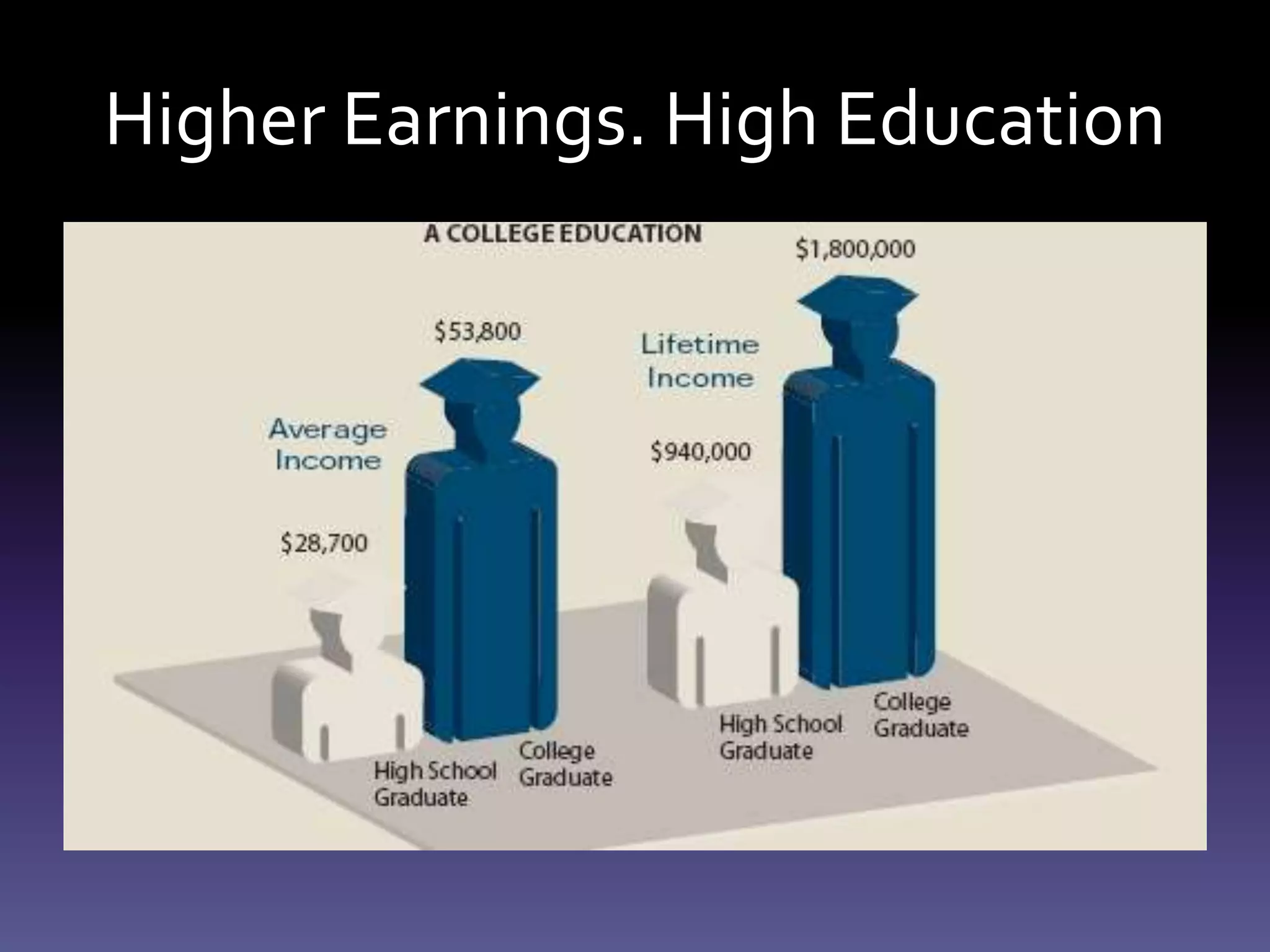
Higher Earnings. High Education
What Is College EducationWorth?
• Careers
• Healthy Life
• Savings
• Take Care of Families
• Brains on Fire
First things first.
How much is college going to cost?
There are two components to this:
Direct Costs & Indirect Costs.
Tuition
Fees
Room & Board+
Direct Costs
(if applicable)
Direct Costs are those that are
billed directly by the University.
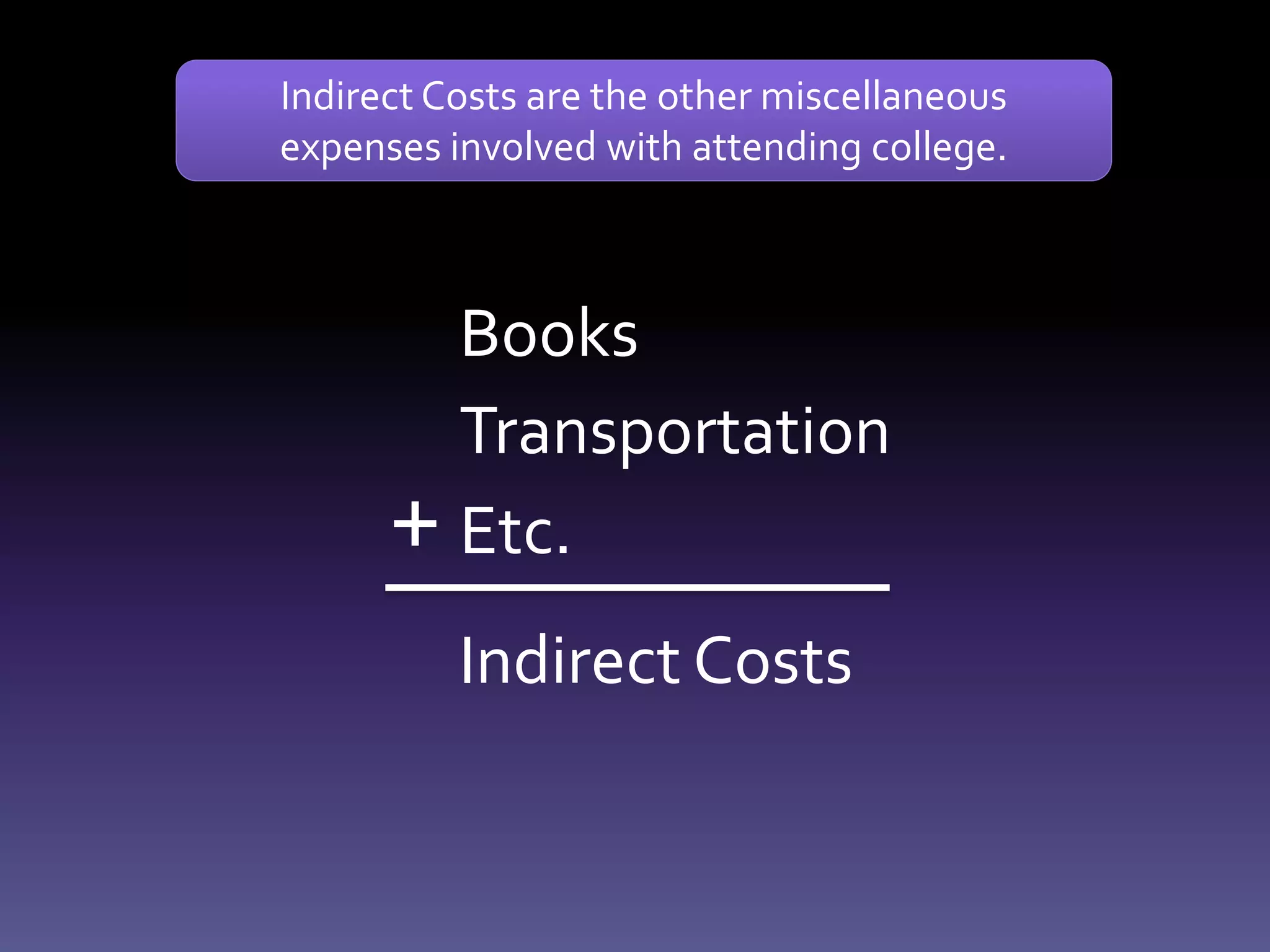
Books
Transportation
Etc.+
Indirect Costs
Indirect Costs are the other miscellaneous
expenses involved with attending college.
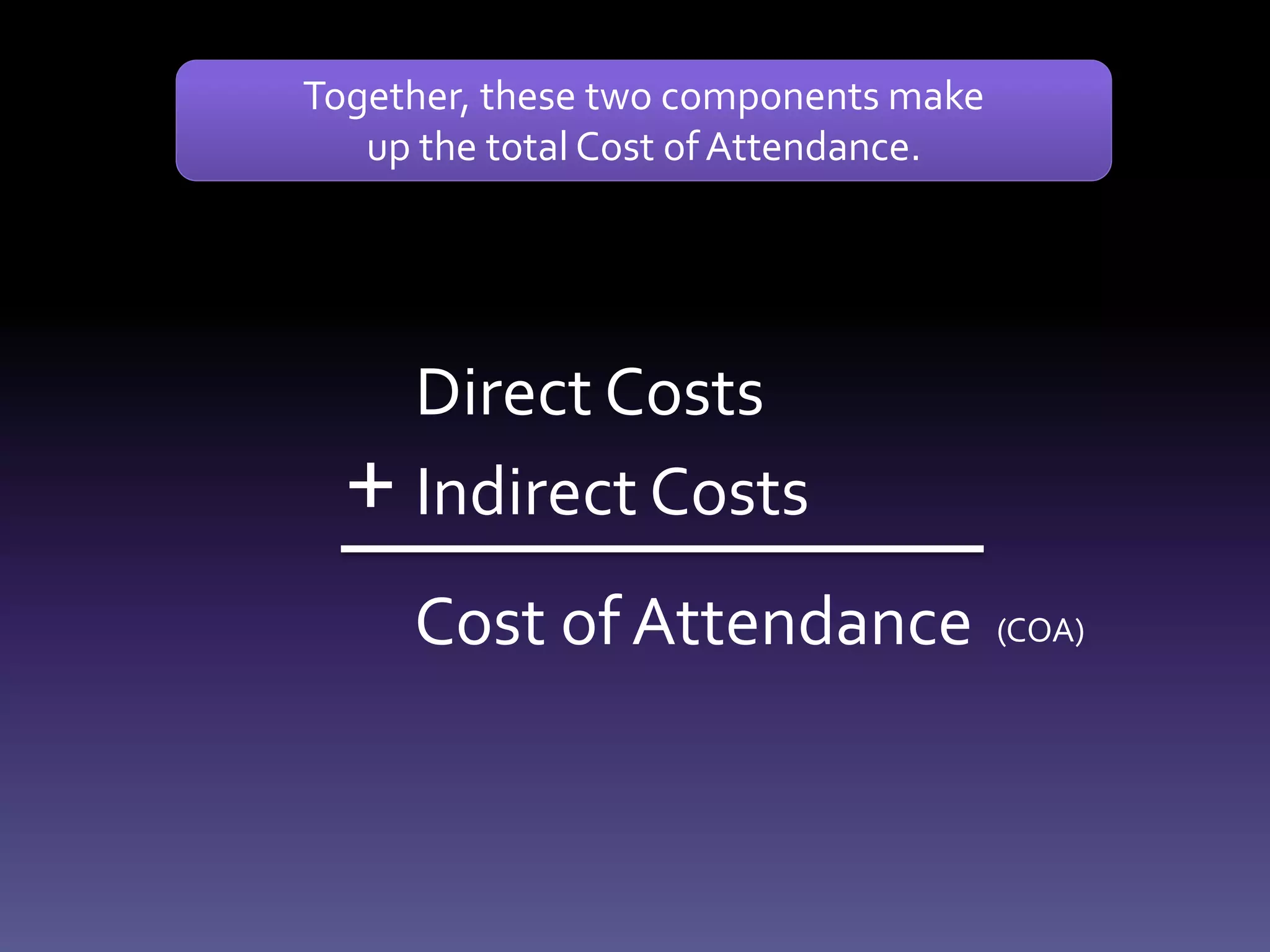
Direct Costs
Indirect Costs+
Cost of Attendance
Together, these two components make
up the total Cost ofAttendance.
(COA)
Next, you need to determine how
much you can contribute toward
Cost of Attendance.
How Do Colleges Determine How
MuchWe Can Pay?
• FAFSA (fafsa.ed.gov)
• CSS Profile
(https://student.collegeboard.org
/css-financial-aid-profile)
• CA Dream Act
(https://dream.csac.ca.gov)
• Cal Grants
(http://www.calgrants.org)
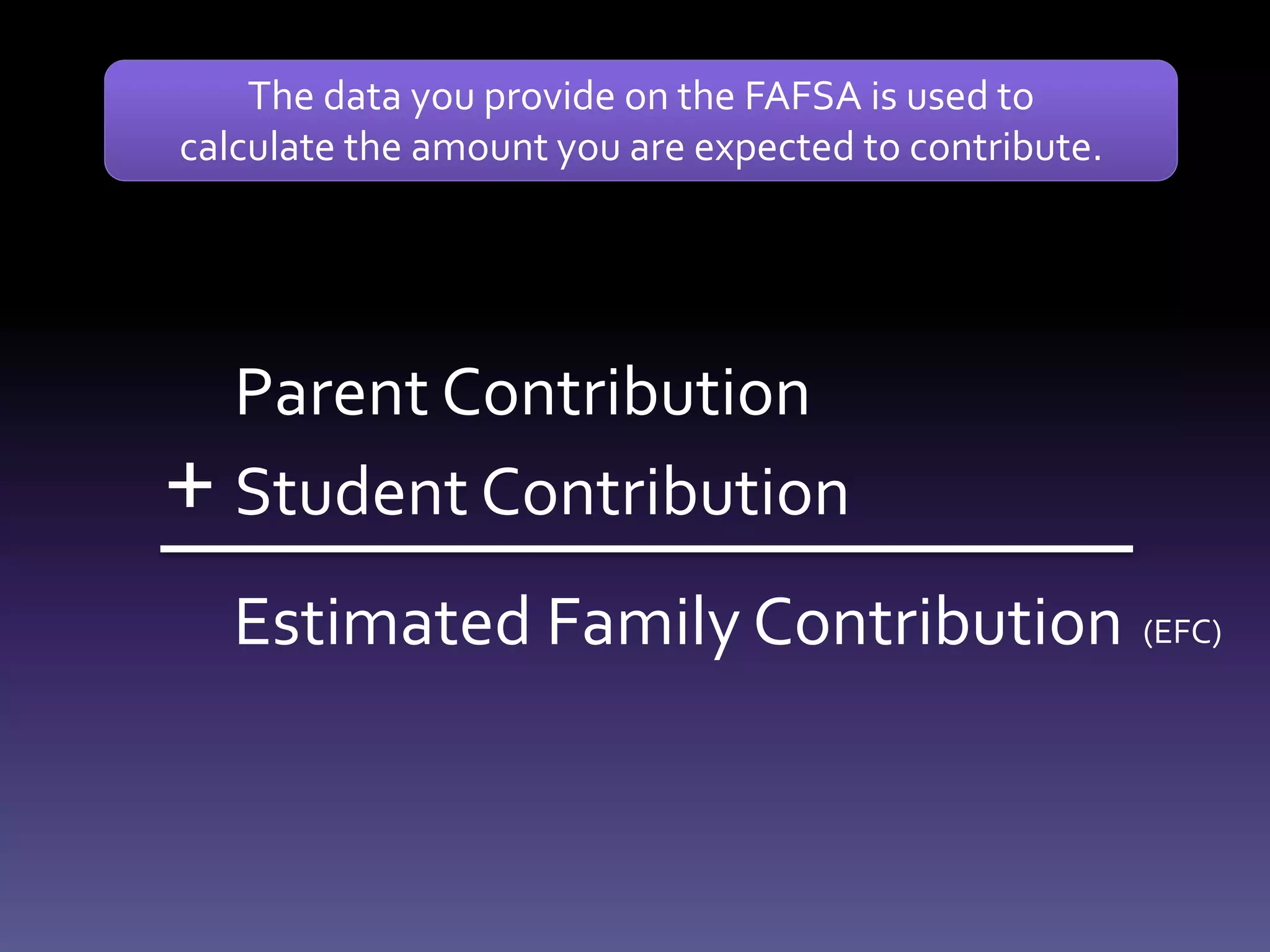
Parent Contribution
Student Contribution+
Estimated Family Contribution
The data you provide on the FAFSA is used to
calculate the amount you are expected to contribute.
(EFC)
Cost of Attendance
Estimated Family Contribution-
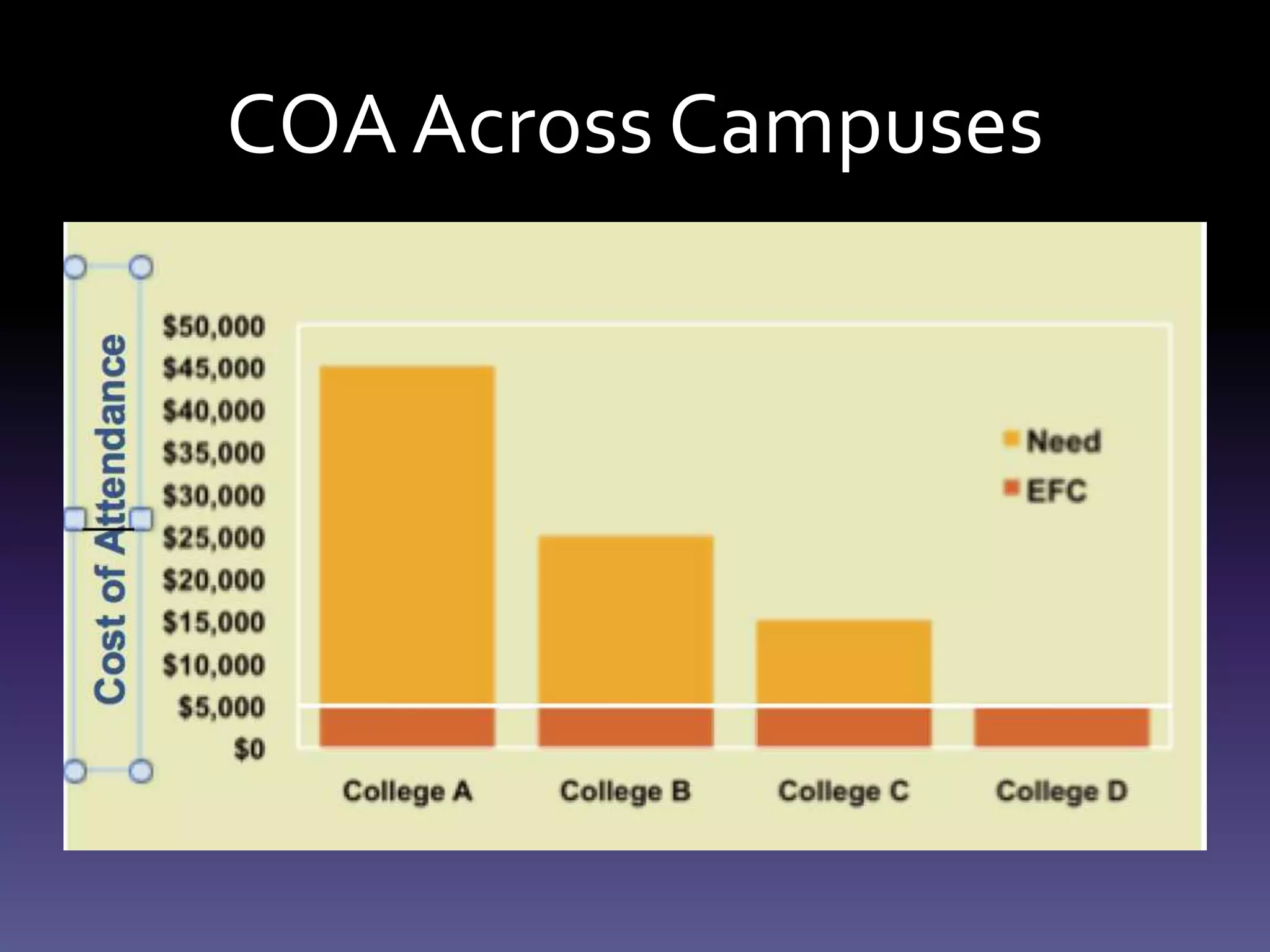
Financial Need
The gap that’s left between what you are expected to
contribute and the total cost is called “Financial Need.”
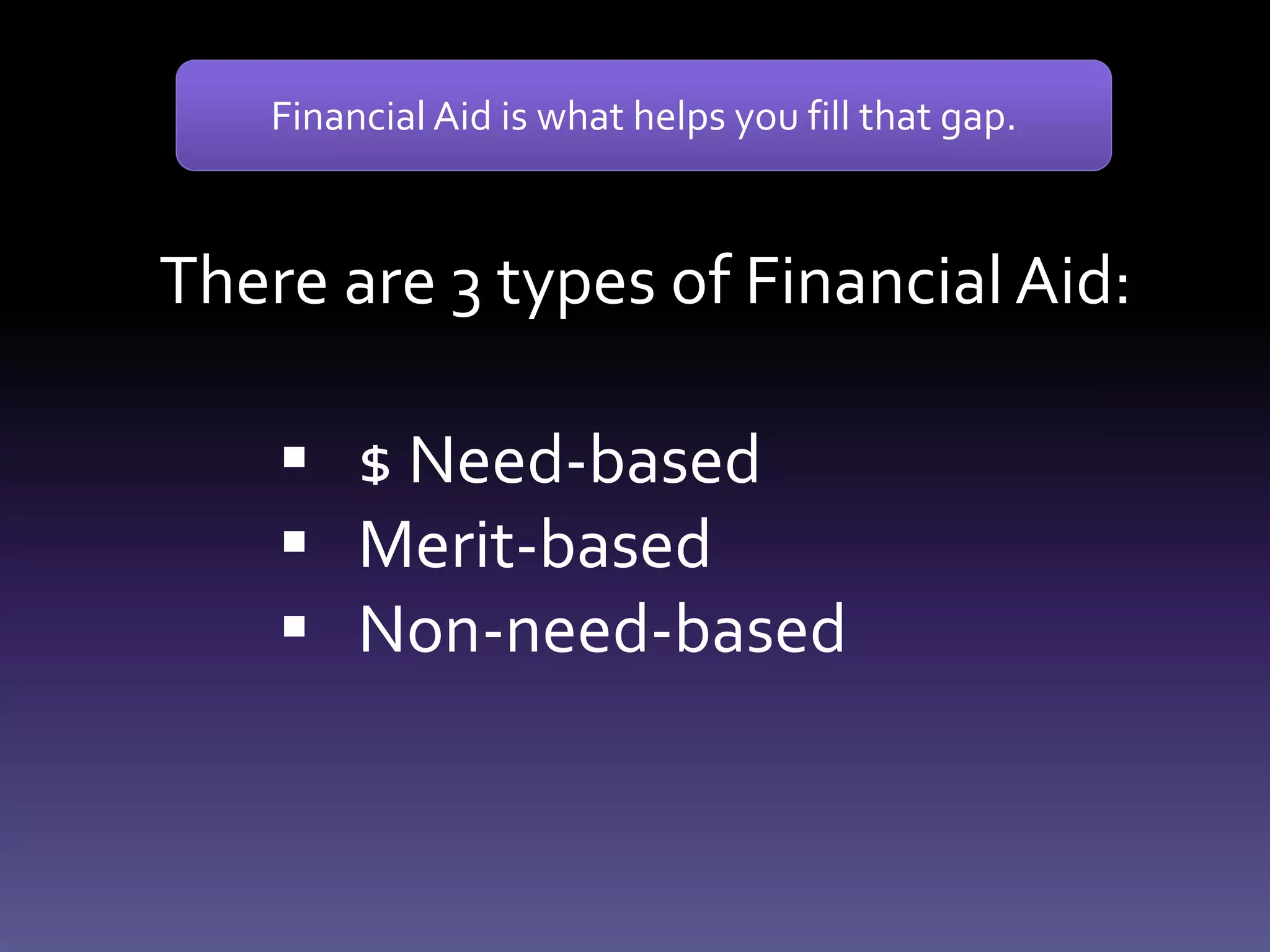
There are 3 types of Financial Aid:
 $ Need-based
 Merit-based
 Non-need-based
Financial Aid is what helps you fill that gap.
Need-based
 Grants
 FederalWork Study
 Loans
(Federal, State, and CollegeGrants)
(Stafford Subsidized Loan, Perkins Loan)
The first type of aid is determined
solely by Financial Need.
 Scholarships (College and Outside Scholarships)
Merit-based
The second type of aid is determined by a student’s
academic accomplishments, not Financial Need.
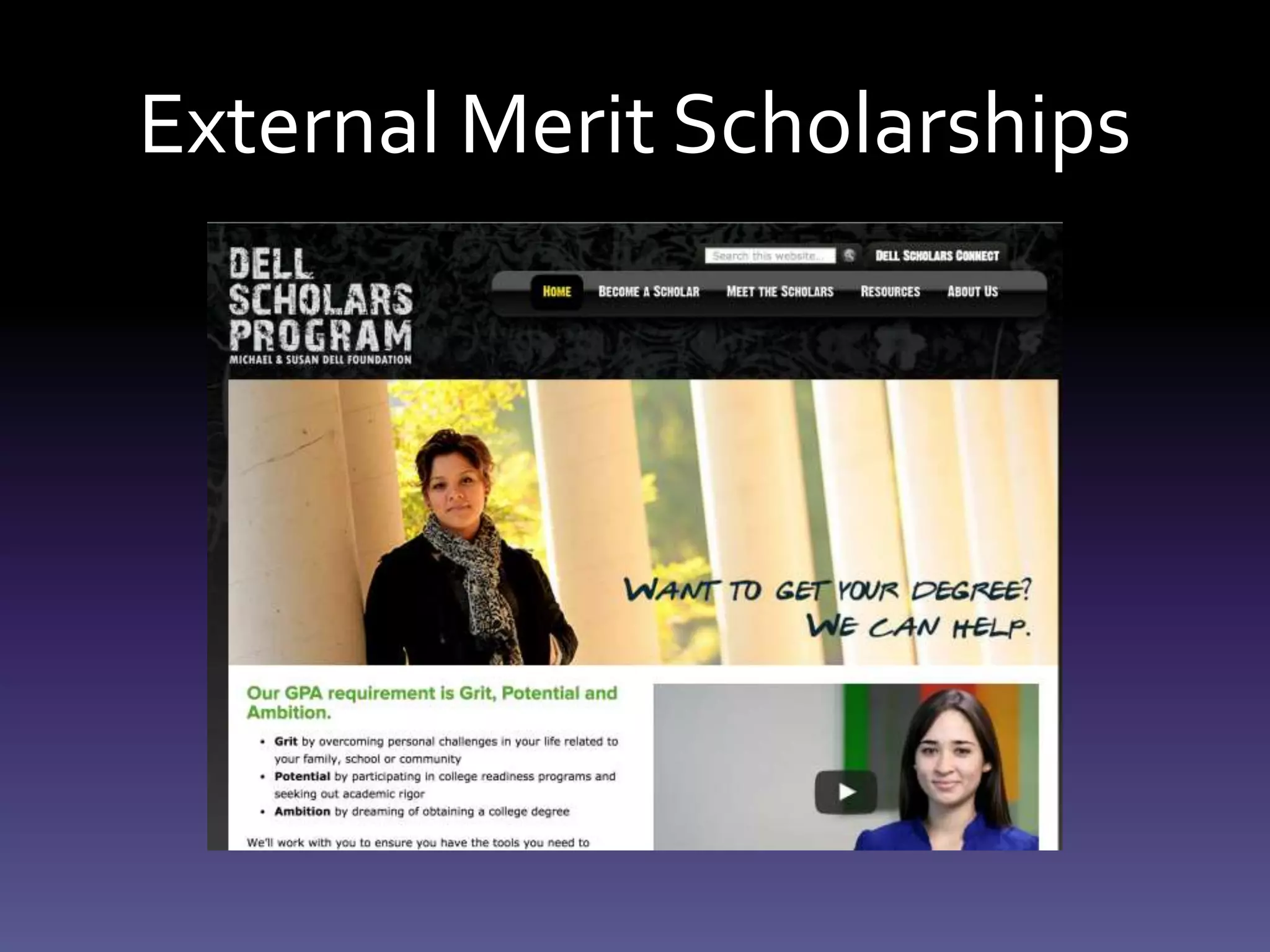
Internal Merit Scholarships
College Greenlight
External Merit Scholarships
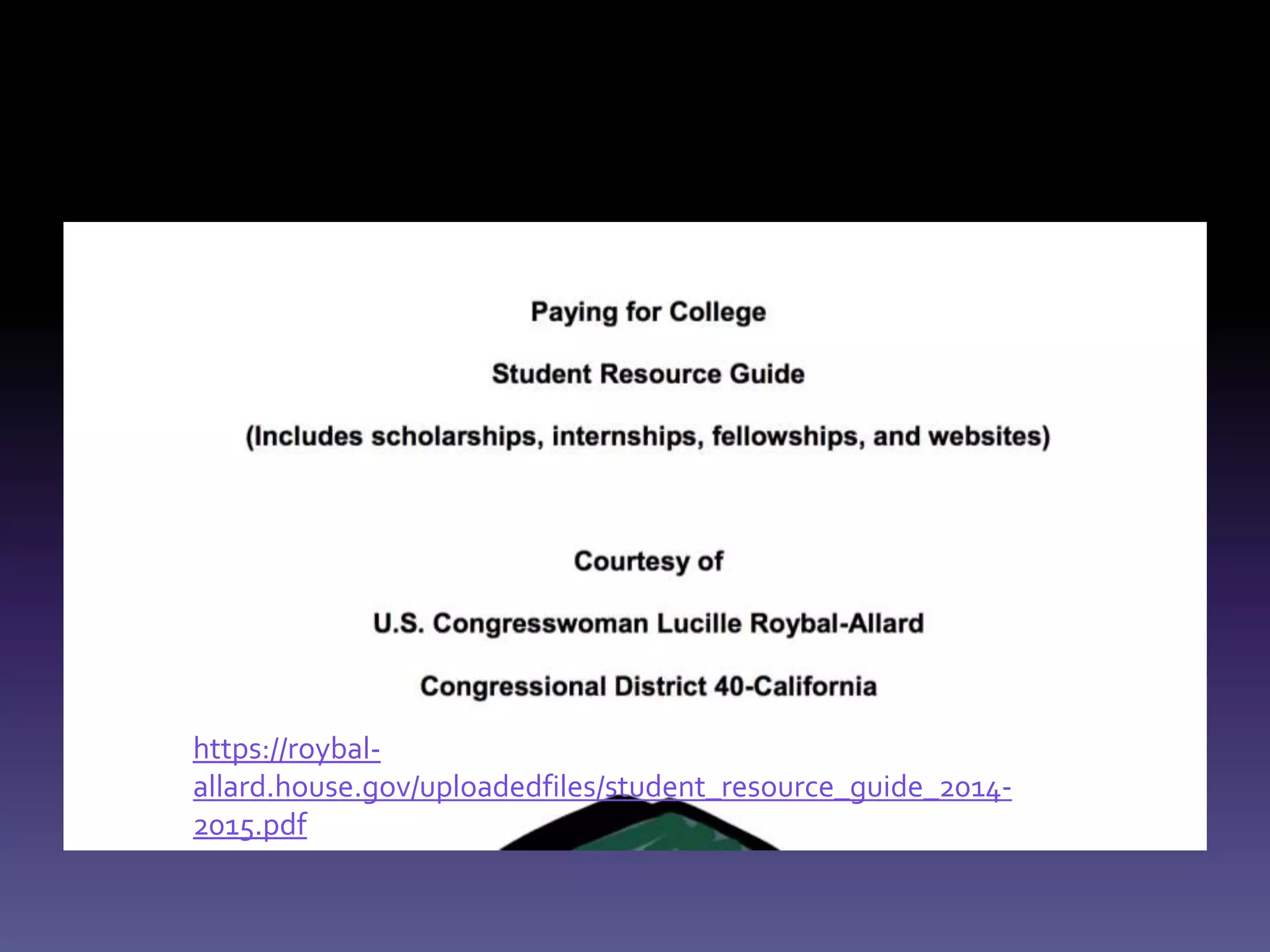
https://roybal-
allard.house.gov/uploadedfiles/student_resource_guide_2014-
2015.pdf
 Loans (Stafford Unsubsidized Loan, PLUS Loan,Alternative Loans)
Non-need-based
The final type of aid is available to all students, regardless
of Financial Need or academic accomplishments.
The Financial Aid Package
consists of all or any of these.
Need-based Merit-based
Non-need-based
COA Across Campuses
Financial Aid Recommendations
• If parents make less than $60,000 per year, students and families most likely
won’t have to take out many loans.
• There are more than 50 colleges that meet all need with no loans.
http://www.usnews.com/education/best-colleges/paying-for-
college/articles/2014/09/15/colleges-and-universities-that-claim-to-meet-full-
financial-need
• Educational loans are low interest. Students have ten years to pay them back and
can deduct interest from taxes.They are best investment possible in your child.
• Students should never borrow on credit cards.
• Students can visit colleges for free at the beginning and end of senior year.
http://getmetocollege.org/hs/what-colleges-look-for/fall-2014-free-diversity-
college-visits
What CanWe Do Now?
• Save. Every dollars counts.
• Prepare FAFSA-Now PRIOR, PRIOR
• Explain your family finances to your children.
• Build children’s resume.
• Apply for scholarships.
– MALDEF- http://www.maldef.org/assets/pdf/1415_MALDEF_Scholarship.pdf
– Congresswoman Roybal-Allard- http://roybal-
allard.house.gov/uploadedfiles/student_resource_guide_2014-2015.pdf
Affording College
Rebecca Joseph, PhD
getmetocollege@gmail.com
Getmetocollege.org

2016 Fall Affording College

  • 1.
    Affording College Rebecca Joseph,PhD getmetocollege@gmail.com Getmetocollege.org
  • 2.
  • 3.
    What Is CollegeEducationWorth? • Careers • Healthy Life • Savings • Take Care of Families • Brains on Fire
  • 4.
    First things first. Howmuch is college going to cost? There are two components to this: Direct Costs & Indirect Costs.
  • 5.
    Tuition Fees Room & Board+ DirectCosts (if applicable) Direct Costs are those that are billed directly by the University.
  • 6.
    Books Transportation Etc.+ Indirect Costs Indirect Costsare the other miscellaneous expenses involved with attending college.
  • 7.
    Direct Costs Indirect Costs+ Costof Attendance Together, these two components make up the total Cost ofAttendance. (COA)
  • 8.
    Next, you needto determine how much you can contribute toward Cost of Attendance.
  • 9.
    How Do CollegesDetermine How MuchWe Can Pay? • FAFSA (fafsa.ed.gov) • CSS Profile (https://student.collegeboard.org /css-financial-aid-profile) • CA Dream Act (https://dream.csac.ca.gov) • Cal Grants (http://www.calgrants.org)
  • 10.
    Parent Contribution Student Contribution+ EstimatedFamily Contribution The data you provide on the FAFSA is used to calculate the amount you are expected to contribute. (EFC)
  • 11.
    Cost of Attendance EstimatedFamily Contribution- Financial Need The gap that’s left between what you are expected to contribute and the total cost is called “Financial Need.”
  • 12.
    There are 3types of Financial Aid:  $ Need-based  Merit-based  Non-need-based Financial Aid is what helps you fill that gap.
  • 13.
    Need-based  Grants  FederalWorkStudy  Loans (Federal, State, and CollegeGrants) (Stafford Subsidized Loan, Perkins Loan) The first type of aid is determined solely by Financial Need.
  • 14.
     Scholarships (Collegeand Outside Scholarships) Merit-based The second type of aid is determined by a student’s academic accomplishments, not Financial Need.
  • 15.
  • 16.
  • 17.
  • 18.
  • 19.
     Loans (StaffordUnsubsidized Loan, PLUS Loan,Alternative Loans) Non-need-based The final type of aid is available to all students, regardless of Financial Need or academic accomplishments.
  • 20.
    The Financial AidPackage consists of all or any of these. Need-based Merit-based Non-need-based
  • 21.
  • 22.
    Financial Aid Recommendations •If parents make less than $60,000 per year, students and families most likely won’t have to take out many loans. • There are more than 50 colleges that meet all need with no loans. http://www.usnews.com/education/best-colleges/paying-for- college/articles/2014/09/15/colleges-and-universities-that-claim-to-meet-full- financial-need • Educational loans are low interest. Students have ten years to pay them back and can deduct interest from taxes.They are best investment possible in your child. • Students should never borrow on credit cards. • Students can visit colleges for free at the beginning and end of senior year. http://getmetocollege.org/hs/what-colleges-look-for/fall-2014-free-diversity- college-visits
  • 23.
    What CanWe DoNow? • Save. Every dollars counts. • Prepare FAFSA-Now PRIOR, PRIOR • Explain your family finances to your children. • Build children’s resume. • Apply for scholarships. – MALDEF- http://www.maldef.org/assets/pdf/1415_MALDEF_Scholarship.pdf – Congresswoman Roybal-Allard- http://roybal- allard.house.gov/uploadedfiles/student_resource_guide_2014-2015.pdf
  • 24.
    Affording College Rebecca Joseph,PhD getmetocollege@gmail.com Getmetocollege.org