CLINICAL PRACTICE GUIDELINE
Clinical Practice Guideline: The Diagnosis, Management,
and Prevention of Bronchiolitis
abstract
This guideline is a revision of the clinical practice guideline, “Diagnosis
and Management of Bronchiolitis,” published by the American Academy
of Pediatrics in 2006. The guideline applies to children from 1 through
23 months of age. Other exclusions are noted. Each key action state-
ment indicates level of evidence, benefit-harm relationship, and level
of recommendation. Key action statements are as follows: Pediatrics
2014;134:e1474–e1502
DIAGNOSIS
1a. Clinicians should diagnose bronchiolitis and assess disease se-
verity on the basis of history and physical examination (Evidence
Quality: B; Recommendation Strength: Strong Recommendation).
1b. Clinicians should assess risk factors for severe disease, such as
age less than 12 weeks, a history of prematurity, underlying car-
diopulmonary disease, or immunodeficiency, when making decisions
about evaluation and management of children with bronchiolitis
(Evidence Quality: B; Recommendation Strength: Moderate Rec-
ommendation).
1c. When clinicians diagnose bronchiolitis on the basis of history and
physical examination, radiographic or laboratory studies should
not be obtained routinely (Evidence Quality: B; Recommendation
Strength: Moderate Recommendation).
TREATMENT
2. Clinicians should not administer albuterol (or salbutamol) to in-
fants and children with a diagnosis of bronchiolitis (Evidence Qual-
ity: B; Recommendation Strength: Strong Recommendation).
3. Clinicians should not administer epinephrine to infants and children
with a diagnosis of bronchiolitis (Evidence Quality: B; Recommen-
dation Strength: Strong Recommendation).
4a. Nebulized hypertonic saline should not be administered to in-
fants with a diagnosis of bronchiolitis in the emergency depart-
ment (Evidence Quality: B; Recommendation Strength: Moderate
Recommendation).
4b. Clinicians may administer nebulized hypertonic saline to infants
and children hospitalized for bronchiolitis (Evidence Quality: B;
Recommendation Strength: Weak Recommendation [based on ran-
domized controlled trials with inconsistent findings]).
Shawn L. Ralston, MD, FAAP, Allan S. Lieberthal, MD, FAAP,
H. Cody Meissner, MD, FAAP, Brian K. Alverson, MD, FAAP, Jill E.
Baley, MD, FAAP, Anne M. Gadomski, MD, MPH, FAAP,
David W. Johnson, MD, FAAP, Michael J. Light, MD, FAAP,
Nizar F. Maraqa, MD, FAAP, Eneida A. Mendonca, MD, PhD,
FAAP, FACMI, Kieran J. Phelan, MD, MSc, Joseph J. Zorc, MD,
MSCE, FAAP, Danette Stanko-Lopp, MA, MPH, Mark A.
Brown, MD, Ian Nathanson, MD, FAAP, Elizabeth
Rosenblum, MD, Stephen Sayles III, MD, FACEP, and Sinsi
Hernandez-Cancio, JD
KEY WORDS
bronchiolitis, infants, children, respiratory syncytial virus,
evidence-based, guideline
ABBREVIATIONS
AAP—American Academy of Pediatrics
AOM—acute otitis media
CI—confidence interval
ED—emergency department
KAS—Key Action Statement
LOS—length of stay
MD—mean difference
PCR—polymerase chain reaction
RSV—respiratory syncytial virus
SBI—serious bacterial infection
This document is copyrighted and is property of the American
Academy of Pediatrics and its Board of Directors. All authors have
filed conflict of interest statements with the American Academy of
Pediatrics. Any conflicts have been resolved through a process
approved by the Board of Directors. The American Academy of
Pediatrics has neither solicited nor accepted any commercial
involvement in the development of the content of this publication.
The recommendations in this report do not indicate an exclusive
courseoftreatmentorserveasastandardofmedicalcare.Variations,
taking into account individual circumstances, may be appropriate.
All clinical practice guidelines from the American Academy of
Pediatrics automatically expire 5 years after publication unless
reaffirmed, revised, or retired at or before that time.
Dedicated to the memory of Dr Caroline Breese Hall.
www.pediatrics.org/cgi/doi/10.1542/peds.2014-2742
doi:10.1542/peds.2014-2742
PEDIATRICS (ISSN Numbers: Print, 0031-4005; Online, 1098-4275).
Copyright © 2014 by the American Academy of Pediatrics
e1474 FROM THE AMERICAN ACADEMY OF PEDIATRICS
Guidance for the Clinician in
Rendering Pediatric Care
by guest on August 19, 2016Downloaded from by guest on August 19, 2016Downloaded from by guest on August 19, 2016Downloaded from
5. Clinicians should not administer
systemic corticosteroids to infants
with a diagnosis of bronchiolitis in
any setting (Evidence Quality: A; Rec-
ommendation Strength: Strong Rec-
ommendation).
6a. Clinicians may choose not to ad-
minister supplemental oxygen if
the oxyhemoglobin saturation ex-
ceeds 90% in infants and children
with a diagnosis of bronchiolitis
(Evidence Quality: D; Recommen-
dation Strength: Weak Recommen-
dation [based on low level evidence
and reasoning from first princi-
ples]).
6b. Clinicians may choose not to use
continuous pulse oximetry for in-
fants and children with a diagnosis
of bronchiolitis (Evidence Quality:
D; Recommendation Strength: Weak
Recommendation [based on low-
level evidence and reasoning from
first principles]).
7. Clinicians should not use chest
physiotherapy for infants and chil-
dren with a diagnosis of bron-
chiolitis (Evidence Quality: B;
Recommendation Strength: Mod-
erate Recommendation).
8. Clinicians should not administer
antibacterial medications to in-
fants and children with a diagno-
sis of bronchiolitis unless there
is a concomitant bacterial infec-
tion, or a strong suspicion of one
(Evidence Quality: B; Recommen-
dation Strength: Strong Recom-
mendation).
9. Clinicians should administer naso-
gastric or intravenous fluids for
infants with a diagnosis of bron-
chiolitis who cannot maintain hy-
dration orally (Evidence Quality: X;
Recommendation Strength: Strong
Recommendation).
PREVENTION
10a. Clinicians should not administer
palivizumab to otherwise healthy
infants with a gestational age of
29 weeks, 0 days or greater
(Evidence Quality: B; Recom-
mendation Strength: Strong
Recommendation).
10b. Clinicians should administer
palivizumab during the first
year of life to infants with he-
modynamically significant heart
disease or chronic lung disease
of prematurity defined as pre-
term infants <32 weeks 0 days’
gestation who require >21%
oxygen for at least the first
28 days of life (Evidence Quality:
B; Recommendation Strength:
Moderate Recommendation).
10c. Clinicians should administer
a maximum 5 monthly doses
(15 mg/kg/dose) of palivizumab
during the respiratory syncytial
virus season to infants who
qualify for palivizumab in the
first year of life (Evidence Quality:
B; Recommendation Strength:
Moderate Recommendation).
11a. All people should disinfect hands
before and after direct contact
with patients, after contact with
inanimate objects in the direct
vicinity of the patient, and after
removing gloves (Evidence Qual-
ity: B; Recommendation Strength:
Strong Recommendation).
11b. All people should use alcohol-
based rubs for hand decontam-
ination when caring for children
with bronchiolitis. When alcohol-
based rubs are not available,
individuals should wash their
hands with soap and water
(Evidence Quality: B; Recom-
mendation Strength: Strong
Recommendation).
12a. Clinicians should inquire about
the exposure of the infant or
child to tobacco smoke when
assessing infants and chil-
dren for bronchiolitis (Evidence
Quality: C; Recommendation
Strength: Moderate Recom-
mendation).
12b. Clinicians should counsel care-
givers about exposing the in-
fant or child to environmental
tobacco smoke and smoking
cessation when assessing a
child for bronchiolitis (Evidence
Quality: B; Recommendation
Strength: Strong).
13. Clinicians should encourage ex-
clusive breastfeeding for at least
6 months to decrease the mor-
bidity of respiratory infections.
(Evidence Quality: B; Recommen-
dation Strength: Moderate Rec-
ommendation).
14. Clinicians and nurses should ed-
ucate personnel and family mem-
bers on evidence-based diagnosis,
treatment, and prevention in bron-
chiolitis. (Evidence Quality: C; obser-
vational studies; Recommendation
Strength: Moderate Recommenda-
tion).
INTRODUCTION
In October 2006, the American Acad-
emy of Pediatrics (AAP) published the
clinical practice guideline “Diagnosis
and Management of Bronchiolitis.”1
The guideline offered recommendations
ranked according to level of evidence
and the benefit-harm relationship. Since
completion of the original evidence re-
view in July 2004, a significant body of
literature on bronchiolitis has been
published. This update of the 2006 AAP
bronchiolitis guideline evaluates pub-
lished evidence, including that used in
the 2006 guideline as well as evidence
published since 2004. Key action state-
ments (KASs) based on that evidence
are provided.
The goal of this guideline is to provide
an evidence-based approach to the di-
agnosis, management, and prevention
of bronchiolitis in children from 1 month
through 23 months of age. The guideline
is intended for pediatricians, family
physicians, emergency medicine spe-
cialists, hospitalists, nurse practitioners,
PEDIATRICS Volume 134, Number 5, November 2014 e1475
FROM THE AMERICAN ACADEMY OF PEDIATRICS
by guest on August 19, 2016Downloaded from
and physician assistants who care for
these children. The guideline does not
apply to children with immunodeficien-
cies, including those with HIV infection
or recipients of solid organ or hema-
topoietic stem cell transplants. Children
with underlying respiratory illnesses,
such as recurrent wheezing, chronic
neonatal lung disease (also known as
bronchopulmonary dysplasia), neuro-
muscular disease, or cystic fibrosis and
those with hemodynamically significant
congenital heart disease are excluded
from the sections on management un-
less otherwise noted but are included in
the discussion of prevention. This guide-
line will not address long-term sequelae
of bronchiolitis, such as recurrent
wheezing or risk of asthma, which is
a field with a large and distinct lit-
erature.
Bronchiolitis is a disorder commonly
caused by viral lower respiratory tract
infection in infants. Bronchiolitis is
characterized by acute inflammation,
edema, and necrosis of epithelial cells
lining small airways, and increased
mucus production. Signs and symp-
toms typically begin with rhinitis and
cough, which may progress to tachy-
pnea, wheezing, rales, use of accessory
muscles, and/or nasal flaring.2
Many viruses that infect the respiratory
system cause a similar constellation of
signs and symptoms. The most com-
mon etiology of bronchiolitis is re-
spiratory syncytial virus (RSV), with the
highest incidence of infection occurring
between December and March in North
America; however, regional variations
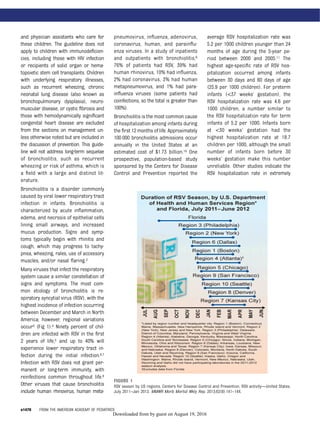
occur3 (Fig 1).4 Ninety percent of chil-
dren are infected with RSV in the first
2 years of life,5 and up to 40% will
experience lower respiratory tract in-
fection during the initial infection.6,7
Infection with RSV does not grant per-
manent or long-term immunity, with
reinfections common throughout life.8
Other viruses that cause bronchiolitis
include human rhinovirus, human meta-
pneumovirus, influenza, adenovirus,
coronavirus, human, and parainflu-
enza viruses. In a study of inpatients
and outpatients with bronchiolitis,9
76% of patients had RSV, 39% had
human rhinovirus, 10% had influenza,
2% had coronavirus, 3% had human
metapneumovirus, and 1% had para-
influenza viruses (some patients had
coinfections, so the total is greater than
100%).
Bronchiolitis is the most common cause
of hospitalization among infants during
the first 12 months of life. Approximately
100 000 bronchiolitis admissions occur
annually in the United States at an
estimated cost of $1.73 billion.10 One
prospective, population-based study
sponsored by the Centers for Disease
Control and Prevention reported the
average RSV hospitalization rate was
5.2 per 1000 children younger than 24
months of age during the 5-year pe-
riod between 2000 and 2005.11 The
highest age-specific rate of RSV hos-
pitalization occurred among infants
between 30 days and 60 days of age
(25.9 per 1000 children). For preterm
infants (<37 weeks’ gestation), the
RSV hospitalization rate was 4.6 per
1000 children, a number similar to
the RSV hospitalization rate for term
infants of 5.2 per 1000. Infants born
at <30 weeks’ gestation had the
highest hospitalization rate at 18.7
children per 1000, although the small
number of infants born before 30
weeks’ gestation make this number
unreliable. Other studies indicate the
RSV hospitalization rate in extremely
FIGURE 1
RSV season by US regions. Centers for Disease Control and Prevention. RSV activity—United States,
July 2011–Jan 2013. MMWR Morb Mortal Wkly Rep. 2013;62(8):141–144.
e1476 FROM THE AMERICAN ACADEMY OF PEDIATRICS
by guest on August 19, 2016Downloaded from
preterm infants is similar to that of
term infants.12,13
METHODS
In June 2013, the AAP convened a new
subcommittee to review and revise the
2006 bronchiolitis guideline. The sub-
committee included primary care physi-
cians, including general pediatricians,
a family physician, and pediatric sub-
specialists, including hospitalists, pul-
monologists, emergency physicians, a
neonatologist, and pediatric infectious
disease physicians. The subcommit-
tee also included an epidemiologist
trained in systematic reviews, a guide-
line methodologist/informatician, and a
parent representative. All panel mem-
bers reviewed the AAP Policy on Conflict
of Interest and Voluntary Disclosure and
were given an opportunity to declare any
potential conflicts. Any conflicts can be
found in the author listing at the end of
this guideline. All funding was provided
by the AAP, with travel assistance from
the American Academy of Family Phy-
sicians, the American College of Chest
Physicians, the American Thoracic
Society, and the American College
of Emergency Physicians for their
liaisons.
The evidence search and review included
electronic database searches in The
Cochrane Library, Medline via Ovid,
and CINAHL via EBSCO. The search
strategy is shown in the Appendix. Re-
lated article searches were conducted
in PubMed. The bibliographies of arti-
cles identified by database searches
were also reviewed by 1 of 4 members
of the committee, and references iden-
tified in this manner were added to
the review. Articles included in the
2003 evidence report on bronchiolitis
in preparation of the AAP 2006 guide-
line2 also were reviewed. In addition,
the committee reviewed articles pub-
lished after completion of the sys-
tematic review for these updated
guidelines. The current literature re-
view encompasses the period from
2004 through May 2014.
The evidence-based approach to guide-
line development requires that the evi-
dence in support of a policy be identified,
appraised, and summarized and that an
explicit link between evidence and rec-
ommendations be defined. Evidence-
based recommendations reflect the
quality of evidence and the balance of
benefit and harm that is anticipated
when the recommendation is followed.
The AAP policy statement “Classify-
ing Recommendations for Clinical
Practice”14 was followed in designat-
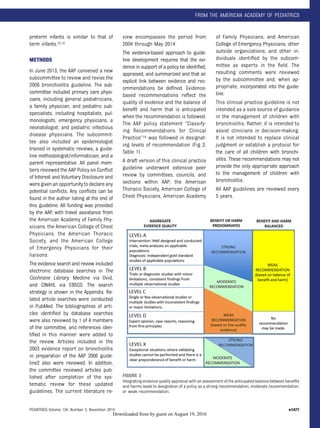
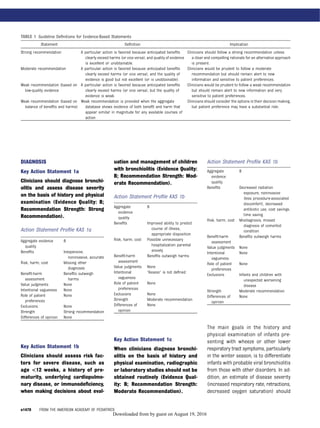
ing levels of recommendation (Fig 2;
Table 1).
A draft version of this clinical practice
guideline underwent extensive peer
review by committees, councils, and
sections within AAP; the American
Thoracic Society, American College of
Chest Physicians, American Academy
of Family Physicians, and American
College of Emergency Physicians; other
outside organizations; and other in-
dividuals identified by the subcom-
mittee as experts in the field. The
resulting comments were reviewed
by the subcommittee and, when ap-
propriate, incorporated into the guide-
line.
This clinical practice guideline is not
intended as a sole source of guidance
in the management of children with
bronchiolitis. Rather, it is intended to
assist clinicians in decision-making.
It is not intended to replace clinical
judgment or establish a protocol for
the care of all children with bronchi-
olitis. These recommendations may not
provide the only appropriate approach
to the management of children with
bronchiolitis.
All AAP guidelines are reviewed every
5 years.
FIGURE 2
Integrating evidence quality appraisal with an assessment of the anticipated balance between benefits
and harms leads to designation of a policy as a strong recommendation, moderate recommendation,
or weak recommendation.
PEDIATRICS Volume 134, Number 5, November 2014 e1477
FROM THE AMERICAN ACADEMY OF PEDIATRICS
by guest on August 19, 2016Downloaded from
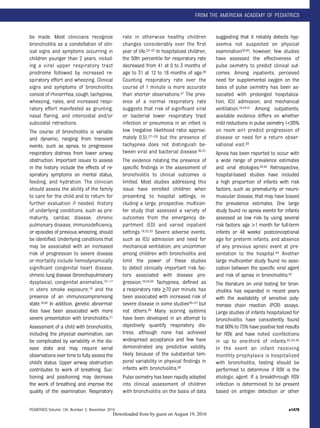
DIAGNOSIS
Key Action Statement 1a
Clinicians should diagnose bronchi-
olitis and assess disease severity
on the basis of history and physical
examination (Evidence Quality: B;
Recommendation Strength: Strong
Recommendation).
Action Statement Profile KAS 1a
Key Action Statement 1b
Clinicians should assess risk fac-
tors for severe disease, such as
age <12 weeks, a history of pre-
maturity, underlying cardiopulmo-
nary disease, or immunodeficiency,
when making decisions about eval-
uation and management of children
with bronchiolitis (Evidence Quality:
B; Recommendation Strength: Mod-
erate Recommendation).
Action Statement Profile KAS 1b
Key Action Statement 1c
When clinicians diagnose bronchi-
olitis on the basis of history and
physical examination, radiographic
or laboratory studies should not be
obtained routinely (Evidence Qual-
ity: B; Recommendation Strength:
Moderate Recommendation).
Action Statement Profile KAS 1b
The main goals in the history and
physical examination of infants pre-
senting with wheeze or other lower
respiratory tract symptoms, particularly
in the winter season, is to differentiate
infants with probable viral bronchiolitis
from those with other disorders. In ad-
dition, an estimate of disease severity
(increased respiratory rate, retractions,
decreased oxygen saturation) should
TABLE 1 Guideline Definitions for Evidence-Based Statements
Statement Definition Implication
Strong recommendation A particular action is favored because anticipated benefits
clearly exceed harms (or vice versa), and quality of evidence
is excellent or unobtainable.
Clinicians should follow a strong recommendation unless
a clear and compelling rationale for an alternative approach
is present.
Moderate recommendation A particular action is favored because anticipated benefits
clearly exceed harms (or vice versa), and the quality of
evidence is good but not excellent (or is unobtainable).
Clinicians would be prudent to follow a moderate
recommendation but should remain alert to new
information and sensitive to patient preferences.
Weak recommendation (based on
low-quality evidence
A particular action is favored because anticipated benefits
clearly exceed harms (or vice versa), but the quality of
evidence is weak.
Clinicians would be prudent to follow a weak recommendation
but should remain alert to new information and very
sensitive to patient preferences.
Weak recommendation (based on
balance of benefits and harms)
Weak recommendation is provided when the aggregate
database shows evidence of both benefit and harm that
appear similar in magnitude for any available courses of
action
Clinicians should consider the options in their decision making,
but patient preference may have a substantial role.
Aggregate evidence
quality
B
Benefits Inexpensive,
noninvasive, accurate
Risk, harm, cost Missing other
diagnoses
Benefit-harm
assessment
Benefits outweigh
harms
Value judgments None
Intentional vagueness None
Role of patient
preferences
None
Exclusions None
Strength Strong recommendation
Differences of opinion None
Aggregate
evidence
quality
B
Benefits Improved ability to predict
course of illness,
appropriate disposition
Risk, harm, cost Possible unnecessary
hospitalization parental
anxiety
Benefit-harm
assessment
Benefits outweigh harms
Value judgments None
Intentional
vagueness
“Assess” is not defined
Role of patient
preferences
None
Exclusions None
Strength Moderate recommendation
Differences of
opinion
None
Aggregate
evidence
quality
B
Benefits Decreased radiation
exposure, noninvasive
(less procedure-associated
discomfort), decreased
antibiotic use, cost savings,
time saving
Risk, harm, cost Misdiagnosis, missed
diagnosis of comorbid
condition
Benefit-harm
assessment
Benefits outweigh harms
Value judgments None
Intentional
vagueness
None
Role of patient
preferences
None
Exclusions Infants and children with
unexpected worsening
disease
Strength Moderate recommendation
Differences of
opinion
None
e1478 FROM THE AMERICAN ACADEMY OF PEDIATRICS
by guest on August 19, 2016Downloaded from
be made. Most clinicians recognize
bronchiolitis as a constellation of clin-
ical signs and symptoms occurring in
children younger than 2 years, includ-
ing a viral upper respiratory tract
prodrome followed by increased re-
spiratory effort and wheezing. Clinical
signs and symptoms of bronchiolitis
consist of rhinorrhea, cough, tachypnea,
wheezing, rales, and increased respi-
ratory effort manifested as grunting,
nasal flaring, and intercostal and/or
subcostal retractions.
The course of bronchiolitis is variable
and dynamic, ranging from transient
events, such as apnea, to progressive
respiratory distress from lower airway
obstruction. Important issues to assess
in the history include the effects of re-
spiratory symptoms on mental status,
feeding, and hydration. The clinician
should assess the ability of the family
to care for the child and to return for
further evaluation if needed. History
of underlying conditions, such as pre-
maturity, cardiac disease, chronic
pulmonary disease, immunodeficiency,
or episodes of previous wheezing, should
be identified. Underlying conditions that
may be associated with an increased
risk of progression to severe disease
or mortality include hemodynamically
significant congenital heart disease,
chronic lung disease (bronchopulmonary
dysplasia), congenital anomalies,15–17
in utero smoke exposure,18 and the
presence of an immunocompromising
state.19,20 In addition, genetic abnormal-
ities have been associated with more
severe presentation with bronchiolitis.21
Assessment of a child with bronchiolitis,
including the physical examination, can
be complicated by variability in the dis-
ease state and may require serial
observations over time to fully assess the
child’s status. Upper airway obstruction
contributes to work of breathing. Suc-
tioning and positioning may decrease
the work of breathing and improve the
quality of the examination. Respiratory
rate in otherwise healthy children
changes considerably over the first
year of life.22–25 In hospitalized children,
the 50th percentile for respiratory rate
decreased from 41 at 0 to 3 months of
age to 31 at 12 to 18 months of age.26
Counting respiratory rate over the
course of 1 minute is more accurate
than shorter observations.27 The pres-
ence of a normal respiratory rate
suggests that risk of significant viral
or bacterial lower respiratory tract
infection or pneumonia in an infant is
low (negative likelihood ratio approxi-
mately 0.5),27–29 but the presence of
tachypnea does not distinguish be-
tween viral and bacterial disease.30,31
The evidence relating the presence of
specific findings in the assessment of
bronchiolitis to clinical outcomes is
limited. Most studies addressing this
issue have enrolled children when
presenting to hospital settings, in-
cluding a large, prospective, multicen-
ter study that assessed a variety of
outcomes from the emergency de-
partment (ED) and varied inpatient
settings.18,32,33 Severe adverse events,
such as ICU admission and need for
mechanical ventilation, are uncommon
among children with bronchiolitis and
limit the power of these studies
to detect clinically important risk fac-
tors associated with disease pro-
gression.16,34,35 Tachypnea, defined as
a respiratory rate ≥70 per minute, has
been associated with increased risk of
severe disease in some studies35–37 but
not others.38 Many scoring systems
have been developed in an attempt to
objectively quantify respiratory dis-
tress, although none has achieved
widespread acceptance and few have
demonstrated any predictive validity,
likely because of the substantial tem-
poral variability in physical findings in
infants with bronchiolitis.39
Pulse oximetry has been rapidly adopted
into clinical assessment of children
with bronchiolitis on the basis of data
suggesting that it reliably detects hyp-
oxemia not suspected on physical
examination36,40; however, few studies
have assessed the effectiveness of
pulse oximetry to predict clinical out-
comes. Among inpatients, perceived
need for supplemental oxygen on the
basis of pulse oximetry has been as-
sociated with prolonged hospitaliza-
tion, ICU admission, and mechanical
ventilation.16,34,41 Among outpatients,
available evidence differs on whether
mild reductions in pulse oximetry (<95%
on room air) predict progression of
disease or need for a return obser-
vational visit.38
Apnea has been reported to occur with
a wide range of prevalence estimates
and viral etiologies.42,43 Retrospective,
hospital-based studies have included
a high proportion of infants with risk
factors, such as prematurity or neuro-
muscular disease, that may have biased
the prevalence estimates. One large
study found no apnea events for infants
assessed as low risk by using several
risk factors: age >1 month for full-term
infants or 48 weeks’ postconceptional
age for preterm infants, and absence
of any previous apneic event at pre-
sentation to the hospital.44 Another
large multicenter study found no asso-
ciation between the specific viral agent
and risk of apnea in bronchiolitis.42
The literature on viral testing for bron-
chiolitis has expanded in recent years
with the availability of sensitive poly-
merase chain reaction (PCR) assays.
Large studies of infants hospitalized for
bronchiolitis have consistently found
that 60% to 75% have positive test results
for RSV, and have noted coinfections
in up to one-third of infants.32,33,45
In the event an infant receiving
monthly prophylaxis is hospitalized
with bronchiolitis, testing should be
performed to determine if RSV is the
etiologic agent. If a breakthrough RSV
infection is determined to be present
based on antigen detection or other
PEDIATRICS Volume 134, Number 5, November 2014 e1479
FROM THE AMERICAN ACADEMY OF PEDIATRICS
by guest on August 19, 2016Downloaded from
assay, monthly palivizumab prophylaxis
should be discontinued because of the
very low likelihood of a second RSV
infection in the same year. Apart from
this setting, routine virologic testing is
not recommended.
Infants with non-RSV bronchiolitis, in
particular human rhinovirus, appear to
have a shorter courses and may rep-
resent a different phenotype associated
with repeated wheezing.32 PCR assay
results should be interpreted cautiously,
given that the assay may detect pro-
longed viral shedding from an unrelated
previous illness, particularly with rhi-
novirus. In contrast, RSV detected by
PCR assay almost always is associated
with disease. At the individual patient
level, the value of identifying a spe-
cific viral etiology causing bronchi-
olitis has not been demonstrated.33
Current evidence does not support
routine chest radiography in children
with bronchiolitis. Although many
infants with bronchiolitis have abnor-
malities on chest radiography, data
are insufficient to demonstrate that
chest radiography correlates well with
disease severity. Atelectasis on chest
radiography was associated with in-
creased risk of severe disease in 1
outpatient study.16 Further studies, in-
cluding 1 randomized trial, suggest
children with suspected lower respi-
ratory tract infection who had radiog-
raphy performed were more likely to
receive antibiotics without any differ-
ence in outcomes.46,47 Initial radiography
should be reserved for cases in which
respiratory effort is severe enough to
warrant ICU admission or where signs
of an airway complication (such as
pneumothorax) are present.
TREATMENT
ALBUTEROL
Key Action Statement 2
Clinicians should not administer
albuterol (or salbutamol) to infants
and children with a diagnosis of
bronchiolitis (Evidence Quality: B;
Recommendation Strength: Strong
Recommendation).
Action Statement Profile KAS 2
Although several studies and reviews
have evaluated the use of bronchodi-
lator medications for viral bronchiolitis,
most randomized controlled trials have
failed to demonstrate a consistent ben-
efit from α- or β-adrenergic agents.
Several meta-analyses and systematic
reviews48–53 have shown that broncho-
dilators may improve clinical symptom
scores, but they do not affect disease
resolution, need for hospitalization, or
length of stay (LOS). Because clinical
scores may vary from one observer to
the next39,54 and do not correlate with
more objective measures, such as pul-
monary function tests,55 clinical scores
are not validated measures of the effi-
cacy of bronchodilators. Although tran-
sient improvements in clinical score
have been observed, most infants
treated with bronchodilators will not
benefit from their use.
A recently updated Cochrane system-
atic review assessing the impact of
bronchodilators on oxygen saturation,
the primary outcome measure, reported
30 randomized controlled trials in-
volving 1992 infants in 12 countries.56
Some studies included in this review
evaluated agents other than albuterol/
salbutamol (eg, ipratropium and meta-
proterenol) but did not include epi-
nephrine. Small sample sizes, lack of
standardized methods for outcome
evaluation (eg, timing of assessments),
and lack of standardized intervention
(various bronchodilators, drug dosages,
routes of administration, and nebuliza-
tion delivery systems) limit the in-
terpretation of these studies. Because
of variable study designs as well as the
inclusion of infants who had a history of
previous wheezing in some studies,
there was considerable heterogeneity
in the studies. Sensitivity analysis (ie,
including only studies at low risk of
bias) significantly reduced heterogene-
ity measures for oximetry while having
little effect on the overall effect size of
oximetry (mean difference [MD] –0.38,
95% confidence interval [CI] –0.75 to
0.00). Those studies showing benefit57–59
are methodologically weaker than other
studies and include older children with
recurrent wheezing. Results of the
Cochrane review indicated no benefit in
the clinical course of infants with
bronchiolitis who received bronchodi-
lators. The potential adverse effects
(tachycardia and tremors) and cost of
these agents outweigh any potential
benefits.
In the previous iteration of this guideline,
a trial of β-agonists was included as
an option. However, given the greater
strength of the evidence demonstrat-
ing no benefit, and that there is no
well-established way to determine an
“objective method of response” to
bronchodilators in bronchiolitis, this
option has been removed. Although it
is true that a small subset of children
Aggregate
evidence
quality
B
Benefits Avoid adverse effects, avoid
ongoing use of ineffective
medication, lower costs
Risk, harm, cost Missing transient benefit of
drug
Benefit-harm
assessment
Benefits outweigh harms
Value judgments Overall ineffectiveness
outweighs possible
transient benefit
Intentional
vagueness
None
Role of patient
preferences
None
Exclusions None
Strength Strong recommendation
Differences of
opinion
None
Notes This guideline no longer
recommends a trial of
albuterol, as was considered
in the 2006 AAP bronchiolitis
guideline
e1480 FROM THE AMERICAN ACADEMY OF PEDIATRICS
by guest on August 19, 2016Downloaded from
with bronchiolitis may have reversible
airway obstruction resulting from
smooth muscle constriction, attempts
to define a subgroup of responders
have not been successful to date. If
a clinical trial of bronchodilators is
undertaken, clinicians should note that the
variability of the disease process, the host’s
airway, and the clinical assessments, par-
ticularly scoring, would limit the clinician’s
ability to observe a clinically relevant re-
sponse to bronchodilators.
Chavasse et al60 reviewed the available
literature on use of β-agonists for chil-
dren younger than 2 years with re-
current wheezing. At the time of that
review, there were 3 studies in the
outpatient setting, 2 in the ED, and 3
in the pulmonary function laboratory
setting. This review concluded there
were no clear benefits from the use
of β-agonists in this population. The
authors noted some conflicting evi-
dence, but further study was recom-
mended only if the population could be
clearly defined and meaningful out-
come measures could be identified.
The population of children with bron-
chiolitis studied in most trials of
bronchodilators limits the ability to
make recommendations for all clinical
scenarios. Children with severe disease
or with respiratory failure were gen-
erally excluded from these trials, and
this evidence cannot be generalized to
these situations. Studies using pulmo-
nary function tests show no effect of
albuterol among infants hospitalized
with bronchiolitis.56,61 One study in
a critical care setting showed a small
decrease in inspiratory resistance af-
ter albuterol in one group and leval-
buterol in another group, but therapy
was accompanied by clinically signifi-
cant tachycardia.62 This small clinical
change occurring with significant ad-
verse effects does not justify recom-
mending albuterol for routine care.
EPINEPHRINE
Key Action Statement 3
Clinicians should not administer
epinephrine to infants and children
with a diagnosis of bronchiolitis
(Evidence Quality: B; Recommenda-
tion Strength: Strong Recommen-
dation).
Action Statement Profile KAS 3
Epinephrine is an adrenergic agent
with both β- and α-receptor agonist
activity that has been used to treat
upper and lower respiratory tract ill-
nesses both as a systemic agent and
directly into the respiratory tract,
where it is typically administered as
a nebulized solution. Nebulized epi-
nephrine has been administered in
the racemic form and as the purified
L-enantiomer, which is commercially
available in the United States for in-
travenous use. Studies in other dis-
eases, such as croup, have found no
difference in efficacy on the basis of
preparation,63 although the compari-
son has not been specifically studied
for bronchiolitis. Most studies have
compared L-epinephrine to placebo or
albuterol. A recent Cochrane meta-
analysis by Hartling et al64 systemati-
cally evaluated the evidence on this
topic and found no evidence for utility
in the inpatient setting. Two large,
multicenter randomized trials com-
paring nebulized epinephrine to pla-
cebo65 or albuterol66 in the hospital
setting found no improvement in LOS
or other inpatient outcomes. A recent,
large multicenter trial found a similar
lack of efficacy compared with pla-
cebo and further demonstrated lon-
ger LOS when epinephrine was used
on a fixed schedule compared with an
as-needed schedule.67 This evidence
suggests epinephrine should not be
used in children hospitalized for bron-
chiolitis, except potentially as a rescue
agent in severe disease, although for-
mal study is needed before a recom-
mendation for the use of epinephrine
in this setting.
The role of epinephrine in the out-
patient setting remains controver-
sial. A major addition to the evidence
base came from the Canadian Bron-
chiolitis Epinephrine Steroid Trial.68
This multicenter randomized trial
enrolled 800 patients with bron-
chiolitis from 8 EDs and compared
hospitalization rates over a 7-day
period. This study had 4 arms: neb-
ulized epinephrine plus oral dexa-
methasone, nebulized epinephrine
plus oral placebo, nebulized placebo
plus oral dexamethasone, and neb-
ulized placebo plus oral placebo. The
group of patients who received epi-
nephrine concomitantly with corti-
costeroids had a lower likelihood
of hospitalization by day 7 than the
double placebo group, although this
effect was no longer statistically sig-
nificant after adjusting for multiple
comparisons.
The systematic review by Hartling
et al64 concluded that epinephrine
reduced hospitalizations compared
with placebo on the day of the ED visit
but not overall. Given that epinephrine
Aggregate
evidence
quality
B
Benefits Avoiding adverse effects, lower
costs, avoiding ongoing use
of ineffective medication
Risk, harm, cost Missing transient benefit of
drug
Benefit-harm
assessment
Benefits outweigh harms
Value judgments The overall ineffectiveness
outweighs possible transient
benefit
Intentional
vagueness
None
Role of patient
preferences
None
Exclusions Rescue treatment of rapidly
deteriorating patients
Strength Strong recommendation
Differences of
opinion
None
PEDIATRICS Volume 134, Number 5, November 2014 e1481
FROM THE AMERICAN ACADEMY OF PEDIATRICS
by guest on August 19, 2016Downloaded from
has a transient effect and home ad-
ministration is not routine practice,
discharging an infant after observing
a response in a monitored setting
raises concerns for subsequent pro-
gression of illness. Studies have not
found a difference in revisit rates,
although the numbers of revisits are
small and may not be adequately
powered for this outcome. In summary,
the current state of evidence does not
support a routine role for epineph-
rine for bronchiolitis in outpatients,
although further data may help to
better define this question.
HYPERTONIC SALINE
Key Action Statement 4a
Nebulized hypertonic saline should
not be administered to infants with
a diagnosis of bronchiolitis in the
emergency department (Evidence
Quality: B; Recommendation Strength:
Moderate Recommendation).
Action Statement Profile KAS 4a
Key Action Statement 4b
Clinicians may administer nebulized
hypertonic saline to infants and
children hospitalized for bron-
chiolitis (Evidence Quality: B; Rec-
ommendation Strength: Weak
Recommendation [based on ran-
domized controlled trials with
inconsistent findings]).
Action Statement Profile KAS 4b
Nebulized hypertonic saline is an in-
creasingly studied therapy for acute
viral bronchiolitis. Physiologic evidence
suggests that hypertonic saline in-
creases mucociliary clearance in both
normal and diseased lungs.69–71 Because
the pathology in bronchiolitis involves
airway inflammation and resultant
mucus plugging, improved mucocili-
ary clearance should be beneficial, al-
though there is only indirect evidence
to support such an assertion. A more
specific theoretical mechanism of ac-
tion has been proposed on the basis of
the concept of rehydration of the air-
way surface liquid, although again,
evidence remains indirect.72
A 2013 Cochrane review73 included 11
trials involving 1090 infants with mild to
moderate disease in both inpatient and
emergency settings. There were 6 studies
involving 500 inpatients providing data
for the analysis of LOS with an aggregate
1-day decrease reported, a result largely
driven by the inclusion of 3 studies with
relatively long mean length of stay of 5 to
6 days. The analysis of effect on clinical
scores included 7 studies involving 640
patients in both inpatient and outpatient
settings and demonstrated incremental
positive effect with each day posttreat-
ment from day 1 to day 3 (–0.88 MD on
day 1, –1.32 MD on day 2, and –1.51 MD
on day 3). Finally, Zhang et al73 found no
effect on hospitalization rates in the
pooled analysis of 1 outpatient and 3 ED
studies including 380 total patients.
Several randomized trials published after
the Cochrane review period further in-
formed the current guideline recommen-
dation. Four trials evaluated admission
rates from the ED, 3 using 3% saline and 1
using 7% saline.74–76 A single trial76 dem-
onstrated a difference in admission rates
from the ED favoring hypertonic saline,
although the other 4 studies were con-
cordant with the studies included in the
Cochrane review. However, contrary to the
studies included in the Cochrane review,
none of the more recent trials reported
improvement in LOS and, when added to
the older studies for an updated meta-
analysis, they significantly attenuate the
summary estimate of the effect on LOS.76,77
Most of the trials included in the Cochrane
review occurred in settings with typical
LOS of more than 3 days in their usual
care arms. Hence, the significant decrease
in LOS noted by Zhang et al73 may not be
generalizable to the United States where
the average LOS is 2.4 days.10 One other
ongoing clinical trial performed in the
United States, unpublished except in ab-
stract form, further supports the obser-
vation that hypertonic saline does not
decrease LOS in settings where expected
stays are less than 3 days.78
The preponderance of the evidence sug-
gests that 3% saline is safe and effective at
improving symptoms of mild to moderate
bronchiolitis after 24 hours of use and
reducing hospital LOS in settings in which
Aggregate
evidence
quality
B
Benefits Avoiding adverse effects, such
as wheezing and excess
secretions, cost
Risk, harm, cost None
Benefit-harm
assessment
Benefits outweigh harms
Value judgments None
Intentional
vagueness
None
Role of patient
preferences
None
Exclusions None
Strength Moderate recommendation
Differences of
opinion
None
Aggregate
evidence
quality
B
Benefits May shorten hospital stay if LOS
is >72 h
Risk, harm, cost Adverse effects such as
wheezing and excess
secretions; cost
Benefit-harm
assessment
Benefits outweigh harms for
longer hospital stays
Value judgments Anticipating an individual
child’s LOS is difficult. Most
US hospitals report an
average LOS of <72 h for
patients with bronchiolitis.
This weak recommendation
applies only if the average
length of stay is >72 h
Intentional
vagueness
This weak recommendation is
based on an average LOS and
does not address the
individual patient.
Role of patient
preferences
None
Exclusions None
Strength Weak
Differences of
opinion
None
e1482 FROM THE AMERICAN ACADEMY OF PEDIATRICS
by guest on August 19, 2016Downloaded from
the duration of stay typically exceeds 3
days. It has not been shown to be effective
at reducing hospitalization in emergency
settings or in areas where the length
of usage is brief. It has not been
studied in intensive care settings,
and most trials have included only
patients with mild to moderate dis-
ease. Most studies have used a 3%
saline concentration, and most have
combined it with bronchodilators
with each dose; however, there is
retrospective evidence that the rate
of adverse events is similar without
bronchodilators,79 as well as pro-
spective evidence extrapolated from
2 trials without bronchodilators.79,80
A single study was performed in the
ambulatory outpatient setting81; how-
ever, future studies in the United States
should focus on sustained usage on
the basis of pattern of effects dis-
cerned in the available literature.
CORTICOSTEROIDS
Key Action Statement 5
Clinicians should not administer
systemic corticosteroids to infants
with a diagnosis of bronchiolitis in
any setting (Evidence Quality: A;
Recommendation Strength: Strong
Recommendation).
Action Statement Profile KAS 5
Although there is good evidence of
benefit from corticosteroids in other
respiratory diseases, such as asthma
and croup,82–84 the evidence on corti-
costeroid use in bronchiolitis is nega-
tive. The most recent Cochrane
systematic review shows that cortico-
steroids do not significantly reduce
outpatient admissions when compared
with placebo (pooled risk ratio, 0.92;
95% CI, 0.78 to 1.08; and risk ratio, 0.86;
95% CI, 0.7 to 1.06, respectively) and
do not reduce LOS for inpatients (MD
–0.18 days; 95% CI –0.39 to 0.04).85 No
other comparisons showed relevant
differences for either primary or sec-
ondary outcomes. This review con-
tained 17 trials with 2596 participants
and included 2 large ED-based ran-
domized trials, neither of which showed
reductions in hospital admissions with
treatment with corticosteroids as com-
pared with placebo.69,86
One of these large trials, the Canadian
Bronchiolitis Epinephrine Steroid Trial,
however, did show a reduction in hos-
pitalizations 7 days after treatment with
combined nebulized epinephrine and
oral dexamethasone as compared with
placebo.69 Although an unadjusted ana-
lysis showed a relative risk for hospi-
talization of 0.65 (95% CI 0.45 to 0.95;
P = .02) for combination therapy as
compared with placebo, adjustment
for multiple comparison rendered the
result insignificant (P = .07). These
results have generated considerable
controversy.87 Although there is no
standard recognized rationale for why
combination epinephrine and dexa-
methasone would be synergistic in
infants with bronchiolitis, evidence in
adults and children older than 6
years with asthma shows that adding
inhaled long-acting β agonists to
moderate/high doses of inhaled cor-
ticosteroids allows reduction of the
corticosteroid dose by, on average,
60%.88 Basic science studies focused
on understanding the interaction be-
tween β agonists and corticosteroids
have shown potential mechanisms for
why simultaneous administration of
these drugs could be synergistic.89–92
However, other bronchiolitis trials of
corticosteroids administered by us-
ing fixed simultaneous bronchodila-
tor regimens have not consistently
shown benefit93–97; hence, a recommen-
dation regarding the benefit of com-
bined dexamethasone and epinephrine
therapy is premature.
The systematic review of cortico-
steroids in children with bronchiolitis
cited previously did not find any dif-
ferences in short-term adverse events
as compared with placebo.86 However,
corticosteroid therapy may prolong
viral shedding in patients with bron-
chiolitis.17
In summary, a comprehensive sys-
tematic review and large multicenter
randomized trials provide clear evi-
dence that corticosteroids alone do
not provide significant benefit to
children with bronchiolitis. Evidence
for potential benefit of combined
corticosteroid and agents with both
α- and β-agonist activity is at best
tentative, and additional large trials
are needed to clarify whether this
therapy is effective.
Further, although there is no evidence
of short-term adverse effects from
corticosteroid therapy, other than
prolonged viral shedding, in infants
and children with bronchiolitis, there
is inadequate evidence to be certain
of safety.
OXYGEN
Key Action Statement 6a
Clinicians may choose not to ad-
minister supplemental oxygen if the
oxyhemoglobin saturation exceeds
90% in infants and children with a
diagnosis of bronchiolitis (Evidence
Quality: D; Recommendation Strength:
Weak Recommendation [based on
low-level evidence and reasoning
from first principles]).
Aggregate
evidence quality
A
Benefits No clinical benefit, avoiding
adverse effects
Risk, harm, cost None
Benefit-harm
assessment
Benefits outweigh harms
Value judgments None
Intentional
vagueness
None
Role of patient
preferences
None
Exclusions None
Strength Strong recommendation
Differences of
opinion
None
PEDIATRICS Volume 134, Number 5, November 2014 e1483
FROM THE AMERICAN ACADEMY OF PEDIATRICS
by guest on August 19, 2016Downloaded from
Action Statement Profile KAS 6a
Key Action Statement 6b
Clinicians may choose not to use
continuous pulse oximetry for in-
fants and children with a diagnosis
of bronchiolitis (Evidence Quality:
C; Recommendation Strength: Weak
Recommendation [based on lower-
level evidence]).
Action Statement Profile KAS 6b
Although oxygen saturation is a poor
predictor of respiratory distress, it is
associated closely with a perceived
need for hospitalization in infants with
bronchiolitis.98,99 Additionally, oxygen
saturation has been implicated as
a primary determinant of LOS in
bronchiolitis.40,100,101
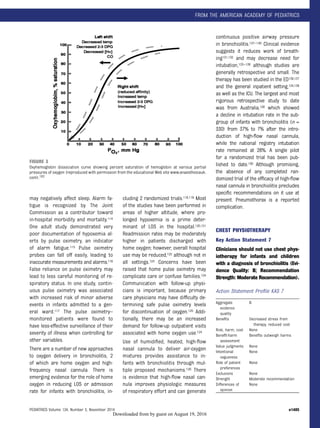
Physiologic data based on the oxyhe-
moglobin dissociation curve (Fig 3)
demonstrate that small increases in
arterial partial pressure of oxygen are
associated with marked improvement
in pulse oxygen saturation when the
latter is less than 90%; with pulse oxy-
gen saturation readings greater than
90% it takes very large elevations in
arterial partial pressure of oxygen to
affect further increases. In infants and
children with bronchiolitis, no data exist
to suggest such increases result in any
clinically significant difference in physi-
ologic function, patient symptoms, or
clinical outcomes. Although it is well
understood that acidosis, temperature,
and 2,3-diphosphoglutarate influence
the oxyhemoglobin dissociation curve,
there has never been research to
demonstrate how those influences
practically affect infants with hypox-
emia. The risk of hypoxemia must be
weighed against the risk of hospitali-
zation when making any decisions
about site of care. One study of hospi-
talized children with bronchiolitis, for
example, noted a 10% adverse error or
near-miss rate for harm-causing inter-
ventions.103 There are no studies on the
effect of short-term, brief periods of
hypoxemia such as may be seen in
bronchiolitis. Transient hypoxemia is
common in healthy infants.104 Travel of
healthy children even to moderate alti-
tudes of 1300 m results in transient
sleep desaturation to an average of
84% with no known adverse con-
sequences.105 Although children with
chronic hypoxemia do incur devel-
opmental and behavioral problems,
children who suffer intermittent hyp-
oxemia from diseases such as asthma
do not have impaired intellectual abil-
ities or behavioral disturbance.106–108
Supplemental oxygen provided for in-
fants not requiring additional re-
spiratory support is best initiated with
nasal prongs, although exact mea-
surement of fraction of inspired oxy-
gen is unreliable with this method.109
Pulse oximetry is a convenient method
to assess the percentage of hemo-
globin bound by oxygen in children.
Pulse oximetry has been erroneously
used in bronchiolitis as a proxy for
respiratory distress. Accuracy of pulse
oximetry is poor, especially in the 76%
to 90% range.110 Further, it has been
well demonstrated that oxygen satu-
ration has much less impact on re-
spiratory drive than carbon dioxide
concentrations in the blood.111 There
is very poor correlation between re-
spiratory distress and oxygen satu-
rations among infants with lower
respiratory tract infections.112 Other
than cyanosis, no published clinical
sign, model, or score accurately iden-
tifies hypoxemic children.113
Among children admitted for bronchi-
olitis, continuous pulse oximetry mea-
surement is not well studied and
potentially problematic for children who
do not require oxygen. Transient desa-
turation is a normal phenomenon in
healthy infants. In 1 study of 64 healthy
infants between 2 weeks and 6 months
of age, 60% of these infants exhibited
a transient oxygen desaturation below
90%, to values as low as 83%.105 A ret-
rospective study of the role of continu-
ous measurement of oxygenation in
infants hospitalized with bronchiolitis
found that 1 in 4 patients incur unnec-
essarily prolonged hospitalization as
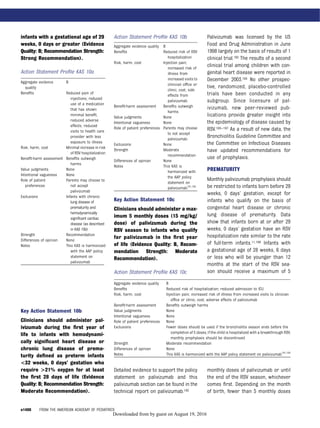
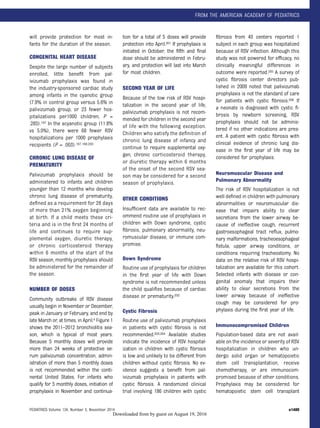
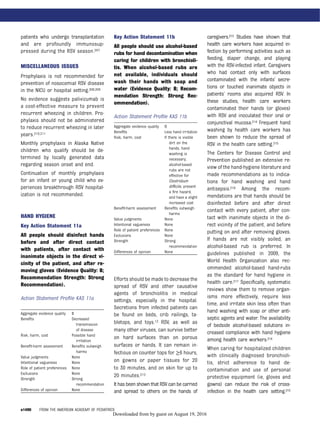
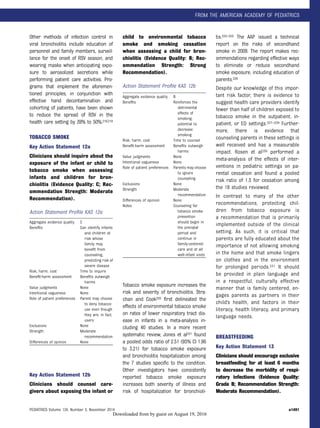
a result of a perceived need for oxygen
outside of other symptoms40 and no
evidence of benefit was found.
Pulse oximetry is prone to errors of
measurement. Families of infants hospi-
talized with continuous pulse oximeters
are exposed to frequent alarms that
Benefits Decreased hospitalizations,
decreased LOS
Risk, harm, cost Hypoxemia, physiologic stress,
prolonged LOS, increased
hospitalizations, increased
LOS, cost
Benefit-harm
assessment
Benefits outweigh harms
Value judgments Oxyhemoglobin saturation
>89% is adequate to
oxygenate tissues; the risk
of hypoxemia with
oxyhemoglobin saturation
>89% is minimal
Intentional
vagueness
None
Role of patient
preferences
Limited
Exclusions Children with acidosis or fever
Strength Weak recommendation (based
on low-level evidence/
reasoning from first
principles)
Differences of
opinion
None
Aggregate
evidence
quality
C
Benefits Shorter LOS, decreased alarm
fatigue, decreased cost
Risk, harm, cost Delayed detection of hypoxemia,
delay in appropriate weaning
of oxygen
Benefit-harm
assessment
Benefits outweigh harms
Value judgments None
Intentional
vagueness
None
Role of patient
preferences
Limited
Exclusions None
Strength Weak recommendation (based
on lower level of evidence)
Differences of
opinion
None
e1484 FROM THE AMERICAN ACADEMY OF PEDIATRICS
by guest on August 19, 2016Downloaded from
may negatively affect sleep. Alarm fa-
tigue is recognized by The Joint
Commission as a contributor toward
in-hospital morbidity and mortality.114
One adult study demonstrated very
poor documentation of hypoxemia al-
erts by pulse oximetry, an indicator
of alarm fatigue.115 Pulse oximetry
probes can fall off easily, leading to
inaccurate measurements and alarms.116
False reliance on pulse oximetry may
lead to less careful monitoring of re-
spiratory status. In one study, contin-
uous pulse oximetry was associated
with increased risk of minor adverse
events in infants admitted to a gen-
eral ward.117 The pulse oximetry–
monitored patients were found to
have less-effective surveillance of their
severity of illness when controlling for
other variables.
There are a number of new approaches
to oxygen delivery in bronchiolitis, 2
of which are home oxygen and high-
frequency nasal cannula. There is
emerging evidence for the role of home
oxygen in reducing LOS or admission
rate for infants with bronchiolitis, in-
cluding 2 randomized trials.118,119 Most
of the studies have been performed in
areas of higher altitude, where pro-
longed hypoxemia is a prime deter-
minant of LOS in the hospital.120,121
Readmission rates may be moderately
higher in patients discharged with
home oxygen; however, overall hospital
use may be reduced,122 although not in
all settings.123 Concerns have been
raised that home pulse oximetry may
complicate care or confuse families.124
Communication with follow-up physi-
cians is important, because primary
care physicians may have difficulty de-
termining safe pulse oximetry levels
for discontinuation of oxygen.125 Addi-
tionally, there may be an increased
demand for follow-up outpatient visits
associated with home oxygen use.124
Use of humidified, heated, high-flow
nasal cannula to deliver air-oxygen
mixtures provides assistance to in-
fants with bronchiolitis through mul-
tiple proposed mechanisms.126 There
is evidence that high-flow nasal can-
nula improves physiologic measures
of respiratory effort and can generate
continuous positive airway pressure
in bronchiolitis.127–130 Clinical evidence
suggests it reduces work of breath-
ing131,132 and may decrease need for
intubation,133–136 although studies are
generally retrospective and small. The
therapy has been studied in the ED136,137
and the general inpatient setting,134,138
as well as the ICU. The largest and most
rigorous retrospective study to date
was from Australia,138 which showed
a decline in intubation rate in the sub-
group of infants with bronchiolitis (n =
330) from 37% to 7% after the intro-
duction of high-flow nasal cannula,
while the national registry intubation
rate remained at 28%. A single pilot
for a randomized trial has been pub-
lished to date.139 Although promising,
the absence of any completed ran-
domized trial of the efficacy of high-flow
nasal cannula in bronchiolitis precludes
specific recommendations on it use at
present. Pneumothorax is a reported
complication.
CHEST PHYSIOTHERAPY
Key Action Statement 7
Clinicians should not use chest phys-
iotherapy for infants and children
with a diagnosis of bronchiolitis (Evi-
dence Quality: B; Recommendation
Strength: Moderate Recommendation).
Action Statement Profile KAS 7
FIGURE 3
Oxyhemoglobin dissociation curve showing percent saturation of hemoglobin at various partial
pressures of oxygen (reproduced with permission from the educational Web site www.anaesthesiauk.
com).102
Aggregate
evidence
quality
B
Benefits Decreased stress from
therapy, reduced cost
Risk, harm, cost None
Benefit-harm
assessment
Benefits outweigh harms
Value judgments None
Intentional
vagueness
None
Role of patient
preferences
None
Exclusions None
Strength Moderate recommendation
Differences of
opinion
None
PEDIATRICS Volume 134, Number 5, November 2014 e1485
FROM THE AMERICAN ACADEMY OF PEDIATRICS
by guest on August 19, 2016Downloaded from
Airway edema, sloughing of respiratory
epithelium into airways, and general-
ized hyperinflation of the lungs, coupled
with poorly developed collateral venti-
lation, put infants with bronchiolitis at
risk for atelectasis. Although lobar at-
electasis is not characteristic of this
disease, chest radiographs may show
evidence of subsegmental atelectasis,
prompting clinicians to consider or-
dering chest physiotherapy to promote
airway clearance. A Cochrane Review140
found 9 randomized controlled trials
that evaluated chest physiotherapy in
hospitalized patients with bronchiolitis.
No clinical benefit was found by using
vibration or percussion (5 trials)141–144
or passive expiratory techniques (4 tri-
als).145–148 Since that review, a study149
of the passive expiratory technique
found a small, but significant reduction
in duration of oxygen therapy, but no
other benefits.
Suctioning of the nasopharynx to re-
move secretions is a frequent practice
in infants with bronchiolitis. Although
suctioning the nares may provide
temporary relief of nasal congestion
or upper airway obstruction, a retro-
spective study reported that deep
suctioning150 was associated with
longer LOS in hospitalized infants 2
to 12 months of age. The same study
also noted that lapses of greater
than 4 hours in noninvasive, external
nasal suctioning were also associ-
ated with longer LOS. Currently, there
are insufficient data to make a rec-
ommendation about suctioning, but
it appears that routine use of “deep”
suctioning151,153 may not be beneficial.
ANTIBACTERIALS
Key Action Statement 8
Clinicians should not administer
antibacterial medications to infants
and children with a diagnosis of
bronchiolitis unless there is a con-
comitant bacterial infection, or a
strong suspicion of one. (Evidence
Quality: B; Recommendation Strength:
Strong Recommendation).
Action Statement Profile KAS 8
Infants with bronchiolitis frequently re-
ceive antibacterial therapy because of
fever,152 young age,153 and concern for
secondary bacterial infection.154 Early
randomized controlled trials155,156
showed no benefit from routine anti-
bacterial therapy for children with
bronchiolitis. Nonetheless, antibiotic
therapy continues to be overused in
young infants with bronchiolitis because
of concern for an undetected bacterial
infection. Studies have shown that febrile
infants without an identifiable source of
fever have a risk of bacteremia that may
be as high as 7%. However, a child with
a distinct viral syndrome, such as
bronchiolitis, has a lower risk (much
less than 1%) of bacterial infection of the
cerebrospinal fluid or blood.157
Ralston et al158 conducted a systematic
review of serious bacterial infections
(SBIs) occurring in hospitalized febrile
infants between 30 and 90 days of age
with bronchiolitis. Instances of bacter-
emia or meningitis were extremely rare.
Enteritis was not evaluated. Urinary tract
infection occurred at a rate of approxi-
mately 1%, but asymptomatic bacteri-
uria may have explained this finding. The
authors concluded routine screening for
SBI among hospitalized febrile infants
with bronchiolitis between 30 and 90
days of age is not justified. Limited data
suggest the risk of bacterial infection in
hospitalized infants with bronchiolitis
younger than 30 days of age is similar to
the risk in older infants. An abnormal
white blood cell count is not useful for
predicting a concurrent SBI in infants
and young children hospitalized with RSV
lower respiratory tract infection.159 Sev-
eral retrospective studies support this
conclusion.160–166 Four prospective stud-
ies of SBI in patients with bronchiolitis
and/or RSV infections also demonstrated
low rates of SBI.167–171
Approximately 25% of hospitalized in-
fants with bronchiolitis have radio-
graphic evidence of atelectasis, and it
may be difficult to distinguish between
atelectasis and bacterial infiltrate or
consolidation.169 Bacterial pneumonia
in infants with bronchiolitis without
consolidation is unusual.170 Antibiotic
therapy may be justified in some chil-
dren with bronchiolitis who require
intubation and mechanical ventilation
for respiratory failure.172,173
Although acute otitis media (AOM) in
infants with bronchiolitis may be at-
tributable to viruses, clinical features
generally do not permit differentiation of
viral AOM from those with a bacterial
component.174 Two studies address the
frequency of AOM in patients with
bronchiolitis. Andrade et al175 pro-
spectively identified AOM in 62% of 42
patients who presented with bronchi-
olitis. AOM was present in 50% on entry
to the study and developed in an addi-
tional 12% within 10 days. A subsequent
report176 followed 150 children hospi-
talized for bronchiolitis for the de-
velopment of AOM. Seventy-nine (53%)
developed AOM, two-thirds within the
Aggregate
evidence
quality
B
Benefits Fewer adverse effects, less
resistance to
antibacterial agents,
lower cost
Risk, harm, cost None
Benefit-harm
assessment
Benefits outweigh harms
Value judgments None
Intentional
vagueness
Strong suspicion is not
specifically defined
and requires clinician
judgment. An evaluation
for the source of possible
serious bacterial infection
should be completed
before antibiotic use
Role of patient
preferences
None
Exclusions None
Strength Strong recommendation
Differences of
opinion
None
e1486 FROM THE AMERICAN ACADEMY OF PEDIATRICS
by guest on August 19, 2016Downloaded from
first 2 days of hospitalization. AOM did
not influence the clinical course or
laboratory findings of bronchiolitis. The
current AAP guideline on AOM177 rec-
ommends that a diagnosis of AOM
should include bulging of the tympanic
membrane. This is based on bulging
being the best indicator for the pres-
ence of bacteria in multiple tympano-
centesis studies and on 2 articles
comparing antibiotic to placebo ther-
apy that used a bulging tympanic
membrane as a necessary part of the
diagnosis.178,179 New studies are needed
to determine the incidence of AOM in
bronchiolitis by using the new criterion
of bulging of the tympanic membrane.
Refer to the AOM guideline180 for rec-
ommendations regarding the manage-
ment of AOM.
NUTRITION AND HYDRATION
Key Action Statement 9
Clinicians should administer naso-
gastric or intravenous fluids for
infants with a diagnosis of bron-
chiolitis who cannot maintain hy-
dration orally (Evidence Quality: X;
Recommendation Strength: Strong
Recommendation).
Action Statement Profile KAS 9
The level of respiratory distress
attributable to bronchiolitis guides
the indications for fluid replacement.
Conversely, food intake in the previous
24 hours may be a predictor of oxygen
saturation among infants with bron-
chiolitis. One study found that food in-
take at less than 50% of normal for the
previous 24 hours is associated with
a pulse oximetry value of <95%.180
Infants with mild respiratory distress
may require only observation, particu-
larly if feeding remains unaffected.
When the respiratory rate exceeds 60
to 70 breaths per minute, feeding may
be compromised, particularly if nasal
secretions are copious. There is limited
evidence to suggest coordination of
breathing with swallowing may be
impaired among infants with bron-
chiolitis.181 These infants may develop
increased nasal flaring, retractions,
and prolonged expiratory wheezing
when fed and may be at increased risk
of aspiration.182
One study estimated that one-third of
infants hospitalized for bronchiolitis
require fluid replacement.183 One
case series184 and 2 randomized
trials,185,186 examined the compara-
tive efficacy and safety of the in-
travenous and nasogastric routes
for fluid replacement. A pilot trial
in Israel that included 51 infants
younger than 6 months demon-
strated no significant differences in
the duration of oxygen needed or
time to full oral feeds between
infants receiving intravenous 5%
dextrose in normal saline solution
or nasogastric breast milk or for-
mula.187 Infants in the intravenous
group had a shorter LOS (100 vs 120
hours) but it was not statistically
significant. In a larger open ran-
domized trial including infants be-
tween 2 and 12 months of age and
conducted in Australia and New
Zealand, there were no significant
differences in rates of admission to
ICUs, need for ventilatory support,
and adverse events between 381
infants assigned to nasogastric hy-
dration and 378 infants assigned to
intravenous hydration.188 There was
a difference of 4 hours in mean LOS
between the intravenous group (82.2
hours) and the nasogastric group
(86.2 hours) that was not statisti-
cally significant. The nasogastric
route had a higher success rate of
insertion than the intravenous
route. Parental satisfaction scores
did not differ between the in-
travenous and nasogastric groups.
These studies suggest that infants
who have difficulty feeding safely
because of respiratory distress can
receive either intravenous or naso-
gastric fluid replacement; however,
more evidence is needed to increase
the strength of this recommendation.
The possibility of fluid retention re-
lated to production of antidiuretic
hormone has been raised in patients
with bronchiolitis.187–189 Therefore,
receipt of hypotonic fluid replace-
ment and maintenance fluids may
increase the risk of iatrogenic hypo-
natremia in these infants. A recent
meta-analysis demonstrated that among
hospitalized children requiring main-
tenance fluids, the use of hypotonic
fluids was associated with significant
hyponatremia compared with iso-
tonic fluids in older children.190 Use
of isotonic fluids, in general, appears
to be safer.
PREVENTION
Key Action Statement 10a
Clinicians should not administer
palivizumab to otherwise healthy
Aggregate evidence quality X
Benefits Maintaining hydration
Risk, harm, cost Risk of infection, risk of aspiration with nasogastric tube, discomfort,
hyponatremia, intravenous infiltration, overhydration
Benefit-harm assessment Benefits outweigh harms
Value judgments None
Intentional vagueness None
Role of patient preferences Shared decision as to which mode is used
Exclusions None
Strength Strong recommendation
Differences of opinion None
PEDIATRICS Volume 134, Number 5, November 2014 e1487
FROM THE AMERICAN ACADEMY OF PEDIATRICS
by guest on August 19, 2016Downloaded from
infants with a gestational age of 29
weeks, 0 days or greater (Evidence
Quality: B; Recommendation Strength:
Strong Recommendation).
Action Statement Profile KAS 10a
Key Action Statement 10b
Clinicians should administer pal-
ivizumab during the first year of
life to infants with hemodynami-
cally significant heart disease or
chronic lung disease of prema-
turity defined as preterm infants
<32 weeks, 0 days’ gestation who
require >21% oxygen for at least
the first 28 days of life (Evidence
Quality: B; Recommendation Strength:
Moderate Recommendation).
Action Statement Profile KAS 10b
Key Action Statement 10c
Clinicians should administer a max-
imum 5 monthly doses (15 mg/kg/
dose) of palivizumab during the
RSV season to infants who qualify
for palivizumab in the first year
of life (Evidence Quality: B, Recom-
mendation Strength: Moderate
Recommendation).
Action Statement Profile KAS 10c
Detailed evidence to support the policy
statement on palivizumab and this
palivizumab section can be found in the
technical report on palivizumab.192
Palivizumab was licensed by the US
Food and Drug Administration in June
1998 largely on the basis of results of 1
clinical trial.193 The results of a second
clinical trial among children with con-
genital heart disease were reported in
December 2003.194 No other prospec-
tive, randomized, placebo-controlled
trials have been conducted in any
subgroup. Since licensure of pal-
ivizumab, new peer-reviewed pub-
lications provide greater insight into
the epidemiology of disease caused by
RSV.195–197 As a result of new data, the
Bronchiolitis Guideline Committee and
the Committee on Infectious Diseases
have updated recommendations for
use of prophylaxis.
PREMATURITY
Monthly palivizumab prophylaxis should
be restricted to infants born before 29
weeks, 0 days’ gestation, except for
infants who qualify on the basis of
congenital heart disease or chronic
lung disease of prematurity. Data
show that infants born at or after 29
weeks, 0 days’ gestation have an RSV
hospitalization rate similar to the rate
of full-term infants.11,198 Infants with
a gestational age of 28 weeks, 6 days
or less who will be younger than 12
months at the start of the RSV sea-
son should receive a maximum of 5
monthly doses of palivizumab or until
the end of the RSV season, whichever
comes first. Depending on the month
of birth, fewer than 5 monthly doses
Aggregate evidence
quality
B
Benefits Reduced pain of
injections, reduced
use of a medication
that has shown
minimal benefit,
reduced adverse
effects, reduced
visits to health care
provider with less
exposure to illness
Risk, harm, cost Minimal increase in risk
of RSV hospitalization
Benefit-harm assessment Benefits outweigh
harms
Value judgments None
Intentional vagueness None
Role of patient
preferences
Parents may choose to
not accept
palivizumab
Exclusions Infants with chronic
lung disease of
prematurity and
hemodynamically
significant cardiac
disease (as described
in KAS 10b)
Strength Recommendation
Differences of opinion None
Notes This KAS is harmonized
with the AAP policy
statement on
palivizumab
Aggregate evidence quality B
Benefits Reduced risk of RSV
hospitalization
Risk, harm, cost Injection pain;
increased risk of
illness from
increased visits to
clinician office or
clinic; cost; side
effects from
palivizumab
Benefit-harm assessment Benefits outweigh
harms
Value judgments None
Intentional vagueness None
Role of patient preferences Parents may choose
to not accept
palivizumab
Exclusions None
Strength Moderate
recommendation
Differences of opinion None
Notes This KAS is
harmonized with
the AAP policy
statement on
palivizumab191,192
Aggregate evidence quality B
Benefits Reduced risk of hospitalization; reduced admission to ICU
Risk, harm, cost Injection pain; increased risk of illness from increased visits to clinician
office or clinic; cost; adverse effects of palivizumab
Benefit-harm assessment Benefits outweigh harms
Value judgments None
Intentional vagueness None
Role of patient preferences None
Exclusions Fewer doses should be used if the bronchiolitis season ends before the
completion of 5 doses; if the child is hospitalized with a breakthrough RSV,
monthly prophylaxis should be discontinued
Strength Moderate recommendation
Differences of opinion None
Notes This KAS is harmonized with the AAP policy statement on palivizumab191,192
e1488 FROM THE AMERICAN ACADEMY OF PEDIATRICS
by guest on August 19, 2016Downloaded from
will provide protection for most in-
fants for the duration of the season.
CONGENITAL HEART DISEASE
Despite the large number of subjects
enrolled, little benefit from pal-
ivizumab prophylaxis was found in
the industry-sponsored cardiac study
among infants in the cyanotic group
(7.9% in control group versus 5.6% in
palivizumab group, or 23 fewer hos-
pitalizations per1000 children; P =
.285).197 In the acyanotic group (11.8%
vs 5.0%), there were 68 fewer RSV
hospitalizations per 1000 prophylaxis
recipients (P = .003).197,199,200
CHRONIC LUNG DISEASE OF
PREMATURITY
Palivizumab prophylaxis should be
administered to infants and children
younger than 12 months who develop
chronic lung disease of prematurity,
defined as a requirement for 28 days
of more than 21% oxygen beginning
at birth. If a child meets these cri-
teria and is in the first 24 months of
life and continues to require sup-
plemental oxygen, diuretic therapy,
or chronic corticosteroid therapy
within 6 months of the start of the
RSV season, monthly prophylaxis should
be administered for the remainder of
the season.
NUMBER OF DOSES
Community outbreaks of RSV disease
usually begin in November or December,
peak in January or February, and end by
late March or, at times, in April.4 Figure 1
shows the 2011–2012 bronchiolitis sea-
son, which is typical of most years.
Because 5 monthly doses will provide
more than 24 weeks of protective se-
rum palivizumab concentration, admin-
istration of more than 5 monthly doses
is not recommended within the conti-
nental United States. For infants who
qualify for 5 monthly doses, initiation of
prophylaxis in November and continua-
tion for a total of 5 doses will provide
protection into April.201 If prophylaxis is
initiated in October, the fifth and final
dose should be administered in Febru-
ary, and protection will last into March
for most children.
SECOND YEAR OF LIFE
Because of the low risk of RSV hospi-
talization in the second year of life,
palivizumab prophylaxis is not recom-
mended for children in the second year
of life with the following exception.
Children who satisfy the definition of
chronic lung disease of infancy and
continue to require supplemental oxy-
gen, chronic corticosteroid therapy,
or diuretic therapy within 6 months
of the onset of the second RSV sea-
son may be considered for a second
season of prophylaxis.
OTHER CONDITIONS
Insufficient data are available to rec-
ommend routine use of prophylaxis in
children with Down syndrome, cystic
fibrosis, pulmonary abnormality, neu-
romuscular disease, or immune com-
promise.
Down Syndrome
Routine use of prophylaxis for children
in the first year of life with Down
syndrome is not recommended unless
the child qualifies because of cardiac
disease or prematurity.202
Cystic Fibrosis
Routine use of palivizumab prophylaxis
in patients with cystic fibrosis is not
recommended.203,204 Available studies
indicate the incidence of RSV hospital-
ization in children with cystic fibrosis
is low and unlikely to be different from
children without cystic fibrosis. No ev-
idence suggests a benefit from pal-
ivizumab prophylaxis in patients with
cystic fibrosis. A randomized clinical
trial involving 186 children with cystic
fibrosis from 40 centers reported 1
subject in each group was hospitalized
because of RSV infection. Although this
study was not powered for efficacy, no
clinically meaningful differences in
outcome were reported.205 A survey of
cystic fibrosis center directors pub-
lished in 2009 noted that palivizumab
prophylaxis is not the standard of care
for patients with cystic fibrosis.206 If
a neonate is diagnosed with cystic fi-
brosis by newborn screening, RSV
prophylaxis should not be adminis-
tered if no other indications are pres-
ent. A patient with cystic fibrosis with
clinical evidence of chronic lung dis-
ease in the first year of life may be
considered for prophylaxis.
Neuromuscular Disease and
Pulmonary Abnormality
The risk of RSV hospitalization is not
well defined in children with pulmonary
abnormalities or neuromuscular dis-
ease that impairs ability to clear
secretions from the lower airway be-
cause of ineffective cough, recurrent
gastroesophageal tract reflux, pulmo-
nary malformations, tracheoesophageal
fistula, upper airway conditions, or
conditions requiring tracheostomy. No
data on the relative risk of RSV hospi-
talization are available for this cohort.
Selected infants with disease or con-
genital anomaly that impairs their
ability to clear secretions from the
lower airway because of ineffective
cough may be considered for pro-
phylaxis during the first year of life.
Immunocompromised Children
Population-based data are not avail-
able on the incidence or severity of RSV
hospitalization in children who un-
dergo solid organ or hematopoietic
stem cell transplantation, receive
chemotherapy, or are immunocom-
promised because of other conditions.
Prophylaxis may be considered for
hematopoietic stem cell transplant
PEDIATRICS Volume 134, Number 5, November 2014 e1489
FROM THE AMERICAN ACADEMY OF PEDIATRICS
by guest on August 19, 2016Downloaded from
patients who undergo transplantation
and are profoundly immunosup-
pressed during the RSV season.207
MISCELLANEOUS ISSUES
Prophylaxis is not recommended for
prevention of nosocomial RSV disease
in the NICU or hospital setting.208,209
No evidence suggests palivizumab is
a cost-effective measure to prevent
recurrent wheezing in children. Pro-
phylaxis should not be administered
to reduce recurrent wheezing in later
years.210,211
Monthly prophylaxis in Alaska Native
children who qualify should be de-
termined by locally generated data
regarding season onset and end.
Continuation of monthly prophylaxis
for an infant or young child who ex-
periences breakthrough RSV hospital-
ization is not recommended.
HAND HYGIENE
Key Action Statement 11a
All people should disinfect hands
before and after direct contact
with patients, after contact with
inanimate objects in the direct vi-
cinity of the patient, and after re-
moving gloves (Evidence Quality: B;
Recommendation Strength: Strong
Recommendation).
Action Statement Profile KAS 11a
Key Action Statement 11b
All people should use alcohol-based
rubs for hand decontamination when
caring for children with bronchioli-
tis. When alcohol-based rubs are
not available, individuals should
wash their hands with soap and
water (Evidence Quality: B; Recom-
mendation Strength: Strong Rec-
ommendation).
Action Statement Profile KAS 11b
Efforts should be made to decrease the
spread of RSV and other causative
agents of bronchiolitis in medical
settings, especially in the hospital.
Secretions from infected patients can
be found on beds, crib railings, ta-
bletops, and toys.12 RSV, as well as
many other viruses, can survive better
on hard surfaces than on porous
surfaces or hands. It can remain in-
fectious on counter tops for ≥6 hours,
on gowns or paper tissues for 20
to 30 minutes, and on skin for up to
20 minutes.212
It has been shown that RSV can be carried
and spread to others on the hands of
caregivers.213 Studies have shown that
health care workers have acquired in-
fection by performing activities such as
feeding, diaper change, and playing
with the RSV-infected infant. Caregivers
who had contact only with surfaces
contaminated with the infants’ secre-
tions or touched inanimate objects in
patients’ rooms also acquired RSV. In
these studies, health care workers
contaminated their hands (or gloves)
with RSV and inoculated their oral or
conjunctival mucosa.214 Frequent hand
washing by health care workers has
been shown to reduce the spread of
RSV in the health care setting.215
The Centers for Disease Control and
Prevention published an extensive re-
view of the hand-hygiene literature and
made recommendations as to indica-
tions for hand washing and hand
antisepsis.216 Among the recom-
mendations are that hands should be
disinfected before and after direct
contact with every patient, after con-
tact with inanimate objects in the di-
rect vicinity of the patient, and before
putting on and after removing gloves.
If hands are not visibly soiled, an
alcohol-based rub is preferred. In
guidelines published in 2009, the
World Health Organization also rec-
ommended alcohol-based hand-rubs
as the standard for hand hygiene in
health care.217 Specifically, systematic
reviews show them to remove organ-
isms more effectively, require less
time, and irritate skin less often than
hand washing with soap or other anti-
septic agents and water. The availability
of bedside alcohol-based solutions in-
creased compliance with hand hygiene
among health care workers.214
When caring for hospitalized children
with clinically diagnosed bronchioli-
tis, strict adherence to hand de-
contamination and use of personal
protective equipment (ie, gloves and
gowns) can reduce the risk of cross-
infection in the health care setting.215
Aggregate evidence quality B
Benefits Decreased
transmission
of disease
Risk, harm, cost Possible hand
irritation
Benefit-harm assessment Benefits outweigh
harms
Value judgments None
Intentional vagueness None
Role of patient preferences None
Exclusions None
Strength Strong
recommendation
Differences of opinion None
Aggregate evidence quality B
Benefits Less hand irritation
Risk, harm, cost If there is visible
dirt on the
hands, hand
washing is
necessary;
alcohol-based
rubs are not
effective for
Clostridium
difficile, present
a fire hazard,
and have a slight
increased cost
Benefit-harm assessment Benefits outweigh
harms
Value judgments None
Intentional vagueness None
Role of patient preferences None
Exclusions None
Strength Strong
recommendation
Differences of opinion None
e1490 FROM THE AMERICAN ACADEMY OF PEDIATRICS
by guest on August 19, 2016Downloaded from
Other methods of infection control in
viral bronchiolitis include education of
personnel and family members, surveil-
lance for the onset of RSV season, and
wearing masks when anticipating expo-
sure to aerosolized secretions while
performing patient care activities. Pro-
grams that implement the aforemen-
tioned principles, in conjunction with
effective hand decontamination and
cohorting of patients, have been shown
to reduce the spread of RSV in the
health care setting by 39% to 50%.218,219
TOBACCO SMOKE
Key Action Statement 12a
Clinicians should inquire about the
exposure of the infant or child to
tobacco smoke when assessing
infants and children for bron-
chiolitis (Evidence Quality: C; Rec-
ommendation Strength: Moderate
Recommendation).
Action Statement Profile KAS 12a
Key Action Statement 12b
Clinicians should counsel care-
givers about exposing the infant or
child to environmental tobacco
smoke and smoking cessation
when assessing a child for bron-
chiolitis (Evidence Quality: B; Rec-
ommendation Strength: Strong
Recommendation).
Action Statement Profile KAS 12b
Tobacco smoke exposure increases the
risk and severity of bronchiolitis. Stra-
chan and Cook220 first delineated the
effects of environmental tobacco smoke
on rates of lower respiratory tract dis-
ease in infants in a meta-analysis in-
cluding 40 studies. In a more recent
systematic review, Jones et al221 found
a pooled odds ratio of 2.51 (95% CI 1.96
to 3.21) for tobacco smoke exposure
and bronchiolitis hospitalization among
the 7 studies specific to the condition.
Other investigators have consistently
reported tobacco smoke exposure
increases both severity of illness and
risk of hospitalization for bronchioli-
tis.222–225 The AAP issued a technical
report on the risks of secondhand
smoke in 2009. The report makes rec-
ommendations regarding effective ways
to eliminate or reduce secondhand
smoke exposure, including education of
parents.226
Despite our knowledge of this impor-
tant risk factor, there is evidence to
suggest health care providers identify
fewer than half of children exposed to
tobacco smoke in the outpatient, in-
patient, or ED settings.227–229 Further-
more, there is evidence that
counseling parents in these settings is
well received and has a measurable
impact. Rosen et al230 performed a
meta-analysis of the effects of inter-
ventions in pediatric settings on pa-
rental cessation and found a pooled
risk ratio of 1.3 for cessation among
the 18 studies reviewed.
In contrast to many of the other
recommendations, protecting chil-
dren from tobacco exposure is
a recommendation that is primarily
implemented outside of the clinical
setting. As such, it is critical that
parents are fully educated about the
importance of not allowing smoking
in the home and that smoke lingers
on clothes and in the environment
for prolonged periods.231 It should
be provided in plain language and
in a respectful, culturally effective
manner that is family centered, en-
gages parents as partners in their
child’s health, and factors in their
literacy, health literacy, and primary
language needs.
BREASTFEEDING
Key Action Statement 13
Clinicians should encourage exclusive
breastfeeding for at least 6 months
to decrease the morbidity of respi-
ratory infections (Evidence Quality:
Grade B; Recommendation Strength:
Moderate Recommendation).
Aggregate evidence quality C
Benefits Can identify infants
and children at
risk whose
family may
benefit from
counseling,
predicting risk of
severe disease
Risk, harm, cost Time to inquire
Benefit-harm assessment Benefits outweigh
harms
Value judgments None
Intentional vagueness None
Role of patient preferences Parent may choose
to deny tobacco
use even though
they are, in fact,
users
Exclusions None
Strength Moderate
recommendation
Differences of opinion None
Aggregate evidence quality B
Benefits Reinforces the
detrimental
effects of
smoking,
potential to
decrease
smoking
Risk, harm, cost Time to counsel
Benefit-harm assessment Benefits outweigh
harms
Value judgments None
Intentional vagueness None
Role of patient preferences Parents may choose
to ignore
counseling
Exclusions None
Strength Moderate
recommendation
Differences of opinion None
Notes Counseling for
tobacco smoke
prevention
should begin in
the prenatal
period and
continue in
family-centered
care and at all
well-infant visits
PEDIATRICS Volume 134, Number 5, November 2014 e1491
FROM THE AMERICAN ACADEMY OF PEDIATRICS
by guest on August 19, 2016Downloaded from
Action Statement Profile KAS 13
In 2012, the AAP presented a general
policy on breastfeeding.232 The policy
statement was based on the proven
benefits of breastfeeding for at least 6
months. Respiratory infections were
shown to be significantly less common
in breastfed children. A primary re-
source was a meta-analysis from the
Agency for Healthcare Research and
Quality that showed an overall 72%
reduction in the risk of hospitalization
secondary to respiratory diseases in
infants who were exclusively breastfed
for 4 or more months compared with
those who were formula fed.233
The clinical evidence also supports
decreased incidence and severity of
illness in breastfed infants with bron-
chiolitis. Dornelles et al234 concluded
that the duration of exclusive breast-
feeding was inversely related to the
length of oxygen use and the length of
hospital stay in previously healthy
infants with acute bronchiolitis. In
a large prospective study in Australia,
Oddy et al235 showed that breastfeeding
for less than 6 months was associated
with an increased risk for 2 or more
medical visits and hospital admission
for wheezing lower respiratory illness.
In Japan, Nishimura et al236 looked
at 3 groups of RSV-positive infants
defined as full, partial, or token breast-
feeding. There were no significant
differences in the hospitalization rate
among the 3 groups; however, there
were significant differences in the
duration of hospitalization and the
rate of requiring oxygen therapy, both
favoring breastfeeding.
FAMILY EDUCATION
Key Action Statement 14
Clinicians and nurses should edu-
cate personnel and family mem-
bers on evidence-based diagnosis,
treatment, and prevention in
bronchiolitis (Evidence Quality: C;
observational studies; Recommen-
dation Strength; Moderate Recom-
mendation).
Action Statement Profile KAS 14
Shared decision-making with parents
about diagnosis and treatment of
bronchiolitis is a key tenet of patient-
centered care. Despite the absence of
effective therapies for viral bronchi-
olitis, caregiver education by clinicians
may have a significant impact on care
patterns in the disease. Children with
bronchiolitis typically suffer from
symptoms for 2 to 3 weeks, and
parents often seek care in multiple
settings during that time period.237
Given that children with RSV gener-
ally shed virus for 1 to 2 weeks and
from 30% to 70% of family members
may become ill,238,239 education about
prevention of transmission of disease
is key. Restriction of visitors to new-
borns during the respiratory virus
season should be considered. Con-
sistent evidence suggests that pa-
rental education is helpful in the
promotion of judicious use of anti-
biotics and that clinicians may mis-
interpret parental expectations about
therapy unless the subject is openly
discussed.240–242
FUTURE RESEARCH NEEDS
 Better algorithms for predicting
the course of illness
 Impact of clinical score on patient
outcomes
 Evaluating different ethnic groups
and varying response to treat-
ments
 Does epinephrine alone reduce ad-
mission in outpatient settings?
 Additional studies on epinephrine
in combination with dexametha-
sone or other corticosteroids
 Hypertonic saline studies in the
outpatient setting and in in hospi-
tals with shorter LOS
 More studies on nasogastric hy-
dration
 More studies on tonicity of intrave-
nous fluids
Aggregate evidence quality B
Benefits May reduce the risk
of bronchiolitis
and other
illnesses;
multiple benefits
of breastfeeding
unrelated to
bronchiolitis
Risk, harm, cost None
Benefit-harm assessment Benefits outweigh
risks
Value judgments None
Intentional vagueness None
Role of patient preferences Parents may choose
to feed formula
rather than
breastfeed
Exclusions None
Strength Moderate
recommendation
Notes Education on
breastfeeding
should begin in
the prenatal
period
Aggregate evidence quality C
Benefits Decreased
transmission of
disease, benefits
of breastfeeding,
promotion of
judicious use of
antibiotics, risks
of infant lung
damage
attributable to
tobacco smoke
Risk, harm, cost Time to educate
properly
Benefit-harm assessment Benefits outweigh
harms
Value judgments None
Intentional vagueness Personnel is not
specifically
defined but
should include
all people who
enter a patient’s
room
Role of patient preferences None
Exclusions None
Strength Moderate
recommendation
Differences of opinion None
e1492 FROM THE AMERICAN ACADEMY OF PEDIATRICS
by guest on August 19, 2016Downloaded from
Incidence of true AOM in bron-
chiolitis by using 2013 guideline
definition
 More studies on deep suction-
ing and nasopharyngeal suction-
ing
 Strategies for monitoring oxygen
saturation
 Use of home oxygen
 Appropriate cutoff for use of oxy-
gen in high altitude
 Oxygen delivered by high-flow na-
sal cannula
 RSV vaccine and antiviral agents
 Use of palivizumab in special
populations, such as cystic fib-
rosis, neuromuscular diseases,
Down syndrome, immune defi-
ciency
 Emphasis on parent satisfaction/
patient-centered outcomes in all
research (ie, not LOS as the only
measure)
SUBCOMMITTEE ON BRONCHIOLITIS
(OVERSIGHT BY THE COUNCIL ON
QUALITY IMPROVEMENT AND PATIENT
SAFETY, 2013–2014)
Shawn L. Ralston, MD, FAAP: Chair, Pediatric
Hospitalist (no financial conflicts; published
research related to bronchiolitis)
Allan S. Lieberthal, MD, FAAP: Chair, General
Pediatrician with Expertise in Pulmonology (no
conflicts)
Brian K. Alverson, MD, FAAP: Pediatric Hos-
pitalist, AAP Section on Hospital Medicine
Representative (no conflicts)
Jill E. Baley, MD, FAAP: Neonatal-Perinatal
Medicine, AAP Committee on Fetus and New-
born Representative (no conflicts)
Anne M. Gadomski, MD, MPH, FAAP: General
Pediatrician and Research Scientist (no financial
conflicts; published research related to bronchi-
olitis including Cochrane review of bronchodilators)
David W. Johnson, MD, FAAP: Pediatric Emer-
gency Medicine Physician (no financial conflicts;
published research related to bronchiolitis)
Michael J. Light, MD, FAAP: Pediatric Pulmo-
nologist, AAP Section on Pediatric Pulmonology
Representative (no conflicts)
Nizar F. Maraqa, MD, FAAP: Pediatric In-
fectious Disease Physician, AAP Section on In-
fectious Diseases Representative (no conflicts)
H. Cody Meissner, MD, FAAP: Pediatric In-
fectious Disease Physician, AAP Committee on
Infectious Diseases Representative (no con-
flicts)
Eneida A. Mendonca, MD, PhD, FAAP, FACMI:
Informatician/Academic Pediatric Intensive
Care Physician, Partnership for Policy Imple-
mentation Representative (no conflicts)
Kieran J. Phelan, MD, MSc: General Pedia-
trician (no conflicts)
Joseph J. Zorc, MD, MSCE, FAAP: Pediatric
Emergency Physician, AAP Section on Emergency
Medicine Representative (no financial conflicts;
published research related to bronchiolitis)
Danette Stanko-Lopp, MA, MPH: Methodolo-
gist, Epidemiologist (no conflicts)
Mark A. Brown, MD: Pediatric Pulmonologist,
American Thoracic Society Liaison (no conflicts)
Ian Nathanson, MD, FAAP: Pediatric Pulmo-
nologist, American College of Chest Physicians
Liaison (no conflicts)
Elizabeth Rosenblum, MD: Academic Family
Physician, American Academy of Family Physi-
cians liaison (no conflicts).
Stephen Sayles, III, MD, FACEP: Emergency
Medicine Physician, American College of
Emergency Physicians Liaison (no conflicts)
Sinsi Hernández-Cancio, JD: Parent/Consumer
Representative (no conflicts)
STAFF
Caryn Davidson, MA
Linda Walsh, MAB
REFERENCES
1. American Academy of Pediatrics Sub-
committee on Diagnosis and Management
of Bronchiolitis. Diagnosis and manage-
ment of bronchiolitis. Pediatrics. 2006;118
(4):1774–1793
2. Agency for Healthcare Research and
Quality. Management of Bronchiolitis in
Infants and Children. Evidence Report/
Technology Assessment No. 69. Rockville,
MD: Agency for Healthcare Research and
Quality; 2003. AHRQ Publication No. 03-
E014
3. Mullins JA, Lamonte AC, Bresee JS,
Anderson LJ. Substantial variability in
community respiratory syncytial virus
season timing. Pediatr Infect Dis J. 2003;
22(10):857–862
4. Centers for Disease Control and Pre-
vention. Respiratory syncytial virus activ-
ity—United States, July 2011-January
2013. MMWR Morb Mortal Wkly Rep. 2013;
62(8):141–144
5. Greenough A, Cox S, Alexander J, et al.
Health care utilisation of infants with
chronic lung disease, related to hospi-
talisation for RSV infection. Arch Dis Child.
2001;85(6):463–468
6. Parrott RH, Kim HW, Arrobio JO, et al.
Epidemiology of respiratory syncytial vi-
rus infection in Washington, D.C. II. In-
fection and disease with respect to age,
immunologic status, race and sex. Am J
Epidemiol. 1973;98(4):289–300
7. Meissner HC. Selected populations at in-
creased risk from respiratory syncytial
virus infection. Pediatr Infect Dis J. 2003;
22(suppl 2):S40–S44, discussion S44–S45
8. Shay DK, Holman RC, Roosevelt GE, Clarke
MJ, Anderson LJ. Bronchiolitis-associated
mortality and estimates of respiratory
syncytial virus-associated deaths among
US children, 1979-1997. J Infect Dis. 2001;
183(1):16–22
9. Miller EK, Gebretsadik T, Carroll KN, et al.
Viral etiologies of infant bronchiolitis,
croup and upper respiratory illness dur-
ing 4 consecutive years. Pediatr Infect Dis
J. 2013;32(9):950–955
10. Hasegawa K, Tsugawa Y, Brown DF, Man-
sbach JM, Camargo CA Jr. Trends in
bronchiolitis hospitalizations in the United
States, 2000-2009. Pediatrics. 2013;132(1):
28–36
11. Hall CB, Weinberg GA, Blumkin AK, et al.
Respiratory syncytial virus-associated
hospitalizations among children less
than 24 months of age. Pediatrics. 2013;
132(2). Available at: www.pediatrics.org/
cgi/content/full/132/2/e341
12. Hall CB. Nosocomial respiratory syncy-
tial virus infections: the “Cold War” has
not ended. Clin Infect Dis. 2000;31(2):
590–596
13. Stevens TP, Sinkin RA, Hall CB, Maniscalco
WM, McConnochie KM. Respiratory syncy-
tial virus and premature infants born at
32 weeks’ gestation or earlier: hospitali-
zation and economic implications of pro-
phylaxis. Arch Pediatr Adolesc Med. 2000;
154(1):55–61
14. American Academy of Pediatrics Steering
Committee on Quality Improvement and
Management. Classifying recommendations
for clinical practice guidelines. Pediatrics.
2004;114(3):874–877
PEDIATRICS Volume 134, Number 5, November 2014 e1493
FROM THE AMERICAN ACADEMY OF PEDIATRICS
by guest on August 19, 2016Downloaded from
15. Ricart S, Marcos MA, Sarda M, et al.
Clinical risk factors are more relevant
than respiratory viruses in predicting
bronchiolitis severity. Pediatr Pulmonol.
2013;48(5):456–463
16. Shaw KN, Bell LM, Sherman NH. Outpatient
assessment of infants with bronchiolitis.
Am J Dis Child. 1991;145(2):151–155
17. Hall CB, Powell KR, MacDonald NE, et al.
Respiratory syncytial viral infection in chil-
dren with compromised immune function.
N Engl J Med. 1986;315(2):77–81
18. Mansbach JM, Piedra PA, Stevenson MD,
et al; MARC-30 Investigators. Prospective
multicenter study of children with bron-
chiolitis requiring mechanical ventilation.
Pediatrics. 2012;130(3). Available at: www.
pediatrics.org/cgi/content/full/130/3/e492
19. Prescott WA Jr, Hutchinson DJ. Respira-
tory syncytial virus prophylaxis in special
populations: is it something worth con-
sidering in cystic fibrosis and immuno-
suppression? J Pediatr Pharmacol Ther.
2011;16(2):77–86
20. Armstrong D, Grimwood K, Carlin JB, et al.
Severe viral respiratory infections in in-
fants with cystic fibrosis. Pediatr Pulmo-
nol. 1998;26(6):371–379
21. Alvarez AE, Marson FA, Bertuzzo CS, Arns
CW, Ribeiro JD. Epidemiological and ge-
netic characteristics associated with the
severity of acute viral bronchiolitis by
respiratory syncytial virus. J Pediatr (Rio
J). 2013;89(6):531–543
22. Iliff A, Lee VA. Pulse rate, respiratory rate,
and body temperature of children be-
tween two months and eighteen years of
age. Child Dev. 1952;23(4):237–245
23. Rogers MC. Respiratory monitoring. In:
Rogers MC, Nichols DG, eds. Textbook of
Pediatric Intensive Care. Baltimore, MD:
Williams  Wilkins; 1996:332–333
24. Berman S, Simoes EA, Lanata C. Re-
spiratory rate and pneumonia in infancy.
Arch Dis Child. 1991;66(1):81–84
25. Fleming S, Thompson M, Stevens R, et al.
Normal ranges of heart rate and respiratory
rate in children from birth to 18 years of
age: a systematic review of observational
studies. Lancet. 2011;377(9770):1011–1018
26. Bonafide CP, Brady PW, Keren R, Conway
PH, Marsolo K, Daymont C. Development of
heart and respiratory rate percentile
curves for hospitalized children. Pediatrics.
2013;131(4). Available at: www.pediatrics.
org/cgi/content/full/131/4/e1150
27. Margolis P, Gadomski A. The rational
clinical examination. Does this infant have
pneumonia? JAMA. 1998;279(4):308–313
28. Mahabee-Gittens EM, Grupp-Phelan J,
Brody AS, et al. Identifying children with
pneumonia in the emergency department.
Clin Pediatr (Phila). 2005;44(5):427–435
29. Brooks AM, McBride JT, McConnochie KM,
Aviram M, Long C, Hall CB. Predicting de-
terioration in previously healthy infants
hospitalized with respiratory syncytial vi-
rus infection. Pediatrics. 1999;104(3 pt 1):
463–467
30. Neuman MI, Monuteaux MC, Scully KJ,
Bachur RG. Prediction of pneumonia in
a pediatric emergency department. Pedi-
atrics. 2011;128(2):246–253
31. Shah S, Bachur R, Kim D, Neuman MI. Lack
of predictive value of tachypnea in the
diagnosis of pneumonia in children. Pediatr
Infect Dis J. 2010;29(5):406–409
32. Mansbach JM, McAdam AJ, Clark S, et al.
Prospective multicenter study of the viral
etiology of bronchiolitis in the emergency
department. Acad Emerg Med. 2008;15(2):
111–118
33. Mansbach JM, Piedra PA, Teach SJ, et al;
MARC-30 Investigators. Prospective multi-
center study of viral etiology and hospital
length of stay in children with severe
bronchiolitis. Arch Pediatr Adolesc Med.
2012;166(8):700–706
34. Navas L, Wang E, de Carvalho V, Robinson
J; Pediatric Investigators Collaborative
Network on Infections in Canada. Im-
proved outcome of respiratory syncytial
virus infection in a high-risk hospitalized
population of Canadian children. J
Pediatr. 1992;121(3):348–354
35. Wang EE, Law BJ, Stephens D. Pediatric
Investigators Collaborative Network on
Infections in Canada (PICNIC) prospective
study of risk factors and outcomes in
patients hospitalized with respiratory
syncytial viral lower respiratory tract in-
fection. J Pediatr. 1995;126(2):212–219
36. Chan PW, Lok FY, Khatijah SB. Risk factors
for hypoxemia and respiratory failure in
respiratory syncytial virus bronchiolitis.
Southeast Asian J Trop Med Public Health.
2002;33(4):806–810
37. Roback MG, Baskin MN. Failure of oxygen
saturation and clinical assessment to
predict which patients with bronchiolitis
discharged from the emergency depart-
ment will return requiring admission.
Pediatr Emerg Care. 1997;13(1):9–11
38. Lowell DI, Lister G, Von Koss H, McCarthy P.
Wheezing in infants: the response to epi-
nephrine. Pediatrics. 1987;79(6):939–945
39. Destino L, Weisgerber MC, Soung P, et al.
Validity of respiratory scores in bron-
chiolitis. Hosp Pediatr. 2012;2(4):202–209
40. Schroeder AR, Marmor AK, Pantell RH,
Newman TB. Impact of pulse oximetry
and oxygen therapy on length of stay in
bronchiolitis hospitalizations. Arch Pediatr
Adolesc Med. 2004;158(6):527–530
41. Dawson KP, Long A, Kennedy J, Mogridge
N. The chest radiograph in acute bron-
chiolitis. J Paediatr Child Health. 1990;26
(4):209–211
42. Schroeder AR, Mansbach JM, Stevenson
M, et al. Apnea in children hospitalized with
bronchiolitis. Pediatrics. 2013;132(5). Avail-
able at: www.pediatrics.org/cgi/content/
full/132/5/e1194
43. Ralston S, Hill V. Incidence of apnea in
infants hospitalized with respiratory syn-
cytial virus bronchiolitis: a systematic re-
view. J Pediatr. 2009;155(5):728–733
44. Willwerth BM, Harper MB, Greenes DS.
Identifying hospitalized infants who have
bronchiolitis and are at high risk for ap-
nea. Ann Emerg Med. 2006;48(4):441–447
45. García CG, Bhore R, Soriano-Fallas A, et al.
Risk factors in children hospitalized with
RSV bronchiolitis versus non-RSV bron-
chiolitis. Pediatrics. 2010;126(6). Available
at: www.pediatrics.org/cgi/content/full/
126/6/e1453
46. Swingler GH, Hussey GD, Zwarenstein M.
Randomised controlled trial of clinical
outcome after chest radiograph in am-
bulatory acute lower-respiratory infection
in children. Lancet. 1998;351(9100):404–
408
47. Schuh S, Lalani A, Allen U, et al. Evaluation
of the utility of radiography in acute
bronchiolitis. J Pediatr. 2007;150(4):429–
433
48. Kellner JD, Ohlsson A, Gadomski AM, Wang
EE. Efficacy of bronchodilator therapy in
bronchiolitis. A meta-analysis. Arch Pediatr
Adolesc Med. 1996;150(11):1166–1172
49. Flores G, Horwitz RI. Efficacy of beta2-
agonists in bronchiolitis: a reappraisal
and meta-analysis. Pediatrics. 1997;100(2
pt 1):233–239
50. Hartling L, Wiebe N, Russell K, Patel H,
Klassen TP. A meta-analysis of randomized
controlled trials evaluating the efficacy of
epinephrine for the treatment of acute
viral bronchiolitis. Arch Pediatr Adolesc
Med. 2003;157(10):957–964
51. King VJ, Viswanathan M, Bordley WC, et al.
Pharmacologic treatment of bronchiolitis
in infants and children: a systematic re-
view. Arch Pediatr Adolesc Med. 2004;158
(2):127–137
52. Zorc JJ, Hall CB. Bronchiolitis: recent evi-
dence on diagnosis and management.
Pediatrics. 2010;125(2):342–349
53. Wainwright C. Acute viral bronchiolitis in
children—a very common condition with
few therapeutic options. Paediatr Respir
Rev. 2010;11(1):39–45, quiz 45
e1494 FROM THE AMERICAN ACADEMY OF PEDIATRICS
by guest on August 19, 2016Downloaded from
54. Walsh P, Caldwell J, McQuillan KK, Friese S,
Robbins D, Rothenberg SJ. Comparison of
nebulized epinephrine to albuterol in
bronchiolitis. Acad Emerg Med. 2008;15
(4):305–313
55. Scarlett EE, Walker S, Rovitelli A, Ren CL.
Tidal breathing responses to albuterol
and normal saline in infants with viral
bronchiolitis. Pediatr Allergy Immunol
Pulmonol. 2012;25(4):220–225
56. Gadomski AM, Scribani MB. Bronchodila-
tors for bronchiolitis. Cochrane Database
Syst Rev. 2014;(6):CD001266
57. Mallol J, Barrueto L, Girardi G, et al. Use of
nebulized bronchodilators in infants under 1
year of age: analysis of four forms of ther-
apy. Pediatr Pulmonol. 1987;3(5):298–303
58. Lines DR, Kattampallil JS, Liston P. Efficacy
of nebulized salbutamol in bronchiolitis.
Pediatr Rev Commun. 1990;5(2):121–129
59. Alario AJ, Lewander WJ, Dennehy P, Seifer
R, Mansell AL. The efficacy of nebulized
metaproterenol in wheezing infants and
young children. Am J Dis Child. 1992;146
(4):412–418
60. Chavasse RJPG, Seddon P, Bara A, McKean
MC. Short acting beta2-agonists for re-
current wheeze in children under two
years of age. Cochrane Database Syst Rev.
2009;(2):CD002873
61. Totapally BR, Demerci C, Zureikat G, Nolan
B. Tidal breathing flow-volume loops in
bronchiolitis in infancy: the effect of
albuterol [ISRCTN47364493]. Crit Care.
2002;6(2):160–165
62. Levin DL, Garg A, Hall LJ, Slogic S, Jarvis
JD, Leiter JC. A prospective randomized
controlled blinded study of three bron-
chodilators in infants with respiratory
syncytial virus bronchiolitis on mechani-
cal ventilation. Pediatr Crit Care Med.
2008;9(6):598–604
63. Bjornson C, Russell K, Vandermeer B,
Klassen TP, Johnson DW. Nebulized epi-
nephrine for croup in children. Cochrane
Database Syst Rev. 2013;(10):CD006619
64. Hartling L, Fernandes RM, Bialy L, et al.
Steroids and bronchodilators for acute
bronchiolitis in the first two years of life:
systematic review and meta-analysis. BMJ.
2011;342:d1714
65. Wainwright C, Altamirano L, Cheney M,
et al. A multicenter, randomized, double-
blind, controlled trial of nebulized epineph-
rine in infants with acute bronchiolitis. N
Engl J Med. 2003;349(1):27–35
66. Patel H, Gouin S, Platt RW. Randomized,
double-blind, placebo-controlled trial of
oral albuterol in infants with mild-to-
moderate acute viral bronchiolitis. J
Pediatr. 2003;142(5):509–514
67. Skjerven HO, Hunderi JO, Brügmann-
Pieper SK, et al. Racemic adrenaline and
inhalation strategies in acute bronchioli-
tis. N Engl J Med. 2013;368(24):2286–2293
68. Plint AC, Johnson DW, Patel H, et al; Pedi-
atric Emergency Research Canada (PERC).
Epinephrine and dexamethasone in chil-
dren with bronchiolitis. N Engl J Med.
2009;360(20):2079–2089
69. Wark PA, McDonald V, Jones AP. Nebulised
hypertonic saline for cystic fibrosis. Cochrane
Database Syst Rev. 2005;(3):CD001506
70. Daviskas E, Anderson SD, Gonda I, et al.
Inhalation of hypertonic saline aerosol
enhances mucociliary clearance in asth-
matic and healthy subjects. Eur Respir J.
1996;9(4):725–732
71. Sood N, Bennett WD, Zeman K, et al. In-
creasing concentration of inhaled saline
with or without amiloride: effect on
mucociliary clearance in normal subjects.
Am J Respir Crit Care Med. 2003;167(2):
158–163
72. Mandelberg A, Amirav I. Hypertonic saline
or high volume normal saline for viral
bronchiolitis: mechanisms and rationale.
Pediatr Pulmonol. 2010;45(1):36–40
73. Zhang L, Mendoza-Sassi RA, Wainwright C,
Klassen TP. Nebulized hypertonic saline
solution for acute bronchiolitis in infants.
Cochrane Database Syst Rev. 2008;(4):
CD006458
74. Jacobs JD, Foster M, Wan J, Pershad J. 7%
Hypertonic saline in acute bronchiolitis:
a randomized controlled trial. Pediatrics.
2014;133(1). Available at: www.pediatrics.
org/cgi/content/full/133/1/e8
75. Wu S, Baker C, Lang ME, et al. Nebulized
hypertonic saline for bronchiolitis: a ran-
domized clinical trial. JAMA Pediatr. 2014;
168(7):657–663
76. Florin TA, Shaw KN, Kittick M, Yakscoe S,
Zorc JJ. Nebulized hypertonic saline for
bronchiolitis in the emergency depart-
ment: a randomized clinical trial. JAMA
Pediatr. 2014;168(7):664–670
77. Sharma BS, Gupta MK, Rafik SP. Hypertonic
(3%) saline vs 0.93% saline nebulization for
acute viral bronchiolitis: a randomized
controlled trial. Indian Pediatr. 2013;50(8):
743–747
78. Silver AH. Randomized controlled trial of
the efficacy of nebulized 3% saline without
bronchodilators for infants admitted with
bronchiolitis: preliminary data [abstr E-
PAS2014:2952.685]. Paper presented at:
Pediatric Academic Societies Annual Meet-
ing; May 3–6, 2014; Vancouver, British Co-
lumbia, Canada
79. Ralston S, Hill V, Martinez M. Nebulized
hypertonic saline without adjunctive
bronchodilators for children with bron-
chiolitis. Pediatrics. 2010;126(3). Available
at: www.pediatrics.org/cgi/content/full/
126/3/e520
80. Luo Z, Liu E, Luo J, et al. Nebulized hyper-
tonic saline/salbutamol solution treatment
in hospitalized children with mild to mod-
erate bronchiolitis. Pediatr Int. 2010;52(2):
199–202
81. Sarrell EM, Tal G, Witzling M, et al. Nebu-
lized 3% hypertonic saline solution treat-
ment in ambulatory children with viral
bronchiolitis decreases symptoms. Chest.
2002;122(6):2015–2020
82. Rowe BH, Spooner C, Ducharme FM,
Bretzlaff JA, Bota GW. Early emergency
department treatment of acute asthma
with systemic corticosteroids. Cochrane
Database Syst Rev. 2001;(1):CD002178
83. Smith M, Iqbal S, Elliott TM, Everard M,
Rowe BH. Corticosteroids for hospitalised
children with acute asthma. Cochrane
Database Syst Rev. 2003;(2):CD002886
84. Russell KF, Liang Y, O’Gorman K, Johnson
DW, Klassen TP. Glucocorticoids for croup.
Cochrane Database Syst Rev. 2011;(1):
CD001955
85. Fernandes RM, Bialy LM, Vandermeer B,
et al. Glucocorticoids for acute viral
bronchiolitis in infants and young chil-
dren. Cochrane Database Syst Rev. 2013;
(6):CD004878
86. Corneli HM, Zorc JJ, Mahajan P, et al;
Bronchiolitis Study Group of the Pediatric
Emergency Care Applied Research Net-
work (PECARN). A multicenter, random-
ized, controlled trial of dexamethasone
for bronchiolitis [published correction
appears in N Engl J Med 2008;359(18):
1972]. N Engl J Med. 2007;357(4):331–339
87. Frey U, von Mutius E. The challenge of
managing wheezing in infants. N Engl J
Med. 2009;360(20):2130–2133
88. Gibson PG, Powell H, Ducharme F. Long-acting
beta2-agonists as an inhaled corticosteroid-
sparing agent for chronic asthma in adults
and children. Cochrane Database Syst Rev.
2005;(4):CD005076
89. Barnes PJ. Scientific rationale for using
a single inhaler for asthma control. Eur
Respir J. 2007;29(3):587–595
90. Giembycz MA, Kaur M, Leigh R, Newton R.
A Holy Grail of asthma management: to-
ward understanding how long-acting beta
(2)-adrenoceptor agonists enhance the
clinical efficacy of inhaled corticosteroids.
Br J Pharmacol. 2008;153(6):1090–1104
91. Kaur M, Chivers JE, Giembycz MA, Newton
R. Long-acting beta2-adrenoceptor agonists
synergistically enhance glucocorticoid-
dependent transcription in human airway
PEDIATRICS Volume 134, Number 5, November 2014 e1495
FROM THE AMERICAN ACADEMY OF PEDIATRICS
by guest on August 19, 2016Downloaded from
epithelial and smooth muscle cells. Mol
Pharmacol. 2008;73(1):203–214
92. Holden NS, Bell MJ, Rider CF, et al. β2-
Adrenoceptor agonist-induced RGS2 ex-
pression is a genomic mechanism of
bronchoprotection that is enhanced by
glucocorticoids. Proc Natl Acad Sci U S A.
2011;108(49):19713–19718
93. Schuh S, Coates AL, Binnie R, et al. Efficacy
of oral dexamethasone in outpatients with
acute bronchiolitis. J Pediatr. 2002;140(1):
27–32
94. Bentur L, Shoseyov D, Feigenbaum D,
Gorichovsky Y, Bibi H. Dexamethasone
inhalations in RSV bronchiolitis: a double-
blind, placebo-controlled study. Acta Pae-
diatr. 2005;94(7):866–871
95. Kuyucu S, Unal S, Kuyucu N, Yilgor E. Ad-
ditive effects of dexamethasone in nebu-
lized salbutamol or L-epinephrine treated
infants with acute bronchiolitis. Pediatr
Int. 2004;46(5):539–544
96. Mesquita M, Castro-Rodríguez JA, Hei-
nichen L, Fariña E, Iramain R. Single oral
dose of dexamethasone in outpatients
with bronchiolitis: a placebo controlled
trial. Allergol Immunopathol (Madr). 2009;
37(2):63–67
97. Alansari K, Sakran M, Davidson BL, Ibrahim
K, Alrefai M, Zakaria I. Oral dexamethasone
for bronchiolitis: a randomized trial. Pe-
diatrics. 2013;132(4). Available at: www.
pediatrics.org/cgi/content/full/132/4/
e810
98. Mallory MD, Shay DK, Garrett J, Bordley
WC. Bronchiolitis management prefer-
ences and the influence of pulse oximetry
and respiratory rate on the decision to
admit. Pediatrics. 2003;111(1). Available at:
www.pediatrics.org/cgi/content/full/111/1/
e45
99. Corneli HM, Zorc JJ, Holubkov R, et al;
Bronchiolitis Study Group for the Pediat-
ric Emergency Care Applied Research
Network. Bronchiolitis: clinical character-
istics associated with hospitalization and
length of stay. Pediatr Emerg Care. 2012;
28(2):99–103
100. Unger S, Cunningham S. Effect of oxygen
supplementation on length of stay for
infants hospitalized with acute viral
bronchiolitis. Pediatrics. 2008;121(3):470–
475
101. Cunningham S, McMurray A. Observational
study of two oxygen saturation targets for
discharge in bronchiolitis. Arch Dis Child.
2012;97(4):361–363
102. Anaesthesia UK. Oxygen dissociation curve.
Available at: http://www.anaesthesiauk.com/
SearchRender.aspx?DocId=1419Index=
D%3adtSearchUserDataAUKHitCount=
19hits=4+5+d+e+23+24+37+58+59+a7+
a8+14a+14b+17e+180+181+1a9+1aa+1d4
Accessed July 15, 2014
103. McBride SC, Chiang VW, Goldmann DA,
Landrigan CP. Preventable adverse events
in infants hospitalized with bronchiolitis.
Pediatrics. 2005;116(3):603–608
104. Hunt CE, Corwin MJ, Lister G, et al; Col-
laborative Home Infant Monitoring Evalu-
ation (CHIME) Study Group. Longitudinal
assessment of hemoglobin oxygen satu-
ration in healthy infants during the first 6
months of age. J Pediatr. 1999;135(5):580–
586
105. Gavlak JC, Stocks J, Laverty A, et al. The
Young Everest Study: preliminary report of
changes in sleep and cerebral blood flow
velocity during slow ascent to altitude in
unacclimatised children. Arch Dis Child.
2013;98(5):356–362
106. O’Neil SL, Barysh N, Setear SJ. Deter-
mining school programming needs of
special population groups: a study of
asthmatic children. J Sch Health. 1985;55
(6):237–239
107. Bender BG, Belleau L, Fukuhara JT, Mrazek
DA, Strunk RC. Psychomotor adaptation in
children with severe chronic asthma. Pe-
diatrics. 1987;79(5):723–727
108. Rietveld S, Colland VT. The impact of se-
vere asthma on schoolchildren. J Asthma.
1999;36(5):409–417
109. Sung V, Massie J, Hochmann MA, Carlin
JB, Jamsen K, Robertson CF. Estimating
inspired oxygen concentration delivered
by nasal prongs in children with bron-
chiolitis. J Paediatr Child Health. 2008;44
(1-2):14–18
110. Ross PA, Newth CJL, Khemani RG. Accuracy
of pulse oximetry in children. Pediatrics.
2014;133(1):22–29
111. Hasselbalch KA. Neutralitatsregulation und
reizbarkeit des atemzentrums in ihren
Wirkungen auf die koklensaurespannung
des Blutes. Biochem Ztschr. 1912;46:403–
439
112. Wang EE, Milner RA, Navas L, Maj H. Ob-
server agreement for respiratory signs
and oximetry in infants hospitalized with
lower respiratory infections. Am Rev
Respir Dis. 1992;145(1):106–109
113. Rojas MX, Granados Rugeles C, Charry-
Anzola LP. Oxygen therapy for lower re-
spiratory tract infections in children
between 3 months and 15 years of age.
Cochrane Database Syst Rev. 2009;(1):
CD005975
114. Mitka M. Joint commission warns of
alarm fatigue: multitude of alarms from
monitoring devices problematic. JAMA.
2013;309(22):2315–2316
115. Bowton DL, Scuderi PE, Harris L, Haponik
EF. Pulse oximetry monitoring outside the
intensive care unit: progress or problem?
Ann Intern Med. 1991;115(6):450–454
116. Groothuis JR, Gutierrez KM, Lauer BA. Re-
spiratory syncytial virus infection in chil-
dren with bronchopulmonary dysplasia.
Pediatrics. 1988;82(2):199–203
117. Voepel-Lewis T, Pechlavanidis E, Burke C,
Talsma AN. Nursing surveillance moder-
ates the relationship between staffing
levels and pediatric postoperative serious
adverse events: a nested case-control study.
Int J Nurs Stud. 2013;50(7):905–913
118. Bajaj L, Turner CG, Bothner J. A random-
ized trial of home oxygen therapy from the
emergency department for acute bron-
chiolitis. Pediatrics. 2006;117(3):633–640
119. Tie SW, Hall GL, Peter S, et al. Home oxygen
for children with acute bronchiolitis. Arch
Dis Child. 2009;94(8):641–643
120. Halstead S, Roosevelt G, Deakyne S, Bajaj L.
Discharged on supplemental oxygen from
an emergency department in patients with
bronchiolitis. Pediatrics. 2012;129(3). Avail-
able at: www.pediatrics.org/cgi/content/
full/129/3/e605
121. Sandweiss DR, Mundorff MB, Hill T, et al.
Decreasing hospital length of stay for
bronchiolitis by using an observation unit
and home oxygen therapy. JAMA Pediatr.
2013;167(5):422–428
122. Flett KB, Breslin K, Braun PA, Hambidge SJ.
Outpatient course and complications as-
sociated with home oxygen therapy for
mild bronchiolitis. Pediatrics. 2014;133(5):
769–775
123. Gauthier M, Vincent M, Morneau S, Che-
valier I. Impact of home oxygen therapy on
hospital stay for infants with acute bron-
chiolitis. Eur J Pediatr. 2012;171(12):1839–
1844
124. Bergman AB. Pulse oximetry: good tech-
nology misapplied. Arch Pediatr Adolesc
Med. 2004;158(6):594–595
125. Sandweiss DR, Kadish HA, Campbell KA.
Outpatient management of patients with
bronchiolitis discharged home on oxygen:
a survey of general pediatricians. Clin
Pediatr (Phila). 2012;51(5):442–446
126. Dysart K, Miller TL, Wolfson MR, Shaffer
TH. Research in high flow therapy: mech-
anisms of action. Respir Med. 2009;103
(10):1400–1405
127. Milési C, Baleine J, Matecki S, et al. Is
treatment with a high flow nasal cannula
effective in acute viral bronchiolitis? A
physiologic study [published correction
appears in Intensive Care Med. 2013;39(6):
1170]. Intensive Care Med. 2013;39(6):
1088–1094
e1496 FROM THE AMERICAN ACADEMY OF PEDIATRICS
by guest on August 19, 2016Downloaded from
128. Arora B, Mahajan P, Zidan MA, Sethuraman
U. Nasopharyngeal airway pressures in
bronchiolitis patients treated with high-flow
nasal cannula oxygen therapy. Pediatr
Emerg Care. 2012;28(11):1179–1184
129. Spentzas T, Minarik M, Patters AB, Vinson B,
Stidham G. Children with respiratory dis-
tress treated with high-flow nasal cannula.
J Intensive Care Med. 2009;24(5):323–328
130. Hegde S, Prodhan P. Serious air leak
syndrome complicating high-flow nasal
cannula therapy: a report of 3 cases. Pe-
diatrics. 2013;131(3). Available at: www.
pediatrics.org/cgi/content/full/131/3/e939
131. Pham TM, O’Malley L, Mayfield S, Martin S,
Schibler A. The effect of high flow nasal
cannula therapy on the work of breathing
in infants with bronchiolitis [published
online ahead of print May 21, 2014]. Pediatr
Pulmonol. doi:doi:10.1002/ppul.23060
132. Bressan S, Balzani M, Krauss B, Pettenazzo
A, Zanconato S, Baraldi E. High-flow nasal
cannula oxygen for bronchiolitis in a pe-
diatric ward: a pilot study. Eur J Pediatr.
2013;172(12):1649–1656
133. Ganu SS, Gautam A, Wilkins B, Egan J. In-
crease in use of non-invasive ventilation
for infants with severe bronchiolitis is
associated with decline in intubation
rates over a decade. Intensive Care Med.
2012;38(7):1177–1183
134. Wing R, James C, Maranda LS, Armsby CC.
Use of high-flow nasal cannula support in
the emergency department reduces the
need for intubation in pediatric acute re-
spiratory insufficiency. Pediatr Emerg Care.
2012;28(11):1117–1123
135. McKiernan C, Chua LC, Visintainer PF, Allen
H. High flow nasal cannulae therapy in
infants with bronchiolitis. J Pediatr. 2010;
156(4):634–638
136. Schibler A, Pham TM, Dunster KR, et al.
Reduced intubation rates for infants after
introduction of high-flow nasal prong ox-
ygen delivery. Intensive Care Med. 2011;37
(5):847–852
137. Kelly GS, Simon HK, Sturm JJ. High-flow
nasal cannula use in children with respira-
tory distress in the emergency department:
predicting the need for subsequent in-
tubation. Pediatr Emerg Care. 2013;29(8):
888–892
138. Kallappa C, Hufton M, Millen G, Ninan TK.
Use of high flow nasal cannula oxygen
(HFNCO) in infants with bronchiolitis on
a paediatric ward: a 3-year experience.
Arch Dis Child. 2014;99(8):790–791
139. Hilliard TN, Archer N, Laura H, et al. Pilot
study of vapotherm oxygen delivery in
moderately severe bronchiolitis. Arch Dis
Child. 2012;97(2):182–183
140. Roqué i Figuls M, Giné-Garriga M, Granados
Rugeles C, Perrotta C. Chest physiother-
apy for acute bronchiolitis in paediatric
patients between 0 and 24 months old.
Cochrane Database Syst Rev. 2012;(2):
CD004873
141. Aviram M, Damri A, Yekutielli C, Bearman
J, Tal A. Chest physiotherapy in acute
bronchiolitis [abstract]. Eur Respir J. 1992;
5(suppl 15):229–230
142. Webb MS, Martin JA, Cartlidge PH, Ng YK,
Wright NA. Chest physiotherapy in acute
bronchiolitis. Arch Dis Child. 1985;60(11):
1078–1079
143. Nicholas KJ, Dhouieb MO, Marshal TG,
Edmunds AT, Grant MB. An evaluation of
chest physiotherapy in the management
of acute bronchiolitis: changing clinical
practice. Physiotherapy. 1999;85(12):669–674
144. Bohé L, Ferrero ME, Cuestas E, Polliotto L,
Genoff M. Indications of conventional
chest physiotherapy in acute bronchiolitis
[in Spanish]. Medicina (B Aires). 2004;64
(3):198–200
145. De Córdoba F, Rodrigues M, Luque A,
Cadrobbi C, Faria R, Solé D. Fisioterapia
respiratória em lactentes com bronquio-
lite: realizar ou não? Mundo Saúde. 2008;
32(2):183–188
146. Gajdos V, Katsahian S, Beydon N, et al.
Effectiveness of chest physiotherapy in
infants hospitalized with acute bronchi-
olitis: a multicenter, randomized, controlled
trial. PLoS Med. 2010;7(9):e1000345
147. Rochat I, Leis P, Bouchardy M, et al. Chest
physiotherapy using passive expiratory
techniques does not reduce bronchiolitis
severity: a randomised controlled trial.
Eur J Pediatr. 2012;171(3):457–462
148. Postiaux G, Louis J, Labasse HC, et al.
Evaluation of an alternative chest physio-
therapy method in infants with respira-
tory syncytial virus bronchiolitis. Respir
Care. 2011;56(7):989–994
149. Sánchez Bayle M, Martín Martín R, Cano
Fernández J, et al. Chest physiotherapy
and bronchiolitis in the hospitalised in-
fant. Double-blind clinical trial [in Span-
ish]. An Pediatr (Barc). 2012;77(1):5–11
150. Mussman GM, Parker MW, Statile A,
Sucharew H, Brady PW. Suctioning and
length of stay in infants hospitalized with
bronchiolitis. JAMA Pediatr. 2013;167(5):
414–421
151. Weisgerber MC, Lye PS, Li SH, et al. Factors
predicting prolonged hospital stay for
infants with bronchiolitis. J Hosp Med.
2011;6(5):264–270
152. Nichol KP, Cherry JD. Bacterial-viral inter-
relations in respiratory infections of chil-
dren. N Engl J Med. 1967;277(13):667–672
153. Field CM, Connolly JH, Murtagh G, Slattery
CM, Turkington EE. Antibiotic treatment of
epidemic bronchiolitis—a double-blind
trial. BMJ. 1966;1(5479):83–85
154. Antonow JA, Hansen K, McKinstry CA,
Byington CL. Sepsis evaluations in hospi-
talized infants with bronchiolitis. Pediatr
Infect Dis J. 1998;17(3):231–236
155. Friis B, Andersen P, Brenøe E, et al. Anti-
biotic treatment of pneumonia and bron-
chiolitis. A prospective randomised study.
Arch Dis Child. 1984;59(11):1038–1045
156. Greenes DS, Harper MB. Low risk of bac-
teremia in febrile children with recogniz-
able viral syndromes. Pediatr Infect Dis J.
1999;18(3):258–261
157. Spurling GK, Doust J, Del Mar CB, Eriksson
L. Antibiotics for bronchiolitis in children.
Cochrane Database Syst Rev. 2011;(6):
CD005189
158. Ralston S, Hill V, Waters A. Occult serious
bacterial infection in infants younger than
60 to 90 days with bronchiolitis: a sys-
tematic review. Arch Pediatr Adolesc Med.
2011;165(10):951–956
159. Purcell K, Fergie J. Lack of usefulness of
an abnormal white blood cell count for
predicting a concurrent serious bacterial
infection in infants and young children
hospitalized with respiratory syncytial vi-
rus lower respiratory tract infection.
Pediatr Infect Dis J. 2007;26(4):311–315
160. Purcell K, Fergie J. Concurrent serious
bacterial infections in 2396 infants and
children hospitalized with respiratory
syncytial virus lower respiratory tract
infections. Arch Pediatr Adolesc Med.
2002;156(4):322–324
161. Purcell K, Fergie J. Concurrent serious
bacterial infections in 912 infants and
children hospitalized for treatment of re-
spiratory syncytial virus lower respiratory
tract infection. Pediatr Infect Dis J. 2004;
23(3):267–269
162. Kuppermann N, Bank DE, Walton EA, Senac
MO Jr, McCaslin I. Risks for bacteremia
and urinary tract infections in young fe-
brile children with bronchiolitis. Arch
Pediatr Adolesc Med. 1997;151(12):1207–
1214
163. Titus MO, Wright SW. Prevalence of serious
bacterial infections in febrile infants with
respiratory syncytial virus infection. Pe-
diatrics. 2003;112(2):282–284
164. Melendez E, Harper MB. Utility of sepsis
evaluation in infants 90 days of age or
younger with fever and clinical bronchi-
olitis. Pediatr Infect Dis J. 2003;22(12):
1053–1056
165. Hall CB, Powell KR, Schnabel KC, Gala CL,
Pincus PH. Risk of secondary bacterial
PEDIATRICS Volume 134, Number 5, November 2014 e1497
FROM THE AMERICAN ACADEMY OF PEDIATRICS
by guest on August 19, 2016Downloaded from
infection in infants hospitalized with re-
spiratory syncytial viral infection. J Pediatr.
1988;113(2):266–271
166. Hall CB. Respiratory syncytial virus:
a continuing culprit and conundrum. J
Pediatr. 1999;135(2 pt 2):2–7
167. Davies HD, Matlow A, Petric M, Glazier R,
Wang EE. Prospective comparative study
of viral, bacterial and atypical organisms
identified in pneumonia and bronchiolitis
in hospitalized Canadian infants. Pediatr
Infect Dis J. 1996;15(4):371–375
168. Levine DA, Platt SL, Dayan PS, et al; Mul-
ticenter RSV-SBI Study Group of the Pedi-
atric Emergency Medicine Collaborative
Research Committee of the American
Academy of Pediatrics. Risk of serious
bacterial infection in young febrile infants
with respiratory syncytial virus infections.
Pediatrics. 2004;113(6):1728–1734
169. Kellner JD, Ohlsson A, Gadomski AM, Wang
EE. Bronchodilators for bronchiolitis.
Cochrane Database Syst Rev. 2000;(2):
CD001266
170. Pinto LA, Pitrez PM, Luisi F, et al. Azi-
thromycin therapy in hospitalized infants
with acute bronchiolitis is not associated
with better clinical outcomes: a random-
ized, double-blinded, and placebo-
controlled clinical trial. J Pediatr. 2012;
161(6):1104–1108
171. McCallum GB, Morris PS, Chang AB. Anti-
biotics for persistent cough or wheeze
following acute bronchiolitis in children.
Cochrane Database Syst Rev. 2012;(12):
CD009834
172. Levin D, Tribuzio M, Green-Wrzesinki T,
et al. Empiric antibiotics are justified for
infants with RSV presenting with re-
spiratory failure. Pediatr Crit Care. 2010;
11(3):390–395
173. Thorburn K, Reddy V, Taylor N, van Saene
HK. High incidence of pulmonary bacterial
co-infection in children with severe re-
spiratory syncytial virus (RSV) bronchi-
olitis. Thorax. 2006;61(7):611–615
174. Gomaa MA, Galal O, Mahmoud MS. Risk of
acute otitis media in relation to acute
bronchiolitis in children. Int J Pediatr
Otorhinolaryngol. 2012;76(1):49–51
175. Andrade MA, Hoberman A, Glustein J,
Paradise JL, Wald ER. Acute otitis media in
children with bronchiolitis. Pediatrics.
1998;101(4 pt 1):617–619
176. Shazberg G, Revel-Vilk S, Shoseyov D, Ben-
Ami A, Klar A, Hurvitz H. The clinical
course of bronchiolitis associated with
acute otitis media. Arch Dis Child. 2000;83
(4):317–319
177. Lieberthal AS, Carroll AE, Chonmaitree T,
et al. The diagnosis and management of
acute otitis media [published correction
appears in Pediatrics. 2014;133(2):346].
Pediatrics. 2013;131(3). Available at: www.
pediatrics.org/cgi/content/full/131/3/e964
178. Hoberman A, Paradise JL, Rockette HE,
et al. Treatment of acute otitis media in
children under 2 years of age. N Engl J
Med. 2011;364(2):105–115
179. Tähtinen PA, Laine MK, Huovinen P, Jalava
J, Ruuskanen O, Ruohola A. A placebo-
controlled trial of antimicrobial treat-
ment for acute otitis media. N Engl J Med.
2011;364(2):116–126
180. Corrard F, de La Rocque F, Martin E, et al.
Food intake during the previous 24 h as
a percentage of usual intake: a marker of
hypoxia in infants with bronchiolitis: an
observational, prospective, multicenter
study. BMC Pediatr. 2013;13:6
181. Pinnington LL, Smith CM, Ellis RE, Morton
RE. Feeding efficiency and respiratory in-
tegration in infants with acute viral bron-
chiolitis. J Pediatr. 2000;137(4):523–526
182. Khoshoo V, Edell D. Previously healthy
infants may have increased risk of aspi-
ration during respiratory syncytial viral
bronchiolitis. Pediatrics. 1999;104(6):1389–
1390
183. Kennedy N, Flanagan N. Is nasogastric
fluid therapy a safe alternative to the in-
travenous route in infants with bronchi-
olitis? Arch Dis Child. 2005;90(3):320–321
184. Sammartino L, James D, Goutzamanis J,
Lines D. Nasogastric rehydration does
have a role in acute paediatric bronchi-
olitis. J Paediatr Child Health. 2002;38(3):
321–322
185. Kugelman A, Raibin K, Dabbah H, et al.
Intravenous fluids versus gastric-tube
feeding in hospitalized infants with viral
bronchiolitis: a randomized, prospective
pilot study. J Pediatr. 2013;162(3):640–642.
e1
186. Oakley E, Borland M, Neutze J, et al; Paedi-
atric Research in Emergency Departments
International Collaborative (PREDICT). Na-
sogastric hydration versus intravenous
hydration for infants with bronchiolitis:
a randomised trial. Lancet Respir Med.
2013;1(2):113–120
187. Gozal D, Colin AA, Jaffe M, Hochberg Z.
Water, electrolyte, and endocrine homeo-
stasis in infants with bronchiolitis. Pediatr
Res. 1990;27(2):204–209
188. van Steensel-Moll HA, Hazelzet JA, van der
Voort E, Neijens HJ, Hackeng WH. Excessive
secretion of antidiuretic hormone in
infections with respiratory syncytial virus.
Arch Dis Child. 1990;65(11):1237–1239
189. Rivers RP, Forsling ML, Olver RP. Inap-
propriate secretion of antidiuretic hormone
in infants with respiratory infections. Arch
Dis Child. 1981;56(5):358–363
190. Wang J, Xu E, Xiao Y. Isotonic versus hy-
potonic maintenance IV fluids in hospital-
ized children: a meta-analysis. Pediatrics.
2014;133(1):105–113
191. American Academy of Pediatrics, Com-
mittee on Infectious Diseases and Bron-
chiolitis Guidelines Committee. Policy
statement: updated guidance for pal-
ivizumab prophylaxis among infants and
young children at increased risk of hos-
pitalization for respiratory syncytial virus
infection. Pediatrics. 2014;134(2):415–420
192. American Academy of Pediatrics; Com-
mittee on Infectious Diseases and Bron-
chiolitis Guidelines Committee. Technical
report: updated guidance for palivizumab
prophylaxis among infants and young
children at increased risk of hospitaliza-
tion for respiratory syncytial virus infec-
tion. Pediatrics. 2014;134(2):e620–e638.
193. IMpact-RSV Study Group. Palivizumab,
a humanized respiratory syncytial virus
monoclonal antibody, reduces hospitali-
zation from respiratory syncytial virus
infection in high-risk infants. The IMpact-
RSV Study Group. Pediatrics. 1998;102(3):
531–537
194. Feltes TF, Cabalk AK, Meissner HC, et al.
Palivizumab prophylaxis reduces hospitali-
zation due to respiratory syncytial virus in
young children with hemodynamically sig-
nificant congenital heart disease. J Pediatr.
2003;143(4):532–540
195. Andabaka T, Nickerson JW, Rojas-Reyes
MX, Rueda JD, Bacic VV, Barsic B. Mono-
clonal antibody for reducing the risk of
respiratory syncytial virus infection in
children. Cochrane Database Syst Rev.
2013;(4):CD006602
196. Wang D, Bayliss S, Meads C. Palivizumab
for immunoprophylaxis of respiratory
syncytial virus (RSV) bronchiolitis in high-
risk infants and young children: a sys-
tematic review and additional economic
modelling of subgroup analyses. Health
Technol Assess. 2011;1(5):iii–iv, 1–124
197. Hampp C, Kauf TL, Saidi AS, Winterstein AG.
Cost-effectiveness of respiratory syncytial
virus prophylaxis in various indications.
Arch Pediatr Adolesc Med. 2011;165(6):
498–505
198. Hall CB, Weinberg GA, Iwane MK, et al. The
burden of respiratory syncytial virus in-
fection in young children. N Engl J Med.
2009;360(6):588–598
199. Dupenthaler A, Ammann RA, Gorgievski-
Hrisoho M, et al. Low incidence of re-
spiratory syncytial virus hospitalisations
in haemodynamically significant congenital
e1498 FROM THE AMERICAN ACADEMY OF PEDIATRICS
by guest on August 19, 2016Downloaded from
heart disease. Arch Dis Child. 2004;89:961–
965
200. Geskey JM, Thomas NJ, Brummel GL. Pal-
ivizumab in congenital heart disease:
should international guidelines be re-
vised? Expert Opin Biol Ther. 2007;7(11):
1615–1620
201. Robbie GJ, Zhao L, Mondick J, Losonsky
G, Roskos LK. Population pharmacoki-
netics of palivizumab, a humanized anti-
respiratory syncytial virus monoclonal
antibody, in adults and children. Anti-
microb Agents Chemother. 2012;56(9):
4927–4936
202. Megged O, Schlesinger Y. Down syndrome
and respiratory syncytial virus infection.
Pediatr Infect Dis J. 2010;29(7):672–673
203. Robinson KA, Odelola OA, Saldanha IJ,
Mckoy NA. Palivizumab for prophylaxis
against respiratory syncytial virus infection
in children with cystic fibrosis. Cochrane
Database Syst Rev. 2012;(2):CD007743
204. Winterstein AG, Eworuke E, Xu D, Schuler P.
Palivizumab immunoprophylaxis effective-
ness in children with cystic fibrosis.
Pediatr Pulmonol. 2013;48(9):874–884
205. Cohen AH, Boron ML, Dingivan C. A phase
IV study of the safety of palivizumab for
prophylaxis of RSV disease in children
with cystic fibrosis [abstract]. American
Thoracic Society Abstracts, 2005 In-
ternational Conference; 2005. p. A178
206. Giusti R. North American synagis pro-
phylaxis survey. Pediatr Pulmonol. 2009;44
(1):96–98
207. El Saleeby CM, Somes GW, DeVincenzo HP,
Gaur AH. Risk factors for severe re-
spiratory syncytial virus disease in chil-
dren with cancer: the importance of
lymphopenia and young age. Pediatrics.
2008;121(2):235–243
208. Berger A, Obwegeser E, Aberle SW, Lang-
gartner M, Popow-Kraupp T. Nosocomial
transmission of respiratory syncytial vi-
rus in neonatal intensive care and in-
termediate care units. Pediatr Infect Dis J.
2010;29(7):669–670
209. Ohler KH, Pham JT. Comparison of the
timing of initial prophylactic palivizumab
dosing on hospitalization of neonates for
respiratory syncytial virus. Am J Health
Syst Pharm. 2013;70(15):1342–1346
210. Blanken MO, Robers MM, Molenaar JM,
et al. Respiratory syncytial virus and re-
current wheeze in healthy preterm
infants. N Engl J Med. 2013;368(19):1794–
1799
211. Yoshihara S, Kusuda S, Mochizuki H, Okada
K, Nishima S, Simões EAF; C-CREW Inves-
tigators. Effect of palivizumab prophylaxis
on subsequent recurrent wheezing in
preterm infants. Pediatrics. 2013;132(5):
811–818
212. Hall CB, Douglas RG Jr, Geiman JM. Pos-
sible transmission by fomites of re-
spiratory syncytial virus. J Infect Dis. 1980;
141(1):98–102
213. Sattar SA, Springthorpe VS, Tetro J,
Vashon R, Keswick B. Hygienic hand anti-
septics: should they not have activity and
label claims against viruses? Am J Infect
Control. 2002;30(6):355–372
214. Picheansathian W. A systematic review on
the effectiveness of alcohol-based so-
lutions for hand hygiene. Int J Nurs Pract.
2004;10(1):3–9
215. Hall CB. The spread of influenza and other
respiratory viruses: complexities and con-
jectures. Clin Infect Dis. 2007;45(3):353–
359
216. Boyce JM, Pittet D; Healthcare Infection
Control Practices Advisory Committee;
HICPAC/SHEA/APIC/IDSA Hand Hygiene Task
Force; Society for Healthcare Epidemiol-
ogy of America/Association for Profes-
sionals in Infection Control/Infectious
Diseases Society of America. Guideline for
Hand Hygiene in Health-Care Settings.
Recommendations of the Healthcare In-
fection Control Practices Advisory Com-
mittee and the HICPAC/SHEA/APIC/IDSA
Hand Hygiene Task Force. MMWR Recomm
Rep. 2002;51(RR-16):1–45, quiz CE1–CE4
217. World Health Organization. Guidelines on
hand hygiene in health care. Geneva,
Switzerland: World Health Organization;
2009. Available at: http://whqlibdoc.who.
int/publications/2009/9789241597906_eng.
pdf. Accessed July 15, 2014
218. Karanfil LV, Conlon M, Lykens K, et al. Re-
ducing the rate of nosocomially transmitted
respiratory syncytial virus. [published cor-
rection appears in Am J Infect Control. 1999;
27(3):303] Am J Infect Control. 1999;27(2):
91–96
219. Macartney KK, Gorelick MH, Manning ML,
Hodinka RL, Bell LM. Nosocomial re-
spiratory syncytial virus infections: the
cost-effectiveness and cost-benefit of in-
fection control. Pediatrics. 2000;106(3):
520–526
220. Strachan DP, Cook DG. Health effects of
passive smoking. 1. Parental smoking and
lower respiratory illness in infancy and early
childhood. Thorax. 1997;52(10):905–914
221. Jones LL, Hashim A, McKeever T, Cook DG,
Britton J, Leonardi-Bee J. Parental and
household smoking and the increased
risk of bronchitis, bronchiolitis and other
lower respiratory infections in infancy: sys-
tematic review and meta-analysis. Respir
Res. 2011;12:5
222. Bradley JP, Bacharier LB, Bonfiglio J, et al.
Severity of respiratory syncytial virus
bronchiolitis is affected by cigarette
smoke exposure and atopy. Pediatrics.
2005;115(1). Available at: www.pediatrics.
org/cgi/content/full/115/1/e7
223. Al-Shawwa B, Al-Huniti N, Weinberger M,
Abu-Hasan M. Clinical and therapeutic
variables influencing hospitalisation for
bronchiolitis in a community-based pae-
diatric group practice. Prim Care Respir J.
2007;16(2):93–97
224. Carroll KN, Gebretsadik T, Griffin MR, et al.
Maternal asthma and maternal smoking
are associated with increased risk of
bronchiolitis during infancy. Pediatrics.
2007;119(6):1104–1112
225. Semple MG, Taylor-Robinson DC, Lane S,
Smyth RL. Household tobacco smoke and
admission weight predict severe bron-
chiolitis in infants independent of depri-
vation: prospective cohort study. PLoS
ONE. 2011;6(7):e22425
226. Best D; Committee on Environmental
Health; Committee on Native American
Child Health; Committee on Adolescence.
From the American Academy of Pediatrics:
Technical report—Secondhand and pre-
natal tobacco smoke exposure. Pediatrics.
2009;124(5). Available at: www.pediatrics.
org/cgi/content/full/124/5/e1017
227. Wilson KM, Wesgate SC, Best D, Blumkin
AK, Klein JD. Admission screening for
secondhand tobacco smoke exposure.
Hosp Pediatr. 2012;2(1):26–33
228. Mahabee-Gittens M. Smoking in parents of
children with asthma and bronchiolitis in
a pediatric emergency department.
Pediatr Emerg Care. 2002;18(1):4–7
229. Dempsey DA, Meyers MJ, Oh SS, et al.
Determination of tobacco smoke exposure
by plasma cotinine levels in infants and
children attending urban public hospital
clinics. Arch Pediatr Adolesc Med. 2012;
166(9):851–856
230. Rosen LJ, Noach MB, Winickoff JP, Hovell
MF. Parental smoking cessation to protect
young children: a systematic review and
meta-analysis. Pediatrics. 2012;129(1):141–152
231. Matt GE, Quintana PJ, Destaillats H, et al.
Thirdhand tobacco smoke: emerging evi-
dence and arguments for a multidisciplin-
ary research agenda. Environ Health
Perspect. 2011;119(9):1218–1226
232. Section on Breastfeeding. Breastfeeding
and the use of human milk. Pediatrics.
2012;129(3). Available at: www.pediatrics.
org/cgi/content/full/129/3/e827
233. Ip S, Chung M, Raman G, et al. Breast-
feeding and Maternal and Infant Health
Outcomes in Developed Countries. Rockville,
PEDIATRICS Volume 134, Number 5, November 2014 e1499
FROM THE AMERICAN ACADEMY OF PEDIATRICS
by guest on August 19, 2016Downloaded from
MD: Agency for Healthcare Research and
Quality; 2007
234. Dornelles CT, Piva JP, Marostica PJ. Nutri-
tional status, breastfeeding, and evolution
of infants with acute viral bronchiolitis. J
Health Popul Nutr. 2007;25(3):336–343
235. Oddy WH, Sly PD, de Klerk NH, et al. Breast
feeding and respiratory morbidity in in-
fancy: a birth cohort study. Arch Dis Child.
2003;88(3):224–228
236. Nishimura T, Suzue J, Kaji H. Breastfeeding
reduces the severity of respiratory syn-
cytial virus infection among young infants:
a multi-center prospective study. Pediatr
Int. 2009;51(6):812–816
237. Petruzella FD, Gorelick MH. Duration of
illness in infants with bronchiolitis evalu-
ated in the emergency department. Pedi-
atrics. 2010;126(2):285–290
238. von Linstow ML, Eugen-Olsen J, Koch A,
Winther TN, Westh H, Hogh B. Excretion
patterns of human metapneumovirus and
respiratory syncytial virus among young
children. Eur J Med Res. 2006;11(8):329–
335
239. Sacri AS, De Serres G, Quach C, Boulianne
N, Valiquette L, Skowronski DM. Trans-
mission of acute gastroenteritis and re-
spiratory illness from children to parents.
Pediatr Infect Dis J. 2014;33(6):583–588
240. Taylor JA, Kwan-Gett TS, McMahon EM Jr.
Effectiveness of an educational intervention
in modifying parental attitudes about anti-
biotic usage in children. Pediatrics. 2003;111
(5 pt 1). Available at: www.pediatrics.org/
cgi/content/full/111/5pt1/e548
241. Kuzujanakis M, Kleinman K, Rifas-Shiman S,
Finkelstein JA. Correlates of parental anti-
biotic knowledge, demand, and reported
use. Ambul Pediatr. 2003;3(4):203–210
242. Mangione-Smith R, McGlynn EA, Elliott MN,
Krogstad P, Brook RH. The relationship
between perceived parental expectations
and pediatrician antimicrobial prescribing
behavior. Pediatrics. 1999;103(4 pt 1):711–718
e1500 FROM THE AMERICAN ACADEMY OF PEDIATRICS
by guest on August 19, 2016Downloaded from
APPENDIX 1 SEARCH TERMS BY
TOPIC
Introduction
MedLine
((“bronchiolitis”[MeSH]) OR (“respira-
tory syncytial viruses”[MeSH]) NOT
“bronchiolitis obliterans”[All Fields])
1. and exp Natural History/
2. and exp Epidemiology/
3. and (exp economics/ or exp
“costs and cost analysis”/ or
exp “cost allocation”/ or exp
cost-benefit analysis/ or exp
“cost control”/ or exp “cost of
illness”/ or exp “cost sharing”/
or exp health care costs/ or
exp health expenditures/)
4. and exp Risk Factors/
Limit to English Language AND Humans
AND (“all infant (birth to 23 months)”
or “newborn infant (birth to 1 month)”
or “infant (1 to 23 months)”)
CINAHL
(MM “Bronchiolitis+”) AND (“natural
history” OR (MM “Epidemiology”) OR
(MM “Costs and Cost Analysis”) OR
(MM “Risk Factors”))
The Cochrane Library
Bronchiolitis AND (epidemiology OR
risk factor OR cost)
Diagnosis/Severity
MedLine
exp BRONCHIOLITIS/di [Diagnosis] OR
exp Bronchiolitis, Viral/di [Diagnosis]
limit to English Language AND (“all
infant (birth to 23 months)” or “new-
born infant (birth to 1 month)” or
“infant (1 to 23 months)”)
CINAHL
(MH “Bronchiolitis/DI”)
The Cochrane Library
Bronchiolitis AND Diagnosis
*Upper Respiratory Infection Symp-
toms
MedLine
(exp Bronchiolitis/ OR exp Bronchioli-
tis, Viral/) AND exp *Respiratory Tract
Infections/
Limit to English Language
Limit to “all infant (birth to 23
months)” OR “newborn infant (birth
to 1 month)” OR “infant (1 to 23
months)”)
CINAHL
(MM “Bronchiolitis+”) AND (MM “Re-
spiratory Tract Infections+”)
The Cochrane Library
Bronchiolitis AND Respiratory Infection
Inhalation Therapies
*Bronchodilators  Corticosteroids
MedLine
((“bronchiolitis”[MeSH]) OR (“respira-
tory syncytial viruses”[MeSH]) NOT
“bronchiolitis obliterans”[All Fields])
AND (exp Receptors, Adrenergic, β-2/
OR exp Receptors, Adrenergic, β/ OR
exp Receptors, Adrenergic, β-1/ OR β
adrenergic*.mp. OR exp ALBUTEROL/
OR levalbuterol.mp. OR exp EPINEPH-
RINE/ OR exp Cholinergic Antagonists/
OR exp IPRATROPIUM/ OR exp Anti-In-
flammatory Agents/ OR ics.mp. OR in-
haled corticosteroid*.mp. OR exp
Adrenal Cortex Hormones/ OR exp Leu-
kotriene Antagonists/ OR montelukast.
mp. OR exp Bronchodilator Agents/)
Limit to English Language AND (“all
infant (birth to 23 months)” or “new-
born infant (birth to 1 month)” or
“infant (1 to 23 months)”)
CINAHL
(MM “Bronchiolitis+”) AND (MM
“Bronchodilator Agents”)
The Cochrane Library
Bronchiolitis AND (bronchodilator OR
epinephrine OR albuterol OR salbuta-
mol OR corticosteroid OR steroid)
*Hypertonic Saline
MedLine
((“bronchiolitis”[MeSH]) OR (“respira-
tory syncytial viruses”[MeSH]) NOT
“bronchiolitis obliterans”[All Fields])
AND (exp Saline Solution, Hypertonic/
OR (aerosolized saline.mp. OR (exp
AEROSOLS/ AND exp Sodium Chloride/))
OR (exp Sodium Chloride/ AND exp
“Nebulizers and Vaporizers”/) OR neb-
ulized saline.mp.)
Limit to English Language
Limit to “all infant (birth to 23
months)” OR “newborn infant (birth to
1 month)” OR “infant (1 to 23 months)”)
CINAHL
(MM “Bronchiolitis+”) AND (MM “Sa-
line Solution, Hypertonic”)
The Cochrane Library
Bronchiolitis AND Hypertonic Saline
Oxygen
MedLine
((“bronchiolitis”[MeSH]) OR (“respira-
tory syncytial viruses”[MeSH]) NOT
“bronchiolitis obliterans”[All Fields])
1. AND (exp Oxygen Inhalation Therapy/
OR supplemental oxygen.mp. OR ox-
ygen saturation.mp. OR *Oxygen/ad,
st [Administration  Dosage, Stand-
ards] OR oxygen treatment.mp.)
2. AND (exp OXIMETRY/ OR oxi-
meters.mp.) AND (exp “Reproduc-
ibility of Results”/ OR reliability.
mp. OR function.mp. OR technical
specifications.mp.) OR (percuta-
neous measurement*.mp. OR
exp Blood Gas Analysis/)
Limit to English Language
Limit to “all infant (birth to 23
months)” OR “newborn infant (birth to
1 month)” OR “infant (1 to 23 months)”)
PEDIATRICS Volume 134, Number 5, November 2014 e1501
FROM THE AMERICAN ACADEMY OF PEDIATRICS
by guest on August 19, 2016Downloaded from
CINAHL
(MM “Bronchiolitis+”) AND
((MM “Oxygen Therapy”) OR (MM “Ox-
ygen+”) OR (MM “Oxygen Saturation”)
OR (MM “Oximetry+”) OR (MM “Pulse
Oximetry”) OR (MM “Blood Gas Moni-
toring, Transcutaneous”))
The Cochrane Library
Bronchiolitis AND (oxygen OR oximetry)
Chest Physiotherapy and
Suctioning
MedLine
((“bronchiolitis”[MeSH]) OR (“respira-
tory syncytial viruses”[MeSH]) NOT
“bronchiolitis obliterans”[All Fields])
1. AND (Chest physiotherapy.mp. OR
(exp Physical Therapy Techniques/
AND exp Thorax/))
2. AND (Nasal Suction.mp. OR (exp
Suction/))
Limit to English Language
Limit to “all infant (birth to 23
months)” OR “newborn infant (birth to
1 month)” OR “infant (1 to 23 months)”)
CINAHL
(MM “Bronchiolitis+”)
1. AND ((MH “Chest Physiotherapy
(Saba CCC)”) OR (MH “Chest Phys-
ical Therapy+”) OR (MH “Chest
Physiotherapy (Iowa NIC)”))
2. AND (MH “Suctioning, Nasopharyn-
geal”)
The Cochrane Library
Bronchiolitis AND (chest physiotherapy
OR suction*)
Hydration
MedLine
((“bronchiolitis”[MeSH]) OR (“respi-
ratory syncytial viruses”[MeSH])
NOT “bronchiolitis obliterans”[All
Fields])
AND (exp Fluid Therapy/ AND (exp
infusions, intravenous OR exp admin-
istration, oral))
Limit to English Language
Limit to (“all infant (birth to 23
months)” or “newborn infant (birth to
1 month)” or “infant (1 to 23 months)”)
CINAHL
(MM “Bronchiolitis+”) AND
((MM “Fluid Therapy+”) OR (MM “Hy-
dration Control (Saba CCC)”) OR (MM
“Hydration (Iowa NOC)”))
The Cochrane Library
Bronchiolitis AND (hydrat* OR fluid*)
SBI and Antibacterials
MedLine
((“bronchiolitis”[MeSH]) OR (“respira-
tory syncytial viruses”[MeSH]) NOT
“bronchiolitis obliterans”[All Fields])
AND
(exp Bacterial Infections/ OR exp Bac-
terial Pneumonia/ OR exp Otitis Media/
OR exp Meningitis/ OR exp *Anti-bac-
terial Agents/ OR exp Sepsis/ OR exp
Urinary Tract Infections/ OR exp Bac-
teremia/ OR exp Tracheitis OR serious
bacterial infection.mp.)
Limit to English Language
Limit to (“all infant (birth to 23
months)” or “newborn infant (birth to
1 month)” or “infant (1 to 23 months)”)
CINAHL
(MM “Bronchiolitis+”) AND
((MM “Pneumonia, Bacterial+”) OR
(MM “Bacterial Infections+”) OR (MM
“Otitis Media+”) OR (MM “Meningitis,
Bacterial+”) OR (MM “Antiinfective
Agents+”) OR (MM “Sepsis+”) OR (MM
“Urinary Tract Infections+”) OR (MM
“Bacteremia”))
The Cochrane Library
Bronchiolitis AND (serious bacterial
infection OR sepsis OR otitis media OR
meningitis OR urinary tract infection or
bacteremia OR pneumonia OR anti-
bacterial OR antimicrobial OR antibi-
otic)
Hand Hygiene, Tobacco,
Breastfeeding, Parent Education
MedLine
((“bronchiolitis”[MeSH]) OR (“respira-
tory syncytial viruses”[MeSH]) NOT
“bronchiolitis obliterans”[All Fields])
1. AND (exp Hand Disinfection/ OR
hand decontamination.mp. OR
handwashing.mp.)
2. AND exp Tobacco/
3. AND (exp Breast Feeding/ OR
exp Milk, Human/ OR exp Bottle
Feeding/)
Limit to English Language
Limit to (“all infant (birth to 23
months)” or “newborn infant (birth to
1 month)” or “infant (1 to 23 months)”)
CINAHL
(MM “Bronchiolitis+”)
1. AND (MH “Handwashing+”)
2. AND (MH “Tobacco+”)
3. AND (MH “Breast Feeding+” OR
MH “Milk, Human+” OR MH “Bottle
Feeding+”)
The Cochrane Library
Bronchiolitis
1. AND (Breast Feeding OR breast-
feeding)
2. AND tobacco
3. AND (hand hygiene OR handwash-
ing OR hand decontamination)
e1502 FROM THE AMERICAN ACADEMY OF PEDIATRICS
by guest on August 19, 2016Downloaded from
2. On page e1358, in the section on Spinosad (0.9% Suspension), the second sentence
should have read: “It is not recommended for children younger than 6 months
because it also contains benzyl alcohol.” (instead of “It is contraindicated…”).
3. On page e1358, in the section on Spinosad (0.9% Suspension), the last
sentence, which read, “Safety in children younger than 4 years has not been
established.” should have been deleted.
doi:10.1542/peds.2015-2696
Campbell et al. Critical Elements in the Medical Evaluation of Suspected Child
Physical Abuse. Pediatrics. 2015;136(1):35–43
An error occurred in the article by Campbell et al, titled “Critical Elements in the
Medical Evaluation of Suspected Child Physical Abuse” published in the July 2015
issue of Pediatrics (2015;136[1]:35–43; doi:10.1542/peds.2014-4192). On page 41,
in Table 2, under “Radiology” and “Skull Fracture,” this reads: “Head CT,a
skeletal
surveya
.” This text should have read: “Head CT,b
skeletal surveyb
” (footnotes were
incorrectly assigned).
doi:10.1542/peds.2015-2823
Ralston SL, Lieberthal AS, Meissner HC, et al. Clinical Practice Guideline: The
Diagnosis, Management, and Prevention of Bronchiolitis. Pediatrics. 2014;134
(5):e1474–e1502
An error occurred in the American Academy of Pediatrics article, titled “Clinical
Practice Guideline: The Diagnosis, Management, and Prevention of Bronchiolitis
published in the November 2014 issue of Pediatrics (2014;134[5]:e1474–e1502).
On page e1484, in the discussion after Key Action Statement 6b, in the fifth
paragraph, the sentence reading “In 1 study of 64 healthy infants between 2 weeks
and 6 months of age, 60% of these infants exhibited a transient oxygen desaturation
below 90%, to values as low as 83%.” should have been attributed to reference
104 (Hunt CE et al) instead of 105.
doi:10.1542/peds.2015-2862
Kurowski et al. Online Problem-Solving Therapy for Executive Dysfuntion After
Child Traumatic Brain Injury. Pediatrics. 2013;132(1):e158–e166
An error occurred in the article by Kurowski et al, titled “Online Problem-Solving
Therapy for Executive Dysfunction After Child Traumatic Brain Injury” published in the
July 2013 issue of Pediatrics (2013;132[1]:e158–e166; doi: 10.1542/peds.2012-4040). On
page e163, under the Results section, in Tables 3 and 4, the baseline and 6 month
TABLE 3 Improvements From Baseline to Follow-up on the Global Executive Composite (GEC) in the CAPS Versus IRC Treatments in the Entire Sample
Older Teens (9th–12th Grade) and Younger Teens (6th–8th Grade)
CAPS (n 5 57) IRC (n 5 62a
) F (df ) Pb
Mean (SD) Mean (SD)
Baseline 6 Month Change Baseline 6 Month Change
Entire Samplea
58.53 (10.11) 57.00 (11.40) 21.53 (8.75) 61.56 (10.74) 60.16 (12.16) 21.40 (7.43) 0.17 (118) 0.68
Older Teensa
60.15 (10.51) 55.37 (11.44) 24.78 (6.66) 61.54 (10.98) 60.69 (10.94) 20.86 (5.98) 6.74 (61) 0.01
Younger Teens 57.07 (9.69) 58.47 (11.37) 1.40 (9.46) 61.59 (10.63) 59.48 (13.77) 22.11 (9.06) 1.27 (56) 0.27
CAPS 5 Counselor Assisted Problem Solving, IRC 5 Internet Resource Comparison
a
The total study participants for IRC was 63; however, one participant did not completed the Behavioral Rating Inventory (BRIEF)-Behavioral Regulation Index (BRI) Inhibit subscale, so the
GEC could not calculated for this participant and they were excluded from this analysis.
b
P values apply to differences between CAPS and IRC groups as measured by general linear models after controlling for baseline scores.
782 ERRATA
DOI: 10.1542/peds.2014-2742
; originally published online October 27, 2014;Pediatrics
Hernandez-Cancio
A. Brown, Ian Nathanson, Elizabeth Rosenblum, Stephen Sayles III and Sinsi
Eneida A. Mendonca, Kieran J. Phelan, Joseph J. Zorc, Danette Stanko-Lopp, Mark
Baley, Anne M. Gadomski, David W. Johnson, Michael J. Light, Nizar F. Maraqa,
Shawn L. Ralston, Allan S. Lieberthal, H. Cody Meissner, Brian K. Alverson, Jill E.
Bronchiolitis
Clinical Practice Guideline: The Diagnosis, Management, and Prevention of
/content/early/2014/10/21/peds.2014-2742
located on the World Wide Web at:
The online version of this article, along with updated information and services, is
of Pediatrics. All rights reserved. Print ISSN: 0031-4005. Online ISSN: 1098-4275.
Boulevard, Elk Grove Village, Illinois, 60007. Copyright © 2014 by the American Academy
published, and trademarked by the American Academy of Pediatrics, 141 Northwest Point
publication, it has been published continuously since 1948. PEDIATRICS is owned,
PEDIATRICS is the official journal of the American Academy of Pediatrics. A monthly
by guest on August 19, 2016Downloaded from
DOI: 10.1542/peds.2014-2742
; originally published online October 27, 2014;Pediatrics
Hernandez-Cancio
A. Brown, Ian Nathanson, Elizabeth Rosenblum, Stephen Sayles III and Sinsi
Eneida A. Mendonca, Kieran J. Phelan, Joseph J. Zorc, Danette Stanko-Lopp, Mark
Baley, Anne M. Gadomski, David W. Johnson, Michael J. Light, Nizar F. Maraqa,
Shawn L. Ralston, Allan S. Lieberthal, H. Cody Meissner, Brian K. Alverson, Jill E.
Bronchiolitis
Clinical Practice Guideline: The Diagnosis, Management, and Prevention of
Services
Updated Information 
/content/early/2014/10/21/peds.2014-2742
including high resolution figures, can be found at:
Citations
/content/early/2014/10/21/peds.2014-2742#related-urls
This article has been cited by 50 HighWire-hosted articles:
Errata
/content/136/4/782.2.full.html
see:
An erratum has been published regarding this article. Please
Permissions  Licensing
/site/misc/Permissions.xhtml
tables) or in its entirety can be found online at:
Information about reproducing this article in parts (figures,
Reprints
/site/misc/reprints.xhtml
Information about ordering reprints can be found online:
rights reserved. Print ISSN: 0031-4005. Online ISSN: 1098-4275.
Grove Village, Illinois, 60007. Copyright © 2014 by the American Academy of Pediatrics. All
and trademarked by the American Academy of Pediatrics, 141 Northwest Point Boulevard, Elk
publication, it has been published continuously since 1948. PEDIATRICS is owned, published,
PEDIATRICS is the official journal of the American Academy of Pediatrics. A monthly
by guest on August 19, 2016Downloaded from

2016 bronquiolitis clinical practice guideline

  • 1.
    CLINICAL PRACTICE GUIDELINE ClinicalPractice Guideline: The Diagnosis, Management, and Prevention of Bronchiolitis abstract This guideline is a revision of the clinical practice guideline, “Diagnosis and Management of Bronchiolitis,” published by the American Academy of Pediatrics in 2006. The guideline applies to children from 1 through 23 months of age. Other exclusions are noted. Each key action state- ment indicates level of evidence, benefit-harm relationship, and level of recommendation. Key action statements are as follows: Pediatrics 2014;134:e1474–e1502 DIAGNOSIS 1a. Clinicians should diagnose bronchiolitis and assess disease se- verity on the basis of history and physical examination (Evidence Quality: B; Recommendation Strength: Strong Recommendation). 1b. Clinicians should assess risk factors for severe disease, such as age less than 12 weeks, a history of prematurity, underlying car- diopulmonary disease, or immunodeficiency, when making decisions about evaluation and management of children with bronchiolitis (Evidence Quality: B; Recommendation Strength: Moderate Rec- ommendation). 1c. When clinicians diagnose bronchiolitis on the basis of history and physical examination, radiographic or laboratory studies should not be obtained routinely (Evidence Quality: B; Recommendation Strength: Moderate Recommendation). TREATMENT 2. Clinicians should not administer albuterol (or salbutamol) to in- fants and children with a diagnosis of bronchiolitis (Evidence Qual- ity: B; Recommendation Strength: Strong Recommendation). 3. Clinicians should not administer epinephrine to infants and children with a diagnosis of bronchiolitis (Evidence Quality: B; Recommen- dation Strength: Strong Recommendation). 4a. Nebulized hypertonic saline should not be administered to in- fants with a diagnosis of bronchiolitis in the emergency depart- ment (Evidence Quality: B; Recommendation Strength: Moderate Recommendation). 4b. Clinicians may administer nebulized hypertonic saline to infants and children hospitalized for bronchiolitis (Evidence Quality: B; Recommendation Strength: Weak Recommendation [based on ran- domized controlled trials with inconsistent findings]). Shawn L. Ralston, MD, FAAP, Allan S. Lieberthal, MD, FAAP, H. Cody Meissner, MD, FAAP, Brian K. Alverson, MD, FAAP, Jill E. Baley, MD, FAAP, Anne M. Gadomski, MD, MPH, FAAP, David W. Johnson, MD, FAAP, Michael J. Light, MD, FAAP, Nizar F. Maraqa, MD, FAAP, Eneida A. Mendonca, MD, PhD, FAAP, FACMI, Kieran J. Phelan, MD, MSc, Joseph J. Zorc, MD, MSCE, FAAP, Danette Stanko-Lopp, MA, MPH, Mark A. Brown, MD, Ian Nathanson, MD, FAAP, Elizabeth Rosenblum, MD, Stephen Sayles III, MD, FACEP, and Sinsi Hernandez-Cancio, JD KEY WORDS bronchiolitis, infants, children, respiratory syncytial virus, evidence-based, guideline ABBREVIATIONS AAP—American Academy of Pediatrics AOM—acute otitis media CI—confidence interval ED—emergency department KAS—Key Action Statement LOS—length of stay MD—mean difference PCR—polymerase chain reaction RSV—respiratory syncytial virus SBI—serious bacterial infection This document is copyrighted and is property of the American Academy of Pediatrics and its Board of Directors. All authors have filed conflict of interest statements with the American Academy of Pediatrics. Any conflicts have been resolved through a process approved by the Board of Directors. The American Academy of Pediatrics has neither solicited nor accepted any commercial involvement in the development of the content of this publication. The recommendations in this report do not indicate an exclusive courseoftreatmentorserveasastandardofmedicalcare.Variations, taking into account individual circumstances, may be appropriate. All clinical practice guidelines from the American Academy of Pediatrics automatically expire 5 years after publication unless reaffirmed, revised, or retired at or before that time. Dedicated to the memory of Dr Caroline Breese Hall. www.pediatrics.org/cgi/doi/10.1542/peds.2014-2742 doi:10.1542/peds.2014-2742 PEDIATRICS (ISSN Numbers: Print, 0031-4005; Online, 1098-4275). Copyright © 2014 by the American Academy of Pediatrics e1474 FROM THE AMERICAN ACADEMY OF PEDIATRICS Guidance for the Clinician in Rendering Pediatric Care by guest on August 19, 2016Downloaded from by guest on August 19, 2016Downloaded from by guest on August 19, 2016Downloaded from
  • 2.
    5. Clinicians shouldnot administer systemic corticosteroids to infants with a diagnosis of bronchiolitis in any setting (Evidence Quality: A; Rec- ommendation Strength: Strong Rec- ommendation). 6a. Clinicians may choose not to ad- minister supplemental oxygen if the oxyhemoglobin saturation ex- ceeds 90% in infants and children with a diagnosis of bronchiolitis (Evidence Quality: D; Recommen- dation Strength: Weak Recommen- dation [based on low level evidence and reasoning from first princi- ples]). 6b. Clinicians may choose not to use continuous pulse oximetry for in- fants and children with a diagnosis of bronchiolitis (Evidence Quality: D; Recommendation Strength: Weak Recommendation [based on low- level evidence and reasoning from first principles]). 7. Clinicians should not use chest physiotherapy for infants and chil- dren with a diagnosis of bron- chiolitis (Evidence Quality: B; Recommendation Strength: Mod- erate Recommendation). 8. Clinicians should not administer antibacterial medications to in- fants and children with a diagno- sis of bronchiolitis unless there is a concomitant bacterial infec- tion, or a strong suspicion of one (Evidence Quality: B; Recommen- dation Strength: Strong Recom- mendation). 9. Clinicians should administer naso- gastric or intravenous fluids for infants with a diagnosis of bron- chiolitis who cannot maintain hy- dration orally (Evidence Quality: X; Recommendation Strength: Strong Recommendation). PREVENTION 10a. Clinicians should not administer palivizumab to otherwise healthy infants with a gestational age of 29 weeks, 0 days or greater (Evidence Quality: B; Recom- mendation Strength: Strong Recommendation). 10b. Clinicians should administer palivizumab during the first year of life to infants with he- modynamically significant heart disease or chronic lung disease of prematurity defined as pre- term infants <32 weeks 0 days’ gestation who require >21% oxygen for at least the first 28 days of life (Evidence Quality: B; Recommendation Strength: Moderate Recommendation). 10c. Clinicians should administer a maximum 5 monthly doses (15 mg/kg/dose) of palivizumab during the respiratory syncytial virus season to infants who qualify for palivizumab in the first year of life (Evidence Quality: B; Recommendation Strength: Moderate Recommendation). 11a. All people should disinfect hands before and after direct contact with patients, after contact with inanimate objects in the direct vicinity of the patient, and after removing gloves (Evidence Qual- ity: B; Recommendation Strength: Strong Recommendation). 11b. All people should use alcohol- based rubs for hand decontam- ination when caring for children with bronchiolitis. When alcohol- based rubs are not available, individuals should wash their hands with soap and water (Evidence Quality: B; Recom- mendation Strength: Strong Recommendation). 12a. Clinicians should inquire about the exposure of the infant or child to tobacco smoke when assessing infants and chil- dren for bronchiolitis (Evidence Quality: C; Recommendation Strength: Moderate Recom- mendation). 12b. Clinicians should counsel care- givers about exposing the in- fant or child to environmental tobacco smoke and smoking cessation when assessing a child for bronchiolitis (Evidence Quality: B; Recommendation Strength: Strong). 13. Clinicians should encourage ex- clusive breastfeeding for at least 6 months to decrease the mor- bidity of respiratory infections. (Evidence Quality: B; Recommen- dation Strength: Moderate Rec- ommendation). 14. Clinicians and nurses should ed- ucate personnel and family mem- bers on evidence-based diagnosis, treatment, and prevention in bron- chiolitis. (Evidence Quality: C; obser- vational studies; Recommendation Strength: Moderate Recommenda- tion). INTRODUCTION In October 2006, the American Acad- emy of Pediatrics (AAP) published the clinical practice guideline “Diagnosis and Management of Bronchiolitis.”1 The guideline offered recommendations ranked according to level of evidence and the benefit-harm relationship. Since completion of the original evidence re- view in July 2004, a significant body of literature on bronchiolitis has been published. This update of the 2006 AAP bronchiolitis guideline evaluates pub- lished evidence, including that used in the 2006 guideline as well as evidence published since 2004. Key action state- ments (KASs) based on that evidence are provided. The goal of this guideline is to provide an evidence-based approach to the di- agnosis, management, and prevention of bronchiolitis in children from 1 month through 23 months of age. The guideline is intended for pediatricians, family physicians, emergency medicine spe- cialists, hospitalists, nurse practitioners, PEDIATRICS Volume 134, Number 5, November 2014 e1475 FROM THE AMERICAN ACADEMY OF PEDIATRICS by guest on August 19, 2016Downloaded from
  • 3.
    and physician assistantswho care for these children. The guideline does not apply to children with immunodeficien- cies, including those with HIV infection or recipients of solid organ or hema- topoietic stem cell transplants. Children with underlying respiratory illnesses, such as recurrent wheezing, chronic neonatal lung disease (also known as bronchopulmonary dysplasia), neuro- muscular disease, or cystic fibrosis and those with hemodynamically significant congenital heart disease are excluded from the sections on management un- less otherwise noted but are included in the discussion of prevention. This guide- line will not address long-term sequelae of bronchiolitis, such as recurrent wheezing or risk of asthma, which is a field with a large and distinct lit- erature. Bronchiolitis is a disorder commonly caused by viral lower respiratory tract infection in infants. Bronchiolitis is characterized by acute inflammation, edema, and necrosis of epithelial cells lining small airways, and increased mucus production. Signs and symp- toms typically begin with rhinitis and cough, which may progress to tachy- pnea, wheezing, rales, use of accessory muscles, and/or nasal flaring.2 Many viruses that infect the respiratory system cause a similar constellation of signs and symptoms. The most com- mon etiology of bronchiolitis is re- spiratory syncytial virus (RSV), with the highest incidence of infection occurring between December and March in North America; however, regional variations occur3 (Fig 1).4 Ninety percent of chil- dren are infected with RSV in the first 2 years of life,5 and up to 40% will experience lower respiratory tract in- fection during the initial infection.6,7 Infection with RSV does not grant per- manent or long-term immunity, with reinfections common throughout life.8 Other viruses that cause bronchiolitis include human rhinovirus, human meta- pneumovirus, influenza, adenovirus, coronavirus, human, and parainflu- enza viruses. In a study of inpatients and outpatients with bronchiolitis,9 76% of patients had RSV, 39% had human rhinovirus, 10% had influenza, 2% had coronavirus, 3% had human metapneumovirus, and 1% had para- influenza viruses (some patients had coinfections, so the total is greater than 100%). Bronchiolitis is the most common cause of hospitalization among infants during the first 12 months of life. Approximately 100 000 bronchiolitis admissions occur annually in the United States at an estimated cost of $1.73 billion.10 One prospective, population-based study sponsored by the Centers for Disease Control and Prevention reported the average RSV hospitalization rate was 5.2 per 1000 children younger than 24 months of age during the 5-year pe- riod between 2000 and 2005.11 The highest age-specific rate of RSV hos- pitalization occurred among infants between 30 days and 60 days of age (25.9 per 1000 children). For preterm infants (<37 weeks’ gestation), the RSV hospitalization rate was 4.6 per 1000 children, a number similar to the RSV hospitalization rate for term infants of 5.2 per 1000. Infants born at <30 weeks’ gestation had the highest hospitalization rate at 18.7 children per 1000, although the small number of infants born before 30 weeks’ gestation make this number unreliable. Other studies indicate the RSV hospitalization rate in extremely FIGURE 1 RSV season by US regions. Centers for Disease Control and Prevention. RSV activity—United States, July 2011–Jan 2013. MMWR Morb Mortal Wkly Rep. 2013;62(8):141–144. e1476 FROM THE AMERICAN ACADEMY OF PEDIATRICS by guest on August 19, 2016Downloaded from
  • 4.
    preterm infants issimilar to that of term infants.12,13 METHODS In June 2013, the AAP convened a new subcommittee to review and revise the 2006 bronchiolitis guideline. The sub- committee included primary care physi- cians, including general pediatricians, a family physician, and pediatric sub- specialists, including hospitalists, pul- monologists, emergency physicians, a neonatologist, and pediatric infectious disease physicians. The subcommit- tee also included an epidemiologist trained in systematic reviews, a guide- line methodologist/informatician, and a parent representative. All panel mem- bers reviewed the AAP Policy on Conflict of Interest and Voluntary Disclosure and were given an opportunity to declare any potential conflicts. Any conflicts can be found in the author listing at the end of this guideline. All funding was provided by the AAP, with travel assistance from the American Academy of Family Phy- sicians, the American College of Chest Physicians, the American Thoracic Society, and the American College of Emergency Physicians for their liaisons. The evidence search and review included electronic database searches in The Cochrane Library, Medline via Ovid, and CINAHL via EBSCO. The search strategy is shown in the Appendix. Re- lated article searches were conducted in PubMed. The bibliographies of arti- cles identified by database searches were also reviewed by 1 of 4 members of the committee, and references iden- tified in this manner were added to the review. Articles included in the 2003 evidence report on bronchiolitis in preparation of the AAP 2006 guide- line2 also were reviewed. In addition, the committee reviewed articles pub- lished after completion of the sys- tematic review for these updated guidelines. The current literature re- view encompasses the period from 2004 through May 2014. The evidence-based approach to guide- line development requires that the evi- dence in support of a policy be identified, appraised, and summarized and that an explicit link between evidence and rec- ommendations be defined. Evidence- based recommendations reflect the quality of evidence and the balance of benefit and harm that is anticipated when the recommendation is followed. The AAP policy statement “Classify- ing Recommendations for Clinical Practice”14 was followed in designat- ing levels of recommendation (Fig 2; Table 1). A draft version of this clinical practice guideline underwent extensive peer review by committees, councils, and sections within AAP; the American Thoracic Society, American College of Chest Physicians, American Academy of Family Physicians, and American College of Emergency Physicians; other outside organizations; and other in- dividuals identified by the subcom- mittee as experts in the field. The resulting comments were reviewed by the subcommittee and, when ap- propriate, incorporated into the guide- line. This clinical practice guideline is not intended as a sole source of guidance in the management of children with bronchiolitis. Rather, it is intended to assist clinicians in decision-making. It is not intended to replace clinical judgment or establish a protocol for the care of all children with bronchi- olitis. These recommendations may not provide the only appropriate approach to the management of children with bronchiolitis. All AAP guidelines are reviewed every 5 years. FIGURE 2 Integrating evidence quality appraisal with an assessment of the anticipated balance between benefits and harms leads to designation of a policy as a strong recommendation, moderate recommendation, or weak recommendation. PEDIATRICS Volume 134, Number 5, November 2014 e1477 FROM THE AMERICAN ACADEMY OF PEDIATRICS by guest on August 19, 2016Downloaded from
  • 5.
    DIAGNOSIS Key Action Statement1a Clinicians should diagnose bronchi- olitis and assess disease severity on the basis of history and physical examination (Evidence Quality: B; Recommendation Strength: Strong Recommendation). Action Statement Profile KAS 1a Key Action Statement 1b Clinicians should assess risk fac- tors for severe disease, such as age <12 weeks, a history of pre- maturity, underlying cardiopulmo- nary disease, or immunodeficiency, when making decisions about eval- uation and management of children with bronchiolitis (Evidence Quality: B; Recommendation Strength: Mod- erate Recommendation). Action Statement Profile KAS 1b Key Action Statement 1c When clinicians diagnose bronchi- olitis on the basis of history and physical examination, radiographic or laboratory studies should not be obtained routinely (Evidence Qual- ity: B; Recommendation Strength: Moderate Recommendation). Action Statement Profile KAS 1b The main goals in the history and physical examination of infants pre- senting with wheeze or other lower respiratory tract symptoms, particularly in the winter season, is to differentiate infants with probable viral bronchiolitis from those with other disorders. In ad- dition, an estimate of disease severity (increased respiratory rate, retractions, decreased oxygen saturation) should TABLE 1 Guideline Definitions for Evidence-Based Statements Statement Definition Implication Strong recommendation A particular action is favored because anticipated benefits clearly exceed harms (or vice versa), and quality of evidence is excellent or unobtainable. Clinicians should follow a strong recommendation unless a clear and compelling rationale for an alternative approach is present. Moderate recommendation A particular action is favored because anticipated benefits clearly exceed harms (or vice versa), and the quality of evidence is good but not excellent (or is unobtainable). Clinicians would be prudent to follow a moderate recommendation but should remain alert to new information and sensitive to patient preferences. Weak recommendation (based on low-quality evidence A particular action is favored because anticipated benefits clearly exceed harms (or vice versa), but the quality of evidence is weak. Clinicians would be prudent to follow a weak recommendation but should remain alert to new information and very sensitive to patient preferences. Weak recommendation (based on balance of benefits and harms) Weak recommendation is provided when the aggregate database shows evidence of both benefit and harm that appear similar in magnitude for any available courses of action Clinicians should consider the options in their decision making, but patient preference may have a substantial role. Aggregate evidence quality B Benefits Inexpensive, noninvasive, accurate Risk, harm, cost Missing other diagnoses Benefit-harm assessment Benefits outweigh harms Value judgments None Intentional vagueness None Role of patient preferences None Exclusions None Strength Strong recommendation Differences of opinion None Aggregate evidence quality B Benefits Improved ability to predict course of illness, appropriate disposition Risk, harm, cost Possible unnecessary hospitalization parental anxiety Benefit-harm assessment Benefits outweigh harms Value judgments None Intentional vagueness “Assess” is not defined Role of patient preferences None Exclusions None Strength Moderate recommendation Differences of opinion None Aggregate evidence quality B Benefits Decreased radiation exposure, noninvasive (less procedure-associated discomfort), decreased antibiotic use, cost savings, time saving Risk, harm, cost Misdiagnosis, missed diagnosis of comorbid condition Benefit-harm assessment Benefits outweigh harms Value judgments None Intentional vagueness None Role of patient preferences None Exclusions Infants and children with unexpected worsening disease Strength Moderate recommendation Differences of opinion None e1478 FROM THE AMERICAN ACADEMY OF PEDIATRICS by guest on August 19, 2016Downloaded from
  • 6.
    be made. Mostclinicians recognize bronchiolitis as a constellation of clin- ical signs and symptoms occurring in children younger than 2 years, includ- ing a viral upper respiratory tract prodrome followed by increased re- spiratory effort and wheezing. Clinical signs and symptoms of bronchiolitis consist of rhinorrhea, cough, tachypnea, wheezing, rales, and increased respi- ratory effort manifested as grunting, nasal flaring, and intercostal and/or subcostal retractions. The course of bronchiolitis is variable and dynamic, ranging from transient events, such as apnea, to progressive respiratory distress from lower airway obstruction. Important issues to assess in the history include the effects of re- spiratory symptoms on mental status, feeding, and hydration. The clinician should assess the ability of the family to care for the child and to return for further evaluation if needed. History of underlying conditions, such as pre- maturity, cardiac disease, chronic pulmonary disease, immunodeficiency, or episodes of previous wheezing, should be identified. Underlying conditions that may be associated with an increased risk of progression to severe disease or mortality include hemodynamically significant congenital heart disease, chronic lung disease (bronchopulmonary dysplasia), congenital anomalies,15–17 in utero smoke exposure,18 and the presence of an immunocompromising state.19,20 In addition, genetic abnormal- ities have been associated with more severe presentation with bronchiolitis.21 Assessment of a child with bronchiolitis, including the physical examination, can be complicated by variability in the dis- ease state and may require serial observations over time to fully assess the child’s status. Upper airway obstruction contributes to work of breathing. Suc- tioning and positioning may decrease the work of breathing and improve the quality of the examination. Respiratory rate in otherwise healthy children changes considerably over the first year of life.22–25 In hospitalized children, the 50th percentile for respiratory rate decreased from 41 at 0 to 3 months of age to 31 at 12 to 18 months of age.26 Counting respiratory rate over the course of 1 minute is more accurate than shorter observations.27 The pres- ence of a normal respiratory rate suggests that risk of significant viral or bacterial lower respiratory tract infection or pneumonia in an infant is low (negative likelihood ratio approxi- mately 0.5),27–29 but the presence of tachypnea does not distinguish be- tween viral and bacterial disease.30,31 The evidence relating the presence of specific findings in the assessment of bronchiolitis to clinical outcomes is limited. Most studies addressing this issue have enrolled children when presenting to hospital settings, in- cluding a large, prospective, multicen- ter study that assessed a variety of outcomes from the emergency de- partment (ED) and varied inpatient settings.18,32,33 Severe adverse events, such as ICU admission and need for mechanical ventilation, are uncommon among children with bronchiolitis and limit the power of these studies to detect clinically important risk fac- tors associated with disease pro- gression.16,34,35 Tachypnea, defined as a respiratory rate ≥70 per minute, has been associated with increased risk of severe disease in some studies35–37 but not others.38 Many scoring systems have been developed in an attempt to objectively quantify respiratory dis- tress, although none has achieved widespread acceptance and few have demonstrated any predictive validity, likely because of the substantial tem- poral variability in physical findings in infants with bronchiolitis.39 Pulse oximetry has been rapidly adopted into clinical assessment of children with bronchiolitis on the basis of data suggesting that it reliably detects hyp- oxemia not suspected on physical examination36,40; however, few studies have assessed the effectiveness of pulse oximetry to predict clinical out- comes. Among inpatients, perceived need for supplemental oxygen on the basis of pulse oximetry has been as- sociated with prolonged hospitaliza- tion, ICU admission, and mechanical ventilation.16,34,41 Among outpatients, available evidence differs on whether mild reductions in pulse oximetry (<95% on room air) predict progression of disease or need for a return obser- vational visit.38 Apnea has been reported to occur with a wide range of prevalence estimates and viral etiologies.42,43 Retrospective, hospital-based studies have included a high proportion of infants with risk factors, such as prematurity or neuro- muscular disease, that may have biased the prevalence estimates. One large study found no apnea events for infants assessed as low risk by using several risk factors: age >1 month for full-term infants or 48 weeks’ postconceptional age for preterm infants, and absence of any previous apneic event at pre- sentation to the hospital.44 Another large multicenter study found no asso- ciation between the specific viral agent and risk of apnea in bronchiolitis.42 The literature on viral testing for bron- chiolitis has expanded in recent years with the availability of sensitive poly- merase chain reaction (PCR) assays. Large studies of infants hospitalized for bronchiolitis have consistently found that 60% to 75% have positive test results for RSV, and have noted coinfections in up to one-third of infants.32,33,45 In the event an infant receiving monthly prophylaxis is hospitalized with bronchiolitis, testing should be performed to determine if RSV is the etiologic agent. If a breakthrough RSV infection is determined to be present based on antigen detection or other PEDIATRICS Volume 134, Number 5, November 2014 e1479 FROM THE AMERICAN ACADEMY OF PEDIATRICS by guest on August 19, 2016Downloaded from
  • 7.
    assay, monthly palivizumabprophylaxis should be discontinued because of the very low likelihood of a second RSV infection in the same year. Apart from this setting, routine virologic testing is not recommended. Infants with non-RSV bronchiolitis, in particular human rhinovirus, appear to have a shorter courses and may rep- resent a different phenotype associated with repeated wheezing.32 PCR assay results should be interpreted cautiously, given that the assay may detect pro- longed viral shedding from an unrelated previous illness, particularly with rhi- novirus. In contrast, RSV detected by PCR assay almost always is associated with disease. At the individual patient level, the value of identifying a spe- cific viral etiology causing bronchi- olitis has not been demonstrated.33 Current evidence does not support routine chest radiography in children with bronchiolitis. Although many infants with bronchiolitis have abnor- malities on chest radiography, data are insufficient to demonstrate that chest radiography correlates well with disease severity. Atelectasis on chest radiography was associated with in- creased risk of severe disease in 1 outpatient study.16 Further studies, in- cluding 1 randomized trial, suggest children with suspected lower respi- ratory tract infection who had radiog- raphy performed were more likely to receive antibiotics without any differ- ence in outcomes.46,47 Initial radiography should be reserved for cases in which respiratory effort is severe enough to warrant ICU admission or where signs of an airway complication (such as pneumothorax) are present. TREATMENT ALBUTEROL Key Action Statement 2 Clinicians should not administer albuterol (or salbutamol) to infants and children with a diagnosis of bronchiolitis (Evidence Quality: B; Recommendation Strength: Strong Recommendation). Action Statement Profile KAS 2 Although several studies and reviews have evaluated the use of bronchodi- lator medications for viral bronchiolitis, most randomized controlled trials have failed to demonstrate a consistent ben- efit from α- or β-adrenergic agents. Several meta-analyses and systematic reviews48–53 have shown that broncho- dilators may improve clinical symptom scores, but they do not affect disease resolution, need for hospitalization, or length of stay (LOS). Because clinical scores may vary from one observer to the next39,54 and do not correlate with more objective measures, such as pul- monary function tests,55 clinical scores are not validated measures of the effi- cacy of bronchodilators. Although tran- sient improvements in clinical score have been observed, most infants treated with bronchodilators will not benefit from their use. A recently updated Cochrane system- atic review assessing the impact of bronchodilators on oxygen saturation, the primary outcome measure, reported 30 randomized controlled trials in- volving 1992 infants in 12 countries.56 Some studies included in this review evaluated agents other than albuterol/ salbutamol (eg, ipratropium and meta- proterenol) but did not include epi- nephrine. Small sample sizes, lack of standardized methods for outcome evaluation (eg, timing of assessments), and lack of standardized intervention (various bronchodilators, drug dosages, routes of administration, and nebuliza- tion delivery systems) limit the in- terpretation of these studies. Because of variable study designs as well as the inclusion of infants who had a history of previous wheezing in some studies, there was considerable heterogeneity in the studies. Sensitivity analysis (ie, including only studies at low risk of bias) significantly reduced heterogene- ity measures for oximetry while having little effect on the overall effect size of oximetry (mean difference [MD] –0.38, 95% confidence interval [CI] –0.75 to 0.00). Those studies showing benefit57–59 are methodologically weaker than other studies and include older children with recurrent wheezing. Results of the Cochrane review indicated no benefit in the clinical course of infants with bronchiolitis who received bronchodi- lators. The potential adverse effects (tachycardia and tremors) and cost of these agents outweigh any potential benefits. In the previous iteration of this guideline, a trial of β-agonists was included as an option. However, given the greater strength of the evidence demonstrat- ing no benefit, and that there is no well-established way to determine an “objective method of response” to bronchodilators in bronchiolitis, this option has been removed. Although it is true that a small subset of children Aggregate evidence quality B Benefits Avoid adverse effects, avoid ongoing use of ineffective medication, lower costs Risk, harm, cost Missing transient benefit of drug Benefit-harm assessment Benefits outweigh harms Value judgments Overall ineffectiveness outweighs possible transient benefit Intentional vagueness None Role of patient preferences None Exclusions None Strength Strong recommendation Differences of opinion None Notes This guideline no longer recommends a trial of albuterol, as was considered in the 2006 AAP bronchiolitis guideline e1480 FROM THE AMERICAN ACADEMY OF PEDIATRICS by guest on August 19, 2016Downloaded from
  • 8.
    with bronchiolitis mayhave reversible airway obstruction resulting from smooth muscle constriction, attempts to define a subgroup of responders have not been successful to date. If a clinical trial of bronchodilators is undertaken, clinicians should note that the variability of the disease process, the host’s airway, and the clinical assessments, par- ticularly scoring, would limit the clinician’s ability to observe a clinically relevant re- sponse to bronchodilators. Chavasse et al60 reviewed the available literature on use of β-agonists for chil- dren younger than 2 years with re- current wheezing. At the time of that review, there were 3 studies in the outpatient setting, 2 in the ED, and 3 in the pulmonary function laboratory setting. This review concluded there were no clear benefits from the use of β-agonists in this population. The authors noted some conflicting evi- dence, but further study was recom- mended only if the population could be clearly defined and meaningful out- come measures could be identified. The population of children with bron- chiolitis studied in most trials of bronchodilators limits the ability to make recommendations for all clinical scenarios. Children with severe disease or with respiratory failure were gen- erally excluded from these trials, and this evidence cannot be generalized to these situations. Studies using pulmo- nary function tests show no effect of albuterol among infants hospitalized with bronchiolitis.56,61 One study in a critical care setting showed a small decrease in inspiratory resistance af- ter albuterol in one group and leval- buterol in another group, but therapy was accompanied by clinically signifi- cant tachycardia.62 This small clinical change occurring with significant ad- verse effects does not justify recom- mending albuterol for routine care. EPINEPHRINE Key Action Statement 3 Clinicians should not administer epinephrine to infants and children with a diagnosis of bronchiolitis (Evidence Quality: B; Recommenda- tion Strength: Strong Recommen- dation). Action Statement Profile KAS 3 Epinephrine is an adrenergic agent with both β- and α-receptor agonist activity that has been used to treat upper and lower respiratory tract ill- nesses both as a systemic agent and directly into the respiratory tract, where it is typically administered as a nebulized solution. Nebulized epi- nephrine has been administered in the racemic form and as the purified L-enantiomer, which is commercially available in the United States for in- travenous use. Studies in other dis- eases, such as croup, have found no difference in efficacy on the basis of preparation,63 although the compari- son has not been specifically studied for bronchiolitis. Most studies have compared L-epinephrine to placebo or albuterol. A recent Cochrane meta- analysis by Hartling et al64 systemati- cally evaluated the evidence on this topic and found no evidence for utility in the inpatient setting. Two large, multicenter randomized trials com- paring nebulized epinephrine to pla- cebo65 or albuterol66 in the hospital setting found no improvement in LOS or other inpatient outcomes. A recent, large multicenter trial found a similar lack of efficacy compared with pla- cebo and further demonstrated lon- ger LOS when epinephrine was used on a fixed schedule compared with an as-needed schedule.67 This evidence suggests epinephrine should not be used in children hospitalized for bron- chiolitis, except potentially as a rescue agent in severe disease, although for- mal study is needed before a recom- mendation for the use of epinephrine in this setting. The role of epinephrine in the out- patient setting remains controver- sial. A major addition to the evidence base came from the Canadian Bron- chiolitis Epinephrine Steroid Trial.68 This multicenter randomized trial enrolled 800 patients with bron- chiolitis from 8 EDs and compared hospitalization rates over a 7-day period. This study had 4 arms: neb- ulized epinephrine plus oral dexa- methasone, nebulized epinephrine plus oral placebo, nebulized placebo plus oral dexamethasone, and neb- ulized placebo plus oral placebo. The group of patients who received epi- nephrine concomitantly with corti- costeroids had a lower likelihood of hospitalization by day 7 than the double placebo group, although this effect was no longer statistically sig- nificant after adjusting for multiple comparisons. The systematic review by Hartling et al64 concluded that epinephrine reduced hospitalizations compared with placebo on the day of the ED visit but not overall. Given that epinephrine Aggregate evidence quality B Benefits Avoiding adverse effects, lower costs, avoiding ongoing use of ineffective medication Risk, harm, cost Missing transient benefit of drug Benefit-harm assessment Benefits outweigh harms Value judgments The overall ineffectiveness outweighs possible transient benefit Intentional vagueness None Role of patient preferences None Exclusions Rescue treatment of rapidly deteriorating patients Strength Strong recommendation Differences of opinion None PEDIATRICS Volume 134, Number 5, November 2014 e1481 FROM THE AMERICAN ACADEMY OF PEDIATRICS by guest on August 19, 2016Downloaded from
  • 9.
    has a transienteffect and home ad- ministration is not routine practice, discharging an infant after observing a response in a monitored setting raises concerns for subsequent pro- gression of illness. Studies have not found a difference in revisit rates, although the numbers of revisits are small and may not be adequately powered for this outcome. In summary, the current state of evidence does not support a routine role for epineph- rine for bronchiolitis in outpatients, although further data may help to better define this question. HYPERTONIC SALINE Key Action Statement 4a Nebulized hypertonic saline should not be administered to infants with a diagnosis of bronchiolitis in the emergency department (Evidence Quality: B; Recommendation Strength: Moderate Recommendation). Action Statement Profile KAS 4a Key Action Statement 4b Clinicians may administer nebulized hypertonic saline to infants and children hospitalized for bron- chiolitis (Evidence Quality: B; Rec- ommendation Strength: Weak Recommendation [based on ran- domized controlled trials with inconsistent findings]). Action Statement Profile KAS 4b Nebulized hypertonic saline is an in- creasingly studied therapy for acute viral bronchiolitis. Physiologic evidence suggests that hypertonic saline in- creases mucociliary clearance in both normal and diseased lungs.69–71 Because the pathology in bronchiolitis involves airway inflammation and resultant mucus plugging, improved mucocili- ary clearance should be beneficial, al- though there is only indirect evidence to support such an assertion. A more specific theoretical mechanism of ac- tion has been proposed on the basis of the concept of rehydration of the air- way surface liquid, although again, evidence remains indirect.72 A 2013 Cochrane review73 included 11 trials involving 1090 infants with mild to moderate disease in both inpatient and emergency settings. There were 6 studies involving 500 inpatients providing data for the analysis of LOS with an aggregate 1-day decrease reported, a result largely driven by the inclusion of 3 studies with relatively long mean length of stay of 5 to 6 days. The analysis of effect on clinical scores included 7 studies involving 640 patients in both inpatient and outpatient settings and demonstrated incremental positive effect with each day posttreat- ment from day 1 to day 3 (–0.88 MD on day 1, –1.32 MD on day 2, and –1.51 MD on day 3). Finally, Zhang et al73 found no effect on hospitalization rates in the pooled analysis of 1 outpatient and 3 ED studies including 380 total patients. Several randomized trials published after the Cochrane review period further in- formed the current guideline recommen- dation. Four trials evaluated admission rates from the ED, 3 using 3% saline and 1 using 7% saline.74–76 A single trial76 dem- onstrated a difference in admission rates from the ED favoring hypertonic saline, although the other 4 studies were con- cordant with the studies included in the Cochrane review. However, contrary to the studies included in the Cochrane review, none of the more recent trials reported improvement in LOS and, when added to the older studies for an updated meta- analysis, they significantly attenuate the summary estimate of the effect on LOS.76,77 Most of the trials included in the Cochrane review occurred in settings with typical LOS of more than 3 days in their usual care arms. Hence, the significant decrease in LOS noted by Zhang et al73 may not be generalizable to the United States where the average LOS is 2.4 days.10 One other ongoing clinical trial performed in the United States, unpublished except in ab- stract form, further supports the obser- vation that hypertonic saline does not decrease LOS in settings where expected stays are less than 3 days.78 The preponderance of the evidence sug- gests that 3% saline is safe and effective at improving symptoms of mild to moderate bronchiolitis after 24 hours of use and reducing hospital LOS in settings in which Aggregate evidence quality B Benefits Avoiding adverse effects, such as wheezing and excess secretions, cost Risk, harm, cost None Benefit-harm assessment Benefits outweigh harms Value judgments None Intentional vagueness None Role of patient preferences None Exclusions None Strength Moderate recommendation Differences of opinion None Aggregate evidence quality B Benefits May shorten hospital stay if LOS is >72 h Risk, harm, cost Adverse effects such as wheezing and excess secretions; cost Benefit-harm assessment Benefits outweigh harms for longer hospital stays Value judgments Anticipating an individual child’s LOS is difficult. Most US hospitals report an average LOS of <72 h for patients with bronchiolitis. This weak recommendation applies only if the average length of stay is >72 h Intentional vagueness This weak recommendation is based on an average LOS and does not address the individual patient. Role of patient preferences None Exclusions None Strength Weak Differences of opinion None e1482 FROM THE AMERICAN ACADEMY OF PEDIATRICS by guest on August 19, 2016Downloaded from
  • 10.
    the duration ofstay typically exceeds 3 days. It has not been shown to be effective at reducing hospitalization in emergency settings or in areas where the length of usage is brief. It has not been studied in intensive care settings, and most trials have included only patients with mild to moderate dis- ease. Most studies have used a 3% saline concentration, and most have combined it with bronchodilators with each dose; however, there is retrospective evidence that the rate of adverse events is similar without bronchodilators,79 as well as pro- spective evidence extrapolated from 2 trials without bronchodilators.79,80 A single study was performed in the ambulatory outpatient setting81; how- ever, future studies in the United States should focus on sustained usage on the basis of pattern of effects dis- cerned in the available literature. CORTICOSTEROIDS Key Action Statement 5 Clinicians should not administer systemic corticosteroids to infants with a diagnosis of bronchiolitis in any setting (Evidence Quality: A; Recommendation Strength: Strong Recommendation). Action Statement Profile KAS 5 Although there is good evidence of benefit from corticosteroids in other respiratory diseases, such as asthma and croup,82–84 the evidence on corti- costeroid use in bronchiolitis is nega- tive. The most recent Cochrane systematic review shows that cortico- steroids do not significantly reduce outpatient admissions when compared with placebo (pooled risk ratio, 0.92; 95% CI, 0.78 to 1.08; and risk ratio, 0.86; 95% CI, 0.7 to 1.06, respectively) and do not reduce LOS for inpatients (MD –0.18 days; 95% CI –0.39 to 0.04).85 No other comparisons showed relevant differences for either primary or sec- ondary outcomes. This review con- tained 17 trials with 2596 participants and included 2 large ED-based ran- domized trials, neither of which showed reductions in hospital admissions with treatment with corticosteroids as com- pared with placebo.69,86 One of these large trials, the Canadian Bronchiolitis Epinephrine Steroid Trial, however, did show a reduction in hos- pitalizations 7 days after treatment with combined nebulized epinephrine and oral dexamethasone as compared with placebo.69 Although an unadjusted ana- lysis showed a relative risk for hospi- talization of 0.65 (95% CI 0.45 to 0.95; P = .02) for combination therapy as compared with placebo, adjustment for multiple comparison rendered the result insignificant (P = .07). These results have generated considerable controversy.87 Although there is no standard recognized rationale for why combination epinephrine and dexa- methasone would be synergistic in infants with bronchiolitis, evidence in adults and children older than 6 years with asthma shows that adding inhaled long-acting β agonists to moderate/high doses of inhaled cor- ticosteroids allows reduction of the corticosteroid dose by, on average, 60%.88 Basic science studies focused on understanding the interaction be- tween β agonists and corticosteroids have shown potential mechanisms for why simultaneous administration of these drugs could be synergistic.89–92 However, other bronchiolitis trials of corticosteroids administered by us- ing fixed simultaneous bronchodila- tor regimens have not consistently shown benefit93–97; hence, a recommen- dation regarding the benefit of com- bined dexamethasone and epinephrine therapy is premature. The systematic review of cortico- steroids in children with bronchiolitis cited previously did not find any dif- ferences in short-term adverse events as compared with placebo.86 However, corticosteroid therapy may prolong viral shedding in patients with bron- chiolitis.17 In summary, a comprehensive sys- tematic review and large multicenter randomized trials provide clear evi- dence that corticosteroids alone do not provide significant benefit to children with bronchiolitis. Evidence for potential benefit of combined corticosteroid and agents with both α- and β-agonist activity is at best tentative, and additional large trials are needed to clarify whether this therapy is effective. Further, although there is no evidence of short-term adverse effects from corticosteroid therapy, other than prolonged viral shedding, in infants and children with bronchiolitis, there is inadequate evidence to be certain of safety. OXYGEN Key Action Statement 6a Clinicians may choose not to ad- minister supplemental oxygen if the oxyhemoglobin saturation exceeds 90% in infants and children with a diagnosis of bronchiolitis (Evidence Quality: D; Recommendation Strength: Weak Recommendation [based on low-level evidence and reasoning from first principles]). Aggregate evidence quality A Benefits No clinical benefit, avoiding adverse effects Risk, harm, cost None Benefit-harm assessment Benefits outweigh harms Value judgments None Intentional vagueness None Role of patient preferences None Exclusions None Strength Strong recommendation Differences of opinion None PEDIATRICS Volume 134, Number 5, November 2014 e1483 FROM THE AMERICAN ACADEMY OF PEDIATRICS by guest on August 19, 2016Downloaded from
  • 11.
    Action Statement ProfileKAS 6a Key Action Statement 6b Clinicians may choose not to use continuous pulse oximetry for in- fants and children with a diagnosis of bronchiolitis (Evidence Quality: C; Recommendation Strength: Weak Recommendation [based on lower- level evidence]). Action Statement Profile KAS 6b Although oxygen saturation is a poor predictor of respiratory distress, it is associated closely with a perceived need for hospitalization in infants with bronchiolitis.98,99 Additionally, oxygen saturation has been implicated as a primary determinant of LOS in bronchiolitis.40,100,101 Physiologic data based on the oxyhe- moglobin dissociation curve (Fig 3) demonstrate that small increases in arterial partial pressure of oxygen are associated with marked improvement in pulse oxygen saturation when the latter is less than 90%; with pulse oxy- gen saturation readings greater than 90% it takes very large elevations in arterial partial pressure of oxygen to affect further increases. In infants and children with bronchiolitis, no data exist to suggest such increases result in any clinically significant difference in physi- ologic function, patient symptoms, or clinical outcomes. Although it is well understood that acidosis, temperature, and 2,3-diphosphoglutarate influence the oxyhemoglobin dissociation curve, there has never been research to demonstrate how those influences practically affect infants with hypox- emia. The risk of hypoxemia must be weighed against the risk of hospitali- zation when making any decisions about site of care. One study of hospi- talized children with bronchiolitis, for example, noted a 10% adverse error or near-miss rate for harm-causing inter- ventions.103 There are no studies on the effect of short-term, brief periods of hypoxemia such as may be seen in bronchiolitis. Transient hypoxemia is common in healthy infants.104 Travel of healthy children even to moderate alti- tudes of 1300 m results in transient sleep desaturation to an average of 84% with no known adverse con- sequences.105 Although children with chronic hypoxemia do incur devel- opmental and behavioral problems, children who suffer intermittent hyp- oxemia from diseases such as asthma do not have impaired intellectual abil- ities or behavioral disturbance.106–108 Supplemental oxygen provided for in- fants not requiring additional re- spiratory support is best initiated with nasal prongs, although exact mea- surement of fraction of inspired oxy- gen is unreliable with this method.109 Pulse oximetry is a convenient method to assess the percentage of hemo- globin bound by oxygen in children. Pulse oximetry has been erroneously used in bronchiolitis as a proxy for respiratory distress. Accuracy of pulse oximetry is poor, especially in the 76% to 90% range.110 Further, it has been well demonstrated that oxygen satu- ration has much less impact on re- spiratory drive than carbon dioxide concentrations in the blood.111 There is very poor correlation between re- spiratory distress and oxygen satu- rations among infants with lower respiratory tract infections.112 Other than cyanosis, no published clinical sign, model, or score accurately iden- tifies hypoxemic children.113 Among children admitted for bronchi- olitis, continuous pulse oximetry mea- surement is not well studied and potentially problematic for children who do not require oxygen. Transient desa- turation is a normal phenomenon in healthy infants. In 1 study of 64 healthy infants between 2 weeks and 6 months of age, 60% of these infants exhibited a transient oxygen desaturation below 90%, to values as low as 83%.105 A ret- rospective study of the role of continu- ous measurement of oxygenation in infants hospitalized with bronchiolitis found that 1 in 4 patients incur unnec- essarily prolonged hospitalization as a result of a perceived need for oxygen outside of other symptoms40 and no evidence of benefit was found. Pulse oximetry is prone to errors of measurement. Families of infants hospi- talized with continuous pulse oximeters are exposed to frequent alarms that Benefits Decreased hospitalizations, decreased LOS Risk, harm, cost Hypoxemia, physiologic stress, prolonged LOS, increased hospitalizations, increased LOS, cost Benefit-harm assessment Benefits outweigh harms Value judgments Oxyhemoglobin saturation >89% is adequate to oxygenate tissues; the risk of hypoxemia with oxyhemoglobin saturation >89% is minimal Intentional vagueness None Role of patient preferences Limited Exclusions Children with acidosis or fever Strength Weak recommendation (based on low-level evidence/ reasoning from first principles) Differences of opinion None Aggregate evidence quality C Benefits Shorter LOS, decreased alarm fatigue, decreased cost Risk, harm, cost Delayed detection of hypoxemia, delay in appropriate weaning of oxygen Benefit-harm assessment Benefits outweigh harms Value judgments None Intentional vagueness None Role of patient preferences Limited Exclusions None Strength Weak recommendation (based on lower level of evidence) Differences of opinion None e1484 FROM THE AMERICAN ACADEMY OF PEDIATRICS by guest on August 19, 2016Downloaded from
  • 12.
    may negatively affectsleep. Alarm fa- tigue is recognized by The Joint Commission as a contributor toward in-hospital morbidity and mortality.114 One adult study demonstrated very poor documentation of hypoxemia al- erts by pulse oximetry, an indicator of alarm fatigue.115 Pulse oximetry probes can fall off easily, leading to inaccurate measurements and alarms.116 False reliance on pulse oximetry may lead to less careful monitoring of re- spiratory status. In one study, contin- uous pulse oximetry was associated with increased risk of minor adverse events in infants admitted to a gen- eral ward.117 The pulse oximetry– monitored patients were found to have less-effective surveillance of their severity of illness when controlling for other variables. There are a number of new approaches to oxygen delivery in bronchiolitis, 2 of which are home oxygen and high- frequency nasal cannula. There is emerging evidence for the role of home oxygen in reducing LOS or admission rate for infants with bronchiolitis, in- cluding 2 randomized trials.118,119 Most of the studies have been performed in areas of higher altitude, where pro- longed hypoxemia is a prime deter- minant of LOS in the hospital.120,121 Readmission rates may be moderately higher in patients discharged with home oxygen; however, overall hospital use may be reduced,122 although not in all settings.123 Concerns have been raised that home pulse oximetry may complicate care or confuse families.124 Communication with follow-up physi- cians is important, because primary care physicians may have difficulty de- termining safe pulse oximetry levels for discontinuation of oxygen.125 Addi- tionally, there may be an increased demand for follow-up outpatient visits associated with home oxygen use.124 Use of humidified, heated, high-flow nasal cannula to deliver air-oxygen mixtures provides assistance to in- fants with bronchiolitis through mul- tiple proposed mechanisms.126 There is evidence that high-flow nasal can- nula improves physiologic measures of respiratory effort and can generate continuous positive airway pressure in bronchiolitis.127–130 Clinical evidence suggests it reduces work of breath- ing131,132 and may decrease need for intubation,133–136 although studies are generally retrospective and small. The therapy has been studied in the ED136,137 and the general inpatient setting,134,138 as well as the ICU. The largest and most rigorous retrospective study to date was from Australia,138 which showed a decline in intubation rate in the sub- group of infants with bronchiolitis (n = 330) from 37% to 7% after the intro- duction of high-flow nasal cannula, while the national registry intubation rate remained at 28%. A single pilot for a randomized trial has been pub- lished to date.139 Although promising, the absence of any completed ran- domized trial of the efficacy of high-flow nasal cannula in bronchiolitis precludes specific recommendations on it use at present. Pneumothorax is a reported complication. CHEST PHYSIOTHERAPY Key Action Statement 7 Clinicians should not use chest phys- iotherapy for infants and children with a diagnosis of bronchiolitis (Evi- dence Quality: B; Recommendation Strength: Moderate Recommendation). Action Statement Profile KAS 7 FIGURE 3 Oxyhemoglobin dissociation curve showing percent saturation of hemoglobin at various partial pressures of oxygen (reproduced with permission from the educational Web site www.anaesthesiauk. com).102 Aggregate evidence quality B Benefits Decreased stress from therapy, reduced cost Risk, harm, cost None Benefit-harm assessment Benefits outweigh harms Value judgments None Intentional vagueness None Role of patient preferences None Exclusions None Strength Moderate recommendation Differences of opinion None PEDIATRICS Volume 134, Number 5, November 2014 e1485 FROM THE AMERICAN ACADEMY OF PEDIATRICS by guest on August 19, 2016Downloaded from
  • 13.
    Airway edema, sloughingof respiratory epithelium into airways, and general- ized hyperinflation of the lungs, coupled with poorly developed collateral venti- lation, put infants with bronchiolitis at risk for atelectasis. Although lobar at- electasis is not characteristic of this disease, chest radiographs may show evidence of subsegmental atelectasis, prompting clinicians to consider or- dering chest physiotherapy to promote airway clearance. A Cochrane Review140 found 9 randomized controlled trials that evaluated chest physiotherapy in hospitalized patients with bronchiolitis. No clinical benefit was found by using vibration or percussion (5 trials)141–144 or passive expiratory techniques (4 tri- als).145–148 Since that review, a study149 of the passive expiratory technique found a small, but significant reduction in duration of oxygen therapy, but no other benefits. Suctioning of the nasopharynx to re- move secretions is a frequent practice in infants with bronchiolitis. Although suctioning the nares may provide temporary relief of nasal congestion or upper airway obstruction, a retro- spective study reported that deep suctioning150 was associated with longer LOS in hospitalized infants 2 to 12 months of age. The same study also noted that lapses of greater than 4 hours in noninvasive, external nasal suctioning were also associ- ated with longer LOS. Currently, there are insufficient data to make a rec- ommendation about suctioning, but it appears that routine use of “deep” suctioning151,153 may not be beneficial. ANTIBACTERIALS Key Action Statement 8 Clinicians should not administer antibacterial medications to infants and children with a diagnosis of bronchiolitis unless there is a con- comitant bacterial infection, or a strong suspicion of one. (Evidence Quality: B; Recommendation Strength: Strong Recommendation). Action Statement Profile KAS 8 Infants with bronchiolitis frequently re- ceive antibacterial therapy because of fever,152 young age,153 and concern for secondary bacterial infection.154 Early randomized controlled trials155,156 showed no benefit from routine anti- bacterial therapy for children with bronchiolitis. Nonetheless, antibiotic therapy continues to be overused in young infants with bronchiolitis because of concern for an undetected bacterial infection. Studies have shown that febrile infants without an identifiable source of fever have a risk of bacteremia that may be as high as 7%. However, a child with a distinct viral syndrome, such as bronchiolitis, has a lower risk (much less than 1%) of bacterial infection of the cerebrospinal fluid or blood.157 Ralston et al158 conducted a systematic review of serious bacterial infections (SBIs) occurring in hospitalized febrile infants between 30 and 90 days of age with bronchiolitis. Instances of bacter- emia or meningitis were extremely rare. Enteritis was not evaluated. Urinary tract infection occurred at a rate of approxi- mately 1%, but asymptomatic bacteri- uria may have explained this finding. The authors concluded routine screening for SBI among hospitalized febrile infants with bronchiolitis between 30 and 90 days of age is not justified. Limited data suggest the risk of bacterial infection in hospitalized infants with bronchiolitis younger than 30 days of age is similar to the risk in older infants. An abnormal white blood cell count is not useful for predicting a concurrent SBI in infants and young children hospitalized with RSV lower respiratory tract infection.159 Sev- eral retrospective studies support this conclusion.160–166 Four prospective stud- ies of SBI in patients with bronchiolitis and/or RSV infections also demonstrated low rates of SBI.167–171 Approximately 25% of hospitalized in- fants with bronchiolitis have radio- graphic evidence of atelectasis, and it may be difficult to distinguish between atelectasis and bacterial infiltrate or consolidation.169 Bacterial pneumonia in infants with bronchiolitis without consolidation is unusual.170 Antibiotic therapy may be justified in some chil- dren with bronchiolitis who require intubation and mechanical ventilation for respiratory failure.172,173 Although acute otitis media (AOM) in infants with bronchiolitis may be at- tributable to viruses, clinical features generally do not permit differentiation of viral AOM from those with a bacterial component.174 Two studies address the frequency of AOM in patients with bronchiolitis. Andrade et al175 pro- spectively identified AOM in 62% of 42 patients who presented with bronchi- olitis. AOM was present in 50% on entry to the study and developed in an addi- tional 12% within 10 days. A subsequent report176 followed 150 children hospi- talized for bronchiolitis for the de- velopment of AOM. Seventy-nine (53%) developed AOM, two-thirds within the Aggregate evidence quality B Benefits Fewer adverse effects, less resistance to antibacterial agents, lower cost Risk, harm, cost None Benefit-harm assessment Benefits outweigh harms Value judgments None Intentional vagueness Strong suspicion is not specifically defined and requires clinician judgment. An evaluation for the source of possible serious bacterial infection should be completed before antibiotic use Role of patient preferences None Exclusions None Strength Strong recommendation Differences of opinion None e1486 FROM THE AMERICAN ACADEMY OF PEDIATRICS by guest on August 19, 2016Downloaded from
  • 14.
    first 2 daysof hospitalization. AOM did not influence the clinical course or laboratory findings of bronchiolitis. The current AAP guideline on AOM177 rec- ommends that a diagnosis of AOM should include bulging of the tympanic membrane. This is based on bulging being the best indicator for the pres- ence of bacteria in multiple tympano- centesis studies and on 2 articles comparing antibiotic to placebo ther- apy that used a bulging tympanic membrane as a necessary part of the diagnosis.178,179 New studies are needed to determine the incidence of AOM in bronchiolitis by using the new criterion of bulging of the tympanic membrane. Refer to the AOM guideline180 for rec- ommendations regarding the manage- ment of AOM. NUTRITION AND HYDRATION Key Action Statement 9 Clinicians should administer naso- gastric or intravenous fluids for infants with a diagnosis of bron- chiolitis who cannot maintain hy- dration orally (Evidence Quality: X; Recommendation Strength: Strong Recommendation). Action Statement Profile KAS 9 The level of respiratory distress attributable to bronchiolitis guides the indications for fluid replacement. Conversely, food intake in the previous 24 hours may be a predictor of oxygen saturation among infants with bron- chiolitis. One study found that food in- take at less than 50% of normal for the previous 24 hours is associated with a pulse oximetry value of <95%.180 Infants with mild respiratory distress may require only observation, particu- larly if feeding remains unaffected. When the respiratory rate exceeds 60 to 70 breaths per minute, feeding may be compromised, particularly if nasal secretions are copious. There is limited evidence to suggest coordination of breathing with swallowing may be impaired among infants with bron- chiolitis.181 These infants may develop increased nasal flaring, retractions, and prolonged expiratory wheezing when fed and may be at increased risk of aspiration.182 One study estimated that one-third of infants hospitalized for bronchiolitis require fluid replacement.183 One case series184 and 2 randomized trials,185,186 examined the compara- tive efficacy and safety of the in- travenous and nasogastric routes for fluid replacement. A pilot trial in Israel that included 51 infants younger than 6 months demon- strated no significant differences in the duration of oxygen needed or time to full oral feeds between infants receiving intravenous 5% dextrose in normal saline solution or nasogastric breast milk or for- mula.187 Infants in the intravenous group had a shorter LOS (100 vs 120 hours) but it was not statistically significant. In a larger open ran- domized trial including infants be- tween 2 and 12 months of age and conducted in Australia and New Zealand, there were no significant differences in rates of admission to ICUs, need for ventilatory support, and adverse events between 381 infants assigned to nasogastric hy- dration and 378 infants assigned to intravenous hydration.188 There was a difference of 4 hours in mean LOS between the intravenous group (82.2 hours) and the nasogastric group (86.2 hours) that was not statisti- cally significant. The nasogastric route had a higher success rate of insertion than the intravenous route. Parental satisfaction scores did not differ between the in- travenous and nasogastric groups. These studies suggest that infants who have difficulty feeding safely because of respiratory distress can receive either intravenous or naso- gastric fluid replacement; however, more evidence is needed to increase the strength of this recommendation. The possibility of fluid retention re- lated to production of antidiuretic hormone has been raised in patients with bronchiolitis.187–189 Therefore, receipt of hypotonic fluid replace- ment and maintenance fluids may increase the risk of iatrogenic hypo- natremia in these infants. A recent meta-analysis demonstrated that among hospitalized children requiring main- tenance fluids, the use of hypotonic fluids was associated with significant hyponatremia compared with iso- tonic fluids in older children.190 Use of isotonic fluids, in general, appears to be safer. PREVENTION Key Action Statement 10a Clinicians should not administer palivizumab to otherwise healthy Aggregate evidence quality X Benefits Maintaining hydration Risk, harm, cost Risk of infection, risk of aspiration with nasogastric tube, discomfort, hyponatremia, intravenous infiltration, overhydration Benefit-harm assessment Benefits outweigh harms Value judgments None Intentional vagueness None Role of patient preferences Shared decision as to which mode is used Exclusions None Strength Strong recommendation Differences of opinion None PEDIATRICS Volume 134, Number 5, November 2014 e1487 FROM THE AMERICAN ACADEMY OF PEDIATRICS by guest on August 19, 2016Downloaded from
  • 15.
    infants with agestational age of 29 weeks, 0 days or greater (Evidence Quality: B; Recommendation Strength: Strong Recommendation). Action Statement Profile KAS 10a Key Action Statement 10b Clinicians should administer pal- ivizumab during the first year of life to infants with hemodynami- cally significant heart disease or chronic lung disease of prema- turity defined as preterm infants <32 weeks, 0 days’ gestation who require >21% oxygen for at least the first 28 days of life (Evidence Quality: B; Recommendation Strength: Moderate Recommendation). Action Statement Profile KAS 10b Key Action Statement 10c Clinicians should administer a max- imum 5 monthly doses (15 mg/kg/ dose) of palivizumab during the RSV season to infants who qualify for palivizumab in the first year of life (Evidence Quality: B, Recom- mendation Strength: Moderate Recommendation). Action Statement Profile KAS 10c Detailed evidence to support the policy statement on palivizumab and this palivizumab section can be found in the technical report on palivizumab.192 Palivizumab was licensed by the US Food and Drug Administration in June 1998 largely on the basis of results of 1 clinical trial.193 The results of a second clinical trial among children with con- genital heart disease were reported in December 2003.194 No other prospec- tive, randomized, placebo-controlled trials have been conducted in any subgroup. Since licensure of pal- ivizumab, new peer-reviewed pub- lications provide greater insight into the epidemiology of disease caused by RSV.195–197 As a result of new data, the Bronchiolitis Guideline Committee and the Committee on Infectious Diseases have updated recommendations for use of prophylaxis. PREMATURITY Monthly palivizumab prophylaxis should be restricted to infants born before 29 weeks, 0 days’ gestation, except for infants who qualify on the basis of congenital heart disease or chronic lung disease of prematurity. Data show that infants born at or after 29 weeks, 0 days’ gestation have an RSV hospitalization rate similar to the rate of full-term infants.11,198 Infants with a gestational age of 28 weeks, 6 days or less who will be younger than 12 months at the start of the RSV sea- son should receive a maximum of 5 monthly doses of palivizumab or until the end of the RSV season, whichever comes first. Depending on the month of birth, fewer than 5 monthly doses Aggregate evidence quality B Benefits Reduced pain of injections, reduced use of a medication that has shown minimal benefit, reduced adverse effects, reduced visits to health care provider with less exposure to illness Risk, harm, cost Minimal increase in risk of RSV hospitalization Benefit-harm assessment Benefits outweigh harms Value judgments None Intentional vagueness None Role of patient preferences Parents may choose to not accept palivizumab Exclusions Infants with chronic lung disease of prematurity and hemodynamically significant cardiac disease (as described in KAS 10b) Strength Recommendation Differences of opinion None Notes This KAS is harmonized with the AAP policy statement on palivizumab Aggregate evidence quality B Benefits Reduced risk of RSV hospitalization Risk, harm, cost Injection pain; increased risk of illness from increased visits to clinician office or clinic; cost; side effects from palivizumab Benefit-harm assessment Benefits outweigh harms Value judgments None Intentional vagueness None Role of patient preferences Parents may choose to not accept palivizumab Exclusions None Strength Moderate recommendation Differences of opinion None Notes This KAS is harmonized with the AAP policy statement on palivizumab191,192 Aggregate evidence quality B Benefits Reduced risk of hospitalization; reduced admission to ICU Risk, harm, cost Injection pain; increased risk of illness from increased visits to clinician office or clinic; cost; adverse effects of palivizumab Benefit-harm assessment Benefits outweigh harms Value judgments None Intentional vagueness None Role of patient preferences None Exclusions Fewer doses should be used if the bronchiolitis season ends before the completion of 5 doses; if the child is hospitalized with a breakthrough RSV, monthly prophylaxis should be discontinued Strength Moderate recommendation Differences of opinion None Notes This KAS is harmonized with the AAP policy statement on palivizumab191,192 e1488 FROM THE AMERICAN ACADEMY OF PEDIATRICS by guest on August 19, 2016Downloaded from
  • 16.
    will provide protectionfor most in- fants for the duration of the season. CONGENITAL HEART DISEASE Despite the large number of subjects enrolled, little benefit from pal- ivizumab prophylaxis was found in the industry-sponsored cardiac study among infants in the cyanotic group (7.9% in control group versus 5.6% in palivizumab group, or 23 fewer hos- pitalizations per1000 children; P = .285).197 In the acyanotic group (11.8% vs 5.0%), there were 68 fewer RSV hospitalizations per 1000 prophylaxis recipients (P = .003).197,199,200 CHRONIC LUNG DISEASE OF PREMATURITY Palivizumab prophylaxis should be administered to infants and children younger than 12 months who develop chronic lung disease of prematurity, defined as a requirement for 28 days of more than 21% oxygen beginning at birth. If a child meets these cri- teria and is in the first 24 months of life and continues to require sup- plemental oxygen, diuretic therapy, or chronic corticosteroid therapy within 6 months of the start of the RSV season, monthly prophylaxis should be administered for the remainder of the season. NUMBER OF DOSES Community outbreaks of RSV disease usually begin in November or December, peak in January or February, and end by late March or, at times, in April.4 Figure 1 shows the 2011–2012 bronchiolitis sea- son, which is typical of most years. Because 5 monthly doses will provide more than 24 weeks of protective se- rum palivizumab concentration, admin- istration of more than 5 monthly doses is not recommended within the conti- nental United States. For infants who qualify for 5 monthly doses, initiation of prophylaxis in November and continua- tion for a total of 5 doses will provide protection into April.201 If prophylaxis is initiated in October, the fifth and final dose should be administered in Febru- ary, and protection will last into March for most children. SECOND YEAR OF LIFE Because of the low risk of RSV hospi- talization in the second year of life, palivizumab prophylaxis is not recom- mended for children in the second year of life with the following exception. Children who satisfy the definition of chronic lung disease of infancy and continue to require supplemental oxy- gen, chronic corticosteroid therapy, or diuretic therapy within 6 months of the onset of the second RSV sea- son may be considered for a second season of prophylaxis. OTHER CONDITIONS Insufficient data are available to rec- ommend routine use of prophylaxis in children with Down syndrome, cystic fibrosis, pulmonary abnormality, neu- romuscular disease, or immune com- promise. Down Syndrome Routine use of prophylaxis for children in the first year of life with Down syndrome is not recommended unless the child qualifies because of cardiac disease or prematurity.202 Cystic Fibrosis Routine use of palivizumab prophylaxis in patients with cystic fibrosis is not recommended.203,204 Available studies indicate the incidence of RSV hospital- ization in children with cystic fibrosis is low and unlikely to be different from children without cystic fibrosis. No ev- idence suggests a benefit from pal- ivizumab prophylaxis in patients with cystic fibrosis. A randomized clinical trial involving 186 children with cystic fibrosis from 40 centers reported 1 subject in each group was hospitalized because of RSV infection. Although this study was not powered for efficacy, no clinically meaningful differences in outcome were reported.205 A survey of cystic fibrosis center directors pub- lished in 2009 noted that palivizumab prophylaxis is not the standard of care for patients with cystic fibrosis.206 If a neonate is diagnosed with cystic fi- brosis by newborn screening, RSV prophylaxis should not be adminis- tered if no other indications are pres- ent. A patient with cystic fibrosis with clinical evidence of chronic lung dis- ease in the first year of life may be considered for prophylaxis. Neuromuscular Disease and Pulmonary Abnormality The risk of RSV hospitalization is not well defined in children with pulmonary abnormalities or neuromuscular dis- ease that impairs ability to clear secretions from the lower airway be- cause of ineffective cough, recurrent gastroesophageal tract reflux, pulmo- nary malformations, tracheoesophageal fistula, upper airway conditions, or conditions requiring tracheostomy. No data on the relative risk of RSV hospi- talization are available for this cohort. Selected infants with disease or con- genital anomaly that impairs their ability to clear secretions from the lower airway because of ineffective cough may be considered for pro- phylaxis during the first year of life. Immunocompromised Children Population-based data are not avail- able on the incidence or severity of RSV hospitalization in children who un- dergo solid organ or hematopoietic stem cell transplantation, receive chemotherapy, or are immunocom- promised because of other conditions. Prophylaxis may be considered for hematopoietic stem cell transplant PEDIATRICS Volume 134, Number 5, November 2014 e1489 FROM THE AMERICAN ACADEMY OF PEDIATRICS by guest on August 19, 2016Downloaded from
  • 17.
    patients who undergotransplantation and are profoundly immunosup- pressed during the RSV season.207 MISCELLANEOUS ISSUES Prophylaxis is not recommended for prevention of nosocomial RSV disease in the NICU or hospital setting.208,209 No evidence suggests palivizumab is a cost-effective measure to prevent recurrent wheezing in children. Pro- phylaxis should not be administered to reduce recurrent wheezing in later years.210,211 Monthly prophylaxis in Alaska Native children who qualify should be de- termined by locally generated data regarding season onset and end. Continuation of monthly prophylaxis for an infant or young child who ex- periences breakthrough RSV hospital- ization is not recommended. HAND HYGIENE Key Action Statement 11a All people should disinfect hands before and after direct contact with patients, after contact with inanimate objects in the direct vi- cinity of the patient, and after re- moving gloves (Evidence Quality: B; Recommendation Strength: Strong Recommendation). Action Statement Profile KAS 11a Key Action Statement 11b All people should use alcohol-based rubs for hand decontamination when caring for children with bronchioli- tis. When alcohol-based rubs are not available, individuals should wash their hands with soap and water (Evidence Quality: B; Recom- mendation Strength: Strong Rec- ommendation). Action Statement Profile KAS 11b Efforts should be made to decrease the spread of RSV and other causative agents of bronchiolitis in medical settings, especially in the hospital. Secretions from infected patients can be found on beds, crib railings, ta- bletops, and toys.12 RSV, as well as many other viruses, can survive better on hard surfaces than on porous surfaces or hands. It can remain in- fectious on counter tops for ≥6 hours, on gowns or paper tissues for 20 to 30 minutes, and on skin for up to 20 minutes.212 It has been shown that RSV can be carried and spread to others on the hands of caregivers.213 Studies have shown that health care workers have acquired in- fection by performing activities such as feeding, diaper change, and playing with the RSV-infected infant. Caregivers who had contact only with surfaces contaminated with the infants’ secre- tions or touched inanimate objects in patients’ rooms also acquired RSV. In these studies, health care workers contaminated their hands (or gloves) with RSV and inoculated their oral or conjunctival mucosa.214 Frequent hand washing by health care workers has been shown to reduce the spread of RSV in the health care setting.215 The Centers for Disease Control and Prevention published an extensive re- view of the hand-hygiene literature and made recommendations as to indica- tions for hand washing and hand antisepsis.216 Among the recom- mendations are that hands should be disinfected before and after direct contact with every patient, after con- tact with inanimate objects in the di- rect vicinity of the patient, and before putting on and after removing gloves. If hands are not visibly soiled, an alcohol-based rub is preferred. In guidelines published in 2009, the World Health Organization also rec- ommended alcohol-based hand-rubs as the standard for hand hygiene in health care.217 Specifically, systematic reviews show them to remove organ- isms more effectively, require less time, and irritate skin less often than hand washing with soap or other anti- septic agents and water. The availability of bedside alcohol-based solutions in- creased compliance with hand hygiene among health care workers.214 When caring for hospitalized children with clinically diagnosed bronchioli- tis, strict adherence to hand de- contamination and use of personal protective equipment (ie, gloves and gowns) can reduce the risk of cross- infection in the health care setting.215 Aggregate evidence quality B Benefits Decreased transmission of disease Risk, harm, cost Possible hand irritation Benefit-harm assessment Benefits outweigh harms Value judgments None Intentional vagueness None Role of patient preferences None Exclusions None Strength Strong recommendation Differences of opinion None Aggregate evidence quality B Benefits Less hand irritation Risk, harm, cost If there is visible dirt on the hands, hand washing is necessary; alcohol-based rubs are not effective for Clostridium difficile, present a fire hazard, and have a slight increased cost Benefit-harm assessment Benefits outweigh harms Value judgments None Intentional vagueness None Role of patient preferences None Exclusions None Strength Strong recommendation Differences of opinion None e1490 FROM THE AMERICAN ACADEMY OF PEDIATRICS by guest on August 19, 2016Downloaded from
  • 18.
    Other methods ofinfection control in viral bronchiolitis include education of personnel and family members, surveil- lance for the onset of RSV season, and wearing masks when anticipating expo- sure to aerosolized secretions while performing patient care activities. Pro- grams that implement the aforemen- tioned principles, in conjunction with effective hand decontamination and cohorting of patients, have been shown to reduce the spread of RSV in the health care setting by 39% to 50%.218,219 TOBACCO SMOKE Key Action Statement 12a Clinicians should inquire about the exposure of the infant or child to tobacco smoke when assessing infants and children for bron- chiolitis (Evidence Quality: C; Rec- ommendation Strength: Moderate Recommendation). Action Statement Profile KAS 12a Key Action Statement 12b Clinicians should counsel care- givers about exposing the infant or child to environmental tobacco smoke and smoking cessation when assessing a child for bron- chiolitis (Evidence Quality: B; Rec- ommendation Strength: Strong Recommendation). Action Statement Profile KAS 12b Tobacco smoke exposure increases the risk and severity of bronchiolitis. Stra- chan and Cook220 first delineated the effects of environmental tobacco smoke on rates of lower respiratory tract dis- ease in infants in a meta-analysis in- cluding 40 studies. In a more recent systematic review, Jones et al221 found a pooled odds ratio of 2.51 (95% CI 1.96 to 3.21) for tobacco smoke exposure and bronchiolitis hospitalization among the 7 studies specific to the condition. Other investigators have consistently reported tobacco smoke exposure increases both severity of illness and risk of hospitalization for bronchioli- tis.222–225 The AAP issued a technical report on the risks of secondhand smoke in 2009. The report makes rec- ommendations regarding effective ways to eliminate or reduce secondhand smoke exposure, including education of parents.226 Despite our knowledge of this impor- tant risk factor, there is evidence to suggest health care providers identify fewer than half of children exposed to tobacco smoke in the outpatient, in- patient, or ED settings.227–229 Further- more, there is evidence that counseling parents in these settings is well received and has a measurable impact. Rosen et al230 performed a meta-analysis of the effects of inter- ventions in pediatric settings on pa- rental cessation and found a pooled risk ratio of 1.3 for cessation among the 18 studies reviewed. In contrast to many of the other recommendations, protecting chil- dren from tobacco exposure is a recommendation that is primarily implemented outside of the clinical setting. As such, it is critical that parents are fully educated about the importance of not allowing smoking in the home and that smoke lingers on clothes and in the environment for prolonged periods.231 It should be provided in plain language and in a respectful, culturally effective manner that is family centered, en- gages parents as partners in their child’s health, and factors in their literacy, health literacy, and primary language needs. BREASTFEEDING Key Action Statement 13 Clinicians should encourage exclusive breastfeeding for at least 6 months to decrease the morbidity of respi- ratory infections (Evidence Quality: Grade B; Recommendation Strength: Moderate Recommendation). Aggregate evidence quality C Benefits Can identify infants and children at risk whose family may benefit from counseling, predicting risk of severe disease Risk, harm, cost Time to inquire Benefit-harm assessment Benefits outweigh harms Value judgments None Intentional vagueness None Role of patient preferences Parent may choose to deny tobacco use even though they are, in fact, users Exclusions None Strength Moderate recommendation Differences of opinion None Aggregate evidence quality B Benefits Reinforces the detrimental effects of smoking, potential to decrease smoking Risk, harm, cost Time to counsel Benefit-harm assessment Benefits outweigh harms Value judgments None Intentional vagueness None Role of patient preferences Parents may choose to ignore counseling Exclusions None Strength Moderate recommendation Differences of opinion None Notes Counseling for tobacco smoke prevention should begin in the prenatal period and continue in family-centered care and at all well-infant visits PEDIATRICS Volume 134, Number 5, November 2014 e1491 FROM THE AMERICAN ACADEMY OF PEDIATRICS by guest on August 19, 2016Downloaded from
  • 19.
    Action Statement ProfileKAS 13 In 2012, the AAP presented a general policy on breastfeeding.232 The policy statement was based on the proven benefits of breastfeeding for at least 6 months. Respiratory infections were shown to be significantly less common in breastfed children. A primary re- source was a meta-analysis from the Agency for Healthcare Research and Quality that showed an overall 72% reduction in the risk of hospitalization secondary to respiratory diseases in infants who were exclusively breastfed for 4 or more months compared with those who were formula fed.233 The clinical evidence also supports decreased incidence and severity of illness in breastfed infants with bron- chiolitis. Dornelles et al234 concluded that the duration of exclusive breast- feeding was inversely related to the length of oxygen use and the length of hospital stay in previously healthy infants with acute bronchiolitis. In a large prospective study in Australia, Oddy et al235 showed that breastfeeding for less than 6 months was associated with an increased risk for 2 or more medical visits and hospital admission for wheezing lower respiratory illness. In Japan, Nishimura et al236 looked at 3 groups of RSV-positive infants defined as full, partial, or token breast- feeding. There were no significant differences in the hospitalization rate among the 3 groups; however, there were significant differences in the duration of hospitalization and the rate of requiring oxygen therapy, both favoring breastfeeding. FAMILY EDUCATION Key Action Statement 14 Clinicians and nurses should edu- cate personnel and family mem- bers on evidence-based diagnosis, treatment, and prevention in bronchiolitis (Evidence Quality: C; observational studies; Recommen- dation Strength; Moderate Recom- mendation). Action Statement Profile KAS 14 Shared decision-making with parents about diagnosis and treatment of bronchiolitis is a key tenet of patient- centered care. Despite the absence of effective therapies for viral bronchi- olitis, caregiver education by clinicians may have a significant impact on care patterns in the disease. Children with bronchiolitis typically suffer from symptoms for 2 to 3 weeks, and parents often seek care in multiple settings during that time period.237 Given that children with RSV gener- ally shed virus for 1 to 2 weeks and from 30% to 70% of family members may become ill,238,239 education about prevention of transmission of disease is key. Restriction of visitors to new- borns during the respiratory virus season should be considered. Con- sistent evidence suggests that pa- rental education is helpful in the promotion of judicious use of anti- biotics and that clinicians may mis- interpret parental expectations about therapy unless the subject is openly discussed.240–242 FUTURE RESEARCH NEEDS Better algorithms for predicting the course of illness Impact of clinical score on patient outcomes Evaluating different ethnic groups and varying response to treat- ments Does epinephrine alone reduce ad- mission in outpatient settings? Additional studies on epinephrine in combination with dexametha- sone or other corticosteroids Hypertonic saline studies in the outpatient setting and in in hospi- tals with shorter LOS More studies on nasogastric hy- dration More studies on tonicity of intrave- nous fluids Aggregate evidence quality B Benefits May reduce the risk of bronchiolitis and other illnesses; multiple benefits of breastfeeding unrelated to bronchiolitis Risk, harm, cost None Benefit-harm assessment Benefits outweigh risks Value judgments None Intentional vagueness None Role of patient preferences Parents may choose to feed formula rather than breastfeed Exclusions None Strength Moderate recommendation Notes Education on breastfeeding should begin in the prenatal period Aggregate evidence quality C Benefits Decreased transmission of disease, benefits of breastfeeding, promotion of judicious use of antibiotics, risks of infant lung damage attributable to tobacco smoke Risk, harm, cost Time to educate properly Benefit-harm assessment Benefits outweigh harms Value judgments None Intentional vagueness Personnel is not specifically defined but should include all people who enter a patient’s room Role of patient preferences None Exclusions None Strength Moderate recommendation Differences of opinion None e1492 FROM THE AMERICAN ACADEMY OF PEDIATRICS by guest on August 19, 2016Downloaded from
  • 20.
    Incidence of trueAOM in bron- chiolitis by using 2013 guideline definition More studies on deep suction- ing and nasopharyngeal suction- ing Strategies for monitoring oxygen saturation Use of home oxygen Appropriate cutoff for use of oxy- gen in high altitude Oxygen delivered by high-flow na- sal cannula RSV vaccine and antiviral agents Use of palivizumab in special populations, such as cystic fib- rosis, neuromuscular diseases, Down syndrome, immune defi- ciency Emphasis on parent satisfaction/ patient-centered outcomes in all research (ie, not LOS as the only measure) SUBCOMMITTEE ON BRONCHIOLITIS (OVERSIGHT BY THE COUNCIL ON QUALITY IMPROVEMENT AND PATIENT SAFETY, 2013–2014) Shawn L. Ralston, MD, FAAP: Chair, Pediatric Hospitalist (no financial conflicts; published research related to bronchiolitis) Allan S. Lieberthal, MD, FAAP: Chair, General Pediatrician with Expertise in Pulmonology (no conflicts) Brian K. Alverson, MD, FAAP: Pediatric Hos- pitalist, AAP Section on Hospital Medicine Representative (no conflicts) Jill E. Baley, MD, FAAP: Neonatal-Perinatal Medicine, AAP Committee on Fetus and New- born Representative (no conflicts) Anne M. Gadomski, MD, MPH, FAAP: General Pediatrician and Research Scientist (no financial conflicts; published research related to bronchi- olitis including Cochrane review of bronchodilators) David W. Johnson, MD, FAAP: Pediatric Emer- gency Medicine Physician (no financial conflicts; published research related to bronchiolitis) Michael J. Light, MD, FAAP: Pediatric Pulmo- nologist, AAP Section on Pediatric Pulmonology Representative (no conflicts) Nizar F. Maraqa, MD, FAAP: Pediatric In- fectious Disease Physician, AAP Section on In- fectious Diseases Representative (no conflicts) H. Cody Meissner, MD, FAAP: Pediatric In- fectious Disease Physician, AAP Committee on Infectious Diseases Representative (no con- flicts) Eneida A. Mendonca, MD, PhD, FAAP, FACMI: Informatician/Academic Pediatric Intensive Care Physician, Partnership for Policy Imple- mentation Representative (no conflicts) Kieran J. Phelan, MD, MSc: General Pedia- trician (no conflicts) Joseph J. Zorc, MD, MSCE, FAAP: Pediatric Emergency Physician, AAP Section on Emergency Medicine Representative (no financial conflicts; published research related to bronchiolitis) Danette Stanko-Lopp, MA, MPH: Methodolo- gist, Epidemiologist (no conflicts) Mark A. Brown, MD: Pediatric Pulmonologist, American Thoracic Society Liaison (no conflicts) Ian Nathanson, MD, FAAP: Pediatric Pulmo- nologist, American College of Chest Physicians Liaison (no conflicts) Elizabeth Rosenblum, MD: Academic Family Physician, American Academy of Family Physi- cians liaison (no conflicts). Stephen Sayles, III, MD, FACEP: Emergency Medicine Physician, American College of Emergency Physicians Liaison (no conflicts) Sinsi Hernández-Cancio, JD: Parent/Consumer Representative (no conflicts) STAFF Caryn Davidson, MA Linda Walsh, MAB REFERENCES 1. American Academy of Pediatrics Sub- committee on Diagnosis and Management of Bronchiolitis. Diagnosis and manage- ment of bronchiolitis. Pediatrics. 2006;118 (4):1774–1793 2. Agency for Healthcare Research and Quality. Management of Bronchiolitis in Infants and Children. Evidence Report/ Technology Assessment No. 69. Rockville, MD: Agency for Healthcare Research and Quality; 2003. AHRQ Publication No. 03- E014 3. Mullins JA, Lamonte AC, Bresee JS, Anderson LJ. Substantial variability in community respiratory syncytial virus season timing. Pediatr Infect Dis J. 2003; 22(10):857–862 4. Centers for Disease Control and Pre- vention. Respiratory syncytial virus activ- ity—United States, July 2011-January 2013. MMWR Morb Mortal Wkly Rep. 2013; 62(8):141–144 5. Greenough A, Cox S, Alexander J, et al. Health care utilisation of infants with chronic lung disease, related to hospi- talisation for RSV infection. Arch Dis Child. 2001;85(6):463–468 6. Parrott RH, Kim HW, Arrobio JO, et al. Epidemiology of respiratory syncytial vi- rus infection in Washington, D.C. II. In- fection and disease with respect to age, immunologic status, race and sex. Am J Epidemiol. 1973;98(4):289–300 7. Meissner HC. Selected populations at in- creased risk from respiratory syncytial virus infection. Pediatr Infect Dis J. 2003; 22(suppl 2):S40–S44, discussion S44–S45 8. Shay DK, Holman RC, Roosevelt GE, Clarke MJ, Anderson LJ. Bronchiolitis-associated mortality and estimates of respiratory syncytial virus-associated deaths among US children, 1979-1997. J Infect Dis. 2001; 183(1):16–22 9. Miller EK, Gebretsadik T, Carroll KN, et al. Viral etiologies of infant bronchiolitis, croup and upper respiratory illness dur- ing 4 consecutive years. Pediatr Infect Dis J. 2013;32(9):950–955 10. Hasegawa K, Tsugawa Y, Brown DF, Man- sbach JM, Camargo CA Jr. Trends in bronchiolitis hospitalizations in the United States, 2000-2009. Pediatrics. 2013;132(1): 28–36 11. Hall CB, Weinberg GA, Blumkin AK, et al. Respiratory syncytial virus-associated hospitalizations among children less than 24 months of age. Pediatrics. 2013; 132(2). Available at: www.pediatrics.org/ cgi/content/full/132/2/e341 12. Hall CB. Nosocomial respiratory syncy- tial virus infections: the “Cold War” has not ended. Clin Infect Dis. 2000;31(2): 590–596 13. Stevens TP, Sinkin RA, Hall CB, Maniscalco WM, McConnochie KM. Respiratory syncy- tial virus and premature infants born at 32 weeks’ gestation or earlier: hospitali- zation and economic implications of pro- phylaxis. Arch Pediatr Adolesc Med. 2000; 154(1):55–61 14. American Academy of Pediatrics Steering Committee on Quality Improvement and Management. Classifying recommendations for clinical practice guidelines. Pediatrics. 2004;114(3):874–877 PEDIATRICS Volume 134, Number 5, November 2014 e1493 FROM THE AMERICAN ACADEMY OF PEDIATRICS by guest on August 19, 2016Downloaded from
  • 21.
    15. Ricart S,Marcos MA, Sarda M, et al. Clinical risk factors are more relevant than respiratory viruses in predicting bronchiolitis severity. Pediatr Pulmonol. 2013;48(5):456–463 16. Shaw KN, Bell LM, Sherman NH. Outpatient assessment of infants with bronchiolitis. Am J Dis Child. 1991;145(2):151–155 17. Hall CB, Powell KR, MacDonald NE, et al. Respiratory syncytial viral infection in chil- dren with compromised immune function. N Engl J Med. 1986;315(2):77–81 18. Mansbach JM, Piedra PA, Stevenson MD, et al; MARC-30 Investigators. Prospective multicenter study of children with bron- chiolitis requiring mechanical ventilation. Pediatrics. 2012;130(3). Available at: www. pediatrics.org/cgi/content/full/130/3/e492 19. Prescott WA Jr, Hutchinson DJ. Respira- tory syncytial virus prophylaxis in special populations: is it something worth con- sidering in cystic fibrosis and immuno- suppression? J Pediatr Pharmacol Ther. 2011;16(2):77–86 20. Armstrong D, Grimwood K, Carlin JB, et al. Severe viral respiratory infections in in- fants with cystic fibrosis. Pediatr Pulmo- nol. 1998;26(6):371–379 21. Alvarez AE, Marson FA, Bertuzzo CS, Arns CW, Ribeiro JD. Epidemiological and ge- netic characteristics associated with the severity of acute viral bronchiolitis by respiratory syncytial virus. J Pediatr (Rio J). 2013;89(6):531–543 22. Iliff A, Lee VA. Pulse rate, respiratory rate, and body temperature of children be- tween two months and eighteen years of age. Child Dev. 1952;23(4):237–245 23. Rogers MC. Respiratory monitoring. In: Rogers MC, Nichols DG, eds. Textbook of Pediatric Intensive Care. Baltimore, MD: Williams Wilkins; 1996:332–333 24. Berman S, Simoes EA, Lanata C. Re- spiratory rate and pneumonia in infancy. Arch Dis Child. 1991;66(1):81–84 25. Fleming S, Thompson M, Stevens R, et al. Normal ranges of heart rate and respiratory rate in children from birth to 18 years of age: a systematic review of observational studies. Lancet. 2011;377(9770):1011–1018 26. Bonafide CP, Brady PW, Keren R, Conway PH, Marsolo K, Daymont C. Development of heart and respiratory rate percentile curves for hospitalized children. Pediatrics. 2013;131(4). Available at: www.pediatrics. org/cgi/content/full/131/4/e1150 27. Margolis P, Gadomski A. The rational clinical examination. Does this infant have pneumonia? JAMA. 1998;279(4):308–313 28. Mahabee-Gittens EM, Grupp-Phelan J, Brody AS, et al. Identifying children with pneumonia in the emergency department. Clin Pediatr (Phila). 2005;44(5):427–435 29. Brooks AM, McBride JT, McConnochie KM, Aviram M, Long C, Hall CB. Predicting de- terioration in previously healthy infants hospitalized with respiratory syncytial vi- rus infection. Pediatrics. 1999;104(3 pt 1): 463–467 30. Neuman MI, Monuteaux MC, Scully KJ, Bachur RG. Prediction of pneumonia in a pediatric emergency department. Pedi- atrics. 2011;128(2):246–253 31. Shah S, Bachur R, Kim D, Neuman MI. Lack of predictive value of tachypnea in the diagnosis of pneumonia in children. Pediatr Infect Dis J. 2010;29(5):406–409 32. Mansbach JM, McAdam AJ, Clark S, et al. Prospective multicenter study of the viral etiology of bronchiolitis in the emergency department. Acad Emerg Med. 2008;15(2): 111–118 33. Mansbach JM, Piedra PA, Teach SJ, et al; MARC-30 Investigators. Prospective multi- center study of viral etiology and hospital length of stay in children with severe bronchiolitis. Arch Pediatr Adolesc Med. 2012;166(8):700–706 34. Navas L, Wang E, de Carvalho V, Robinson J; Pediatric Investigators Collaborative Network on Infections in Canada. Im- proved outcome of respiratory syncytial virus infection in a high-risk hospitalized population of Canadian children. J Pediatr. 1992;121(3):348–354 35. Wang EE, Law BJ, Stephens D. Pediatric Investigators Collaborative Network on Infections in Canada (PICNIC) prospective study of risk factors and outcomes in patients hospitalized with respiratory syncytial viral lower respiratory tract in- fection. J Pediatr. 1995;126(2):212–219 36. Chan PW, Lok FY, Khatijah SB. Risk factors for hypoxemia and respiratory failure in respiratory syncytial virus bronchiolitis. Southeast Asian J Trop Med Public Health. 2002;33(4):806–810 37. Roback MG, Baskin MN. Failure of oxygen saturation and clinical assessment to predict which patients with bronchiolitis discharged from the emergency depart- ment will return requiring admission. Pediatr Emerg Care. 1997;13(1):9–11 38. Lowell DI, Lister G, Von Koss H, McCarthy P. Wheezing in infants: the response to epi- nephrine. Pediatrics. 1987;79(6):939–945 39. Destino L, Weisgerber MC, Soung P, et al. Validity of respiratory scores in bron- chiolitis. Hosp Pediatr. 2012;2(4):202–209 40. Schroeder AR, Marmor AK, Pantell RH, Newman TB. Impact of pulse oximetry and oxygen therapy on length of stay in bronchiolitis hospitalizations. Arch Pediatr Adolesc Med. 2004;158(6):527–530 41. Dawson KP, Long A, Kennedy J, Mogridge N. The chest radiograph in acute bron- chiolitis. J Paediatr Child Health. 1990;26 (4):209–211 42. Schroeder AR, Mansbach JM, Stevenson M, et al. Apnea in children hospitalized with bronchiolitis. Pediatrics. 2013;132(5). Avail- able at: www.pediatrics.org/cgi/content/ full/132/5/e1194 43. Ralston S, Hill V. Incidence of apnea in infants hospitalized with respiratory syn- cytial virus bronchiolitis: a systematic re- view. J Pediatr. 2009;155(5):728–733 44. Willwerth BM, Harper MB, Greenes DS. Identifying hospitalized infants who have bronchiolitis and are at high risk for ap- nea. Ann Emerg Med. 2006;48(4):441–447 45. García CG, Bhore R, Soriano-Fallas A, et al. Risk factors in children hospitalized with RSV bronchiolitis versus non-RSV bron- chiolitis. Pediatrics. 2010;126(6). Available at: www.pediatrics.org/cgi/content/full/ 126/6/e1453 46. Swingler GH, Hussey GD, Zwarenstein M. Randomised controlled trial of clinical outcome after chest radiograph in am- bulatory acute lower-respiratory infection in children. Lancet. 1998;351(9100):404– 408 47. Schuh S, Lalani A, Allen U, et al. Evaluation of the utility of radiography in acute bronchiolitis. J Pediatr. 2007;150(4):429– 433 48. Kellner JD, Ohlsson A, Gadomski AM, Wang EE. Efficacy of bronchodilator therapy in bronchiolitis. A meta-analysis. Arch Pediatr Adolesc Med. 1996;150(11):1166–1172 49. Flores G, Horwitz RI. Efficacy of beta2- agonists in bronchiolitis: a reappraisal and meta-analysis. Pediatrics. 1997;100(2 pt 1):233–239 50. Hartling L, Wiebe N, Russell K, Patel H, Klassen TP. A meta-analysis of randomized controlled trials evaluating the efficacy of epinephrine for the treatment of acute viral bronchiolitis. Arch Pediatr Adolesc Med. 2003;157(10):957–964 51. King VJ, Viswanathan M, Bordley WC, et al. Pharmacologic treatment of bronchiolitis in infants and children: a systematic re- view. Arch Pediatr Adolesc Med. 2004;158 (2):127–137 52. Zorc JJ, Hall CB. Bronchiolitis: recent evi- dence on diagnosis and management. Pediatrics. 2010;125(2):342–349 53. Wainwright C. Acute viral bronchiolitis in children—a very common condition with few therapeutic options. Paediatr Respir Rev. 2010;11(1):39–45, quiz 45 e1494 FROM THE AMERICAN ACADEMY OF PEDIATRICS by guest on August 19, 2016Downloaded from
  • 22.
    54. Walsh P,Caldwell J, McQuillan KK, Friese S, Robbins D, Rothenberg SJ. Comparison of nebulized epinephrine to albuterol in bronchiolitis. Acad Emerg Med. 2008;15 (4):305–313 55. Scarlett EE, Walker S, Rovitelli A, Ren CL. Tidal breathing responses to albuterol and normal saline in infants with viral bronchiolitis. Pediatr Allergy Immunol Pulmonol. 2012;25(4):220–225 56. Gadomski AM, Scribani MB. Bronchodila- tors for bronchiolitis. Cochrane Database Syst Rev. 2014;(6):CD001266 57. Mallol J, Barrueto L, Girardi G, et al. Use of nebulized bronchodilators in infants under 1 year of age: analysis of four forms of ther- apy. Pediatr Pulmonol. 1987;3(5):298–303 58. Lines DR, Kattampallil JS, Liston P. Efficacy of nebulized salbutamol in bronchiolitis. Pediatr Rev Commun. 1990;5(2):121–129 59. Alario AJ, Lewander WJ, Dennehy P, Seifer R, Mansell AL. The efficacy of nebulized metaproterenol in wheezing infants and young children. Am J Dis Child. 1992;146 (4):412–418 60. Chavasse RJPG, Seddon P, Bara A, McKean MC. Short acting beta2-agonists for re- current wheeze in children under two years of age. Cochrane Database Syst Rev. 2009;(2):CD002873 61. Totapally BR, Demerci C, Zureikat G, Nolan B. Tidal breathing flow-volume loops in bronchiolitis in infancy: the effect of albuterol [ISRCTN47364493]. Crit Care. 2002;6(2):160–165 62. Levin DL, Garg A, Hall LJ, Slogic S, Jarvis JD, Leiter JC. A prospective randomized controlled blinded study of three bron- chodilators in infants with respiratory syncytial virus bronchiolitis on mechani- cal ventilation. Pediatr Crit Care Med. 2008;9(6):598–604 63. Bjornson C, Russell K, Vandermeer B, Klassen TP, Johnson DW. Nebulized epi- nephrine for croup in children. Cochrane Database Syst Rev. 2013;(10):CD006619 64. Hartling L, Fernandes RM, Bialy L, et al. Steroids and bronchodilators for acute bronchiolitis in the first two years of life: systematic review and meta-analysis. BMJ. 2011;342:d1714 65. Wainwright C, Altamirano L, Cheney M, et al. A multicenter, randomized, double- blind, controlled trial of nebulized epineph- rine in infants with acute bronchiolitis. N Engl J Med. 2003;349(1):27–35 66. Patel H, Gouin S, Platt RW. Randomized, double-blind, placebo-controlled trial of oral albuterol in infants with mild-to- moderate acute viral bronchiolitis. J Pediatr. 2003;142(5):509–514 67. Skjerven HO, Hunderi JO, Brügmann- Pieper SK, et al. Racemic adrenaline and inhalation strategies in acute bronchioli- tis. N Engl J Med. 2013;368(24):2286–2293 68. Plint AC, Johnson DW, Patel H, et al; Pedi- atric Emergency Research Canada (PERC). Epinephrine and dexamethasone in chil- dren with bronchiolitis. N Engl J Med. 2009;360(20):2079–2089 69. Wark PA, McDonald V, Jones AP. Nebulised hypertonic saline for cystic fibrosis. Cochrane Database Syst Rev. 2005;(3):CD001506 70. Daviskas E, Anderson SD, Gonda I, et al. Inhalation of hypertonic saline aerosol enhances mucociliary clearance in asth- matic and healthy subjects. Eur Respir J. 1996;9(4):725–732 71. Sood N, Bennett WD, Zeman K, et al. In- creasing concentration of inhaled saline with or without amiloride: effect on mucociliary clearance in normal subjects. Am J Respir Crit Care Med. 2003;167(2): 158–163 72. Mandelberg A, Amirav I. Hypertonic saline or high volume normal saline for viral bronchiolitis: mechanisms and rationale. Pediatr Pulmonol. 2010;45(1):36–40 73. Zhang L, Mendoza-Sassi RA, Wainwright C, Klassen TP. Nebulized hypertonic saline solution for acute bronchiolitis in infants. Cochrane Database Syst Rev. 2008;(4): CD006458 74. Jacobs JD, Foster M, Wan J, Pershad J. 7% Hypertonic saline in acute bronchiolitis: a randomized controlled trial. Pediatrics. 2014;133(1). Available at: www.pediatrics. org/cgi/content/full/133/1/e8 75. Wu S, Baker C, Lang ME, et al. Nebulized hypertonic saline for bronchiolitis: a ran- domized clinical trial. JAMA Pediatr. 2014; 168(7):657–663 76. Florin TA, Shaw KN, Kittick M, Yakscoe S, Zorc JJ. Nebulized hypertonic saline for bronchiolitis in the emergency depart- ment: a randomized clinical trial. JAMA Pediatr. 2014;168(7):664–670 77. Sharma BS, Gupta MK, Rafik SP. Hypertonic (3%) saline vs 0.93% saline nebulization for acute viral bronchiolitis: a randomized controlled trial. Indian Pediatr. 2013;50(8): 743–747 78. Silver AH. Randomized controlled trial of the efficacy of nebulized 3% saline without bronchodilators for infants admitted with bronchiolitis: preliminary data [abstr E- PAS2014:2952.685]. Paper presented at: Pediatric Academic Societies Annual Meet- ing; May 3–6, 2014; Vancouver, British Co- lumbia, Canada 79. Ralston S, Hill V, Martinez M. Nebulized hypertonic saline without adjunctive bronchodilators for children with bron- chiolitis. Pediatrics. 2010;126(3). Available at: www.pediatrics.org/cgi/content/full/ 126/3/e520 80. Luo Z, Liu E, Luo J, et al. Nebulized hyper- tonic saline/salbutamol solution treatment in hospitalized children with mild to mod- erate bronchiolitis. Pediatr Int. 2010;52(2): 199–202 81. Sarrell EM, Tal G, Witzling M, et al. Nebu- lized 3% hypertonic saline solution treat- ment in ambulatory children with viral bronchiolitis decreases symptoms. Chest. 2002;122(6):2015–2020 82. Rowe BH, Spooner C, Ducharme FM, Bretzlaff JA, Bota GW. Early emergency department treatment of acute asthma with systemic corticosteroids. Cochrane Database Syst Rev. 2001;(1):CD002178 83. Smith M, Iqbal S, Elliott TM, Everard M, Rowe BH. Corticosteroids for hospitalised children with acute asthma. Cochrane Database Syst Rev. 2003;(2):CD002886 84. Russell KF, Liang Y, O’Gorman K, Johnson DW, Klassen TP. Glucocorticoids for croup. Cochrane Database Syst Rev. 2011;(1): CD001955 85. Fernandes RM, Bialy LM, Vandermeer B, et al. Glucocorticoids for acute viral bronchiolitis in infants and young chil- dren. Cochrane Database Syst Rev. 2013; (6):CD004878 86. Corneli HM, Zorc JJ, Mahajan P, et al; Bronchiolitis Study Group of the Pediatric Emergency Care Applied Research Net- work (PECARN). A multicenter, random- ized, controlled trial of dexamethasone for bronchiolitis [published correction appears in N Engl J Med 2008;359(18): 1972]. N Engl J Med. 2007;357(4):331–339 87. Frey U, von Mutius E. The challenge of managing wheezing in infants. N Engl J Med. 2009;360(20):2130–2133 88. Gibson PG, Powell H, Ducharme F. Long-acting beta2-agonists as an inhaled corticosteroid- sparing agent for chronic asthma in adults and children. Cochrane Database Syst Rev. 2005;(4):CD005076 89. Barnes PJ. Scientific rationale for using a single inhaler for asthma control. Eur Respir J. 2007;29(3):587–595 90. Giembycz MA, Kaur M, Leigh R, Newton R. A Holy Grail of asthma management: to- ward understanding how long-acting beta (2)-adrenoceptor agonists enhance the clinical efficacy of inhaled corticosteroids. Br J Pharmacol. 2008;153(6):1090–1104 91. Kaur M, Chivers JE, Giembycz MA, Newton R. Long-acting beta2-adrenoceptor agonists synergistically enhance glucocorticoid- dependent transcription in human airway PEDIATRICS Volume 134, Number 5, November 2014 e1495 FROM THE AMERICAN ACADEMY OF PEDIATRICS by guest on August 19, 2016Downloaded from
  • 23.
    epithelial and smoothmuscle cells. Mol Pharmacol. 2008;73(1):203–214 92. Holden NS, Bell MJ, Rider CF, et al. β2- Adrenoceptor agonist-induced RGS2 ex- pression is a genomic mechanism of bronchoprotection that is enhanced by glucocorticoids. Proc Natl Acad Sci U S A. 2011;108(49):19713–19718 93. Schuh S, Coates AL, Binnie R, et al. Efficacy of oral dexamethasone in outpatients with acute bronchiolitis. J Pediatr. 2002;140(1): 27–32 94. Bentur L, Shoseyov D, Feigenbaum D, Gorichovsky Y, Bibi H. Dexamethasone inhalations in RSV bronchiolitis: a double- blind, placebo-controlled study. Acta Pae- diatr. 2005;94(7):866–871 95. Kuyucu S, Unal S, Kuyucu N, Yilgor E. Ad- ditive effects of dexamethasone in nebu- lized salbutamol or L-epinephrine treated infants with acute bronchiolitis. Pediatr Int. 2004;46(5):539–544 96. Mesquita M, Castro-Rodríguez JA, Hei- nichen L, Fariña E, Iramain R. Single oral dose of dexamethasone in outpatients with bronchiolitis: a placebo controlled trial. Allergol Immunopathol (Madr). 2009; 37(2):63–67 97. Alansari K, Sakran M, Davidson BL, Ibrahim K, Alrefai M, Zakaria I. Oral dexamethasone for bronchiolitis: a randomized trial. Pe- diatrics. 2013;132(4). Available at: www. pediatrics.org/cgi/content/full/132/4/ e810 98. Mallory MD, Shay DK, Garrett J, Bordley WC. Bronchiolitis management prefer- ences and the influence of pulse oximetry and respiratory rate on the decision to admit. Pediatrics. 2003;111(1). Available at: www.pediatrics.org/cgi/content/full/111/1/ e45 99. Corneli HM, Zorc JJ, Holubkov R, et al; Bronchiolitis Study Group for the Pediat- ric Emergency Care Applied Research Network. Bronchiolitis: clinical character- istics associated with hospitalization and length of stay. Pediatr Emerg Care. 2012; 28(2):99–103 100. Unger S, Cunningham S. Effect of oxygen supplementation on length of stay for infants hospitalized with acute viral bronchiolitis. Pediatrics. 2008;121(3):470– 475 101. Cunningham S, McMurray A. Observational study of two oxygen saturation targets for discharge in bronchiolitis. Arch Dis Child. 2012;97(4):361–363 102. Anaesthesia UK. Oxygen dissociation curve. Available at: http://www.anaesthesiauk.com/ SearchRender.aspx?DocId=1419Index= D%3adtSearchUserDataAUKHitCount= 19hits=4+5+d+e+23+24+37+58+59+a7+ a8+14a+14b+17e+180+181+1a9+1aa+1d4 Accessed July 15, 2014 103. McBride SC, Chiang VW, Goldmann DA, Landrigan CP. Preventable adverse events in infants hospitalized with bronchiolitis. Pediatrics. 2005;116(3):603–608 104. Hunt CE, Corwin MJ, Lister G, et al; Col- laborative Home Infant Monitoring Evalu- ation (CHIME) Study Group. Longitudinal assessment of hemoglobin oxygen satu- ration in healthy infants during the first 6 months of age. J Pediatr. 1999;135(5):580– 586 105. Gavlak JC, Stocks J, Laverty A, et al. The Young Everest Study: preliminary report of changes in sleep and cerebral blood flow velocity during slow ascent to altitude in unacclimatised children. Arch Dis Child. 2013;98(5):356–362 106. O’Neil SL, Barysh N, Setear SJ. Deter- mining school programming needs of special population groups: a study of asthmatic children. J Sch Health. 1985;55 (6):237–239 107. Bender BG, Belleau L, Fukuhara JT, Mrazek DA, Strunk RC. Psychomotor adaptation in children with severe chronic asthma. Pe- diatrics. 1987;79(5):723–727 108. Rietveld S, Colland VT. The impact of se- vere asthma on schoolchildren. J Asthma. 1999;36(5):409–417 109. Sung V, Massie J, Hochmann MA, Carlin JB, Jamsen K, Robertson CF. Estimating inspired oxygen concentration delivered by nasal prongs in children with bron- chiolitis. J Paediatr Child Health. 2008;44 (1-2):14–18 110. Ross PA, Newth CJL, Khemani RG. Accuracy of pulse oximetry in children. Pediatrics. 2014;133(1):22–29 111. Hasselbalch KA. Neutralitatsregulation und reizbarkeit des atemzentrums in ihren Wirkungen auf die koklensaurespannung des Blutes. Biochem Ztschr. 1912;46:403– 439 112. Wang EE, Milner RA, Navas L, Maj H. Ob- server agreement for respiratory signs and oximetry in infants hospitalized with lower respiratory infections. Am Rev Respir Dis. 1992;145(1):106–109 113. Rojas MX, Granados Rugeles C, Charry- Anzola LP. Oxygen therapy for lower re- spiratory tract infections in children between 3 months and 15 years of age. Cochrane Database Syst Rev. 2009;(1): CD005975 114. Mitka M. Joint commission warns of alarm fatigue: multitude of alarms from monitoring devices problematic. JAMA. 2013;309(22):2315–2316 115. Bowton DL, Scuderi PE, Harris L, Haponik EF. Pulse oximetry monitoring outside the intensive care unit: progress or problem? Ann Intern Med. 1991;115(6):450–454 116. Groothuis JR, Gutierrez KM, Lauer BA. Re- spiratory syncytial virus infection in chil- dren with bronchopulmonary dysplasia. Pediatrics. 1988;82(2):199–203 117. Voepel-Lewis T, Pechlavanidis E, Burke C, Talsma AN. Nursing surveillance moder- ates the relationship between staffing levels and pediatric postoperative serious adverse events: a nested case-control study. Int J Nurs Stud. 2013;50(7):905–913 118. Bajaj L, Turner CG, Bothner J. A random- ized trial of home oxygen therapy from the emergency department for acute bron- chiolitis. Pediatrics. 2006;117(3):633–640 119. Tie SW, Hall GL, Peter S, et al. Home oxygen for children with acute bronchiolitis. Arch Dis Child. 2009;94(8):641–643 120. Halstead S, Roosevelt G, Deakyne S, Bajaj L. Discharged on supplemental oxygen from an emergency department in patients with bronchiolitis. Pediatrics. 2012;129(3). Avail- able at: www.pediatrics.org/cgi/content/ full/129/3/e605 121. Sandweiss DR, Mundorff MB, Hill T, et al. Decreasing hospital length of stay for bronchiolitis by using an observation unit and home oxygen therapy. JAMA Pediatr. 2013;167(5):422–428 122. Flett KB, Breslin K, Braun PA, Hambidge SJ. Outpatient course and complications as- sociated with home oxygen therapy for mild bronchiolitis. Pediatrics. 2014;133(5): 769–775 123. Gauthier M, Vincent M, Morneau S, Che- valier I. Impact of home oxygen therapy on hospital stay for infants with acute bron- chiolitis. Eur J Pediatr. 2012;171(12):1839– 1844 124. Bergman AB. Pulse oximetry: good tech- nology misapplied. Arch Pediatr Adolesc Med. 2004;158(6):594–595 125. Sandweiss DR, Kadish HA, Campbell KA. Outpatient management of patients with bronchiolitis discharged home on oxygen: a survey of general pediatricians. Clin Pediatr (Phila). 2012;51(5):442–446 126. Dysart K, Miller TL, Wolfson MR, Shaffer TH. Research in high flow therapy: mech- anisms of action. Respir Med. 2009;103 (10):1400–1405 127. Milési C, Baleine J, Matecki S, et al. Is treatment with a high flow nasal cannula effective in acute viral bronchiolitis? A physiologic study [published correction appears in Intensive Care Med. 2013;39(6): 1170]. Intensive Care Med. 2013;39(6): 1088–1094 e1496 FROM THE AMERICAN ACADEMY OF PEDIATRICS by guest on August 19, 2016Downloaded from
  • 24.
    128. Arora B,Mahajan P, Zidan MA, Sethuraman U. Nasopharyngeal airway pressures in bronchiolitis patients treated with high-flow nasal cannula oxygen therapy. Pediatr Emerg Care. 2012;28(11):1179–1184 129. Spentzas T, Minarik M, Patters AB, Vinson B, Stidham G. Children with respiratory dis- tress treated with high-flow nasal cannula. J Intensive Care Med. 2009;24(5):323–328 130. Hegde S, Prodhan P. Serious air leak syndrome complicating high-flow nasal cannula therapy: a report of 3 cases. Pe- diatrics. 2013;131(3). Available at: www. pediatrics.org/cgi/content/full/131/3/e939 131. Pham TM, O’Malley L, Mayfield S, Martin S, Schibler A. The effect of high flow nasal cannula therapy on the work of breathing in infants with bronchiolitis [published online ahead of print May 21, 2014]. Pediatr Pulmonol. doi:doi:10.1002/ppul.23060 132. Bressan S, Balzani M, Krauss B, Pettenazzo A, Zanconato S, Baraldi E. High-flow nasal cannula oxygen for bronchiolitis in a pe- diatric ward: a pilot study. Eur J Pediatr. 2013;172(12):1649–1656 133. Ganu SS, Gautam A, Wilkins B, Egan J. In- crease in use of non-invasive ventilation for infants with severe bronchiolitis is associated with decline in intubation rates over a decade. Intensive Care Med. 2012;38(7):1177–1183 134. Wing R, James C, Maranda LS, Armsby CC. Use of high-flow nasal cannula support in the emergency department reduces the need for intubation in pediatric acute re- spiratory insufficiency. Pediatr Emerg Care. 2012;28(11):1117–1123 135. McKiernan C, Chua LC, Visintainer PF, Allen H. High flow nasal cannulae therapy in infants with bronchiolitis. J Pediatr. 2010; 156(4):634–638 136. Schibler A, Pham TM, Dunster KR, et al. Reduced intubation rates for infants after introduction of high-flow nasal prong ox- ygen delivery. Intensive Care Med. 2011;37 (5):847–852 137. Kelly GS, Simon HK, Sturm JJ. High-flow nasal cannula use in children with respira- tory distress in the emergency department: predicting the need for subsequent in- tubation. Pediatr Emerg Care. 2013;29(8): 888–892 138. Kallappa C, Hufton M, Millen G, Ninan TK. Use of high flow nasal cannula oxygen (HFNCO) in infants with bronchiolitis on a paediatric ward: a 3-year experience. Arch Dis Child. 2014;99(8):790–791 139. Hilliard TN, Archer N, Laura H, et al. Pilot study of vapotherm oxygen delivery in moderately severe bronchiolitis. Arch Dis Child. 2012;97(2):182–183 140. Roqué i Figuls M, Giné-Garriga M, Granados Rugeles C, Perrotta C. Chest physiother- apy for acute bronchiolitis in paediatric patients between 0 and 24 months old. Cochrane Database Syst Rev. 2012;(2): CD004873 141. Aviram M, Damri A, Yekutielli C, Bearman J, Tal A. Chest physiotherapy in acute bronchiolitis [abstract]. Eur Respir J. 1992; 5(suppl 15):229–230 142. Webb MS, Martin JA, Cartlidge PH, Ng YK, Wright NA. Chest physiotherapy in acute bronchiolitis. Arch Dis Child. 1985;60(11): 1078–1079 143. Nicholas KJ, Dhouieb MO, Marshal TG, Edmunds AT, Grant MB. An evaluation of chest physiotherapy in the management of acute bronchiolitis: changing clinical practice. Physiotherapy. 1999;85(12):669–674 144. Bohé L, Ferrero ME, Cuestas E, Polliotto L, Genoff M. Indications of conventional chest physiotherapy in acute bronchiolitis [in Spanish]. Medicina (B Aires). 2004;64 (3):198–200 145. De Córdoba F, Rodrigues M, Luque A, Cadrobbi C, Faria R, Solé D. Fisioterapia respiratória em lactentes com bronquio- lite: realizar ou não? Mundo Saúde. 2008; 32(2):183–188 146. Gajdos V, Katsahian S, Beydon N, et al. Effectiveness of chest physiotherapy in infants hospitalized with acute bronchi- olitis: a multicenter, randomized, controlled trial. PLoS Med. 2010;7(9):e1000345 147. Rochat I, Leis P, Bouchardy M, et al. Chest physiotherapy using passive expiratory techniques does not reduce bronchiolitis severity: a randomised controlled trial. Eur J Pediatr. 2012;171(3):457–462 148. Postiaux G, Louis J, Labasse HC, et al. Evaluation of an alternative chest physio- therapy method in infants with respira- tory syncytial virus bronchiolitis. Respir Care. 2011;56(7):989–994 149. Sánchez Bayle M, Martín Martín R, Cano Fernández J, et al. Chest physiotherapy and bronchiolitis in the hospitalised in- fant. Double-blind clinical trial [in Span- ish]. An Pediatr (Barc). 2012;77(1):5–11 150. Mussman GM, Parker MW, Statile A, Sucharew H, Brady PW. Suctioning and length of stay in infants hospitalized with bronchiolitis. JAMA Pediatr. 2013;167(5): 414–421 151. Weisgerber MC, Lye PS, Li SH, et al. Factors predicting prolonged hospital stay for infants with bronchiolitis. J Hosp Med. 2011;6(5):264–270 152. Nichol KP, Cherry JD. Bacterial-viral inter- relations in respiratory infections of chil- dren. N Engl J Med. 1967;277(13):667–672 153. Field CM, Connolly JH, Murtagh G, Slattery CM, Turkington EE. Antibiotic treatment of epidemic bronchiolitis—a double-blind trial. BMJ. 1966;1(5479):83–85 154. Antonow JA, Hansen K, McKinstry CA, Byington CL. Sepsis evaluations in hospi- talized infants with bronchiolitis. Pediatr Infect Dis J. 1998;17(3):231–236 155. Friis B, Andersen P, Brenøe E, et al. Anti- biotic treatment of pneumonia and bron- chiolitis. A prospective randomised study. Arch Dis Child. 1984;59(11):1038–1045 156. Greenes DS, Harper MB. Low risk of bac- teremia in febrile children with recogniz- able viral syndromes. Pediatr Infect Dis J. 1999;18(3):258–261 157. Spurling GK, Doust J, Del Mar CB, Eriksson L. Antibiotics for bronchiolitis in children. Cochrane Database Syst Rev. 2011;(6): CD005189 158. Ralston S, Hill V, Waters A. Occult serious bacterial infection in infants younger than 60 to 90 days with bronchiolitis: a sys- tematic review. Arch Pediatr Adolesc Med. 2011;165(10):951–956 159. Purcell K, Fergie J. Lack of usefulness of an abnormal white blood cell count for predicting a concurrent serious bacterial infection in infants and young children hospitalized with respiratory syncytial vi- rus lower respiratory tract infection. Pediatr Infect Dis J. 2007;26(4):311–315 160. Purcell K, Fergie J. Concurrent serious bacterial infections in 2396 infants and children hospitalized with respiratory syncytial virus lower respiratory tract infections. Arch Pediatr Adolesc Med. 2002;156(4):322–324 161. Purcell K, Fergie J. Concurrent serious bacterial infections in 912 infants and children hospitalized for treatment of re- spiratory syncytial virus lower respiratory tract infection. Pediatr Infect Dis J. 2004; 23(3):267–269 162. Kuppermann N, Bank DE, Walton EA, Senac MO Jr, McCaslin I. Risks for bacteremia and urinary tract infections in young fe- brile children with bronchiolitis. Arch Pediatr Adolesc Med. 1997;151(12):1207– 1214 163. Titus MO, Wright SW. Prevalence of serious bacterial infections in febrile infants with respiratory syncytial virus infection. Pe- diatrics. 2003;112(2):282–284 164. Melendez E, Harper MB. Utility of sepsis evaluation in infants 90 days of age or younger with fever and clinical bronchi- olitis. Pediatr Infect Dis J. 2003;22(12): 1053–1056 165. Hall CB, Powell KR, Schnabel KC, Gala CL, Pincus PH. Risk of secondary bacterial PEDIATRICS Volume 134, Number 5, November 2014 e1497 FROM THE AMERICAN ACADEMY OF PEDIATRICS by guest on August 19, 2016Downloaded from
  • 25.
    infection in infantshospitalized with re- spiratory syncytial viral infection. J Pediatr. 1988;113(2):266–271 166. Hall CB. Respiratory syncytial virus: a continuing culprit and conundrum. J Pediatr. 1999;135(2 pt 2):2–7 167. Davies HD, Matlow A, Petric M, Glazier R, Wang EE. Prospective comparative study of viral, bacterial and atypical organisms identified in pneumonia and bronchiolitis in hospitalized Canadian infants. Pediatr Infect Dis J. 1996;15(4):371–375 168. Levine DA, Platt SL, Dayan PS, et al; Mul- ticenter RSV-SBI Study Group of the Pedi- atric Emergency Medicine Collaborative Research Committee of the American Academy of Pediatrics. Risk of serious bacterial infection in young febrile infants with respiratory syncytial virus infections. Pediatrics. 2004;113(6):1728–1734 169. Kellner JD, Ohlsson A, Gadomski AM, Wang EE. Bronchodilators for bronchiolitis. Cochrane Database Syst Rev. 2000;(2): CD001266 170. Pinto LA, Pitrez PM, Luisi F, et al. Azi- thromycin therapy in hospitalized infants with acute bronchiolitis is not associated with better clinical outcomes: a random- ized, double-blinded, and placebo- controlled clinical trial. J Pediatr. 2012; 161(6):1104–1108 171. McCallum GB, Morris PS, Chang AB. Anti- biotics for persistent cough or wheeze following acute bronchiolitis in children. Cochrane Database Syst Rev. 2012;(12): CD009834 172. Levin D, Tribuzio M, Green-Wrzesinki T, et al. Empiric antibiotics are justified for infants with RSV presenting with re- spiratory failure. Pediatr Crit Care. 2010; 11(3):390–395 173. Thorburn K, Reddy V, Taylor N, van Saene HK. High incidence of pulmonary bacterial co-infection in children with severe re- spiratory syncytial virus (RSV) bronchi- olitis. Thorax. 2006;61(7):611–615 174. Gomaa MA, Galal O, Mahmoud MS. Risk of acute otitis media in relation to acute bronchiolitis in children. Int J Pediatr Otorhinolaryngol. 2012;76(1):49–51 175. Andrade MA, Hoberman A, Glustein J, Paradise JL, Wald ER. Acute otitis media in children with bronchiolitis. Pediatrics. 1998;101(4 pt 1):617–619 176. Shazberg G, Revel-Vilk S, Shoseyov D, Ben- Ami A, Klar A, Hurvitz H. The clinical course of bronchiolitis associated with acute otitis media. Arch Dis Child. 2000;83 (4):317–319 177. Lieberthal AS, Carroll AE, Chonmaitree T, et al. The diagnosis and management of acute otitis media [published correction appears in Pediatrics. 2014;133(2):346]. Pediatrics. 2013;131(3). Available at: www. pediatrics.org/cgi/content/full/131/3/e964 178. Hoberman A, Paradise JL, Rockette HE, et al. Treatment of acute otitis media in children under 2 years of age. N Engl J Med. 2011;364(2):105–115 179. Tähtinen PA, Laine MK, Huovinen P, Jalava J, Ruuskanen O, Ruohola A. A placebo- controlled trial of antimicrobial treat- ment for acute otitis media. N Engl J Med. 2011;364(2):116–126 180. Corrard F, de La Rocque F, Martin E, et al. Food intake during the previous 24 h as a percentage of usual intake: a marker of hypoxia in infants with bronchiolitis: an observational, prospective, multicenter study. BMC Pediatr. 2013;13:6 181. Pinnington LL, Smith CM, Ellis RE, Morton RE. Feeding efficiency and respiratory in- tegration in infants with acute viral bron- chiolitis. J Pediatr. 2000;137(4):523–526 182. Khoshoo V, Edell D. Previously healthy infants may have increased risk of aspi- ration during respiratory syncytial viral bronchiolitis. Pediatrics. 1999;104(6):1389– 1390 183. Kennedy N, Flanagan N. Is nasogastric fluid therapy a safe alternative to the in- travenous route in infants with bronchi- olitis? Arch Dis Child. 2005;90(3):320–321 184. Sammartino L, James D, Goutzamanis J, Lines D. Nasogastric rehydration does have a role in acute paediatric bronchi- olitis. J Paediatr Child Health. 2002;38(3): 321–322 185. Kugelman A, Raibin K, Dabbah H, et al. Intravenous fluids versus gastric-tube feeding in hospitalized infants with viral bronchiolitis: a randomized, prospective pilot study. J Pediatr. 2013;162(3):640–642. e1 186. Oakley E, Borland M, Neutze J, et al; Paedi- atric Research in Emergency Departments International Collaborative (PREDICT). Na- sogastric hydration versus intravenous hydration for infants with bronchiolitis: a randomised trial. Lancet Respir Med. 2013;1(2):113–120 187. Gozal D, Colin AA, Jaffe M, Hochberg Z. Water, electrolyte, and endocrine homeo- stasis in infants with bronchiolitis. Pediatr Res. 1990;27(2):204–209 188. van Steensel-Moll HA, Hazelzet JA, van der Voort E, Neijens HJ, Hackeng WH. Excessive secretion of antidiuretic hormone in infections with respiratory syncytial virus. Arch Dis Child. 1990;65(11):1237–1239 189. Rivers RP, Forsling ML, Olver RP. Inap- propriate secretion of antidiuretic hormone in infants with respiratory infections. Arch Dis Child. 1981;56(5):358–363 190. Wang J, Xu E, Xiao Y. Isotonic versus hy- potonic maintenance IV fluids in hospital- ized children: a meta-analysis. Pediatrics. 2014;133(1):105–113 191. American Academy of Pediatrics, Com- mittee on Infectious Diseases and Bron- chiolitis Guidelines Committee. Policy statement: updated guidance for pal- ivizumab prophylaxis among infants and young children at increased risk of hos- pitalization for respiratory syncytial virus infection. Pediatrics. 2014;134(2):415–420 192. American Academy of Pediatrics; Com- mittee on Infectious Diseases and Bron- chiolitis Guidelines Committee. Technical report: updated guidance for palivizumab prophylaxis among infants and young children at increased risk of hospitaliza- tion for respiratory syncytial virus infec- tion. Pediatrics. 2014;134(2):e620–e638. 193. IMpact-RSV Study Group. Palivizumab, a humanized respiratory syncytial virus monoclonal antibody, reduces hospitali- zation from respiratory syncytial virus infection in high-risk infants. The IMpact- RSV Study Group. Pediatrics. 1998;102(3): 531–537 194. Feltes TF, Cabalk AK, Meissner HC, et al. Palivizumab prophylaxis reduces hospitali- zation due to respiratory syncytial virus in young children with hemodynamically sig- nificant congenital heart disease. J Pediatr. 2003;143(4):532–540 195. Andabaka T, Nickerson JW, Rojas-Reyes MX, Rueda JD, Bacic VV, Barsic B. Mono- clonal antibody for reducing the risk of respiratory syncytial virus infection in children. Cochrane Database Syst Rev. 2013;(4):CD006602 196. Wang D, Bayliss S, Meads C. Palivizumab for immunoprophylaxis of respiratory syncytial virus (RSV) bronchiolitis in high- risk infants and young children: a sys- tematic review and additional economic modelling of subgroup analyses. Health Technol Assess. 2011;1(5):iii–iv, 1–124 197. Hampp C, Kauf TL, Saidi AS, Winterstein AG. Cost-effectiveness of respiratory syncytial virus prophylaxis in various indications. Arch Pediatr Adolesc Med. 2011;165(6): 498–505 198. Hall CB, Weinberg GA, Iwane MK, et al. The burden of respiratory syncytial virus in- fection in young children. N Engl J Med. 2009;360(6):588–598 199. Dupenthaler A, Ammann RA, Gorgievski- Hrisoho M, et al. Low incidence of re- spiratory syncytial virus hospitalisations in haemodynamically significant congenital e1498 FROM THE AMERICAN ACADEMY OF PEDIATRICS by guest on August 19, 2016Downloaded from
  • 26.
    heart disease. ArchDis Child. 2004;89:961– 965 200. Geskey JM, Thomas NJ, Brummel GL. Pal- ivizumab in congenital heart disease: should international guidelines be re- vised? Expert Opin Biol Ther. 2007;7(11): 1615–1620 201. Robbie GJ, Zhao L, Mondick J, Losonsky G, Roskos LK. Population pharmacoki- netics of palivizumab, a humanized anti- respiratory syncytial virus monoclonal antibody, in adults and children. Anti- microb Agents Chemother. 2012;56(9): 4927–4936 202. Megged O, Schlesinger Y. Down syndrome and respiratory syncytial virus infection. Pediatr Infect Dis J. 2010;29(7):672–673 203. Robinson KA, Odelola OA, Saldanha IJ, Mckoy NA. Palivizumab for prophylaxis against respiratory syncytial virus infection in children with cystic fibrosis. Cochrane Database Syst Rev. 2012;(2):CD007743 204. Winterstein AG, Eworuke E, Xu D, Schuler P. Palivizumab immunoprophylaxis effective- ness in children with cystic fibrosis. Pediatr Pulmonol. 2013;48(9):874–884 205. Cohen AH, Boron ML, Dingivan C. A phase IV study of the safety of palivizumab for prophylaxis of RSV disease in children with cystic fibrosis [abstract]. American Thoracic Society Abstracts, 2005 In- ternational Conference; 2005. p. A178 206. Giusti R. North American synagis pro- phylaxis survey. Pediatr Pulmonol. 2009;44 (1):96–98 207. El Saleeby CM, Somes GW, DeVincenzo HP, Gaur AH. Risk factors for severe re- spiratory syncytial virus disease in chil- dren with cancer: the importance of lymphopenia and young age. Pediatrics. 2008;121(2):235–243 208. Berger A, Obwegeser E, Aberle SW, Lang- gartner M, Popow-Kraupp T. Nosocomial transmission of respiratory syncytial vi- rus in neonatal intensive care and in- termediate care units. Pediatr Infect Dis J. 2010;29(7):669–670 209. Ohler KH, Pham JT. Comparison of the timing of initial prophylactic palivizumab dosing on hospitalization of neonates for respiratory syncytial virus. Am J Health Syst Pharm. 2013;70(15):1342–1346 210. Blanken MO, Robers MM, Molenaar JM, et al. Respiratory syncytial virus and re- current wheeze in healthy preterm infants. N Engl J Med. 2013;368(19):1794– 1799 211. Yoshihara S, Kusuda S, Mochizuki H, Okada K, Nishima S, Simões EAF; C-CREW Inves- tigators. Effect of palivizumab prophylaxis on subsequent recurrent wheezing in preterm infants. Pediatrics. 2013;132(5): 811–818 212. Hall CB, Douglas RG Jr, Geiman JM. Pos- sible transmission by fomites of re- spiratory syncytial virus. J Infect Dis. 1980; 141(1):98–102 213. Sattar SA, Springthorpe VS, Tetro J, Vashon R, Keswick B. Hygienic hand anti- septics: should they not have activity and label claims against viruses? Am J Infect Control. 2002;30(6):355–372 214. Picheansathian W. A systematic review on the effectiveness of alcohol-based so- lutions for hand hygiene. Int J Nurs Pract. 2004;10(1):3–9 215. Hall CB. The spread of influenza and other respiratory viruses: complexities and con- jectures. Clin Infect Dis. 2007;45(3):353– 359 216. Boyce JM, Pittet D; Healthcare Infection Control Practices Advisory Committee; HICPAC/SHEA/APIC/IDSA Hand Hygiene Task Force; Society for Healthcare Epidemiol- ogy of America/Association for Profes- sionals in Infection Control/Infectious Diseases Society of America. Guideline for Hand Hygiene in Health-Care Settings. Recommendations of the Healthcare In- fection Control Practices Advisory Com- mittee and the HICPAC/SHEA/APIC/IDSA Hand Hygiene Task Force. MMWR Recomm Rep. 2002;51(RR-16):1–45, quiz CE1–CE4 217. World Health Organization. Guidelines on hand hygiene in health care. Geneva, Switzerland: World Health Organization; 2009. Available at: http://whqlibdoc.who. int/publications/2009/9789241597906_eng. pdf. Accessed July 15, 2014 218. Karanfil LV, Conlon M, Lykens K, et al. Re- ducing the rate of nosocomially transmitted respiratory syncytial virus. [published cor- rection appears in Am J Infect Control. 1999; 27(3):303] Am J Infect Control. 1999;27(2): 91–96 219. Macartney KK, Gorelick MH, Manning ML, Hodinka RL, Bell LM. Nosocomial re- spiratory syncytial virus infections: the cost-effectiveness and cost-benefit of in- fection control. Pediatrics. 2000;106(3): 520–526 220. Strachan DP, Cook DG. Health effects of passive smoking. 1. Parental smoking and lower respiratory illness in infancy and early childhood. Thorax. 1997;52(10):905–914 221. Jones LL, Hashim A, McKeever T, Cook DG, Britton J, Leonardi-Bee J. Parental and household smoking and the increased risk of bronchitis, bronchiolitis and other lower respiratory infections in infancy: sys- tematic review and meta-analysis. Respir Res. 2011;12:5 222. Bradley JP, Bacharier LB, Bonfiglio J, et al. Severity of respiratory syncytial virus bronchiolitis is affected by cigarette smoke exposure and atopy. Pediatrics. 2005;115(1). Available at: www.pediatrics. org/cgi/content/full/115/1/e7 223. Al-Shawwa B, Al-Huniti N, Weinberger M, Abu-Hasan M. Clinical and therapeutic variables influencing hospitalisation for bronchiolitis in a community-based pae- diatric group practice. Prim Care Respir J. 2007;16(2):93–97 224. Carroll KN, Gebretsadik T, Griffin MR, et al. Maternal asthma and maternal smoking are associated with increased risk of bronchiolitis during infancy. Pediatrics. 2007;119(6):1104–1112 225. Semple MG, Taylor-Robinson DC, Lane S, Smyth RL. Household tobacco smoke and admission weight predict severe bron- chiolitis in infants independent of depri- vation: prospective cohort study. PLoS ONE. 2011;6(7):e22425 226. Best D; Committee on Environmental Health; Committee on Native American Child Health; Committee on Adolescence. From the American Academy of Pediatrics: Technical report—Secondhand and pre- natal tobacco smoke exposure. Pediatrics. 2009;124(5). Available at: www.pediatrics. org/cgi/content/full/124/5/e1017 227. Wilson KM, Wesgate SC, Best D, Blumkin AK, Klein JD. Admission screening for secondhand tobacco smoke exposure. Hosp Pediatr. 2012;2(1):26–33 228. Mahabee-Gittens M. Smoking in parents of children with asthma and bronchiolitis in a pediatric emergency department. Pediatr Emerg Care. 2002;18(1):4–7 229. Dempsey DA, Meyers MJ, Oh SS, et al. Determination of tobacco smoke exposure by plasma cotinine levels in infants and children attending urban public hospital clinics. Arch Pediatr Adolesc Med. 2012; 166(9):851–856 230. Rosen LJ, Noach MB, Winickoff JP, Hovell MF. Parental smoking cessation to protect young children: a systematic review and meta-analysis. Pediatrics. 2012;129(1):141–152 231. Matt GE, Quintana PJ, Destaillats H, et al. Thirdhand tobacco smoke: emerging evi- dence and arguments for a multidisciplin- ary research agenda. Environ Health Perspect. 2011;119(9):1218–1226 232. Section on Breastfeeding. Breastfeeding and the use of human milk. Pediatrics. 2012;129(3). Available at: www.pediatrics. org/cgi/content/full/129/3/e827 233. Ip S, Chung M, Raman G, et al. Breast- feeding and Maternal and Infant Health Outcomes in Developed Countries. Rockville, PEDIATRICS Volume 134, Number 5, November 2014 e1499 FROM THE AMERICAN ACADEMY OF PEDIATRICS by guest on August 19, 2016Downloaded from
  • 27.
    MD: Agency forHealthcare Research and Quality; 2007 234. Dornelles CT, Piva JP, Marostica PJ. Nutri- tional status, breastfeeding, and evolution of infants with acute viral bronchiolitis. J Health Popul Nutr. 2007;25(3):336–343 235. Oddy WH, Sly PD, de Klerk NH, et al. Breast feeding and respiratory morbidity in in- fancy: a birth cohort study. Arch Dis Child. 2003;88(3):224–228 236. Nishimura T, Suzue J, Kaji H. Breastfeeding reduces the severity of respiratory syn- cytial virus infection among young infants: a multi-center prospective study. Pediatr Int. 2009;51(6):812–816 237. Petruzella FD, Gorelick MH. Duration of illness in infants with bronchiolitis evalu- ated in the emergency department. Pedi- atrics. 2010;126(2):285–290 238. von Linstow ML, Eugen-Olsen J, Koch A, Winther TN, Westh H, Hogh B. Excretion patterns of human metapneumovirus and respiratory syncytial virus among young children. Eur J Med Res. 2006;11(8):329– 335 239. Sacri AS, De Serres G, Quach C, Boulianne N, Valiquette L, Skowronski DM. Trans- mission of acute gastroenteritis and re- spiratory illness from children to parents. Pediatr Infect Dis J. 2014;33(6):583–588 240. Taylor JA, Kwan-Gett TS, McMahon EM Jr. Effectiveness of an educational intervention in modifying parental attitudes about anti- biotic usage in children. Pediatrics. 2003;111 (5 pt 1). Available at: www.pediatrics.org/ cgi/content/full/111/5pt1/e548 241. Kuzujanakis M, Kleinman K, Rifas-Shiman S, Finkelstein JA. Correlates of parental anti- biotic knowledge, demand, and reported use. Ambul Pediatr. 2003;3(4):203–210 242. Mangione-Smith R, McGlynn EA, Elliott MN, Krogstad P, Brook RH. The relationship between perceived parental expectations and pediatrician antimicrobial prescribing behavior. Pediatrics. 1999;103(4 pt 1):711–718 e1500 FROM THE AMERICAN ACADEMY OF PEDIATRICS by guest on August 19, 2016Downloaded from
  • 28.
    APPENDIX 1 SEARCHTERMS BY TOPIC Introduction MedLine ((“bronchiolitis”[MeSH]) OR (“respira- tory syncytial viruses”[MeSH]) NOT “bronchiolitis obliterans”[All Fields]) 1. and exp Natural History/ 2. and exp Epidemiology/ 3. and (exp economics/ or exp “costs and cost analysis”/ or exp “cost allocation”/ or exp cost-benefit analysis/ or exp “cost control”/ or exp “cost of illness”/ or exp “cost sharing”/ or exp health care costs/ or exp health expenditures/) 4. and exp Risk Factors/ Limit to English Language AND Humans AND (“all infant (birth to 23 months)” or “newborn infant (birth to 1 month)” or “infant (1 to 23 months)”) CINAHL (MM “Bronchiolitis+”) AND (“natural history” OR (MM “Epidemiology”) OR (MM “Costs and Cost Analysis”) OR (MM “Risk Factors”)) The Cochrane Library Bronchiolitis AND (epidemiology OR risk factor OR cost) Diagnosis/Severity MedLine exp BRONCHIOLITIS/di [Diagnosis] OR exp Bronchiolitis, Viral/di [Diagnosis] limit to English Language AND (“all infant (birth to 23 months)” or “new- born infant (birth to 1 month)” or “infant (1 to 23 months)”) CINAHL (MH “Bronchiolitis/DI”) The Cochrane Library Bronchiolitis AND Diagnosis *Upper Respiratory Infection Symp- toms MedLine (exp Bronchiolitis/ OR exp Bronchioli- tis, Viral/) AND exp *Respiratory Tract Infections/ Limit to English Language Limit to “all infant (birth to 23 months)” OR “newborn infant (birth to 1 month)” OR “infant (1 to 23 months)”) CINAHL (MM “Bronchiolitis+”) AND (MM “Re- spiratory Tract Infections+”) The Cochrane Library Bronchiolitis AND Respiratory Infection Inhalation Therapies *Bronchodilators Corticosteroids MedLine ((“bronchiolitis”[MeSH]) OR (“respira- tory syncytial viruses”[MeSH]) NOT “bronchiolitis obliterans”[All Fields]) AND (exp Receptors, Adrenergic, β-2/ OR exp Receptors, Adrenergic, β/ OR exp Receptors, Adrenergic, β-1/ OR β adrenergic*.mp. OR exp ALBUTEROL/ OR levalbuterol.mp. OR exp EPINEPH- RINE/ OR exp Cholinergic Antagonists/ OR exp IPRATROPIUM/ OR exp Anti-In- flammatory Agents/ OR ics.mp. OR in- haled corticosteroid*.mp. OR exp Adrenal Cortex Hormones/ OR exp Leu- kotriene Antagonists/ OR montelukast. mp. OR exp Bronchodilator Agents/) Limit to English Language AND (“all infant (birth to 23 months)” or “new- born infant (birth to 1 month)” or “infant (1 to 23 months)”) CINAHL (MM “Bronchiolitis+”) AND (MM “Bronchodilator Agents”) The Cochrane Library Bronchiolitis AND (bronchodilator OR epinephrine OR albuterol OR salbuta- mol OR corticosteroid OR steroid) *Hypertonic Saline MedLine ((“bronchiolitis”[MeSH]) OR (“respira- tory syncytial viruses”[MeSH]) NOT “bronchiolitis obliterans”[All Fields]) AND (exp Saline Solution, Hypertonic/ OR (aerosolized saline.mp. OR (exp AEROSOLS/ AND exp Sodium Chloride/)) OR (exp Sodium Chloride/ AND exp “Nebulizers and Vaporizers”/) OR neb- ulized saline.mp.) Limit to English Language Limit to “all infant (birth to 23 months)” OR “newborn infant (birth to 1 month)” OR “infant (1 to 23 months)”) CINAHL (MM “Bronchiolitis+”) AND (MM “Sa- line Solution, Hypertonic”) The Cochrane Library Bronchiolitis AND Hypertonic Saline Oxygen MedLine ((“bronchiolitis”[MeSH]) OR (“respira- tory syncytial viruses”[MeSH]) NOT “bronchiolitis obliterans”[All Fields]) 1. AND (exp Oxygen Inhalation Therapy/ OR supplemental oxygen.mp. OR ox- ygen saturation.mp. OR *Oxygen/ad, st [Administration Dosage, Stand- ards] OR oxygen treatment.mp.) 2. AND (exp OXIMETRY/ OR oxi- meters.mp.) AND (exp “Reproduc- ibility of Results”/ OR reliability. mp. OR function.mp. OR technical specifications.mp.) OR (percuta- neous measurement*.mp. OR exp Blood Gas Analysis/) Limit to English Language Limit to “all infant (birth to 23 months)” OR “newborn infant (birth to 1 month)” OR “infant (1 to 23 months)”) PEDIATRICS Volume 134, Number 5, November 2014 e1501 FROM THE AMERICAN ACADEMY OF PEDIATRICS by guest on August 19, 2016Downloaded from
  • 29.
    CINAHL (MM “Bronchiolitis+”) AND ((MM“Oxygen Therapy”) OR (MM “Ox- ygen+”) OR (MM “Oxygen Saturation”) OR (MM “Oximetry+”) OR (MM “Pulse Oximetry”) OR (MM “Blood Gas Moni- toring, Transcutaneous”)) The Cochrane Library Bronchiolitis AND (oxygen OR oximetry) Chest Physiotherapy and Suctioning MedLine ((“bronchiolitis”[MeSH]) OR (“respira- tory syncytial viruses”[MeSH]) NOT “bronchiolitis obliterans”[All Fields]) 1. AND (Chest physiotherapy.mp. OR (exp Physical Therapy Techniques/ AND exp Thorax/)) 2. AND (Nasal Suction.mp. OR (exp Suction/)) Limit to English Language Limit to “all infant (birth to 23 months)” OR “newborn infant (birth to 1 month)” OR “infant (1 to 23 months)”) CINAHL (MM “Bronchiolitis+”) 1. AND ((MH “Chest Physiotherapy (Saba CCC)”) OR (MH “Chest Phys- ical Therapy+”) OR (MH “Chest Physiotherapy (Iowa NIC)”)) 2. AND (MH “Suctioning, Nasopharyn- geal”) The Cochrane Library Bronchiolitis AND (chest physiotherapy OR suction*) Hydration MedLine ((“bronchiolitis”[MeSH]) OR (“respi- ratory syncytial viruses”[MeSH]) NOT “bronchiolitis obliterans”[All Fields]) AND (exp Fluid Therapy/ AND (exp infusions, intravenous OR exp admin- istration, oral)) Limit to English Language Limit to (“all infant (birth to 23 months)” or “newborn infant (birth to 1 month)” or “infant (1 to 23 months)”) CINAHL (MM “Bronchiolitis+”) AND ((MM “Fluid Therapy+”) OR (MM “Hy- dration Control (Saba CCC)”) OR (MM “Hydration (Iowa NOC)”)) The Cochrane Library Bronchiolitis AND (hydrat* OR fluid*) SBI and Antibacterials MedLine ((“bronchiolitis”[MeSH]) OR (“respira- tory syncytial viruses”[MeSH]) NOT “bronchiolitis obliterans”[All Fields]) AND (exp Bacterial Infections/ OR exp Bac- terial Pneumonia/ OR exp Otitis Media/ OR exp Meningitis/ OR exp *Anti-bac- terial Agents/ OR exp Sepsis/ OR exp Urinary Tract Infections/ OR exp Bac- teremia/ OR exp Tracheitis OR serious bacterial infection.mp.) Limit to English Language Limit to (“all infant (birth to 23 months)” or “newborn infant (birth to 1 month)” or “infant (1 to 23 months)”) CINAHL (MM “Bronchiolitis+”) AND ((MM “Pneumonia, Bacterial+”) OR (MM “Bacterial Infections+”) OR (MM “Otitis Media+”) OR (MM “Meningitis, Bacterial+”) OR (MM “Antiinfective Agents+”) OR (MM “Sepsis+”) OR (MM “Urinary Tract Infections+”) OR (MM “Bacteremia”)) The Cochrane Library Bronchiolitis AND (serious bacterial infection OR sepsis OR otitis media OR meningitis OR urinary tract infection or bacteremia OR pneumonia OR anti- bacterial OR antimicrobial OR antibi- otic) Hand Hygiene, Tobacco, Breastfeeding, Parent Education MedLine ((“bronchiolitis”[MeSH]) OR (“respira- tory syncytial viruses”[MeSH]) NOT “bronchiolitis obliterans”[All Fields]) 1. AND (exp Hand Disinfection/ OR hand decontamination.mp. OR handwashing.mp.) 2. AND exp Tobacco/ 3. AND (exp Breast Feeding/ OR exp Milk, Human/ OR exp Bottle Feeding/) Limit to English Language Limit to (“all infant (birth to 23 months)” or “newborn infant (birth to 1 month)” or “infant (1 to 23 months)”) CINAHL (MM “Bronchiolitis+”) 1. AND (MH “Handwashing+”) 2. AND (MH “Tobacco+”) 3. AND (MH “Breast Feeding+” OR MH “Milk, Human+” OR MH “Bottle Feeding+”) The Cochrane Library Bronchiolitis 1. AND (Breast Feeding OR breast- feeding) 2. AND tobacco 3. AND (hand hygiene OR handwash- ing OR hand decontamination) e1502 FROM THE AMERICAN ACADEMY OF PEDIATRICS by guest on August 19, 2016Downloaded from
  • 30.
    2. On pagee1358, in the section on Spinosad (0.9% Suspension), the second sentence should have read: “It is not recommended for children younger than 6 months because it also contains benzyl alcohol.” (instead of “It is contraindicated…”). 3. On page e1358, in the section on Spinosad (0.9% Suspension), the last sentence, which read, “Safety in children younger than 4 years has not been established.” should have been deleted. doi:10.1542/peds.2015-2696 Campbell et al. Critical Elements in the Medical Evaluation of Suspected Child Physical Abuse. Pediatrics. 2015;136(1):35–43 An error occurred in the article by Campbell et al, titled “Critical Elements in the Medical Evaluation of Suspected Child Physical Abuse” published in the July 2015 issue of Pediatrics (2015;136[1]:35–43; doi:10.1542/peds.2014-4192). On page 41, in Table 2, under “Radiology” and “Skull Fracture,” this reads: “Head CT,a skeletal surveya .” This text should have read: “Head CT,b skeletal surveyb ” (footnotes were incorrectly assigned). doi:10.1542/peds.2015-2823 Ralston SL, Lieberthal AS, Meissner HC, et al. Clinical Practice Guideline: The Diagnosis, Management, and Prevention of Bronchiolitis. Pediatrics. 2014;134 (5):e1474–e1502 An error occurred in the American Academy of Pediatrics article, titled “Clinical Practice Guideline: The Diagnosis, Management, and Prevention of Bronchiolitis published in the November 2014 issue of Pediatrics (2014;134[5]:e1474–e1502). On page e1484, in the discussion after Key Action Statement 6b, in the fifth paragraph, the sentence reading “In 1 study of 64 healthy infants between 2 weeks and 6 months of age, 60% of these infants exhibited a transient oxygen desaturation below 90%, to values as low as 83%.” should have been attributed to reference 104 (Hunt CE et al) instead of 105. doi:10.1542/peds.2015-2862 Kurowski et al. Online Problem-Solving Therapy for Executive Dysfuntion After Child Traumatic Brain Injury. Pediatrics. 2013;132(1):e158–e166 An error occurred in the article by Kurowski et al, titled “Online Problem-Solving Therapy for Executive Dysfunction After Child Traumatic Brain Injury” published in the July 2013 issue of Pediatrics (2013;132[1]:e158–e166; doi: 10.1542/peds.2012-4040). On page e163, under the Results section, in Tables 3 and 4, the baseline and 6 month TABLE 3 Improvements From Baseline to Follow-up on the Global Executive Composite (GEC) in the CAPS Versus IRC Treatments in the Entire Sample Older Teens (9th–12th Grade) and Younger Teens (6th–8th Grade) CAPS (n 5 57) IRC (n 5 62a ) F (df ) Pb Mean (SD) Mean (SD) Baseline 6 Month Change Baseline 6 Month Change Entire Samplea 58.53 (10.11) 57.00 (11.40) 21.53 (8.75) 61.56 (10.74) 60.16 (12.16) 21.40 (7.43) 0.17 (118) 0.68 Older Teensa 60.15 (10.51) 55.37 (11.44) 24.78 (6.66) 61.54 (10.98) 60.69 (10.94) 20.86 (5.98) 6.74 (61) 0.01 Younger Teens 57.07 (9.69) 58.47 (11.37) 1.40 (9.46) 61.59 (10.63) 59.48 (13.77) 22.11 (9.06) 1.27 (56) 0.27 CAPS 5 Counselor Assisted Problem Solving, IRC 5 Internet Resource Comparison a The total study participants for IRC was 63; however, one participant did not completed the Behavioral Rating Inventory (BRIEF)-Behavioral Regulation Index (BRI) Inhibit subscale, so the GEC could not calculated for this participant and they were excluded from this analysis. b P values apply to differences between CAPS and IRC groups as measured by general linear models after controlling for baseline scores. 782 ERRATA
  • 31.
    DOI: 10.1542/peds.2014-2742 ; originallypublished online October 27, 2014;Pediatrics Hernandez-Cancio A. Brown, Ian Nathanson, Elizabeth Rosenblum, Stephen Sayles III and Sinsi Eneida A. Mendonca, Kieran J. Phelan, Joseph J. Zorc, Danette Stanko-Lopp, Mark Baley, Anne M. Gadomski, David W. Johnson, Michael J. Light, Nizar F. Maraqa, Shawn L. Ralston, Allan S. Lieberthal, H. Cody Meissner, Brian K. Alverson, Jill E. Bronchiolitis Clinical Practice Guideline: The Diagnosis, Management, and Prevention of /content/early/2014/10/21/peds.2014-2742 located on the World Wide Web at: The online version of this article, along with updated information and services, is of Pediatrics. All rights reserved. Print ISSN: 0031-4005. Online ISSN: 1098-4275. Boulevard, Elk Grove Village, Illinois, 60007. Copyright © 2014 by the American Academy published, and trademarked by the American Academy of Pediatrics, 141 Northwest Point publication, it has been published continuously since 1948. PEDIATRICS is owned, PEDIATRICS is the official journal of the American Academy of Pediatrics. A monthly by guest on August 19, 2016Downloaded from
  • 32.
    DOI: 10.1542/peds.2014-2742 ; originallypublished online October 27, 2014;Pediatrics Hernandez-Cancio A. Brown, Ian Nathanson, Elizabeth Rosenblum, Stephen Sayles III and Sinsi Eneida A. Mendonca, Kieran J. Phelan, Joseph J. Zorc, Danette Stanko-Lopp, Mark Baley, Anne M. Gadomski, David W. Johnson, Michael J. Light, Nizar F. Maraqa, Shawn L. Ralston, Allan S. Lieberthal, H. Cody Meissner, Brian K. Alverson, Jill E. Bronchiolitis Clinical Practice Guideline: The Diagnosis, Management, and Prevention of Services Updated Information /content/early/2014/10/21/peds.2014-2742 including high resolution figures, can be found at: Citations /content/early/2014/10/21/peds.2014-2742#related-urls This article has been cited by 50 HighWire-hosted articles: Errata /content/136/4/782.2.full.html see: An erratum has been published regarding this article. Please Permissions Licensing /site/misc/Permissions.xhtml tables) or in its entirety can be found online at: Information about reproducing this article in parts (figures, Reprints /site/misc/reprints.xhtml Information about ordering reprints can be found online: rights reserved. Print ISSN: 0031-4005. Online ISSN: 1098-4275. Grove Village, Illinois, 60007. Copyright © 2014 by the American Academy of Pediatrics. All and trademarked by the American Academy of Pediatrics, 141 Northwest Point Boulevard, Elk publication, it has been published continuously since 1948. PEDIATRICS is owned, published, PEDIATRICS is the official journal of the American Academy of Pediatrics. A monthly by guest on August 19, 2016Downloaded from