Senthil Kumaran, Lead Consultant
Jai Maaruthi Consultaant
Introduction to Internal
Audit
Content
 Introduction What is Internal Audit
 Internal Auditors Who’ll audit
 Auditees Who’ll be audited
 Audit Documents What will be audited
 Audit Plan / Schedule When will be audited
 Audit venue Where will be audited
 Audit process How the audit will be conducted
 Audit Findings Rating and reporting of audit findings
 Q & A
Introduction
 Process of monitoring effective implementation of management systems.
 Part of “Continual Improvement Process” and “Sustainable Development”
 Tool to identify “Area for Improvement” and “Weakness of the system”.
 Helps to make “Objective Decisions” based on “Representative Sampling”
 Helps to prioritise tasks and ensure effective utilisation of resources
Internal Auditors
 Competent professional, independent of / neutral to process being audited
 Trained in auditing skills
 Conducts audit through
 Document Review / Physical Inspection / Interview Person
 Makes “Objective Decisions” based on “Representative Sampling”
Auditees
 Owners of processes being audited
 Eg. Department Managers / Engineers / Supervisors / Workers
Audit Documents
 Management System procedures and Records relevant to auditees
 Customer / vendor provided documents and records
 Legal and other requirements relevant to auditees processes
 Department KPIs / Objectives
 Customer / vendor complaints / Feedback / Audits
 Previous audit reports / findings / closures
Audit Plan and Schedule
 Internal audit
 Plan depends on the criticality of process and its performance
 Once or twice a year
 Schedule - Generally agreed with auditees
 Duration depends on requirements, response & findings
 1 to 3 hours
 External Audit
 Once a year – depends on agreement with certification agencies
 Same above criteria apply
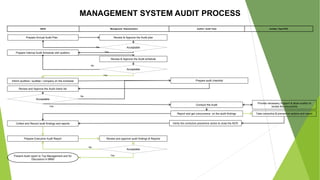
QEHS Management Representative Auditor / Audit Team Auditee / Dept HOD
MANAGEMENT SYSTEM AUDIT PROCESS
Prepare Annual Audit Plan Review & Approve the Audit plan
Acceptable
Prepare Internal Audit Schedule with auditors
Review & Approve the Audit schedule
Acceptable
Prepare audit checklistInform auditors / auditee / company on the schedule
Review and Approve the Audit check list
Acceptable
Conduct the Audit
Provide necessary Support & allow auditor to
review the documents
Report and get concurrence on the audit findings Take corrective & preventive actions and report
Verity the corrective preventive action & close the NCRCollect and Record audit findings and reports
Review and approve audit findings & ReportsPrepare Executive Audit Report
No
Yes
Yes
No
No
Yes
Acceptable
Yes
No
Present Audit report to Top Management and for
Discussion in MRM
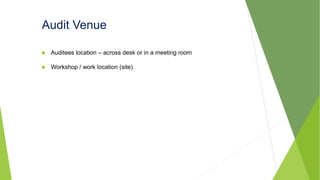
Audit Venue
 Auditees location – across desk or in a meeting room
 Workshop / work location (site)
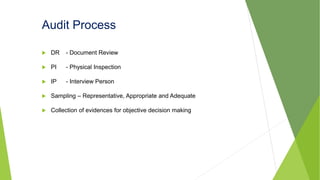
Audit Process
 DR - Document Review
 PI - Physical Inspection
 IP - Interview Person
 Sampling – Representative, Appropriate and Adequate
 Collection of evidences for objective decision making
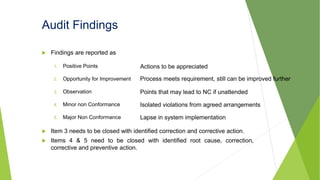
Audit Findings
 Findings are reported as
1. Positive Points
2. Opportunity for Improvement
3. Observation
4. Minor non Conformance
5. Major Non Conformance
 Item 3 needs to be closed with identified correction and corrective action.
 Items 4 & 5 need to be closed with identified root cause, correction,
corrective and preventive action.
Lapse in system implementation
Isolated violations from agreed arrangements
Points that may lead to NC if unattended
Process meets requirement, still can be improved further
Actions to be appreciated
Q & A It
Is
 A WONDERFUL AUDIENCE

2016 08 Introduction to Internal Audit

  • 1.
    Senthil Kumaran, LeadConsultant Jai Maaruthi Consultaant Introduction to Internal Audit
  • 2.
    Content  Introduction Whatis Internal Audit  Internal Auditors Who’ll audit  Auditees Who’ll be audited  Audit Documents What will be audited  Audit Plan / Schedule When will be audited  Audit venue Where will be audited  Audit process How the audit will be conducted  Audit Findings Rating and reporting of audit findings  Q & A
  • 3.
    Introduction  Process ofmonitoring effective implementation of management systems.  Part of “Continual Improvement Process” and “Sustainable Development”  Tool to identify “Area for Improvement” and “Weakness of the system”.  Helps to make “Objective Decisions” based on “Representative Sampling”  Helps to prioritise tasks and ensure effective utilisation of resources
  • 4.
    Internal Auditors  Competentprofessional, independent of / neutral to process being audited  Trained in auditing skills  Conducts audit through  Document Review / Physical Inspection / Interview Person  Makes “Objective Decisions” based on “Representative Sampling”
  • 5.
    Auditees  Owners ofprocesses being audited  Eg. Department Managers / Engineers / Supervisors / Workers
  • 6.
    Audit Documents  ManagementSystem procedures and Records relevant to auditees  Customer / vendor provided documents and records  Legal and other requirements relevant to auditees processes  Department KPIs / Objectives  Customer / vendor complaints / Feedback / Audits  Previous audit reports / findings / closures
  • 7.
    Audit Plan andSchedule  Internal audit  Plan depends on the criticality of process and its performance  Once or twice a year  Schedule - Generally agreed with auditees  Duration depends on requirements, response & findings  1 to 3 hours  External Audit  Once a year – depends on agreement with certification agencies  Same above criteria apply
  • 8.
    QEHS Management RepresentativeAuditor / Audit Team Auditee / Dept HOD MANAGEMENT SYSTEM AUDIT PROCESS Prepare Annual Audit Plan Review & Approve the Audit plan Acceptable Prepare Internal Audit Schedule with auditors Review & Approve the Audit schedule Acceptable Prepare audit checklistInform auditors / auditee / company on the schedule Review and Approve the Audit check list Acceptable Conduct the Audit Provide necessary Support & allow auditor to review the documents Report and get concurrence on the audit findings Take corrective & preventive actions and report Verity the corrective preventive action & close the NCRCollect and Record audit findings and reports Review and approve audit findings & ReportsPrepare Executive Audit Report No Yes Yes No No Yes Acceptable Yes No Present Audit report to Top Management and for Discussion in MRM
  • 9.
    Audit Venue  Auditeeslocation – across desk or in a meeting room  Workshop / work location (site)
  • 10.
    Audit Process  DR- Document Review  PI - Physical Inspection  IP - Interview Person  Sampling – Representative, Appropriate and Adequate  Collection of evidences for objective decision making
  • 11.
    Audit Findings  Findingsare reported as 1. Positive Points 2. Opportunity for Improvement 3. Observation 4. Minor non Conformance 5. Major Non Conformance  Item 3 needs to be closed with identified correction and corrective action.  Items 4 & 5 need to be closed with identified root cause, correction, corrective and preventive action. Lapse in system implementation Isolated violations from agreed arrangements Points that may lead to NC if unattended Process meets requirement, still can be improved further Actions to be appreciated
  • 12.
    Q & AIt Is  A WONDERFUL AUDIENCE