
What can
foster
parents do
to help
Challenges faced by
aging out youth
Lisa Dickson
Communications Chair
Foster Care Alumni of America
Ohio chapter
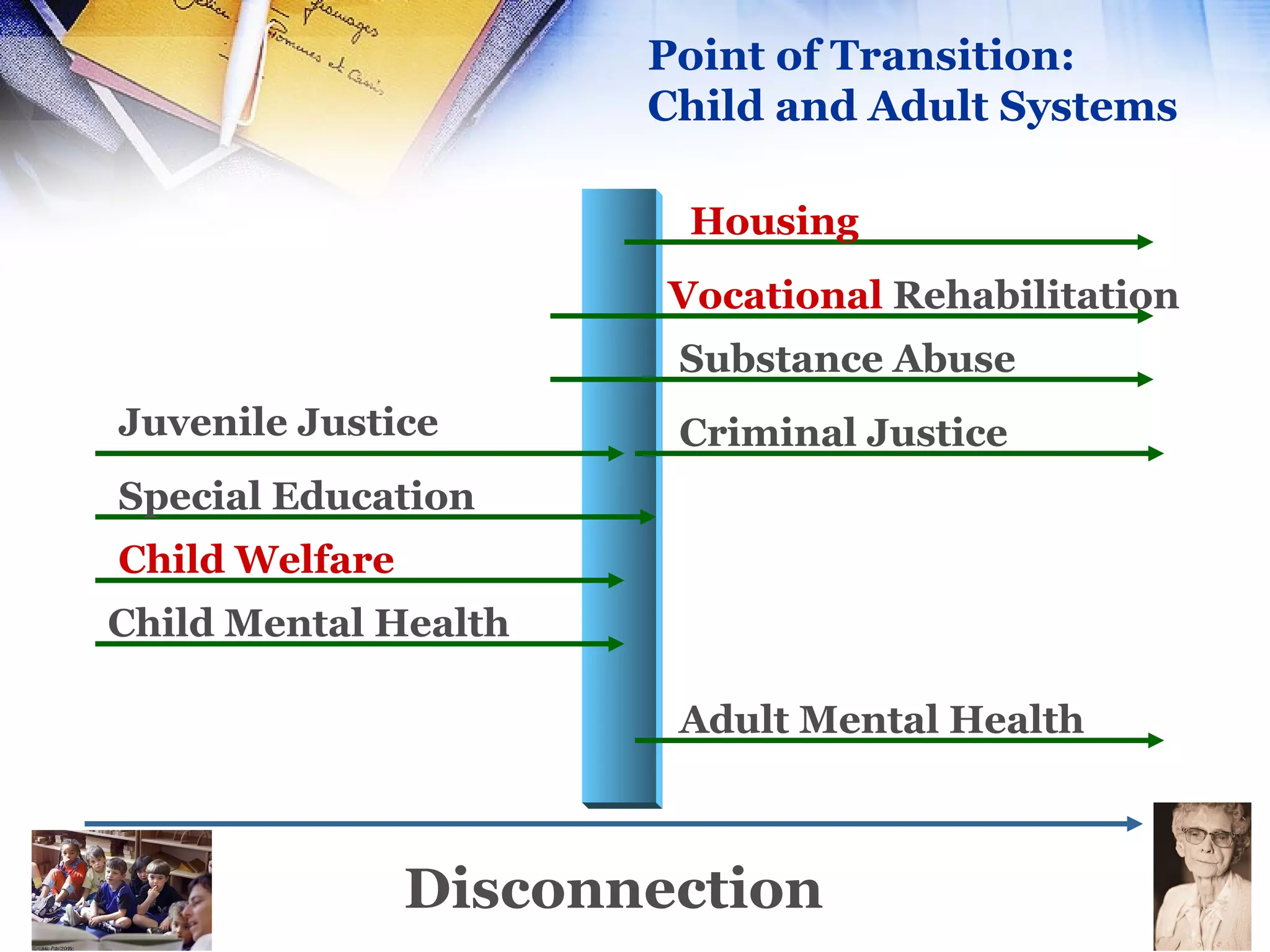
Point of Transition:
Child and Adult Systems
Disconnection
Child Mental Health
Adult Mental Health
Child Welfare
Special Education
Juvenile Justice Criminal Justice
Substance Abuse
Vocational Rehabilitation
Housing
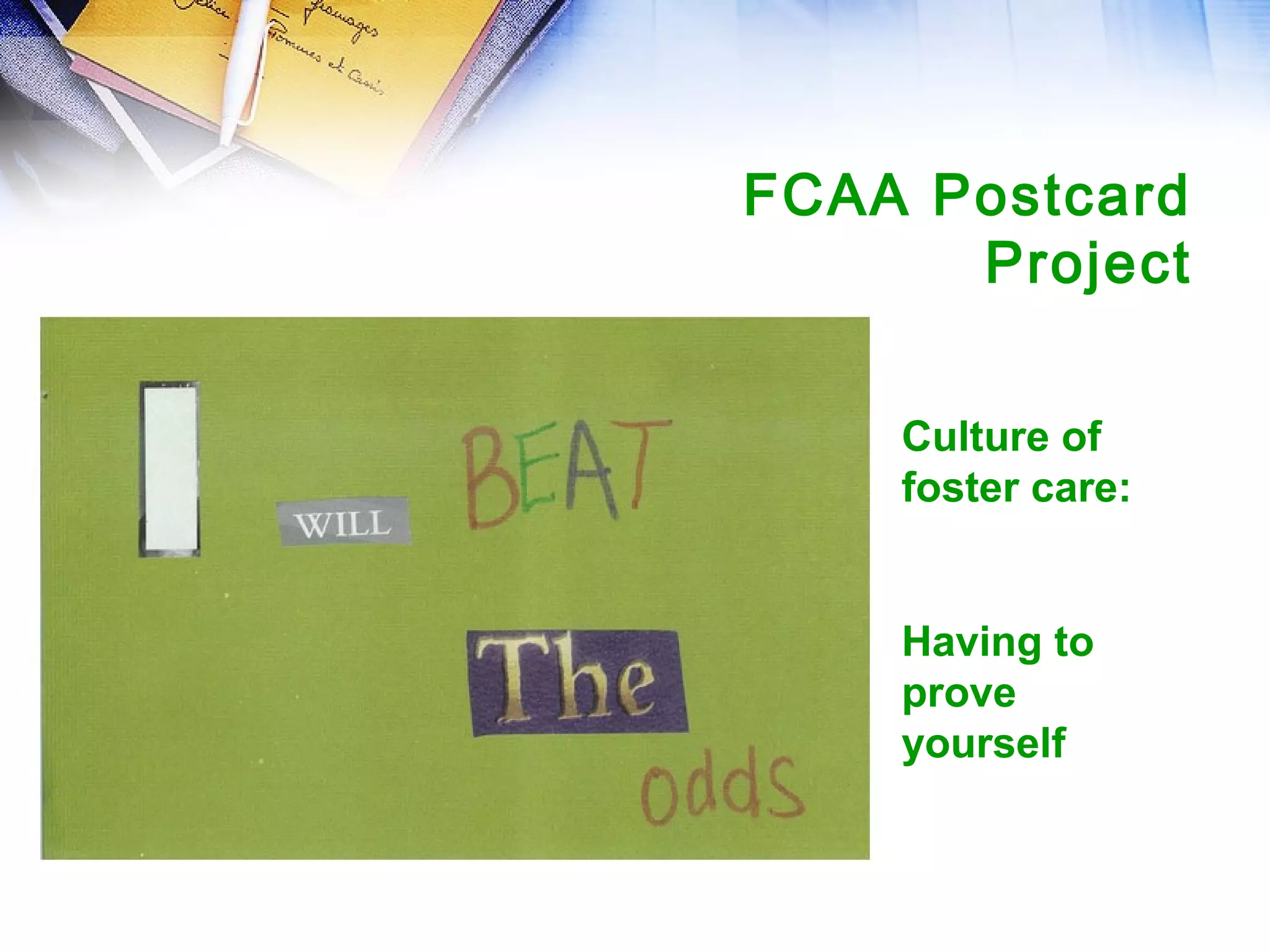
FCAA Postcard
Project
Culture of
foster care:
Having to
prove
yourself
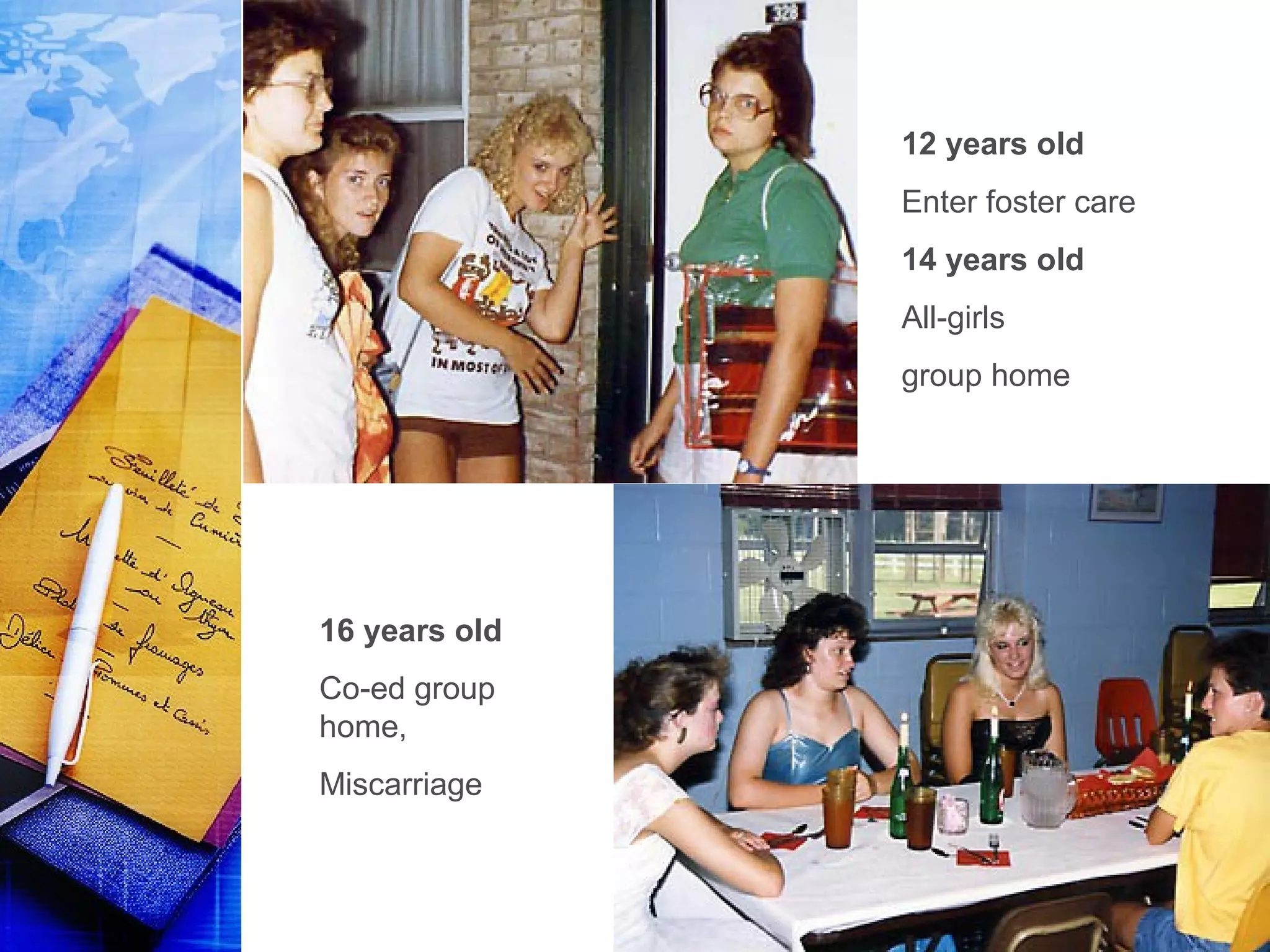
12 years old
Enter foster care
14 years old
All-girls
group home
16 years old
Co-ed group
home,
Miscarriage
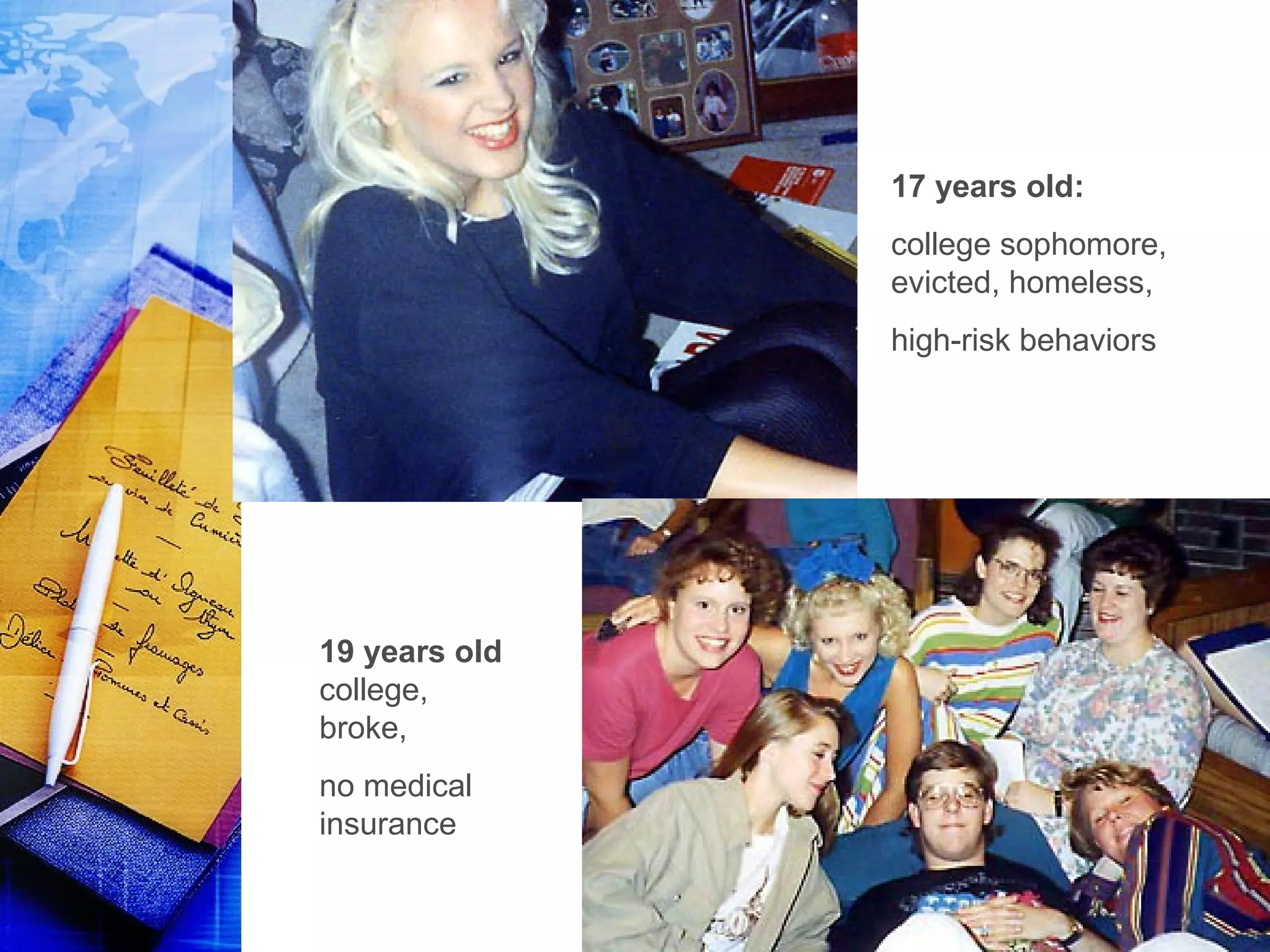
17 years old:
college sophomore,
evicted, homeless,
high-risk behaviors
19 years old
college,
broke,
no medical
insurance
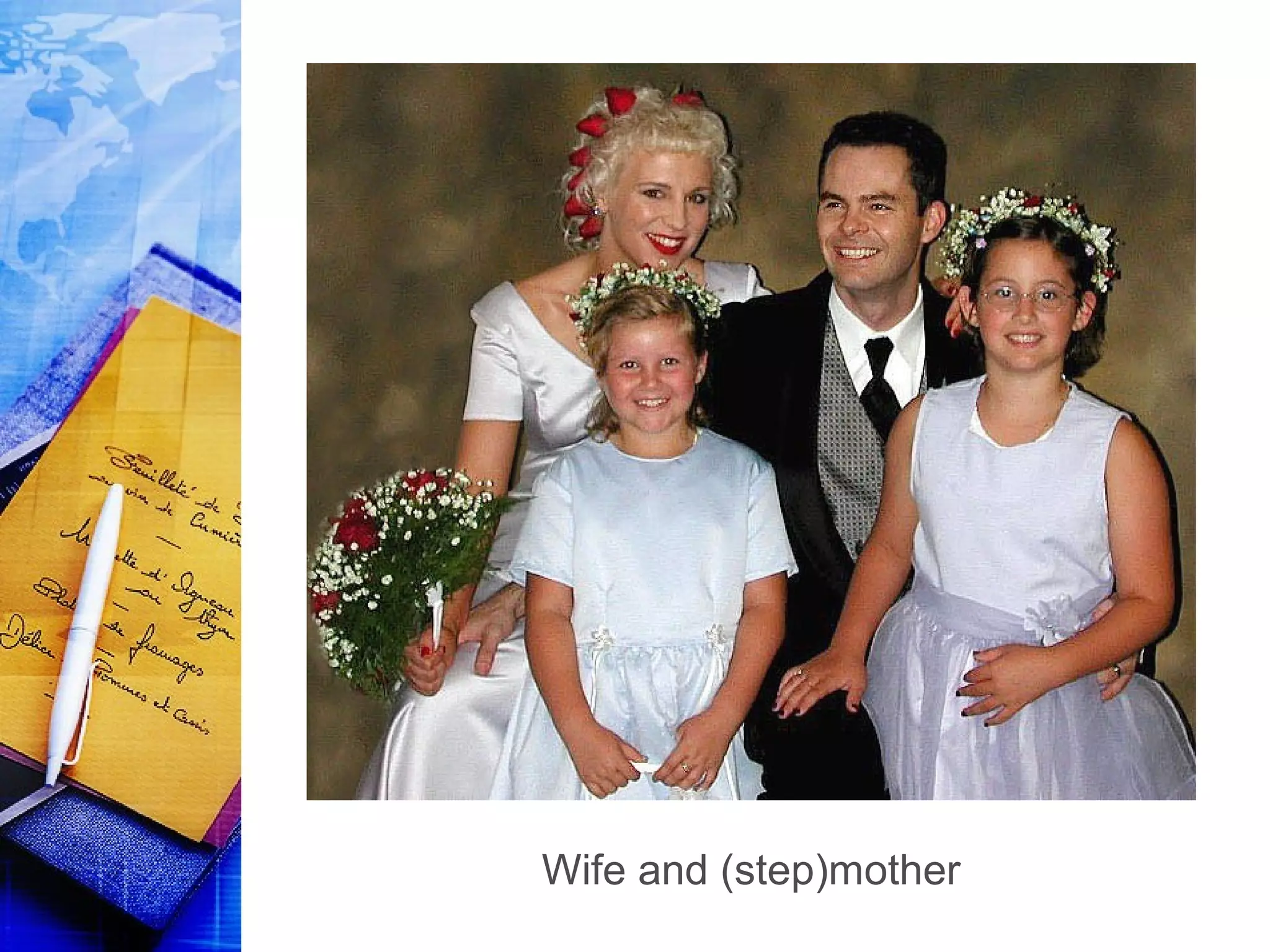
Wife and (step)mother
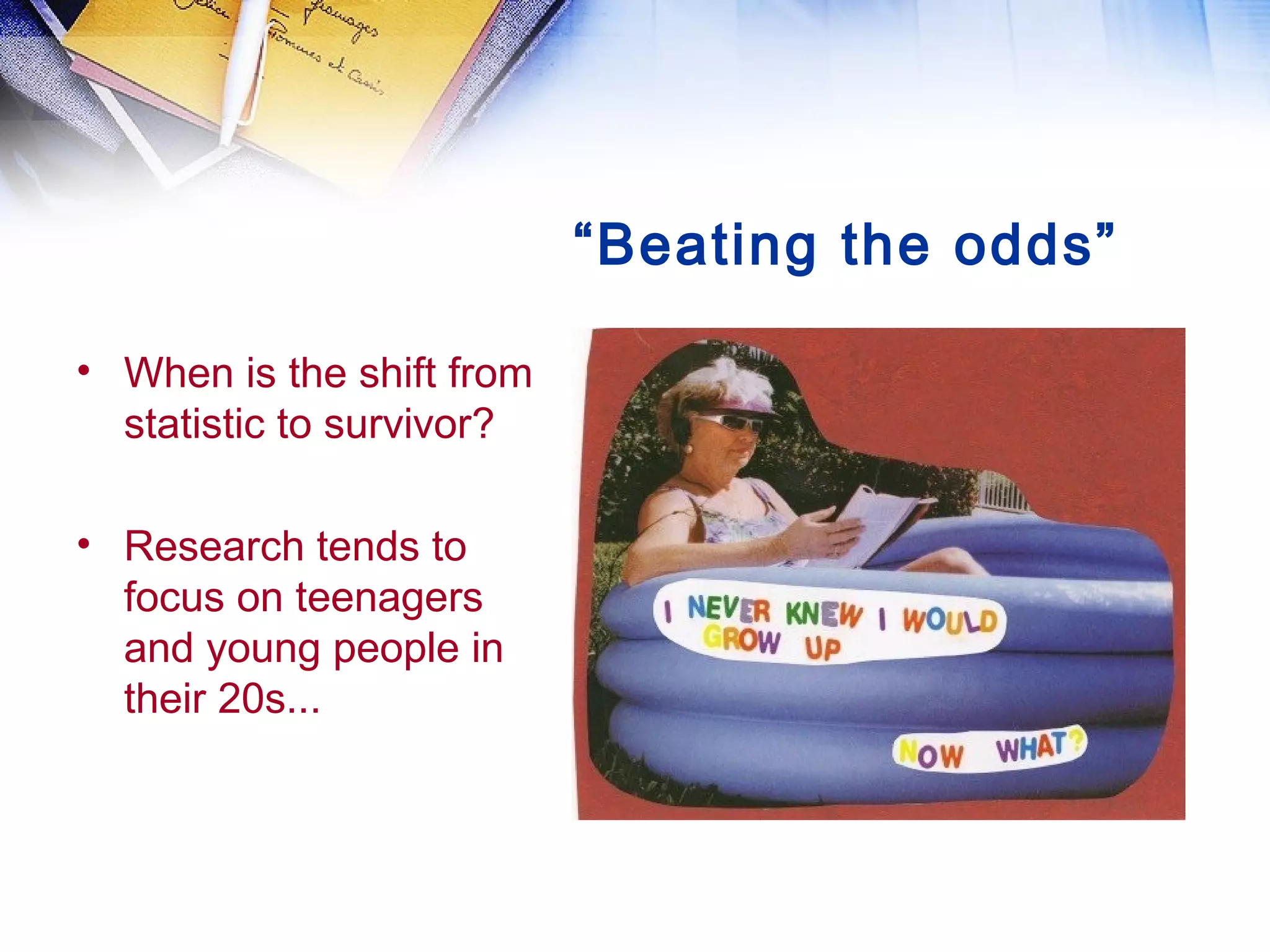
“Beating the odds”
• When is the shift from
statistic to survivor?
• Research tends to
focus on teenagers
and young people in
their 20s...
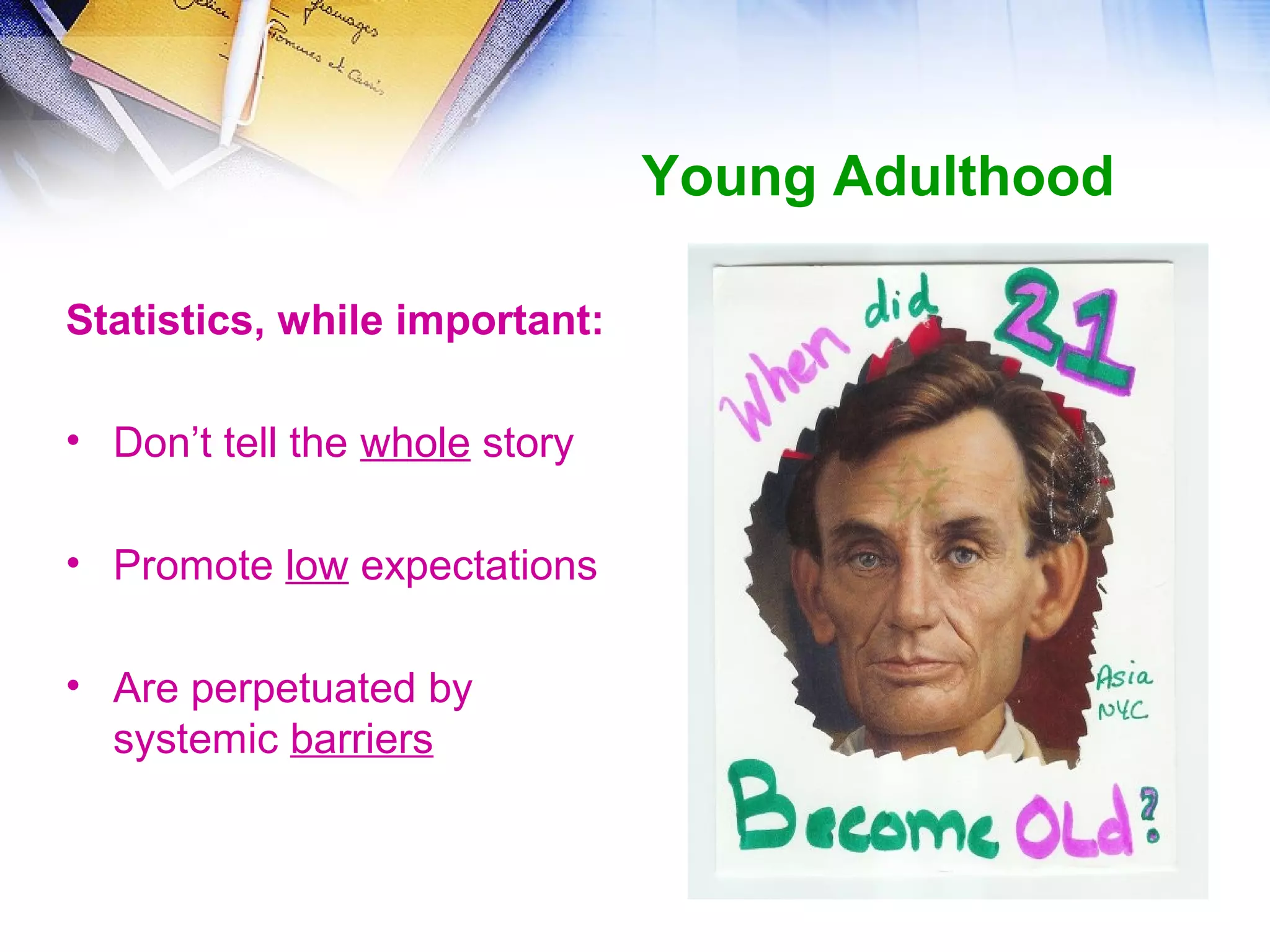
Young Adulthood
Statistics, while important:
• Don’t tell the whole story
• Promote low expectations
• Are perpetuated by
systemic barriers
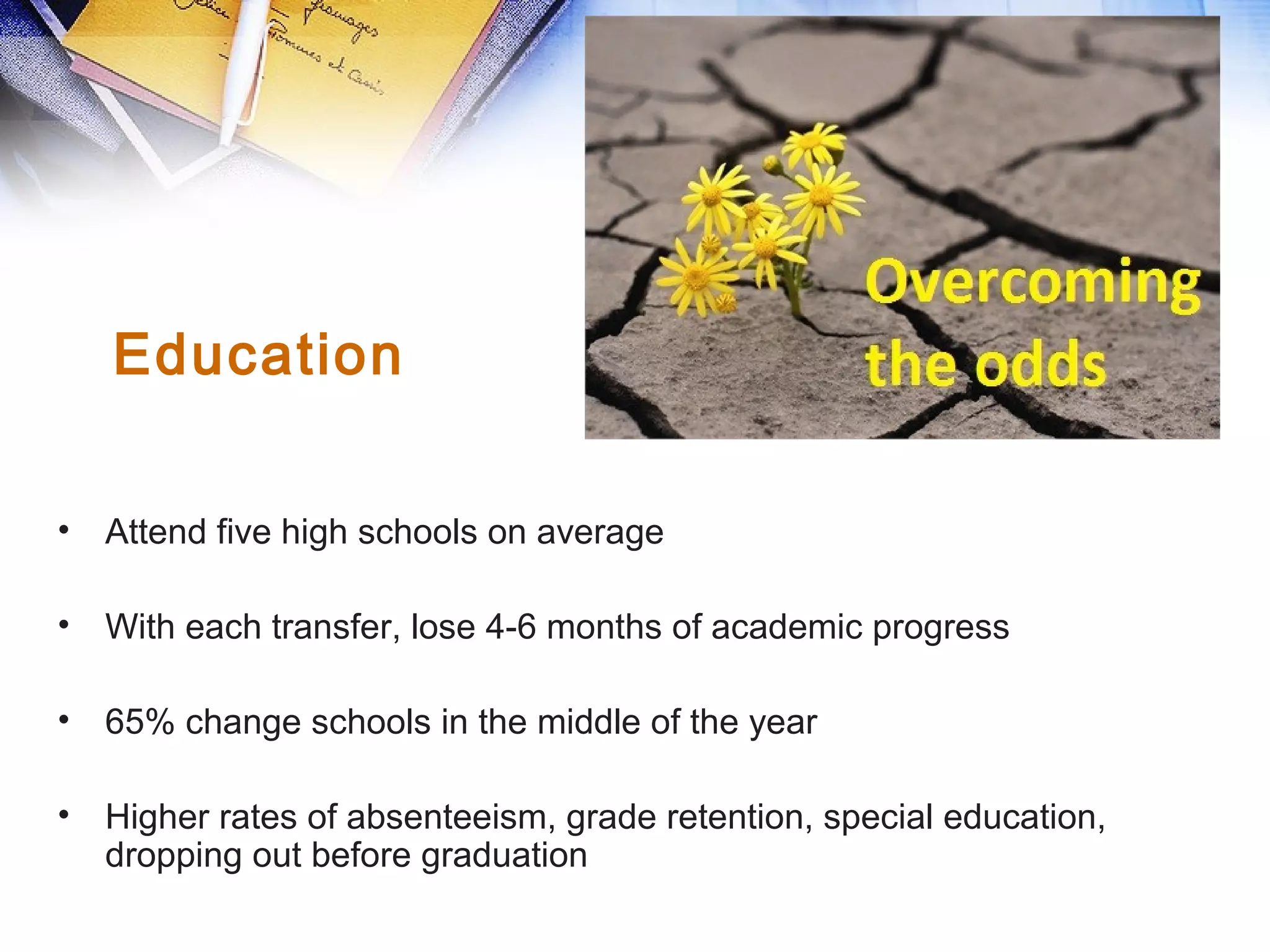
• Attend five high schools on average
• With each transfer, lose 4-6 months of academic progress
• 65% change schools in the middle of the year
• Higher rates of absenteeism, grade retention, special education,
dropping out before graduation
Education
Teen
Development
Six Tasks of Older Adolescence:
•Self-esteem and self-awareness
•Increased independence
•Responsible and able to make complex decisions
•Relationship skills
•Interpersonal communication
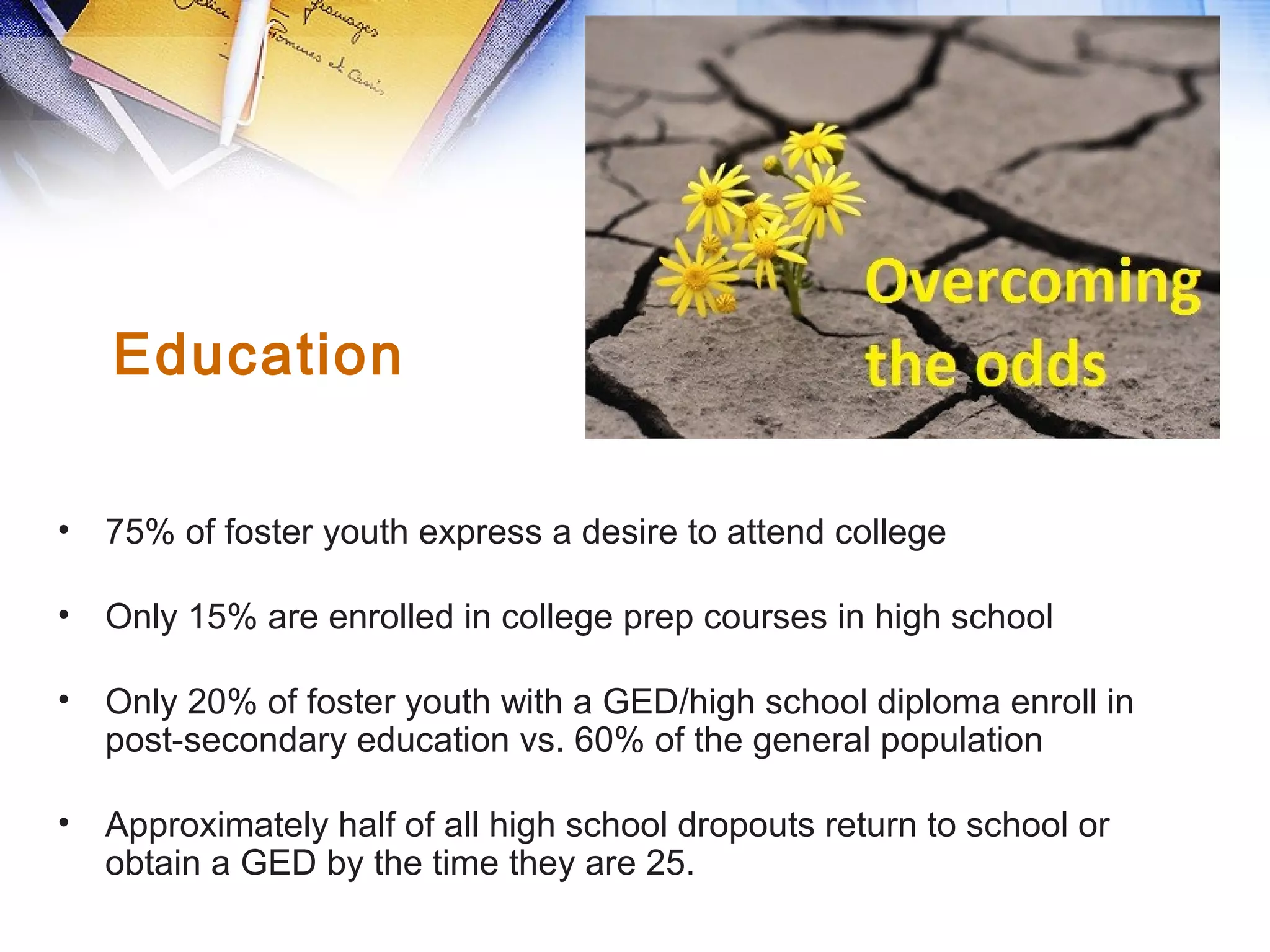
• 75% of foster youth express a desire to attend college
• Only 15% are enrolled in college prep courses in high school
• Only 20% of foster youth with a GED/high school diploma enroll in
post-secondary education vs. 60% of the general population
• Approximately half of all high school dropouts return to school or
obtain a GED by the time they are 25.
Education
Developing a vision for
foster youth to succeed
academically
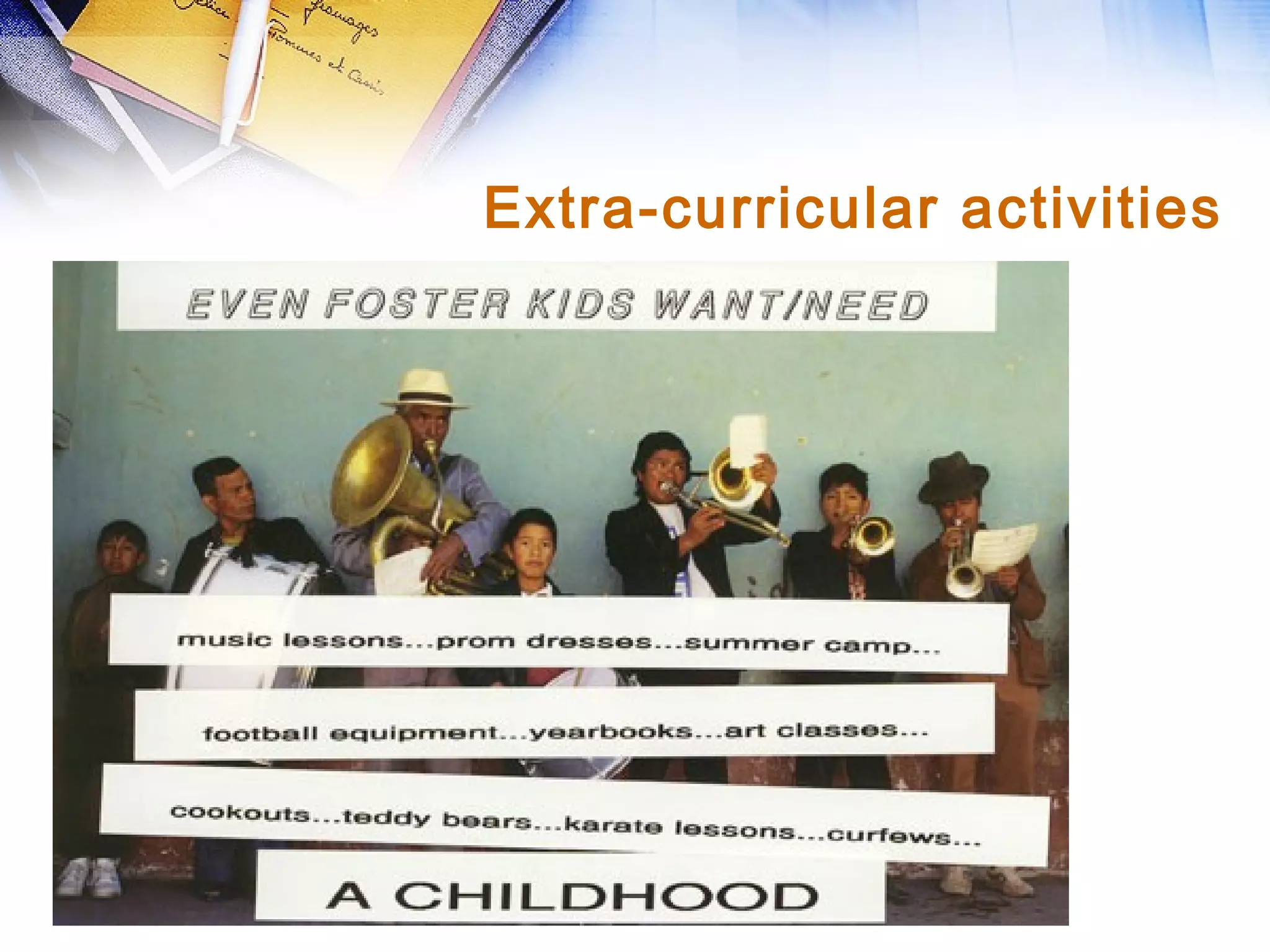
Extra-curricular activities
OHIO Youth Advisory Board suggestions:
• Youth felt that college education should start early on
• Time management + study skills (How many hours studying should you
budget per class? What's the best way to study for my learning style?)
• Time management
• Scholarships: How to apply
• Access – program for IEP scholars
• Keeping in touch with your student advisor
College Bridge Programs:
•GEAR UP, TRIO: First-generation college students
•Upward Bound: Students must have completed the 8th grade, be
between the ages of 13 and 19, and have a need for academic
support in order to pursue a program of postsecondary education. All
students must be either from low-income families or be potential first-
generation college students.
Financial Assistance with College:
•ETV funds: Orphan Foundation of America www.statevoucher.org
(laptop, money/semester, v-mentoring)
•Applying for additional scholarships
Filling out the FAFSA as an independent student:
•Student who is an orphan, in foster care, or a ward of the court, at any
time when the student was 13 years of age or older
•Student who is an emancipated minor or is in legal guardianship as
determined by the court in their state of legal residence
•Applicant is verified as an unaccompanied youth who is homeless or
at risk of homelessness and self-supporting
ETV Funds:
•The ETV program is a federally-funded, state-administered program
that provides grants up to $5,000 per year to assist former foster youth
pursing higher education.
•This includes college and vocational training institutions.
•Funds can be used for: Tuition, books, textbooks, and living
expenses.
• To learn more, visit: ohio@statevoucher.org
ETV Eligibility:
A current, or former foster youth who:
Was in foster care on their 18th birthday and aged out at that time; OR
Was adopted from foster care with the adoption finalized AFTER
his/her 16th birthday; OR
Will have his/her foster care case closed between the ages of 18 and
21.
At least 18, but younger than 21, to apply for the first time.
Already accepted or enrolled in a degree, certificate or other
accredited program at a college, university, technical, vocational
school.
To remain eligible for ETV funding, students must show progress
toward a degree or certificate.
Students remain eligible for ETV up to age 23 if they received ETV
funding prior to their 21st birthday.
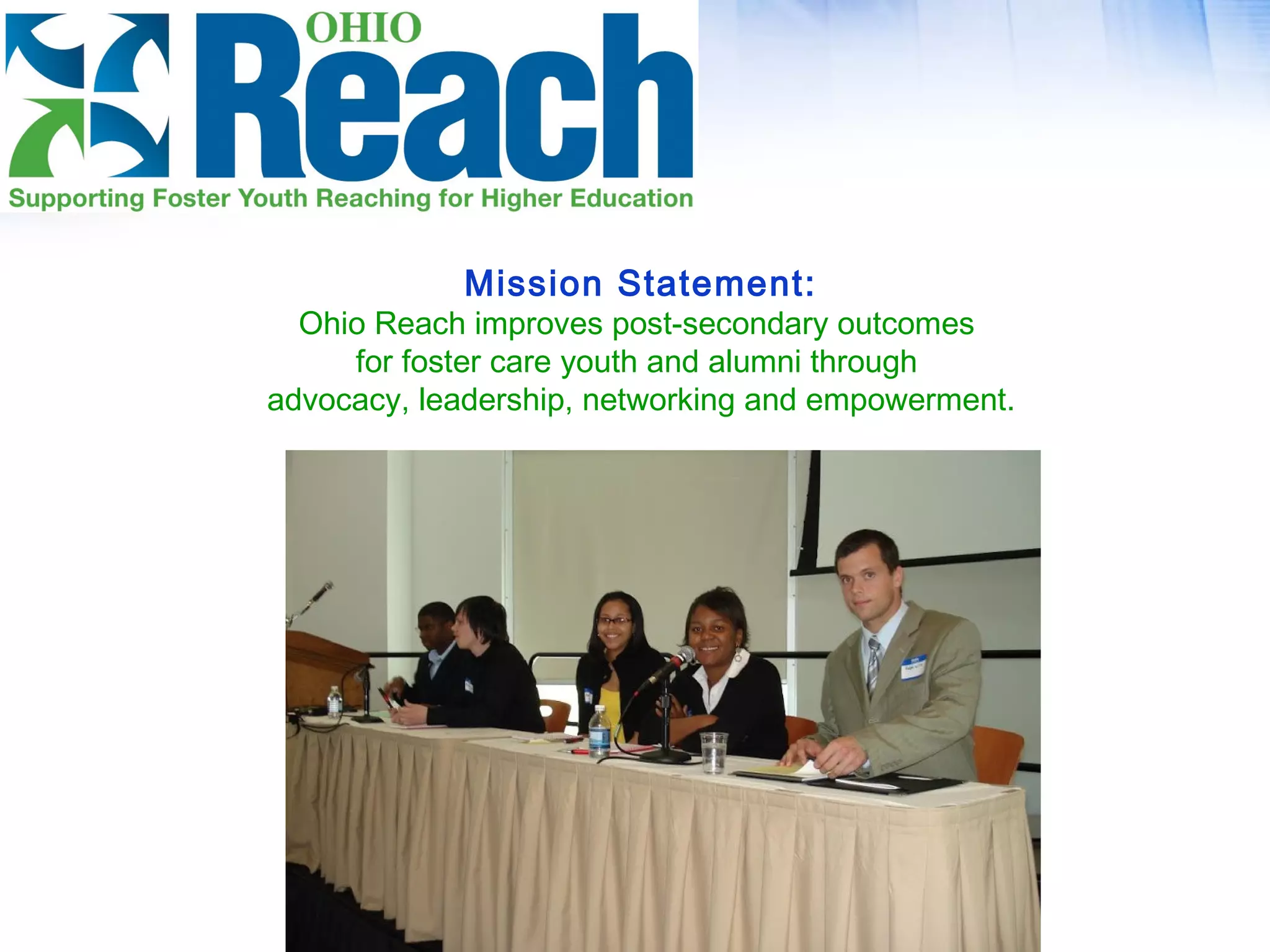
Mission Statement:
Ohio Reach improves post-secondary outcomes
for foster care youth and alumni through
advocacy, leadership, networking and empowerment.
• The purpose of Ohio Reach is to increase the number
of foster care youth who enroll in and graduate from
college.
• Part of how we do this is by establishing Foster Care
Liaisons at Ohio universities and community colleges.
http://ohioreach.wikispaces.com
Developing a vision for
foster youth to develop job-
readiness
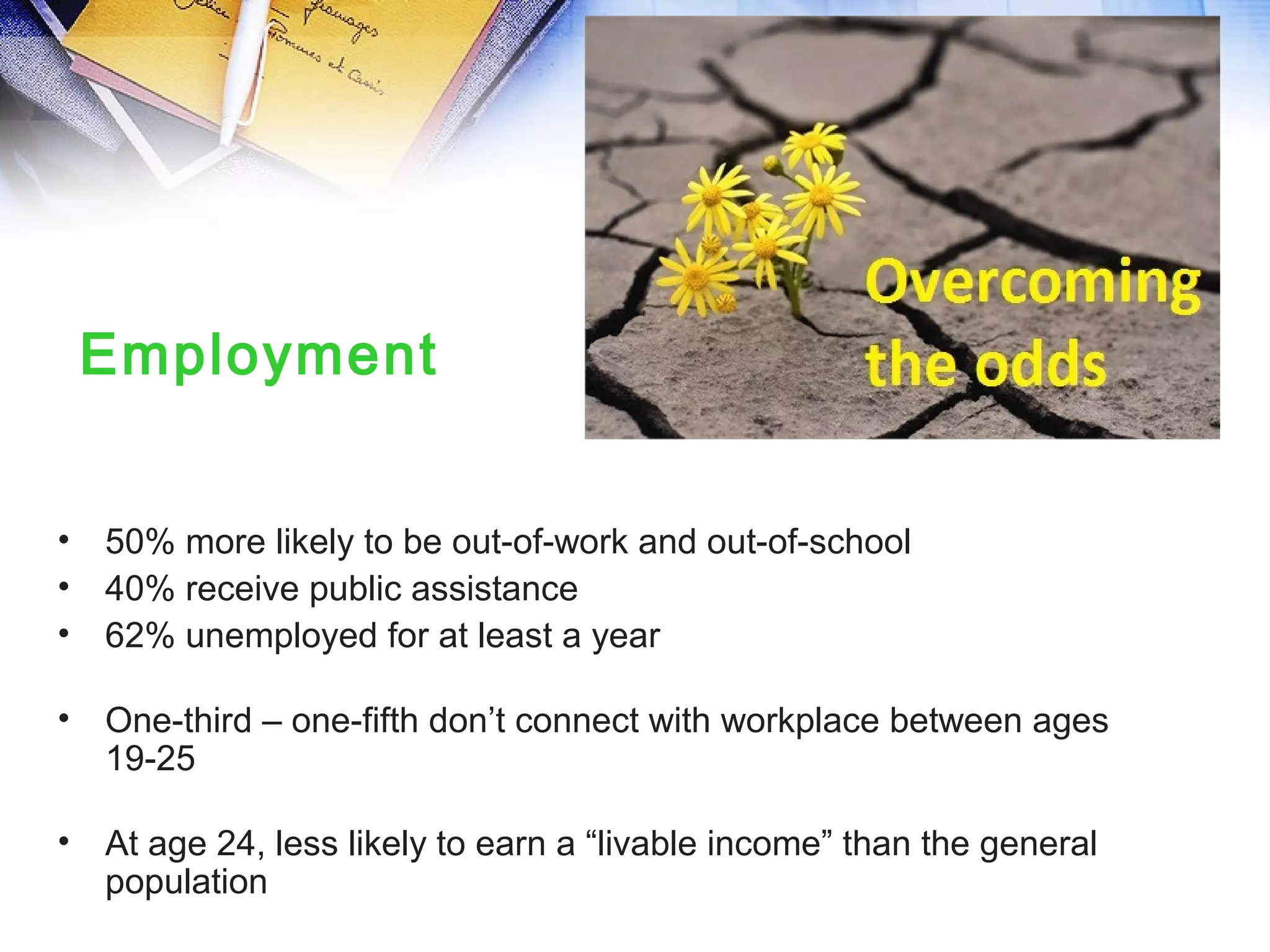
• 50% more likely to be out-of-work and out-of-school
• 40% receive public assistance
• 62% unemployed for at least a year
• One-third – one-fifth don’t connect with workplace between ages
19-25
• At age 24, less likely to earn a “livable income” than the general
population
Employment
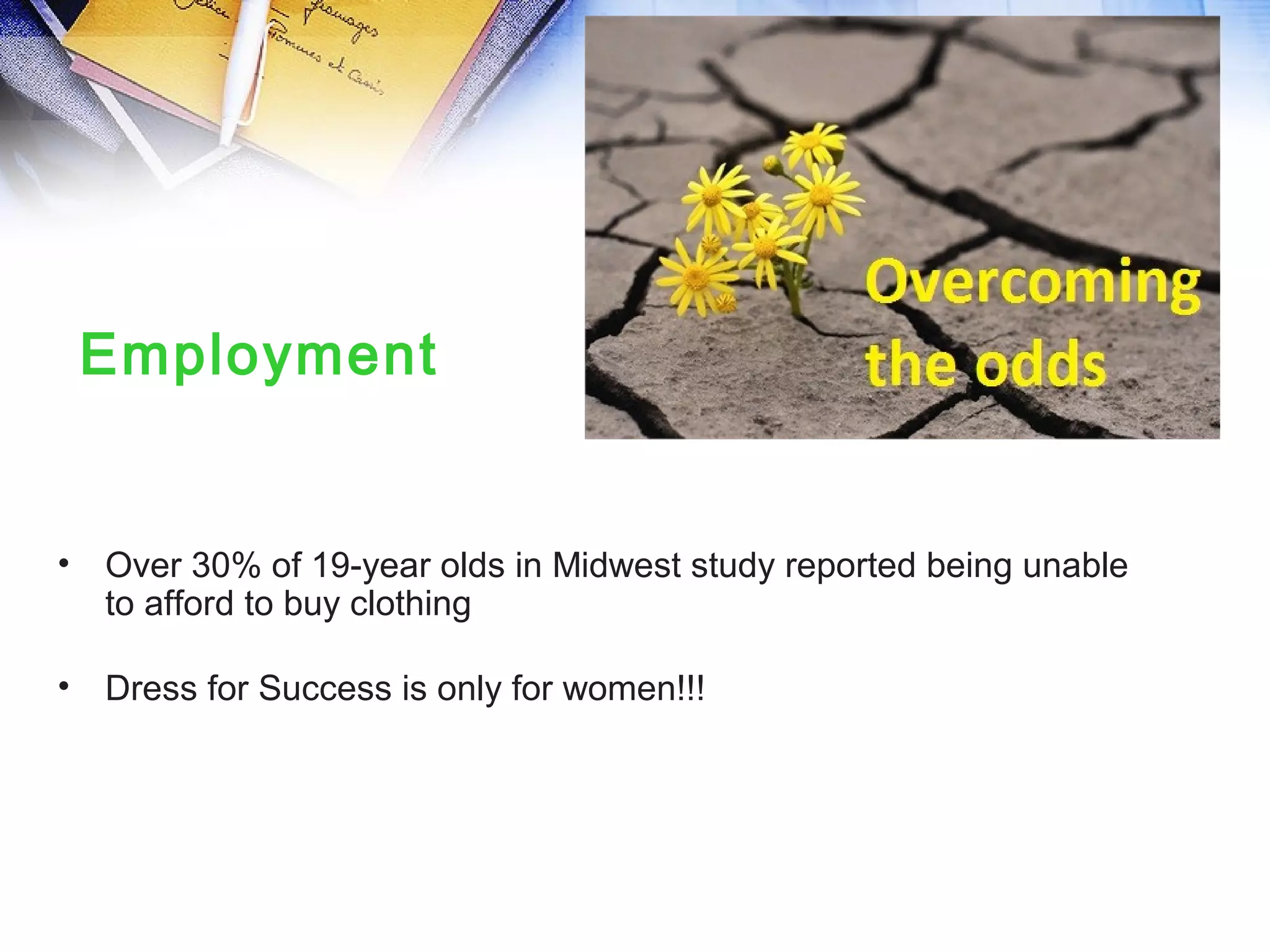
• Over 30% of 19-year olds in Midwest study reported being unable
to afford to buy clothing
• Dress for Success is only for women!!!
Employment
Early Employment Experience:
•Workforce training, vocational training, employment opportunities
•Getting connected with the workplace
•Skills and interests, relating to jobs
•Hands-on work experience
•Engaged in the local community
Life As A Juggling Act
Developing a vision for
foster youth to develop
general life skills
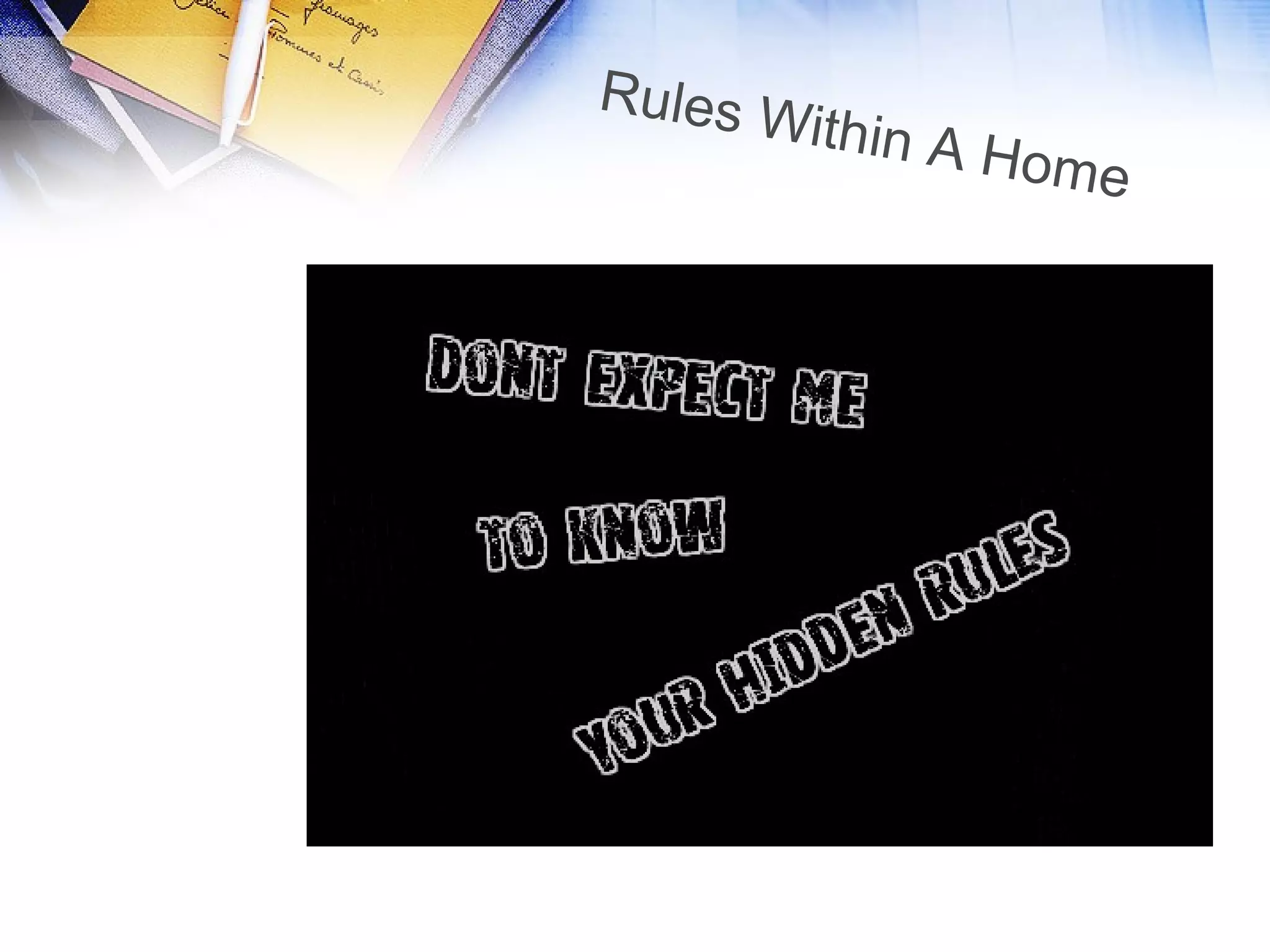
Rules Within A Home
OHIO Youth Advisory Board suggestions:
• Self-reliance: Doing things independently
• Self-sufficiency: How to cook, clean, etc.
• Kitchen safety (i.e. fire extinguisher)
• Hands-on activities: “Don’t just tell me, show me and let me try.”
• How to prioritize
• Time management, money management
• Understanding legal matters (i.e. your basic rights)
Developing a vision for
foster youth to develop
personal health skills
OHIO Youth Advisory Board suggestions:
• Hygiene
• Sex, drug and alcohol abuse
• Health and fitness
• Start taking medications on your own (Mind Matters publication)
• Knowing resources for counseling and other methods to self-calm
• Suicidal awareness; where to call
• Understanding yourself spiritually
Developing a vision for
foster youth to develop
interpersonal skills
OHIO Youth Advisory Board suggestions:
• Self-respect; respecting yourself and others
• Etiquette; a time and a place for everything
• How to dress appropriately
• How to behave appropriately in a restaurant
• Being aware of communication; oral and written
• Public speaking; conversation etiquette
• Relationship skills; identify people who support you; don’t burn bridges
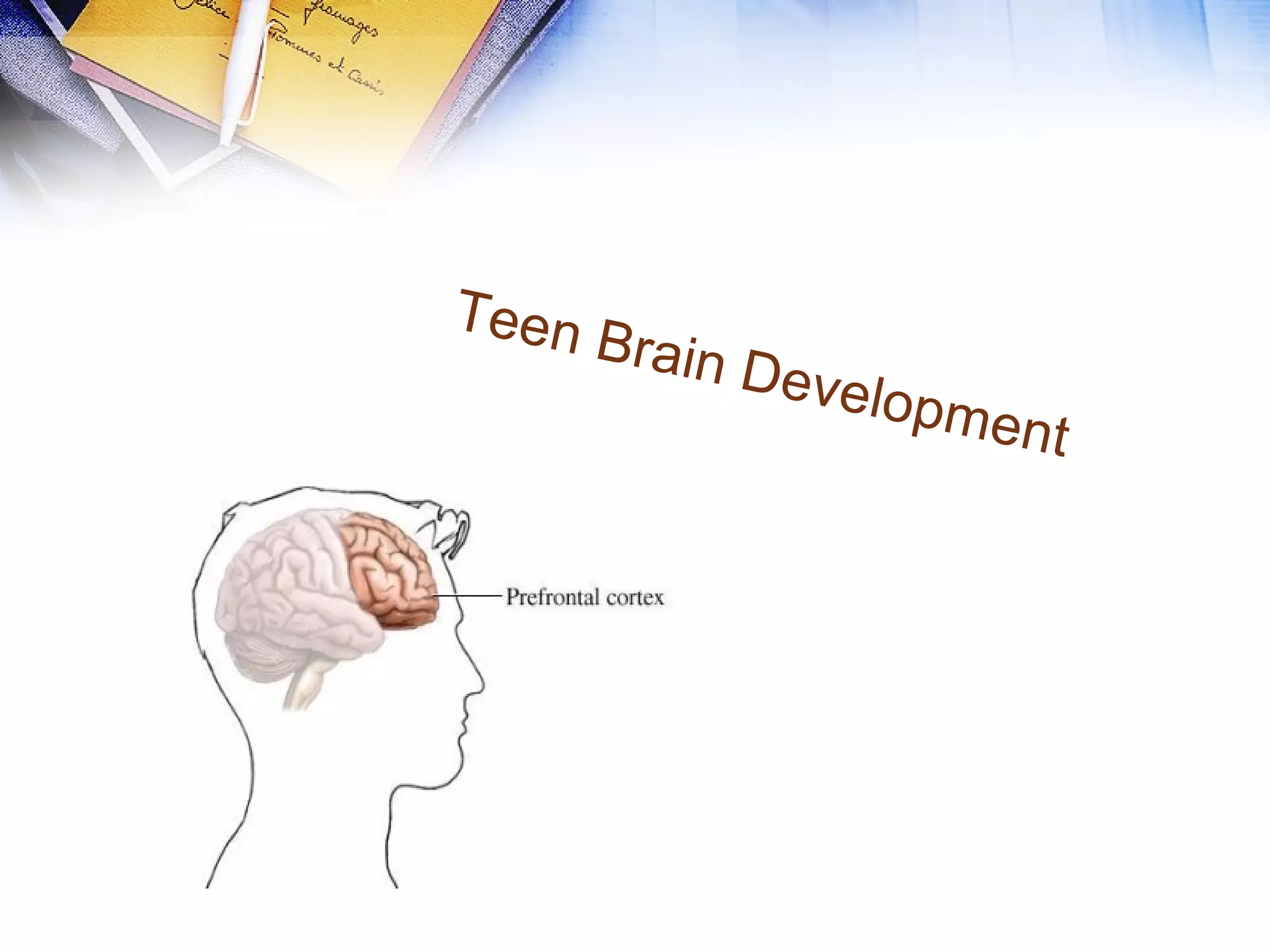
Teen Brain Development
Developing a vision for
foster youth to develop
technological skills
Raising a Media Savvy Teen:
• Cyberbullying is bullying that takes place using electronic technology.
Examples of cyberbullying include mean text messages or emails,
rumors sent by email or posted on social networking sites, and
embarrassing pictures, videos, websites, or fake profiles.
Developing a
comprehensive plan for
youth to succeed
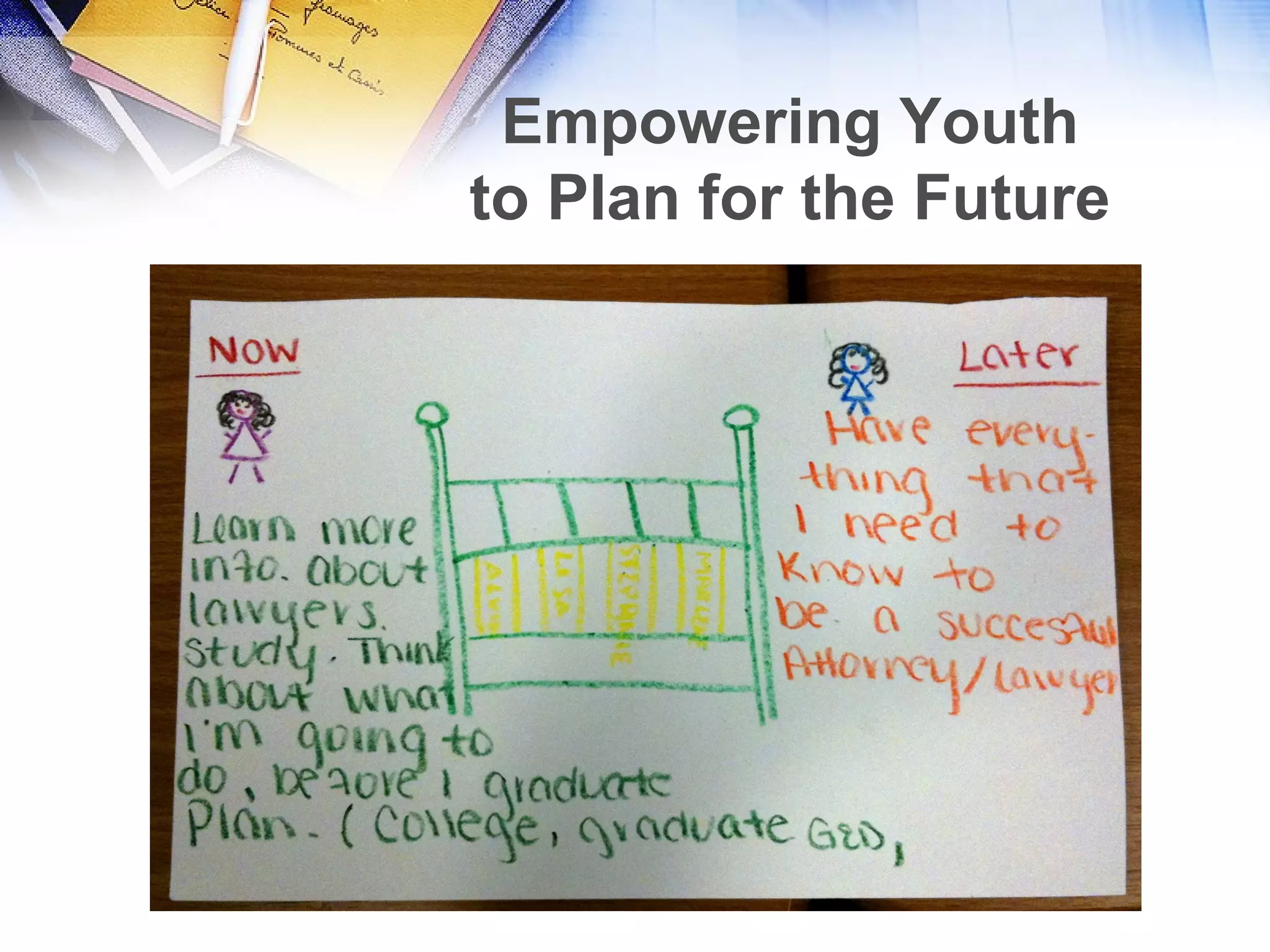
Empowering Youth
to Plan for the Future
Fostering Connections to Success and Increasing
Adoptions Act of 2008
•Mandates that 90 days prior to emancipation from foster care, “a
caseworker on the staff of the State agency, and, as appropriate, other
representatives of the child provide the child with assistance and
support in developing a transition plan that is personalized at the
direction of the child, includes specific options on housing, health
insurance, education, local opportunities for mentors and continuing
support services, and work force supports and employment services,
and is as detailed as the child may elect.”
Ohio Administrative Code
•Ninety days prior to the youth’s emancipation from the agency’s
custody, the PCSA or PCPA shall work with the youth to develop a
final transition plan.
•The plan shall be youth-driven and as detailed as the youth chooses.
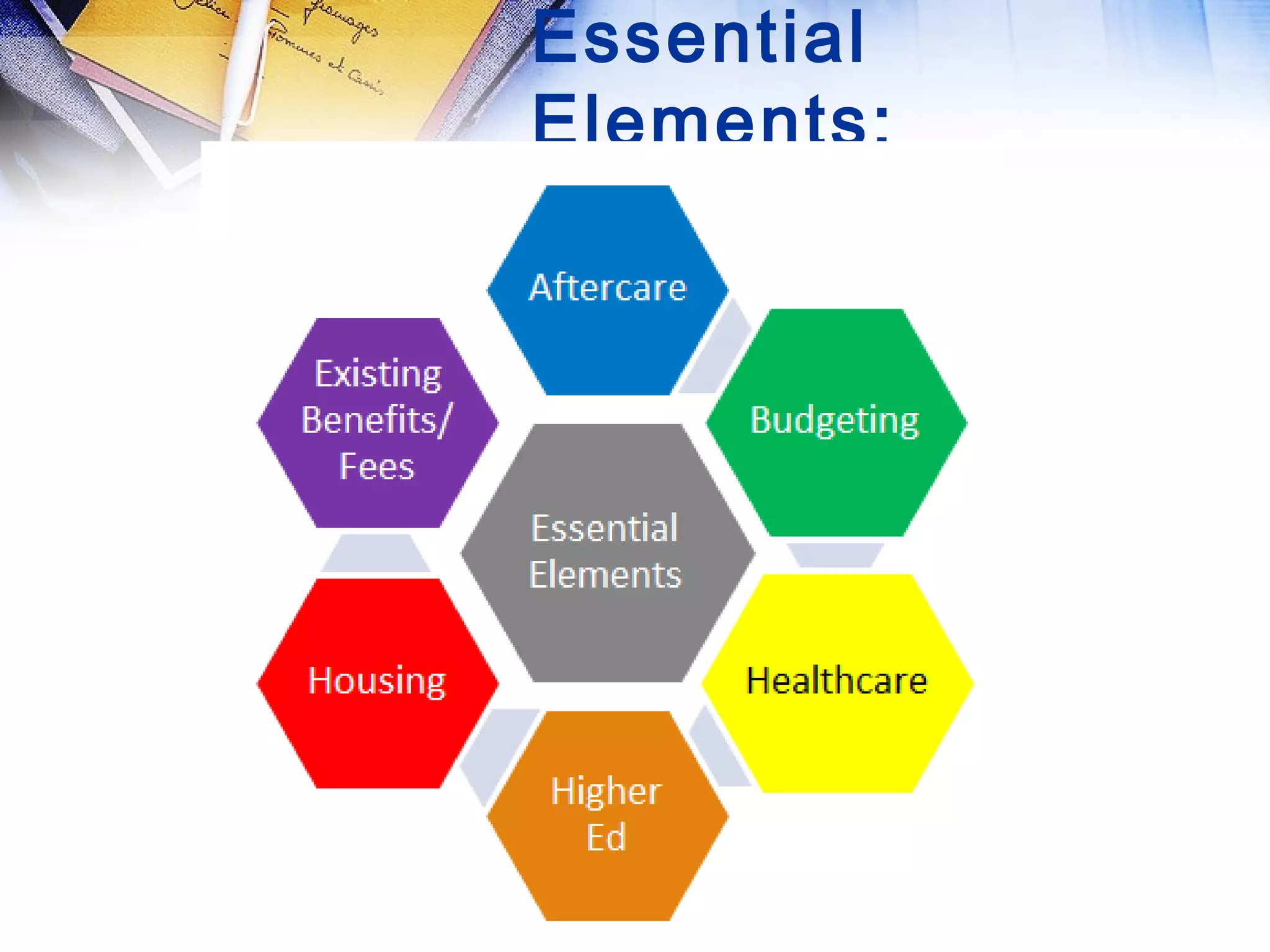
Essential
Elements:
2015 challenges workshop for lucas foster parents

2015 challenges workshop for lucas foster parents

  • 1.
    What can foster parents do tohelp Challenges faced by aging out youth Lisa Dickson Communications Chair Foster Care Alumni of America Ohio chapter
  • 2.
    Point of Transition: Childand Adult Systems Disconnection Child Mental Health Adult Mental Health Child Welfare Special Education Juvenile Justice Criminal Justice Substance Abuse Vocational Rehabilitation Housing
  • 3.
    FCAA Postcard Project Culture of fostercare: Having to prove yourself
  • 4.
    12 years old Enterfoster care 14 years old All-girls group home 16 years old Co-ed group home, Miscarriage
  • 5.
    17 years old: collegesophomore, evicted, homeless, high-risk behaviors 19 years old college, broke, no medical insurance
  • 6.
  • 7.
    “Beating the odds” •When is the shift from statistic to survivor? • Research tends to focus on teenagers and young people in their 20s...
  • 8.
    Young Adulthood Statistics, whileimportant: • Don’t tell the whole story • Promote low expectations • Are perpetuated by systemic barriers
  • 9.
    • Attend fivehigh schools on average • With each transfer, lose 4-6 months of academic progress • 65% change schools in the middle of the year • Higher rates of absenteeism, grade retention, special education, dropping out before graduation Education
  • 10.
    Teen Development Six Tasks ofOlder Adolescence: •Self-esteem and self-awareness •Increased independence •Responsible and able to make complex decisions •Relationship skills •Interpersonal communication
  • 11.
    • 75% offoster youth express a desire to attend college • Only 15% are enrolled in college prep courses in high school • Only 20% of foster youth with a GED/high school diploma enroll in post-secondary education vs. 60% of the general population • Approximately half of all high school dropouts return to school or obtain a GED by the time they are 25. Education
  • 12.
    Developing a visionfor foster youth to succeed academically
  • 13.
  • 14.
    OHIO Youth AdvisoryBoard suggestions: • Youth felt that college education should start early on • Time management + study skills (How many hours studying should you budget per class? What's the best way to study for my learning style?) • Time management • Scholarships: How to apply • Access – program for IEP scholars • Keeping in touch with your student advisor
  • 15.
    College Bridge Programs: •GEARUP, TRIO: First-generation college students •Upward Bound: Students must have completed the 8th grade, be between the ages of 13 and 19, and have a need for academic support in order to pursue a program of postsecondary education. All students must be either from low-income families or be potential first- generation college students.
  • 16.
    Financial Assistance withCollege: •ETV funds: Orphan Foundation of America www.statevoucher.org (laptop, money/semester, v-mentoring) •Applying for additional scholarships
  • 17.
    Filling out theFAFSA as an independent student: •Student who is an orphan, in foster care, or a ward of the court, at any time when the student was 13 years of age or older •Student who is an emancipated minor or is in legal guardianship as determined by the court in their state of legal residence •Applicant is verified as an unaccompanied youth who is homeless or at risk of homelessness and self-supporting
  • 18.
    ETV Funds: •The ETVprogram is a federally-funded, state-administered program that provides grants up to $5,000 per year to assist former foster youth pursing higher education. •This includes college and vocational training institutions. •Funds can be used for: Tuition, books, textbooks, and living expenses. • To learn more, visit: ohio@statevoucher.org
  • 19.
    ETV Eligibility: A current,or former foster youth who: Was in foster care on their 18th birthday and aged out at that time; OR Was adopted from foster care with the adoption finalized AFTER his/her 16th birthday; OR Will have his/her foster care case closed between the ages of 18 and 21. At least 18, but younger than 21, to apply for the first time. Already accepted or enrolled in a degree, certificate or other accredited program at a college, university, technical, vocational school. To remain eligible for ETV funding, students must show progress toward a degree or certificate. Students remain eligible for ETV up to age 23 if they received ETV funding prior to their 21st birthday.
  • 20.
    Mission Statement: Ohio Reachimproves post-secondary outcomes for foster care youth and alumni through advocacy, leadership, networking and empowerment.
  • 21.
    • The purposeof Ohio Reach is to increase the number of foster care youth who enroll in and graduate from college. • Part of how we do this is by establishing Foster Care Liaisons at Ohio universities and community colleges. http://ohioreach.wikispaces.com
  • 22.
    Developing a visionfor foster youth to develop job- readiness
  • 23.
    • 50% morelikely to be out-of-work and out-of-school • 40% receive public assistance • 62% unemployed for at least a year • One-third – one-fifth don’t connect with workplace between ages 19-25 • At age 24, less likely to earn a “livable income” than the general population Employment
  • 24.
    • Over 30%of 19-year olds in Midwest study reported being unable to afford to buy clothing • Dress for Success is only for women!!! Employment
  • 25.
    Early Employment Experience: •Workforcetraining, vocational training, employment opportunities •Getting connected with the workplace •Skills and interests, relating to jobs •Hands-on work experience •Engaged in the local community
  • 26.
    Life As AJuggling Act
  • 27.
    Developing a visionfor foster youth to develop general life skills
  • 28.
  • 29.
    OHIO Youth AdvisoryBoard suggestions: • Self-reliance: Doing things independently • Self-sufficiency: How to cook, clean, etc. • Kitchen safety (i.e. fire extinguisher) • Hands-on activities: “Don’t just tell me, show me and let me try.” • How to prioritize • Time management, money management • Understanding legal matters (i.e. your basic rights)
  • 31.
    Developing a visionfor foster youth to develop personal health skills
  • 32.
    OHIO Youth AdvisoryBoard suggestions: • Hygiene • Sex, drug and alcohol abuse • Health and fitness • Start taking medications on your own (Mind Matters publication) • Knowing resources for counseling and other methods to self-calm • Suicidal awareness; where to call • Understanding yourself spiritually
  • 34.
    Developing a visionfor foster youth to develop interpersonal skills
  • 35.
    OHIO Youth AdvisoryBoard suggestions: • Self-respect; respecting yourself and others • Etiquette; a time and a place for everything • How to dress appropriately • How to behave appropriately in a restaurant • Being aware of communication; oral and written • Public speaking; conversation etiquette • Relationship skills; identify people who support you; don’t burn bridges
  • 36.
  • 37.
    Developing a visionfor foster youth to develop technological skills
  • 38.
    Raising a MediaSavvy Teen: • Cyberbullying is bullying that takes place using electronic technology. Examples of cyberbullying include mean text messages or emails, rumors sent by email or posted on social networking sites, and embarrassing pictures, videos, websites, or fake profiles.
  • 39.
    Developing a comprehensive planfor youth to succeed
  • 40.
  • 41.
    Fostering Connections toSuccess and Increasing Adoptions Act of 2008 •Mandates that 90 days prior to emancipation from foster care, “a caseworker on the staff of the State agency, and, as appropriate, other representatives of the child provide the child with assistance and support in developing a transition plan that is personalized at the direction of the child, includes specific options on housing, health insurance, education, local opportunities for mentors and continuing support services, and work force supports and employment services, and is as detailed as the child may elect.”
  • 42.
    Ohio Administrative Code •Ninetydays prior to the youth’s emancipation from the agency’s custody, the PCSA or PCPA shall work with the youth to develop a final transition plan. •The plan shall be youth-driven and as detailed as the youth chooses.
  • 43.

Editor's Notes

  • #4 Foster Care Alumni of America Postcard Project That’s a message that we hear a lot
  • #6 Aged out 16 years old, started college: brain-smart but no common sense Common sense isn’t born to you – it’s something somebody TEACHES you or that you LEARN over time And I had just suddenly gone from TOTAL RESTRICTION to TOTAL FREEDOM Age 17 – “Janice” – rescue her, save her (not uncommon II bio-mom, siblings) No one told me the AIRMASK analogy It was like I was DROWNING and trying to keep other people afloat (taking care of myself felt “selfish” at the time) Age 19 – still in college, switching majors Great circle of friends – Methodist dorm – weren’t stealing money from me
  • #7 Fast-forward a couple years: At what point was I a statistic? And when did I become a survivor?
  • #8 When is the shift from statistic to survivor? The studies tend to focus on teenagers and young people in their 20s... We know the stats: HomelessPregnancy, promiscuity UnemployedCarry on cycle of abuse UneducatedDrug abuse UninsuredPrison sentences
  • #9 Historically, the age of 18 was thought of as a divider between childhood and adulthood. Back in the early to mid-20th century, jobs were available to people with little or no education. Therefore, most young people could financial and social independence by their 18th birthday.Today, some people are over 30 before they:- Complete their schooling- Obtain steady work- Move out of the family home- Get married and have childrenHigher education is becoming necessary, in order to earn a living wage:- A bachelor's degree today is the equivalent of a high school degree in the 60s- Two-thirds of all new jobs that will be created in the next 10 years will require post-secondary education- Adults who have only a high school degree are twice as likely to be unemployed as those with a bachelor's degree- A typical high school graduate, with no additional education, will earn over his/her lifetime half as much as a college graduateDemands for increasing education have created a larger gap between childhood and adulthood. Therefore, developmental experts now recognize a transitional stage of Young Adulthood.
  • #10 Higher education is becoming necessary, in order to earn a living wage:- A bachelor's degree today is the equivalent of a high school degree in the 60s- Two-thirds of all new jobs that will be created in the next 10 years will require post-secondary education- Adults who have only a high school degree are twice as likely to be unemployed as those with a bachelor's degree- A typical high school graduate, with no additional education, will earn over his/her lifetime half as much as a college graduateDemands for increasing education have created a larger gap between childhood and adulthood. Therefore, developmental experts now recognize a transitional stage of Young Adulthood.
  • #12 Higher education is becoming necessary, in order to earn a living wage:- A bachelor's degree today is the equivalent of a high school degree in the 60s- Two-thirds of all new jobs that will be created in the next 10 years will require post-secondary education- Adults who have only a high school degree are twice as likely to be unemployed as those with a bachelor's degree- A typical high school graduate, with no additional education, will earn over his/her lifetime half as much as a college graduateDemands for increasing education have created a larger gap between childhood and adulthood. Therefore, developmental experts now recognize a transitional stage of Young Adulthood.
  • #13 Higher education is becoming necessary, in order to earn a living wage:- A bachelor's degree today is the equivalent of a high school degree in the 60s- Two-thirds of all new jobs that will be created in the next 10 years will require post-secondary education- Adults who have only a high school degree are twice as likely to be unemployed as those with a bachelor's degree- A typical high school graduate, with no additional education, will earn over his/her lifetime half as much as a college graduateDemands for increasing education have created a larger gap between childhood and adulthood. Therefore, developmental experts now recognize a transitional stage of Young Adulthood.
  • #14 (Chafee can be used for enrichment, and so can WIA funds)
  • #15 Higher education is becoming necessary, in order to earn a living wage:- A bachelor's degree today is the equivalent of a high school degree in the 60s- Two-thirds of all new jobs that will be created in the next 10 years will require post-secondary education- Adults who have only a high school degree are twice as likely to be unemployed as those with a bachelor's degree- A typical high school graduate, with no additional education, will earn over his/her lifetime half as much as a college graduateDemands for increasing education have created a larger gap between childhood and adulthood. Therefore, developmental experts now recognize a transitional stage of Young Adulthood.
  • #16 Higher education is becoming necessary, in order to earn a living wage:- A bachelor's degree today is the equivalent of a high school degree in the 60s- Two-thirds of all new jobs that will be created in the next 10 years will require post-secondary education- Adults who have only a high school degree are twice as likely to be unemployed as those with a bachelor's degree- A typical high school graduate, with no additional education, will earn over his/her lifetime half as much as a college graduateDemands for increasing education have created a larger gap between childhood and adulthood. Therefore, developmental experts now recognize a transitional stage of Young Adulthood.
  • #21 Explain FCAA’s national postcard project: This postcard expresses one of the characteristics of the Culture of Foster Care: Having to beat the odds in order to succeed.
  • #22 20 colleges, universities and technical schools in California and Washington State
  • #23 Higher education is becoming necessary, in order to earn a living wage:- A bachelor's degree today is the equivalent of a high school degree in the 60s- Two-thirds of all new jobs that will be created in the next 10 years will require post-secondary education- Adults who have only a high school degree are twice as likely to be unemployed as those with a bachelor's degree- A typical high school graduate, with no additional education, will earn over his/her lifetime half as much as a college graduateDemands for increasing education have created a larger gap between childhood and adulthood. Therefore, developmental experts now recognize a transitional stage of Young Adulthood.
  • #24 Higher education is becoming necessary, in order to earn a living wage:- A bachelor's degree today is the equivalent of a high school degree in the 60s- Two-thirds of all new jobs that will be created in the next 10 years will require post-secondary education- Adults who have only a high school degree are twice as likely to be unemployed as those with a bachelor's degree- A typical high school graduate, with no additional education, will earn over his/her lifetime half as much as a college graduateDemands for increasing education have created a larger gap between childhood and adulthood. Therefore, developmental experts now recognize a transitional stage of Young Adulthood.
  • #25 Higher education is becoming necessary, in order to earn a living wage:- A bachelor's degree today is the equivalent of a high school degree in the 60s- Two-thirds of all new jobs that will be created in the next 10 years will require post-secondary education- Adults who have only a high school degree are twice as likely to be unemployed as those with a bachelor's degree- A typical high school graduate, with no additional education, will earn over his/her lifetime half as much as a college graduateDemands for increasing education have created a larger gap between childhood and adulthood. Therefore, developmental experts now recognize a transitional stage of Young Adulthood.
  • #28 Higher education is becoming necessary, in order to earn a living wage:- A bachelor's degree today is the equivalent of a high school degree in the 60s- Two-thirds of all new jobs that will be created in the next 10 years will require post-secondary education- Adults who have only a high school degree are twice as likely to be unemployed as those with a bachelor's degree- A typical high school graduate, with no additional education, will earn over his/her lifetime half as much as a college graduateDemands for increasing education have created a larger gap between childhood and adulthood. Therefore, developmental experts now recognize a transitional stage of Young Adulthood.
  • #29 FCAA Postcard “Don’t expect me to know your hidden rules”
  • #30 Higher education is becoming necessary, in order to earn a living wage:- A bachelor's degree today is the equivalent of a high school degree in the 60s- Two-thirds of all new jobs that will be created in the next 10 years will require post-secondary education- Adults who have only a high school degree are twice as likely to be unemployed as those with a bachelor's degree- A typical high school graduate, with no additional education, will earn over his/her lifetime half as much as a college graduateDemands for increasing education have created a larger gap between childhood and adulthood. Therefore, developmental experts now recognize a transitional stage of Young Adulthood.
  • #31 Higher education is becoming necessary, in order to earn a living wage:- A bachelor's degree today is the equivalent of a high school degree in the 60s- Two-thirds of all new jobs that will be created in the next 10 years will require post-secondary education- Adults who have only a high school degree are twice as likely to be unemployed as those with a bachelor's degree- A typical high school graduate, with no additional education, will earn over his/her lifetime half as much as a college graduateDemands for increasing education have created a larger gap between childhood and adulthood. Therefore, developmental experts now recognize a transitional stage of Young Adulthood.
  • #32 Higher education is becoming necessary, in order to earn a living wage:- A bachelor's degree today is the equivalent of a high school degree in the 60s- Two-thirds of all new jobs that will be created in the next 10 years will require post-secondary education- Adults who have only a high school degree are twice as likely to be unemployed as those with a bachelor's degree- A typical high school graduate, with no additional education, will earn over his/her lifetime half as much as a college graduateDemands for increasing education have created a larger gap between childhood and adulthood. Therefore, developmental experts now recognize a transitional stage of Young Adulthood.
  • #33 Higher education is becoming necessary, in order to earn a living wage:- A bachelor's degree today is the equivalent of a high school degree in the 60s- Two-thirds of all new jobs that will be created in the next 10 years will require post-secondary education- Adults who have only a high school degree are twice as likely to be unemployed as those with a bachelor's degree- A typical high school graduate, with no additional education, will earn over his/her lifetime half as much as a college graduateDemands for increasing education have created a larger gap between childhood and adulthood. Therefore, developmental experts now recognize a transitional stage of Young Adulthood.
  • #34 Higher education is becoming necessary, in order to earn a living wage:- A bachelor's degree today is the equivalent of a high school degree in the 60s- Two-thirds of all new jobs that will be created in the next 10 years will require post-secondary education- Adults who have only a high school degree are twice as likely to be unemployed as those with a bachelor's degree- A typical high school graduate, with no additional education, will earn over his/her lifetime half as much as a college graduateDemands for increasing education have created a larger gap between childhood and adulthood. Therefore, developmental experts now recognize a transitional stage of Young Adulthood.
  • #35 Higher education is becoming necessary, in order to earn a living wage:- A bachelor's degree today is the equivalent of a high school degree in the 60s- Two-thirds of all new jobs that will be created in the next 10 years will require post-secondary education- Adults who have only a high school degree are twice as likely to be unemployed as those with a bachelor's degree- A typical high school graduate, with no additional education, will earn over his/her lifetime half as much as a college graduateDemands for increasing education have created a larger gap between childhood and adulthood. Therefore, developmental experts now recognize a transitional stage of Young Adulthood.
  • #36 Higher education is becoming necessary, in order to earn a living wage:- A bachelor's degree today is the equivalent of a high school degree in the 60s- Two-thirds of all new jobs that will be created in the next 10 years will require post-secondary education- Adults who have only a high school degree are twice as likely to be unemployed as those with a bachelor's degree- A typical high school graduate, with no additional education, will earn over his/her lifetime half as much as a college graduateDemands for increasing education have created a larger gap between childhood and adulthood. Therefore, developmental experts now recognize a transitional stage of Young Adulthood.
  • #37 Prefrontal cortex grows during pre-teen years, and is pruned back during adolescence.
  • #38 Higher education is becoming necessary, in order to earn a living wage:- A bachelor's degree today is the equivalent of a high school degree in the 60s- Two-thirds of all new jobs that will be created in the next 10 years will require post-secondary education- Adults who have only a high school degree are twice as likely to be unemployed as those with a bachelor's degree- A typical high school graduate, with no additional education, will earn over his/her lifetime half as much as a college graduateDemands for increasing education have created a larger gap between childhood and adulthood. Therefore, developmental experts now recognize a transitional stage of Young Adulthood.
  • #39 Higher education is becoming necessary, in order to earn a living wage:- A bachelor's degree today is the equivalent of a high school degree in the 60s- Two-thirds of all new jobs that will be created in the next 10 years will require post-secondary education- Adults who have only a high school degree are twice as likely to be unemployed as those with a bachelor's degree- A typical high school graduate, with no additional education, will earn over his/her lifetime half as much as a college graduateDemands for increasing education have created a larger gap between childhood and adulthood. Therefore, developmental experts now recognize a transitional stage of Young Adulthood.
  • #40 Higher education is becoming necessary, in order to earn a living wage:- A bachelor's degree today is the equivalent of a high school degree in the 60s- Two-thirds of all new jobs that will be created in the next 10 years will require post-secondary education- Adults who have only a high school degree are twice as likely to be unemployed as those with a bachelor's degree- A typical high school graduate, with no additional education, will earn over his/her lifetime half as much as a college graduateDemands for increasing education have created a larger gap between childhood and adulthood. Therefore, developmental experts now recognize a transitional stage of Young Adulthood.
  • #41 GOOD NEWS = resources exist to change those stats!!! 1. Annie E. Casey Foundation and Jim Casey Youth Opportunities Initiative Connecting foster youth with first-time job experiences IF YOUR STATE IS A “CASEY” STATE States/cities that offer this program include: Baltimore, MD; Hartford, CN; Providence, RI; San Antonio, TX; San Diego, CA and Maine. 2. 1998 Workforce Investment Act WIA funds can be used for: One-Stop Centers Youth Service Programs (low-income, high risk) Residential Training Programs like Job Corps
  • #42 Higher education is becoming necessary, in order to earn a living wage:- A bachelor's degree today is the equivalent of a high school degree in the 60s- Two-thirds of all new jobs that will be created in the next 10 years will require post-secondary education- Adults who have only a high school degree are twice as likely to be unemployed as those with a bachelor's degree- A typical high school graduate, with no additional education, will earn over his/her lifetime half as much as a college graduateDemands for increasing education have created a larger gap between childhood and adulthood. Therefore, developmental experts now recognize a transitional stage of Young Adulthood.
  • #43 Higher education is becoming necessary, in order to earn a living wage:- A bachelor's degree today is the equivalent of a high school degree in the 60s- Two-thirds of all new jobs that will be created in the next 10 years will require post-secondary education- Adults who have only a high school degree are twice as likely to be unemployed as those with a bachelor's degree- A typical high school graduate, with no additional education, will earn over his/her lifetime half as much as a college graduateDemands for increasing education have created a larger gap between childhood and adulthood. Therefore, developmental experts now recognize a transitional stage of Young Adulthood.
  • #44 The plan shall include information regarding: (WHITEBOARD ACTIVITY) Post-Emancipation Services (if available) Healthcare; insurance, power of attorney Higher Ed; secondary, post-secondary Housing; obtaining, paying for Budgeting; credit report Selective Services (males must register) Existing Court Fees (preexisting) Existing Benefits; i.e. Social Security
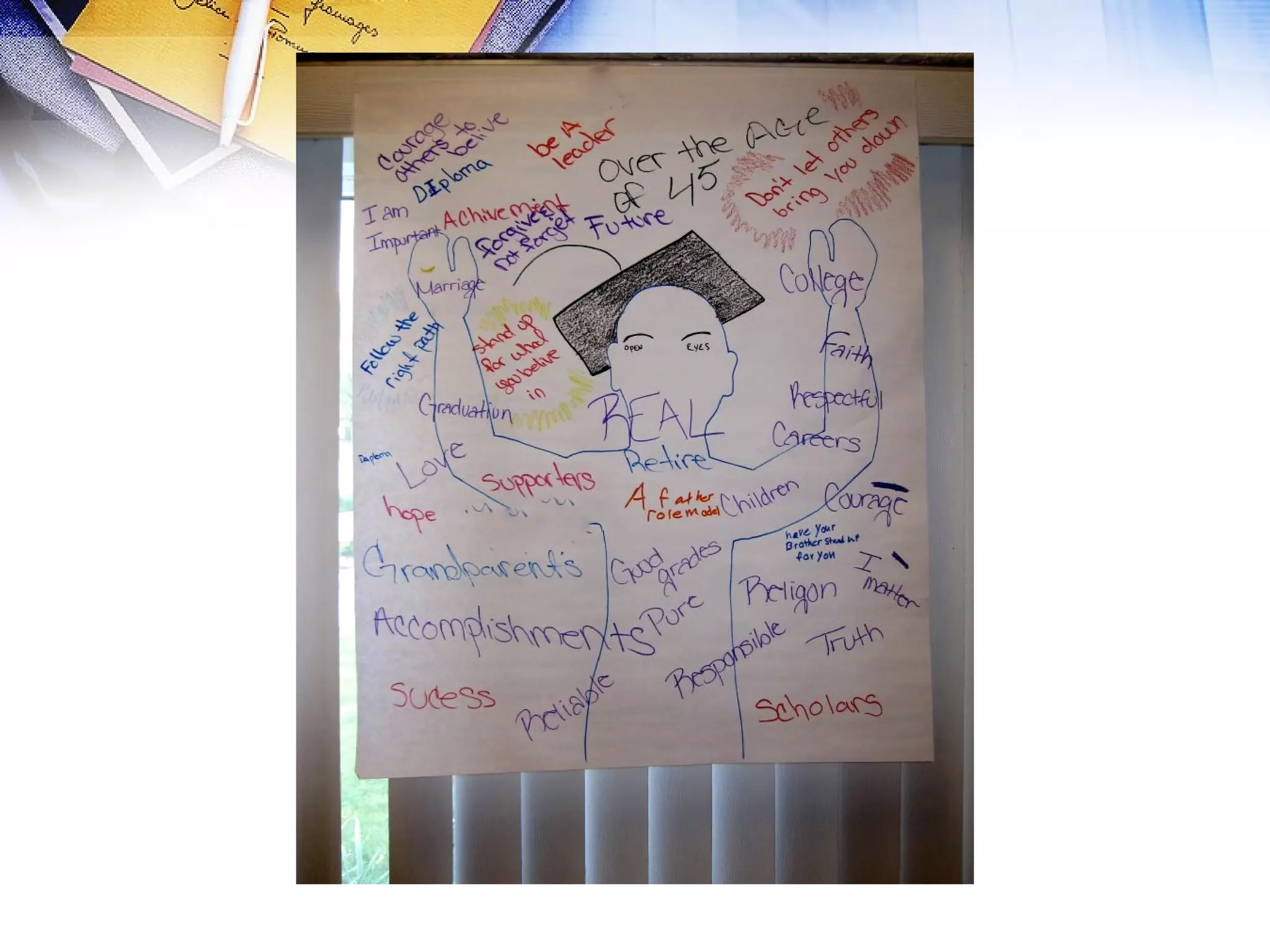
  • #45 Stereotypes vs. Reality Who I was THEN vs. who I am NOW