MCMAP/Fin: Financial insight
Edgar Mata Flores,
Department of Economics
What is it?
Definition
• Building on our MCMAP platform, financial intermediation and inter-
bank markets are considered in this extension.
• Comparative international risk indicators affecting domestic interest
rates are also introduced.
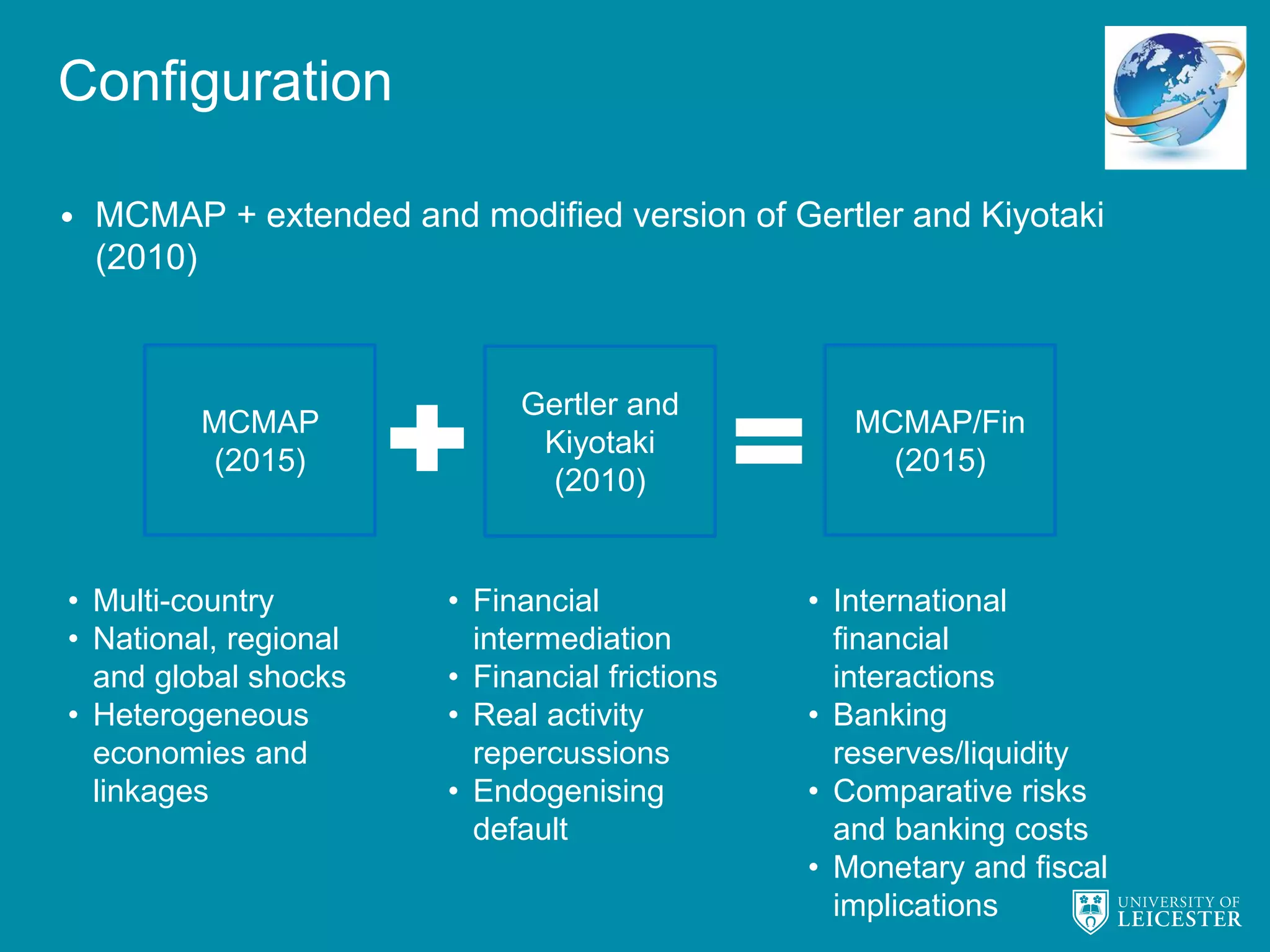
Configuration
• MCMAP + extended and modified version of Gertler and Kiyotaki
(2010)
MCMAP
(2015)
Gertler and
Kiyotaki
(2010)
MCMAP/Fin
(2015)
• Multi-country
• National, regional
and global shocks
• Heterogeneous
economies and
linkages
• Financial
intermediation
• Financial frictions
• Real activity
repercussions
• Endogenising
default
• International
financial
interactions
• Banking
reserves/liquidity
• Comparative risks
and banking costs
• Monetary and fiscal
implications
Main features
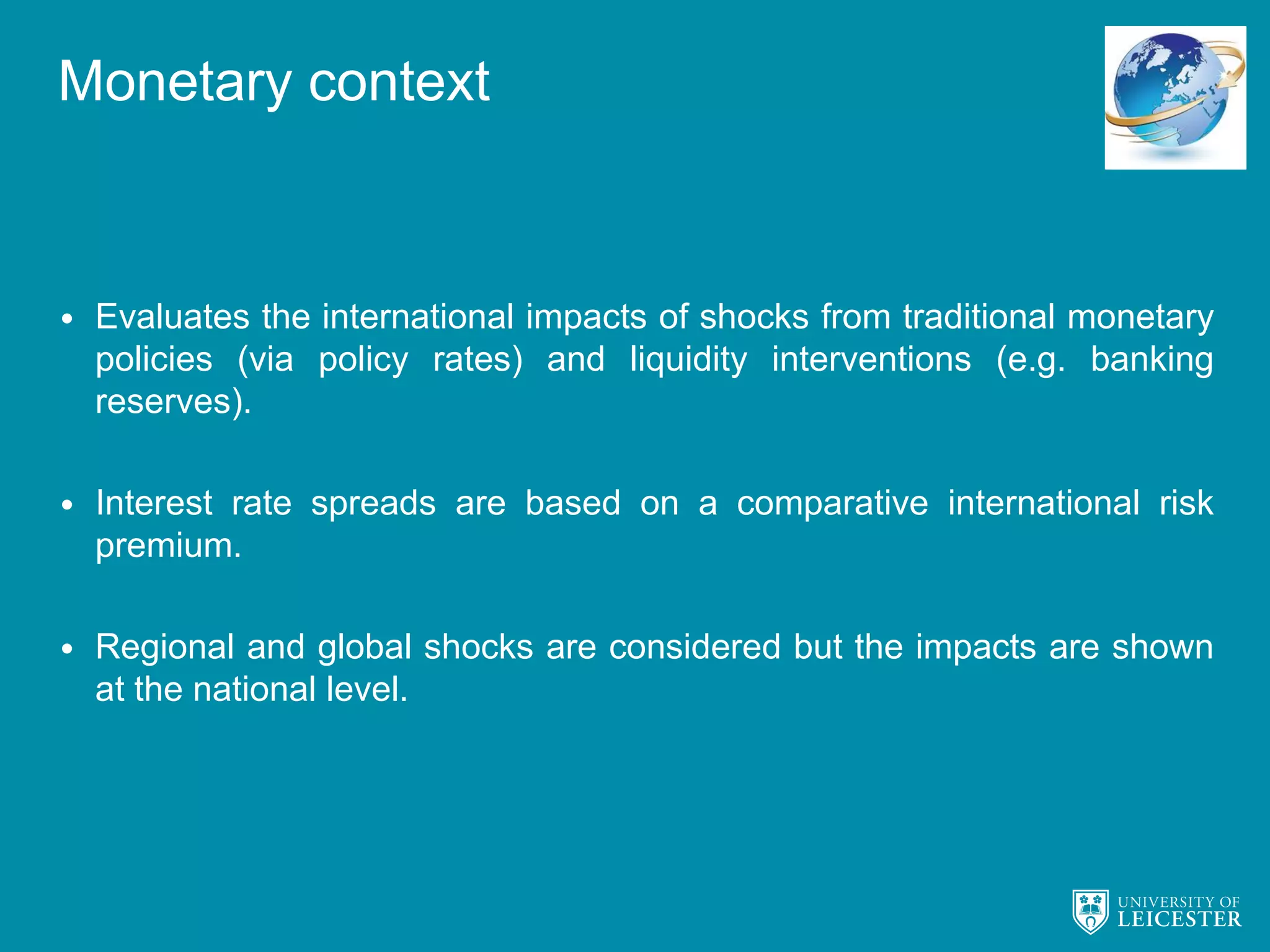
Monetary context
• Evaluates the international impacts of shocks from traditional monetary
policies (via policy rates) and liquidity interventions (e.g. banking
reserves).
• Interest rate spreads are based on a comparative international risk
premium.
• Regional and global shocks are considered but the impacts are shown
at the national level.
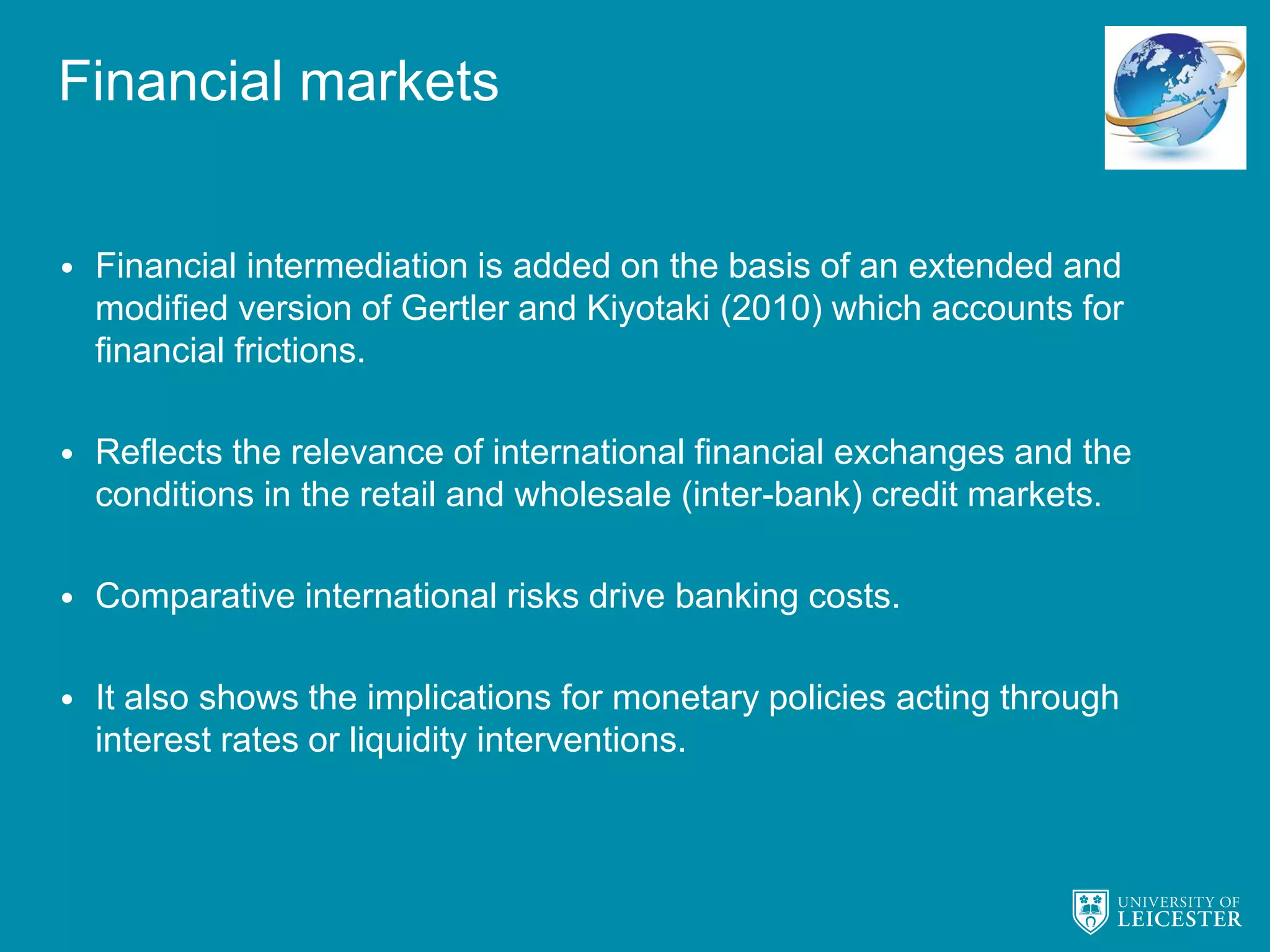
Financial markets
• Financial intermediation is added on the basis of an extended and
modified version of Gertler and Kiyotaki (2010) which accounts for
financial frictions.
• Reflects the relevance of international financial exchanges and the
conditions in the retail and wholesale (inter-bank) credit markets.
• Comparative international risks drive banking costs.
• It also shows the implications for monetary policies acting through
interest rates or liquidity interventions.
The computing platform
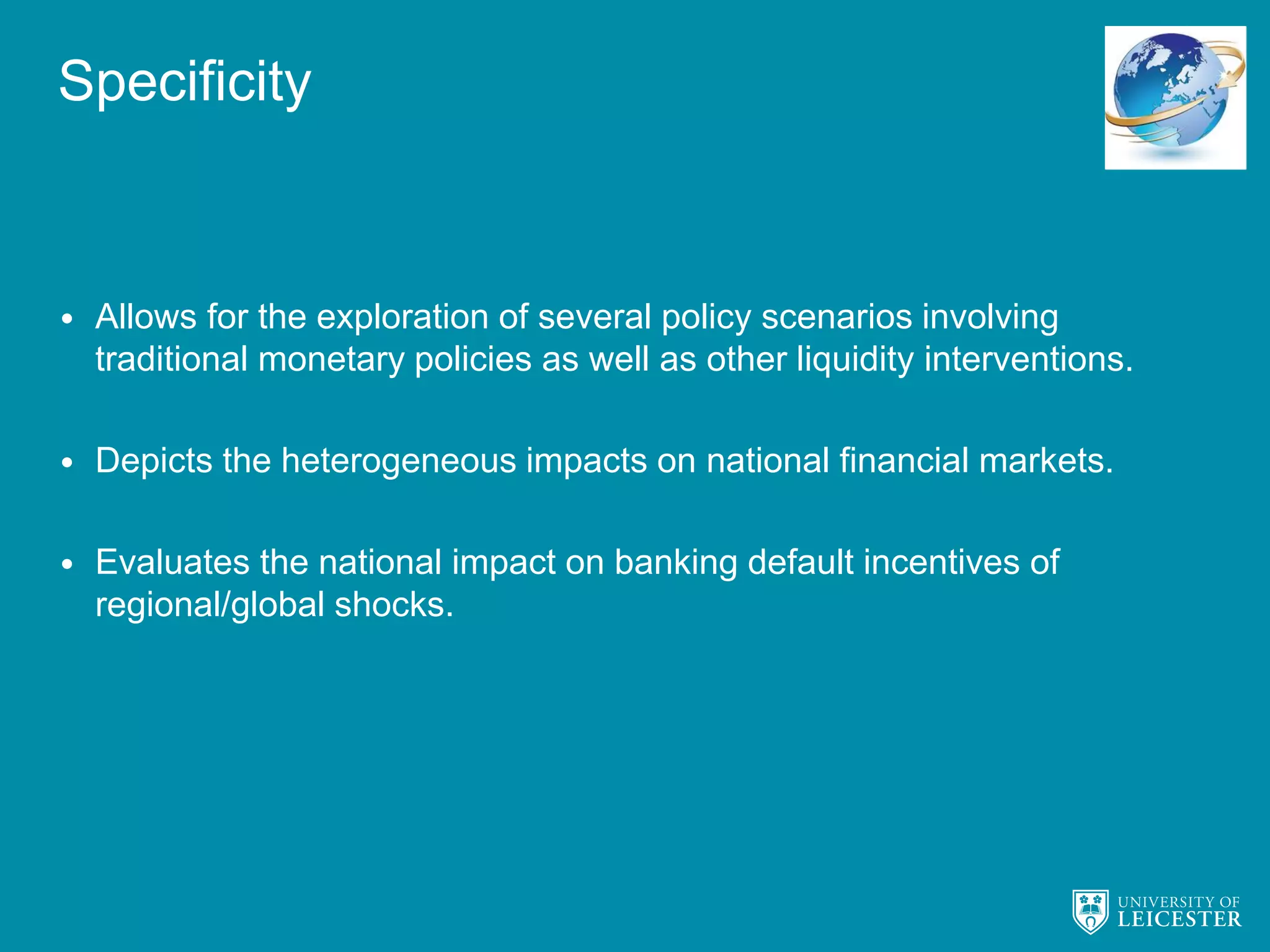
Specificity
• Allows for the exploration of several policy scenarios involving
traditional monetary policies as well as other liquidity interventions.
• Depicts the heterogeneous impacts on national financial markets.
• Evaluates the national impact on banking default incentives of
regional/global shocks.
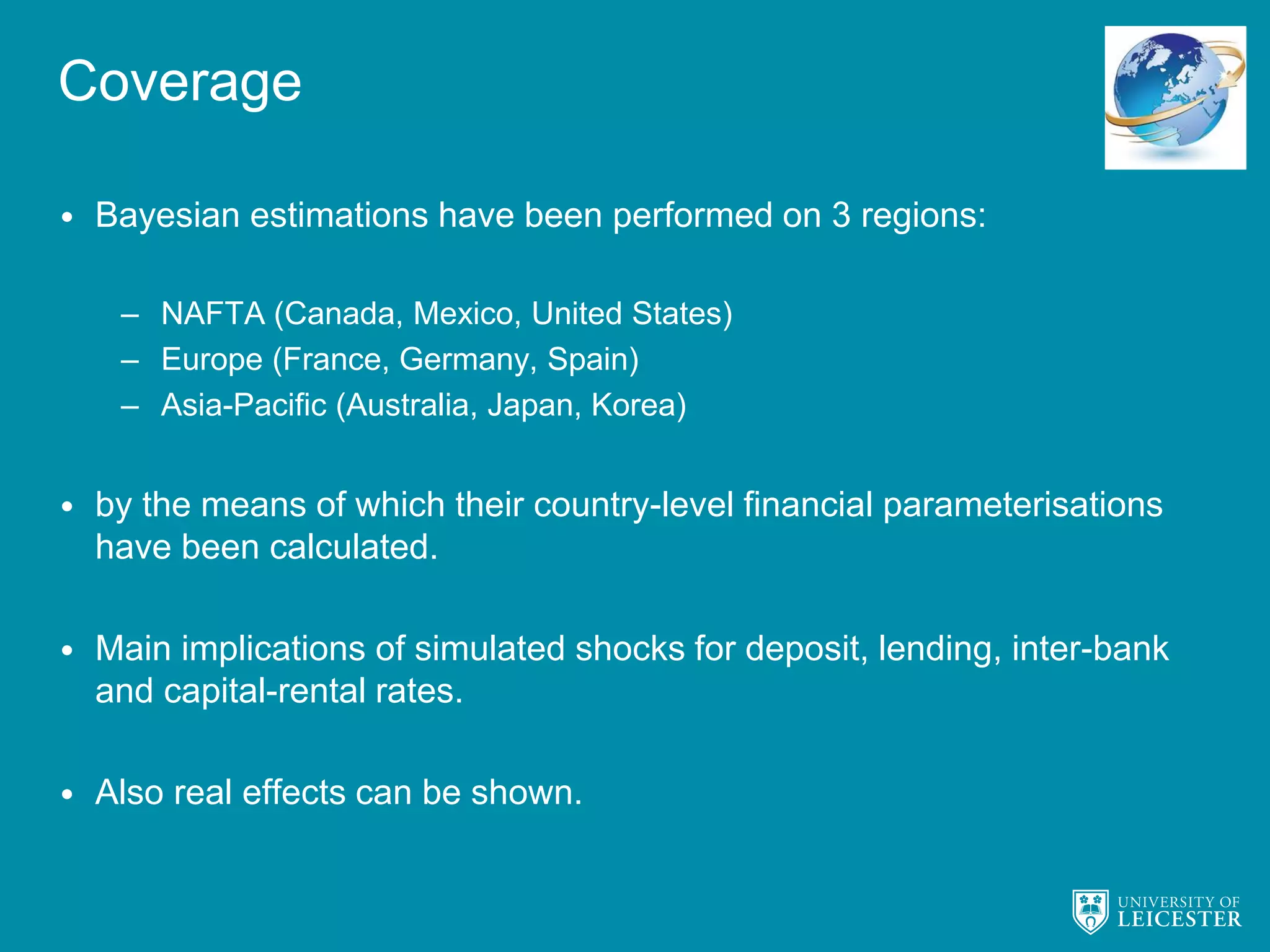
Coverage
• Bayesian estimations have been performed on 3 regions:
– NAFTA (Canada, Mexico, United States)
– Europe (France, Germany, Spain)
– Asia-Pacific (Australia, Japan, Korea)
• by the means of which their country-level financial parameterisations
have been calculated.
• Main implications of simulated shocks for deposit, lending, inter-bank
and capital-rental rates.
• Also real effects can be shown.
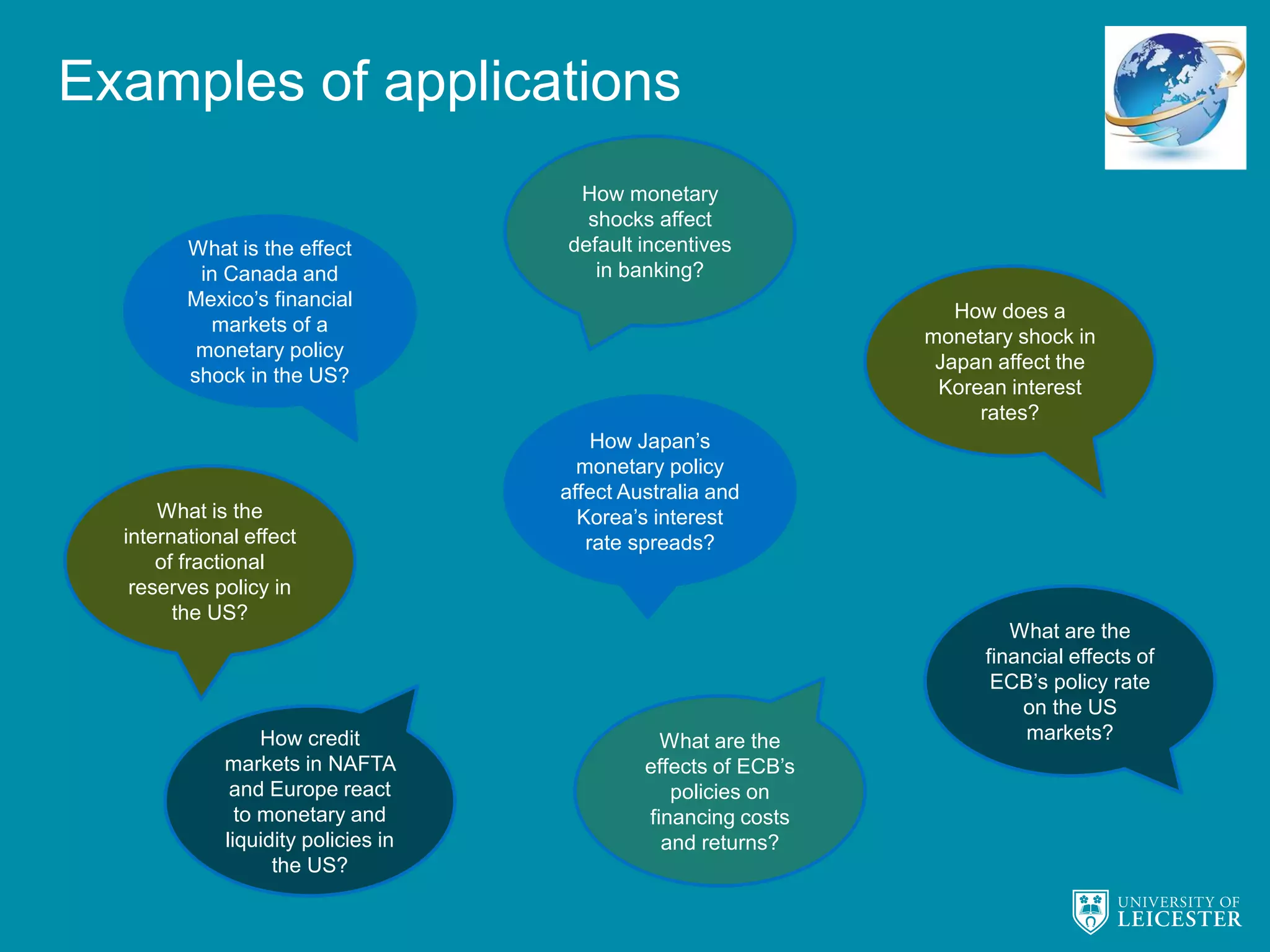
Examples of applications
What is the effect
in Canada and
Mexico’s financial
markets of a
monetary policy
shock in the US?
What are the
financial effects of
ECB’s policy rate
on the US
markets?
How monetary
shocks affect
default incentives
in banking?
What is the
international effect
of fractional
reserves policy in
the US?
What are the
effects of ECB’s
policies on
financing costs
and returns?
How does a
monetary shock in
Japan affect the
Korean interest
rates?
How Japan’s
monetary policy
affect Australia and
Korea’s interest
rate spreads?
How credit
markets in NAFTA
and Europe react
to monetary and
liquidity policies in
the US?
Further information
• Edgar Mata
emf6@leicester.ac.uk
• My research website:
https://sites.google.com/site/edgarmataeconomist
References
• Gertler, M. and Kiyotaki, N. (2010). Financial Intermediation and Credit Policy in
Business Cycle Analysis. In Friedman, B. M. and Woodford, M. (Eds.)
Handbook of Monetary Economics, Vol. 3A, Ch. 11, p.547-599. North-Holland,
Amsterdam.

2 MCMAPFin_eng

  • 1.
    MCMAP/Fin: Financial insight EdgarMata Flores, Department of Economics
  • 2.
  • 3.
    Definition • Building onour MCMAP platform, financial intermediation and inter- bank markets are considered in this extension. • Comparative international risk indicators affecting domestic interest rates are also introduced.
  • 4.
    Configuration • MCMAP +extended and modified version of Gertler and Kiyotaki (2010) MCMAP (2015) Gertler and Kiyotaki (2010) MCMAP/Fin (2015) • Multi-country • National, regional and global shocks • Heterogeneous economies and linkages • Financial intermediation • Financial frictions • Real activity repercussions • Endogenising default • International financial interactions • Banking reserves/liquidity • Comparative risks and banking costs • Monetary and fiscal implications
  • 5.
  • 6.
    Monetary context • Evaluatesthe international impacts of shocks from traditional monetary policies (via policy rates) and liquidity interventions (e.g. banking reserves). • Interest rate spreads are based on a comparative international risk premium. • Regional and global shocks are considered but the impacts are shown at the national level.
  • 7.
    Financial markets • Financialintermediation is added on the basis of an extended and modified version of Gertler and Kiyotaki (2010) which accounts for financial frictions. • Reflects the relevance of international financial exchanges and the conditions in the retail and wholesale (inter-bank) credit markets. • Comparative international risks drive banking costs. • It also shows the implications for monetary policies acting through interest rates or liquidity interventions.
  • 8.
  • 9.
    Specificity • Allows forthe exploration of several policy scenarios involving traditional monetary policies as well as other liquidity interventions. • Depicts the heterogeneous impacts on national financial markets. • Evaluates the national impact on banking default incentives of regional/global shocks.
  • 10.
    Coverage • Bayesian estimationshave been performed on 3 regions: – NAFTA (Canada, Mexico, United States) – Europe (France, Germany, Spain) – Asia-Pacific (Australia, Japan, Korea) • by the means of which their country-level financial parameterisations have been calculated. • Main implications of simulated shocks for deposit, lending, inter-bank and capital-rental rates. • Also real effects can be shown.
  • 11.
    Examples of applications Whatis the effect in Canada and Mexico’s financial markets of a monetary policy shock in the US? What are the financial effects of ECB’s policy rate on the US markets? How monetary shocks affect default incentives in banking? What is the international effect of fractional reserves policy in the US? What are the effects of ECB’s policies on financing costs and returns? How does a monetary shock in Japan affect the Korean interest rates? How Japan’s monetary policy affect Australia and Korea’s interest rate spreads? How credit markets in NAFTA and Europe react to monetary and liquidity policies in the US?
  • 12.
    Further information • EdgarMata emf6@leicester.ac.uk • My research website: https://sites.google.com/site/edgarmataeconomist
  • 13.
    References • Gertler, M.and Kiyotaki, N. (2010). Financial Intermediation and Credit Policy in Business Cycle Analysis. In Friedman, B. M. and Woodford, M. (Eds.) Handbook of Monetary Economics, Vol. 3A, Ch. 11, p.547-599. North-Holland, Amsterdam.