Presentation by William R White


                                         ARC 2010
             DG ECFIN‘s Annual Research Conference
                   22-23 November, 2010, Brussels
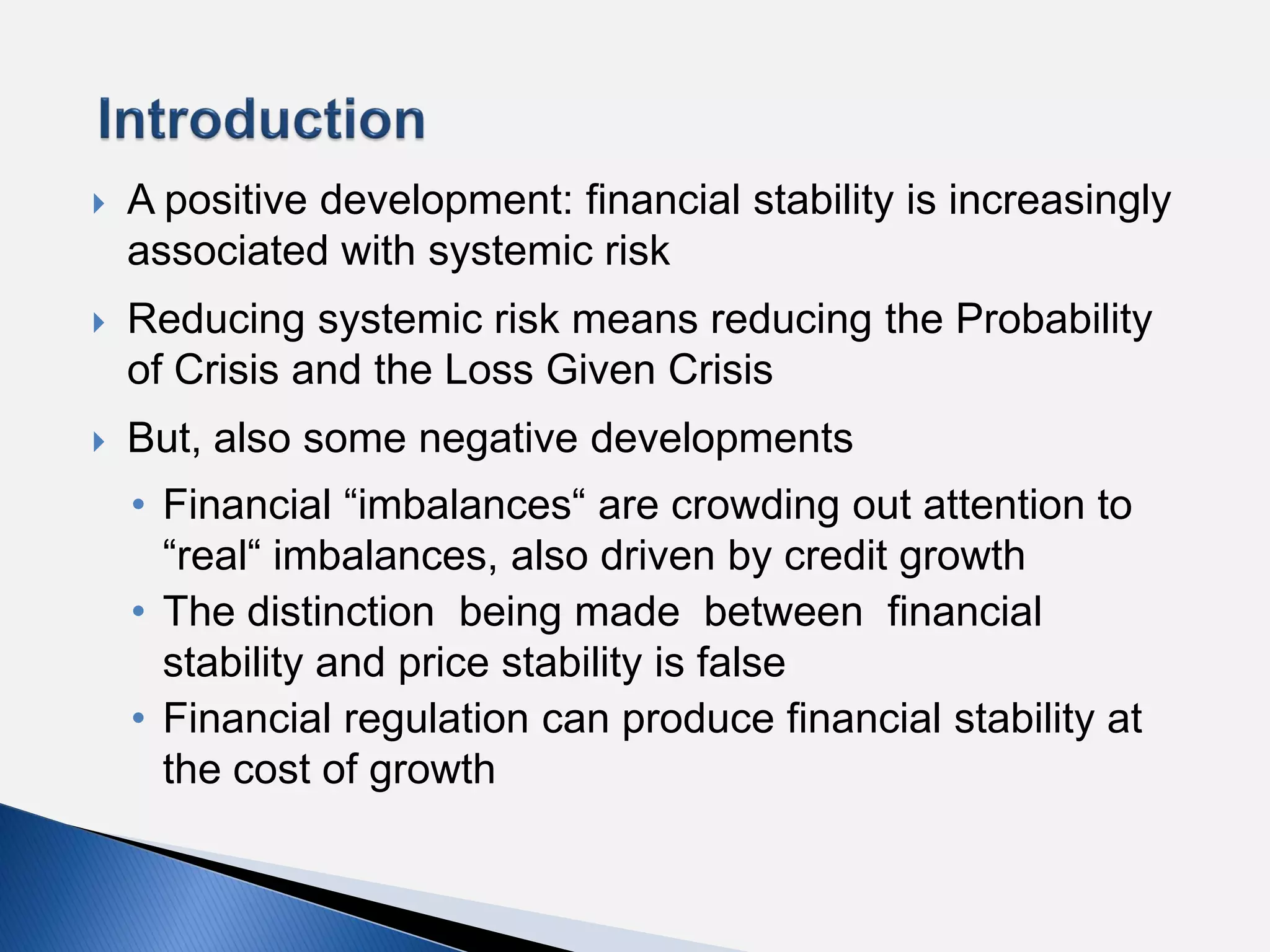
   A positive development: financial stability is increasingly
    associated with systemic risk
   Reducing systemic risk means reducing the Probability
    of Crisis and the Loss Given Crisis
   But, also some negative developments
    • Financial “imbalances“ are crowding out attention to
      “real“ imbalances, also driven by credit growth
    • The distinction being made between financial
      stability and price stability is false
    • Financial regulation can produce financial stability at
      the cost of growth
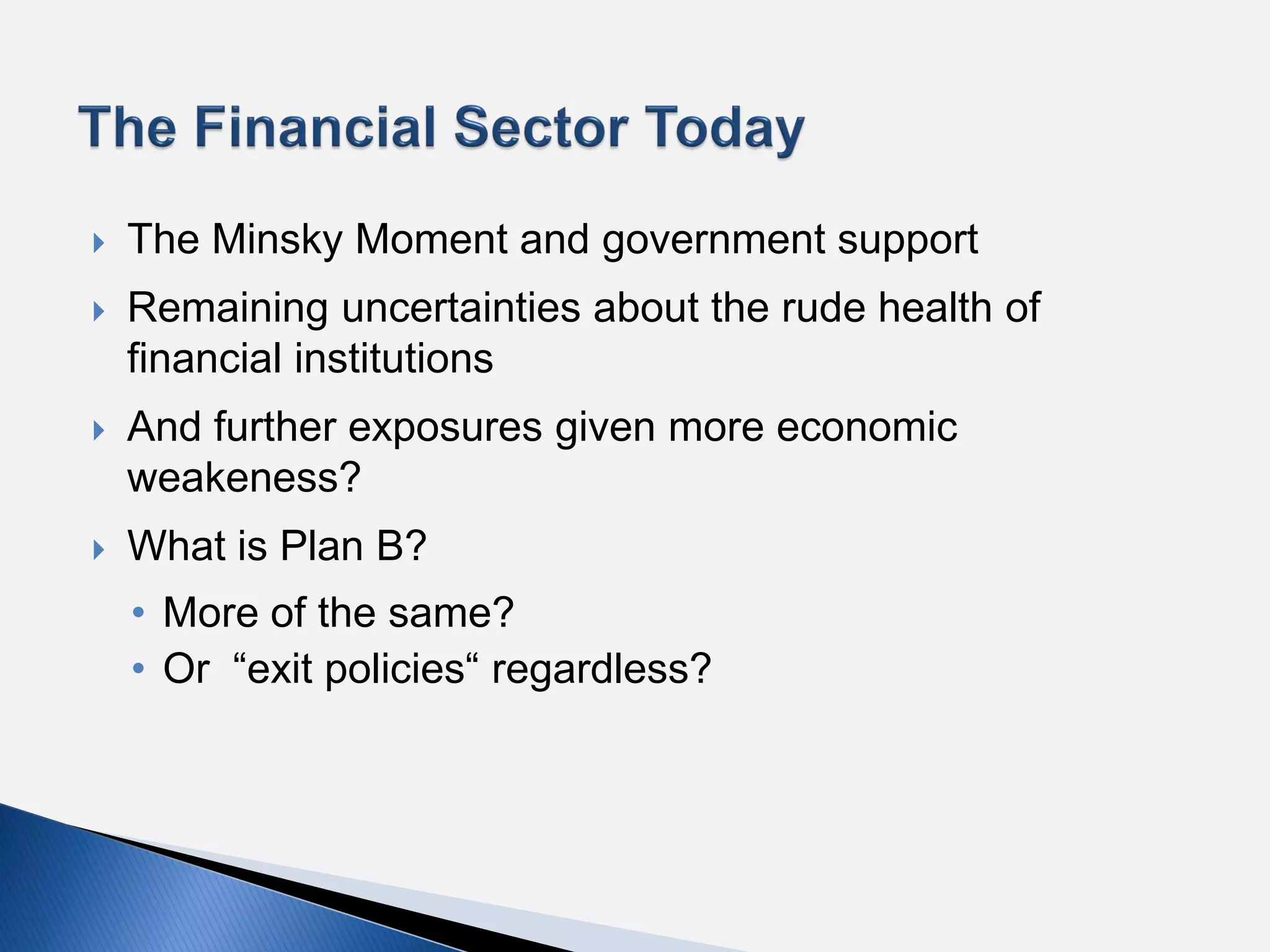
   The Minsky Moment and government support
   Remaining uncertainties about the rude health of
    financial institutions
   And further exposures given more economic
    weakeness?
   What is Plan B?
    • More of the same?
    • Or “exit policies“ regardless?
   New attitudes to risk or “business as usual“?
   Ultra low rates and Quantitative Easing
    • Inflationary expectations and bond prices
    • Asset price bubbles and capital flows to EME‘s
    • Gambling for resurrection
   Procyclicality in regulatory behaviour
   Supporting national agendas at the expense of
    international cooperation
   Problems arising from the crisis itself
    • Rising government debt and forced holdings by
      financial institutions
    • Capital controls
   Problems arising from the response to the crisis
    • Regulation leading to allocational inefficiency
    • Uncertainty about reforms impede credit growth
    • Attention to systemic risk inadequate or worse
    • Diminished “independence“ of central banks
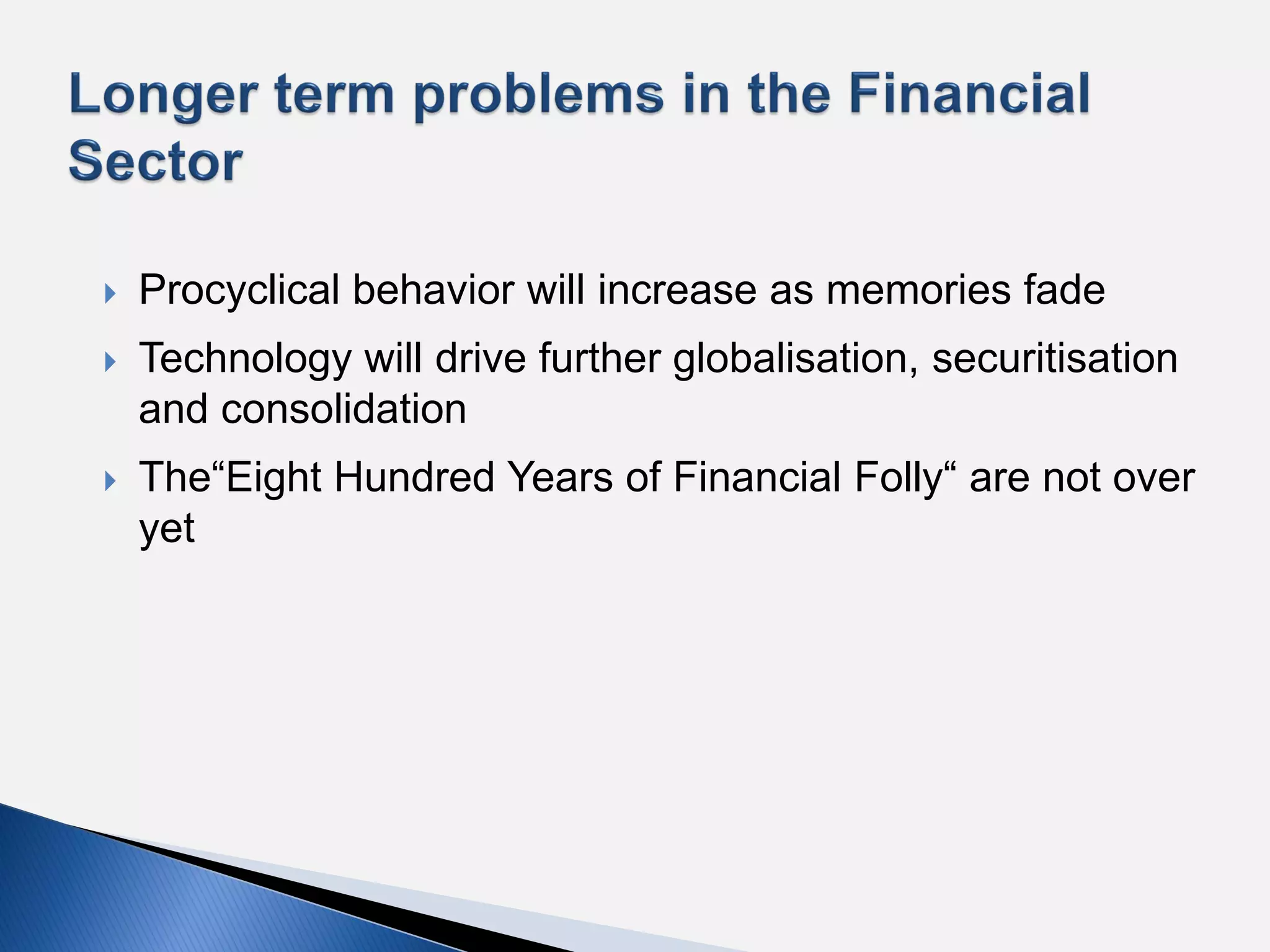
   Procyclical behavior will increase as memories fade
   Technology will drive further globalisation, securitisation
    and consolidation
   The“Eight Hundred Years of Financial Folly“ are not over
    yet
   Carefully monitor maturity transformations and rely on
    other ways to raise capital
   Conduct QE such that inflationary risks are minimized
   In AME‘s with rising house prices, use macroprudential
    tools
   In EMEs, let exchange rates rise and use macroprudential
    tools
   Avoid “gold plating“ Basel 3; cooperate more
   Problems arising from the crisis itself
    • Need exit policies from forced holdings of sovereign
      debt
    • Accept capital controls in response to a market failure;
      UIP does not hold
   Problems arising from the response to the crisis
    • Recognize and reverse bad regulation
    • Rethink fundamentally how to respond to systemic
      risk
    • Central banks should withdraw (asap) from activities
      with distributional implications
   Lean against the upswing using both macroprudential
    and monetary policies
   Reexamine the use of safety net measures in the
    downswing
   Take ex ante measures (deposit insurance schemes,
    MOU, bank insolvency legislation, etc.) to better manage
    inevitable crises
   The financial sector as “The Achilles heel of capitalism“
   Potentially leading to crises with social and political
    implications
   Which warrants treating the problems of the financial
    sector seriously
   But a window of political opportunity may have been
    missed, especially re SIFIs

22 nov10 arc2010brussels_final

  • 1.
    Presentation by WilliamR White ARC 2010 DG ECFIN‘s Annual Research Conference 22-23 November, 2010, Brussels
  • 2.
    A positive development: financial stability is increasingly associated with systemic risk  Reducing systemic risk means reducing the Probability of Crisis and the Loss Given Crisis  But, also some negative developments • Financial “imbalances“ are crowding out attention to “real“ imbalances, also driven by credit growth • The distinction being made between financial stability and price stability is false • Financial regulation can produce financial stability at the cost of growth
  • 3.
    The Minsky Moment and government support  Remaining uncertainties about the rude health of financial institutions  And further exposures given more economic weakeness?  What is Plan B? • More of the same? • Or “exit policies“ regardless?
  • 4.
    New attitudes to risk or “business as usual“?  Ultra low rates and Quantitative Easing • Inflationary expectations and bond prices • Asset price bubbles and capital flows to EME‘s • Gambling for resurrection  Procyclicality in regulatory behaviour  Supporting national agendas at the expense of international cooperation
  • 5.
    Problems arising from the crisis itself • Rising government debt and forced holdings by financial institutions • Capital controls  Problems arising from the response to the crisis • Regulation leading to allocational inefficiency • Uncertainty about reforms impede credit growth • Attention to systemic risk inadequate or worse • Diminished “independence“ of central banks
  • 6.
    Procyclical behavior will increase as memories fade  Technology will drive further globalisation, securitisation and consolidation  The“Eight Hundred Years of Financial Folly“ are not over yet
  • 7.
    Carefully monitor maturity transformations and rely on other ways to raise capital  Conduct QE such that inflationary risks are minimized  In AME‘s with rising house prices, use macroprudential tools  In EMEs, let exchange rates rise and use macroprudential tools  Avoid “gold plating“ Basel 3; cooperate more
  • 8.
    Problems arising from the crisis itself • Need exit policies from forced holdings of sovereign debt • Accept capital controls in response to a market failure; UIP does not hold  Problems arising from the response to the crisis • Recognize and reverse bad regulation • Rethink fundamentally how to respond to systemic risk • Central banks should withdraw (asap) from activities with distributional implications
  • 9.
    Lean against the upswing using both macroprudential and monetary policies  Reexamine the use of safety net measures in the downswing  Take ex ante measures (deposit insurance schemes, MOU, bank insolvency legislation, etc.) to better manage inevitable crises
  • 10.
    The financial sector as “The Achilles heel of capitalism“  Potentially leading to crises with social and political implications  Which warrants treating the problems of the financial sector seriously  But a window of political opportunity may have been missed, especially re SIFIs